

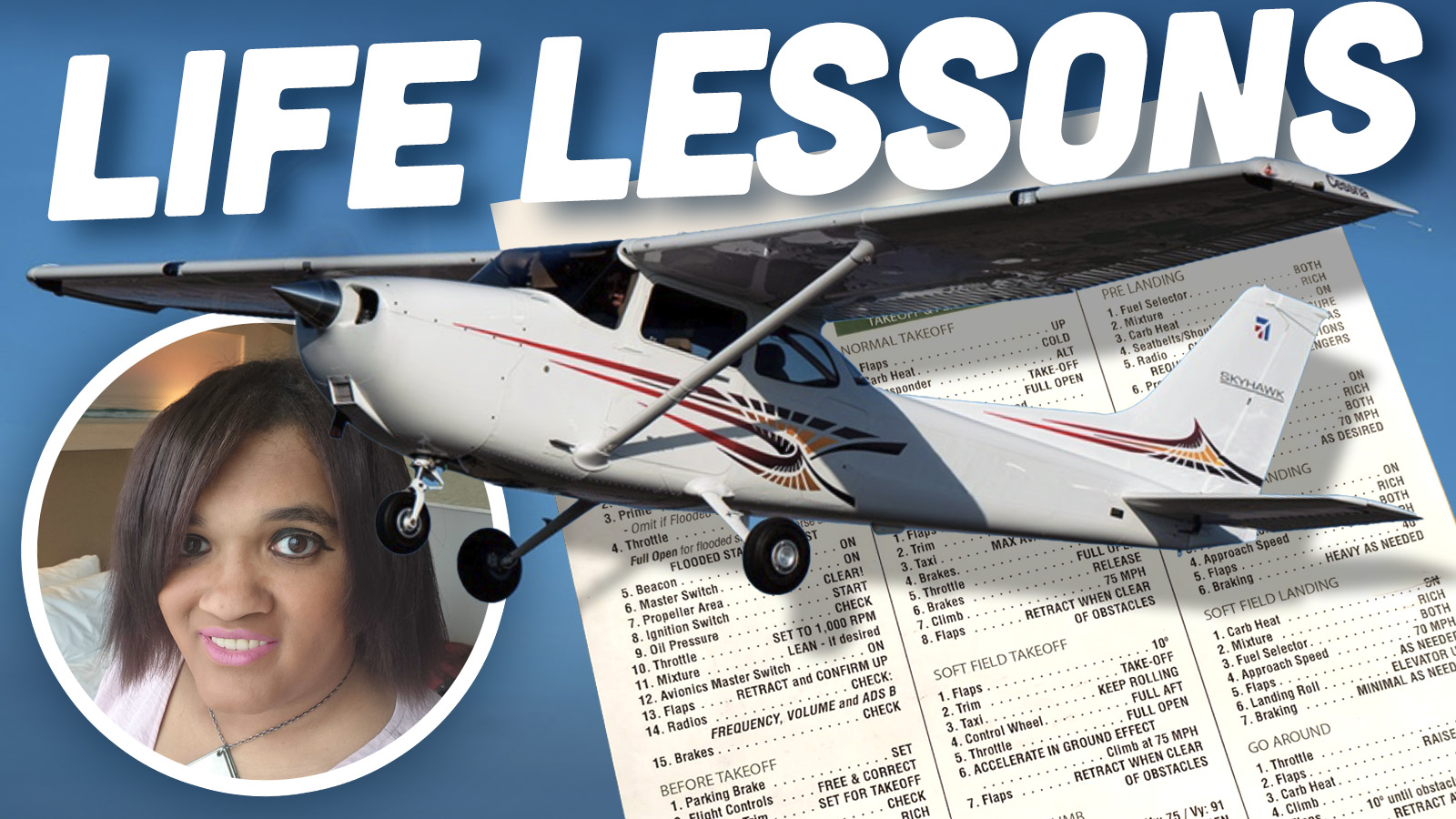
One of the greatest joys and privileges I’ve had as a vehicle enthusiast is flying small planes. If you’ve ever dreamt of soaring through the sky like a bird, strapping yourself into an old Cessna comes pretty close. It’s also a great learning experience, and not just for teaching you how to safely operate a flying vehicle. The lessons that every pilot learns are actually teachings that everyone should know, no matter how they get around.
Last August, I reignited my dream to become a pilot. I love everything with a motor or engine, from the smallest boats and motorcycles to titanic aircraft. If it’s a self-propelled vehicle, I’m going to love it. My life’s mission is to take command of as many vehicles as humanly possible! My childhood dream was to fly a Boeing 747. The only way I can achieve it is by starting right here on the ground.


My training went steadily until February. That’s when I got bad news from an Aviation Medical Examiner that the Federal Aviation Administration in Oklahoma City will need to perform a detailed review of my medical records to ensure I’m safe to fly. Unfortunately, I technically have a disqualifying condition, diabetes. While my condition is maintained entirely by eating better and Ozempic, the FAA wants to make sure I won’t have an episode in the sky and put any lives in danger. Thus, I cannot get an FAA Medical Certificate until the FAA decides I’m safe enough. The FAA has been reviewing my records for the past two months, and I have no idea when I’ll be able to fly again.
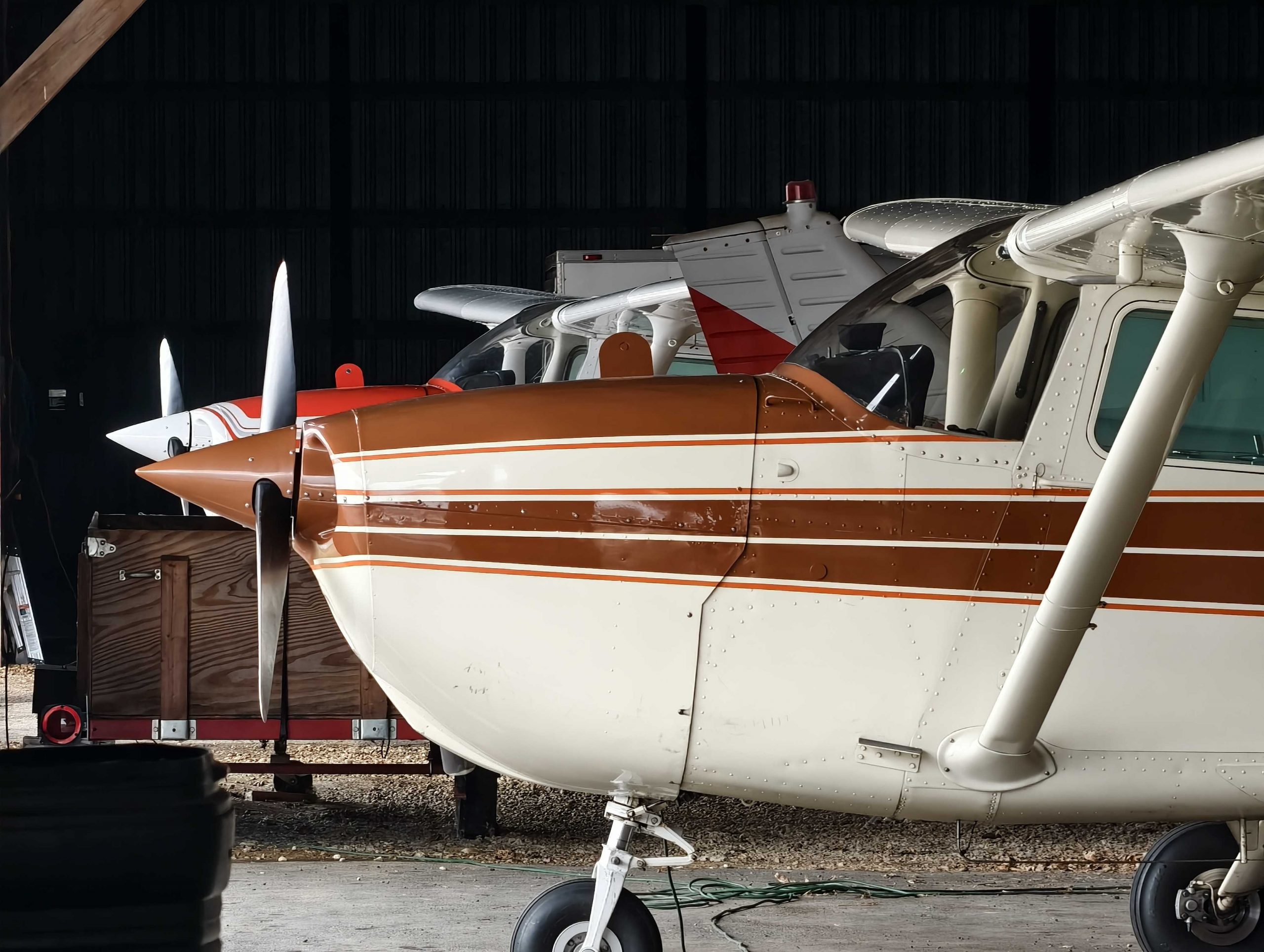
This has completely stalled out the practical part of my training. The cruel twist? When the bad news hit in February, I had just been cleared for my first solo. My wife even bought a GoPro to film it!
Instead of letting the news get me down, I’ve been trying to stay fresh. I’ve been reading my private pilot textbook and practicing in my home simulator. I will need to perform a flight to shake off the “rust” before my solo, but my hope is that I will have kept myself fresh enough that I don’t have to backtrack.
While I have been doing this, it hit me that there’s a lot that I have learned over only 35 hours of flying that actually transfers over to driving cars almost perfectly. Yet, when I took driving classes when I was a teenager, I was never taught this stuff. I’ll even go a step further. What I learned in the sky is something that every single person should know to make their life a little easier. This story was inspired by a somewhat similar idea from Axios, but adapted to car enthusiasm.
Aviate, Navigate, Communicate

One of the core ideas of flying that I learned as a student pilot is an order of operations that has been proven to keep pilots alive in abnormal situations. It’s just three words: Aviate, navigate, communicate.
What this means is that if you’re getting into a situation that’s different, unknown, abnormal, or even an emergency, your priority is to keep the plane flying. You might feel inclined to mess around with your aircraft’s automation or navigational equipment, but that’s pointless if you do not have control of the aircraft. It’s the same deal with calling air traffic control. All of these are good intentions, but meaningless if the aircraft is spiraling toward the ground or barreling toward the side of a mountain. Make sure the plane is flying and safe first, then work on the rest.
It’s the same deal with your car. Are you driving in an unfamiliar place and you’re confused? Don’t try fiddling with your phone, your vehicle’s navigation system, or GPS while you’re lost and frazzled. You can always continue to drive and then pull over somewhere safe. Then get your bearings. This even applies in emergency situations. Did you crash into a pond? Keep something like a Resqme tool on you, bust out of the car first, and then call your family.
Always Have An Escape Plan

Another thing that I learned almost from the jump is to plan ahead in case of an emergency. In the sky, this means that I’m scanning for other aircraft that I might want to avoid before they become a problem. It also means that I’m scanning the ground for a suitable spot to land in case my engine dies out. The goal is that I should have some sort of idea what I’m going to do if something goes wrong.
Before I even depart a runway, I have calculated my aircraft’s performance, and I have set minimums. I know what I’m going to do if the aircraft encounters an engine failure at various points during my takeoff roll.
This goes beyond just scanning for escape paths. Before I even start the engine, I want to make sure that I have alternate airports to fly to in case the flight doesn’t go as planned. I also don’t want to commit to bad ideas just to complete a flight. If I’m about to fly into weather, I should just turn around. There’s no shame in going back to the airport if I cannot complete a flight.
In a car or motorcycle, this means scanning ahead. You’re looking not just for dangers, but also places to go in case the car next to you suddenly decides that it wants to be in your lane. Often, this might mean going into a shoulder. But since you’re paying attention before this happens, maybe you’ll notice that the road you’re on doesn’t have a shoulder, and thus you would have to try something else.
Stay Ahead Of The Aircraft

There are a lot of tasks pilots have to do to safely command their aircraft. They have to communicate to air traffic control, watch for traffic, watch their instruments, perform approach procedures, and, if they’re rated for it, even fly their aircraft in the blind. It is possible for a pilot to become task-saturated and fall behind the aircraft.
For example, a pilot who’s behind their aircraft might pass certain stages in their approaches before they’re ready to perform them. This could mean ending up at the wrong altitude, flying too fast, not having the gear or flaps down, or other missed steps. Basically, the aircraft is flying faster than you are. This is dangerous because if you never get ahead of the aircraft, it’s entirely possible to crash it. So, during cruise when you have a low workload, you want to check the weather, brief approaches, and set your radios. That way, you have a leg up when it’s actually time to start descending toward the ground.
A lot of this directly carries over to your car or truck. If you’re towing a giant trailer, for example, you want to know if you’re going to be dealing with any sharp turns or clearance issues before you have to figure it out in real-time. If you’re taking a cross-country motorcycle ride, you want to periodically check the weather ahead to make sure you won’t be riding into a severe thunderstorm.
Always Perform A Pre-Flight Check
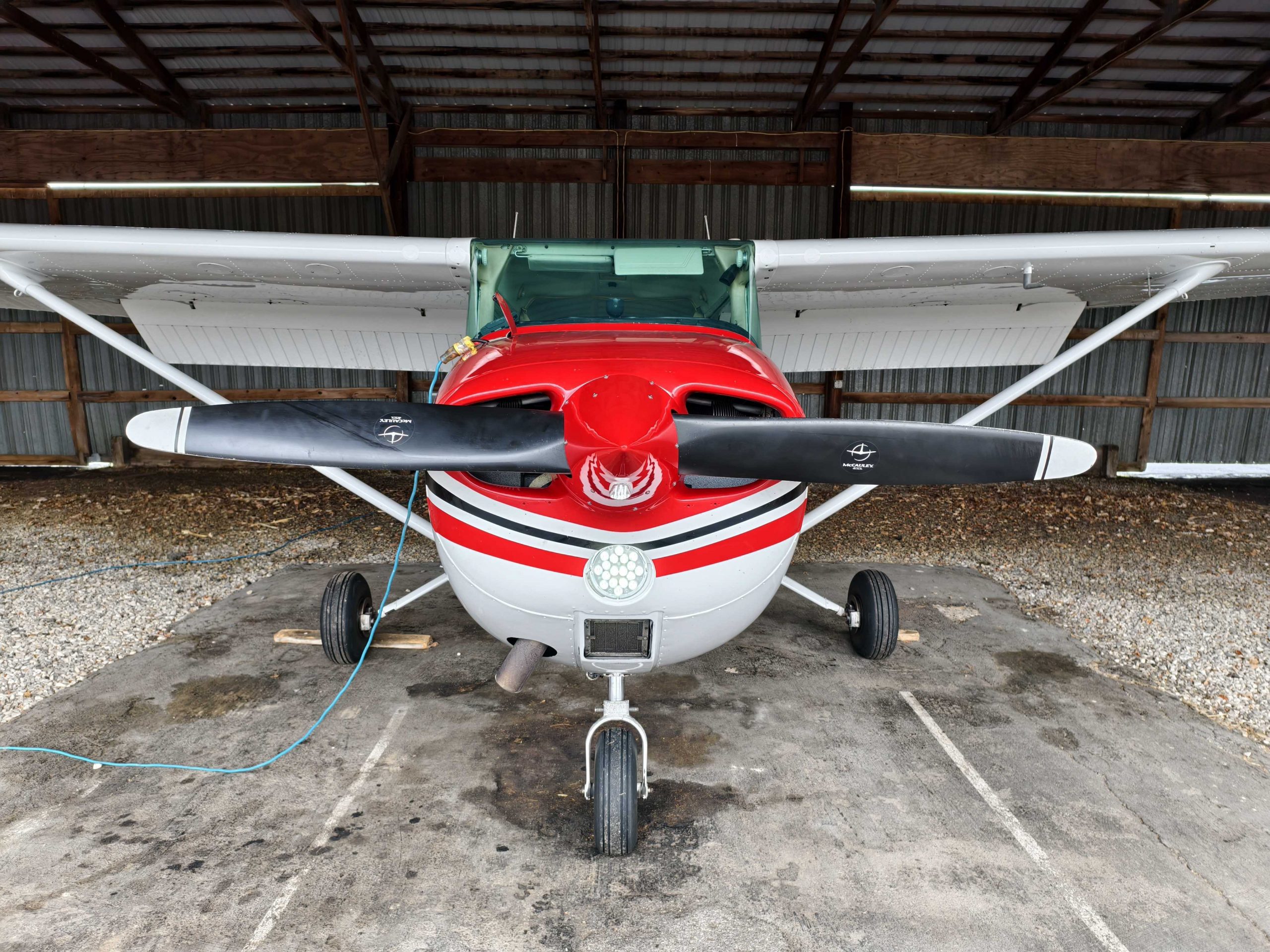
Every single time I fly the trainer Cessna 172, I walk around the aircraft. I make sure there are no visibly loose rivets, no obviously missing nuts and bolts, no leaking hydraulic fluid, and no parts hanging off. I check to make sure bees didn’t make a hive in the stall horn, check the engine’s oil level, check the wing struts, check for water in my fuel, check fuel level, and pretty much every other critical safety element of the aircraft. Sadly, some pilots have perished after skipping pre-flight check steps and finding out the hard way that they had water in their fuel or some other issue.
This can directly translate to your car, motorcycle, RV, or truck. It’s easy to just hop in your car and go, but you should at least give your vehicle a walkaround first. You should check your fluids, make sure nothing new is leaking, and ensure your tires look safe enough. My wife once drove her car for months with a blown taillight. It’s something she would have caught immediately if she took a few minutes to walk around the car every morning.

Learn The Fundamentals First
The great thing about the present day is that there are so many technological aids. Foreflight is an incredibly powerful piloting tool, and there are plenty of general aviation aircraft out there with fancy autopilot systems and other automation. Some pilots make the mistake of leaning heavily on technology before they have developed their stick and rudder skills.
What this sometimes means is that you get a pilot who immediately turns on their autopilot the moment they get airborne and then leans on the autopilot for most of their flight. Then, one day, the autopilot malfunctions, and they’re in a whole world of trouble because they never honed in on their stick and rudder skills. Or, maybe their iPad dies, or their GPS fails, and they haven’t the faintest idea of how to get onto the ground.
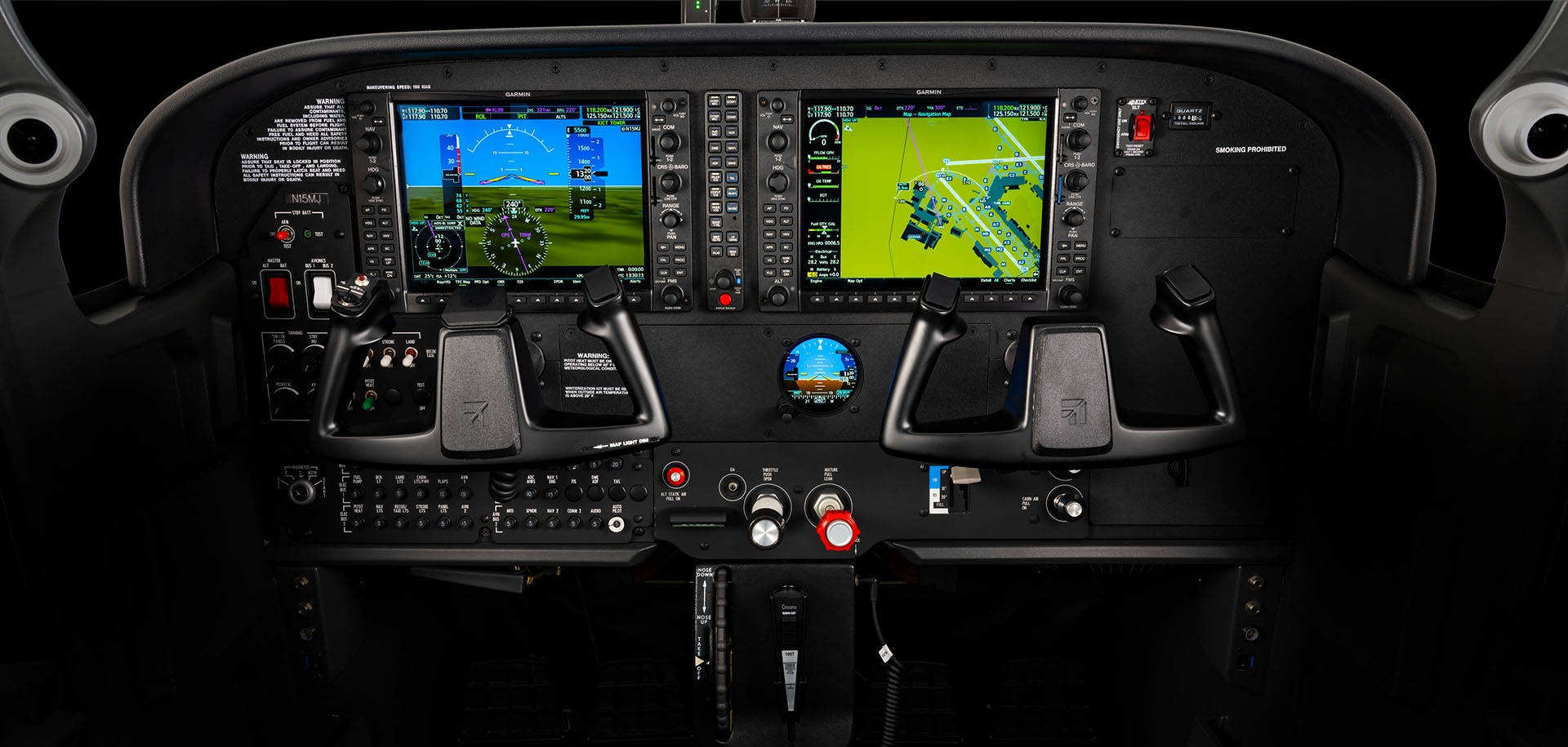
The automation tools are great, but they should be an augmentation to the skills you already have, not a replacement for the skills you don’t have.
In your car, this means learning proper driving techniques before you start leaning on whatever driver assist technology your vehicle has. You should know how to control your vehicle, roughly where its limits are, and where your own limits are. If you can’t safely complete a drive without leaning on Full Self Driving, Autopilot, or whatever software your car has, that’s a problem.
When In Doubt, Go Around

This one is another extremely important lesson that I learned early on in flight school. If I think a maneuver isn’t safe, there is no shame in taking the safe way out. This lesson is often used during landings. Some pilots may pressure themselves to continue an unstable or otherwise unsafe landing. But there’s no reason to. If the landing isn’t feeling right, just punch the throttle and get out of there. I can always try the landing again. It’s better to burn more fuel to do a safe landing than potentially crash in trying to get to the ground.
This has a great direct example for when you’re driving. If you’re about to blow past your intended exit and you’re not in the correct lane position, it’s fine. You can always re-route or turn around. There is no need to sail your car across five lanes of traffic and endanger yourself and others just to get to an exit. Yes, you’ll burn some more gas, and yes, you’ll lose some time, but most importantly, everyone will get to go home safely.
This is also a big life lesson, too. If you’re not feeling comfortable with a situation, maybe you shouldn’t do it, or return when you’re feeling better about it. If you’re being dared to do some physical feat or something dangerous and you think it’s not going to end well, just get out of there. Who cares what people say or think? It’s better to be safe than to risk harming yourself.
Whatever You Love, Be Safe!

Of course, I know that not every Driver’s Ed course is the same, and I have no doubt that there are drivers out there who learned these ideas. At the same time, I know there are also a lot of self-taught drivers out there and drivers who didn’t learn these things in school. I know my Driver’s Ed teacher didn’t explore these concepts. I didn’t really grasp the concept of scanning for an escape route until I took a motorcycle training course many years ago. Flying has only reinforced the idea.
I think these concepts also show how two vastly different kinds of vehicles can still have similar principles. Planes and cars should never mingle, but what you learn in the sky can apply to what you do behind the wheel, and vice versa. If you’re interested in reading more about how flying works, feel free to browse the FAA’s Airplane Flying Handbook
I think if most drivers followed these rules, the roads could be a safer place. Imagine a world where nobody cuts across traffic to reach an exit or gets their trailer stuck on a curvy road. Maybe following a few of these ideas might even prevent a crash or a few. At any rate, drive safe and have fun, no matter what you drive, ride, or fly.
Top graphic images: Cessna; Mercedes Streeter


I’m a professional pilot, and another good lesson applies to self-driving cars. Automation, like an autopilot (both in an aircraft and in a Tesla), is meant to reduce pilot workload and should be monitored! Says it right in the manual for every autopilot system, and I’m certain it does in the Tesla manual too. So don’t expect it to be perfect. In fact, expect it to make mistakes and be ready to intervene!
These are great principles to remember for driving.
I recommend ‘Road Craft’, the British police drivers’ training manual, which has some of these principles in it. It’s an excellent learning tool. I discovered it as a teenager.
I’m fairly certain you can get a sport pilot license without a medical (at least you could when I did back in 2013). It would get you up in the air again!
Maybe look for someone with an LSA like a Piper Cub or Aeronca Champ who does flight training. Learning in a tail dragger is a lot of un!
Learning to sail in a busy working harbor really improved my driving skills – it made me much better at tracking lots of different things moving at different speeds and anticipating where everything would be in the near future. My life took me away from the ocean and towards a lake – so now more power boating, where the challenge on a busy Saturday afternoon is seeing the random wake that is going to broadside you.
To force walk-arounds, drive an old pile of crap that often refuses to start, thereby ensuring you will do at least one walkaround, fluid check, and electrical check. Thanks for coming to my TED talk.
The one thing my high school driving instructor said to us that I try to keep in mind every time I drive is this:
A car is not a Time Machine.
As a driving instructor and a licensed private pilot, I wholeheartedly endorse this message
As a lifelong resident of the snow belt, I like to think about how I’d explain to other drivers how to drive in the snow. A summary of what I came up with: 1) Anticipate all of your car’s directional movements 2) Control your momentum without aggressive inputs. Let the car just roll over slippery areas. If you can feel the car braking, you are setting yourself up to a slide if you hit ice.
This lines up a lot with flying. If you lose power, avoid aggressive inputs (especially on takeoff). Maintain forward momentum while you carefully choose your next move.
This touches on my biggest problem with using Nav when driving: I have spent my life driving with planning and anticipation. You can’t use Nav with that mindset. I need to switch to a reactive driving personality and trust the technology (to a point).
I am learning. I don’t bring paper maps or print out a Nav map of my route from my computer, but I do occasionally find myself zooming across two lanes of traffic when Nav suddenly changes its instructions mid-exit ramp. I hate it, but unless I memorize my route ahead of time, it’s what we’ve got.
It’s funny, I’ve been thinking about picking up a truckers atlas again. I use those for years before I ever had a GPS or an iPhone, and it’s definitely been bugging me how reliant I’ve gotten on GPS.
A lot of technology is all-or-nothing. That bothers me.
I keep a paper map in my car as a “just in case” backup for the states we visit the most.
Another tip is to take ‘screenshots’ with your phone of the Google maps view (& direction steps) especially those that are closest to your destination. That way if you loose all cell service, you have a digital backup copy of the route and directions.
It may seem redundant/ silly. I still like the peace of mind and I have had to use them from time to time, especially in the American west where distances between cities really starts to expand
I’m reminded of a bit of a saga regarding a youtube pilot who had her license revoked when she got treated for mental health issues. Turns out there’s a bit of an epidemic of pilots who are flying around with untreated clinical depression because they know if they get treatment they will lose their jobs, which kind of defeats the whole point.
Corollary: when piloting an RC plane, whenever you start feeling comfortable and cocky, pack a garbage bag to bring the plane home.
Ask me how I know.
“When In Doubt, Go Around”
Since going around involves TOGA, basically what you are saying is “When In Doubt, Go Flat Out.”
Although, quoting Colin McRae when it comes to aviation safety probably isn’t the best choice.
Back when motorcycles hardly had brakes, I learned to ALWAYS make sure the brakes worked before starting the engine and again before entering traffic. Takes no time and has saved me a time or two.
Motorcycles have brakes?
In cold temps., especially in the fall & spring when the temps cross over 30F and back from nighttime to daytime And when there is fresh snow, I do break checks amd acceleration and steering checks (when no is around) to get a feel for the grip of the road. In breaking, going in a straight line, now much does the car slide? Same question for turning. Similar for accelerating, is there any wheel spin…
Sorry to hear that a medical condition could possibly inhibit getting your pilot’s license. Being colorblind I get that one.
A friend of mine who is a pilot and co-owns a small plane told me how he plans each flight. He has a duplicate of his plane’s flight controls for his PC and flies the route in MS Flight Simulator. He sets the planned time of departure, projected weather, destination airport and other variables. Not everyone can afford that kind of set up but nonetheless I thought it was really smart.
And ride a bicycle for the first year of driving lessons. In traffic (small town stuff), in weather in the cold and heat. You’ll appreciate the car when you get one. You’ll learn about traction, and road manners, minding debris on the road as well as how much other drivers don’t actually drive! I still ride, it’s made me healthy and keeps me young. Great article! Thanks.
My first solo hit me like a ton of bricks. Nothing like being up there on your own. The sense of responsibility is scary, but the peaceful flying on your own and the views made it a core memory.
Consider Gliders (even if temporary), you can self certify for medical, they are fun, and it will keep you flying! There is probaly a club near you.
But don’t count on a go-around.
Rather than putting yokes in cars, one aspect of aircraft operation that I think should be ported over is the ability to operate in zero visibility. Don’t just tell me that I’m too close to the vehicle in front of me or tell me to brake if you think I am about to crash; tell me the distance from the next vehicle. Have every aspect of the car’s operating status displayed in front of me, not just the temperature and how much fuel I have with warning lights for the rest.