


Gather round, my friends, as I tell you tales of wankings past! You see, in the dark ages before this interconnected-net, where filthy etchings and erotic photograms can be called onto your televisior with a few clacks of an electric key, we had to source our beatspiration in other, cruder ways. One of the preferred methods was to venture out into the woods, searching for a discarded mattress, knowing full well that such a mattress would also be home to stacks of water-damaged, formerly glossy magazines featuring photographs of women, unencumbered by clothing, with which one could find onanistic inspirations.
Of these magazines, there was always one standout, because in addition to the pictures of naked women, you could find articles about how to best set up your hi-fi or an interview with Norman Mailer.


And that magazine? It was named after a car. A weird, kinda lousy, dumpy little car.
Perhaps you’ve guessed the magazine I’m talking about already by using such advanced mental tricks like “reading the headline” or perhaps the more advanced “looking at the top image” method, but either way, I’m sure you’ve realized I’m talking about the famous Playboy magazine. And that magazine got its name from a car.

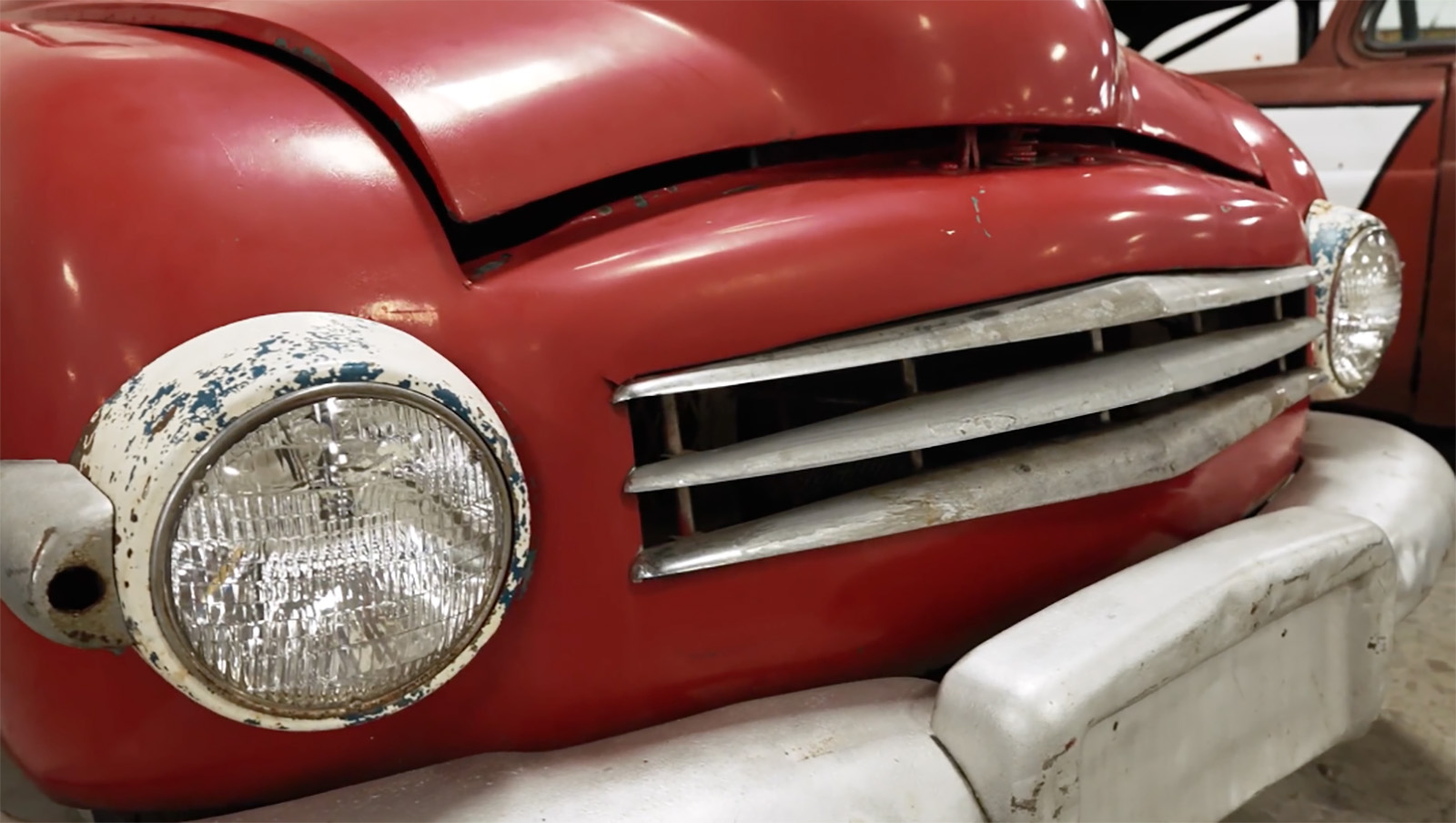
And not just any car: a car that happens to be in the collection of my friend and Autopian co-founder Beau Boeckmann, and is the current car in the series of cars that he’s considering selling in a big auction of part of his car collection. This is where we get to help Beau decide if he should sell a particular car or not! And this time that particular car is a 1947 Playboy, one of only 97 ever made, and probably one of only 40 or so that still survive today. Beau’s car was number 64, it seems, and here it is:
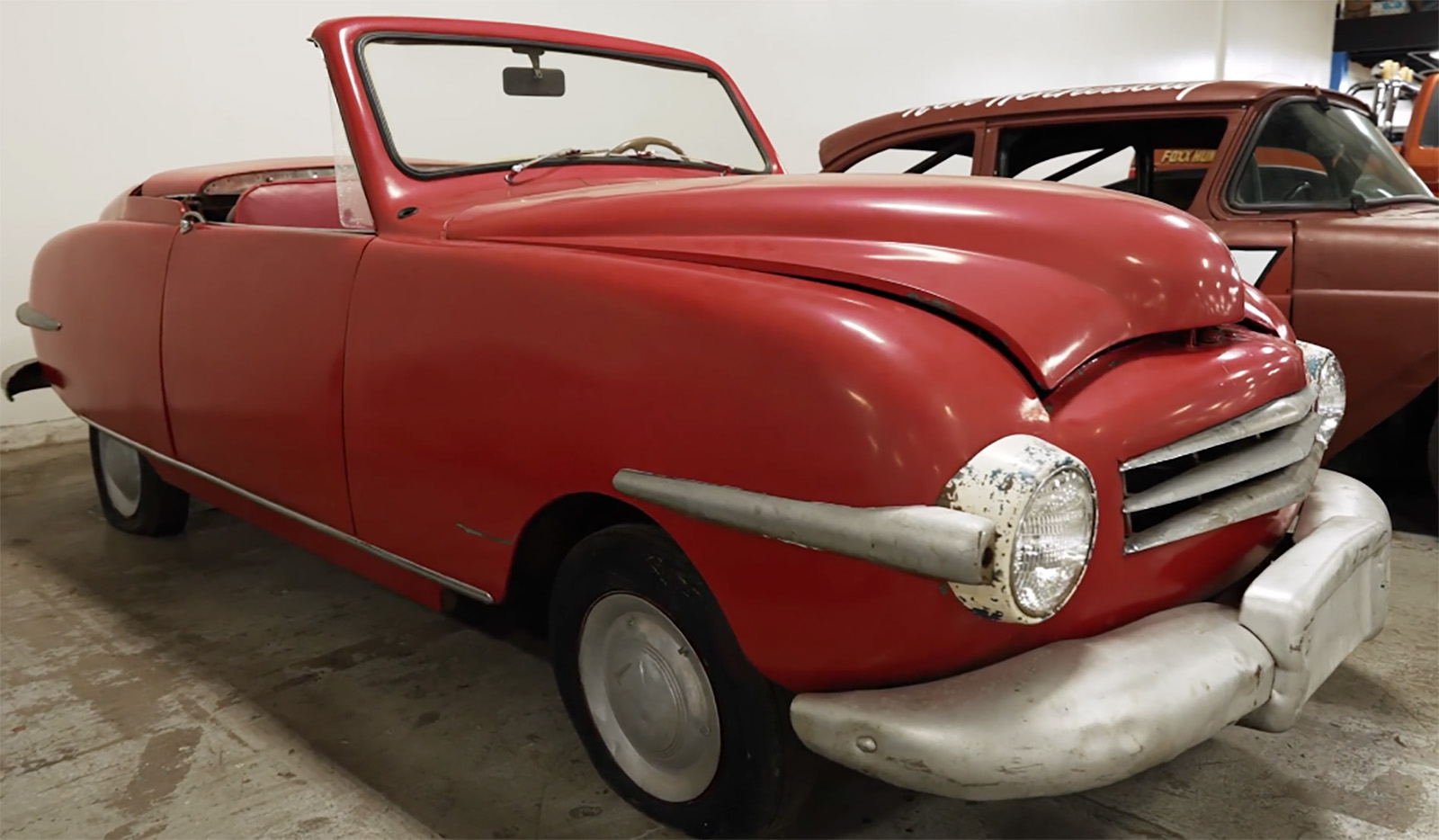
The Playboy wasn’t really what you might call an attractive car, though it does have a certain sort of dowdy charm to it. It’s quite bulbous, and the brightwork is oddly sculpted, with big, strange, clumsy bumpers and awkward strakes for the turn indicators and taillights at the front and rear.

There’s not really an angle where the car looks particularly good, which I think makes its connection to Playboy magazine all the stranger, and, therefore, better.
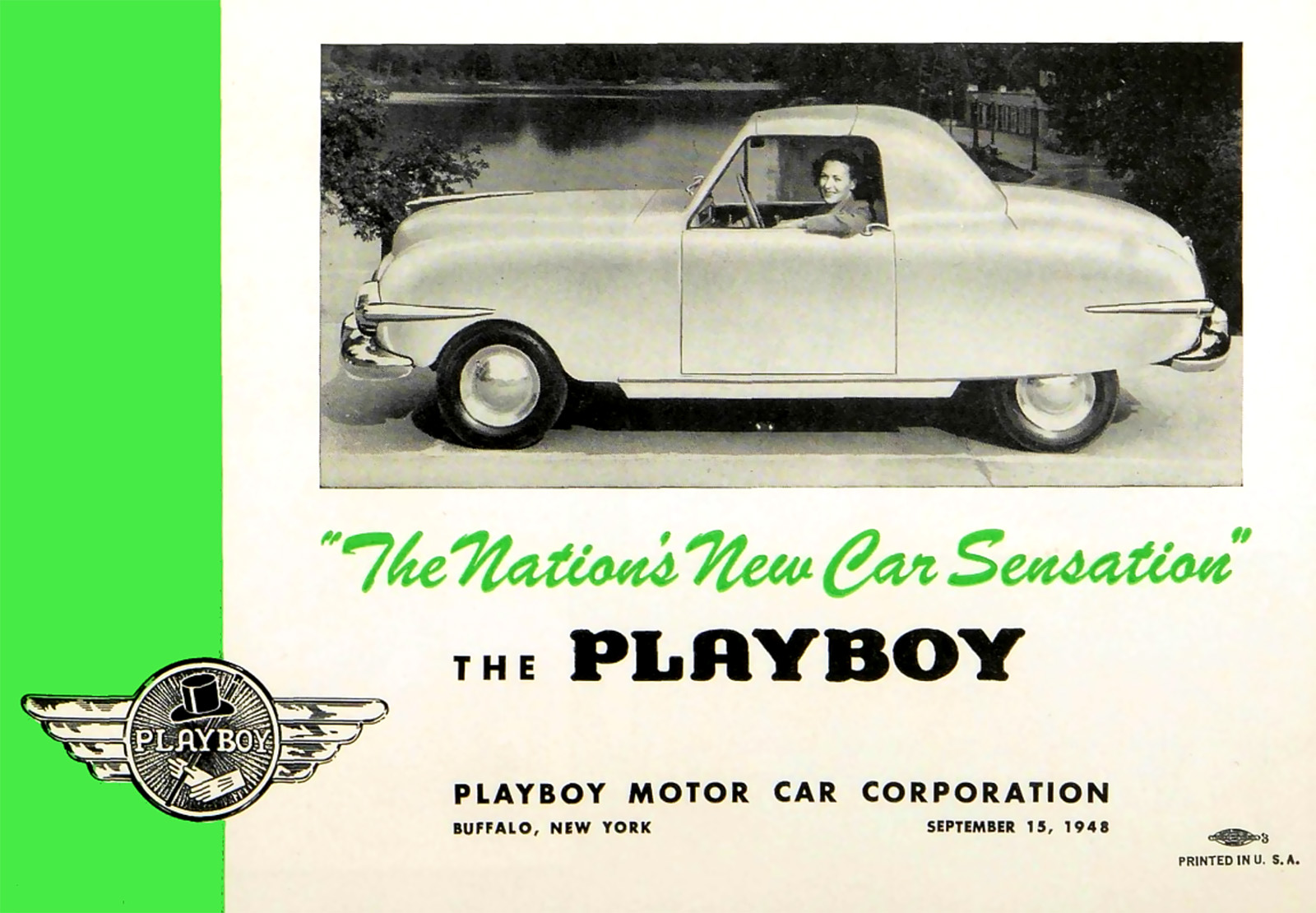
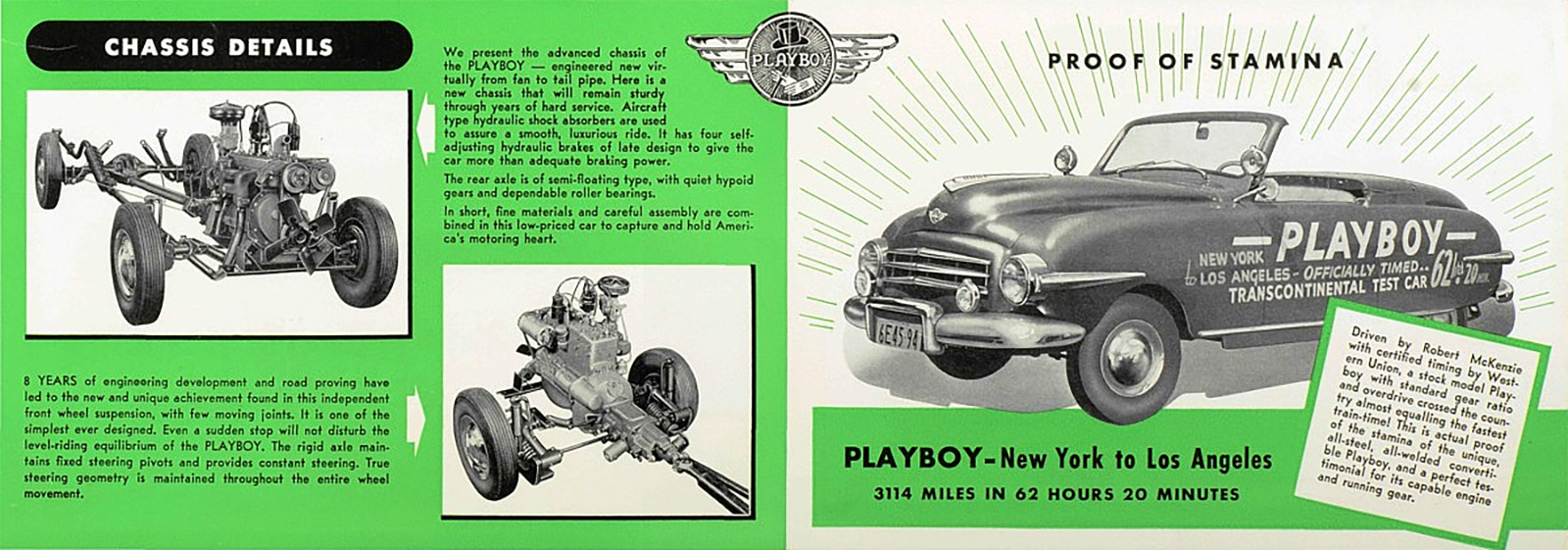
The Playboy came into being when Buffalo-area Packard dealer Lou Horwitz realized there was a demand after WWII for good, cheap, small cars, the kind that Packard certainly didn’t offer and only a few American carmakers like Crosley even attempted to provide. Horwitz’s plan was to make a car that leveraged off-the-shelf parts – like the engine, for example – to make something small, usable and affordable, with a target price of about $900, which would be about $13,500 today. Definitely an affordable car.
The prototype had, interestingly, a rear-mounted engine, but that was abandoned for the production model, which was far more conventional mechanically, though there was one interesting innovation added: the first production folding hardtop convertible.
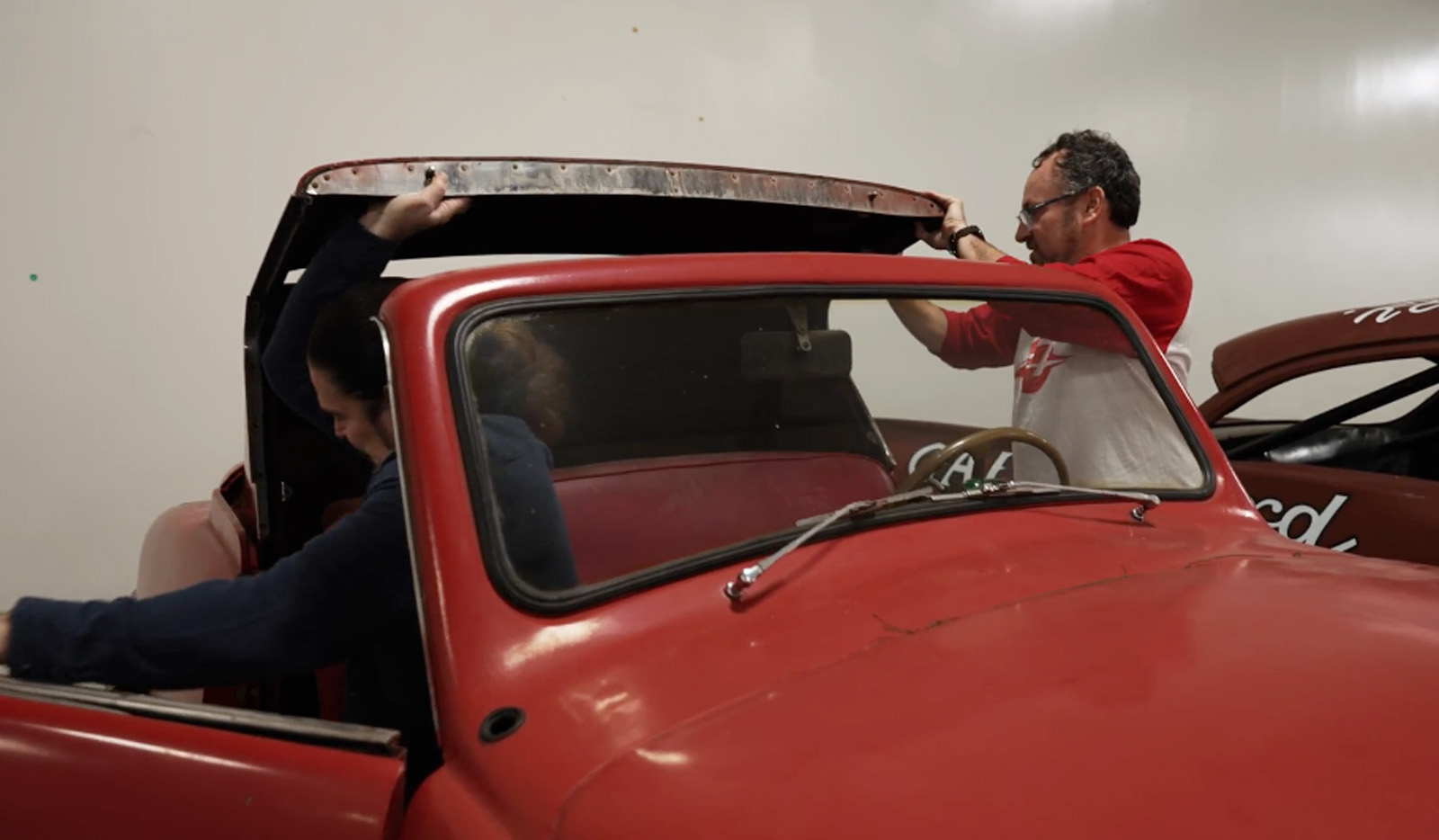
While convertibles had hardtops prior to the Playboy, they were the sorts of things that lifted off as a unit. The Playboy’s metal roof folded in the center – the first Playboy centerfold, really – and ended up in a tidy little recess that fit into the lines of the body. It’s really a pretty clever setup, and by far the most technically interesting aspect of the car.

Playboy did tout their “all-steel … convertible top” in their ads prominently, so they seemed to be aware of their car’s biggest party trick.
The cars came with either Continental or Hercules-sourced engines, both originally designed to be stationary engines for things like generators and other equipment. They could be used as an automotive powerplant, but they weren’t particularly ideal for the job.
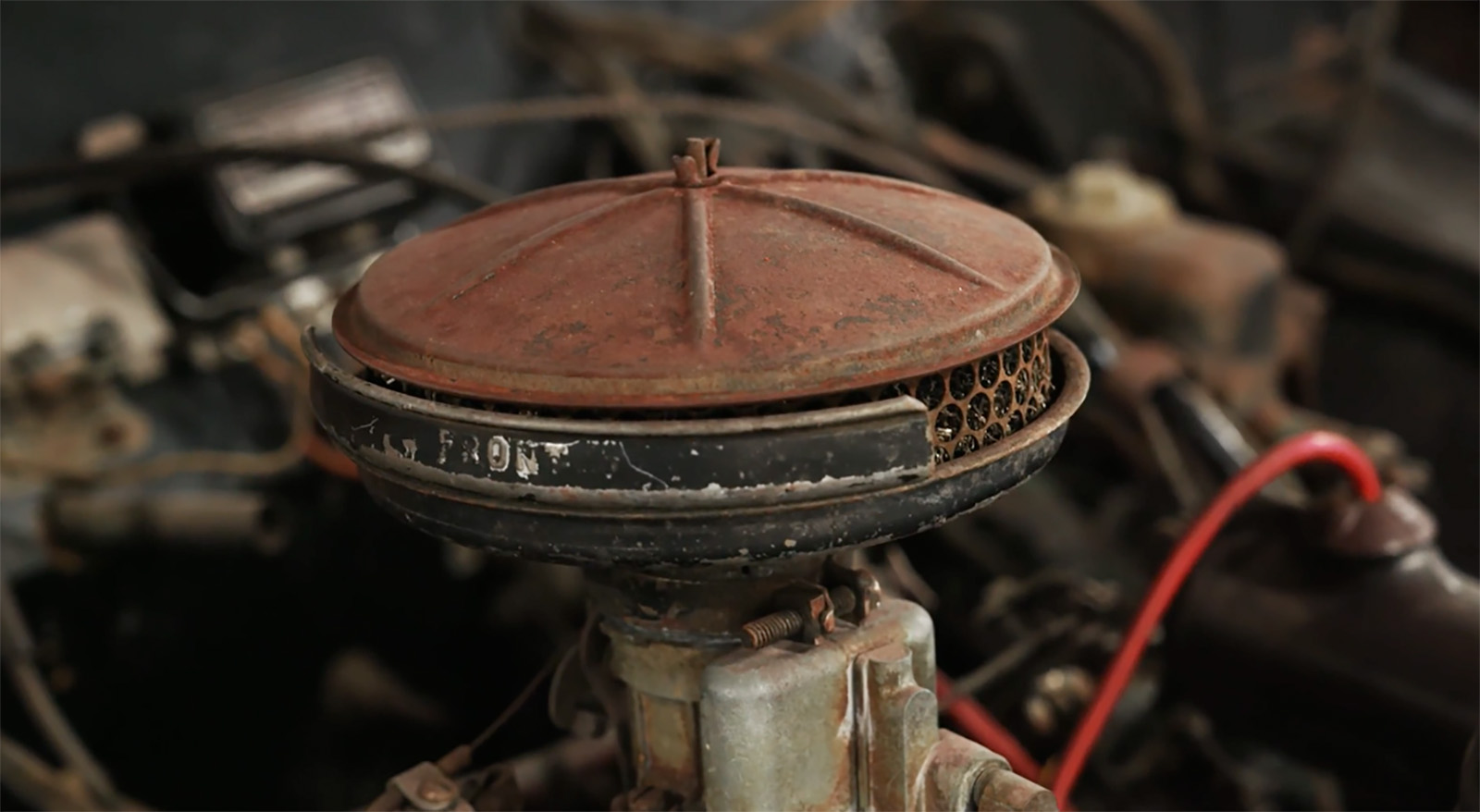
It was adequate, though, making about 40 horsepower, which was pretty typical for a small car of around that era, maybe even a little generous. It was said to get about 35 mpg, which was good (if likely exaggerated) and fit with its status as an economy car.
Horwitz was determined to make Playboy a viable company, but to do that he needed some capital, and that’s where everything fell apart. And, really, it wasn’t his fault at all. It was Preston Tucker’s fault.

Preston Tucker was, as you may know, the man behind the revolutionary Tucker 48, an extremely advanced and innovative rear-engined car that pioneered a lot of advanced safety ideas. Unfortunately for Tucker, the Securities and Exchange Commission seemed to have it out for him, leading to an eventual trial that resulted in a number of convictions for mail fraud, violation of SEC regulations, and conspiracy to defraud. While there was and is a lot of controversy around the fairness and motivation of the charges and trial, the damage was done and Tucker went out of business.
Tucker’s demise cast a pall over the whole industry, and small carmakers felt the impact. Nobody was interested in investing in new carmakers after Tucker’s trial, which happened right as Playboy was seeking funding. It was the worst possible timing.
As a result of all this, Playboy the car company declared bankruptcy in 1951.
Okay, that’s tragic and all, but how did this strange, sad little car end up giving its name to the most famous gentleman’s magazine of all time? Well, when Hugh Hefner was starting his magazine, he originally wanted to call it Stag Party – but a hunting magazine called Stag put a stop to that. So he needed a name.
Luckily, Hugh Hefner had a friend, and that friend had a mom, and that mom used to work for the Playboy Motor Company in a secretarial role. She told her son that she thought Playboy would be a great name for the magazine, and since the car company was dead, who’s going to stop them? Hefner liked the name, and the rest is onanistic and automotive history.
It’s all incredibly strange and unlikely, a chain of unrelated events that ended up connecting two very different things: a failed car and a media empire. It’s such a good story, though, that it gives this little car a fantastic provenance that, if anything, makes its failings and shortcomings just serve to enhance the overall story.
So! Is this odd tale enough to justify keeping this weird little lump? Or is it better off going to someone new who might truly appreciate it?


I think its time for Beau to let others enjoy his Playboy.
Gotta hand it to you for using the word onanistic! We should strive to use that word more often, not just to stroke our egos but for funsies as well.
Before the Buffalo-based Playboy car, there was a model called the Playboy from the Cleveland-based Jordan Motor Car Company (of “Somewhere west of Laramie” fame). This was around 1919 or 1920.
https://www.hemmings.com/stories/the-jordan-playboy/
How could they give such a suggestive name to what appears to be a child’s pedal car. Disgusting!
Let it go. It’s a cool story, bro, but that’s about all it has going for it.
Find someone who’ll give the paint a buff, and go out and drive it.
it really is no wonder why they sent you that “hot dog massager” machine.