

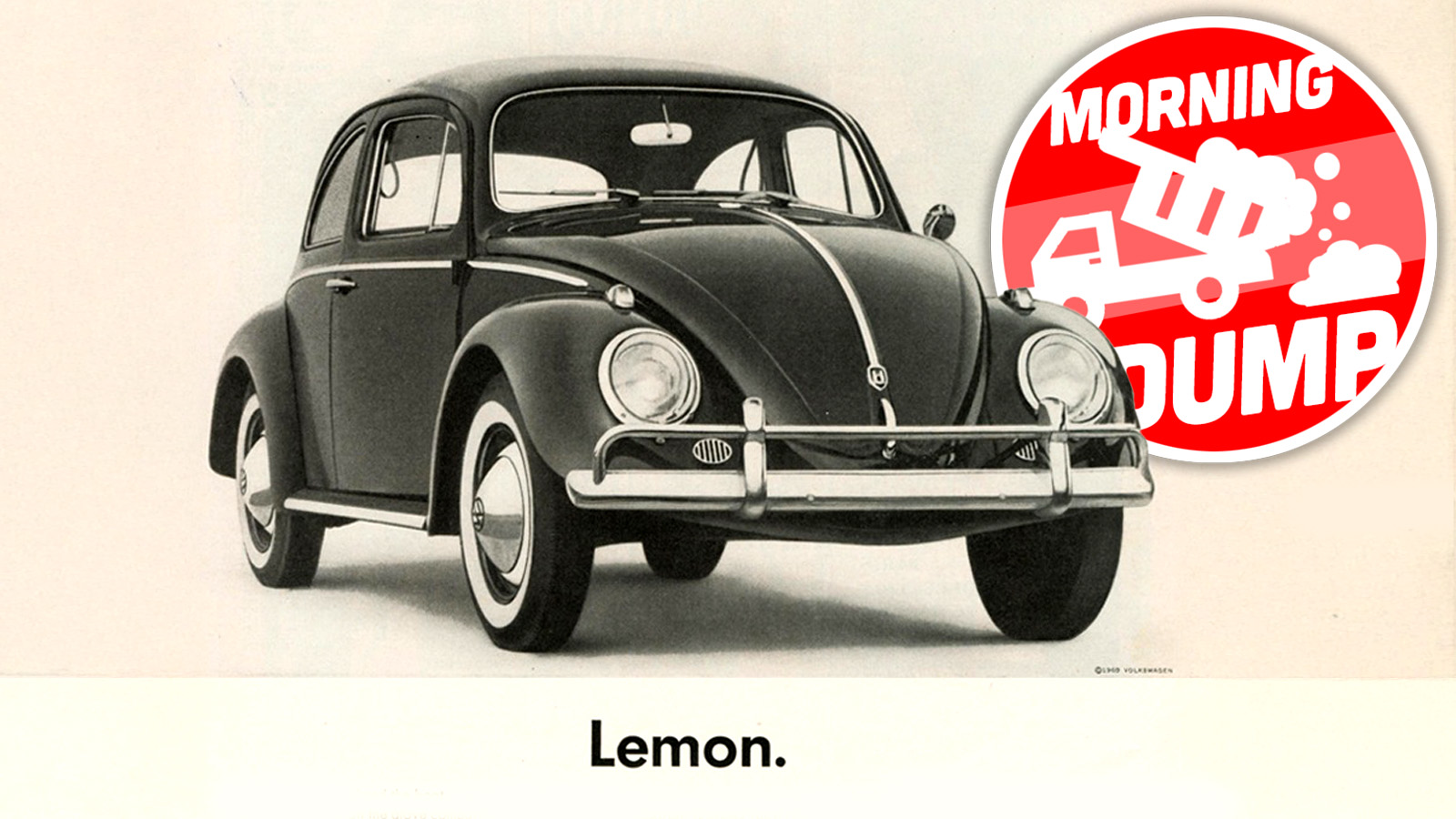
It’s been terribly frustrating to watch carmakers pretend like there’s just one globalized car market with identical tastes that can be commanded from abroad with little local input. Lately, the country that was ignored was China, and numerous traditional OEMs have seen billions disappear as local companies happily took their market share. The country I’m interested in? The United States.
Volkswagen and its various brands have faltered here, and there are numerous potential causes, though if you regularly read The Morning Dump, you know my belief is that these brands aren’t making products that people want. It’s a simple explanation with a complex backstory. Does Volkswagen have a solution? Maybe. In terms of automakers with names that start with V, I’d put Volvo in the category of global car companies that lost sight of an American audience, though they’re also trying to fix this.


Of course, American companies can also come up short in America, as Tesla has seemingly done with a common feature on its cars that has potentially tragic results for passengers. This localization issue continues to be a major problem in India as well, and Honda has a solution: just have an Indian company develop their next car. That’s new.
Volkswagen Might Appoint A New Head Of North America With Actual Power

While I was ostensibly talking about Maruti Suzuki in India when I wrote about how automakers keep making the same mistake of believing they know better about the local market than the local market, I could easily have been talking about Volkswagen in North America. The larger Volkswagen brand isn’t monolithic, and the performance of Porsche isn’t the same as the performance of Audi, but something has definitely been off lately, and a rotating cast of execs sent to North America haven’t been able to fix the problem.
According to Manger Magazin, some of that is by design, with the person put in charge having to report up to the board, thus limiting their power. The current sales boss for Audi, Marco Schubert, might end up taking the job here in the United States:
Schubert is reportedly set to move to the USA , according to the parent company Volkswagen ; there he would assume the newly upgraded position of North America chief for the entire company. No final decision has been made yet, warns one of those involved.
[…]
That Volkswagen’s current North America boss, Kjell Gruner (59), is to be replaced has long been considered a foregone conclusion within the company. Where his predecessor, Pablo di Si, was seen by the board in Wolfsburg as too self-assured, Gruner is considered too weak. Sales figures remained low in 2026, and the discontinuation of production of the electric ID.4 in Chattanooga cost around €500 million in the first half of the year. VW brand chief Thomas Schäfer (56) had already filled key top positions in North America a year ago, sending a clear signal. Now, new momentum is expected to come from the top as well.
Running the Volkswagen Group in North America is a tough gig (just ask Di Si), because the expectation is you’ll sell whatever they give you, even if what they give you isn’t competitive with the Toyotas of the world. This report from MM alleges that a new leader might get some new powers:
The plan is to give the head of North America greater influence in the future – including within the corporate hierarchy. Where VW executive Schäfer and corporate finance chief Arno Antlitz (56) currently share management responsibility for the region on the board, the future head of North America will be a member of an expanded corporate board.
I hope that’s the case. Volkswagen’s prospects in the United States are probably better than the company’s prospects in China, so giving some local power to the person in charge seems smart. I am also intrigued by Schubert, who allegedly got in a heated argument with Audi’s current CEO Gernot Döllner after Schubert pointed out that, given the product coming, he expected Audi to lose share to Mercedes and BMW. Döllner, allegedly, was unhappy with this appraisal, but I think history has shown that Schubert was right.
Volvo Is Getting Some Hybrids, Finally, And A Wagon
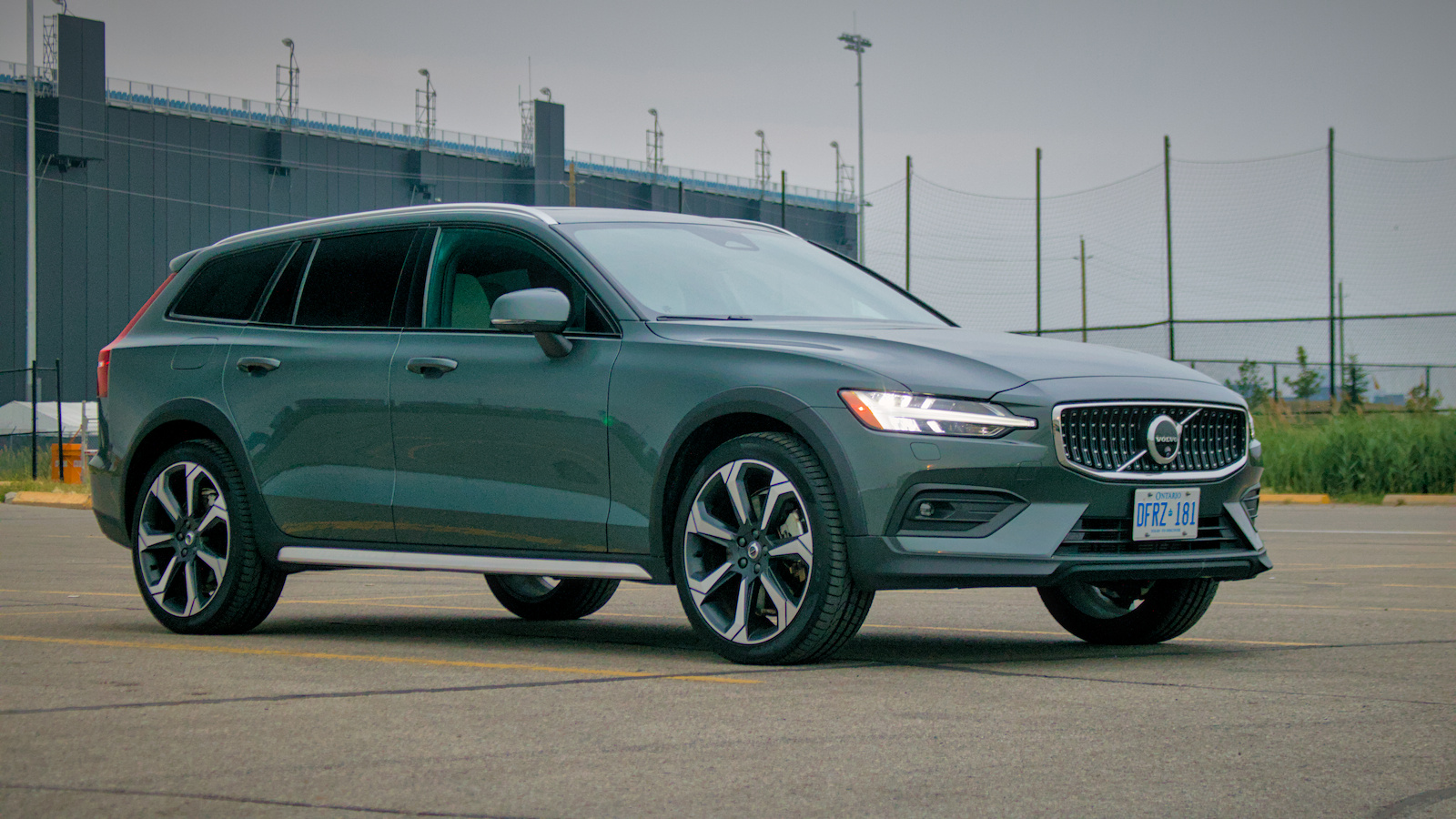
Volvo’s future in the USA looks bright, even if the present is a little dim. The company will start building more XC60s here, which should help bring down price. A big three-row crossover is coming, and probably a wagon (albeit an EV one). Will there be hybrids? Of course. Though I’m curious what kind after this Automotive News article:
The U.S.-built, three-row utility vehicle is larger than the XC90 and targets luxury flagships such as the Mercedes-Benz GLS and BMW X7.
CEO Hakan Samuelsson described that vehicle as an EV with a backup engine. “It will behave like an electric car with fast acceleration and a quiet ride,” Samuelsson said.
While bringing new metal to market, Volvo is updating its aging XC40, XC60 and XC90 with stronger hybrid options to bridge the gap as full electrification progresses more gradually.
“We think we need hybrid cars longer,” Samuelsson said, acknowledging that “electrification has not picked up as fast as we thought a few years ago.”
That sounds like the big three-row will be an EREV, which might be something similiar to the Zeekr 9x. Will the XC60 and XC90 get regular hybrids to get with PHEVs or will they be all PHEVs? That’s a little harder to discern.
NHTSA Takes Step To Require ‘A Robust And Obvious’ Way For People To Get Out Of Cars
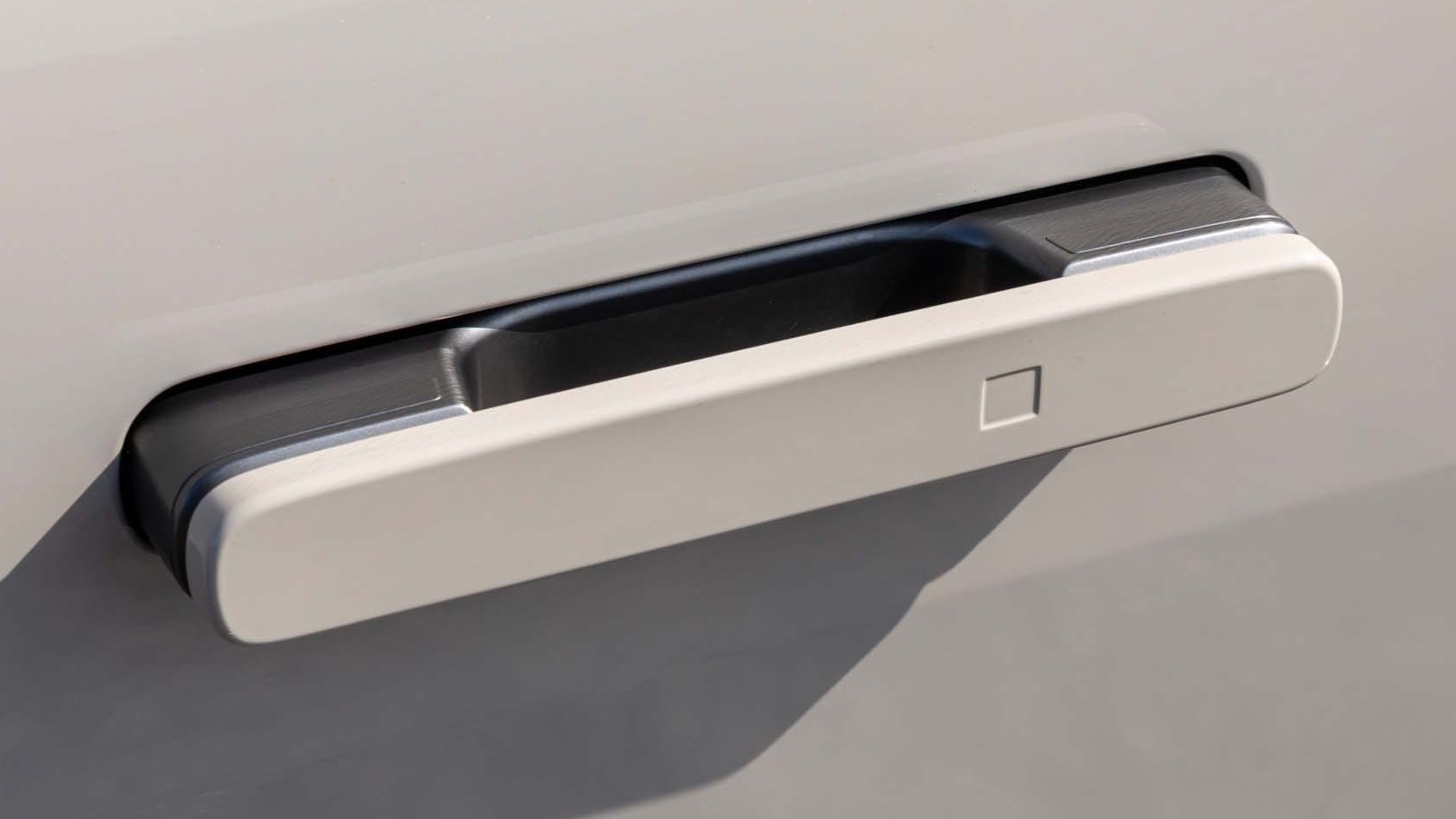
It should be clear that I do not like powered door handles, and that I’m on board with the growing attempts by regulators to make it a requirement that people can get out of cars in accidents. According to the San Jose Mercury News, NHTSA is taking a step to address the potentially fatal issue:
Nearly two years after three young people died of smoke inhalation inside a burning Tesla Cybertruck in Piedmont California, as a friend struggled to open its doors, federal regulators are considering new safety requirements intended to prevent occupants from becoming trapped when electronic latches lose power.
The National Highway Traffic Safety Administration announced last week that it had granted a November petition asking the agency to consider a new federal standard requiring a “robust and obvious” door egress system in all motor vehicles. The decision begins a rulemaking process but does not guarantee that the agency will ultimately adopt a new standard.
“It is imperative that NHTSA moves swiftly through the rulemaking process to develop and implement new federal door egress safety standards that will protect future vehicle occupants,” said Andrew McDevitt, the attorney for the Nelson family whose son Jack died in the Piedmont crash. “But these will arrive far too late to save the lives of Jack Nelson, Krysta Tsukahara, Jeffrey and Michelle Bauer, and so many others killed and seriously injured by Tesla’s completely inexcusable door design.”
This is one of those things that’s a solved problem that we seemingly unlearned.
Honda: Screw It, Tata Can Design The Car

India, like the United States, is a target market for a lot of the older OEMs. Also like the United States, India has a large population and a desire to keep Chinese cars out of the market. One of the companies hoping to make up for lost share is Honda, which has seen its sales in the country dwindle.
How? Simple, just get its Indian partner Tata to develop its next car.
Honda Motor Co. has outsourced development of a new vehicle program to Tata Technologies Ltd., people familiar with the matter said, the first time the automaker is entrusting an Indian engineering services firm with building an end-to-end platform to help cut costs.
This platform is expected to support multiple car models, the people said, asking not to be identified as the details are private. It is intended to accommodate conventional fossil fuel-powered models as well as electrified powertrains for hybrids and electric vehicles, the people added. They did not specify the markets where these Tata-engineered vehicles might be sold.
The farming out of this crucial function marks a departure for Honda, which has typically kept development of core vehicle platforms largely in-house or within its established supplier network. It comes as the Japanese automaker overhauls its product roadmap after reporting its first annual loss since its founding in 1948, shelving several planned electric vehicle programs and accelerating cost-cutting efforts.
I’m assuming most of these cars will be sold in India, but it sounds like they could end up in other export markets.
What I’m Listening To While Writing TMD
It’s always great to check on a video on YouTube and be surprised that more people enjoyed a song you love than you’d have guessed. Today, the song is “All Mirrors” by Angel Olsen, which has more than 1.3 million views. Awesome.
The Big Question
What’s one type of car that a Volkswagen brand doesn’t currently sell in America that you’d add to the line if you were in charge?
Top photo: Volkswagen




I hear some of the writers are real animals. 😉
I was going to ask why on Earth they would consider putting someone from Audi in charge, but it sounds like he at least acknowledges the problems they have. Whether he has solutions is, of course, yet to be determined.
We go through this every once in a while because the industry veterans either don’t leave their knowledge for the next generation or they try to pass it on but nobody listens.
I thought we learned this when the last gen of the Mondeo failed in both NA and Europe. The primary criticisms were that it was too soft for Europeans and too hard for American. Americans like boaty, large cars because of the straight roads. Europeans like cars that handle well, and do not need to be that large.
Toyota and Honda understands this, it’s why cars like Sequoia and Pilot are only sold in North America, or in countries with a similar environment and consumer purchasing power (Gulf countries).
TBQ: More 5 cylinder.
Ok, probably not going to set sales records with that, but c’mon, think of the smiles per gallon!
I’d add Skoda
Frankly, while I appreciate the economic and social effect of shuttering a couple of brands, that’s my first inclination with VW and Audi: let them die in the US/Canada, but strategically. Porsche and Bentley can keep on keeping on.
VWoA should focus on Scout, and maybe get into bed with Slate, and either form a new company that bridges Scout, Slate, and Rivian’s (because of their prior investment) tech (but for passenger vehicles), and expand Slate to a wider offering of vehicles faster (and maybe cheaper). Frankly, I’d make Slate the new volume brand, Scout the “step up” and intermediate off-road-friendly brand, and Rivian where it is, premium with solid off-road credentials.
Leverage the strengths of being as big as VAG is (which will instill more confidence in Slate, and is probably the most straightforward and makes use of the momentum they’ve already started) and having existing networks and dealerships. Displace Mitsubishi, Kia/Hyundai, and Nissan as a go-to purveyor near the bottom of the market. Leverage the factory in Chattanooga. Be proud to be “Made in the USA” despite being owned internationally. Have the existing Slate Truck, and add Wagon, Hatchback, and fixed-roof compact/mid-size Crossover vehicles to the lineup in the exact same basic, DIY-custom vein. Appeal to the makers, from the folks doing side gigs on Etsy and such, to the contractors who just want a basic vehicle that can haul their tools, keep their battery-powered tools charged, look decent, and perform fairly flawlessly for 5-7 years.
TL;DR: 1: Kill VW & Audi in the U.S.
2: Acquire Slate and maybe Rivian
3: Slate becomes the new VW
4: Scout displaces Audi but focuses more on off-road than “autobahn”.
5: Rivian keeps doing what they’re doing but with more financial backing.
6: Porsche and Bentley remain largely untouched. Maybe a smaller Bentley crossover, and a Porsche wagon, but otherwise they seem generally OK right now.
As a current tata customer, good luck to Honda. You’ll soon see the Hammerhead Eagle i-Thrust at dealers everywhere.
“What’s one type of car that a Volkswagen brand doesn’t currently sell in America that you’d add to the line if you were in charge?”
I’ll give you two:
EV Polo and EV Golf.
Both available as 4 doors and 2 doors.
A reliable car.
I know a driving instructor that loved her vw, but gave up on keeping it from falling apart.
I know rabid eco warriors that won’t touch another hybrid, due to repair costs.
Seems basic, like city officials in America that can’t grasp that the first ten things on their list are Crime.
If you explain it to them slowly, they react, “No, that can’t be it.”
That ship has already sailed thanks to the ADAS mandates and the addiction to subscription income via telematics. Not to mention the gigantic canyon between new car buyer wants and used car buyer needs.
Instead we’ll keep getting highly depreciating, impossible to repair, and financially ruinous vehicles that might last 12 years before being financially totaled, and you’ll like it or else.
Amarok. Just refuse to pay the tariff, our government is a bunch of criminal idiots anyway, what are they gonna do
Amarok is just a rebadged Ranger, isn’t it? Just buy the Ranger.
Well where’s the fun in that?
Also, there are two Amaroks. The ones built in Argentina are the original, designed by VW. The ones built in South Africa are based on the T6 Ford Ranger, but heavily altered to look and feel like a VW. Only a handful of parts visible to the occupants and passersby are the same as the Ranger.
Anything that has a name that does not start with “ID.”.
The Chinese knockoffs are known as Fake ID.s.
TBQ. Golf-Camino. Though I prefer the name El Conejo.
Well they need to fix the finances first and that is a mammoth task. They have a very modest share of the SUV market and when they upsized from the Touareg they also downsized available performance and quality. Original car with an Audi-sourced V8 was surprisingly good and I enjoyed owning one . Obviously hybrid option
“The Big Question:
What’s one type of car that a Volkswagen brand doesn’t currently sell in America that you’d add to the line if you were in charge?”
A modular-type pickup truck. Available as 100% electric, 100% ICE, (with a manual option!) a hybrid, or EV with range-extender – all in the same truck.
Also the same truck available as a regular-cab long-box, an extended-cab medium-box, or a crew-cab short-box.
If they priced them accordingly based on powertrain and interior content, they wouldn’t be able to keep them in stock.
As someone in the industry, there’s many good reasons no one does anything you describe. ICE and Mild hybrid are one platform, as you can package the small battery somewhat easily. PHEV and EV is another platform, as you need a ton of room to accommodate the large pack necessary for good EV range.
Unfortunately the only people that buy manuals today in the US are car enthusiasts, and we are a rounding error in sales.
Multiple box lengths don’t actually sell more vehicles. It’s much cheaper to use 1 box, skip single cab, and just change out two sections of frame rail depending on crew cab vs quad cab. Single cab work trucks are only really bought by huge fleets, who don’t have to car about what the driver actually wants in a vehicle.
Your fundamental flaw is that you’re applying used car people needs, instead of new car buyer wants, to what would sell new vehicles.
Like the question asked, if I were in charge, I’d figure out a way to add an inexpensive small truck that fleet managers could option as gas, hybrid, or pure electric. A small regular-cab truck that got great fuel mileage would be awesome. Plus, for the showrooms, offer a crew-cab model with a 3-foot box for those people who just have to have a truck that for the most part will only haul people.
My company would be more focused on unique options and customer satisfaction than solely on the bottom line. First bring in the customer base. Then get them to upgrade to higher profit models as their needs grow.
What everyone has figured out that builds vehicles is this just doesn’t work. A single platform that does everything sounds great. Unfortunately the reality of product engineering requires you to weigh the trade offs any feature introduces. ICE centric designs have requirements that are diametrically opposed to EV centric.
My point is your stated goal sounds great, but it’s not possible in the reality we’re currently living in. Maybe when EV energy density has advanced enough to provide good range in the volume and weight of a 4cyl+transmission.
I think VW is missing the California camper van. It would sell better than the IDbuzz and even id expensive it would be a halo car to get people in the door.
The only VW I would even consider buying is a manual transmission, long-roof GTI. Without an idiot interior.
Yeah, not holding my breath.
Agreed! They’d be $100K here, but that’s less than half of a Class B from Airstream et al.
from my circle of car friends, the perception is that VAG are not to be kept beyond a standard warranty.
electrical issues, electronics issues, when your trick suspension goes out the smart choice is to just rip it all out and coil-over your way out of your problems, but if other electronics issues come up, you may be hosed.
You could say that about all the Germans, and really most/all European brands at this point.
“German engineering” at this point means “how can we complicate this beyond reason, make it hard to work on, and ensure that it lasts just past the warranty period?”
VW needs hybrids. They needed them a decade ago when they killed off the TDIs.
Diesels were the only thing that set VW apart in the US market and gave someone a reason to even consider VW instead of a Honda, Kia, Toyota.
They HAD hybrids and cancelled them for some unfathomable reason. Both Jetta and Touareg were available for several years at the same time that the Diesels were still popular. There didn’t seem to be any reason to stop offering them but stop they did. VW can’t get out of its own way, it seems.
They did but the VW hybrid was massively expensive. A base Jetta started at $16,000. A loades SEL was $25K. The hybrid STARTED at $26K.
“What’s one type of car that a Volkswagen brand doesn’t currently sell in America that you’d add to the line if you were in charge?”
The 914. C’mon. DO IT.
Absolutely yes.
A lightweight stripped-down minimalist car like the 914, or the Speedster before that.
Just whatever is in the parts bin with just enough car to hold it together.
Something modular that could be like the slate/golf pickup, the Brazilian-built VW Fox, or the 914, depending on how the pieces go together
Make an EV, fix the range problem by making it too exciting and uncomfortable to drive more than 150 miled
Volvo is 20 years late to the hybrid party. When the second gen Prius came out, left-leaning professionals who bought Volvos as a matter of course for decades started trading them in for Priuses. Probably mostly for environmental reasons, but the expense and inconvenience of owning the fragile 1990s era FWD Volvos must have contributed to the switch.
I’m a bit confused by this article, because Volvo certainly HAD hybrids in the US- the various “Recharge” models, including the stupidly expensive V70 Recharge that was the closest thing to a hybrid sold in the US I could stand. Just not idiotic the “more than a Mercedes wagon” pricing.
Did they kill them off? Can’t say I have paid much of any attention to Volvo of late, my field of fucks to give about them is quite barren.
I too stopped paying attention to Volvos, so I asked the interwebs. Looks like they first sold a hybrid in 2016, so they were only 10 years late. Still plenty of time to lose lots of customers who discovered that cars don’t have to break down all the time and cost a lot to fix.
I feel like 2016 is about ontime for a premium brand. But when did they stop? I assume they did something stupid like saying they were “all in” on pure EVs.
Ultimately moot, because the only one I had any interest in was priced in lunacy-land, since they only offered it as a “Polestar Edition”. If the V70 hybrid had the same relatively small markup as the S60 or XC60 hybrids, I would probably own one, despite my general disdain for modern Volvos.
No, Volvo didn’t kill off hybrids. Every ICE vehicle they sell in the USA is either a mild hybrid or PHEV. They have zero pure gas cars
Then I really don’t get this article at all. “Volvo finally gets hybrids”?
I guess they are finally getting a full hybrid with a small battery?
For some reason some people do not see PHEVs as hybrids.
Baffling.
TBQ: A $35,000.00 Westfalia. ICE or hybrid.
Done
Pass the bong, bro. A 1980s Westy is $35K
And that’s the problem. Those should be much cheaper.
Why? They are worth what people are willing to pay for them.
True
VW should sell Skoda over here, or at least the VW Polo and Caddy
But what they really need to do is make good cars. They’re not known for making good cars over here. Perhjaps they should’ve gotten a laid-off American engineer, or one laid off/bought out from American Honda or Toyota, to lead their US operations.
Tho you might wind up with a supercharged, turbocharged, self-bricking V8 AWD GTI that stickers for $87K.
The issue for me buying a VW or any other foreign made automobile is that I want more cargo focused vehicles, which the US government has had a 25% import tariff on since LBJ
TBQ:
Hybrid. Like, 10 years ago.
If by “type” we mean “model”, then hybrid Tiguan.
If we’re talking VWs I want rather than what a CEO should do to keep the company afloat, then I will say manual Golf R wagon with better materials and HVAC knobs.
Kinda liked the Arteon as well.
TBQ: Reasonably priced hybrid hot hatch. Also, the PHEV euro-market-only wagons.
The Amarok and the Mexico market VW Caddy (both van and truck form).