


How far would you go to make a car faster in a straight line? You’d obviously add more power and find creative ways to make there be less of the car to move around. However, in terms of safety and integrity, is there a limit on how much you’d take away? Apparently, for Pontiac in 1962 those limits were sorely tested by a final, eleventh-hour effort to make the ultimate drag racing machine in the final days before General Motors put a stop to factory backed racing. With a name like the Catalina “Swiss Cheese”, you know we’re in for a crazy story.
“It Ain’t Cheating If You Don’t Get Caught”
That statement above might be a mantra in the creation of competition cars. More than that, if there are no regulations on some insane idea to make a car faster or more competitive then it’s not illegal at all.


Legendary race car builder “Smokey” Yunick was notorious for these types of things. A twenty-foot long fuel tank filler pipe that held a bunch of extra gallons of gas? Hey, the regulations only mention the fuel tank size, right? In the same manner, “Super Stock” drag racing cars needed to be “stock”, but nowhere did the regulations say with absolute certainly exactly how much of the “stock” car had to remain. That “read between the lines” attitude was critical during this time, since this was the short-lived era of the early sixties when the Big Three was going all-out to battle each other with factory-made specials on the drag strip.
I went through the whole range of these tire burners a few weeks ago:
There was Chevy’s drag strip weapon was the Z11 Impala. It ditched niceties like a heater and radio and featured extensive use of aluminum body panels to reduce weight by 300 pounds over a stock model. Only 57 were made.

Under the hood was a specialized 427-cubic inch “W-series” V8 engine rated conservatively at 430 hp, though it almost certainly was pumping out around 500.
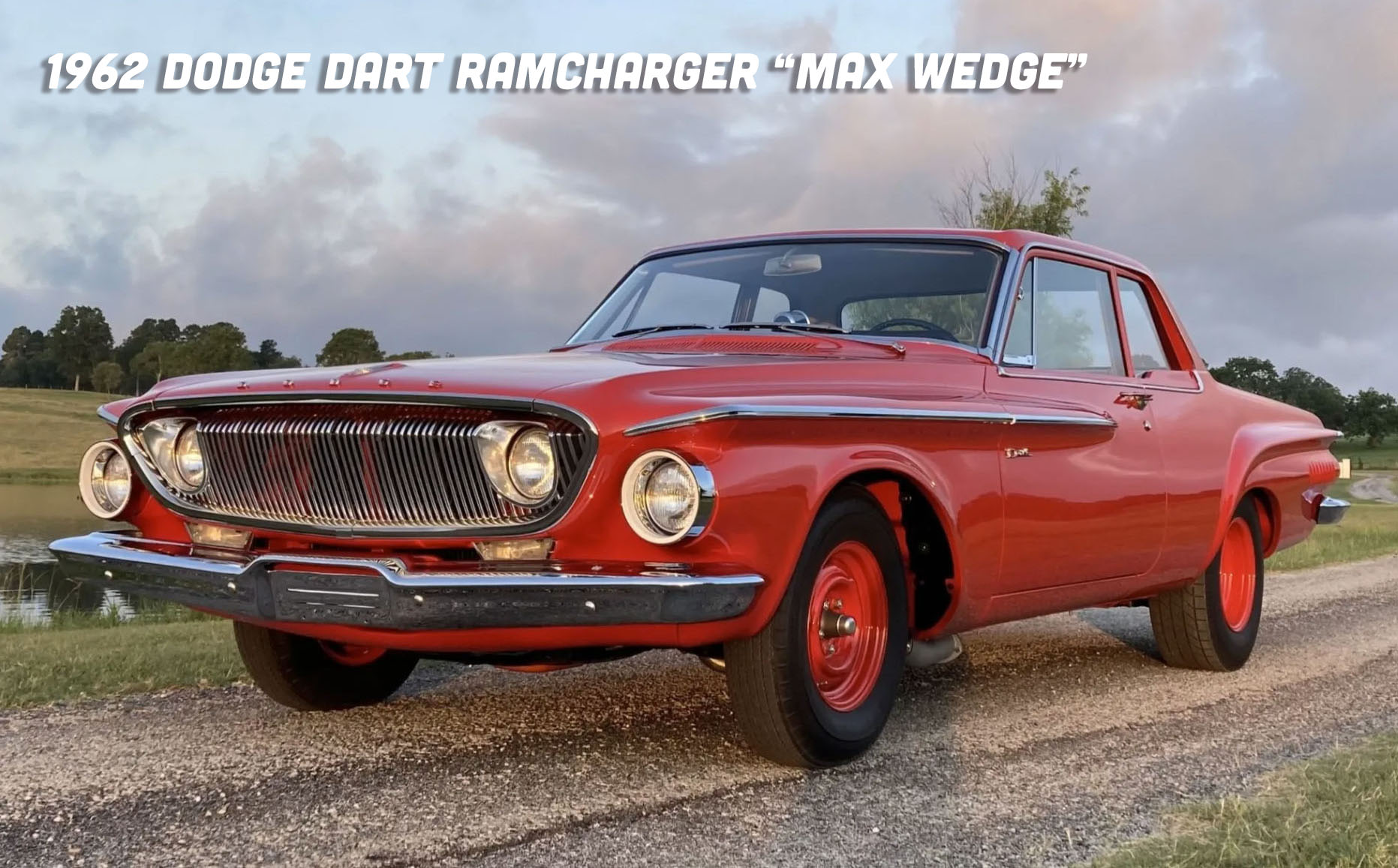
You can be damn sure that Mopar was in the running with Dart Ramcharger. It might have been searingly ugly, but at the track it was just plain rubber-searing.
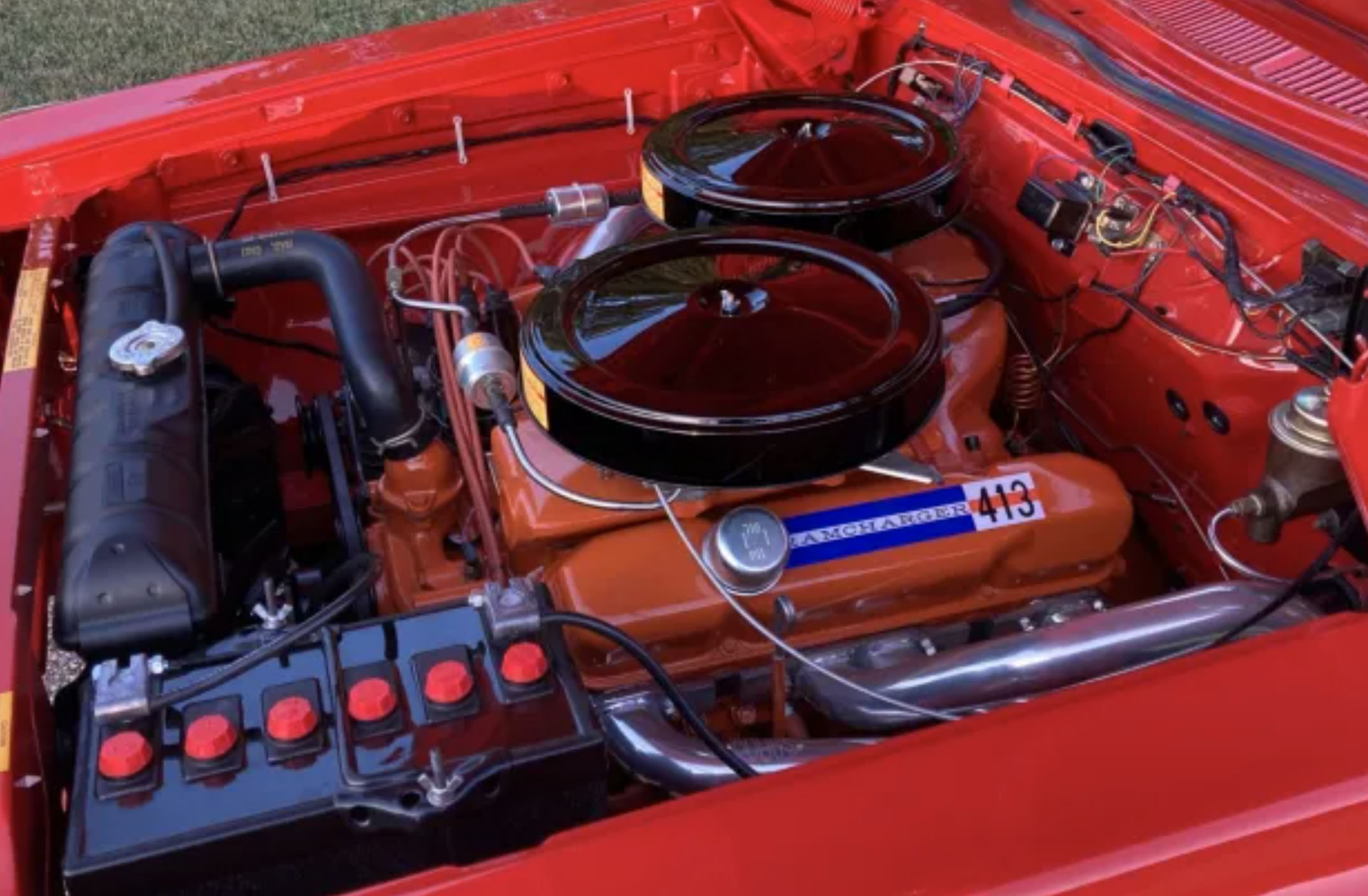
Under the hood was a 413 cubic inch “Max Wedge” V8 which, like most of these other Big Three powerhouses, featured one carb barrel for each cylinder. With an insane 13-5:1 compression ratio, it produced 420 horsepower.
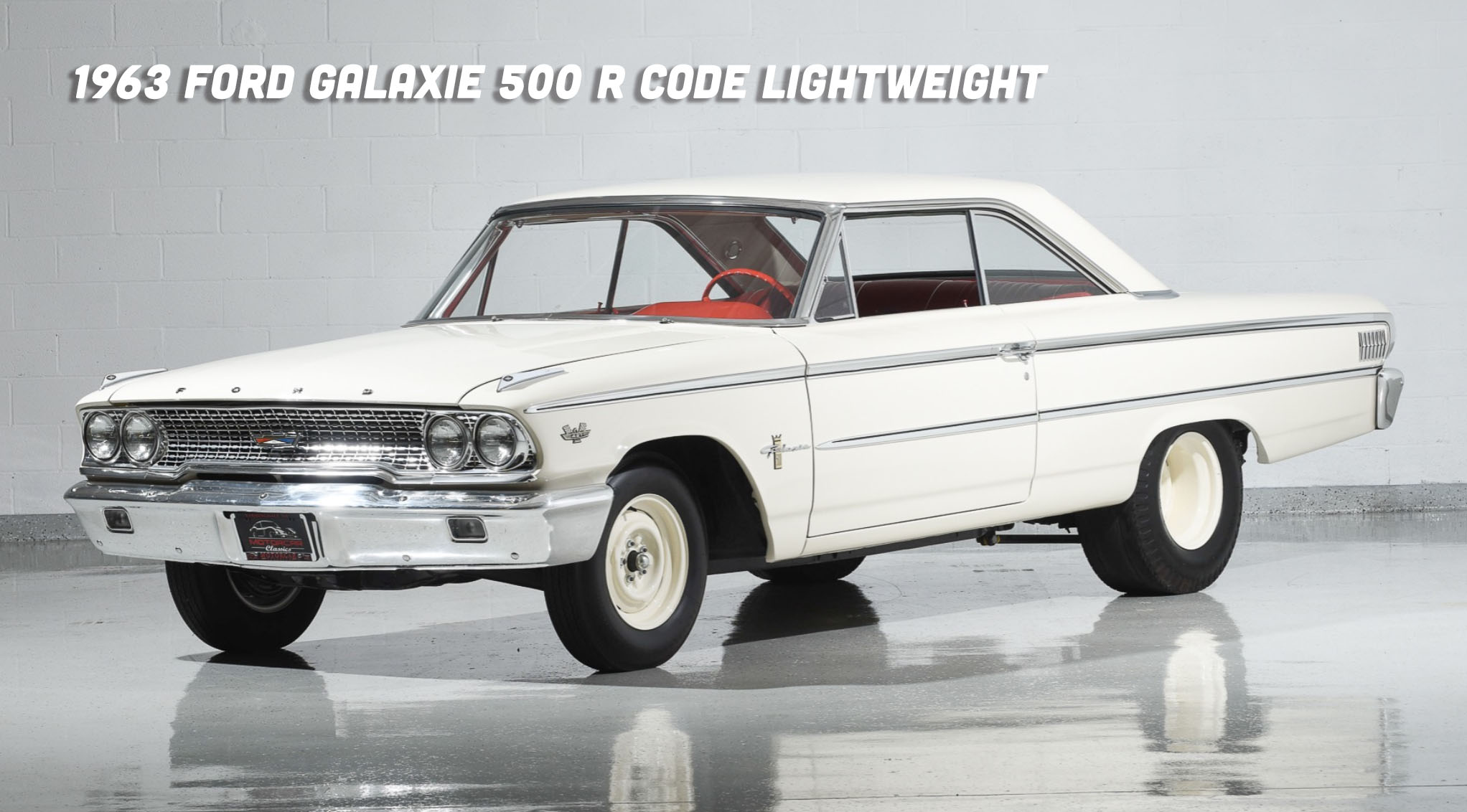
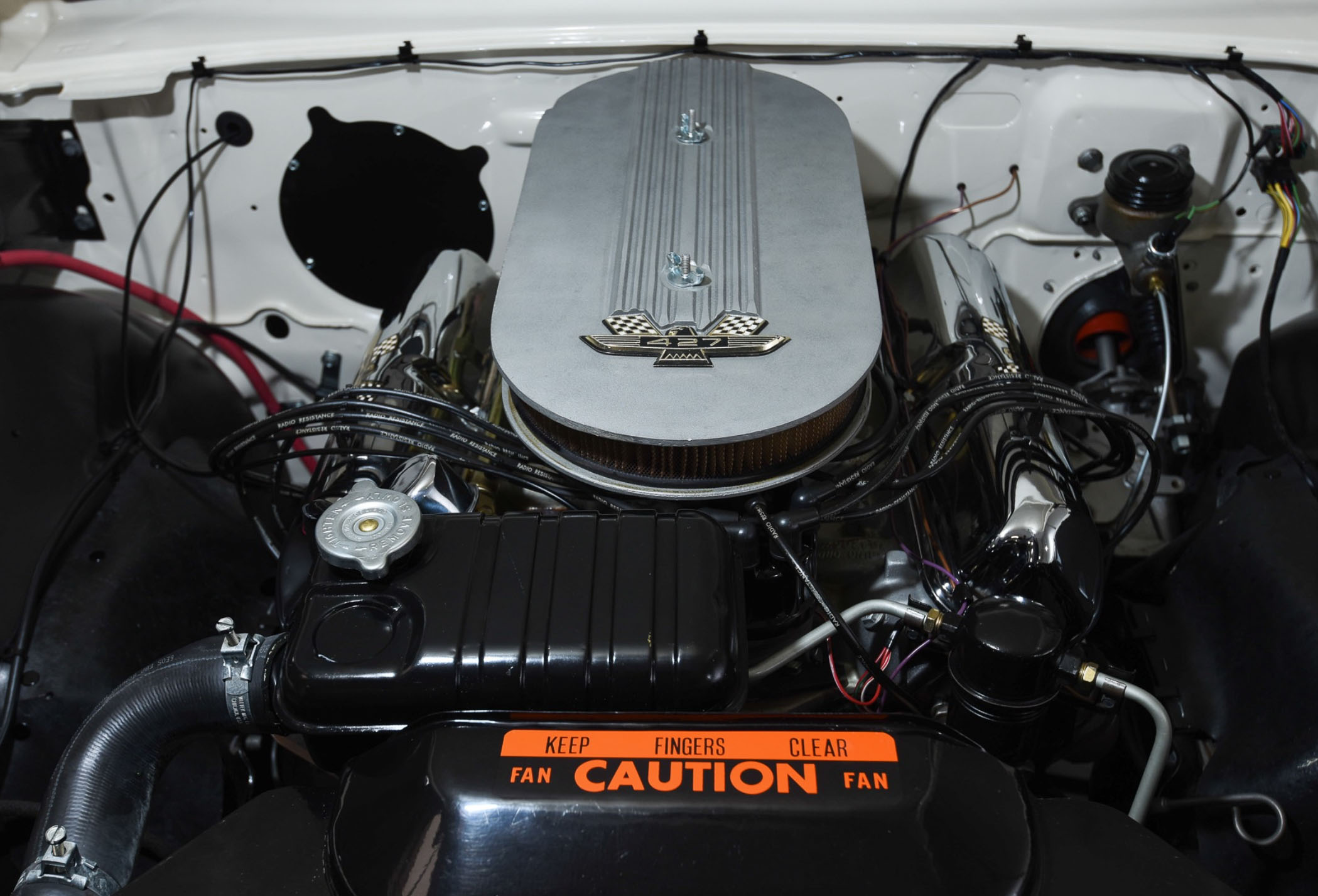
Ford also built anywhere between 200 and 212 lightened Galaxies powered by an “R Code” 427 V8. I’ve written about later versions of this car, but this early incarnation was purely for the strip. A whopping 400 pounds of weight was removed from this behemoth through the use of fiberglass for the hood, fenders, inner fenders, and deck lid, along with aluminum bumpers. The inside was stripped of the radio, heater, as well as any kind of carpeting and sound deadening or insulation; apparently Ford provided simple cardboard sun visors to replace the stock items.
Mechanically, it was a Ford dream spec with a 427 cubic inch R-Code V8 with dual Holley 4-barrel carburetors and insane 14:1 compression. Rated at 425 horsepower, it realistically produced closer to 500, as did the rival Impala. Add a Borg-Warner T-10 4-speed manual transmission and a 9-inch rear axle with 4.11:1 gears, and this was one solid factory dragstrip machine.
That’s some formidable competition there; if Pontiac was going to win against those machines it needed something special.
Super Duty Wasn’t Just Hype
Pontiac began with their “standard sized” Catalina hardtop coupe painted in a special Firefrost Silver Metallic (a Cadillac color) and added their hottest motor: the 421 Super Duty. The team involved was led by Bunkie Knudsen, a man who had reportedly been given five years to turn Pontiac’s fortunes around and revitalize the then-dying brand. Knudsen’s team included the legendary Malcolm McKellar and the man who would soon head the Pontiac division: John DeLorean. Starting with a standard 389, the motor was bored out and given lightweight forged pistons connected to a forged steel crankshaft. Compression was as high as an alarming 12:1; there was no running this thing on dishwater gasoline.

Two Carter AFB four-barrel carbs sat on an aluminum intake, but a controversial option was the aluminum exhaust manifolds. These supposedly reduced weight by around 40 pounds compared to the heavy cast iron ones, but there was a huge catch: aluminum melts! You’d be fine for a sub-twenty-second run down the drag strip, but extended use would result in warping at best or totally molten headers at worst. This was one feature where the weight savings probably wasn’t worth the hassle, but in the heat of battle every pound counts.

As with the Super Duty’s competitors, official power output figures were grossly underrated. On the books these Super Duty V8s made 405 to 410 horsepower, but in reality, they produced at least 450 and even upwards of 500. Oddly enough, these race specials all left the factory with three speed manual transmissions.

Like the rival lightweight racers, the Super Duty Catalina was first totally stripped out; everything that had to do with comfort and handling disappears. No need for a front anti-roll bar if you aren’t going to go around corners, right? A vinyl bench seat up front sat in an interior with no radio, heater, sound deadener or body sealer. Supposedly plexiglass windows to replace the glass was considered but not actually implemented, at least not at the factory.
It’s fun to see all of those blanking plates on the dashboard for the automatic transmission column selector, the radio, the heater controls, the clock and pretty much everything. Looks like they left in the cigarette lighter since this was the era when that was essential. The hand cranks for the front quarter vents also seem like a missed weight loss opportunity.

The next step in “adding lightness” included substituting bolt-on steel items like inner and outer front fenders plus the hood with aluminum ones that were reportedly thin enough that they would dent with rather minor pressure. All these tricks were employed for weight savings to get down to the magic minimum weight allowance of 3300 pounds. These changes all helped, but the big Pontiac was still heavier than the team would have liked. Removing one of the two wipers or losing a sun visor and rear window cranks like Ford did with their drag race specials wasn’t going to get the job done. Still, what else could they have possibly taken out? Well, desperation results in unique but possibly ill-advised solutions.
As Long As It Makes It To The End Of The Strip
I’m not even close to being an engineer, but I know that metal parts get their strength from bends and folds; the frame of a car is a perfect example. The side walls play a part as well, but you could take away some material, and you’d still probably be fine. However, those developing the Super Duty Catalina seemed to have no fear when it came to testing these limits.
That’s right: the name “Swiss Cheese” for this Pontiac came from the controversial way that weight was taken out of the heavy frame. First of all, like most cars the stock frame was a “box” section in profile with four sides; the builders of the Super Duty took the bottom side off of this “box” so that the frame was now just an inverted “U”. Combined with removal of one of the cross braces those changes took out some weight and obviously compromised the structure, so they stopped there, right? No, the fabricators also grabbed a hole saw with the diameter of a grapefruit and proceeded to drill over 120 holes through both sides of each frame rails.

I’ve set the video below (which the still above is from) to the spot where you can see more images of how bonkers the frame on this thing was.
In total, the modifications took something like 150 to 175 pounds out of the Catalina’s frame. This sounds like a recipe for disaster if this Catalina was to carry six American-sized adults over bumpy, salt slush covered roads. Again, that wasn’t even remotely in the cards: the Super Duty would live its life off of the streets and inclement weather, a quarter mile at a time.
Regardless, even as a purpose-built machine these changes caused problems. Reportedly, on the factory line they needed a two-by-four wood structure to keep the frame from distorting during the assembly process. Worse than that, during the factory part of the build that frame was so fragile that they had to go down the line with a smaller, sacrificial engine to be removed later; the weight of the 421 Super Duty would have risked bending the lace-like frame into becoming a pretzel. The bigger motor was installed later at a different facility. Truthfully, it was almost as if the body was holding the frame together and not the other way around.
Tach It Up, Tach It Up
The completed “Swiss Cheese” SD Catalina was a car with zero durability, no comfort features whatsoever, and an inability to do anything but go in a straight line. Everything was sacrificed to the simply shut down whomever was in the other lane. There’s no point in asking if this thing was fast since you already know the answer; on the tires of the day, it could pull a zero to sixty time of around five and half seconds, but on modern rubber it’s estimated that the big old coupe could get down into the lower fours.
Only 14 “Swiss Cheese” Catalinas were built and either given or sold in a rather back door manner to selected top race teams. These included legendary Mickey Thompson (who got two), George DeLorean (brother of John and a strong competitor in his own right), and racer-and-soon-to-be GTO marketing guru Jim Wangers. Driving for the iconic Royal Pontiac dealership, Wagners won the B/FX (factory experimental) class victory at the 1963 NHRA U.S. Nationals.

Championships are great, but it was Wanger’s fellow Pontiac racer Howard Maselles that put the Swiss Cheese Pontiac into the national record books. He set the NHRA C/Stock class record with an elapsed time of 12.27 seconds at 114.64 mph. In a testament to how formidable the “Swiss Cheese” was, that record stood untouched for five years.

Despite the frame that can barely hold up the car, nine of the fourteen “Swiss Cheese” Catalinas are still accounted for. Not surprisingly, when they come up for sale they go for house-in-good-school-district money. The Jim Wangers Royal Pontiac car seen in the topshot sold in May of 2025 for $742,500. That price makes it currently third most expensive Pontiac ever to change hands, just below a Motorama show car and a super-rare GTO Judge Ram Air Convertible. As expected, much of the “top ten most expensive Pontiacs” list is made up of surviving Catalinas with the infamous drilled frame; most have sold in the half million-dollar range.
The Racing Ban Unleashes Hell
Didn’t Pontiac try to beat their own records best quarter mile times with an even faster car in the ensuing years? Sadly, that was not to be; on January 24th of 1963 General Motors issued an immediate ban on any factory racing programs or products aimed at competition. The reasons for this sudden turn of events were twofold. General Motors at the time had over fifty percent of the American car market, a fact that the Kennedy administration saw as potentially violating anti-trust regulations and threatening a lawsuit that never came. The General felt that their first step to alleviate this was drop high-profile activities like racing. Also, the early sixties were when safety concerns were finally starting to arise in America, and having factory-backed machines with 500 horsepower tearing up dragstrips was not good for that image. With the racing ban, the Big Three power war was done for good; or so people thought.
With the abrupt end to all competition activities, what happened to all of the Pontiac people responsible for the “Swiss Cheese” Catalina after the ban took effect? They still broke the rules, but not for racing. In a GM garage out of the way from watchful eyes, John Delorean had the team plop a 389 Pontiac V8 into a mid-sized Tempest in a total violation of the unofficial displacement limit on smaller cars. Somehow, the team was able to get it produced by John finding a loophole that the big-motor ban only applied to standard engines, not optional ones.
Barely a year after the last “Swiss Cheese” was made, the first Pontiac GTO was released and marketed by former “Swiss Cheese” driver and race champion Jim Wangers. The planned first year production run was supposed to be a few thousand cars: they sold 32,450 of them.

The competition ban had totally backfired; the muscle battle had now moved from the racetrack to the street, and it was going to be glorious.
Pontiac Points: 99/100
Verdict: What should have been a magnificent last gasp indirectly launched the muscle car movement and cemented Pontiac’s reputation for attainable excitement. The GOAT before the “goat.”
topshot source: Mecum


I can totally picture a bodacious V8 twisting the Swiss cheese chassis into a pretzel, but I guess the engineers figured out (perhaps by trial and error) what they could get away with. But aluminum exhaust headers? That was brave.
These drag ready specials are so cool, what an era.
Any credible sources for these motors being under-rated? I’m willing to believe it, many of these cars were shockingly fast for how grossly under-tire’d they are. That being said everything I’ve ever read is that cars of this era had somewhat inflated hp numbers, using gross HP ratings where the motor was often tested sans exhaust and accessories. I seem to recall reading in Car and Driver years ago that purportedly Mercedes would add 15-20% onto their power ratings for the US market since in europe they were already testing engine hp as installed, similar to what would become the US net hp ratings in the ’70s.
In the bicycle world, that material/approach is know as “drillium”. Although, not usually used on frames…
I’m pretty sure the three speed transmission was made by Ford.
Supposedly many if not most racing teams replaced them with four speeds, but with that kinda power and torque who cares? There used to two speed automatics
Like my first car. 1964 Tempest.
Colin Chapman, you magnificent bastard, I read your book!
I’m in Nakatomi Plaza. They’re turning my car into Swiss cheese! I need backup assistance now!… NOW, GODDAMMIT, NOW!
Welcome to the party, pal.
99 problems and cheese aint one.
I think I mentioned this story a couple weeks ago or maybe not I can’t find it, but the craziest case of factory lightning a car for competition use has got to be Penske and Donahue’s American Motors Trans Am team.
The rulebook said that certain parts had to be as delivered from the factory, so American Motors turned over the assembly line to Penske and Donahue for one night and they built a bunch of cars using acid dipped engine blocks acid dipped body shells and everything that they could acid dip, no sound deadening or undercoating etc. They cut about 350 pounds of weight from the cars.
So after a night of having the run of the factory there were a few special cars waiting to get vin numbers and be put back into inventory to be retrieved later.
So the crazy part is this. The factory lost track of the VINs of the special acid dipped blueprinted cars , mainly because it was sort of a secret, and they ended up being sold to the public!
Likely found them when the rust warranty claims started rolling in.
The AMC team also found a way around the rules by simply buying the parts they wanted and having AMC make a part number for them.
So yeah, Porsche 917 brakes found their way onto an AMC Javelin.
Yeah, I always thought that was funny. The was also the “Mark Donahue edition” Javelin that existed only to homogulate the spoiler, and I think was a spoiler in the trunk of random Javelins because they thought people wouldn’t buy them installed
would dimpling the holes be enough to help with rigidity?
Royal(e) with (swiss)Cheese?
Ford missed an opportunity there. They had plenty of room on that fan shroud warning label to add a word.
“KEEP REMAINING FINGERS CLEAR”
Mazda frames look like that after a few years 😛
British Leyland used special ‘self-creating speed-holes’ that would be fully formed by the time the car reached the customer, or shortly thereafter. I believe it was called Rapid Underbody Speed Technology.
“Oddly enough, these race specials all left the factory with three speed manual transmissions.”
Not odd at all. If the power band of the engine is wide enough, and the gearing is right, one less gear means one less shift = faster.
That’s somewhat true, but it’s more likely the development team chose the Borg-Warner T-85 because it was already a battle-tested drag box. The related 4-speed T-10, which featured some larger components, was actually a better choice thanks to its ability to avoid the large RPM drops suffered by the T-85. By the early ’60s the drag cars were no longer suffering as much from the lack of traction. As tires improved, so did the need for more gear ratios to keep engine speeds in the powerband.
Many of Pontiac’s “Swiss Cheese” customers dropped in the T-10 later. The T-10 was also used by most of the Ford Thunderbolts as well, and became the basis for a lot of factory-made 4-speeds throughout the muscle car era.
Or, as my dad used to say, “If you need a lot more gears you probably need more power”.
and the added lightness of one less gear!
The threat of an antitrust lawsuit in the early 60s is, I think, the turning point where GM stopped trying hard.
There was an article in Hot Rod magazine years ago where Smokey Yunick talked about how they stretched all the rules to their advantage. Also in Unfair Advantage how Mark Donahue also pushed the limits.
My guess was “floor pan” but yeah no this is way worse.
Yabba Dabba Doooooooooooooooooooo 😀
Ah, one of the great “what if’s?” of the automotive industry. What if GM hadn’t banned racing in the 60’s? The imagination runs wild.
Great article, I love these cars even more than the Bandit’s screaming chicken
The Super Duty Pontiacs were so cool.
All of them.
The Swiss Cheese cars, the early Tempests (especially the wagon!), to the later Trans Am with the SD455; they were all absolutely ridiculous rippers.
They later remade those aluminum exhaust manifolds in cast iron for both the D-port and round port heads, and you still can buy repros of them today. They flow really well!
The crazy factory super duty Tempest transmission made from two Corvair transmissions is a story in itself.
https://www.hagerty.com/media/car-profiles/pontiacs-stripped-down-63-tempest-was-super-duty-quick/
We need more proper factory, production car, competitions. We’ve let these manufacturers make tube-frame paper-wrapped cars for too long.
And, on an editorial note, why is 12:1 considered so high as to be “alarming” on the Pontiac, but 13.5:1 on the Dodge wasn’t?
I see it now calls out the 13.5:1 and 14:1 as “insane”. Thank you.
Missed a word again. 🙂
“Supposedly plexiglass windows to replace the glass was considered but actually implemented, at least not at the factory.”
Also added an extra ‘d’.
“…so that the frame was now just and inverted “U”.”
No charge for the editing.
thanks!
Ah yes, the famous U-beam seen in countless buildings across the world.
I wonder why they didn’t go with a different profile, like a C or I shape.
Because a single vertical drilled out such as this would have folded into a U as soon as the car hit the ground. Plus it was more cost effective to use a derivative of the standard frame than developing an entirely new one.
I’m not so sure the first part is true. The vertical portion of a steel truss is largely open. The strength comes from the load travelling to the top and bottom chords.
Second part is definitely true.
They sold 32.450 GTO? That must be a really rare car and what do you do with just under half a car?
This gentleman seems to be getting along quite nicely with it
That photo just throws me off, I’m having a hard time processing it.
That’s because of the rare Swiss Cheese GTOs!
Ah makes sense now.
Oh c’mon! You can’t update your article! People will think I’m nuts and wtf am i talking about.
Hey , I had to fix it once you called it out! Hey, my typos get the best jokes outta you guys.
“A twenty-foot long fuel tank filler pipe that held a bunch final of extra gallons of gas?”
Huh?
“Supposedly plexiglass windows to replace the glass was considered but actually implemented, at least not at the factory.” (Wasn’t implemented?)
Just trying to help.
Beautiful
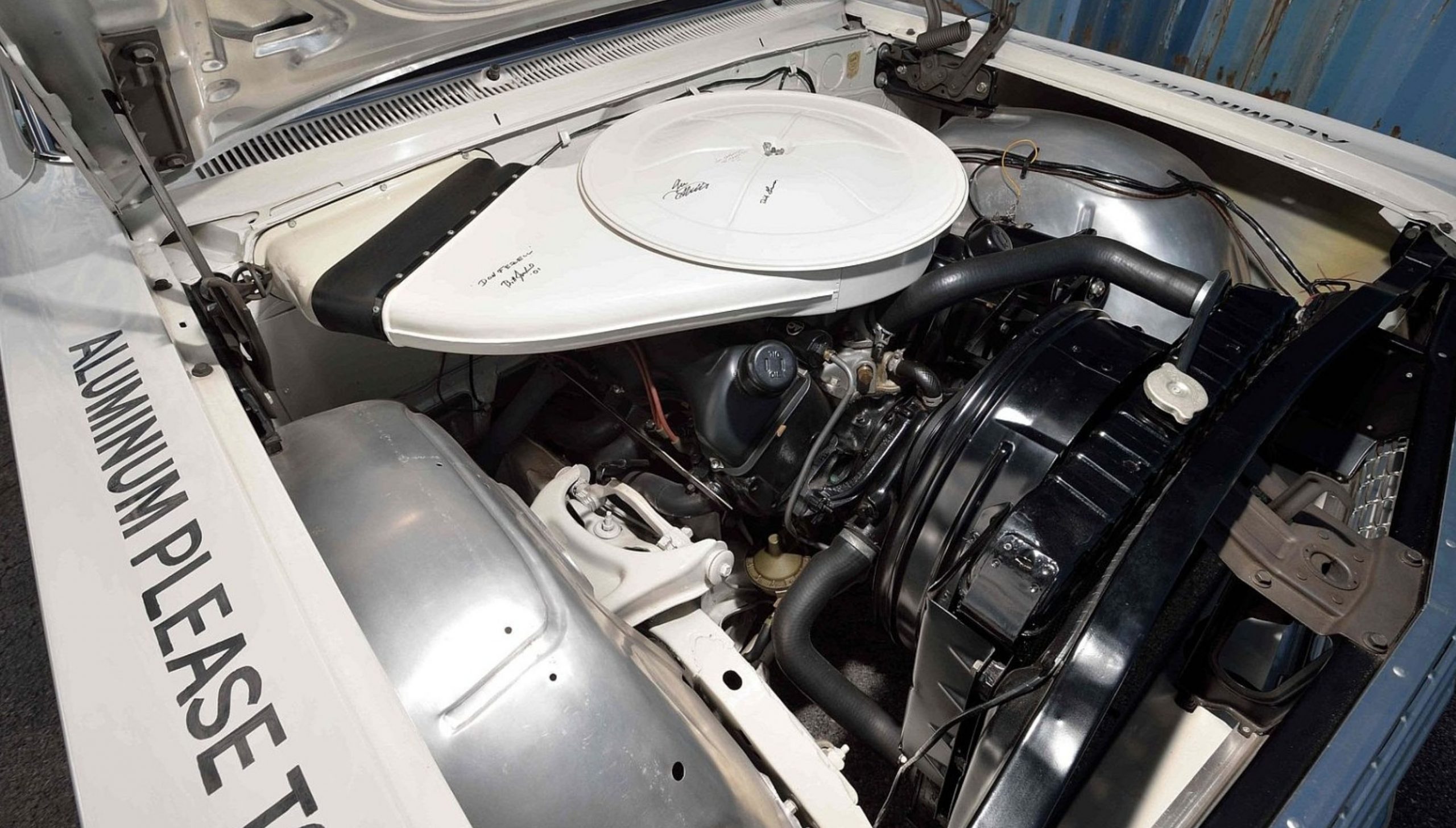
What’s that writing on the engine bay picture? Aluminum please t…
Aluminum please touch?
Aluminum please Torch?
Aluminum, please taste
All I can see is that when it comes to caution, they’re big fans!
You already gave the answer yourself
“Aluminum please touch”
https://news.classicindustries.com/videos-the-1963-chevy-impala-z11-a-legend-of-factory-bred-drag-racing