

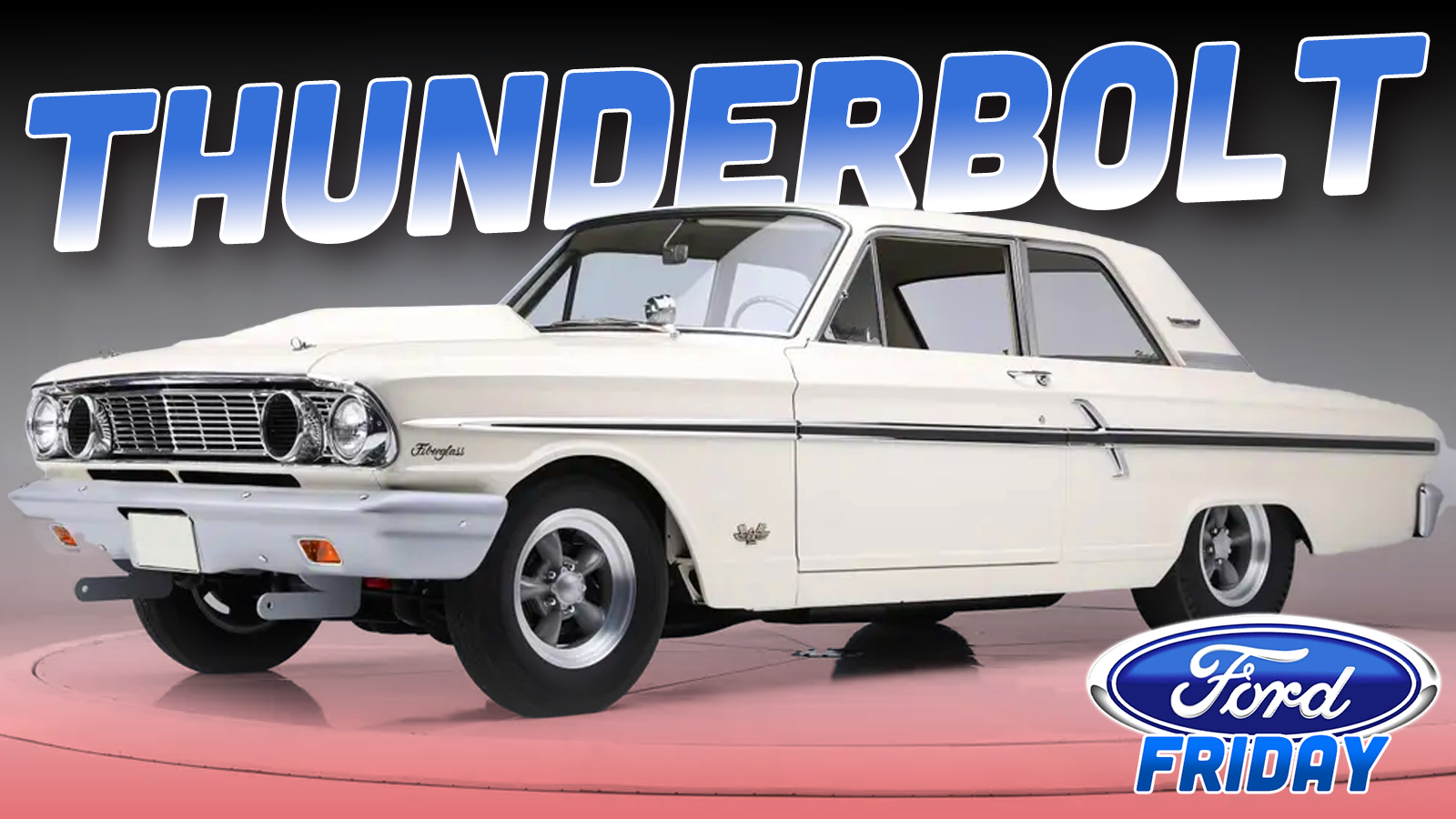
Years back, there was a David Letterman Top Ten List of “ways that cars would have been different if Ralph Nader had never been born.” It was an amusing thing, with innovations such as “piano wire seat belts” and “fasten-seat-belts chimes replaced by an electronic voice telling you to punch it.”
Such a gag only works because Nader and safety regs were and are a huge influence on automotive design and construction, but it wasn’t always the way. Before around 1968, car companies really didn’t give a crap what safety watchdogs said, and there was no NHTSA or EPA to force them to care. Honestly, a Big Three company could literally put the biggest engine they could find into a small car with a few seats and essentially nothing else if they wanted to. In 1964, Ford Motor Company did essentially just that with something they called the Fairlane Thunderbolt, and it was every bit as fearsome and terrifying as you’d think.


Race On Sunday, Sell On Monday
As with most rare Big Three performance monsters, the Fairlane Thunderbolt’s existence was all about the bragging rights of dominating competition, in this case the drag strip in the Super Stock class.
The very early sixties saw a bumper crop of factory specials, and the ones from General Motors seemed to be last-minute attempts to get around a January 24th, 1963 ban on all divisions participating in motorsports. This had nothing to do with safety concerns, of course; the Kennedy administration was trying to make good on a campaign promise of breaking up massive, nearly monopolistic companies like GE and AT&T, so GM was in the crosshairs as well. Leaving motorsports was supposedly one of the concessions they made to avoid an antitrust suit that never came. Naturally, when the GM divisions got wind that the no-racing edict was coming, feverish work was done in secret to ensure that they’d have some serious hardware for one last chance power drive, as the Boss might say.
What we ended up with was the Group B World Rally Car equivalent of bonkers drag machines. Essentially all of them were stripped-to-the-bones, full-sized rides with massive high-compression engines that roared loudly enough to drown out a freight train. Chevy’s strip weapon was the Z11 Impala. It ditched niceties like a heater and radio and featured extensive use of aluminum body panels to reduce weight by 300 pounds over a stock model. Only 57 were made.

Under the hood was a specialized 427-cubic inch “W-series” V8 engine rated conservatively at 430 hp, though it almost certainly was pumping out around 500.
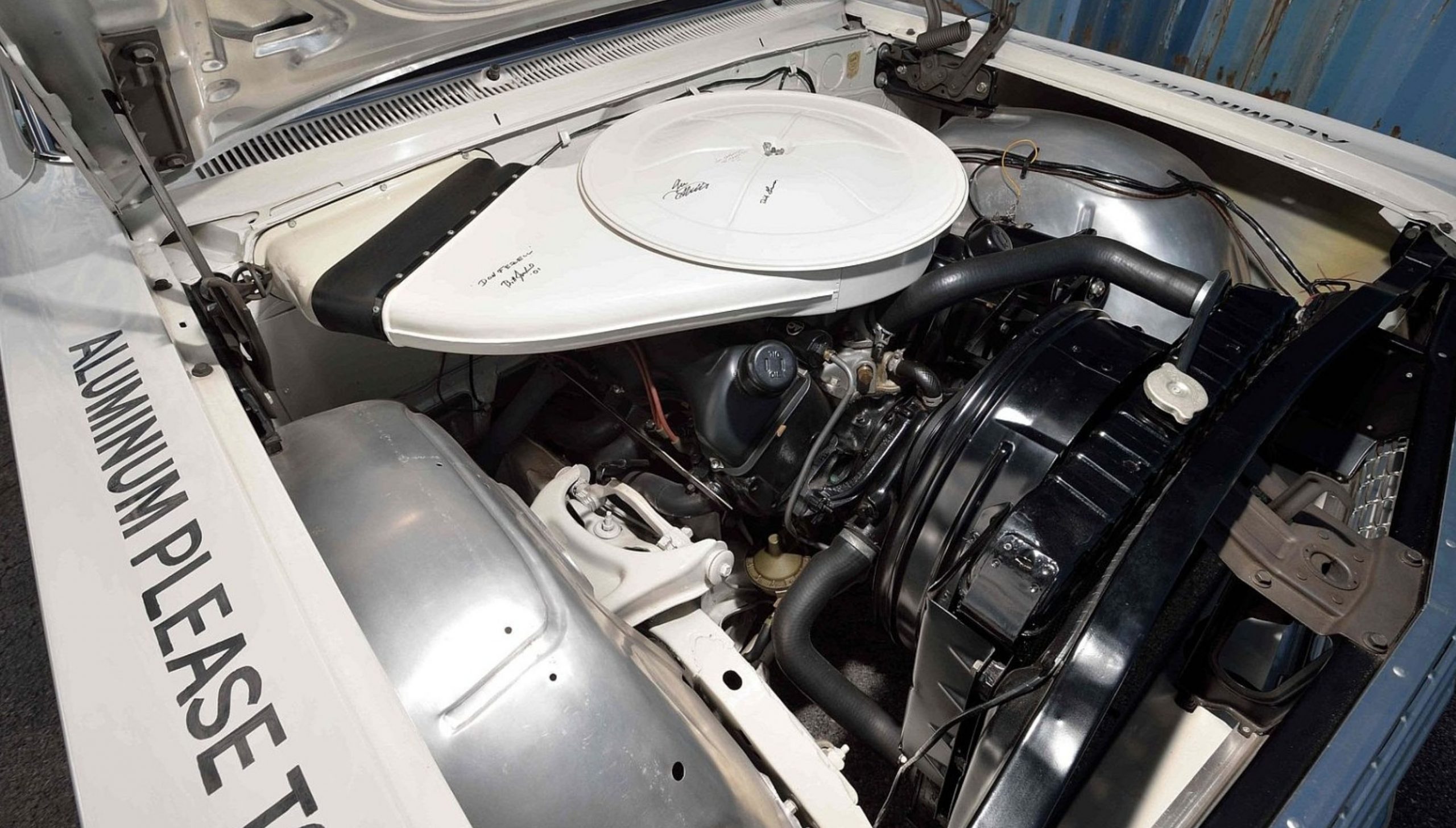
Pontiac (light)weighed in with 17 examples of the “Swiss Cheese” Catalina, a name that it derived from removal of steel in places it probably shouldn’t have. I’d get into more detail, but I’m saving it for an upcoming Pontiac Pthursday.

The Super Duty 421 cubic inch V8 included a performance camshaft, lightweight valves in modified heads, and dual Carter AFB carburetors on an aluminum intake manifold. Like the Chevy, the Pontiac was rated at 430 horsepower (wink, wink over 500).

You can be damn sure that Mopar was in the running with Dart Ramcharger. It might have been searingly ugly, but at the track it was just plain rubber-searing.
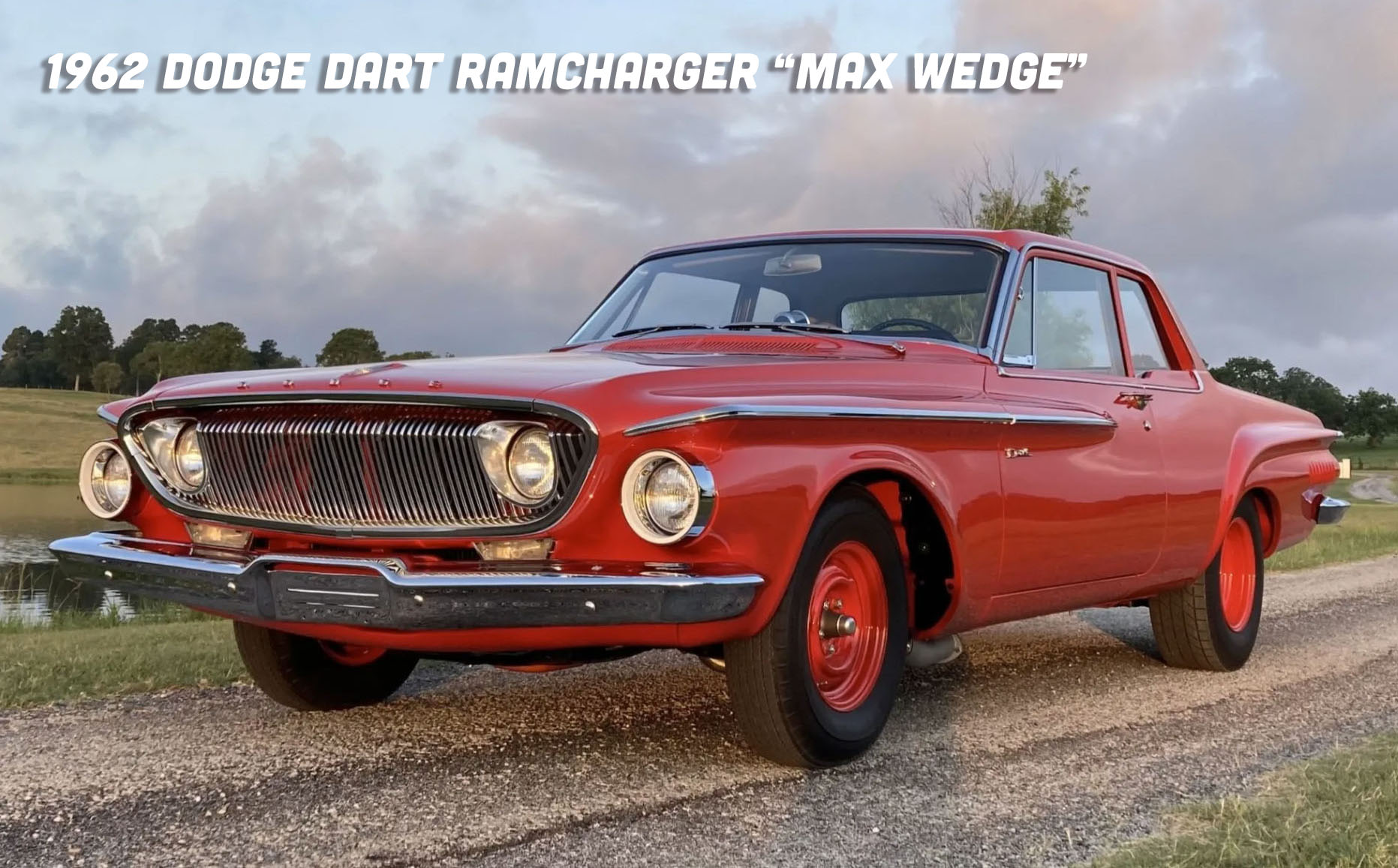
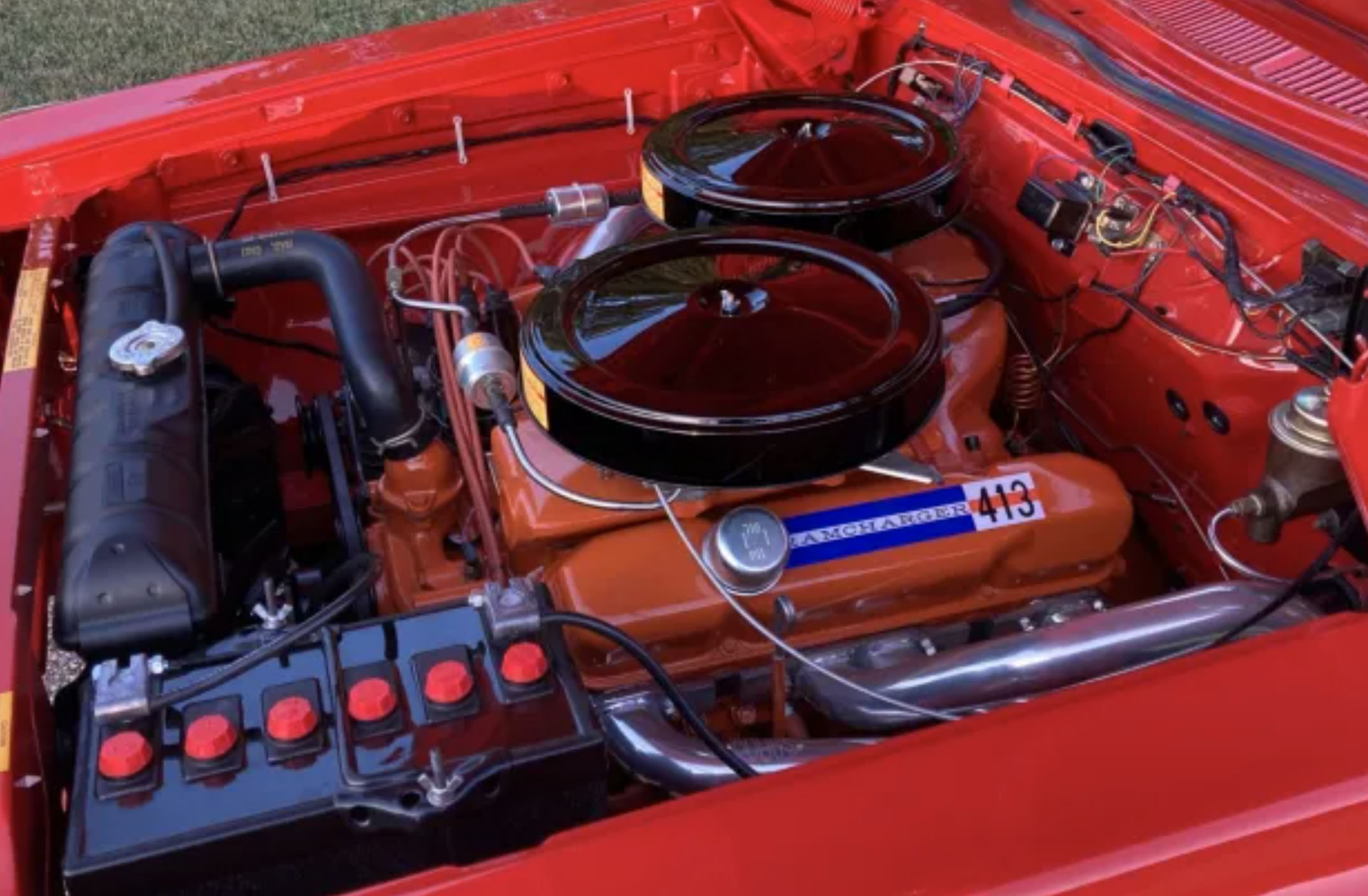
Under the hood was a 413 cubic inch “Max Wedge” V8 which, like most of these other Big Three powerhouses, featured one carb barrel for each cylinder. With a 13-5:1 compression ratio, it produced 420 horsepower.
Ford also built anywhere between 200 and 212 lightened Galaxies powered by an “R Code” 427 V8. I’ve written about later versions of this car, but this early incarnation was purely for the strip. A whopping 400 pounds of weight was removed from this behemoth through the use of fiberglass for the hood, fenders, inner fenders, and deck lid, along with aluminum bumpers. The inside was stripped of the radio, heater, as well as any kind of carpeting and sound deadening or insulation; apparently Ford provided simple cardboard sun visors to replace the stock items.
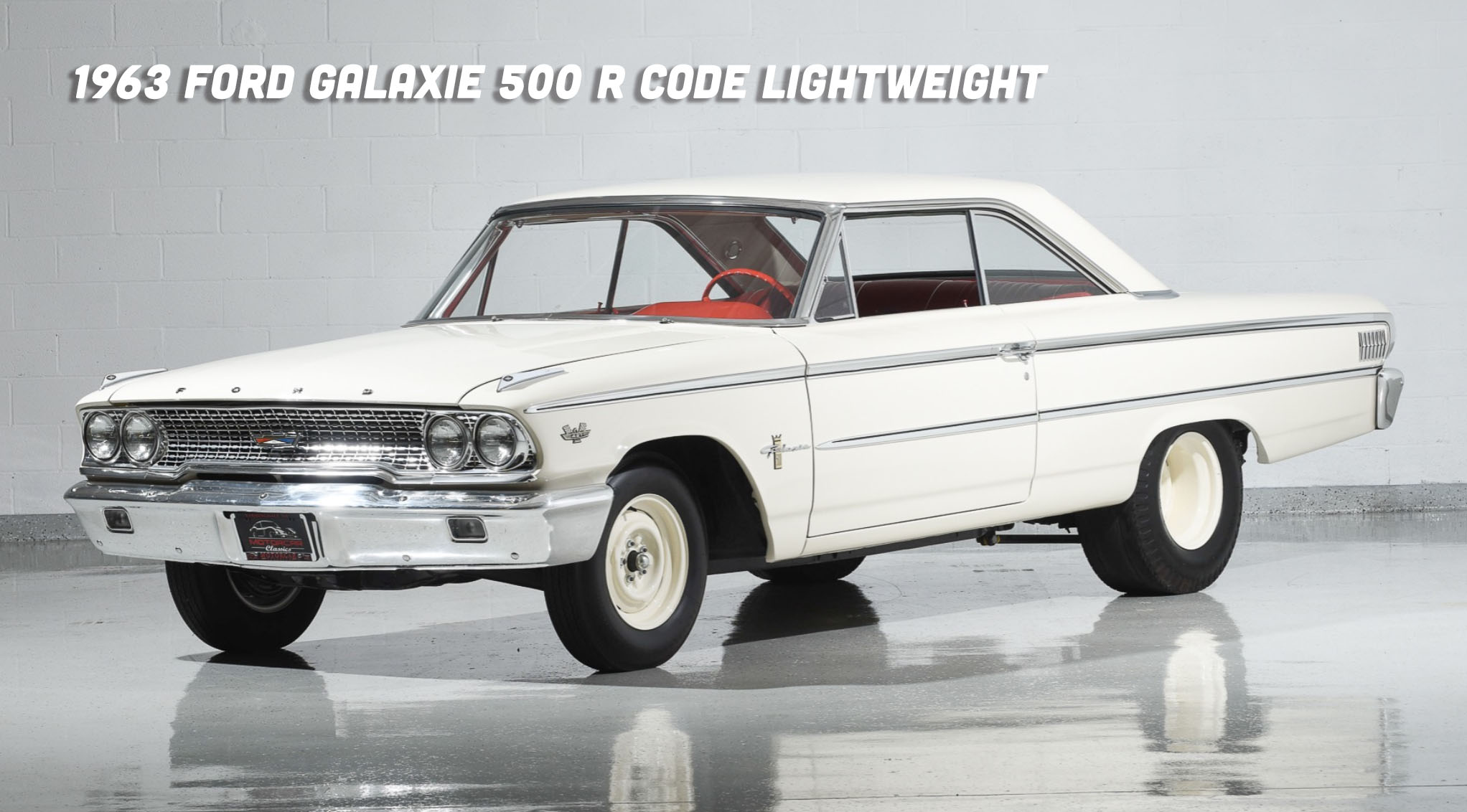
Mechanically, it was a Ford dream spec with a 427 cubic inch R-Code V8 with dual Holley 4-barrel carburetors and insane 14:1 compression. Rated at 425 horsepower, it realistically produced closer to 500, as did the rival Impala. Add a Borg-Warner T-10 4-speed manual transmission and a 9-inch rear axle with 4.11:1 gears, and this was one solid factory dragstrip machine.
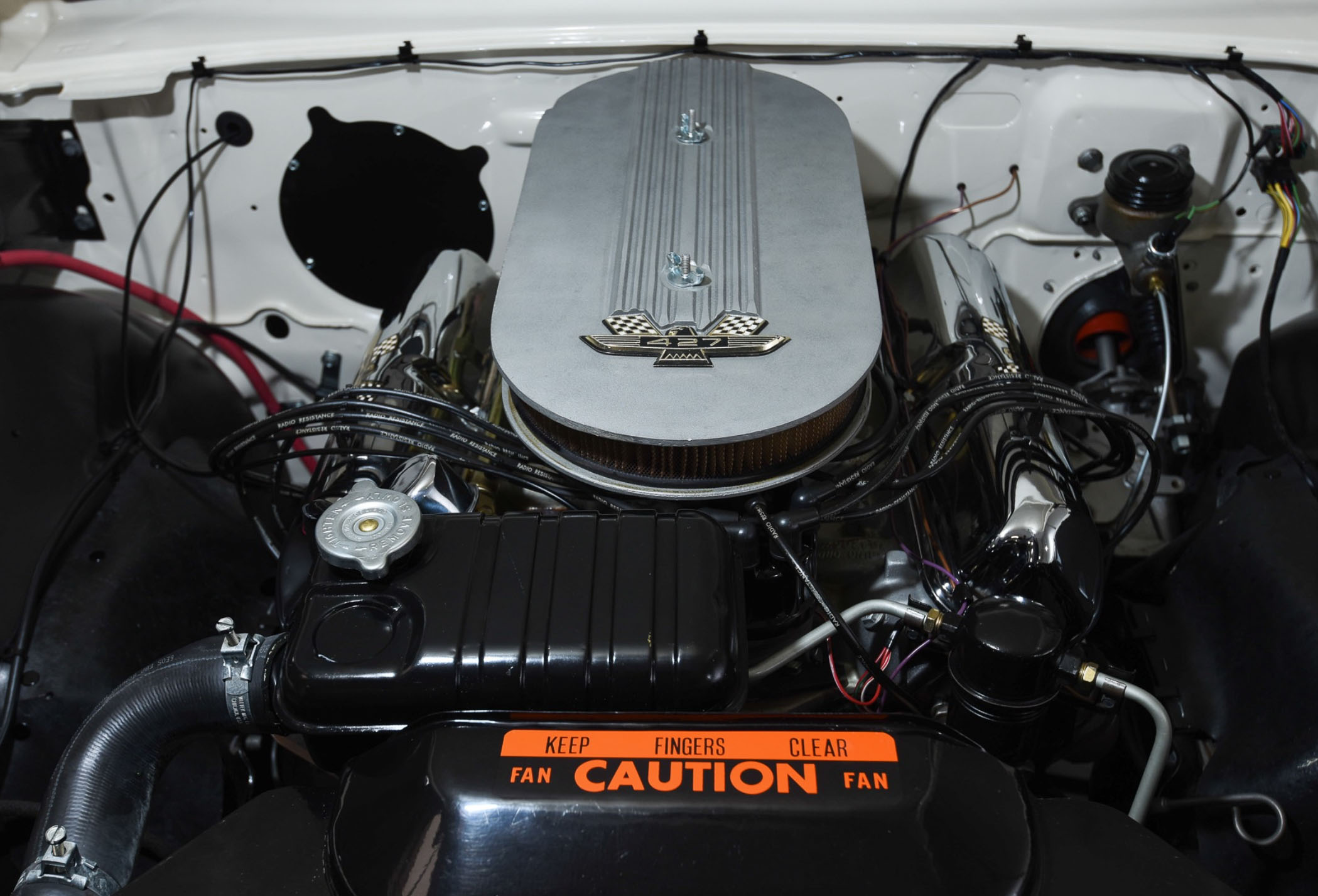
The “R Code” was competitive with the other cars, but in trying to go even faster, all of these rides had a problem. It was a big problem, literally.
Add Lightness, Not Horsepower
You don’t need to have taken Physics 101 to know that there’s only so much lighter you can make a large object, and only so fast that a weighty thing can go. The Big Three knew that the key to Super Stock domination involved using smaller cars. Over Christmas break in 1962 and literally in the 11th hour before the GM motorsports ban, Pontiac engineers dropped the Super Duty V8 into 14 examples of compact Tempests. You can read more about this little four-wheel-independent-suspension monster here.

The team in Dearborn was already hot on the case, though. Ford decided to give the Super Stock treatment to the Fairlane. This new-for-1962 mid-sized Ford slotted between the compact Falcon and the Galaxie; about a foot shorter than the full-sized car, it also tipped the scales at around 700 pounds less. Still, it wasn’t so light that it would have been below the 3200-pound minimum set for NHRA Super Stock cars.
Like the Falcon, the Fairlane was a unibody car that lacked the Galaxie’s heavy frame, and it seemed ideally suited as a basis for the next dragstrip brawler. Combined with its boring family car looks, this was destined to be a true sleeper.
As with other lightweight specials, the total production run could fit in a grocery store parking lot. Ford shipped 100 partially built Fairlanes to a local outside facility called Dearborn Steel Tubing for the work to be done; the first 50 were in Vintage Burgundy while the remaining cars were treated to Ford Wimbledon White paint. Around half were equipped with Lincoln automatic transmissions while the others received a top-loader four-speed manual.
To fit the huge motor, the front suspension components were modified, and the battery moved to the trunk. An electric fuel pump fed the monster gasoline, and the thing breathed heavily through massive intake tubes. Tubular exhaust headers helped on the other end, and output was humorously stated to be 430 horsepower. As with the other Big Three purpose-built speed machines, that figure was vastly understated; real horsepower was considered to be at least 460 and even as much as the magic 500.
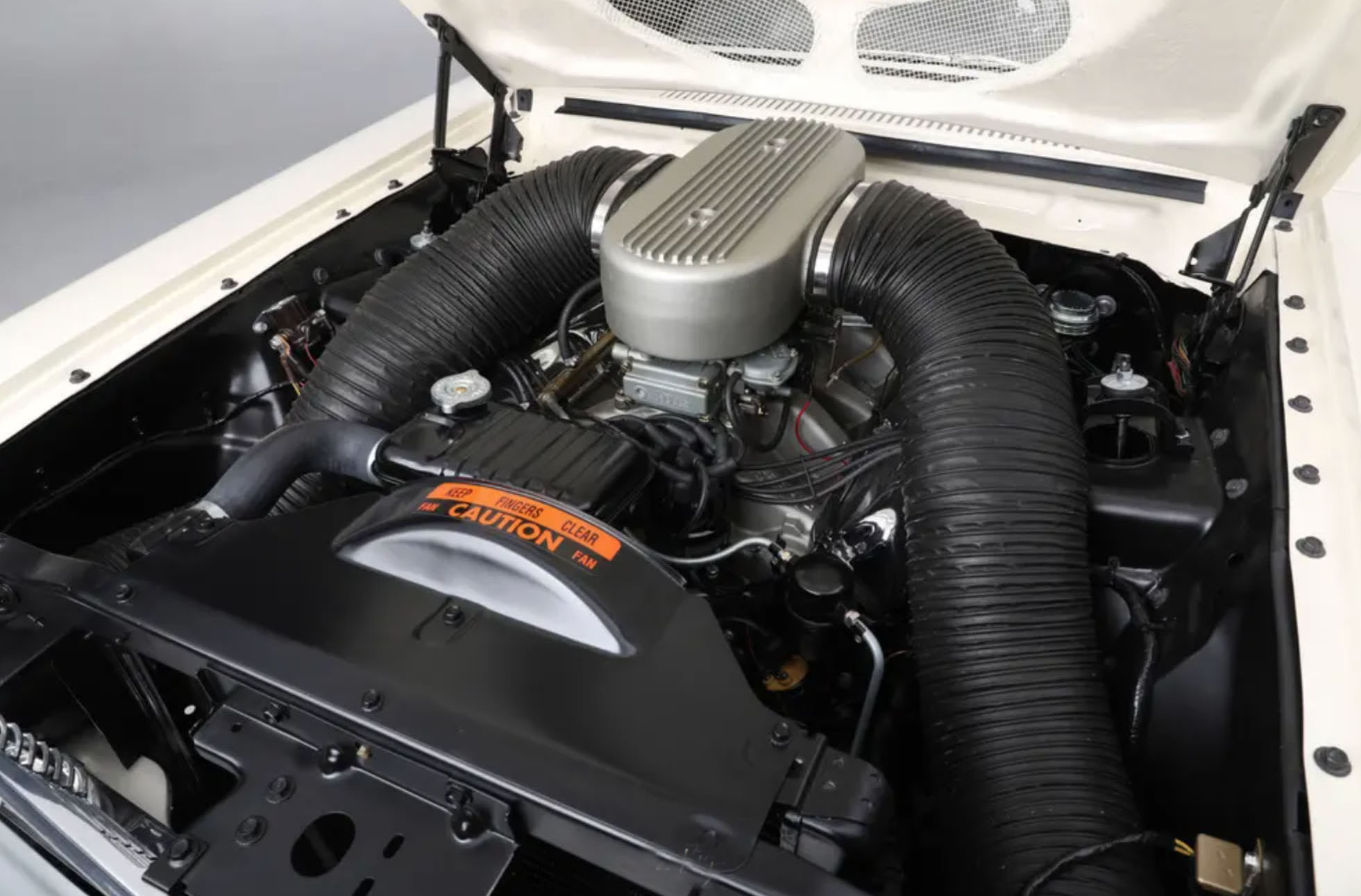
Actually, with the big motor in place, the Fairlane still could use some more weight reduction, so Ford went all-out with a crash diet. Fiberglass hood, doors, and front fenders replaced the steel items. That hood was pinned in place and featured a “teardrop” shaped scoop to accommodate the engine in a car designed for nothing bigger than a small-block Windsor.
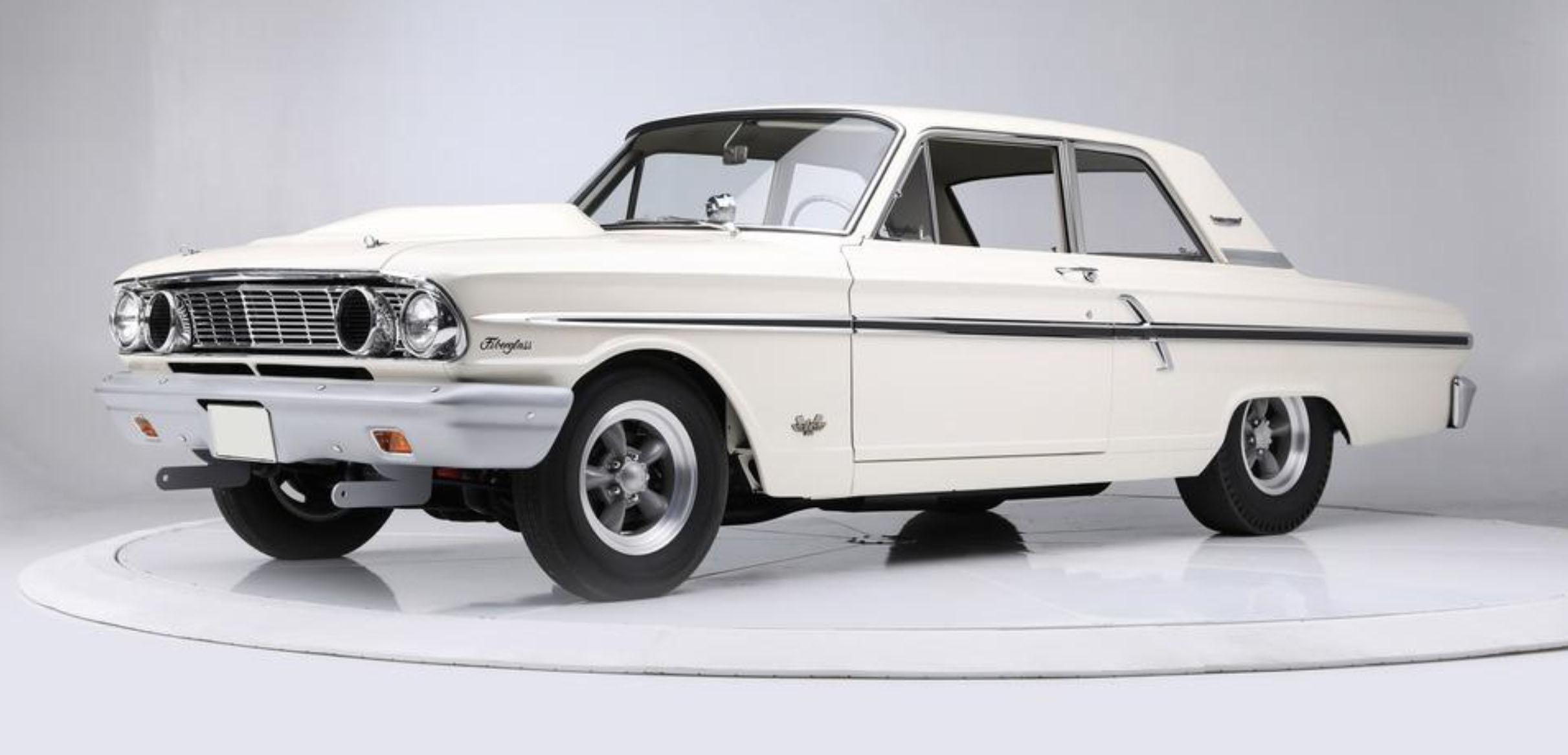
Side windows were plexiglass plastic instead of glass, and the front seats were either lightweight police-package items or crude ones from the Econoline van. You got extra instrumentation but very few comfort features. Ford went ahead and removed anything and everything non-essential ahead of it to lower weight. By “everything,” I really mean “everything:” the sun visors, radio, heater, wheel covers, passenger-side windshield wiper, armrests, mirrors, sound deadening material, and carpeting were all removed.
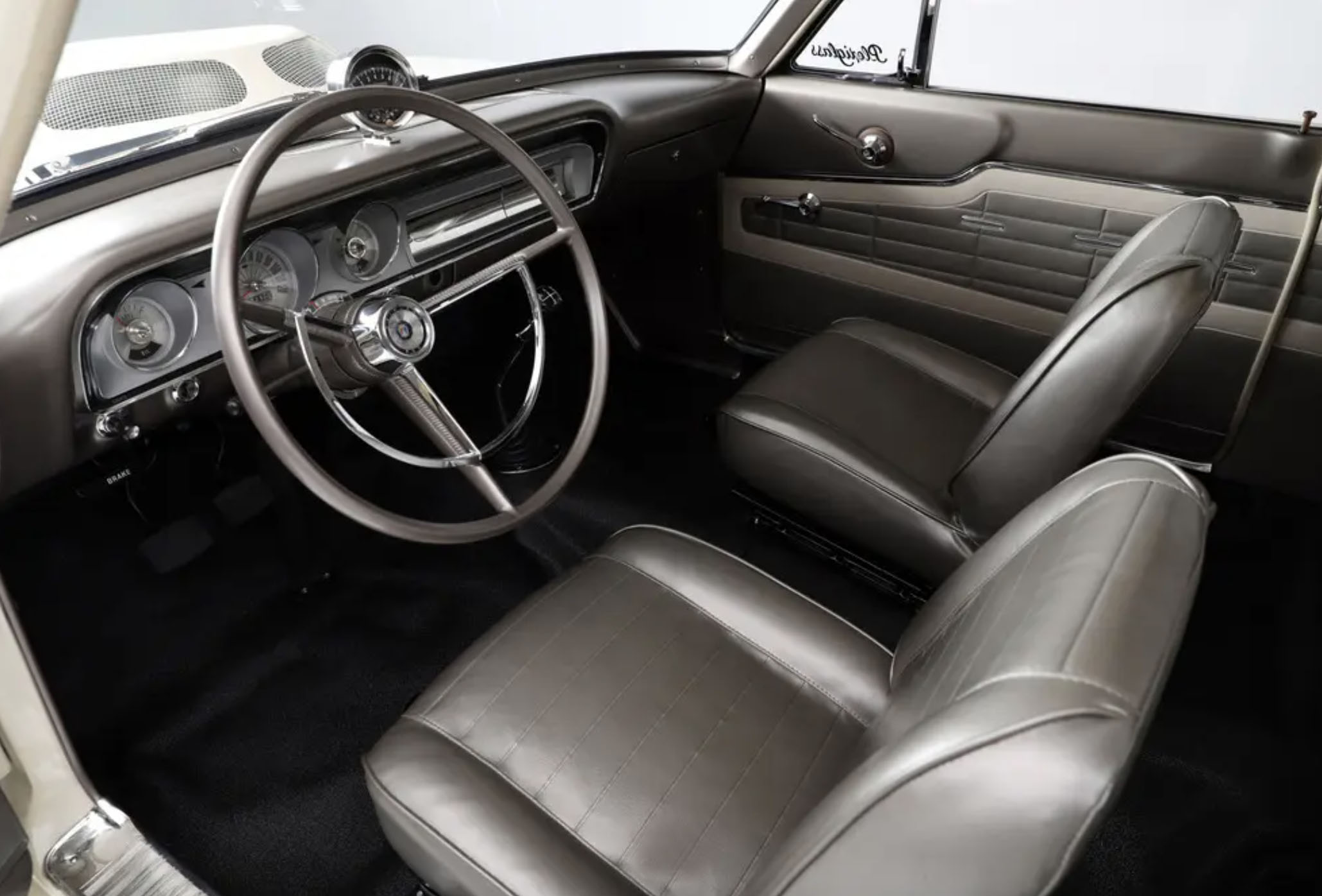
I’m surprised that they even kept the rear seat, but that’s probably a Super Stock regulation. At least they removed the rear window cranks for weight savings. I’m guessing you could keep one in the glove box and hand it to back row passengers if they wanted some air?

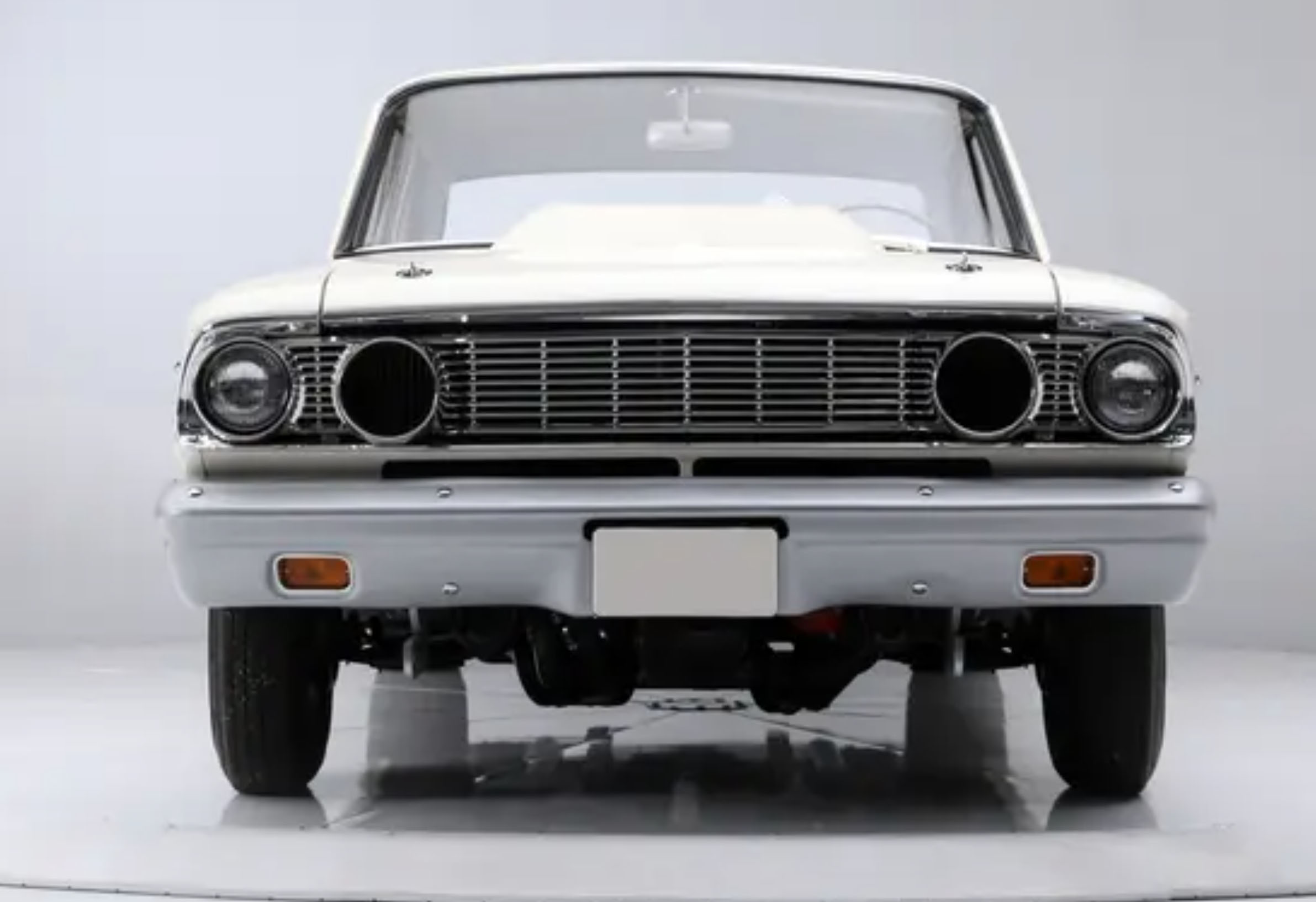
Front bumpers or early cars were fiberglass as well, but regulations soon deemed that these needed to be aluminum items. Now you can see where those ducts on the air cleaner end up: mesh-covered intakes where the Fairlane’s high beam headlamps used to be (the outer headlamps now did high/low beam duty). Talk about a once-boring family sedan that suddenly looks like a thing of nightmares.
The steel rear bumper was kept in place to keep mass at the back, one of the few items not replaced with fiberglass or aluminum.
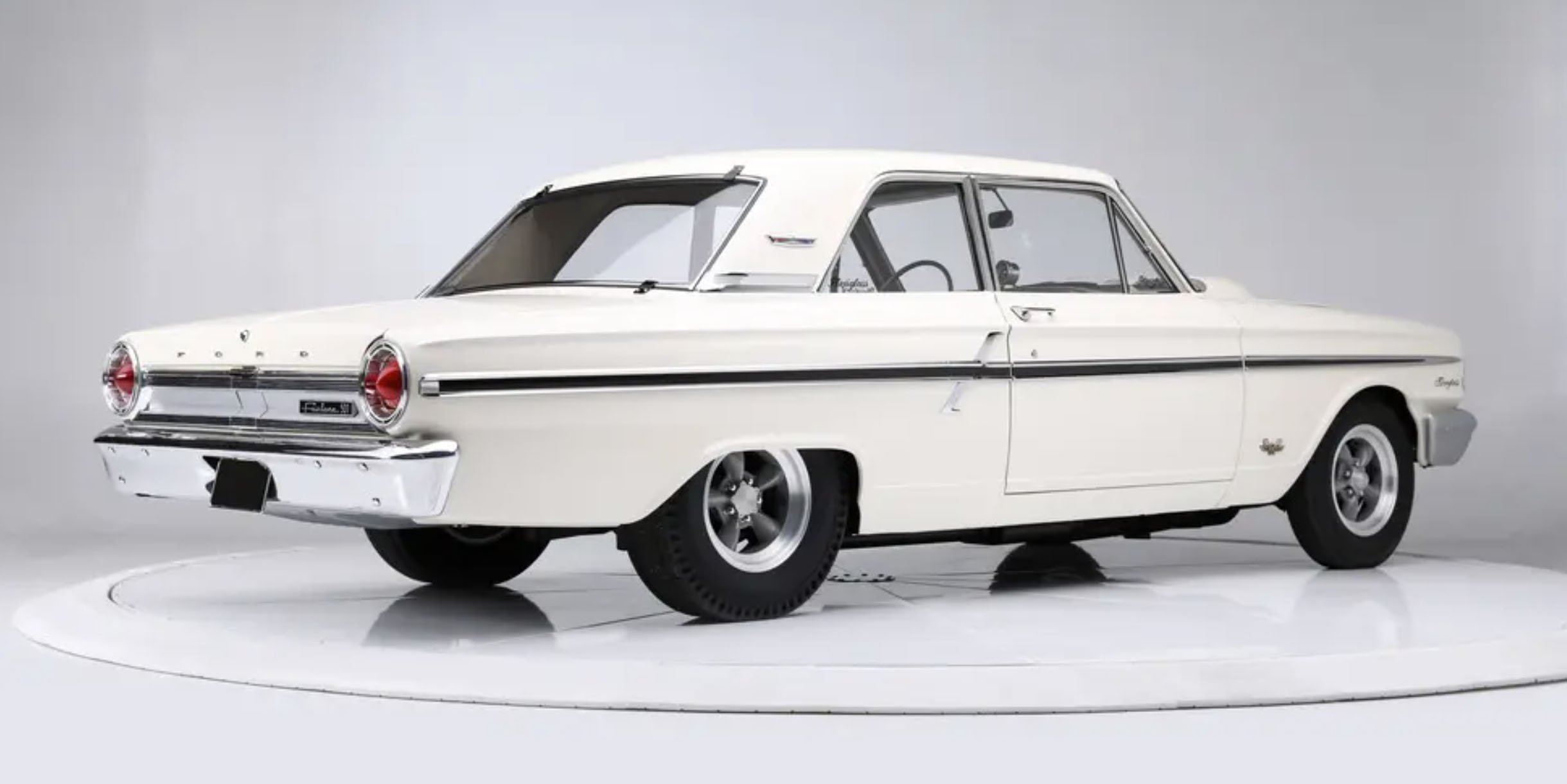
Don’t get a flat tire in a Thunderbolt, since the lug wrench, jack, and spare tire were missing as well, sacrificed to the successful effort to get the thing down to the 3200-pound minimum.
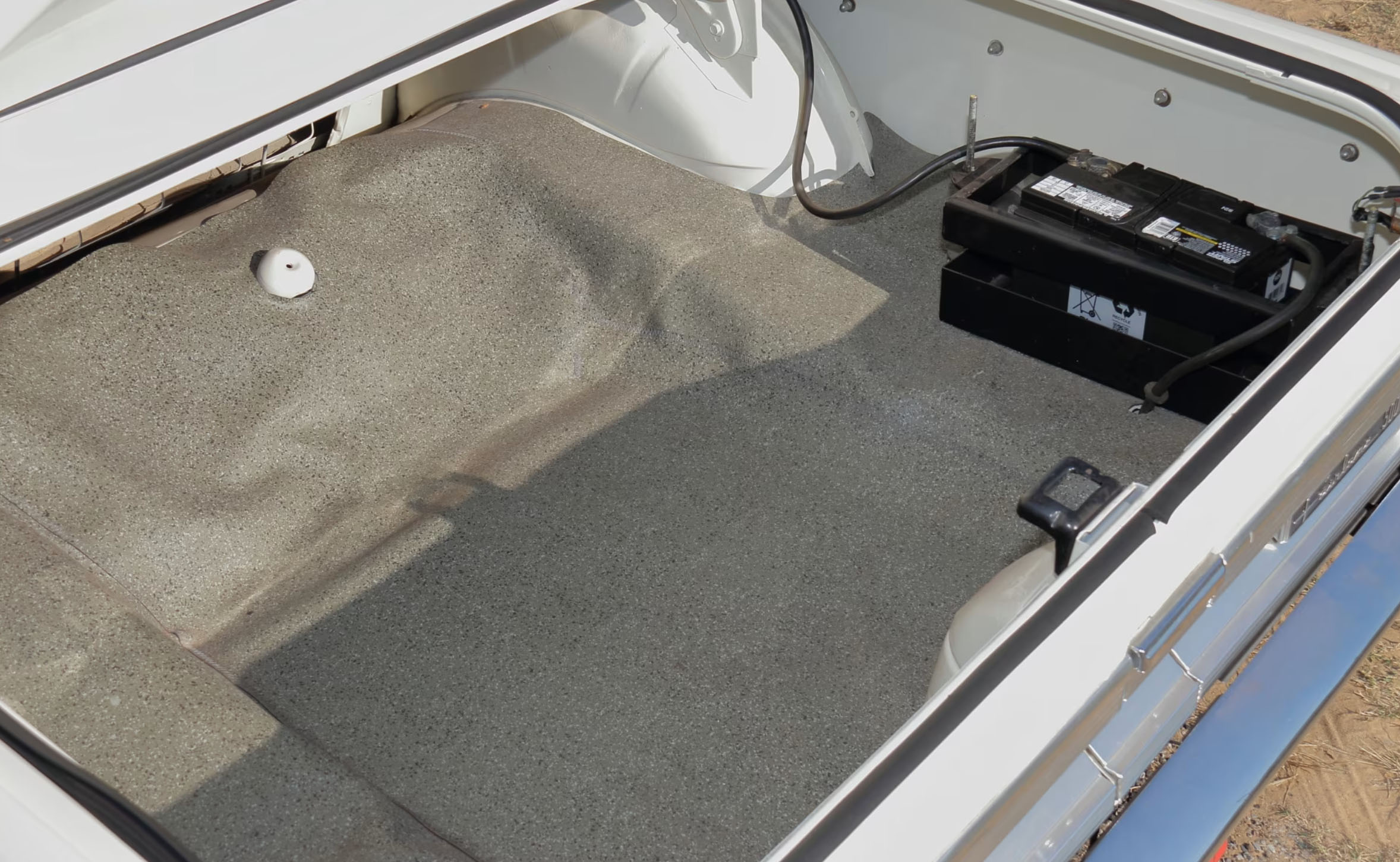
With such a low production run outside of the Ford factory, the company was well aware that these speed machines were a little rough around the edges. A plate inside the glovebox door stated:
This vehicle has been built specially as a lightweight competitive car and includes certain fiberglass and aluminum components. Because of the specialized purpose for which this car has been built and in order to achieve maximum weight reduction, normal quality standards of the Ford Motor Company in terms of exterior panel fit and surface appearance are not met on this vehicle.
This information is included on this vehicle to assure that all customers who purchase this car are aware of the deviation from the regular high appearance quality standards of the Ford Motor Company.

In a testament to how regulations have changed, even with all of these modifications, the Thunderbolt was indeed street legal at the time. Of course, with low gearing and zero comfort features you’d simply never want to use it that way. No, the Thunderbolt was made to snag wins on the drag strip, and that task it very much accomplished.
Don’t Let The Dull Looks Fool You
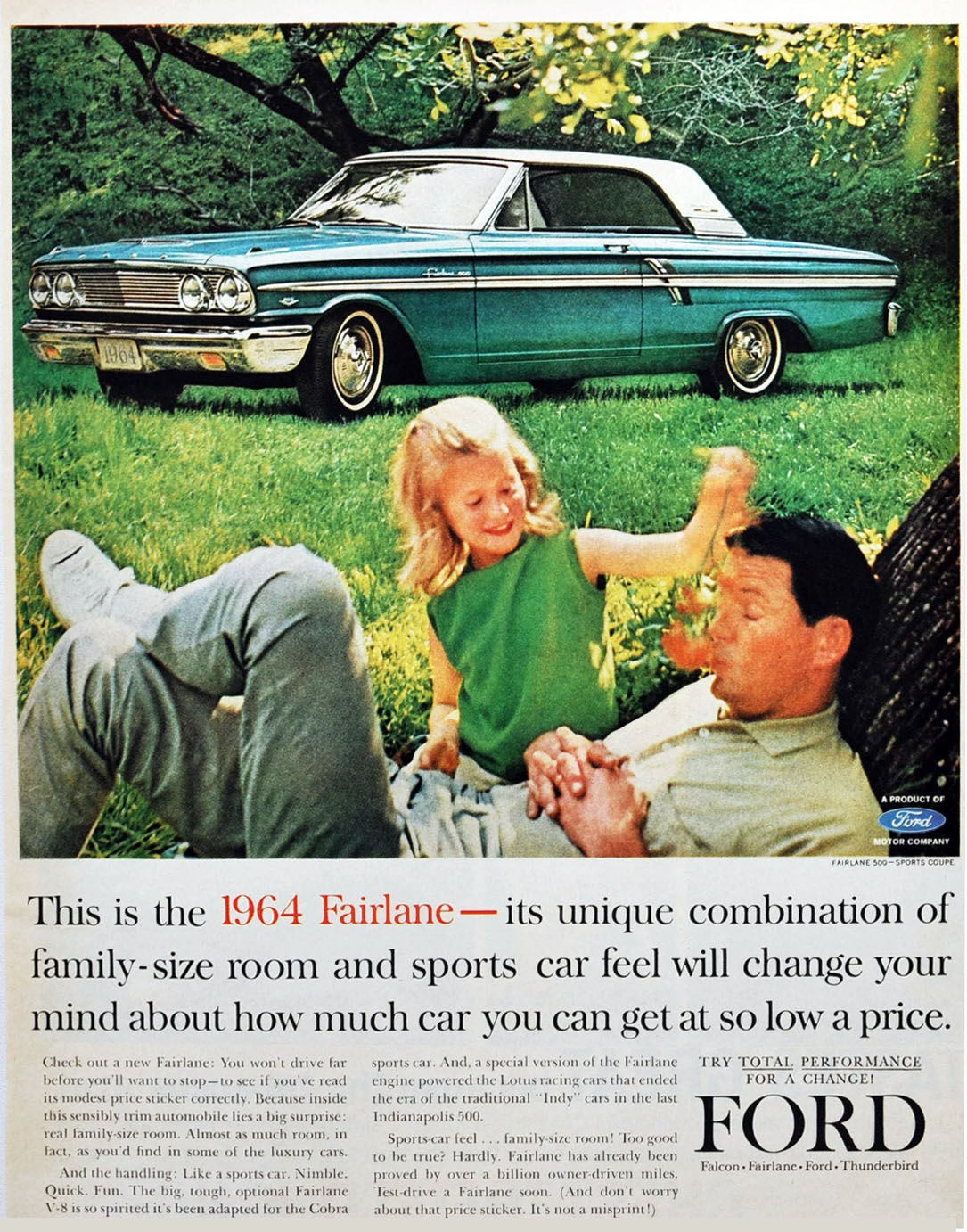
Did putting the Galaxie mechanicals in the smaller Fairlane get the job done at the “Christmas tree” turned green? In a word, yes. At a November 1963 test at Lions Drag Strip, a Thunderbolt ran the quarter mile in 11.61 seconds at 124.8 mph, as tested with a four-speed transmission – almost unimaginable for a factory-backed street car then. Here’s a period shot from the ad for that white car above sticking to a Mopar.
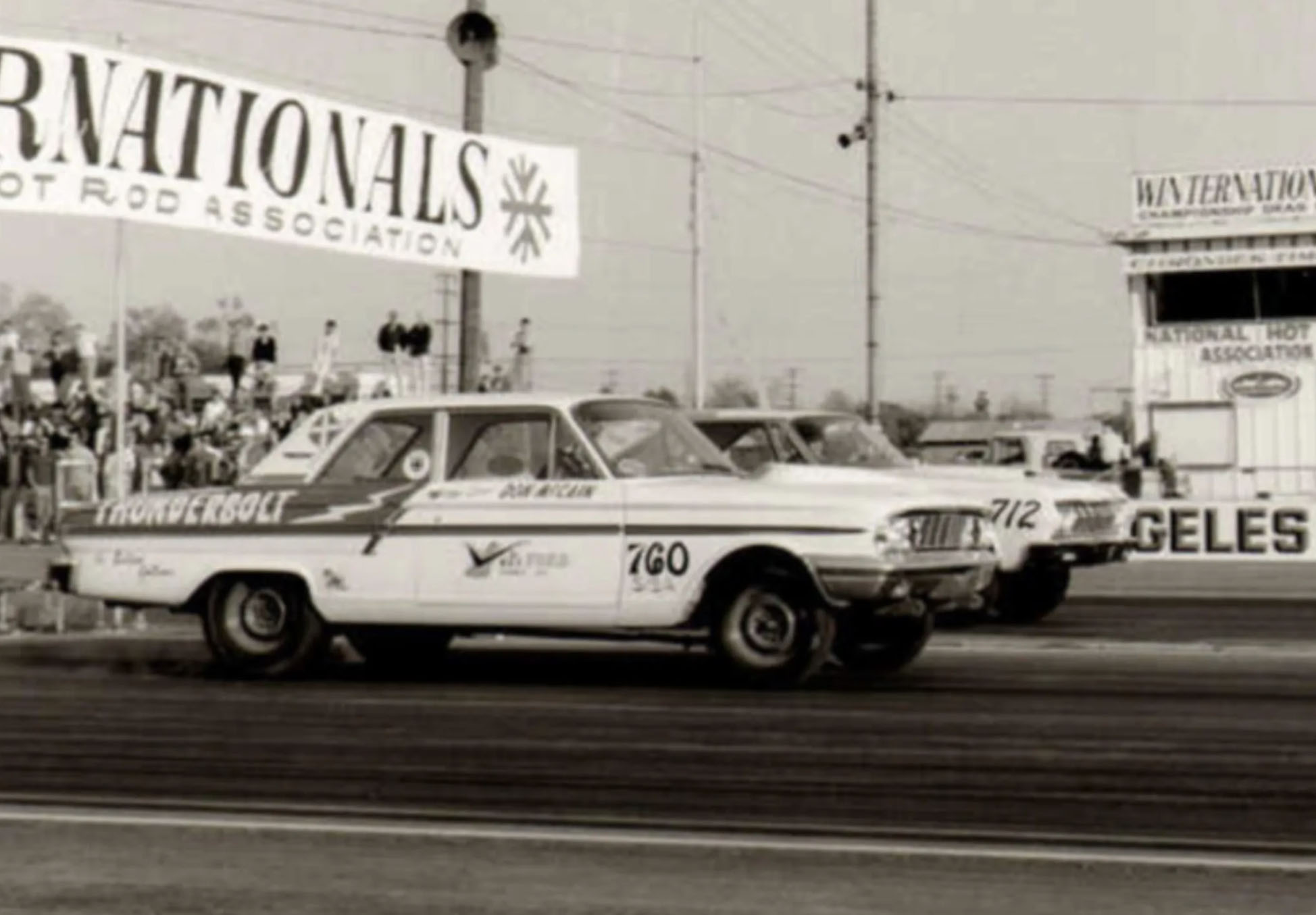
The finals of the 1964 NHRA Winternationals were comprised of two Thunderbolts, driven by Butch Leal and Gas Ronda. Ronda won with a time of 11.78 seconds at 123.40 mph.
Below is a rather accurate Thunderbolt re-creation doing a relatively mild acceleration run, though this clone has stainless steel exhaust and not the open headers of the real thing, so it’s pretty quiet. Even though he’s barely “taching it up,” the car seems like a terrifying beast to ride in. It’s glorious.
The Thunder Is Gone But Not Forgotten
For whatever reason, Ford didn’t create a replacement for the Thunderbolt. Maybe the fact that GM essentially left the drag racing game and Ford was deep into kicking Ferrari around meant that there was little incentive to make a successor. Today the remaining 60 or so generally sell for around $200,000 to $250,000; a lot of money, but with million-dollar ‘Cudas out there, that’s a figure a lot lower than I imagined. This has to rank as one of the greatest factory specials ever made; I’m not going to go into the same old rant about Ford muscle machines being underrated and undervalued compared to the other Big Three brawlers, but assume that I just did.
Existing Thunderbolts today are a reminder of the final days of no-holds-barred cars that brands were willing to get behind, regardless of the cost and a glorious total disregard for things like safety, fuel economy, and environmental concerns. Sure, you can buy ultra-high-performance hypercars now, but I can virtually guarantee that riding in a Bugatti at 300 mph would be a joke compared to being strapped into a Thunderbolt going 120 at the end of a quarter mile. That real fear of death is the kind of thrill we’ll never have again, and we are lesser people for it.
Top graphic image: Barret-Jackson


60 years ago, Ford would also sell you a Mustang that would kill you. V8? Drum brakes all around? Squirrely suspension? Yes, yes and yes.
Oh, a lap belt! Precisely engineered to pivot your head and torso into a circular piece of steel masquerading as a steering wheel.
Cars back then wrote checks they couldn’t cash. At least not without involving a last will and testament.
That Dodge Dart Ramcharger Max Wedge is awesome…reminds me of the Dodge Polara. Also love the Pontiac Catalina
In high school, one of my friends bought a 351 Windsor and started building it up. Our senior year he bought a ’64 Fairlane hardtop (30 year old car at the time) to put the Windsor into. He had it painted burgundy, and put the teardrop hood on it. It wasn’t fully a Thunderbolt clone, but that was the vibe he was chasing with it. It was a good enough build that after 10 years of work it was running high 11s at the track. Thanks to this article, I now learned how close he was to an actual Thunderbolt. He let me drive it once and it was a monster on the street. Unfortunately he died on his motorcycle 20 years ago while he had the engine apart and I don’t know if his family ever got it put back together.
It is a shame that marketing wasn’t a thing back then. As a graduate with 2 deees I’d have said sure cut out anything that can save us money in production but let’s put in a 5 point safety harness in stock and say we did this for safety because the vehicle is so fast. It is a true way of increasing safety saving money and selling the monster power for sale
For those who haven’t had the pleasure of driving a ’60s-era American car, watch the above video at around the 1:27 mark. The guy makes a left turn and it requires 2 complete rotations of the steering wheel.
That’s why power steering was optional on most cars of the era and why spinner knobs on the wheel were popular: when your steering ratio is 5 1/2 turns lock-to-lock there’s really not a lot of effort, just a lot of rotation.
Power steering was pretty numb on cars in the 60s and 70s I developed a real dislike of power steering.because there was no feedback to indicate how much grip the front tires had.
When NASCAR drivers started using power steering in the late 1980s it was sort of controversial how the drivers would deal with all the power steering slop. The fact that the cars could be set up so that they turning at least a little left all the time helped a little.
I still enjoy driving without power steering although the electric rack and pinion setups are pretty unobtrusive.
Quarter mile of 11.61 seconds at 124.8 mph, that’s pretty close to what the standard Dodge Hellcats were doing 50 years later. That’s impressive for a factory car of the 1960s.
I think you have your numbers wrong but I’m not sure
I honestly had no idea these were that special. I saw one at a car show in Wichita somewhere around 2017 and thought it was cool, but also thought it was heavily modified when it was probably mostly or completely stock. Very cool!
Remember that there are many, many tributes out there and many so well done it’s hard to tell.
Good point. Either way, it was a really neat car.
RE: deathtraps. Someone on the Autopian should do an article on the “safety cars” of the early’70s. What could have been, and fortunately are not.
Last month, I saw a Bricklin SV1 in the wild. In orange no less. I was so tempted to do a u-turn and follow it just to see it more.
I think it would have made a good “Back to the Future” car.
Or a car in Blade Runner, something an aristocrat like Rachel would have driven.
Oh yeah, always makes me think of Kramer’s awesome experimental 1973 Chevrolet Impala in Seinfeld. It had an “experimental front airbag system dubbed the Air Cushion Restraint System (ACRS)”. It’s also had cop shocks! Ha ha
“suspension and chassis upgrades cribbed from the Police Car package”
The crazy thing about this is that my PHEV Volvo family hauler is heavier, near-silent, plush, faster 0-60 and only a little slower in the quarter, and does it all while getting 30mpg in pure hybrid mode or 60+ as a plugin. It also has a heater and a radio, and two windshield wipers.
On the flip side, it’s probably not nearly as exciting while it’s at it. But it’s really mind boggling to me that we can haul junk, haul ass, and glide silently to school drop-offs in one vehicle that costs a small fraction per mile to operate of the cars a generation or two ago.
Exciting is generally the opposite of safe and has nothing to do with fast.
Those 2CV look fairly exciting, or maybe an MGTC.
This is a fair take. When we were first together, my wife and I had a 1993 Ford Escort that was, toward the end of its tenure, held together with hopes and dreams. It could be steered with the throttle in the bad way. By the time it got to 75mph it was definitely starting to become exciting.
I spit on your fear of death. We feared nothing! That’s why we smoked five packs a day, drank a six pack at lunch and slicked our hair back with Brylcreem. OK, maybe that last thing wasn’t death defying, but you get the point. Then came regulations, Viet Nam, the FDA, the EPA, Nixon, OPEC shortages, raised drinking ages, Three Mile Island, SWAT, disco, AIDS, Super Fund sites, air bags, center high mounted stop lights, child proof caps, hockey players with teeth, nonflammable Halloween costumes, and play dates. We live longer, we’re “safer” whatever that means, and we’re dull. Even our wars are dull. We need some good old fashioned stupid deaths to really appreciate life. Except for Florida, of course, where stupid death is a way of life. Anyway, I like the Thunderbolt.
This is about the Thunderbolt; I think you may be looking for the Grand Torino piece. 😉
i like disco – bub.
Burn baby burn.
Were you a fan of Action Park in NJ perchance?
Haha! How did you know?
I used to be a lifeguard and i always had an impulse to let kids mess around, since I could just save them after. Action park is fascinating to me because it took that thinking to an extreme.
A friend of mine shot the TV commercials for action park, and filming on the rides was brutal. Smashed cameras, broken arms. It was bad.
About half my friends didn’t make it past 40, a handful didn’t live to complete highschool. Actually in a town of 5000 there seemed to be one highschool kid a week getting killed in a car crash, farm accident, or just getting sick.
Of course everyone thought things were pretty safe. Kids weren’t dying of measles so much any more, and if you gave a ten year old nitroglycerin unsupervised you would probably be in some sort of trouble.
Living near the burn pit where they got rid of all the stuff they stripped out of helicopters from the Vietnam war, having the occasional airplane crash on the farm- including the first B52 to crash- the national laboratory blowing stuff up every day at noon – because if the house shook at noon it was normal- big explosions other times of the day might me of concern – and for some secret reason it was assumed that in the event of a nuclear war, we would be the first to know.
So safety was a relative thing. 60 mph down a mountain on a ten speed bike with sew up tires or on a skateboard? No problem. Hang gliders made of bamboo and plastic tarps? Jump off the chair lift to ski down the cliff ? Why not as long as you were near the tower to the other chairs didn’t bounce much. Helmets? Only on the motorcycle because you knew that you were going to crash that.
Just leave aids and all that out, it’s too depressing.
So yeah , survivor bias is a thing alright.
Of course it was a cushy life compared to my parents, or my grandfather who was running around with nitroglycerin as a ten year old , was a army pilot in WWI and listened to his parents talk about how lucky he was to miss the Civil War.
I knew enough to raise my kids in NYC, it was too fucking dangerous where I grew up.
Glad you got all that off your chest. 😉
Lol, it’s fun just being ridiculous sometimes.
I enjoyed reading it.
“Actually, with the big motor in place, the Fairlane still could use some more weight reduction, so Ford went all-out with a crash diet. Hood, doors, and front fenders replaced the steel items.”
Aluminum? Fiberglass?
You left out a pretty important word there. 🙂
This is the second time this article has been posted, at least the second time.
Obviously proof reading is not a big priority.
They were cardboard.
Talk about a miss- sorry about that. Corrected!
So of course I had to go back and re-read it to see if they really were cardboard. ????
“normal quality standards of the Ford Motor Company in terms of exterior panel fit and surface appearance are not met on this vehicle.”
So Ford’s entire current lineup is competition spec?
Yeah and lets talk to DT About panel fit on a Ford built WWII Jeep.
I wonder how long until Ford revives the “Thunderbolt” name and slaps it on a ‘Performance’ package for one if it’s SUVs?
Ugh. Too plausible. Take my upvote!
An electric one too
Also from the era, Ford’s already applied Cobra Jet to an EV.
It’s already been done once: https://www.ford-trucks.com/articles/rare-2002-ford-ranger-thunderbolt-surfaces-on-craigslist/
I’m thinking they should use it for the upcoming range-extender equipped F150 Lightning. Makes sense, still powered by electricity (bolt), but makes some good old fashioned exhaust noises (thunder).
Those were the days.
I’m wearing the perfect shirt for this vehicle, my Bass Pro Safety Third shirt.
https://www.basspro.com/p/bass-pro-shops-safety-third-california-dreaming-short-sleeve-t-shirt-for-men
I think you accidentally put a h in the name of the shirt?
This is one of my favorite cars of all time. There were quite a few Hot Wheels versions of the Thunderbolt over the years, and I collected multiples of quite a few of them. I still vividly remember some of my middle school daydreams of one day owning one and driving it around.
I’ve got two myself, but my favorite is the Wimbledon White one. I usually prefer Matchbox, but there are times – usually domestic iron – when HW is the go-to.
Perhaps the icing on the cake is that of the ones left, they’ve all been, and most continue to be, raced.
Not a pure garage queen in the lot, they’re just too good at what they were born to do.
It’s quite ironic how 430-500 gross HP used to make you “the terror of Colorado Boulevard” (Jan and Dean) and nowadays you can buy a perfectly streetable car with way more than that, in net HP.
Yes, but it weights at least 2 tons.
You’re absolutely correct. I’d love to see if a 700-hp modern Dodge could “shut down” this Thunderbolt or a “brand-new, shiny red Super Stock Dodge”.
But I’ve got a fuel injected engine sitting under my hood.
You’re gonna get a ticket now, sooner or later.
A stock Toyota Camry could shut it down
But will out perform the old vehicle by seconds
And new cars can turn and stop safely, and have airbags, seatbelts, and headrests.
Boring
you make these automotive efforts sound like a bad thing.
There are those of us that lived in those days that really miss them.
“Lived.” My ‘rents and all my aunts and uncles were children of the 60’s. Even in our podunk tiny rural town and nearby areas, most high school yearbooks had “In Memoriam” pages with at least one fresh-faced deceased former student, almost always male. This pretty much continued into my time of the 80’s, specifically thinking of a family friend’s junior son and a G-body Monte Carlo SS, even with it’s wheezy 305. One small “oops” in those kinds of cars could mean instant death. Hate to spoil the party but no thanks.
Cognitive biases and nostalgia seem to go hand in hand.
Guess you consider motorcycles instant death.
obviously I believe everyone should choose their own pleasures. But the past was what it was. But the the over teched cars of today are missing a lot of what makes motoring fun.
Yeah the cars differed but in the early 80s I lost a classmate to a Jeep CJ rollover and another classmate wrapped an Alfa GT Coupe around a tree
I lost 5 classmates in one rolled over pickup and a half dozen to suicide. All in two months
That’s horrible.
They stopped doing that when dozens started dropping due to drugs and DUI and pregnancy
Why no hand crank starter? You want a battery, buy a Lincoln.
Love the cars of the 60s that had all the go but could not turn or stop to literally save lives.
ALSO NOT ONE HEADREST to be found on street legal race cars. Just mind blowing how much headrests were hated or ignored.
Dangerous but intriguing, my ’02 Mustang has these tiny headrests that while more 70s than anything, are designed to be a throwback to the bad old days. And also a step back, as the Fox bodies of the 80s were way more advanced.
But still had abysmal performance
Yeah, this is a thing with Traditional Hot Rods too. I’m gonna take a car designed around 50 HP, stuff 10x that into it but there is no way I’m going to use a seat with a head rest, that’s not period correct! Surviving a curb be dammned!
Yeah but in real life that 50 HP was amped up to maybe 150hp
They didn’t have much go. A Camry could outperform anything that didn’t have a CO2 attached
I’ve been in pain since 1987 because of no headrests in a 62 galaxy that I got rear ended in by a truck at a stoplight.
Headrests are a very good thing.
These sound like a scary blast to drive. Would rather have a Thunderbolt than a million dollar Barracuda.
Most of these cars went straight to specific drag teams, they were never meant for the general public. Ford more recently offered Cobra Jet Mustang drag car, GM had the COPO Camaro in 2012 and 09 Dodge Challenger Drag pack. The term street legal gets me, as long as it has the required lights, windows horn any car is street legal.
Kei cars say Hi!
The Dodge Challenger Drag pack did not come with a VIN and could not be easily registered. Maybe easier than registering a Porsche 917, maybe not.
I just yesterday encountered the Thunderbolt while reading up on the underappreciated Mercury Cyclone. The encyclopedia says the first Cyclones were clones (hah!) of the Thunderbolt.
(I went on a research project about automobiles named after winds to arrive at the Cyclone, so that was how my day went. I didn’t find any motorcycles named after winds.)
There are a few, but not nearly as many as cars named after winds of one sort or another.
We remember the Mercury Zephyr, which was a rebadged Ford Fairmont. Kawasaki also made a motorcycle called the Zephyr during the ’90s.
In Germany, the Maico company started producing motorcycles during the mid-’20s, and at one point made a model called the Typhoon. They eventually went bankrupt and out of business during the ’80s. The name has come back, and current production is limited to just a handful per year, which are mostly used for racing, but not for personal transportation.
The Benelli motorcycle company (of Italy, of course) produced the Tornado in several displacements for more than a decade.
Don’t forget Maserati:
Ghibli, Bora, Grecale, Merak, .Shamal, and Levante. I’m pretty sure I’m forgetting something.
Speaking of cars named after winds, wasn’t the entire VW line marketed for a while as “fart fig newtons?” For kids, that was a great joke.