

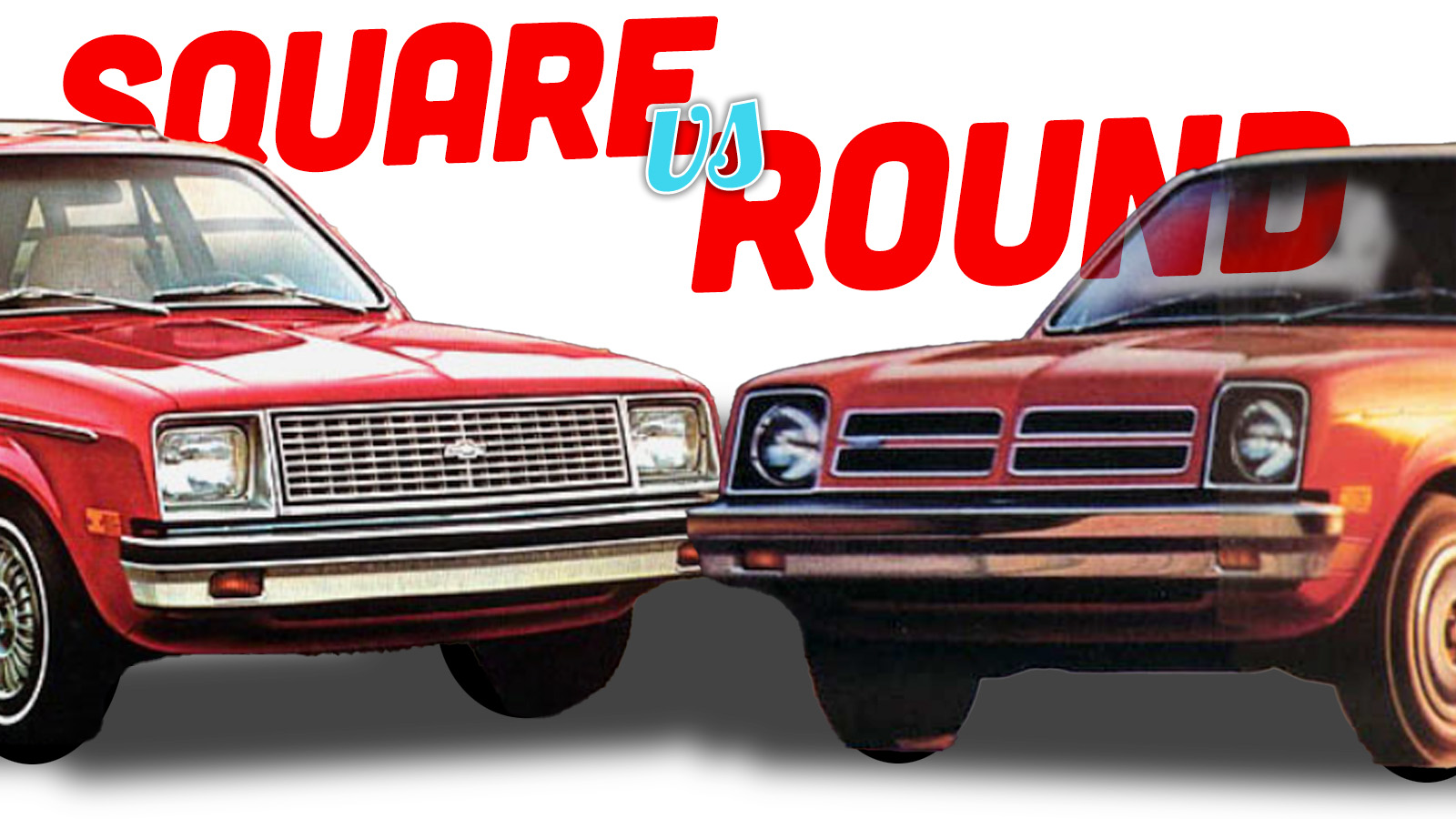
I was eating dinner with some friends at my local headlight-culture seafood restaurant/THC lounge, a place called High Breams, when I first heard the scuffle. I was already sort of lit after consuming a fillet of bream soaked in THC oil so initially I didn’t trust my senses. Then, after a flying chair caught me on the back of the head, sending my face smashing into my key lime pie, I realized what was happening around me was actually happening around me. What was going on was a brawl, a brutal, savage restaurant fight involving plates, forks, bottles of Worcestershire sauce and more, all over which shape of sealed-beam headlights – round or rectangular – was more appealing.
To people outside of the Headlamp Community, this may seem like a trivial, even inane distinction to make, but among sealed beam aficionados, this distinction has a near-religious impact. Even other members of the Headlamp Community, like the composite lamp subgroup, often fail to see the importance of this inter-nacine sealed beam headlight fighting, but I assure you, it’s real.


After I awoke in my pie, hours after the restaurant had closed, I started to make my way back home, but the round vs. rectangular conflict stuck with me. I’ve been thinking about it a lot, and I think the very notion of a binary good/bad distinction is absurd, but there are contexts were round works better, and context where rectangular works better. I think it’s even possible to come up with some rules, or maybe guidelines, to help make this call. So, with that in mind, let’s look at some cars that have had both round and rectangular sealed beam headlamps on what is otherwise essentially the same car, and see what conclusions we can draw.
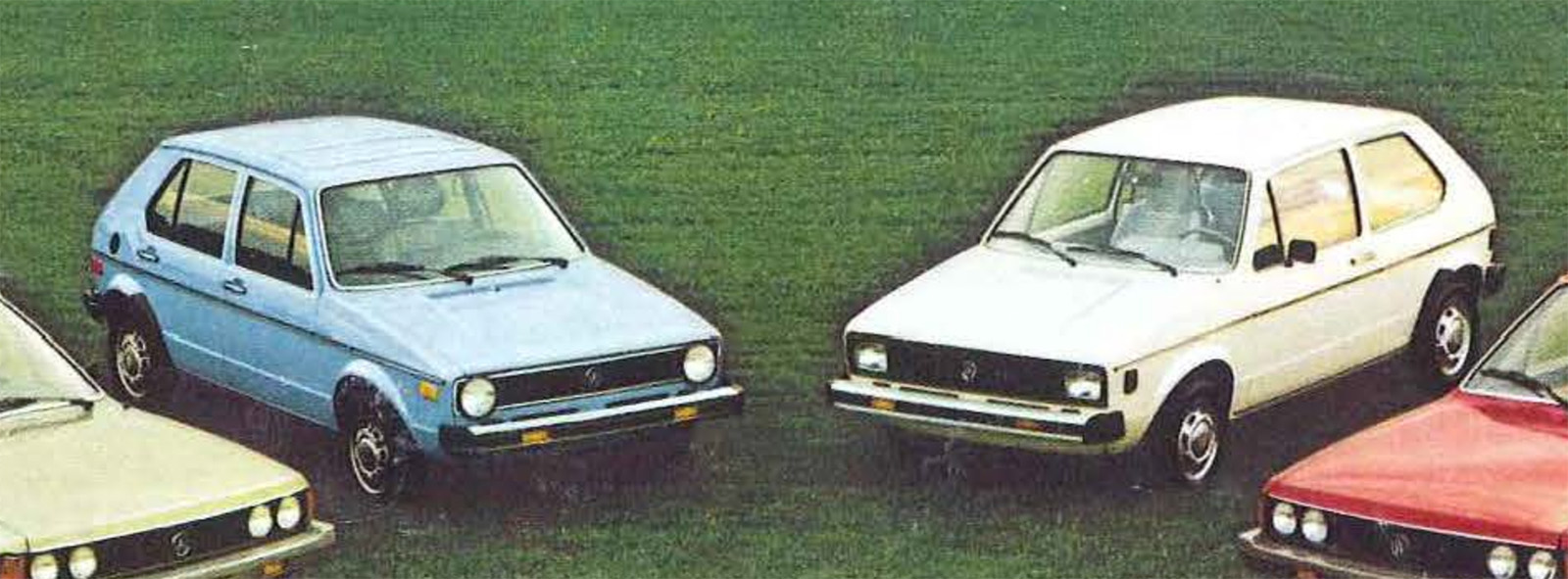
I think one of the best comparisons we can make is with the Golf/Rabbit design, which started with round headlamps and then switched to rectangular in 1979. I’ve written about this switch before, because I think it’s interesting.

I think it’s interesting because the original Italdesign prototypes of the Golf used rectangular lamps, which does seem, objectively, to fit better with the design. But when it came to the production car, round sealed-beam headlamps were used. This could be because when the car was launched, in 1974, the American market did not allow European-style composite headlamps, and the only headlights available were round, since rectangular sealed beams weren’t available until 1975.
I’ve also heard that VW wanted to differentiate the car a bit from other rectangular-lamped hatchbacks, but that’s just rumor. Personally, I think the round lights actually make the Golf/Rabbit far more interesting looking up front. This seems counterintuitive since the whole car is so unashamedly rectilinear, but I think the way the round lights break the boundary of the grille offers a sort of playful visual punctuation, and gives the front end a sort of willing, alert appearance.
I mean, look at the rectangular-lamped version from 1979:

The car now looks…stern, or at least somewhat displeased. Yes, these lights technically are more harmonious, but I can’t help feel that something was lost with the removal of the round lamps. The rectangular ones almost fit too well, and as a result the front end loses some charm.
Now, conversely, we can look at the Renault 5/Le Car:
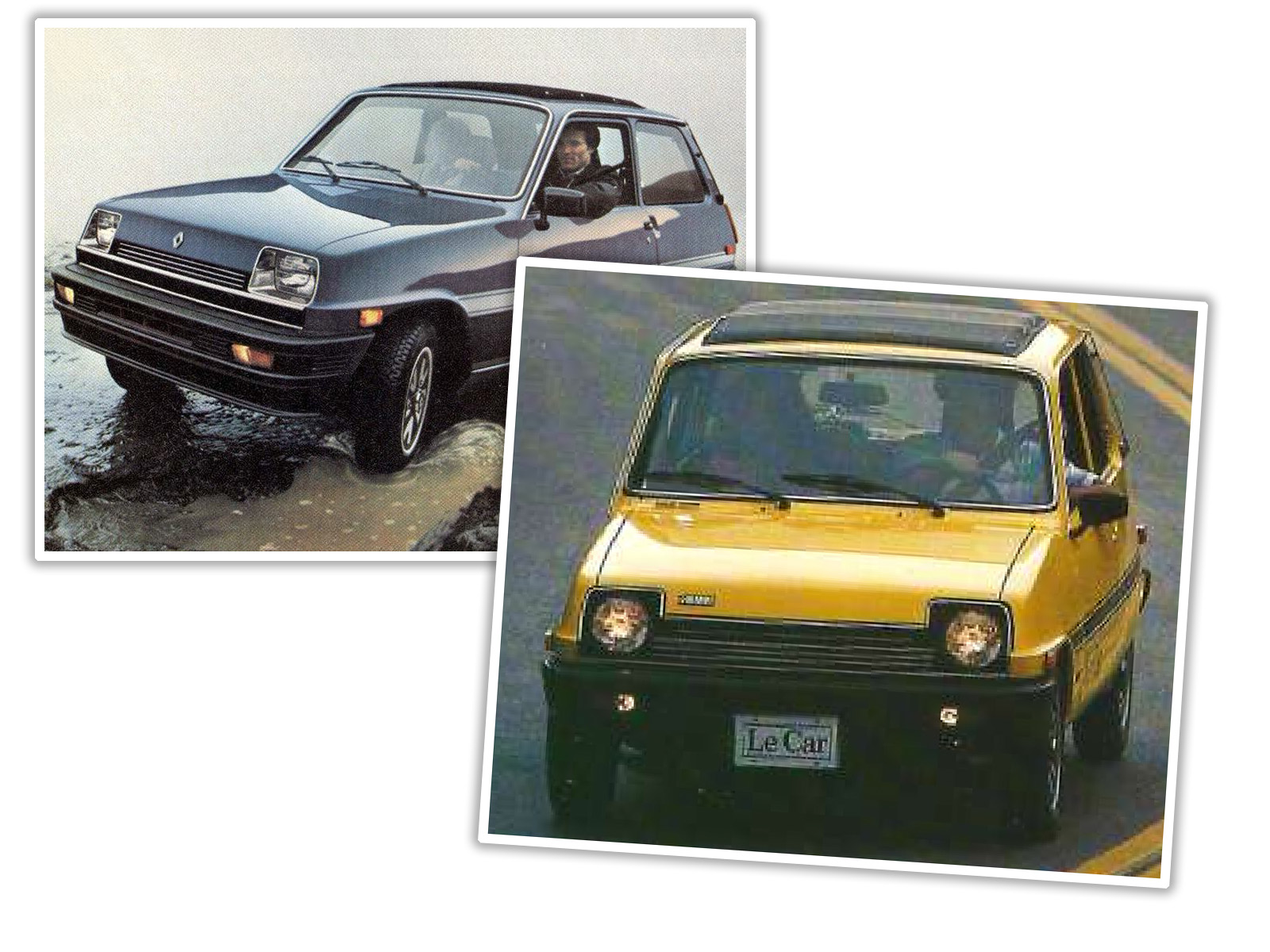
The initial US-Market Renault LeCars (the silly name given to the Renault 5 in America) used round sealed beams, from 1976 to 1979, and in 1980 those were replaced with rectangular lamps. In this case, I think the rectangular lamps work better, because, unlike the Golf/Rabbit, where the headlights broke some of the boundaries of the Golf’s very straight-edged front end with playful aplomb, in the case of the LeCar the round lights were simply stuffed into the rectangular bezels that housed the Euro version’s rectangular composite headlights.
This was a case where the lights weren’t cleverly interacting with the existing design, but rather were being forced into a context they were never meant to be. These lights looked and felt like a clumsy compromise, and when rectangular lights were fitted into the rectangular bezels in 1980, the LeCar’s face felt harmonious again.
This issue – cramming a round light into a square hole – I feel like comes up surprisingly often, and it almost never works. Take the Studebaker Avanti, for example. Original Avantis had wonderfully unabashedly round headlights:

Much like the VW Golf/Rabbit’s round headlights, these worked because of their contrast with the more linear forms of the rest of the car. But, after Studebaker passed onto the great factory in the sky, the Avanti lived on as the Avanti II, which for some reason featured round lights in rectangular chrome bezels:

That’s not an improvement! I’m not sure what the goal was there, exactly, but it just makes the front end look fussier and dowdier. Later neo-Avantis moved to rectangular headlamps, which was better than the round-in-chrome-squares of before, but still not great:

…and then eventually came all the way back to bold round headlamps:
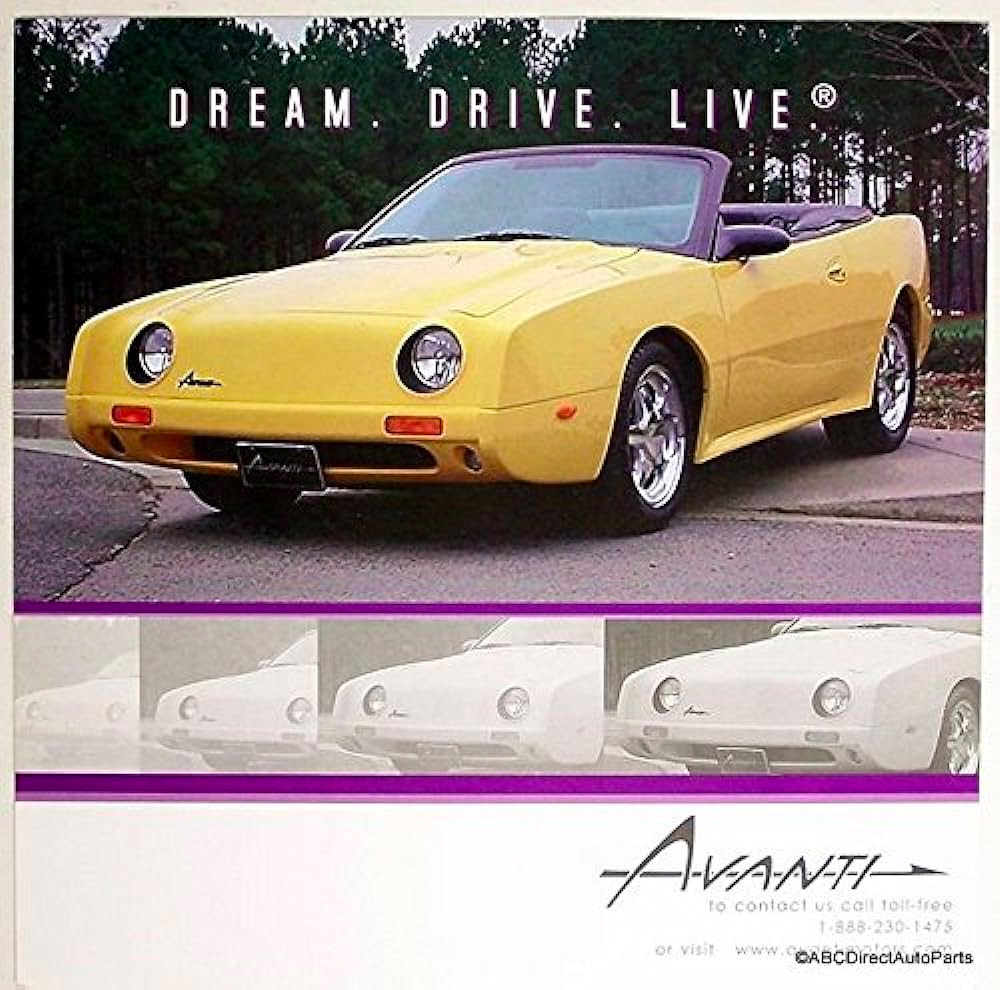
Overall, I think the Avanti works better with round lamps, for reasons similar to the Golf/Rabbit.
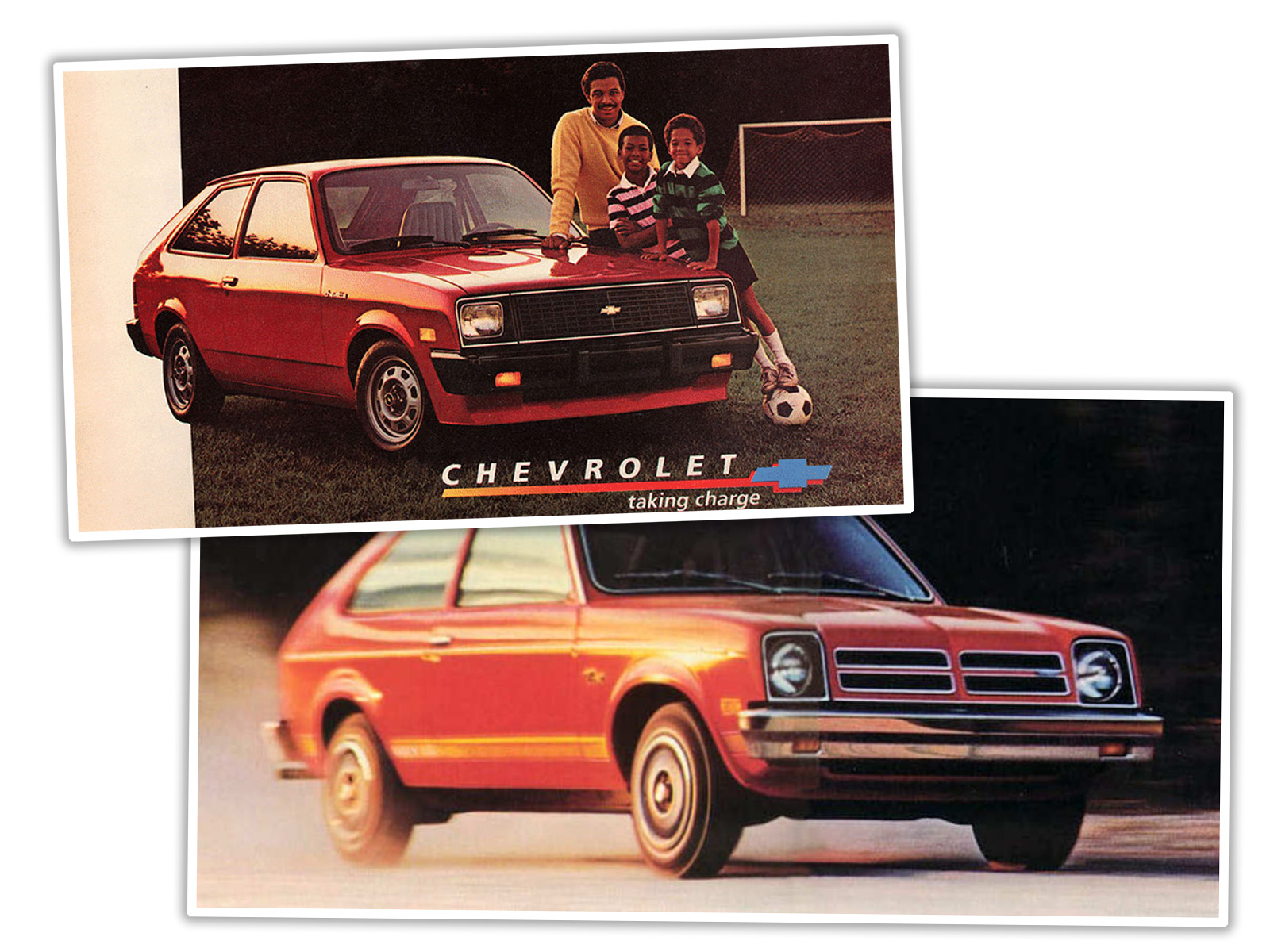
The Chevette is yet another example of how round lights work best when not surrounded by square holes. The early Chevette face is a little friendlier, perhaps, but the later rectangular-lamped front end is much cleaner and works better with the overall design. Somehow, unlike the Rabbit/Golf, it doesn’t suffer from the stern/suspicious look issue, though I’m not sure I can pinpoint exactly why.
I think intent is important here, or perhaps something closer to acceptance? What I mean is that designs where a round light is appreciated as a round light and no attempts are made to shoehorn it into a design never really intended for a round light are the ones that tend to work. Really, the same goes for rectangular lamps: is the overall design one that appreciates the shape of the lights? Look at these Monte Carlos compared to the Golf/Rabbit:

When the Monte Carlo switched from round lights to quad stacked rectangular ones, the impression one gets is that the overall design was adapted to make those work; I get a sense that the designer was eager to try these new headlights. With the Golf/Rabbit, the switch feels more like an obligation, something done because one is expected to do it, and without passion.
Some round-to-rectangular changes are a little baffling, as in the famous case of the Citroën 2CV:

I’ve gotten used to the rectangular-lamp 2CVs but it does seem a pretty arbitrary choice; in a way it’s like the opposite of the Golf/Rabbit situation, only in this case rectilinear lights on a curvy car.

The Honda Accord is another interesting example of a car that tried both; of all of these, I think this one may be closest to a wash. I think it looks pretty damn good either way. The quad round lamps somehow manage to have a slightly sportier look, partially because of traditions involving using lights that were quick to change in rally contexts. But the rectangular ones do look pretty smart!
So what have we decided here? I think if there’s any takeaways, it’s that you can’t beat intention and enthusiasm when it comes to car design. If you have a round headlight, own that round headlight. Let the light define its space, don’t try and force it into another shape. Let it push against other elements of the design! And, conversely, harmony can work, too! Sometimes a rectangular lamp in a rectangular hole just feels right!
My point is, sealed-beam enthusiasts, it’s time to stop fighting. Put down the shrimp forks and chairs, and accept that you are all beautiful children of light, with so much to offer, all in your own brilliant ways.




Both! It’s amazing to me how difficult it is to decide which ones I like better but luckily I don’t have to!
“very notion of a binary good/bad distinction is absurd”
I agree that round is better in general because they are like the car’s eyes (cue the amorphous debate) The Rabbit is the most difficult for me though because I used to have an 83 Rabbit GTI and an 84 Jetta and really liked the squares; also had them on my 2 3rd gen Accords (pop-ups!) I still may lean a little bit towards the round though since they make the cars look happier.
“Somehow, unlike the Rabbit/Golf, it doesn’t suffer from the stern/suspicious look issue, though I’m not sure I can pinpoint exactly why.”
On the Shitvette; I mean Chevette, I think someone mentioned different grilles but I also think it’s because the whole front face is flush and flat…if it was a coffee table and you went to put a drink down, you wouldn’t worry about it since it’s flat. The one w/ round in square hole, you would because there’s the indentation around the light as if it was a coaster. Of course you’d have to be pretty drunk on Malort to miss a coaster (ha ha). I think this applies to a lot of cars from this era to where if the front face is not flat and flush, it sorta seems off. Plus that early Chevette face just looks straight out of hell!
It depends on the car, but we already know the answer if the car in question is a Rolls-Royce Project Nightingale.
Generally ROUND, though of course there are cases where rectangular works better.
Not that you needed another example, but the Volvo 240 would have been nice to mention, if only because not only did it come with round and (or) rectangular headlights during its production run, but also with single vs double rounds and rectangulars, AND the later ‘cinderblocks’ which are technically rectangular, but also crazy HUGE. Perhaps all those variables might have confused the issue though.
Regardless of shape, what I miss most about sealed beam headlights was how EASY and CHEAP they were to replace. Sure, LEDs are brighter and probably use less juice, but a $20. sealed beam swap from any random autoparts place vs. the many hundreds or multiple thousands that fancy composite lights now cost is a no-brainer. And don’t get me started on how glass lensed sealed beams stayed clear forever, vs. how all plastic headlights get yellow and cloudy in less than a decade unless the car is parked out of the sun.
This whole discussion brings to mind my thoughts about the headlights on the (hopefully) upcoming Telo EV truck, which has a trio of diagonal LED slashes where each headlight goes, lending its face a vaguely insectoid look. Aside from seeming a bit odd and busy (on an already unusual looking vehicle) when I that about how much nicer and friendlier the Telo truck would look with simple roundies I’m almost driven to tears. Of course, they’d be modern LED composites, but plain 7″ round headlights would have been so much better. Don’t get me wrong, I still like the Telo truck (and have a deposit to hold my place in line even though it’s got twice the horsepower and costs twice as much as I need/want)… it’s just that squandering the opportunity for a friendly face on it makes me sad, that’s all.
Round.
Big round Lucas P100 of whatever they had on. 1930 Packards and Cadillacs. About 12 inches round.
Non round headlights can be ok, but headlights with acute angles are very much not ok.
You are absolutely right Hugh, headlights with acute angles aren’t OK. There might be an example or two where they’re tolerable/make sense, but generally: no.
I think they are something that probably looks good in drawings and animation where there is an attempt to draw motion rather than form – a human with cartoon eyes would probably cause a severe commotion – but for an actual object they are just plain ugly, expensive, and don’t work well.
I will take either of these over the $1500 headlights I have to use when customers need a replacement. Of course, I shop aftermarket and used and am giddy when I get one for $500.
But HEY! This is a frigging light bulb. Unfortunately I am old enough to remember round headlight displays in auto part stores for $1-2 each.
Gramps
Round head lamps are superior – fight me
Hide-away headlamps were the best of both worlds. You could have both or neither!
“inter-nacine”?
I think you mean internecine.
Also, sorry, but the Chevette retrofitted with rectangular lamps looks as bad as the Monte Carlo. Add the Chrysler Cordoba and Ford Granada to other rectangular-lamp failures.
On the other side of the great pond, Germans and some Europeans in the 1970s and 1980s considered the quad round headlamps more sporty. Some gutted out the rectangle composite headlamps and fitted the round headlamps.
Volkswagen offered the large rectangle headlamps on the first-generation Scirocco with smaller 1.1 and 1.3 litre engine while the larger 1.5 and 1.6 had round headlamps. Some owners with puny engines swapped the rectangle headlamps for quad round headlamps as to hide their embarrassment of driving a weak-arsed Scirocco. For 1978 facelift, Volkswagen eliminated the rectangle headlamps.
Same with Opel Manta B (1975–1988).
Glad you chose the Monte Carlo as an example. My first car was a 75 with the round headlights. The double rectangles are an abomination.