

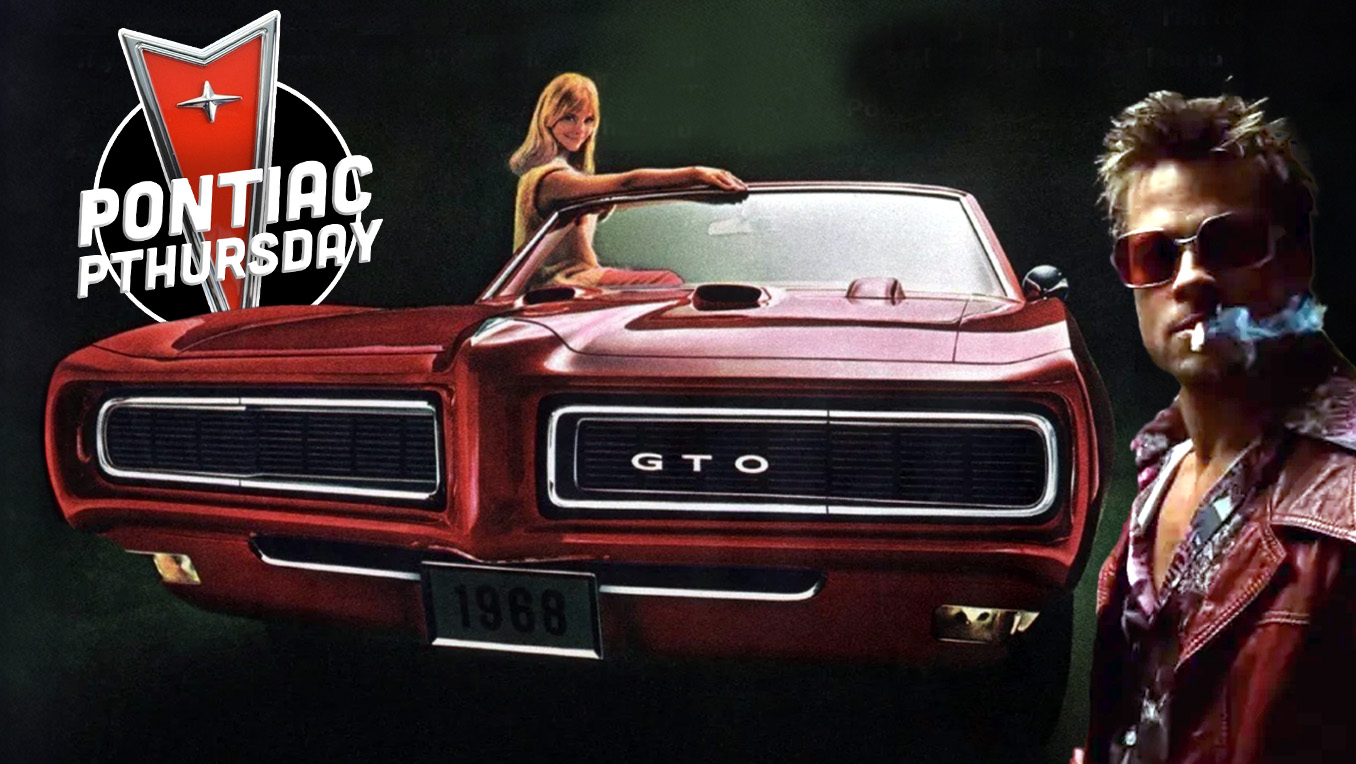
Advertising copy is vitally important, but you could argue that the imagery itself is much more impactful. The most powerful spots ever produced have often featured few words, if any. The idea is not to write out the entire narrative but to leave space that your mind will instantly fill.
Pontiac made such an advertisement at the end of 1967 that got across the message the division wanted to convey. Unfortunately, it was a message that GM brass had no interest in sending out.


Faster! Bigger! Better!
During the fifties, the bulk of automotive advertising in magazines featured elaborate paintings of cars in fancy settings with paragraphs of glowing praise in scripty type to extoll the virtues of the product on display.

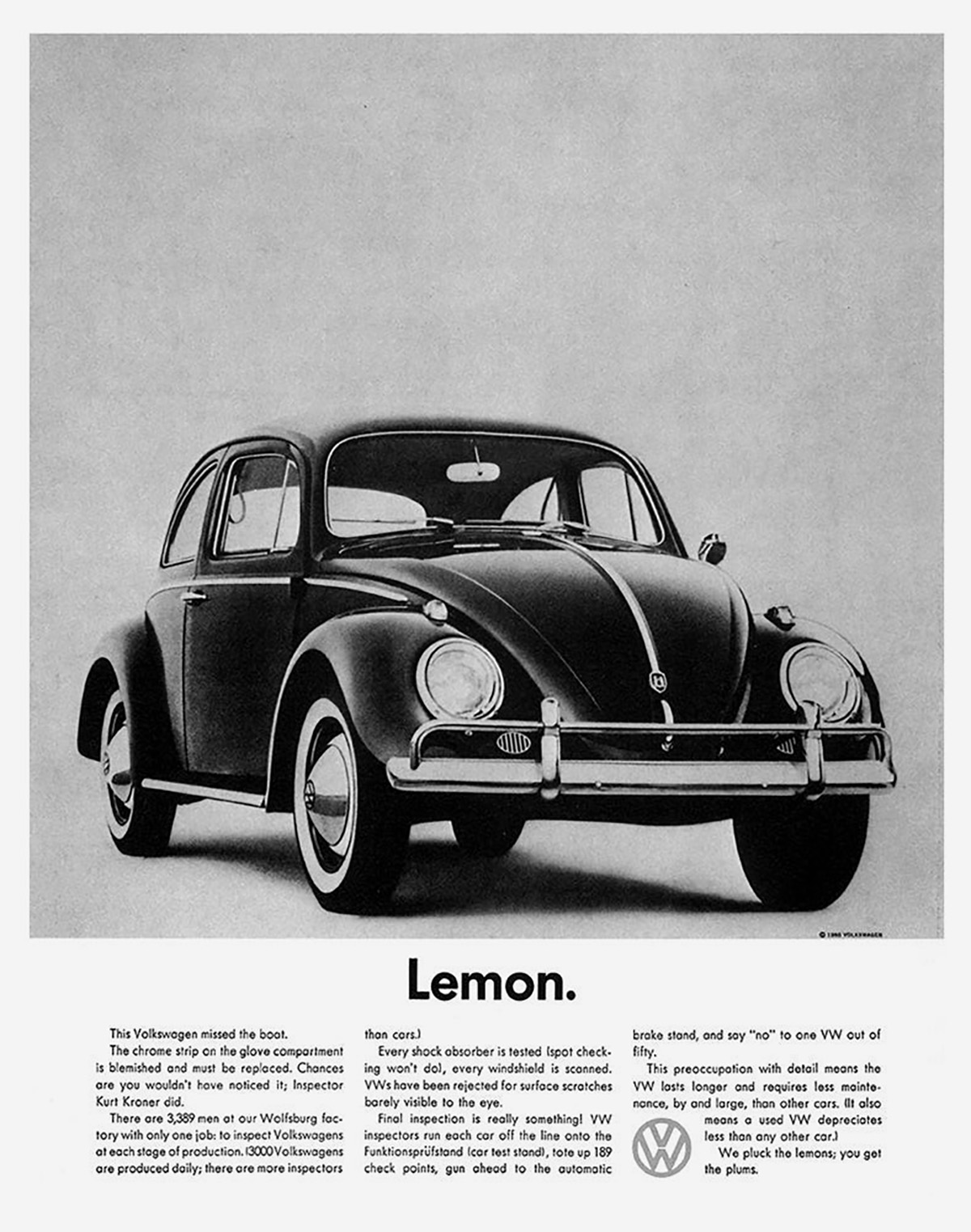
In 1960, the advertising agency of Doyle Dane Bernbach (DDB) wasn’t really able to do that. Why? Well, the product they were given to promote was not even remotely glamorous, and most people (other than our Jason Torchinsky) found it to be a rather ugly little runt. That’s right: DDB needed to create a campaign for the Volkswagen Beetle, a car that was the antithesis of the chromed and tail-finned cars of the day.
DDB decided to flip the script and, in the process, create a legend. The ad was simply a picture of a black Beetle with the word “Lemon” below it; the text explained how Volkswagen would refuse to sell a car with even a minor flaw, but that wasn’t the point. The goal was that it would catch your eye, and boy, did it ever. This was a revolutionary approach to visuals that would ultimately change advertising forever.
Other agencies soon followed suit with this picture-tells-a-thousand-words approach to hawking cars. An evocative image could send a message that would live on in a viewer’s mind long after paragraphs of prose were forgotten. One such advertising house found itself in hot water for broadcasting an unspoken truth that probably should have been left under the covers.
Mad Men Meets Muscle
You probably don’t know the names of any advertising agency bigwigs off the top of your head besides the fictitious Sterling Cooper and Don Draper. If you’re a muscle car person, however, it’s likely that you’re familiar with one particular ad executive: Jim Wangers. While employed at the Detroit firm of McManus, John & Adams, Wangers was instrumental in pitching one particular Pontiac product: the new-for-1964 GTO.

Division head John DeLorean’s idea of putting a larger-than-typically-allowed engine into a mid-sized Tempest didn’t necessarily create the first muscle car, and it certainly wasn’t the fastest one, but none of that mattered since Wangers was able to market this car better than any of the other Big Three or even GM’s other divisions ever could. From dramatic magazine covers showing it racing a Ferrari to pop songs and memorable television spots, Wangers made the GTO the first name even a non-car-person thought of when they heard the term “muscle car.”

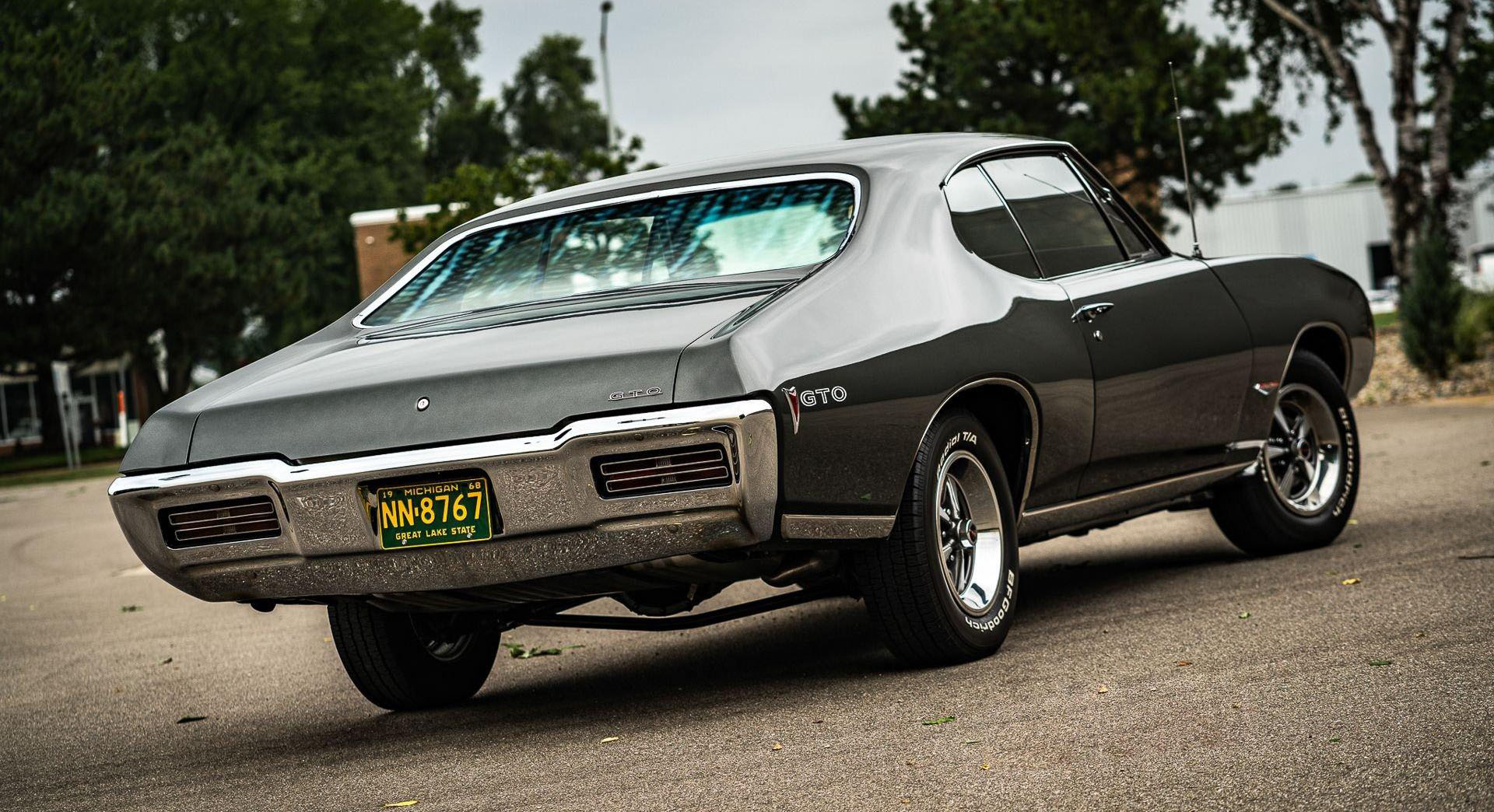
For 1968, General Motors introduced brand-new mid-sizers with fastback, Coke-bottle-shaped styling that, to me at least, stand out as some of the most attractive products in an era where GM really had a hard time making an ugly car. The LeMans-based GTO of this body style was a standout, certainly in the upper ranges of a Top Ten Most Beautiful Pontiacs Ever List.

I could go on for an hour about the flush chrome rear bumper and concave rear window. They could have just slapped on some rectangular side marker lights to satisfy the new-for-1968 safety requirements, but instead they shaped them like Pontiac logos; that’s brilliant.
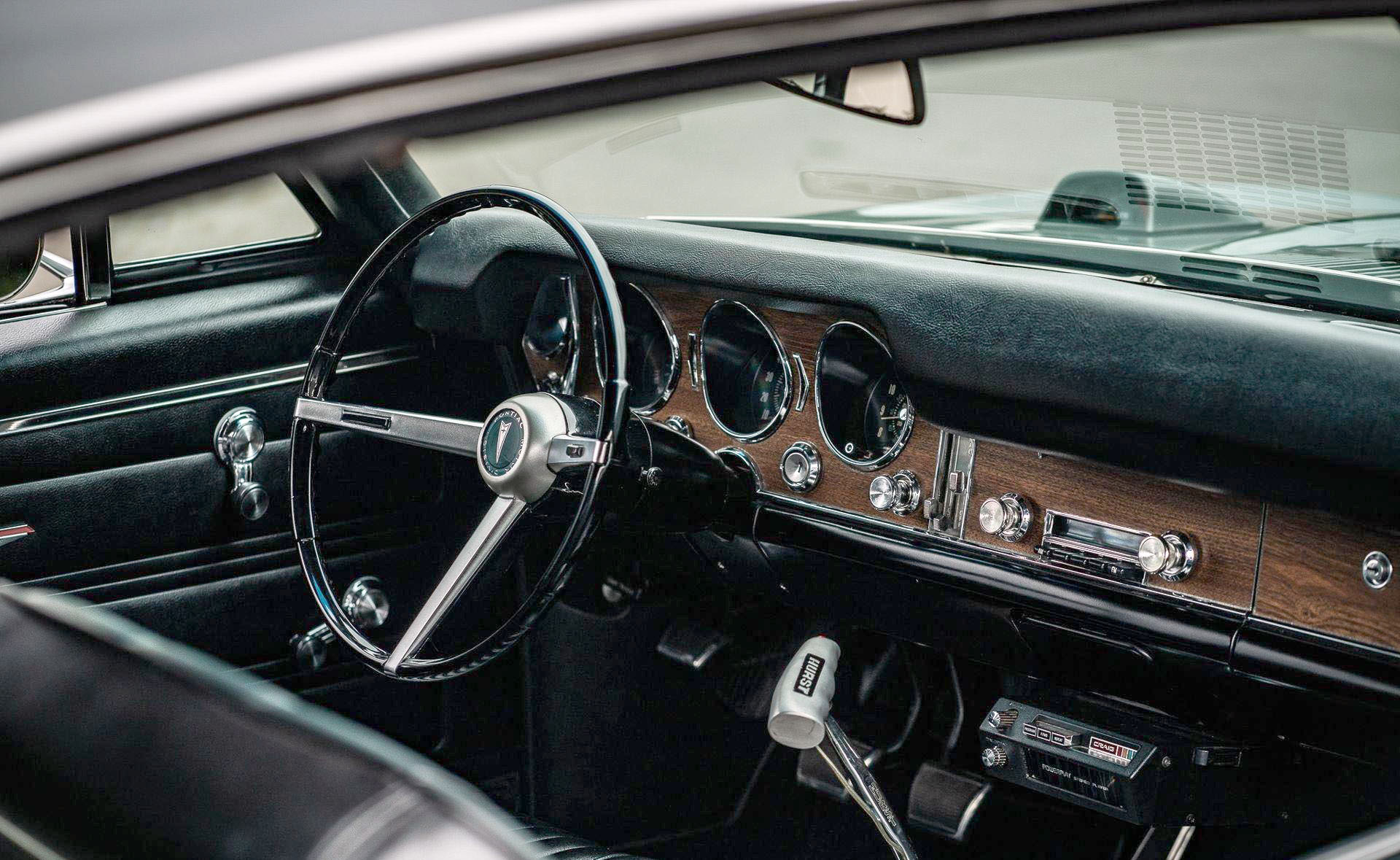
The new interior wasn’t earth-shaking, but you could get the awesome hood-mounted tachometer.
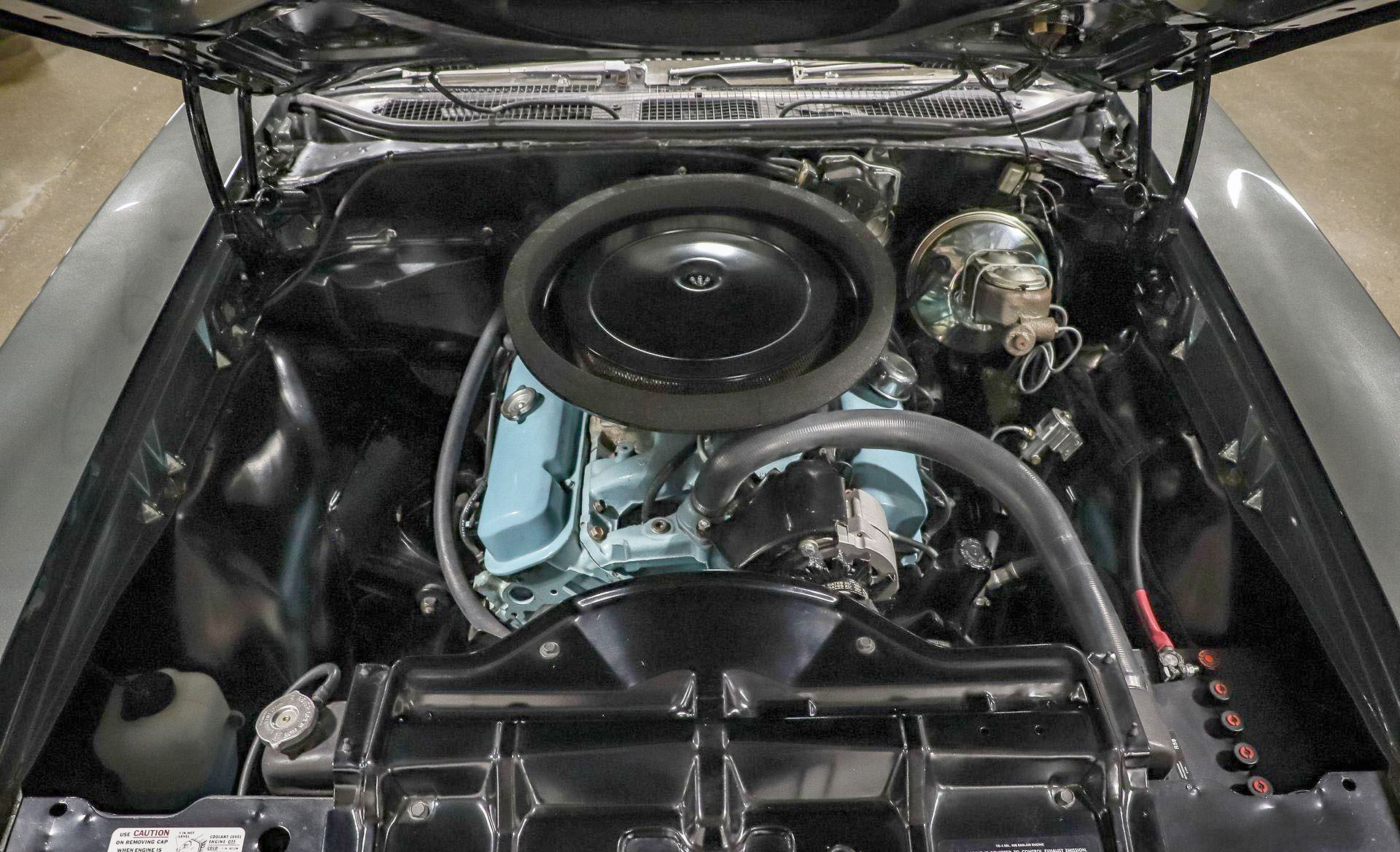
Naturally, Pontiac backed up the sleek-but-aggressive looks with some decent powerplants, all variations of the Pontiac 400V8. Standard was a 350-horsepower four-barrel version while a “Ram Air II” version pushed that number up to 366 (gross ratings, of course).
These GTOs nearly sold themselves, and Jim Wangers needed to come up with a campaign that was now less concerned with getting the “Goat” name out there than it was with reinforcing public awareness of its perceived superiority. There’s no better way to show a winner than on the battlefield; that is, unless the battlefield in question doesn’t really want to be seen.
Not In Our Town, Thank You
Transferring to Los Angeles was probably one of the best things that our man David Tracy ever did in this life. Having said that, you couldn’t pay me enough to ever make that move. I know it’s an unpopular opinion, but I’d really hate living in L.A., even if I didn’t sunburn in about five minutes. Visiting it is great, but if you don’t dig the sunny-every-day weather, there’s not much else to recommend it over the traffic, real estate prices, earthquakes, and fires. In the northern Detroit suburbs that David left behind, I find almost everything more livable and enjoyable, including the fact that the main north/south route, Woodward Avenue, is a massive four-lane throughfare that lacks the inconvenience of left-turning cars at intersections.
If Woodward Avenue wasn’t intentionally built for drag racing, why was it straight as an arrow with stoplights every mile or so? I mean, many main drags forbid U-turns, but on Woodward, there’s a lane every couple hundred feet to do just that. Could the designers not have envisioned stoplight-to-stoplight runs and the ability to then easily reverse direction to do the same thing over and over all Friday night long? I think not. Unofficially, numerous car companies would even “test” their latest quarter-mile killers on Woodward. Now, this activity might have been an open secret, but it was absolutely something that nobody from polite society ever spoke of publicly. Certainly, an auto maker would never claim to know the raison d’etre of their product was to battle it out on Woodward. Until one did.
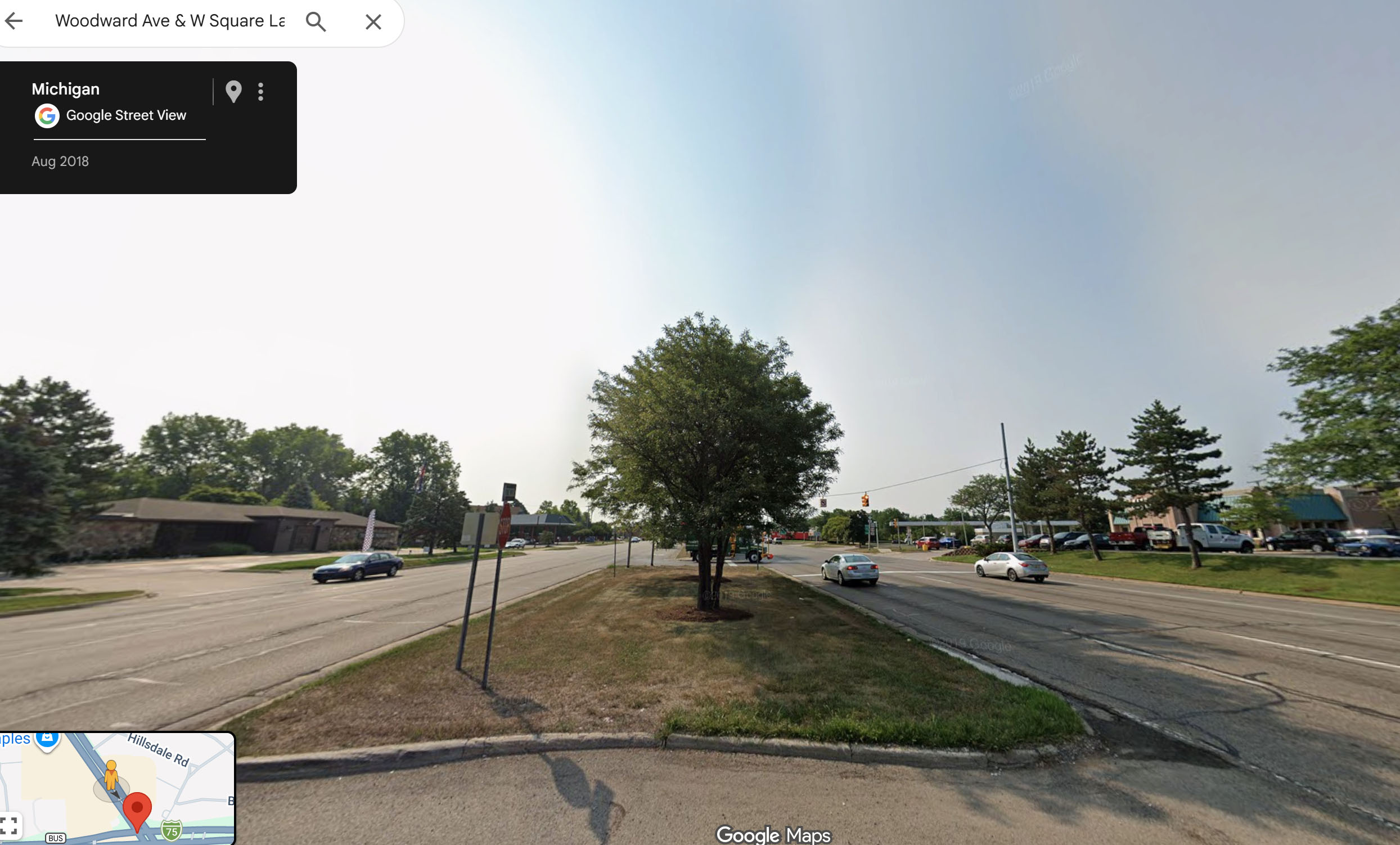
Early on a fall morning in 1967, Jim Wangers had a team take a gorgeous new deep green Pontiac GTO out onto Woodward Avenue, not far from McManus, John & Adams offices just south of Pontiac, Michigan where GM’s performance division lived and reigned. According to those on the shoot, the team picked a turnaround lane just north of Square Lake Road with a prominent “Woodward Avenue” sign; I can’t verify the exact location, but the Google image below is likely the same (or similar) location today, sixty years later.
The team bolted on a “to I-75” sign above the Woodward one just to complete the composition; reportedly, no permits or permissions were obtained to do this. The finished shot showed the new ’68 GTO basically lying in wait for the next Six Pack Mopar or Chevelle SS to throw down with. Not that the ad said any of that; the only text was “The Great One By Pontiac” and “You know the rest of the story.” It was a masterpiece, on the same level as the VW pieces of the day, and everyone loved it; well, maybe not exactly everyone.

You see, while most Detroit suburbs are delightfully affordable next to those in California, bear in mind that’s not always the case. I’m not sure exactly what these locales around the photoshoot site were like sixty years ago, but my guess is that they weren’t that different from how they are today. The likely neighborhood of that photo shoot – Bloomfield Hills – as well as other nearby communities such as Birmingham are rather pricey good-school-district places where they call the cops on people who decide to park derelict Jeeps next to their $750,000 house (not that I’m citing an actual incident or person, of course). These residents would absolutely take umbrage at a nationally published call to arms encouraging young people to drag race on their main road. Actually, pretty much every neighborhood from Wide Track Drive in Pontiac all the way down past Pasquale’s (gone!) and the Sign Of The Beefcarver (still there!) probably complained.Naturally, the Powers That Be in these ‘hoods got up in arms and went straight to GM brass to protest this secret handshake of an ad. The execs quickly put a stop to any more publication of the Woodward Avenue GTO spot, making the appearance in December 1967 publications its only showing. By self-banning it, General Motors achieved what would later be called the “Streisand Effect” by bringing more exposure to the controversial ad than it likely could have received by running it for another six months. This was yet another example of the outstanding job Pontiac did with marketing their muscle car, a vehicle that a lot of Mopar fans would claim they could easily shut down on this Michigan road. They’re right, of course, but it didn’t matter: the GTO’s legend got bolstered beyond its already stratospheric levels.
The Image Lives On After The Words Are Forgotten
In retrospect, 1968 might have been the high-water mark for the GTO and muscle cars in general, with safety and emissions regulations beginning to negate the increases in power as the decade ended. By most standards, Wanger’s controversial ad also stands as a G.O.A.T of performance car marketing before insurance companies and oil prices brought it all crashing down.

If you’ve ever flipped through an old car magazine and been more amused by the eye-catching ads than the actual car reviews, you can thank people like Jim Wangers, who pushed the envelope and turned the simple task of promoting products into a true art form.
Pontiac Points: 99/100 (for the ad)
Verdict: Well, if we’re talking about the ad, it’s 99, but a ’68 GTO itself wouldn’t be too far behind.
Top graphic images: General Motors; 20th Century Fox



I remember the ads.
That year of the GTO gave 11 year old me all kinds of feels.
They remain to this day. Thanks for the memory bump.
Yes, the dream car of my 15 year-old self. IIRC. Car and Driver had a comparison test which the GTO ‘won.’ It was later determined that Pontiac cheated with thinner head gaskets(?).
In 1960…most people (other than our Jason Torchinsky) found (the VW)to be a rather ugly little runt.
I was under the impression he wasn’t born until sometime in the early/mid 1970s…
Some things transcend space and time.
“I don’t know what the big deal is – All I see is a new car stopped to make a left turn.”
Weird the guys at GM couldn’t manage to utter those simple words.
Say what you will, but GM brass wasn’t stupid. They read the article just as accurately as every street racer. What you might not recognize is that in the ’60s GM held 60% of the American market share. This made them a target for government antitrust actions. They played a defensive game when they thought it was required.
They also were among those living in those posh Detroit ‘burbs.
Darwin Stephens and Larry Tate
Weather aside, I also prefer Detroit. LA seemed fake, like I expected to see the facades of buildings held up by 2x4s and too many of the denizens are practically cyborgs for all the silicone fillers in them and they all seem to use the same hack plastic surgeon. Detroit is honest, even if it’s a truth you don’t want to hear.
Fun fact: LA actually has a fair number of buildings that really are hollow facades!
Less-fun fact: they’re usually hiding oil derricks
https://99percentinvisible.org/article/hollywood-worthy-camouflage-uncovering-the-urban-oil-derricks-of-los-angeles/
Interesting! Reminds me a little of the disguised tunnel vents on the Greenway in Boston.
There’s some in London which hide an opening into the Underground: https://en.wikipedia.org/wiki/Leinster_Gardens
Noir Leather. Royal Oak
“The likely neighborhood of that photo shoot – Bloomfield Hills – as well as other nearby communities such as Birmingham are rather pricey good-school-district places where they call the cops on people who decide to park derelict Jeeps next to their $750,000 house (not that I’m citing an actual incident or person, of course).”
Tell me about it. In 1994, I was living at my parents house in BH, last year of grad school, and I had a 1972 Cadillac Hearse, nasty primer grey (you brush against it, you’d get grey chalk like dust on your hands or clothing), on jack stands on the driveway, working on the starter.
Got a call from the local constabulary, who said that the neighbors complained, and that I can’t park a commercial vehicle in the driveway. I argued that the rollers were removed, the curtains were removed, and it really is just a Cadillac Station Wagon. The officer said “Son, that vehicle is a hearse. You either put it in the garage or get rid of it.”
Party poopers…
So… What did you do?
Cut the back part of the roof of and Cadillac Camino Royale
Don’t leave us hanging. We’re dying to know what you did.
There was no way it would fit in the garage.
I ended up selling the car to to a guy who did drywall. His main thing was that he wanted to know if I still had the rollers for the caskets. I did, and so he bought it. Actually, pretty clever; the drywall stays dry, won’t break while getting it out of the vehicle, and since the hearse had suicide doors on either side, access was a breeze.
Now, fast forward several years, and I’m driving west on Maple just past downtown Birmingham, and I just got paid on a case, and I literally had something like $4,000.00 cash in my pocket.
And what do I see headed east? MY HEARSE! I hadn’t seen it since I sold it, and here I am with cash burning a hole in my pocket – This was a sign, right?
The problem is that there was no place to turn around or do a U turn. So at the first opportunity, I turned around, and drove like hell to catch up to the hearse, but it was gone.
Now, some 30 years later, every so often I look back wistfully, perhaps with a tinge of regret. But someone once said, “Don’t be sad that it’s over, be glad that it happened…”
No way, it was a sideloader, too? I always thought they’d be good utility vehicles.
Barely related, but my work uses SAP Concur for travel booking. For Avis, they still show pictures of Pontiacs for the intermediate category. And for some reason a Vibe is used for the SUV category. Amusing to see 16 years after they stopped being a brand.
Remember, Avis is #2. That’s another famous ad campaign by DBB.
“We Try Harder”. Brilliant since it established a duopoly, Pepsi to Hertz’ Coca-Cola, and defined everyone else in the category as an also-ran.
The toys of summer are out now that winter is finally over. GTOs of all years among them, prowling Woodward still.
From 11 mile Road north to Pontiac on a warm spring and summer evening…there is no better place on planet earth to enjoy classic cars of every perversion.
Now I won’t be able to drive by that Square Lake Rd. turnoff without thinking of the cool shit that went down there almost 60 years ago.
I can tell you, my love for cars will still be strong,
After the toys of summer have gooonee.
Los Angeles catching strays for no apparent reason.
LA is dirty, loud, busy, expensive, but it will always be my homebase. I don’t plan on living here forever, but I will always have a homebase to return to.
For me, peace is driving through East LA, get tacos, make my way over to the west side for the Peterson museum or taking the long way home on PCH and through the mountains. People see traffic, homeless, and how dirty the city is, I see the culture that shapes SoCal.
LA has sometimes been called a thousand suburbs in search of a city. But that fails to recognize when LA came about—in the post industrial urbanization of suburban rings around what used to be city centers LA was the first to never really have a center for people to abandon the way it’s happened in the east.
All of that is to say that people who expect LA to be like the cities they know will forever be lost. It is a thousand, urbanized, suburban centers, but each with their own unique history and culture. It is a buffet of experiences if you’re willing to see it.
LA actually reminded me of Detroit in that they’re both relatively low rise, large, and sprawling. Beyond that, there’s not as much in common, but if Hollywood continues to decline . . . no, there’s still too much else going on and the weather will continue to be a draw.
Covering the Whittier Narrows earthquake in 1987, my reporter and I had to meet up with a satellite uplink truck at a specific address on Whittier Boulevard. Having shot all the tape we needed, we made our way through East LA in our rental Lincoln Continental (the last car available at Hollywood-Burbank airport we had flown into from Sacramento). I knew where Whittier Blvd. was, but maddeningly, the addresses changed from one range of numbers to another each time we crossed the border of a burb. We finally did find it. About five burbs southeast of where we started.
It needs all the roads, because nobody walks in LA.
Although an inexact parallel, I think of Tokyo in the same way. Where others see a single giant metropolis, I see numerous distinct cities and sub-cultures.
I hate LA. But I’m obviously just jealous as I’m stuck in Upstate NY.
If you aren’t on the beach LA is just a 75 square miles human litter box.
It’s hard to call California in general underrated, but it’s definitely overhated. I sense a deliberate smear campaign at work against it even before it was joined by governors of red states, often while busily making the same mistakes that are the real root of its’ livability and affordability problems, that were made 40-70 years ago when it was the land of Nixon and Reagan.
People talk about driving in LA like for some reason all of us are here just to drive on the 405. No, driving in LA is the canyon roads (just stay off Angeles Crest Highway), the off-road trails, the racetracks (5 separate road courses within 3 hours of driving), and all the meets that celebrate any variety of car you can think of. If you say driving in LA sucks, it just tells me you didn’t explore.
I was writing a response, but the constantly moving and popup ads are now intolerable. Popup ads actually booted me off the page. This page is now the stress equivalent of too much traffic in LA.
A great many sins are forgiven when watching the sun set over the pacific.
I’ve read a few more – profane – utterings from Wangers. Seems he may have been an ad genius, and otherwise nasty person. The two may go hand in hand.
There are many cities you couldn’t pay me enough to live in long term. I’ll happily take a week or so in NYC, Chicago, San Fran, LA, etc… rinse, and repeat.
There is no large city on the planet that I could be realistically paid enough to live in, fun though they may be to visit. And there are not enough billions in the world for me to live in NYC – I absolutely detest the place. I am a suburban lad through and through, and preferably a suburb of somewhere relatively small.
I live in Pittsburgh exburbs. Close enough I can catch a Pens, Steelers, Pirates game in an hour drive. Same with any off-Broadway show. There are always things happening, if you are bored, you’re not looking hard enough,
I can be at Lake Erie in under 3 hrs, several ski resorts in an hour and a half. New York or the Jersey shore in 6.
Sounds about perfect. I am an hour from either Ft. Myers or Sarasota, 2hrs from Tampa, 3hrs from Orlando or Miami. Everything I need daily is within 5 minutes, things I might need monthly or so is an hour, and the “big city” fun is 2 or 3 hours. And there is always LOTS of stuff going on in the two smaller cities anyway (not that I go out much, serious homebody).
I see NO need to live “downtown” somewhere. Yuck. BTDT, dealt with the chaos. And that was downtown Portland ME, not even a big city and it was fun and suck in equal measure. Yeah, it was “walkable” – if you didn’t mind heat, cold, rain, and in the meantime while you are out walking, your car (or apartment) is getting broken into. And these days you are dodging homeless walking around Portland if the weather is decent. And tourists. Soooo many tourists…
As long as you don’t go downtown after dark. I’ve resided on Neville Island and in Imperial I know the city and crime is rising. Unless that is the excitement you are looking for?
It’s not as bad as made out to be, though the homelessness is becoming epidemic (not just here, nationwide).
I rented a house up in Bloomfield for 6 years or so. We moved the summer before my daughter entered Kindergarten. It was getting too small and the school system – varies. I worked 30 miles out of town and we bought out there.
Pluses and minuses.
Same. I don’t like cramped city chaos or rural emptiness, so the suburbs are the compromise that works for me. Teenage me would be appalled.
Definitely. In both Maine and Florida I feel like I found a nice compromise between too urban and the sort of sprawling suburbs where you can’t do ANYTHING without a car and driving for 30 minutes.
Came home the other day, and we were trying to count the deer in the yard.
My cousin asked where the horses are.
I feel like my neighbors are too close.
I enjoyed Houston, but it was like 7 small cities bordering each other. I saw my first attempted murder there.
Yikes! I sat at my desk in my apartment in downtown Portland, ME, in the best neighborhood in the city, and watched a dude get wacked with a machette in some kind of gang turf war thing. My apartment overlooked a Cumbie’s gas station.
Yeah, I’ve been to “Houston” many times for oil company clients, and in my previous life, a hardware store out at the end of the ship canal. But I have never actually been to any of it’s several “downtowns”. Just the outer sprawl of Beltway 8. Houston is absolutely a sprawling hot (and steamy) mess of a city. I much prefer Dallas.
As someone who spent his youth in 90s small town Ontario, I long to move to one of our many beautiful historic small towns. I feel like I’m robbing my daughter of that experience.
But unless we can go full remote, neither mine nor my spouse’s job make that feasible.
Plus, part of me knows the real truth, that era is dead and gone now.
“So forget where you’ve been, it’ll never be that good again, and we must only look ahead”
I do pinch myself that I lucked into this job that lets me live pretty much anywhere 19 years ago. I actually blazed a trail in the company as the first non salesrep remote employee. Today 90% of the company works remotely, including the vast majority of the management team.
I think small towns can be pretty timeless. Certainly my hometown in Maine has grown in population considerably, but it’s character hasn’t changed at all (for better or worse, as the case may be). Probably helps that my maternal family still runs the place as they pretty much have for 300-odd years, LOL.
In the vein of actual fighting, one of my favorite Ford print ads of the era is the Fairlane “Sunday Punch” ad.
The visuals are fantastic – lurid red interior setting off a chrome shifter and a driving-gloved hand reaching for it juxtaposed with a stylized motion shot of the car.
That happens when you get older.
Guess they won’t have to worry about it now. RIP.
Probably my favorite ad from a golden age of advertising. All you see is a car in a turnaround, obscured by some signs. They don’t even come out and tell you explicitly what they’re selling–the power comes entirely from your imagination (“the rest of the story”). Just a masterpiece.
This is why you have to go 4 miles south of the Beef Carver to do any serious drag racing. The NIMBYs had already moved north by the 1960s.
Like past Ferndale? Hey is the tire shop with elevated 1964 Chrysler with the spinning tires still there?
Yeah you need to go south of 8 mile if you want to get less attention.
Wetmores! Wobbly Wheels Made Straight! Yeah they’re still there. The car got a refresh about 10 years ago in fresh paint and wheels, but it’s still up there wobbling away.
I’ll also add that Ferndale’s pedestrian traffic has skyrocketed and it’s not safe for any mischeif.
R.O. is O.K. but Ferndale is Fashionable
Royal Oak is trying to out Birmingham Birmingham, Ferndale is the new Royal Oak, and Oak park is the New Ferndale.. Whole area continues to evolve.
There is that BDSM shop in RO.
Yeah, there are still a few local indie shops there, but it’s far from the heyday of when we used to spend a whole day there wandering through record stores, clothing shops, comic book stores and Decco Doug’s looking at antiques we could never afford.
Last time I visited I got a $35 parking ticket for being 3 minutes over, I’ll find somewhere else to spend my time.
Sam’s Jams is long gone. Best part of Ferndale and my childhood…
It is still called “Fashionable Ferndale”. Max H nailed it below.
Sam’s Jams! Taking me back. I can almost hear The Electrifying Mojo and The Midnight Funk Association on the radio
I try to stay out of Found Sound, because I always go in looking for one record and come out with five. Insidious!
I loved Pasquale’s Pizza as a kid in the 80s. (Assuming it was a national chain?) Right down the street 2 blocks, always had 1-2 new-ish video games (some of my favorites were B&W). The lady knew my voice if I called ahead.
Nope, the Pasquale’s on Woodward was a local family Italian restaurant, they had pizza but not video games, and it was the kind of place you’d expect to see some old mafia types in the back corner. Closed down about ten years ago when the third generation had no real interest in continuing to run the place. (This is all hearseay and spotty memories)
I always got a personal-sized pizza when I went there but if I remember correctly it was really more of a full-on Italian joint with the requisite booths and decor than a pizza joint.
(BTW I’m not from Detroit but I went to school there for four years and my mom’s twin sister lived in Huntington Woods for forty years).
Yeah their sign did say PIZZA in big letters, but it was more of a neighborhood Italian restaurant; but super-sized. I did enjoy their pasta the few times I ate there, which wasn’t very often. Being a local townie that probably contributes to why they didn’t stay open.
As a current Bloomfield Hills resident, I am not at all surprised to hear that humorless people in my town objected to that ad. (I also really, really want that a poster of that ad for my office.)
Also, to get waaaaay too far in the weeds here, I think the photo would have to be just *south* of Square Lake Rd., not north of it. The signs say to take the turnaround to head northbound on Woodward, towards I-75. Eastbound Square Lake feeds directly onto 75 there. Thus, if you needed to get on northbound Woodward to get to I-75, you must be south of the Woodward/Square Lake intersection. Very possibly could have been this Michigan left. (Or the GM ad men who installed the “To I-75” sign may not have been as persnickety as I am…) Either way, great post!
I was just going to say, it’s the north-bound Michigan left. We’re looking south down Woodward, now M1 instead of US-M10. It’s directly across from the strip mall with the Boyne Country Sports store for the posh folks and the Chicken Shack next door for when they get hungry from horseback riding.
Exactly!
Remember those ads (Acura maybe?) where they’d have the car on a chassis dyno with wine glasses stacked on the hood, then start the engine and run it up to speed and the glasses never fall.
I thought Pontiac should have done something like that. The ad starts with a black Trans Am, front wheels on the dyno, a dozen wine glasses stacked on the hood. Then a guy with dark aviator style glasses and a mullet cranks the engine. The stack collapses, glass shattering everywhere on the ground. The ad ends with a mad burnout.
Would’ve made a great follow-up to those “You bet your ascot” Bonneville ads.
It was an early Lexus ad
Those ads helped build the reputation of the OG LS400.
A car I honestly would drive without shame today. Per old Nissan -Everything I need, nothing I don’t.
I’d drive one, they are “fine”, and it’s certainly a lovely, lovely motor. But the whole time I would be wishing I was in a w124 Mercedes e-class. Particularly as there was no LS400 *wagon*.
I respect you, we had differnet lives. I first drove an ’89 Acura Legend during college. That car rewired my brain.
I drove one back then and thought “what is all the fuss about, give me BMW or a Saab Turbo,”, LOL. Hondas have never, ever appealed to me at all. I could see what the fuss was about with the LS400, but nothing about that car made me want one over a Mercedes or BMW.
You really should have driven a Rover Sterling. Yeah, they were horrifyingly unreliable despite the Honda bits, but they drove soooo much better than the Legend, and were so much nicer inside until the leather turned green and the trim bits fell off. It’s all in the tuning. 🙂
And it came in a liftback model which made it a more useful storage shed once the Lucas electrics won out over the Honda mechanicals.
Lucas electrics or Honda rust – pick yoru poison. I don’t think it was electrical problems that killed most Sterlings. Both Legends AND Sterlings had the infamous Honda V6 glass transmissions. Generally shoddy build quality was a real issue with the Sterlings. In terms of interior materials and assembly more than the mechanicals, other than the transmissions. I imagine a Sterling with a 5spd would not have given much mechanical trouble, but the trim would still fall off and the seats would still turn green (on the early ones that was a serious thing). In typical fashion, but they time they got them pretty sorted and the hatch 827SLi debuted, they gave up and pulled out (largely due to the ’90s recession cratering sales).
BTW – in that era Rover was basically using Honda’s electrical architecture. My early Disco is VERY Japanese in it’s electrics, and they never give any trouble. The Magneti Marelli alternator packed up at 130K or so, hardly anything to get excited about. Otherwise, it all just works.
I grew up in Colonade coupes, Fox Body and Panther sedans. First car was a ’78 LTDII (Torino), second a Fox body LTD. All my teen cohorts had J, G or A body GM’s or K cars. I think someone had a Slant 6 Dart. The life of late Gen-X.
What hit me first was the build design and quality. Hidden fasteners, no plastic mould flashing. Soft, quality materials where it mattered. Quality seat fabric. Not ‘luxurious’, but a cohesive, thought out design ethos. A responsive engine.
Even a German-built VW gave you all those things back then.
I grew up surrounded by European cars (and the American crap my grandfather bought). The Legend didn’t impress me much compared to a Mercedes or a BMW or a Saab. All in what you are used to, I guess.
A neighbor of ours had an Audi 5000S. Same thing, you could SEE the quality.
Audi has been really good at that for a loooong time. VW was too back in the day, and Audi cranked it up big-time. Shame they weren’t as good at mechanicals and electricals as they were at making the cabin feel super-premium.
Of course VW’s biggest mistake was that factory in PA and dumbing down the Rabbit for America. Though to give the PA workers a bit of credit, the Golfs and Jettas made there were indistinguishable from the German-made ones, so I blame the beancounters and marketers more than the assembly line workers. The US-built Rabbits were shit because VW wanted them that way.
Poncho Photo Pulled for Insidious Insinuation!
Woodward Well-to-dos Wail and Whine.
High five from the American Alteration Association.
I’m the captain of the alliteration station of this nation.