

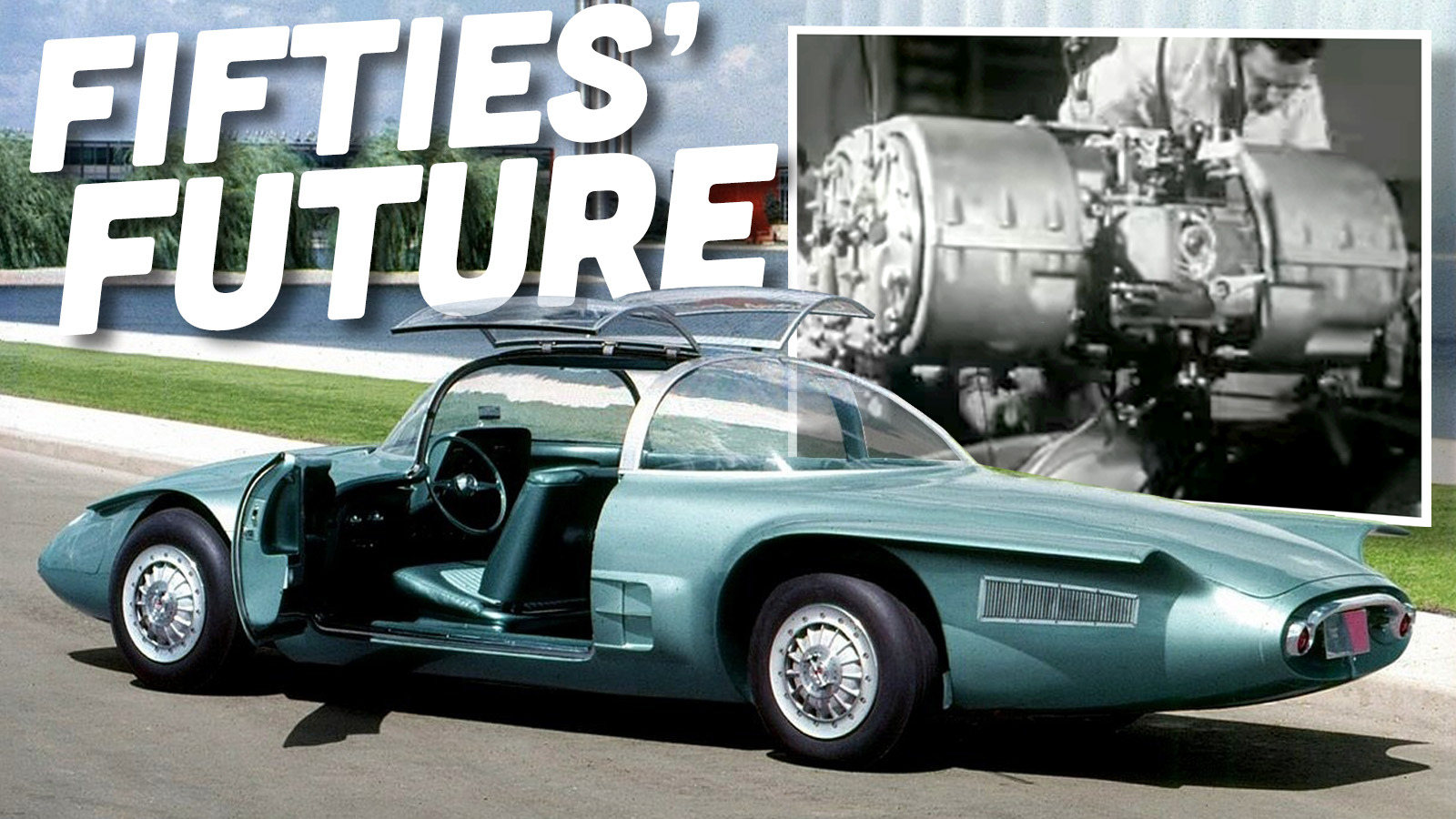
Automotive history is full of dead ends that eventually get lost to time. Seventy years ago, the free-piston engine was thought to be the future of internal combustion. These engines have fewer moving parts than typical reciprocating engines, can run on nearly anything that burns, and, in theory, can be mass-produced for less than the cost of other engines. General Motors was perhaps the most ambitious American automaker with free-piston engines. Its engine featured two cylinders, four pistons, no crankshaft, and ran on nearly any fuel, even whale oil. It also powered a futuristic car, the 1956 GM XP-500, but there’s a reason why your Chevy Blazer doesn’t have one of these engines.
In the first half of the 20th century, some engineers didn’t see the piston engine as the apex of vehicle development. To them, piston engines had too many parts, weren’t efficient enough, weren’t powerful enough, and weren’t reliable enough. Diesel engines were around, but they were expensive, heavy, and quite massive when configured to make healthy power.


What did show promise for road use was the gas turbine, the Wankel rotary, and the free-piston engine. If you were an engineer in mid-century America, all three of these engines might have shown promise. All of them have fewer moving parts than typical piston engines, and all but the Wankel were touted as being able to run on a variety of fuels. Each teased a future where gasoline piston engines might become as outmoded as riding a horse.
In the 1950s, the gas turbine was all the rage. All of America’s Big Three were experimenting with gas turbines. So were other car companies, railroads, truck producers, tractor producers, Boeing, and anyone who thought turbines were the future. But some of these companies didn’t put all of their development into turbines.
Ford put a free-piston engine into a tractor before experimenting with putting its engine into an unknown car. GM put its engine into a car early on, and reportedly before Ford did. The result was the 1956 XP-500. This concept car is a weird piece of GM lore that has fallen through the cracks. It was also an incredible demonstration of technology that went nowhere.
Free-Piston Engines

A free-piston engine is a piston engine where the pistons aren’t tied to the rotation of a crankshaft. The pistons in these engines move as a result of gas and load forces, as there is no crank and no conrods. The concept of a free-piston engine has been around since the 1910s, but the practical free-piston engine was invented by Argentinian engineer Raúl Pateras Pescara de Castelluccio in 1922. If you’re interested in reading a fuller history of free-piston development, click here to read my previous story.
There are multiple types of free-piston engines. Most of these engines are a two-stroke design, and I’ll let R. Mikalsen and A.P. Roskilly at the Sir Joseph Swan Institute for Energy Research, Newcastle University, explain. The most basic free-piston design is the single-piston free-piston engine, from the university:
This engine essentially consists of three parts: a combustion cylinder, a load device, and a rebound device to store the energy required to compress the next cylinder charge. In the engine shown in the figure the hydraulic cylinder serves as both load and rebound device, whereas in other designs these may be two individual devices, for example an electric generator and a gas filled bounce chamber.
A simple design with high controllability is the main strength of the single piston design compared to the other free-piston engine configurations. The rebound device may give the opportunity to accurately control the amount of energy put into the compression process and thereby regulating the compression ratio and stroke length.
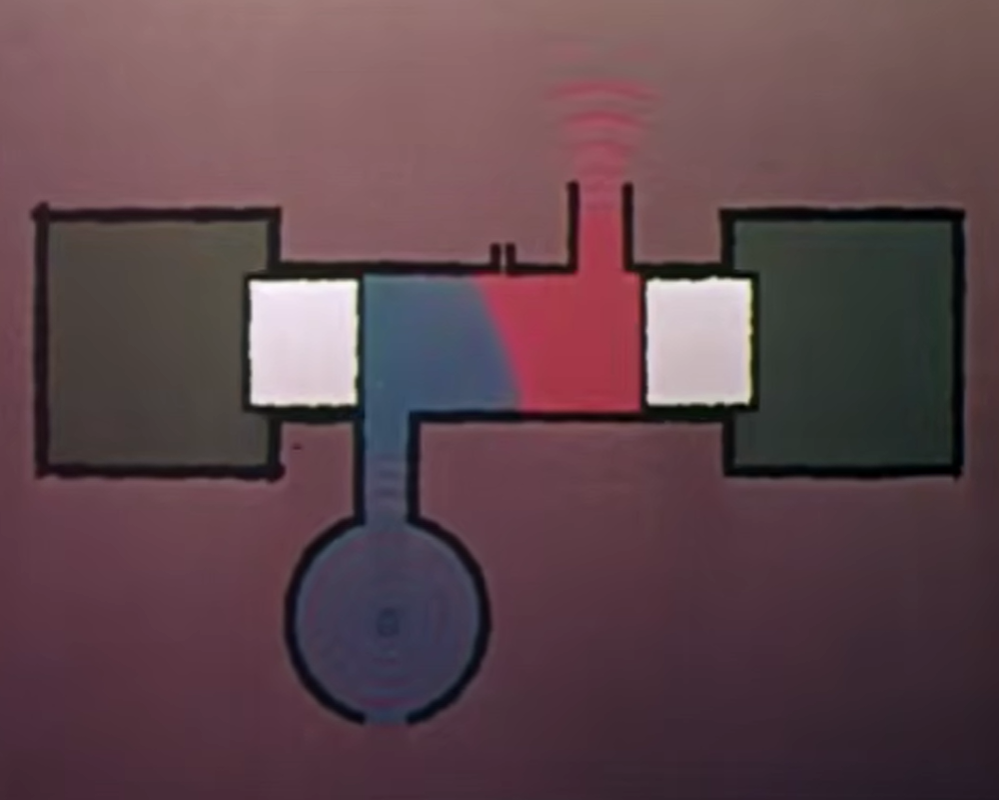
A step up from there is the dual-piston free-piston engine, from Newcastle University:
The dual piston (or dual combustion chamber) configuration, has been topic for much of the recent research in free-piston engine technology. A number of dual piston designs have been proposed and a few prototypes have emerged, both with hydraulic and electric power output. The dual piston engine configuration eliminates the need for a rebound device, as the (at any time) working piston provides the work to drive the compression process in the other cylinder. This allows a simple and more compact device with higher power to weight ratio.
Some problems with the dual piston design have, however, been reported. The control of piston motion, in particular stroke length and compression ratio, has proved difficult. This is due to the fact that the combustion process in one cylinder drives the compression in the other, and small variations in the combustion will have high influence on the next compression. This is a control challenge if the combustion process is to be controlled accurately in order to optimise emissions and/or efficiency. Experimental work with dual piston engines has reported high sensitivity to load nuances and high cycle-to-cycle variations.
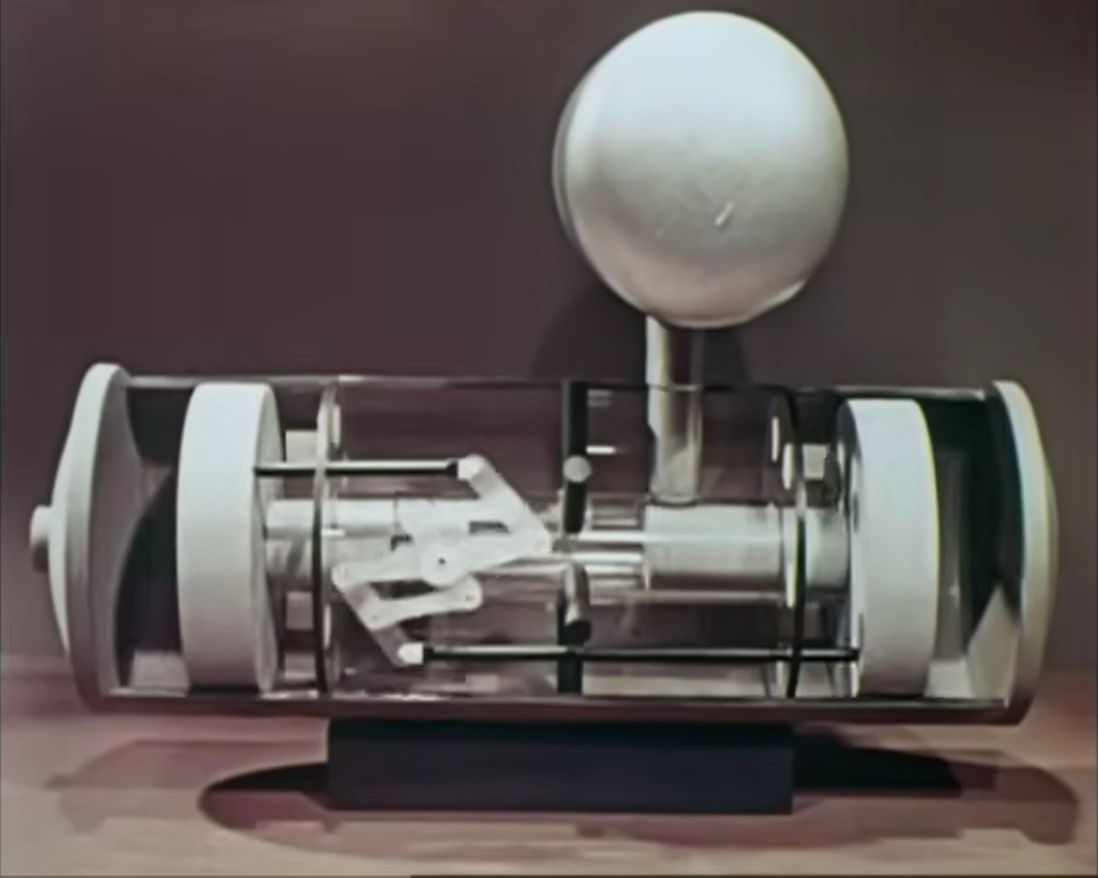
Another variation is the opposed-piston free-piston engine. An opposed-piston free-piston engine is essentially two single-piston free-piston engines that have their pistons coupled together through a linkage. An opposed-piston free-piston works like a typical opposed-piston engine and features a single cylinder and a single combustion chamber, but two pistons. These pistons close in on each other, fire, and then blow outward.
As Newcastle University noted above, every combustion stroke of a free-piston engine is slightly different. Since more basic free-piston engines lack a mechanical linkage to the pistons, the pistons can be in different places on every stroke. Thus, controlling the stroke and compression ratio was difficult because engineers had a hard time determining where the pistons were on any given stroke.
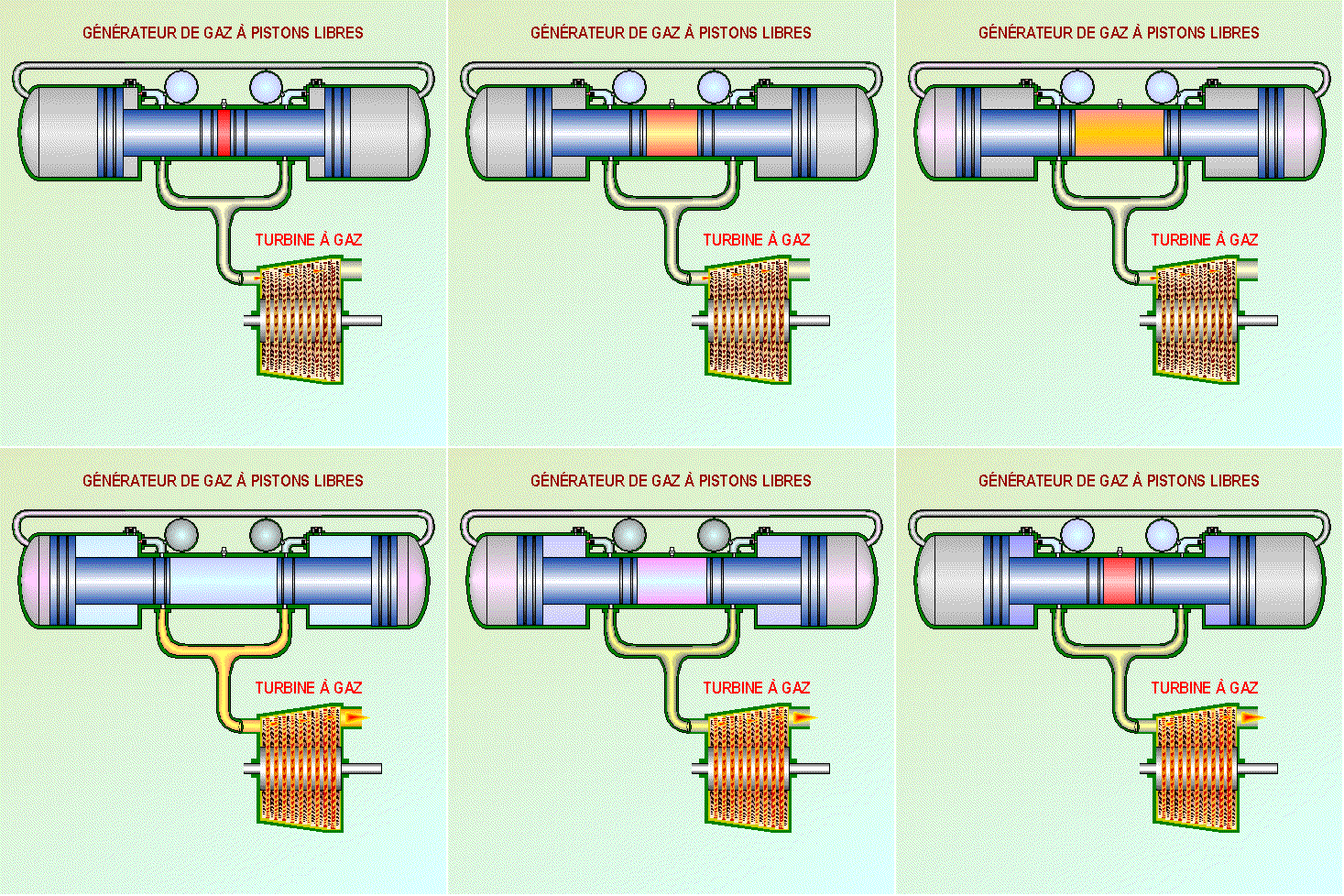
An opposed-piston free-piston engine’s linkage keeps the pistons better synchronized. As a result, the opposed-piston free-piston engine is known for its balance, smoothness, higher efficiency, and scavenging performance. Many of the free-piston designs made from the 1930s to the 1960s utilized this design. However, as Newcastle University notes, those engines were bulky and complicated as they needed two of everything to work.
The holy grail of free-piston engines was believed to be the free-piston gas generator. These engines were free-piston engines that did not have a load device attached to them. Instead, the engines fired hot gases into a power turbine. The turbine would then spin a ship’s propeller, drive a car, or run a tractor.
General Motors Gets Into Free-Piston Engines
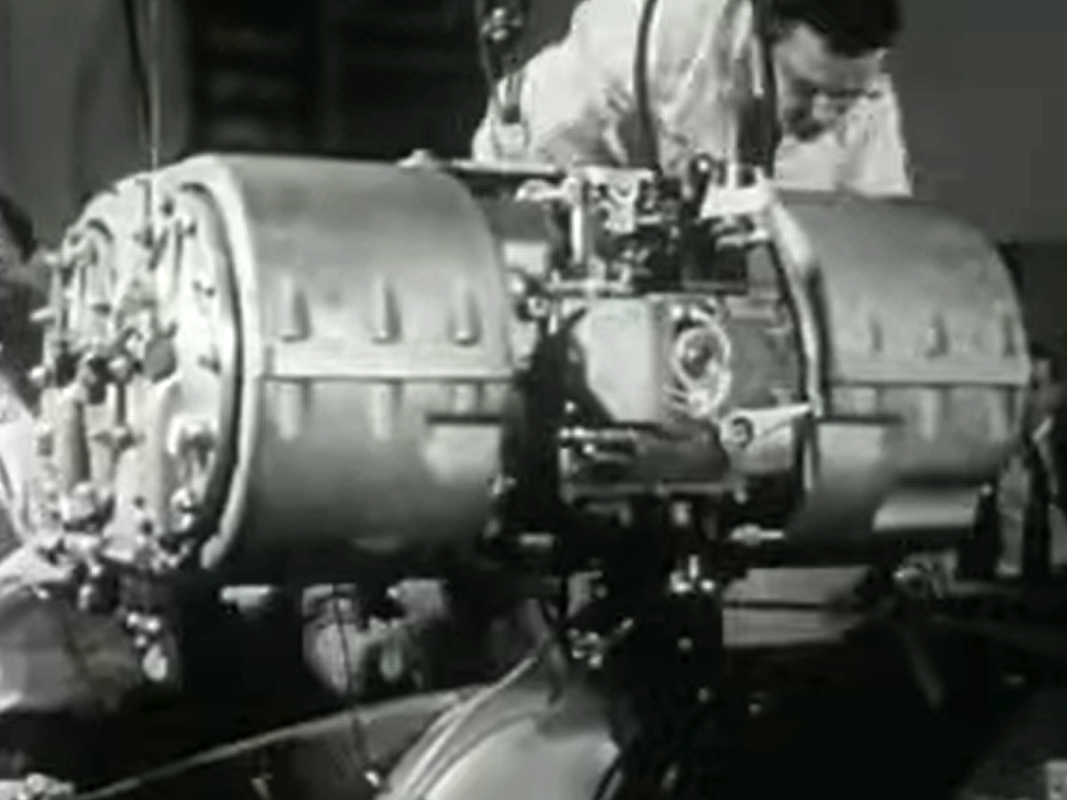
As the General Motors Engineering Journal explains, American engineers had known about free-piston engines for a while. However, while Pescara’s free-piston engine was practical, it wasn’t successful. That would change during World War II.
Reportedly, one of the first successful uses of a free-piston engine was when the German Navy equipped its submarines with the engines during the war. These engines, which were designed by Junkers in 1936, worked as air compressors and provided the air needed to launch torpedoes.
Shortly after the war, France’s SIGMA (Société Industrielle Générale de Mécanique Appliquée) developed the GS-34 free-piston engine, which became a gas generator used by the French Navy. Free-piston engines would prove themselves in Europe aboard ships, in locomotives, and in power plants.

Junkers and SIGMA technology crossed the Atlantic into America. Over here, the promise of the free-piston engine was grand. As Time magazine reported in 1956, engineers in Detroit believed that the free-piston engine would be a great stopgap technology between piston gas engines and gas turbines.
However, for General Motors, the free-piston engine had even greater potential. As General Motors had already learned through its research, gas turbine blades needed expensive metals to handle the high heat generated by the exhaust. However, per GM, a free-piston gas generator’s exhaust was only 450 degrees to 900 degrees. The receiving turbine thus didn’t need special turbine blades. The engine was also able to be placed anywhere since the bumper-melting jet blast wasn’t a concern anymore. GM also thought that a free-piston design had further potential because it didn’t have the lag of a gas turbine that had to spool up.
According to Popular Science in 1957, General Motors also projected that a free-piston engine could be 20 percent more efficient than equivalent steam engines or gas turbines. Then there was the fact that a free-piston engine ran on darn near anything that burned.
GM’s Free-Piston Engine
General Motors would join forces with SIGMA to conduct research for free-piston engines. GM describes its free-piston design:
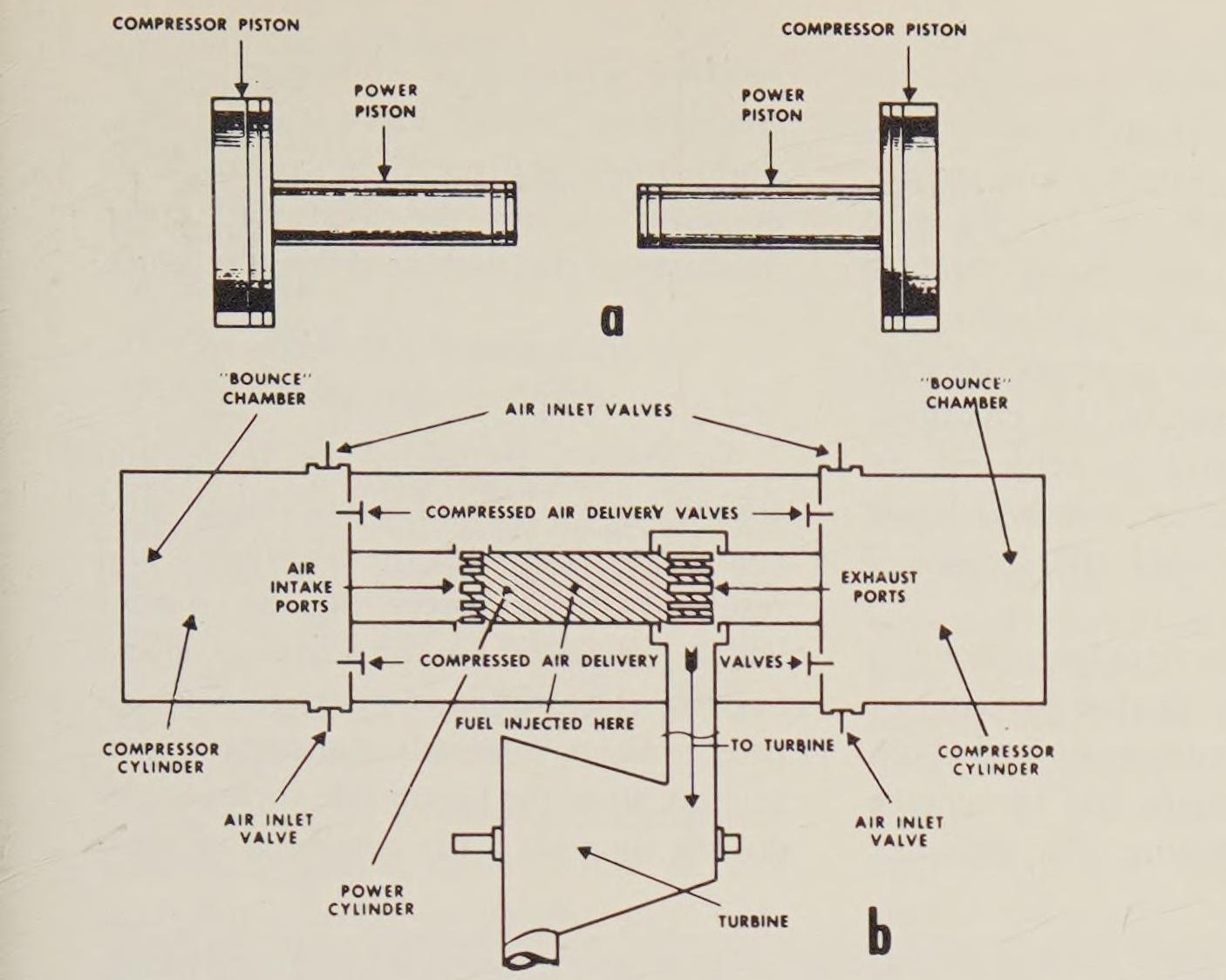
The free-piston engine is basically an opposed piston, two-stroke cycle, uniflow Diesel engine. The fundamental components of the engine are two horizontally opposed pistons (a, above), each being comprised of a power piston and a compressor piston.
The power pistons move inside the power cylinder, which contains air intake and exhaust ports (b, above). Firing is by compression ignition, as in a Diesel engine, with fuel being injected into the power cylinder by an injector (not shown). As the pistons move apart the exhaust ports are uncovered and a portion of the combustion gases flow from the power cylinder to a turbine. As the pistons move farther apart the intake ports are uncovered. Air entering through intake valves then scavenges the remaining combustion gases from the power cylinder. As the pistons continue their outward movement air is compressed in the bounce chambers until the pistons reach the outer dead point. Energy stored in the compressed air causes the pistons to return to the inner dead point position. This action compresses scavenging air in the compressor cylinder. Compressed air delivery valves then open and allow the scavenging air to pass from the compressor cylinders to an air receiver surrounding the power cylinder. At the same time, as the power pistons cover the ports, they compress a fresh charge of air in the power cylinder in preparation for the next charge of fuel.
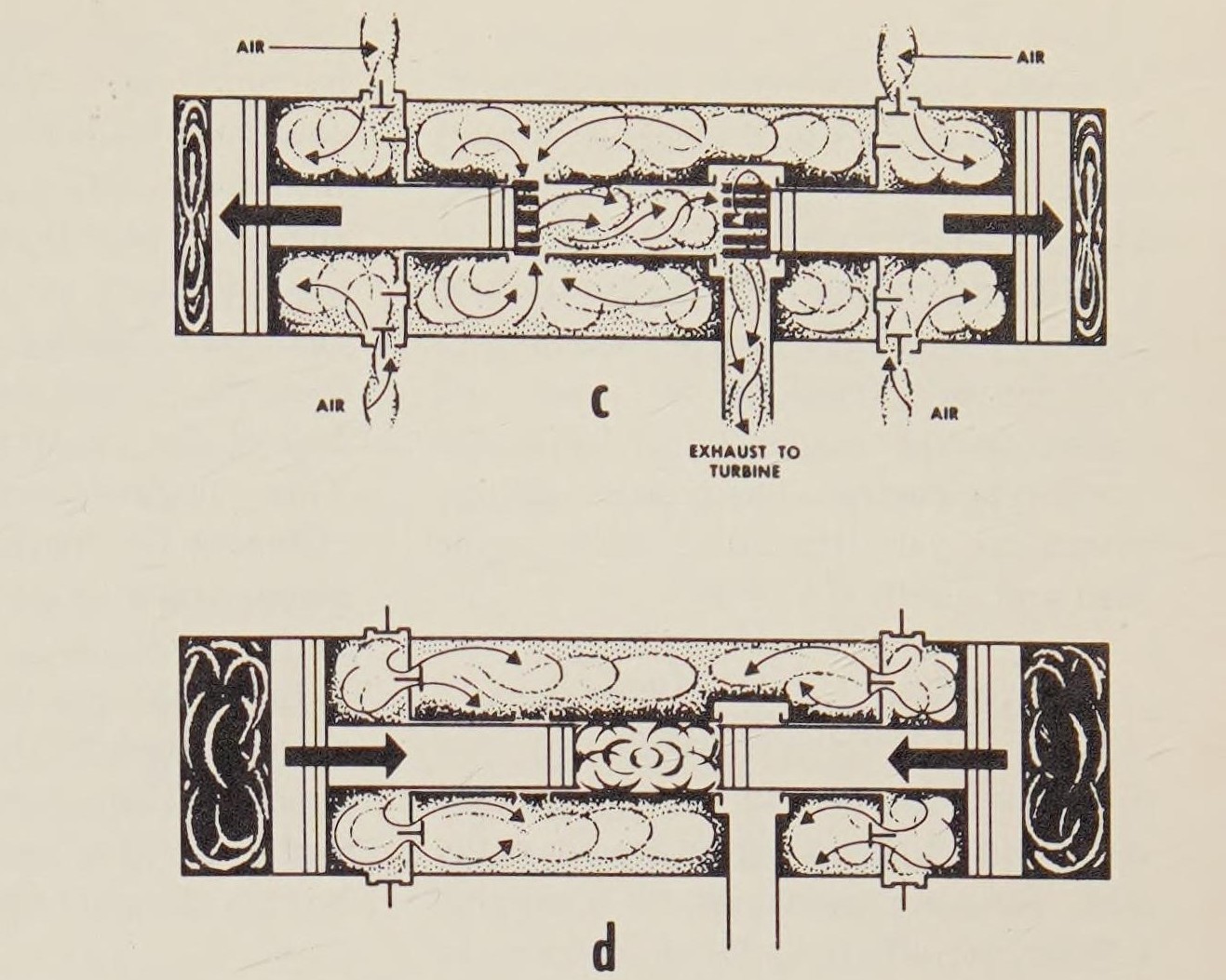
The complete action during one cycle of the free-piston engine is illustrated in schematic sectional views (c) through (f), right. In view (c) the pistons are completing their outward travel and are about to bounce back. The intake and exhaust ports are open and intake air is filling the compressor cylinder. As the pistons travel inward (d) air is pumped from the compressor cylinder into the air receiver. The intake and exhaust ports are closed and the compressed air delivery valves are open. As the pistons approach the center (e) fuel is injected into the power cylinder. The intake and exhaust ports are still closed and the air delivery valves are open. Upon combustion, the pistons move outward and begin the power stroke. When the pistons reach the end of the power stroke (f) energy from the air compressed in the bounce chamber causes the pistons to start returning to the inner dead point for the next cycle. The exhaust and intake ports are open to scavenge air from the power cylinder. The exhaust gases flow to the turbine for usable power while, at the same time, air is being drawn into the compressor cylinder.
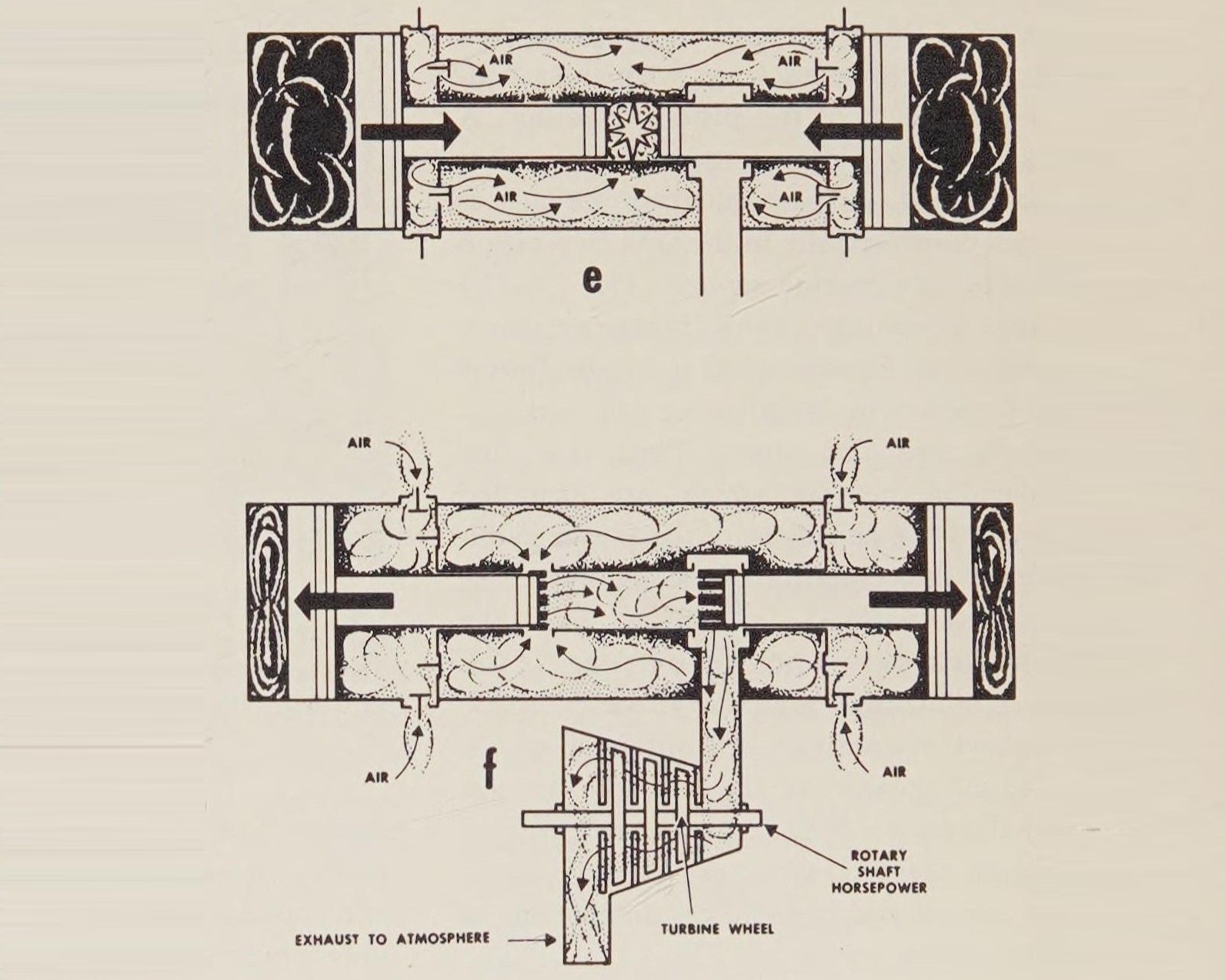
General Motors notes how it got around the problem with not knowing where the pistons are:
It should be pointed out that the pistons in a free-piston engine are not really free. They are connected by a suitable linkage to offset slight differences in friction and to maintain the proper phase relationship.
There are several methods used to provide this linkage. The simplest, perhaps, is a pivoted lever with links connecting each of the pistons together. A rack and pinion arrangement also has been used. A parallelogram linkage is used commercially in the GM free-piston gasifier for marine service (Fig. 3). The main advantage of this linkage system is that it can be moved off the centerline of the engine by lengthening one rod and shortening the other. Thus, the fuel injection nozzles which are installed around the periphery of the power cylinder at the centerline of the engine can be located without interfering with the linkage system. Another advantage of this system arrangement is that the complete linkage system can be contained within the air receiver of the engine. The size of the air receiver, which is determined by the diameter of the compressor piston, is one of the controlling dimensions of the engine.
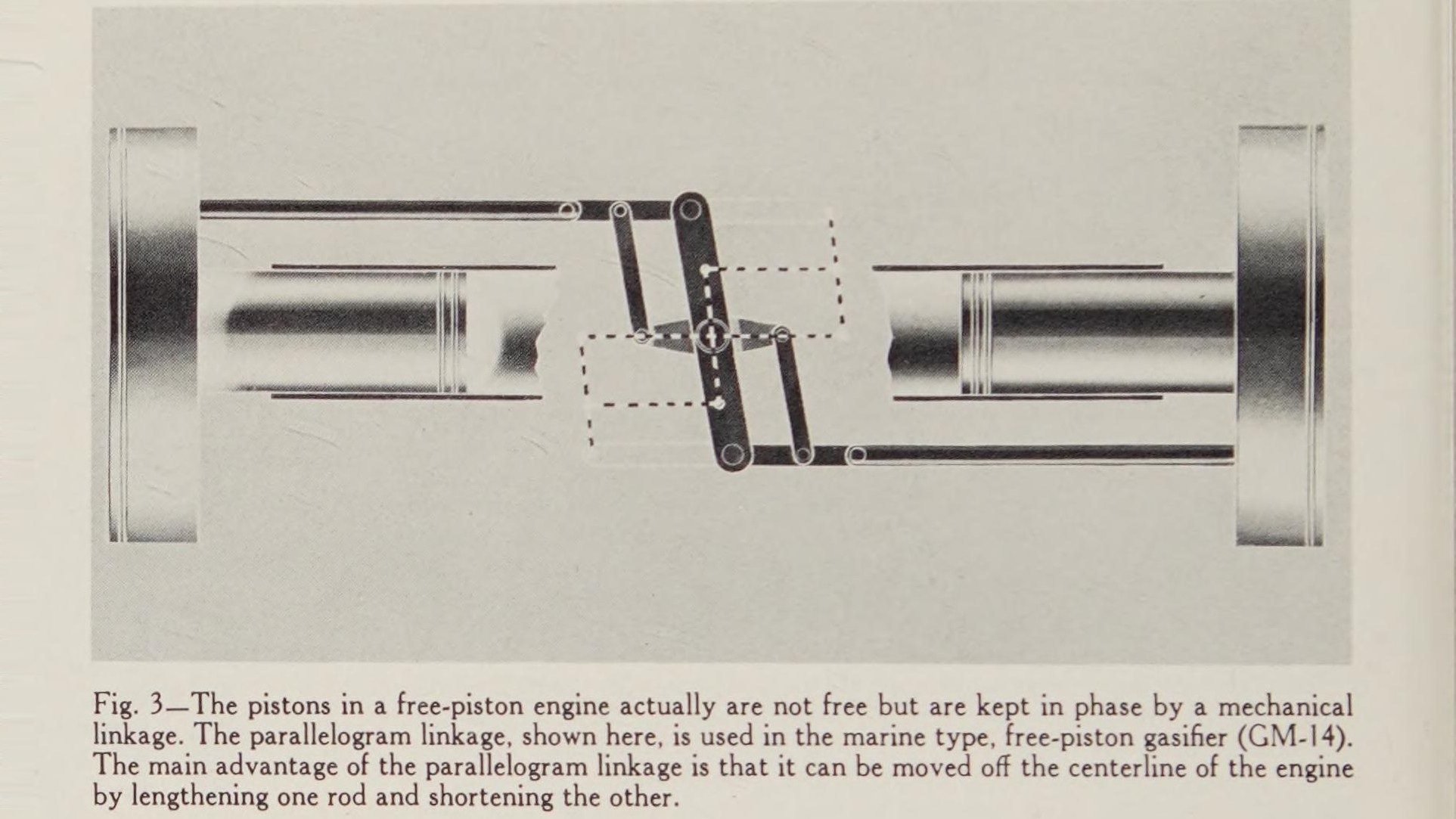
GM also says that, since the pistons are not married to a crankshaft or connecting rods, the only friction engineers had to worry about was the weight of the pistons in the cylinder. Thus, engineers were able to crank compression ratios past 30 to 1. GM says the result is that the engine experiences high pressures and temperatures in the combustion chamber. The benefit? GM found that the engine ran on darn near any oil that burned. GM said it successfully ran its engine on 100 octane gas, kerosene, diesel, Bunker “C”, crude oil, shale oil, peanut oil, salad oil, and whale oil.
Salad oil (soybean, canola, avocado, walnut, corn, sunflower, olive, and safflower oils) is often used as a base for salad dressing or cooking oils. Whale oil was used for lighting, lubrication, varnish, and soap in the 19th century. GM admits that it doesn’t actually expect people to run free-piston engines on the latter oils, but the fact that the engine can run on them proves that the GM free-piston engine truly was fuel agnostic.
GM’s research further stated that its free-piston engine had a gas thermal efficiency of 44 percent, the turbine it fired gas into had an efficiency of 83 percent, and overall brake thermal efficiency at the output shaft was 36.5 percent. This, GM said, was about on par with the efficiency of a diesel in the late 1950s. However, GM said that this engine was still better than a diesel because it could run on cheap fuels.
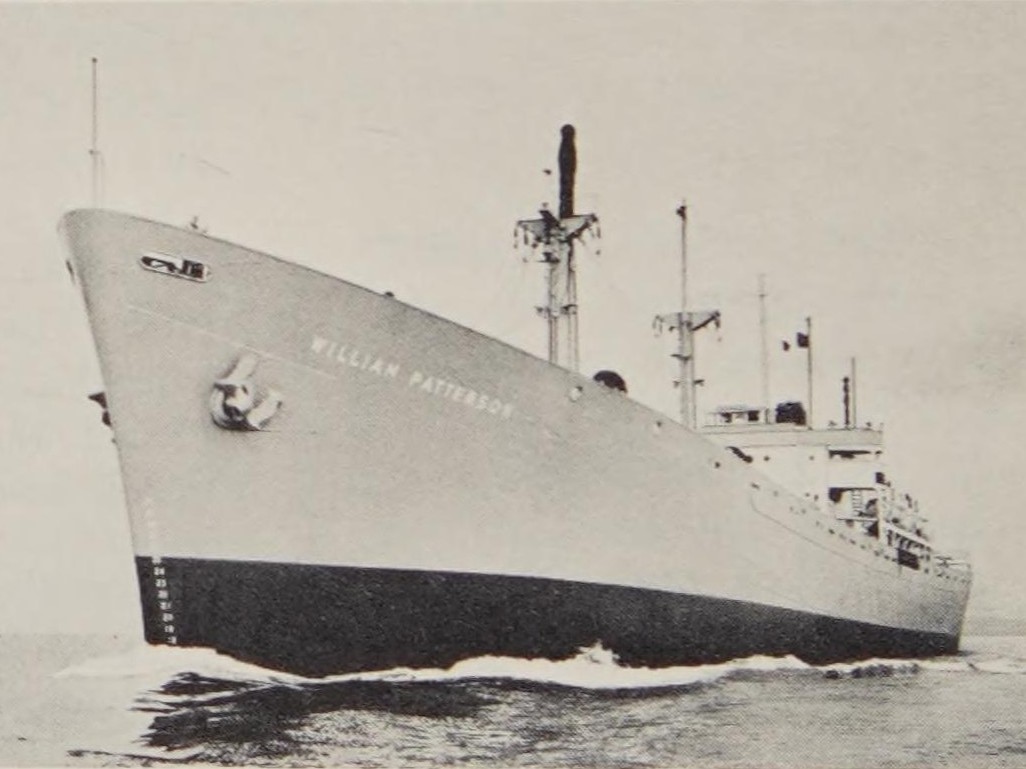
The big question was just what vehicles to put this new engine design into. GM’s research resulted in two distinct test vehicles. One engine went into the William Patterson, a converted Liberty Ship (above).
This application of GM’s free-piston engine, which was GM’s biggest, involved six 1,250 gas HP gasifiers sharing common piping inside of the Liberty Ship William Patterson. The turbine the gas was fed to punched out 6,000 shaft horsepower to the ship’s propellers. GM said its tricked-out Liberty Ship was “the first marine installation of a free-piston engine gas turbine drive propulsion system in the United States.”
The First Free-Piston Car
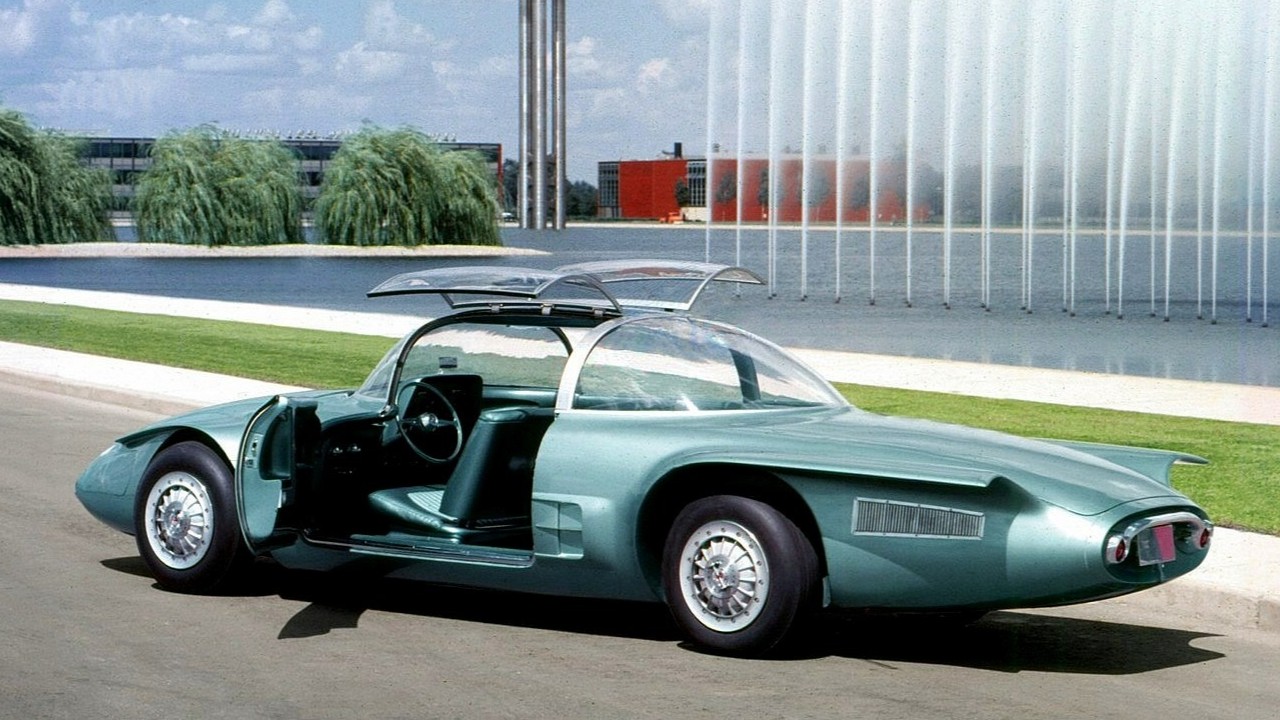
A smaller free-piston engine would find its way onto the road. As GM President Harlow H. Curtice said to the press in 1956, free-piston engines had been put into all sorts of vehicles. But nobody put one into a car. From Automotive News in 1956:
“Although the principle of the free piston engine has been known for more than 30 years, General Motors research staff is first to put it to work in an automobile.”
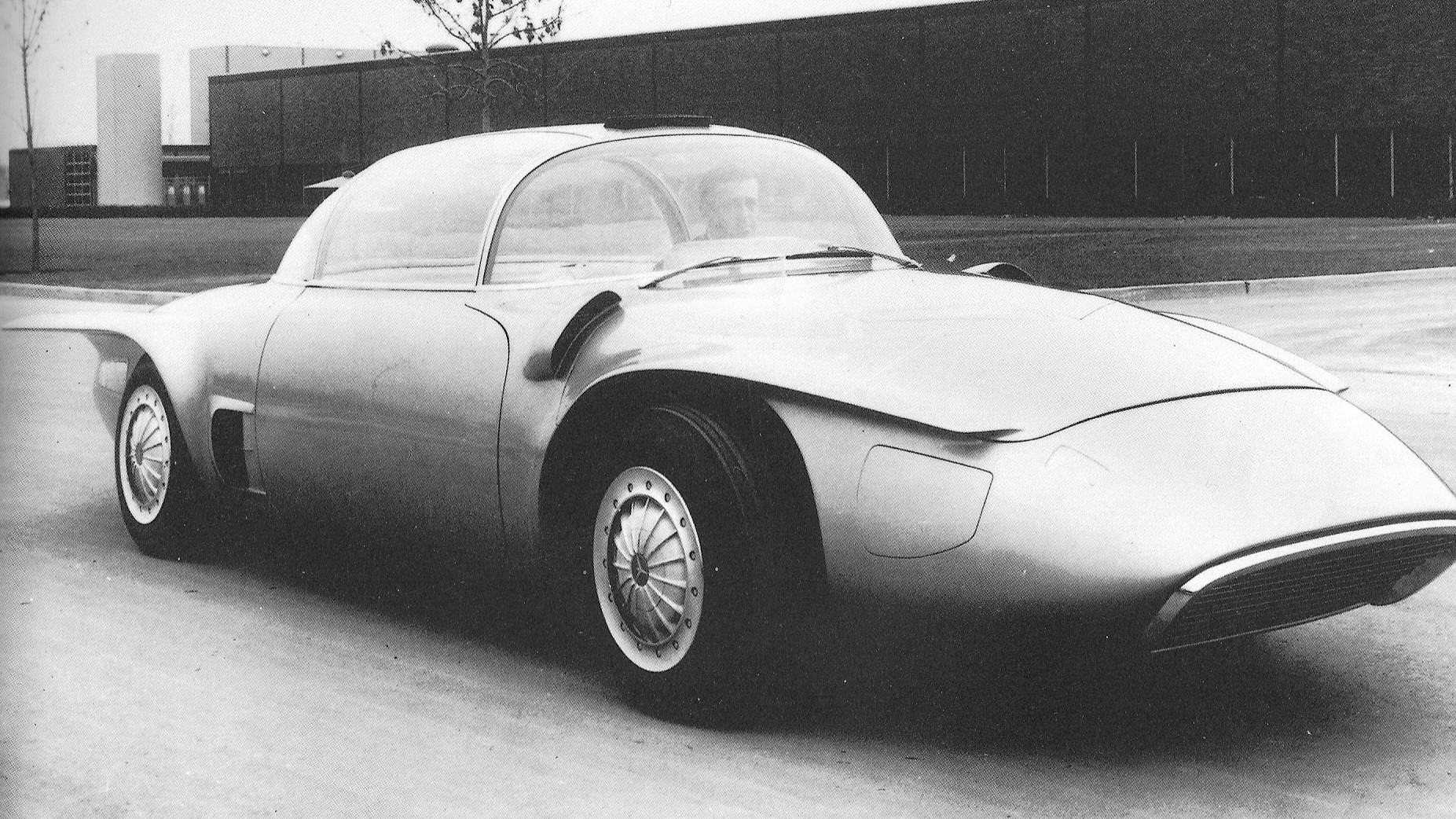
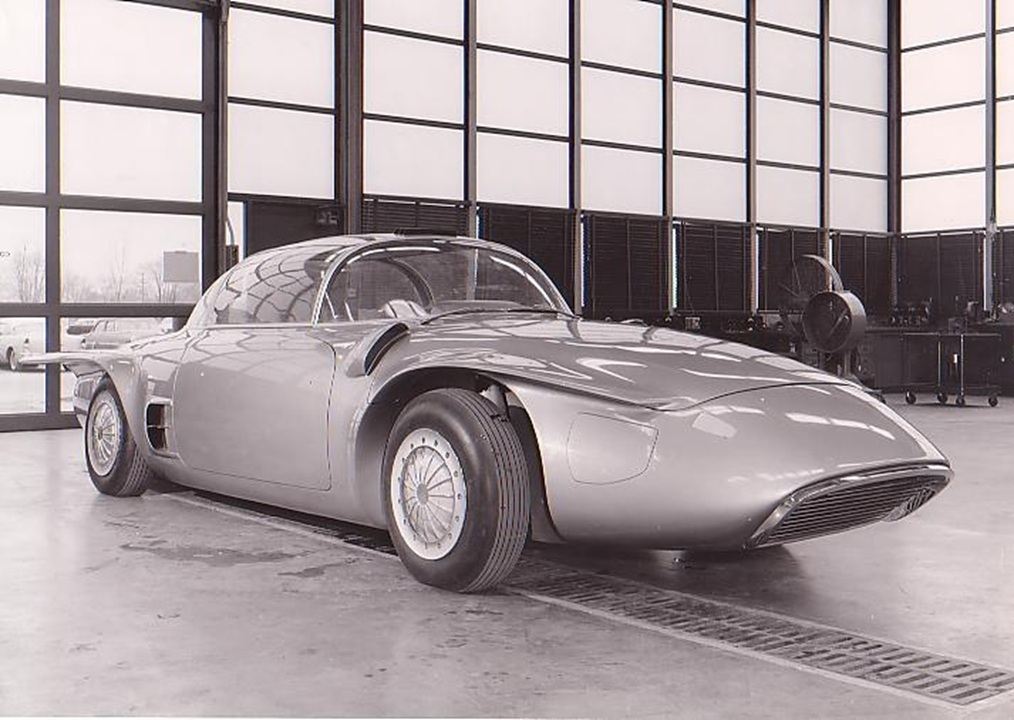
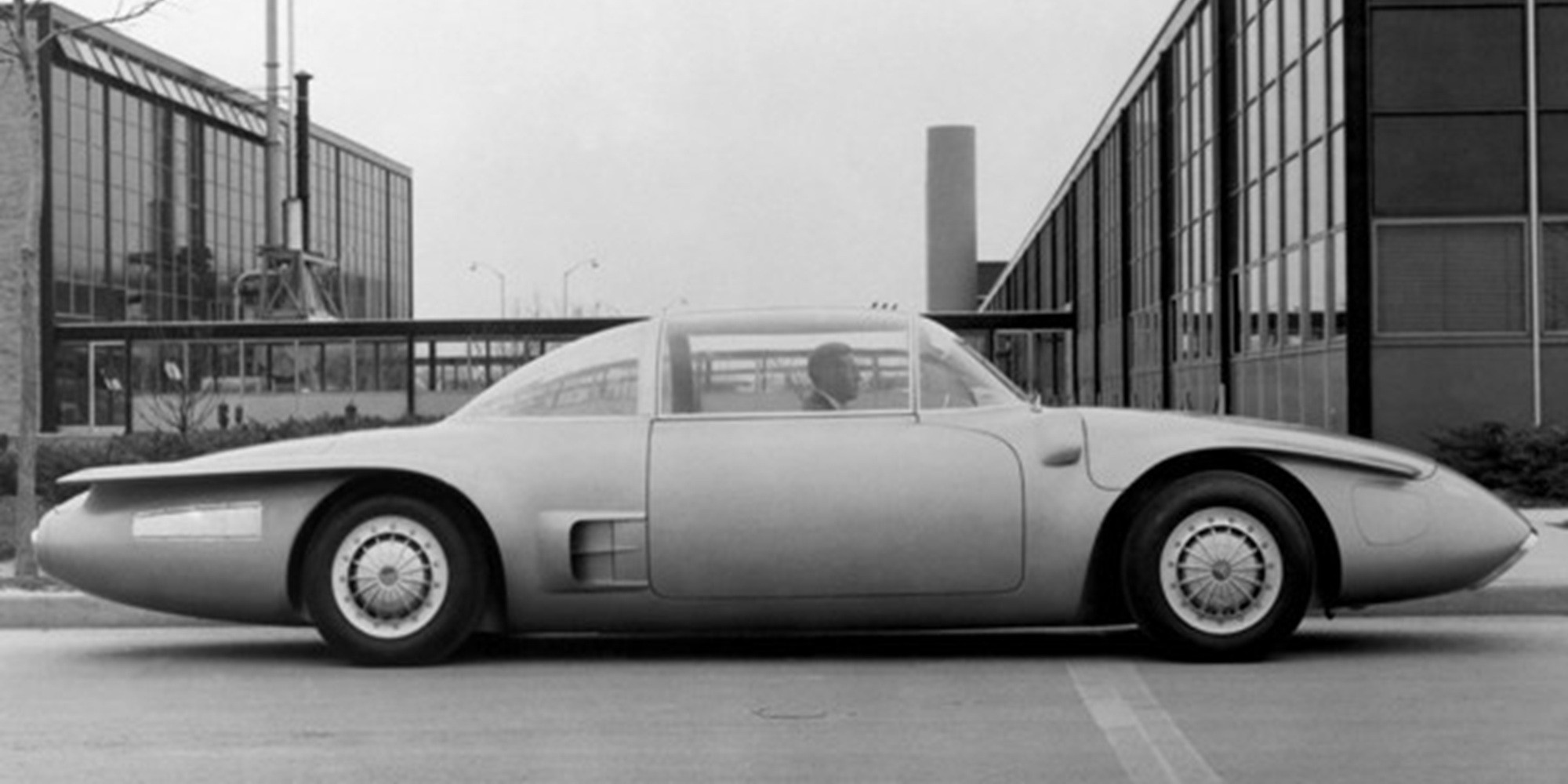
Putting this technology into a car was a challenge of its own. In 1956, Automotive News reported that GM built the XP-500, a running and driving concept car with a “GM-10-10” free-piston engine. GM’s own documentation called this engine the GMR Hyprex 4-4, and it was lowered into a concept car that GM called the XP-500.
In the modern era, this car has sometimes been confused with being one of the Firebird gas turbine cars. In fairness, the XP-500 does look like one of the gas turbine cars.
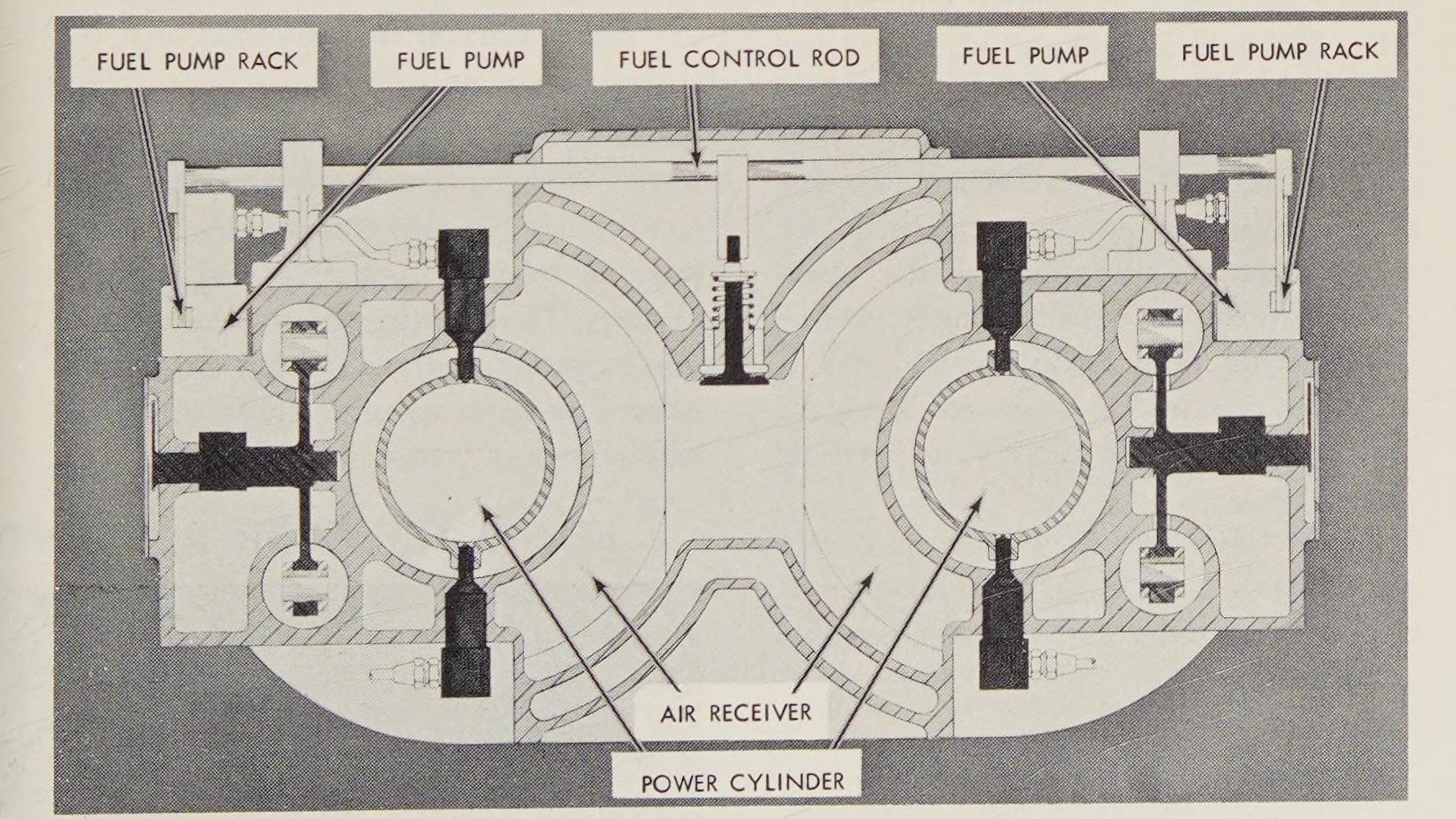
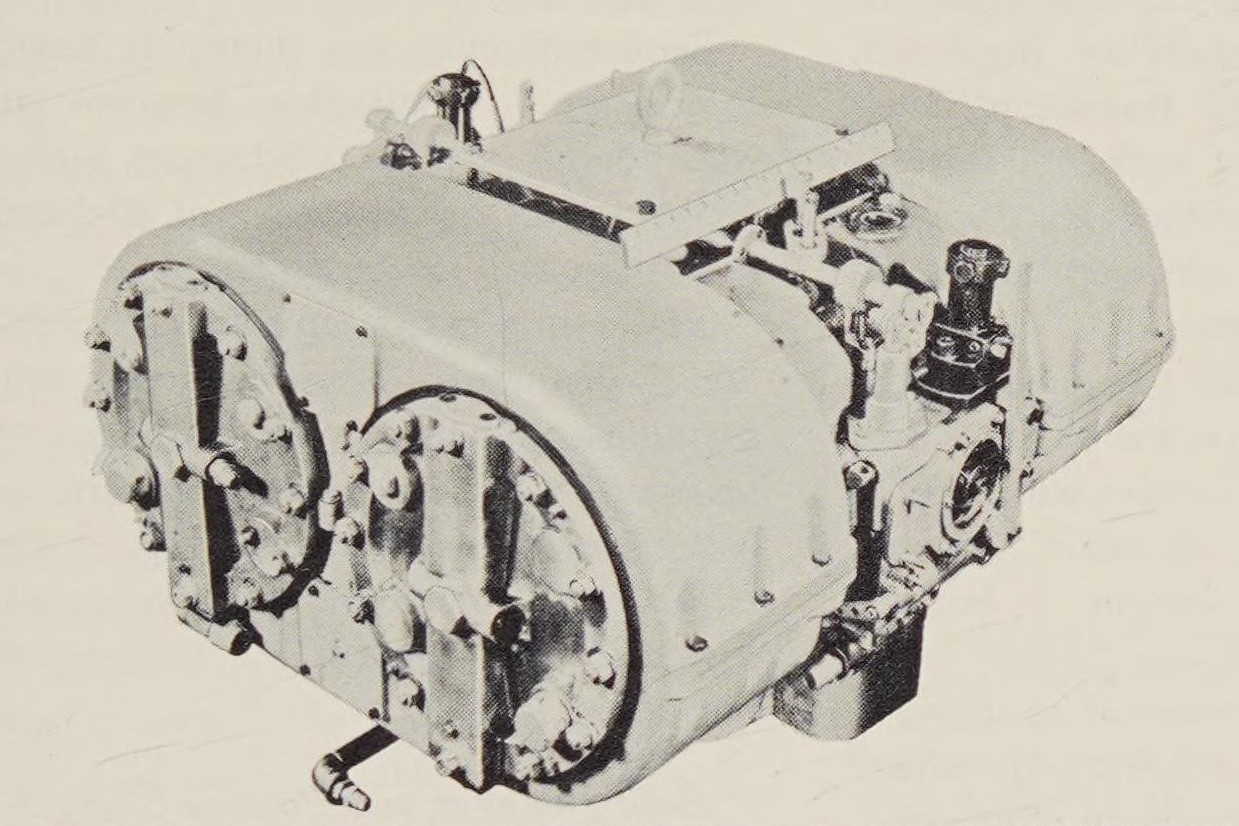
Anyway, the Hyprex was designed under contract by famed Swiss engineer Robert Huber. It was then built by GM’s machinists in Detroit. GM offers an explanation about what makes this engine different, aside from its size:
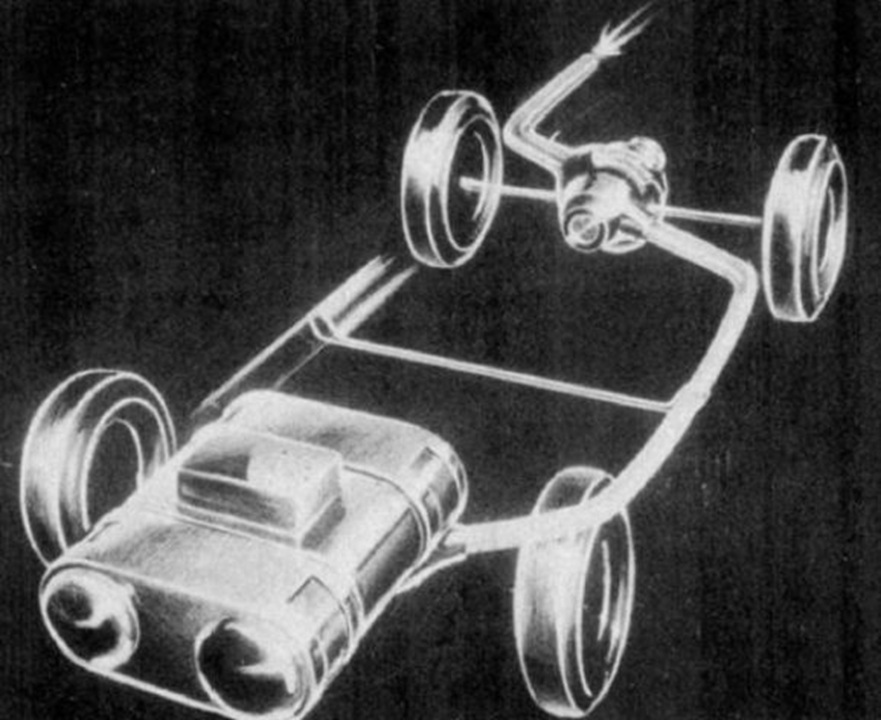
Preliminary studies indicated that in order to place a gasifier under the hood of an automobile and still provide competitive horsepower and performance, the engine would have to be approximately five feet long. This, of course, was out of the question, so consideration was given to the design of a stamesed gasifier, which provided two cylinders, side by side, sharing a common air inlet, common air receiver, and common exhaust. By means of this configuration it was possible to design a 250-gas-hp freepiston engine in a size suitable for installation in a conventional-size automobile. It was anticipated that the power gas from the gasifier could be conducted through the side or structural member of the car to a turbine and gear box on the rear axle. This would eliminate the hump in the vehicle floor, normally used to accommodate the transmission and drive shaft tunnels, and would provide a low, flat floor.
The siamesed engine differs basically from twin gasifiers, such as those in the Liberty Ship installation where twinning is accomplished by piping the gas from one or more gasifiers into a common gas manifold. In the siamesed engine, both cylinders, although not connected mechanically, share common air inlet, air receiver, and gas outlet. Furthermore, they are dephased pneumatically, so that when one pair of pistons is moving inward the other pair is moving outward. This results in a lower pumping loss through the ports of the power cylinders and a reduction in the required size of the air receiver. The overall result is a slight gain in thermal efficiency, reduced noise level, and reduced pulsation in the gas flow to the power turbine.
GM said that, at a speed of 2,400 strokes per minute, the engine produced 250 gas HP. The engine was up front, and the turbine was in the rear, connected to a transaxle. This video shows the car in motion (click here if you can’t see it):
The gas fired out of the engine and traveled along a pipe to reach the turbine. By effectively separating the drivetrain across the vehicle, there was no driveshaft. GM Styling Staff capitalized on this by eliminating a transmission tunnel from the car’s design and giving the XP-500 a totally flat floor.
GM said that the car version of the free-piston engine had 32 percent to 36 percent efficiency, but like its big sibling, the engine ran on practically anything that burned and didn’t vibrate.
The XP-500 Had Quirks
Unfortunately, GM was also transparent about the issues with its free-piston development. One big issue was that, since the free-piston engine didn’t have a crankshaft or an accessory drive, there was nothing to power the vehicle’s accessories. GM identified that it would have to figure out how to power a fuel pump, an oil pump, a water pump, and a device to start the engine without being able to use the engine itself. The turbine of the XP-500 had an accessory gear, which was then used to drive power accessories and to run the hydraulic pump for the power steering and power brakes. GM also considered installing a second turbine just to run the accessories.
Starting was also cumbersome. Since there was no flywheel to run a starter against, the engine had to be started by forcing the pistons fast enough to initiate the first stroke. GM’s solution to this was to place a bottle on top of the engine and fill it with compressed air. When the engine needed to be started, the air was rushed into the bounce chambers, forcing the pistons to run. Fuel was then injected to get the engine to fire. If a step wasn’t done correctly, the bottle had to be refilled, and the process started over again.
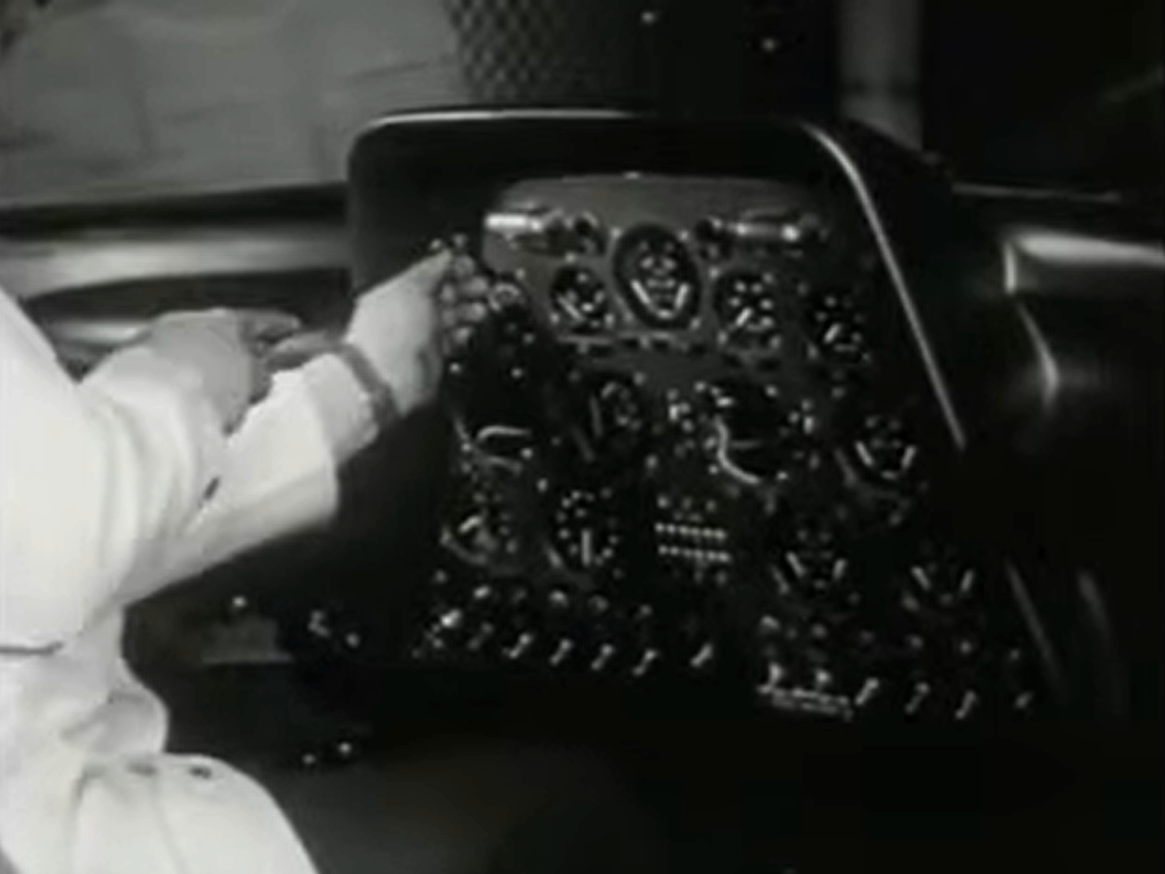
The marine version of the engine required the bottle to hold 400 PSI of air. The car version used an air compressor from a semi-truck. Thankfully, only 27 PSI was needed to start the car.
The XP-500’s fuel pump was driven by a linkage that was attached to the piston linkage. GM’s engineers found that when diesel fuel should have been injected was also right when the pistons were slowing down. So, the fuel pump had to be tuned to build up pressure and begin pumping slightly before the actual injection timing.
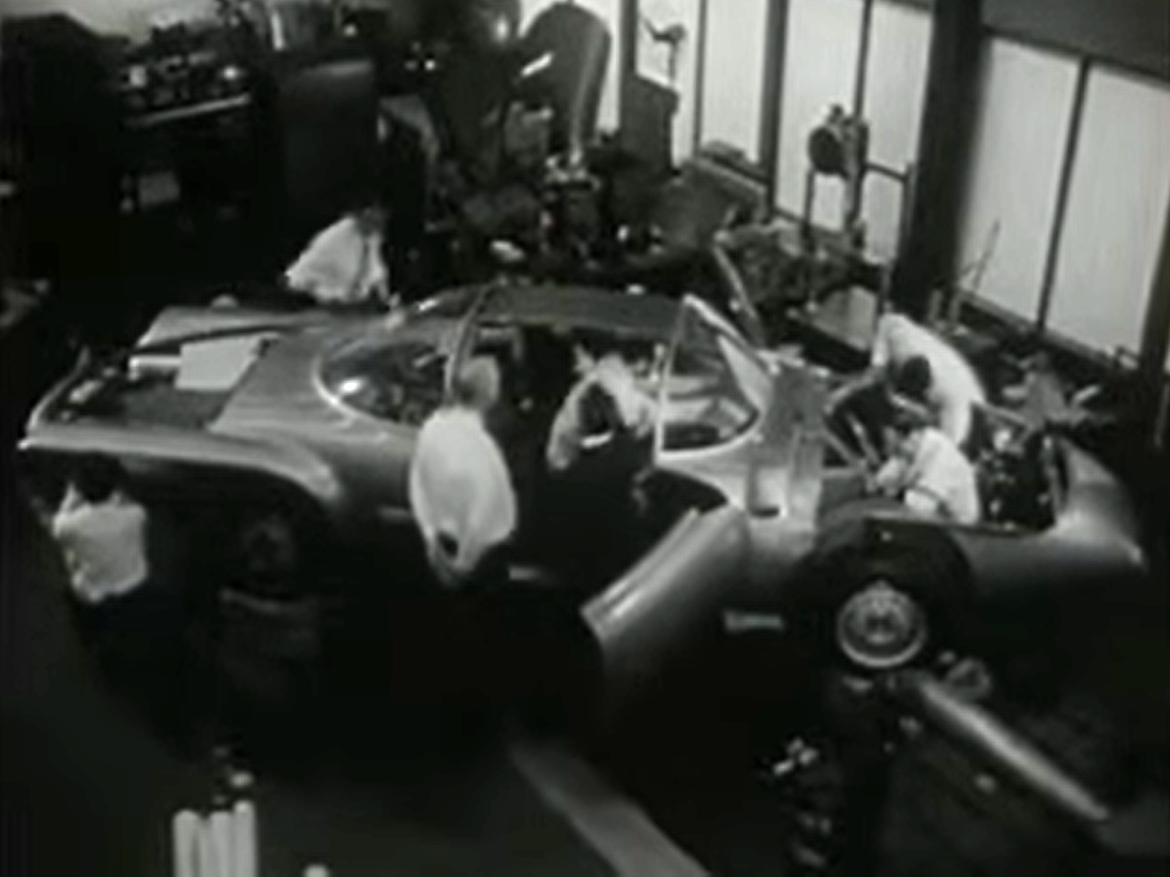
GM noted that, while it did build a working car, these quirks represented challenges that would have to be fixed if the engine were to go anywhere near production. So, development continued.
GM had high hopes for the free-piston project. The engines were subjected to over 30,000 hours of testing, and as Motor Trend reported in 1956, engineers had been improving the quality of critical parts until they were able to run the engines for a 4,500-hour test with 90 percent availability.
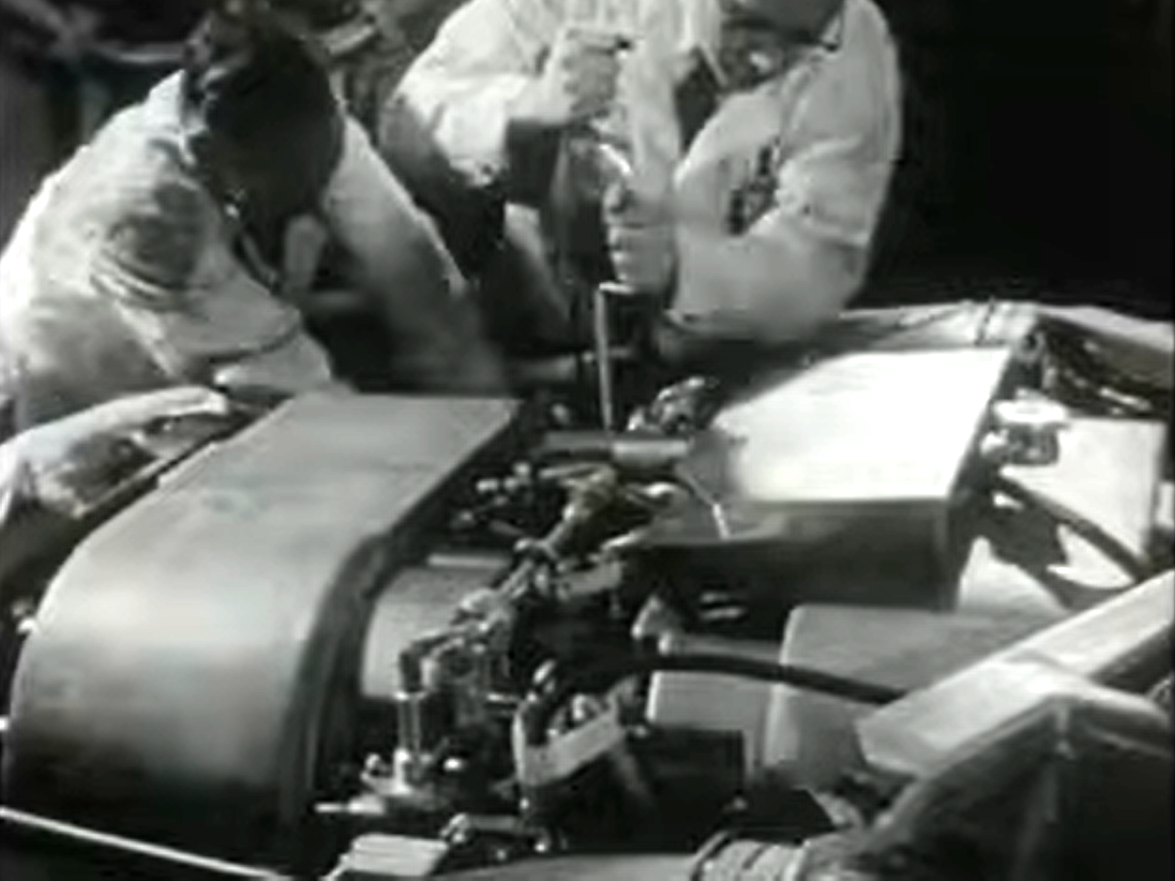
GM saw free-piston engines possibly replacing regular piston engines. Engineers even thought that they could eliminate the transmission entirely and just use the turbine for direct drive. GM said that the free-turbine engine might even be found in trucks and buses one day. However, GM was also smart not to promise the sky. Company brass said that there were no immediate plans to begin free-piston engine production. According to Time magazine, engineers hoped that a GM free-piston car wasn’t too many years away from hitting showrooms.
GM Threw In The Towel
Unfortunately, General Motors never overcame the aforementioned quirks, and the project came to an end in 1959. General Motors wasn’t the only American automaker that experimented with free-piston engines. Ford did as well, and some reports from the 1950s claim that Chrysler had a free-piston engine, too. However, only a single photo of Ford’s free-piston car can be found online, and I’ve found nothing on the rumored Chrysler. According to Mac’s Motor City Garage, GM likely has the XP-500 sitting somewhere.
Ultimately, the free-piston engine, like the gas turbine and the Wankel, failed to replace the engine it was supposed to be better than. The free-piston engine was smooth, efficient, and ran on pretty much any fuel. But it was also complicated and wasn’t ready to be put on the road. While traditional piston engines aren’t perfect, they’ve gotten better over time, making these old ideas sort of obsolete.
But that’s where the world was in the 1950s. Piston engines had been around for a while, but weren’t thought to be the apex of automotive engineering. At that time, it wasn’t known that these more experimental engines weren’t going to work in cars, so these companies had to explore the possibilities.
While GM’s free-piston engine was a dead end, it’s still awesome that it happened in the first place. Projects like this appeal to an enthusiast’s sense of wonder, and it’s clear that the engineers involved were pretty hopeful, too. So, for that alone, it was probably worth it. GM’s engineers got to build and then drive the first and one of the last cars with a free-piston engine. How cool is that?
Top graphic image: GM


Looking at the diagrams for this engine just brings me back to servicing and working with a waterjet. The “intensifier” compressor has a similar design and having rebuilt it countless times, the design is burned into my brain
GM actually installed it’s free piston engine into a THIRD demonstration vehicle: Electro-Motive built a one-off F-unit with the rather ungainly engine stuffed within its carbody.
https://utahrails.net/up/fg9.html
I just love the music and voice over announcing from that era.
The instrument panel looks like it came out an airplane. It’s got more switches and dials than the C-150s and 172s I used to fly.
The aerodynamics of the front wheel wells is pretty suspect. I’d love to see one of these in a wind tunnel. And what the spray coming off the tires in the rain looks like, hard to say, but I don’t think I’d want to be behind it.
This just feels like the shake weight of the engine world.
So, if I’m getting this right, the free-piston engine was used as a compressor to feed air to the turbine. So it’s almost like the reverse of a turbo/supercharged engine which uses a turbine as a compressor to feed air to a piston engine.
Or maybe I’m understanding it worng.
Your description sounds a bit like a Motorjet airplane, which had a piston engine turning a propeller in the front of the plane, then fed the exhaust from that into a rear combustion turbine to produce jet thrust (kind of like an afterburner does).
Alot of the problems with this could be solved with “modern” technology.
Make it a series Hybrid, all accessories are now electric, and starting is via electric air compressor.
Thank you, Mercedes, for another installment of Dead-End Engine Design.
I look forward to these articles being collected in an e-book, BTW.
“…there’s a reason why your Chevy Blazer doesn’t have one of these engines.”
It’s GM, so presumably because they got it right at some point during the engineering/prototyping phase and proceeded to kill it before it could really shine?
And if anyone wants to hear how the free piston engine might have sounded, here are some youtube videos on them running:
https://www.youtube.com/watch?v=0ZwZ7Con-Wc
https://www.youtube.com/watch?v=bsh7dSOxjuE
They sound a bit like a 2 stroke and seem to have NVH issues.
Gas turbine running on whale oil would have been quite a thing. Wonder how many minutes it would have taken for US sized car fleet to consume all of it :D.
Yeah, but it’s a renewable resource!
/s
And then we’d end up with really squeaky whales…
I learned a lot today. Super interesting stuff!
randomly reminded that whale oil became the new spaceship fuel in Futurama after all their dark matter super fuel went inert because reasons.
now I also just realized the same thing happened in ST: Discovery with dilithium, but the reasoning there was somehow even more ridiculous.
Star Trek Discovery has a lot of ridiculousness. Like programmable matter so your warp engines no longer need to be physically connected to your ship; WTF?
the basic concept of programmable matter doesn’t bother me, but otherwise yes, the idea that all these parts of the ship are just loose now, it was really hard for me to just suspend belief on.
I hated how often the transporters ended up being used to just move people from room to room, even when they weren’t even far away.
overall I still enjoyed the new shows though, Academy and their cast deserves more seasons.
Didn’t you all watch Star Trek IV? Save the whales or an angry space whale in a tube with a glowing soccer ball sensor will come for us. We’re also fresh out of Klingon Birds of Prey to travel back in time with.
Gracie is pregnant.
Whale oil ? now I know what to do with all the whales that wind turbines are killing
“GM’s research further stated that its free-piston engine had a thermal efficiency of 44 percent, the turbine it fired gas into had an efficiency of 83 percent, and overall efficiency at the output shaft was 36.5 percent.”
Those numbers don’t look right. That turbine efficiency alone is far better than even the best jet engines or power plants of today, made even weirder by the fact the temperature of the input gas is so low.
I copied that directly from GM’s journal. Sadly, they didn’t explain how they arrived at those numbers.
Edit: I added that it was brake thermal efficiency at the shaft and gas efficiency at the engine.
Oh I’m not faulting you, I get those numbers came from GM. My comment was more about how they arrived at those numbers.
You’re all good! 🙂 I double-checked the numbers in case I missed something. It’s a shame the document is so long, but it glosses over a few things.
It’s not a direct comparison to modern turbines or jet engines, since the turbine in this case isn’t doing it’s own compression or combustion. If I remember correctly, it’s defined as the shaft work extracted from the gas divided by the incoming gas m_dot*Cp*(Tin-Tamb), or the overall energy contained in the incoming gas flow to do work vs ambient. Much more comparable would be just the turbine side of a turbochargers peak efficiency, which is about 80% for many modern high power application turbos. Modern turbocharger turbines are also a lot smaller than this one, and are optimized for more highly pulsating flow which typically hurts the peak efficiency but helps in application to a piston engine.
This overall concept has a bit of a revival 15-20 years ago with Sandy’s, Toyota and GM all looking into them but with magnets embedded in the positions and coils around the bore to create linear alternators.
I dunno, it still seems a bit fishy to me.
Ultimately it comes down to the dyno numbers vs how much fuel is consumed. So maybe publish its power numbers vs its consumption of variety of standard fuels and go from there.
The overall brake engine efficiency (useful work out / fuel energy in) is a lot lower, as a rough estimate if the peak efficiency of the hyprex gasifier and turbine were achievable at the same operating point (which they may or may not be) would be 0.44 * 0.83 = 0.365, so the 36.5% efficiency is the brake number to compare to modern jet engines, diesels etc.
For the 50s this was really good, with the biggest contributors being that it was run like a diesel, so no throttling, minimizing pumping losses, it was lean so high combustion efficiency and lower heat losses, the piston and chamber walls were less cooled and thus hotter (some heat losses are converted into exhaust energy, where the turbine can recover some), and friction was reduced since there was just the piston ring sliding friction, no crank or cam bearing friction, reduced oil and coolant flows. Basically, it was reducing all the various loss mechanisms in an engine, which is why they are still of interest today (although with the constraints of modern aftertreatment, they present different problems to solve)
Sure.
Even so I still have a hard time wrapping my head around the idea that a free piston engine is (maybe) a better way to produce and control heat than just compressing and burning fuel and air in a regular turboshaft engine.
It was also a component of some automatic transmission fluids, including GM’s own DEXRON (B), into the early 1970s.
Watch lubricant
Gear oil too. Which made it especially fun when you end up dumping an entire transmission worth of fluid on your head because the GDF Chilton’s manual neglected to add “drain fluid” before “remove transmission”.
Let me tell you that stuff did NOT wash out! And that having a head full of greasy hair reeking of rancid dead sperm whale does not help one’s HS social ranking.
From the 24 Hours of Lemons forum, several years ago:
Sounds about right.
I had a neighbor down the street from me when I was in high school (late 80’s) was the original owner of a 1955 Ford Skyliner hardtop convertible. It used type A transmission fluid, which was derived from whale oil, for the top hydraulics.
She drove it to the local Ford Dealer in Odessa, TX for service, and the service manager ran out waving his arms telling her to stop before pulling in. He told her not to bring it in because there was no way they were taking responsibility for it if anything went wrong with it, particularly the top, while in their possession.
I think you may be misrecalling some of the details. The Ford ragtop convertibles of that era use hydraulics but the retractable hardtops (which were only made from ’57 to ’59) have entirely electromechanical top mechanisms. Even the two main roof jacks in the trunk that look like hydraulic cylinders are really just motor-driven screw jacks in disguise.
The hydraulics that work perfectly well for the conventional convertibles with their flexible tops were found to be problematic for the rigid tops of the retractables. The cylinders would naturally move somewhat asynchronously, following the path of least resistance, which would put too much stress on the top itself as a result of the two sides being driven unevenly. The paired electric jacks are instead driven by a shared central motor via flexible shafts, thereby keeping them synchronized.
(I used to have a ’59.)
Wow! TIL! It may have been the service manager who was misinformed. The story was relayed by the woman’s son who had bought the car for her when it was new. To my 16 year old eyes, they were old back then. She was probably in her 70’s and drove that car to the grocery store I worked at, and I loaded her shopping into it.
Her son drove a first gen Pontiac Firebird. Mint green with a green vinyl top.
My Jeep has an early full time 4wd system (Quadratrac) that uses a mysterious fluid in the transfer case. It has to be imported, is extremely expensive, and the MSDS says “animal products”. I know whats in there…
I got a kick reading that PJ-1 motorcycle chain oil is made from “synthetic sperm whale oil”… what….
The whales make synthetic sperm to give us humans so we don’t have to ask them to go in a closet with a cup and a copy of Playwhale. Don’t see what so hard to understand about that.
Ford F type as well IIRC.
That fluid was used in the BW35 automatic in our 74 Volvo and IIRC a bunch of British and European cars used Borg Warner autos instead of Zf
Some say whale oil was also used in the A-Bomb that was dropped on Hiroshima.
Instead of using compressed air to start it, they should have used shotgun cartridges like an old tractor. Much more convenient.
To avoid confusion (among other potential issues), it should be emphasized that the preferred method involves blank shotgun cartridges.
You’re no fun. lol 😛
Emergency start for a radial engine aircraft…
All of this hullaballoo just to turn a gas turbine for power. . . WE ALREADY HAD STEAM ENGINES, GM!!!
I wonder if something like this could be made to work today. Modern sensors, computer controls, materials science, manufacturing techniques, etc might make some of these historical dead ends viable.
Folks have been playing with free piston linear generators for the past few decades, both for range extenders and stationary power generation. Nothing beyond research or prototype stage though.
I feel like whale oil doesn’t get discussed enough as an alternative fuel source
Plus, their bones can be useful, too
And they taste like chicken.
Save the whales.
Hey funky mama, save those whales.
Hey pretty baby, save those whales.
Save those big fat funky whales.
Save all the whales, but shoot the seals.
Awwww, shoot them seals.
The seals eat all them fish.
And if you think I’m funky for wanting to shoot all the seals,
Save your breath.
Whale oil beef hooked
Free piston engines might’ve meant no Free Willy.
Experimental engine designs always make me happy. Thanks for the great write-up Mercedes!
Also, that concept car is PEAK 50s futurism, I wish they’d mass produced them.
250 hp at only 2400 strokes, fantastic, Thermal efficiency in the mid 30s (not far off modern engines), excellent. The ability to run on just about any fuel is amazing. Add in a cutting edge prototype with flip up headlights in the late 50s, very impressive.
It being GM, what’s the over under on both blinkers working on command?
What?