


If you’ve ever traveled down an American interstate, you’ve almost certainly mingled with a semi-tractor. The most common configuration on the road involves three axles on the tractor and two more on the trailer for an iconic 18-wheels. Maybe you’ll see a two-axle truck or three axles on the trailer, but nothing too crazy. Yet, if you head into some states like Michigan, you might find a whole different world of trucking. Semi-trucks in Michigan have as many as 11 axles, dozens of wheels, and can carry twice as much weight as the typical semi. The reason comes down to how Michigan reads the weight of trucks and trailers versus how the federal government does.
The early days of trucking in America were a sort of Wild West. Prior to 1956, federal rulemaking on transportation was largely limited to economic regulations. This left state governments to figure out what vehicles were allowed to drive on their roads and the exact configurations that the vehicles needed to be in to remain legal.


Some of the first state trucking regulations were established in the 1910s, and they focused on gross weight. Back in those days, trucks had solid iron and rubber wheels that quite literally pounded the rudimentary earthen roads found in many states. So, states established gross weight limits as low as 18,000 pounds to reduce damage to their roads by the burgeoning trucking industry.

It wasn’t long before states figured out that they wanted to set standards on the dimensions of trucks, too. By 1929, most states had established rules on the dimensions of trucks and trailers. By 1933, all states had rules in place limiting a tractor-trailer’s size and weight.
While these states were well-meaning most of the time in establishing their regulations, it led to a national patchwork of trucking regulations that could have varied wildly between two neighboring states. Illinois, for example, infamously limited the lengths of trucks rolling on its roads to a short 35 feet. Each state set its own rules based on what it thought would be safe, would support the correct interests, and maybe even what it thought other states should adopt.

Michigan has long been an outlier. The State of Michigan says that, currently, a whole two-thirds of all freight tonnage that moves through the state does so aboard a truck. The remaining third is picked up by majestic Great Lakes freighters and rail. The domination of trucking in the state is not a recent phenomenon, either. In decades past, trucks still carried half of the cargo flowing through Michigan. Trains and ships carried a quarter of the freight with other sources like aviation picking up the other quarter.
Because trucking has been such a critical component to keeping Michigan’s economy alive, the state has established unique rules that allow truckers in Michigan to carry bigger and heavier loads than they could in other states. Yet, it doesn’t come at the expense of the state’s roads.
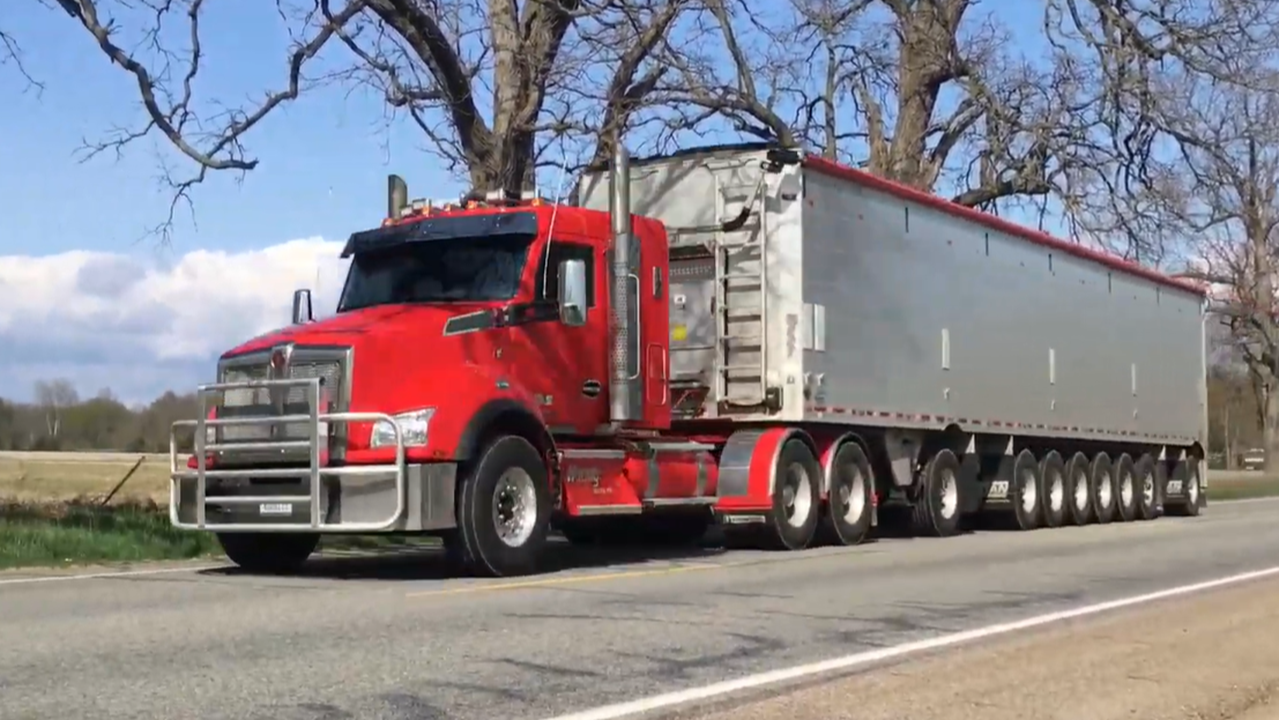
Michigan Has Long Welcomed Weird Trucks
Before World War II, Michigan did not set a limit on the number of axles that a truck could have. According to the Michigan State Highway Department, in early 1942, a tractor-trailer could have as many axles as its builder wanted, so long as the total rig was no longer than 50 feet long. This was because the state of Michigan counted truck weight through axle weight rather than the gross weight of the total rig.
Axle limits for trucks with pneumatic tires ranged from 9,000 pounds to 18,000 pounds, depending on how far apart the axles were spaced. The closer the axles were together, the less weight they could carry. However, there was no limit to the number of axles. According to the state, it was theoretically possible for a 50-foot truck to have 15 axles, spread 3’6″ apart, that could carry 13,000 pounds each. If each axle had four wheels, including the steer axle, that meant 60 tires!

When the United States entered World War II, the federal government discovered one of the unintended consequences (link opens document) of having the states set their own truck dimensions and weight limits. When materials needed to be transported across the country to support the war effort, shipments were delayed either because the trucks that would carry those materials were too small or couldn’t carry enough weight.
In 1942, the U. S. Department of Commerce sponsored a federal-state conference to set temporary wartime standards on truck size and weight. These standards called for trucks measuring up to 45 feet long, weighing up to 40,000 pounds, standing 12.5 feet tall, and spreading out 96 inches across the road.
That same year, the American Association of State Highway Officials recommended standards that all states should follow. Those proposed standards called for trucks no longer than 60 feet and with axles carrying no greater than 18,000 pounds each.
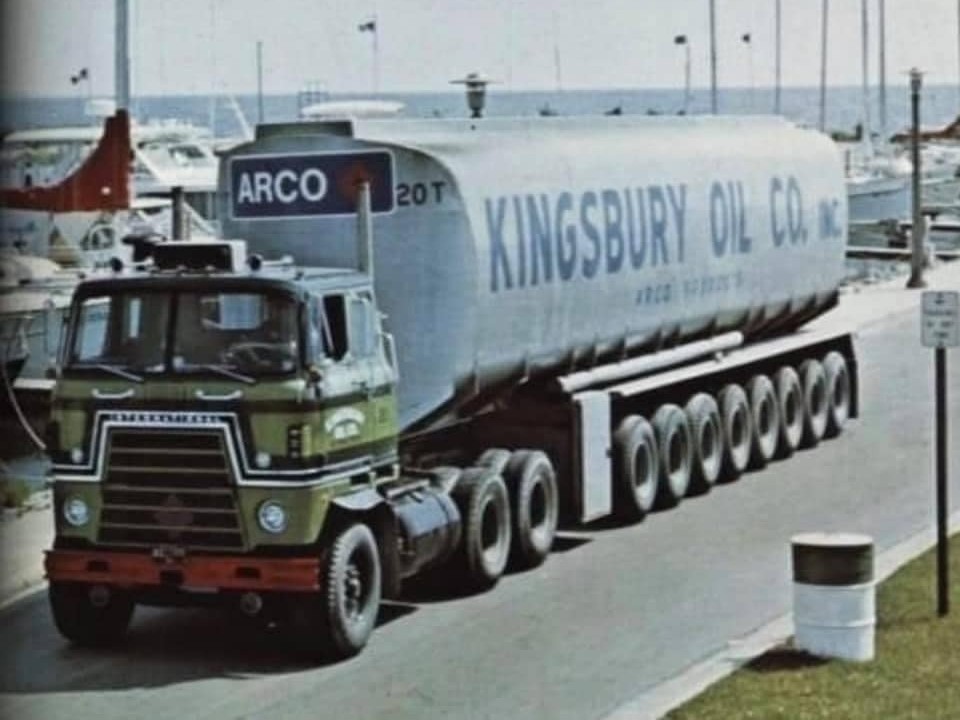
Still in 1942, Michigan decided (link opens document) to further refine its regulations. Now, a standard five-axle tractor-trailer was allotted 55 feet of length and 76,000 pounds of gross weight. That 76,000-pound limit was already a bit weird at the time, as many states limited their trucks to weights within the 50,000-pound and 60,000-pound ranges. Even Indiana, which is famous for its long trucks today, set its limit to 72,000 pounds.
Another quirk about Michigan is that it also allowed trucks of increasing length and weight, so long as the truck had lots of wheels. Under the new rule, trucks were allowed to have no more than 13 axles and were limited to a gross weight of 169,000 pounds. This was still plenty wild, because a truck with 13 axles in Michigan sometimes had 50 wheels or more. These trucks would earn the nickname “Michigan Centipede” over time for their looks.
The Michigan Weight-Law Today
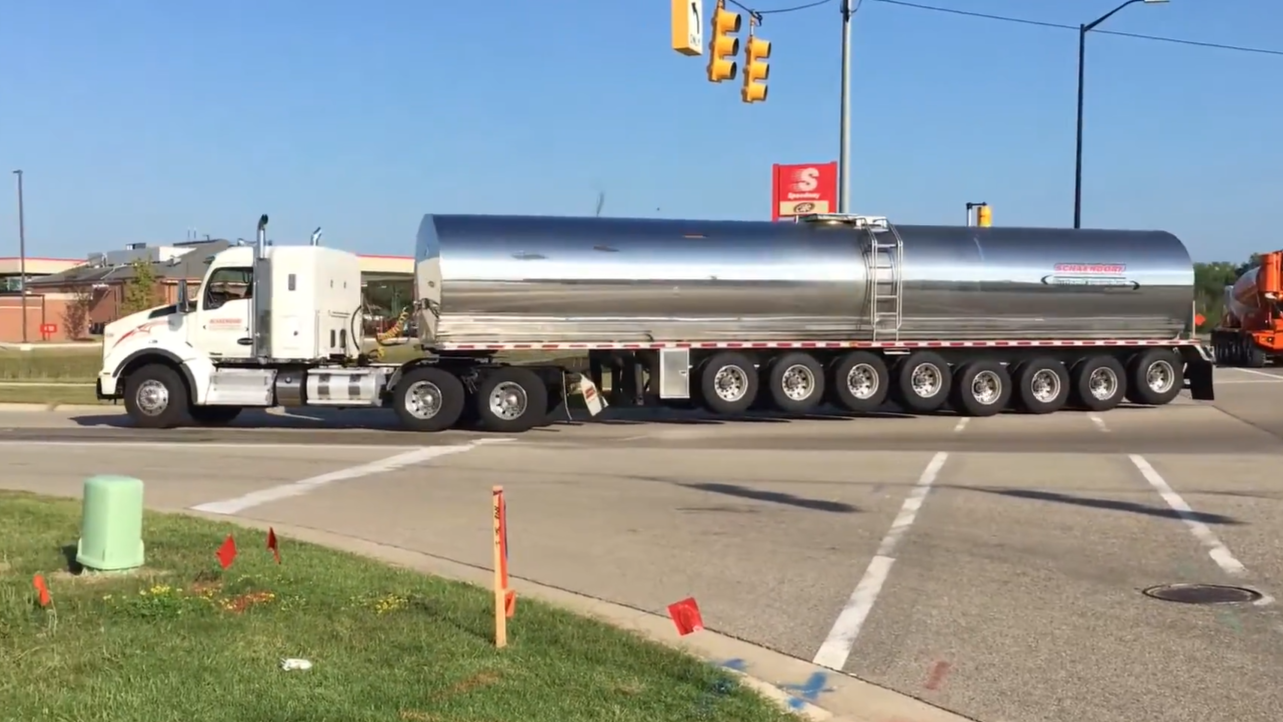
In 1967, these regulations were revised one more time, backing the axle limit down to 11 axles with total weight capped at 164,000 pounds. That’s still 42 wheels under a configuration with two steer tires or 44 wheels under a configuration with four steers. The Michigan law has remained unchanged since 1967, even as the rest of the trucking industry has evolved around the state.
The Surface Transportation Assistance Act of 1982 (STAA) largely put an end to the patchwork of state-based truck length and weight restrictions. Per the federal government, all states must allow trucks weighing 80,000 pounds to traverse the Interstate Highway System as well as other designated highways, in addition to the roads that these trucks will need to travel to reach their final destinations. The federal regulations also set standards for tractor-trailer dimensions.
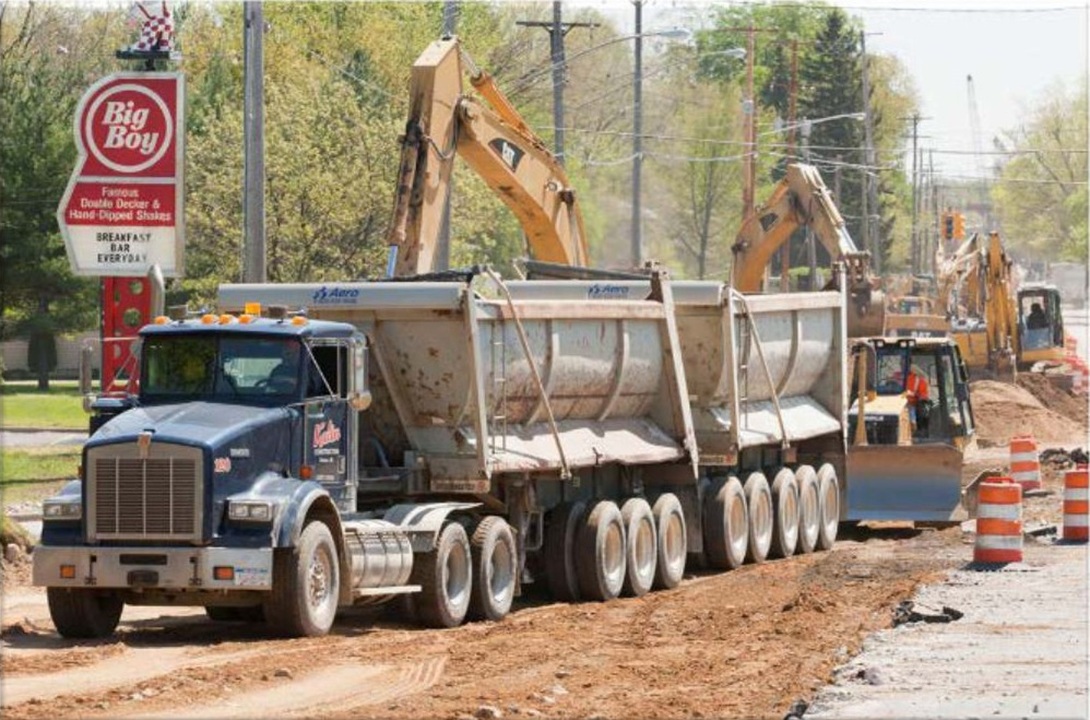
As the state of Michigan points out, however, it as well as several other states had unique truck weight limits above 80,000 pounds before STAA. The federal government grandfathered in the higher weight limits of these states, but with the caveat that if these state limits are ever repealed, they could not be re-enacted.
Since then, there have been challengers to the so-called Michigan Truck-Weight Law, but the state has remained steadfast on its benefits. These trucks are also known as high-capacity long combination vehicles (LCVs). But why does Michigan allow such high weights? Why is Michigan okay with so many axles?
Why Michigan Loves So Many Axles
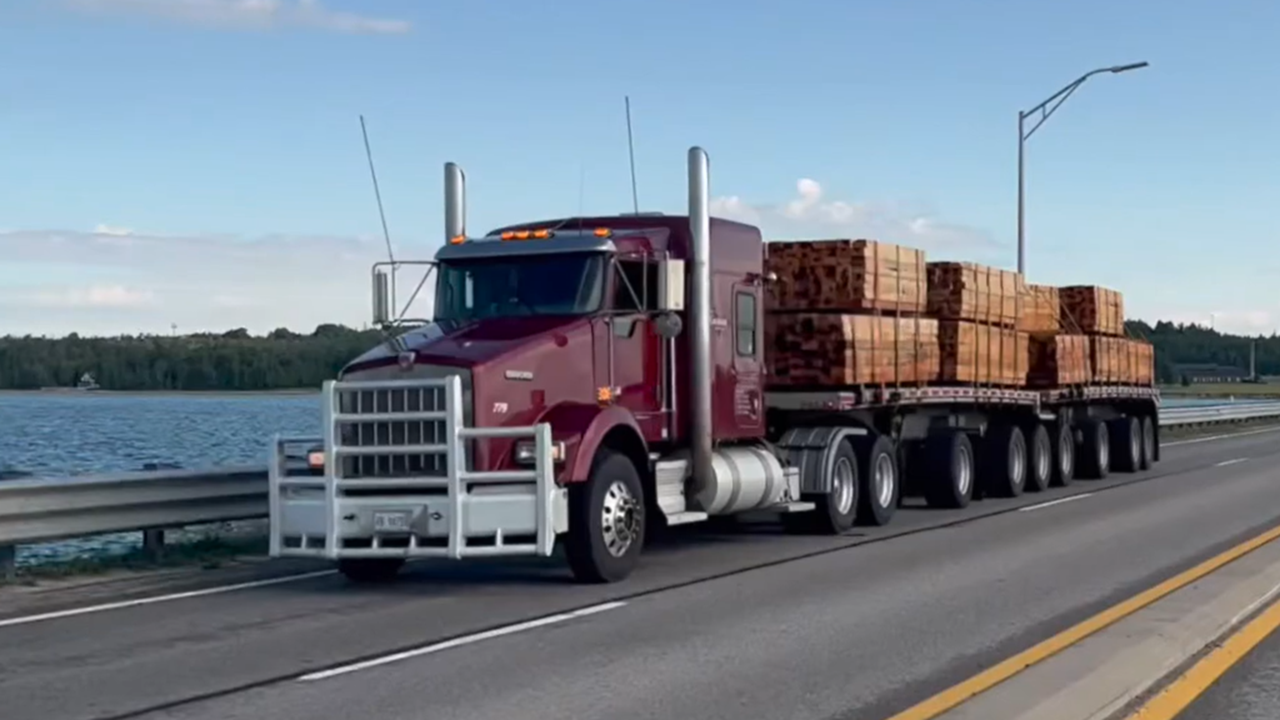
The state of Michigan explains that it comes down to the fact that it, unlike the federal government and most other states, has devised its regulations around the axle weights of a truck rather than the gross weights. From Michigan:
Gross vehicle weight includes the weights of the truck, cargo, fuel, and driver; axle loading is the weight on a single axle. Maximum allowable axle loadings are the same for a standard truck in all states, but Michigan allows use of more axles in combination with lower axle loadings, for a greater gross vehicle weight than other states.
The state says that it didn’t just come to this conclusion out of nowhere. Instead, Michigan says, research conducted by the American Association of State Highway and Transportation Officials, the Michigan Department of Transportation, and other organizations found that pavement damage from heavy trucks is attributed more to axle weights, not gross vehicle weight.
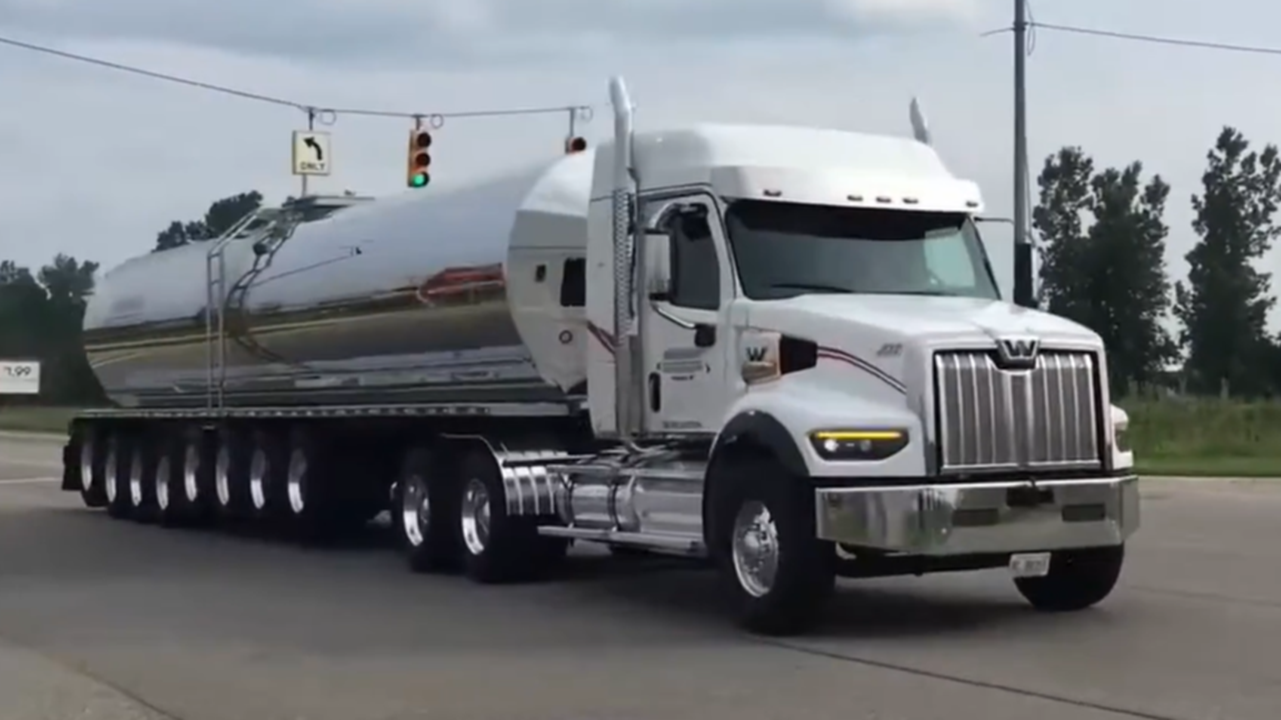
To illustrate what it means, Michigan explains that a typical five-axle, 80,000-pound semi that’s compliant with federal regulations is limited to 17,000 pounds on four of its axles and 12,000 pounds on its steer axle. However, a “Michigan Weight-Law” truck weighs more than twice as much at 164,000 pounds, yet each axle carries no more than 13,000 pounds.
Michigan even gives a practical example. Say you need to haul 160,000 pounds of bulk material. You can load that into a single Michigan Weight-Law truck that will carry that weight over 11 axles, or you could load it into two five-axle federal weight limit trucks that will carry that weight over a total of 10 axles.
Michigan continues, from Heavy Duty Trucking magazine:
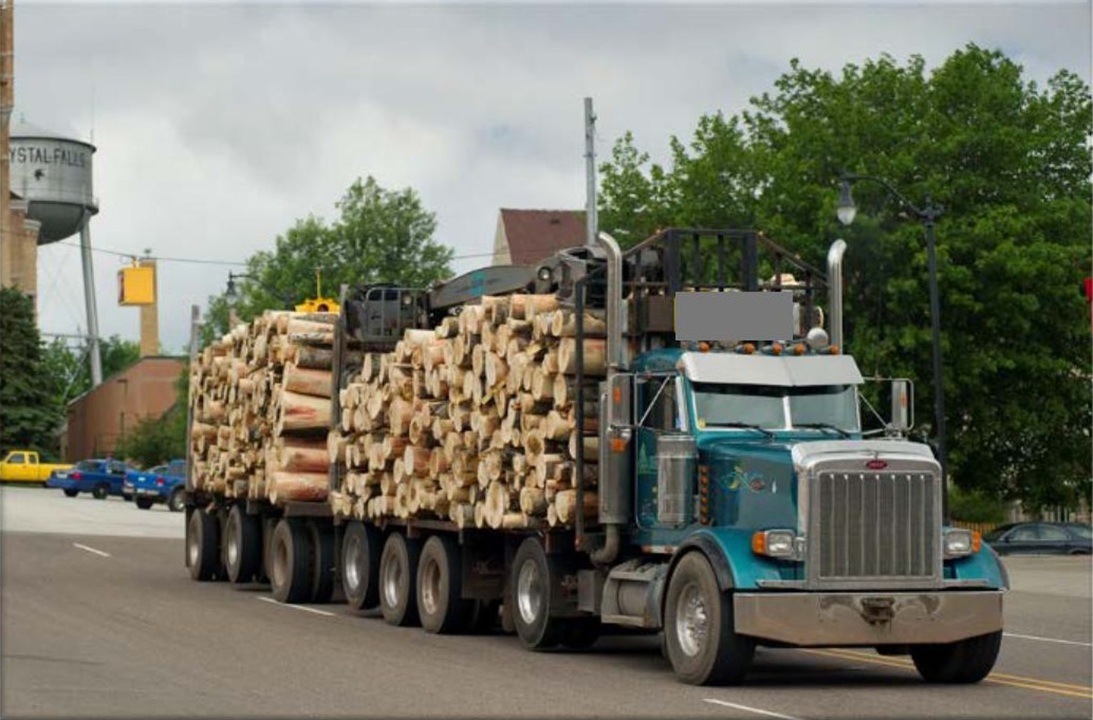
“The maximum gross vehicle weight allowed on a ‘federal-weight-law truck’ is 80,000 pounds, with four of its five axles carrying 17,000 pounds each. The calculated maximum allowable gross vehicle weight on the heaviest ‘Michigan weight-law truck’ is 164,000 pounds, which can only be achieved with the use of 11 properly spaced axles. Most of these axles carry only 13,000 pounds each.
“It would take two and a quarter 80,000-pound trucks to carry the same cargo as a single 164,000-pound Michigan truck. Pavement research has shown that these two smaller trucks actually cause about 60% more pavement damage than does the single heavier truck, because of their higher axle loadings and the extra weight of additional tractors at about 10 tons each.”
[…]
“If Michigan were to reduce its truck weight laws to 80,000 pounds, more damage to the [highway] system may occur because of the need to put more trucks on the road,” it says. “More trucks on the road raise serious questions concerning safety and traffic congestion. Several other states are currently looking at Michigan’s axle weight laws and are considering adopting similar laws.”
In another document (link opens document), Michigan says:
In December, 2012, there were 79,865 trucks registered by weight in Michigan, according to the Secretary of State; and 31,575 Michigan-based power units under the International Registration Plan (IRP). (These numbers do not include farm and log trucks; see below.) Of the non-IRP plates, 6,385 were registered to carry over 80,000 pounds, and 2,649 were registered to carry over 145,000 pounds. Only 6% of trucks registered in Michigan actually can be heavier than Interstate-standard “eighteen wheelers.” The majority of trucks in interstate trade can be assumed to operate at no more than 80,000 pounds. As a result, it is estimated that under 5% of all trucks using Michigan roads carry more than 80,000 pounds when actually operated.
LCVs aren’t limited to Michigan, either, as they’re also allowed in Connecticut, Florida, Indiana, New York, and Ohio. However, Michigan’s LCVs are unique in how closely their axles are spaced from each other. As Heavy Duty Trucking magazine writes, LCVs have proven themselves to be largely safe, too. Their operators require additional training than the typical trucker, having dozens of wheels usually makes the rigs stable, and since those extra axles have brakes, LCVs usually have lots of braking power per ton.
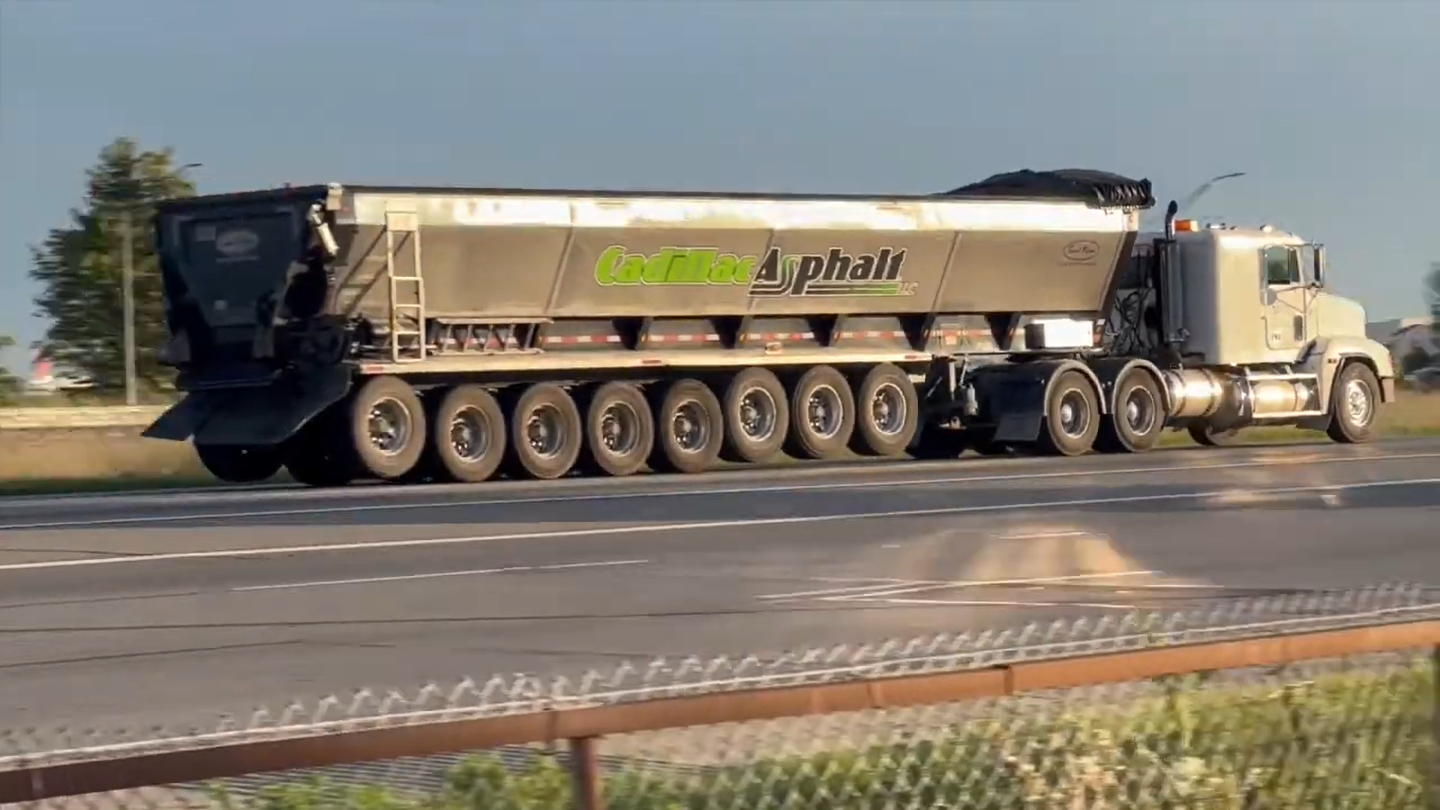
Sadly, there was a time when LCVs were a bit sketchier. Until the 1980s, Michigan used to allow tall, short trailers to be a part of a double-trailer combination. As Heavy Duty Trucking notes, these trailers were notorious for being unstable, and in one case, a trucker swerved, causing one of these trailers to topple. One of the two trailers, which was a tanker, rolled over, ruptured, and caught fire, killing a pedestrian in the aftermath.
Thankfully, immediately following the crash, Michigan would ban short trailer combinations. Since then, LCVs are reportedly safe despite their imposing appearance and the tons of weight involved.
What’s In A ‘Michigan Centipede’
Your next big question is probably about how a Michigan Weight-Law tractor-trailer is built. Are these just normal trucks with lots of wheels? Well, not exactly.
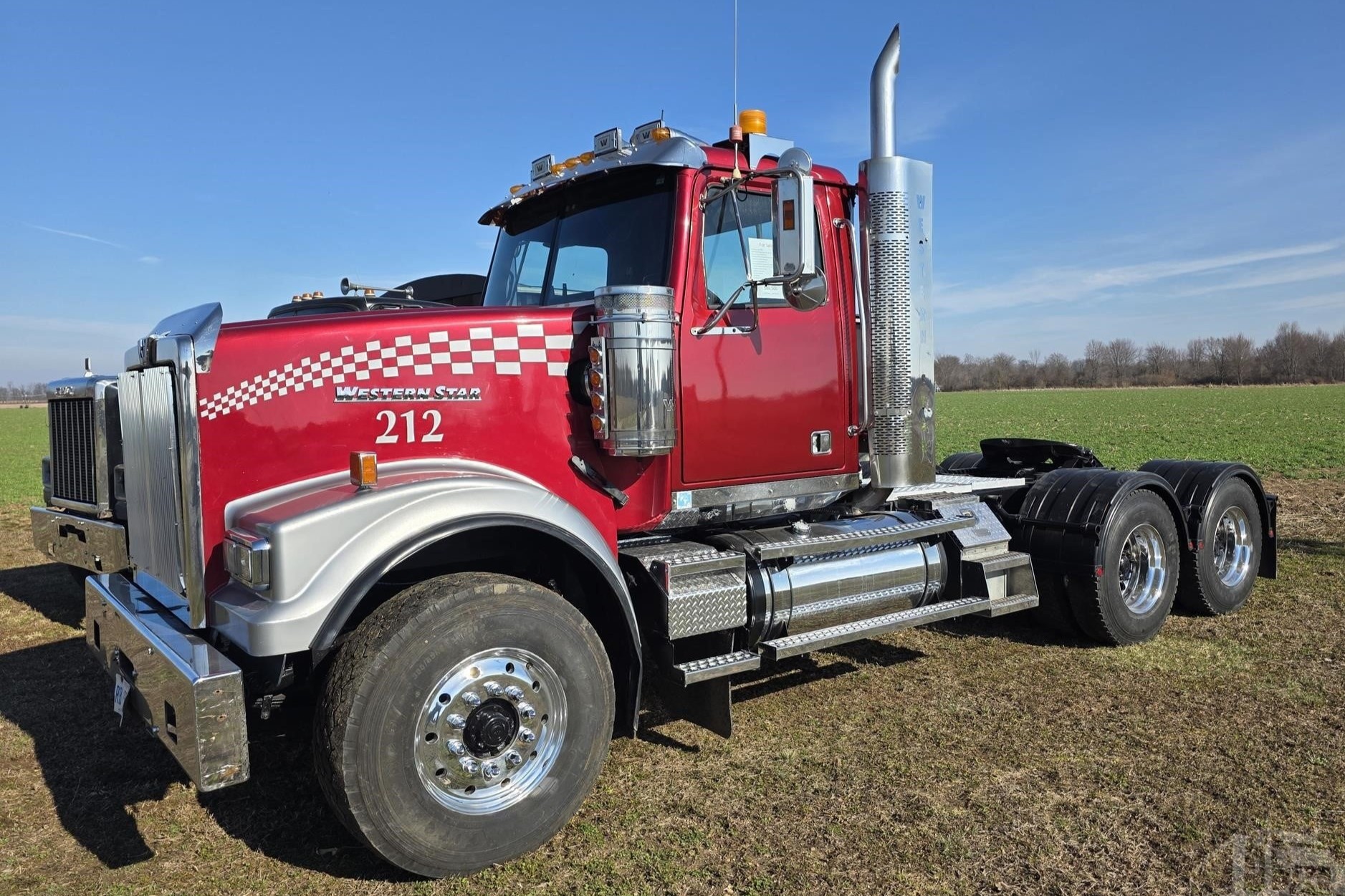
A truck built to Michigan standards will often look like other big rigs, but have upgrades that you might not notice with the naked eye. These trucks often have reinforced frames to handle the extra load, an 18,000-pound or higher steering axle, a doubled-up steering gear, and often fixed tandem axles. Or, you might find them with two fixed tandem axles and one lift axle. Under the hood, a modern Michigan-spec tractor will often have an engine pumping out well above 500 horses.
Trailers built for the Michigan law are similarly beefy. But they’re also clever. These trailers don’t just have up to eight axles, but these axles can have some tricks up their sleeves. These axles may lift when they aren’t needed or to help make negotiating corners easier. Likewise, you might also find steerable axles on a Michigan Centipede.
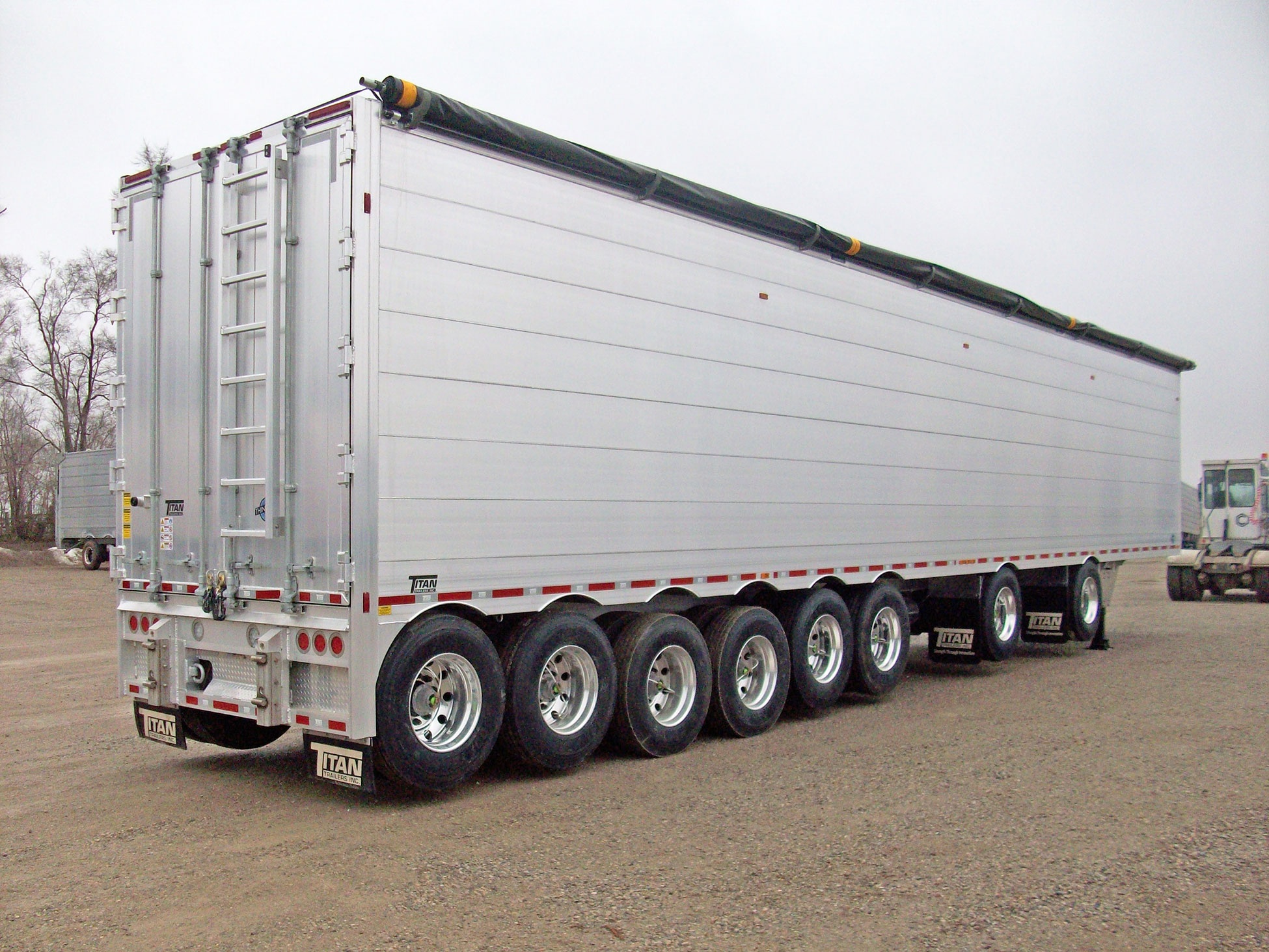
Of course, since we’re talking about both a beefed-up semi-tractor and trailer, Michigan Specials weigh more empty than your typical highway rig, too. A semi-tractor built for Michigan’s law can be found coming in at nearly 30,000 pounds, if not more. Similarly, you will find trailers that weigh well above 20,000 pounds when empty. For comparison, a typical highway tractor with a sleeper might weigh on the low end of 20,000 pounds, with trailers weighing in the 10,000-range.
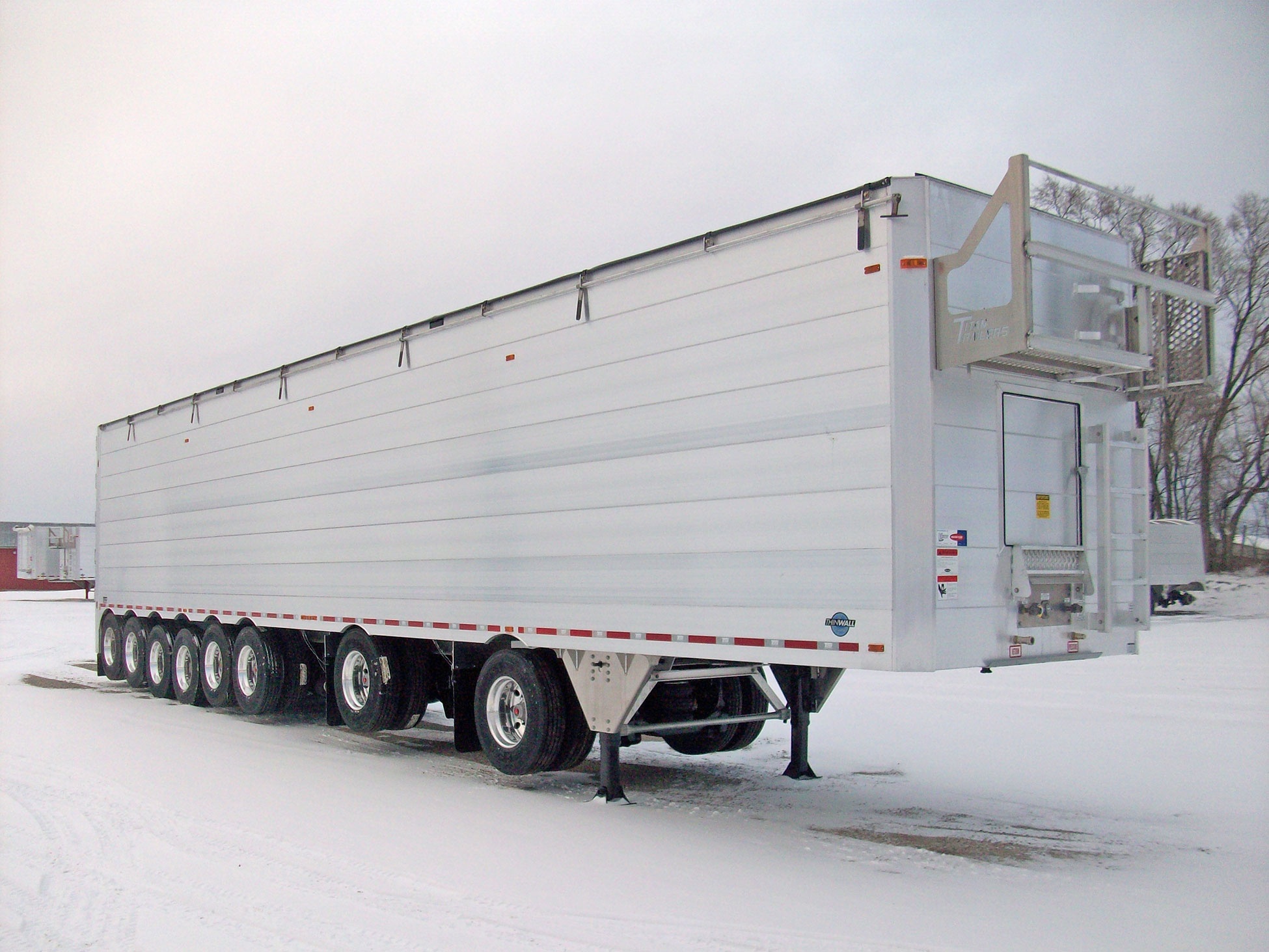
As for what these rigs carry, they haul just about anything big and heavy. A Michigan Centipede could be found carrying gravel, sand, asphalt, logs, steel, grain, or other agricultural products. Those are just the trucks that carry solid materials. You could find a tanker with room for 13,000 gallons of milk, fuel, or other liquids.
Lots Of Axles Are Here To Stay
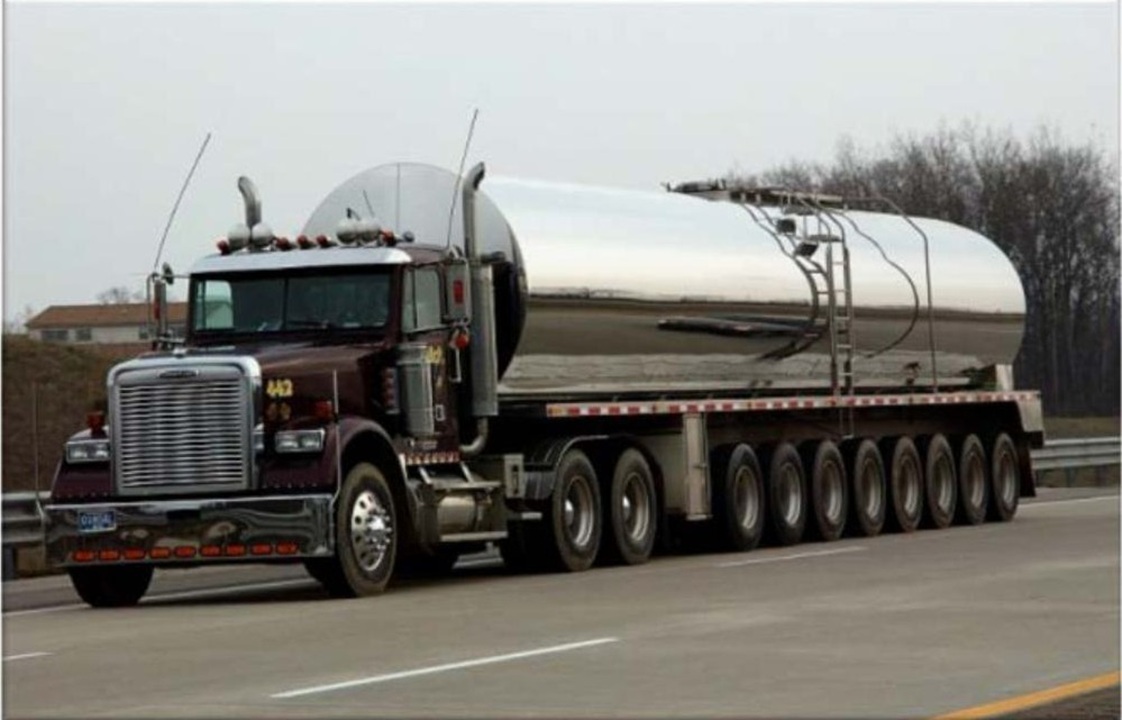
The Michigan Department of Transportation says that, aside from pounding the road not as hard as typical trucks, a Michigan Weight-Law rig is also more competitive than five-axle combinations in other states. Further, the state says, because of Michigan’s unique weight laws, freight rates are lower. There are also fewer trucks, drivers, and trips that are required to carry heavy loads. Michigan also says that driving one 164,000-pound truck burns less fuel than driving two 80,000-pound trucks while also cutting down on traffic congestion, too.
Michigan’s special trucks are things of beauty, almost as much as the state itself is. Michigan’s trucks are allowed a silly number of axles and more than twice the weight of the typical semi, but it all makes sense because each of those axles puts down less weight than the axles of a typical semi. Of course, if you’re a Michigander, you might not have noticed a benefit as the state’s roads remain pretty terrible, anyway.
So, the next time you find yourself in Michigan, now you know why Michigan’s trucks have so many wheels. These are special rigs carrying loads most truckers could only dream of carrying. Like most things dealing with big rigs, the Michigan Centipede exists for a reason!
Do you drive one of these rigs? If so, email me at mercedes@theautopian.com. I’d love to know what the experience is like!
Topshot graphic image: Screenshot: The Grumpy Pete/YouTube




Logic aside, I’m glad that I don’t drive in Michigan.