

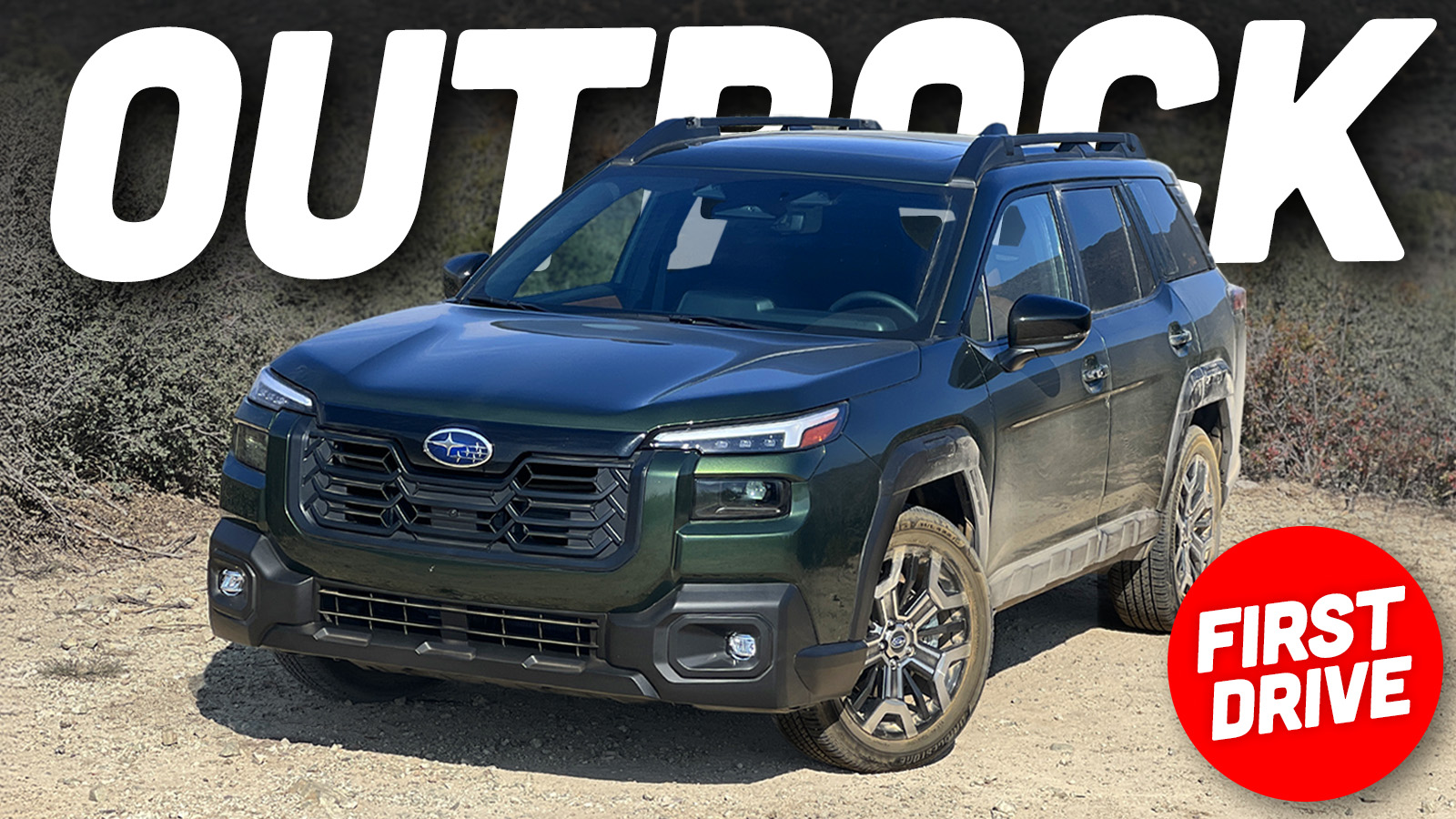
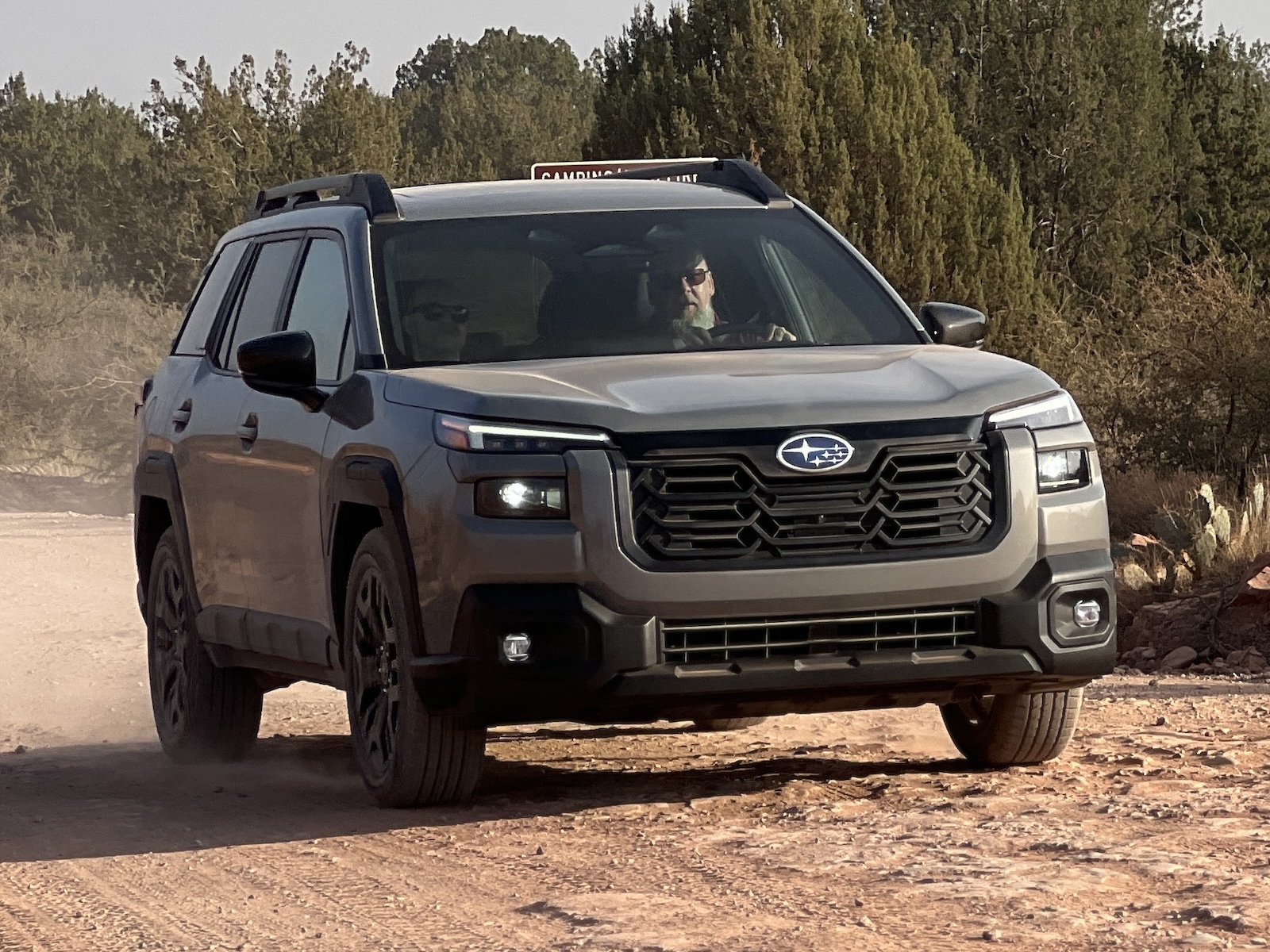
The Subaru Outback is the automotive equivalent of an air fryer: a kitchen appliance that can actually deliver joy—slightly lower-guilt joy compared to other appliances, that is. For 2026, it’s even better, with a far-improved interior and fewer rumbles from the outside world. It’s also uglier, much more so than ever before, but only from the outside. And, as with any Subaru other than the zippy BRZ coupe, its appearance improves a bit when coated with muck.
I spent a long day rambling around rocky, loose fire roads within an hour’s drive of Sedona, Arizona, in the two bookends of the 2026 Outback lineup: the base Premium trim with just 180 horsepower and the range-topping Touring with the available turbocharged model delivering 260 hp.


Both could better harness the power vortices alleged to haunt Sedona, but quick acceleration has never been an Outback hallmark.
Incremental Improvements Show That Subaru Was Paying Attention
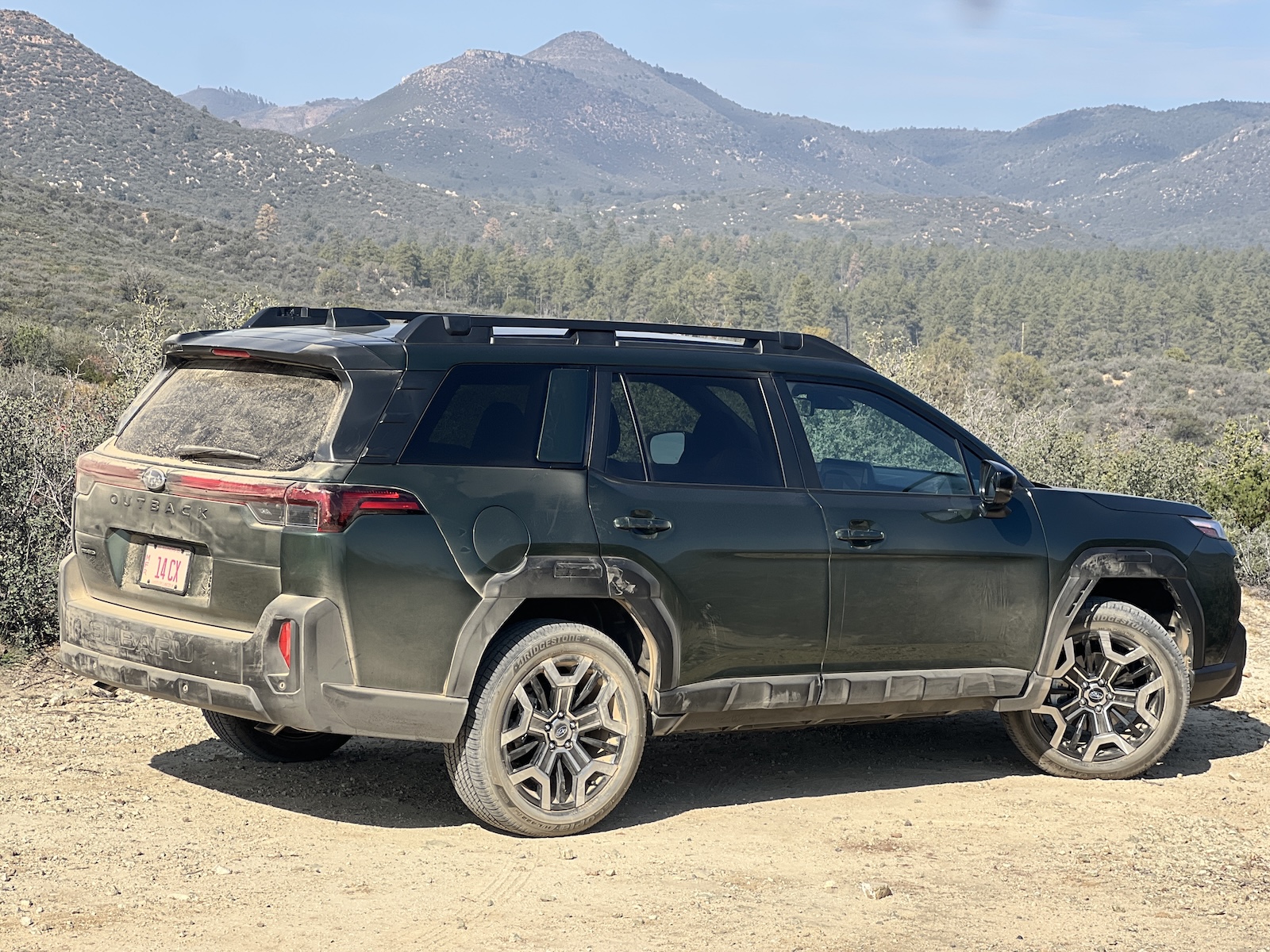
Basically everything you can see or touch in and on the Outback has been reworked for 2026, marking the model’s biggest rethink in a long time. It’s still a wagon on stilts, albeit less of one than ever before. For instance, the new Outback still sits 8.7 inches off of the ground, but its taller roofline stretches overall height from the outgoing model’s 66.1 inches tall to 67.5 inches. That makes it about the same height as a Toyota RAV4, yet quite a bit shorter than a Toyota 4Runner or Honda Passport.
Visually, its cues are more SUV-like than wagon-like, particularly in the blocky, upright front end. More upright B-, C-, and D-pillars—those aft of of the front passenger compartment—enhance the SUV-ish look. Subaru dialled back some of the outgoing model’s cladding, but it amped up surface detailing. The fender flares have a needlessly angular look with fake grab handles that would serve no purpose even if they were functional (If you need to portage your Outback, you’ve perhaps gone too far into the woods).
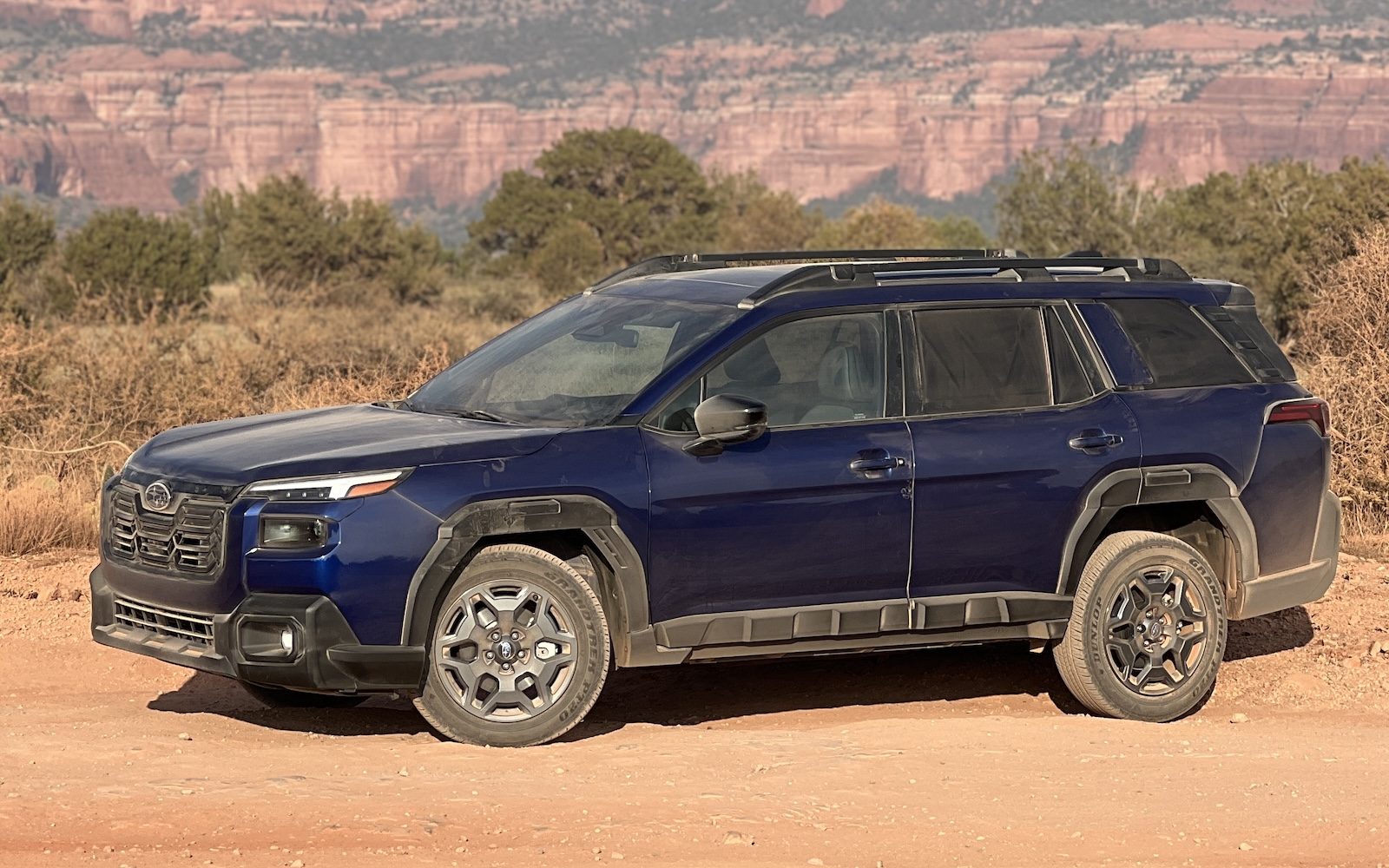
So busy is the Outback’s exterior styling that the three trims I was able to view—base Premium, mid-level Limited, and almost luxurious Touring—are roughly on par with the outgoing model’s overstyled off-road Wilderness trim. The new Wilderness, which is a few months out, takes its cladding to the extreme.
Subaru told us that it took a few of its most obsessive owners on a camping trip to learn how they used their vehicles; we can only imagine the fireside conversation. But what resulted were a host of functional detail improvements.
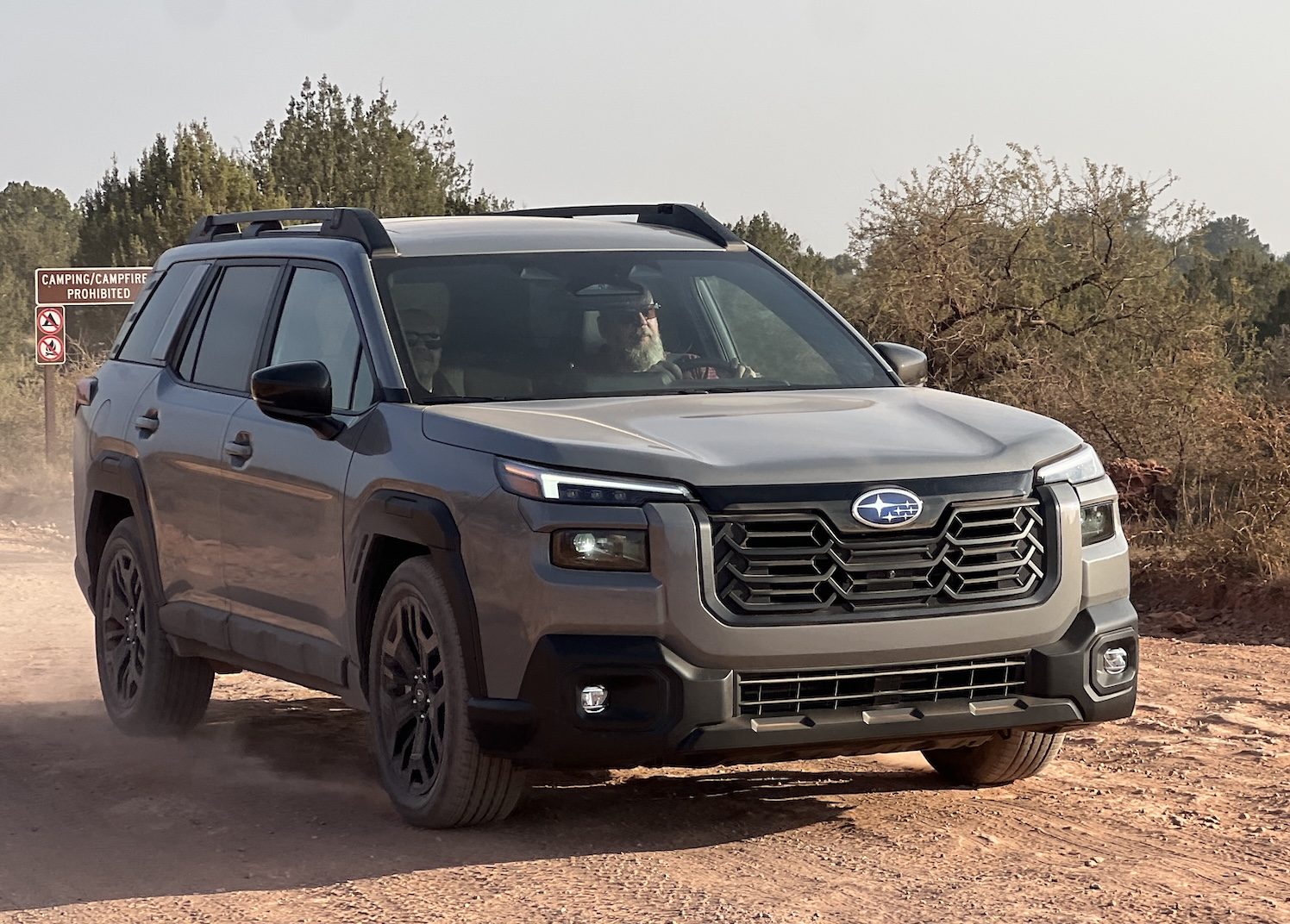
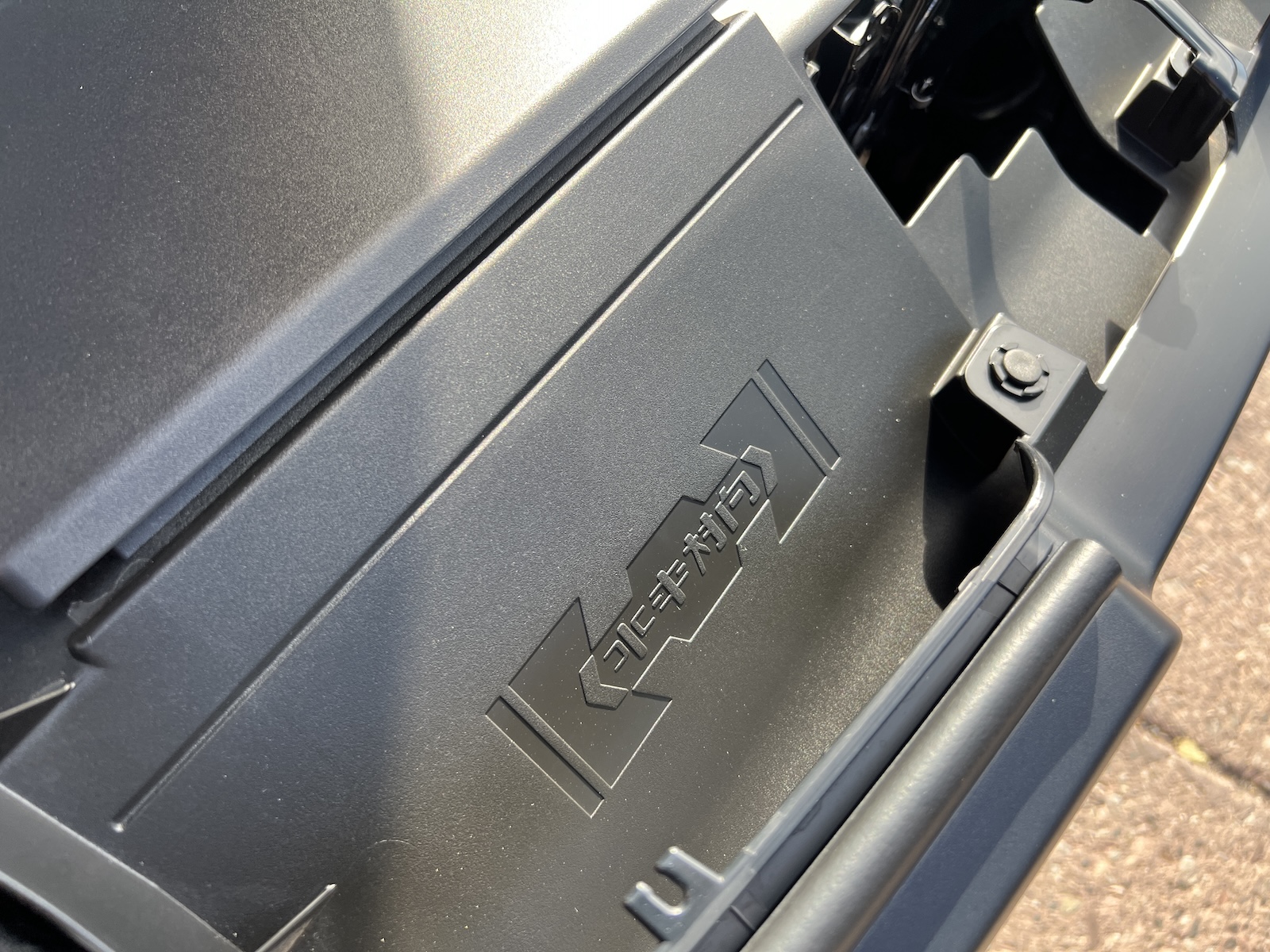
For instance, the standard roof rack still sprouts up to catch plenty of wind, but it’s stronger, has easier-to-access hooks for attaching rooftop tents and the like, and it is even rated to hold one side of a hammock. You will, however, have to buy crossbars if you want to attach anything to it. At the rear (out back, if you will), the Outback’s more upright liftgate opens to reveal a larger aperture and a slightly bigger cargo area than before. Opting for the tow hitch option—the Outback can lug up to 3,500 pounds—no longer requires bumper surgery thanks to the new pop-out panel. Back in the cargo area, the fabric luggage cover can be arranged to create a partition or a small hammock useful for holding loose items. Its best asset is that it takes up very little space when it’s not needed.

The convenience upgrades abound inside, too, where the Outback now has big door cupholders in a felt-lined compartment, a large tray for the wireless device charger that didn’t seem to like my iPhone, and, of course, rows of buttons. Subaru, perhaps more than any other automaker, has realized that people want buttons and knobs rather than touchscreens. I counted as many as 16 climate and seat buttons, where the old model had just eight. Then again, the old Outback had a vertical screen with the resolution of a Tamagotchi, so really, anything is an improvement.
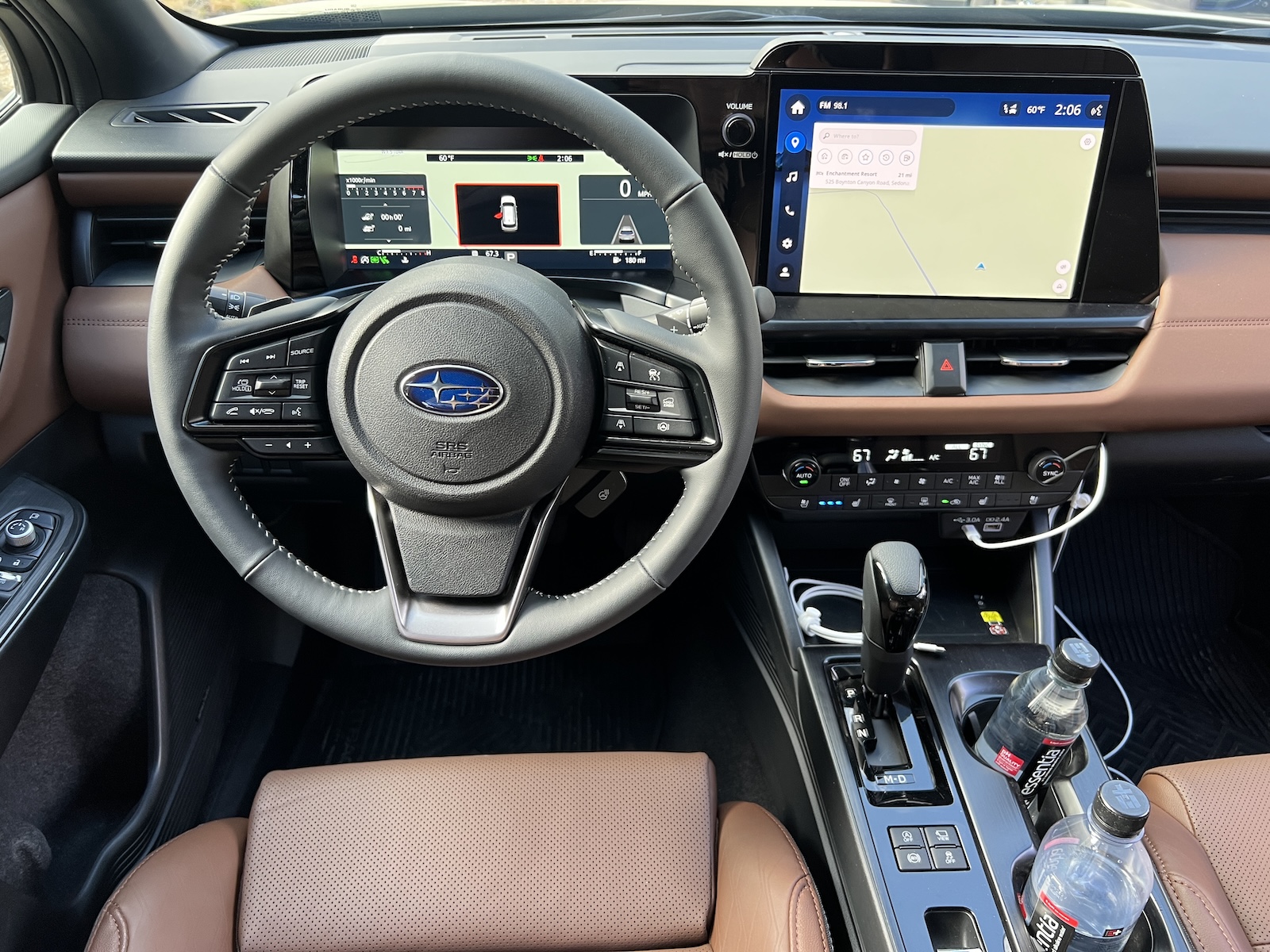
But let me not undersell just how much better the Outback’s new touchscreen is. It’s bright, crisp, and boasts new infotainment software that just seems to work right. The same goes for the digital instrument cluster, which, thankfully, has an analog-style mode. Other car brands should take note: this is how you do it with buttons, knobs, and no flashy software.

I never grew to like the way the Outback looks outside, but its interior is a big improvement. Premium and Limited trims have wide swaths of rugged-looking fabric that stretch across their door panels and dashboards. The look is relentless, but it also lightens the mood compared to the busy urethane used in the last model. Top Touring versions have color-matched vinyl that does not look or feel like their Nappa leather seats. If there’s a kvetch, it’s the black headliner that is textured to look like a Patagonia fleece but feels cheap to the touch.
On The Road: The Same As Before, But Much Quieter
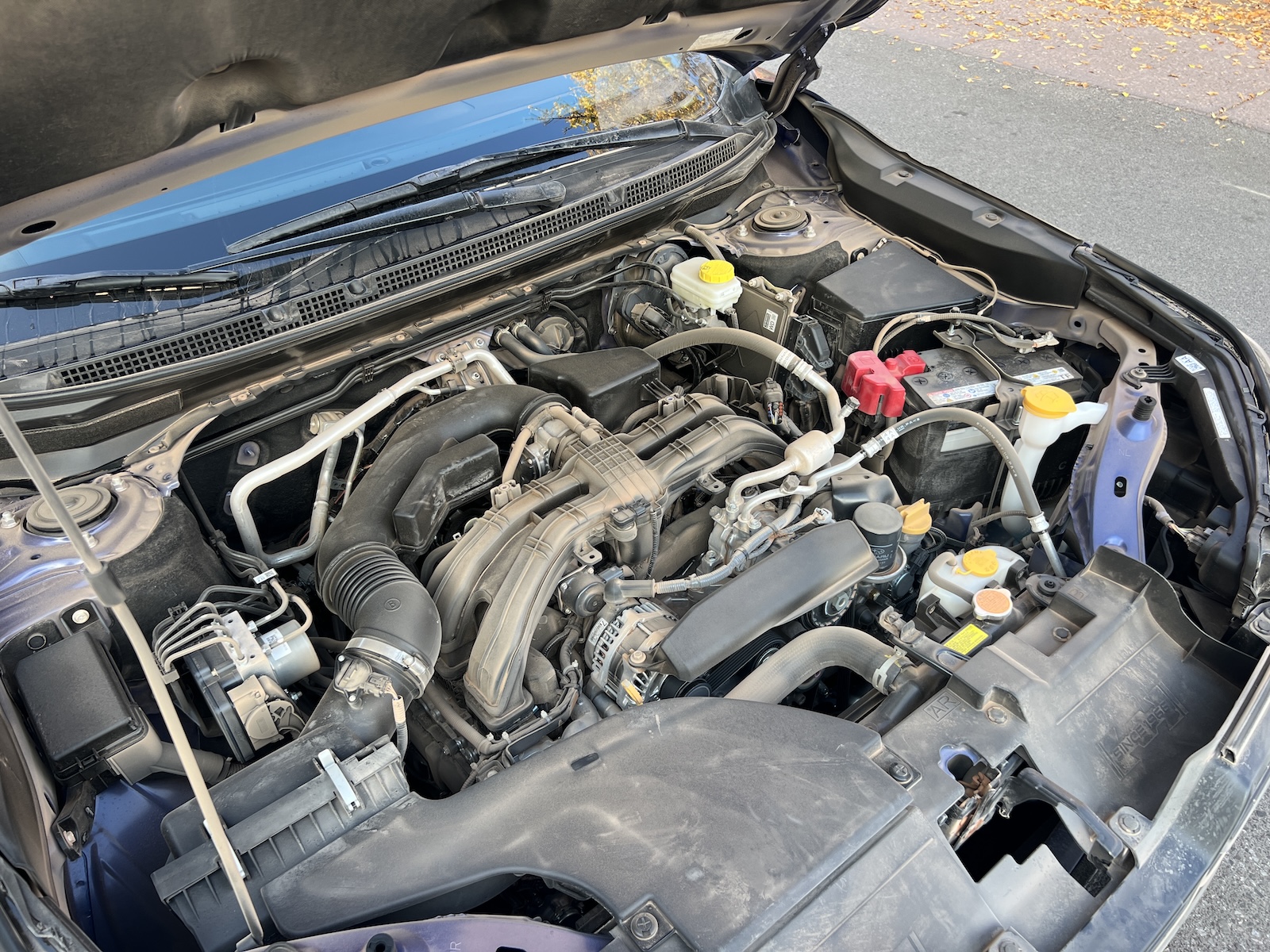
Once I secured the Outback’s hood prop rod—yes, really—I looked into the void that is its engine compartment. The standard 2.5-liter flat-four (FB25, in Subaru-speak) sits very low, with nothing in the way of plastic dress-up bits. Opt for the Outback XT and Subaru swaps in a 2.4-liter flat-four (FA24) with a turbo and a nice, wide intercooler fed not by a hood scoop but by a cutout on the cowl where the wipers rest.
Either way, the flat-four engines transmit power to all four wheels through a continuously variable automatic transmission (CVT) with steering wheel-mounted paddle shifters. The mechanical all-wheel-drive system is light on bells and whistles, but that’s just fine; tapping the steering wheel button for X-Mode engages hill-descent control and changes some of the traction and stability control parameters for loose terrain.
Subaru made myriad small changes to both engines, largely in the name of improving reliability and noise reduction. For instance, the non-turbo’s new piston rings and camshaft are expected to last longer, while its engine mounts and brackets reduce noise and vibration intrusion.
At least for now, there’s no hybrid version (It’ll come, eventually). Fuel economy suffers a bit as a result of the blockier shape and increased features that pork up the Outback. Per EPA test procedures, figure 27 MPG combined for the non-turbo and just 25 MPG combined for the XT, reductions of one MPG each over the old Outback.
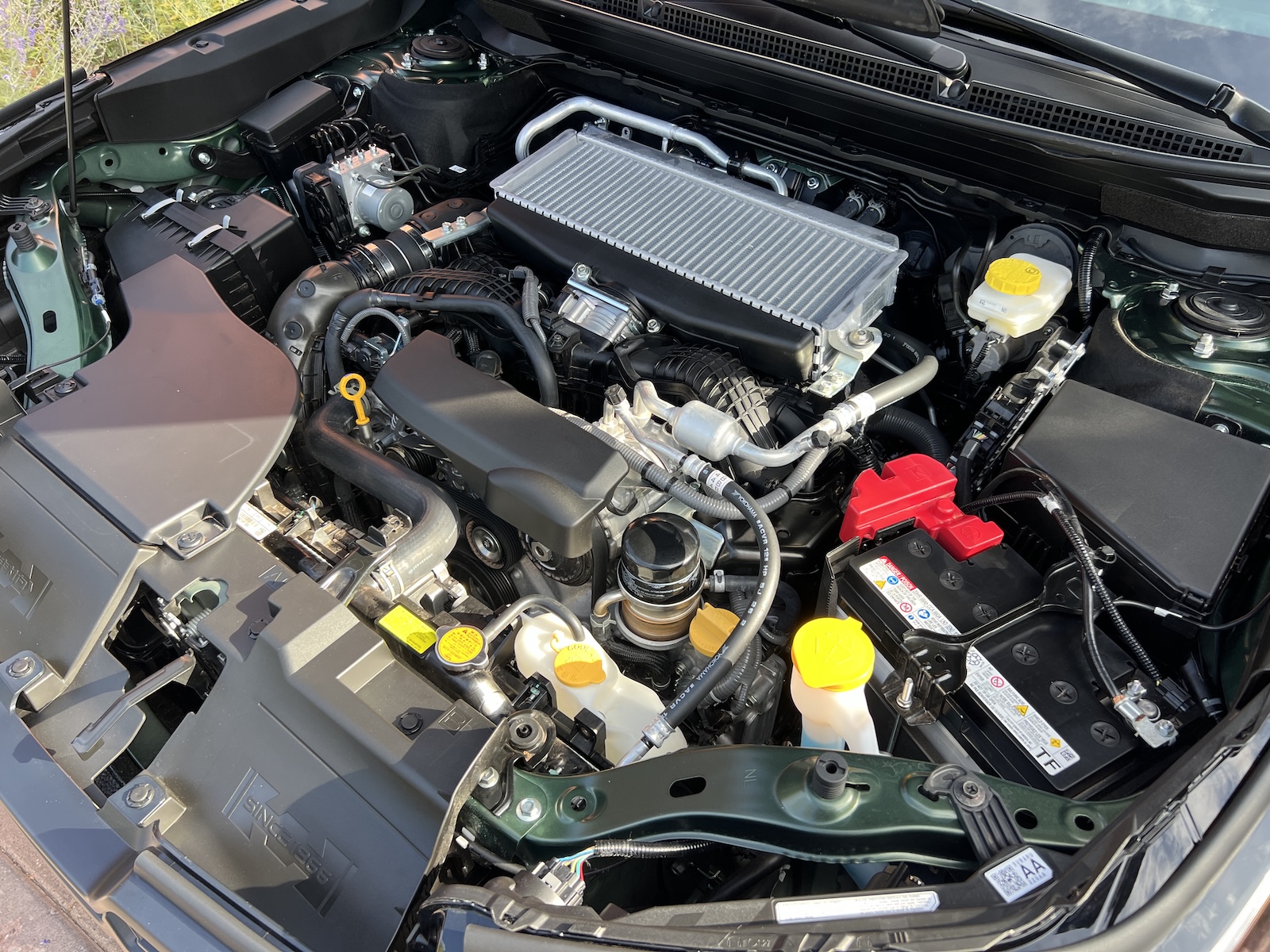
The Outback XT’s 260 horsepower and 277 pound-feet of torque must lug nearly 4,000 pounds worth of Subaru wagon/SUV around, so this is no WRX with more cargo space. I found acceptable acceleration and good mid-range punch, but certainly nothing in the way of plenty of reserve passing power. Predictably, the base version was noticeably less peppy, even if it can weigh nearly 250 pounds less in its fleetest (a.k.a. base model) configuration.

What surprised me was just how quiet the Outback was, though the 19-inch wheels mandatory with the turbo wear lower-profile tires than the 18s that come with the naturally aspirated version. They growled a bit more over rough pavement than the standard 18s. XT models have the same 12.4-inch front and 11.8-inch rear ventilated disc brakes as non-turbos, so the size-up wheels are a pointless vanity for an off-road-ish vehicle.
Yeah, the Outback has fairly long overhangs, so the mere 20-degree angle of approach and 21.4-degree angle of departure (slightly greater in XT trim) mean you have to pick your line carefully, even though it can straddle an 8.7-inch rock. (Get out your tape measure!) Also, the suspension—consisting of MacPherson struts up front and double-wishbones at the rear—doesn’t allow for much in the way of wheel droop. But the all-wheel-drive system responded quickly over loose rocks as I pushed an Outback XT up the kind of rocky terrain better suited to something with knobby tires. Only once or twice did traction control intervene, and never did I need to back up and try it again.

On the paved roads that led to the trails, the Outback exhibited less body lean than a typical SUV and its steering—made better this year by a dual-pinion rack—delivered sharp, if numb response. There’s nothing fun about the way the Outback handles, but does there really need to be? Even Subaru seems to agree since it deleted all drive modes aside from the off-road-ready X-Mode for 2026.
The base car’s 18-inch alloy wheels provide a comfy, composed ride. The 19s fitted to the XTs are noticeably firmer, and for no discernible reason since the quicker Outback doesn’t really handle any differently on pavement.
Drivers who want more capability should wait for the Wilderness, which, aside from being even uglier, will undoubtedly be the better off-roader. It has almost an inch of additional ground clearance thanks to a higher-riding suspension with special springs and adaptive dampers, and it rides on 17-inch wheels with way more sidewall for rock absorption. It promises to be the most comfortable Outback of the pack, though we’ll have to reserve judgment until next year when it goes on sale.
You Could Spend More, But Should You?
The Outback comes in three basic flavors, aside from the rather substantially different Wilderness: Premium, Limited, and Touring. The base version comes only with the non-turbo engine. That engine is standard in Limited and Touring guise, too, but buyers can spend an extra $3,000 or so to boost their way into an Outback XT.
Make no mistake: the 2026 Subaru Outback is no longer the bargain it once was. Today, you’ll need $36,445 (including a mandatory $1,450 destination charge) to get in the door, which buys a Premium with synthetic leather seats that are heated up front, power adjustment for the driver’s seat, a power liftgate, and a 12.1-inch touchscreen with wireless Apple CarPlay and Android Auto compatibility. That money also nets a full suite of driver-assistance tech under the EyeSight umbrella, including adaptive cruise control with stop-and-go, blind-spot monitors, and a reasonably good ability to center itself in a lane at highway or city speeds. There’s also a driver-attention monitor, which was slightly less annoying in my driving than it was in the prior Outback. Another $2,270 buys a sunroof, a wireless charging pad, and a heated steering wheel, but personally I’d stick with the base version.

The step-up Limited costs $43,165, a big hike for leather seats, navigation, Harman Kardon speakers, a sunroof, and a power passenger seat. If you want luxury, save for the top Touring with its ventilated front seats, additional driver’s seat adjustments, Nappa leather upholstery, and upgrades to the EyeSight system that allow for true hands-free driving on certain mapped roads. Though Subaru’s system trails Ford’s Blue Cruise or GM’s Super Cruise, a so-equipped Outback is a relatively reasonable $46,845 for something so well-equipped.
Add premium paint to an Outback Touring XT and it’ll nudge in just south of $50,000, though most will probably land on dealer lots with various budget-busting manufacturer-installed accessories like mud flaps and roof rails.

Then again, it’s hard to figure out whether the Outback is a good buy or an expensive one since it doesn’t really have a direct rival. The base Outback Premium is undoubtedly nicer inside, more feature-laden, and more capable than a $36,100 Honda CR-V EX with all-wheel drive. The Subie is also a steal compared to the bulky Honda Passport, which starts at an eye-popping $46,250. In top Touring XT trim, the Outback’s snazzy cabin and underhood muscle more or less match the nearly $60,000 Jeep Grand Cherokee Overland. But does anyone really cross-shop the Outback? Not really. There’s not much reason to branch out when you’ve found an appliance that you like. You stick with it.
Top graphic image: Andrew Ganz




One can trust the Autopian for the a truthful headlines.
I feel like this makes an even better case for the new Rav4.
I am trying to use the word ‘no’ less, so I’ll just say
Nah, bruh.
I know people love these, but to me, it looks as if Subaru thought long and hard about how to uglify each and every little piece of the car before settling on a final design for production. $40-50K is about par for the course these days I guess, but honestly, I’d rather have almost any competitive vehicle (except perhaps for a Mitsubishi, which is also ugly albeit in a different way) than this.
I actually don’t hate it as much as I thought I would.
Do I have Subaru Syndrome?
Mild lack of hate, it’s makes a subaru a subaru
If it can’t get through the Darien Gap it’s not though enough.
What a sad looking cargo cover. That is such an obvious tell that they’re cheaping out on parts.
I take a different view on that…..they have had retractable cargo covers in a well designed aluminum-ish casing for years. I like them, but as a target Subaru demo, I’m also hauling gear and things regularly that require seats down and/or cargo cover off. The current over-engineered cover is mildly annoying at that point, since I have to find where to put them and then remember when I want them to put them back in. Often results in them living in the closet or garage. The new one looks flimsy, yes, but where you see a sad cover, I see something that instead is easily stowable in the car and a much better option than the current style for me….
It is kind of like convertibles….yeah one-piece hard tops look cooler with the top on, but a cloth retractable is far more usable and bypasses the annoyance of stowing your top.
So, as the former owner of two manual 3rd gen Outbacks (’05 in Atlantic Blue Pearl/Moonstone and an ’09 in Graphite Metallic, both in Premium trim with heated cloth seats/mirrors but no moonroof) I just heave the HEAVIEST sigh when I gaze on this… THING that Subaru has transmorgified the Outback into. I feel like Calvin would have drawn up the new OB as his futuristic tank of choice to battle the T-rex F-35 Squadron.
Both of my 3rd gens weren’t the pinnacle of reliability being totally frank, but they were insanely capable, hauled an insane amount of stuff, were comfortable to car camp in and I never got stuck (well, except for the one time I got washed off a country road in eastern Colorado by a flash flood while storm chasing, but that’s a story for another day) and they were very handsome vehicles. I remember how the press and the general public responded SO favorably to the 3rd gen when it came out when I was in high school.
The Outback/Legacy, IMHO, for a brief time from 2004-2009 (the 3rd gen technically debuted in every market but the NA market for late ’04, they bumped it to early ’05 introduction for the NA market) bucked the Subaru awkward/dorky/uggo design trend, and the interiors were competitively high quality. A LL Bean Outback with the 3.6R felt very close to Lexus/Acura quality.
The Outback has slowly declined over the last 15 years from that nearly perfect iteration, with some ebbs and flows (the 2015-2019 was better looking than the somewhat dorkus maximus 4th gen but they took away the manual) and then the 2020+ was more aggressive and kinda pushing the envelope but still retaining the wagon traits…
…but this?
THIS IS NOT AN OUTBACK, Y’ALL.
They may as well just call it the Forester, rebadge the excellent Levorg wagon sold overseas as the Outback (which is far more wagon-y and sleek) and ditch the current Forester because… what’s the point when the Forester/Outback are now within 5″ of one another length wise and the roofline on the ‘Outback’ is barely lower than the Forester. Subie is starting to tread on BMW/Audi levels of ‘Small/Smedium/Medium/Marge’ of crossovers.
At this point, I would be more interested if Toyota let Subie give the Sienna Woodland van a more complex AWD system, figured out a way to configure the seats to fold flat into the floor, restyled the body panels, applied a lift and modest cladding (okay, who are we kidding, it’ll be CHONKY AF) and they can call it the Subaru Albedo (to go with the Subie trend of their larger MPV’s starting with A-names) and they priced it around 40k for a base model. Yeah, it’d still be goofy looking, but at least it would finally give the market a true off-road oriented minivan and I bet it would sell WAY better than this way-too-square wombat turd on wheels.
Calling it now, sales are gonna decrease a minimum of 20% and they’ll be pulling a 2012 Civic/2013 Malibu emergency refresh by 2027 MY.
You deserve all the likes for the Transmorgifier reference alone….and now I can’t not see Spaceman Spiff using this as his land transport.
I do think they are already banking on a potential sales decrease and expecting the Forester to make up the difference. The two have been neck-and-neck in pricing and sales for years, seems like they are trying to separate the two. Not to mention they flipped production so now Foresters are made in Indiana, and Outbacks in Japan.
Some neighbors have a mid 2000s Outback, and also a newer Crosstrek. A Crosstrek wagon would be such a better replacement for the older Outbacks, and actually be true to form.
I really hope the neighbors don’t get one of these new Outbacks, so I don’t have to see it out the window.
I can definitely see this happening. Unfortunately I can also imagine this selling really well, and then I’ll have to see them all the time.
I hear Subaru drivers use the word “capable” quite a bit to describe their vehicles. What is your personal definition?
Captain Wawa, saaaaa-lute! (Love Wawa, sad they aren’t out West, womp womp)
So for me, that ‘capability’ that made my 3rd gens extra enjoyable, is that in first gear, on manual transmission Outback’s specifically in the 2nd and 3rd generation, they utilize a close to 50/50 split in 1st gear, which is effectively a granny gear at less than 10 mph. On non-USDM market Outbacks, you actually got a proper Low Range lever (I had a 2009 Outback 5MT in Australia when I was living there on working holiday, honestly my biggest regret is not buying a Holden Commie/Falcon wagon even though they would have been less able to go wandering into the bush being RWD (unless you procured the rare Aventera model and those had the unfortunate 3.6 timing chain eating V6’s or a VERY thirsty 4.6L V8 that was paired with permanent AWD which meant petrol Land Cruiser type fuel economy).But anyhoo, it had a proper manually engaged differential lock like the old school Leggys/Impreza’s. Why Subie decided to leave that off the USDM market models still puzzles me, two decades later.
With a lift kit and a bash bar, a manual Outback is 85% as capable as an XJ or Wrangler and far better on fuel/more comfortable for daily driving. The slushbox variants use a different system called VDC, which has now gone through several evolutions and become the X-Drive system we know and respect in modern Subaru’s.
I took both of my Outbacks down some preeeeetty sketchy fire trails and B-Grade roads in the Colorado Rockies/Great Plains and also out in the Aussie bushlands in rural New South Wales/South Australia, respectively, and they both handled it fine. But you have to use reasonable judgement and if it has a ton of jagged ass rocks that are bigger than a soccer ball, or it’s slimey pig-shit clay… you proceed at your own risk. I knew the limits of my cars and there were times where I backed down a trail for a few hundred yards and turned around because ‘NOPE’ conditions were ahead.
It used to be that Subaru’s Symmetrical AWD was fairly unique in their price point/range since the Germans and the odd Volvo were the only way to get AWD in a passenger car format for many years. Toyota weirdly abandoned their AWD efforts in the NA market in the mid 90’s for cars, so Subaru had their AWD sedan/wagon lunch table all to themselves… but in the last couple decades lot of the other manufacturers have significantly upped their game with their AWD systems and Subaru is still upper tier, but it’s lost its uniqueness proposition.
The current crop of ‘Roo’s, I’d say that they’ve become more of a lifestyle brand and the Wilderness models do have some decent specs/chops, but they aren’t as special as they used to be. Not by a long shot.
I miss weird and daring Subaru.
This is considered ugly? :/ If I’m stuck in traffic, I would much rather have to stare at this than a Defender.
I do like all the buttons for the HVAC controls, but I don’t like the all-digital instrument cluster. Too much potential for recalls!
“This is considered ugly? :/ If I’m stuck in traffic, I would much rather have to stare at this than a Defender.”
+1… or any other Land Rover for that matter.
“Resolution of a tamogatchi”
Seriously? Short of a rental Kia, I have never gotten in a modern car and thought the screen resolution was ever an issue. I own the last gen Outback, and two gen ago Crosstrek, and never consider the screen resolution as an issue, even when comparing to friend’s fancy luxury cars. Is this like one of those “Subaru’s are so slow they are dangerous” comments? Wait…better finish the article, bet that old line is coming…..
That said….it does look better in these pics, but still think Subaru is losing their way….remove the emblem and this thing has no defining design language. You could tell me it was the RAV4.5 and I’d believe you.
I wondered if the resolution comment was meant for the backup camera? I’ve been in several rentals just this year with miserable backup camera resolution.
Backup camera isn’t the best….but being realistic, I don’t need to see what brand shoes the person I’m about to hit is wearing before deciding whether or not to stop…..
This looks a lot better in these pictures than any I’ve seen before. Especially the pic of the blue one. It still looks more wagon-y than I thought from the release pictures, which is good. The details are overdone, but the overall shape isn’t as bad as I thought. And to be fair, one of my complaints about the previous outback was the sloped rear hatch that cut into cargo space.
The interior looks much nicer, too, since I hated that giant touchscreen. That said, there’s some weirdness going on with the screen bezels that doesn’t look good.
I don’t love the new exterior, but I’m sure they’ll actually sell fine. What else are people in the PNW, Colorado, and Vermont going to buy?
Mazdas (not ugly, more reliable)
and RAV4s (Ugly, more reliable)
The CX-50, which is really a lifted wagon that they call a ‘crossover’, is selling like CRAZY here in Colorado. I own a beat to crap ’14 3 Hatch with a bazillion miles on it and stopped to get a part at the dealership, and the sales manager said that they are by far their most popular model.
If Mazda ever had the balls to offer a CX-50 with a stickshift and the turbo, especially in that new metallic green color they’re offering as of this year with the copper interior… *drool*
Fun story, this “wagon” is 2.5 inches taller than my 2005 Forester XT was. A thing that was…not a wagon? Also only .6 inches shorter than their current “not-wagon”. They are slicing this pie pretty thin.
I also considered the SG generation more a wagon, but those are the kinds of distinction nit picks the internet lives for. Subaru knows this isn’t a wagon, they don’t care and neither do I.
Counterpoint: I do care how fugly it is.
I genuinely could not care how good it may seem, as I have negative interest in subaru and their deliberately-awkward designs, failure-prone and annoying CVTs, flimsy panels, thin paint, and cult-like owners.
I don’t know what design school teacher or industry veteran decreed that vehicles must be ugly and have theor headlights inset like a Neanderthal and buried into the bumper beneath the “brow” of front turn signals, but they had to have been trolling, and/or deliberately going for some sort of counter-culture effort, right? We all saw how poorly the KL Cherokee was received, why are companies like gm, Nissan, Hyundai/Kia, and subaru aping that motif?
The KL Cherokee also sold well for many years, so that style wasn’t a deterrent to buyers.
If we take out the rental and fleet purchases, did it actually sell that well?
Absolutely. It was a top 3 seller for FCA in its first 3 full years with that look; even if we assume something silly like 40-50% fleet sales, that was 100k+ units/yr that the company didn’t have before in a segment they didn’t have an entry in before. But I suspect the bulk of fleet sales were carried by Compass, Patriot, and Journey in those years.
Counterpoint: the KL was one of those vehicles that sold because the incentives made it fit for people with credit/income issues. They bought it not because they wanted it, but because it was what they could leave with. The Dodge Journey filled a similar function.
It was definitely a cheaper option for folks. Ugh….still cant stand the thought of the profile view of it.
CDJR has never been a stranger to incentives of course, but in those first few years of the KL, the original Compass and Patriot were also present in the Jeep line and could fulfill that role more. Certainly by the end of the decade (when it had been facelifted anyway) the KL fulfilled that role more.
I simply do not understand why Subarus are as popular as they are. I understand why the idea of a Subaru is appealing. The overall shape of the Crosstrek might be the most appealing of any car in the basic-transportation category. A rugged normal car is a cool concept. But have buyers looked into long term reliability and ownership costs? Have buyers driven anything else? The Subaru is far behind the leaders (or even the average) in all categories except for the has mechanical AWD category. Drivetrain, price, styling, interior quality, reliability, dealer network, infotainment, are all sub-optimal.
Well, we had a Crosstrek for 6 years and an Outback for the last 7. The crosstrek went through 2 CV joint replacements and the FA engine recall. The Outback had its failing touchscreen unit replaced under an appropriate and proactive warrantee extension. That’s been all. I know others have stories otherwise, but no one is sharing data here, just annecdotes and opinions.
So if you’re doing comparisons, what vehicle has the ability to put full power to any wheel (not some hobbled front drive biased system), gets around 28-30mpg, can load 3 paragliders and pilots in for a shuttle, and costs the same or less?
I’m 100% in agreement with you, it’s baffling. I have to attribute it to the cult mentality, because from an objective perspective, they aren’t competitive. Even their AWD system isn’t that good anymore, and it tends to cut power very early even in the least-intrusive X-mode settings.
I’m with you. Subaru enjoys an undeserved reputation of reliability and low const of ownership, but I haven’t seen it. As for their AWD, its hardly a distinguishing factor since they haven’t had center differentials for years (save manual models). The Lineartronic AWD systems are just as much clutch and sensors as anyone else’s.
Did you ask if they fixed the touchscreen delamination issue that i’m dealing with for the third time now between the two in our fleet?
The Outback became the Forester so gradually I didn’t really notice until now
Yeah. They are merging into the same vehicle for sure. This got chunkier and the Forester has gotten less boxy.
“The 2026 Subaru Outback Is So Capable That You Won’t Care How Ugly It Is”
The inverse is more true.
It’s so ugly I don’t care what its capable of.
This right here. This is my take too. Plus CVT = non-starter.
I’m not going to claim that I love CVTs, because I don’t. But having driven the outgoing Outback, I can say that it’s actually really good. I can’t stand the engine droning at a single rpm while accelerating, but otherwise it’s a very competent transmission.
After reading the article, I agree. The wheel arches alone are abominable. They’re like the result of a first-gen Dall-E prompt of ‘car wheel arches from Battlestar Galactica, then melted a little’.
Try me.
I cannot imagine, even if the price and functionality were just outstanding, my self owning this and every time I park and exit it looking around with head down and hunched shoulders hoping that no one sees me.
I love that Subaru panders to the “carry a shovel and traction aids to pick up the kids” crowd with the styling, then fully acknowledges the actual use case by adding 19s and low profile tires.
Well played.
They know their audience.
Also, credit to the article’s author for bringing it up, pointedly but succinctly. I’m looking at new vehicles, and one of the rows on my spreadsheet is inches of sidewall.
Great headline. Before reading the story though, I don’t see how it could be true. This thing makes a Santa Fe look like a pinnacle of classic elegance.
Nope. Granted, I am not the market for this vehicle. My 2-car fleet consists of a compact sporty sedan and an even compacter thirty-year-old roadster. But I would never, not in a million years, regardless of the type of vehicle, buy something that I couldn’t look at over my shoulder as I was walking away and smile.
The way a car looks is important. Maybe it’s not the only thing (otherwise I’d have bought the gorgeous but cramped and visibility-impaired Mazda3 hatchback) but it has to count for something. I’m sure on paper this ticks all the boxes for the REI set but it looks like something built of Lego by a kid who doesn’t have any of the curvy pieces. Subaru has always seemed to conflate “ugly” with “capable”, but at least they used to add “interesting” to the mix. That doesn’t seem to be the case lately.
Yes, it indeed looks like a Lego version of an Outback. Terrible just like all the other Lego model cars.
Does the top trim eyesight plus (or whatever they call it) require a subscription? If it doesn’t, then it has a major advantage over what ford and gm are offering.
That is so ugly that I didn’t care how capable it is. Also if I was going to something that is going to break down as much as a Subaru I would get something fun instead.
Suburu: Styled by Chevrolet™
The Subaru design goals:
Superfluous
Unneeded
Basically
Atrocious
Really
Unattractive
I saw a comment about how this is still a wagon. This is incorrect, it is not a wagon, it was on thin ice before, now this heavy turd has fallen right through and sunk in to the bottom of crossover pond.
Even if the roof covered 50% of the cargo floor, let us not forget crossover clause B:
https://www.theautopian.com/the-rules-of-what-makes-a-car-a-station-wagon-need-to-be-restated-and-updated/
I rest my case.
It hasn’t been a wagon for multiple generations, it was just styled to trick people into thinking it was.