

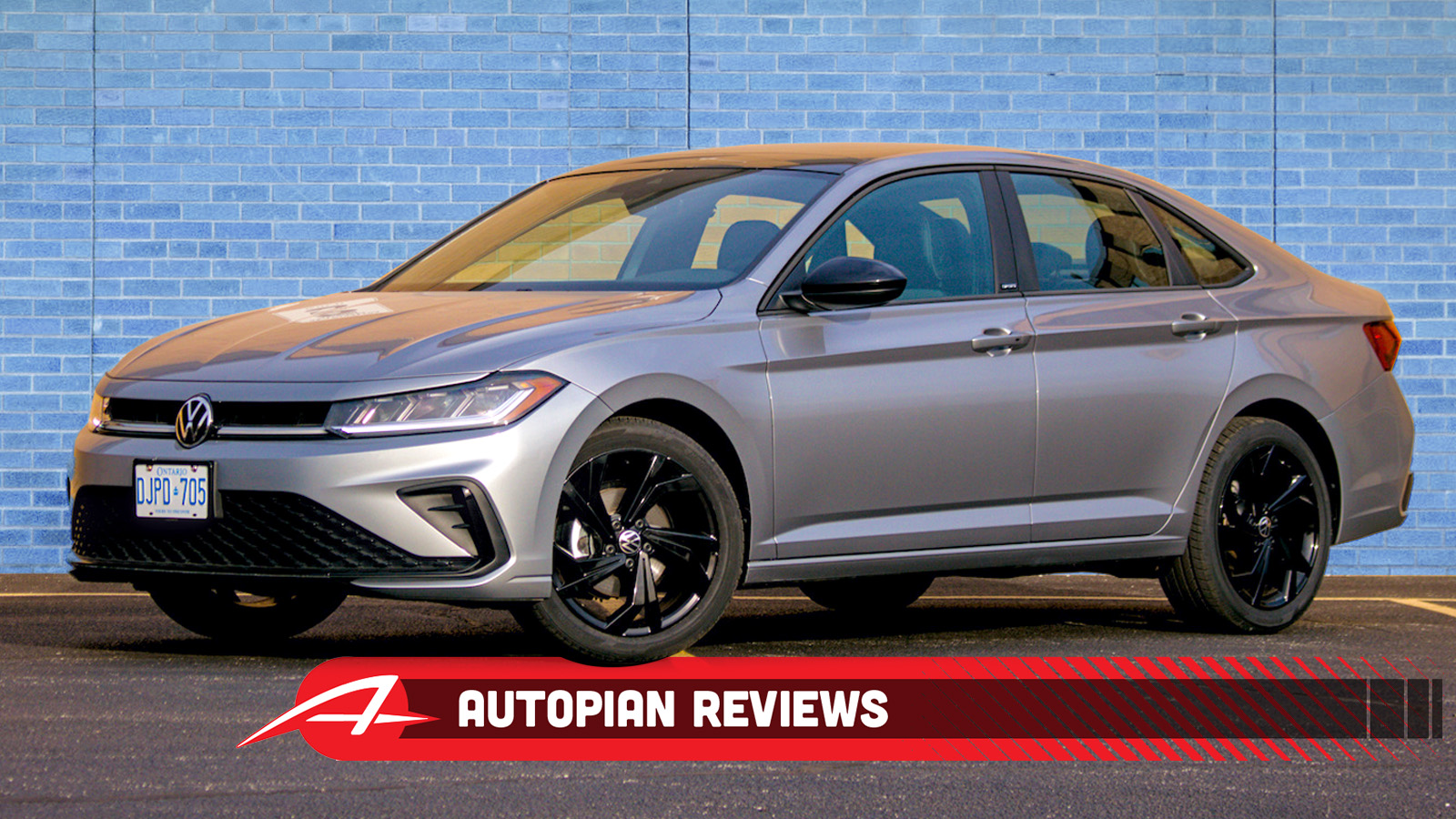
Over the past few years, we’ve started to see the catches that come with modern convenience. Cheap TVs with good picture quality that come laden with sluggish “smart” technology, once-convenient streaming services that have now become the digital equivalent of pay-per-channel cable TV, AI agents nobody really asked for. Stuff that’s grown my already-strong fondness for buttons that are real buttons, plastics that are simple plastics, and things that are simply things. So when Volkswagen revealed the second facelift of the Mk7 Jetta, I had a certain sense of trepidation.
While the bones of this compact sedan may be rather familiar, Volkswagen’s made some recent changes, some of which seem to reflect the not-great mood the company’s in. An update for the 2025 model year added more shiny black plastic and more capacitive-touch controls, two traits that are almost universally panned across the industry. So, is the rest of the Jetta still good enough to outweigh those additions? I spent a week living with one to find out.


[Full disclosure: Volkswagen Canada let me borrow this Jetta for a week so long as I kept the shiny side up, returned it clean with a full tank of fuel, and reviewed it.]
The Basics
Engine: Turbocharged and intercooled 1.5-liter twin-cam 16-valve inline-four.
Transmission: Eight-speed torque converter automatic.
Drive: Front-wheel-drive.
Output: 158 horsepower at 5,500 RPM, 184 lb.-ft. of torque at 1,750 RPM.
Fuel Economy: 29 MPG city, 40 MPG highway, 34 MPG combined on the base trim; 29 MPG city, 40 MPG highway, 33 MPG combined (8.2 L/100km city, 5.9 L/100km highway, 7.9 L/100km combined) on all other trims.
Base Price: $25,270 including freight ($29,645 in Canada).
Price As-Tested: $28,755 including freight ($33,245 in Canada).
Why Does It Exist?
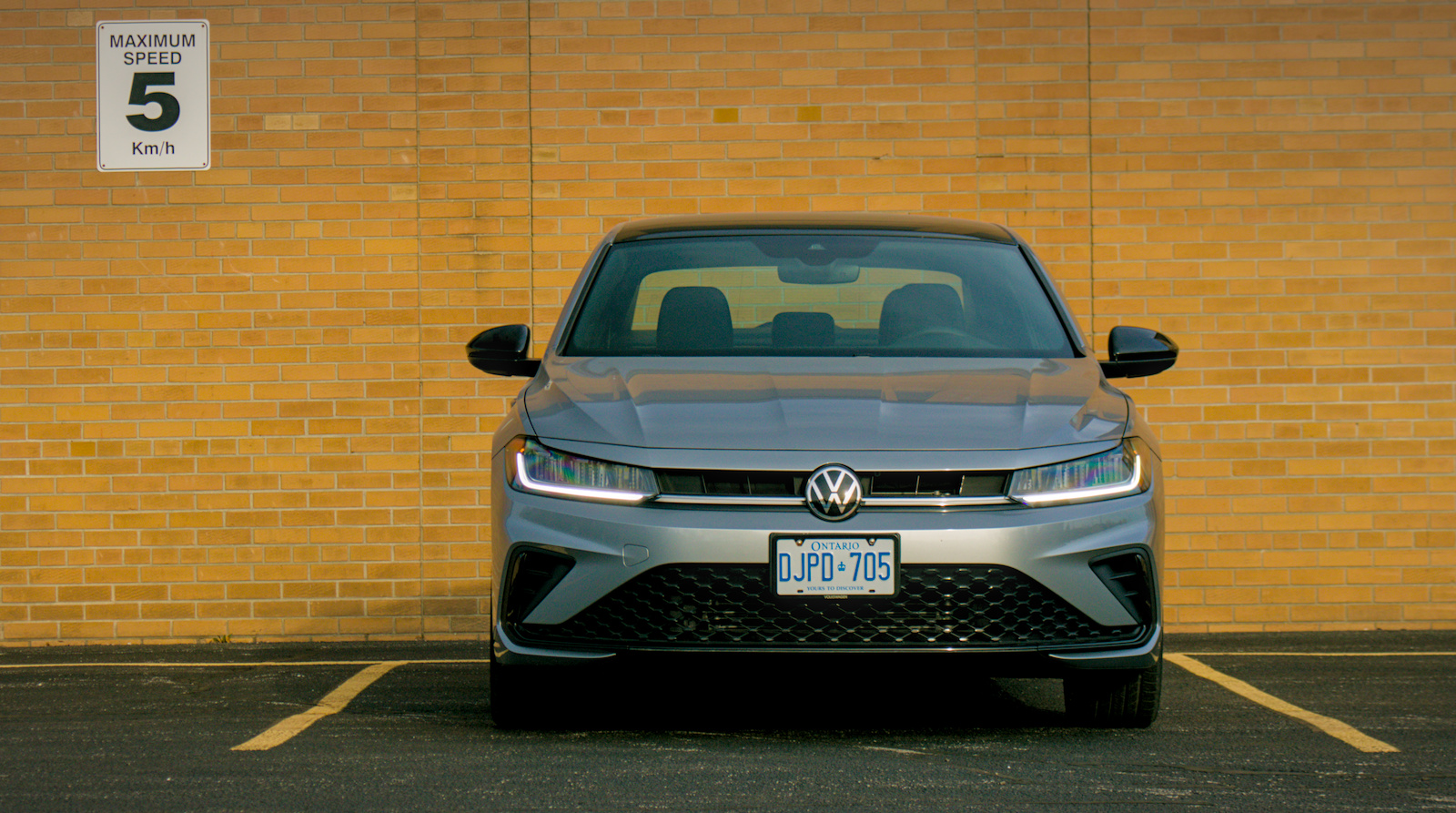
More than half a century ago, Volkswagen launched the Golf, its next big thing of the ’70s. With hatchback practicality and Giugiaro’s folded paper styling, it was a smash hit just about everywhere. Why “just about”? Well, while Americans did buy hatchbacks, they really wanted sedans. In 1979, Volkswagen slapped a conventional trunk on its compact hatchback and presto: the Jetta was born. Now well into its seventh generation, the Jetta still fills the same mold it always has: A sensible sedan for North America.
How Does It Look?
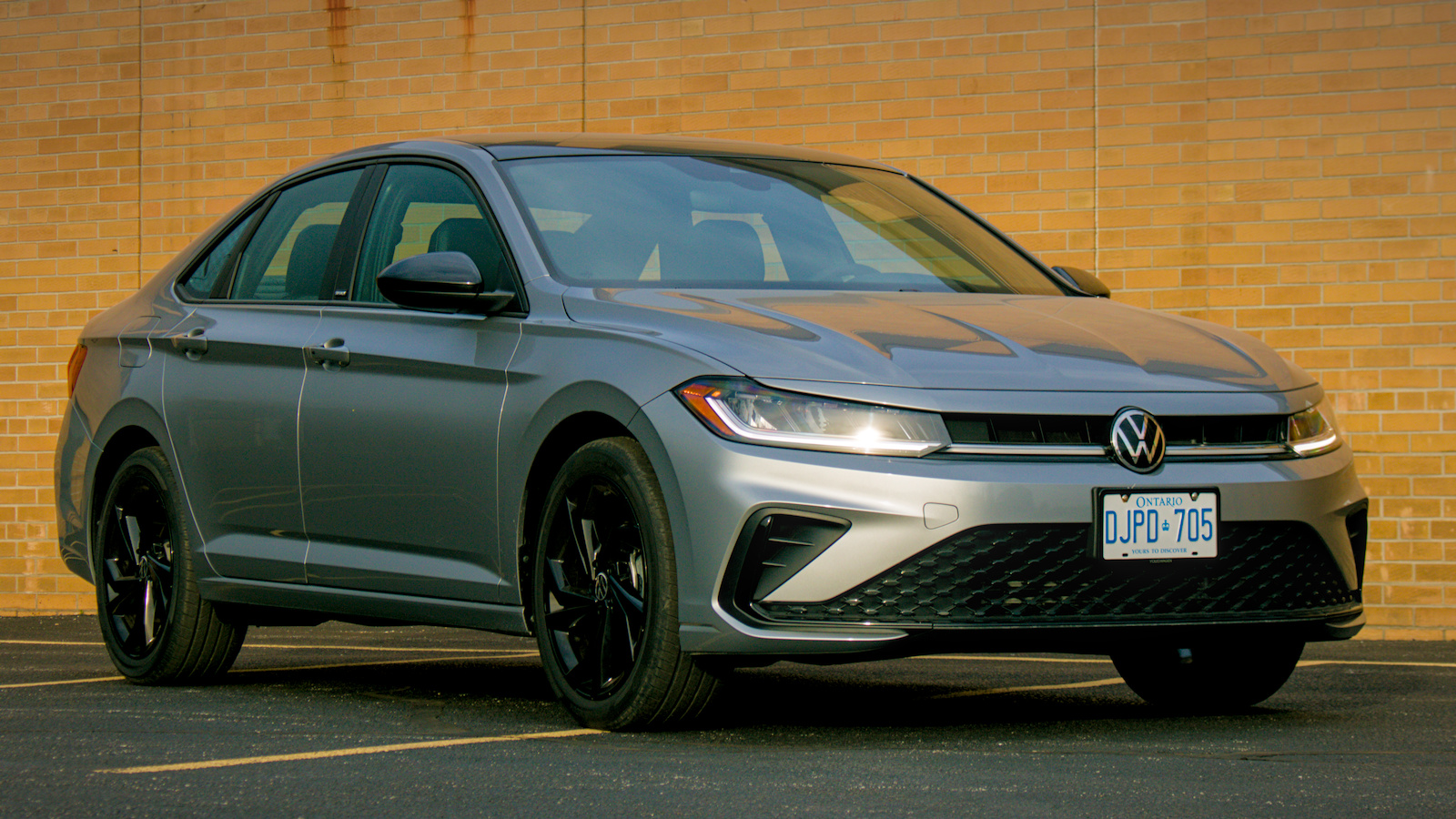
It’s been nearly two years since I first saw the second facelift of the Mk7 Jetta, and while the shut lines around the headlights are still unfortunate, I’m warming to the overall look. The down-the-road graphic is a bit less fussy than on the first facelift, and the full-width taillight treatment works. What doesn’t work so well is the available light bar across the front, a styling trend that I’ve always thought was cheap when broken up like it is here. Still, zoom out and the Jetta is a handsome car. It still largely features the chiseled surfacing we liked years ago, and it doesn’t try anything ridiculous.
What About The Interior?
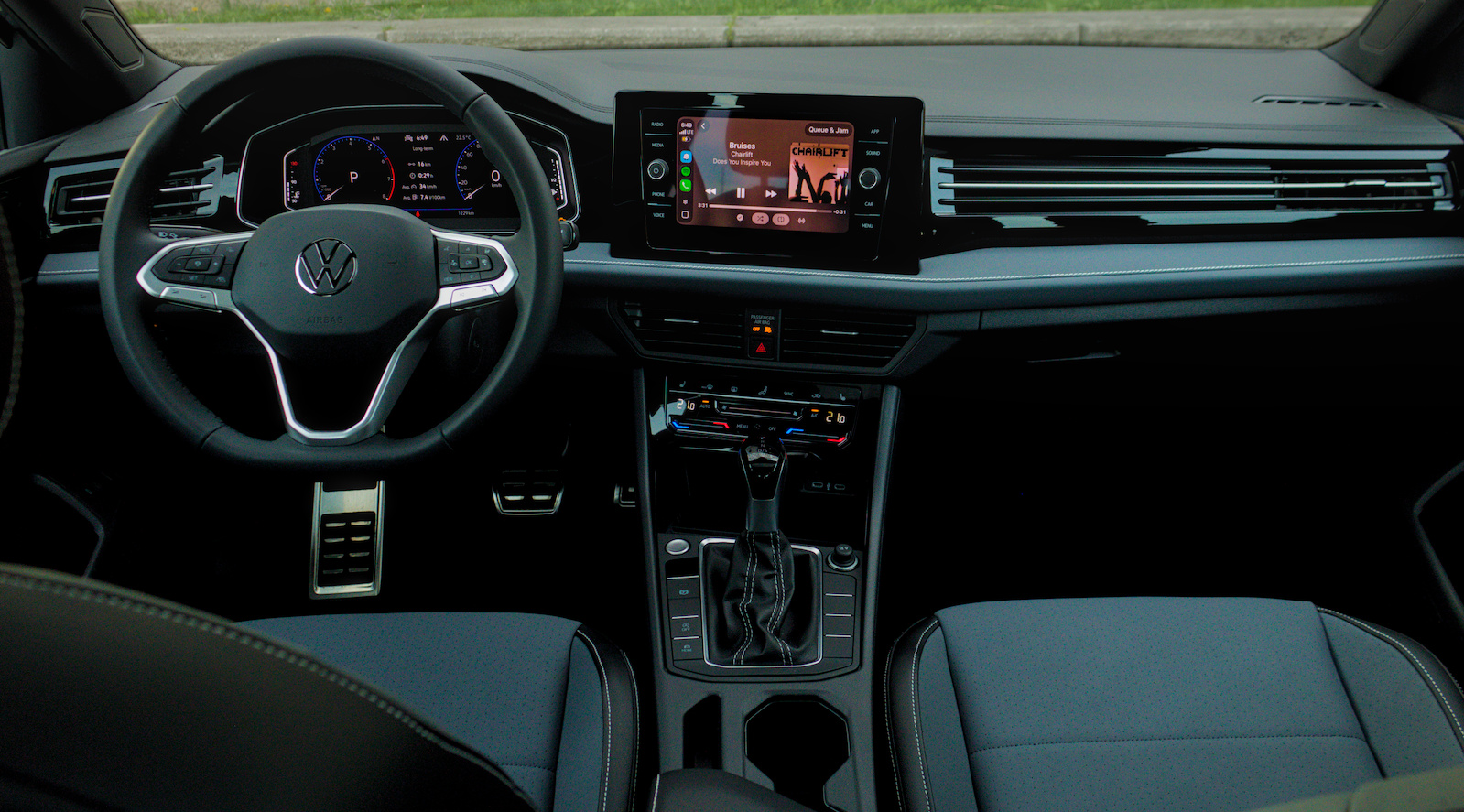
I hope you like shiny black plastic, because for the second facelift of the Mk7 Jetta, Volkswagen’s put it everywhere. Huge slabs across the dashboard, sheets on the doors, even half the shifter’s made of the stuff. Unsurprisingly, it’s a magnet for fingerprints, especially on the fiddly capacitive touch buttons for the automatic climate control and infotainment hard keys. By the way, there’s no haptic feedback on those capacitive touch panels, making them a truly eyes-on affair. If that sounds distracting, that’s because it sort-of is.
Despite these faux pas, look beyond the shiny plastic and fussy controls, and you see things that make a lot of sense. Every real button and switch is satisfyingly damped, there’s enough soft-touch and stitched surfacing to temper any whiffs of cheapness, and the quality of the leather on the steering wheel punches so far above the Jetta’s weight class, there are $60,000 machines that ought to be ashamed at how they upholster the part of a car you touch the most.
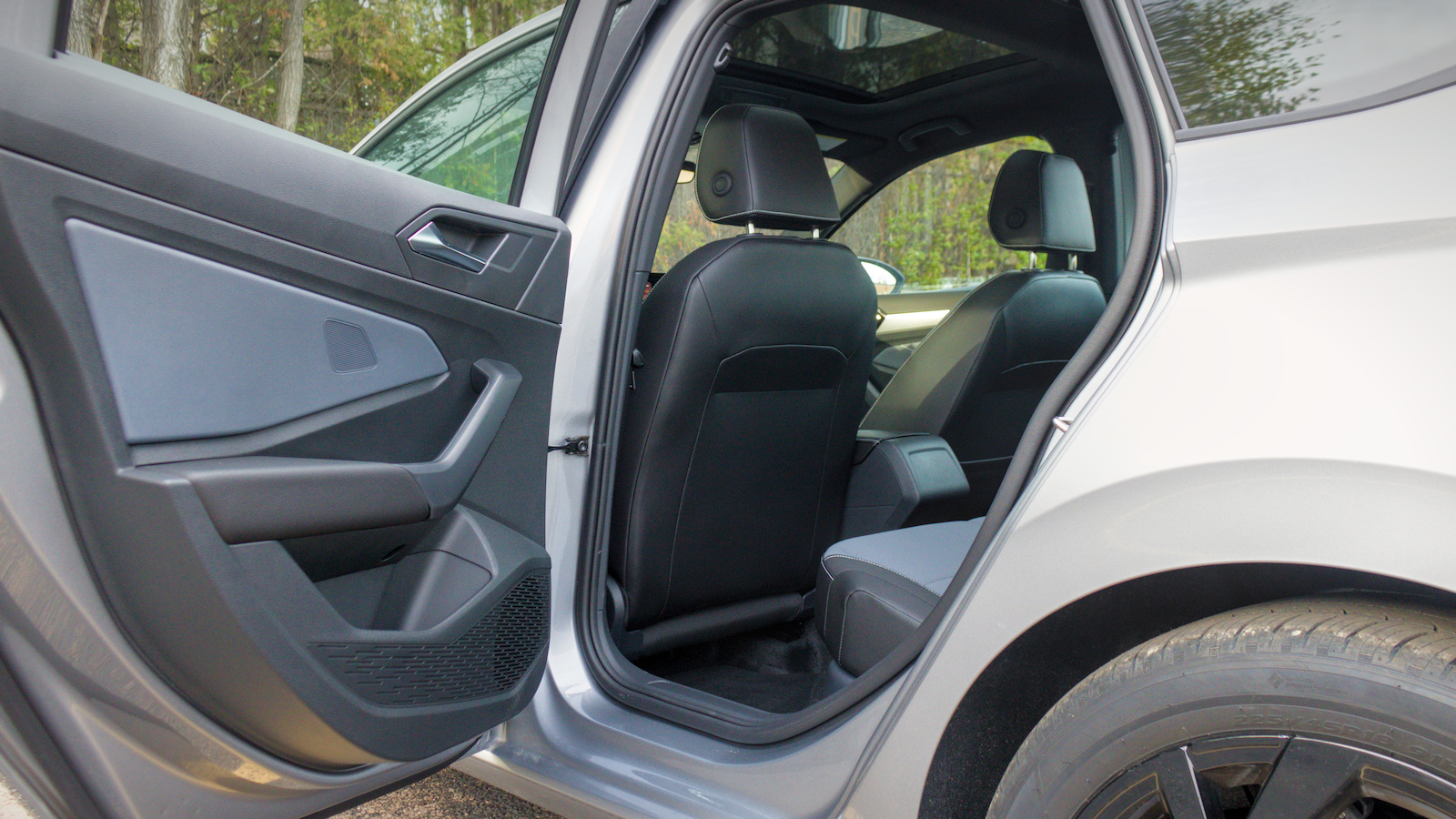
Indeed, things keep getting better the farther from the Jetta’s dashboard you get. The front seats are solidly comfortable for several hours in the saddle, and rear seat legroom is proper, albeit constrained by a central hump. The door bins are enormous, and then there’s the trunk, which is fit for two drive-in stowaways. Bonus points for the ultra-wide sunroof that really opens up the cabin, and the chunky physical handle on the inside of the trunk lid for closing the trunk. That latter one’s a detail many compact cars skip.
How Does It Drive?
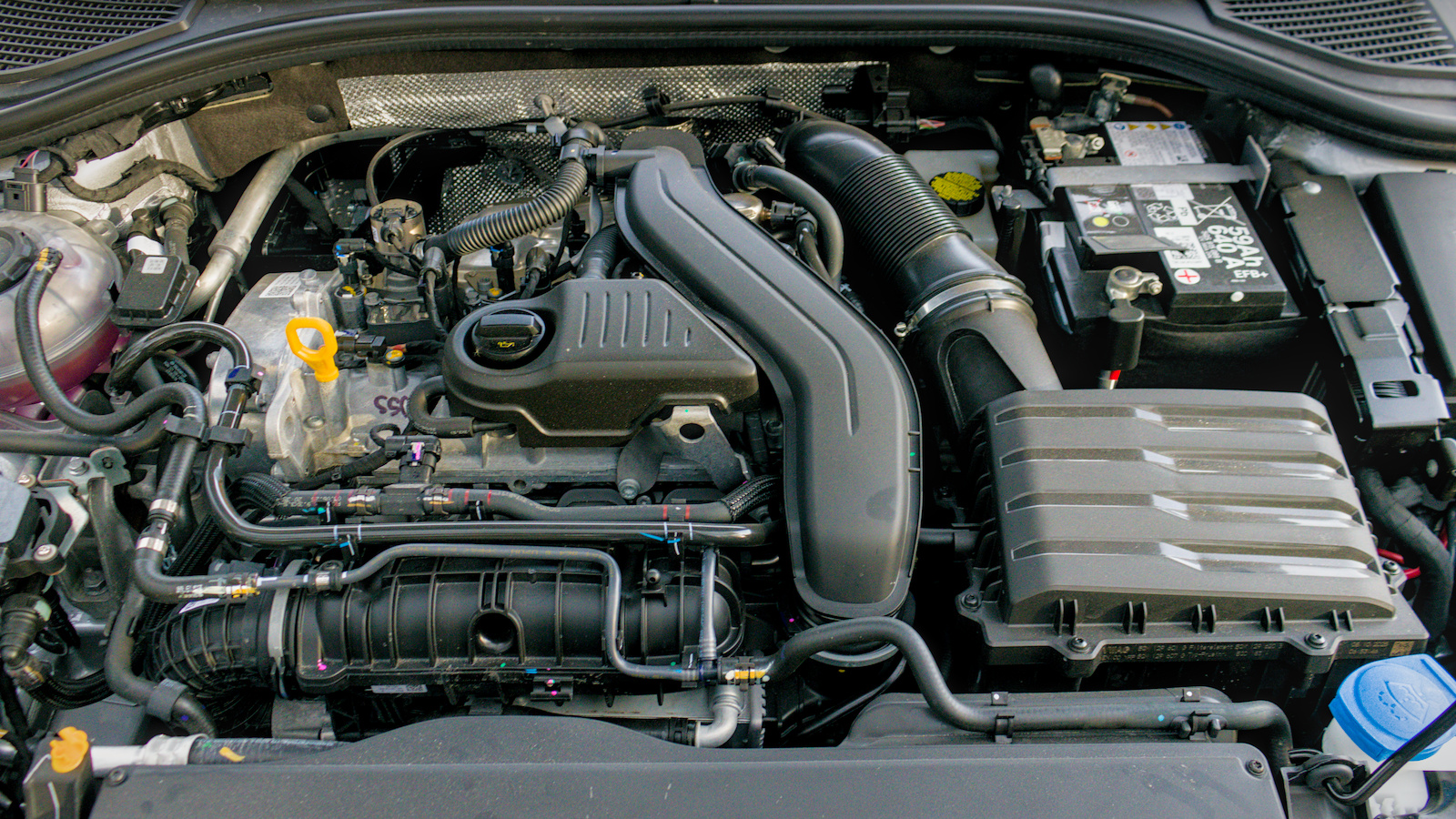
Arguably, the real party piece of the Jetta sits under the hood: a 1.5-liter turbocharged four-cylinder engine with a serious plateau of torque. Sure, the party’s basically over by 4,500 RPM, but with short ratios in the eight-speed automatic gearbox, this normal compact sedan feels more eager than it has any right to. Leave the line with a heavy foot, and you’re likely to see the stability control icon flash in the gauges. That’s a good thing. It’s smooth too, with hybrid-svelte auto stop-start for saving gas at traffic lights and automatic transmission programming that’s largely masterful. Even the fuel economy’s a delightful surprise. It might be rated at 33 MPG combined, but I averaged 36 MPG over 325 miles of driving.
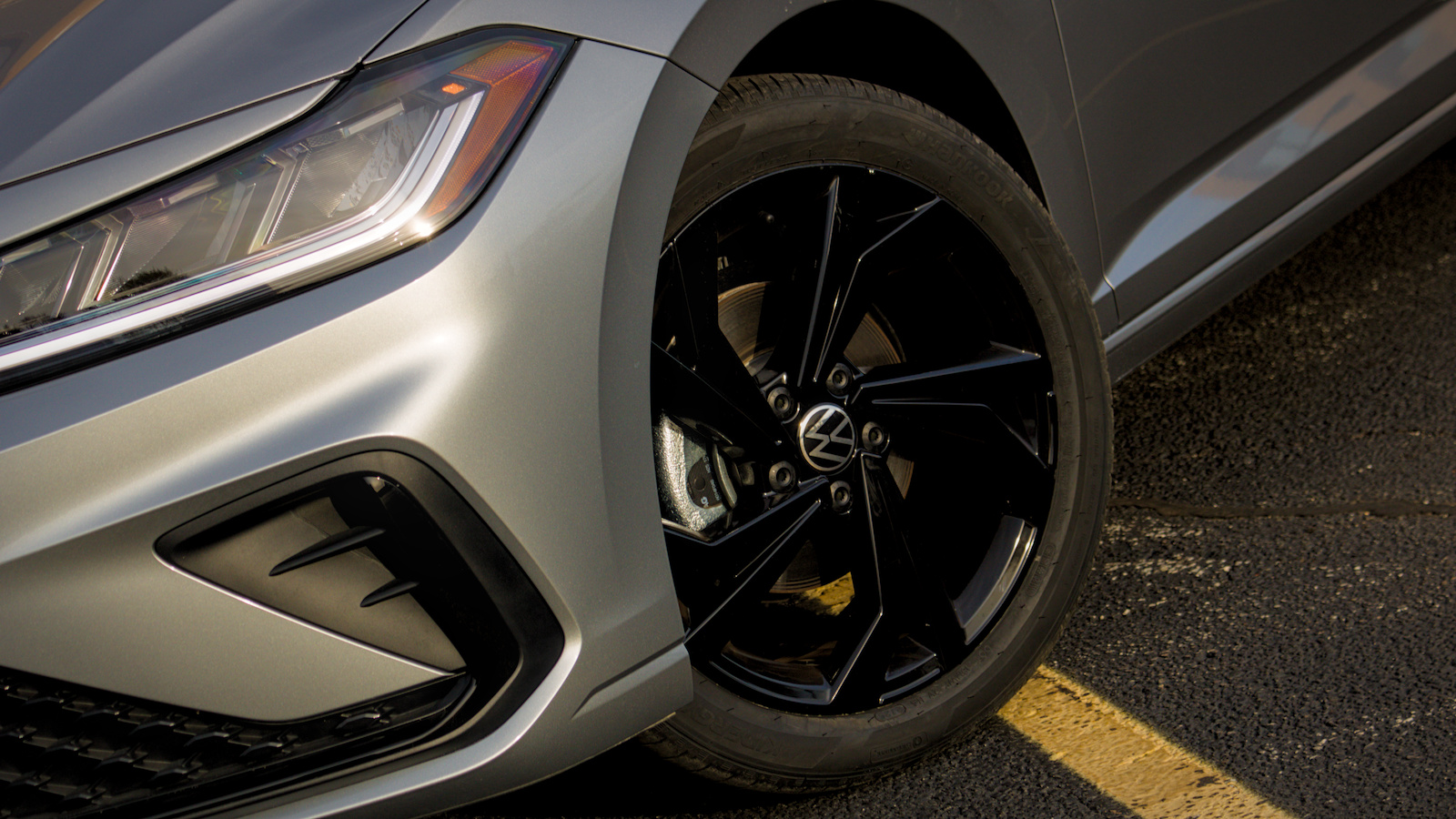
Of course, a reasonably strong powertrain can only take a car so far, which is why I’m pleased to report that the Jetta’s chassis keeps up. Taut damping translates to remarkable body control and tenacity for the class, and once you factor in naturally-weighted and accurate steering that’s among the best in the compact car class, the Jetta carries a certain thirst for backroads and on-ramps that just makes you want to fling it around. When you’re done driving like you’re on fire, everything settles down, and you can studiously consider Volkswagen’s trade-offs. Sure, potholes can feel firm, but every bump is a one-and-done motion from the suspension, and the dampers filter out minor imperfections like expansion joints beautifully. The Volkswagen we know and love is still alive, and you can find it in the way the Jetta drives. No high-dollar price tag required.
Does It Have The Electronic Crap I Want?
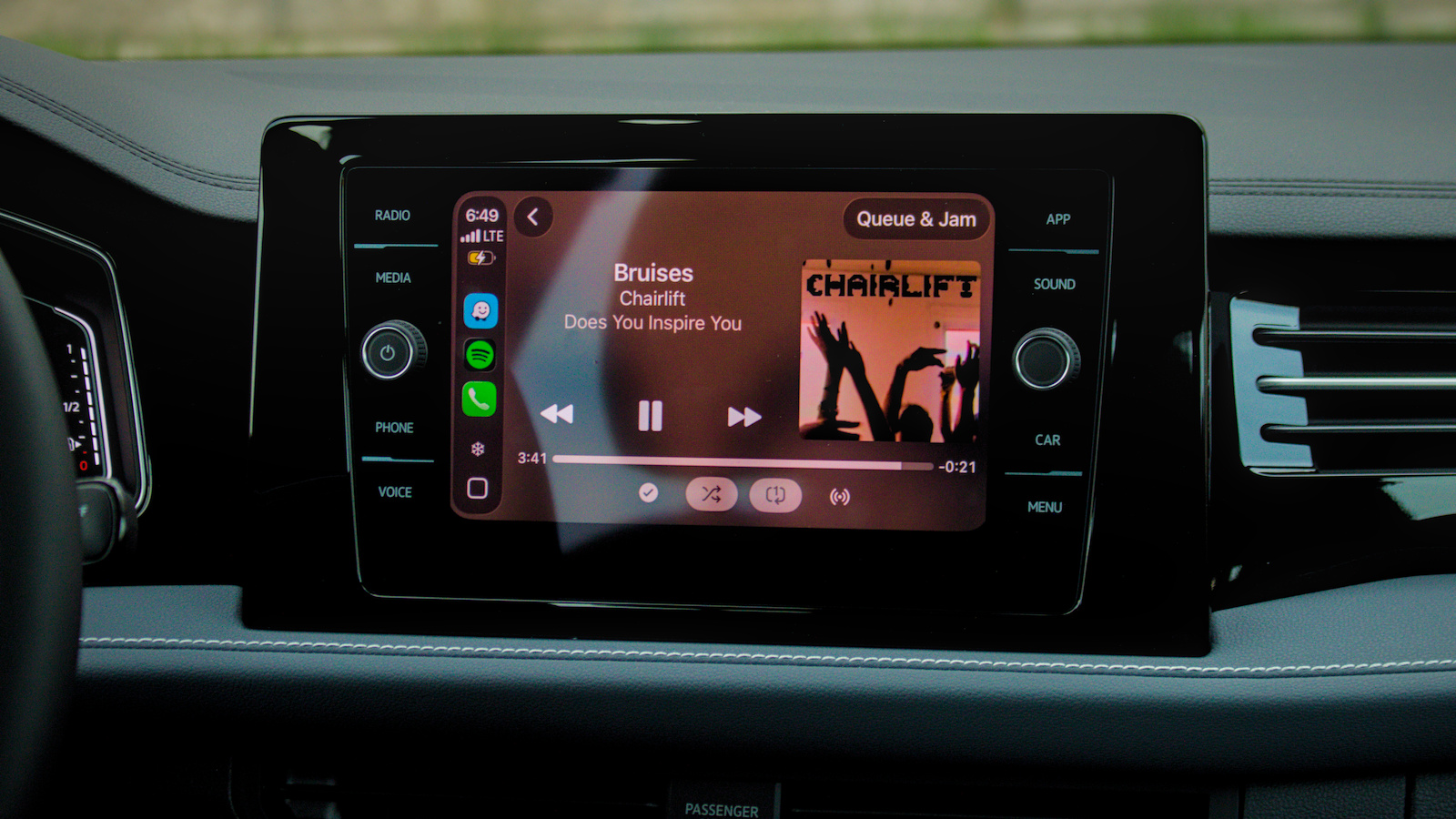
This particular Jetta’s jam-packed with electronics, some good, and some not so good. We already touched on the capacitive touch controls for the climate panel and the infotainment shortcuts, but the weird double-trapezoid clash of the infotainment unit and its bezel is also something worth studying. Beyond those annoyances, though, there’s lots to like. I’m talking wireless Apple CarPlay and Android Auto, a slick digital instrument cluster with high configurability, an available three-stage heated steering wheel, a litany of USB-C ports, auto up-down on all four power windows, a proximity key fob that’s genuinely small, a solid suite of advanced driver assistance systems, and a perfectly cromulent six-speaker audio system. Add a one-notch V to the three-band equalizer, set the fader a notch to the back, and this small array of speakers performs quite well for the segment.
Three Things To Know About The 2026 Volkswagen Jetta
- The interior feels a bit cheaper than it did prior to this latest facelift, although the leather-wrapped steering wheel feels seriously expensive.
- It serves up genuinely outstanding highway fuel economy.
- This thing’s actually surprisingly fun to drive.
Does The 2026 Volkswagen Jetta Fulfil Its Purpose?
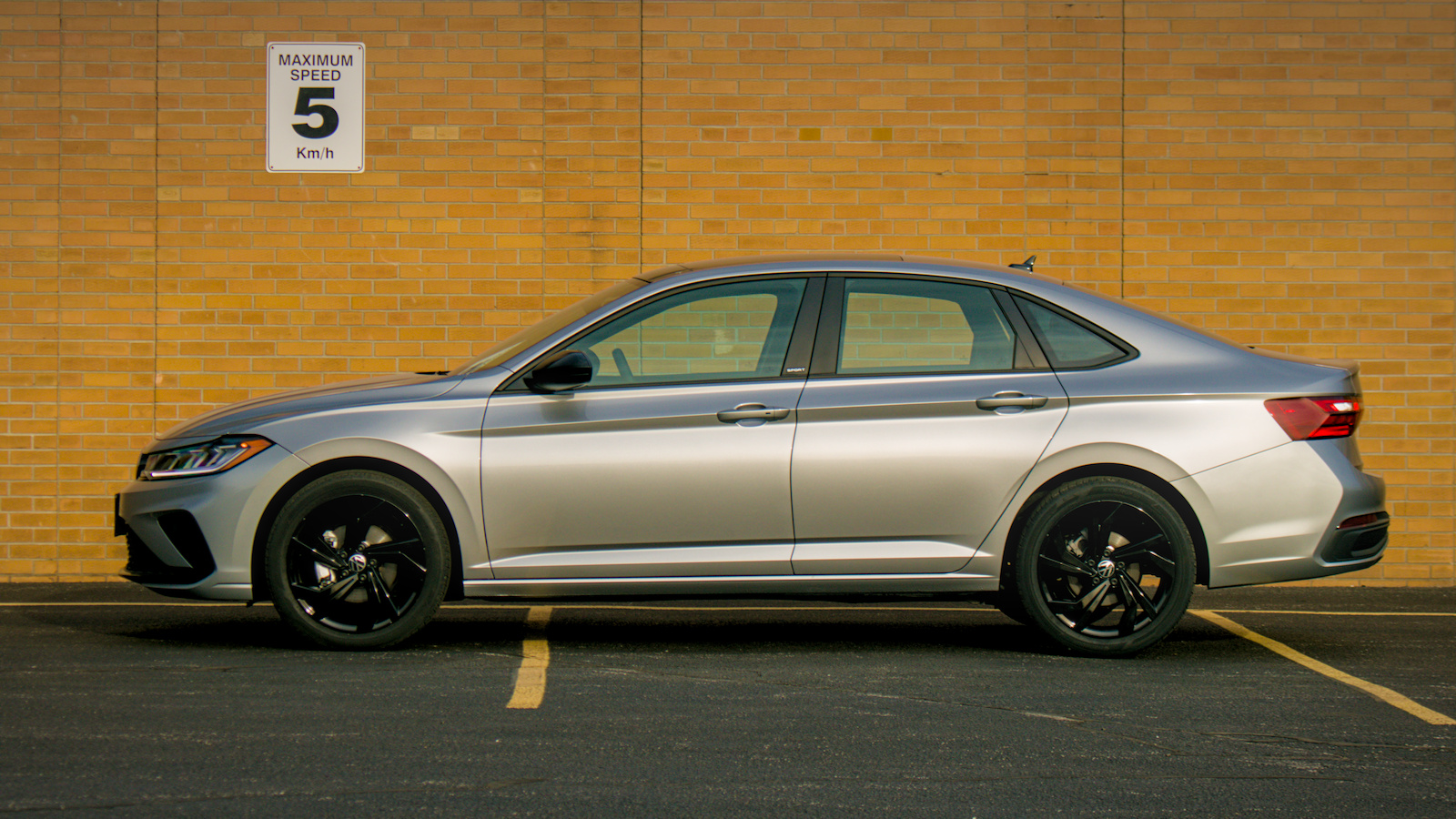
Absolutely, and despite Volkswagen’s own efforts in some ways. Yes, the capacitive-touch stuff is irritating, and yes, the interior of the 2024 model felt a little bit nicer, but the fundamentals of what make a good car a good car are here. Solid fuel economy, a reasonably potent and refined powertrain, mostly nice touch points, a well-tuned chassis, and pretty decent seats, all at a fairly affordable price. You aren’t getting a Civic with this many toys for $28,755.
So how does the Jetta stack up against the competition? Well, it’s a nicer overall package than a Toyota Corolla or Hyundai Elantra, much roomier than a Mazda 3, and more potent than a standard Kia K4, although the Honda Civic still has it beat on overall refinement. The Nissan Sentra definitely has a nicer interior than the Jetta, but its powertrain just can’t keep up with the Volkswagen’s. So, if you’re shopping for a compact sedan, go drive a Jetta. Even with the capacitive-touch controls, it’s a worthy contender at a decent price.
What’s The Punctum Of The 2026 Volkswagen Jetta?
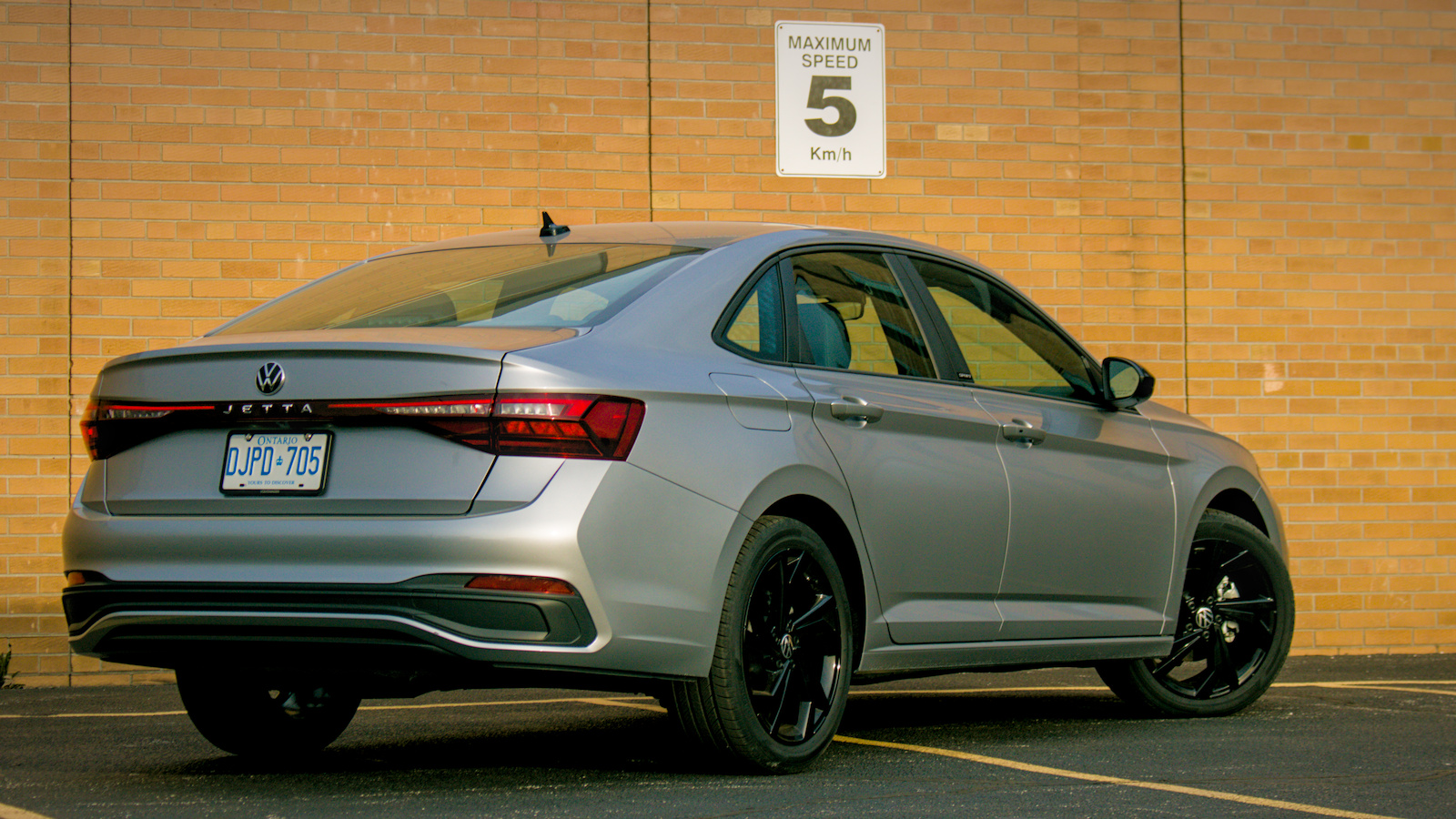
Beneath the shiny black plastic and capacitive-touch climate controls, this is still a seriously good car.
Top graphic image: Thomas Hundal





“Does It Have The Electronic Crap I Want?”
Why does every review have to have this section?
Can’t it be changed to ‘Does It Have The Electronic Crap I May or May Not Want?’?
I don’t really ‘need’ any of that electronic crap, and I don’t want most of it, either.
“…capacitive touch controls for the climate panel and the infotainment shortcuts.“-Nope.
“…wireless Apple CarPlay and Android Auto,” -Nope.
“A slick digital instrument cluster with high configurability,” -Analog gauges work just fine.
“An available three-stage heated steering wheel,” -I live in northern Wisconsin, and this is still a Nope.
“A litany of USB-C ports,” How about a regular USB port for my iPod?
“Auto up-down on all four power windows,” -Regular switches are just fine.
“A proximity key fob that’s genuinely small,” -Nope. Give me an actual keyed ignition.
“A solid suite of advanced driver
assistanceannoyance systems.” – Nope. I can drive it by myself.Now just make it in a 2-door model with a manual transmission. That might make it interesting.
And get rid of the black wheels!
Legitimately asking, but who buys this crap? In a world where the Civic and Corolla exist who is specifically looking for a less reliable, more frustrating car with worst fuel economy?
If we’re talking non-hybrid Civic or Corolla, I’ll take the Jetta. Aisin 8-speed and turbo trump the noisy 2-liter CVT setup offered by Toyota and Honda. They may be reliable but they are not much fun.
As for the best choice further up the food chain, it’s gotta be Honda’s Sport Hybrid trim. Toyota’s Corolla hybrid gets better mileage but with a lot less power.
I did ????. I regularly average 50 MPG (low 40s if I thrash it). I hate CVTs. As for reliability, I own its predecessor, an MK6 Jetta 1.4 TSI that has needed little more than regular maintenance. 151k miles and going strong. It’s a very solid car, fun to drive especially compared to the competition.
The question marks were supposed to be an emoji, BTW.
Incorrect. No one should buy these until they fix their capacitive button problem.
Our 2022 GLI has been pretty great. My wife was angry at the infotainment for a bit because for about a year it wouldn’t connect to her Pandora and her Apple Maps was acting strange. Turns out it was her old iPhone which was the problem as I suspected because my Android works perfectly with the infotainment. Apple recently pushed an update out to her old phone in the past month and now the infotainment is working properly again for her.
Aside from that, it rips like a GLI/GTI should and makes a nice noise. One thing that seems a detriment has been a bonus for us. The rear door cards are mostly surfaced in hard touch plastic. Its been nice because our dog doesn’t damage it with her claws when she’s looking out the window. And it cleans up like new with some cleaning wipes.
I’d like to put the 2026 GLI front bumper/grille/headlights on our 2022 as I think the 2026 front end looks a bit better than the 2022 GLI. It would seem a quite pricey endeavor so that’s just a pipe dream.
Setting aside the fact that I’ve already owned more than a few VW/Audi products over the past 40+ years and feel like I’ve had my fill (and then some)…
Likes: price, size/shape, the doors probably make a nice noise when closing like most German cars.
Dislikes: so much shiny black plastic and capacitive (i.e.: fake) buttons, small displacement turbo engine, questionable long-term durability/build quality/fixability (I presume, it being a VW).
A dealer would have to offer me a hell of a good deal on a new Jetta for me to even consider buying it instead of a Mazda 3. The 3’s only downside (to me) is that it’s a bit tight on interior space, which I could live with in exchange for all its positive traits (styling, handling, proven engine/transmission, that Soul Red paint, etc…).
My favorite car I owned(I had 4) in High School was a 1986 Jetta 5-spd couple. It had the best A/C by far, was far better built and rode better than any American made small car of the era. It even convinced my mom to sell her old, giant Cadillac as the Jetta was easier to drive, had better visibility and rode better.
Is it just me, or does this Jetta look like a Civic, and the latest Civic design look like a Jetta?
Convergent evolution at work.
There’s that brick wall and 5kph sign, again…someone at that facility is wondering, who’s this guy always taking pictures of different cars? If only they, too, could appreciate their wall’s recent topshot tonal variations of pink and blue.
Nice car, but I see it still has got a drinking problem.
“29 MPG city, 40 MPG highway, 33 MPG combined (8.2 L/100km city, 5.9 L/100km highway, 7.9 L/100km combined)”
Those are seriously big car numbers.
About the same EPA figures as Corolla and Civic–and it is slightly bigger than both.
Minor point… I don’t understand how two trim levels with the exact same city and highway ratings end up with a slightly different combined number.
I had a 2025 Jetta Sport as a rental for a couple weeks and I was surprised how much I didn’t hate that car. It was zippy and kind of fun.
I thought VW said it was bringing back mostly real buttons? Not that I care since this is a new VW, ha ha
I miss my 84 Jetta w/ a stick…that thing was a blast to drive!
“The Volkswagen we know and love is still alive”
Maury determined that was a lie…
Its still the only VW you can get in the US with a stick in GLI trim.
As a Mazda3 owner who has also driven the Jetta, I don’t understand why on earth anyone would choose it over the 3 sedan for the same money. Don’t get me wrong, the Jetta was a likable experience. It does drive nicely, it’s very composed and German and it has a real gearbox. I’ve also always liked the styling, and VW finally made a seat that isn’t akin to a park bench. That said, the 3 focuses on doing the same things well with more physical controls, a far nicer quality interior, and way better reliability and resale. If you’re willing to look past the transmission, the Civic does all that too. The Jetta’s not a bad car, it’s just outclassed.
But does it fit TALL people? My 5 cylinder Golf is still going strong 16 years in. And my head doesn’t brush the ceiling. There was no Toyota I could say this about when we were shopping, and I really wanted a Toyota.
Mine has no sunroof and manual seats, I fit a 6’2 dude in the back of my hatch and the headroom was fine once he got past the short door opening. Can’t speak for the high trims though.
That’s weird. I once drove my 2009 prius with a comically high top hat. No problem.
The old, ugly Prii have great headroom. However, I can confirm as a tall person that no modern Toyota works for me. I sat in all of them when I had my 2007 Prius in for some work a while back. Nothing in the five seat category allowed me to both reach the steering wheel and not hit my head on the ceiling or my knees on the dash. Sadly, the new Prius (gorgeous as it is) was the worst of the bunch.
Depends on how much you need the backseat to perform. The Jetta backseat is roomy and is more akin to a midsize sedan experience of 15 years ago. The Mazda interior is truly compact. The super high beltline doesn’t help either. Lack of outward visibility makes the hatchback, which I rather like otherwise, less appealing.
You’re right, the rear is not especially roomy. I also disliked the visibility at first. After driving it more I realized the issue wasn’t as much the side windows or the C-pillar- it was the chunky rear center headrest blocking most of the rear window. Once I removed it, visibility improved significantly, the rear cabin felt far less closed-in, and the blind spot monitoring fills in the rest pretty well.
I also considered the 3 before buying my 25 Jetta. While I did like the 3, I just don’t care for the interiors. I don’t know why. They just feel dark and constricted to me. Mazda are fantastic, just a personal preference
The problem with this Jetta is that why buy this when a buyer can purchase a CPO Altima, Sentra, Malibu, or Passat? I just had an Altima SV and Sentra SV for a rental on a road trip from Detroit to Kansas City, stopping within Indianapolis and Saint Louis.
I was doing 90+ on I-70 and returning 38 avg.MPG on skinny 215’s. Fantastic vehicles with quality assembly and interiors compared to the interior on the Jetta. I know the horror stories of the recession-era CVTs but from what I gather the CVT6/8 models are good and were quick with ratio changes at-speed.
The user interface is definitely a major demerit, but in a world of bad UI, I guess it wouldn’t be my reason to reject it.
The Jetta is solid. If I were in the market for one of these compact yet sneakily a mid-sized sedan because everything is bloated now, I would consider one. Discounts can be had so it’s gonna be cheaper than the comparable Civic, but it’s going to drive better than the comparable Corolla, etc.
You’re taking a risk on a VW product but hey, if it goes well you get to be a “I’ve had my VW for 7 years and it never breaks!” person and I’d bet that’s pretty satisfying.
I had a 2001 Jetta TDI for 16 years and other than an injection pump that let go at 60K (miles) and the rebuilt one they put in did at 101K and all VWOA would do about that is give me a $1000 credit towards a new VW, I liked it. But that stuff pretty much soured me on VWAG.
I loved my Jetta’s ride/handling balance, the a/c and bun warmers were much better than my wife’s 2015 X5 and the (original) clutch and 5M were still great when I sold it with 165K. The leather on its steering wheel was also nice. I’d forgotten about that.
On the downside, besides the injection pump BS, the soft-touch finish on things like the interior door handle disintegrated in less than five years. The driver’s side front window disappeared into the door one day (fixed on an extended warranty VW put into place probably to avoid a class-action suit) and corrosion around the antenna rendered AM useless and FM significantly reduced. So, it wasn’t the best car I’ve owned, but it wasn’t the worst.
Those early 00’s Jettas were EVERYWHERE. They were practically the official car of our area (before Subaru firmly took over). Even with the interior degradation and weird mechanical failures, I think people would still deal with it to this day if VW continued to build something as good looking and compelling to drive.
That really was a good looking car. And fun to drive. I do miss it. With diesel at its current prices, that would be a less compelling option.
Never again VW. I will not be fooled, again.
Honda Civic or Toyota Corolla are the medicine for VW disease.
I’ve had a 2019 Jetta S 6 speed manual for about 6 years and about 115,000 miles, it’s been excellent. Other than brakes and tires, the only issue I’ve had is the clock spring. That was only a few hundred bucks. For a 1.4 turbo, it’s surprisingly quick as well, if you drive it like I do anyway. The gas milage is also ridiculous. It’s come down a bit, but the first couple years I had it, I was averaging 40mpg, it’s still high 30s. Never had a Corolla, and tbh wouldn’t take one over my Jetta. They just feel like a basic compact car, and the styling isn’t great. I’ve had a couple of Civics and they’re great, but bang for the buck falls in the Jetta’s favor for me. In short, the Jetta is far more cure than disease.
Agreed. I can’t comment on recent-model Civics, but having driven plenty of rental Corollas and Jettas, anyone who enjoys even mildly-spirited driving will have a much better time in a Jetta than a Corolla. The run-of-the-mill Corolla is a terrific reliable transportation appliance for people who don’t enjoy cars or driving.