

There’s a long interview this morning in a German business newspaper with the head of Scout Motors, and it is dense with information. Some of it is pretty well known, like that 87% of deposit holders opted for the extended-range hybrid. The fact that Scout is considering an IPO wasn’t, I believe, previously disclosed, although it makes sense.
Most other outlets seem to be running with the IPO news, but The Morning Dump is more concerned with the vibes at Volkswagen Group of America. The vibes, the article alleges, are not good. A lack of compelling product, a bunch of losses, and leadership changes have taken a toll. Of course, Scout remains a potential bright spot, but that’s a quasi-separate company.


The mood is probably better at the office of the California Attorney General after getting a large settlement from GM following the illegal release of driving behavior and information to third-party firms. Up the road in Fremont, I presume a sort of bittersweet feeling pervades as Tesla produces the last Model S and Model X models.
The mother of all bummers has hit the Chinese market as higher gas prices haven’t resulted in enough electric car sales to counteract the drop in ICE-powered vehicles. Do Chinese consumer just not want to buy as many cars anymore?
What Does Volkswagen Have To Be Excited About?

I feel the strong need to preface every discussion of VW with the admission that there are numerous Volkswagen fans amongst our staff and readership, to say nothing of all the VWs that Jason and Mercedes own. Perhaps we’re collectively harder on the company’s decision-making because of this affection.
Or, maybe, VW is just a mess.
If you’re not a Handlesblatt subscriber, it’s a German business newspaper that’s sort of like The Wall Street Journal. The publication has a long feature out today about Scout that includes an interview with former VW Group of America/current Scout CEO Scott Keogh.
The scuttlebutt is that a public offering is an option, which is basically always an option:
Keogh says that external capital is “an option on the table”: Scout was deliberately built as an independent entity – with the possibility of bringing in external investors or strategic partners. Keogh refers to US investment funds that are specifically focused on “the industrial renaissance,” the revival of the USA, without naming any specific names.
There’s also a fun scene in the article wherein the governor of South Carolina trains to paint a car using a simulator and is told he’s too slow. Other than the IPO bit, a lot of this is a restatement of what is already known, which is that the C-Suite in VW HQ is extremely committed to Scout, especially as a way to make profits in the United States to counteract weakness in China.
While is all of this attention being paid to Scout? What about the many other Volkswagen brands for sale in the United States?
VW representatives in North America paint a bleak picture. The mood within the company is “worse than during the diesel scandal,” says one. Back then, the company at least still had solid revenues. Today, cash flow is lacking. Among the things that have been lost are the spirit of optimism in Wolfsburg, “the drive to move forward.”
The network of numerous brands and the complexity within the group has increased even further, says another US manager. Navigating this and remaining innovative is the real challenge. The cacophony of the many brands is particularly problematic when cost-cutting measures are simultaneously required.
Yeoch. The sense I get from most reporting on Volkswagen, as well as from people in various parts of the larger group, is that the fallout from the company’s awkward post-Dieselgate shift into electrification is far from over.
The company and its brands have to simultaneously create a bunch of new products, find ways to build those in the context of tariffs, and also somehow save money. This is more acute in America, where brands like Audi and Volkswagen are expected to bring in profits and yet don’t have a lot of new products to show for it.
For Volkswagen the brand, this is mostly a refreshed Atlas, which is a popular-ish SUV that’s made in America, and the Tiguan, which is made in Mexico.
When brands are in this situation, they can sometimes get creative, and it would be nice to see VW try something more than just extended the lifespan of existing platforms with mild refreshes. Super-light, high power GTI when?
GM Has To Pay $12.75 Million To Settle Consumer Data Violations

The purported benefit of having a connected car is that it can make your life better through data. Certainly, a car automatically calling for help when you crash is a great feature. Less beneficial, though, is when your car rats on you to insurance agencies, causing your insurance costs to go up.
Automakers want to make money off of all this data they have about you, but the way that some went about it raised huge privacy issues. Most of the automakers involved at least temporarily backed off data sharing to third parties who then sold that data to insurance agencies.
It turns out that California has specific laws about this sort of thing, and GM violated them, which means GM has to pay. From the California AG’s office:
“General Motors sold the data of California drivers without their knowledge or consent and despite numerous statements reassuring drivers that it would not do so. This trove of information included precise and personal location data that could identify the everyday habits and movements of Californians,” said Attorney General Rob Bonta. “Today’s settlement requires General Motors to abandon these illegal practices and underscores the importance of the data minimization in California’s privacy law — companies can’t just hold on to data and use it later for another purpose. I am proud to go to bat for the privacy rights of Californians and to collaborate with state and local partners who share the same commitment to consumer protection.”
GM will pay $12.75 million in civil penalties and is banned from selling that data for five years and must request that the brokers Verisk and LexisNexis delete that information. The company also released a statement to Automotive News in response:
“This agreement addresses Smart Driver, a product we discontinued in 2024, and reinforces steps we’ve taken to strengthen our privacy practices,” a GM spokesperson said in a statement. “Vehicle connectivity is central to a modern and safe driving experience, which is why we’re committed to being clear and transparent with our customers about our practices and the choices and control they have over their information.”
By comparison, Honda paid less than $700k to settle its claims with the state.
Here’s The Last Model S And The Last Model X
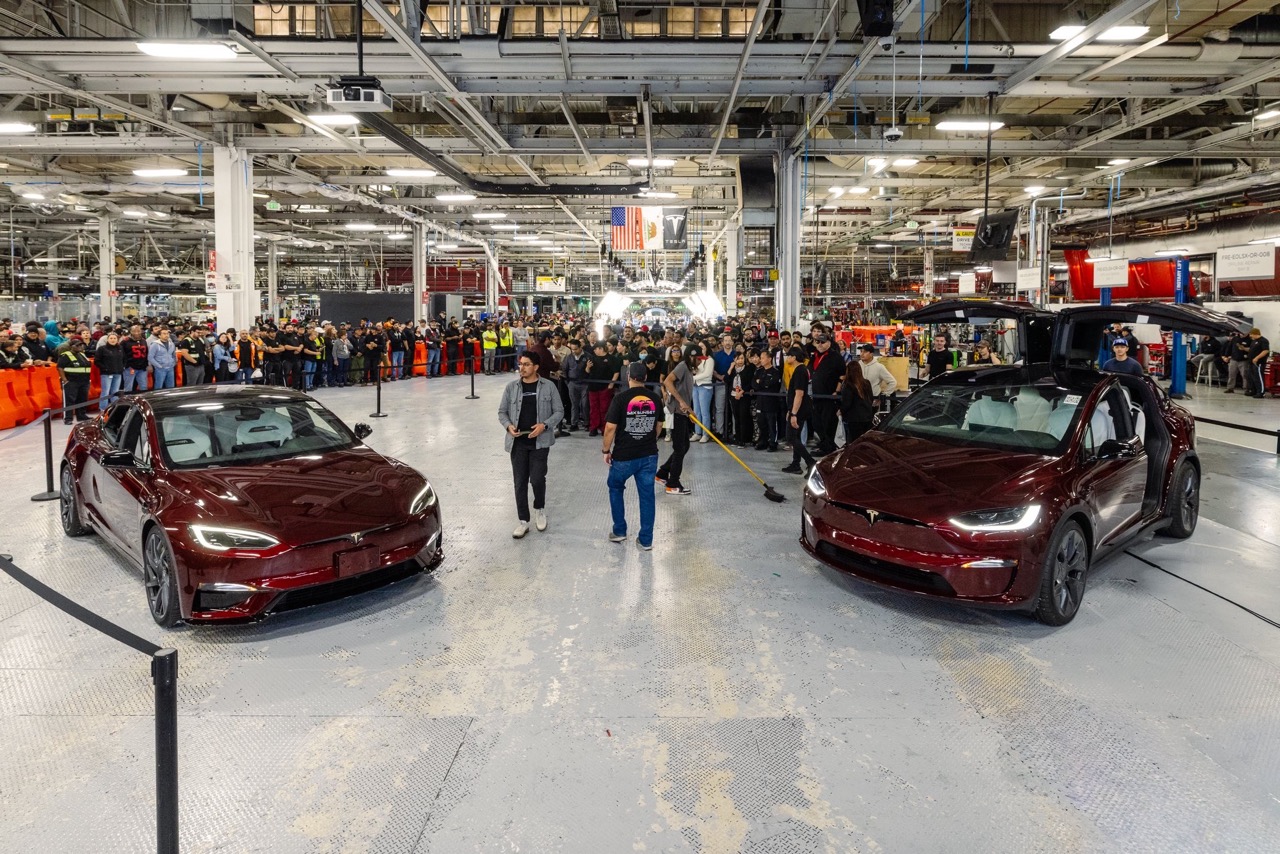
It’s been known for a while that Tesla would stop making the Model S, which ran for 14 years, and the Model X, which was produced for 11. The last vehicles, which cost about $160,000, are recognizable for their Garnet Red paint, gold badging, and other touches. Both Signature Edition models are Plaid with the high-end Luxe Package.
The photo above shows the last Model S and Model X ever built.
I remember when the Model S came along, and it’s hard to overstate how important it was. Some of have made the argument that it’s the most important vehicle since the Model T and, yeah, that’s probably correct. The Model X is also a car that was produced.
Chinese Car Sales Dropped 21.5% In April
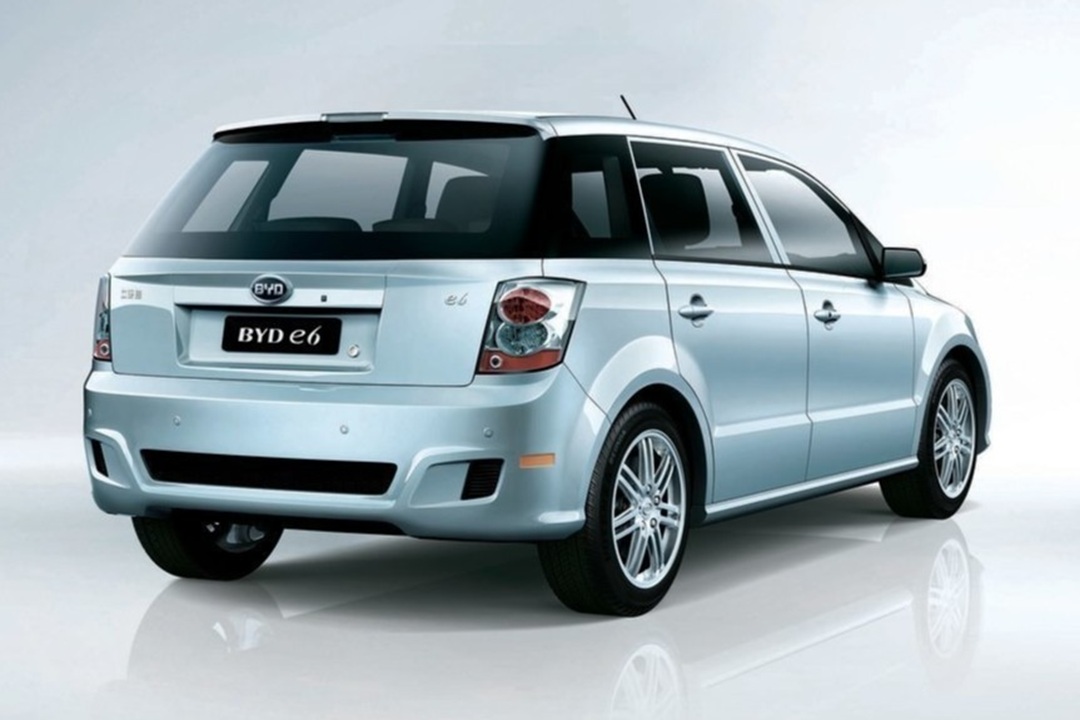
As far as countries facing an energy crisis go, you’d think that China would be in a better position than most. It has huge reserves and a massive EV car industry. Still, higher gas prices sent car purchases down 21.5% year-over-year in April. Even ‘New Energy Vehicles’ (PHEVs, EREVs, and EVs) saw a decline of 6.8%, which is somewhat counterintuitive.
While this does mean that NEVs now have a penetration rate of more than 60%, which is a record, it leads to a lot of other tough questions.
The industry had hoped for a recovery starting from April but sales in the first four months of the year contracted 18.5%. The extended slump signals a worrying indicator for the Chinese economy as a whole, as cars make up one of the largest household purchases after real estate.
“Why have consumers suddenly stopped buying cars? There are mostly two factors,” said Li Yanwei, an advisor to the China Automobile Dealers Association. The slowing economy has led to job losses and falling wages that dampened spending, while the surge in oil prices has hit the stock market and sentiment, Li said.
Auto-related purchases as a portion of retail consumption in China fell to 7.8% in the first quarter, the lowest level in at least five years.
Is this going to be a drop in NEV sales roughly shared across all brands, or will more mainstream brands get hurt worse? Data just came out from Tesla, which shows a 10% drop, which is very different from the purported 36% increase in sales.
What I’m Listening To While Writing TMD
I may have implied last week that men were not making interesting country music lately, and Griffin pointed out the existence of Sturgill Simpson. Ok. Fair. There’s at least one. Please enjoy “Sing Along” and the cool, car-centric video for it.
The Big Question
You can have any car or bike that any Volkswagen Group brand currently sells in the United States, but you have to use it as a daily driver. What are you picking?
Top photo: VW




About this time last year I literally had the option of getting a new VW, any model. And after 8 consecutive VWs, I’m now driving an Outback. The current crop of VWs are either ancient or just plain lousy vehicles.
No! No Ono!!!
Bryan Andrews has been putting out some great country.
Gun to my head, a Jetta GLI. I’ve had two of them from the distant past, and it’s still available with a proper transmission, if not a proper instrument panel.
But reality – none of them. The lack of a manual in the GTI offends me greatly.
I’ll take one of those limited edition Skoda Superb wagons that are stealthy but have like 400hp and come in a lovely green. I’m in the US but what the hell since you’re asking?
It is so unfair that all we get in the US is the utter dregs of what VW makes.
I already daily a 2016 GTI Autobahn, but a Porsche Boxster would work if I had another choice.
“The Model X is also a car that was produced.”
ha ha ha haaaaa… you didn’t even ‘damn it with faint praise’.
It was certainly the first Tesla where Musk stuck his idiotic nose into the design. But definitely not the last.
The sad thing is there aren’t even any Porsches I have any interest in anymore.
You can have any car or bike that any Volkswagen Group brand currently sells in the United States, but you have to use it as a daily driver. What are you picking?
Literally any Porsche. The question is too easy so long as Porsche remains part of the group.
You don’t want a free Bugatti?
Is it still part of vw? Rimac and Porsche are shuffling papers around again, so not sure if it qualifies.
Also, the question said I should daily drive it, but said nothing about being able to afford driving it, so I would probably pass it anyway.
> You can have any car or bike that any Volkswagen Group brand currently sells in the United States, but you have to use it as a daily driver. What are you picking?
I’ll walk.
Car: 911 GT3 with a manual transmission
Bike: Volkswagen Bulli E-Bike beach cruiser.
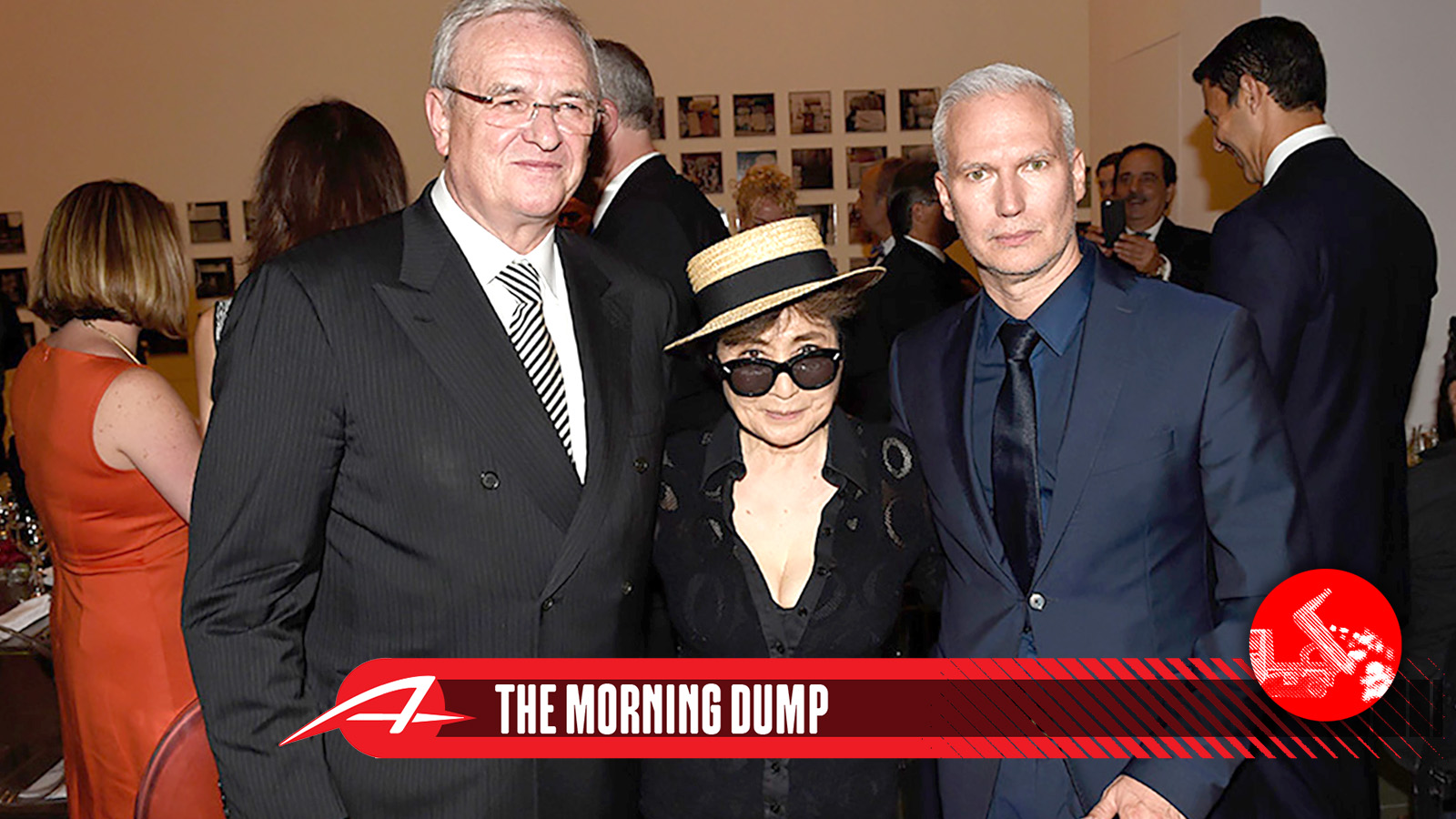
I love the top shot with Dr. Winterkorn posing with Yoko Oko right before he resigned from VW.