

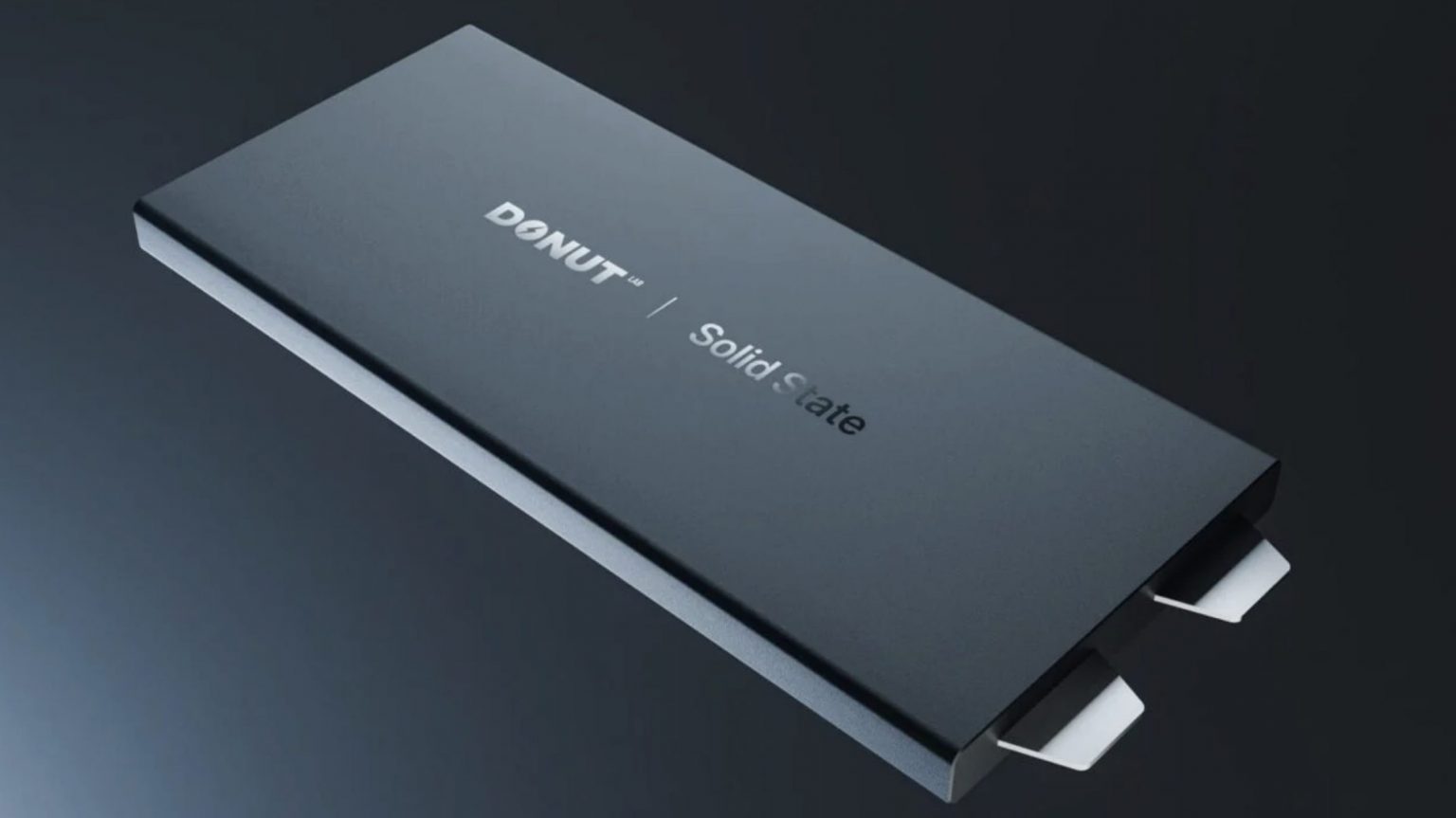
Something potentially huge is brewing in Finland. Donut Lab says it created the world’s first production solid-state battery that will be housed in new electric Verge Motorcycles that hit the road this year. The battery gives the motorcycle 370 miles of range, can be charged in only five minutes, delivers 400 Wh/kg of density, is cheaper to make than lithium-ion batteries, can last for over 100,000 cycles with minimal degradation, and is made out of 100 percent green materials. All of these claims were initially made without any proof, but now Donut Lab is delivering the details through a weekly series. This week, a full battery pack has finally been charged in public. The Verge TS should become the world’s fastest-charging motorcycle at only 12 minutes to reach an 80 percent state of charge. Yet, more questions remain.
In January, Donut Lab, the EV technology company created by the guys who built Verge Motorcycles, shook the EV world when it announced that not only did it make a solid-state EV battery, but deliveries would start by the end of the quarter. Verge Motorcycles proudly proclaimed that its new generation Verge TS Pro was the “World’s first production vehicle with an all-solid-state battery.” But these announcements were immediately met with skepticism. Verge Motorcycles and Donut Lab published some highly polished videos, but no proof of anything. They didn’t even show a motorcycle in action with the Donut Battery.


The skeptics had decent reasons to doubt this. Solid-state batteries are real. Several corporations and researchers have been developing the technology for decades at this point. Working solid-state batteries exist, as do prototype vehicles powered by them. Multiple companies are saying that their solid-state battery production is just around the corner. Yet, Verge Motorcycles has been around since 2018, while the Donut Lab was founded in 2024 by the same people. Veterans in the battery space have been doubtful that this little company that sprouted up in such a short time has leapfrogged the rest of the world in putting a solid-state battery into production.

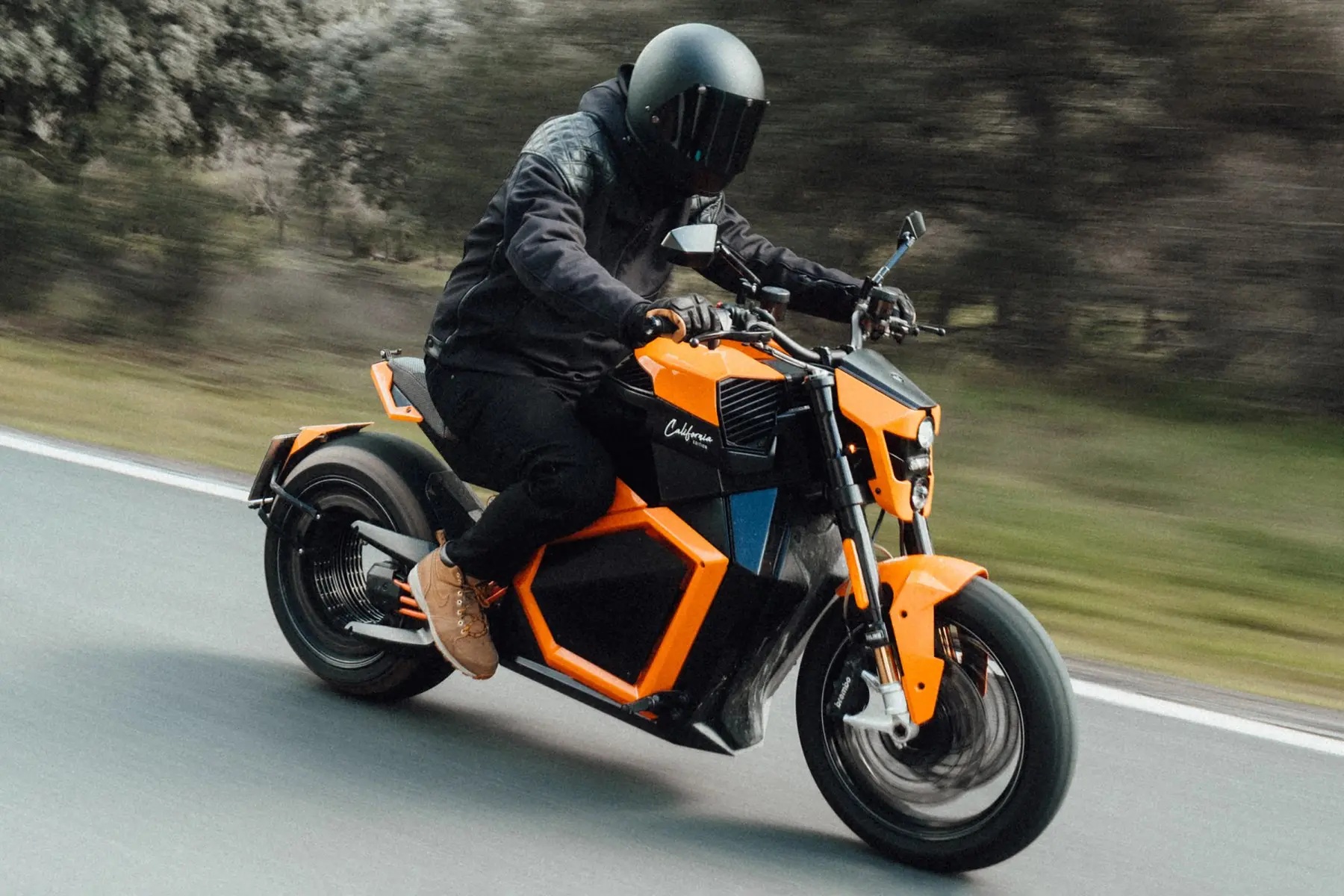
Verge Motorcycles and Donut Lab are both startup companies, and both have produced real products. The Verge TS is famous for its giant “hubless” rear wheel motor, healthy power output, and high range. There have been Verge electric motorcycles in the hands of customers for years now, and you can test ride one in California today if you want to.
The Claims
Donut Lab has cooked up an interesting way to prove its claims. It has launched a site called “I Donut Believe” where it directly quotes the skeptics right in the opening page. The site is supposed to be Donut Lab’s home for the tests that prove that its bombastic claims about the battery are true. What’s a bit weird is the method in which Donut Lab is using to release the data. The company has been drip-feeding tests out once every seven days, like this is some kind of TV show.
It’s as brilliant as it is frustrating. On one hand, Donut Lab is just raking in viral views and pages upon pages of free press. Donut Lab says it’s not fundraising, but this is still a genius marketing plan. On the other hand, the tests still haven’t proved the biggest claims, and the drip-feeding approach is a bit annoying for people who don’t live their lives like a TV show.
Here’s what Donut Lab and Verge Motorcycles claimed in January, from my first report:
Lehtimäki claims his team has made a battery that can charge in only five minutes, will last more than 100,000 cycles with almost no degradation, is cheaper to make than lithium-ion batteries, delivers 400 Wh/kg, and is made out of 100 percent green materials. Simply put, Verge and Donut Lab claimed to have built the holy grail of batteries.
[…]
Donut Lab claims that this battery is better than any other in that it retains 99 percent capacity in minus 30 Celsius and also when it’s above 100 Celsius, unlike lithium chemistry. Donut Lab also says you can run the battery to zero or charge it to 100 percent as many times as you want without hurting it. As for lifespan, Donut Lab says it’ll last the entire life of the vehicle, making the threat of having to replace a worn battery a thing of the past. The company then talks about these cells not having thermal runaway problems, weighing less than lithium batteries, and, somehow, even costing less to make than lithium batteries.
As if all that wasn’t unbelievable enough, Donut Lab then claims, “In fact, we found ourselves designing a slower charging speed so riders can plug in and actually have time to drink a latte and enjoy it instead of downing an espresso and rushing back to their bike.” Weirdly, Verge also says that its version of the Donut Battery will last for 10,000 cycles rather than 100,000.

Battery cell samples were sent to the state-run VTT Technical Research Centre of Finland for third-party verification. In the first test, VTT confirmed that the battery’s cells can charge really fast. In the second test, VTT suggested that the battery cells can stay within a safe temperature range so long as there are enough heat sinks. The third test demonstrated that the Donut Lab battery has a self-discharge rate that’s similar to a real battery and not a super capacitor. If you’re interested in reading my coverage on these topics, click here, here, and here.
The problem is that these tests generated more questions than answers. None of the tests prove the claims about 400 Wh/kg battery density, the idea that the battery can be cycled over 100,000 times (or even 10,000 times) with minimal degradation, that the battery is cheaper to make than a lithium battery, or what the battery is even made of. The tests generated further questions because VTT has been testing individual cells, not completed packs.
Donut Lab CEO Marko Lehtimäki is betting his reputation, as well as the reputations of Donut Lab and Verge Motorcycles, on this battery being just as world-changing as he is claiming it is. That’s what makes this saga so fascinating. There are really only two or three results here. Either Donut Lab has invented the hottest new thing in batteries, or we’re looking at another Theranos. Or, maybe there’s a sort of middle ground where the battery is real and is a step forward, but not as amazing as originally advertised.
We Finally See A Motorcycle Powered By The Battery
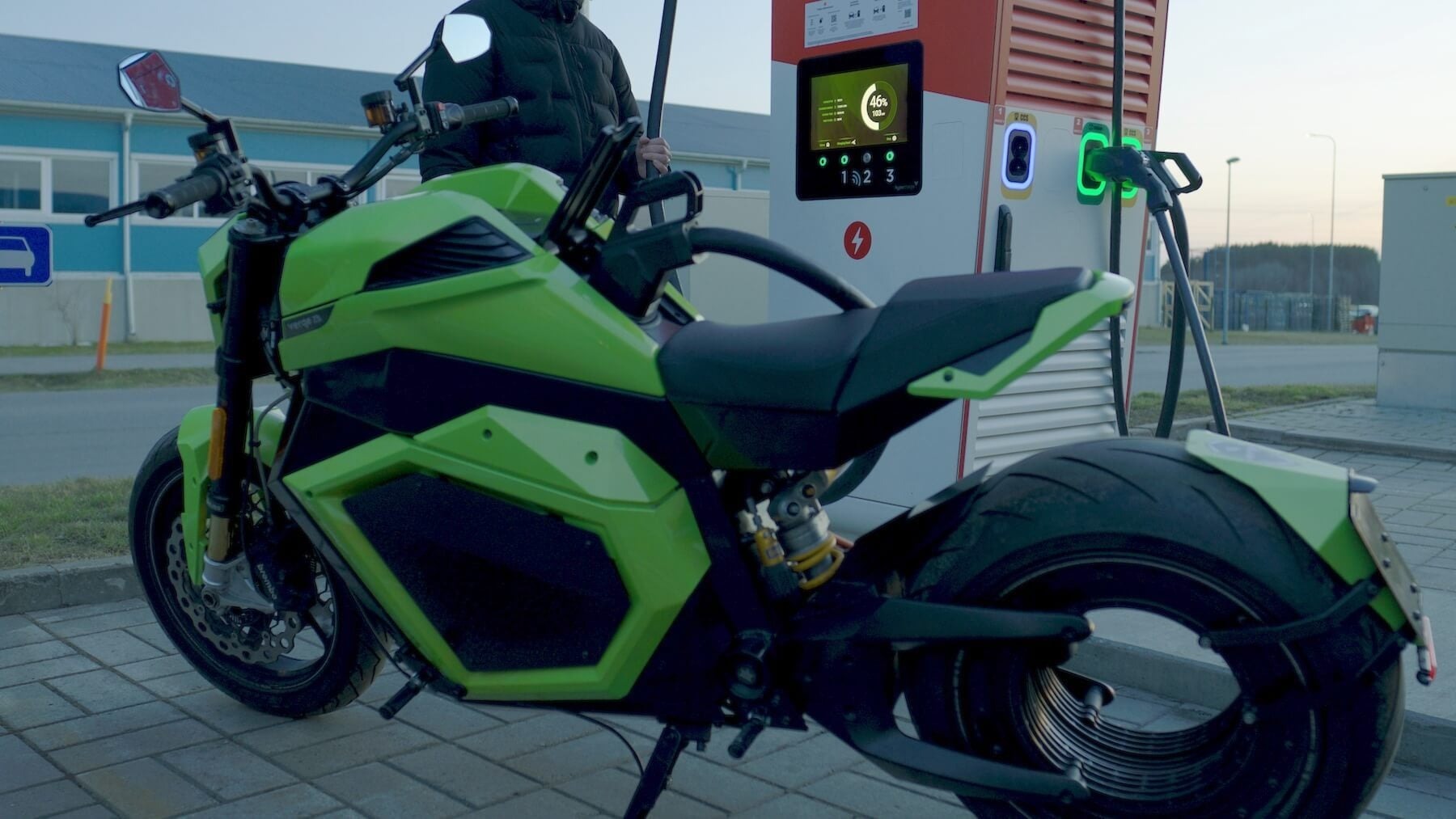
A new test has been released today, and it includes one important update. I have decided to skip any test that doesn’t seem particularly worthwhile to dedicate an article to, which is why I skipped writing about the temperature test. However, today’s test is an alluring one because it is the first time that a complete Donut Battery pack is being put to the test inside a functional motorcycle.
This test is different because it was carried out by Donut Lab and not the VTT Technical Research Centre. It’s supposed to show the complete battery pack being charged on a public charger inside of a prototype motorcycle and using nothing more than passive cooling.
This is a big deal! Until now, we’ve seen nothing but lab tests of single cells. Unfortunately, since this is Donut Lab carrying out the test, there’s no report or data to read, but a video to watch:
I’ll watch it for you. Donut Lab says that it placed an 18 kWh Donut Battery (the battery for the standard range Verge TS) inside of a previous-generation Verge motorcycle development mule. This battery is air-cooled with no active system to keep it at safe levels. Marko Lehtimäki says that the battery in this mule will be powering all Verge motorcycles going forward. He also says that this video is a sneak peek at the model year update coming for Verge motorcycles later this spring.
Lehtimäki starts the video by explaining that one of the biggest complaints about lithium batteries in motorcycles is that they take 30 minutes to an hour to fast-charge to 80 percent. He then says that the batteries in electric cars are faster, but still take 20 to 30 minutes to reach 80 percent. Lehtimäki then says that typical lithium batteries charge at 1C or 2C rates. To explain that further, a battery that charges at a 1C rate either charges or discharges at a rate of roughly equal to its total capacity in one hour. A 2C rate means the battery is charging or discharging at a speed that’s twice its capacity. Lehtimäki says that a 2C battery charges in about 30 minutes.
Donut Lab’s world-changing innovation, Lehtimäki says, is a 5C solid-state battery. Now, the 5C part alone is cool, but not earth-shattering. BYD has a lithium iron phosphate battery that charges at 10C rates. Lehtimäki says what makes the Donut Battery special is that it charges at 5C, but fits all of its guts into the form factor of a motorcycle and doesn’t need anything more than air-cooling by way of heat sinks and fans.
A Public Charger Test
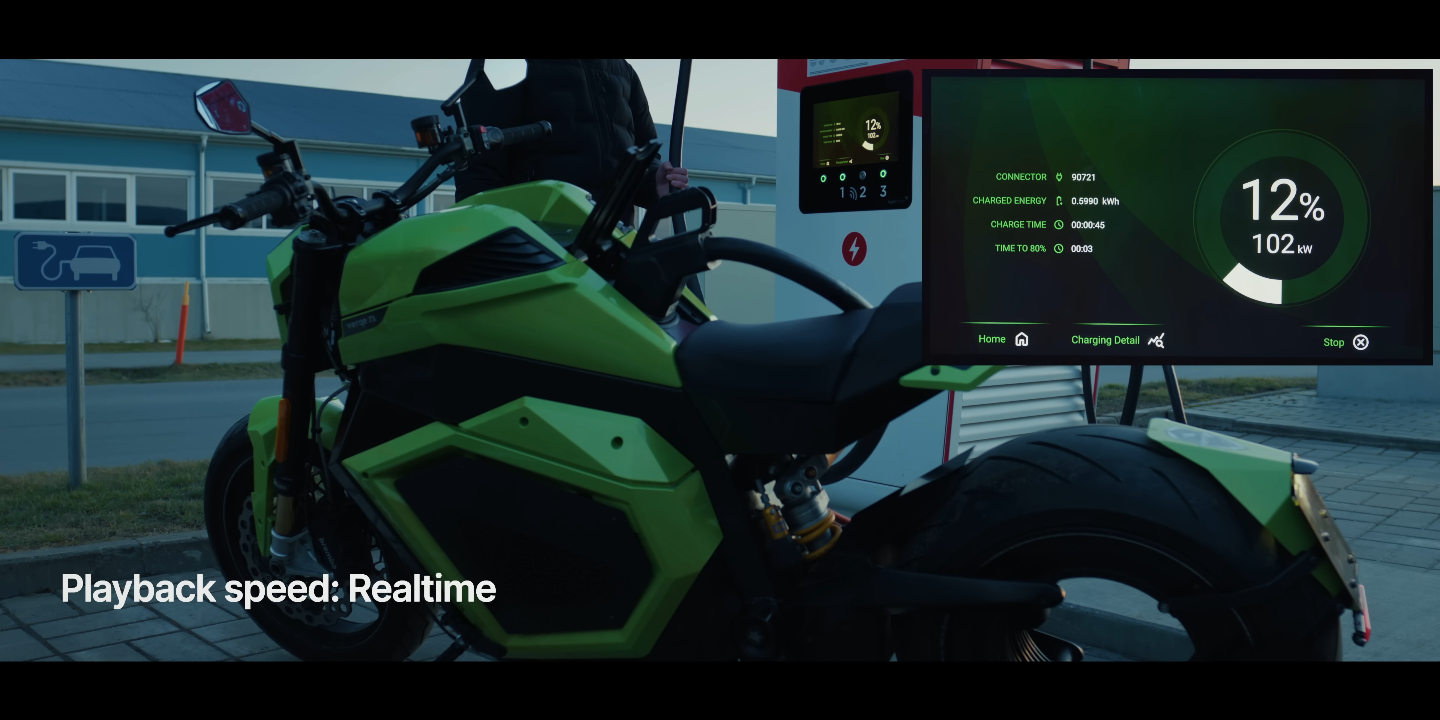
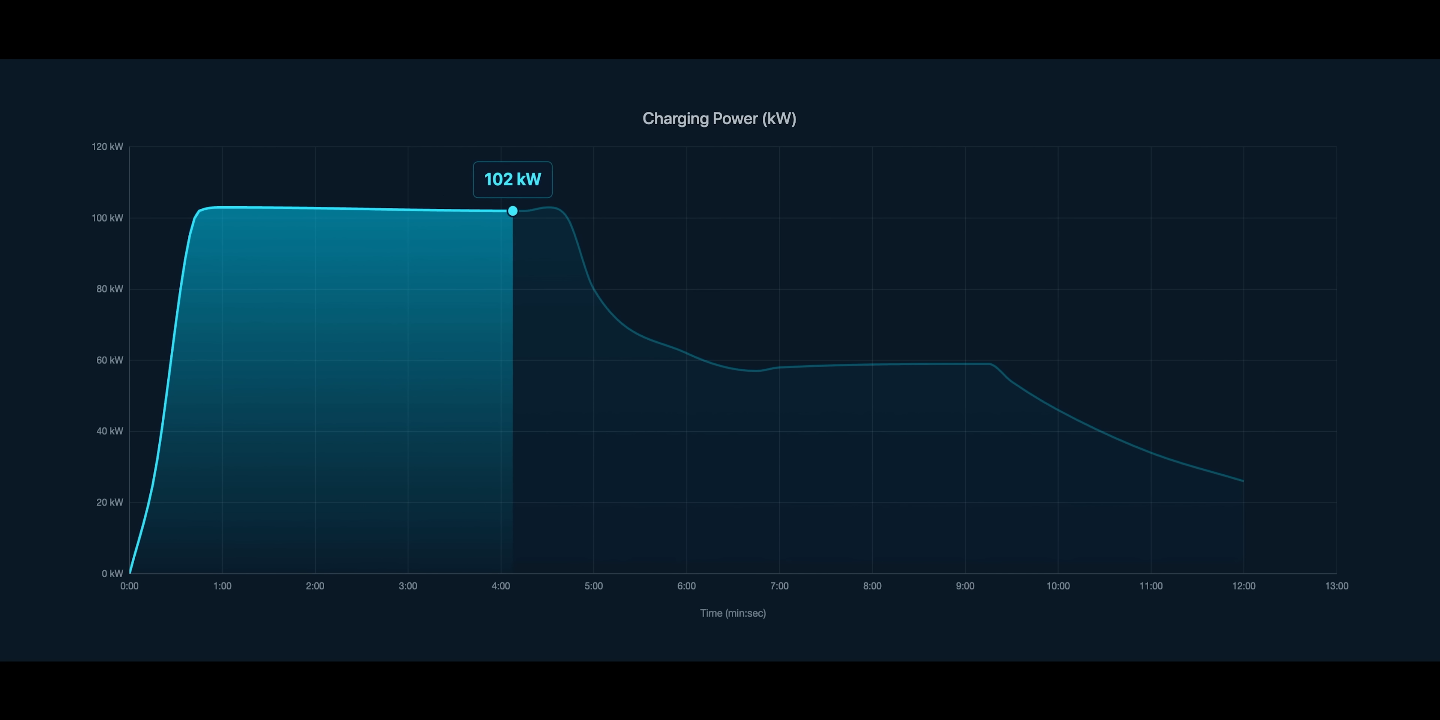
To show this in action, Donut Lab hooked the development mule up to a public fast-charger, which pumped out 100 kW to 103 kW of juice for five minutes. The video shows the motorcycle starting at 10 percent and charging to 70 percent in nine minutes, seven seconds. It then hit 80 percent in 12 minutes, three seconds.
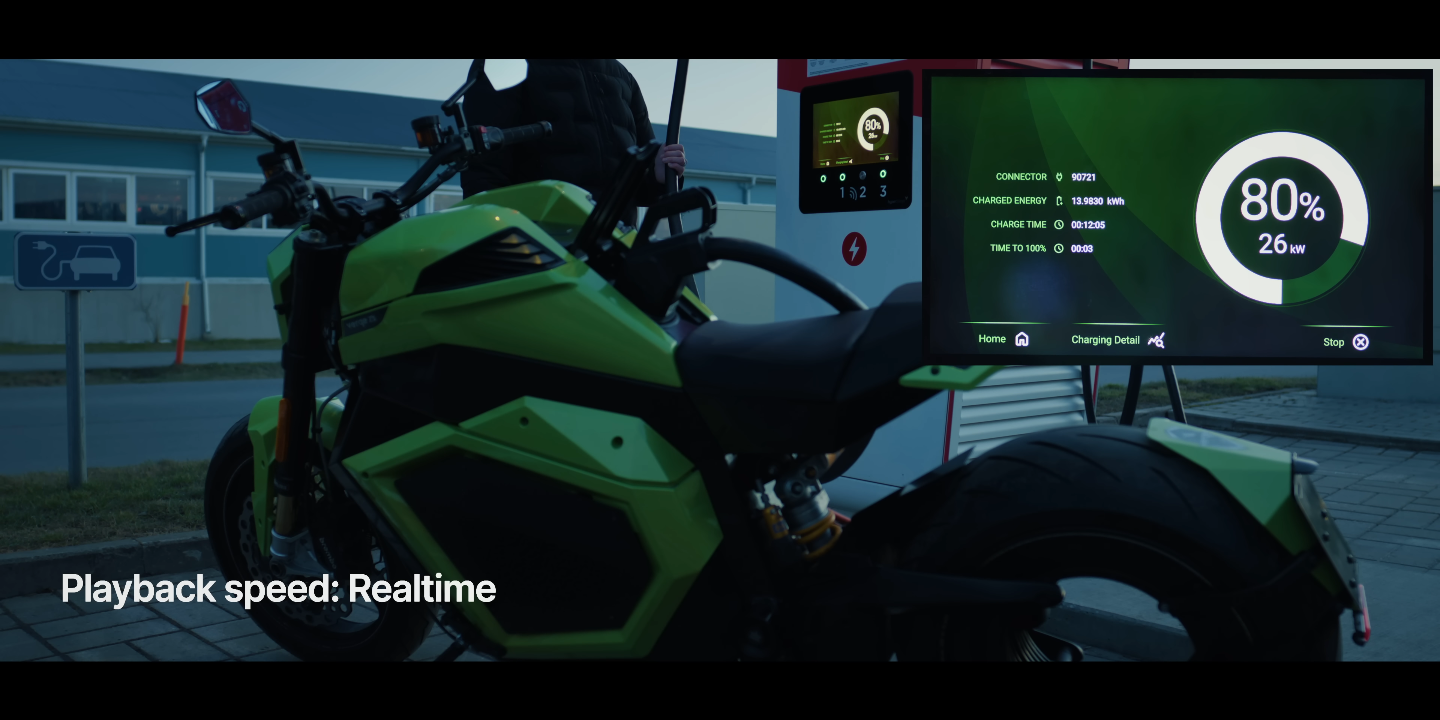
Weirdly, Donut Lab says that the battery pack was at 20 degrees Celsius (68 degrees Fahrenheit) at the beginning of the test, but never mentions what the temperature was at the end of the test.
This test puts earlier claims into perspective. As I reported earlier. Donut Lab says that the battery can charge in only five minutes, and that Verge intentionally made the motorcycle version of the battery charge slower because, quote: “In fact, we found ourselves designing a slower charging speed so riders can plug in and actually have time to drink a latte and enjoy it instead of downing an espresso and rushing back to their bike.”
So, now we know that the charging in under 10 minutes claim means going from 10 percent to 70 percent. It took 12 minutes to get to 80 percent. Also, this is the battery for the standard-range Verge TS. The long-range model, the one that’s supposed to go 370 miles on a charge, has a 33.3 kWh pack. As of publishing, Verge Motorcycles claims that the bigger battery will hit 80 percent in less than 10 minutes.
All of this is somewhat confusing. If the battery can charge in five minutes, why not have it charge in five minutes? The espresso explanation doesn’t make sense to me. So what if your motorcycle charges faster than you can drink an espresso?
Anyway, Verge Motorcycles says that, with the solid-state battery, the TS Pro is the world’s fastest-charging electric motorcycle and that it charges three times faster than last year’s model. Indeed, 103 kW charging in an air-cooled electric motorcycle is neat.
Still Waiting
Yet, we’re also back at that place where there are still fewer answers than questions. None of the big questions were answered, and now there’s a new question about how hot the bike got during this charging session. At this point, I have to think that Donut Lab is saving the biggest questions for last. As it is, this test is basically the same as the first VTT one, but now with a full pack.
Again, the marketers at Donut Lab are pretty smart. I’ve now written what, four articles about this battery? Normally, I would never take such obvious marketing bait, but I am genuinely interested in seeing this battery through to the end. I would love to have a motorcycle that charges lightning-quick and gets as much range as an ICE bike, and it would be awesome to see this technology be used in school buses or electric cars. So, I’m still frustrated with the whole TV show-style drip feed. Not everything needs to have a “season.”
I suppose we have to keep waiting. In theory, the first Donut Battery-equipped motorcycles should be hitting the road in a couple of weeks. If this happens, we’re going to find out what’s really going on with these batteries one way or another. I’m still holding onto hope that this battery is just as game-changing as Donut Lab says it is!
Top graphic images: Verge Motorcycles / Donut Labs


Over it. I donut want to read anymore articles about this.
This is so scammy that I am surprised it has not yet involved crypto, prediction markets or Elon Musk.
Y’know that’s interesting, the fact that they’re not doing any of that does kinda lend them some credibility and I don’t know if that’s a conscious marketing choice, if they genuinely think this is almost ready but need some marketing to get through the final push, or if that’s just around the corner as the scam falls apart.
Good news then! Now you can bet on the outcome of this boondoggle on my brand new prediction market app: Bullshi!
Fortunately, we’re all too mature for hertz donut jokes.
If these guys in Finland are 1/10th as smart as the ASML dudes in the Netherlands, they may have done it.
https://youtu.be/MiUHjLxm3V0?si=bNvbfUgZLipd6SzD
Call me stupid, but most of my speculation from this come from the company being called “Donut”
I still think it’s a scam or op or maybe some kind of military contractor doing something weird. Launching it in a motorcycle just doesn’t make sense. If those batteries are what they claim they will be in drones so fast. Maybe it’s like the lcd industry in the early 90s. They will have a bunch of old ladies sitting there building the things then have to send someone in to figure out what works to build the machine to make them.
Launching it as a motorcycle makes perfect sense:
1) They are a motorcycle company. They make motorcycles. To launch the battery in anything other than a motorcycle would require massive new product development
2) Motorcycles don’t need large batteries. Therefore, you could sell more vehicles with fewer cells by selling motorcycles
Motorcycles also strike me as the most revolutionary option here. Cars can get by with heavy batteries and drones can abuse their little soft-shelled LiPo packs with minimal cost, but electric motorcycles are still the laggards here, because they can’t carry the weight of NiMH, nor can they afford the liabilities that drones can, so it’s been very hard to get EV moto market rolling. Even harder when EV bicycles have similar range, crazy performance and don’t need a license. But I digress.
The point is, these would be an improvement for cars, drones, etc, but for motorcycles, they just might be the breakover point where they become a viable product.
Verge is a motorcycle company, but donut lab the company making the battery is not allegedly it’s a battery company. They could have partnered with anyone. They could have taken a commercially available product and shoved their cells in it.
I’m watching this too, but feel like when someone who gets one of the bikes takes it apart it’s going to be basically an R&D battery they’re using, not scalable for larger manufacturers.
In the recent Questionable Garage video on the EV1, the GM engineer even says they have solid state batteries in their R&D they’re working on. I’m sure BYD and CATL and the like also have solid state prototypes for testing.
Also Verge is only going to sell 350 bikes, and they’ve been making batteries for months before they start selling the bikes, almost like they couldn’t deliver batteries as fast as they can make the bikes.
As for the ‘it costs as much as a regular battery’, well if they’re paying like 1 guy to make them in the corner of the shop and materials costs aren’t crazy then sure, let’s say it costs the same as a regular battery, as much as I can build a chair in my shed and it costs as much as a store bought chair, discounting I had to buy saws and sanders and hammers and such or pay myself, I built a perfectly usable chair and it only cost materials of like $100, same as if I bought a chair at Costco.
I actually build some of my furniture that way. It is fun, and cheap, and you get exactly what you want. But it takes (me) all weekend to make an end table.
Part of my job is sussing out a company’s online presence to get a feel for how legitimate their claims are. One of the best ways to do this is to snoop around their LinkedIn page, as it provides a number of indicators that can act as red or green flags:
– the total number of staff
– where most of the staff are located and whether that aligns with the location the company claims to be based out of
– the seniority of the staff (are there people straight out of uni in senior management or engineering positions?)
– the backgrounds of the key people
I haven’t had much of a chance to poke though Donut Lab’s page, but so far I’ve noticed they have a large presence in the UK as well as Finland and their key battery guy seems to be Ian Goodman, the VP Energy Solutions. His LinkedIn resume shows a long history of association with companies developing Li-ion batteries and associated systems. He also has an association with University of Warwick. Next step would be to look up any academic papers published under his name.
Looking in to these things would help assess whether this company has any substance. My initial assessment is… Maybe. Goodman seems legit though I’d need to look more into his academic background. Notably, all the other senior leaders are businessmen – largely non-technical, which is somewhat unusual (in a red flag kind of way) for a technology-first company. I’d also need to look into their other technical leads to see what their backgrounds are (I haven’t spotted any other battery people but I suspect there are some).
None of the employees have a notable automotive background.
That’s all I’ll say.
This would be an interesting investigative journalism article.
Instead of just publishing their next press release for them.
I can’t wait until they scale this up to autos. Then I can pick up an “obsolete” lithium EV for cheap as my next daily in 10 years.
Screaming business opportunity here. There are now 7 million+ Prius’ out there, many on the downslope of battery health challenges. Most existing solutions seem to include reprocessing the aging modules. A new replacement would be compelling.
There are companies out there selling brand new Prius modules, although quality can be wildly variable. Last I knew Toyota will still sell you a new stock one, if you can find a dealer who won’t insist on overcharging you for installation. There’s even a company selling upgraded(?) lithium modules for it, although personally I find some of their claims a little sketchy and it’s not clear if there’s an actual benefit to it.
I am quite pessimistic about the possibility of that.
See for example the BMW i3. Early versions with the 22kWh can be had cheap.The later I3s 42kWh could be had from a crashed vehicle, or even from new cells.
Problem is they don’t have the same form factor. The cells for the 42kWh are just a tad higher than the old ones. So they don’t fit in the same blocks. And the newer blocks don’t just fit in the old cars.
Then you have to fit new cooling lines, BMS, sensors etc. And make sure you don’t make headlines by killing yourself in a short or a fire.
And that is all before you have to adress software.
I originally was thinking of keeping the original drivetrain and battery and that most people would not want older technology and sell them cheap. slow charging is not an issue for me.
I do like Ben’s idea in a perfect world though.
Perhaps this ‘start up’ is really a silent subsidiary, a front, for a major company wanting to release its product in the real world, but not wanting to take the negative heat if it fails.
That’s what I’ve been thinking. If I had a new battery technology, I would want to test market it at low volumes in vehicles with a smaller pack, both of which would be lower risk and would provide the opportunity to improve the manufacturing process at a smaller scale.
The part that makes my Scammy Sense tingle is that they’re putting this supposed miracle battery in a motorcycle. If they’ve really discovered the next big thing in EV batteries, they’d be licensing it to the auto industry.
It’s like claiming you’ve discovered the cure for cancer and are therefore planning to open a veterinary clinic. Yes, it would be useful there too but….
There’s time for that, your first paragraph, if this product does pan out and is not another BS hoax.
My point is you would do that first, not eventually.
My dude, Verge is a motorcycle company. Why would they put their battery into anything other than a motorcycle?!
Right, but if you have an EV battery that’s this much of a massive leap forward, you don’t spend months trying to build hype to sell 350 motorcycles. You’re a battery company now. You just plop it down on a table at GM or Tesla or BYD and walk out with a gigantic check.
But here’s the thing: motorcycles are the best option to sell the most vehicles with limited battery production capacity.
The reason that automakers don’t have production models of solid state batteries isn’t because they haven’t gotten solid-state batteries to work at all, it is because they haven’t figured out how effectively produce millions upon millions of cells per year.
So their test showed it doesn’t charge as fast as they claimed. The test wasn’t done by a reputable third party. Are we really supposed to believe that the test was performed on the new miracle battery and not just faked on an existing battery? Are we to believe that it stayed within reasonable temperatures when it was fast-charged and that if it did, it was just passive cooling? I’m not accusing anyone of lying, but this test doesn’t prove anything other than that they charged a battery for 12 minutes. I’m still skeptical.
If not scam, why scam-shaped? Is Donut saying deliberately stupid and nonsensical things like “we made it slow on purpose to save your coffee break!” to make sure they have enough “doubters” to look really smart when any of their claims hold up?
Anyways, they’re promising super-long range (>300 miles) and super-fast charging of that range. Why not make it weigh less, cost less, charge even faster, etc.? I really don’t believe the narrative that the barrier to electric adoption is “it needs to have identical fueling/range dynamics to a large ICEV”.
The charge speed is not the biggest news here.
I am MUCH more excited by that charge density.
Right now Lithium batteries have a charge density of around 200 to 300 Wh/kg. If these new batteries are already 400 Wh/kg, that has HUGE implications. You are cutting the weight of the battery pack nearly in HALF.
From an enthusiasm perspective, battery weight has always been one of the biggest detriments to EVs in a fun car because most enthusiasts want something nimble and tossable. Hard to do if you weigh 6000 lbs. But now imagine having EV levels of torque and acceleration and ICE levels of weight and handling performance.
This is when the EV world finally gets interesting for me.
Size matters too (heh heh). One downside of EVs is alĺ of the space used for batteries negates a lot of the space advantages of electric motors.
For vehicles like minivans and delivery trucks, shrinking that footprint is a nice benefit. If it’s real, of course.
The space the batteries currently occupy in a skateboard design in no way impact the location of electric motors. They simply could not sit that low and feed axles without extreme angularity issues. CV joints or not.
And yet, Donut is deliberately hiding this information.
One of their original tests by VTT Research Center gave a lot of data on cell capacity. But they never weighed the damn thing! I read the sparse VTT report, and I can’t believe they don’t have a scale.
I think they have VERY good reasons for the secrecy. They know the Chinese are chomping at the bit to steal whatever information about this battery chemistry that they can. Intellectual property, patents and all that stuff means nothing to the Chinese. Assuming this isn’t a scam, they will probably be extremely secret about all this until the last minute. Once these motorcycles are on sale, there are going to be a bunch of them on a ship back to mainland Chinese where their tech will be scrutinized, and then Donut will only have months (if that) before copy cat products start coming out of China en mass.
I understand that.
But how does releasing cell weight give anything away? Releasing weight, publicly or not, certainly won’t change the level or corporate espionage underway.
Weight, along with the size of the package, will give away the density. The density will help in giving away the chemicals used.
Chinese battery companies probably have 10x more people trying to decipher this battery tech than Donut has total employees. They really have no shame in stealing tech and they have the resources to make it happen.
Trying to teach me about Chinese IP theft is not necessary.
My issue is that Donut is already publicly claiming density. Just without proof.
With your rational, we should all just trust their wild claims without any proof, because test results would give something away.
At the end of the day, what choice do we have?
If they’re scammers, we’ll all find out soon enough.
If they’re not, we can’t control what their marketing people are doing with these weekly releases. They’ve hit a certain campaign that gets people talking about them every week. We can hate it, but it’s brilliant for them.
And to be clear, I didn’t state we should trust their wild claims at all, but we can’t force them to release anymore info than they choose to.
Then it sounds like we are complete agreement.
And we’re back to my original point that despite their marketing, and their claims that they are being transparent, that actually, “Donut is deliberately hiding this information.”
Cheers
I’ll drink and drive to that
… or that info is waiting for an upcoming news drop.
10-70% in 9 mins?
I guess it’s an achievement as long as you’re not Chinese or Korean.
10-70% in 9mins at 100kW in a passively cooled system is genuinely intriguing.
I can see their logic in making the charging time slightly slower. The relative distance of chargers from amenities means it’s often a 30 second or so walk to the bathroom. For a fast charging bike, it would mean plugging in and running to the bathroom. Then running back out 3-4 minutes later to unplug after needing to rush to use the bathroom. Then finding another parking spot. Idle fees can be $0.50-1.00 a minute. With an average break taking ten or so minutes, there’s a reason to sandbag the charge rate. Someone would forget to lower the charge rate and get hit with $5 in idle fees. Not a good look as a company to have customers constantly at risk of being charged idle fees on what’s supposed to be a cheap to run toy.
My only counter is that your scenario isn’t really any different than fueling up a gas motorcycle. Spend a few minutes filling it up, and then park it in a space so you can grab a drink and use the bathroom. At least I don’t just let the bike sit there at the pump, anyway.
A lot of the time, all I’m doing is getting gas so I can get back to my ride. So being forced to wait longer would do nothing for me. Maybe they should have a setting for the supposed 5-minute charge and a 10-minute “coffee charge.” Boom, everyone wins.
But gas pumps don’t charge people from hogging them once they’re done. Only good manners keeps people from doing it.
I agree, that would be a great setting. Make it default to the slower one and require an acknowledgement to activate the faster one.
If it can really go 300+ miles between charge, I will be using those 7 minutes to stretch, not worrying about my espresso getting cold.
Do you people really take a loo break or go get a drink that often? More than 90% of the time if I’m stopping for fuel, that’s it. Fuel, leave. I get the reasoning on the idle fees but it’s not even a primary use case. Nor is the coffee/espresso comparison they oddly invoked.
Yes, I stop to hydrate and dehydrate every 2-3 hours. A typical ride includes a mid morning coffee stop, lunch, afternoon coffee stop, and then dinner / hotel.
It is about enjoying the ride not racking up mileage.
I don’t mean driving for 2-3 hours straight, or trips. I mean most my trips are less than 10 miles, so if I’m getting fuel it’s because I accumulated enough short trips to need fuel. What you describes makes sense if you’re using the 300 mile range in one go, but the vast majority of “need fuel” situations are not in the middle of a 300 mi drive?
I haven’t ridden my motorcycles less than 10 miles since 2007. That was when I moved from a rural area to urban metors over 1 million people and traffic makes short trips or even my 35 – 45 minute commute a grind instead of enjoyable. There is also the time to put on all the gear and then take it off.
However, if I was riding an electric bike in a 10 minute radius I would also be charging that motorcycle and home just like I do my electric car.
As to charging stations, that depends on the route. Riding in the western or northern part of the state there are plenty of charging opportunities. Central and Eastern Oregon – almost nothing.
Of course it certainly depends on the provider but as one data point EA only charges $0.40/min and they don’t start until 10min after the session ends.
In Europe the idle fees are about $0.50 a minute and start after 5 minutes. Tesla here in the States starts after 5 minutes.
Tesla’s idle fees only apply if congestion pricing is in effect, IE lots of chargers are in use, at least in the US.
I can’t wait until they start making AI, robots and rockets. Then start advising the Finnish government on social policies.
man that coffee explanation is such bull, wtf. it really gives “oh no, our steak is too juicy, lobster too buttery”.
I hope their claims are even like somewhat legitimate, because that seems like it would still get some good gains for battery development in general
claim: “our battery takes 10 minutes to charge”
test: 12 minutes to charge 10->80%
claim: “our 85% larger big battery takes 10 minutes to charge”
test: …should be interesting
A larger battery charging faster is pretty common in the EV space. I believe it is because the larger battery size allows for a higher charge KW and to keep that KW curve flatter as the SOC increases. Not this smaller battery only charges at 100 kW for about 4 minutes.
Interesting. Thinking about it now — if you had a double sized battery made of twice as many of the same cells, and you were able to apply twice the current (assuming parallel) or twice the voltage (assuming series) due to the thermal management keeping temps the same, why would would it charge faster rather than at the same rate?
Maybe the anser is in: why would the charge power be able to be kept flatter?
Can’t answer that – I’m just looking at published specs
If we look at charging for the Hyundai Ioniq 5:
Thank you for calling out the “we made it slower on purpose lol” BS.
Hopefully the rest is real, but the numbers for a battery that small aren’t that impressive compared to existing stuff. Now the temperature claims + charge from 0 to 100% without harming anything, that would be significant.
I’d love to buy a 400 Wh/kg battery for my micro-EV builds.
A 10 kg 4 kWh battery would be nice. Assuming I needed 2 kW to hold 70 mph with a streamliner shell on my quad, add in 150W of pedaling, and I could approach 150 miles highway range in a 120 lb vehicle, maybe get 600 miles range at 30 mph. A vehicle that would still be perfectly pedalable as a “bicycle” with the motor(s) disabled.
Curious as to its specific power as well.
Realizing that there may be twelve of these updates is making me giggle.
A dozen donuts please…
Can you hold out for a baker’s dozen?
Who would say no to an extra donut?
The Truth Doughnut, when all will be revealed!
I’m still hoping that these guys have something even close to what they are claiming. Culling a huge portion of the weight out of a BEV for the same battery capacity would be massive. Cars could be light again!
Given that, if true, this battery is a genuine paradigm-shift, I can overlook their PR. You could even make the case that maximizing clicks is a good thing, as this is something people would want to know about. Again, assuming it works.
Aside from temperature, I think all that’s left is proof it has the capacity/range and is as durable as they claim. My guess is they’ve got it, as it would be beyond bonkers to build it up this way only to save the bad news till the end.
There’s no doubt it will be true at some future point. This is where much energy storage research is being directed.
They published a third party report on capacity, but intentionally left out cell weight. So, we still don’t know density.
good point.
If that density is real, it’s beyond awesome. It could replace the pack in my R4P and cut out over 60% of the pack weight…or weigh the same, occupy the same space and yield over 150 miles of EV range.
I’d happily split the difference. My fuel burn would drop by half.
As I recall however, in testing didn’t this battery get hot during charging at this rate? Like – flippin hot?
I found a report on the testing results: https://pub-fee113bb711e441db5c353d2d31abbb3.r2.dev/VTT_CR_00092_26.pdf
It’s not as rigorous as I would like to see but the germane bit is there: the cell hits 90 deg. C with one heat sink, and of course it’s worth pointing out that having a heat sink on a single cell isn’t going to happen in a space-starved motorcycle battery pack. They’re going to be crammed in there cheek-by-jowl, hopefully with heat sink liquid circuits between them and a radiator with a very busy fan on it somewhere.
Presumably , when used in a large battery pack, there would be some cooling to be able to charge that fast. Of course charging fast makes more heat, cooling makes more weight, and heat reduces battery life. So compromises abound. I think all the above may be the reason this is introduced in a motorcycle, and not a car
Sorry to post this yet again, but they’re also intentionally leaving out information.
I read the report too. It was informative, but despite reporting cell capacities, they didn’t report cell weight.
That’s all that’s needed to verify density, and it’s the easiest measurement!
Why did they leave that out?
I like the look of the hub-motor of the bike, I’m surprised they didn’t balance that aesthetic out with the rim-style brake used by the old Buells.
I’ve never clicked on an article faster. The drip feed of testing is frustrating, but damn it’s working on me. I think about this damn Donut Battery at least once a day.
I’m glad it’s not just me. When I saw the news drop, my reaction was an eye-roll, and then a click…
Same. If what they claim is even 50% true, this is huge. EVs suddenly having meaningful range and not weighing twice as much as their ICE counterpart. Hybrids having crazy capacity to charge and discharge their batteries and maybe even having a meaningful EV range.
I want to buy it already, but can’t. They won’t respond to my emails.