

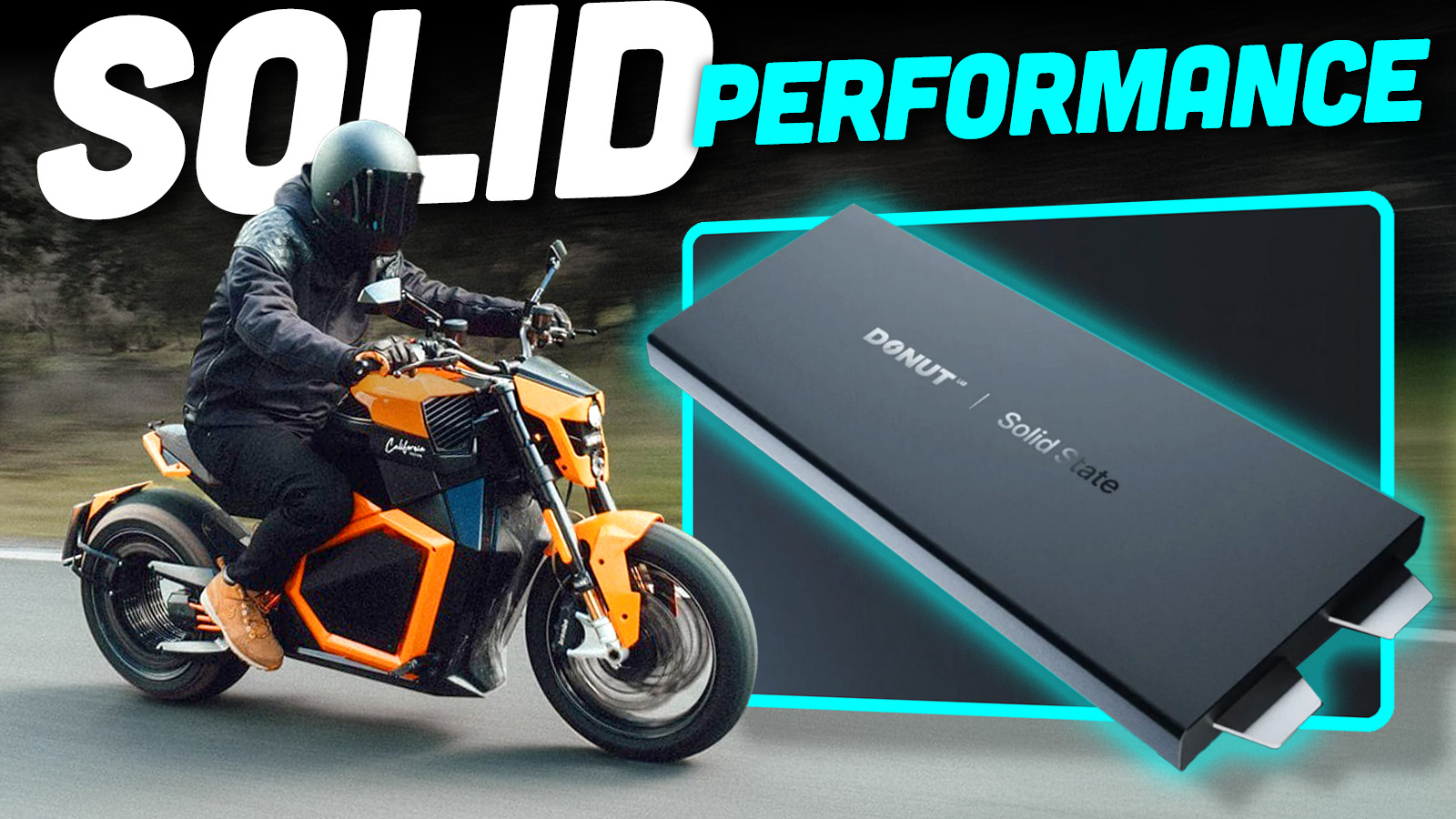
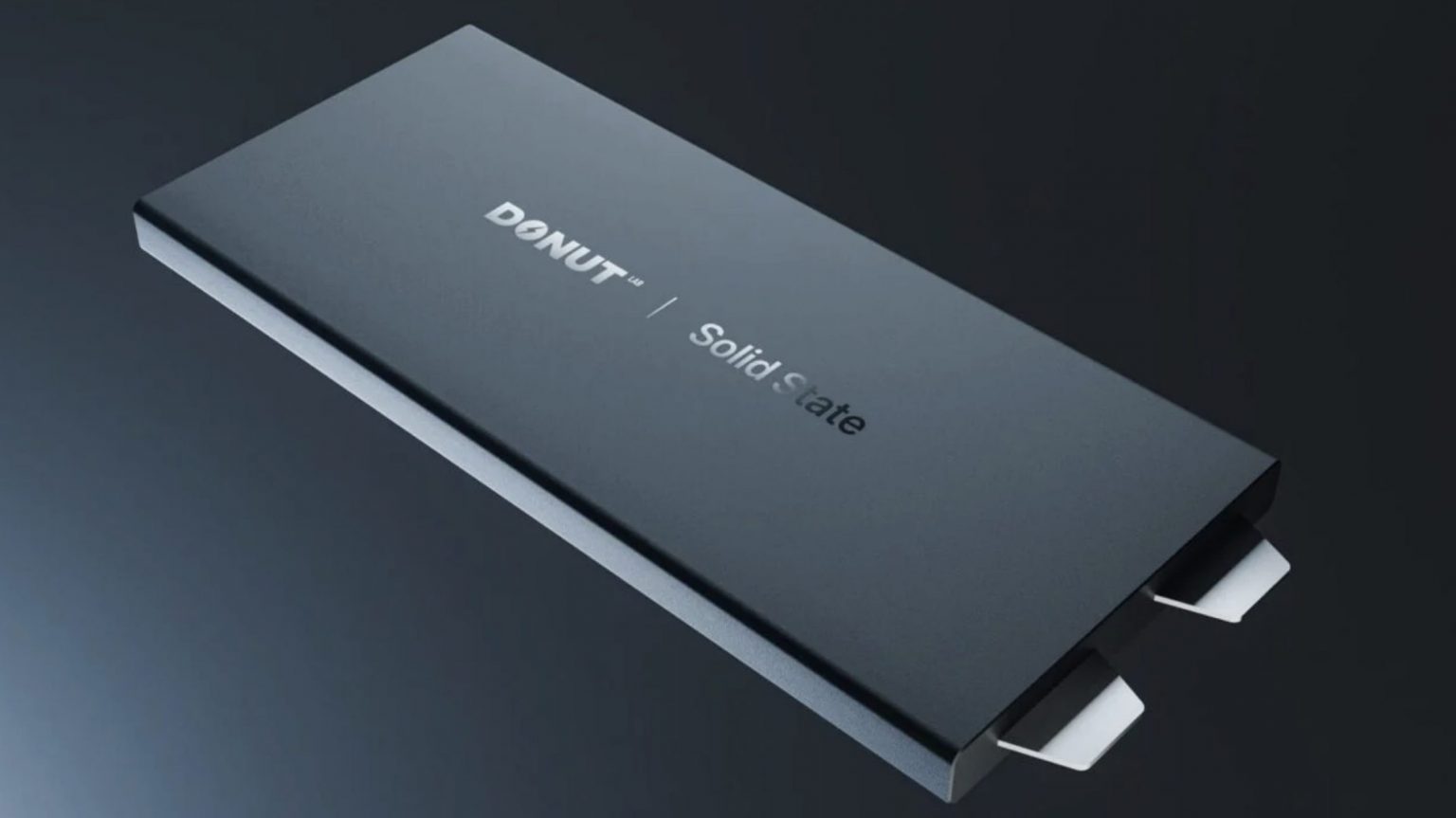
Something potentially huge is brewing in Finland. Donut Lab says it created the world’s first production solid-state battery that will be housed in new electric Verge Motorcycles that hit the road this year. The battery gives the motorcycle 370 miles of range, can be charged in only five minutes, delivers 400 Wh/kg of density, is cheaper to make than lithium-ion batteries, can last for over 100,000 cycles with minimal degradation, and is made out of 100 percent green materials. All of these claims were initially made without any proof, but now Donut Lab is delivering the details through a weekly series. This week, a full battery pack has finally been charged in public. The Verge TS should become the world’s fastest-charging motorcycle at only 12 minutes to reach an 80 percent state of charge. Yet, more questions remain.
In January, Donut Lab, the EV technology company created by the guys who built Verge Motorcycles, shook the EV world when it announced that not only did it make a solid-state EV battery, but deliveries would start by the end of the quarter. Verge Motorcycles proudly proclaimed that its new generation Verge TS Pro was the “World’s first production vehicle with an all-solid-state battery.” But these announcements were immediately met with skepticism. Verge Motorcycles and Donut Lab published some highly polished videos, but no proof of anything. They didn’t even show a motorcycle in action with the Donut Battery.


The skeptics had decent reasons to doubt this. Solid-state batteries are real. Several corporations and researchers have been developing the technology for decades at this point. Working solid-state batteries exist, as do prototype vehicles powered by them. Multiple companies are saying that their solid-state battery production is just around the corner. Yet, Verge Motorcycles has been around since 2018, while the Donut Lab was founded in 2024 by the same people. Veterans in the battery space have been doubtful that this little company that sprouted up in such a short time has leapfrogged the rest of the world in putting a solid-state battery into production.

Verge Motorcycles and Donut Lab are both startup companies, and both have produced real products. The Verge TS is famous for its giant “hubless” rear wheel motor, healthy power output, and high range. There have been Verge electric motorcycles in the hands of customers for years now, and you can test ride one in California today if you want to.
The Claims
Donut Lab has cooked up an interesting way to prove its claims. It has launched a site called “I Donut Believe” where it directly quotes the skeptics right in the opening page. The site is supposed to be Donut Lab’s home for the tests that prove that its bombastic claims about the battery are true. What’s a bit weird is the method in which Donut Lab is using to release the data. The company has been drip-feeding tests out once every seven days, like this is some kind of TV show.
It’s as brilliant as it is frustrating. On one hand, Donut Lab is just raking in viral views and pages upon pages of free press. Donut Lab says it’s not fundraising, but this is still a genius marketing plan. On the other hand, the tests still haven’t proved the biggest claims, and the drip-feeding approach is a bit annoying for people who don’t live their lives like a TV show.
Here’s what Donut Lab and Verge Motorcycles claimed in January, from my first report:
Lehtimäki claims his team has made a battery that can charge in only five minutes, will last more than 100,000 cycles with almost no degradation, is cheaper to make than lithium-ion batteries, delivers 400 Wh/kg, and is made out of 100 percent green materials. Simply put, Verge and Donut Lab claimed to have built the holy grail of batteries.
[…]
Donut Lab claims that this battery is better than any other in that it retains 99 percent capacity in minus 30 Celsius and also when it’s above 100 Celsius, unlike lithium chemistry. Donut Lab also says you can run the battery to zero or charge it to 100 percent as many times as you want without hurting it. As for lifespan, Donut Lab says it’ll last the entire life of the vehicle, making the threat of having to replace a worn battery a thing of the past. The company then talks about these cells not having thermal runaway problems, weighing less than lithium batteries, and, somehow, even costing less to make than lithium batteries.
As if all that wasn’t unbelievable enough, Donut Lab then claims, “In fact, we found ourselves designing a slower charging speed so riders can plug in and actually have time to drink a latte and enjoy it instead of downing an espresso and rushing back to their bike.” Weirdly, Verge also says that its version of the Donut Battery will last for 10,000 cycles rather than 100,000.

Battery cell samples were sent to the state-run VTT Technical Research Centre of Finland for third-party verification. In the first test, VTT confirmed that the battery’s cells can charge really fast. In the second test, VTT suggested that the battery cells can stay within a safe temperature range so long as there are enough heat sinks. The third test demonstrated that the Donut Lab battery has a self-discharge rate that’s similar to a real battery and not a super capacitor. If you’re interested in reading my coverage on these topics, click here, here, and here.
The problem is that these tests generated more questions than answers. None of the tests prove the claims about 400 Wh/kg battery density, the idea that the battery can be cycled over 100,000 times (or even 10,000 times) with minimal degradation, that the battery is cheaper to make than a lithium battery, or what the battery is even made of. The tests generated further questions because VTT has been testing individual cells, not completed packs.
Donut Lab CEO Marko Lehtimäki is betting his reputation, as well as the reputations of Donut Lab and Verge Motorcycles, on this battery being just as world-changing as he is claiming it is. That’s what makes this saga so fascinating. There are really only two or three results here. Either Donut Lab has invented the hottest new thing in batteries, or we’re looking at another Theranos. Or, maybe there’s a sort of middle ground where the battery is real and is a step forward, but not as amazing as originally advertised.
We Finally See A Motorcycle Powered By The Battery
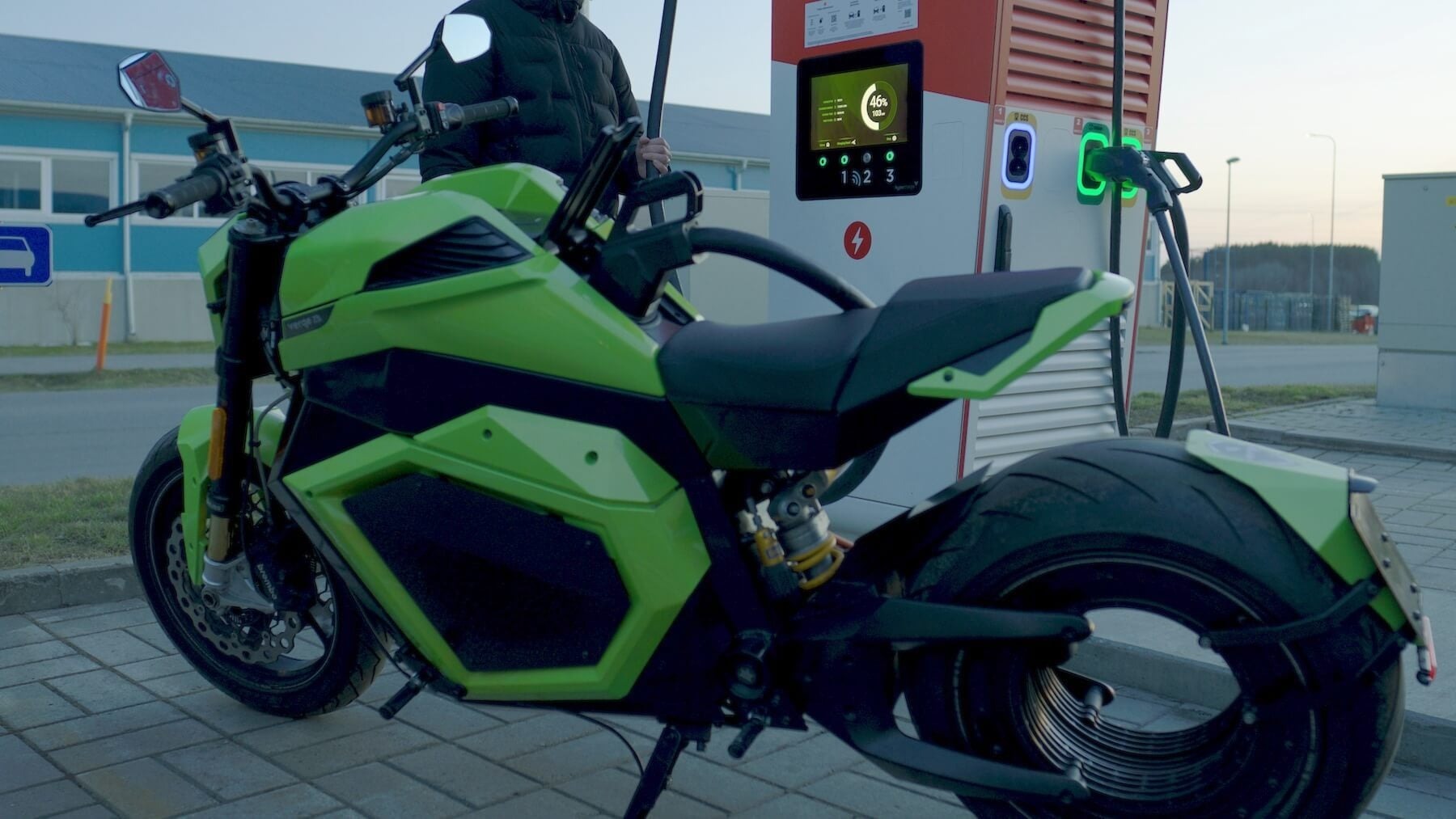
A new test has been released today, and it includes one important update. I have decided to skip any test that doesn’t seem particularly worthwhile to dedicate an article to, which is why I skipped writing about the temperature test. However, today’s test is an alluring one because it is the first time that a complete Donut Battery pack is being put to the test inside a functional motorcycle.
This test is different because it was carried out by Donut Lab and not the VTT Technical Research Centre. It’s supposed to show the complete battery pack being charged on a public charger inside of a prototype motorcycle and using nothing more than passive cooling.
This is a big deal! Until now, we’ve seen nothing but lab tests of single cells. Unfortunately, since this is Donut Lab carrying out the test, there’s no report or data to read, but a video to watch:
I’ll watch it for you. Donut Lab says that it placed an 18 kWh Donut Battery (the battery for the standard range Verge TS) inside of a previous-generation Verge motorcycle development mule. This battery is air-cooled with no active system to keep it at safe levels. Marko Lehtimäki says that the battery in this mule will be powering all Verge motorcycles going forward. He also says that this video is a sneak peek at the model year update coming for Verge motorcycles later this spring.
Lehtimäki starts the video by explaining that one of the biggest complaints about lithium batteries in motorcycles is that they take 30 minutes to an hour to fast-charge to 80 percent. He then says that the batteries in electric cars are faster, but still take 20 to 30 minutes to reach 80 percent. Lehtimäki then says that typical lithium batteries charge at 1C or 2C rates. To explain that further, a battery that charges at a 1C rate either charges or discharges at a rate of roughly equal to its total capacity in one hour. A 2C rate means the battery is charging or discharging at a speed that’s twice its capacity. Lehtimäki says that a 2C battery charges in about 30 minutes.
Donut Lab’s world-changing innovation, Lehtimäki says, is a 5C solid-state battery. Now, the 5C part alone is cool, but not earth-shattering. BYD has a lithium iron phosphate battery that charges at 10C rates. Lehtimäki says what makes the Donut Battery special is that it charges at 5C, but fits all of its guts into the form factor of a motorcycle and doesn’t need anything more than air-cooling by way of heat sinks and fans.
A Public Charger Test
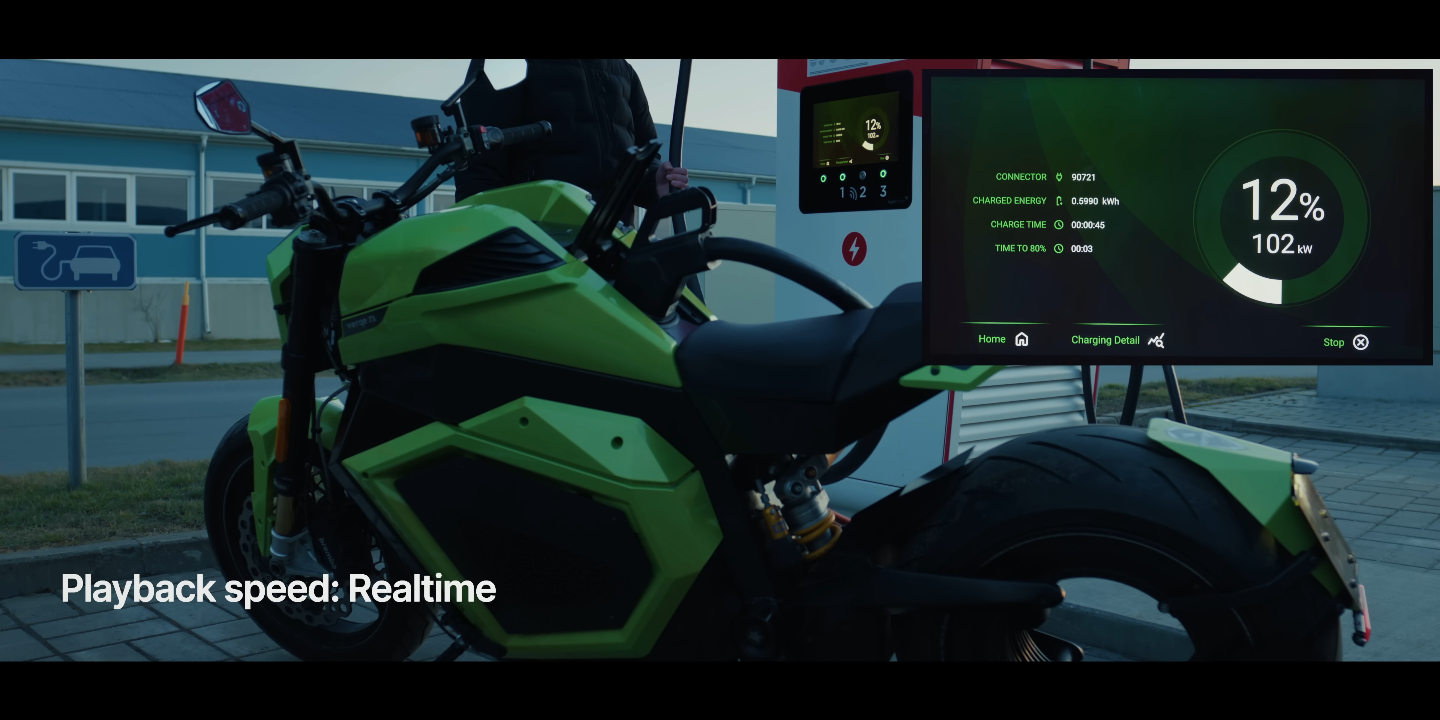
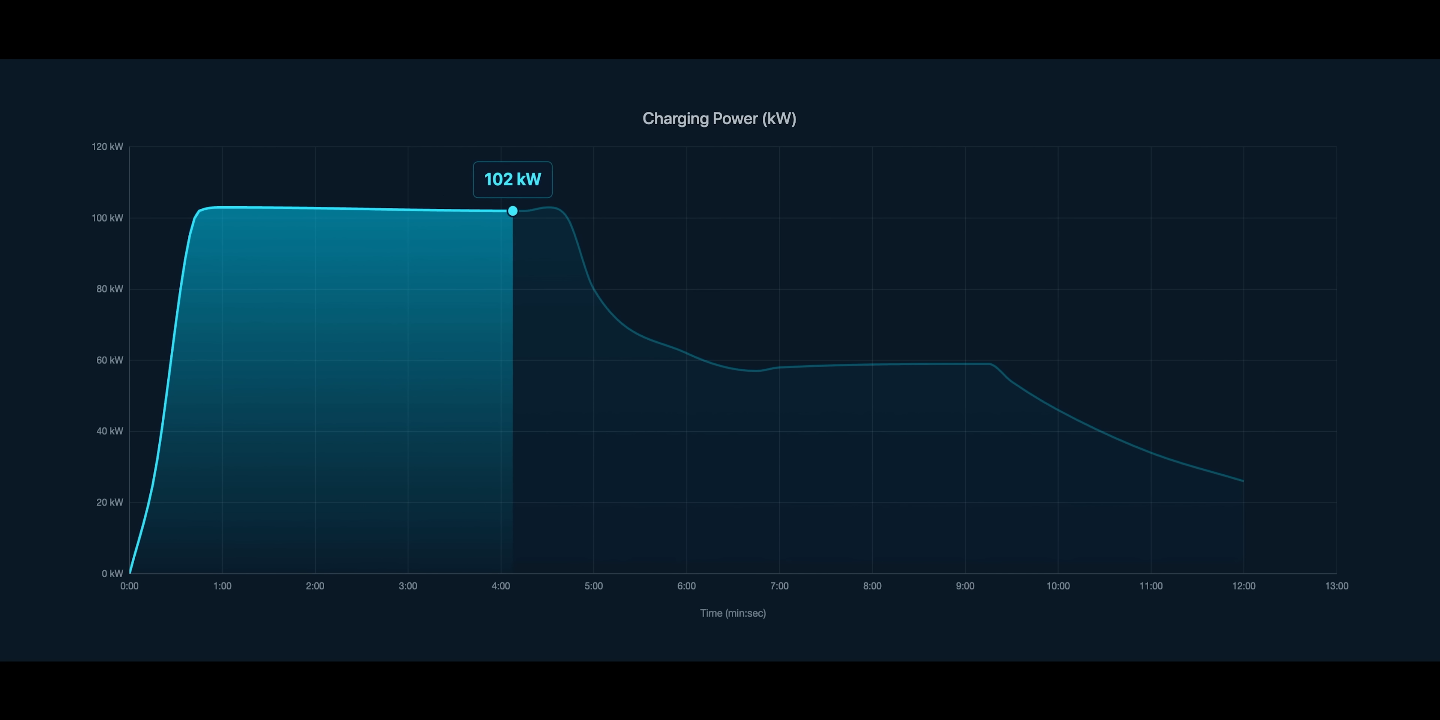
To show this in action, Donut Lab hooked the development mule up to a public fast-charger, which pumped out 100 kW to 103 kW of juice for five minutes. The video shows the motorcycle starting at 10 percent and charging to 70 percent in nine minutes, seven seconds. It then hit 80 percent in 12 minutes, three seconds.
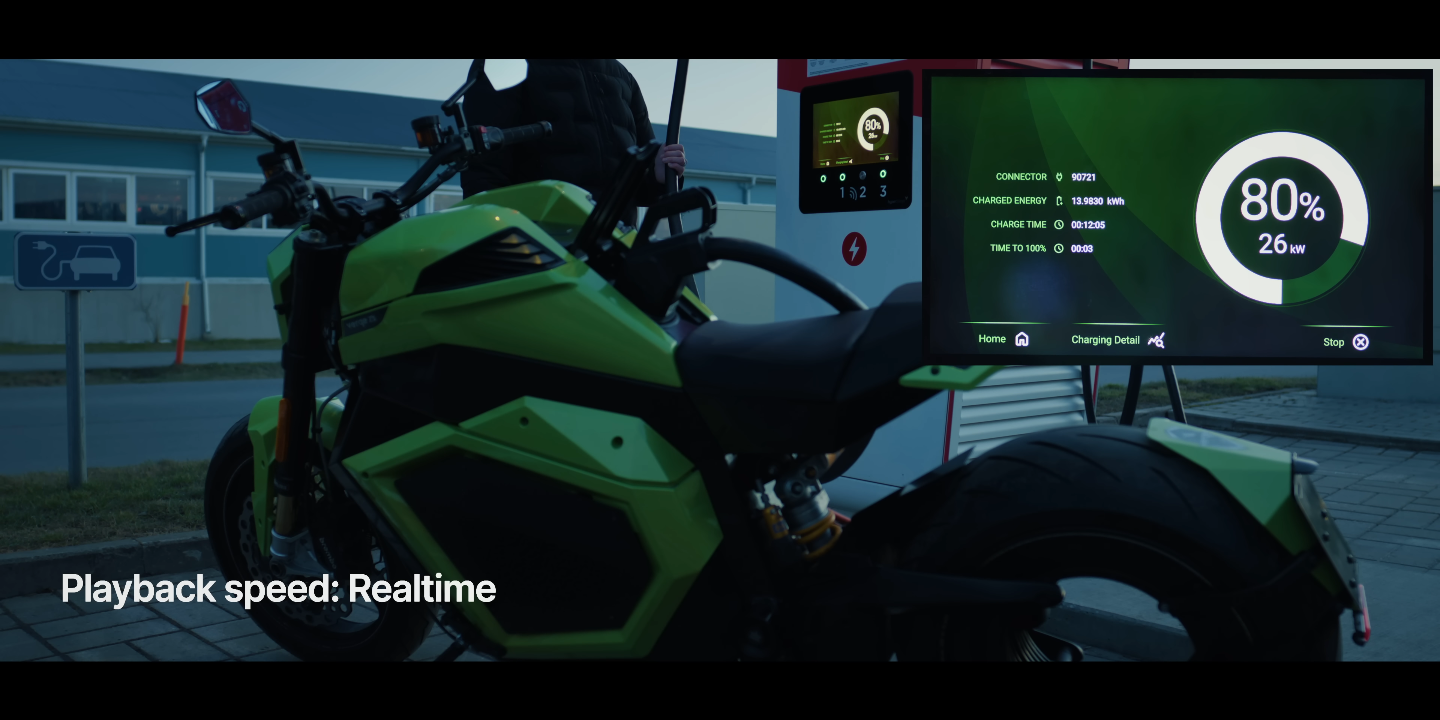
Weirdly, Donut Lab says that the battery pack was at 20 degrees Celsius (68 degrees Fahrenheit) at the beginning of the test, but never mentions what the temperature was at the end of the test.
This test puts earlier claims into perspective. As I reported earlier. Donut Lab says that the battery can charge in only five minutes, and that Verge intentionally made the motorcycle version of the battery charge slower because, quote: “In fact, we found ourselves designing a slower charging speed so riders can plug in and actually have time to drink a latte and enjoy it instead of downing an espresso and rushing back to their bike.”
So, now we know that the charging in under 10 minutes claim means going from 10 percent to 70 percent. It took 12 minutes to get to 80 percent. Also, this is the battery for the standard-range Verge TS. The long-range model, the one that’s supposed to go 370 miles on a charge, has a 33.3 kWh pack. As of publishing, Verge Motorcycles claims that the bigger battery will hit 80 percent in less than 10 minutes.
All of this is somewhat confusing. If the battery can charge in five minutes, why not have it charge in five minutes? The espresso explanation doesn’t make sense to me. So what if your motorcycle charges faster than you can drink an espresso?
Anyway, Verge Motorcycles says that, with the solid-state battery, the TS Pro is the world’s fastest-charging electric motorcycle and that it charges three times faster than last year’s model. Indeed, 103 kW charging in an air-cooled electric motorcycle is neat.
Still Waiting
Yet, we’re also back at that place where there are still fewer answers than questions. None of the big questions were answered, and now there’s a new question about how hot the bike got during this charging session. At this point, I have to think that Donut Lab is saving the biggest questions for last. As it is, this test is basically the same as the first VTT one, but now with a full pack.
Again, the marketers at Donut Lab are pretty smart. I’ve now written what, four articles about this battery? Normally, I would never take such obvious marketing bait, but I am genuinely interested in seeing this battery through to the end. I would love to have a motorcycle that charges lightning-quick and gets as much range as an ICE bike, and it would be awesome to see this technology be used in school buses or electric cars. So, I’m still frustrated with the whole TV show-style drip feed. Not everything needs to have a “season.”
I suppose we have to keep waiting. In theory, the first Donut Battery-equipped motorcycles should be hitting the road in a couple of weeks. If this happens, we’re going to find out what’s really going on with these batteries one way or another. I’m still holding onto hope that this battery is just as game-changing as Donut Lab says it is!
Top graphic images: Verge Motorcycles / Donut Labs


“We could have it charge in 5 minutes but decided 10 minutes is better” is the biggest red flag yet. That is utter nonsense.
The primary way this actually makes sense logically is if in their internal fully battery pack testing… fully charging (or at least 10-80%) in 5 minutes greatly increased battery health degradation, i.e. if they allowed the battery pack to recharge from 10-80% in only 5 minutes (12 C), then perhaps they found that the cycles the battery could take bf it could only charge to say 80% of its original capacity was say 300 cycles… which of course would not be acceptable
Instead by “limiting” the 10-80% charge to 10 minutes, and the cycle life improves to their claimed 10k to 100k cycles
Like you @Mercedes I do hope these outrageous claims are real
Makes sense and thanks for offering a legit reason! Unfortunately what they offered is that it’s better to force the customer to wait twice as long… which is dumb.
That bike will look great in the back of my Slate truck!
Sorry, wishful thinking.
This is either a scam, or deliberately misleading… because it’s a scam.
They keep intentionally leaving out key information.
They reported third-party tests on cell capacity, but not weight? So we can’t say actual Wh/kg.
They report charging time, and start temp, but not end temp? Any battery can be charged at 4C. It might be molten slag, but hey it was fast.
I think they know exactly what they’re leaving out, merely making it LOOK like they’re upfront and honest, for those who don’t really pay attention to the details. “Look at all our test data!”
This is all about marketing and appearance, and not about actually proving their technology.
So they’ve released yet another test that not only doesn’t back up their claims, it actually contradicts them? I’m getting serious Mueller report vibes from this. They release test results, claim it exonerates them, but if you read the actual test it does nothing of the sort (in fact, quite the opposite).
Is there a single claim about this battery that they’ve managed to back up with test data? Maybe the self-discharge test? But even that only “proved” it wasn’t a supercapacitor, not that it was a solid state battery. They’ve come up short on every other spec they’ve tested, AFAIR.
For many of the reasons in prior comments, this doesn’t pass the sniff test. If true, the value of the company/technology is enormous. There is no need to go out to the public with wild claims. Indeed, it would spook me, if I were a big battery company or other potential investor. I spent half my career in start-ups (one successfully acquired and commercialized) and the other half in large companies (one of which acquired the start-up and commercialized it).
Is this the bike that’s supposed to cost like $30-$45k?
For me, this all hinges on the cycle life. Current cells can reportedly hit 350wh/kg in the right chemistries but they won’t last the 10k cycle count so this would be great. Same with the charge/discharge rates. It’s possible to abuse current cells and get insane current into or out of them but they won’t last long. So, it’s cool they can charge at 5C but will they still get to the 10k cycles doing that regularly.
My early tech EV pack can charge at 2C and discharge at 5C under the best conditions but it won’t live nearly as long doing that regularly and never get close to the alleged 10k count of these.
I remain cautiously optimistic but we need to get these out amongst the community to beat them and see what they can really do.
Can’t wait to have one in my garage parked right next to my Elio!
If anything is fake it’s the cost. Well, maybe they are predicting the eventual cost based on the materials involved as being cheaper with high volume production. But I doubt they’ll ever reach that. If they do manage to actually get a product out, they’ll sell a couple dozen bikes at a massive loss and go bankrupt before ever achieving volume.
This “can charge in 5 minutes” claim is totally irrelevant without stating how much it can charge in 5 minutes. You can charge an F-150 Lighting in 5 minutes, but it’ll only gain single digit percentage.
Lab to fab is hard. I’m guessing they are going so slow because they are still somewhere on that path. I hope they make it.
if it looks like, feels like and smells like snake-oil, it’s probably snake oil.
extraordinary claims require extraordinary evidence.
I’ll use my general approach to news, on this:
If it’s important to people, they will start talking about it, and I’ll hear about it then.
Works super well also for “news” about what someone with small hands, or someone with an arm that uncotrollably raises in the air, says or thinks.
I don’t believe them, I just don’t know where they are lying yet.
My guess is they are cherry picking.
I have heard from RC guys that you can ignore temperature and maximum power constraints when you don’t require a long life from your battery.
So it might be possible they charged an air cooled battery in 12 minutes, but it might not be the same battery and charging scheme as when they are claiming 1000’s of cycle life.
I don’t believe them because of the “we slowed it down on purpose” part. That statement so beyond believable that it makes me distrust the entire thing.
No inventor/innovator has, in the history of ever, come out with a brand new thing, intentionally made the brand new thing worse than it could be, and then told people they made the brand new thing worse than it could be. There is absolutely no rational justification for making your revolutionary product less revolutionary.
If the battery charges in 10 seconds or 10 minutes, what does that have to do with getting a coffee? Will I not be able to drink my coffee if the battery is fully charged? Does Donut have a guy tailing me whenever I’m on my bike, waiting at the next charging station ready to slap the coffee out of my hand if the bike is not actively charging? It’s just preposterous on its face.
I think the whole thing about getting a coffee has to do with the idea that once you’re done charging your vehicle at a public charging station then you feel compelled to disconnect and get back on your way, particularly if others are waiting to charge, hence cutting your coffee break short.
It’s still silly that they would purposefully reduce the charge rate for this purpose. They should just allow the user to choose a charge rate in the settings if they want to take longer to charge.
What’s stopping me from charging in 10 seconds, moving my bike to a parking spot, then getting coffee?
At 10 seconds – nothing. But at 5 minutes it would be annoying to stand there hovering over the bike as it charges. (Just as it is annoy to me now to stand next to my car while pumping gas for 5 minutes)
The thing about charging an EV today is that it does not feel like wasted time because I don’t have to stand there while it happens. Plug in, walk away, I get a text message when the car is ready. In the meantime I can use the bathroom, get a bite to eat or a coffee. This is one of the reasons I’m not super stoked about fast charge times – I simply do not need them. Less than 30 minutes is fine.
That said, I find it VERY unlikely they increased the charge time from 5 minutes to 10 minutes so riders can get a coffee. Neither time is long enough. The most likely reason they are charging slower is because charging faster would require liquid cooling. In the cell charge test we saw the giant heat sink required to charge very quickly.
“In the meantime I can use the bathroom, get a bite to eat or a coffee. This is one of the reasons I’m not super stoked about fast charge times – I simply do not need them. Less than 30 minutes is fine.”
This is super interesting to me. I don’t own an EV so can’t relate to the experience and what you get used to. But I’ll just say that I would love it if I had the time in my day to sit around for 15-20 minutes while my car charged. Maybe once the kids are out of the house in 10-15 years, lol.
Day to day charging happens at home while I sleep. Charge a couple time a week and it takes maybe 10 seconds to plug / unplug.
The only time I need a pubic charger is if I’m on a trip. That generally means I’ve driven a good bit and it is time for a break while the car charges. Or that I’ve driven somewhere and the car is charging while I do something else.
Charging at home is great and all, but that’s not the topic here? (Not trying to be snarky). There are around 75 million adults in the US that don’t own a home, and so charging overnight is likely hard/not possible.
I have to imagine that many of those adults are like me with families, kids to move back and forth, full time jobs, side part time jobs/gigs/small businesses, etc.
I can absolutely see how taking 15-20 minutes to charge, sometimes multiple times a week, can be a hassle. Especially if you have to drive out of your way to do it due to lack of charging infrastructure in your area. Each charge could very well take 30-40 minutes of your day. Sometimes there isn’t that much time in a day to spare! I know we’re talking about a bike here not a car, but regardless, if Donut intentionally reduced charging, it is just asinine. I don’t think it was intentional, and as a result I think they are full of crap in general 🙂
Also not trying to be snarky but … If someone can’t charge at home or work an EV makes no sense. It really is that simple.
DC charging costs more than gasoline. If I had to rely on DC charging for my Bolt EV it would cost about twice as much as putting gas in the Niro Hybrid I had as a rental last week.
Also, yes, spending 20 – 30 minutes for each charge on a day to day basis would be a hassle.
So now that we are aligned on the home vs away charging, I think that you take home charging completely out of the discussion here. A once in a while away charge doesn’t really matter if it is 10 seconds vs 10 minutes for a bike or 20 seconds vs 20 minutes for a car. But if you’re doing it regularly, then it certainly does matter a lot.
If Donut can make super fast charging batteries for vehicles, then everything you and I just discussed further points to the fact that it behooves them to make charging as fast as possible to get more butts in the seats of vehicles they provide batteries for.
So to bring it all back home… I think Donut is full of bovine dung.
Super fast charging doesn’t do anything to solve the economic problem of DC charging – in fact it makes it worse because charging faster takes more KW. More KW (or even MW) means higher demand fees and even more expensive charging.
The only way EV adoption takes off is if we build out Level 2 AC charging as the primary way to charge and give people access to slow charging at places there cars sit for hours at a time. The economics simply do not make sense to try to replicate the gas station model with public chargers.
I also believe Donut’s explanation for a 10 minute charge is bull. The real reason is that faster charging of an actual battery back with lots of cells would have to have liquid cooling. You can’t put a giant aluminum heat sink on each cell like they did the the lab test.
I think the cooling problem is one reason for this to be introduced in motorcycles