

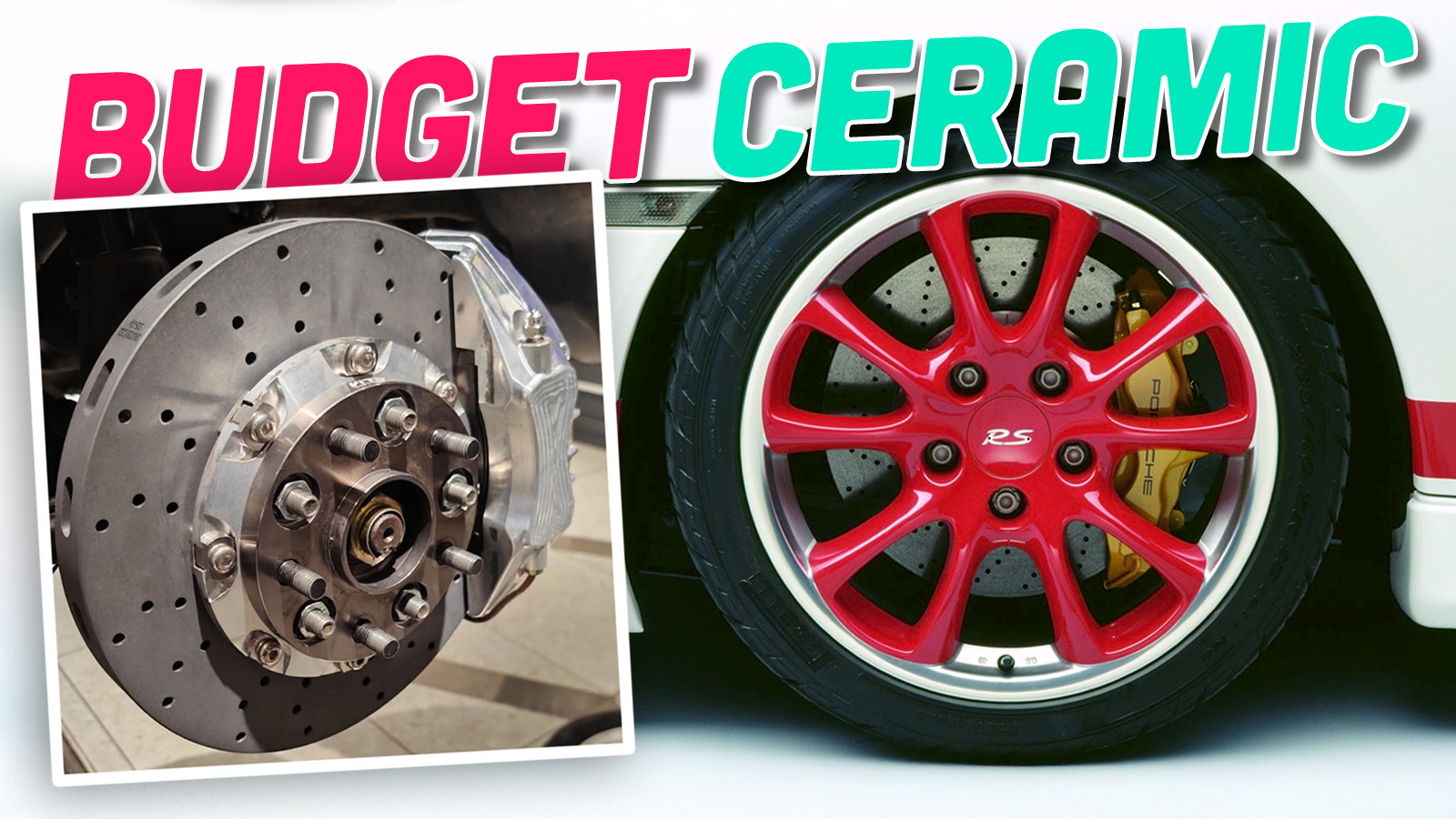
When it comes to fancy options on state-of-the-art performance cars, carbon ceramic brakes are often revered and feared in equal measure. They promise a huge weight reduction, improved heat dissipation, vastly longer wear life, and dramatically reduced dust – at a cost. Literally. Factory replacement carbon ceramic rotors are unbelievably expensive, and that’s a problem now that early use cases of them are getting into normal used-car pricing territory. But before you pull the trigger on a set of more affordable steel replacement discs, it’s worth having a look around the aftermarket. Over the past few years, third-party replacement carbon ceramic discs have come on the market at dramatically lower prices than you’d pay at the dealership parts counter, and some of them seem quite good.
While modern non-ferrous brake rotors got their start in aerospace, the carbon ceramic brakes you see on street cars are a different composition than the carbon/carbon brakes seen on the fastest planes. For the streetable carbon ceramics, manufacturers take carbon fibers and phenolic resin and mold them under immense pressure and heat to create something disc-shaped. It then goes into an oxygen-free oven and meets with solid silicon, which liquifies, travels into the unfinished discs through capillary action, and undergoes a transformation into silicon carbide. After hours of baking, the oven cools, the discs are removed, and machining can begin. Once the discs are ground to meet standards, they’re covered in a protective coating, married to the metal hats that fit over the hubs, and pass through final quality checks before being shipped out. Compared to casting standard steel brake discs, making carbon ceramic rotors is an incredibly involved and time-consuming process, which is why they usually cost an absolute mint.


Need one right-front carbon ceramic brake disc for a nicely depreciated F80 BMW M3? You’re looking at $5,048.99 from FCP Euro. If you need a pair of front discs, that’s over $10,000 for just two consumable parts. Did you end up with a reasonably priced launch-spec 997 Porsche 911 Carrera S with the carbon ceramic brakes? A pair of genuine front carbon ceramic discs retails for $18,900 through Suncoast Parts and a pair of rears costs the same. If you need to replace all four, that’s potentially more than the value of the car in brake discs alone – an astronomical expense on what may be a high-mileage $36,000 car.
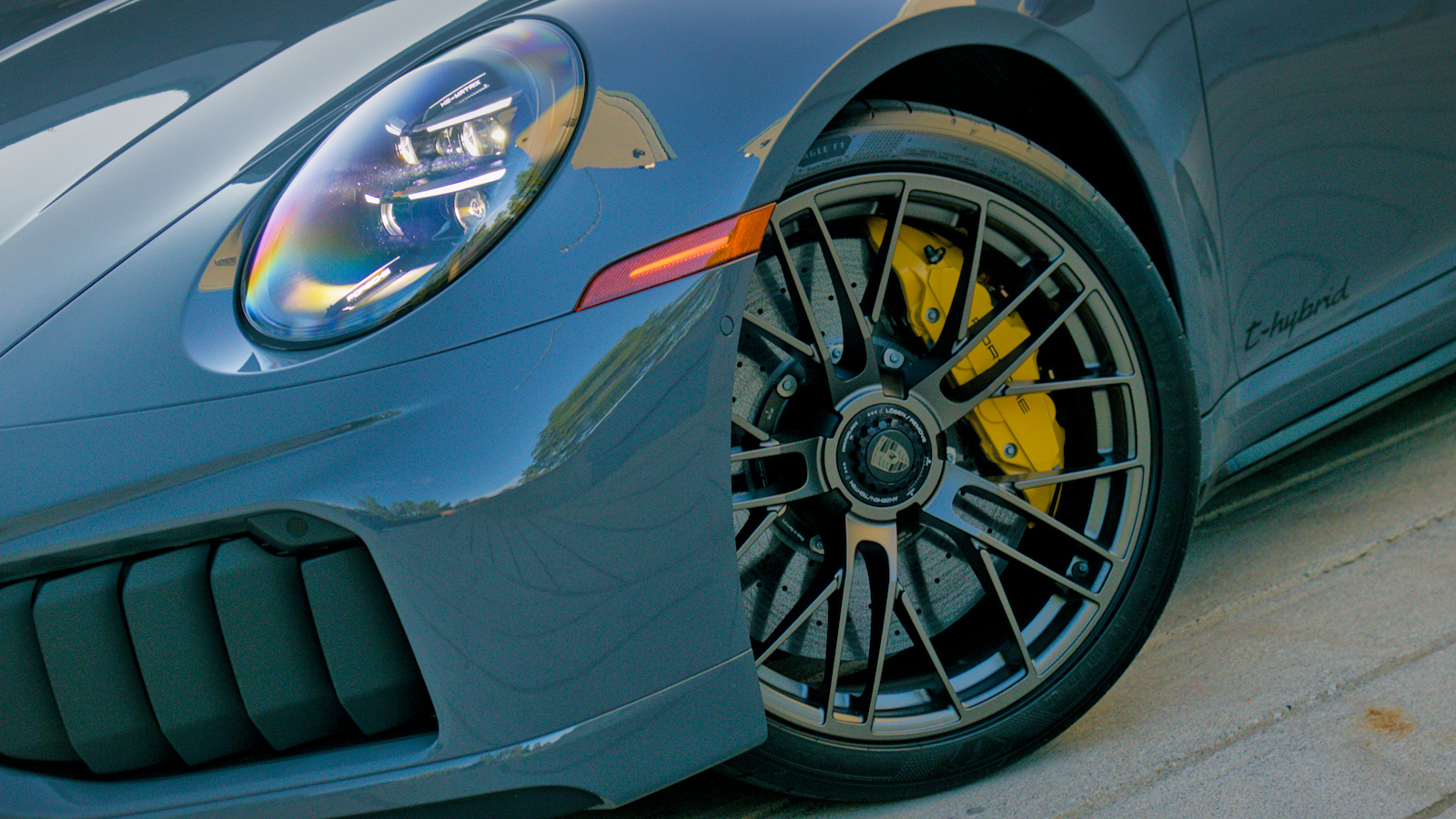
As a result, many owners have historically swapped to steel brake discs when their carbon ceramics were nearing end-of-life simply because like-for-like replacement is uneconomical. Now, there’s nothing wrong with steel discs, but they typically result in more brake dust, shorter wear life, and more unsprung weight than carbon ceramics. Thankfully, the aftermarket’s here to help. Overseas manufacturing of third-party carbon ceramic discs isn’t just feasible, it’s happening. And some drivers are finding success.

Take CTE Carbon Composites, for example. This subsidiary of a Taiwanese company with a fairly new composites facility in China is an OE supplier, but it also produces aftermarket carbon ceramic brake discs that often cost a fraction of genuine units. Its “street/track” carbon ceramic discs for a 996 Porsche 911 Turbo, which were shared with 997 Carrera models, retail for $1,999.95 per axle. That’s $3,999.90 worth of discs versus $37,800 worth of discs. Still a lot of money, but there’s absolutely an argument to be made for them.

What’s more, owners of various Porsches have actually tried them, and the results seem confidence-inspiring. On the notable Porsche forum Rennlist, user “twct” posted:
Great day at Castle Coombe yesterday. I went with my son (only his 3rd track day) so I only drove half the day. We were there a month ago and I know the track well so it was a pretty decent comparison.
The CTE/Endless [brake pads] combo worked flawlessly. Zero fade, very easy to modulate once warmed up. Threshold braking was much easier than the Girodisc/RSL29 combo. Made rotating the GT4 even easier than it already is. Even my son was braking much later to the point I was getting a little nervous as a passenger! It’s not a forgiving track with some off camber turns and nearby walls everywhere.
Street duty is rarely particularly taxing on brakes, but Castle Coombe circuit lets drivers build serious speed before getting into proper braking zones. Quarry corner immediately springs to mind. As such, a report of these aftermarket carbon ceramic discs holding up to that sort of use is hugely promising.

Of course, CTE isn’t the only brand with skin in the game. Hop on Alibaba and you’ll probably see carbon ceramic discs made by a brand called Icooh. They’re based in Guangzhou, which is in China, and have been selling replacement discs for intriguingly low prices. However, they are fundamentally a reseller, one that seems to have recently switched to chopped-fiber discs instead of continuous long fiber discs. While I wouldn’t run their calipers, as pad sizing is relatively unknown and this could limit replacement pad selection, their discs seem to be performing decently. Over on the Audizine forum, user “richib86” posted an update after breaking in the Icooh discs on his RS6:
so far no drawbacks. if you are looking for a different pedal feel, these won’t do that, it’ll feel stock. the brake booster would affect that, so maybe an option to do along with these?
Very slight squeal at very low speeds till they warm up but nothing that wasn’t present on my steal setup(these squeal much less than my factory steal rotors).
still no dust.
brakes much harder.
74lbs weight reduction.
I probably wouldn’t track on these discs, but as a street replacement for a heavily depreciated car where an iron conversion is cost-prohibitive (many calipers for carbon ceramic brakes are designed differently to those for steel discs), around $1,300 for a pair of replacement front discs for, say, a cheap high-mileage Alfa Romeo Giulia Quadrifoglio with factory CCBs seems like a viable option.
If you’re feeling particularly bold, third-party carbon ceramic discs are available for vehicles that didn’t come with carbon ceramics from the factory. Rotheli Racing has found particular success with aftermarket carbon ceramic discs on their GR Yaris track car, and now offers an upgrade kit. However, not only is this not a streetable upgrade in cold weather, Rotheli Racing’s done it properly with huge dedicated AP Racing brake calipers to allow for proper pad thickness. At roughly $7,838 at the current conversion rate, it’s not cheap for a single-axle kit but also not wildly expensive. There are factory one-axle carbon ceramic options for some cars that cost more than this.
It may have taken a couple of decades, but carbon ceramic brakes are no longer solely the domain of the ultra-rich. They’re now in the domain of anyone with a high enough credit card limit and a sense of reckless abandon, and that’s a beautiful thing. This is exactly why the automotive aftermarket exists. It keeps older cars on the road and gives speed merchants new ways to go fast. Or in this case, stop fast repeatedly with little wear. Maybe one day, if overseas manufacturing gets cheap enough, you’ll be able to slap a reasonably priced set of carbon ceramic discs on an absolutely juiced-to-the-letter-of-the-rulebook low-ish-buck autocross Miata. Now that would be a treat.
Top graphic image: Porsche, CTE Carbon



The only way I could justify carbon rotors for street use is if I had an autobahn Q ship and lived in Germany.
I am, however, interested in the tungsten carbide coated rotors for street use. Porsche PSCB brakes are much cheaper and have the benefit of reduced fade and much less dust. I think Brembo and a few others are starting to bring the technology to the aftermarket at a price that is less than 30% that of true carbon rotors.
No one needs this for the street.
But I will say that I just learned that ceramic brakes weigh like 1/2 of what conventional steel brakes do. I didn’t know that was one of their big advantages – I thought it was all about being impervious to heat.
Stupid product. You d put them on a track car. You wont use them on a street car. Carting is more fun and 1/10th cost.
Look up Cycle Kart. Looks incredibly fun and you can build a whole car for the cost of ONE of these rotors.
No thanks
Who does your family get to sue when your direct from China brakes fail?
You wouldn’t believe the amount of insurance PER part that companies like TRW carry for the brake components they manufacture.
You think the Guangzhou Goodjob Happy Brakes carries liability insurance on their products?
Glad I’m not the only one who was wondering this while reading. Don’t skimp on the things that connect you to the ground:
TiresBrakesShoesChairs & couchesMatresses
Don’t buy brakes on Aliexpress made by HJIBESOHUFYIGHWESBRIUJYKLOVFERD
That’s the “beauty” of Chinesium products (all types of Chinesium products, not just car-related ones).
Consumers have little-to-no recourse if something happens to the product because you’re not going to be able to sue a company 1/2 way around the world. And at the same time, since consumer dollars are going to China, they are helping put legitimate domestic manufacturers who do offer a warranty and support, out of business.
What a “great” business model!
I’ve always thought carbon rotors were kinda dumb, definitely a law of diminishing returns. The only reason Porsche even sells them is to put them on weird/rare models to help justify the ridiculous price.
If you are driving competitively FOR MONEY aka a real race team, I can see it, but for a street car? Nope, do not understand.
On a street car they should mean never having to replace the discs which is worth it to some.
…But this is an article about people replacing the discs on street cars.
I have had to replace front rotors and pads on a 2001 Jetta TDI and my current 2017 Accord V6, due to what felt like warpage. Replaced with aftermarket rotors both times. The pulsing, wobbling feeling went away, never to return (on the Jetta anyway–The Accord only has 1500 miles on it since, so too early to tell).
I have no idea why they developed their symptoms. I don’t track. It’s hilly around here but I have never pushed the brakes to where they have faded, or the OEM pads exude a hint of smoke or other signs of unhappiness. And I haven’t sat at a stop light with brakes applied after anything bordering on a long downhill stretch.
I have felt the same bake symptoms in Ford and GM rentals at 20-30K miles.
The discs on every other car I have had so equipped never exhibited any signs of warping or pad residue stuck to the rotors. It’s all mysterious to me.
So, sure. I’m happy there are cheaper replacements on the market and I wish the users of them the best. Heck. After repeated curbings of OEM alloy wheels at the hands of both ex-wives and yes, myself, I’d almost rather have steelies with nice hubcaps/covers. I am not going to notice the difference in unsprung weight the way I drive.
Reducing rotating and sprung mass is the holy grail for performance, so there’s a lot of benefit besides the direct braking capacity. Still pricey, but so are many other performance parts.
With Eu7 coming, the topic of brakes will be interesting anyways. Lots of changes coming
I had my Mazda parked outside in damp weather and only drove it every 2-3 weeks for a couple of months. The disks warped, and I needed them replaced. My mechanic says they’re seeing a lot more of that warping and that it’s due to cheaper steel. He says two factories make all of the steel brake disks in the world, so they don’t have any other options. They can change suppliers and brand names, but not manufacturers.
Discs never warp. Myth.
https://www.brakes-shop.com/brakepedia/general/myths-of-the-braking-system
Oh God, this drivel again.
You know what that sounds like to any reasonable person. You guessed it – warped rotors. This sentence even blames it on heat!
You know that that sounds like? Again – warped rotors.
The problem is the definition of warped. To 99.9% of people, warped rotors means you press the pedal and the steering wheel shakes, regardless of the actual physical cause.
I guess you know more than the guy who developed the GT40. Wild!
Wow, that flew over your head.
Can we all agree that sometimes you get shaking when you press the brake pedal and replacing the rotors fixes that. Yes? Great.
So that means something is wrong with the rotors. Yes? Great.
The argument is whether it’s ‘warping’ or ‘uneven pad deposition causing excessive runout’.
What I’m saying is that to anyone other than an engineer specializing in the matter, it’s the same thing; and the fix is the same. You replace the rotors. On older cars with much thicker rotors you could machine them down to get to new material; but on new thin rotors that’s usually not possible.
What I found most humorous about the matter is that first quote where it states one cause of the uneven pad deposition is hot spotting from elevated temperatures. Sounds a lot like warping due to high temps to me.
The stuff just wears off if you drive a few hundred yards with the brakes on.
Also, other than some bicycle and custom motorcycle brakes. The rotors are cast iron not steel. Steel is terrible stuff to make rotors from.
Outside of textile terminology, warp means to bend or distort. Adding material to a surface is not warping it.
Semantics. Also, adding material to a surface distorts it. I’ve never heard of anyone fixing their warped rotors by riding the brakes for a few hundred yards.
Lastly, I never mentioned steel. I just said the new thinner rotors don’t have enough material (in many cases) to machine them down any further while staying in spec.
You can! You just need to get them hot enough, and it should smear the bedded material even again, but you need to stay moving and not come to a stop after doing so. If you wait too long, they will literally wear unevenly.
I had to learn a lot about brakes from owning a previous car with relatively undersized rotors, and preventing ‘warped rotors’. Highly suggest you read that white paper by Carroll Smith, he’s dropping so much knowledge without trying to sell you anything. Legend.
Actually no! If you drive with uneven pad deposits long enough, you can literally wear the rotor unevenly. Additionally, the pad material at high temps can change the composition of the rotor from soft/ductile cast iron to hard wearing/brittle cementite.
This means that even IF you cut the rotor to eliminate the uneven wear, it will no longer wear evenly and the pulsating pedal will come back.
Knowledge is power, folks. I am trying to share it with you, and some of you are wanting to climb back into the trees.
You’ve literally just contradicted yourself in 2 posts.
Read the link I posted. The guy developed the GT40. I believe him because after reading this article and changing my pad selection, my SVX no longer suffered from ‘warped’ rotors.
Dude, I can remember this dispute going back 30 some years.
Let me explain it again, in even simpler terms.
Regardless of the actual reason for the problem, the layman calls it ‘warped rotors’. Trying to explain to a layman why they aren’t actually technically warped, but suffer from some other malady is a fool’s errand.
I’m not saying everything you said is wrong, I’m saying that to 99% of people it doesn’t matter.
But then those 99% of people will incorrectly think they had bad quality rotors, when in fact, it is ALL about the pads. Hence why you should correct them. Uneven pad deposits helps direct people towards the actual issue, pad selection.
It’s not heating that makes iron hard and brittle, it’s rapid cooling.
Race cars get their brakes up to 1700f several times per lap, and cool them as fast as they can. They were doing that when iron brakes were state of the art. I have never heard of this as a problem and family members have crewed on Porsche 935s at Lemans. All sorts of failures but never brakes getting brittle.
Throwing a bucket of water on orange hot brakes might cause a problem, but that’s not likely.
Maybe if you clarify what deposits you are referring to I could understand. Rust, dirt and friction material stuck to the disks have never been a problem for me. My crazy family members that set the parking brake on cars in long term parking have ruined some drum brake shoes, but a hammer and a brass scraper fixed the drums right up.
Right, and let’s say you have hot brakes because you’re on them a fair amount, now let’s say you go down a long hill with a stop sign at the end. Your brakes are HOTTTTTT. You stop at the stop sign, and there is traffic.
Congrats, you just created uneven pad deposits. Whenever you see an outline of a pad on your rotors, that’s the issue.
Highly suggest you read the article, it does a better job explaining things than I ever could in my life.
It’s literally NOT warping though, the hot spots just transfer the pad material unevenly. And it’s worth knowing, because the REASON this is happening is cheap pads with a low max operating temp. Selecting brake pads with a higher temperature rating will PREVENT uneven pad deposits aka “WaRpEd rOTorS” from occuring in the first place.
Just repeating “ur de dur it’s just warped” over and over doesn’t get to the root cause of the problem so you’re never going to find a solution.
Edit:
Ok, I get it, I think you are talking about bedding in the brakes, which I guess could be described as transferring material.
But that’s microscopic, and certainly wouldn’t affect the runout enough to feel in the pedal like a warped disc. Also, it will come right off. Usually every night if you park outside.
It does affect it though. Dude read the link I posted above, when you come to a hard hot stop and stay there, the material transfers unevenly.
May I just jump in and say that pads with too high a temperature rating are just as bad if not a lot worse?
The guy that restored my 1970 Porsche put high temperature rated pads on it , apparently thinking it was going to be a track car. Between tires that are much stickier than in 1970, and no vacuum boost, it’s impossible to lock the brakes when they are cold.
I’m a big guy and at the time was a skier, biked a lot, and was doing 200 squats a day, and not being able to lock the brakes was scary.
I dunno. CTE sounds brain damaged.
#AcronymOverload
I’ll wait for Temu to carry them /s
CTE doesn’t even carry parts for my Geo Metro. No bueno, amigo.
I do like the idea of cheaper ceramic brakes for enthusiasts, but I still think that unless taking your car to the track is its primary function, steel discs are plenty good enough.
What’s funny is my dad and I have two track cars, and a good relationship with a shop that builds them. Any car getting fitted for track duty loses its ceramic discs (if equipped) and gets traditional steel discs. Usually with upgraded calipers as well. Steel seems to handle the heat cycling you get on a track better than ceramic. And a whole hell of a lot cheaper.
This has been my observation as well. Track cars ditch the CCBs, and go to good quality Steel like from AP racing etc. Those racing steel rotors are much lighter than stock rotors while handling the abuse of a track quite well, and still at a much lower price than the “cheap” CCBs Thomas mentioned in the article. So these steel rotors negate or close the gap on most of the CCB positives. I have seen many people check the box for CCBs, then pull them directly off the brand new car and sell them to someone looking to show off, and proceed to put racing steel brakes on as they head to the track. The selling of those CCBs more than offsets the steel brakes for many years worth of consumables.
Now for the truly wealthy and the high end teams (like the ones with factory backing etc) they can get the absolute best CCBs to get every last pound out of the car, but they are not using these low cost ones. I shudder to think of a CC rotor of lower quality exploding at the back of a big straight away…
Castle Combe is a grassroots venue, and every year they have “action days” where you can take any roadworthy vehicle on track. The level of talent is…variable, and Quarry corner is surprisingly tricky – the braking point should be exactly where the top of a short uphill section known as Avon Rise is, and that means that many cars are rather unstable when braking into the corner. There are many crash compilations, and here’s one.
https://www.youtube.com/watch?v=m4htOHy0nAU
Castle Combe is my closest track, I’ve never done a track day, and I now own an MX-5…hmmm
I demand carbon ceramic drum brake replacements!
I wonder if that would actually fix the biggest problems with drum brakes?
It would cost a fortune to find out. Someone else’s fortune, preferably.
The biggest problem with drum brakes is the bloody springs pinging off into the far corner of the garage when you’re trying to replace the brake shoes.
I would love to see a CC drum brake, for… science
The title photo made me think someone used the ceramic paint for calipers on a set of wheels, and I was like “huh, an idea”.
CTE has a pretty good reputation. They’ve made cf driveshafts for the e9x community that have been in service for quite a few years now.
Why wait to see if “overseas manufacturing” becomes cheap enough, maybe there us a way to manufacture it cheaper with a new process?
When in the modern history of manufacturing has anything other than pharmaceuticals been cheaper in the US than abroad?
I know it’s not possible right now but I was thinking of a futuristic 3D printer that could print these.
You could pick whatever design you wanted and print it up.
If a cheaper way was found to make it in the US whoever was making it would probably just pocket the difference.
I’m not gonna say that everything on alibaba is a+ quality, but many things from many brands come out of only a few factories in China, and people are incredibly susceptible to marketing.
One could start a business right now based off that one alibaba screengrab. Buy 50 Giulia rotors and they’ll sell em for less than a grand each. They’ll even put your logo on it and the packaging. You sell them for $1,700 each with a name more natural than “ICOOH”.
You see it all the time. Intercoolers, grilles, downpipes. All kinds of stuff. Next thing you know people on forums are arguing that intercooler brand A is better than B and they would never buy brand C from alibaba without realizing all three are identical and came out of the same factory.
A Lemforder control arm for my car is like $700 at the dealership. You can buy it from Lemforder without the OEM logo for less than half of that. It’s entirely feasible that the Chinese can make a very good CCB for dirt cheap sold under a name that doesn’t matter because it’s coming straight from the factory. It’s also entirely feasible that you could pay $2k for an ICOOH brake rotor sold by “CarbonPro” or whatever brand the forums are currently all about without even knowing it.
This is nothing new. Back in the day I noticed some parts for our 931 Porsche were exactly the same as for my Scirocco but at a much higher price.
We bought the VW parts and passed the savings onto ourselves!
Shoutout to GM putting the same Brembos on basically every sporty car they sold in the mid-late 2010s, but charging 3 times as much for the ones that said “Corvette” on them as the ones that said “Cadillac” on them.
On the other hand shoutout to GM (legitimately) for selling the ATS Brembos that said Cadillac on them for so damn cheap for a decade.
Technically, the Corvette ran PBR calipers (a company out of Australia) on the C6 base, grandsport, and Z06 (yes the sliding and fix calipers are both PBR). I forget who made the CCBs for the C6 ZR1. But yes, the base sliding caliper was put on some other models and it definitely cost more when it had the CORVETTE logo on it. Newer Vettes do have brembos if I remember correctly.
Also, you are spot on with how cheap the ATS brembos are. I picked up a set to put as the fixed calipers on the back of my base c6! GM put that caliper on just about every sporty model (other than the vette) for years, the G8, camaro, CTS, ATS and probably others.
I’m talking about the base C7 calipers vs the ATS ones. I wanted to try to put them on the front of my C4 (with the C6 Z51 front discs they fit perfectly) instead of the typical C5/6 upgrade kit and was briefly considering getting the Corvette ones since they would say Corvette and (at the time. The ATS ones aren’t such a steal anymore) they were something like $150 each for the ATS ones on Amazon new and ~$500 for the C7 ones from GM.
I just bought a $15 jar of Por 15 in red and they were identical less the Corvette sticker.
Ah the c7, I forgot about those for some reason. I remember all the other parts from c7s that work but forgot the calipers. Sounds like a good upgrade for your c4!
This is a common misconception worth dispelling.
Same factory is meaningless if they don’t follow the OEM process and quality plan
We’re not talking about OEM parts though.
“You can buy it from Lemforder without the OEM logo for less than half of that”
The logo is not the only difference and is an oversimplification. Aftermarket supplier is free to loosen specs compared to the OEM. Aftermarket does not do nearly the bench or vehicle level testing of the part using its aftermarket process that the OEM does
This applies – counterintuitively – even to the supplier who made the OEM parts. OEMs typically own their tools too, so aftermarket supplier would have to copy the OEM tool, and in that case, all of the expected quality is invalidated
Lemforder is the OEM, which is why the logo is removed when it’s sold direct. In the case I referenced, it’s literally the same exact part with the OEM logo ground off.
OEM refers to the auto manufacturer. I know what OEM stands for. I’ve designed and released numerous part numbers for OEMs meaning automakers. It’s what everyone in the auto industry refers to automakers as. If you’re referring to OEM as the original equipment manufacturer of the component, you likely have never released components in the auto industry
It IS NOT literally the exact same part with the OEM logo ground off. It LOOKS LIKE the same part and is made by the same supplier. But, they are no obligated to meet any of the OEM quality or design or material specs. An OEM part is validated to a specific process and any deviation from that process results in a “new part”
The aftermarket suppliers are not completing the validation of their process to the OEM standard. It sounds like a minor difference and in practice produces a different expectation of performance and durability
The aftermarket product might source sub components from cheaper suppliers. They may not have the same incoming material suppliers or quality checks (due to cost). They may have larger tolerances resulting in fewer scrapped parts. The list goes on and on
Companies like FCP Euro who sell OE (vs OEM parts) as identical in fit and quality are genuinely misinformed and misleading
Fascinating.
I don’t know the actual answer to this because I’ve never worked aftermarket (and thank god I don’t work in the auto industry anymore), but the question I have is, “why are there literally parts with the OEM logo ground off?”
I think it could be:
1) supplier contract reverts tool ownership to the supplier at the end of the OEM production run if tooling is amortized into piece price. It may be worn but it is a good enough starting point AND now companies like FCP Euro mislead the consumer with OE supplier claims so there is incentive to produce parts with the logo ground off because that’s popular
2) service part agreement. Supplier contract might allow for supplier to run their own service parts off of the same tool during the production window. I’m less certain on this but seems pretty likely
There are plenty of rabbit holes to go down if you google “Audi logo removed from Lemforder control arm”, which is what I did when I saw the part. Lemforder does sell their own service parts, but without a workshop account I couldn’t access any of the technical data.
Many hits for Toyota parts as well. PN and Toyota logo removed when sold from Denso.
They’re probably NCM.
You’re absolutely right, BTW…just because the same part comes from the same factory, doesn’t mean it’s at the same quality level. There could be different bearings, poorer tolerance, you name it.
Whilst I generally agree with you, some of the OE parts I’ve used are literally genuine parts with that logo ground off.
I’ll stick to my steel rotors please and thank you.
Brakes are not typically where I try to save a buck.
But saving $30K on a car worth $36K? I think I would take my chances – but not on a racetrack.
Of course, I would never buy a car with this nonsense to start with. Not my jam.
You don’t have to. Dodge already did that for you.
Harsh. LOL
Trusting your life to Chinese quality is risky, especially with the speeds these cars achieve. If a disk frags in high speed braking, you are toast.
Yeah their space station and their 92 orbital rockets launched in 2025 alone show these guys have no eye for quality and performance…
Somehow there might be a difference in quality between the guys making rockets and the guys making cheap knockoff car parts. Then again, the Chinese rocket boys did manage to blow up an entire village that time.
You know all the foreign cars made and sold in China are made by Chinese people (and a handful of foreigners) and use a lot, if not all, chinese made parts?
Some of those cars, for example Buick Envision, Lincoln Nautilus, Volvo S90 and Polestar 2, are (were) even exported to the US. Yes read that again.
Now you can argue that the quality of the components used in those cars is higher, still they came from China, were assembled in China and are now on the roads in the US. More important ; if you think that a disc rotor or brake pads are ‘too complicated’ to produce for Chinese then you’re really thinking about 3 decades behind. If you want to play ‘whataboutism’ then how about Space Shuttle Challenger and Space Shuttle Colombia? Them Houston rocket boys managed to make some grandiose fireworks for the world to see. With deaths. Unlike the debris of that chinese rocket you are referring to. But I digress. Brake rotors and brake pads. You might check where yours were made. Roughly 33% of all disc rotors come from Asia (mainly China and Taiwan). Then sold in the US by US brands. 25% come from the US itself and about 25% as well from Europe.
I don’t mind bashing China for inferior products if they are clearly inferior. But reality is that most aren’t inferior, just cheaper. The very inferior products obviously quickly fade from the market. If it really was so bad regarding brake products (drums, rotors, pads) then there would have been a ton of investigations going on already.
LOL – there is no shortage of cheap Chinesium junk aftermarket car parts available. You get what you pay for. I doubt they are using these parts in brand new foreign brand cars, but that is entirely beside the point.
As I have said on here many times, the Chinese will build to any quality standard you are willing to pay for, from lead-painted kid’s toy to iPhones, but that includes paying for the quality control to make sure they are not trying to pull one over on you. BTDT, personally helping a friend get custom electronics made for his business. I don’t trust them as far as I can throw them left to thier own devices, and thier own brands.
Cheap, fast, good. You get to choose 2, right?
The trouble with China is that you can pay for quality and not get it.
Your view and I’d say most people’s view of Chinese manufacturing is extremely dated. This underestimation is costing a lot of people a lot of money in the short term and might jeopardize the whole US car (and other) manufacturing industry in the long term. Without competition in the US market against those ‘inferior Chinese cars’ there is no need for the manufacturers to improve their products, lower their prices or improve the quality or service. If the US products are so good, so high quality and of such high price-performance that any competition has no chance ; then why are they basically banned from the US market? The regulations and the 100% tariff (100%, think about it) basically makes selling Chinese cars impossible. But one day there will be a brand with a ‘non-connected’ car with such a low base price that even with a 100% tariff (paid by the importing company, so paid by the end user eventually), will still be a good deal. What will happen then? Increase tariffs to 200%, 500%, 1000%? I don’t think I can convince you that this is a dead end – eventually the whole world will buy Chinese cars instead of US cars. The domestic volume will become so low that every model sold in the US will become more and more expensive and more and more sober with its features, to keep it affordable. Meanwhile Tesla has snuck in a ‘lease, don’t own’ model with the CyberCab which nobody seems to understand (making car ownership a less logical choice, especially in any city) reducing the need to own a car (since you can call one any time of the day, 24/7 at very affordable rates since there isn’t an ‘expensive’ driver behind the wheel and they run on cheap electricity). If the Chinese won’t kill the traditional US car industry directly then Tesla will eventually. Learn from China. Copy them. Compete with them. With all the available knowledge, experience, distance to the consumers, it should be a walk in the park, right? Let American companies make high quality affordable American EVs with American battery tech and American sourced minerals to boost American manufacturing so imports aren’t needed (anymore). Instead by closing up we’re repeating the 1920s all over again and we know what happened then in 1929. Now we’re repeating this scenario all over again.
My view of Chinese manufacturing is from last year.
Are they paying you to be thier biggest cheerleader?
There is a huge difference in embarrassing President Xi and the entire nation of China, for which you’ll be imprisoned forever… or working one over on the Western pigs, for which the President Xi will commend you on your business acumen.
What does that have to do with disc rotors?
“Chinese quality” is less about their capability and more about what the buyer is willing to pay. Walmart (for example) will send their buy-team to China and say “We want a set of 5 screwdrivers, with a plastic case. We want 100k units, but we’ll only pay US$2 per set. The Chinese manufacturer isn’t going to put $5 worth of materials into each set, they’ll make it for $1.85 and get 15c profit. If Walmart paid for $15 quality, they’d get $15 quality. They don’t. They pay for $2 quality, sell it for $10 and consumers blame the Chinese for soft metal and brittle plastic.
I’ve long said this same thing. Generally speaking, we only look to China when we want cheap crap. That’s what we pay for, so that’s what we get. That’s not to say they can’t also build high quality stuff. Is their absolute highest quality as good as ours or Europeans? Maybe, maybe not. Probably depends on what product we are talking about.
No, the Chinese manufacturer is going to try and make it for $0.92 cents and pocket $1.08 in profit… and they’ll only do as told, if they know you’re checking on them. Maybe.
As someone in the aftermarket auto parts industry, the Chinese are relentless in trying to get your business and they probe you to see how greedy you are too. As a Chinese connecting rod manufacturer once told me “We can make you connecting rod bolt with anything you want stamped on head.” They know what that message means and they know that anyone that takes them up on that doesn’t give a damn about the quality of the product. That’s their perfect customer.
I don’t trust their material certs, I don’t trust their heat treating, I don’t trust any of their internal QC.
I’m guessing you don’t shop at Harbor Freight.
I don’t other than for single-use crap that isn’t going to hurt me or what I am working on if it fails. HF does have some good stuff now, but it costs the same as good stuff from elsewhere. I would rather send my money elsewhere.
If a US buyer asks a Chinese factory to stamp certain marks on their produced parts then who is in the end responsible if that part fails, the factory or the US seller? You know you can test parts after you received them from a factory. That is what most legitimate companies do, no matter if the factory is in the US, Europe, China or Finland. You do independent quality checks, at random intervals, on random parts to ensure quality for YOUR customers. You should know as “someone working in the aftermarket auto parts industry”. Seems you already have some experience outsourcing parts outside the US.
The trouble is with China you can’t do random tests – you have to test EVERY batch in my experience.
But this is also how large companies check the products going to their clients. Cars will be drive for a short while, engines will run, phones, TV, solar panels, chips, chemicals, coal, iron ore, aluminium bars, steel ingots, whatever, nearly everything gets checked before it’s loaded in a container. Then when you receive the goods you already know most of them are ok and random checks on your side will make sure the quality is consistent. The batch of eggs you buys in the supermarket were sampled/tested on salmonella. Not the egg you’re eating, but a few from the batch from that farm was. And if one fails a test the whole batch gets invalidated. In the case of a part failing a test the whole batch will be returned/not paid for. Depending on the contract of course. This is common practice in the industry for how long ? 20 years ? 50 years ? 100 years ? 400 years ?
People complaining that cheap sourced parts from China are failing in the cars of their customers mean their supply chain wasn’t set up properly. Either due to ignorance or cutting corners.
Apple was able to make super high tech high end iPhones in China, whole cities in the south are dedicated to producing those phones and all the parts going in them. The rocket and space station example are outliers regarding tech and quality, I know, but literally half of what the world needs regarding tech -is- coming from China so defending people who claim that everything from China is shit is just showing their own ignorance on the matter. Laptops, GPUs, TVs, 33-50% of all simple semi-conductors come from China. Those things are way more complicated to produce than a brake rotor or a brake pad. Actually -ANYONE- with a press can make a brake pad in 3 seconds. Put powder on a backing plate, add powder, press down, DONE. It’s the type of powder/ingredients which defines the quality/longevity/performance of the brake pad and that is extremely easy to check/test. By hand it is tedious, with cameras you could do automated testing, with a laser you can even make the tests near perfect. Besides just manual (sample) particle testing with a microscope or with a reactive agent.
If you’re a serious (volume) buyer you can and should invest in a proper QA process. If you buy 1000 parts once a year then sure, you have to be on top of that.
Even then there are plenty of cases where people sourced from other countries, from Vietnam, India to say Australia, only to find out the parts were still made in China and then repackaged in those other countries. Partly to dodge tariffs but mostly to pretend the quality was ‘high’ because it didn’t come from China.
We all made China the factory of the world, we’re in control. They can produce iPhones, rockets, space stations, tanks, planes (military and commercial), chips and yes also crappy brake rotors. It all depends on the buyer what the quality is going to be.
You repeated exactly what I said. China will build to any quality YOU are willing to pay for. Left to their own devices, their too often usual default is to build shit. Even when you aren’t paying for shit. So you have to pay even more to get decent, consistent quality out of them. But unfortunately, in some industries there really is no alternative. However, for those industries where there are alternatives, like cars, I won’t buy from them. They don’t make anything I would be interested in anyway.
The trouble is that you can pay for $15 quality, but if you aren’t paying attention they will try to ship you $7.50 quality every time and pocket the difference.
BTDT helping a buddy with his business. The samples were *amazing* so he signed the contract. The first shipment was crap. He rejected it. The second shipment was better, but still not to par. They eventually stopped screwing around and produced to the quality that was contracted for, but he ended up having change suppliers AND pay for third party inspections pre-shipment to get consistent quality out of them.
He would really prefer to source from the US but unfortunately this is one of those categories where it just isn’t realistically possible at any price. The supply chain just doesn’t exist here anymore. All he could do is source the components overseas and assemble them in the US, which is pointless. Which sucks.
The number of dirt cheap yet perfectly fine things from China is truly amazing. Brushless motors for $7 each shipped that work fine for use.
I’m just glad to get modern E-coated rotors that don’t clog the cooling passages with rust before they get too thin. 30 years ago I would soak new rotors with spray paint or cold galvanizing compound – ANYTHING – to try to keep them from clogging with rust.