

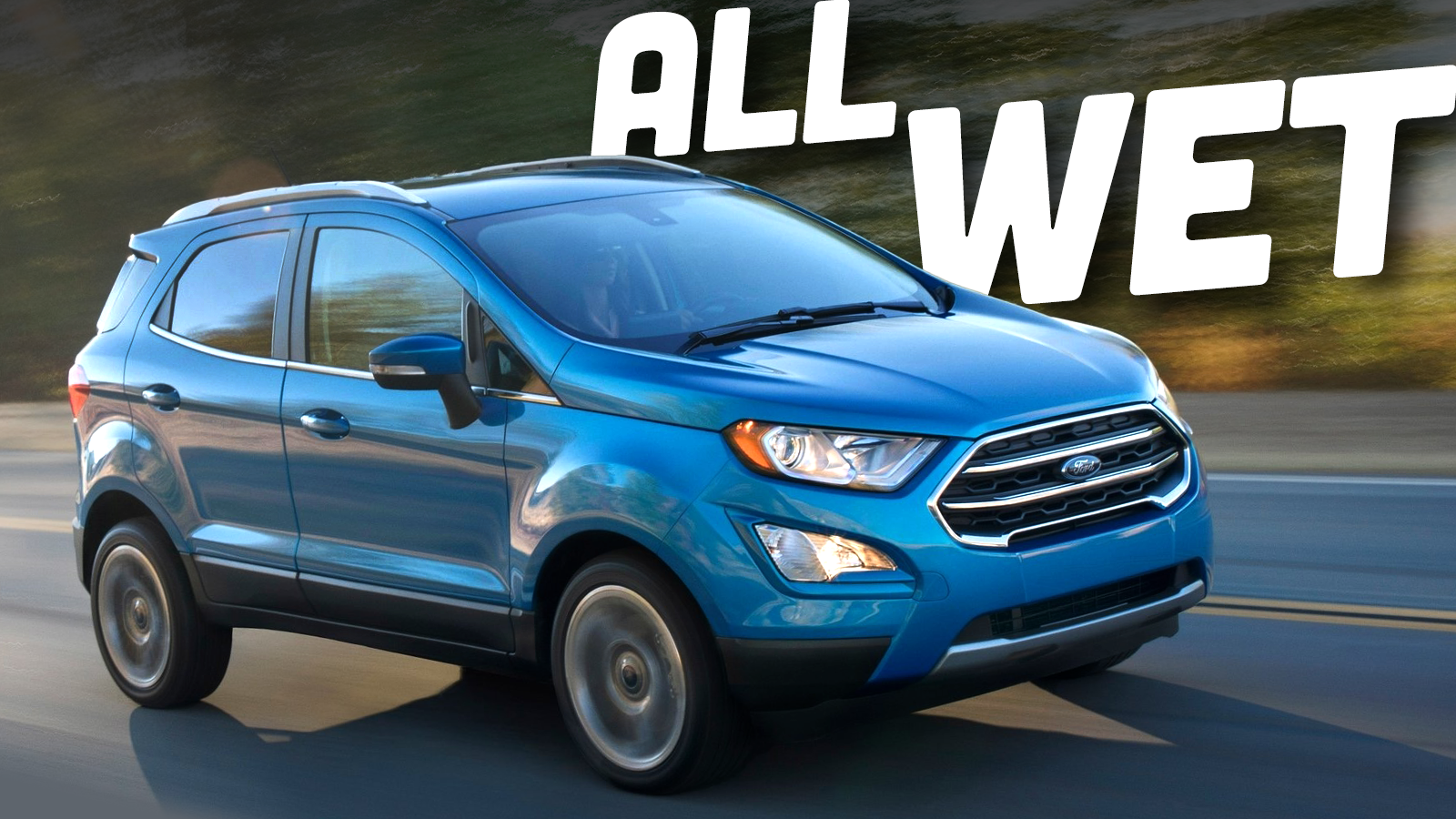
We all make mistakes, but at least they usually aren’t federal-investigation-level bad. That’s not always the case when you’re a major automaker, though. The smallest turbocharged engine Ford ever sold in America is the subject of a new National Highway Traffic Safety Administration analysis because its wet belt system keeps starving the engine of oil, resulting in engine failure well before the belt’s official service interval.
When Ford first announced its one-liter turbocharged three-cylinder engine, it seemed like a bit of a packaging miracle. It may have only made 123 horsepower, but the engine block was small enough that one communications team member put it in a carry-on and flew it to Los Angeles. At the time, this was an unfathomably tiny engine for mass-market American cars, but it turned out to have some flaws.


From the early 1960s up until roughly the Great Recession, everyone generally agreed that timing belts go on the outside of engines and timing chains go on the inside of engines. Chains are made to be lubricated by oil, belts historically weren’t. That all changed when Ford rolled out an oil-bathed timing belt on the European-market 1.8-liter TDCI diesel engine. The one-liter EcoBoost was another early instalment of oil-bathed timing belts, and Ford seemed to not quite get it right. By 2018, it had switched back to a traditional timing chain but retained an oil-bathed belt that drove the oil pump.

Initially, the early-series oil-bathed timing belt had a replacement interval of 150,000 miles. This proved optimistic enough to result in an NHTSA preliminary investigation. In 2025, the feds opened up a preliminary investigation into the one-liter EcoBoost inline-three offered in 2014 to 2017 Fiestas, 2015 to 2018 Focuses, and 2019 to 2021 Ecosport crossovers as the result of 355 reports of engine failure. That first stage of the probe is over, and here’s what the report states:
ODI found that the timing belt material may degrade and create debris that clogs the mesh oil pump pick-up screen, resulting in reduced oil pressure in the engine. As additional debris accumulates on the screen, this can progress to a loss of motive power while driving due to a lack of engine lubrication. The failure data provided in response to this investigation revealed an average failure mileage of approximately 70,000 miles, and that 98% of the failures occurred prior to the 150,000 mile timing belt replacement interval per the vehicles’ maintenance schedule. Based on evidence collected via consumer surveys and an engine teardown, failures have occurred despite evidence of proper and routine oil maintenance. The oil pump pick-up screen is not serviceable, so debris accumulation cannot be inspected or manually removed without removing the engine from the vehicle.
Wow. 355 reports of lost oil pressure with an average failure mileage of 70,000 miles caused partially by a part with an advertised 150,000-mile replacement interval is diabolical work. It’s worth noting that back in June, Ford revised the wet belt interval down to six years or 100,000 miles, but there’s another component to this saga common to one-liter Ecoboost engines regardless of whether they use a wet timing belt or a chain: The oil pump drive belt I mentioned a few paragraphs ago. This particular part is more than eleven hours of labor deep into the engine, and that’s on models with a timing belt. It has no scheduled replacement interval, and plenty of people have seen components of this system deteriorate in hilariously sad ways with disastrous results.

Back in 2023, Ford issued a recall concerning 2016 to 2018 Focuses and 2018 to 2022 Ecosports with the one-liter EcoBoost engine. The problem? The oil pump drive belt tensioner. As the recall report states:
The oil pump drive belt tensioner arm retention caulking joint is not robust to the vibration experienced by the component over time, which can cause arm separation. The tensioner arm can contact the engine balancer shaft, which can cause the tensioner arm to fracture. A greater than expected load on the oil pump drive belt may result in belt degradation. Ford’s engine design verification testing did not adequately represent the load on the oil pump tensioner system experienced in the vehicle.
This tensioner failing is pretty much a death sentence for a running engine, and it can come with a spectacular side effect: Shearing the teeth clean off of the oil pump drive belt. That failure mode is going to immediately grab your attention in the next few pieces of media, but let’s keep our eyes on the prize and look at belt deterioration.
“I Do Cars” on YouTube tore down a one-liter EcoBoost engine three years ago and found that both belts were severely cracked. While the exact mileage of this particular engine cannot be ascertained, it did come out of a Ford EcoSport, so it was only a few years old at the time.

If that’s not enough of a visual, here’s a post from 2024 in the Facebook group “Ford EcoBoost Nightmare” that shows an oil pump drive belt’s teeth sheared smooth off. As the post states, “EcoBoost 1.0 L 2019, oil pump drive belt. All teeth are gone, nothing left.” Check out the severe cracking of the belt, with some chunks missing. That engine would’ve been five years old at the time of this post, and the original poster claimed to have only covered 53,000 miles. Even though wet belts are usually Teflon-coated and made of Kevlar-reinforced Hydrogenated Nitrile Butadiene Rubber, the belts in the one-liter Ecoboost inline-three do seem prone to advanced wear.
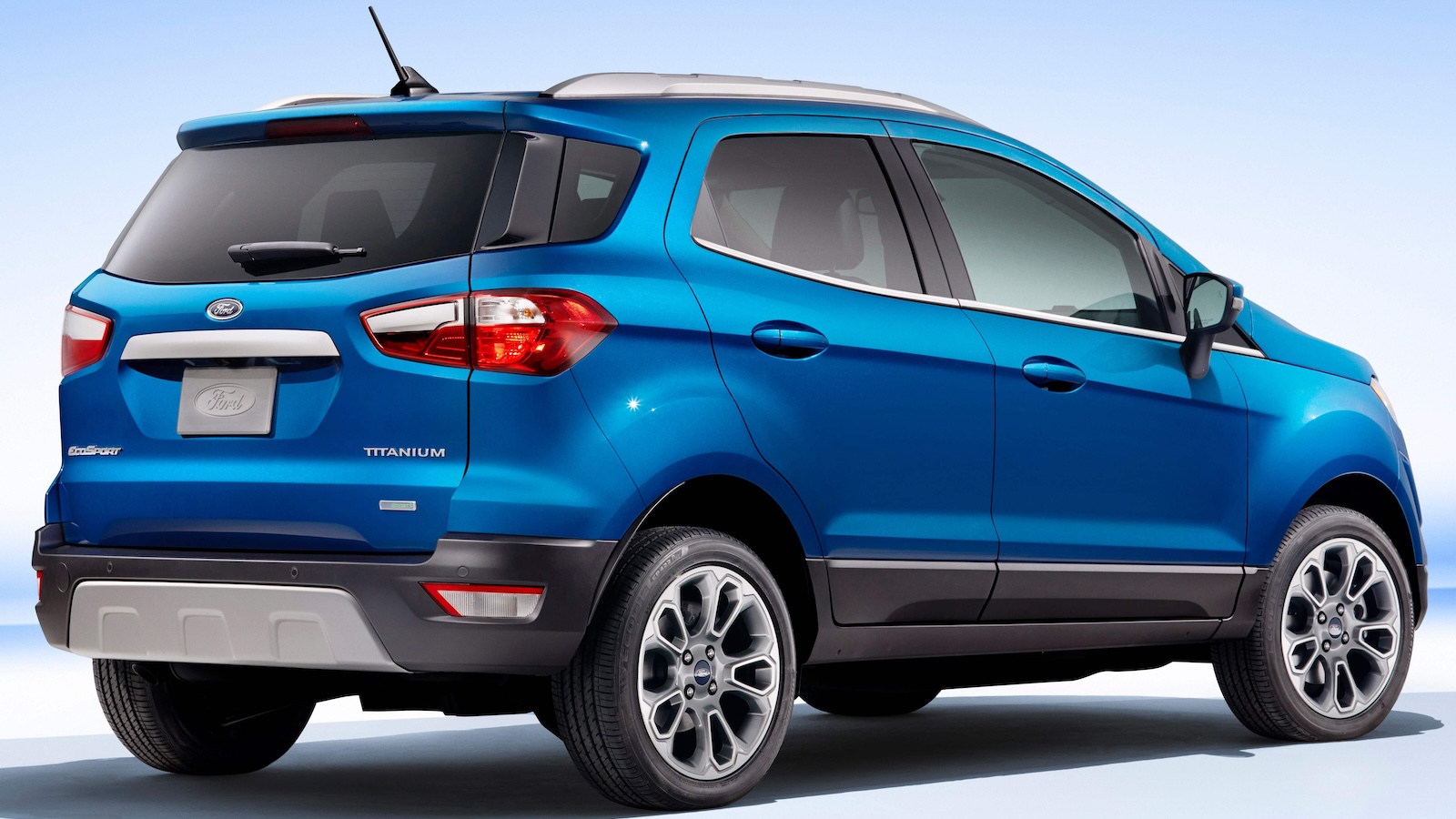
Adding insult to injury, owners of one-liter Ecoboost engines wouldn’t get advance warning of oiling issues or belt failure. At least a timing chain with worn guides usually rattles before the system truly fails. This system offers no such external tell-tale. It’s also an expensive set of components to replace. The timing belt alone on an early one-liter EcoBoost Fiesta calls for 11.1 hours of labor, easily a four-figure bill for a four-figure used car. Cheaper than a new engine, sure, but far more laborious to change than a traditional external timing belt.
For now, it’s best to stay away from Ford’s one-liter EcoBoost inline-three and see what the feds find. While only 135,551 cars with this engine were sold in America, wet-belt deterioration is still a big problem affecting cars aimed at drivers who can’t exactly splash the cash. Next up, engineering analysis. Who wouldn’t want to learn what actually went wrong?
Top graphic image: Ford


Ford Engineer: Hey, we are getting heaps of reports that the wet belts in this engine are failing well ahead of schedule. What are we allowed to do?
Ford Accountant: *tap tap tap* Well, it looks like we would lose too much profit if you replace them both with chains, so pick one and do it.
FE: But, they are both failing and both cause engine failure? Wouldn’t it make sen….
FA: Choose one before I move you to the LLM integration department.
Can’t wait for Mazda to bring back a rotary-
Curious to hear about this more from our European commenters where this type of setup and failure is far more common, however it also seems that they place far less value in reliability than US customers do, or at least used to and replace cars far more frequently.
Ford wouldn’t want their economy cars to last too long. Got to keep the customers coming back!
Come back to what? They have no economy cars. The $20k Maverick hero ballooned like Farley’s bonus check after Ford declared victory in their war on quality.