

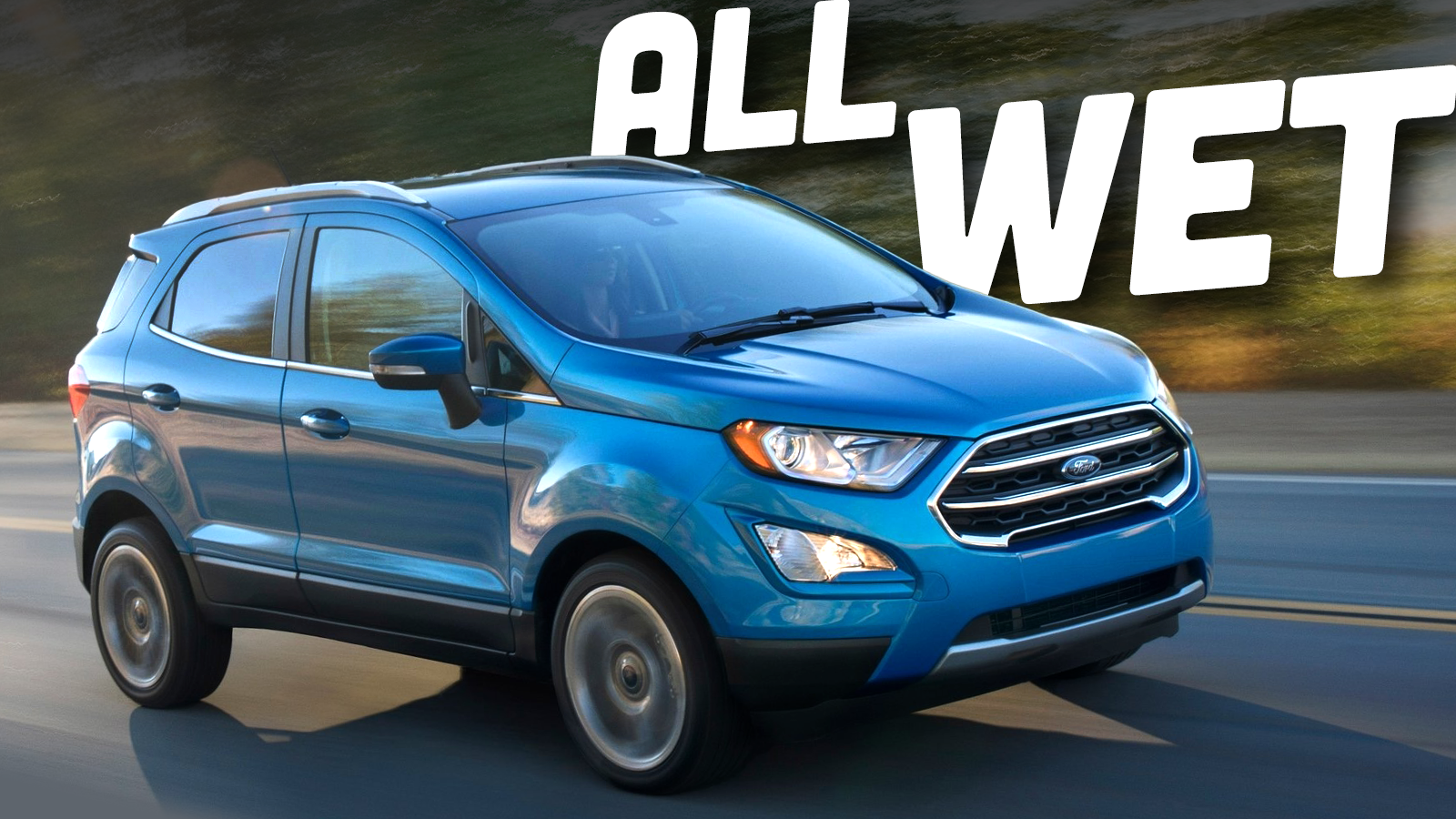
We all make mistakes, but at least they usually aren’t federal-investigation-level bad. That’s not always the case when you’re a major automaker, though. The smallest turbocharged engine Ford ever sold in America is the subject of a new National Highway Traffic Safety Administration analysis because its wet belt system keeps starving the engine of oil, resulting in engine failure well before the belt’s official service interval.
When Ford first announced its one-liter turbocharged three-cylinder engine, it seemed like a bit of a packaging miracle. It may have only made 123 horsepower, but the engine block was small enough that one communications team member put it in a carry-on and flew it to Los Angeles. At the time, this was an unfathomably tiny engine for mass-market American cars, but it turned out to have some flaws.


From the early 1960s up until roughly the Great Recession, everyone generally agreed that timing belts go on the outside of engines and timing chains go on the inside of engines. Chains are made to be lubricated by oil, belts historically weren’t. That all changed when Ford rolled out an oil-bathed timing belt on the European-market 1.8-liter TDCI diesel engine. The one-liter EcoBoost was another early instalment of oil-bathed timing belts, and Ford seemed to not quite get it right. By 2018, it had switched back to a traditional timing chain but retained an oil-bathed belt that drove the oil pump.

Initially, the early-series oil-bathed timing belt had a replacement interval of 150,000 miles. This proved optimistic enough to result in an NHTSA preliminary investigation. In 2025, the feds opened up a preliminary investigation into the one-liter EcoBoost inline-three offered in 2014 to 2017 Fiestas, 2015 to 2018 Focuses, and 2019 to 2021 Ecosport crossovers as the result of 355 reports of engine failure. That first stage of the probe is over, and here’s what the report states:
ODI found that the timing belt material may degrade and create debris that clogs the mesh oil pump pick-up screen, resulting in reduced oil pressure in the engine. As additional debris accumulates on the screen, this can progress to a loss of motive power while driving due to a lack of engine lubrication. The failure data provided in response to this investigation revealed an average failure mileage of approximately 70,000 miles, and that 98% of the failures occurred prior to the 150,000 mile timing belt replacement interval per the vehicles’ maintenance schedule. Based on evidence collected via consumer surveys and an engine teardown, failures have occurred despite evidence of proper and routine oil maintenance. The oil pump pick-up screen is not serviceable, so debris accumulation cannot be inspected or manually removed without removing the engine from the vehicle.
Wow. 355 reports of lost oil pressure with an average failure mileage of 70,000 miles caused partially by a part with an advertised 150,000-mile replacement interval is diabolical work. It’s worth noting that back in June, Ford revised the wet belt interval down to six years or 100,000 miles, but there’s another component to this saga common to one-liter Ecoboost engines regardless of whether they use a wet timing belt or a chain: The oil pump drive belt I mentioned a few paragraphs ago. This particular part is more than eleven hours of labor deep into the engine, and that’s on models with a timing belt. It has no scheduled replacement interval, and plenty of people have seen components of this system deteriorate in hilariously sad ways with disastrous results.

Back in 2023, Ford issued a recall concerning 2016 to 2018 Focuses and 2018 to 2022 Ecosports with the one-liter EcoBoost engine. The problem? The oil pump drive belt tensioner. As the recall report states:
The oil pump drive belt tensioner arm retention caulking joint is not robust to the vibration experienced by the component over time, which can cause arm separation. The tensioner arm can contact the engine balancer shaft, which can cause the tensioner arm to fracture. A greater than expected load on the oil pump drive belt may result in belt degradation. Ford’s engine design verification testing did not adequately represent the load on the oil pump tensioner system experienced in the vehicle.
This tensioner failing is pretty much a death sentence for a running engine, and it can come with a spectacular side effect: Shearing the teeth clean off of the oil pump drive belt. That failure mode is going to immediately grab your attention in the next few pieces of media, but let’s keep our eyes on the prize and look at belt deterioration.
“I Do Cars” on YouTube tore down a one-liter EcoBoost engine three years ago and found that both belts were severely cracked. While the exact mileage of this particular engine cannot be ascertained, it did come out of a Ford EcoSport, so it was only a few years old at the time.

If that’s not enough of a visual, here’s a post from 2024 in the Facebook group “Ford EcoBoost Nightmare” that shows an oil pump drive belt’s teeth sheared smooth off. As the post states, “EcoBoost 1.0 L 2019, oil pump drive belt. All teeth are gone, nothing left.” Check out the severe cracking of the belt, with some chunks missing. That engine would’ve been five years old at the time of this post, and the original poster claimed to have only covered 53,000 miles. Even though wet belts are usually Teflon-coated and made of Kevlar-reinforced Hydrogenated Nitrile Butadiene Rubber, the belts in the one-liter Ecoboost inline-three do seem prone to advanced wear.
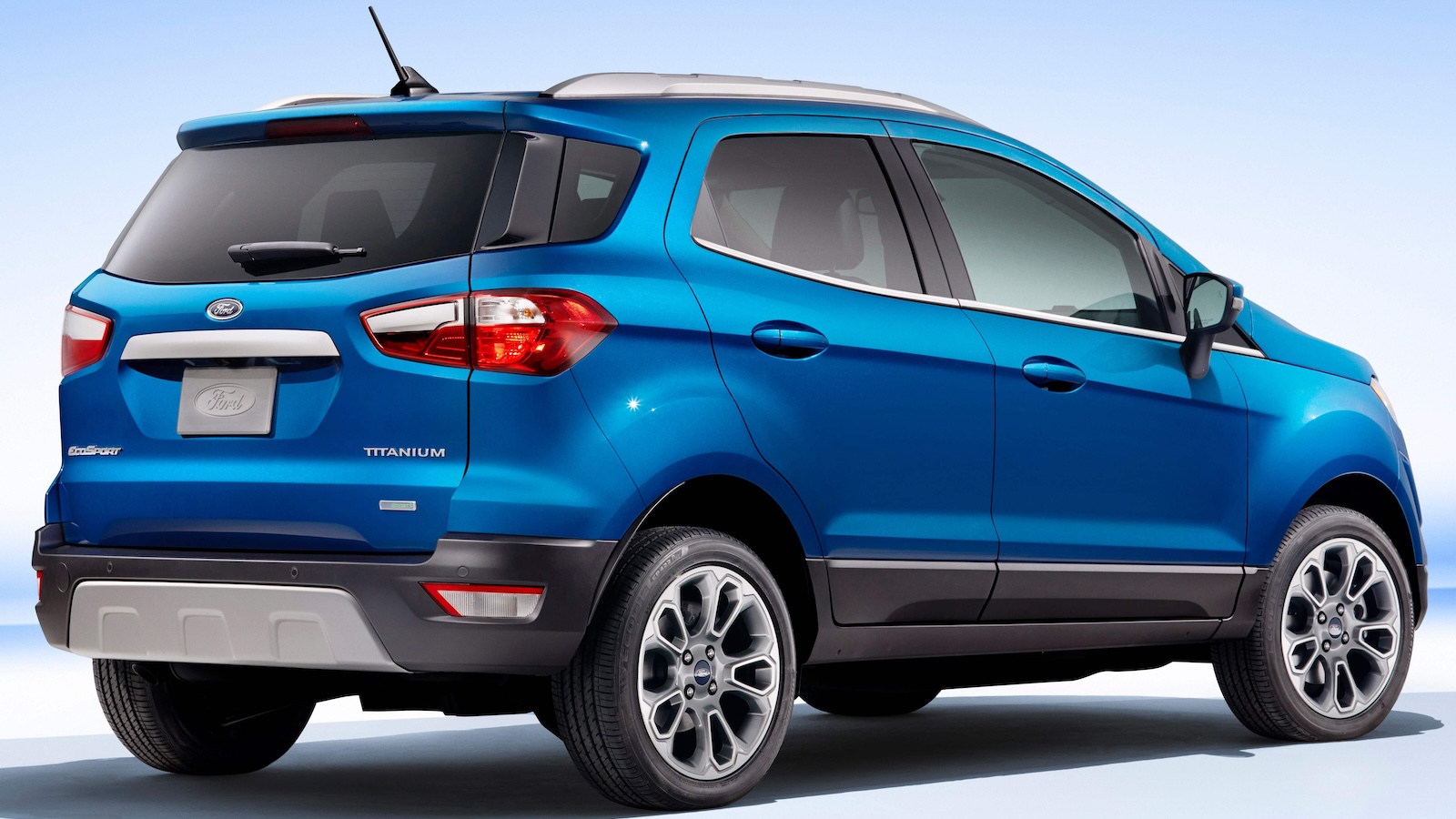
Adding insult to injury, owners of one-liter Ecoboost engines wouldn’t get advance warning of oiling issues or belt failure. At least a timing chain with worn guides usually rattles before the system truly fails. This system offers no such external tell-tale. It’s also an expensive set of components to replace. The timing belt alone on an early one-liter EcoBoost Fiesta calls for 11.1 hours of labor, easily a four-figure bill for a four-figure used car. Cheaper than a new engine, sure, but far more laborious to change than a traditional external timing belt.
For now, it’s best to stay away from Ford’s one-liter EcoBoost inline-three and see what the feds find. While only 135,551 cars with this engine were sold in America, wet-belt deterioration is still a big problem affecting cars aimed at drivers who can’t exactly splash the cash. Next up, engineering analysis. Who wouldn’t want to learn what actually went wrong?
Top graphic image: Ford


It’s also worth noting that Ford has committed an incredible timing chain sin in the 3.5/3.7 V-6 engines. The timing chain IDLER happens to be the water pump, too.
Something that should be >$1000 to fix can come close to $3k after everything else that you have to do ‘while you’re in there’ (new chains, new water pump, cam phasers, seals, etc…).
The serviceability of these wear items is intentionally high because the service side of the dealership franchise has to eat, too. It can’t just be selling cars.
The wet oil pump belt in the 1.0 is an intentional way to destroy your car, then present a new car as the solution. The cost differential between fixing it and getting into another junk Ford can’t be too far apart.
And because Ford had all that trouble here in Europe with timing belts running in oil, VW thought, “Cool idea—let’s do that with the oil pump in the 2-liter diesel!”
Nice to see I Do Cars get a shout out. If you like mechanical things and want to see what’s really going on in modern engines, highly recommend the channel. He tears down a failed engine every week. He also runs a junkyard, and sells a ton of late model used parts.
Can confirm, I’ve really enjoyed seeing Eric go from an acquaintance I’d get Mazda parts from to a mildly successful and entertaining channel.
“355 reports of lost oil pressure with an average failure mileage of 70,000 miles caused partially by a part with an advertised 150,000-mile replacement interval is diabolical work.”
Did they not even attempt endurance testing on these (and come to the same conclusion), or did they figure eh, we’re too far along in development and besides, nobody is gonna keep these past 150k anyway or something?
It’s not like they are developed for 150k miles anyways.
At least in the VAG group, the magical number for smaller cars was 150k km = 93k miles.
And of course these engines were tested. But endurance testing is often not the same thing as being driven by the customers. Varity of ambient conditions, very different driving style, many not caring too much about servicing the car correctly…
I am no fan of the wet belt either, even though I own a car with such a thing. But there are on the other hand so many of them driving around that yet don’t have issues. It’s the majority.
Stellantis has this stuff, too, in their 1.2 3 cylinder. So you can find it in various brands here in Europe.
This is round about the time Ford actually started to have a 150k mile target for reliability. This motor was developed in Europe, maybe before the switch.
I’m also surprised, as Ford’s engine R&D is usually fairly decent, but I suspect the belt option was done for some sort of cost and/or weight savings.
What was the purported benefit of this wet belt system? To theoretically (and ironically) lengthen change intervals-surely it’s not cheaper to manufacture? Dry timing belts are an established and robust tech, annoyingly expensive occasional changes aside.
Ease of assembly and fewer leak paths. If you don’t need to worry about cam gears being outside the engine, there’s no need for cam seals.
Service? “That’s someone else’s problem!”
Interesting point! I was thinking leaks would be a bigger problem but I think I see your point. Basically one big gasket on the timing cover vs multiple smaller seals?
You’d still need a crank seal but nothing else.
Wet belts are primarily an efficiency gain. When you’re trying to make a tall, 3000lb egg car get 27mpg in the city, you need every bit of powertrain efficiency you can get.
Interesting, I guess that was why GM cited using them for the baby Duramax. Guess I’m surprised that they are (if even fractionally) more efficient somehow in my mind all that stuff churning through the oil wouldn’t intuitively seem efficient-but that’s often how it is.
It’s good to try new things, but Ford needs to do a lot better job of standing behind their failed experiments. Like the Powershift transmissions in the Focus, imagine being an unlucky Focus owner with both a Powershift transmission and a 1.0 3-cylinder Ecoboost.
That combination shouldn’t exist; all 1.0L Ecoboost engines were mated to a conventional automatic transmission (6F15) or 6-speed manual. Only the 2.0L naturally aspirated engine was mated to the DPS6 Powershift.
Not a mechanic and I’m pretty certain the answer will be “cost” but if they want oil coated belts, why not use a CVT styled one?
Those are less belts and more “thousands of metal teeth butted against each other held together by 2 metal bands” and transmit their power by pushing against the teeth forward of them rather than pulling the belt behind them with tension.
Also, cost.
Is there a gear and sprocket retrofit available? Seems like a lucrative engineering endeavor if someone can pull it off. I haven’t been inside an ecoboost but from the size of the belt I’m guessing you’re looking at a few sprockets, phasers, new pulleys/sprockets for the Oil Pump and Water pump (which you’d be replacing anyways).
Well, back in the day when I was taking small engine class at the vocational school attached to our high school the shop tech always told us it was a bad idea to get oil on the belts because it would cause them to deteriorate. I guess the Ford engineers didn’t take that part of the class. What a stupid thing- putting belts in OIL!
If the materials science is correct, it should be a no-brainer to do this. Simple, cheap, quiet, minimal friction (did I mention belts are cheap?), and should result in that long belt service life. But obviously, NOBODY has cracked the materials science of this yet, because AFAIK, every manufacturer who has tried this is having the same problems. Probably not helped in this case by the American tendency to completely ignore any and all manufacturer oil recommendations in favor of the QuickieLube. I have to think there is probably a specific oil spec for these things.
And unfortunately, sometimes issues don’t appear in artificial accelerated testing before product launch.
And would it KILL them to give one single thought to serviceability? 11hrs to change a belt is ludicrous.
In fairness, it’s an internal belt. If it were a chain or set of gears it would take just as long to change, though it might ever need to be changed. 11+ hours isn’t too far off some other FWD-based timing chain jobs.
Sure, but it still seems like something that needn’t be so difficult. Spend $1 more on assembly cost to save hundreds down the road sometime (and in this case, significant warranty expense as it happens). Even if something is designed to last “forever”, forever is a very long time.
Ford is already having major problems with these belts. So I’m not about to go out buy a vehicle that had one of these anytime soon.
I wouldn’t buy one *period*. But that doesn’t change the fact that it is a potentially good idea poorly executed. As I said, this should be great, and maybe someday the boffins will crack the code and make it work over the long term. There are all sorts of things we take for granted today that were initially absolute disasters across the industry – fuel injection as one huge example.
In fairness, it’s not an old-school rubber V-belt, it’s – from the third-to-last paragraph of this article – “Kevlar-reinforced Hydrogenated Nitrile Butadiene Rubber”, which in theory shouldn’t experience the degradation contamination and degredation like a rubber accessory belt. If the tensioner is indeed the root cause (which seems plausible) the belt should be able to last quite a while despite being submerged in hot oil.
Great work, Autopian.
This is a terrific story,
A bit painful for me to read because I had a something to do with the launch of the 1.0-liter.
We need more details! Did anyone voice concerns over the belt, and were any other drive methods discussed?
Because at Ford, Quality is Job None.
Fix Or Replace Daily
In this case, more like Found On Road Dead!
Very, very difficult topic….
I think in many cases, the main issue is not the belt itself, but the lack of proper service. All these engines require, that the oil change is done regulary and only the by Ford specified oil is used.
On top comes, at least here in Europe: Most of the times, these engines are used for daily commuting – which is at least here most of the times very short distances. Then of course you have a higher chance of getting gas into the oil and this is not great for the belt.
And lastly, it is very important to stick to the change interval of the belt! This must not be exceeded…
I have the 2.0 EcoBlue Diesel Engine in my 2021 Transit. Also this comes with the wet belt.
Ford reduced the interval from originally 10 years and 260.000km to 6 years and a maximum of 160.000km. My Transit turned 5 in January and as I want to keep it, I decided it is time for the first belt change – 1 year and 60.000km earlier than the interval says at maximum.
The belt looked like new, the additional belt for the oil pump also. No dirt or debries on the screen of the oil pump…all perfect. Of course got the new belt anyways.
well duh, if you spent 6 hours to get to that sucker, you probably want to do multiple other whole your in there stuff. water pumps, timing chains, and so on. Basically Ford at this point needs to extend engine warranty to 150k miles. I cannot believe they did not choose something that usually gets to just past the 60K mile drivetrain warranty before a costly dealer repair, Planned obsolescence nearly killed the US industry in the 70’s It sure feel like we are trying to go back to that.
You did see the recommendation was at 150,000 miles and the failures were around 70,000 miles?
I think really you should be thinking about replacing the belt at 50% of the interval Ford specify, and as short as 33% if you have one of the 1l Ecoboost engines.