


The Camaro, Firebird, Barracuda, and many other competitors might be long gone, but thankfully, Ford keeps the Mustang alive and well. Most Autopians are glad to see this relatively affordable sports machine on Ford lots despite the demise of every single one of their other “normal cars.”
Still, after sixty years, the limitations of the original “Pony Car” remain today. Rear seat space is not limo-like by any means, and with the possible exception of Fox-body hatchbacks, cargo space is also lacking. However, one of the biggest drawbacks for those who don’t live in the south is the Mustang’s somewhat comical lack of ability to get through deep snow. Surprisingly, not long after the first Mustang’s debut in 1965, a British company known for race cars with four driven wheels developed an all-wheel-drive version. Even more shocking is that at least one of these Ferguson AWD Mustangs still exists for us to examine rather closely.


Harry Met (Mustang) Sally?
Considering that Dearborn was the bane of his existence, in some ways it’s rather hard to believe that Harry Ferguson’s company ever ended up working with Dearborn-developed cars in the first place. Through the 1950s, Harry’s company was a tractor manufacturer known for a number of innovations like the hydraulic three-point linkage.
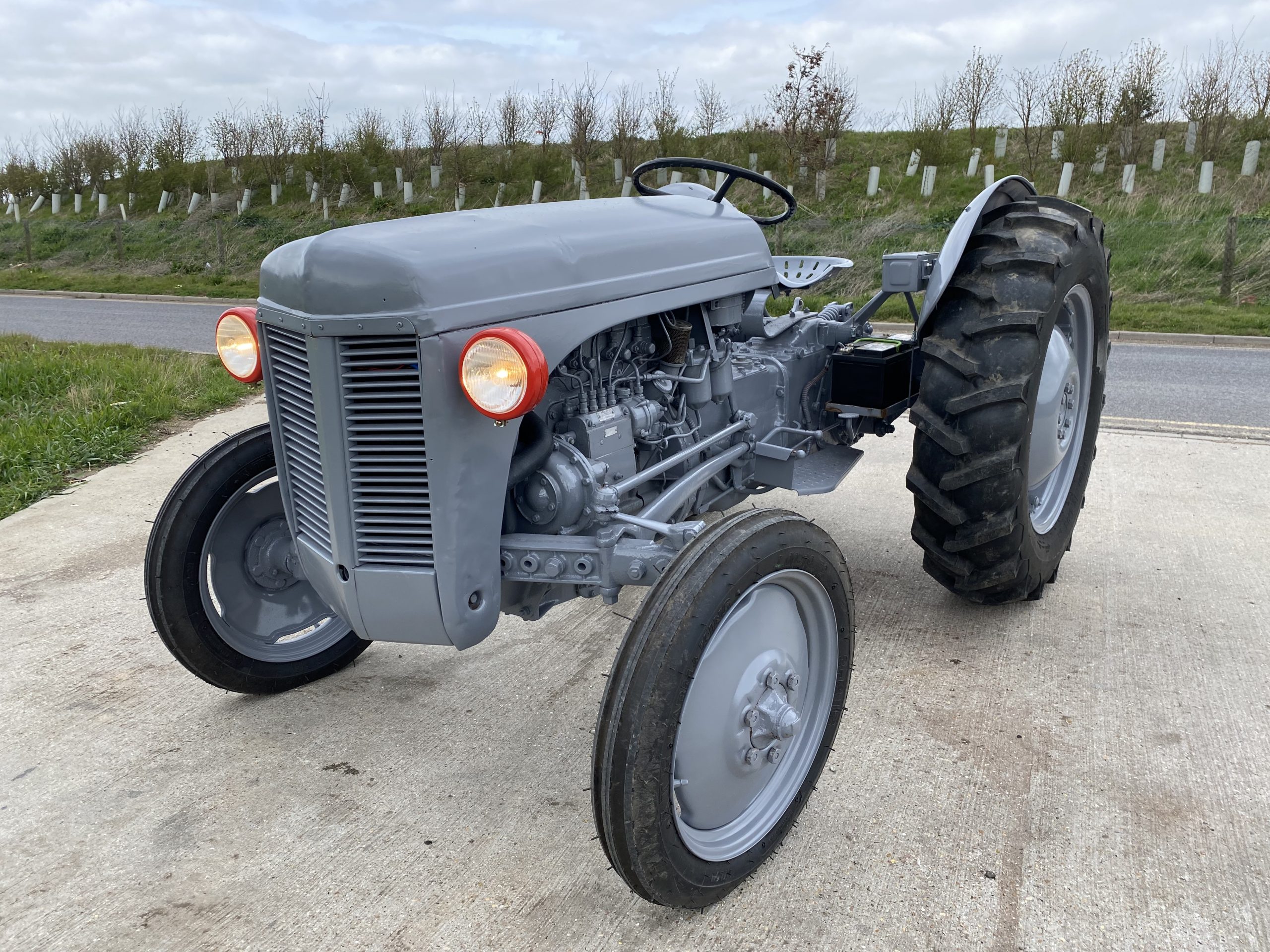
However, like fellow farm equipment maker Ferruccio Lamborghini, Harry’s real passion was automobiles – race cars in particular. He started Ferguson Research to develop vehicles with four-wheel drive that could be used on the street and not just as an off-road proposition.
Unfortunately, during this time Harry was in protracted legal battles with Ford Motor Company over patents related to his tractors. This reportedly took a toll on his health, and he died of a reported barbiturate overdose in October of 1960. Ferguson Research pushed on and constructed their first F1 car in 1961; the Climax P99 was the only AWD car to ever win a Formula One race. Also, Bobby Unser competed in the 1965 Indianapolis 500 with a Ferguson all-wheel-drive Novi.
Developing all-wheel-drive race cars in the sixties was not a particularly lucrative business, to say the least, so Ferguson Research turned its attention to road cars. Their feeling was that such a system might be ideal for a police pursuit car or other emergency vehicle, taking something fast and rear-wheel-drive and giving it the “Ferguson Formula” treatment to build the ultimate cop car. Guess what unlikely product the British firm chose to start with.
Two Wheels Good; Four Wheels Better
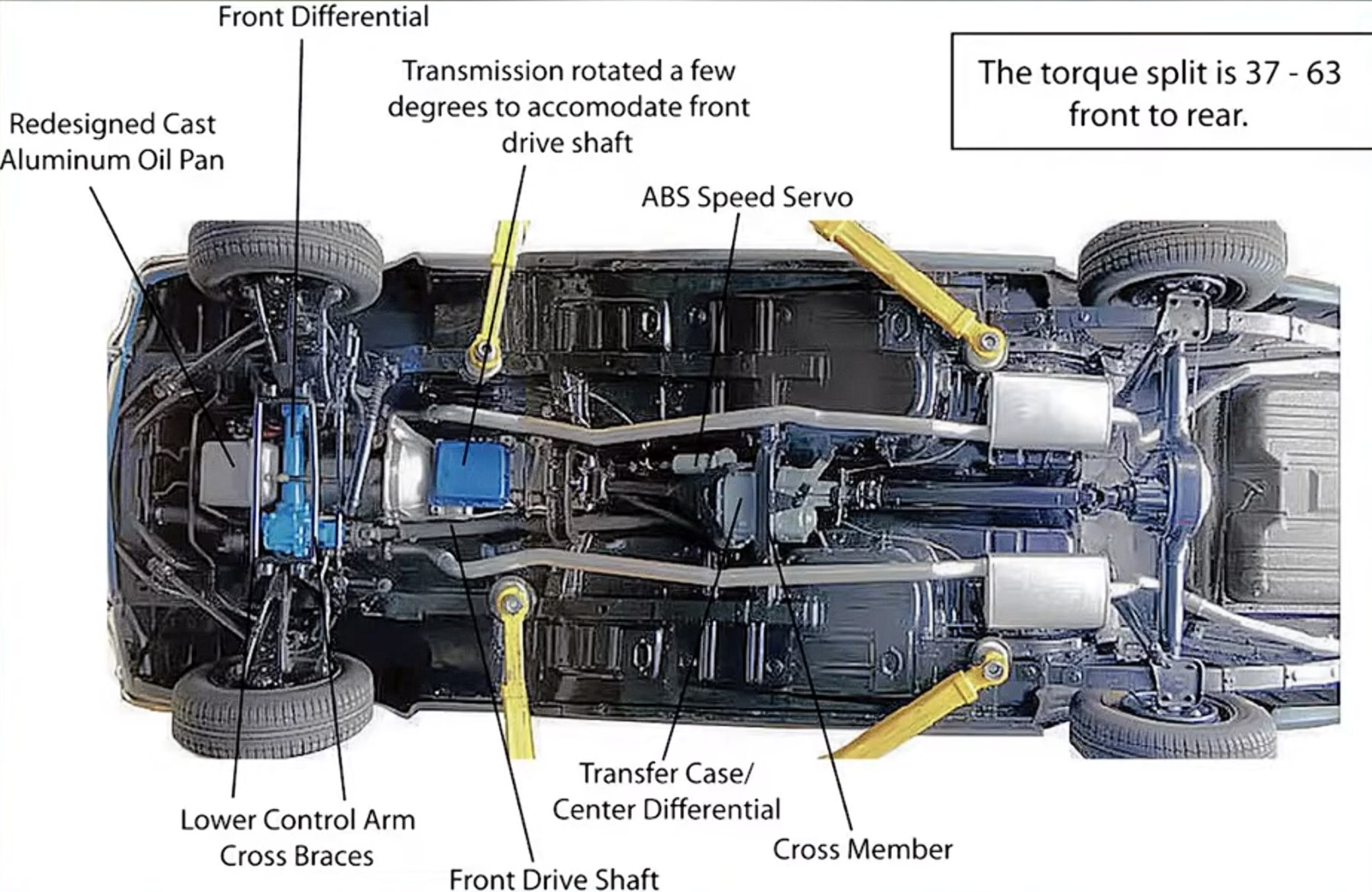
Records are conflicting, but at least two (or possibly three) Mustang notchbacks with 289 V8s and automatic transmissions were brought to Ferguson’s facility in the UK to convert to all-wheel drive.

The heart of the system was the seventy-pound viscous coupling center differential in a design very similar to what we’d see on mass production all-wheel-drive cars decades later. Power was split 63 percent to the rear-facing driveshaft and 37 to a front differential; the Mustang’s transmission needed to be rotated a few degrees for the pan to clear the thin front driveshaft.
As innovative as the all-wheel-drive system was, this Mustang packed another feature that was possibly even more forward-thinking. Starting in the 1940s, tire manufacturer Dunlop had worked on anti-lock braking systems for aircraft called “Maxaret” to handle wet or frozen runways, as well as preventing flat-spotting or blowouts of tires.
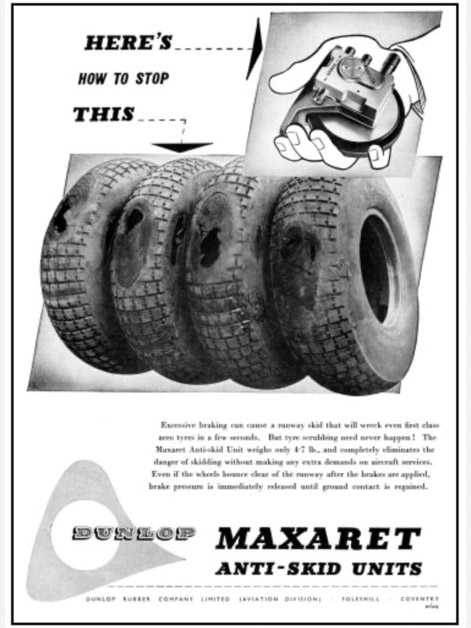
The basic principle was an analog version of modern systems that sense when a wheel isn’t moving. In the Maxaret system, a rubber drum connected to a wheel spun a flywheel with a one-way clutch. If a wheel slowed down too quickly, the flywheel continued to turn and created a relative angle that tripped a valve to release brake pressure, thus unlocking a skidding wheel. This job was made easier in a Ferguson all-wheel-drive car because the center differential apparently made it impossible for the front or rear pair of wheels to lock independently, so you really just needed one rotating drum. Stopping distances were reported to be reduced by 30 percent, making this one Mustang that could both go and stop well in the slippery stuff.

The whole drive and braking system reportedly worked very well, but the idea of an improved-traction police car seemed to be the answer that absolutely nobody asked. Despite being impressive in tests and demonstrations, it’s believed that Ferguson had no municipalities as takers for the system.
Mopar Powered All Wheel Drive
Ironically, besides the ill-fated attempts to sell all-wheel-drive Mustangs or the “Ferguson Formula” in general to European law enforcement agencies, Ferguson was rumored to have taken the idea to Harry’s archenemy as well: the Ford Motor Company. True or not, with Dearborn selling all the Mustangs that it could make at the time, one would imagine little interest in something that might have cost 30 percent more for what buyers outside of the snow belt likely would have seen as limited benefits.
That wasn’t the end of the Ferguson Formula. The costs might have been too high for municipal or mass-produced cars, but that didn’t rule out exotics. England’s Jensen Motors ended up using the system in 1966 for their Chrysler V8-powered Interceptor luxury GT car. Dubbed the Interceptor FF, the wheelbase was lengthened slightly ahead of the firewall, and the all-wheel-drive system (as well as the anti-lock braking components) were installed to make what was essentially an Audi Quattro over a decade before the German rally champion existed.
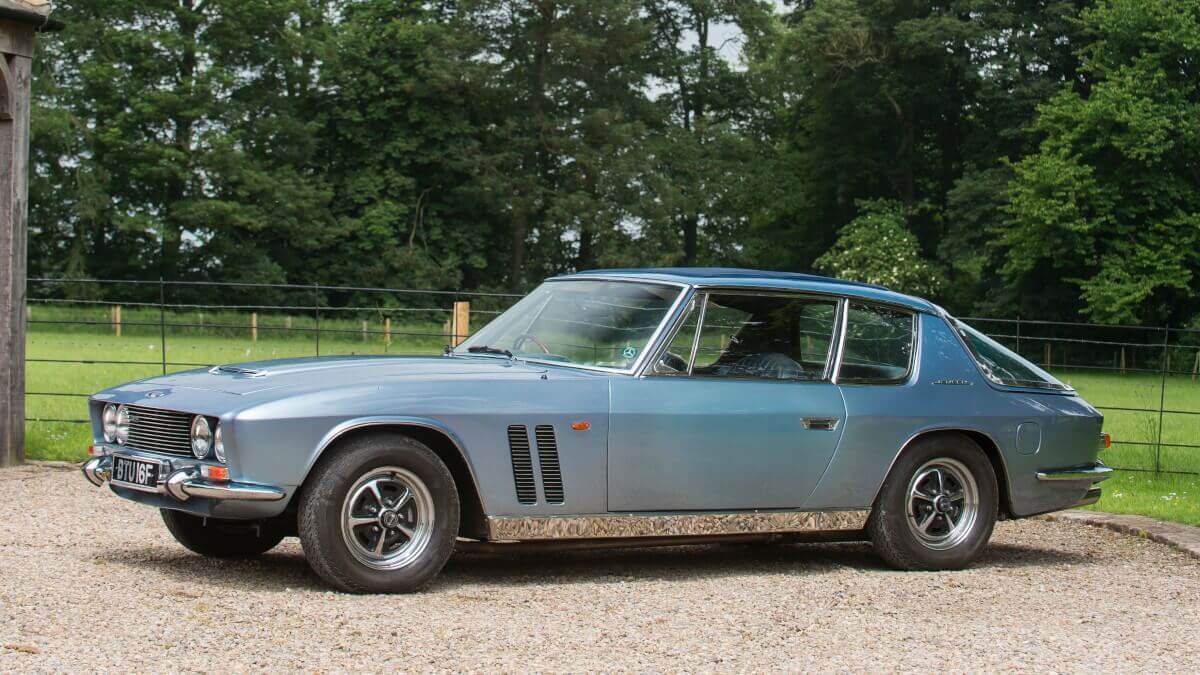
Despite being an expensive car for the well-heeled and getting rave reviews for its dry and wet weather traction and handling, the extra cost was still hard to swallow for buyers in this upper echelon. Only 320 Interceptor FFs were built before Jensen called it quits on the model.
A version of the Ferguson-developed system did find its way into mass production in 1980, and it was an American car: American Motors to be exact. The Hornet-based Eagle was a success for struggling AMC but didn’t create a new market niche back then.

Being first is one thing, but being an innovator too early for the public to grasp is a different story.
Retired To Florida
Most testbed cars are used up and thrown out, so it’s impressive to see this British-registered blue Ferguson Formula Mustang still not only existing but in great shape at the Tampa Bay Auto Museum. It was brought back into the United States in 2007, having resided earlier in the Ferguson Museum on the Isle of Wight in the UK.

Wow, to be honest, it looks, well, pretty boring. In pictures, this surviving Mustang seems like something highly unspectacular and even unworthy of a place in a museum. It’s just a hardtop coupe with stock wheel covers and unchanged ride height. You half expect it to have a “Thriftpower” six under the hood.
It’s understandable that the museum displays the Ferguson Mustang on ramps with a mirror on the floor; without that many people not reading the placards might wonder why it’s there. You can see the front differential in blue below and the driveshaft entering it from the left-hand side.

The engine bay looks like a stock 289, with the exception of that plaque on the shock tower:

Yes, there’s a whole hell of a lot of patented stuff on this seemingly-stock ‘Stang.

Nobody walking by at a car show would even notice it; they could probably even get behind the wheel and not detect any difference at regular driving speeds. Start to push it with ice and snow under the tires, however, and boy, will there be a difference. At least they put a Ferguson badge on the back.

Jeez, they didn’t even check the boxes for a Rally Cluster or Pony Interior. You can see from the silver circle on the brake pad that they at least specified front discs, an option that my dad said added a two-month wait to get when he selected that for our new Ivy Green 1965 convertible.

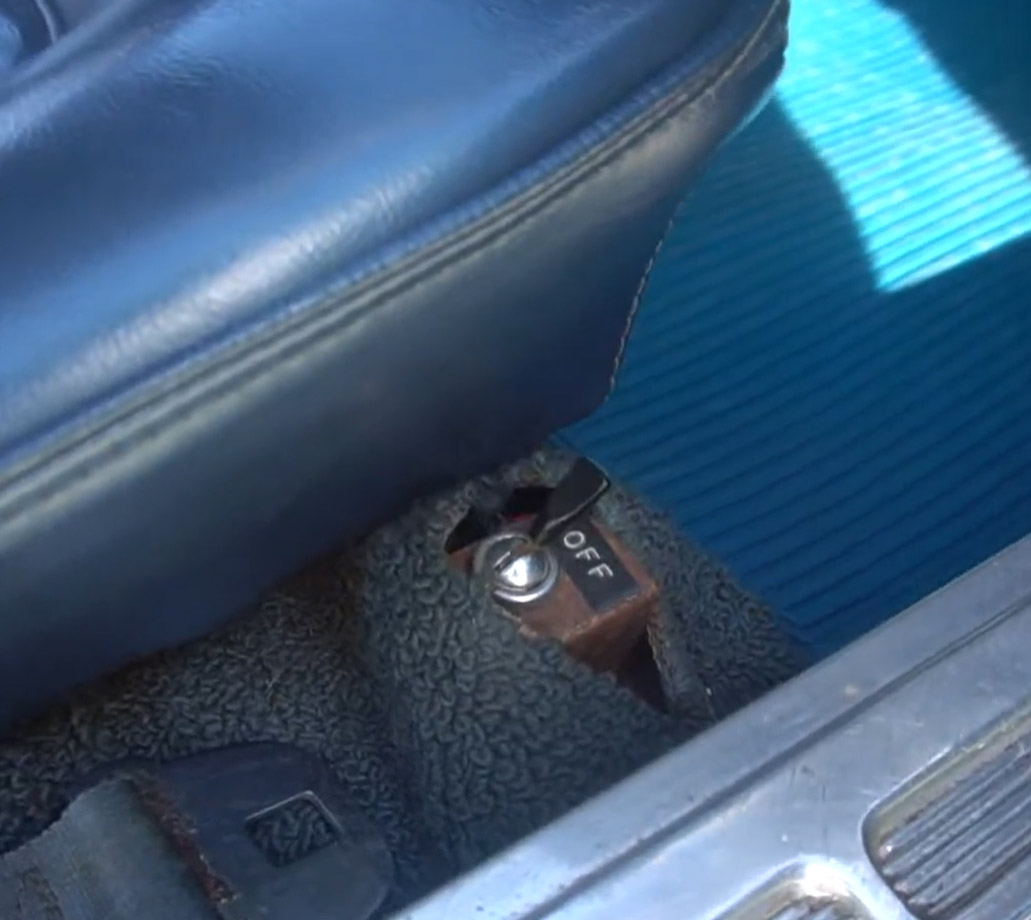
Here’s the switch on the floor to turn off the ancient ABS system, on the passenger’s side of all things. The Dymo label is a nice touch.
The museum recently sold off an odd Ferguson AWD British Ford Zephyr police car prototype, but they obviously decided to keep the ‘Stang in the collection. If you’re ever in the area, be sure to stop by and pay this example of what could have been a visit.
Might Have Saved Us From A Few Cars And Coffee Crashes?
If you don’t count the Mach-E (I really wouldn’t), Ford still hasn’t ever offered an all-wheel-drive Mustang. Despite the existence of these working prototypes in the sixties, Ford didn’t even offer any all-wheel-drive standard sedans until the option was introduced on the Tempo for 1987.
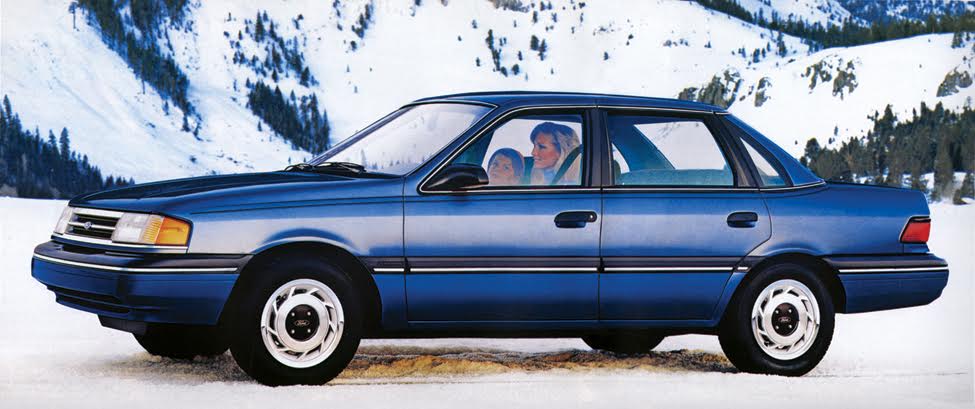
Maybe it’s just as well; the Mustang was a car designed for cruising warm summer streets or back country roads with the top down. Honestly, it never even occurred to me that an all-weather-capable Ford “Pony Car” could be a thing. Seeing the compact, unobtrusive and effective system that Fergusen installed it’s disappointing that a Quattro-style all-weather rally-ready Mustang never came to be. The idea of four driven wheels in a car that doesn’t look like a Jeep (most drivers can’t even tell) was way ahead of its time and today, well, just look out your window and you’ll struggle to see a passenger vehicle that doesn’t have a similar system.
I’ll tell you one thing: that blue Ferguson Formula hardtop ooks a lot like the car James Caan’s character drove in the movie Misery:

If that thing had AWD and ABS, it might have saved him from a lot of pain, if you know what I mean.

Top graphic image: Tampa Bay Auto Museum (via Facebook)


What in the AI is going on with those museum photos?