

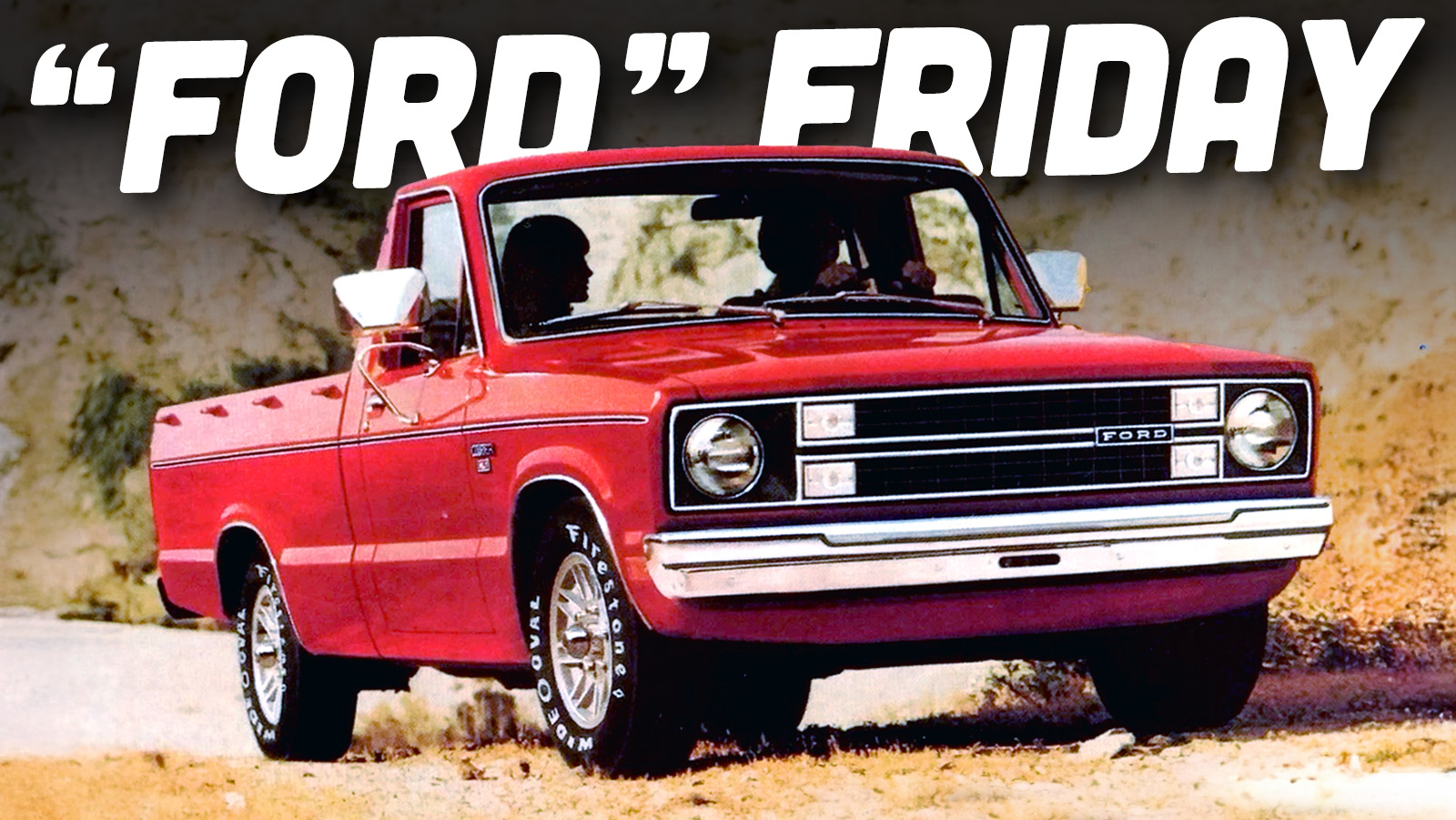
The greatest unheralded heroes in the automotive world are hiding in plain sight. With Fords, we can talk about Mustangs and Taurus all day long, but there are many lesser-known products that did hard work without anyone giving them due credit. One Ford that fits this description wasn’t really even a Ford, but it was a key player for the blue oval and was everywhere back in the day. Let’s revisit the Ford Courier and some of the odd and even unfathomable appearances it made in everyday Malaise life.
If You Can’t Beat ‘Em, Join ‘Em
The larger-than-life Henry Ford II was known for being outspoken and a bit obstinate in many ways during his time at the helm of his namesake company back in the sixties and seventies. One reported example of this was when bone-in-his-throat subordinates Lee Iacocca and Hal Sperlich suggested buying engines from Honda to put into a world-beating Ford subcompact. “No car with my name on it is going to have a (slur deleted) engine under the hood” was all that “Hank the Deuce” bellowed out. Despite this perhaps apocryphal but feels-true anecdote, there very much was a Japanese product made during Henry II’s era with Ford branding all over it, but it wasn’t a car.


In 1958, Nissan (then called Datsun) launched a small pickup truck in America to a rather indifferent market. By the late sixties, however, Datsun and Toyota sales were too strong for American car makers to ignore, particularly in southern California. By now, it was a bit too late for a company like Ford to start from scratch with a competitive product, so the only option was to collaborate with the enemy. Ford saw that Japanese firm Toyo Kogyo (Mazda) had something called the B series pickup truck, sold in America with a 1600cc motor.

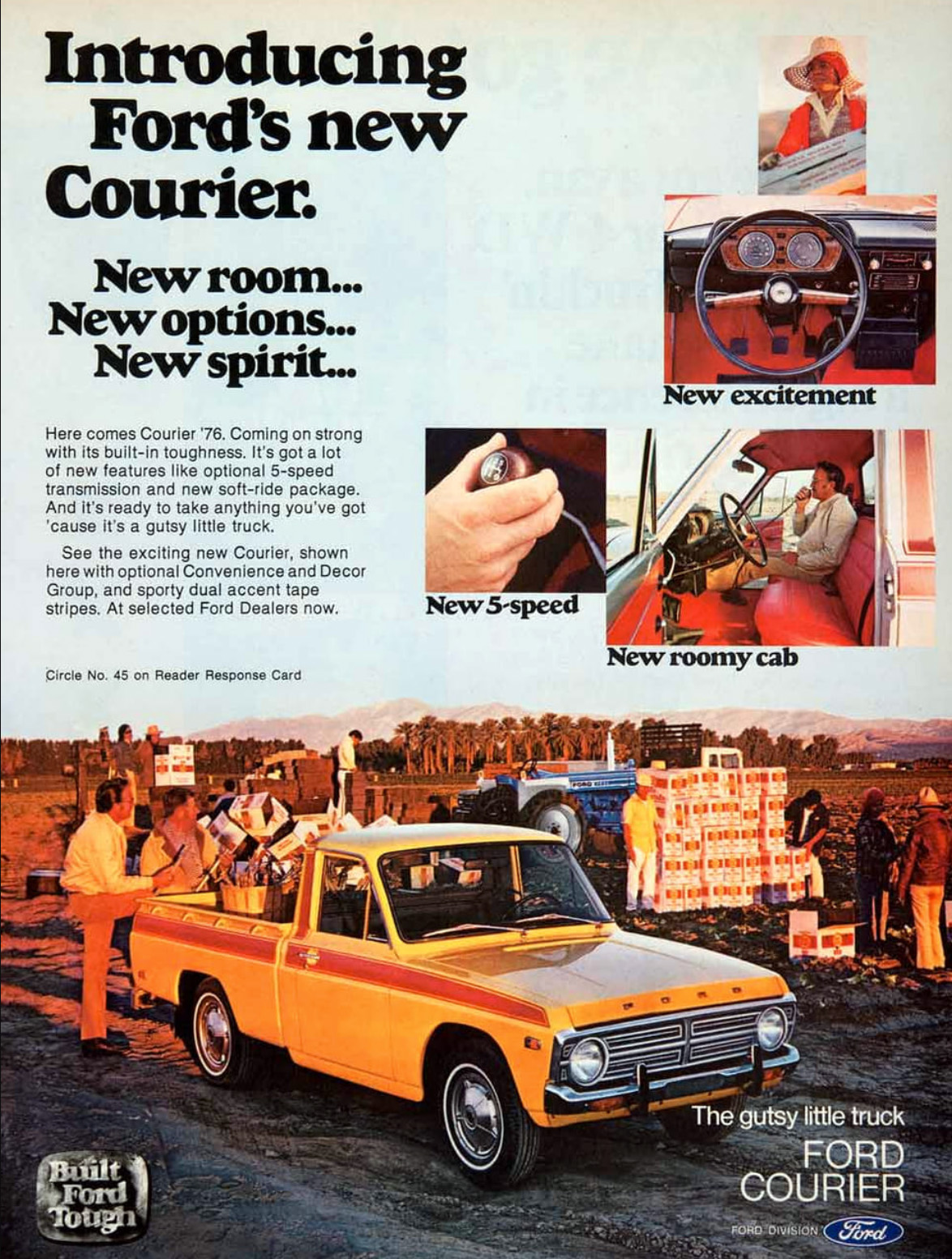
Notice how the brochure described it as the “piston engined” truck since Mazda was still selling the ill-fated Rotary model at this time as well.

Ford decided that a badge-engineered version of this truck would be just the trick and launched what they named the Courier in 1972, a name they unearthed from their old sedan utilities. Incidentally, that was the same year that rival Chevrolet did the same thing with a badge-engineered version of an Isuzu pickup that they called the LUV (Light Utility Vehicle, get it?). The Courier gave Ford exactly what they needed for seemingly as little effort as possible.
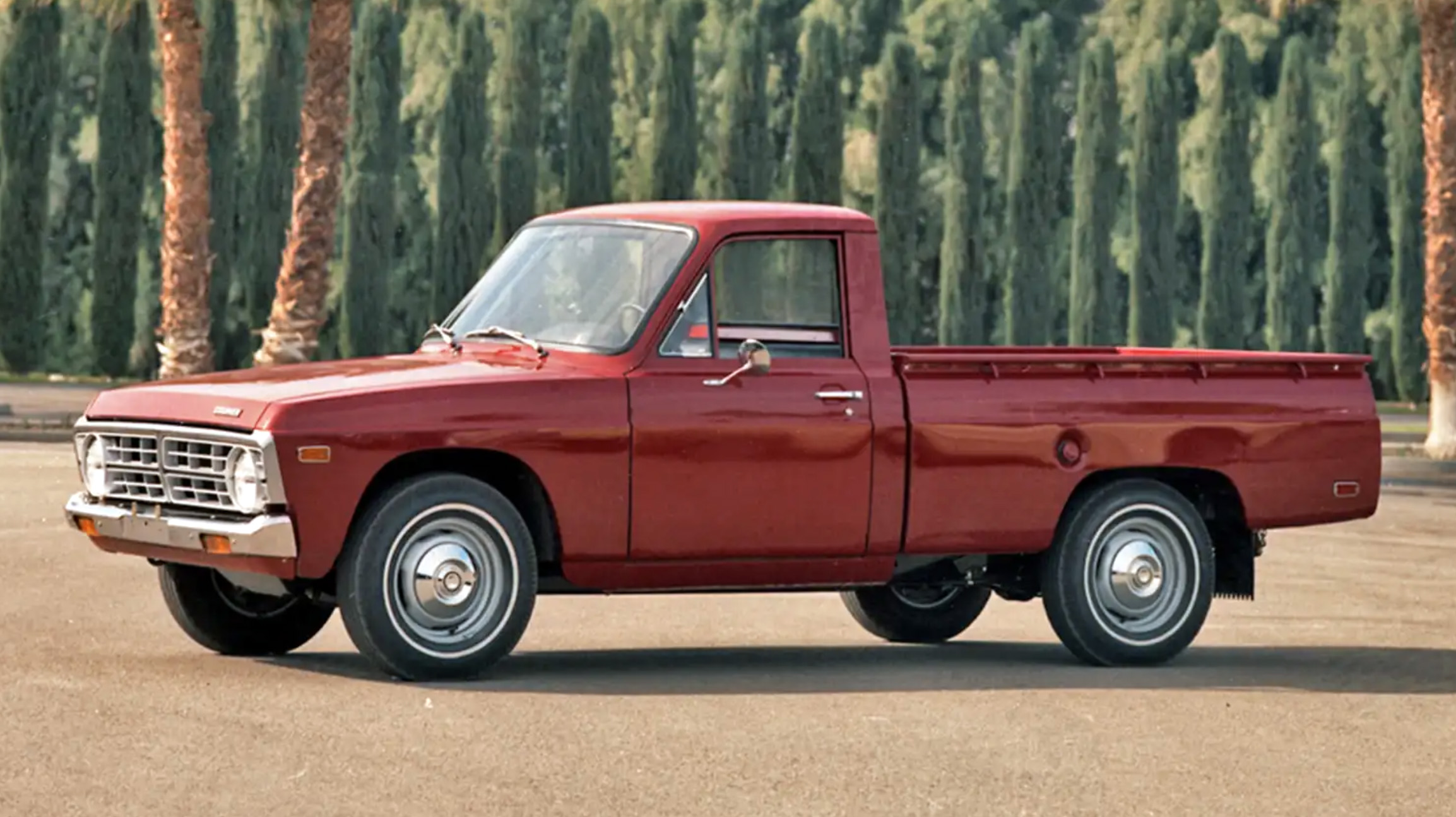

Ford’s version of the Mazda featured a 1.8-liter four with 74 horsepower; a step up from the 1.6 offered in the Japanese-branded models. You got a 1400-pound payload rating, great fuel economy, and a low starting price of only $2,200 (about $17,000 in today’s money, so basically a Slate truck). To get to that price, Ford needed to circumvent the so-called “Chicken Tax” that had been put into place to protect American brands but was now biting them in the ass. The trick was for Ford to import the Mazda trucks to the U.S. without the beds in place, resulting in only a 4% tax versus the standard 25% rate applied to imported small commercials.
The thing was hardly lavish, but you got a full set of gauges and vinyl-trimmed door panels inside. An automatic transmission and even air conditioning were available. Over the years, it’s amazing how little Ford did as far as year-to-year changes on the little truck, with the exception of a 3-inch increase to the cabin length to accommodate Egg McMuffin-fed Americans and a five-speed manual option in 1976. You can see that they were starting to get more brazen with the Ford logos on this thing.
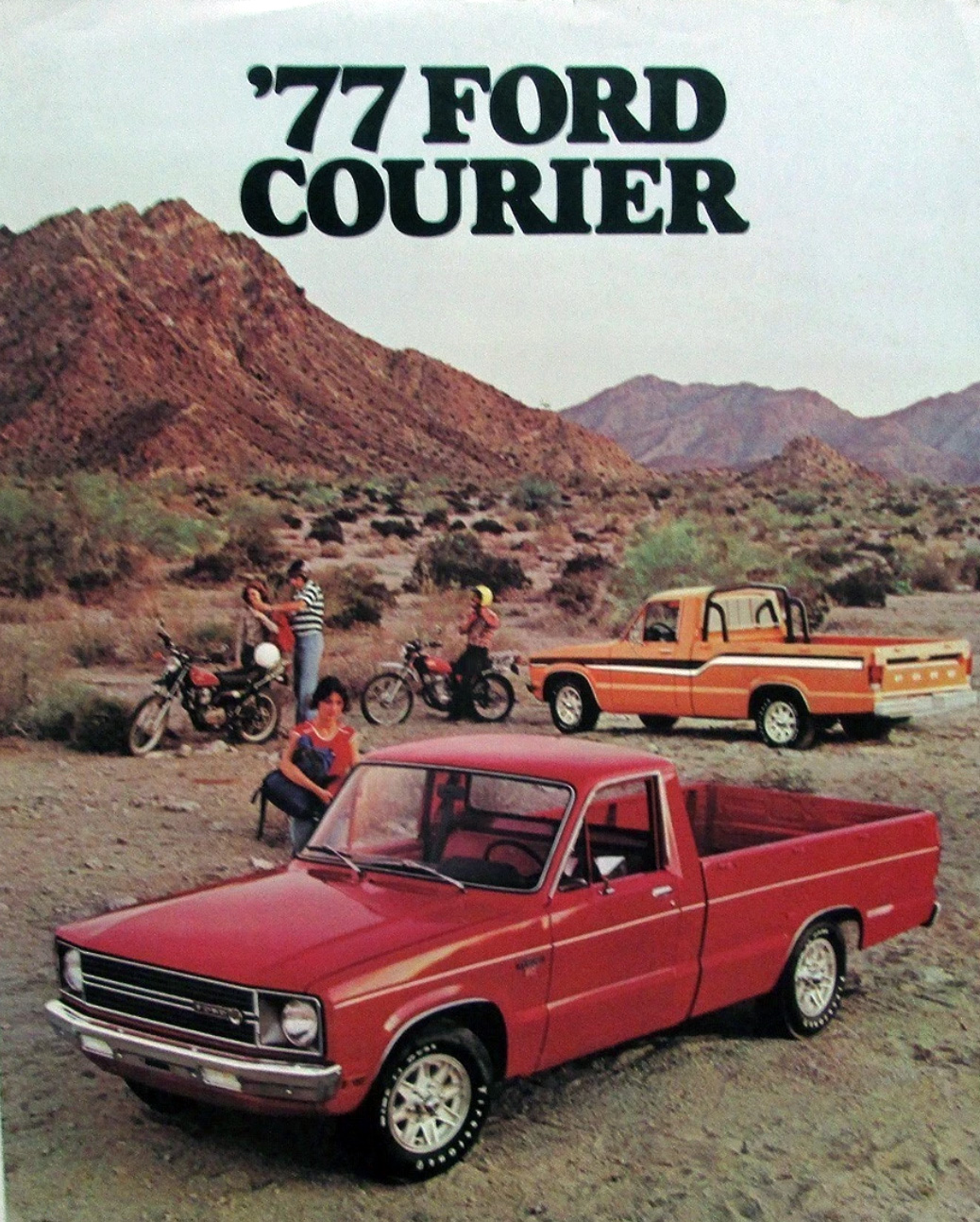
For 1977, the Courier received a major refresh with a more angular body design. As an option, you could now get the ubiquitous 2.3-liter “Pinto” engine with a whopping 88 horsepower.
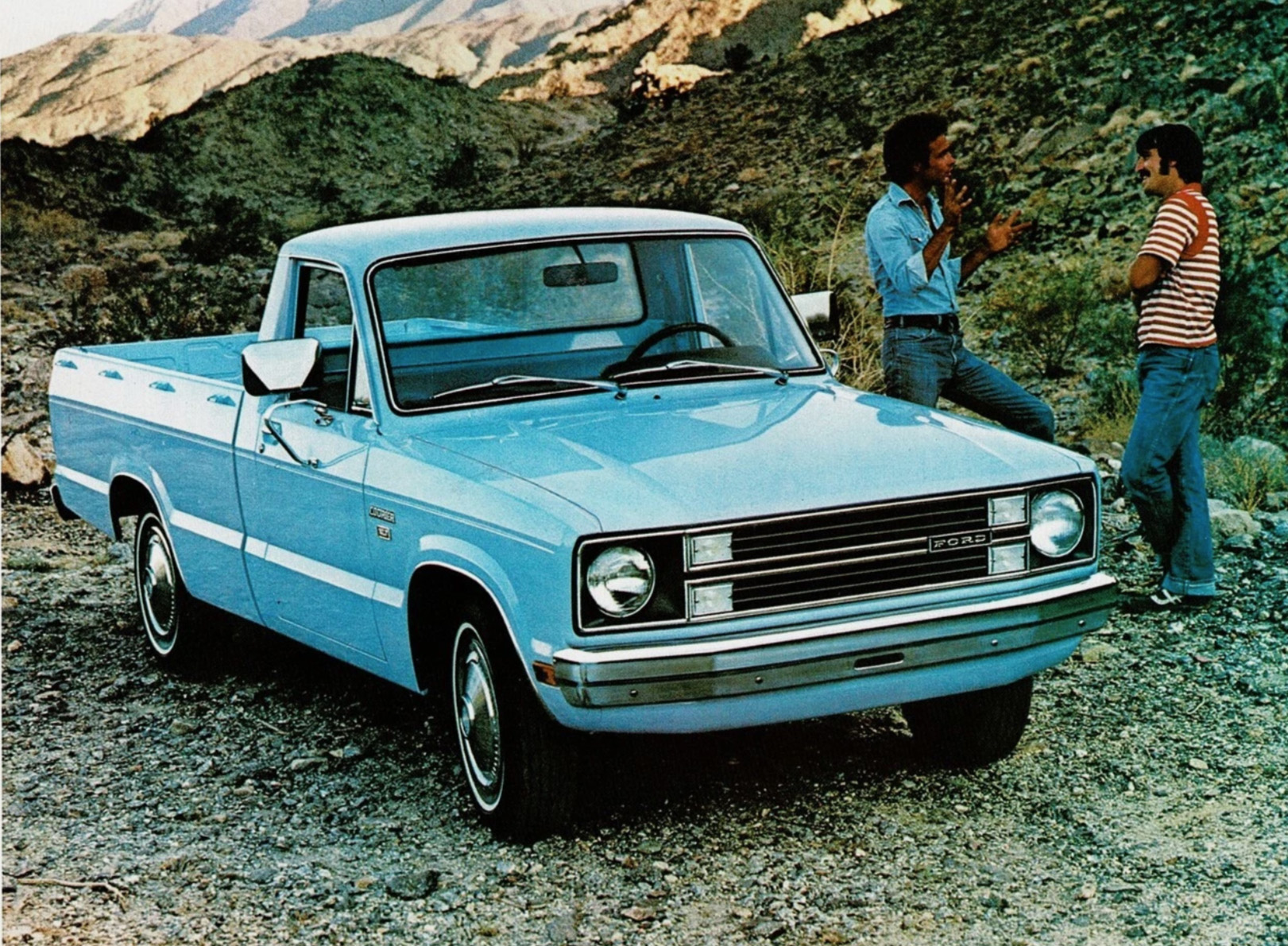
And for 1978, Ford moved the turn signals from the bumper to a space in the grille. After just one year! I bet you’re hyperventilating now, right?
The smaller, standard motor was now a two-liter that really sipped the gas, didn’t it? I thought that these were just unexciting workaday machines back in the day, but there are some things about them you might not be aware of.
Cute Haul
Importing a truck with absolutely nothing behind the cab actually has some advantages if you aren’t interested in putting a standard bed on it. Attention Jason Torchinsky: Look, yet another turn signal location Ford tried!
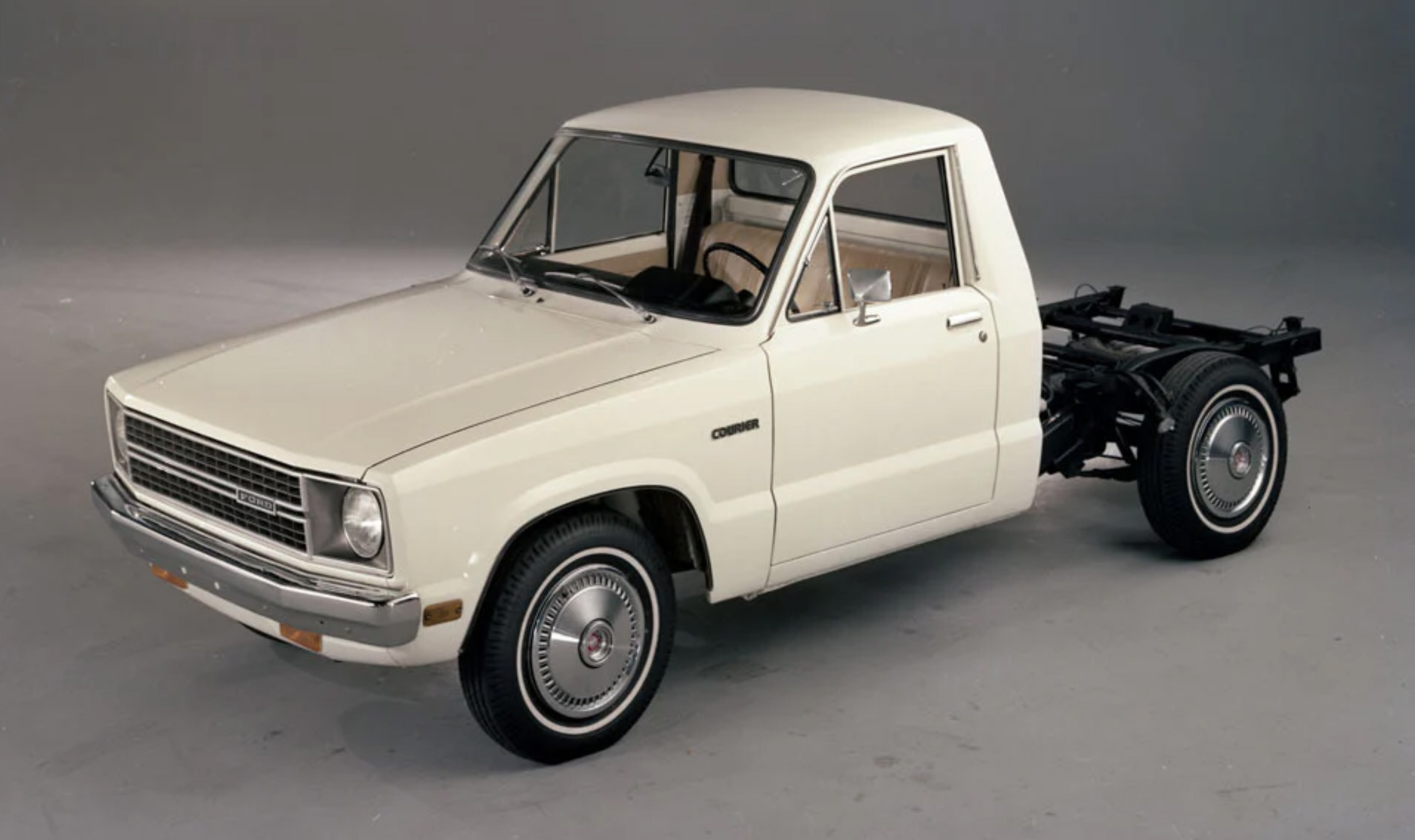
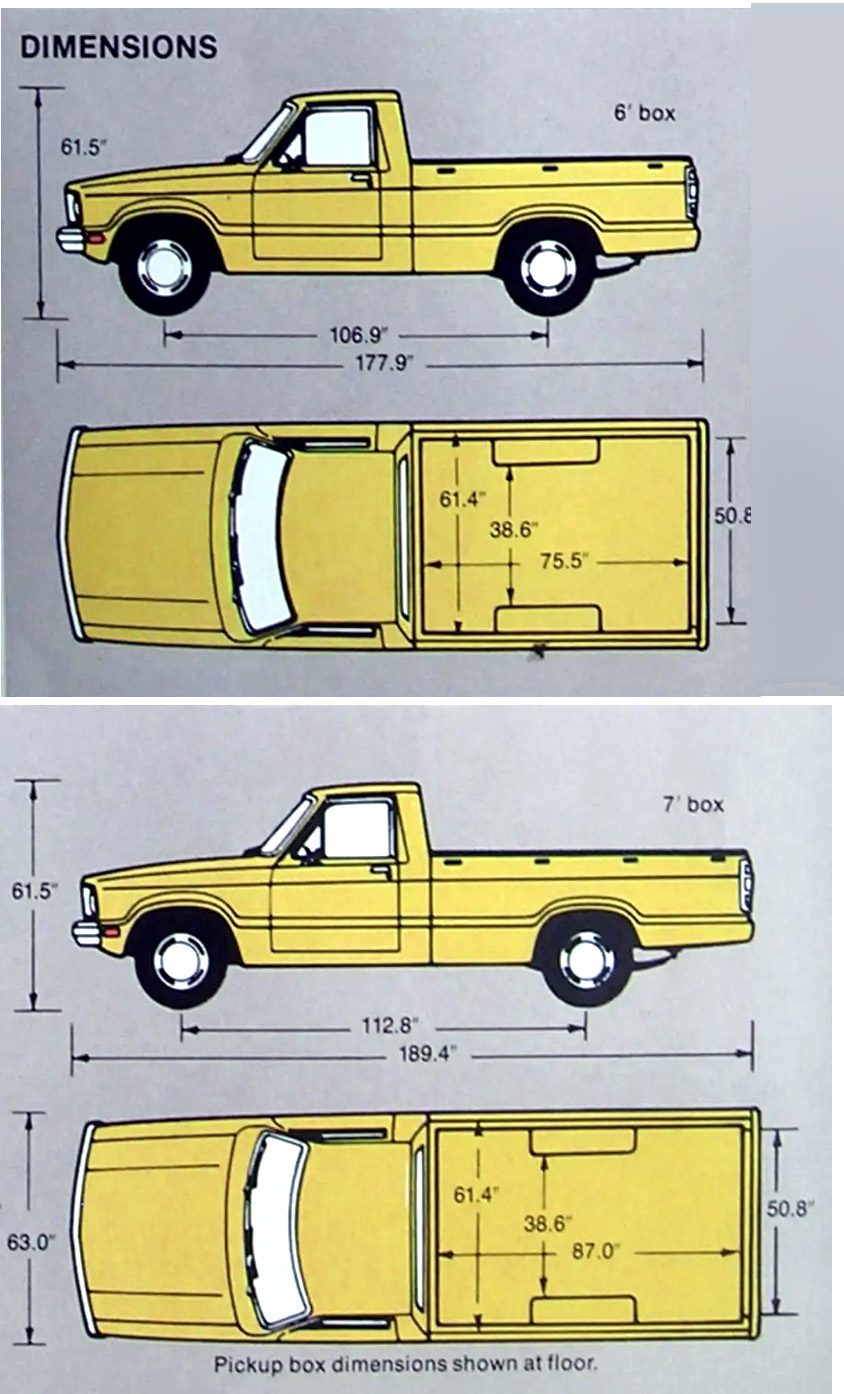
There were two different bed and frame lengths to choose from as well.
For truck rental agencies like U-Haul, that made the Courier perfect for conversion to a tiny box truck to complement their line of larger Ford F-Series-based products. Boy, was it small.

Mercedes Streeter has written about this one before, but the mini-mover debuted in 1978 on the revised second-generation Courier.

The cargo box on back was a mere six and half feet long and under six feet tall; barely enough for a Manhattan-sized starter apartment.

After the Courier disappeared from Ford’s lineup, Toyota stepped in with Hilux-chassis moving trucks with bigger, more usable boxes on the back. But they weren’t as cute as the Courier.
Ford By Four
Couriers might have been everywhere in the seventies, but they rarely ever made an appearance on backwoods trails. That’s because, despite showing images of Couriers on dirt with trail bikes in back, the one thing that Ford never tried to explore was the four-wheel-drive off-road mini truck market. Even Chevrolet offered a four-by-four edition of their Isuzu LUV to go head-to-head with Datsun and Toyota, but Ford was content with their pickup being a rear-drive-only proposition.
Not everyone was happy about that. A firm called Northwest A.T.V. in Kelso, Washington created something that they creatively called the 4WD “Courier Sasquatch.”

These were fitted with a Dana Spicer two-speed transfer case sending power to a solid front axle to run alongside the other Japanese off-roaders.

Reportedly, around 1500 of these off-road capable Couriers were sold along the west coast of the U.S., but Dearborn never felt the need to make an in-house version over the life of the truck. I’d buy a Sasquatch for the name alone.
It’s Electric, Boogie Oogie Oogie
The compact electric American pickup is not a new thing. We’ve written about an electric S-10 from a few decades ago, but the idea goes back even further to the early eighties.
A company in Texas called Jet Industries converted a number of different cars, trucks, and vans to primitive lead-acid battery power in this era of high fuel prices. You can see the wide variety of products they converted from Dodge Omni 024 sport coupes to full-sized Dodge vans and even a compact Kei van called the Ada, which our buddies over at the Lane Museum have an example of, and I know our Mercedes Streeter would buy if it came on the market.
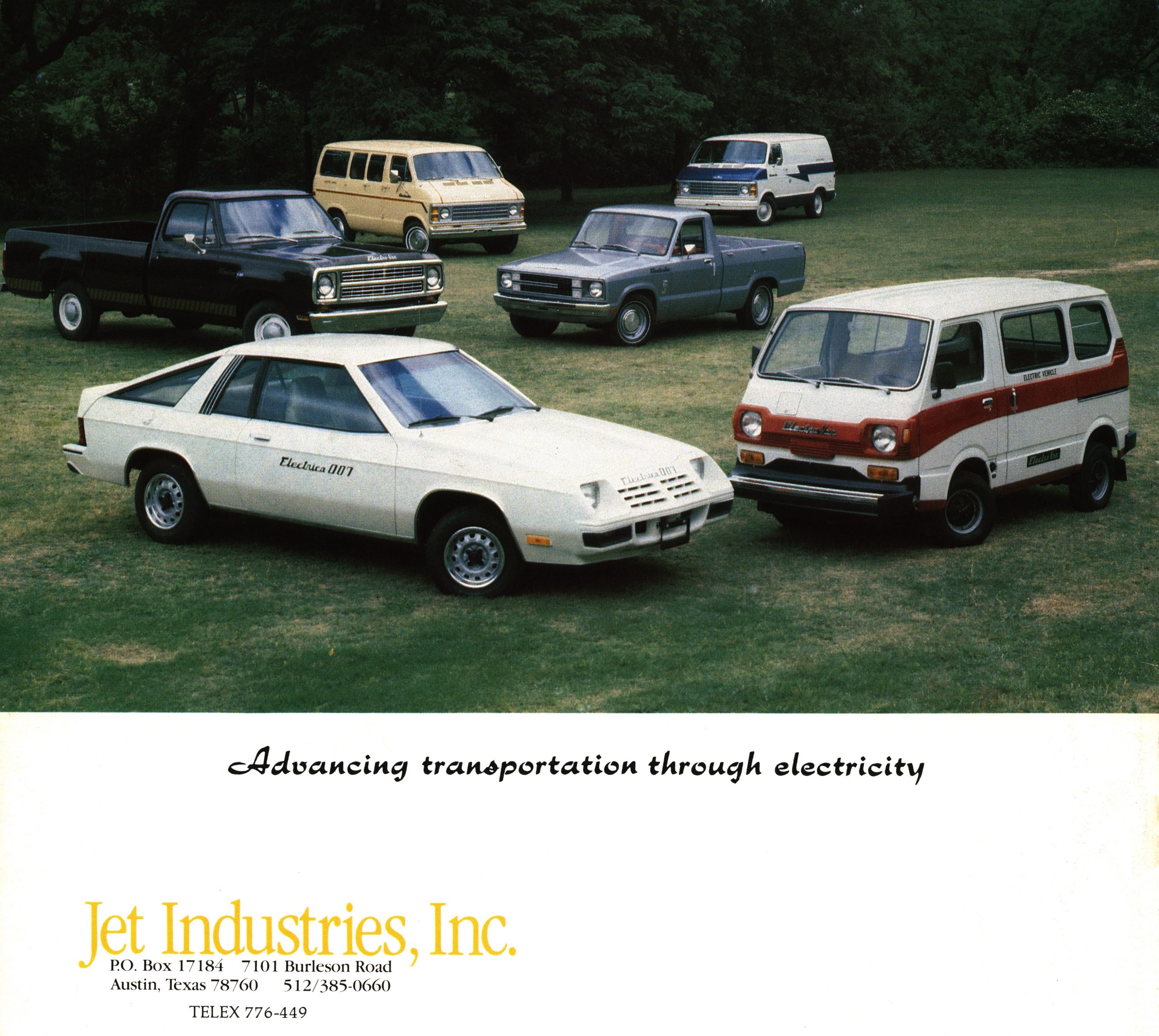
Reports vary, but one of their dealers claimed that they converted upwards of 1400 electric vehicles before going belly up by the mid-eighties when gas prices killed the interest in such compromised alternative transportation.
The small pickup entry was the ElectraVan 750. Calling it an “American” EV truck might be a bit of a misnomer, since it was based on a Mazda-built Courier. With a 30-horsepower motor, it likely wasn’t a rocket ship, but the compact truck didn’t weigh much to start with, so it probably worked as an urban commuter and even something to carry larger loads. Well, larger if not exactly heavier loads.
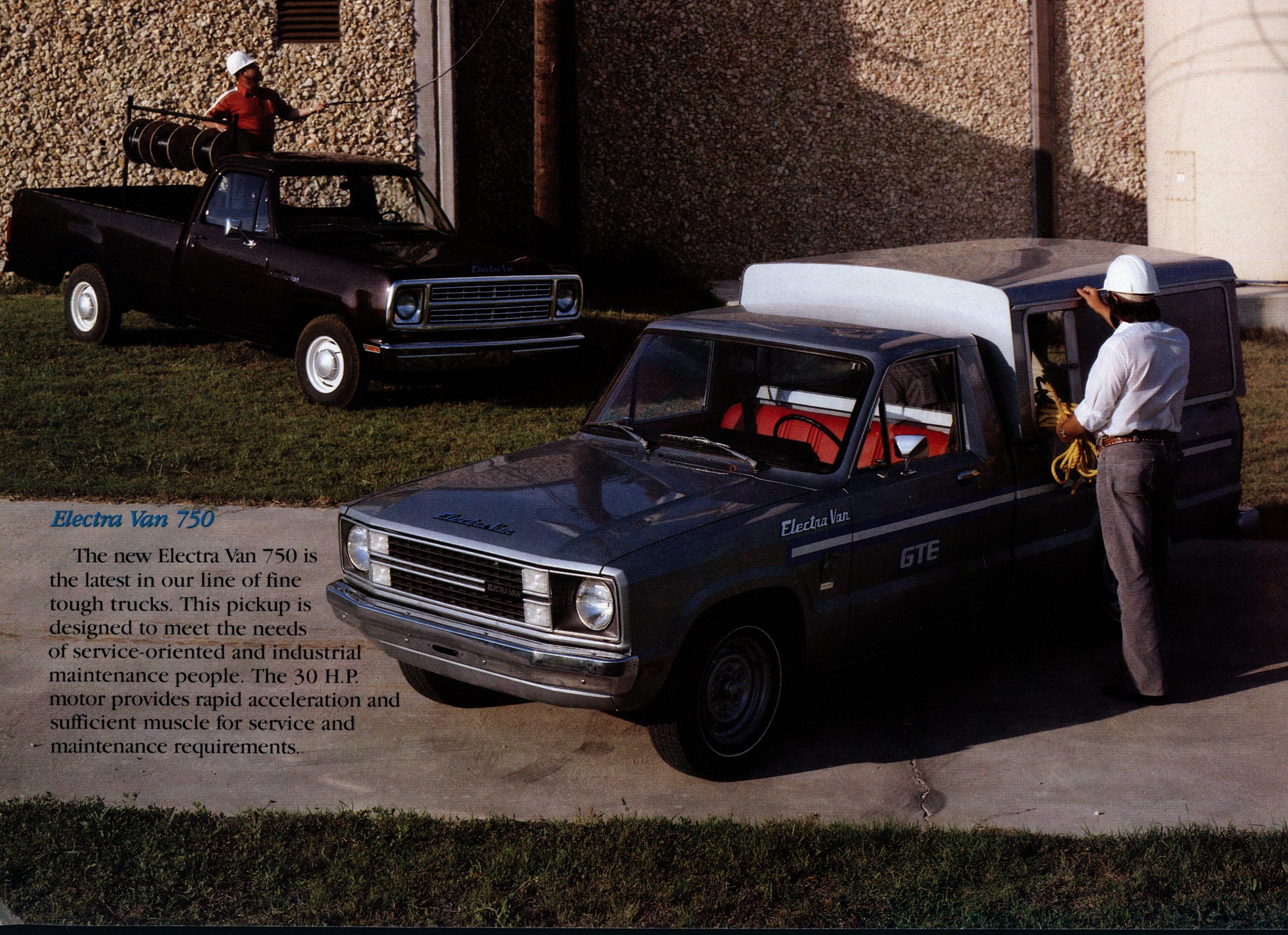
Top speed was around 70 mph, but you’d have to go slower to get the full 50 to 60 miles of range on a full charge. Unverified sources state that at least 90 were sold (primarily to government agencies) between 1979 and 1982.
The Miracle Truck
On a stormy, near-zero-visibility morning in 1980, a massive freighter hit the base of the massive and skyscraper-tall Sunshine Skyway bridge in Florida. The collision caused the road surface of one full span to fall into Tampa Bay, far below.
It must have been a terrifying experience for Wesley MacIntire, a D-Day veteran who was on his way to work in his Ford pickup when he felt the road disappear from under him. His truck fell 140 feet, ricocheting off the side of the tanker that hit the bridge before going into the drink. MacIntire was able to get himself free and swim to the surface, the only survivor of all the drivers who tragically fell.
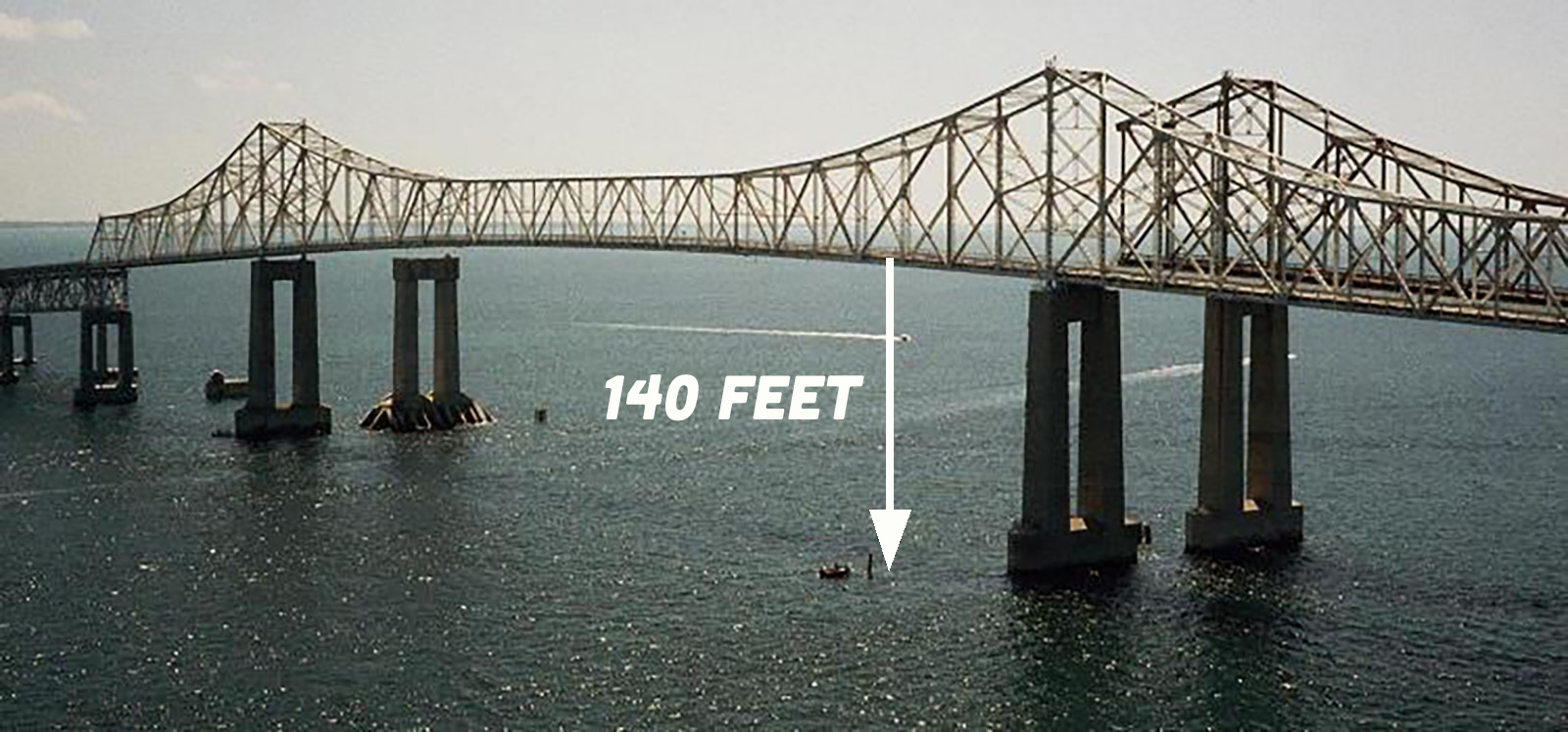
It turns out that Wes’s “Ford truck” was actually a Japanese Courier. Click here and you’ll see him standing next to the wrecked neo-Mazda that he reportedly wanted to “fix up” after it was pulled from the bottom of Tampa Bay.
When the remaining span of the other side of the old Skyway was demolished years later, MacIntire was the last one to drive across it. I don’t think he did the drive in the Courier, but based on that photo, it appears it could have been relatively easy to get the tough, now-roofless little truck to at least start again.
It Sure Wasn’t Lords Of Dogtown
One of the oddest appearances of a Courier is in the 1989 film Gleaming The Cube, the Citizen Kane of cheesy skateboard movies that gets a whopping 23/100 on Rotten Tomatoes. It stars shredding king Tony Hawk and Christian Slater before we all came to our senses and realized that his Temu Jack Nicholson act was too annoying to watch on screen.
In this epic turd, there is a scene where the skateboarders surround a Ford Courier that is doing duty as a Pizza Hut delivery vehicle. We can surmise that it’s doing this task because the little Mazda-in-disguise has a scaled-down Pizza Hut/Stuckey’s-shaped roof stuck on top of the cab.

I am extremely old and was very much alive during this time period and do not remember seeing such pickups prowling the streets. I did some internet sleuthing and cannot find any other appearances of such customized delivery Couriers outside of this flick, which was shamefully shut out of the Oscars by Driving Miss Daisy.
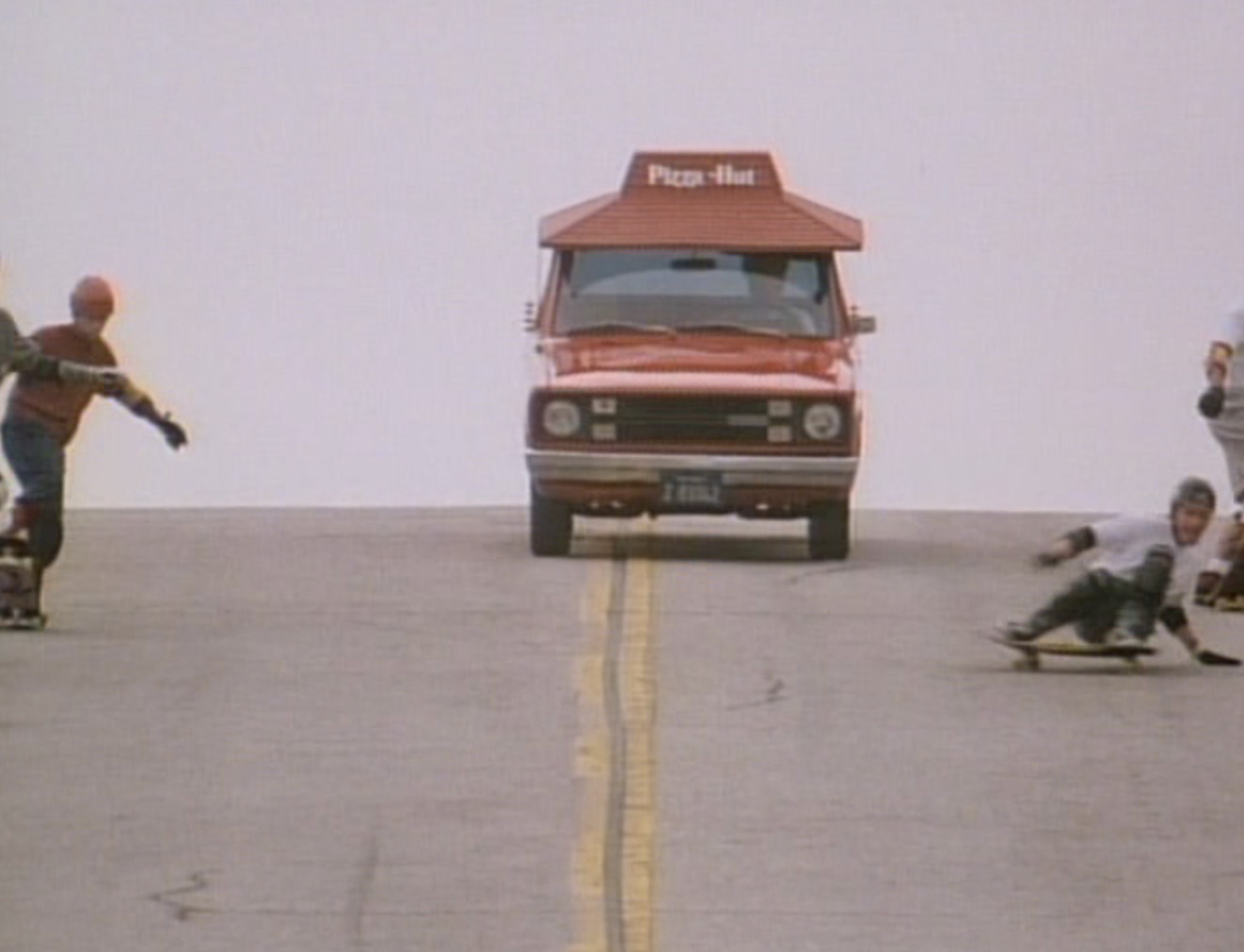
Am I missing something? Do any other Pizza Hut Couriers exist, even regionally?
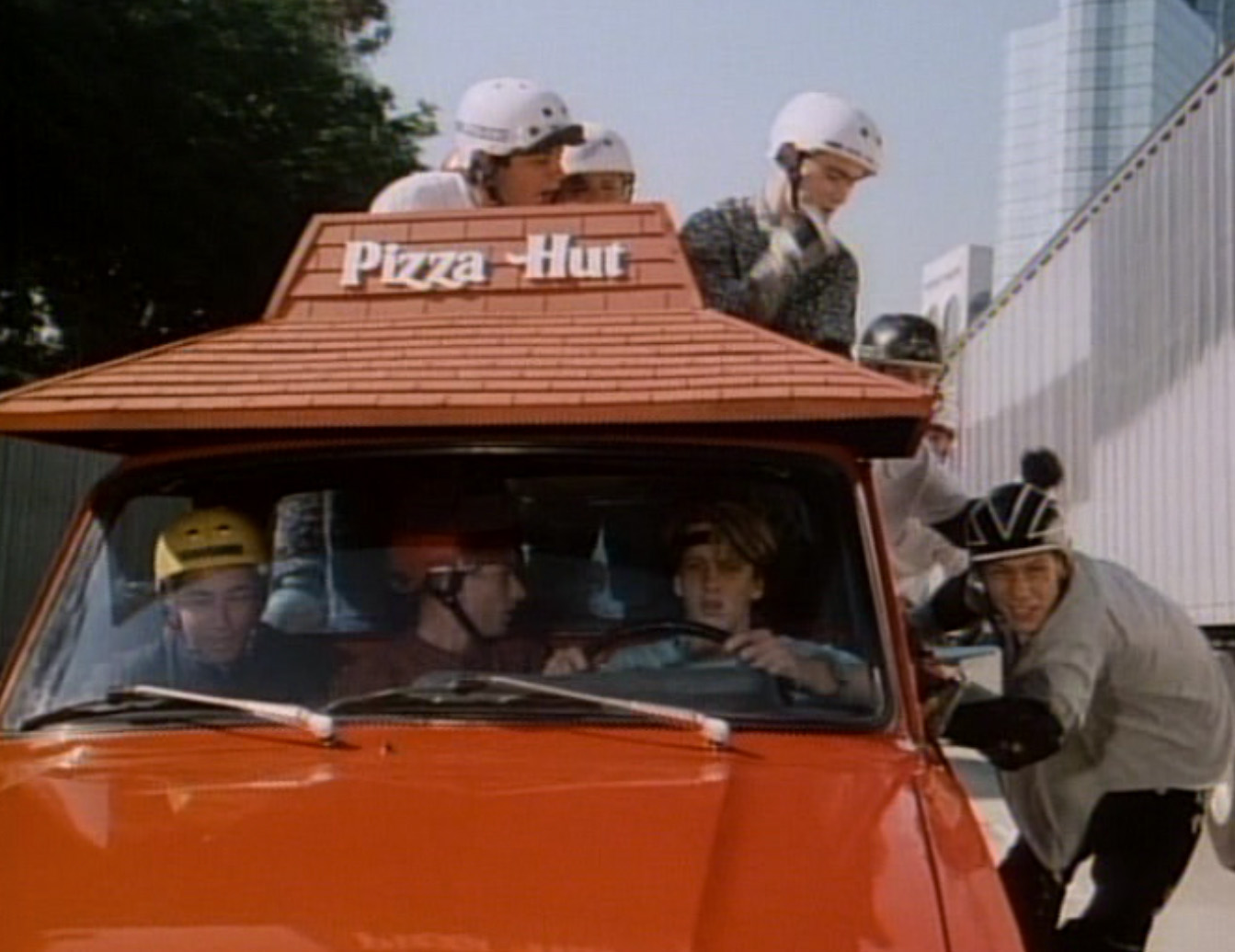
If you know any facts about this spectacular pickup, please share! Skateboarding is not a crime, man!
Ford F****g Ranger!
The Courier was dropped after 1982 when Ford came up with their own domestically made compact pickup, the Ranger. Wow, that only took you what, twelve years, Ford?
As you can see from the ad for an ’81 below, they did very little to change the Courier near the end. Mazda’s version soldiered on alone as the B-series. If you bought the Mazda version, there was an ultra-efficient diesel engine option that the Ford-badged truck never got.
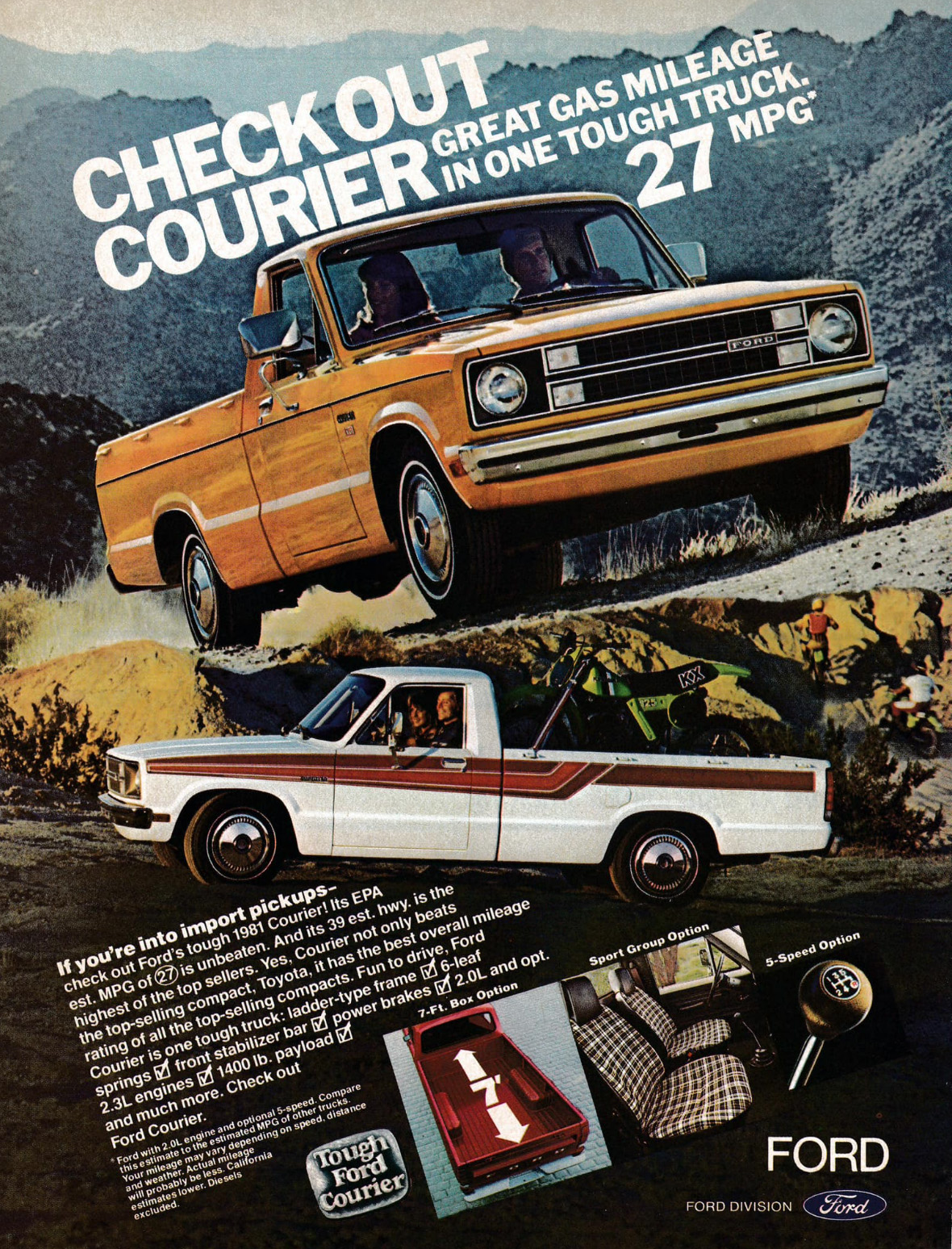
In some ways, you could call the Courier a stopgap, but that seems a bit of a misnomer, since Ford sold it for twelve years before offering an American-built replacement. One of the bigger contributions the Courier made was to begin the Ford and Mazda partnership that ended up becoming a much bigger thing as time went on and resulted in some great cars like Miata-powered Escorts and the awesome Probe GT.
In retrospect, a Japanese-made Ford might have been one of the best products to ever bear a Blue Oval logo. Maybe that’s just what Henry Ford II was afraid of.
Top graphic image: Ford


I never drove a Courier. But I have driven a Ranger. And I drove some Datsuns, including an ’82 i owned. And a Toyota after that. Now no trucks in the fleet. I have toyed with the idea of a Maverick. But I just don’t want a car loan these days and folding the seats down in my ’17 Accord give me enough room to haul around what I want to haul around. And my shop vac removes all the crap those adventures leave behind.
One irony not mentioned in this article was when Ford came out with the Ranger things swapped with Mazda as it sold a B series pickup based on the Ranger. My dad owned a B2000 with a long bed. It moved me and friends after college.
My dad’s company had an affiliation with Chevy, all the enterprise vehicles were Chevy. He’d always have an Impala or a Caprice, but when those were in the shop, he’d occasionally come home with a LUV. They were… spartan. Black vinyl bench seat, black vinyl door panels, black rubber floors, speedometer, crank windows, had a choke if I remember right. 3 or 4 gears on the floor with lots of play in it. Also started rusting the second you drove it. Not the fanciest car in the universe, but functional, I guess.
Sorry, but I will not be hearing any Gleaming the Cube slander. It is the best skateboarding-crime-thriller movie ever made. What other movie has a teen avenging his Vietnamese adopted brother’s death with help from Tony Hawk?
This is a point well made… and I’m here to tell the rest of the comment section you are 100% correct. There are no better ‘teen skateboarder avenging his Vietnamese adopted brother’s death with help from Tony Hawk’ movies out there. This is the best one of those ever made. Nothing else even comes close.
I enjoy this story and we had the same Ford Courier here in Australia but your part of the article that discussed the length of the optional long bed reminded me of these Subaru Brats that were sold in Finland to get around tax regulations. http://i.imgur.com/AY9EVem.jpg
Years ago my neighbor had a job as a courier, driving his own vehicle, a Ford Courier. The truck was completely destroyed by a big rig that literally ran him over on the freeway. Amazingly, my neighbor survived the crash, although he had no memory of the incident. The CHP told him what they thought happened based on their investigation of the accident.
My dad bought my grandmother a new red 1980 Courier. I suspect he bought it instead of a regular car because he liked it himself. Anyway, she loved it, and after she died it passed to my dad for a few years and then after he died I ended up with it. By the time I got it the paint was getting chalky and the dented fender from my grandma’s tiny garage was beginning to rust.
It ran well for the most part, but on cold days it would start up just fine, but then die instead of idling when you stopped at an intersection. It was not the best vehicle for Idaho winters: The heater started working about when you arrived at your destination, and it needed a sandbag in the bed to help with traction. I had a couple of weird encounters with the drivers of big shiny SUVs, to whom the little red truck was apparently invisible. My wife remembers talking with a couple of contractors about how it just kept going year after year AND it was free, and they agreed that it was in fact the perfect truck.
Gleaming the Cube is probably one of my favorite movies from back in the day. Me and punk ass skateboard friends would go watch it in the basement on and off all summer long. Hehe stealing an Olds Tornado with a Stake Truck key…
“…and Christian Slater before we all came to our senses and realized that his Temu Jack Nicholson act was too annoying to watch on screen.”
I laughed only slightly too hard at this
This is another vehicle I did know existed until I was in my 20’s. I grew up in Michigan in the 80’s and 90’s and moved south in 2000. That was the first time I saw a Chevy LUV, Ford Courier, or Ram 50. I commented to my father and he said. “The bodies rusted away in about 5 years”
I know it’s not a Testarossa*, but they could have painted that panel under the door black, for a little more visual alignment between the front and back half of the truck.
Celebrating 8 years of driving an old japanese car, with notning but regular service. Would love one of those Mazda pick-ups, Or a Toyota or a Nissan, doesn’t matter much 🙂
(*Google for yourself how much of it’s 3ft front overhang was painted black, to make it not look too silly)
Next, a deep dive into the pickup truck with YO on the tailgate that was called some imaginary brand but was copied from a Toyota, which was the Pizza Planet truck from the movie Toys.
I think most of the Toyota pickups in the San Fernando Valley back then said YO on the back.
Nobody mentioned Biff’s mobile detailing truck from Back to the Future?
I drove a first generation as a company truck. I’m in a Southern state and it had no A/C and the suspension was made of iron and concrete. That little skateboard beat the crap out of me every day. No fond memories here.
The Courier is on my list of not-quite-bucket-list vehicles, in that I don’t feel a need to own one before I die, but I would be happy to if it happens. They, much like the other small trucks of the time, were just honest little pickups that never pretended to be anything they were not. I’m a 4×4 guy at heart, but I’d love a slightly dropped Courier or LUV to drive on the weekends.
When I was very small, Dad had a courier that he and some of his buddies swapped a Chevy 327 and a 4-speed with an electric overdrive into. Mom says that was a really fun little truck, and I wish I remembered it more. I bet it would smoke the tires in every gear.
Sounds like your dad and his friends had a deep disregard for safety! Those trucks were all like paper mache, only sharp, in an accident.
Back before dad started his own business and had actual spare time, him and his buddies did all kinds of fun car things. The one with the most stories was “The Greep” which was a Gremlin body on a shortened Jeep frame with both the original 2-speed transfer case AND an over/under drive unit. Apparently it was confusing to shift gears in. It was also painted a deep, metal-flake gold. After it got off the auto show circuit, one of the guys used it for ice racing for several years.
NO love for the Dodge Ram 50 in this thread.
You gotta wait ‘til Mitsu Monday for that one.
We had one of each generation when I was growing up. The notable gen 2 difference not mentioned was that it had a normal tailgate, ie handle in the middle. The gen 1 had latches on each side. One had AC and when you turned it on at highway speed you had to increase throttle by a notable amount to maintain speed.