

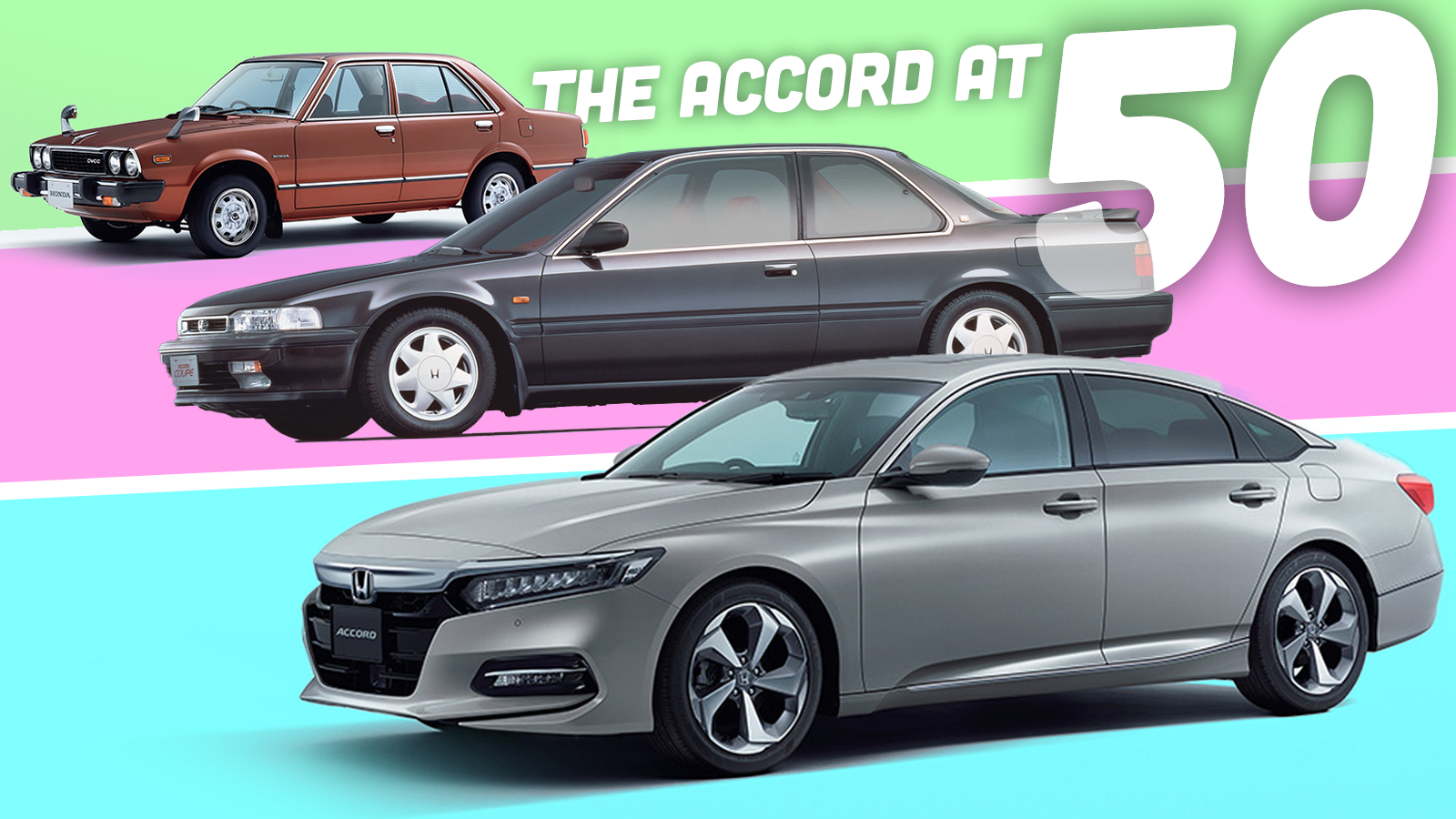
The Honda Accord is one of the best-selling bread-and-butter cars of all time, as the best-selling Japanese car in the United States from 1982 to 1997. In 1989, it was the best selling car in the U.S, beating the Ford Taurus. It was the model to take Honda beyond small cars, to bring Honda’s manufacturing operations to the U.S, to show what the Japanese carmaker could do when it just wanted to make a really good, durable and dependable daily driver. The Accord deserved to sell well, among all the Camrys and Corollas, and it did.
Over the years, there were even a number of Accords that were interesting from an enthusiast driver standpoint, since in some markets it got hot engines, big engines, all-wheel drive, four-wheel steering – albeit not in the same car, at the same time. Honda could turn the Accord into hatchbacks, coupes, wagons as well as sedans.


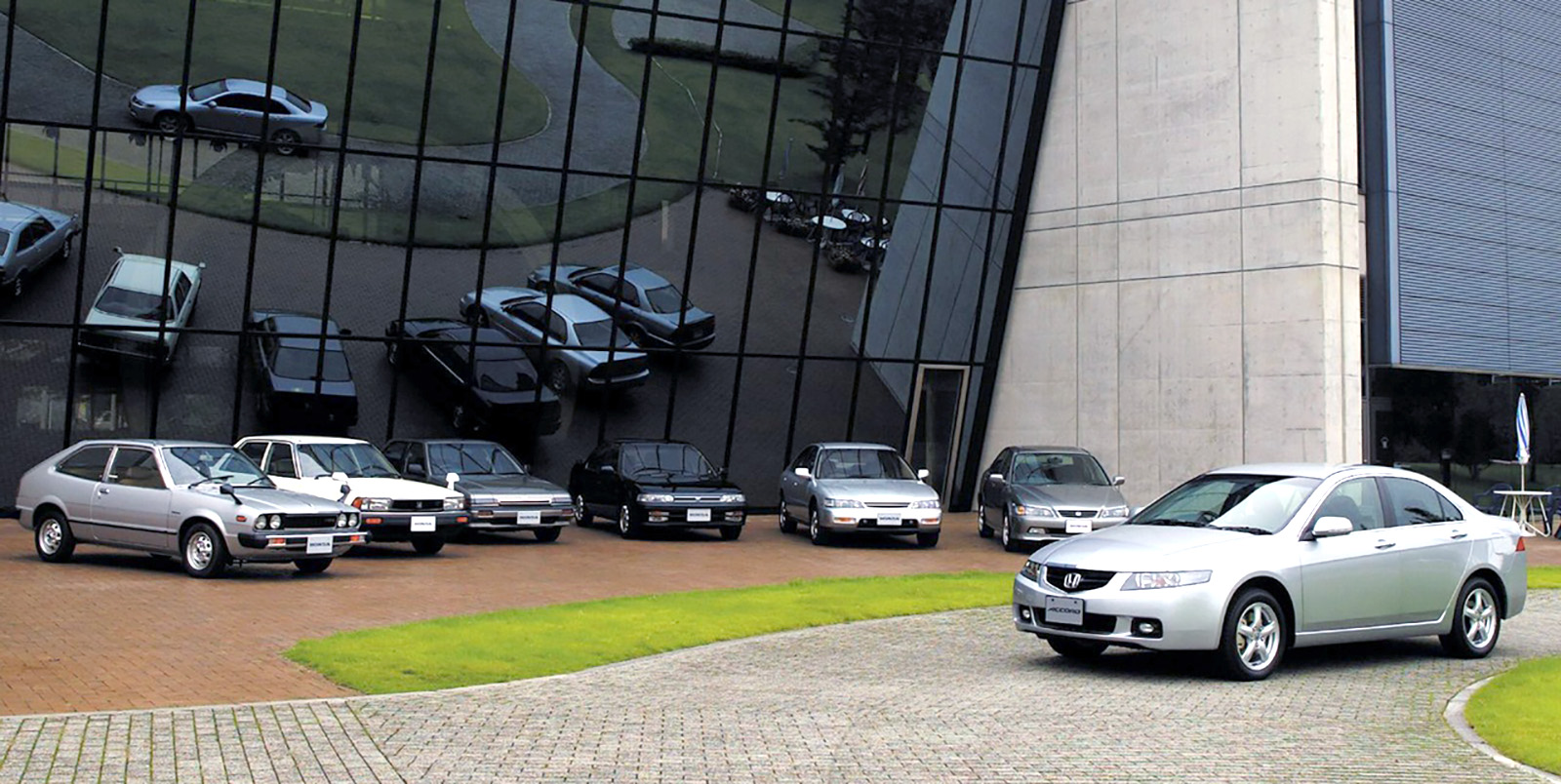
If it weren’t for the Accord, Honda would probably still be making tiny kei cars and Civics and little more. The oil crisis had given the then very small Civic the sales boost the company needed: the EPA rated it as the most fuel-efficient car available in the States from 1974 to 1978, and its CVCC engine didn’t need a catalytic converter or unleaded fuel to run clean. It did 40MPG, cost a little over two grand new, and as a result, it sold well. By 1975, Honda sold 100,000 Civics yearly in the U.S, soon tripling that. With its small car selling well, what else could Honda offer for American customers by the mid-‘70s? What kind of Honda would suit the wide open roads of the wide open America?
The Accord Gets Its Start in The Mid-1970s
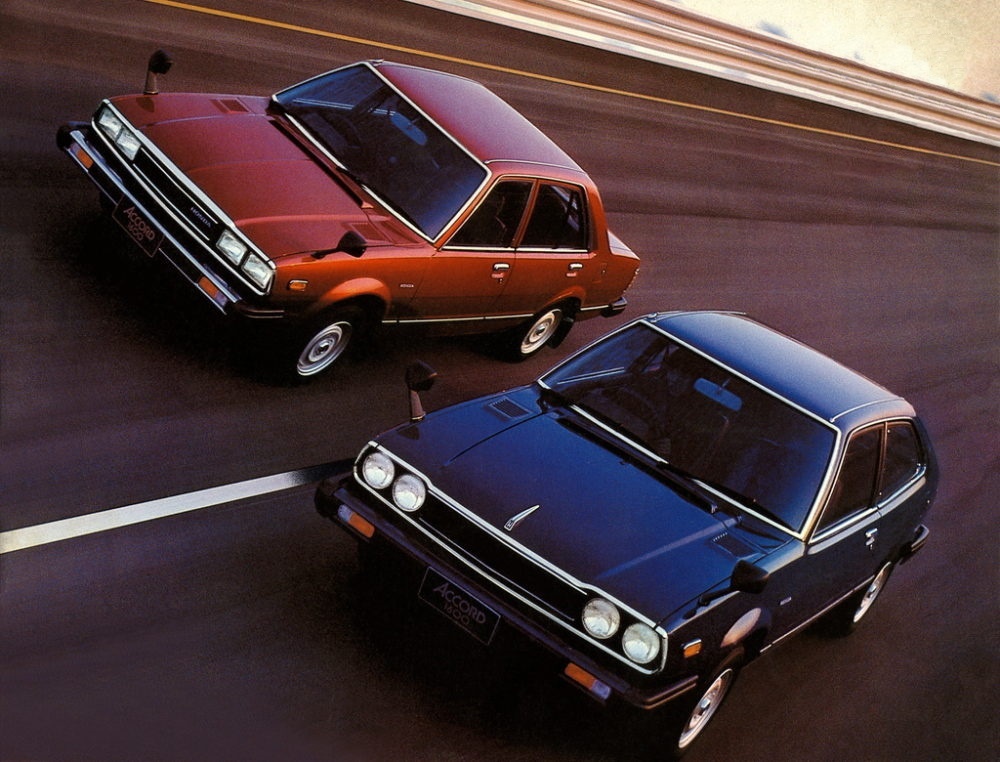
The first Honda Accord was launched in May 1976. At first, it was still a hatchback like the Civic, but bigger. We’re still not talking about a particularly large car, as it weighed around 2000lbs tops, but it already appealed to buyers who had found the Civic too tiny for their needs. When I think of the first-gen Civic, I think about the scene in the first Police Academy movie, where the stolen Civic’s front seats are ripped off, and the guys sit in the back seat so the driver can fit behind the wheel.
The Accord’s sedan version was introduced in 1977-1978, and it did exactly the same as the Jetta and other hatchback-derived sedans would do throughout history: it looked bigger and more serious, thanks to the added trunk. The first automatic transmissions were still two-speed Hondamatics, and looking at it from 50 years in the future, it’s bewildering that a three-speed automatic would be something to improve things. That was added in 1980.
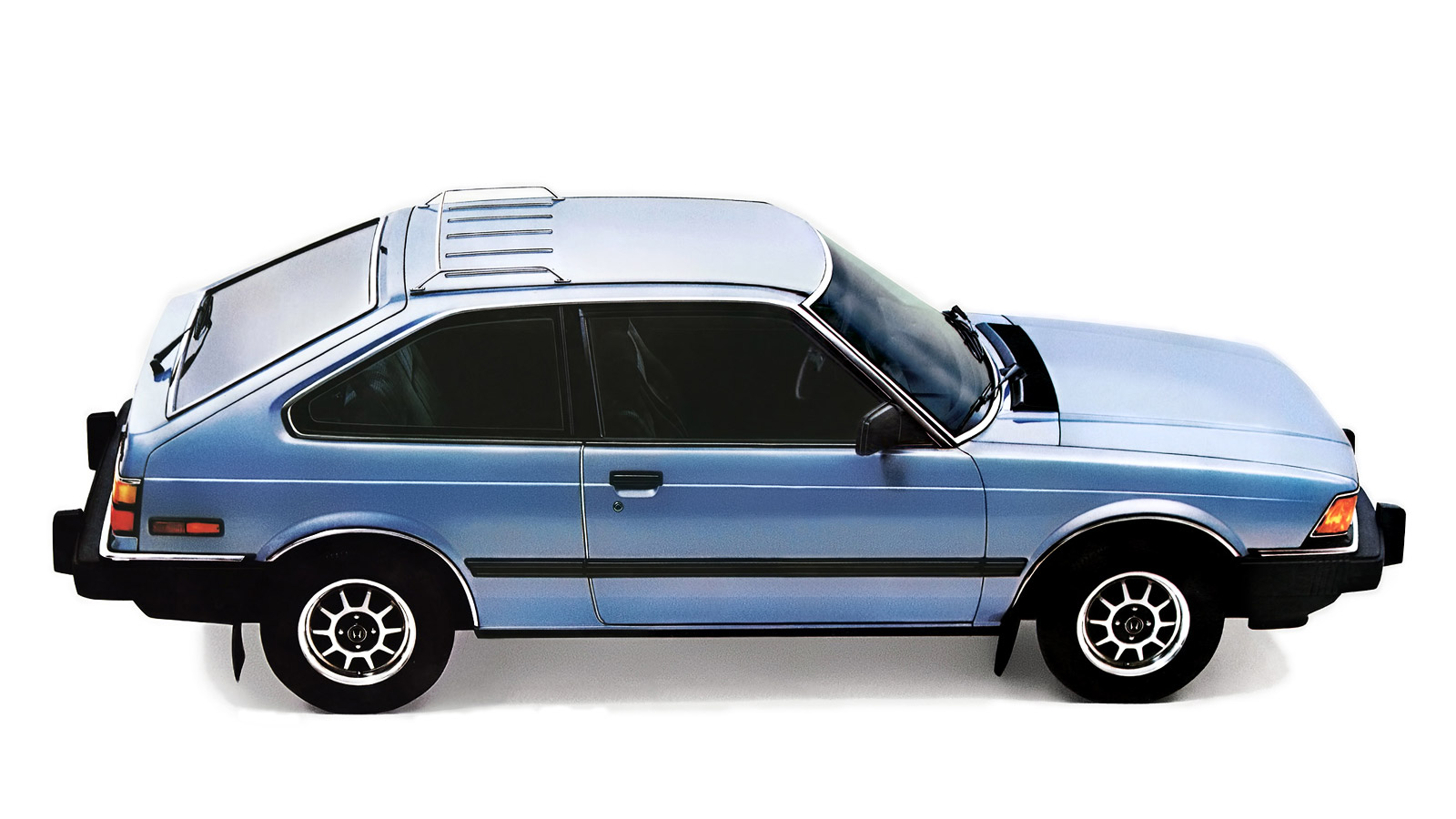
The second gen arrived in September 1981. It looked almost the same at a glance, and it also retained the hatchback version, but it was ever so slightly bigger. But it would need to be, as Honda, zeroing in on American requirements, started building Accords at its Marysville, Ohio, manufacturing plant. The first car factory in the U.S. from a Japanese automaker, it’s been churning out Accords since November 1982, having started out a couple of years earlier with building motorcycles. By 2023, Honda had built 30 million cars in the United States.
The Accord Was The First Car With A Navigation System
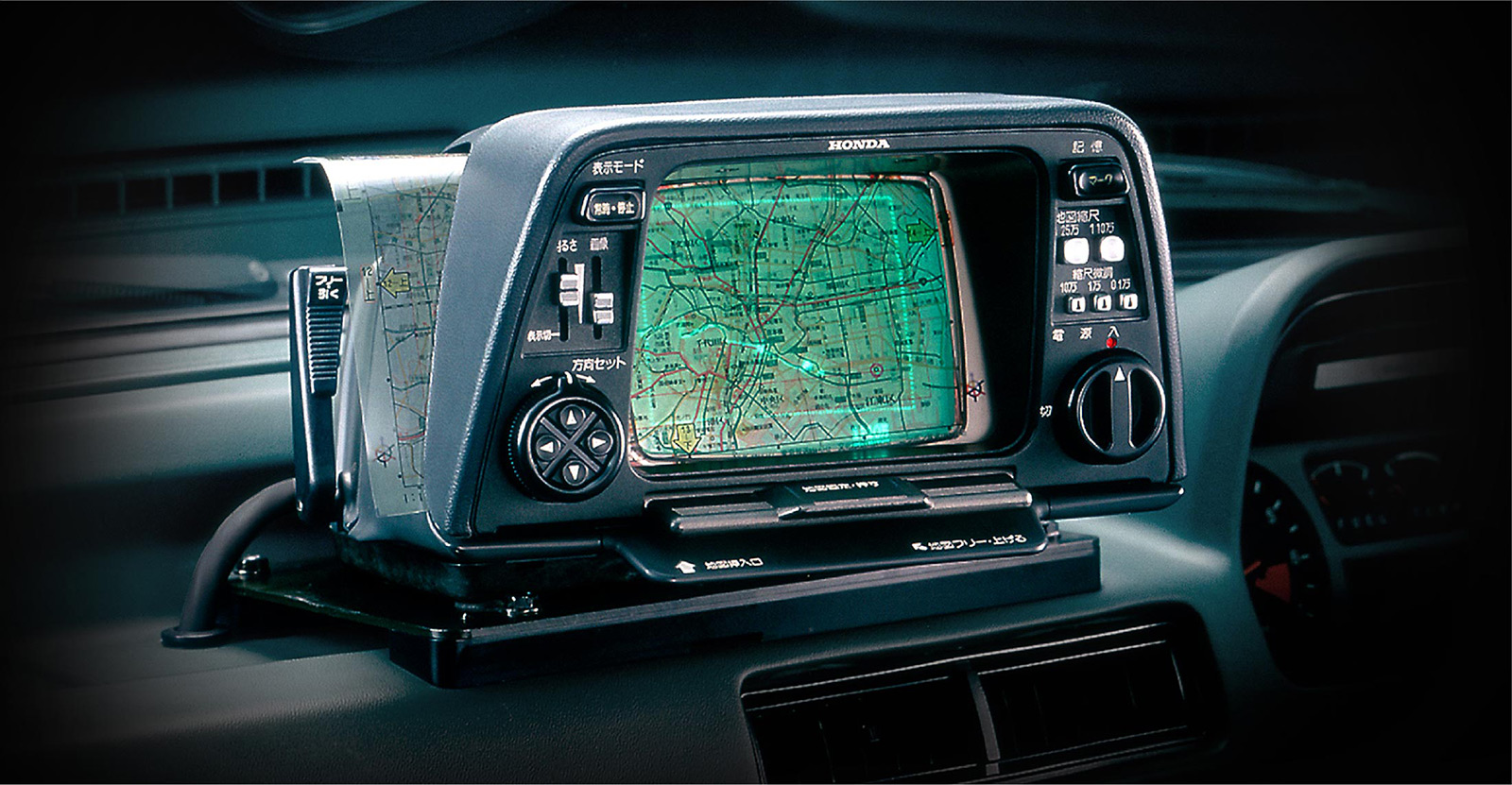
The Japanese-market second-generation Accord also featured an interesting piece of equipment that we’ve grown to take for granted: a navigation screen. Offered as an option, it was the world’s first commercially available automotive navigation system.
Since satellite-based navigation systems in cars were a long ways in the future, it was incredibly complicated in a completely different way. The Electro Gyro-Cator relied on small transparent maps scrolling on a 6-inch CRT display screen, indicating the car’s location using a helium gas gyroscope and a servo gear that would detect the car’s rotation and acceleration, once the driver had set off, tracing their way using dead reckoning and showing where to go. The driver could also highlight locations using a supplied pen. The maps needed to be specially created for the system to be precise enough for the car and driver to rely on, as the development vehicles initially deviated from the routes due to deformations in the cartography.
“Although the vehicle’s trajectory and the map had to be aligned manually on the display, or “map matching”, it was tremendously convenient for the driver to know the location and traveling direction of their own vehicle without using a regular map. The project made progress to the point where the system was ready for a road test, but the team ran into an unexpected problem during this real-world testing. At the road test, (Katsutoshi) Tagami drove the vehicle and Kume and Nobuhiko Kawamoto, then assistant general manager at Honda R&D (and later the fourth president of Honda) also got in the vehicle. They drove along the same test course several times, however, each time, at the exact same place, the vehicle would deviate from the course shown on the map, and nobody could figure out why. Thinking that the onboard instruments were being affected by some kind of electrical interference from a nearby facility, they used a field strength meter to detect any such disturbances, but none could be found.
After exhausting every possibility, Tagami finally hit upon an idea: “Could the map be wrong?”
He contacted the map distributor and learned that in the world of cartography, the use of simplified representations known as “deformations” was a common practice. For example, on a map with a scale of 1:100,000, a 10 meter-wide road would be represented by a 0.1 millimeter-wide fine line. In areas where several roads run close together, these lines would have to be simplified to avoid overlapping, and this inevitably sacrificed a certain degree of precision and accuracy. However, when it comes to route guidance, sacrificing precision was just not a viable option, so the team decided to work with a map maker to create a new set of map sheets dedicated to the system Honda was developing.”
The Electro Gyro-Cator weighed 20 lbs, cost a fourth of the Accord’s price in Japan, and it was only offered for a year until Honda shelved it. It’s unclear how many buyers went for it. Even as a paperweight, it’s cool.

As weird as it was, the Electro Gyro-Cator wasn’t the only fancy thing about the second-gen Accord: it got a perfectly ’80s-looking digital dashboard in Japan. “ALB” stood for Anti-Lock Brakes, before “ABS” was widely accepted as the acronym. I also enjoy that the electronic display says Electronic Display on it.
The ’80s Accords Look Even Sharper

What’s the cool thing about the third-generation Accord? Pop-up headlights! Honda designed the third-gen car to be nearly as good-looking as the Prelude of the time, and that meant a sleek shape and a low nose. It was a transformation after the somewhat ho-hum design of the first cars, and you can’t tell me the black Accord in that above desert shot doesn’t look seriously desirable. The salad shooter wheels help, too.
For the American market Accord, the low nose likely needed pop-up headlights for regulatory reasons; the Japanese ones had them to match the other Hondas sold at the Honda Verno chain of dealers, such as the Prelude.

It has to be said that the Accord coupe was now extremely close to the Prelude in design, especially as you could also get the Prelude without pop-up headlights in Japan.
In the above shot, the American-built coupe poses with a Gold Wing, also built in Marysville. In Japan, the American-manufactured coupes got neat little eagle logos, which you can spot above the exterior door handle.

European versions did without pop-up headlights, but since the engineering was already there, the trick lamps were also used in the fantastically cool Aero Deck three-door wagon sold in Europe and Japan.

While the sedan is one of the few four-door cars with pop-up headlights (do you remember any others?), the Aero Deck was about as fancy and sharp as a hatchback could be. And the hatch was even hinged in a slightly strange way for a larger opening. The available two-tone paint scheme made the Aero Deck look even more ’80s.
The ’90s Start Round Here

For the fourth generation, Honda used the Aero Deck name for its 1991 Accord wagon, the first one of its kind. Those were built in Ohio and exported from there to Europe and Japan, as was the two-door coupe: while the Accord now got a real wagon instead of a shooting brake, the three-door hatchback was dropped from the roster. The addition of a long roof was done very smoothly.

As the ’90s went on, the Accord’s Japanese, European, and American versions also started to deviate visually. While American Accord buyers could choose between a somewhat similar-looking sedan and coupe in 1993 – and select a V6, for the first time ever – the now British-built European Accord was a development of the Honda Ascot Innova (above). It looked otherwise identical, but the Ascot Innova was slightly narrower, had frameless windows, and was available with four-wheel steering, in the style of the Prelude. The UK-market Accord was raced in the British Touring Car Championship between 1995 and 2000.
Honda had been working with Rover since the 1980s, and Rover took the early-‘90s Accord as a basis for its 600 sedan. The 600-series definitely looks like a Honda, and the doors are almost identical to the ones on the European Accord. The cars also shared the windshield and the roof panel.

We’re counting the Rover 620ti as a Cool Accord in this piece, as it offered a 200-horsepower, intercooled, turbocharged four-cylinder Rover engine at a time when Honda didn’t really yet play with turbocharging in its passenger cars (the first-generation Legend and the Honda Jazz/City aside).
The 620ti especially is an interesting blend of Rover’s Olde English viking boat image and straight line speed. It could hit 60 mph in seven seconds and go all the way past 140 mph. In the 1990s, those were some serious numbers from a four-cylinder engine.
The Turn Of The Millennium

The sixth-generation Accord would be three different-looking cars, depending on where you did your business with Honda: the American, European, and Japanese sedans all differed visually from each other. The European car was also smaller than the other two.
As the CR-V and Odyssey took their place, there would be no more Accord Wagon for American buyers, but there was a neat-looking coupe (above) that had the slightest hint of NSX in the taillamp design. It’s great to think about how there was a market for coupes like this in the ’90s and early 2000s, plus you could get it with a three-liter V6.

European customers could choose a Type-R, which produced over 210 horsepower from 2.2 liters of displacement – without turbocharging. The thing screamed to 7200rpm. Some 3800 were built, out of which over 2000 were sold in the UK.
The same engine was also used in the Japanese market Accord Euro-R (pictured above), a model name that isn’t confusing at all.

The car that European Honda drivers knew as the seventh-generation Accord was sold in the U.S. as the Acura TSX. It is one of the best-looking Accords and a great-looking Acura, and you could buy it as AWD in Japan, as well as a 220-horsepower “Euro R” despite there not being a European Type-R anymore. The Japanese and European versions of the Accord were again visually similar, but the American car looked quite different.
As well as again being sold as an Acura TSX, the eighth-generation Accord would be the last one sold in Europe, as Accord sales ended there in 2015.

Importantly, the eighth-generation American Accord was sold as a V6 coupe with a six-speed manual gearbox, as was the ninth-generation coupe. Honda could just have sold them as automatic only, but chose to offer more.
The tenth generation would lose the coupe and the V6, signalling the end for Honda Accords aimed at enthusiast drivers: while there wasn’t a coupe anymore, the sedan at least has a fastback sort of roofline in the two most recent generations.
(Edit: The original version of this article neglected to include that, yes, the tenth-generation Accord was available with a six-speed manual in the Accord Sport. That and the 10-speed automatic are definitely enthusiast choices – maybe some of the coolest Accords I forgot existed)

In the eleventh-generation car, the only available transmissions are a CVT and an e-CVT. But in a market where passenger sedans aren’t even the obvious choice, the fact that there even is a factory-new, Ohio-built Honda Accord for sale among all the SUVs and crossovers feels warming.
Photos: Honda


Thank you for this article! My first Honda was an ’86 Accord LX-i, sadly with an automatic, but I had a company car, and the Accord was my wife’s DD, so…
I had a colleague who had the exact same car, but with a stick, and I invented an excuse to take my wife’s car into work one day and brought the stick version back home that evening. The next morning wasn’t as funny as I thought it would be.
Nonetheless, our ’86 was a great car. One of my favorites. It did 0-60 just as fast as my parents ’65 Olds 88 with a big V8 under the hood and handled a million times better. And got triple the fuel economy.
I now drive a ’17 Accord V6 that is much bigger and heavier than the ’86, but gets upper 30s (~5 mpg better than the ’86) on the freeway and is ridiculously quick when my right foot gets heavy.
I really would love to find a ’94 EX wagon with a stick. If I found one in good shape with an automatic, I’d probably still pull the trigger. They just looked so perfect.
It’s mildly amusing that current Civics are as big as the ’86 Accord was. A Sport Hybrid would be towards the top of the list if something bad ever happens to my ’17.
I think the Canadian Accords of that era had “European” headlights and not the retractable of the US ones. I saw a picture and thought they looked cool. My ’86 never had the motor that lifted them up fail, but it was always at the back of my mind. I had a neighbor with a Prelude where one of them did fail and it looked weird.
I have fond memories of 77 Accord and less fond memories of an 84 Accord, but that’s where my Honda car experiences end. I also only drove early Accords with 5 speed manual transmissions, never automatic. The second generation car was more refined and slightly roomier but the taller gearing blunted acceleration and softer suspension blunted handling. A friend at work had a 90s Accord coupe as a beater and a previous owner had raced it with blue LED windshield washer nozzles and soffit vents in the hood plus the obligatory fart cannon
I do enjoy my Accord coupes. 88, 90, 94, 00, 13, the last two were V6’s. The 2000 had a shit transmission but I got it replaced under a recall thankfully. I think my favorites were the 90 and 00 (aside from the tranny).
Still driving the ‘13 with plenty of life in it, only has 110k on it. Cons are the tech hasn’t aged great, pairing a phone usually doesn’t work, the nav system blows and the turning radius is larger than a truck for some reason and the mileage in the city is a joke. But it’s paid off, has heated seats and is very comfy for roadtrips and to commute in.
I have a ’17 V6 sedan. Only the coupe had the option of a manual that year (the last with the V6). So, I have the 6-speed AT. The J35s really are nice engines. I just turned over 77K today on a drive from WA to CA. I’m two years overdue for a timing belt (7 years/100K miles), but I’ll be making an appointment to get that done when I get back home.
And when on cruise control, the AT actually downshifts (sometimes two gears on 6% grades) to keep the speed in check coming downhill over the Siskiyous. I had never been behind the wheel of any other AT-equipped car that did that. Disengage the CC and you’re doing 90.
Great tribute! I own a 2000 European Accord and I always get a smile from it. I look forward to try more generations and more market variants but I’d say it’s a really nice and comfy saloon. I love the 11th CY generation design and I agree it’s cool they offer a sedan among the suvs
Great article! I have always loved the Accord more than the Civic for some reason even though they are both good. My Dad bought a 91 Accord in 91 as a test model so it was cheaper. We had it as one of the family cars til it was sold at 240K and still ran like a top. I’ve had 2 of the 3rd gens w/ stick and pop-ups! They were a blast to drive. Currently have a 9th gen w/ the Earth Dreams engine and it’s an awesome as far as a daily
It was probably my Dad’s coolest car (depending on your age) and he never once declined a request from any kids in the car ahead who leapt up at the back seat and asked for the lights to pop up and down.
I have memories of a 4-door 1984 Accord. It was a stick, and owned by a cool chick (her words—she weren’t lyin’). I’ll leave the fun ones to the reader’s imagination.
The not-so-fun include breaking my first breaker bar on a suspension bolt. And, July 4 1994, an immature skunk ran out in front of me as I was driving us home from festivities. It rolled & sprayed the entire length of the car. It >did< scurry away, so that was good, but the car was so low that even like $8 at the car wash a few miles later didn’t mitigate the industrial stench.
Also my first encounter with frozen pop-up headlights some months later.
My take was that Hondas were often a bit more fun that Toyotas—and I definitely enjoy the manual transmissions Honda used more that the Toyota ones.
How could you not mention the 2.0 liter turbo in the 10th generation. I own a 19 with the 10-speed automatic and I believe it’ll runaway from any V6 Accord that was made. It truly is a great daily driver for an enthusiast. It’s faster than my ’02 mustang GT and my ’06 trailblazer SS and it gets 30 miles to the gallon when I drive it normally.
1976 – my dad was shopping for an economy car. I accompanied him as he drove every offering available at the time – all complete garbage. Last stop was at a Honda dealer, where he drove an Accord and bought it on the spot. It was so much better than anything in it’s range at the time, it was embarrassing for the other cars. So he brings it home and here comes our know it all neighbor to check it out. He scoffs at it, makes a smart comment, and walks away. He was feeling very full of himself because he had just bought a new Fiat, and was sure he had made the better choice.
That first gen Accord shifted the paradigm for small cars.
My dad had a first and second generation Accord (back to back), and I was lucky enough to drive the ninth and current eleventh generation versions. To me they are fantastically engineered and phenomenally underrated cool cars.
We had the model year 1989 Accord coupe. Really pretty car. My mother gave it to my cousin some years later in great condition and the fuckwit drove it without enough oil so the engine seized.
‘93 Accord LX Coupe in maroon was my first “good” car after my ‘77 Volvo 245DL.
That was a great car, but all of my friends with the coupes and I all experienced the same thing: interior door handles braking all the time!
We also all would use Sharpie on the windshield wipers because the black would come off of them and they’d look really aged.
That was back when you were lucky to have FOUR forward gears…at least if you were a high schooler around 2004.
Aerodeck. Be still, my beating heart.
Not only is the TSX the best looking Accord, it also came with one of the best ads I’ve ever seen for a car, “The Cog”.
No car company has discontinued more cool stuff than Honda.
I had a 2007 Accord V6 Hybrid which was an amazing car. I wish it hadn’t died in unfortunate circumstances.