

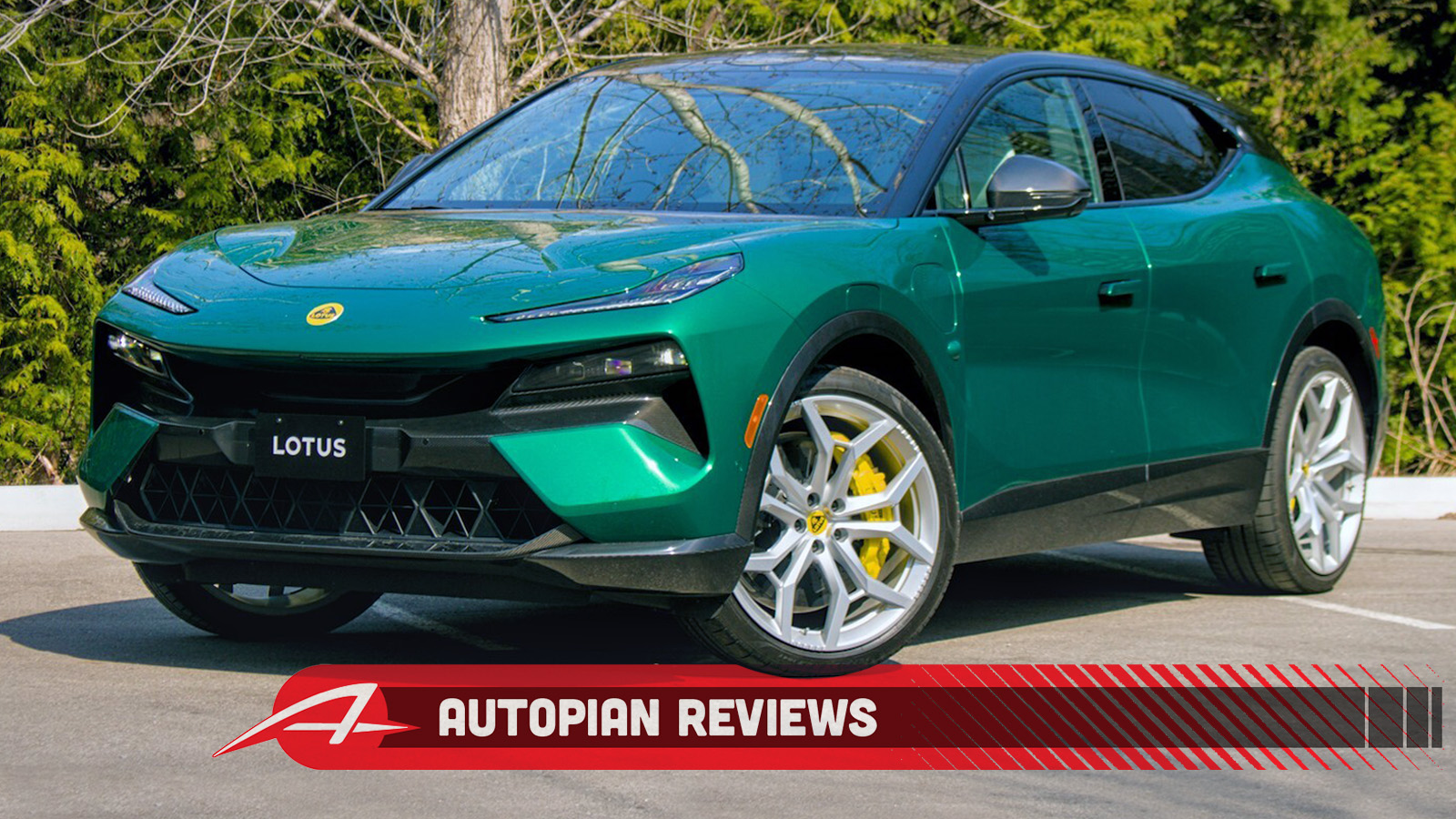
It’s amazing what can change in two years. In 2024, Canada moved quickly to match America’s 100 percent tariff rate on EVs made in China. Earlier this year, that tariff rate was relaxed under a new trading scheme. Under this quota system, as many as 49,000 Chinese-built EVs can enter the Great White North at a mere 6.1 percent tariff rate, and the first brand to take advantage of this is Lotus.
Yep, Lotus, the British sports car marque. While many North American enthusiasts will be familiar with the British-built Emira, the brand now builds a whole range of EVs in China thanks to Geely ownership. This technically isn’t the first time the Eletre SUV has been sold in North America, as it enjoyed a brief low-tariff stint before the weight of international trade concerns came barrelling down on it, but shifting tides in Canada make it a far more attractive proposition north of the border. The question is: How good is it, especially now that there’s a proper choice of posh performance-oriented electric SUVs in its price range? I spent a day in the range-topping Carbon Series to find out.


[Full disclosure: Lotus handed me the keys to an Eletre so long as I kept the shiny side up and reviewed it. They also gave an Atmos audio demonstration, followed by hosting an evening industry and client mixer for the local market relaunch. Transportation to and from was paid for by yours truly.]
The Basics
Battery Pack: 112 kWh lithium-ion.
Drive: Dual-motor all-wheel-drive.
Output: 603 horsepower, optionally 905 horsepower on the Carbon Series.
DC Fast Charging: 350 kW, CCS connector.
Range: 460 km (285 miles) base, 385 km (239 miles) on the Carbon Series.
Base Price: $124,550 Canadian.
Price As-tested: TBA
Why Does It Exist?
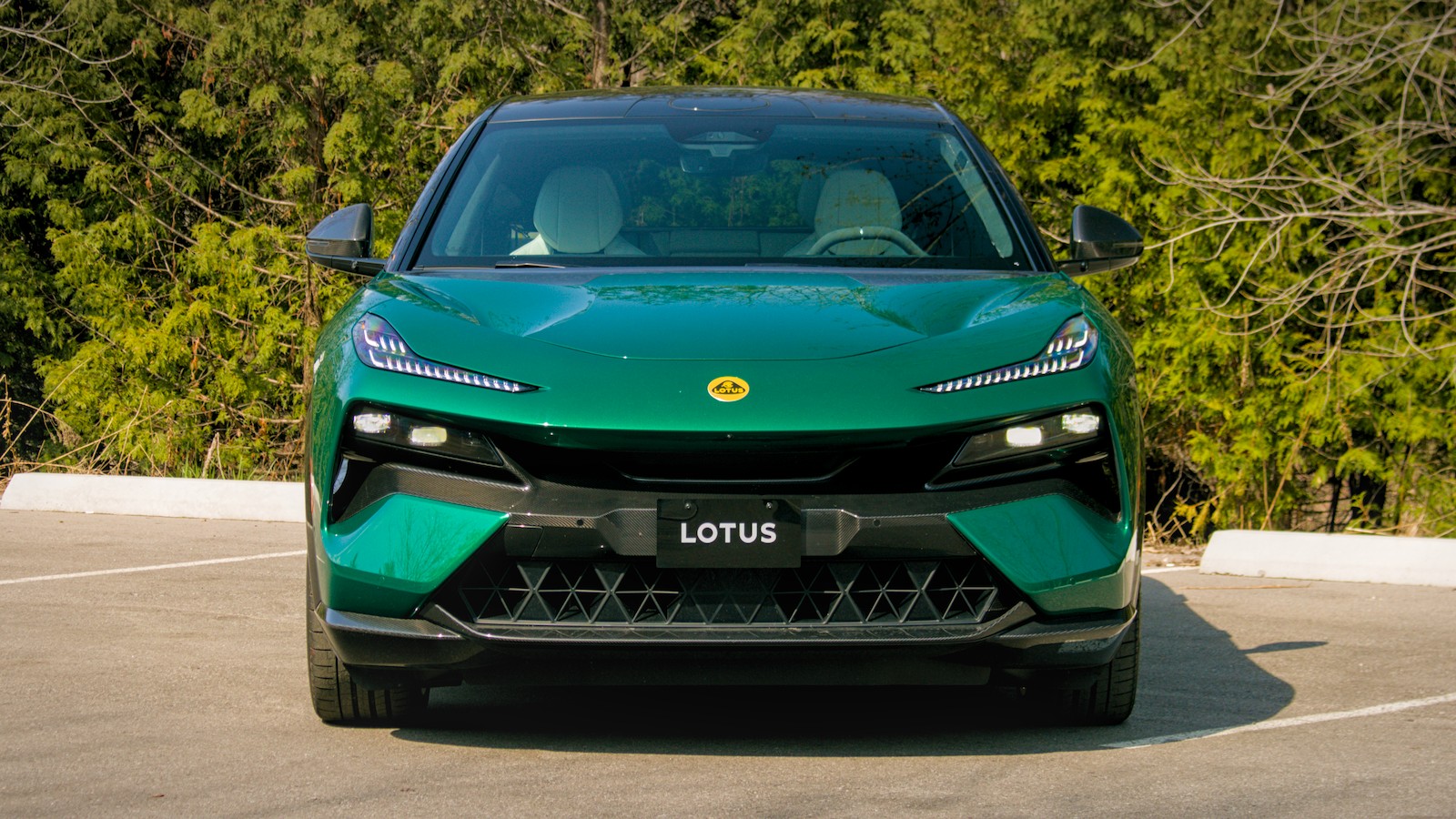
From Formula 1 innovation to delightful sports cars, Lotus has an absolutely spectacular pedigree. Unfortunately, as with many small British sports car marques, it also has a history of financial instability. After the untimely death of company founder Colin Chapman, Lotus was owned by a consortium of British investors, followed by General Motors, followed by Bugatti EB110 mastermind Romano Artioli, followed by Malaysian automaker Proton. Nearly a decade ago, Chinese automaker Geely purchased a 51-percent controlling stake in Lotus, and it’s since sought expansion. It seems like Geely is seeking to adopt the old Porsche model, and after seeing what the Cayenne did for Stuttgart’s sports car company, the Eletre SUV has been tasked with achieving the same sort of sales success.
How Does It Look?
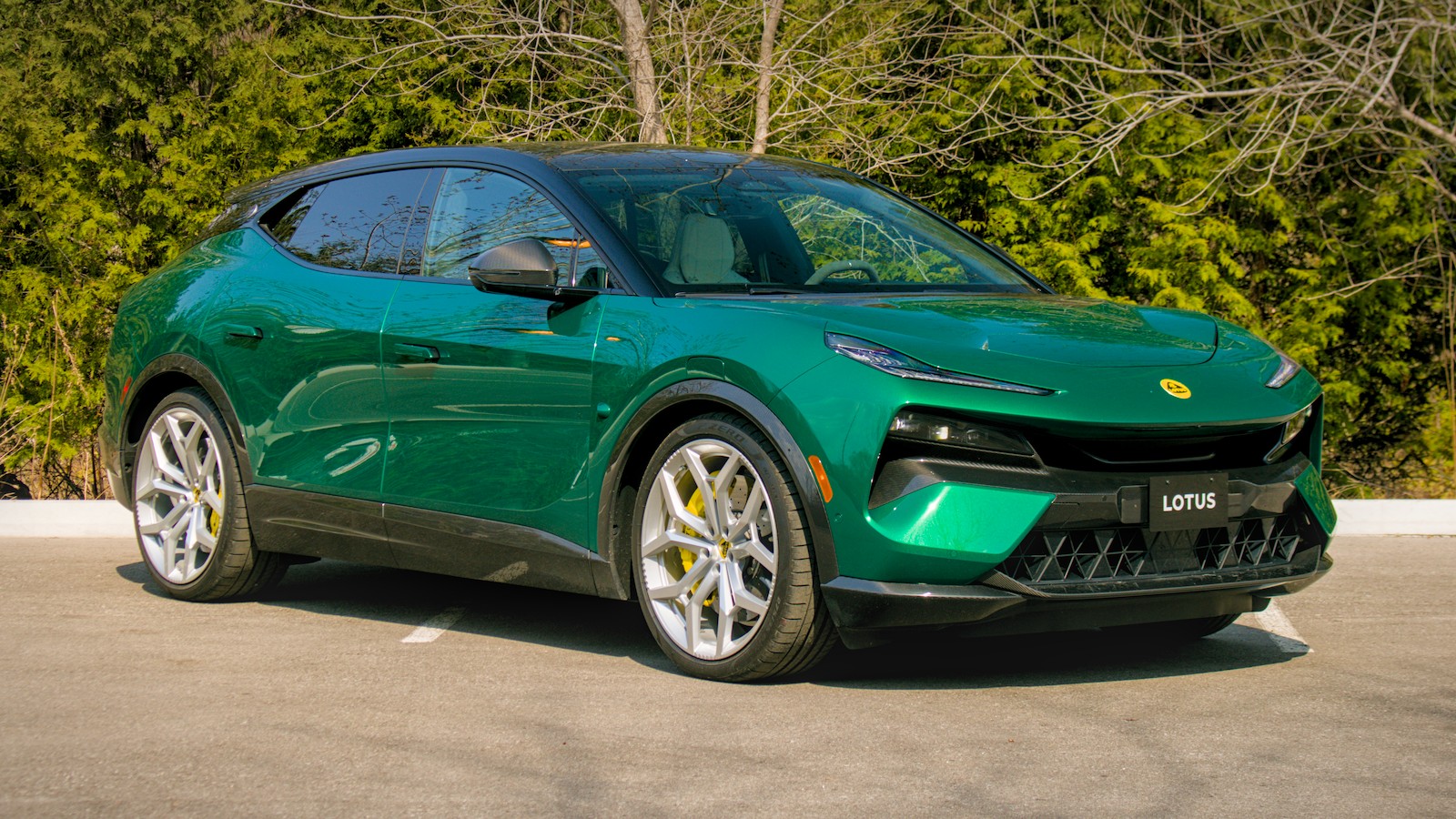
Right off the rip, the Eletre looks absolutely nothing like the sports cars of yore. How could it? We’re looking at a distinctly different form factor, although Lotus has been able to put its own twist on things. The aerodynamic channeling is wild, with large air curtains and flow-through ducts up front and huge wheel arch extractors out back that seem primed to shoot gravel should your right foot suddenly become leaden.
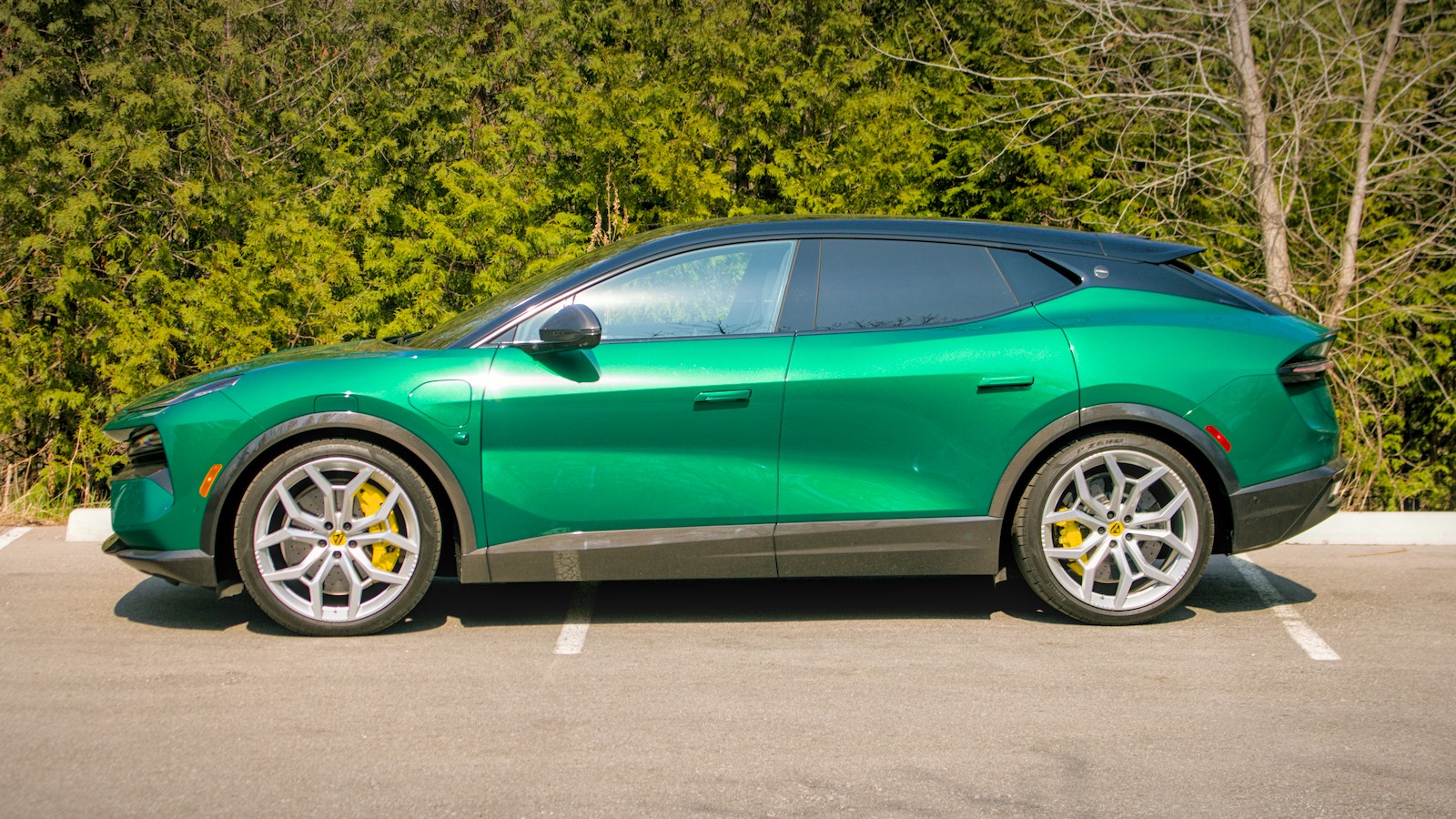
In a way, the functional ducts speak volumes about the look of the Eletre. It’s not traditionally handsome, but it’s certainly purposeful. Only time will tell if it can forge its own identity, but a few great colors certainly help. I mean, come on, just look at this green.
What About The Interior?
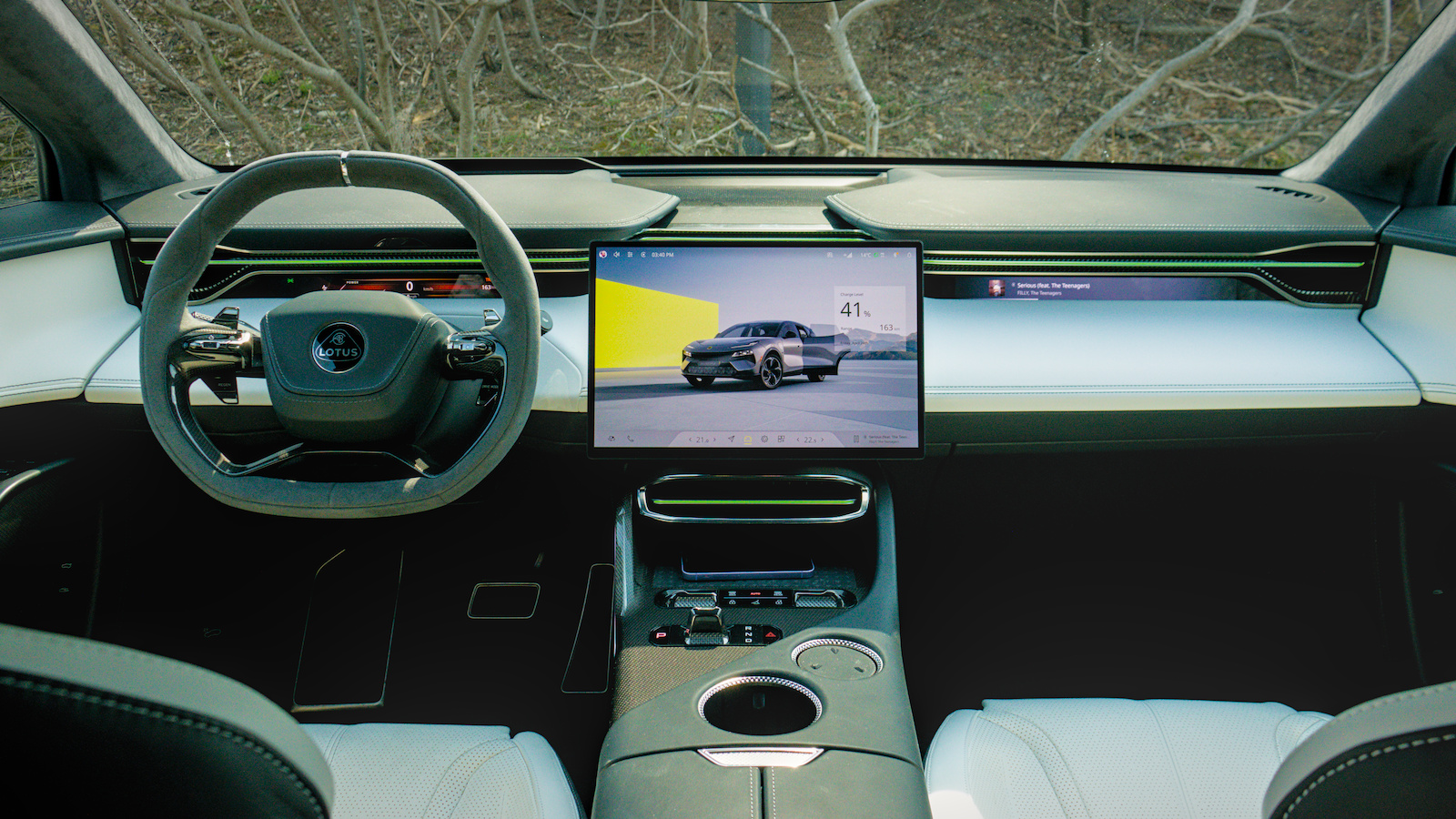
Slide behind the wheel of the Eletre, and you’ll immediately know why it commands a six-figure price tag. From the stitched dashboard to the carbon trim, the material spend feels massive. It also all feels remarkably well-screwed-together, with nary a stitch out of place. Lotus has huge luxury aspirations for this model, so it helps that pretty much none of the switchgear appears to be shared with anything else. The e-shifter moves with heft, the paddles for regenerative braking and drive mode selection offer beautiful tactility, even the recline switches for the rear seats have remarkably little shaft play. Speaking of seats, the front thrones are genuinely astonishing. The level of support is nigh-on perfect, and they’ll hug you like your favorite pair of jeans.
How Does It Drive?
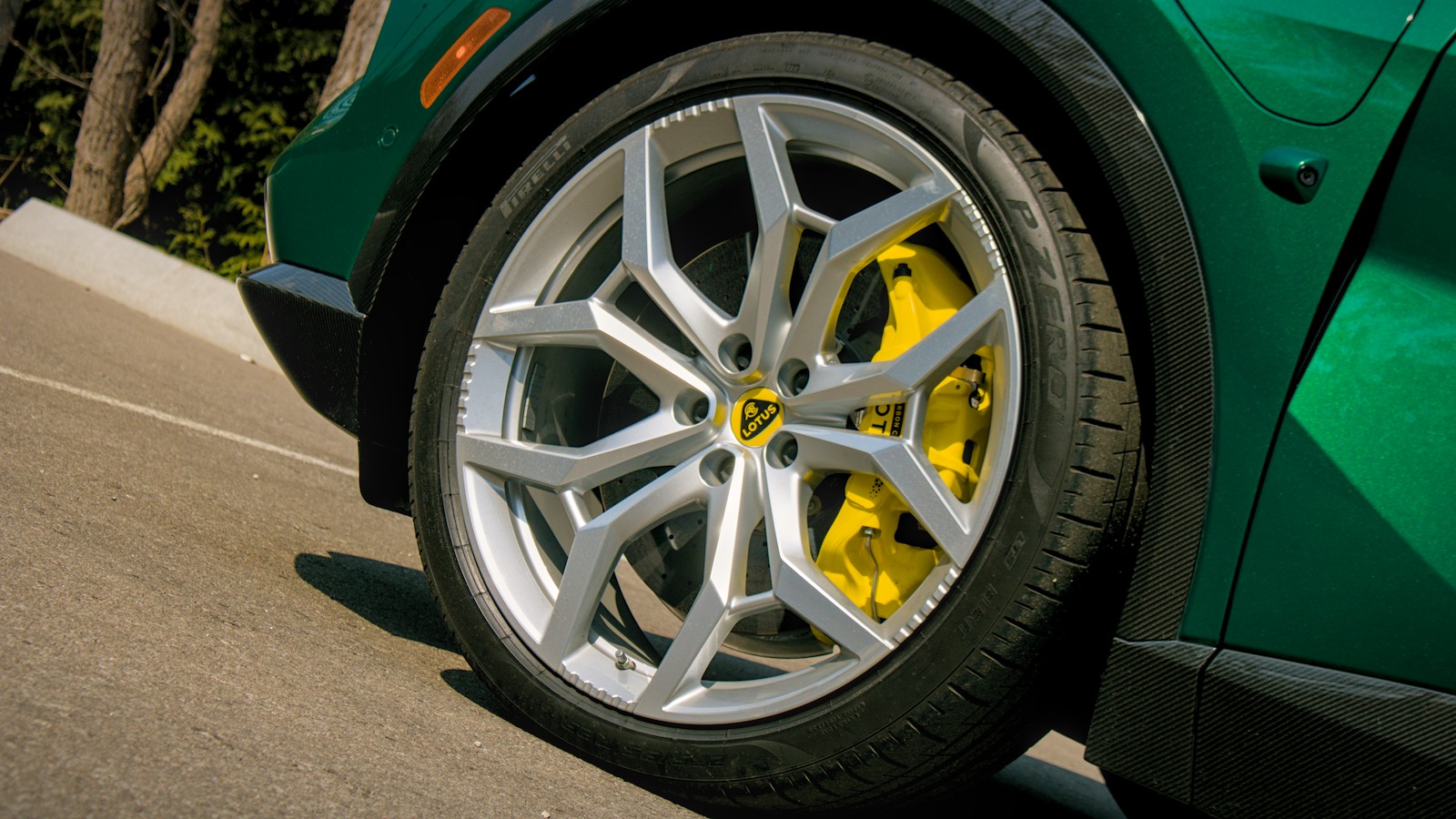
At face value, the Eletre is the antithesis of “Simplify, then add lightness.” We’re talking two-chamber air suspension, more gadgets than a Best Buy, and a base curb weight of more than 5,600 pounds. The thing is, Lotus doesn’t just make sports cars. For decades, the chassis experts in Hethel have helped dozens of marques build better-driving cars, so if anyone can make a 2.5-ton SUV go around a corner, it’s these people. Surprise surprise, the inputs are all there. I’m talking beautifully weighted steering that builds effort with load naturally, air spring pressure, and damping that’s taut but never harsh, even in the Eletre’s most aggro mode. Then there’s the way this absolute unit communicates weight transfer. Instead of trying to completely eliminate body roll, Lotus has dialed in just enough to add feedback without eroding confidence. The result is the best-driving car of this weight class that I’ve ever experienced.
It’s remarkably easy to place on the road, both on tight city streets and when you want to get a bit cheeky with the apexes. You’re aware of what the tires are doing, and instead of feeling like it’s entering a boxing match with physics, the Eletre exhibits remarkable malleability. It loads up and rotates with a surprising degree of confidence, and it’s just as eager to settle down and shut out the world with plenty of suspension travel and high-grade sound insulation. Obviously, this is not a sports car in the same way that a rhinoceros is not a greyhound, but the top-flight Eletre proudly shows traits of a car you want to actively drive. What a lovely surprise.
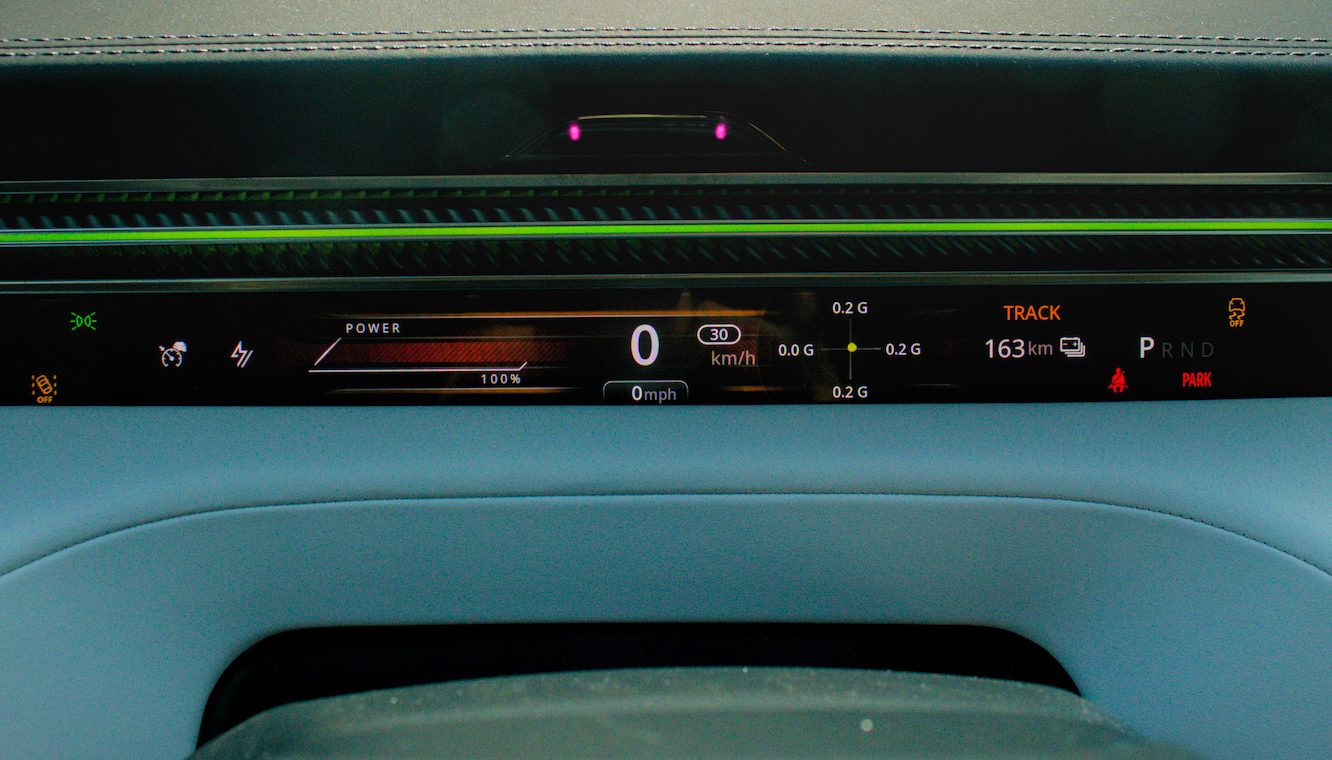
So then, what about the other stuff? Well, every Eletre can see up to 350 kW of power through the right sort of DC fast charger, although the port on the car is of the CCS variety rather than the Tesla-style NACS port. The 905-horsepower Carbon Series model I drove isn’t exactly easy on electrons (it’s rated for just 385 kilometers or 239 miles of range), but 460 kilometers (285 miles) of range from the standard 604-horsepower models is right about on par with the similarly priced BMW iX M70 and Porsche Macan Electric 4S. Oh, and it comes with a full suite of advanced driver assistance systems. Job done on that, I reckon.
Does It Have The Electronic Crap I Want?
Aside from one key thing, a loaded Eletre will get you every gizmo you could possibly want. Massaging front seats, ventilated rear seats, an electrically dimming moonroof, soft-close doors, four-zone climate control, wireless Apple CarPlay and Android Auto, the works. You know what you don’t get, though? A volume knob. Instead, you have to either use the steering wheel controls or swipe down on the top of the infotainment screen to access a virtual slider. Bah humbug.
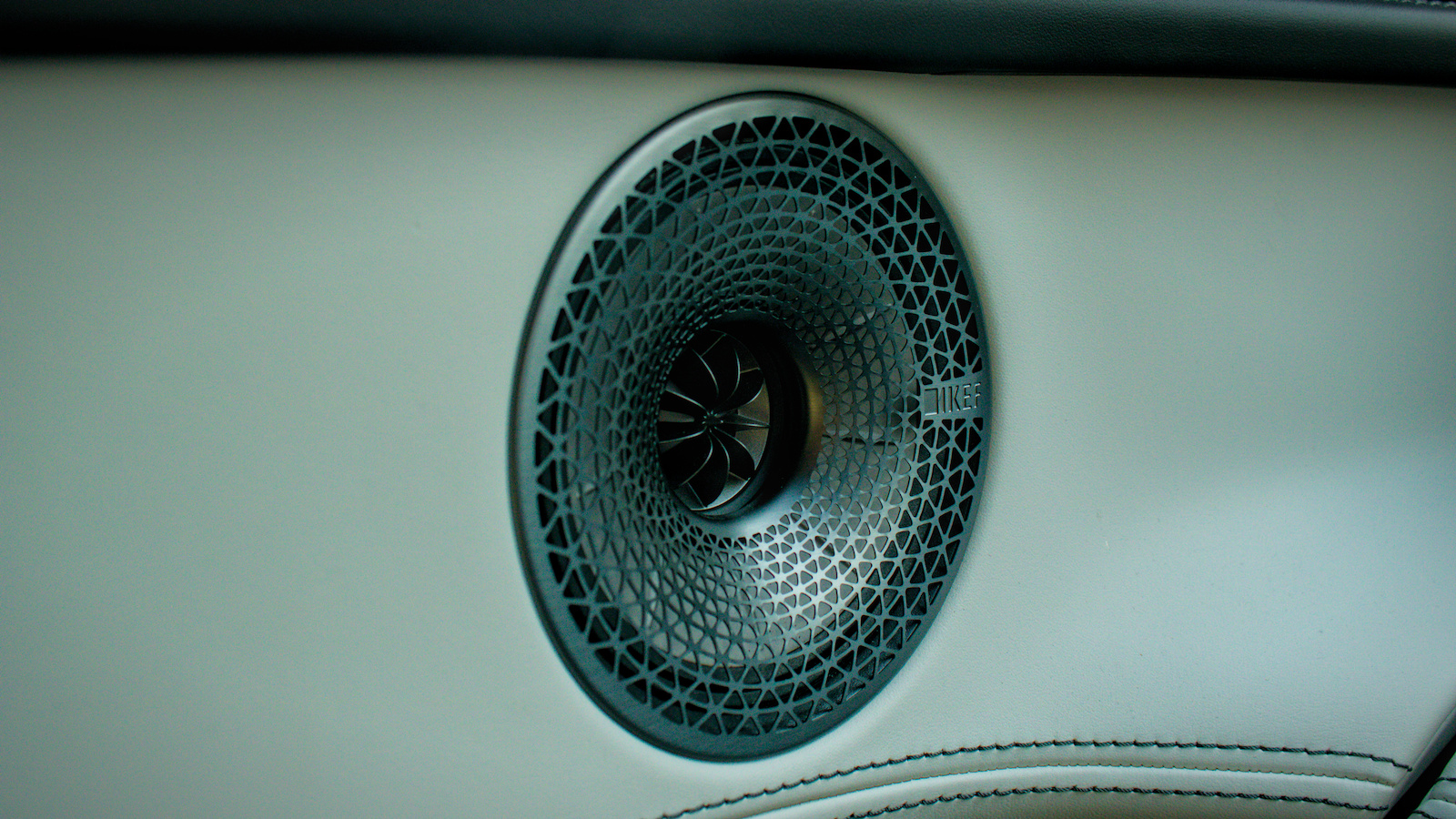
Speaking of sound, the top-shelf KEF audio system offers tremendously clean low-end extension and solid overall clarity, although Dolby Atmos support is still a bit of a gimmick for really keen audio enthusiasts. It does the immersive audio thing, but it’s currently limited to streaming, and that means you don’t get lossless quality, and the effective bitrate’s about half what you get from an old-school CD. Still, if you want to know the impact a front-mounted subwoofer has on soundstage, hop in a well-specced Eletre. It definitely warms the system up, but it also brings the action closer to you. Good stuff.
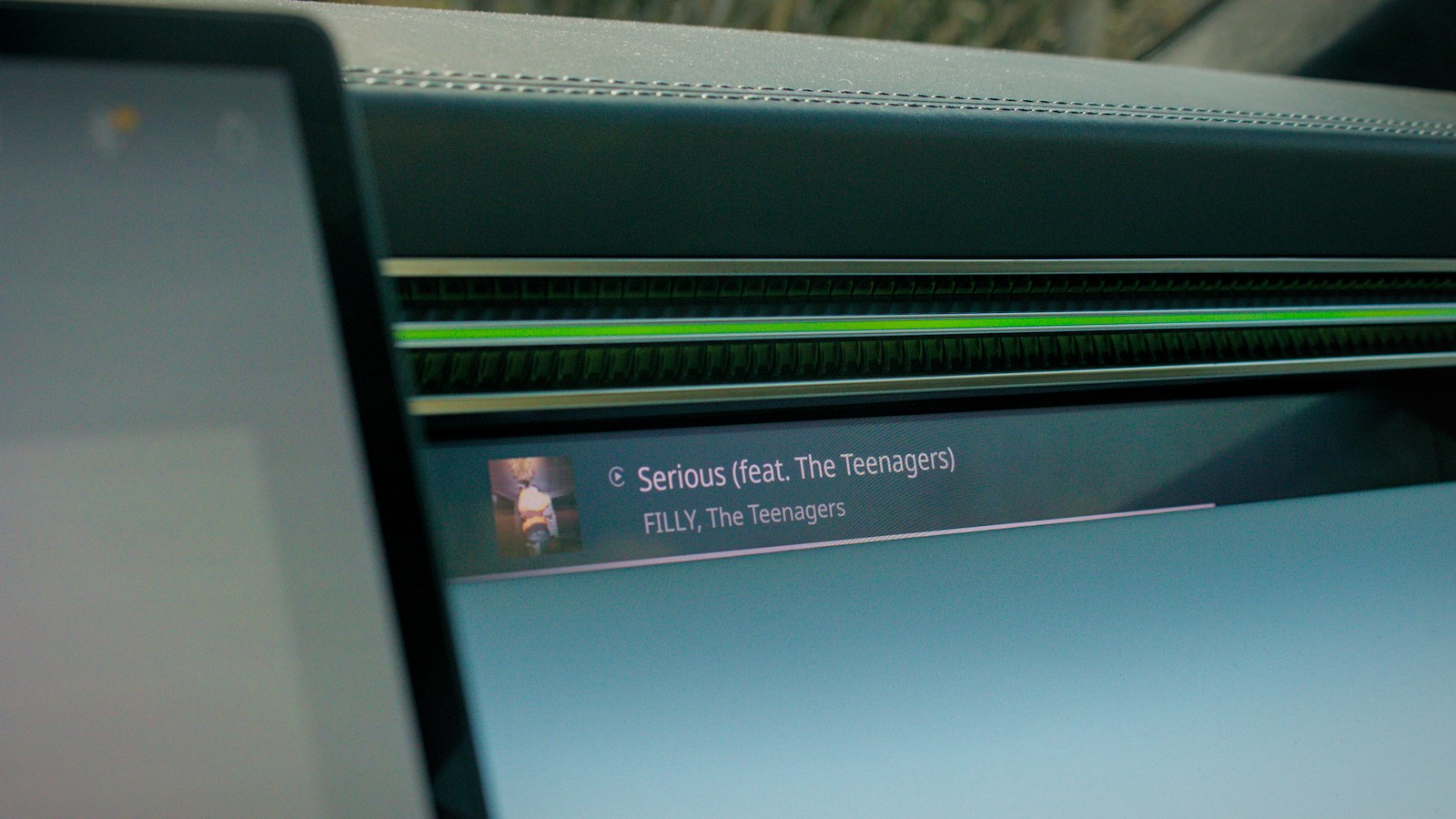
It’s also worth noting that the Eletre has the only good passenger screen I’ve ever encountered. Sure, functionality is limited to displaying relatively basic information like the time, key stats, and the current song playing, but it’s so wonderfully unobtrusive that it actually makes sense. Give whoever’s riding shotgun a little more information, but don’t bombard them with a billboard-sized fingerprint collector.
Oh, and while we’re on the subject of screens, the infotainment system is incredibly slick, with the sort of fluidity you’d expect from an iPad. It’s not perfect—Apple CarPlay integration could use a little work, and I encountered the occasional minor glitch in the native system—but it’s rather promising. We’ve come a long way from the days of aftermarket-supplied head units in Elises and Evoras.
Three Things To Know About The Lotus Eletre
- The build quality feels remarkably excellent.
- It handles better than anything weighing 2.5 tons should.
- It’s the first made-in-China EV sold in Canada under the new import cap scheme.
Does The Lotus Eletre Fulfil Its Purpose?
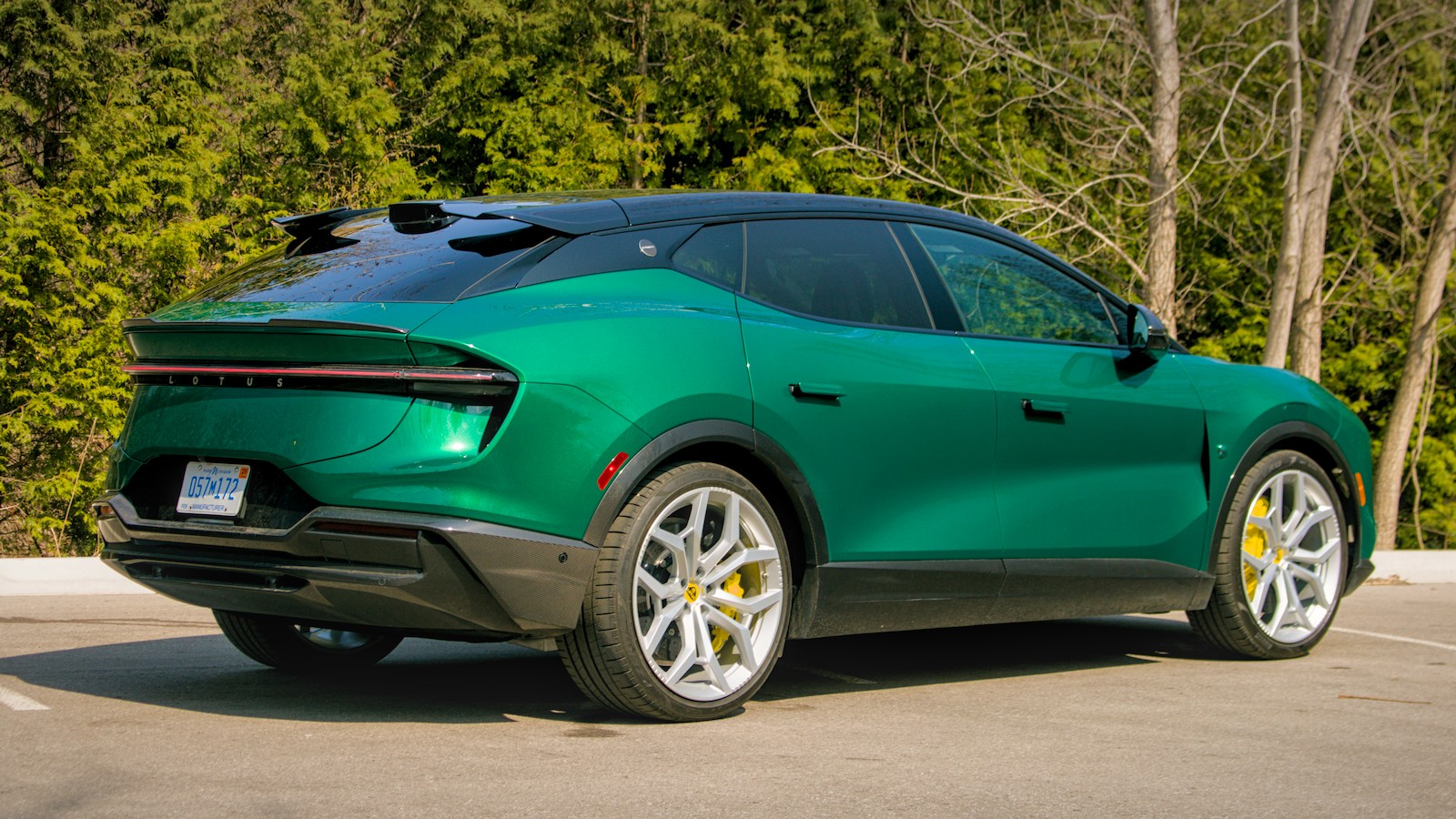
It depends on how you define the Eletre’s purpose. As a way of offsetting the carbon emissions of the Emira sports car in particularly sensitive markets, it goes above and beyond. Longer-range EVs exist and the dealer network is rather small, but the Eletre drives incredibly well for something weighing more than two-and-a-half tons and feels reassuringly posh.
Thanks to Canada opening up a quota program for Chinese-built EVs, the Eletre now starts at $124,550 Canadian, including a $4,650 freight charge. That’s about $8,000 Canadian less than the 650-horsepower BMW iX M70 xDrive, but about $12,000 Canadian more than the quicker Porsche Macan Electric 4S. Granted, it is much larger than the Porsche, although options do add up similarly quickly. Want soft-close doors, ventilated massaging seats, and configurable ambient lighting? Be prepared to spend an extra $10,000 Canadian on the Eletre Touring. Want the top-shelf 23-speaker audio system with the front subwoofer unit, active aero, and fancy pedals? That’s another $10,000 Canadian on top of the Eletre Touring, or $144,550 Canadian before options.
That’s still quite competitive, and while the Eletre is a European take on a Chinese-built EV, the fact that it rides on a variant of Geely’s SEA platform makes me excited for the future. Geely-owned Zeekr is actively hiring in Canada, and with BYD on Transport Canada’s approved importer list, it’s only a matter of time before I get behind the wheel of fully-Chinese EVs. If they’re anything like this, they’re going to be good.
What’s The Punctum Of The Lotus Eletre?
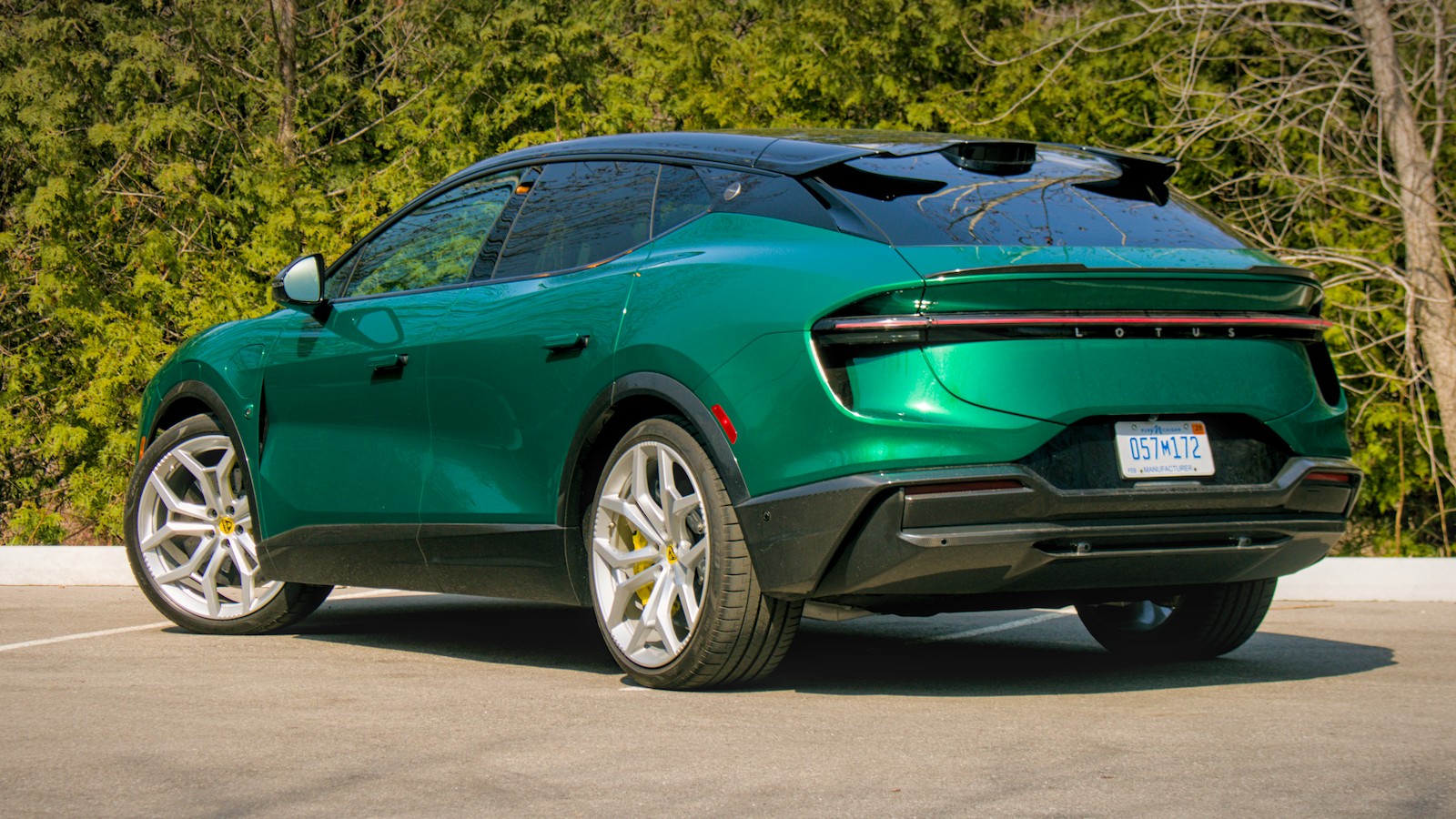
Regardless of where it’s made, this is one surprisingly fun luxury SUV.
Top graphic image: Thomas Hundal





My 2025 Chevrolet Blazer EV SS is same curb weight as this Lotus EV. Though it tops out at 615hp (in wow mode) and 650lb-ft torque, not the 900hp listed for the Lotus. Then again, my Blazer EV SS was $100k less after factoring in trade-in from my ’23 Camaro. I am more than content with my Blazer EV SS instead of something like this Lotus EV.
From the side, they look similar, though the front end is slightly different. Seeing that apparently “posh” interior? It looks very cheap imho. Flat and plain dashboard and same for the center console… with a rectangle iPad jammed in the middle. This leaves the driver to stare at that sliver read-out through the steering wheel or stare off at that tablet for any info while driving. It seems very counter-intuitive for a nearly $150k EV. Whatever happened to “cheap EVs” from China? Meh, sOARy.
Curb Weight: ~5,800 lbs.
“Aside from one key thing, a loaded Eletre will get you every gizmo you could possibly want.”
Glad to see Geely sticking to Lotus’s classic motto of: “Simplify, then add lightness.”
Who exactly is this for?
With 900hp pushing around 5,600 pounds, what the tires are doing is turning into powder!
“For decades, the chassis experts in Hethel have helped dozens of marques build better-driving cars,”
Not only cars, I have documentation of Lotus engineering helping in the analysis and design of the suspension of Euclid off-road haul trucks. If anyone wanted help with suspension for any product, they would provide it.
My car, which has Chinese EV roots, has the same design flaw: there’s no volume knob! But I solved it with a bluetooth volume knob, the infotainment is android-based so all the functions work, volume track skipping play/pause etc.
Should work for Geely-based systems too 🙂
“Base Price: $124,550 Canadian”
So much for the dream of cheap Chinese EVs.
Exactly. Anyone who thought that allowing 49,000 Chinese EVs into Canada was gong to give us some cheap options doesn’t understand how business works. On top of which, any Chinese car sold in Canada was never going to sell for the Canadian exchange rate of the Chinese selling price.
Well the ask is only part of how business works. If they sit on lots at that price the ask should drop.
And there’s the used market. Depreciation tends to bite EVs hard already and perhaps these even more. Maybe that’s where the cheap Chinese EVs will be found.
I wonder how parts availability will be, in case of a fender-bender or a window mechanism that falls apart. Is their dealer network any more responsive than Tesla’s service infrastructure (or lack thereof)?
~140 ,ooo with taxes and fees. Are you high? A maybe at 70 but 140? F you!
That’s uncalled for.
Soooo…great for automotive journalists who get to hop in for a couple days and not worry about the price or actually living with it.
Enjoy.
I’ll take Thomases’ (I know that’s wrong) word for it about how decently it drives and how well-made it feels. I know that $125K isn’t even uncommon as a price for new cars these days.
Despite this, I’ll pass even if I had Musk’s money.
For the price of an Emira, you get SUV EV practicality, and all you sacrifice is actually just not having a sports car, much less a Lotus, at all.
This 6-figure Geely only receives some hot suspension bits from Lotus, which means you get to pay extra for the privilege of shit ride quality.
I get it, it’s fast, but so is EVERY semi-premium EV since the Model S.
There’s absolutely no reason to spend money on the Lotus badge when the car in question offers the driving experience of a heavier Mustang Mach-E with a shorter range.
If people that hate the idea of driving a Lotus want to flex the Lotus badge, bully for them, and if enough of them buy it to enable Lotus to develop and sell more real Lotuses that’d be cool, I guess, but slightly benefiting from the misfortune of those with questionable judgement doesn’t mean I want to encourage it.
None of these paragraphs relate to each other, because there’s enough wrong with this car to elicit multiple separate but equally unpleasant reactions from me.
Did you feel this way when Porsche/VW brought out their SUV? If it saves the marque, then we could be thankful for the twits who snag these as well as the Porsche/Lambo/Masserati/and now Ferarri version of turners on the hoof.
I understand and appreciate what the Cayenne did for Porsche financially, but I still don’t fancy it and wouldn’t recommend any Porsche SUV to anybody. I’m sure there are plenty of happy owners around, and as I said before, bully for them, but I retain my opinion.
I can understand the Cayenne a little bit more because Porsche has some qualities that can be transferred to it, like build quality and the concept of striking a balance between performance and practicality, whereas the Lamborghini/Ferrari/Lotus versions are even further removed from their brand identifies, the Eletre being the most egregious.
OK. How do you feel about the upcoming Corvette SUV we have been hearing rumors of then?
I was living in blissful ignorance of that until just now. Why would you hurt me like that?
To decrease performance add extra weight and additional bulk.
Base Price: $124,550 Canadian.
Ah yes, those low-priced Chinese EV’s we were promised.
Chinese Lotus is like when Canadian Tire started selling Hudson’s Bay blankets eh
Not seeing a rear wiper. Does this SUV really not have a rear wiper?
This is like some 2 generations behind the current chinese EV stuff Forrest been reviewing
5,600 pounds!
oops, fat fingers repied to the wrong comment