


Millions of semi-tractors hit the road every single year to keep America running with everything from the mail and Amazon packages to gasoline and milk. Truckers are often unsung heroes, and our lives wouldn’t be the same without them. But they couldn’t do that work without the tool of their trade, and if you look closely, you’ll discover semi-tractors are brilliant pieces of engineering. Trucks pretty much do everything for a specific reason that helps them perform the jobs they’re tasked with, and you may have wondered why some trucks make a sort of rapid-fire staccato noise when they need to slow down? The answer is the compression release engine brake, most commonly known as the Jake Brake. This system allows the truck’s engine to do the deceleration rather than the service brakes, and there’s some great history behind it.
It was during a recent Autopian staff meeting that I learned that some car enthusiasts aren’t necessarily trucking enthusiasts. Many of my colleagues have been car junkies and auto writers for decades. They can identify cars through just a picture of a taillight and explain the principles of a four-stroke engine in detail. However, while semi-tractors are road-going vehicles that share the highway with cars, there’s quite a bit that they do differently from your everyday Ford. As such, my colleagues wonder why semi-tractors do some things a certain way differently than cars do. If my auto writer co-workers have such a curiosity, I have to imagine that a lot of other drivers do, too!


Some folks describe the sound of a compression release engine brake as that of “machine gun fire.” You might have also noticed that many communities in America have banned the use of these types of brakes. If you’ve ever driven around suburbia, there’s a chance you’ve seen white signs saying “No Engine Brake.” These signs aren’t saying that you cannot use your car’s engine to slow down. Instead, they’re telling truckers to use a form of braking that isn’t a Jake Brake due to the noise. Take a listen for yourself:
But why do trucks using a compression release engine brake sound so loud in the first place? It comes down to the process utilized to briefly use the engine’s strokes as an air compressor.
The original compression release engine brake was officially called the Jacobs Engine Brake Retarder from the Jacobs Manufacturing Company. The system’s slang nickname, the Jake Brake, would also become a registered mark of Jacobs. The Jake Brake would become such an influential device that all compression release engine brake systems, regardless of their maker, would be called a “Jake Brake.” It’s like how people call just about any facial tissue a “Kleenex” even if it’s from a different brand.
From The Father Of The Modern American Diesel

The inventor of the Jake Brake was not the Jacobs Manufacturing Company, but the man often considered to be the father of the modern American diesel engine, Clessie Lyle Cummins. Here’s what I wrote about Clessie in the past:
By the 1910s, Cummins was involved in a number of exciting developments. In 1911, He was on the pit crew for the Marmon Wasp, the racecar driven by Ray Harroun to win the inaugural Indianapolis 500. During this time, Cummins also went to work for banker William G. Irwin, acting as his chauffeur and mechanic. Irwin would aid Cummins in his future exploits, including opening a machine shop in 1915. By 1918, the Cummins machine shop was busy enough to justify purchasing an old cereal mill to expand. Cummins Machine Works spanned 5,000 square feet of space.
Just a year later, Cummins would open and become the president of the Cummins Engine Company. It was that same year when Cummins began to see a future in diesel. The first diesels in America arrived in 1911 when Busch-Sulzer began building engines. Still, when Cummins arrived on the scene in 1919, the diesel was still a niche in America. Anyway, in 1919, Cummins began building his first diesel engines based on a license from R.M. Hvid Co. These were small diesels, good for just 6 HP, which was enough for agricultural use.
It wouldn’t take long for Cummins to create a diesel of his own design. Cummins earned a patent for a direct-injection diesel design in 1921 and in 1924, that engine was put into production as the Model F. 1929 marked a major shift for Cummins. Until then, the brand put its engines to work in the agriculture and marine industries. However, the economy had crashed and with it was demand for engines to put into yachts.

The company that Clessie built was in danger of failing, and Clessie used the threat of closure to make what would become a historic shift. Cummins planted a Model U into a 1925 Packard limousine and decided to show America that diesel had a place in cars. That car would drive some 800 miles from Indiana to the 1930 New York Auto Show, consuming only $1.38 ($26.37 in 2026) in diesel fuel to get there.
That alone proved that diesel was not to be overlooked, but Cummins decided to double down on proving diesel’s worth in automotive applications. The company followed up its shenanigans in 1930 by entering a diesel-powered racecar into the 1931 Indianapolis 500. Cummins didn’t care about winning. It just wanted to prove that a diesel car could complete an entire race without stopping for fuel. Amazingly, the company’s bet paid off and the car never stopped. By the end of the race, it even placed in a respectable 13th out of 33 entrants. Not bad when Cummins wasn’t even trying to win.
The Race That Changed Clessie
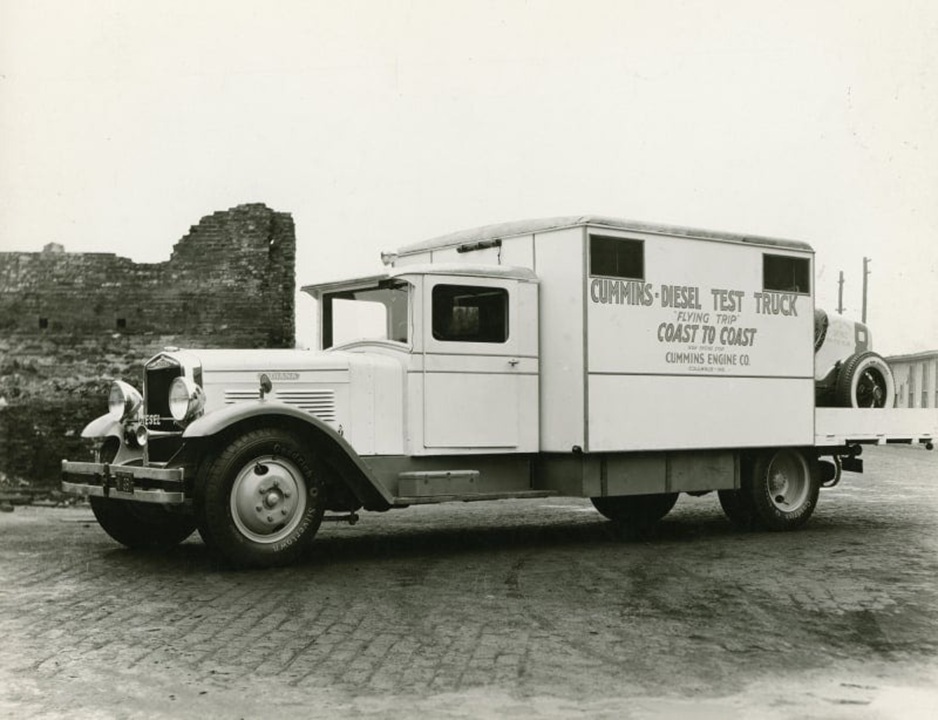
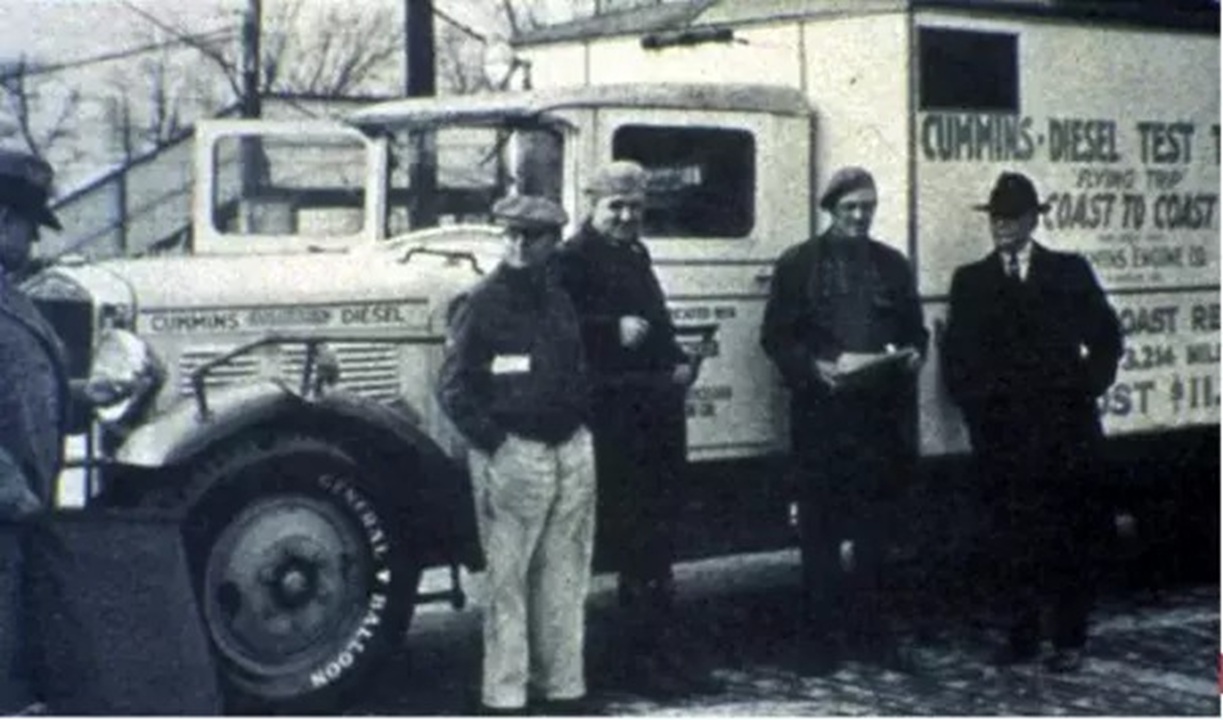
That race wasn’t the only motorsport that Clessie entered his company into that year. As a paper by the American Society of Mechanical Engineers (ASME) writes, Clessie Cummins would join forces with Ford Moyer and Dave Evans to drive a Cummins-powered truck from New York to Los Angeles to set a new truck speed record. Like many of Cummins’ bombastic activities back then, the drive was just as much of a test as it was a publicity stunt. The truck was loaded up with the Cummins Indy 500 racer and dispatched on its drive across America.
Something that the Cummins team learned in the early days of equipping cars with diesel engines was that diesels don’t have natural engine braking that’s as strong as a gasoline engine.
Generally, engine braking in a gasoline engine in a car works by lifting off the throttle. This closes the throttle body. When the pistons enter their intake strokes, instead of getting a large charge of fresh air, the highly restricted airflow causes the piston to pull a vacuum. Now, the pistons have to work against that vacuum. You can then downshift to produce more drag within the drivetrain. When used well, engine braking can reduce your car’s dependency on its brakes during a long downgrade.

Basic diesel engines work on a different principle. In a common gasoline engine, the throttle body helps the engine inject just the right amount of air for an optimal air-fuel ratio for engine speed and power. In a basic diesel, the engine can gulp down as much air as it wants, and throttle control is achieved through the metering of fuel. Thus, a throttle body isn’t needed. The flipside of this is that there isn’t a throttle body that can be closed to facilitate engine braking.
In the early days of diesel trucks, this meant leaning on the vehicle’s service brakes to slow down on steep mountain grades. Of course, friction brakes generate heat over time and can fade or fail when overheated. This was the unfortunate reality for Clessie and his crew driving their truck across America. Yet, the men held it together most of the way across America until they found themselves on Cajon Pass on U.S. Route 66 heading into San Bernardino, California. The pass had a long section of gravel road that was steep and windy, a nightmare scenario for a vehicle relying only on service brakes. Even worse? The road was bisected by a railroad grade crossing.
From Clessie Cummins, via ASME:
“About dusk on the fifth day, we reached the top of Cajon Pass west of Barstow, California. Before retiring to the sleeping compartment, Dave had warned me against this thirty-five mile stretch of mountainous downgrade. ‘Wake up Ford and me when you get to Kayhone Pass,’ I had understood him to say, ‘I don’t want to be in this box when you start down that twister with the kind of brakes we’ve got.’ I had heard but not seen, my Spanish being nonexistent, the word Cajon failed to register when the sign appeared. Soon, however, I realized my error. The brakes wouldn’t hold. Now running in third gear, I tried desperately to get into a lower speed. Nothing doing. I saw I would just have to ride it out.
Well down the long grade by now, I suddenly saw something moving across the road ahead. There was a long dark shadow and then a red glow flared in the sky. I realized with new alarm that a freight train was cutting across our path. The truck roared on. Dave and Ford screamed bloody murder in the compartment behind me. And I clung to that steering wheel like a madman. Had Mack Sennett been on hand with a movie camera, he would have gotten enough footage for one of his famous Keystone Kops features.
As we raced inexorably toward the crossing and doom, the train’s caboose loomed out of the darkness. Its red lights cleared the highway just as we reached the tracks. We had escaped certain death by inches.”
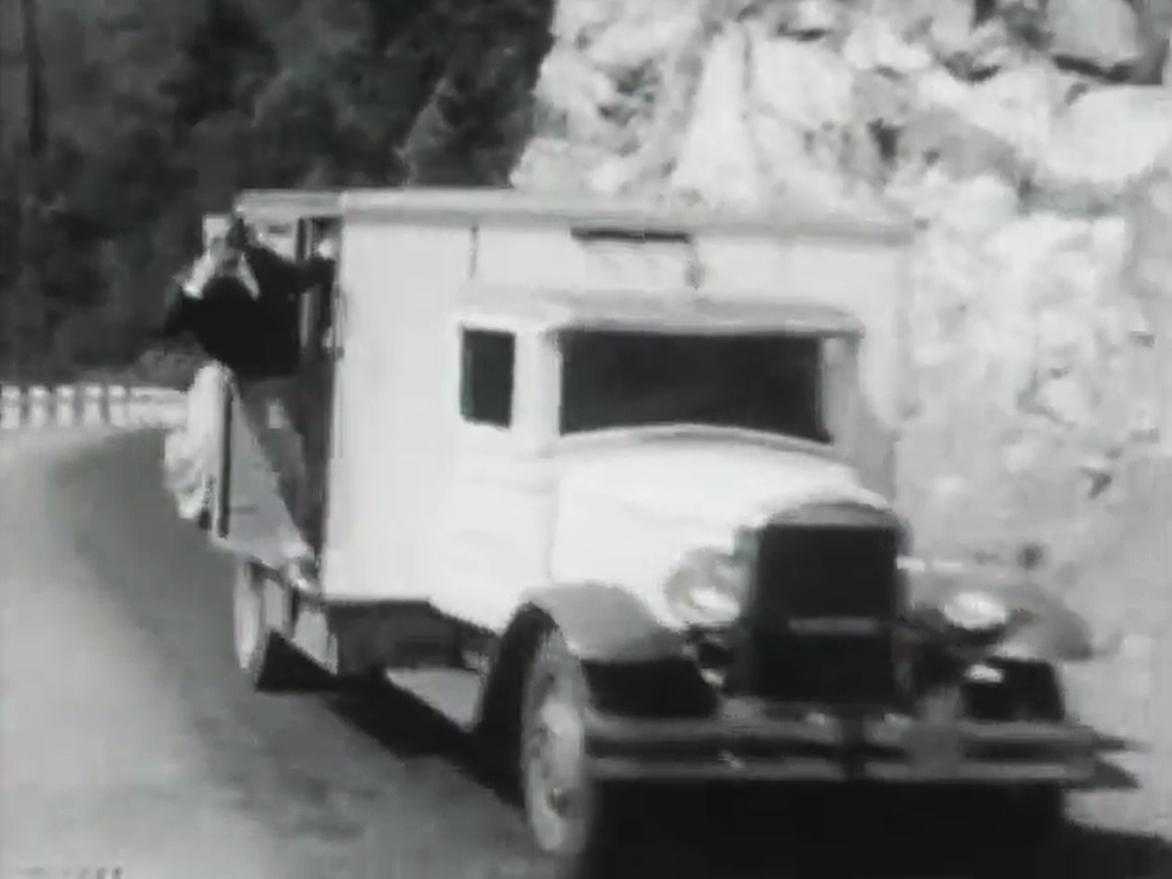
The men would set a new coast-to-coast truck speed record of 97 hours and 20 minutes over 3,214 miles. The gas engines in the race were faster, but had to stop more often. It was an impressive accomplishment, but the thought of nearly dying in a crash followed Clessie. He thought that there had to be some way to make diesel engines as effective at stopping as they are at going.
Getting Diesels To Slow Down
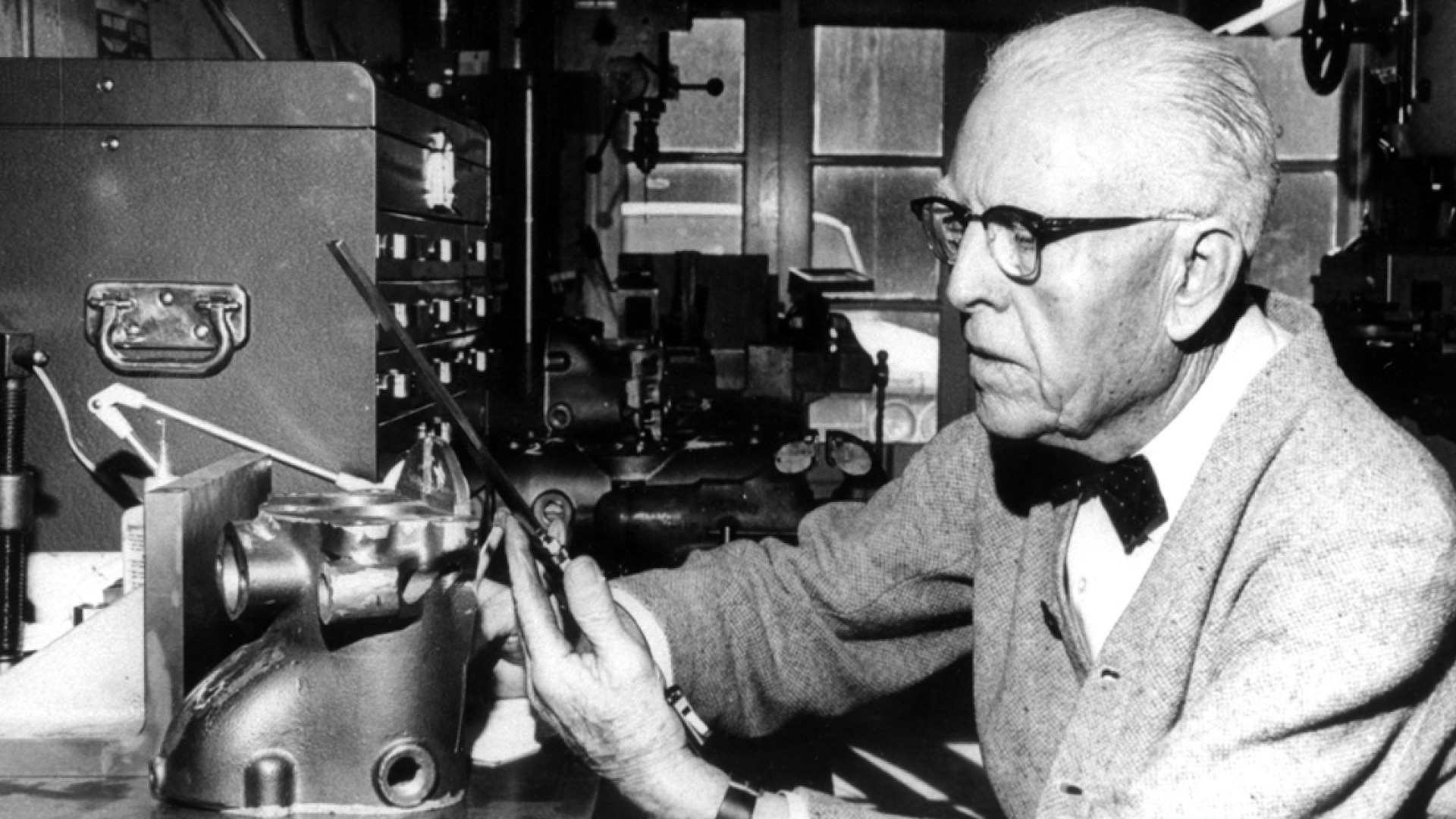
Clessie would discover the answer 24 years later, after he retired from his namesake company. From the ASME:
It was also in 1955 that Clessie enticed his youngest son, Lyle, a graduate mechanical engineer, to join forces and form the large concern which he named Centco (short for Cummins Enterprises Company), a name chosen to keep the household accounts separate from Clessie’s ventures in the basement. The basement was actually an area that included an office with a view, a soon to be equipped machine shop with the usual lathes, milling machine, etc. and a four-car garage. Another member of the Centco team, added in 1957, was Ray Hansen. Hansen was an able machinist, welder, and sheet metal bender whose hobby was building and racing sports cars.
Lyle’s initial effort was expended on thermodynamic analyses to prove Clessie’s idea of turning the engine into a compressor really would provide sufficient retarding potential. The answer was an unqualified “yes,” but how to do it? One scheme was to clutch-in a high pressure pump and a timed distributor to carry hydraulic force to a slave piston, which in turn would act on the exhaust valve to open it at the proper point on the compression stroke. A second method considered was to use a multi-plunger pump hydraulically timed to act on the slave piston. While both of these methods could be made to work, neither was considered a best solution.
An idea for a practical method, emphasizing the heat of the invention, came to Clessie in 1957 during a sleepless night in a Phoenix, Arizona hotel room. The idea that hit Clessie revolved around taking advantage of perfectly timed motion already built into Cummins and Detroit Diesel engines; these engines have a third cam on the main camshaft that activates the fuel injector of each cylinder. A simple retrofit mechanism should be able to transfer this motion to open the exhaust valve. The idea was jotted down on a bed-side scratch pad and was telephoned back to son Lyle in Sausalito early the next morning. By the time the vacationing Stella and Clessie Cummins returned home, layouts of possible design solutions were waiting, albeit in retrospect, they were more complicated than proved to be necessary.

While researching if anyone else had done this before, Clessie did find patents going back to 1918 for different designs that opened a valve near the end of the compression stroke of the engine. Some of those designs were to slow the engine down, while others were to make starting easier. However, none of them were commercially viable because they required heavy modifications to existing engines. What made Clessie’s idea different was that his device would be added to the motions that the engine already made.
The ASME continues:
How best to transfer the injector cam motion was developed during the next two years. The simplest method was to tie together mechanically the injector and exhaust rocker levers with a one-way locking connection so that the injector cam could open the exhaust valve, but the exhaust cam could not actuate the injector plunger. The experimental construction consisted of blocks welded to standard rocker levers over the rocker shaft bosses. The injector rocker block had a deep curved slot open to the rear. Engine oil pressure, controlled by a threeway solenoid valve and acting through a hydraulic piston, forced the pin into the exhaust rocker lever slot. Engagement occurred during the exhaust, intake, and part of the compression strokes on a catch-as-catch-can basis.
Because the Cummins fuel system at the time tended to inject some fuel into the cylinder, even during coasting conditions, it was necessary to add another hydraulically-operated piston to hold the injector plunger seated whenever the locking pin was engaged. This piston had a wedge-shaped outer end acting against an extension to the injector plunger spring retainer and bridging around the injector rocker level.
Clessie’s Invention Worked
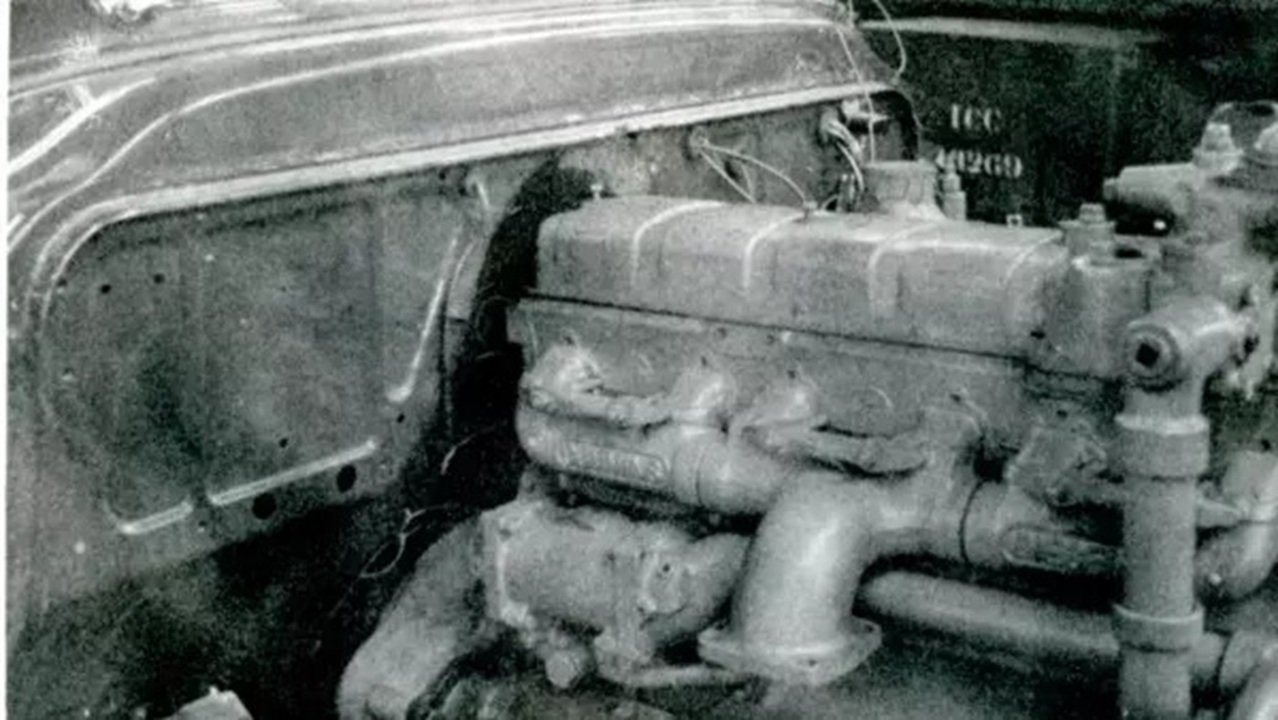
The test rig for Cummins’ engine brake was a 1955 Chevrolet Suburban wagon. In 1956, the GM engine was tossed out for a Cummins JN-6, 401 cubic-inch straight-six diesel good for 125 HP. Apparently, this engine was so big and heavy that the Suburban needed heavier springs up front in addition to a front clip elongated by 11 inches just to house the beast. The modification work was handled by a Rolls-Royce dealer who was a friend of Clessie. The completed rig weighed 6,500 pounds.
The test mule had shown that Clessie’s invention had merit. If the truck was forced down a 30 percent grade in second gear with the engine running at its governed RPM limit, the compression brake got the engine down to idle in less than 200 yards. Later, Cummins would put guests in the truck and then send it down San Francisco’s famously steep hills. The passengers would be terrified, and then impressed when the truck came to a safe crawl without Clessie touching the friction brakes.
After the tests in the Suburban were a smashing success, Clessie scaled the system up and installed it into a Cummins NHRS, a 855 cubic-inch straight-six supercharged diesel making 300 HP. Clessie had a couple of these engines in his yacht, which made testing his ideas cheaper than having a proper research and development facility. Later, Clessie’s design would be modified by upgrading to hydraulically transferring the injector motion rather than mechanically.
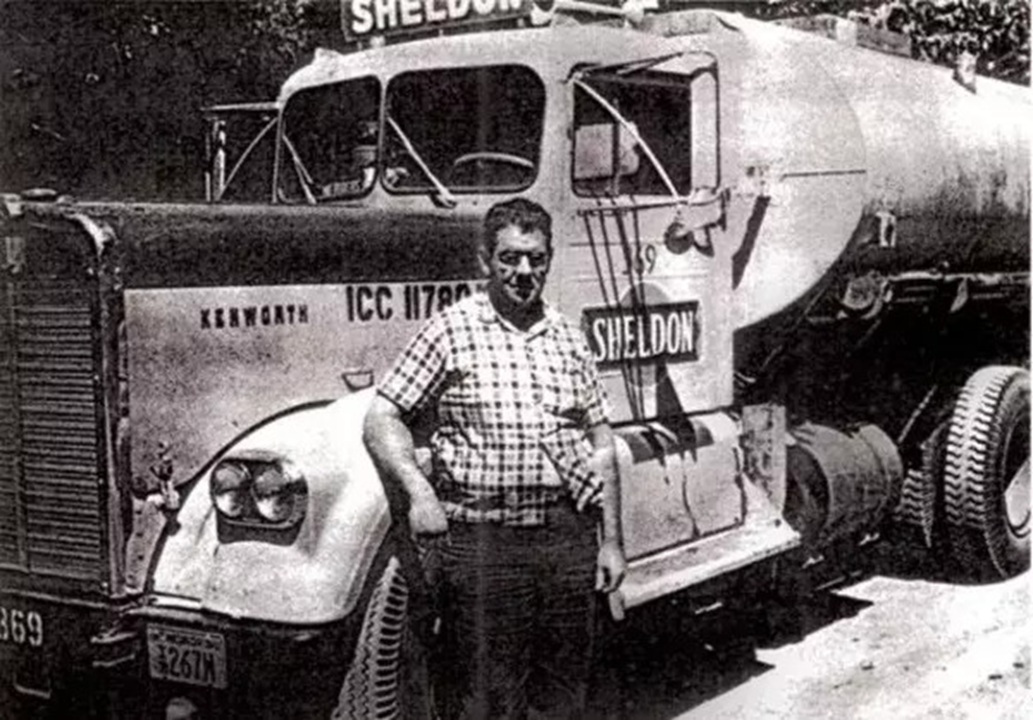
Once Clessie had a design locked in, he put it into semi-trucks on the road, starting in 1959 with rigs operated by the Sheldon Oil Company of California. On the initial test run, a Sheldon Oil truck descended down the Sierras on U.S. Highway 50 near Lake Tahoe. Usually, the drivers coming down this grade would have to miss the turn into the asphaltic oil plant on the road because the brakes were heavily faded, hot, and ineffective.
This time, however, by using Clessie’s invention, the truck slowed down so well using the engine alone that the driver touched the brakes only twice. The turn into the plant was made easily, and the truck’s brake drums were only warm to the touch. After enough testing, it was clear that Clessie had invented something that not only made trucking easier but also significantly safer.
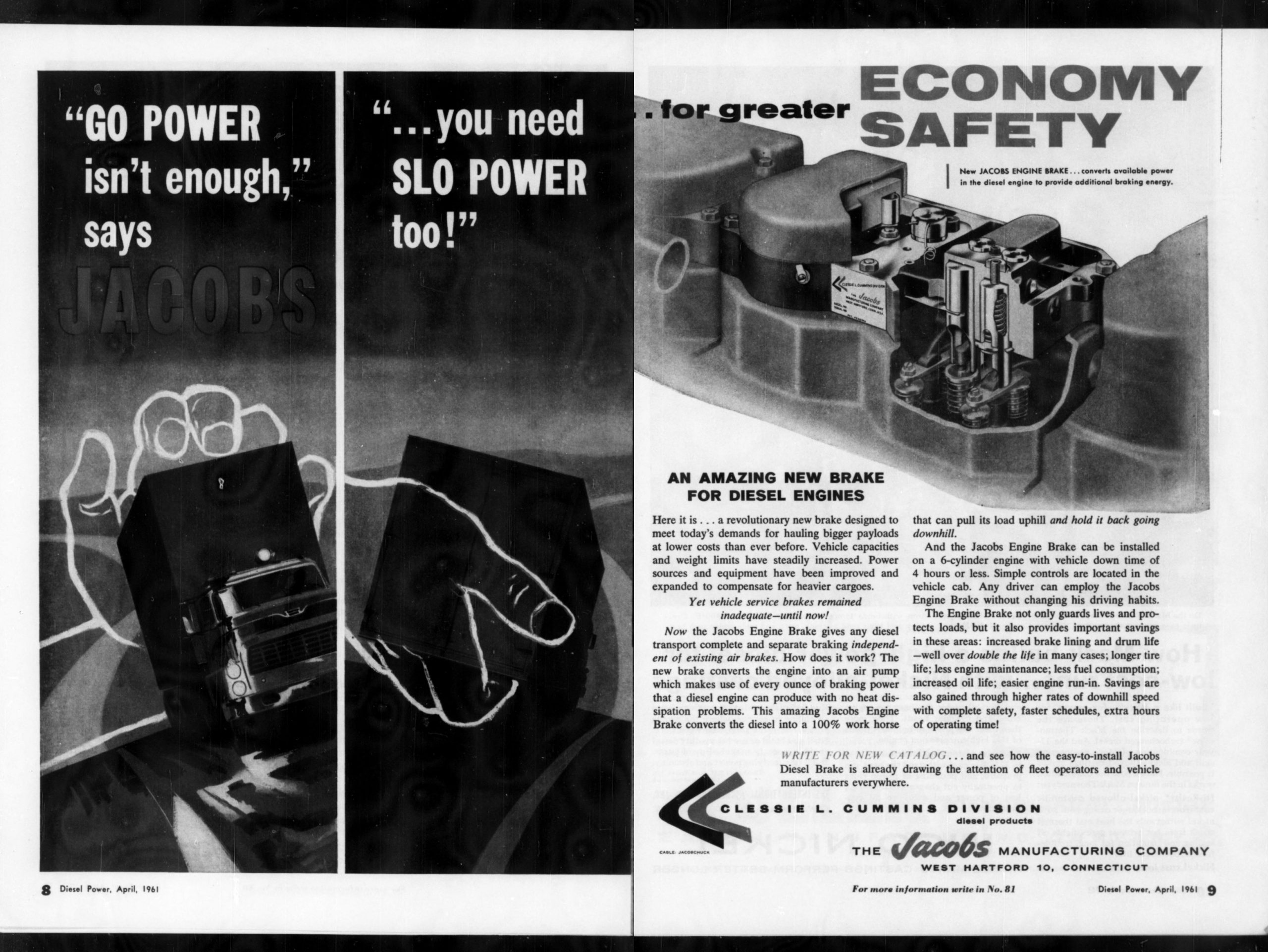
Clessie began marketing his idea, and as ASME writes, he was contractually obligated to give his namesake company the first dibs on the tech. Yet, Cummins, as well as two other diesel engine manufacturers, were not convinced about the reliability of the device or its commercial viability and rejected Clessie. Yep, the company that Clessie founded shut the door on him.
Jacobs, which was then the world’s largest manufacturer of drill chucks, eventually caught wind of the Clessie engine brake and cut a deal with Clessie in December 1959. The design was refined further, put into more trucks, and tested. By 1961, the Jacobs Engine Brake Retarder hit the market, eventually becoming a staple of American trucking.
How A Modern Jake Brake Works
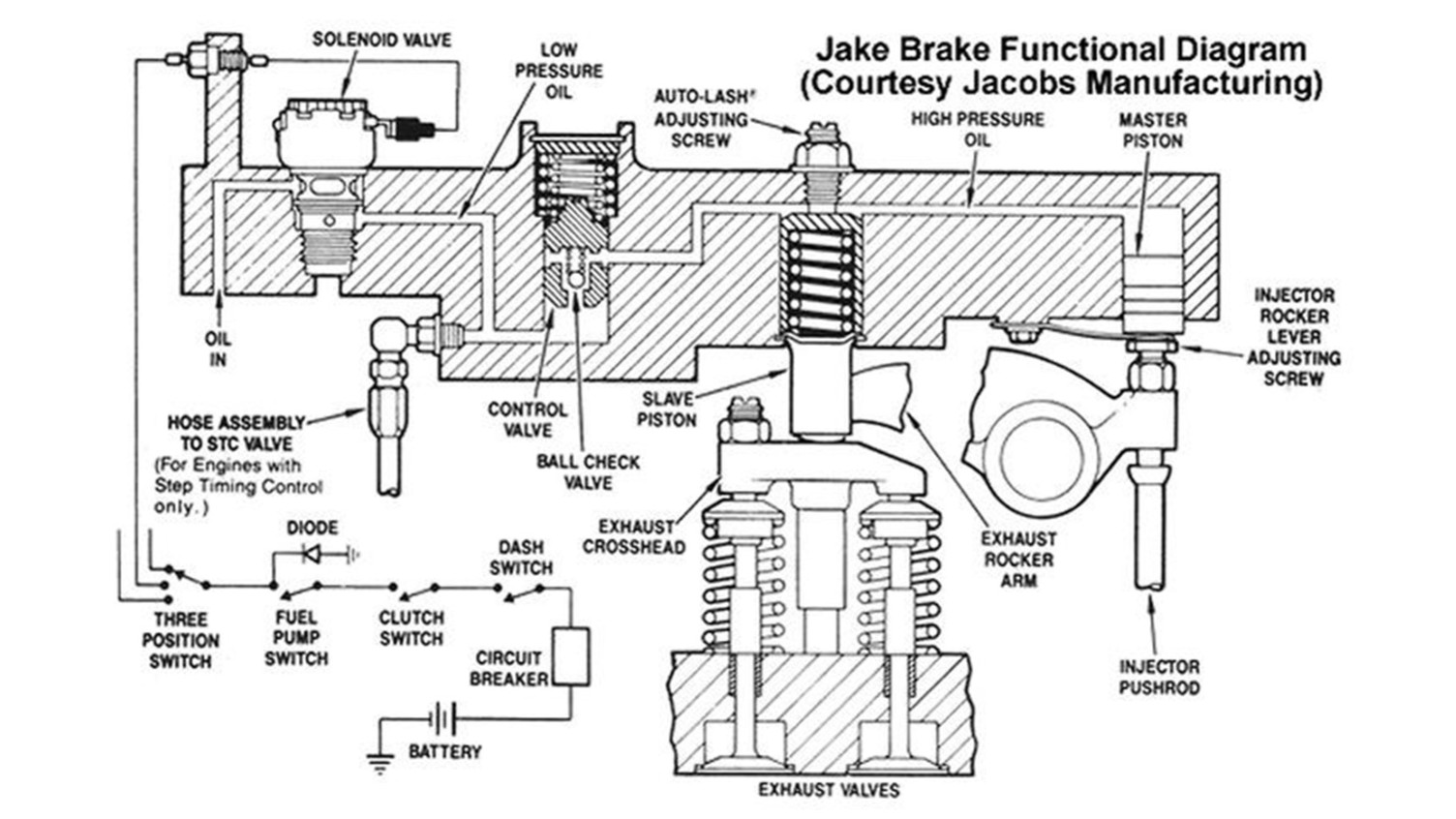
The Jacobs Engine Brake, as it’s marketed today, is now housed under the Cummins umbrella. Cummins offers a simplified explanation of how it works if the above sounded a bit too consuming.
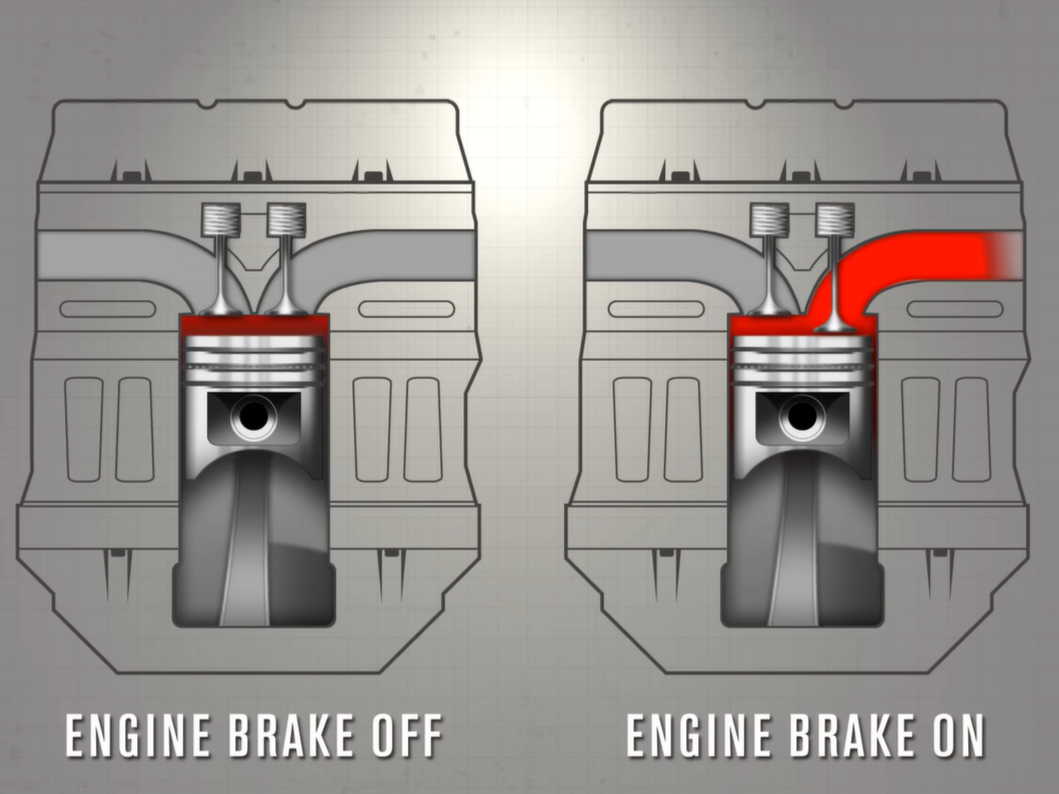
Cummins says that, when the driver in the cab flicks a switch or pulls a lever to activate the Jake brake, the engine works normally through its intake cycle. Then, during the compression cycle, the exhaust valves are closed ay first. Then the Jake Brake opens the exhaust valves when the piston gets near the top of its compression stroke. Check out this handy video:
Instead of compressing and then combusting an air-fuel mixture, the compressed air now fires out of the exhaust system. Meanwhile, the tons of energy in the truck continue to push the engine to compress more air. The engine is not fueled during this process. As the cycle continues over and over, the energy of the moving truck decays, slowing it down.
Cummins says that a Jacobs Engine Brake or Jacobs Compression Release Brake can provide up to 85 percent of a truck’s braking needs and can slow a modern truck from 55 mph to 43 mph, 30 percent faster than service brakes alone. Of course, the benefits aren’t just in slowing trucks down fast, but also in reducing service brake wear and fade. You’ll still need to use your service brakes to come to a complete stop, but now you don’t have to tackle a mountain pass with your service brakes alone.
This graphic illustrates what happens during the compression cycle when the Jake Brake is on versus off:
While the Jake Brake and its many variations are the most famous devices for slowing a commercial vehicle down, there are other ways to get the job done. Some diesel engines have an exhaust brake, which consists of a butterfly valve in the exhaust to restrict exhaust flow and create heavy backpressure, slowing the engine down. Exhaust brakes are less effective than Jake Brakes, but are quieter. Some manufacturers use exhaust brakes, some use Jake Brakes, and some use combinations of both.
There are also hydraulic or electric retarders that you can find inside of commercial transmissions or drivelines that slow the vehicle by using the driveline or transmission as a brake. The five-speed ZF 5HP592C housed within my 2002 Nova Bus RTS-06 has a transmission retarder, and I found it amazingly effective at slowing the bus down through the Ozarks without me needing to touch the service brakes at all.
Semi-tractors aren’t the only vehicles with Jake Brakes, either, as you can find them in other vehicles utilizing heavy diesel engines like motorhomes.
Why Jake Brakes Can Be Loud
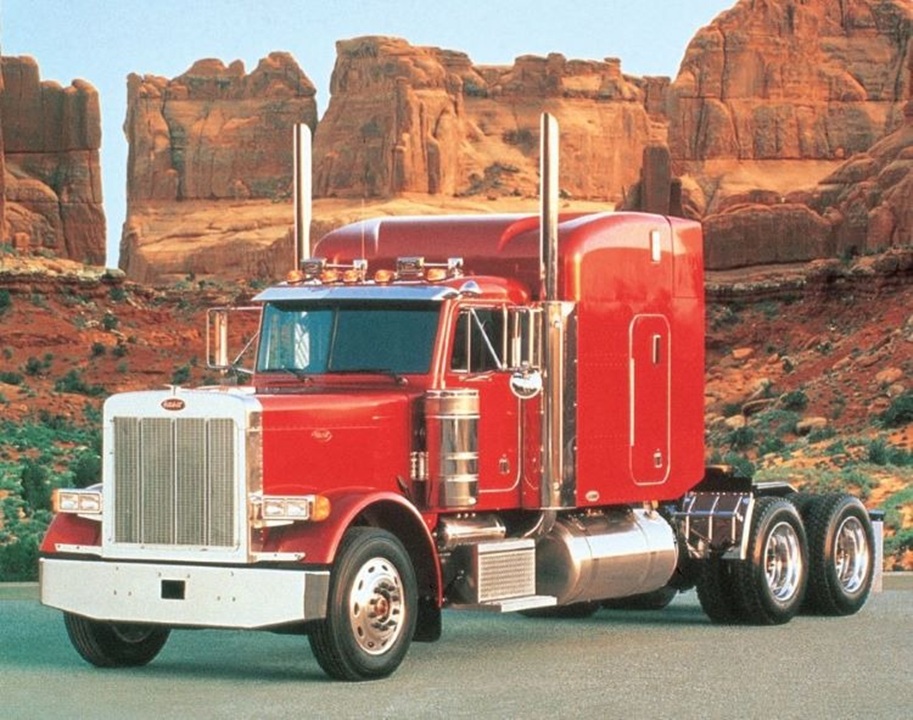
Alright, so you know what Jake Brakes are, how they came to be, and why they’re used. But why are they so loud? Admittedly, the sound of a Jake Brake is an acquired taste, like the sound of a two-stroke gas engine, a two-stroke diesel, or a V-twin. Jake Brakes can sound rather satisfying, though the subject of when they get used can be controversial.
In the past, Jacobs Compression Release Brakes were known for being extraordinarily loud and giving off machine gun-like sounds. This was a byproduct of the Jake Brake effectively temporarily converting the engine into an air compressor. The sudden rush of highly compressed air thunders into the exhaust manifold, carrying shockwaves with it. Some air-powered construction tools, like jackhammers, have a similar phenomenon. Here’s another sound clip:
Cummins says that, since 1978, the federal government has required that the vehicles that reach customers meet strict noise level requirements. Likewise, Cummins says, modern emissions equipment has made Jake Brakes far quieter. Perhaps so quiet that a typical driver might not even realize that a truck is using its Jake Brake on a downgrade.
However, some owner-operators delete their mufflers and straight-pipe their rigs. The consequence is that when they fire the Jake Brake, the characteristic pops of the system can be heard by motorists and people at home. Sometimes you’ll even hear a Jake Brake in situations where you’d think it might not be that necessary, such as trucks driving around truck stops or rest areas. You’ll also hear them when some trucks trim speed for lower in-town speed limits, places where there might not be a hill in sight. This is, at least in part, why many local jurisdictions ban the use of semi-truck engine brake devices.
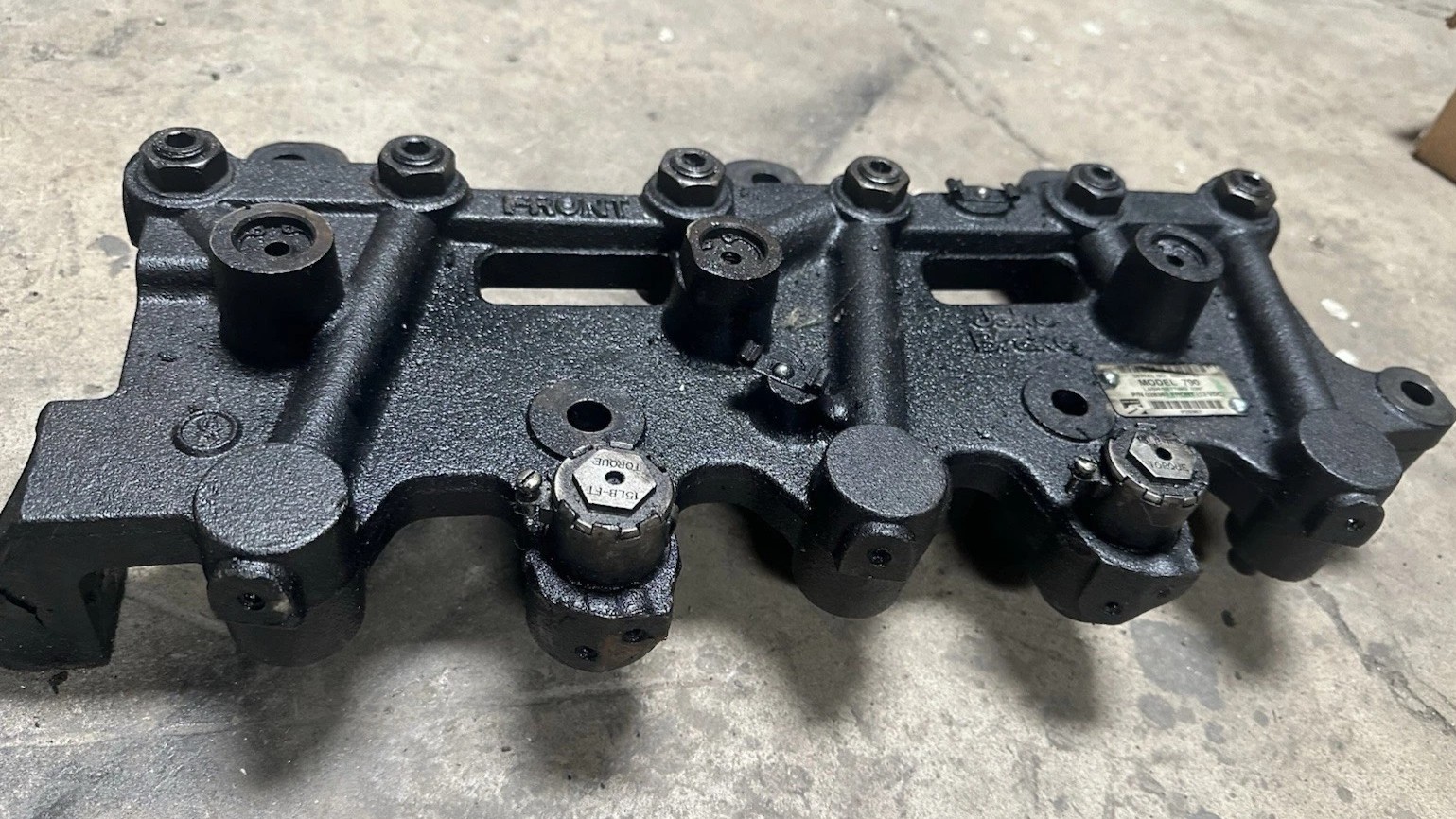
This also pisses off some other truckers, too, because a lot of them are trying to sleep while someone’s just cruising through the truck stop with their Jake Brake on. As a result, there is a sort of a push among some truckers and companies to convince others to either stop making their trucks loud, or to at least refrain from using Jake Brakes around town or other places where people want some quiet time.
An Invention That Changed Trucking

All of that aside, the Jake Brake was perhaps one of the greatest innovations in trucking. Now, truckers who have an engine braking system don’t have to rely entirely on their brakes, which can overheat and fade on long downgrades. Instead, they can flip a lever, depress the clutch, and let the Jake Brake do most of the work.
While there haven’t been published safety statistics about Jake Brakes that I could find, it’s not hard to find a trucker who swears by their system. I got to experience the value of slowing down without the use of service brakes in my own bus and can attest that it’s amazing, at least to someone who spends most of their time in cars and motorcycles.
It’s all the more incredible that the impetus of the Jake Brake was what could have been a fatal truck accident. If it hadn’t been for Clessie Cummins nearly smashing into a train while racing a truck across the country, I wonder how trucking could have been different. At any rate, the next time you’re coasting your car down a mountain and hear a truck firing off tons of pops, now you know why. That trucker is getting safely down the grade without relying entirely on their brakes!
Top graphic image: Kenworth




I designed the engine brake for the Mack and Volvo 11 liter and 16 liter engines sold in North America. They’re thermodynamically interesting things – I wrote my undergrad thesis on the topic. AMA!
Wow that is cool 🙂
Using an engine as a compressor was well known since mono block air compressors using the front of a Model A Ford had been around since the 20s. Cummins’ genius was doing it dynamically where mono block compressors permanently modified part of the engine.
There are quieter alternatives that are often used in Europe like the Telma electric retarded that uses magnets around the driveshaft to feed a resistor bank like the dynamic brake on a locomotive. Some automatic transmissions incorporate a hydraulic retarder
I know I’ve seen signs that specifically say “No Jake Brakes” but only rarely. I just checked Wikipedia, and it cites an article from 2000 that said Jacobs filed trademark infringement claims against anyone use “Jake Brake” instead of more generic language.
I’m guessing governments got the message, but there are still independent places like campgrounds where the owners use whatever language they feel like.
Thanks for the article! I had always thought Jake Brakes were just some kind of flap you’d slap over the exhaust to start creating massive backpressure in the exhaust. The reality is a lot cooler!
Those exist, as a butterfly valve in the tail pipe but are just called exhaust brakes.
I live on the side of a ridge in West Virginia, and I heat by wood stove as much as I can. I keep my wood on the porch, so I can add some to the stove in the night, when it’s coldest. I can hear some trucker using his Jake brake at 4:30 in the morning all the time, and it’s extremely loud and obnoxious, and he is on a small dirt road, not on the highway. I can truthfully say that I hate Jake brakes! Obviously, it’s hilly around where I live, and you can hear them for miles away. I understand the usefulness, but either these locals have removed most or all of their mufflers, or they just love the sound and love being assholes!
I definitely understand why there are noise complaints near major urban/suburban areas…
Three years ago I was at a Holiday Inn Express near a major airport in Mexico with my family including a 1 year old. Never heard a single plane coming or going but all night I heard semis decelerating by using their Jake Brakes as if the windows were wide open. Not a fun night.
I cannot imaging hearing them on a constant basis and can only hope they become background noise.
My uncle was a trucker. I’ve known what Jake Brakes were ever since I was 13 years old and he let me pull the lever. It was like the damn thing dropped an anchor.
And you know those signs you see entering a small town that say “NO ENGINE BRAKING”? Yeah, they mean Jake Brakes.
We talk about best car chase movies all of the time, but never discuss trucking movies. If you’ve never watched Convoy, you are doing a disservice to your brain.
Let them truckers roll, 10-4!
Convoy is good but I am partial to Smokey and the Bandit as I always wanted to be the Snowman more than the Bandit.
The opening theme song from Smokey and the Bandit (Jerry Reed – The legend) is still one of best trucker songs I ever heard.
https://www.youtube.com/watch?v=L0OflL0INck
I hear big trucks on the highway 1/3 mile from me engaging these regularly. The sound travels.
EV drive systems solve this, but at great cost. For long-haul trucking, I think a PHEV diesel with a smaller 300-ish horsepower 4-cylinder diesel acting as a generator in a series-hybrid configuration would be the ideal. EV tractor-trailers have massive range reductions in mountainous areas because they are already efficient, and cannot take advantage of thermal efficiency increasing with load as gasoline or diesel rigs can. Do this in an aerodynamically efficient package, ala Luigi Colani’s designs, and we might be able to get 20 mpg fully-loaded big rigs, at least when and where they need to use liquid fuels at all.
You are right on the ball.
Fun fact, they’re not just used in trucks. Many RVs use semi chassis and have them as well. I had a 40ft RV Class A based on a Kenworth chassis with a Detroit Diesel power plant. The Jake brakes were incredibly useful for the mountains in Arizona.
Oh snap, I knew that but didn’t add it. A few thoughts get lost in a 4,000-word saga! I’ll add that in, too. 🙂
Correction: it was a Freightliner chassis. I had a Kenworth previously