

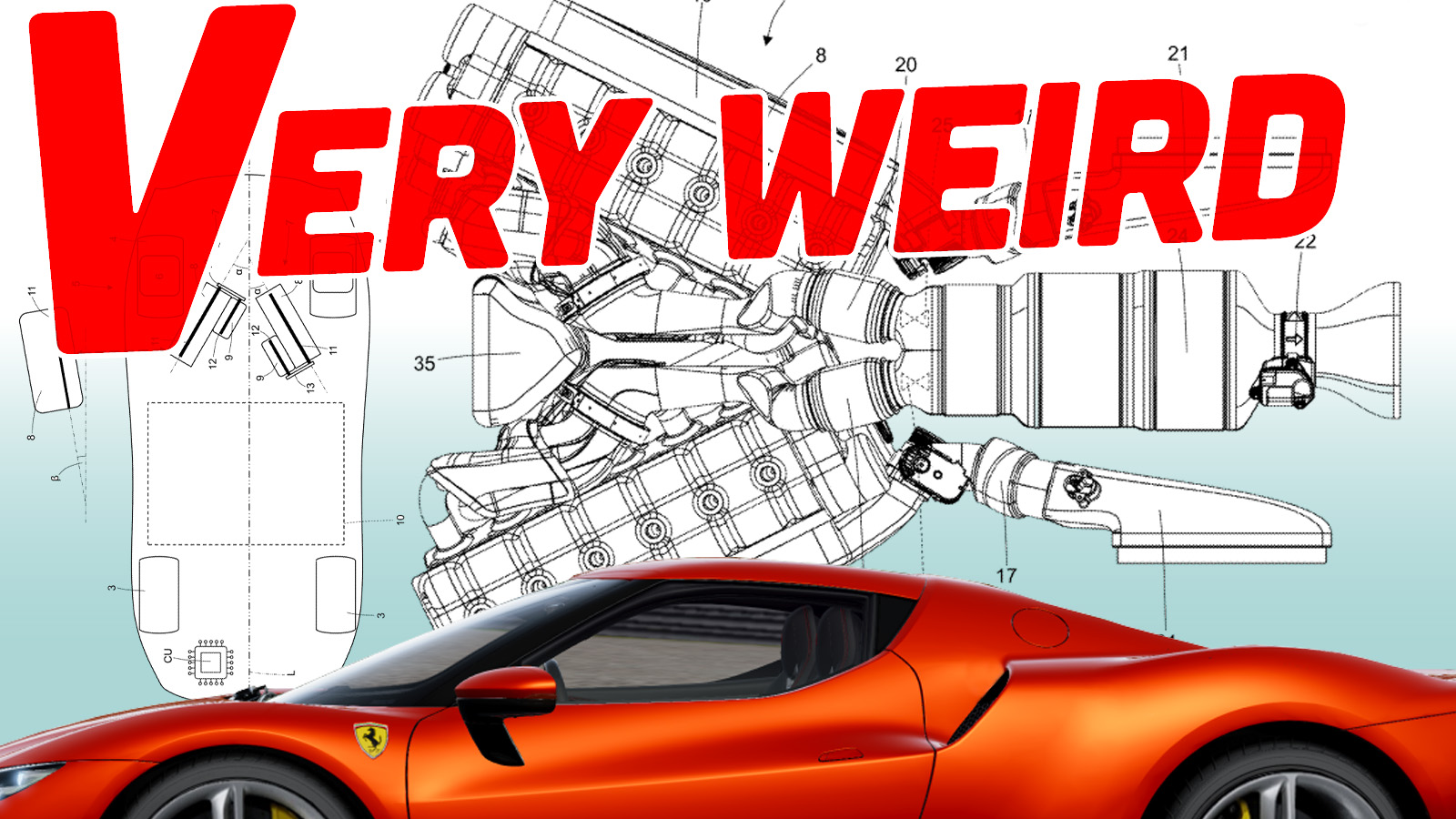
The V12 is an endangered species. Out of the dozens upon dozens of manufacturers out there, there are only six—Aston Martin, Ferrari, Lamborghini, Cosworth (through Gordon Murray Automotive), Mercedes-Benz, and Rolls-Royce—that still produce V12 engines for production road cars.
A couple of those companies, namely those like Mercedes and Rolls-Royce, could probably get by just fine without a V12 engine. Sure, they’re important to the brand, but the 12-cylinder powerplants under the hoods of Maybachs and Phantoms aren’t those cars’ defining features. For V12-powered cars from brands like Ferrari and Lamborghini, it’s another story.


The V12s in vehicles like the Revuelto and the 12Cilindri are among the top reasons shoppers buy those cars in the first place. The power can be replicated with turbochargers and electric motors, sure, but the soundtrack, response, and character found in a V12 are tough to replace. With emissions restrictions in some parts of the world making it tougher to sell V12s, engineers are faced with the challenge of trying to keep 12-cylinder powerplants around while at the same time increasing efficiency.
Going by some recently uncovered patent application documents, Ferrari has come up with an incredibly strange way to keep its 12-cylinder drivetrain around for the future, and it includes splitting the V12 into two separate blocks and arranging it in the shape of a “Y.”
Can You Even Call This A V12?
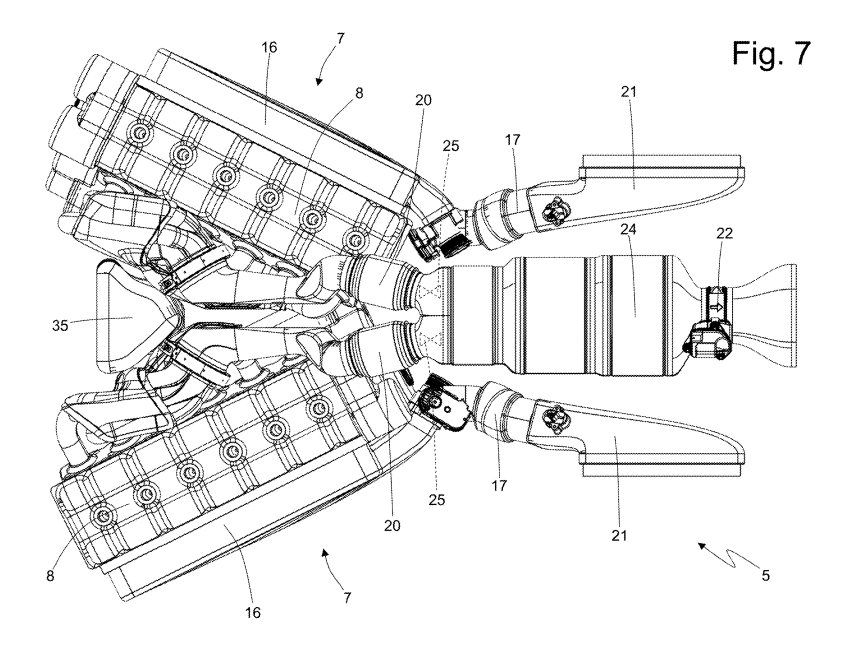
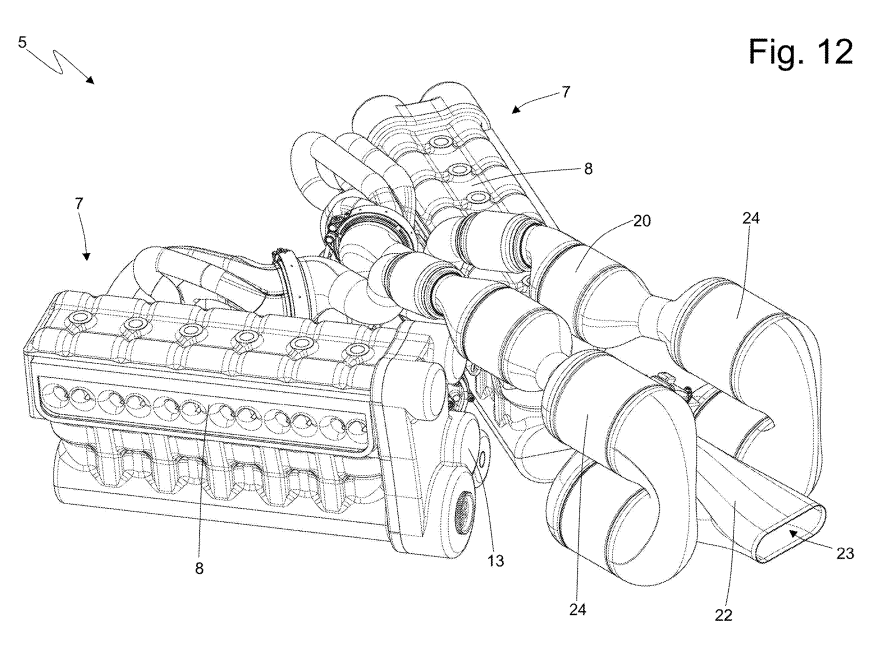
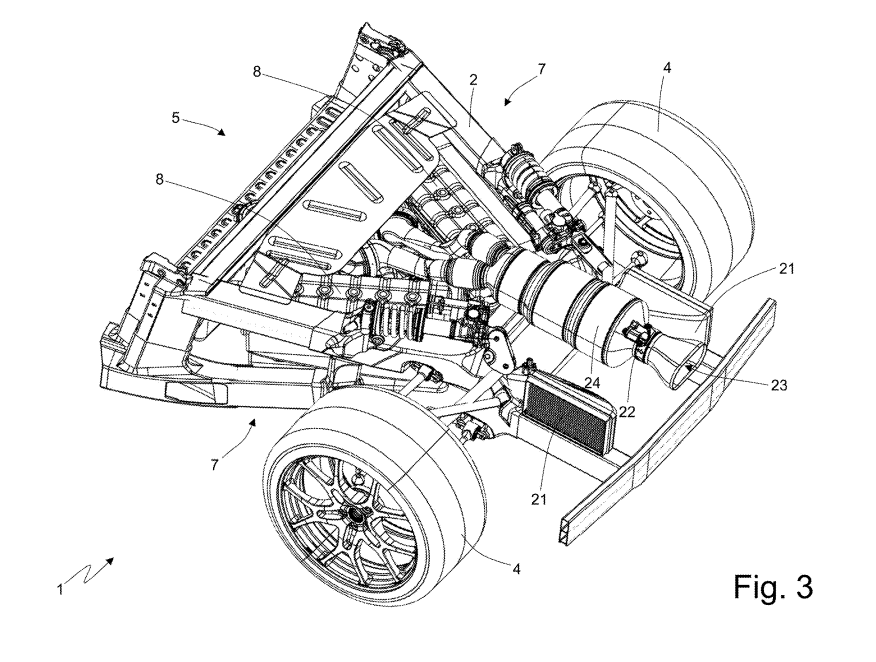
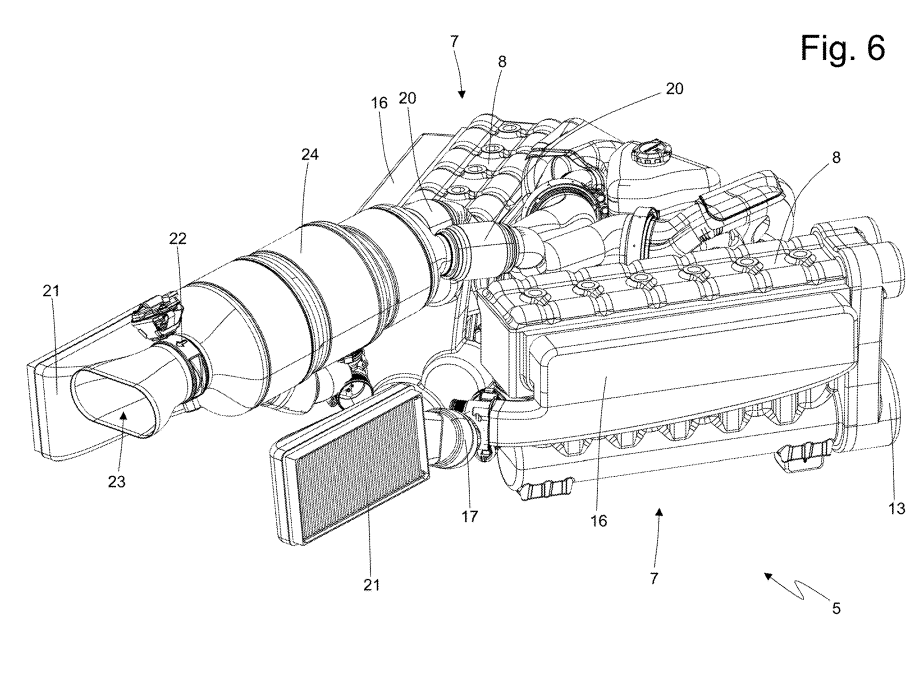
The patent application, discovered by CarBuzz, is nutty for a few reasons. While a normal V12 is like any other V-shaped engine, where the 12 cylinders are comprised of two rows of six-cylinders joined at the crank, this setup eschews that altogether, instead splitting those two rows of six cylinders into two separate engines, with their own respective blocks and heads.
While it’s pretty strange to see two independent combustion engines in the same car, it’s not an entirely novel concept. Back when I owned a BMW 8-Series, I had to deal with two of everything, since the V12 was set up to operate as two inline-sixes, each with its own ECU, fuel pump, and more. My colleague Mercedes has to deal with something similar whenever she works on her Touareg V10 TDI, since that’s set up in the same fashion. The only difference with this Ferrari setup is that the blocks are separate, too.
The real weirdness comes in how the blocks are arranged within the vehicle. Instead of sitting either parallel to the car’s body line, like all modern V12s, or perpendicular to the body line, like a Lamborghini Miura, this one has the two inline-sixes clocked at an angle of about 45 degrees, inline with the frame of the car. Looking from above, when combined with the exhaust pathing, it looks to resemble the shape of the letter “Y” more than anything else.
The reason, according to the patent application, is for better packaging:
This “inclined” (“oblique”) arrangement of the internal combustion engines allows the internal combustion engines to match the tapered shape of the frame, which offers great advantages in aerodynamic terms.
If you know anything about how aero around cars works, you’ll know this makes a lot of sense. Because the engines are arranged closer to the center of the vehicle, the rest of the car can squeeze itself into a smaller, more svelte shape, allowing designers to form body panels they wouldn’t normally be able to, since there’d be an engine in the way.
Ferrari’s Y-shaped engine is the same sort of thinking that’s led engineers to move engines lower to the ground and more central to the car’s center. They’re just trying to package everything as tightly as possible to minimize the car’s exterior footprint and unlock as much freedom for designers as possible.
They’re Just Generators
By now, you’re probably wondering how the hell either of these inline-sixes actually gets power to the wheels. Well, they don’t. At least, not directly. The patent application specifies that this is a series hybrid powertrain setup, which means that neither engine has any direct connection to the driven wheels (in this case, the rear wheels).
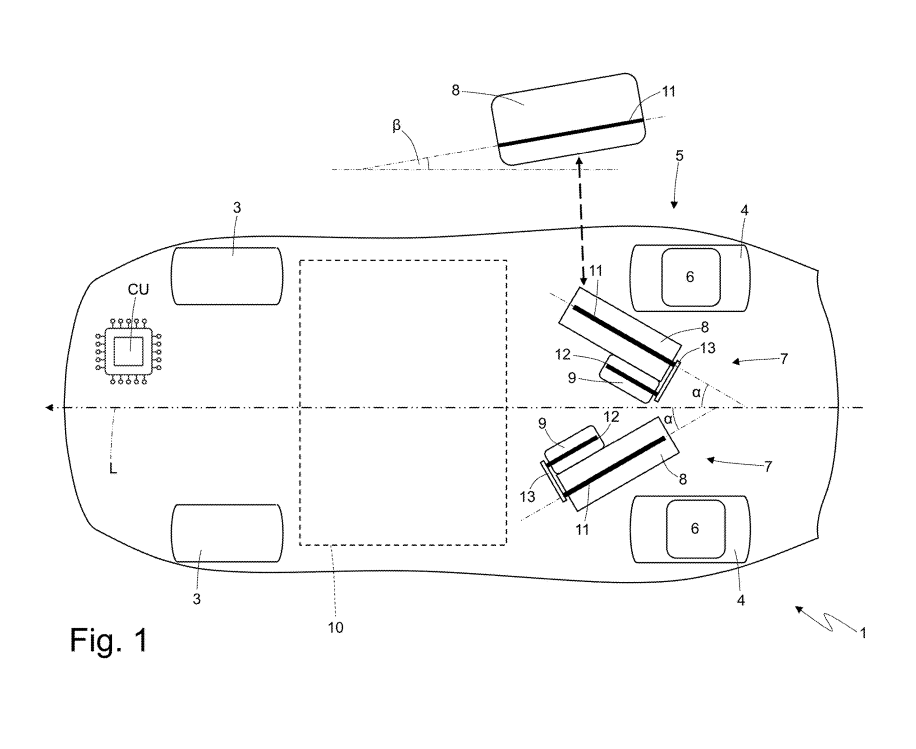
Instead, each engine gets its own generator, which it spins to provide a charge for the two electric motors mounted at the rear, which spin the rear wheels. The generators are mounted on the sides of each motor within the top portion of the “Y,” with a direct connection (i.e., no multi-speed gearbox or clutch). From the patent application:
Each internal combustion engine comprises a drive shaft which is firmly connected to a shaft of the corresponding electric generator by means of a transmission device having a fixed gear ratio. Namely, no clutch (which can separate the connection) and no gearbox or other type of variator (which can change the gear ratio) is interposed between the drive shaft of each internal combustion engine and the shaft of the corresponding electric generator.
Single-speed connections like this are pretty common for series hybrids, but it’s cool to see how Ferrari arranged the electric motors to fit in that confined space by having the engines face opposite directions.

Meanwhile, instead of going downward and out, like most exhaust paths, the exhaust piping points upwards and out, to leave room for the generator units below.
It’s All About The Noise
Obviously, putting two inline-sixes in a Y shape into the back of a car is far more complex and time-consuming than putting a twin-turbo V8 out back and calling it a day. The whole point here, according to Ferrari, is that the two engines, paired together, don’t “suffer from the drawbacks” of a normal, boring series hybrid and “exhibit sporty road performances.” And sound is a major part of that goal.
Digging a bit deeper into the patent application, Ferrari describes the engines as being able to rotate at different speeds and make different sounds, depending on the car’s situation:
It should be noted that the two internal combustion engines can be different and, in particular, can be differentiated in terms of intake and exhaust; consequently, even at the same rotation speed, the two internal combustion engines have different sounds. In this way, the various possibilities available to the control unit CU (one or the other of two internal combustion engines can be turned on or both internal combustion engines can be turned on with identical or different rotation speeds WE…) allow many different sounds to be produced in order to differentiate different driving situations from an acoustic point of view.
In theory, that means it wouldn’t just sound like a V12 all the time. Depending on rpm and the number of cylinders actually firing, there’s a lot of potential here to make the car sound vastly different based on drive mode, pedal application, or driving situation.
Engines in hybrids and range-extended EVs that have no connection to the wheels are often designed to sit in a defined rpm range at all times, whether you’re just cruising along or doing big acceleration pulls. It sort of just feels like you’re driving a car with a CVT, without any defined gears. As great as V12s sound, I’m not sure this would be much different. To fix this issue, cars like the Honda Prelude use fake gearshifts to simulate the feeling of going through a gearbox. Ferrari has a similar idea and mentions the concept of virtual gears in this patent application.
In this case, the driver would be able to turn the gears on or off, and even be able to choose between manual operation or an automatic gearbox:
The control unit CU determines the virtual engaged gear based on upshift and downshift commands given by a driver of the car or the control unit CU determines it by simulating the behaviour of an automatic transmission to maximize an energy efficiency of each internal combustion engine.
According to a possible embodiment, a first group of virtual gears is established, which is used when the choice of the virtual engaged gear is made by the driver of the car, and a second group of virtual gears is established, which is different from the first group of virtual gears and is used when the choice of the virtual engaged gear is made by simulating the behaviour of an automatic transmission. Generally, the first group of virtual gears comprises a smaller number of virtual gears (e.g. 4-6 virtual gears), while the second group of virtual gears comprises a larger number of virtual gears (e.g. 6-10 virtual gears).
This poses the question: Would you be okay with ripping through the gears of your V12-powered supercar knowing that those gears aren’t real, and the engine really isn’t a V12? The sound and the acceleration are still real, but there are at least some parts of the experience that are synthesized. Personally, I think I’d be okay with it, but I’d want to try before I buy.
It’s also worth noting that patent applications regularly never come to fruition, and Ferrari might never come out with a car using this powertrain. Still, I want to know your thoughts.
Top graphic image: Ferrari, USPTO




This doesn’t even pass a cursory logical inspection as a performance solution, it really seems like a design exercise someone undertook, arrived at a dead-end and figured they might as well patent it anyway just in case it becomes relevant in a different application later.
The rearmost section of this ensemble is still wider than a V12 block, even with a fat flywheel. Considering it’s an inline hybrid drive unit that doesn’t need a pressure plate or torque converter, and whose PTU can be at the front instead of the rear, a V12’s nose (in this case tail) could be far narrower than this and would be much lighter and simpler with lower CG, a lower clearance height and would be more appealing to buyers.
Truly a solution in search of a problem.
KAYFABE
“Ferrari has come up with an incredibly strange way to keep its 12-cylinder drivetrain around for the future, and it includes splitting the V12 into two separate blocks and arranging it in the shape of a “Y.””
Why?
“The reason, according to the patent application, is for better packaging”
Oh
So the Mini Twini was a V8?
Or the Mac’s IT Special CanAm car with four two cylinder two stroke engines connected to two VW transaxles driving four wheels.
Never even qualified, but allegedly sounded amazing.
Like Millyards H2 4 https://m.youtube.com/watch?v=lE9oD0byfC8 times two.
Based on Fig. 3 alone, it seems that quite a bit of effort was put into this to not come to production eventually, but understand that is a real possiblity.
It is a solution for many problems: it can pass an emission test by having some sort of mode that will deactivate cylinders, while providing the owners other modes that will make use of all of them. Also, they can engineer the exhaust to sound louder under lower RPMs, which can save fuel and lower emissions. People that buy cars by numbers will still have the 12 cylinders. “Purists” will have their gears to change with a corresponding sound response.
For me, it is excessive engineering, but Ferrari is about excess anyway. This could be solved in many other simpler ways, but it would not justify the price tag.
Up until reading that was a hybrid, was wondering why the “hot y” arrangement, then it made more sense, and it sounds like a clever packing solution, depending on the complete car configuration.
I am also not sure how this will sound. Will 2 I6s linked only by exhaust sound like a V12? I have no idea, probably yes? Also interested in understanding power management on this, because if they plan to apply torque vectoring by varying the speed of the electric motors, how the engines would behave? Would each one run in a different speed (that would sound really different) or just store the excess of energy to use later (most likely, but at the expense of more complexity and weight)?
At the end of the day, as a solution that will glad many people, but not ideal for people who grew up used to what we can name now as “traditional” cars. Maybe I am just getting old and need to start understanding that this is the new normal, and that at least they are “trying” to make the cars of this brave new world somehow pleasant to hear and drive.
Perhaps Ferrari ought to have a look at Bugatti U16 engine built from 1915 to 1916 and licensed to the American companies. Bucciali also built a single U16 engine for its TAV Double Huit prototype.
It’s a straight 12 with a broken crank.
Actually having two engines running at different speeds is fun, you can play with all sorts of different harmonics. If one engine is running 50% faster than the other you can get power. chords
Hmm, do V10s sound like they do because it can combine six and four cylinders to make a power chord? Never thought of that.
Of course power chords will make wiring the electric motor easier.
This is one of my favorite Autopian articles:
Why Does A V8 Sound Different Than A V6?: A Deep Dive Into The Science Behind Engine Sounds – The Autopian
A V10 also plays a Major Third (5:4) up two octaves (10:2), if my understanding is correct.
It’s not a V12. It’s not a Y12. It’s not even a great exercise in packaging*… those engines are far from the centerline and almost touching the fenders and tires. Hell, it’s not even an “it.” What we’re looking at is Ferrari suggesting they might power an electric car with two inline-6 generators.
Let’s fast-forward past the nomenclatural jokes about engine block configurations and consider what this illustration is aiming at. In appearance, it’s like one of those ancient mariner-type chimeras on the “here be dragons” part of an incomplete map. In implication, it’s a legendary engine maker trying to keep the beating heart of its reputation alive in the early days of a cyborg revolution demanding that supercars have instant electric torque.
In other words, Ferrari is saying it might go full Horsey Horseless:
https://www.hagerty.com/media/automotive-history/the-harebrained-idea-to-help-horses-get-used-to-horseless-carriages/
I doubt internal combustion vehicles are any more doomed to extinction than horses were a century ago. We just have yet to see where their place will be, and I don’t think this is it. Doubling the fearful complexity of an Italian car’s engine in the mere service of making authentic vroom noises with something that powers the car is a hat on a hat, or probably more like two engines on four motors.
Those noises have to be their primary reason for doing this. Looking at this drawing reminds me of the way twin-engined boats or planes produce distinct, wavering tones as the two powerplants’ sounds go in and out of sync with each other. It’s especially pronounced on boats, producing a hypnotic drone at cruising speeds that’s sort of like the auditory equivalent of the way wheels in motion can appear to pause and spin backward.
I doubt Maranello plans to make cars that sound like grandpa’s 24’ GlasPly, so they must be convinced they can use different noises from two engines to make something as compelling as the sound of one engine doing the direct work of spinning a drivetrain. Apparently they’re calling it “virtual gears.” And as for “simulating the behavior of an automatic transmission”??? Damn, Ferrari. Who asked for that? Just sell manuals again.
If they’re going to pursue such a confused premise, they might as well use speakers like everyone else trying to sell cars with an ersatz soundtrack. I don’t think they care, though. I’ve never read an article about Ferrari being unable to sell anything they make.
*The application indicates the car will have a tapering rear center section like the LaFerrari or latest Ford GT, so that splayed layout might be making room for heavy batteries and/or fuel storage closer to the centerline. Otherwise, this is the exact opposite of tight packaging. It’s not centralizing mass, it’s pushing it to the edges.
For a very long time Lotuses all had a Y shaped space to fit the engine into, and were able to avoid this.
So instead of all of the repair and maintenance issues involved with a single Ferrari engine, you have two separate engines that have to be maintained and repaired in one car? Sounds like an awesome win for Ferrari mechanics!
You have a backup for when one catches on fire!!
Wait.
New take on slant six.
At least they will probably only ever build five of these and they will never get driven anyway. Some future generation will find them in a Gulf State mausoleum preserved with the original owner embalmed. Or they will come up for auction when the intellectually adolescent tech bro original buyer gets sued for fraud.
Silly, but so is the whole brand so I don’t mind.
Brian, can you share more stories about the 8 series?
This reminds me most of Ford’s t-8 experiments with transverse 4s attched to a central gearbox.
Icky. Can’t wait for the hybrid stuff to go away next. Wouldn’t drive.
The obvious question is: Y?
The packaging argument of making room for the chassis shape makes little sense as a single block V12 would be narrower than two 6s with separate crankcases even at their closest point, never mind the open end of the “Y” and the generators could be packaged more readily around the chassis than engine blocks. (Also, it’s really more of a “V” than a “Y”, but closer would be a ” \ / twin engine” and whatever it is, a V12 it is not. With such a blatant falsehood, they might as well throw in an I4 with a V12 sound generator and call it a V12.) The odd relationship wouldn’t allow these engines to be suitable as stressed members to bolt suspension to, so “packaging”, what? I’m even suspicious about them saving length as each pair of pistons of a V12 would share a crank pin where these two I6s would not. While the angle of divergence might make up for greater length of the engine blocks, the width is much greater. “U”, “H”, and other multi-crank configurations have been done and they haven’t caught on because they are heavier, more expensive, and more complicated for little to no benefit, though those were connected as single engines. I suppose this isn’t that, either, as it’s just two distinct I6s packaged bizarrely with some BS naming. Being free to run independently, unlike true single-engine dual crank engines, seems small benefit in exchange for even greater weight, cost, and complication. For all that, why not a V12 with cylinder deactivation done in the more modern way of rolling cylinder skipping and throw the generators alongside or in the V or at the end(s) or somewhere more remote via shafts or chain to really improve packaging?
At what point is this a V12 versus a twin V6? If the engines are not mechanically linked and can run independently, I’d call it a two engine setup. As a point of comparison, the WWII P-38 lightning is powered by two V12s, anyone saying it was powered by a V24 would be laughed out of the room.
Ferrari is really embracing the Emperor’s New Clothes philosophy. OK, a goofy patent for patent’s sake never intended to be made, but save us the BS labels.
If you think of it as a V12, it’s kind of fake and disappointing. If you think of it as an onboard generator, it’s a crazy and awesome setup!
Overall I like the weird, but it does seem kind of strange to put that kind of effort into generators
I would not call that a V. Or a Y. It is an “exercise in writing patents”. Such one-off wild ideas are never going to make it to production in the modern times of margins-first engineering.
Y > V = $$$
I would most definitely not call that a V12 or Y12, or whatever else Ferraris marketing department fancies. I wonder if they can borrow a term from Daimler and call it a “Double-Six”.
Double Six works so well here but I know they would never
Double Six sounds like it would be some sort of GM engine from the 1950s. Too cool for Ferrari. 😛
At least it’s not the dreaded double nickel.
That would be the Daimler Double-Six. Or the Packard Twin Six.
Just need to make it more Italian like Doppio Sei or Due Sei Cilindri.
There you go, the Ferrari Doppio
Or Packard even earlier with their “Twin Six”.
Honesty hasn’t the same commercial value as “V12.”
As someone with no horse (pun?) in this race, I’m in the camp of believing that supercar engines should be as bonkers as possible. Embrace the Rube Goldberg-ness of the whole thing: hell, make it 11 cylinders and in the shape of a Q, for all I care. But all the engineering effort, design, meetings, discussions, testing etc etc, just to NOT drive the wheels with it? What are we even *doing* anymore?
HOW ABOUT NO!
(says the never-to-be Ferrari owner)
https://www.youtube.com/watch?v=x3UpBKXM
I know this is only a V10, but it gives an idea of what it might sound like.
This sounds unnecessarily complicated and like it won’t produce a classic V12 sound anyways.