

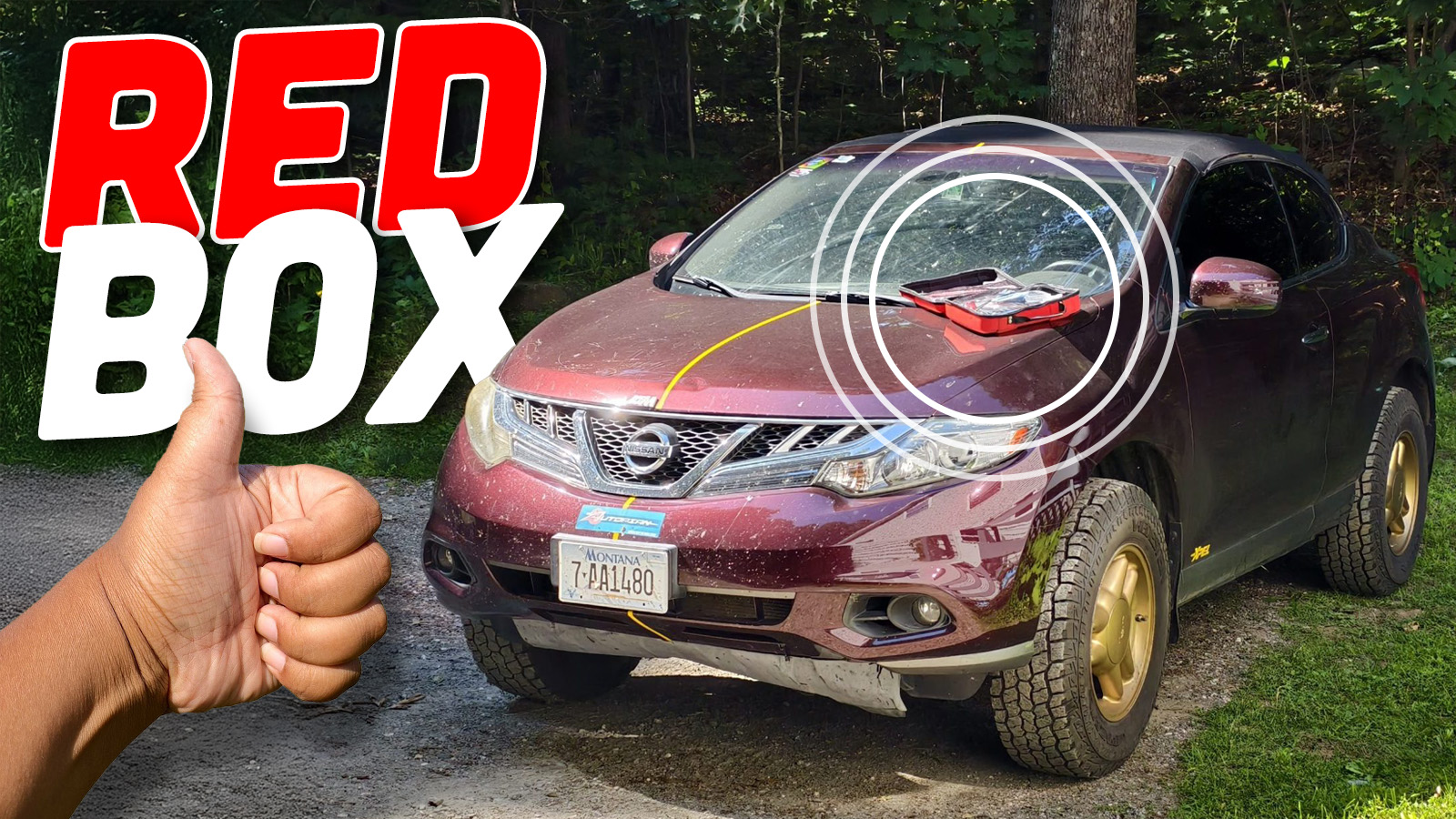
I am not usually prone to hurting myself. In my 33 years on this planet, I’ve been lucky to say that, the vast majority of the time, I manage to walk away from mishaps with bumps, scrapes, and maybe a new scar to talk about, but nothing actually serious or debillitating. That changed this year, when I hurt myself in two big ways in quick succession. I busted my knee doing a wheelie on the fastest enduro motorcycle on the market. Then, just a couple of weekends later, I hurt myself so badly I thought I was going to fight a horrible infection. Here’s how a little red pack hidden in the trunk of The Autopian‘s Nissan Murano CrossCabriolet saved my bacon, and how you can get your own pack, too.
I’ll warn you that this post contains mentions of injuries and blood (but no images of either). If that sounds awful to you, feel free to skip to a different article!


The worst accident I’ve ever experienced was getting hit by a car when I was seven. I lost half the skin on my forehead, blacked out for some unknown amount of time, and had to be airlifted to a hospital. But I had zero broken bones and not even a sprain. Just two years later, I tried to make fireworks out of aluminum foil and alkaline batteries. That one blew up in my face, literally, and all I got was an inch-long scar on my arm.

Somehow, I’ve done a lot of dumb things over the years, and when they failed, I barely got a scratch. I’ve crashed a go-kart, mated a Harley-Davidson Sportster with a Toyota RAV4, made a Honda Elite 150D eat boulders, and dumped a Can-Am Origin off-road. Each time, I brushed myself off and walked away. My worst injury was getting sucker punched in the face by a bully in middle school, which left me with a lasting jaw click. I don’t even know what a broken bone feels like.
This summer, I’ve somehow managed to injure myself worse than I have in perhaps my entire life. In one case, rescue came not exactly from myself, but a red box left in The Autopian‘s Nissan Murano CrossCabriolet.

Two Bad Days In Quick Succession
My apparent luck finally ran out in May when I did a wheelie on a Stark Varg. I had that front wheel oh-so-perfectly pointed at the sky, then I lost my grip and fell off, likely twisting the throttle as I went down. I landed with my left leg still extended, bending my knee in a direction it wasn’t meant to go in. Healing has been a journey, one where I realized that I’m not bulletproof and there are times when it is okay to ask for help. I’ve also had to teach myself how to walk properly again. That blew my mind all by itself, as I never thought I’d have to re-learn something I’ve done naturally for basically my whole life. But sometimes you learn what things you might take for granted when you lose them.
A major component of my healing journey has been regaining confidence in my knee. I wore a knee brace for roughly a month after the incident. During that first month, I didn’t trust my knee not to give out on me. I’m not sure if it was all in my head or if my knee was actually as weak as I thought, but I was often afraid to bend my left leg. I didn’t use my left leg to climb stairs, and I avoided inclines at all costs. I also stayed away from my favorite summer activities, including swimming, riding motorcycles, and driving manual cars.

Maybe my reluctance to use the knee worked. The only times the knee ever gave out on me were in those first few hours after the incident. It hasn’t happened ever again. My knee is already back to 95 percent of normal, too! So healing is going great, and I am confident in it again.
Anyway, at about two weeks into my knee’s healing, I had enough of sitting around and doing nothing, and decided to go for a swim. I have a favorite secret swimming spot on the Fox River just north of the Wisconsin border, and the water is usually 70 degrees or warmer from late May to about October.
The catch is that, to access the water, I have to crawl down an unimproved riverbank. Depending on my exact entry point into the river, I’ll then have to deal with either muck or large rocks. Neither of these was particularly demanding in the past. I just be careful, and it all works out.

This time, I tried to make it easier on myself. I drove The Autopian‘s Nissan Murano CrossCabriolet to the swim spot rather than riding a motorcycle. Then, I searched the riverbank for a new swim spot that didn’t require a sharp drop down the bank, lots of rocks, or obvious deep muck.
I found what I thought was just the place. The approach was smooth, and there were no rocks. Even better was the fact that a recent flood cleared the bank of debris. It was like a mini beach that only I knew existed.
As I got to the water, I took off the knee brace. Then the fear hit. Was my knee ready? What if the muck was particularly difficult to deal with? What if I got stuck in the muck and had to force my leg out? I came up with a plan. Instead of walking into the river, I would spread my weight out by crawling into the river, then just swimming away once I got deep enough.

This plan worked out for maybe about a minute. Once I crawled out to a level that was maybe knee-deep, I felt a sharp pain in my right leg. I figured I scraped a rock and didn’t think anything of it. My skin is usually pretty robust, and I’ve felt sharper pain without actually hurting myself.
Then, I stood up. As I was just about to walk deeper into the water, I looked down and saw something hanging from my right leg. I thought it was plant matter or something, but it hit me that I was looking at a slice of skin. Under the flap was a steady stream of blood. Under the blood? A practical Grand Canyon an inch long and a centimeter wide. I sliced my good leg open. Thankfully, I took zero pictures during this emergency. Sorry, Matt Hardigree.
What happened next was a series of rapid-fire decisions made while I was in a full panic. First, I walked out of the river, using my right leg as the leading leg. Then came an awkward situation where I had to slow the bleeding of my right leg while I put the brace back on my left knee. Somehow, I used my right hand to press my swim dress into the wound while my left hand picked up the brace and strapped it on.

With the knee secured, I then had to tackle the riverbank. I had gently crawled down the bank only 10 minutes earlier, but now, I didn’t have the time to crawl back up. I chanced it and walked up the bank, hoping that my knee wouldn’t fail me. It didn’t.
I limped my way to the CrossCabriolet with one hand firmly on the wound and the other hand batting mosquitoes. Every time I looked down, it looked worse, the swim-dress fabric failing horribly to contain the bleeding. Once I got to the CrossCab, my initial thought was that I’d grab some hand sanitizer, a lightly used napkin, and some duct tape.
This terrified me. The Fox River isn’t very clean, and not only did I have dirty river water in my wound, but plenty of mud. I felt like the decisions I was about to make in the next few minutes would decide if my leg got infected or not.
Then, it hit me that the CrossCab had just the solution for this exact situation.
My Savior

Back in December, I drove the CrossCab across America in an epic over 4,000-mile road trip. The guys at the Galpin media center in Los Angeles didn’t think the Murano was going to make it to Texas, and the idea of us breaking down in the desert somewhere gave them pause. So, right before Griffin and I rode off into the sunset, the Galpin guys gave us an emergency kit.
Inside this kit were jumper cables, zip ties, some basic hand tools, and, important for this situation, a first aid kit. Apparently, the box in the CrossCab is a “Bridgestone Auto Safety Emergency Roadside Kit”.

I grabbed my hand sanitizer and a bunch of the antiseptic wipes from the kit. I used both to clean the cut to the best of my ability in the middle of a forest. Then I snatched some gauze pads, a couple of dressings, and the roll of adhesive cloth tape. I put both the gauze and the dressing down on the wound and held it in place with the tape. Honestly, I had no idea what I was doing, but it worked because the stream of blood finally stopped.
It has a little bit of everything, but isn’t very comprehensive when it comes to either car tools or first aid materials. The tire inflator is pretty weak, too. But the whole package is not bad for the $50 that Costco wanted for them when they were on sale.

Anyway, as I raced home, I considered going to the emergency room before my wife convinced me to let her look at it first. Honestly, I had never had a cut this bad before, so I just had no idea what I was in for. Thankfully, it looks like I was successful in cleaning and stabilizing the cut. Once I got home, she cleaned it out further, gave me an antibiotic, and applied a more proper bandage.
Later, I saw my doctor, and he believed that those first minutes at the river are a major part of why I didn’t have to battle an infection. He thinks that, given the water quality at the river, had I just driven home while holding my dress on the wound or, worse, using a dirty napkin as a bandage, I probably would have had my summer ruined, or worse. My diabetes might have added its own complications.

Instead, it healed just like any other wound would, just at a larger scale and taking a slightly longer time.
This event has reminded me to fill my vehicles with emergency kits. Until now, only one of my cars had an emergency kit, and it’s one of my garage queens that had a first aid kit as a factory option. I always meant to build some emergency kits, but never got around to it. Well, this scare was the motivation I needed.
I’m Going To Make Some Emergency Kits

The kits I’m beginning to fill my cars with follow the American Red Cross guide on first aid kits, which states:
Whether you buy a first aid kit or put one together, make sure it has all the items you may need:
Include any personal items such as medications and emergency phone numbers or other items your health-care provider may suggest.
Check the kit regularly.
Check expiration dates and replace any used or out-of-date contents.The Red Cross recommends that all first aid kits for a family of four include the following:
2 absorbent compress dressings (5 x 9 inches).
25 adhesive bandages (assorted sizes), also found within our Family First Aid Kit.
1 adhesive cloth tape (10 yards x 1 inch).
5 antibiotic ointment packets (approximately 1 gram).
5 antiseptic wipe packets.
2 packets of aspirin (81 mg each).
1 emergency blanket.
1 breathing barrier (with one-way valve).
1 instant cold compress.
2 pair of nonlatex gloves (size: large).
2 hydrocortisone ointment packets (approximately 1 gram each).
1 3 in. gauze roll (roller) bandage.
1 roller bandage (4 inches wide).
5 3 in. x 3 in. sterile gauze pads.
5 sterile gauze pads (4 x 4 inches).
Oral thermometer (non-mercury/nonglass).
2 triangular bandages.
Tweezers.
Emergency First Aid instructions.
If you don’t feel like gathering this stuff yourself, apparently the Red Cross does sell premade kits for a variety of situations and budgets.

For a car version of the above, I add zip ties, a flashlight, tire sealant, tire plugs, a tire inflator, basic hand tools, and jumper cables. I have a lithium jump pack and a socket set, but these normally follow me around anyway and aren’t a part of my kit.
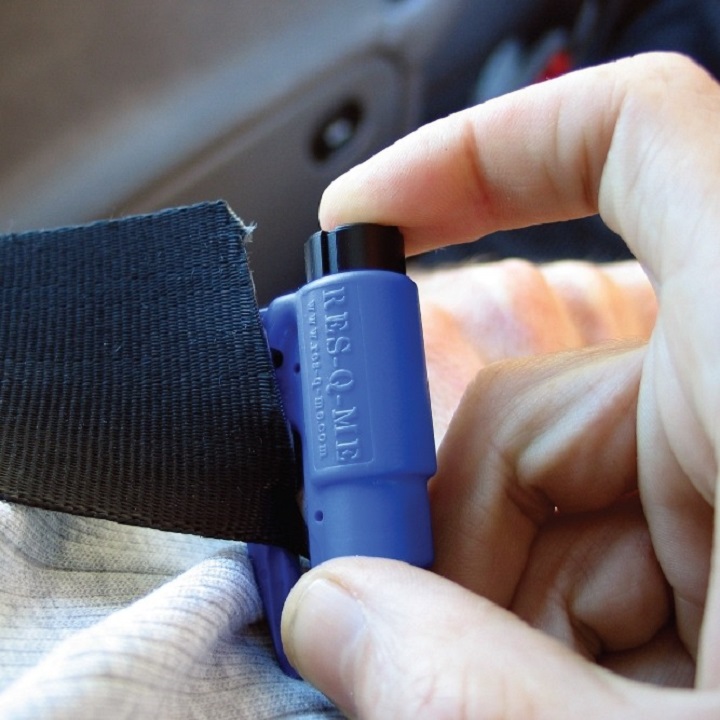
Also important to me is a Resqme escape tool. I’ve been talking about these things off and on for years now. These little gadgets break windows and cut seatbelts when every second matters, such as when your car is on fire or you’ve crashed into a body of water. Sadly, it won’t get through today’s fancy laminated side glass or dual-pane side windows, but it won’t have a problem busting tempered glass.
Depending on your situation, you may want to add a tow strap, a shovel, a high-visibility jacket, warning triangles, a fire extinguisher, a power bank, or more.
If you don’t want to build your own kit, you can buy a first aid kit of varying quality on Amazon for around $20 or less. A couple of highly rated premade kits include the MyMedic MyFAK and Redi The Roadie. These aren’t car-specific kits, so you’ll have to add the car bits separately. Also, it’s unlikely that the kit you’ll buy will have a tourniquet, which can stop life-threatening hemorrhaging, so you’ll want to buy one of those, too.
There are many different companies that sell and make first aid kits for various situations. You can buy med kits for severe bleeding injuries, airway injuries, and other hardcore traumas. Some of these kits might be a bit overkill for most emergencies that you might have near your car, but are options nonetheless. Also, you can use your first aid kit to save someone else!
Consider Your Situation

Now, you can easily spend $500 or far more on emergency gear, and all of this stuff takes up a lot of space. If you’re driving something like a Miata, you can fill your entire trunk with an emergency kit. In that kind of situation, or one where you’re on a budget, I’d keep it down to the basics. A first aid kit and some basic car tools will go a long way more than having nothing at all. Just consider your situation. If you only drive a couple of miles to work in a city, you probably aren’t going to need a tow strap and a shovel. If you overland in the desert, you’ll probably want more than the cheapest first aid kit on Amazon.
No matter what you do, learn how to do CPR. Having 100 Band-Aids on hand is great, but they’re not going to save a life in a critical emergency. CPR can. There are CPR classes out there to teach you!
This summer has been eye-opening for me. I have tried to live a full-throttle life while being as safe as I can. I wear a seatbelt, I don’t do anything stupid in an aircraft, and I dress like a Power Ranger when I ride a motorcycle. But I suppose I’ve never really planned for when that goes wrong.
As my limping slowly goes away and, one day, maybe I’ll stop being able to predict the weather with my patella, I will be treating my body a bit better. As it turns out, I am very much a squishy human that’s capable of getting dinged, dented, and broken. But if this happens again in the future, I’ll now be better prepared rather than surprised to learn that someone else prepared for an emergency on my behalf. I hope you’ll be prepared, too!
Here’s where I turn things to you. If you have an emergency kit, what do you put in it?
Top graphic images: Mercedes Streeter (that’s my actual thumb!)


I covered a small plane crash when I was a news photographer. Fire crews had already arrived, pronounced the single occupant of the plane (the pilot obviously) deceased. The plane had been towing a banner, let the airspeed get too slow and the plane stalled, plummeting almost straight down. It was an unsurvivable crash. One of the paramedics told me (off camera) “you know? We’re all just sentient water balloons.” Thoughts of what that could mean have stuck with me for more than 30 years now.
Here I am driving around with a pair of pliers, a leatherman-type tool (I’m too cheap to pay for the real McCoy), and one alcohol swab that may be older than my 11 year old car.
Since crashing on a granite slab while mountain biking and being unable to stop the bleeding from my cheese grated knee, I started carrying a small first aid kit in my hydration pack. It’s geared toward cuts and scrapes and has come in handy a few times since. I also carry an ace bandage, which I was able to use to help another rider.
I also have 2 first aid kits in my truck, one for people and one for the doggos, though they’re actually pretty similar.
I’m still outfitting the truck, the 4Runner had 6 years’ worth of various gear stored away in it, it took me hours to clean it out before trading it in.
In the spare tire well of all my cars I keep jumpers, a GOOD lug wrench, a can of fix a flat, a yellow safety vest, gloves, and a door mat. Door mat will keep you clean/dry changing a tire and can also be emergency traction material. My SUV always has a few ratchet straps, a coil of rope and a 6×8 tarp as well a tire inflator (for bicycles mainly).
I usually have a small backpack in the car with a windbreaker, poly fleece blanket, first aid kit, duct tape, electrical tape, zip ties, a utlilty knife and leatherman type tool, a few shop rags, flashlight and a few assorted hand tools (screwdrivers, pliers, wire cutters,crescent wrench).
I also keep a pack of baby-wipes and a few nitrile gloves in the glove or console.
I fell down a rabbit hole of EDC and “get home bag” videos, I’m planning on doing the backpack thing.
I had all that stuff and more in my 4Runner, but not in one easily transportable bag.
Ditton the baby wipes, they come in clutch when getting back the vehicle after a hike or MTB ride, I give myself a quick wipe down while looking for ticks.
Of yes, we use wipes on the weekly. I live in a suburban/rural area, so I’m not gonna get stranded. But I have found a lot of the kit I carry to be useful, particularly for non-car emergencies or vacations. Just a few weeks ago, I was driving in town and an older (likely drunk) man ditched his bicycle right in front of me. We were able to pull over and help him clean his scrapes and I had a wrench to tighten his loose seat.
Same, I’m rarely farther than a ten-minute walk to the nearest Dunks, so getting stranded in the middle of nowhere is highly unlikely. I just like the idea of having all the stuff in one easily transportable bag for when I switch vehicles or need to find something quick.
I often find my tool bag comes in handy for other people, many times I’ve been helping a friend or family member with something, and they didn’t have the correct tool(s) for the job so I run out and grab my vehicle tool bag. Just the other day I helped a friend install side steps on his new truck, and good thing I brought tools because he has pretty much nothing. All I needed was a 3/8 ratchet, a 13mm, and a short extension, and he didn’t have it.
And good on you for helping that bike rider, as a cyclist I appreciate that.
Also important: know what is in your kit and how to use it. You don’t want to be in a bad situation and also need to learn how your air compressor works (or worse, realize your car has no means of powering it). If you’re carrying a tourniquet, learn when, how, and why to use it. Figure out how your fire extinguisher works before you need it.
And check/replace everything regularly. Does that multi-head screwdriver still have the bits you need after you have changed cars? Do you need to replace some expired things? Did you use some things without replacing them?
And assuming you have a spare tire and not just one of those shitty compressors, actually check the pressure every once in a while. It’s just dead weight otherwise.
Absolutely. I’m shocked by the number of people who only figure that out when TPMS tells them they have a flat and they can’t figure out where.
That tells me a lot of people never find out because the spare doesn’t have TPMS.
I fill ours twice/year and they’re always down to 50 psi or so.
I go through each car probably twice a year just for that reason (usually all together at once). It’s amazing how much sh*t goes missing or misplaced with multiple cars and multiple drivers.
Also, it’s a good idea to make some adjustments seasonally. What you need in the winter and what you need in the winter has a lot of overlap, but it’s not identical. Swap out the heavy coat for some lightweight sun cover. If you don’t need the tire chains, they don’t need to be in there. And you can probably use the cat litter in the litterbox and buy more next winter. And maybe add some extra water, sunscreen, and the like.
I recommend reclassifying a fire extinguisher from “may want to add” to “definitely want to add” but perhaps that’s just a comment on my own vehicles.
I would carry one in an older car with a carb, but really see no need on modern fuel injected cars or hybrids.
As far as emergency gear, a big tarp is a great idea. It will fold or roll up into a small bundle, but can work as emergency rain gear, blanket, sun shield, etc. Very useful if you break down in snow, rain, or heat.
And if your dog or kid is looking green in the gills, you can cover the back seat to catch any gross stuff getting horked up.
In the absence of a tarp, even a large contractor bag can be handy for that purpose.
Yep, get a cheap one from Harbor Freight. I also keep a few small poly-fleece blankets in the trunk. More than once my car-sick daughter sat on some freebie-giveaway blanket.
Oh yeah! The tarp pairs well w/ the shovel and duct tape…and the knife, ha ha.
“That’s not a knife…THIS is a knife!”
Can I guess that the Covered Bridge picture was Either Cornwall or Bull Bridge in CT
Our family line was almost extinguished by a giant icicle falling through the roof of my grandpa’s Plymouth convertible off of a covered bridge in NY. Luckily, they hadn’t been dating long, so my grandmother was on the other side of the bench and not in the center.
One of my friends is a fire fighter here in Mexico, and he always recommend to have at least a first aid training every two years,and believe, you are going to need it at some point of your life
Even if the knowledge helps you decide to call 911, it’s worth it. Every time we have had to call, not once did they say we shouldn’t have called. Sometimes we can just drive ourselves to ER / urgent care; sometimes you get transported. When in doubt, call.
When our kids started driving we came up with a list of items to include in an emergency kit for each, and since they were doing sea scouts and going to the backcountry often for various adventures, the list got quite long. A cheapo standard size toolbox from HF was what we stuffed the medical, emergency clothing, fire starting, etc. things into, and added a standard “all in one” or “starter” tool kit, jumper cables, and inflator in addition. One now works at a kids camp and the other is a DNR employee, so they have had ample opportunity arise to use them and their first aid skills (and thankfully, they haven’t yet had to use them on themselves).
If you have the room, I suggest adding a bottle of sterile eye wash. Besides the obvious use for washing out your eyes, it’s also good for flushing out really dirty wounds like the one you got.
Speaking of eyes, if you ever have to treat a traumatic eye injury, make sure to cover BOTH eyes even if the injury is in one eye only. This will discourage the person from moving their eyes around, which can make the injury worse.
Many years ago I learned an extremely useless piece of knowledge: The inside surfaces of a new, unopened newspaper are (supposedly) nearly sterile (the heat and pressure of the printing process kills most bacteria). In theory this means they are a better-than-random-dirty-cloth wound dressing. I can’t imagine anyone will ever encounter a scenario where this information will be both relevant and possible to implement, but it’s deeply embedded in my brain.
Thank you for sharing the info about the newspaper.
My mother was a trainee and then midwife in early 1950s Birmingham, in poor areas. Some of the people were moved into council flats for the first time, and used the bathtubs to store coal. (Not as bad as it sounds, the genius architects did not include coal bunkers in the design…). Anyway, things did not always go as planned and she certainly used newspaper during deliveries when the little sods could not wait.
One of her last deliveries was 40 year later when next door had a larger sized maid. She did not tell her lady employer she was preggo, but suddenly, one day screamed, dropped her waters, ran out into the garden and produced a little boy on the lawn under a decorative palm… All mum had to do was cut the cord.
The next door neighbour on the other hand fainted.
Historically yeah, I realize the newspaper thing was genuinely useful (and well done to you mother for doing an important job). But these days… well, newspapers are a bit of a rarity anymore, and I can’t think of the last time I saw one (let alone a new unopened one) in a location that wouldn’t already have access to better options.
That’s understandable…I’m sure DT’s old neighbors fainted at all the rusty cars in his yard, ha ha
That IS very interesting. Still waiting for my Autopian newspaper…or magazine…what else am I supposed to read in the bathroom besides The Morning Dump?! Ha ha
I’ve found that as I get older, I get more cautious. I’ll look at something and think “That looks like it could hurt”. I’m almost 60 and I really don’t want to spend the rest of my life in pain because I was stupid.
Haha, 2 days before my 40th birthday, I crashed and broke my hip while mountain biking. I got back on the bike as soon as I was able, but my riding style has toned down a bit. Rather than “just send it”, I do a quick risk assessment before anything sketchy. If the penalty for failure is landing on a bunch of pointy rocks or tumbling down an incline, etc, I’ll usually walk it.
I took some street medic training recently. I’m super squeamish about blood, but I’m glad I took it. Pro tip- you know how in cub scouts, you learned you can make a torniquet out of a bandana and a twig? Real ones take tremendous force to effectively use and are much harder than you think. I feel comfortable doing decontamination of chemical irritants and some stop-the-bleed, but I’m by no means a professional and only trust myself to do the bare minimum before handing somebody off to medical personnel.
Great article! I keep a first aid kit in my hiking backpack and in my car. It’s just better to be safe than sorry.
I have to ask though, did you figure out what cut you in the river?
I’m guessing this is what it was? Still not sure though. It’s one of the photos.
“One of the dangers of the riverbank: a destroyed dock (note the metal tubing protruding from the ground). Photo: author”
Thank you.
I sometimes start your articles with a Too Much Information warning blaring in my head, but you manage to make these situations personal-enough for me to realize that it could happen to myself or a family member. Instead of a “bring a first aid kit” sermon, this has sent me starting an inventory about what emergency items I want in my automobiles. I hadn’t thought about infection from initial contact to the wound. Something more liquid than an alcohol wipe is not a bad idea. (Now, how to keep it liquid in a hot/cold car 365 days of the year….)
You can buy sealed bottles of sterile saline eye wash. Might freeze at really low temperatures but they are usually plastic so it should be okay.
Unscented baby wipes – I always keep a pack. Clean and sterile, good enough for the initial cleanup of about anything. Then follow with the alcohol wipe and bandage.
We used to have baby wipes, but thankfully have grown past that stage.
They dry out unless kept well sealed.
Agreed – and my ‘baby’ is now 21. Still keep them, still use them.
I’ve been wondering how a lot of this stuff stays viable in a car. IIRC hydrocortison/neosporin packets usually say not to store them over certain temps, and cars can be ovens. I know broiled ointment is better than nothing, but I am puzzled.
Cars left in the sun will naturally autoclave your first aid kit.
Right, so chemically, the antibiotic ointment will be rendered not ok? But the guidance is still to keep it in there.
Most antibiotic ointments are probably made with heat. I guess it depends upon the particular formula.
Something to remember, never buy components of kits like this off of warehouse places like amazon, because while the chances of a fake/junky stuff are low, the items in this kit need to WORK EVERY TIME. You don’t want to be looking at a family member’s arterial leg bleed and then discover the CAT-T tourniquet you bought online is made of recycled water bottle plastic and hope.
North American Rescue is a great resource (https://www.narescue.com/)
also, take a stop the bleed class. it could save your life
Counter-argument, for those people who will never take the effort into learning first aid, if the dealership gave (or every driver had) a cheap $10 kit that meant that someone has 12 feet of crappy bad gauze and marginal tape – that would be far superior to nothing.
Full agreement. I would rather have something crappy than nothing at all. But if you’re actively seeking out ways to increase your preparedness, get good gear, and get trained on how to use it.
We were quizzed on this as Boy Scouts in the 70’s. Someone has a serious cut and needs to have pressure put on it, the only thing around is a dirty muddy rag what do you do. The correct answer was to use the rag. If you save the person’s life by using the rag they can treat and infection. If you don’t they could die.
I was disheartened to learn this wasn’t you getting saved by a now-defunct DVD rental kiosk.
Damn you clickbait headline!
Ha ha GOT ‘EM
DVDeez Nuts!
Where I am writing this a first-aid kit is mandatory to have in the car. When you get stopped by the police and cannot produce one (and one that has not expired, to be precise), you’ll be fined.
Say wha? Where do you live that you can get fined for that?
Austria. Also, you need to attend a first aid course to get a driving licence. There are some fun regulations in Europe. In the Czech Republic you are required to have replacement bulbs for all the lights.
All the lights? Or just the ones in the car? Cause street lamps take up a lot of trunk space.
Only the ones in the car if you promise to avoid roads with lamps.
So weird seeing other countries laws on things guess no different then here in the states where each state has different laws and rules. Then again I remember watching news interviews from back in the 80s when seatbelts laws were put in place or DUI’s and people saying they would still drink and drive or not wear a seat belt and you look back on it and it is wild. Being born in the 90s I didn’t live through those laws being out into place.
The reason most trucks from the 70’s and 80’s are standard cab is because kids rode in the bed. Different times. I remember riding with my uncle and he could finish a beer, throw the can out the window and it would land in the back. I thought that was so cool!
Hah I remember riding in the bed of my dad’s S10 when I was a young lad in the 90s. He had a bed cap so I guess cops never noticed haha
When I was away for school in the 80s the bus home on weekends was VERY crammed for the first few stops. So the driver would let some of us ride in the luggage compartment under the floor. If someone had T-boned that bus the carnage would have been horrible.
The first aid course is a smart one
i wonder how the czechs deal with LED lites, often a big expensive integrated module instead of having a replaceable incandescent bulb
They give you a pass on LEDs, but you have to have a spare for every bulb.
They just write a big Czech…it’s all just a write-off for them, ha ha
“You don’t even know what a write-off is!”
-Kramer
FYI all teaching credential candidates in California have to take a 3 unit health & first aid college class in which you also get your CPR card. We used to be offered refresher courses in CPR and there was a minimum number of teachers on campus who were required to have an active CPR card.
What about replacement smoke? Ha ha
Germany?
I know first aid kits and warning triangle/flares have been standard in a lot of Euro cars for decades.
Day-glo vests too in Austria. In Belgium you have to have a fire extinguisher, apparently.
I think in the US you just have to have a gun.
But I’m from Canada, so I carry my Government-issued Maple Syrup everywhere with me.
As you should. Before you ask, lederhosen are optional in Austria.
I just assumed you all had Schwarzenegger as the default voice on GPS.
I have the original kit in my 1989 560 sl. Probably shouldn’t use it though.
Use it and report back.
Or, you know, just buy a generic kit and replace the guts in yours.
Just to reinforce what I mentioned in the comments of the knee injury article, because you brought up “not trusting” it not to give out.
Having torn my meniscus in my right knee and it not getting addressed in a timely manner – I recommend addressing the knee in a timely manner. Because a lack of trust starts you favoring the other leg and compensating for it, which in turn leads to injuries on that side. Learn from my experience.
Yup, +1 on that. Knees are fickle things. Once you have seriously offended a knee it’s hard to really make it work again. Shoulders are even worse, I hear. And don’t set your hopes on a replacement. They last only about 20 years (30 if you are lucky). The fun part is that they are cemented into the bones above and below and cannot just be taken out to be replaced. I’ll leave the rest to your imagination.
+2 on this. Tore my patellar tendon two years ago. It’ll never be “right” again, but at least it still works!
Also, tear your patellar tendon at work, much simpler that way.
See if you can find a regenerative sports doctor in your area. I tore the meniscus, ACL, MCL in both knees. My doc was able to repair the damage using PRP.
Ditto! I can vouch for PRP. Mine was done at an orthopedic doctor’s office with our big famous university teaching hospital. Those kinds of facilities are on the cutting edge of research.
I did the platelet rich plasma injection to help my torn meniscus. Worked like a charm. Previously I had two cortisone injections plus PT. Had to pay out of pocket $1000 but worth it. I told someone who balked at the price; I said, “$1000 is a small price to pay to avoid surgery.”
Good to know for the future. Hopefully not needed, but that’s sometimes how these things go.
This! If I had gone with the double knee replacement, I would need it again when I hit 75 or 80 years of age.
Many first aid kits are even FSA eligible!
My entire life, movies and TV have taught me that CPR can bring people back to life by restarting their heart. I only recently learned this is not true and I’ve had multiple CPR classes over the years through my employer. Still a worthwhile skill to have in case you ever need it.
I recently learned that ‘Smooth Criminal’ by Michael Jackson is based on the rhythm for CPR. Jackson came up with the song as he in a CPR class
Billie Jean is also used as a reference for 120 beats per minute by musicians, and is also claimed to be inspired by a heartbeat in some way. 120 is double an average heart rate of 60, and thus meshes with the lub-dub of the heart’s full cycle. A fuller truth is that nearly any moderate/standard tempo disco song is at 120 or extremely close and can be used for these purposes.
We used “Stayin Alive” in all the CPR classes I’ve taken.
That’s slower, 104, so corresponding to a pulse of 52. I imagine that is what’s appropriate for resuscitation. It’s remarkable how many disco songs are exactly 120, and how many more are either 119 or 121 bpm.
Just remember that some things in these kits have expiration dates, so they need to be checked now and then if you don’t use them.
A reasonably well equipped first aid kit makes a lot of sense (especially with kids around). Store it and other safety related equipment in one of your Stow N’ Go compartments.
All of my cars get a small, but well-stocked first aid kit. I usually just buy a basic one and add a few things, toss the crap I’ll never use. I always add some bleed-stop powder, extra gauze and ace bandages, and despite personal feelings on the name, an Israeli bandage (meant for heavy bleeding). Throw in a bottle of wound wash, some gloves and you’re ready for a good bit
I added all the extras after I was following an old man who went headlong into a tree on a rainy day. He was probably too old to be driving, but there he went. When I got to him, he had a really nasty cut on his forehead that I could not get under control. I used up all the little bandages in my modest kit and had to just use a random shirt in his car to try and slow it down. Was thankful the EMT showed up, broke out the powder and stopped it in seconds. I have no idea why that stuff isn’t in EVERY kit on the planet.
The powder is excellent stuff.
Also get those cold compresses that you snap or pull to activate.
My wife bought a pretty big camping first aid kit after Watkins Glen last year, simply because we don’t have one, and I’m accident prone.
You were getting around pretty good this weekend at WGI. Not an easy track to get around for someone with a hurt leg. Lime Rock is better, but the climb up from the pits is pretty tough.
Did you end up staying for some of the main race on Sunday?