


Back in 2017, Tesla unveiled concept vehicles for what was going to be its future semi-tractor. The Tesla Semi entered limited production in 2022, but Tesla was quiet about just how much its big rig was going to cost once mass production actually started. Now, we know. If you want the 500-mile range Tesla Semi, it’ll set you back $290,000. Somehow, electric semi trucks cost so much that this price is basically a deal.
This month, Tesla quietly updated its page for the Semi. The truck, which is due to enter mass production this year, has published production specifications. Tesla is launching the truck with two trim levels, and the spec sheets for both finally have important information that was missing when limited production started in 2022. We now know how much the Tesla Semi weighs and, perhaps most importantly, how much it’s going to cost.


The Tesla Semi project has taken long enough to reach mass production that Tesla’s take on a big rig is entering a market with existing electric Class 8 trucks from truck manufacturers. How crowded is the market? The Tesla Semi will duke it out against the Kenworth T680E, the Freightliner eCascadia, the Volvo VNR Electric, the Peterbilt 579EV, the Mack LR Electric, and others. But there’s a twist, and it’s that the Tesla Semi is entering the market with impressive specs for a lower price than the average Class 8 electric semi.
Years Of Waiting

It’s been a long road to get to where we are now. Deliveries of the Tesla Semi started in late 2022 with PepsiCo as the pilot customer. Here’s what I wrote in December 2022 about the truck’s development to that point:
Just over five years ago (which feels like it’s been a decade, I know) Tesla unveiled its idea for a semi truck of the future. The Tesla Semi promised to revolutionize the trucking industry with an EV semi capable of hauling a full load 500 miles on a single charge. Development of the Semi has been a rollercoaster. Back in 2018, Musk said that the Semi would have four Model 3 motors and release in 2019. That year came and went without a Tesla Semi, with Musk saying that it would release in 2020. Then, the release date of 2020 became 2021, then 2023 was even hinted at as the release. Along the way, Tesla said, at least in an earnings report, that the delays were due to a limited supply of batteries and the supply chain shortage.
Production has been slow since then. As Forbes reported earlier this month, at least 200 Semis have been built, but most of them are used by Tesla itself. Another 86 or so early units are in the hands of PepsiCo. Walmart, Costco, Sysco, NFI, DHL, Martin Brower, and US Foods have also tested the Semi. These trucks have been putting in real work, too. As InsideEVs reported, 100 of the trucks had driven about 4.6 million miles by late 2024, with one unit reporting 248,000 miles after a year and a half of use. So these trucks are being used for real semi-truck stuff. Tesla also reported a 95 percent uptime for the Semi fleet in 2024.
Yet, mass production has proven to be elusive. In 2024 and then in 2025, Tesla said that mass production was on the way. Tesla then said it was nearing completion on a factory in Nevada where the trucks will be built. When everything is online, Tesla says, the factory will have the capacity to crank out up to 50,000 trucks a year. Mass production is supposed to start in a matter of months. So, what will the fleets that buy these things actually get?
The Semi Got A New Face

The Semi isn’t the same truck it was when I last wrote about it more than three years ago.
Much of the core of the truck is still the same. The Tesla Semi uses a frame developed in-house and three independent electric motors that drive the rear wheels. One motor works continuously while the others can use a clutch to couple into the drivetrain to provide assistance for hill climbs or acceleration. Total drive power is 800 kW, or about 1,072 horsepower.
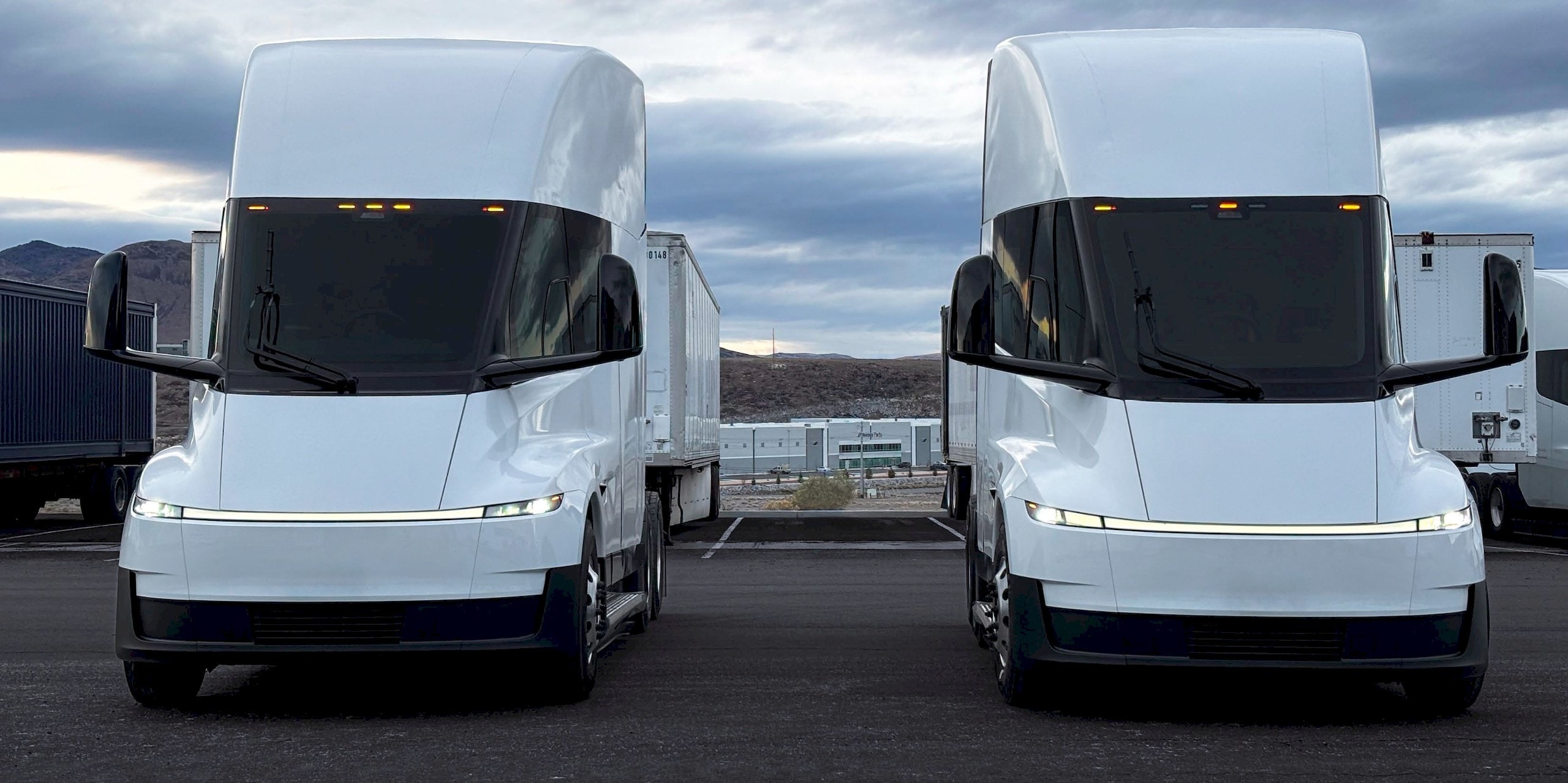
In 2022, Tesla CEO Elon Musk claimed that just one of the Semi’s football-sized motors produces more power than a single diesel engine in a Class 8 truck. That video is still up on Tesla’s site today, and the claim remains false today as much as it was in 2022. For example, the Frightliner Cascadia, one of the most common semis on the road, can be equipped with a Detroit Diesel DD13 with 525 HP and up to 1850 lb-ft of torque. You can get a Peterbilt 579 with 605 horses under the hood if you fancy it. The point here is that, yes, the Tesla Semi has a lot of power, but it’s not as huge a difference as Elon claimed it is.
Efficiency is rated at 1.7 kWh per mile, and that’s with the truck loaded to 82,000 pounds, the legal limit for electric semis. In 2024, DHL said it loaded up a Tesla Semi to 75,000 pounds and then drove it 388 miles on a single charge, averaging 1.72 kWh per mile. DHL notes that in its testing of the Semi, the trucks moved at speeds above 50 mph for almost half of the time. Logistics provider NFI Industries scored 1.64 kWh per mile in its testing. In other words, Tesla’s claims about efficiency and around a 500-mile range do seem to be realistic.

Motor Trend noted that the Semi got an update in early 2025 and then another update in late 2025. The former update had a focus on quality of life. In 2022, I reported how the Semi has a weird central seating position, minivan-style pop-out windows, and a cab so awkwardly huge that the driver has to physically walk to the back to exit the truck. The central seating position and the windows alone were a confusing decision, as it meant that drivers would not have an easy time passing paperwork in and out of the truck.
The engineers at Tesla took input from the people using the rigs for work at PepsiCo and used the feedback to make the truck better at its job. The updated Semi has windows that drop and new mirrors that offer better visibility. Here’s the old windows, for reference:

The new windows don’t solve the fact that the driver would still have to get up from their seat to reach something outside of the truck. As someone who drives big commercial vehicles, I’m not entirely sold on the central seating position as being practical. Admittedly, I’m not a career driver, so maybe there is a benefit I’m not seeing there.
Tesla also equipped the truck with a slightly smaller battery system that weighs less, but still hits the target range figures. Charging is handled through a V-shaped Megawatt Charging System port, which allows for 1.2 MW peak charging speed. That can replenish 60 percent of the truck’s range in just 30 minutes.
Reportedly, Tesla has baked the possibility of a sleeper into the Semi design. It’s unclear if the passenger seat will be changed from its current awkward position in the back of the cab:

The latter 2025 update, shown at the top of this section, introduced a new, more aerodynamic look for the Semi, plus a chassis update for greater payload. The interesting part about this update is that, despite the supposed aero improvements, efficiency remains the same.
Another change in the updates is an electric power take-off with 25 kW of capacity. This can be used to power equipment in the semi-trailer behind the Tesla Semi. The idea is that maybe there will be a refrigerated trailer that can be powered by the EPTO rather than a diesel engine.
How Much Does It Weigh?
Weight is finally a known figure, too. The Semi will be sold in two versions. The Tesla Semi Standard Range is claimed to have a 325-mile range at 82,000 pounds. The truck itself is advertised as weighing less than 20,000 pounds. The Long Range version claims 500 miles of fully-loaded range and a weight of 23,000 pounds.
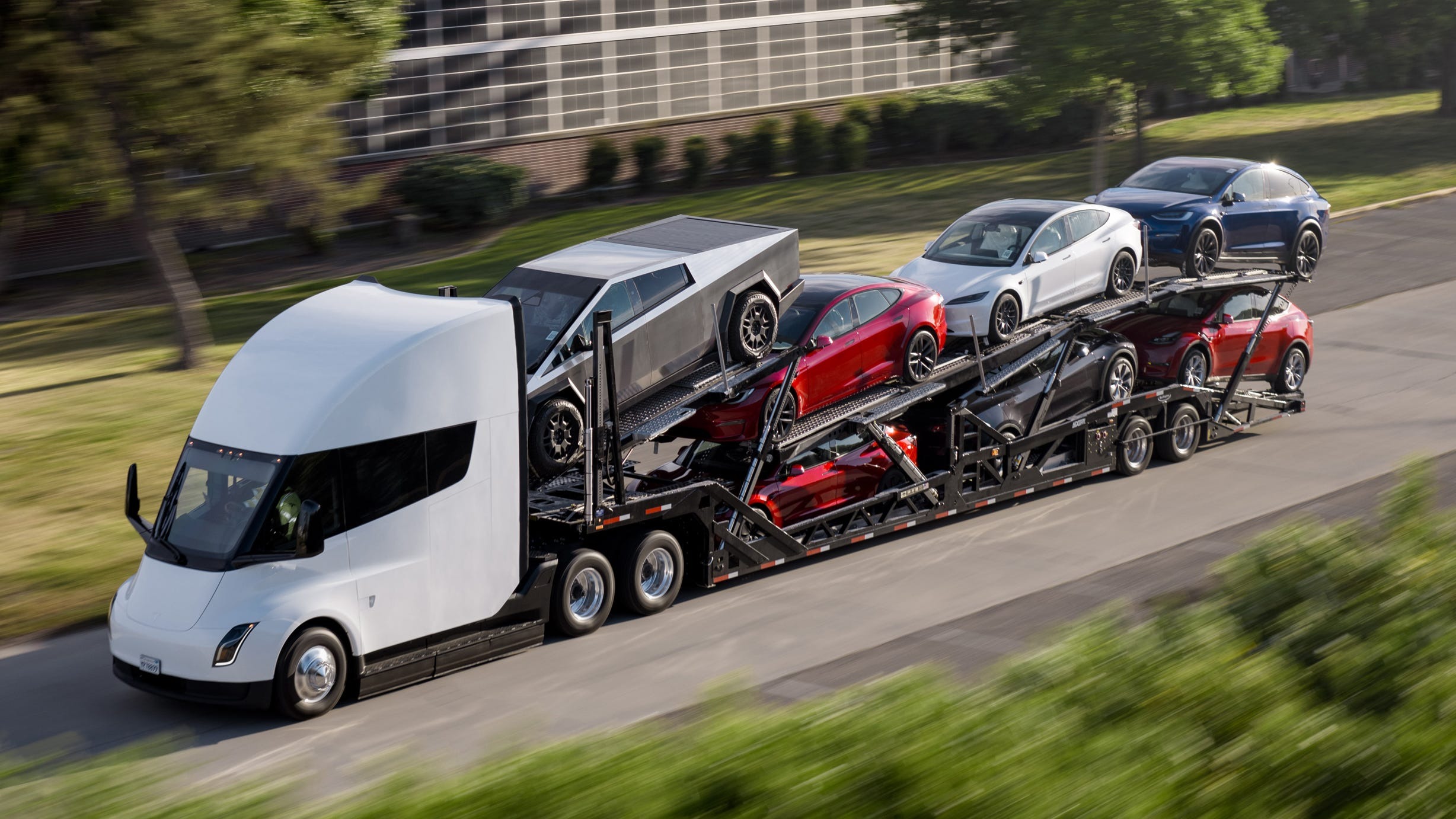
That part is interesting in itself because the tractor’s weight was a huge question. A semi-tractor that’s very heavy cannot carry as much cargo. If you have a Tesla Semi Long Range, you have 59,000 pounds left for cargo and the trailer. A diesel semi with a day cab might weigh around 17,000 pounds or so, so the Tesla Semi is a bit heavier. Some diesels with sleepers weigh more than 20,000 pounds. The government tries to make up for weight differences by allowing electric semis to have a gross weight of 82,000 pounds versus the standard 80,000-pound limit.
The Price
The other big question was the price. In 2017, Elon said that the Semi would cost $150,000 for the Standard Range model and $180,000 for the Long Range variant. The actual price? $260,000 for the Standard Range and $290,000 for the Long Range.
This puts the Tesla Semi in an interesting place. You can get a diesel semi with a sleeper for well under $200,000. For example, you could get a new leftover 2025 Freightliner Cascadia for around $175,000. You can get even cheaper trucks without sleepers. The Tesla Semi is a day cab only for now.
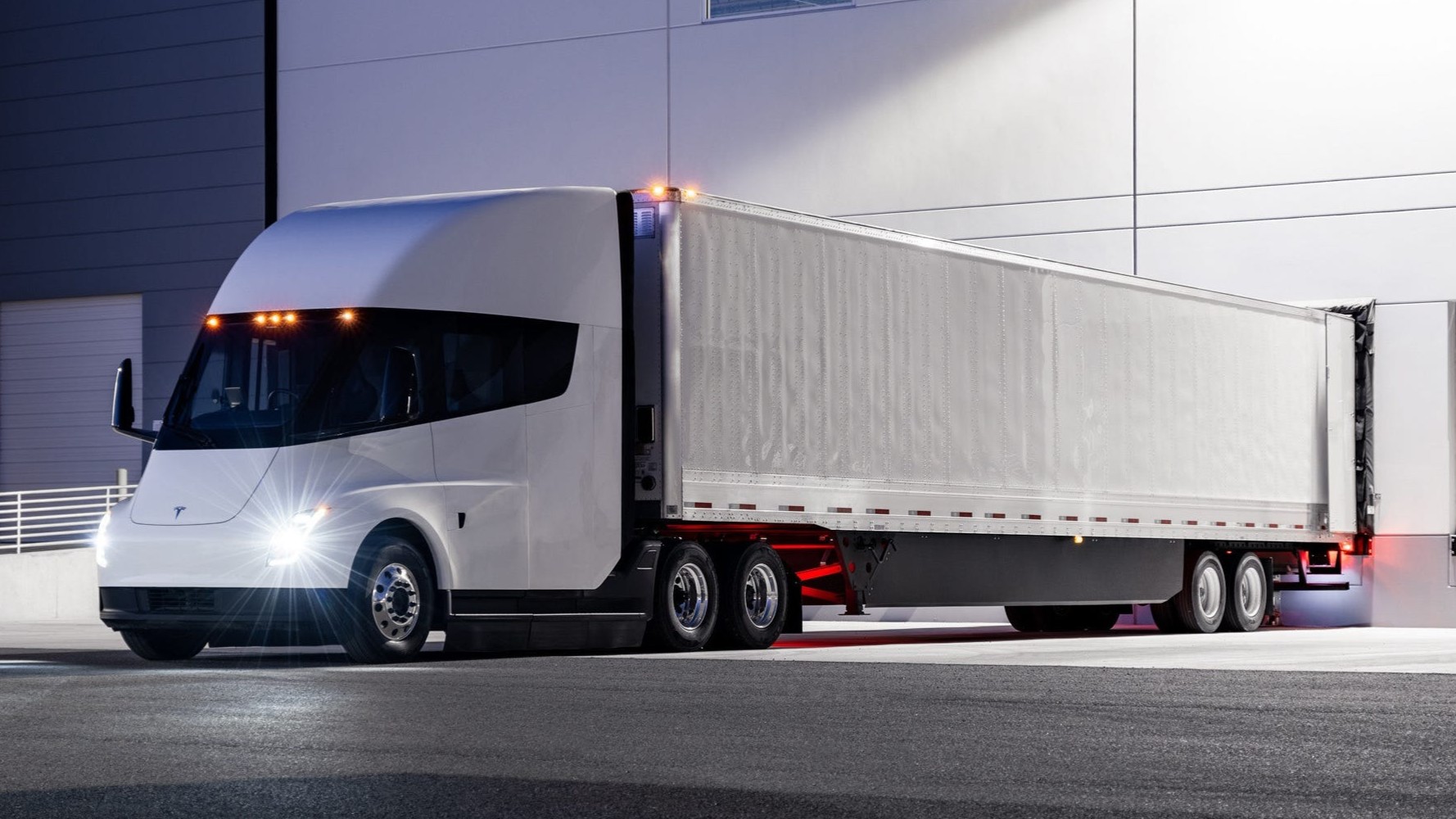
However, as Electrek writes, CARB data suggests that the average selling price of an electric Class 8 semi was $435,000 in 2024. Forbes notes that competing electric trucks cost around $400,000 and many of them don’t have the Tesla’s range. Assuming Tesla doesn’t change the price again, it means the Semi will undercut the competition.
The question, I think, then becomes which truck will be the better choice. As Forbes writes, as of now, the national average price for diesel is $3.60 per gallon, while the national average price for electricity is 18.9 cents per kWh. Keep in mind that public EV charging rates (Tesla plans on building out a Megacharger network) might cost twice the national average or more, depending on the charger and location.
I’ll give an example. Say you charge a Tesla Semi at a spot that charges 40 cents per kWh. 500 miles at 1.7 kWh per mile is 850 kWh. That’s $340 in juice before accounting for charging losses and fees. Now, say you have a diesel that gets 8 mpg. That’s $225 in fuel at the national average to travel the same 500 miles. Multiply that over time, and the diesel might make more sense to take on the long haul, even after accounting for maintenance. However, the math changes if you’re able to charge the truck at a depot and not pay for charging on the road.
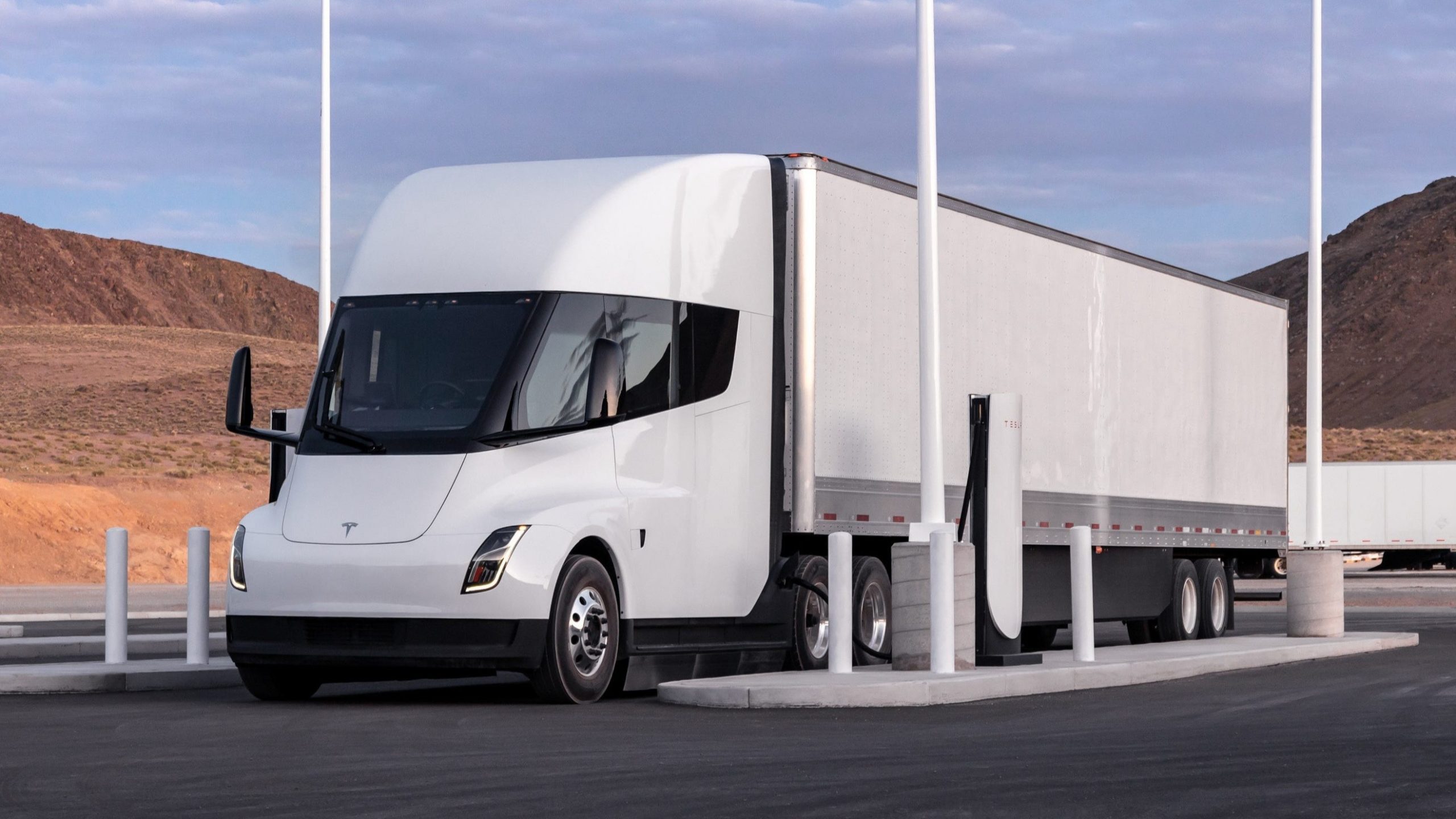
As I have written several times in the past, the trucking industry is highly sensitive to cost. The cost-per-mile to operate one of these trucks will likely be a deciding factor for many operators in either buying these trucks or how far they’ll run. As Forbes notes, DHL plans on using them for short and medium-haul routes. PepsiCo uses its trucks for local and regional deliveries.
Incentives, or the lack thereof, can also be a factor. Unfortunately, as Forbes reported, the federal government has pulled back from supporting zero-emission truck efforts, and demand for electric semis has softened.
Still, Tesla intends to “disrupt” the trucking industry with its Semi. It’s hard to say what’s going to happen with the Tesla Semi. The situation is different now from where it was in 2017. But I guess Tesla will soon find out just how many truckers want a McLaren F1 seating position in their mobile office.
Top graphic image: Tesla


I know I’m late to the game, and this is way off from anything that could remotely be seen as topical – so I figure y’all will really wanna hear it!
Is it just me, or does the face of the Semi give off Arnold Schwarezenegger in Terminator 2 vibes? Not T1, with the swoopy hair, but the T2 Jarhead cut specifically.
the real question is what are truck stops going to charge for EV juice. these truck stops know everything about trucking and all the electricity has to be is barely cheaper than diesel. It’s not like trucks can go charge at a local kroger instead. The government should probably be looking at setting some regulations for maximum prices charging stations can charge because these charging stations will “maximum profit” evs out of existance.
While they haven’t released details on the pilot with Pilot I suspect it will be similar to how Tesla does Superchargers where they just lease the space, operate the equipment and set pricing.
I think the real play is what Pepsi is doing in my area and they charge at their facilities and do day trips around the area. Ports could also benefit. It can make cities much quieter and reduce pollution quite a bit. For cross country you are right, it’s probably not going to be a big savings.
yeah Tesla is smart to release the day cab versions first but over the road long haul trucking is where you can maximize fuel savings. Unless truck stops inflate the charging cost.
22,000 lbs is less than i thought. 1.7 kWh/mile is better than i thought. My snark is retracted and I apologize.
At only 290k, this would make a great alternative platform for that $1.8mil RV greige RV from a few weeks ago.
That doesn’t sound great to me. It means they were out of service 1 day out of every 20. How does that compare to existing diesel trucks?
We run a fleet of British buses in Canada.
In 2013, we bought a new fleet at about $1.2 million per unit.
Uptime in the first year was 46%.
The buses would frequently shut down in the middle of the highway, filled with passengers.
They lasted for 6-7 years of their projected 12-15 year life cycle.
I would still buy one of those over anything with a Tesla badge, but 95% uptime does sound impressive to me.
That’s horrific. Were those EV or diesel buses?
Traditional British double decker diesel buses.
I feel like the company was trying to clear old stock so they built us buses with obsolete components.
I use the term “built” loosely. Many components were simply bolted to the bus and never hooked up. The brakes didn’t recieve one drop of lubricant at the factory. They were basically welded together at the first safety inspection.
Several buses burned to the ground.
The buses were above the legal vehicle height for our province, so they couldn’t be operated legally by private companies. I believe they all ended up going to the shredder.
I’m only just scratching the surface here.
They wouldn’t happen to have been Alexander Dennis Enviro500’s, would they?
The name rings a bell, but details are foggy lol
I don’t know much about semi trucks, but €170 000 is less, than $290 000:
https://www.truck1.eu/tractor-units/volvo-fh16-780-4×2-new-xl-retarder-full-air-i-parkcool-2xtanks-alcoa-s-a10877916.html