

The modern diesel engine is a marvel of engineering. You could walk down to your local Ford dealer and drive out in a pickup truck that has 500 horsepower and 1,200 lb-ft of torque right from the factory. However, that truck will also be laden with complex emissions systems designed to make all of that power easier on everyone’s lungs. These systems are sometimes problematic and expensive to repair. The U.S. Environmental Protection Agency wants to change that by rolling back diesel emissions rules, and, if several members of Congress have their way, making diesel truck emissions deletes legal on the federal level. One of the rollbacks is already happening. Let’s take a look.
This news comes to us in two parts that happened roughly at the same time. On the federal level, U.S. Environmental Protection Agency (EPA) Administrator Lee Zeldin announced that, in an effort to eliminate limp modes and power derates from emissions system failures, the EPA is no longer requiring Diesel Exhaust Fluid (DEF) urea quality sensors on any equipment powered by diesel engines.


At the same time, U.S. Representative Mike Collins (R) of Georgia has introduced the Diesel Truck Liberation Act into the House. Companion legislation of the same name has been proposed in the Senate by U.S. Senator Cynthia Lummis (R) of Wyoming. The Diesel Truck Liberation Act calls for a stunning unraveling of emissions regulations. The proposed Act says that, if enacted, it would remove the federal government’s power to regulate motor vehicle emissions. Then, it goes a huge step further, saying that any federal law against the tampering or removal of emissions equipment would be repealed.
Both of these actions follow earlier announcements regarding diesel emissions. In August 2025, EPA Administrator Lee Zeldin told manufacturers to stop forcing trucks into immediate limp modes for low DEF levels. Back in January 2026, the U.S. Department of Justice said that it would no longer pursue criminal charges against those found tampering with vehicle onboard diagnostics systems. In February, the EPA said that it was seeking to hold manufacturers accountable for foisting unreliable DEF systems on consumers. It was around that time when the EPA also openly considered just getting rid of emissions-related limp modes entirely.
So, these two new updates are really only a continuation of what we’ve been seeing in this current presidential administration. In essence, multiple parts of the federal government are trying their hardest to remove as many regulations from diesel engines as possible. But why? What’s with this obsession with DEF and legalizing emissions deletes?
Modern Diesel Emissions Systems Do Hard Work

What engineers have achieved with modern diesel emissions systems is impressive. Let’s go back to that Ford Super Duty that I talked about in the opener. Not only can the top spec of that truck tow a 40,000-pound trailer with relative ease, but it will do so without black smoke and without a pungent smell. You can walk right up to the exhaust, take a big whiff, and not detect the smell of diesel.
If you haven’t read my previous coverage on diesel emissions and their regulations, here’s a quick review of how far we’ve come, from my previous coverage:
According to Diesel Power magazine, the implementation of diesel emissions equipment was gradual. Back in the 2000s, buyers of trucks found an Exhaust Gas Recirculation (EGR) system in their engine bays. EGR systems reduce emissions by recirculating a portion of an engine’s exhaust back into the intake. Even your modern gasoline-fueled car has an EGR system. Next came the Diesel Particulate Filter (DPF), which is an exhaust aftertreatment system designed to trap particulate matter before it leaves the vehicle.
As emissions requirements demanded diesels to run even cleaner, emissions equipment evolved. The Selective Catalytic Reduction (SCR) was an important advancement in diesel emissions reduction technology. 2010 model year heavy diesels have SCR to meet the EPA’s strict regulations. Any light-duty diesel that didn’t already use SCR phased in its use during the early 2010s.

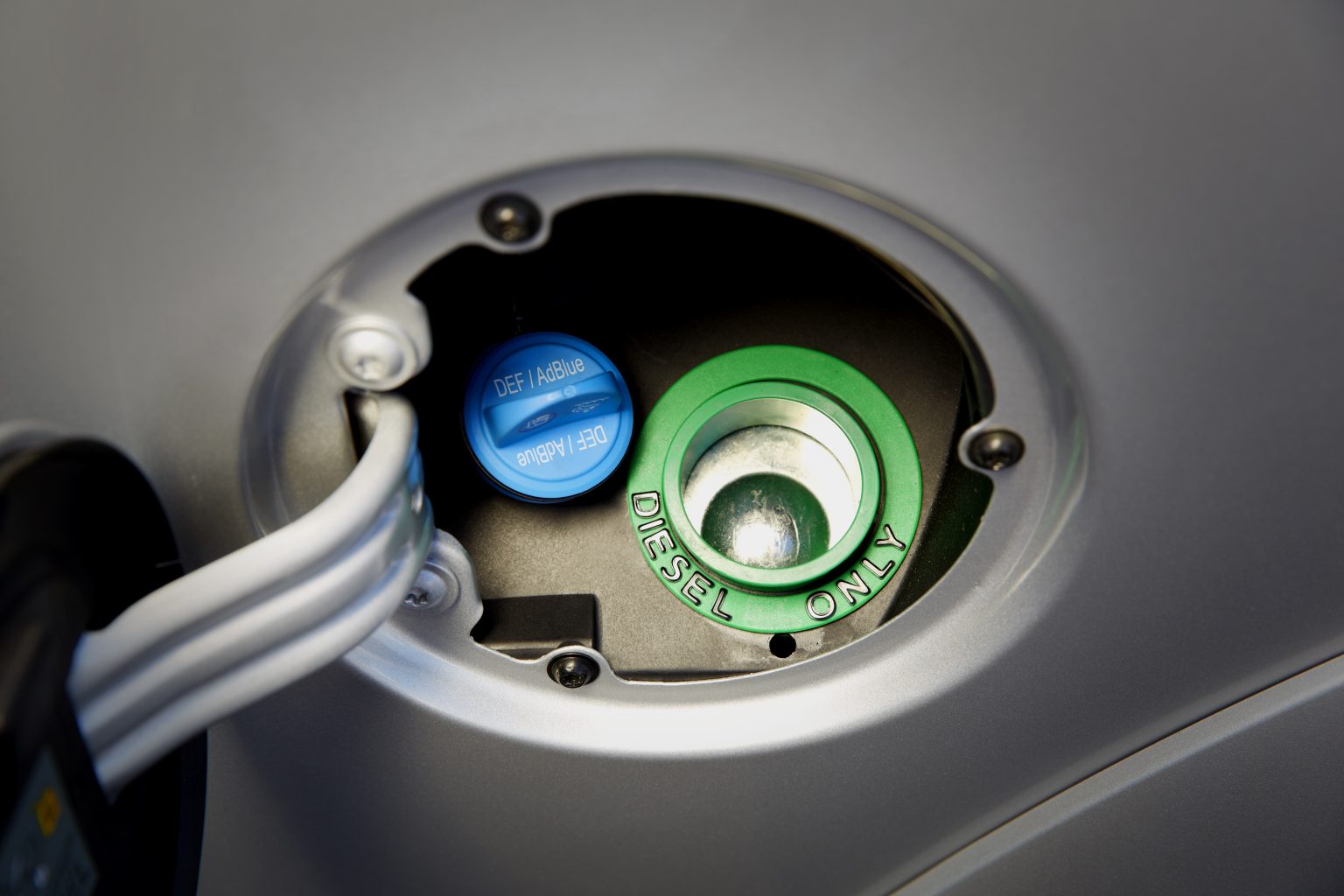
SCR uses an aqueous urea solution, DEF, fired into the exhaust to convert NOx into nitrogen and water. DEF is 32.5 percent formaldehyde-free low biuret urea and 67.5 percent deionized water.
The diesels found in today’s passenger vehicles, pickup trucks, semi-trucks, and farming equipment use multiple methods to ensure what comes out of the tailpipe is cleaner. The use of SCR has been reported to reduce nitrogen oxide (NOx) emissions by as much as around 90 percent.
Engine Derates Because Of DEF Issues

DEF system tanks have to be periodically refilled. In the past, not refilling your DEF system led to a torque derate or limp mode. A derate or limp mode also occurred if a sensor failed and your truck was no longer able to tell that there was DEF in the tank, or if the truck incorrectly believed that you had diluted the DEF.
This has been an annoyance for many truckers, pickup truck owners, and farmers because not every diesel engine manufacturer has implemented this technology in a reliable manner. The aggravating thing is that you could have an entirely full DEF tank and still go into limp mode because of a sensor failure. If the diagnostics system believes the issue to be severe, the limp mode could be as bad as leaving the engine at idle speed.
This was the impetus for the EPA establishing a grace period for DEF-related issues, be it an empty tank or faulty equipment. A semi-tractor operating under the new rules would be able to drive 650 miles or 10 hours before a 15 percent reduction in torque. A pickup truck will enter a 45 mph limp mode 4,200 miles or 80 hours after the detection of a DEF issue. Click here to read my previous story for more about the grace period.
The EPA Wants To Eliminate A Failure Point
Now, the EPA is taking this idea even further. What if your truck couldn’t go into limp mode because the failed sensor just didn’t exist anymore? On March 27, the EPA announced:
Today, at the White House Great American Agriculture Celebration, President Trump announced another decisive action U.S. Environmental Protection Agency (EPA) Administrator Lee Zeldin has taken to address nationwide concerns from farmers, truckers, motor coach operators, and other diesel equipment operators regarding Diesel Exhaust Fluid (DEF) system failures by removing the DEF sensor requirement for all diesel equipment. EPA understands that sudden speed losses and shutdowns caused by DEF system failures that compromise safety and productivity are unacceptable and problematic. While EPA continues to pursue all legal avenues to address Americans’ complaints, today the agency is implementing another part of Administrator Zeldin’s plan to help keep American operators from losing days in the field or on the road because of faulty DEF systems. EPA’s new guidance, which removes DEF sensors, will provide immediate relief and save billions of dollars in repairs and lost productivity. According to the U.S. Small Business Administration (SBA), this guidance will save farmers $4.4 billion a year and this action will provide $13.79 billion a year of savings to Americans.
[…]
“Failing DEF systems are not an east coast or west coast or heartland issue; it is a nationwide disaster. I have heard from truck drivers, farmers, and many others complaining about DEF and pleading for a fix in all 50 states I visited during my first year as EPA Administrator,” said EPA Administrator Zeldin. “Americans are justified in being fed up with failing DEF system issues. EPA understands this is a massive issue and has been doing everything in our statutory power to address this. Today, we take another step in furthering our work by removing DEF sensors. Farmers and truckers should not be losing billions of dollars because of repair costs or days lost on the job.”
The EPA says that, following its February promise to hold manufacturers accountable for emissions equipment failures, 11 out of the 14 diesel engine manufacturers that represent 80 percent of the diesel market have provided data about system failures and warranty claims. This new action is based on the preliminary findings from this data.
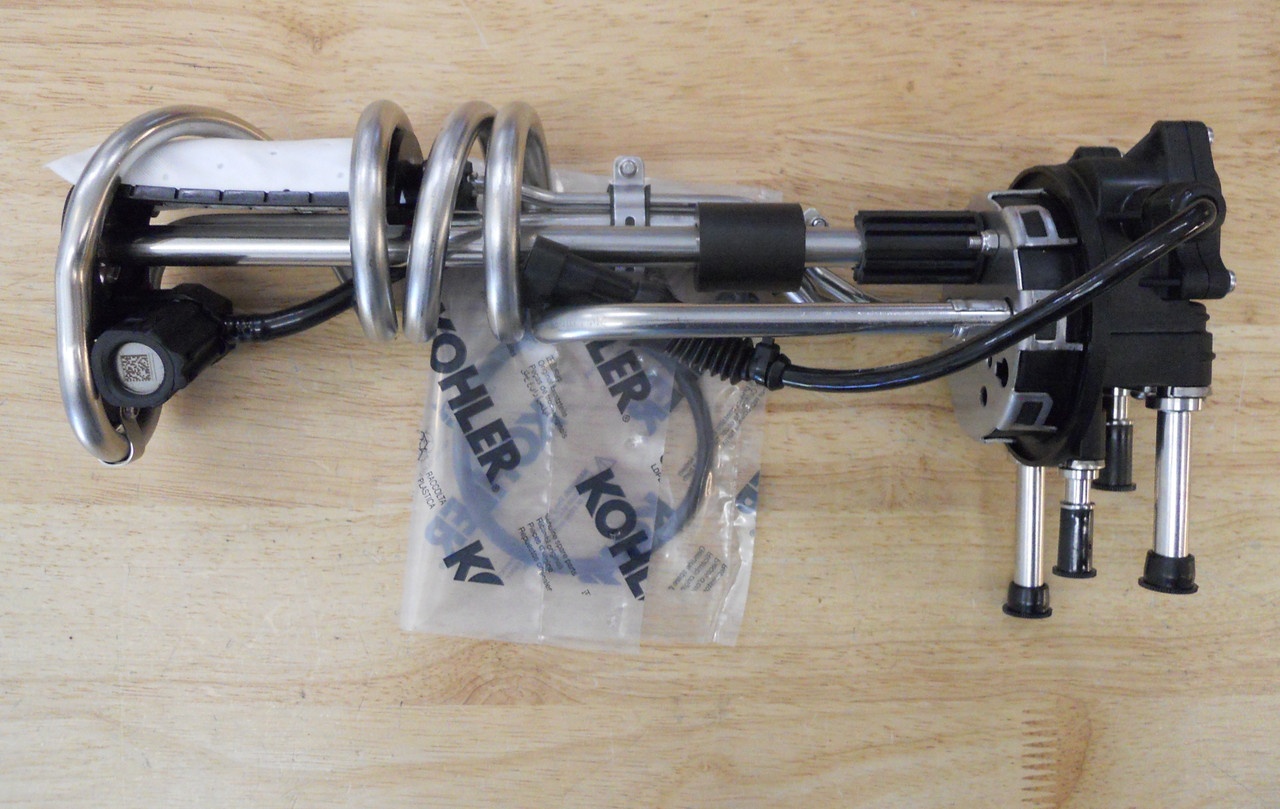
According to the EPA, one of the most common failure points in DEF systems is the Urea Quality Sensor (UQS), which detects if the DEF is diluted or is otherwise not up to standard. If this sensor fails, the diesel engine may derate. This sensor is typically found somewhere in the DEF tank. So, the EPA is just getting rid of this sensor entirely and wants to have manufacturers switch to nitrogen oxide (NOx) sensors.
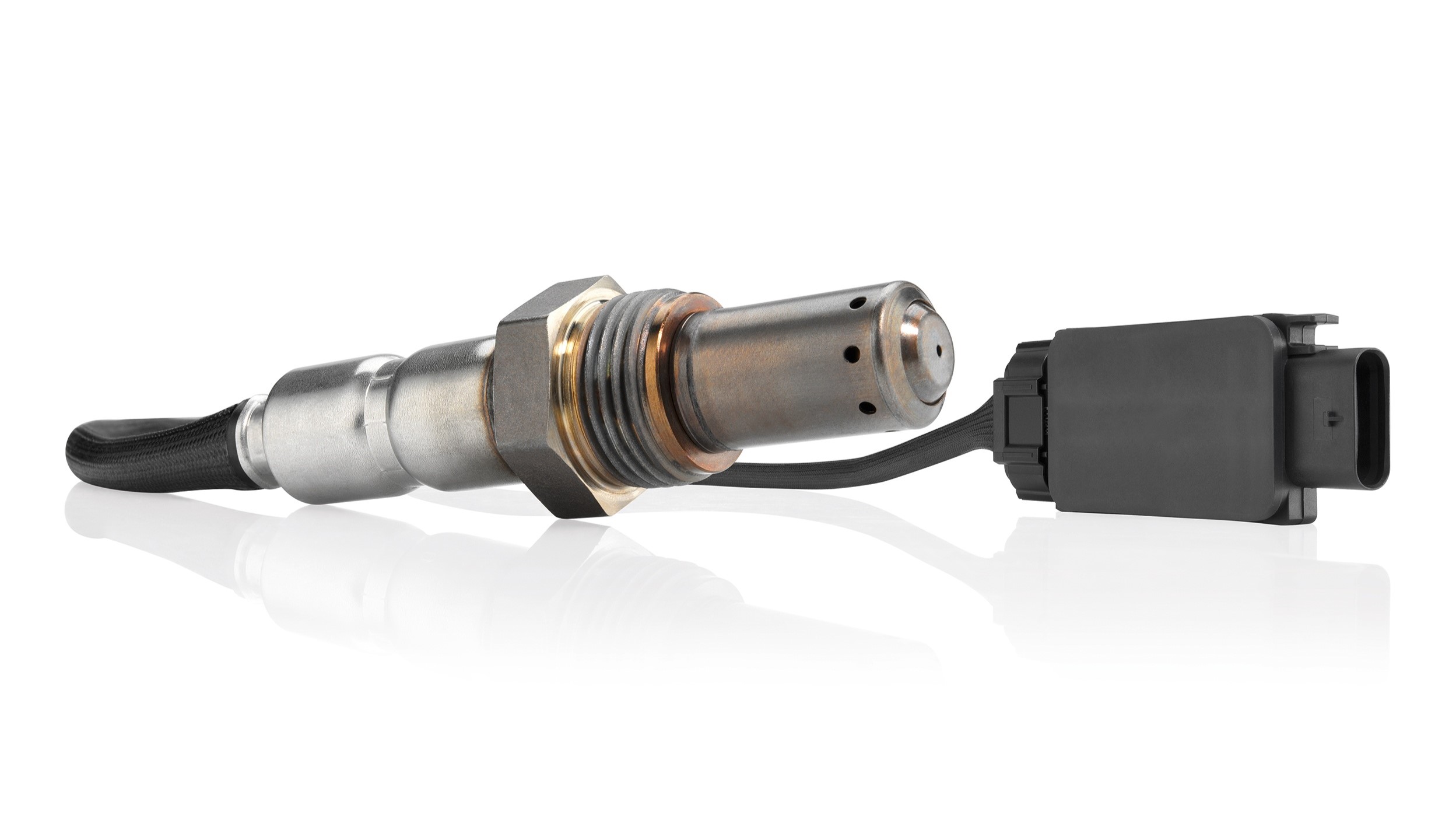
Here’s how the sensors can be used to detect DEF quality issues, from the EPA:
These strategies monitor NOX concentration in the exhaust stream and determine SCR catalyst efficiency by measuring changes in NOX across the catalyst. Significant deviations in NOX conversion across the SCR catalyst from the expected or modeled conversion rate can be an indication of poor DEF quality. In most applications, NOX sensors have been able to detect poor DEF quality for many, but not all, DEF dilution scenarios.
The EPA says it’s still studying the data from the diesel engine manufacturers to come up with permanent fixes. But for now, it thinks that just getting rid of the sensor entirely will save farmers $4.4 billion a year and “$13.79 billion a year of savings to Americans.”
What is notable is that, at least for now, the EPA’s thought about just getting rid of derates entirely hasn’t happened. Also, even with the removal of the UQS, you’ll still be required to use DEF, and your truck will still have to be equipped with its emissions system.
Legalizing Diesel Deletes?
But there’s another line of thinking among some minds in the U.S. government right now. There’s a more aggressive idea out there to just take diesel emissions regulations out of the control of the federal government while also legalizing emissions deletes.
On March 26, U.S. Representative Mike Collins (R) of Georgia introduced the Diesel Truck Liberation Act. In his press release, the Representative said:
Today, Representative Mike Collins (GA-10) introduced the Diesel Truck Liberation Act, legislation that will stop the Environmental Protection Agency (EPA) from criminalizing family farmers and truckers through federal emission mandates that do little to help the environment while driving up costs for Americans.
[…]
“American truckers and farmers are the backbone of this nation, but the EPA has treated them like criminals for maintaining their own equipment,” said Rep. Mike Collins. “The Diesel Truck Liberation Act codifies the work of EPA Administrator Lee Zeldin to free farmers and truckers from the radical federal emissions mandates of past Administrations and end the bureaucrats’ war on the working class. I am proud that we have an administration focused on delivering for the working class and putting common sense first.”
Alright, so what does this Act propose? The press release keeps it simple:
Federal agencies like the Environmental Protection Agency (EPA) have piled emission mandates onto diesel trucks and equipment in the name of environmental stewardship. However, these mandates have done little to improve the environment while saddling American workers with ridiculous costs to repair and update vehicles. Truckers and farmers who cannot afford such updates are forced to sideline their vehicles, leave the business altogether, face penalties, or even go to jail.
The Diesel Truck Liberation Act is common sense legislation that looks out for the American worker by:
– Stopping federal agencies from requiring manufacturers to install or maintain emissions control devices or onboard diagnostic systems.
– Removes the EPA’s authority to enforce Clean Air Act requirements related to vehicle emission controls.
– Protects individuals sued or prosecuted under federal law for tampering or improving emissions equipment.
– Codifies the work of Representative Mike Collins and EPA Administrator Lee Zeldin to ensure that no matter who is in the White House, truckers’ and farmers’ livelihoods are protected.
There is companion legislation in the Senate. S.3007 – Diesel Truck Liberation Act of 2025 was introduced by U.S. Senator Cynthia Lummis (R) of Wyoming. Rep. Collins is joined by cosponsors Rep. Anna Paulina Luna (FL-13), Rep. Barry Moore (AL-01), Rep. Dave Taylor (OH-02), Rep. Harriet Hageman (WY-AL), Rep. Mike Ezell (MS-04), and Rep. Tony Wied (WI-08). Meanwhile, Sen. Lummis has support from Sen. Dan Sullivan (R) of Arkansas and Sen. Pete Ricketts (R) of Nebraska.
The companion bill from Sen. Lummis states:
(a) In general.—Notwithstanding any other provision of law, including title II of the Clean Air Act (42 U.S.C. 7521 et seq.), no Federal law (including regulations and Executive orders) may require a manufacturer, importer, or distributor of motor vehicles or motor vehicle engines to install, certify, or maintain any emissions control device or onboard diagnostic system on any motor vehicle or motor vehicle engine.
(b) No authority.—The Administrator of the Environmental Protection Agency may not promulgate or enforce any requirement under the Clean Air Act (42 U.S.C. 7401 et seq.) (including a regulation promulgated under that Act) or any other Federal law (including regulations) that requires the installation or maintenance of emissions control devices or onboard diagnostic systems on motor vehicles or motor vehicle engines.
(c) No liability.—Notwithstanding any other provision of law, no person or entity shall be subject to civil or criminal liability under any Federal law (including regulations) for the manufacture, sale, importation, purchase, use, or modification of a motor vehicle or motor vehicle engine that does not contain an emissions control device or onboard diagnostic system.
(d) Repeal of regulations.—Any regulation promulgated under the Clean Air Act (42 U.S.C. 7401 et seq.) or any other Federal law related to the installation, modification, or removal of emissions control devices or onboard diagnostic systems on motor vehicles or motor vehicle engines shall have no force or effect.
(e) Vacatur; expungement.—With respect to any of the conduct described in this section for which criminal or civil liability has attached—
(1) any criminal penalty of imprisonment shall be vacated; and
(2) any record of a finding with respect to that criminal or civil liability shall be expunged.
That’s a big deal. Put simply, these senators believe that the federal government shouldn’t be able to regulate emissions and cannot do anything if you tamper with emissions equipment. This bill makes the EPA’s current actions look tame in comparison.
If you enjoy the thought of hazes of smog not returning to American cities, the good news is that there’s been a lot of talk about the Diesel Truck Liberation Act, but not a whole lot of progress. On October 14, 2025, the day Sen. Lummis filed the bill, the bill in the Senate was referred to the Committee on Environment and Public Works, where it remains today.
Meanwhile, Sen. Lummis and Sen. Dan Sullivan also introduced the Cold Weather Diesel Reliability Act, which seeks to eliminate DEF-related derates in temperatures below 32 degrees and exempt vehicles that operate north of 59 degrees north latitude from being derated. This bill recently had a hearing at the Committee on Environment and Public Works, but has otherwise not gone very far yet.
What Does The Future Of Diesel Look Like?
The EPA says its move to eliminate DEF sensors is being praised for improving diesel reliability and saving Americans money. Of course, we’ll have to wait and see what will actually happen in the real world.
As for the Diesel Truck Liberation Act, it could effectively erase the advancements in diesel emissions in America and also set our country behind the rest of the world. It’s also unclear what would happen on the state level. Would California still have its own regulations?
But perhaps we’ll never need an answer to these questions as both versions of the Diesel Truck Liberation Act have yet to go very far. Even with extremely high diesel prices, it’s not clear if there are 60 senators willing to push this forward.
I remain a huge fan of diesel power and would even get excited if some company sold a diesel-powered car in America again. However, the reason why I can enjoy a clear look at the skylines of America’s great cities is because of the advancements in reducing vehicle emissions. Maybe the answer isn’t to get rid of emissions systems, but to make them more reliable!
Top photo: RAM/DepositPhotos.com


I’m fine with this. Mostly because this:
is not exactly true. What method did BMW implement when the DEF tank is empty? The car will not start. Not derate, not reduce power. It won’t start, period.
And this particular failure point is compounded by the fact that the DEF nozzle requires a BMW-specific bottle (not gonna link to things for sale, but the PN is 83-19-0-441-139) at about 5x the price ($20 for half a gallon of BMW DEF, same price for 2.5 gallons of gas station DEF). Even worse, many dealerships do not carry this, and thus many owners legitimately will struggle to find DEF on road trips and end up stranded. The hokey solution is to just cut a bottle of BMW DEF to be able to use the nozzle and then buy off-the-rack DEF or just go over to the big rig pumps and buy DEF at the pump.
Having written that, diesel emission deletes are already de facto deregulated as emissions tests are only required in counties that hit a certain population. Where I live, only 4 counties have mandatory emissions; everywhere else (which is, granted, less than 10% of the state population) does not.
Emissions deletes and asshole coal rollers are why I stopped being a fan of diesels.
I understand there are people out there who buy diesel trucks for the status, but if you use your diesel for work, you are absolutely screwed when the emission controls suddenly stop working. When your stranded outside of Pie Town, New Mexico at 2 AM you’d gladly club a baby seal even if it didn’t mean your truck would start again.
Our new company box truck has had several issues with the def system. Commercial GC’s get pissed if you dont show up with the goods and put them behind schedule and your excuse is ‘truck broke down’.
My hot take. Diesel emission systems are complicated, and overall I support clean smog free air. The current implementation and systems are nuts. I had the ecu think a NOX sensor on my f250 6.7 went out while towing a 10k lb enclosed trailer in the middle of nowhere. The screen that reads out miles to idle will make your heart stop. It does that with any and every emissions related sensor. I have thousands of dollars in sensors stashed under my backseat
The nation would be up in arms if their car was idled every time a CEL appeared. Until you’ve dealt with the issues caused, it doesn’t really hit home. There is a happy middle ground somewhere, but the current implementation is not it.
The flip side is, why should you get to pollute more just because it’s more maintenance intensive? Wouldn’t the logical answer to be to get the gas version?
And your analogy doesn’t work, because the nation doesn’t generally drive vehicles that pollute as much as your F250 would/does without the emissions equipment operating properly.
Get rid of trucks that cause emissions. No emissions, no emissions systems to fail. It’s possible.
As a person with respiratory issues from a family with genetic respiratory issues, these senators need to have their heads held in a cloud of untreated diesel exhaust. The little town I grew up in got the highway bypassed around downtown when I was about 10. The houses closest to the highway were noticeably dirtier than houses further away and uphill. That’s changed in the decades since the bypass was built. Those houses are just as clean as the other houses. I can’t recall the last time I saw a truck with hazy exhaust. Aside from a coal roller.
I have no opinions on diesels one way or another, but I did watch a lifted F250 roll coal on the outdoor seating area of a bar last week. Wonder what they all think about diesels.
I really hate this timeline
Yeah, we really got a bad one. 🙁
Can one of your crack reporters give Gale Banks a jingle for comments on this subject? He always seemed to me a pretty sane person.
When a lawmaker has skin in the game ,like being behind a truck rolling coal frequently or living in a polluted city then they will think twice.Or having children with breathing difficulties.
I equate this with mining company owners and boards who say they won’t pollute streams and rivers .
Make the owners and board members families live downstream and have to drink the water .It makes them have a vested interest in being vigilant about pollution.
No different than a war ,it’s real easy to talk tough about it when you don’t have any personal skin or family skin in the battle.
Mercedes has the answer in her last sentence of this well researched article, fix the systems so they are less prone to breaking.
If we can send people to the moon we can certainly come up with a system to scrub diesel so it isn’t ruining our health.
To quote Logan Roy: You are not serious people
Yeah, with the price of diesel fuel these days, if the government wanted to do something useful, make it so that trucks don’t stop running just because there is no fuel in the tank. Or oil, that stuff is a pain in the ass too damn it, and just because something is broken shouldn’t keep you from driving either.
Hell yeah! This is exactly what I voted for!
The car community is so full of stupid hypocrites, all complaining when they can’t get tuning and parts for Subarus or Hondas, but will lose their shit over people doing clean deletes on diesels.
You voted for gross pollution?
SO many do, they see pollution as ‘”manly” or ” anti-woke”, so sad.
See, you’re perfectly illustrating my point. No one who actually understands what the proposed bill entails could possibly come to that conclusion.
I’m mainly calling out the hypocritical car enthusiasts, who will fill up forums complaining about how they cant get tunes for common performance cars, but then bash a minor common sense change to federal diesel emissions regs.
What exactly is a clean delete? By definition, deleting emissions control equipment from a vehicle will increase tailpipe emissions. The lack of visible smoke DOESN’T mean that diesel exhaust is clean.
Yeah, to an extremely minor degree. Deleted diesels are passing “tailpipe tests” in states that use them. The extremely minor increase in one vehicle that drives maybe 15k annually, would be more than offset by the elimination of the ridiculous DEF industry (do some research..). That involves fleets of semis doing 100k+ annually, and thats only for distribution.
You do realize that the whole VW “dieselgate” thing was over wildly excessive NOx emissions, and DEF/SCR is a key strategy used to control NOx emissions, right? So if the DEF/SCR system is deleted, the engine will emit an order of magnitude more NOx pollution compared to the limit under which it was certified.
BTW – I hold the ASE A9 LD diesel certification, so I do have a pretty good understanding of how diesel engines and their emissions sytems work.
Well aware. I have owned and still own several dieselgate VWs, all deleted.
If you’re concerned about NOX output, why have an entire industry, complete with fleets of class 8 trucks, to supposedly slightly reduce NOX output?
Twice now, you have used the word “slightly” when describing NOx reductions through the use of DEF/SCR. Sources indicate that the NOx reduction with DEF/SCR is 70–90%. I wouldn’t consider that “slightly” reduced. If your pay were cut by 70-90%, would you consider that a slight reduction? Diesels with deleted emissions controls may emit 7-10x more NOx than a correctly functioning vehicle.
How Much Pollutants Does DEF Cut Down in Newer Diesel Engines?
Surely “California’s #1 DEF manufacturer” would be a completely unbiased source to cite ….
The study at West Virginia University that uncovered VW’s diesel NOx cheating strategy showed that the on-road NOx emissions were 35X the lab test results (also 35x the legal limit). Once again, I would not consider that to be “slight” difference! If a DEF/SCR system is disabled, the result will be a HUGE increase in NOx emissions from that vehicle. Here’s a graphic novel which makes this topic easy to understand:
ICCT_Finalist comic_lower version.cdr
Lol… The international council on clean transportation huh. See, understanding the topic isnt my problem, its that I (along with plenty of highly credentialed folk), fundamentally disagree on the effects of NOx emissions. Along with that, the supposed benefit of SCR/DEF systems is basically offset by creating more emissions. Its a poor system, an ineffective band aid at best.
Ultimately, I will agree with anyone in these comments on the fact that we dont want a toxic cloud over our skies, but the propoesed changes, I fully believe, would not even come close to that result. I’d love to see automakers continue to develop more efficient, cleaner engines, and plenty of prototypes indicate that is a realistic possibility!
Inside the SCR catalyst, ammonia reacts with NOx to form harmless nitrogen (N2) and water vapor (H2O). So you don’t believe that this is true? That N2 and H2O are harmless? Is there excessive slip of ammonia? This sounds a lot like tobacco companies denying that their product causes cancer, or petroleum companies denying that CO2 causes global warming.
in the business we call this “showing your whole ass”
If you had any understanding of modern diesel emissions systems, and how truly ineffective at their “job” they are, you might remove your head from your ass…
Maybe the answer isn’t to get rid of emissions systems, but to make them more reliable!
Mercedes last sentence makes the most sense.
Useless idiots.
Can VW get their money back?
Can I get my Sportwagen back? I loved that car. They literally took it from me during a dealership visit, and sent me out the front door with a check in the mail for my troubles. I wanted to buy out my lease. I’d still be driving that thing today.
I know this is technically about diesels, but I can’t help but notice that the wording of the bill is ambiguous enough to technically also cover Gas engines, along with giving a giant loophole to remove OBD-II requirements altogether.
Is that their end goal here, you think?
I don’t see how removing the requirements would really do much more than make it open season for the engine control systems to become significantly more opaque.
Imo, if OEMs no longer have to support OBD-II, how in the heck are people supposed to diagnose anything?
I still remember working on OBD-I and pre-OBD vehicles, and you needed a ton of addons for your scantool, and _if_ you were lucky, you could get sensor data that helped. Standardization was a very good thing in this case.
Not to mention the thousands of engineers who work across the world on on-board diagnostics who would suddenly be out of a job, nor all of the work that’s been done to advance diagnostics (SAE / ISO technical standards and committees) and sensors since 1996.
I was part of that scene for a few years; there’s a boatlpad of extremely intelligent and well-meaning individuals who spent their careers advancing Onboard Diagnostics all around the world. A big point in the committees was to try to make diagnostics easier for the end technician, especially with the advent of Right to Repair.
That said, I’m a big proponent of R2R in all industries; Having to use an OEM scan tool to adapt something like fuel injectors or glow plugs after swapping parts is totally scummy, as is forcing a mobo swap for, say, a popped resistor.
I know this kind of crazy stuff is par for the course these days, but man I don’t like feeling all tinfoil hat about ulterior motives when I read this.
Good article, nicely laid out and explained!
Great! All that junk has done is raise the price of everything we buy and use. Farmers will be able to fix their own equipment and truckers can just drive with peace of mind knowing they won’t get stranded. Worry about india and China if you want to talk about emissions. Our problem was fixed long before they enacted this nonsense in 2008.
Sigh… the line between law-makers and law-breakers gets thinner by the day.
Petition to change their name to the Environmental Destruction Agency.
Okay, as long as the sponsors of this bill can be held personally responsible for ever future case of asthma in a child, or every inch of sea level rise.
In fact, just start garnishing their wages now to create a fund for futures use.
DEF is problematic. They seem to use a spray and pray system allowing crystals to form in places they shouldn’t. Allowing those systems to be removed especially on farm equipment is for the best. The manufacturers should have to provide software updates too. Maybe that’s the best way just turn the system off. If they want to remove it it’s on them. EPA pushed to far a few years ago with the people just getting trucks to run and now people have pushed back. The euro dpf stuff makes decent sense they get plugged but can be removed from most things fairly easily and cleaned. People have been holding on to non def stuff for a while many will upgrade to a def deleted system that probably runs cleaner then their current system.
I hear this from our industrial facilites, particularly for machines that idle a lot. Also we have had DEF supply issues: it’s better to buy the consumer jugs than industrial size barrels. I agree with the principle, but the implementation and reliability have been a bit haphazard. Frankly, I wish most of these machines were diesel-electric, similar to a locomotive with a hybrid type battery.
I cannot condone rolling coal.
Diesel electric seems to be on the way. Especially without def. Though those windrose trucks now running around the sun belt are quite fascinating.
Rolling coal is mainly just bad tuning now. People that ruin trucks like they do now with those stupid rubber band street wheels and giant rims it’s hardly shocking. Idiocy will always win on that. Ironically the primary offenders that think it’s fun seem to be interested in cyber trucks now days.
I question if the smell of def and it’s compounds especially after injected are really all that great for you either. You can really smell it when they are throttled up. Urea is also a great source of nitrogen for fertilizing plants. Most fertilizers are problematic for air quality too. We appear to be in the snake or mongoose of the a rat problem I think.
I suspect diesel/electric/hybrid is the mid-term future for OTR trucks, farm and industrial equipment. Honestly surprised it has taken this long considering the RR success over the last 80 years or so.
Motors and power electronics have come a long way I suspect that was the big hold up. I’ve seen some diesel electric stuff for construction and otr but not much with farm yet. Its already gotten to the point an electric hydraulic pump is cheaper then a pto pump for many applications especially if it’s high flow isn’t needed.
We have a few hundred material handlers/grapples and 36k plus forklifts nationwide. These seem ideal applications for D/E/H. You often hear the diesel scream just to run the hydraulics. Insane in this era. A hybrid system is what we need, since many units idle a good portion of a shift just running heat or A/C for the operator. You can’t just shut them off either, you then lose A/C which is critical in the deep South in summer, let alone our more northern plants. You try sitting 8 hours in a phone booth size glass cabin in the sun in Alabama without A/C.
Material handling seems to be where cat is going hard into diesel electric. Electric or diesel electric big forklift and telehandler would make a ton of sense too. Chinese run mining equipment all on electric and batteries. That’s starting to get into smaller stuff. I’m sure you can get an electric tractor or combine there if you want. Sany has electric telehandlers but I don’t think they are bringing them to the us yet.
Just mandate a lifetime warranty on the systems. That will make the manufacturers design them to ba durable and easy to service.
The EPA mandated that gas engines be tested to 150,000 miles and everybody won. Likewise, the power that is common in gas engines would not have happened without closed loop technology mandated by the EPA.
The side effect would be that it would get more expensive, and in the short term, issues with getting warranty work done in a timely manner. Some manufacturers might drop diesel entirely
I think having an NOx sensor is a pretty good compromise, even though that has its own caveats. If these bills are meant to curry favor with farmers from swing states, I think a better approach would be having a less severe emissions requirements for diesel-powered farm equipment
Farm equipment has a lot less severe packaging problems. It’s the manufacturers who are screwing things up by locking down repair.
If it was just a matter of unbolting a standard sensor from an exhaust bung, or a def tank, and popping in another from the NAPA store, it would be no problem at all.
Right to repair would get vastly more support, this is just a tiny subset of the problem that happens to be politically popular.
CARB 2024 and EPA 2027 greatly increase the warranty periods for for emission systems. Yes, it cost more upfront but nobody dropped out of the market. It is also far cheaper than replacing a DD13 onebox 3 times in the life of the truck.
There already are less severe emission requirements for all off-highway equipment included farm equipment.
Are they nuts? What kind of dystopian world did I wake up in today?
Today?
Thanks, that was my reaction too. It’s been a while now.
“Are they nuts?”
Yes… The Crooked Trump administration is completely nuts”
Well it doesn’t have to be nuts or stupid or evil, they can be all three.
The Federal Government is the United States HOA.
Sometimes people need to be told to do the right thing.
I see legitimate arguments on both sides. Let’s see if you can find the middle ground.
There is zero argument in favor of avoidable pollution.
How much pollution does the global supply chain create?
How much pollution do emissions systems that need replacement under 100K miles create?
We’re all against pollution, it’s just a matter of degree and location.
Visible pollution sucks, just like visible violence sucks, but if you asked me if I’d rather watch one person die or have a million people die somewhere and I never witness it I’m going with the first option.
Which child of yours are you nominating for the honor, Senator Graham?
But it isn’t mutually exclusive; there isn’t an either/or. We can work to prevent pollution both domestically and abroad at the same time. We don’t have to roll back our emissions standards because other countries pollute more.
Never said we had to, rather we offshore and or move pollution out of town with disposable crap, which includes modern diesel emissions systems, and people act like it’s cleaner because the pollution isn’t from one source locally, but instead a ton of sources outside their local whether in their country and or international.
If you think diesel trucks smoke look at the heavy oil burning cargo ships
I don’t think modern diesel emission systems are making much pollution somewhere else.
It’s just ammonia and water, high grade pee really. It’s the same stuff farmers around here buy 40,000 gallons at a time, except that they buy pure anmonia and add the water, or buy solid fertilizer with more biuret.
DEF fluid is a tiny tiny market compared to ag chemicals.
I’m more referring to all the crap that goes bad way way before the engine does
Now that you mention it, ocean transport is roughly 10 to 20 times more energy-efficient per container-mile than road transport.
Trains are about 4 to 5 time more efficient.
Also now that I think of it, ammonia is supposed to be the next big thing for heavy ships, and it’s carbon free depending on how it’s made.
Ammonia powered cars would scare the hell out if me though.
We pretty much need to do both
Now that you got your knee jerk reaction out, go back and read all the comments. Find the reason why many are glad for the change. (Technical reasons, not politics) Then come up with a solution that fits both sides.
Didn’t feel like looking for a solution? It’s ok. Caleb Jacobs over at The Drive did.
The problem is that urea quality sensors fail—often. Manufacturers reported many such problems to the EPA as part of customer warranty claims. And when these sensors fail, they throw everything into turmoil, whether that be causing poor running conditions or complete engine stoppage.
What the EPA is saying with this letter is that manufacturers can use other methods to detect proper urea concentration without getting in trouble. Not only that, but third parties are able to remove existing urea quality sensors without being guilty of tampering under the Clean Air Act, so long as they’re replaced by an effective solution.
Switching to a closed-loop system where they measure the actual pollutants is reasonable. I would support that for all vehicles.
Allowing new technology retrofits to older vehicles would also be a good idea.
Replacing carbs and air pumps on older cars with closed-loop EFI and catalytic converters ought to be legal too.
They were selling EFI for carb engines back in the late 80’s for the off road crowd.
It is legal to replace carbs on and old car with an EFI system. You just have to buy a certified system.
Not in California.
I just checked for a Jenson Healy, it seems like downdraft 4 four barrel and Rochester two barrel type carburetors are all that’s available.
Thinking that maybe Lamborghini owners might have enough money that somebody would make a kit I checked, but nope.
Sticking an injector into the manifold and using a Webber or Delorto or SU as a throttle body isn’t allowed.
Here is one: MSD Atomic EFI Throttle Body Kit
https://www.msdignition.com/products/atomic_efi/atomic_efi_tbi/parts/2910
With the CARB Executive Order: C.A.R.B. EO # D-722
Which says:
Aftermarket CARB Executive Orders are here:
https://ww2.arb.ca.gov/applications/aftermarket-parts-database
Yeah, I’ve seen a bunch like that. Fine for V8s,
I haven’t seen anything for any non-American cars
Actually, they seem to be all for GM V8s
I haven’t seen a certified system for anything I’m interested in.
Something like this is what I want
https://www.classicfuelinjection.co.uk/su
but certified.
There is a big difference between something being illegal and the market being so small that no company bothers to make the product.
The product in your linkvery likely would be legal if someone bothered to do the certification.
MSD also has Ford kits. Mustang, Bronco, F-100
My point was that only the big brands can be done legally. It doesn’t seem to be about actual pollution,
It absolutely is about pollution. That is why CARB requires manufacturers to prove their parts meet emission regulations and require owners to maintain their vehicles.
Even a perfectly stock old car from the 80’s is a gross polluter putting out many times more pollution per mile compared to a modern car.
In California:
If it was about pollution they would test for pollution rather than going by visual inspection, and would allow for owners to upgrade to a modern 3-way catalytic converter closed loop system.
They require you to continue to use old broken NLA parts even if they could be replaced by better new parts.
Owners are allowed to upgrade, modify, or do engine swaps. Follow the rules and it can be done. No doubt options are more limited for oddball cars without much volume.
The old fashion sniffer test equipment only found gross polluters. Adding real emission testing equipment to hundreds of locations would be astoundingly expensive.
Sorry but they aren’t just going to allow people to do whatever they want. If the cost of maintaining old emission systems leads to people scrapping old cars and moving to something newer that is a net gain for the people of California.
Make the manufacterers responsable to sell reliable equipment and repair it for the life of the vehicle.
Easy
Also make it easy to reach and repair in the field by the owner using basic tools.
The CARB MD & HD NOX Omnibus waiver that the the feds are trying to kill did that. Not forever but for hundreds of thousands of miles. (270K – 800K miles depending on the truck class)
Exactly.
Which is why painting this as pro consumer is totally BS.
I think I might become a Diesel Truck Liberation freedom fighter. Just me and boys holed up at local Irving fighting for the future of 7.3 Powerstroke. Maybe we’ll break off into splinter groups. You know those Duramax, always thinking they control The Free People’s Diesel Truck Liberation Front. And don’t get me started on those Cummins Path people.
Splitters!
30 years ago a college friend drove an ’85 Suburban with a 6.2L diesel. We laughed then about the Spy Hunter smoke screen that erupted upon hitting the throttle. Looking back on it, not cool at all.
We all (hopefully) grow up.
The Cummins Path is a slippery slope for sure.
It’s more than an annoyance for farmers, partially due to it tying into right to repair but also harvest seasons. In a lot of areas you and all the farmers around you are mostly farming the same stuff and because of that you harvest around the same time. That’s when the machines get worked the hardest and experience the most failures.
With farmers no longer allowed to fix their machines themselves due to the software not allowing unofficial installs of parts they need to take it to the dealer or have a dealer tech come out to the farm to do the fix, but so does everyone else harvesting in your area, and many of these tractors need a goddamn semi truck to move them. So now you’re stuck waiting, burning time you don’t have to lose, to harvest in a week or two max, all for an absurdly low profit margin.
Rolling coal nor adding tons of power to diesel engines has interested me ever, back when I was into diesels is was for efficiency, but I did not consider any new diesel stuff because while the engine may last a million miles the emissions systems certainly won’t, nothing mandates the automaker to continually support the emissions systems used cars still being driven and the aftermarket options are usually shit.
Pretty sure on a MB Sprinter you need to pull the whole engine to replace the major bits in the emissions system, and that’s like every 70K-80K miles maximum.
At 80K miles per emission system replacement that means you gotta have the engine pulled 12 times before you hit a million miles.
I got friends who are truckers and semi truck mechanics and the overwhelming majority of the trucks in the shop are for emissions systems related problems.
Another think to keep in mind with DEF are supply chain issues. Back during COVID Australia was running out of DEF since they got basically all of it from China, and so otherwise perfectly functional diesel engines wouldn’t operate due to a lack of DEF brought on by something completely out of the control of the diesel truck owner.
I love BEVs, I wish I never had to buy an ICE vehicle ever again, however that is not the case. Current EV trucks are severely lacking in many areas completely unrelated to the drivetrain, we have no REVs currently on the market in the US, and those on the horizon are LIGHT DUTY ONLY!
So yeah, diesel sadly is still here, but due to the emissions shit I won’t touch a new diesel with a 10ft pole, which I suppose does a lot to reduce emissions since I’m not driving it, however with my needs I could get by with a modern light duty truck, and the only reason I didn’t buy a BEV pickup is that I couldn’t get a bed cap for it, that’s it. GM in their infinite wisdom only had bed caps made for the Work Truck trim of the Silverado EV, and OFC they don’t work with the 99% of other trims due to said trims having the passthrough!
Now I got a Ram 1500 Big Horn Crew Cab Long bed 3.0L I6 with the 4 corner height adjustable air suspension and 6 seat interior on order. Why? Because I want seating for 6, 4 corner height adjustable air suspension, and a long bed with bed cap or passthrough bed with bed cap.
None of those things require an ICE drivetrain to function, yet I cannot buy a BEV in the US with the above options, so guess which poor bastard has to go back to ICE after 2 years of being a BEV convert.
We don’t need more electric cars, we need more good cars that happen to be electric.
I understand, there are some complexities here.
I think it would be important in law to make a distinction between an actual farmer, and an asshat with a lifted-brodozer on wide but low-profile tires, who rolls coal cause it’s funny to them or something, or even someone who uses the truck to commute, the latter two should have emissions equipment of some kind.
Most pickup trucks would be unusable on lots of farms.
In NY you can put ag plates on a truck and meet very lax standards. The only catch it you can only drive it between properties you farm. My friend with a big farm in the Hudson valley also happens to have property near Montauk and near Buffalo, so he’s pretty much in the clear even in Brooklyn.
He also used to drive on a Polish driver’s license because it was valid for life until it was pointed out that although he was still alive, Polska Rzeczpospolita Ludowa was a defunct country.
Well, the minimum number of any machine for farming is three. Two to use and one in the shop. When tomato harvesting was mechanized the UC-Blackwelder machines cost about $200,000 in 1965. If you had one machine and it broke during harvest, you went bankrupt. Using one machine and maintaining a spare cost too much, so the minimum investment in tomato harvesters was about $600,000 in the late 1960s.
Interesting article I linked to, mentions some of our neighbors. BTW the whole tomato harvester thing that pushed out all the small farmers was the end of allowing Mexican laborers to cross the border freely for six weeks of work and go back to their families. We had an entire village, including the mayor come every year, they were great.
If the manufacturer didn’t let the farmer repair the machines, it would have all failed. Back then, the farmer was expected to have their own machine shop.
“With farmers no longer allowed to fix their machines themselves”
This seems like the key issue that needs to be fixed more than the emissions gear.