


My grand thesis out of the automotive industry, espoused many times in The Morning Dump, is that the most pivotal and yet under-appreciated force in the car world is currency. The ability to build cars in a cheaper currency and sell it in a more expensive one has been to the great benefit of carmakers from South Korea, Japan, Mexico, and now China.
With President Trump refusing to sign the United States-Mexico-Canada Agreement and otherwise prioritizing US production over the supply chain built up between the three North American nations, he’s made it harder to compete with Chinese cars. As proof, look at how well Chinese cars and trucks sell in Mexico, even after the country pushed for higher tariffs to slow down Chinese companies.


Ford’s Jim Farley agrees, which is why the company is still putting money into Canadian production. This isn’t to say that there isn’t a place for production in the United States, and we’ll certainly see more of it, with Honda possibly expanding.
In sad news, the automotive journalism world lost a great voice last week.
Chinese Cars Now Account For About 17% Of Sales In Mexico
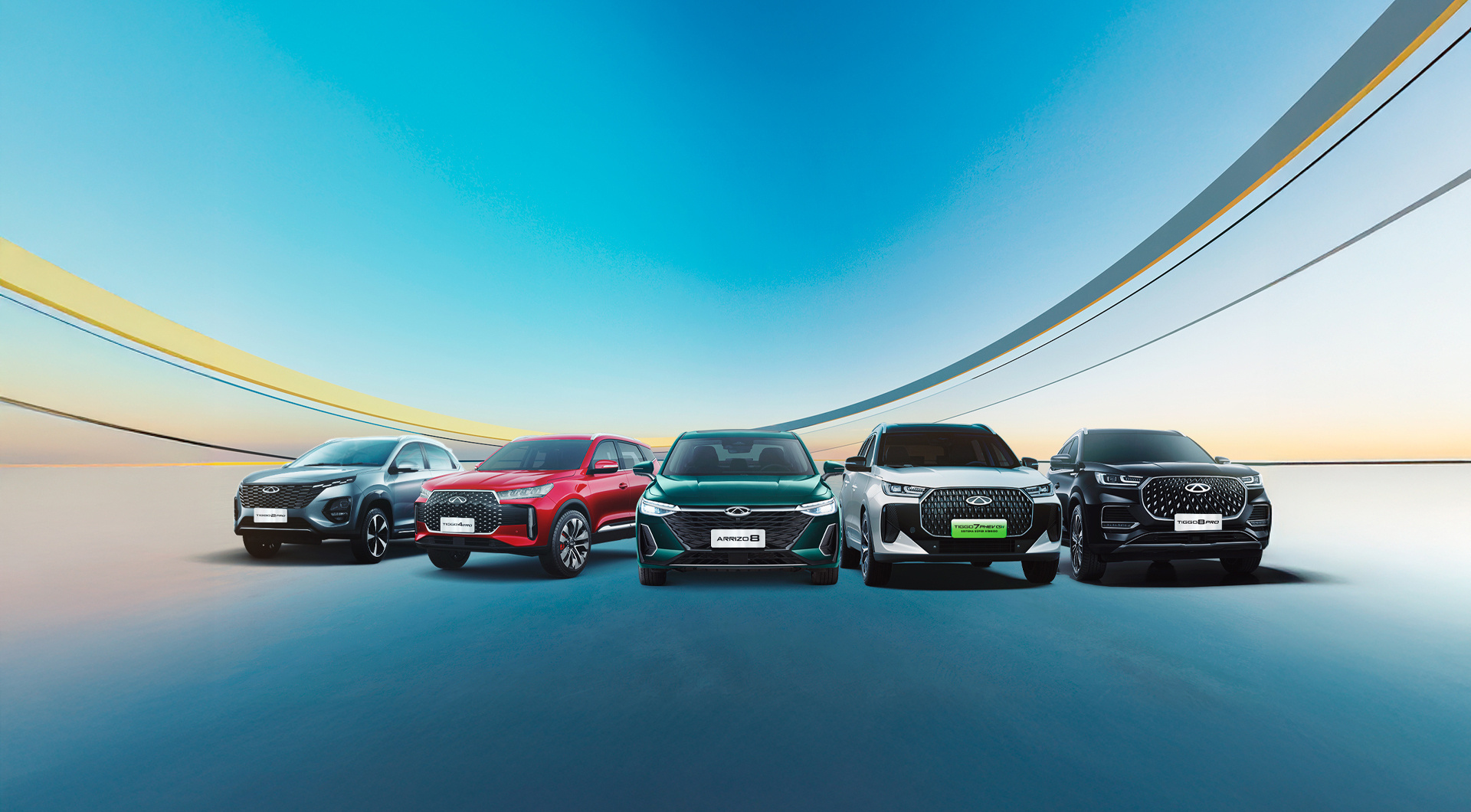
Mexico was the first North American market to open itself up to Chinese car sales, and the result has been incredible. I remember visiting my family in Texas a couple of years ago and marveling at the number of Mexico-plated Chinese cars I saw.
Automakers in China have a number of advantages, especially on cost, and Mexico is a market that’s dominated by affordable car choices. Understanding the threat posed by Chinese automakers to the general North American car market, Mexico has largely sided with the United States. After a massive freak out by American automakers and legislators, the Mexican government made it that much harder for Chinese companies to build plants there (a move seen as a prelude to entering the American market).
More recently, Mexican authorities leveled their own tariffs against Chinese cars. What’s happened since those tariffs went into place? Chinese car sales jumped by 30% in the first half of the year. This is maybe a little misleading, as authorities tell Reuters:
Mexico’s Deputy Foreign Trade Minister Luis Rosendo Gutierrez told Reuters the sales data is misleading because Chinese automakers began the year with sizable inventories in Mexico after front-loading shipments ahead of the tariff increase.
The real impact of the tariffs, he said, is evident in a 43% decline in imports of Chinese-brand vehicles during the first five months of the year compared with the same period last year.
“What’s important is not the sales figures. What’s important is that the measures have halted imports of vehicles from Asia,” Gutierrez said.
It’ll take a while to figure out exactly where Chinese brands land once they run out of pre-tariff imports and costs (maybe) rise.
‘A Revised USMCA Is Critical’ Says Ford CEO After Signing Deal With Canadian Workers

Trade and economics are complicated topics. On the one hand, a nation requires a lot of manufacturers to keep people employed and for national security. On the other hand, it’s beneficial to move up the ladder of industrial sophistication so your citizens enjoy both robust employment and cheaper goods (see my thoughts on Ricardo’s Law of Comparative Advantage).
What happened with the United States, if you’ll allow me to be glib and oversimplify things a lot, is we climbed super high on the ladder of industrial sophistication and reached the place where we had a lot of service sector employment (and hollowed out the industrial parts of the country, leading to a populist backlash and all sorts of other negative outcomes). The pandemic showed the shortcomings of this strategy.
By opening up trade with Mexico and Canada via NAFTA, the government arguably made things cheaper in the United States but at a cost (though, I’d argue, opening up trade with China was the biggest shock). The USMCA, put in place by President Trump, was designed to cover for a lot of shortcomings in NAFTA and make trade a little fairer. It largely worked, but amid all the tariffs, President Trump has made it clear he’s largely against renewing it (much to the chagrin of automakers).
While Mexico has made a lot of concessions to the United States, Canada has gone in the opposite direction, and responded to an increasingly bellicose foreign policy by inviting Chinese automakers into the country.
With a contract deadline coming up, Ford has signed a new $499 million deal with Canada’s Unifor union to keep building engines, big trucks, and to eventually expand. Ford’s reasoning comes via Bloomberg:
“This agreement is about investing in our people and Canada’s future,” Ford Chief Executive Officer Jim Farley said in a statement.
Farley also spoke out in favor of the US-Mexico-Canada Agreement, which the Trump administration has so far refused to renew. “A strong, integrated North American manufacturing system is essential to our competitiveness, and a revised USMCA is critical to fending off the cost and currency advantages enjoyed by imported vehicles from Korea and Japan,” he said.
That last bit is critical. Without getting into a detailed discussion of the Law of One Price, many importers to the United States benefit from cheaper input costs and cheaper currencies (whether naturally or unnaturally), which means they build cars on the cheap in won (for the Koreans) and then sell them in dollars.
The trade deals that President Trump has made give an advantage to some of these countries, as they remain competitive even with the tariffs, and maybe even more so than cars built in Mexico or Canada (or with a lot of parts from those countries) under the USMCA.
What Canada and Mexico allow, as I’ve pointed out, is for American carmakers (or foreign carmakers in the US) to compete with those other countries for production by using some built-in advantages different countries have, including cheaper energy costs in Canada (for processing metals) and lower-cost labor in Mexico. As always, there’s a balance, as it’s not worth completely losing production capability in one or the other country.
China has a cost advantage and a currency advantage, as do most other countries, which was somewhat counterbalanced by the lower trade barriers and shared production of the North American market. Without something like the USMCA, the United States risks pushing Canada and Mexico into the hands of Chinese automakers willing to extend production across the ocean. If the market was entirely shut off from Canada and Mexico, we’d be likely making cars a lot more expensive for a small amount of jobs.
Honda Might Build Another Plant In the United States

This has all happened before, and it will all happen again. Both Japanese and South Korean automakers built a market with imports and then, due in no small part to enticements and trade barriers, built plants in North America.
Honda was one of the biggest, and has a huge footprint in Ohio. A footprint that Honda CEO Toshihiro Mibe said might expand, as he told Yomiuri Shimbun this weekend:
Regarding North America, which he considers a key market, he said, “We need another production base,” and expressed his intention to strengthen the production system, including the construction of a new factory. Although development of an electric vehicle (EV) that was planned for the US market was canceled in March, he also indicated that the company aims to increase sales by strengthening its hybrid vehicle (HV) lineup.
Honda needs the United States more than it needs any other market for its cars, and you can look at this a lot of ways. Is it the success of tariff saber-rattling? Yeah, partially. It’s also likely a measure of the importance of the US consumer and the company’s continued failure in China and weakness in other markets.
RIP Mark Takahashi
This video from Edmunds of Mark Takahashi is a great introduction to Mark if you need one. He was a prolific writer and a much-loved colleague, and we were all heartbroken to learn of his passing this weekend.
From Abigail Bassett:
Mark Takahashi was one of those people who loved his friends and once you were inside his circle, he wanted to share every experience with you, and he lived life large.
He used to say that his blood was mostly gravy and fine wine, and he had fantastic taste in cufflinks and cars and people.
From Jonny Lieberman:
I work in a weird business. I can’t count the number of times I’ve travelled the world with Mark. But two decades or so is the time frame. The last four were Spain, Austria, Healdsburg, and San Diego. Great times. We both lived in LA, and I just never made the effort. I think it was Mike Spinelli who said auto journalism is going on the world’s best vacations with people you hate. But that wasn’t Mark. The total opposite. Just reading his name on the invite list made me smile.
From Lyn Woodward:
My friend Mark Takahashi was a sensitive soul. He loved cars and food, and would often use them both to bring people together. He had an appetite for life, occasionally staying somewhere a day after a program to enjoy a restaurant he’d always wanted to try. He was self deprecating, perhaps to insulate himself from a world that often times for him got dark and lonely. #fatmark #awkwardmark these among others were hashtags he’d assign himself on posts. The latter he’d use on screenshots he’d take from his videos mid-talking or making a funny face. He might have poked fun at himself but he was excellent at what he did. I learned a lot watching him host videos. He worked hard even when everything seemed impossibly against him. He was joyful, had a singular laugh I’ll never forget, and whenever you saw his name on the attendees list for press drives you knew it was going to be a good trip. I have a few new hashtags for you, my friend #lovelymark #generousmark #marvelousmark You are gone from us too soon and will be remembered well.
Our thoughts and prayers are with his friends and family.
What I’m Listening To While Writing TMD
In honor of Mark, here’s The Beach Boys with “Fun, Fun, Fun,” which includes both a vintage T-Bird and starts with a meal.
The Big Question
Who do you know, besides yourself, who loves cars the most?
Top photo: RAM, Ultimaps


Actually answering TBQ, my co-worker Jonathan. He’s a member of the Santa Cruz Woodies club and also does sound for a number of car gatherings as part of his side gig as a sound engineer (his main job is electrical design engineer). Our interests in cars and music overlaps quite a bit, so we can get chatting for quite a while on non work subjects. We both love the Beach Boys for example, loving today’s music.
Aren’t you legally required to like the Beach Boys if you own a woodie?
I met Mark Takahashi during a visit to LA more than 10 years ago. Really enjoyed hanging out with him and some other people at Edmunds. Very sad to hear of his passing.
Regarding Mark Takahashi: Condolences to you and the rest of the staffers at The Autopian (as well as his family and friends).
The autopians of course! All of them, the staff, writers, members, non members they’re all certified no 1 car nuts through and through!
F dump and his entire administration. He’s screwing us all over to make bank and push his nut bar political theories. This is not going to end well for anyone except him and his family.
Honda owns enough land to build a second plant in Indiana. I’ve heard before that they originally planned a second plant on the site. Possibly engines and transmissions but never built it due to the economy. If you look on Google earth, the parking lot is a distinct quarter circle and theres a second quarter circle the same size on the grounds as well.
“The Big QuestionWho do you know, besides yourself, who loves cars the most?”
I think it would have to be Chad, the guy who organizes and pulls off Elcofest every year for the past five years. Not only does he do the show, and organize more than 100 entrants from all over the country every year, he also runs a business devoted to the restoration and customization of El Caminos along with their GM cousins the Caballero and the Sprint.
This guy lives and breathes cars, especially El Caminos, to make sure they are not forgotten. Here’s a link to a forum thread about just how difficult it was to put together this car show this year. If anybody has an El Camino, or knows anybody who has one, and can make it to Elkhart, Indiana on August 1st, it would be great if they could show up and help support this wonderful endeavor.
I love cars, especially El Caminos, and I’m going again this year.
Who do you know, besides yourself, who loves cars the most?
My dad, no question. Both my parents enjoy cars, but dad especially.
QOTD: Easily my friend and former colleague, Randy. He lives in a Boston suburb and has historically always had interesting rides–both four-wheel and two-wheel.
He’s the only guy I know who had a Ford Taurus SHO. At the time, he also had an obnoxiously brutal 2004 Mustang Cobra. He picked up a Volvo V70 for his wife somewhere along the lines. Now, he drives a 2015 Audi S4 and his wife, a 2019 Golf GTI. All sticks.
His bikes included a Honda CBR 600, a Honda CBR 900, a ST1100, a Kawasaki KZ1100 and his current ride, a BMW 1600 GTL.
We went on a three-day ride through New England nearly a decade ago. He on his ST1100 and me on a Moto Guzi V85 he borrowed from a friend. He is a very “spirited” rider, and to keep up with him, I was making 100 mph passes on very limited straightaways in rural New Hampshire. When we got back, I rode his 600 and although a little cramped for my frame, it was a really sweet bike. The redline of ~14K made me giggle and I only hit it in first for fear of losing my license if I did that in second. I can’t imagine what the 900 would have felt like.
More recently, we ventured up into Vermont and down to Rhode Island in his S4. He would go down hills and into tight corners at speeds that would have sent my Accord off into the woods.
He came out to the PNW a couple of years ago and I showed him a small portion of the area in my Accord.
I don’t typically drive like he does. I think he drives like that as often as traffic permits.
On the S4 trip, I was still healing from a broken right arm and didn’t take him up on his offer to let me drive “to see what it could do.” I offered to let him drive the Accord out here. He declined but said he started looking for used V6 models that night. He’s still driving the S4.
I can’t wait to see what he buys next.
“the United States risks pushing Canada and Mexico into the hands of Chinese automakers”
It should be noted that with every insult like “Canada has nothing America needs”, it further alienates Canadians and makes us far more receptive to products from China over US products.
Many Canadians such as myself are avoiding US products because of it.
And Americans and American automakers had better watch themselves or Canada and Mexico could play out like how Australia did… where American companies went from being on top to being also-rans behind the Chinese and Japanese.
GM/Holden in particular got totally destroyed in Australia after they shut down all local production. They went from a peak market share of around 27% to next to nothing and only import the odd specialty vehicles in low volumes.
I don’t think Americans realize just how much damage has already been done. Every so often we get desperate “please, drink our wine and visit our state” ads and the kindest responses are mockery.
I hear you and you’re right, but I know the people pushing for trade jingoism and they don’t care about long or even medium term effects. The USA as it is currently governed is like Supermarket Sweep for them — grab all you can before the buzzer goes off. They will be playing golf, getting drunk, and congratulating each other on their financial wisdom when it all goes down.
Trump’s lackeys in Congress are going to get turned out – BIGLY – this fall in the mid-term elections. They are beginning to understand this and are trying to rig the elections to prevent it from happening. If they succeed? Then it’s gonna be civil war time…
I hope you’re right. But using that logic told me that Trump had no chance of ever getting re-elected… but he did.
So I’m cautiously optimistic that it will play out as you say, but it’s far from certain.
I don’t know, January 6th looked close enough to Civil War to me and I’m seeing how that’s turning out for everyone involved…
Hey… if you’re a Trump supporter/Trump lover, you’re not gonna get the warmest welcome.
And if you’re gonna come up here and drive around with a Trump/Vance sticker on your car (something I’ve only encountered once so far), you’re gonna get the big middle finger from at least some people… including me. You also are likely to get your car keyed.
I suggest you also stay out of the EU as well. You won’t get a warm welcome there either.
” The fun part was talking to all the Euro fans in Seattle complaining about how terrible Toronto and Vancouver were.”
Funny because the Europeans I know (and I have relatives in Europe) pretty much say the opposite… especially in recent times.
The fact remains that travel and tourism to Canada is up big time in recent years… and it’s tourism to the USA is DOWN big time. .
This just in, people don’t appreciate being bullied over tariffs, with an agreement in place, like new ones today on in fact hockey sticks. Or the president joking that theys hould be the 51st state. Or the whole debacle with the new bridge which canada paid to build while a privately owned american bridge lobbied against it.
More at 11.
Pity there’s no [mute] button on these comment threads.
“Spent many many months on the continent and UK recently,”
The UK is not the EU
One thing I’m impressed to see is how much the chinese brands have embraced Plug in hybrids. The best case would be if they drive legacy brands more in that direction, but doesnt seem to be happening in the us (Give me the phev ranger, you cowards)
US/Canada is a pretty different market compared to Europe, but Austrailia i would say is a bit more similar. And the amount of choice they have is making me a bit envious. I think the shark especially would sell like hotcakes here.
https://zecar.com/resources/every-plug-in-hybrid-ev-phev-available-in-australia
https://noec.chooseev.com/compare_phev/
It’s also interesting how most are more what might be called an erev or series hybrid. In that there is no mechanical connection from the engine to to the wheels.
In China if a vehicles under 100km of battery range are classified as a phev. People generally know what a phev is and not so much an erev or a rex. In Australia they know phev well because of the outlander phev that sold well there for years. It seems to be all coming down more marking terms.
62mi of ev range is probably enough for most people’s daily use. The biggest thing I think they need to do for the American market is make sure there options for when the genset starts. An option to maintain soc or start at 30% plus other options. Having it hardcoded to kick on at 10% soc like has been done in the past you loose practicality.
Yeah, this review has a more American take on the Ranger. which is 25 miles or so ev range. But even still a midsize BOF pickup that got 35MPG combined is a big step up. Even the Tacoma hybrid is only at ~24
https://www.edmunds.com/car-news/2026-ford-ranger-hybrid-first-drive-review.html
It’d be a perfect case for me, where i have chargers at work and my commute is about 12 miles each way. So most days of the week I’d barely use gas.
PHEV SOC programing changed with Advanced Clean Cars II. Automakers are no longer required to have the vehicle act as an EV first and fully deplete the battery to claim a ZEV credit.
Bellicose: belligerent, warlike, aggressive, hostile.
Yeah, I’d say Canada’s reaction is pretty muted considering.
Farley’s on to something here. Last time he went shopping for aluminum to keep his factories running he got shot down for not coming
with bribesand asking nicely.Trump and his associates don’t care one bit about the United States or it succeeding. All he wants to do is treat the country like his own little cash cow and line his pockets with as much cheeto dust stained money as he possibly can while he is still in power.
It’s quite clear that unless you have a billion in the bank, you are a second class citizen to the current occupants in Washington.
As a grey alien, let me tell you that this is not how a functioning society is supposed to work. You’ll all learn very soon.
Chinese keeping their currency at a favourable rate towards trade as well as “plans” are a huge part of every industry they take over.
They make a plan for domestic production in something divert massive resources to it make it easy for any of their citizens to get involved. Then over production and dumping. In the case of some products like solar panels they try to limit production because they already did what they wanted and the various people in the industry won’t stop.
Then you have products that are even cheaper because they are essentially unsactioned by the Chinese authorities. Some things get smuggled into Vietnam or other countries and sold as a different source of origin then China.
Zero miles used cars are apparently being basically smuggled into Russia and central Asia. Some reports of it happening in Vietnam but at a much smaller scale. No doubt just like solar panels they will be dumped very cheaply on developing countries soon. In that case I’m not sure it’s a bad thing if they are cheap reliable vehicles. Paired with the cheap solar they dumping and cheap batteries from the used cars. It could help pollution and bring up living standards for many in the developing world. But if they prove to be problematic vehicles in the long term like so many of the products China dumps on the developing world then you have a big issue that needs to be cleaned up.
The Mexico nafta deal felt like few people won. The Mexican workers didn’t really seem to win in the long term. Their wages caped at maybe 10% of us workers. The American workers didn’t win nor Canadian. The buyers didn’t get a better car. It wasn’t much cheaper if at all. For many years Ford was selling Mexican and American built cars at the same price. At this point cheaper energy is probably more of cost cutting measure then cheaper labor.
I agree, and I think the labor provisions in the USMCA were a small step in the right direction. As we reconsider the USMCA I think we should make it harder for companies (ahem, Audi) to get around being USMCA complaint.
Yes and Trump had to be dragged to those kicking and screaming, by Congressional Democrats and Trudeau’s Liberal government.
Correct. We had several Q&A sessions when USMCA was going negotiated and our trade experts made it very clear that the Trump administration’s #1 priority for a updated NAFTA was to change the name.
Audi didn’t need to be USMCA compliant because the US import tariffs on passenger cars used to be 2.5%.
This is true! I’m not averse to rectifying that going forward.
We could do it a couple ways.
Option 1: We could communize import tariffs for vehicles. Instead of 2.5% for passenger cars and 25% for cargo vehicles it could be 10 to 15% for all vehicles like many other countries.
Option 2: We could pull out the Reagan playbook at put a cap on vehicle imports. This would require companies to build their high volume models in North America but still allow for the niche models to be imported without punishing tariffs.
I like Option #2, with the carveout that a certain quota of sub- $25k cars be allowed to get the cheap end of the market covered.
NAFTA basically ended illegal immigration from Mexico. Since 2009 Mexican migration between the USA and Mexico has reversed and more Mexican nationals are leaving the US than coming.
Mexican workers have massively benefited from NAFTA with wages way up. It is a different story for their farmers.
That’s a wild stretch. Mexico has long been a top origin of illegal migration. Farmers especially with corn sure. Part why the illegal entry numbers for Mexican origin are lower is from various work visa programs.
Mexican labor is on average 60% to 75% cheaper then the same role in the US.
You can really get to the weeds all different factors to try to explain why people do what they do. I talked with a millwright a few years ago that figured he was actually making less then the guys pushing cars around at a store while doing much more labor and mental intensive work. For many of the people migrating I suspect that’s part of it. They can legally make $3 to $5 an hour in Mexico or cross the border and make $10 to $15 maybe more.
Here is quick insightful read.
https://cipr.du.edu/content/naftas-effect-immigration-united-states
Here is a more detailed well cited read
https://nchstats.com/unauthorized-immigration-us-border-crossing-data/
There is a huge difference between illegal immigration at the US / Mexico border and illegal immigration by Mexicans. The vast majority of people illegally crossing the US / MX border are not Mexicans.
Your 2nd link clearly points that out. When talking about the total population of undocumented immigrants in the USA it says the number of Mexican nationals is:
2007: 6.9 million (57%)
2017: 4.5 million (48%)
2022: 4.0 million (37%)
That is a clear trend of migration from the USA to Mexico.
The analysis before that states:
“This decline can be attributed to:
A broader decrease in migration from Mexico to the U.S.
Some Mexican immigrants returning to Mexico.
Expanded opportunities for lawful immigration, especially for temporary agricultural workers.”
The visa programs gives could be illegal migrates more legal options. You can get into the weeds with that too. Neo-mezican populations. Historical agriculture migrant labor. Programs that ignored those groups but they still continued to function.
You can add in covid era “self deportations” with the 2.2m “self deportations ” claimed to have occured in the last few years. Those people went back for many reasons opportunities available via nafta not high probably not even on the list. Many had probably made enough money to do what they wanted to do in their homeland.
I’ve have seen no correlation between nafta and why those people have chosen to migrate back and forth.
For many migrant communities they have a place they go to work but never view as a place live. The US has become that for many. Where previous generations came to stay or came for economic reasons and just decided to stay because they could. California has allegedly massively decreased it’s illegal immigrant population that is often put down to cost of living. But a huge part are the visa programs along with further automation of agriculture .
Better jobs in Mexico are a big part of:
Covid had nothing to do with the near 35% drop from 2007 to 2017.
As someone that routinely travels to Mexico for work – there is a labor shortage there. We struggle to find workers even paying automotive wages. Pay has more than doubled in the last decade.
Automotive wages are still for the most part $12 an hour and under. Unskilled maybe under half that. Just like in the US and many other countries its a wage compared to the cost of living shortage. It is hard to increase one without increasing the other.
There are many factors like high level of deportations from 09 to 14 played a roll. It’s not uncommon for families to follow the deported relative. You also had the great recession there. The labor market for all including illegal migrants tighted. Many industries they had been employed in collapsed or were very close t. With economic migration if the risk is greater then reward you have less. Influx of recent deportees has would be illegal economic migrates thinking twice about the risk and cost involved.
We’ve been above $12 an hour for quite awhile now.
You forgot more and better jobs in Mexico in your list of why Mexican nationals are migrating out of the USA.
We missed our chance with the TPP 10 years ago. Its purpose was to weaken China’s influence. After we refused to join it, China quickly started cutting deals with other countries.
The USMCA doesn’t expire until 2036, another 10- years, so whoever is president/congress in 2029 can extend/renew it then.
Time to join the UNECE standards. Drop the Trump tariffs, too.
Don’t forget BMW is America’s #1 exporter of cars.
That is the funny thing – The countries involved with the TPP wanted to trade with the USA instead of China and we basically told them to pound sand.
It was a Obama deal, and a long time US goal. No guess who torpedoed it
It was negotiated by the Obama Administration but that wasn’t the only reason it died in the USA. Ratification in congress would have been a hard lift with both parties turning against trade.
Both Trump and Clinton campaigned against in during the 2016 and Obama never sent it to Congress for ratification because the votes were not there. From 2016:
“Only 28 of 188 House Democrats and 13 of 44 Senate Democrats supported granting Mr Obama the authority to negotiate and finalise a deal last year.”
Got me. Good research. The overall idea was a good one though, in my opinion.
Good thing Mr O didn’t want to start a war.
Any liberal democracy’s industry only succeeds by collaborating with its neighbors; the “problem” is that this leaves them subject to international law/opinion and even sanctions if they decide to do anything “fun”, which is why some countries with ailing democracies will try to move their economy toward autarchy.
Our industry and infrastructure is meant to work across borders. The weird “51st state” talk was happening for a reason.
“if you’ll allow me to be glib and oversimplify things a lot”
Hell, it’s what we pay you to do!
–JT & DT, probably
Touche
I’ll allow it. Your grasp of numbers and statistics is great
I know I’m taking the very first line and espousing on it, but yes, so much this. What I find fascinating too is that Matt seems to be the only source I know of discussing this fact, even including financial news sourcing. The reason this is so baffling to me is that China as a centralized nation heavily influences their currency to be artificially devalued in order to maintain their advantages in manufacturing. Their system is entirely set up to universally and systematically drive demand onshore, via all means necessary.
The Chinese government directly pegs the Yuan relative to USD in order to maintain this gap. As has been very well reported on here in TMDs, Chinas domestic vehicle market is rife with illicit accounting practices, poor labor conditions, and an extremely loyal buyer base that makes foreign brands struggle to compete. It means that China is able to deliver competitive (although nowhere near as incredible as is blindly reported on by westerners due to bogus spec sheets) at an insanely low price.
With all that said, it just shows how useless the leadership is in the US. It should be immensely clear looking at the failures of the UK post-brexit that unification with allies and neighbors is the only way to succeed in a complicated landscape against a Chinese behemoth with the entire continent of Africa fueling it’s growth and power due to infrastructure investment. China has taken every American and European soft-power trick and used it to their benefit, all while cooking the books and turning a blind eye where convenient to accelerate that growth. What is the US doing about it? Just about as little as possible.
Well, I’m hearing rumbling that there is a plan to devalue the dollar to make paying off the debt possible. I admit I’m not sure how that works, but it would make imports more expensive, I think?
“Well, I’m hearing rumbling that there is a plan to devalue the dollar to make paying off the debt possible.”
If Trump and his gang of idiots are dumb enough to do that (and I do believe they ARE that dumb), they will get a hard lesson on price inflation like what happened in the 1970s.
Those aren’t just rumblings – that plan is already in motion and the dollar dropped 9.7% in 2025. It is up slightly in 2026 but still down more than 9% from the start of 2025.
We don’t need to devalue the dollar to pay off debt. There is a simple plan that has been successful time and time again. Roll back the giant tax cut packages.
Treaty of Versailles, Weimar Republic anyone, anyone?
Not that any of this helped usher in any other bad things in history.
Something, something, history, repeat, blah, blah, blah.
What the Kardashians are up to is way more important. /s
As much as I don’t like the idea of China taking over the Mexican market and eventually replacing our already hit national production, I have to admit that chinese cars really boosted internal market and kept prices low, and even have showed their worthiness over reliability concerns… not to consider buying one, yet.
China was the first North American market to open itself up to Chinese car sales, and the result has been incredible.
????
I’m guessing the first word there is supposed to be “Mexico.”
Gulf of MexicoGulf of AmericaGulf of China
I’m going to just call it the Gulf of Cuba.
You can’t love others until you learn to love yourself.
Also, should be Mexico.
This bent my brain until I finally realized it should read Mexico…
It’s Monday morning all over the world, right?
Australia is already into Tuesday….
Dammit
No worries. It’s happy hour somewhere.
Happy Hour Is Here!
Honda sold Chinese second gen Fits in Canada
What does this mean? Did Honda build 2nd gen Fits in China and then sell them in Canada?
I love 2nd gen Fits and if I could buy a ‘new’ one now for sub-$20K, I’d probably happily take one made in China assuming Honda wouldn’t put their name on it w/o their usual quality control.
Yes, Honda built 2nd gen Fits in China and sold them in Canada.
I had no idea. Makes sense I guess (labor has got to be a lot cheaper in China vs. Japan). Thanks!
The Chinese Fits in Canada were a stopgap until the Mexican factory was ready to make the NA-market 3rd gen Fit. But then the HRV came out, and Honda needed the factory space in Mexico to make more of those, so US/CA Fit production went back to Japan.
Info appreciated. Wish we still got the Fit (Jazz) of course.
Could I ask if there’s an explanation for your username?
If it Fits it ships.