

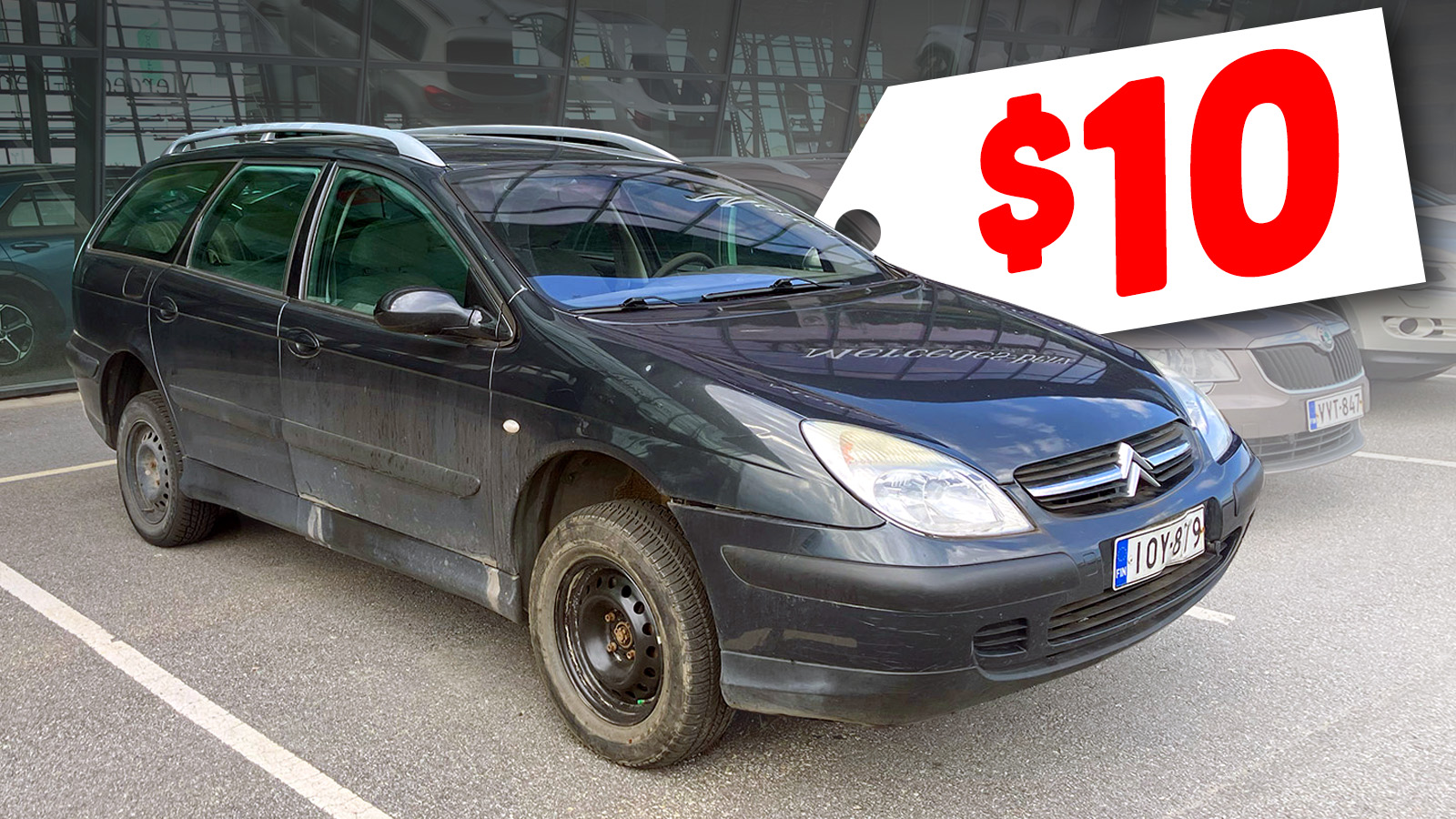
What’s the least you’ve paid for a running car? I once got a Volkswagen for 60 bucks, but that one was in severe need of a head gasket before I could use it for anything. The cheap-car dream is to snag a car from an auction for pennies, before anyone else gets it, and put some miles on it before it ultimately gives up the ghost. With a car bought for pocket change, sunk cost fallacy doesn’t even get to enter the picture.
As well as regular classified ads, I quite often view auction listings for used cars. Why wouldn’t I want to pay intact car money for something that’s likely broken? Well, that’s a bit harsh, but ever since auctions started to become more popular here in Finland, the likelihood of bidding on something that’s riddled with issues has gotten stronger. Then again, if the car is cheap enough, and the issues not too bad, you can overlook a lot of stuff.



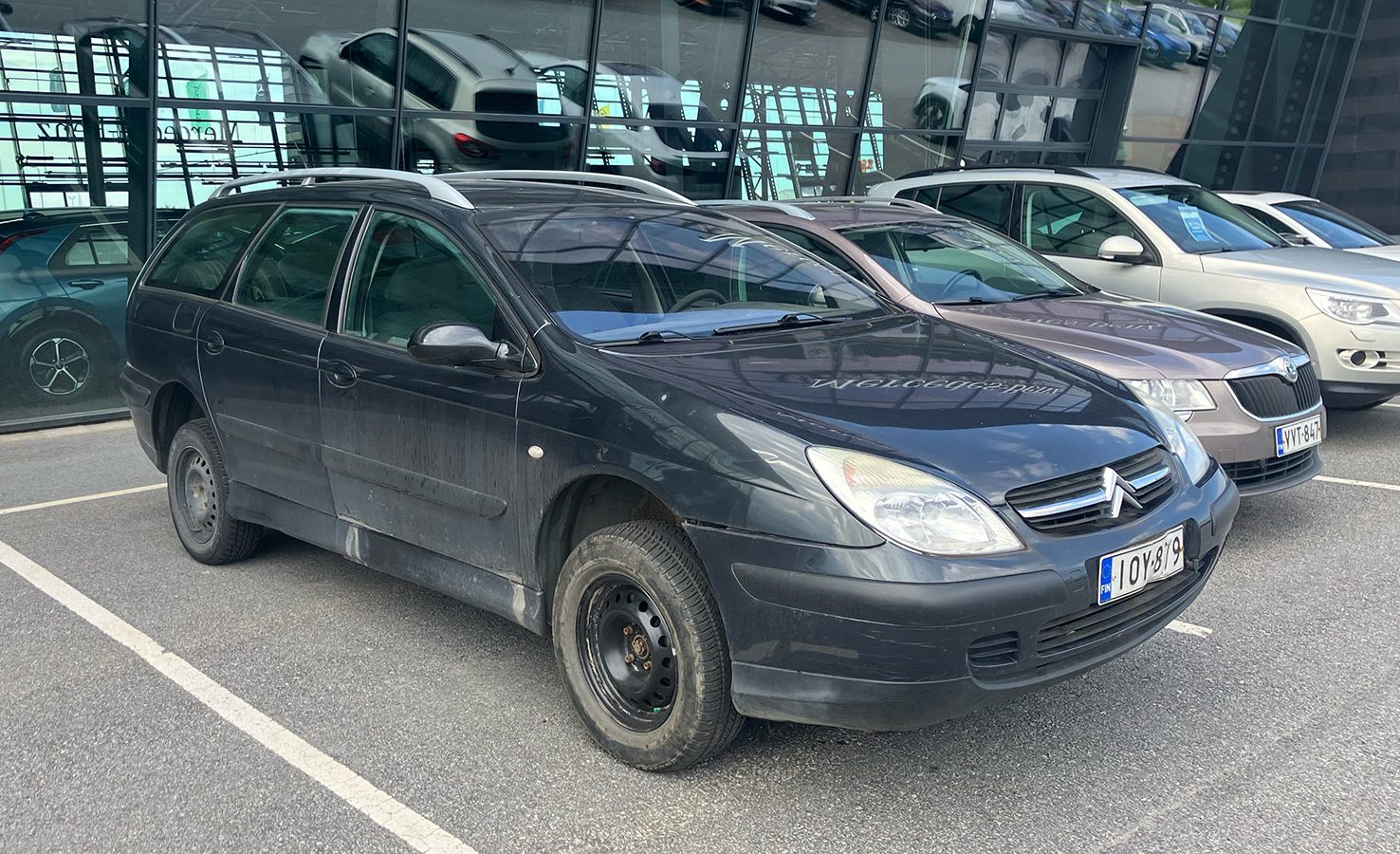
Last week, I stopped to eye this 2002 Citroën C5 wagon for sale in the next town over. It had been traded in at the dealer that sells new Citroëns as well as Mercedes-Benz and BMW, and it looked a bit forlorn at the end of the line for auctioned cars. Since it’s a nearly 25-year-old Citroën wagon in unspectacular condition, ending up on the auction list must have been a no-brainer.
It all has to do with consumer protection laws. When you buy a used car from a dealer, you have rights as a customer. If something goes wrong, the dealership is expected to do the right thing. With this in mind, combined with knowledge of typical faults in given cars – let’s say a Volkswagen TFSI engine likes a bit more oil than it’s supposed to – a dealership is far more likely to auction a trade-in car if there is any suspicion it might come back to bite them if sold directly to a customer. If you buy a car off an auction, the deal is with the auction platform and not the dealership, and while you can still cancel the deal if the car’s not at all what you expected to get, it’s less of a hassle from the dealer’s perspective when they have outsourced part of the process. Another thing is that a certain set of trade-ins are only sold to traders, with the implication they will fix them up on their own coin to sell them on. As a result, there are a lot of used cars being auctioned here, and the turnaround is quick. Quite often I check what’s being offloaded in the towns nearby, and sometimes I get to see them in person if the dealer’s on my route.
The auction ad shows the Citroën in a very dirty state, with the trunk full of bald tires and a list of faults that begins with “a vibration when turning,” continues with a note that temps are rising at idle, the cambelt and other necessary service have been skipped, and finally that it’s been smoked in, a lot. The odometer reading sits at 224,000 km, which is a touch under 140,000 miles. The car was imported second-hand from Germany in 2006, and according to available data, it has only had a handful of owners since, as three sets of title papers have been issued for it.
Someone has also reversed into the front plate with a tow hitch. This actually bothers me a lot, because if you replace the plate, the new one will come with a different-looking letter “Y” than the rear plate, as they changed the character design a couple of years ago.
A Complete, But Unwanted Car
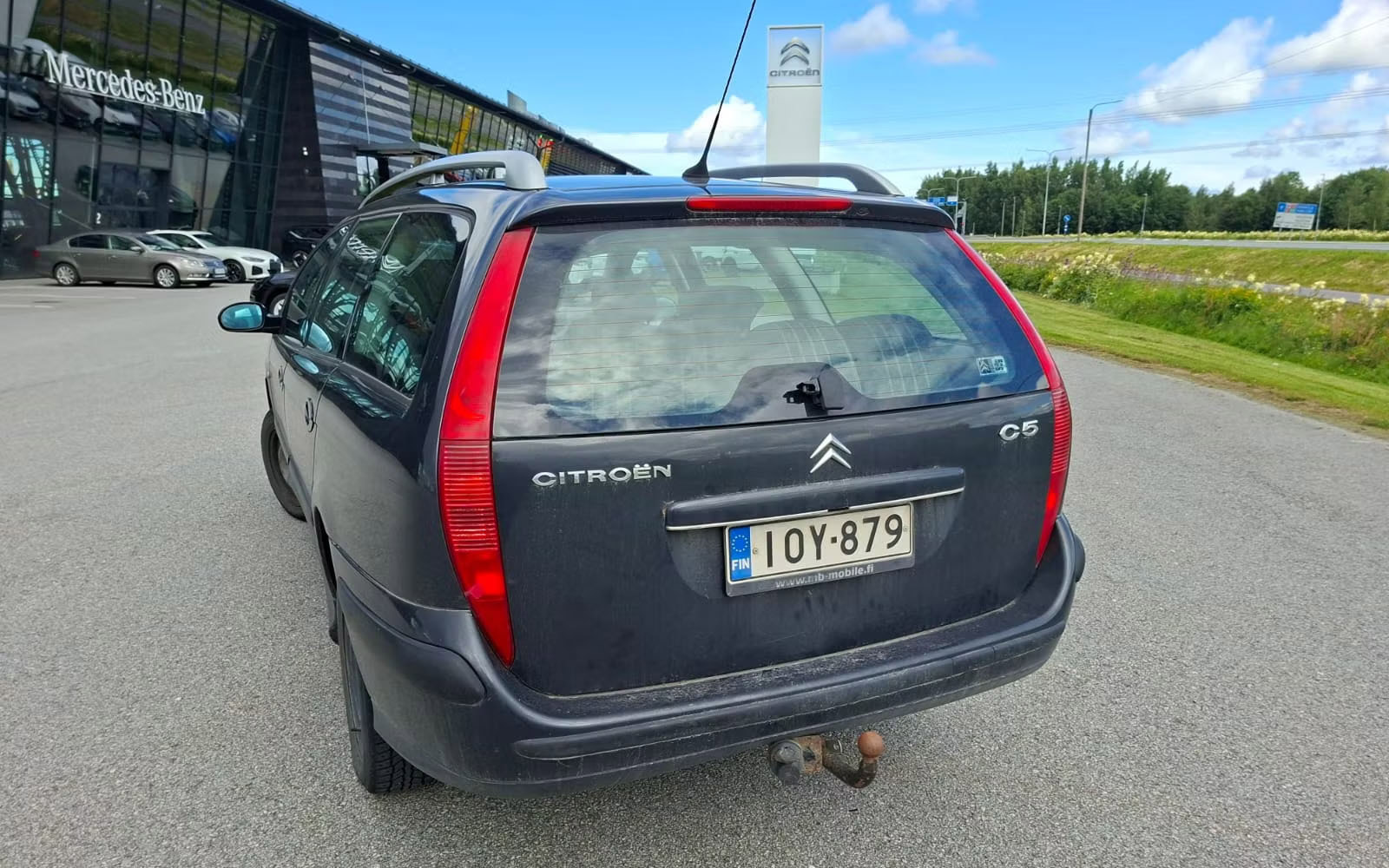
The 2000s C5 followed the 1990s Citroën Xantia, used some of the same engines, but offered more space. It does look worse, mainly because Citroën ended up combining styling ideas from several cars on the same body, giving the production cars terrible dimensions. The wagon is especially barrel-shaped, but the sedan isn’t too pretty, either.
The thing is, it’s a complete car. The roadworthiness inspection is valid til April 2027, which means that from the traffic authority’s point of view, you can just drive it as is for nearly a year, as long as it’s taxed and insured.
To make sure they wouldn’t spend too much on it, the dealership hadn’t even washed it, just parked it out back by the side of the road, lifted the hydropneumatic suspension to the highest position to show it works, took a bunch of photos, and listed it online.
The first auction had a reserve, yet the result was surprising for a road-legal car: no bids. Not one person wanted this car. I bet the dealer would remove the reserve the second time around, and they did.
The second auction ended at 6:30 PM Friday. I went to check the ad to see how much the Citroën had fetched, and had a good laugh: ten euros. This is a ten euro car. The ad even showed the single, smallest possible bid as having been accepted, so they will sell it for ten euros. Somebody got a ten euro car to drive home. That’s, what, 11 bucks and 50 cents?
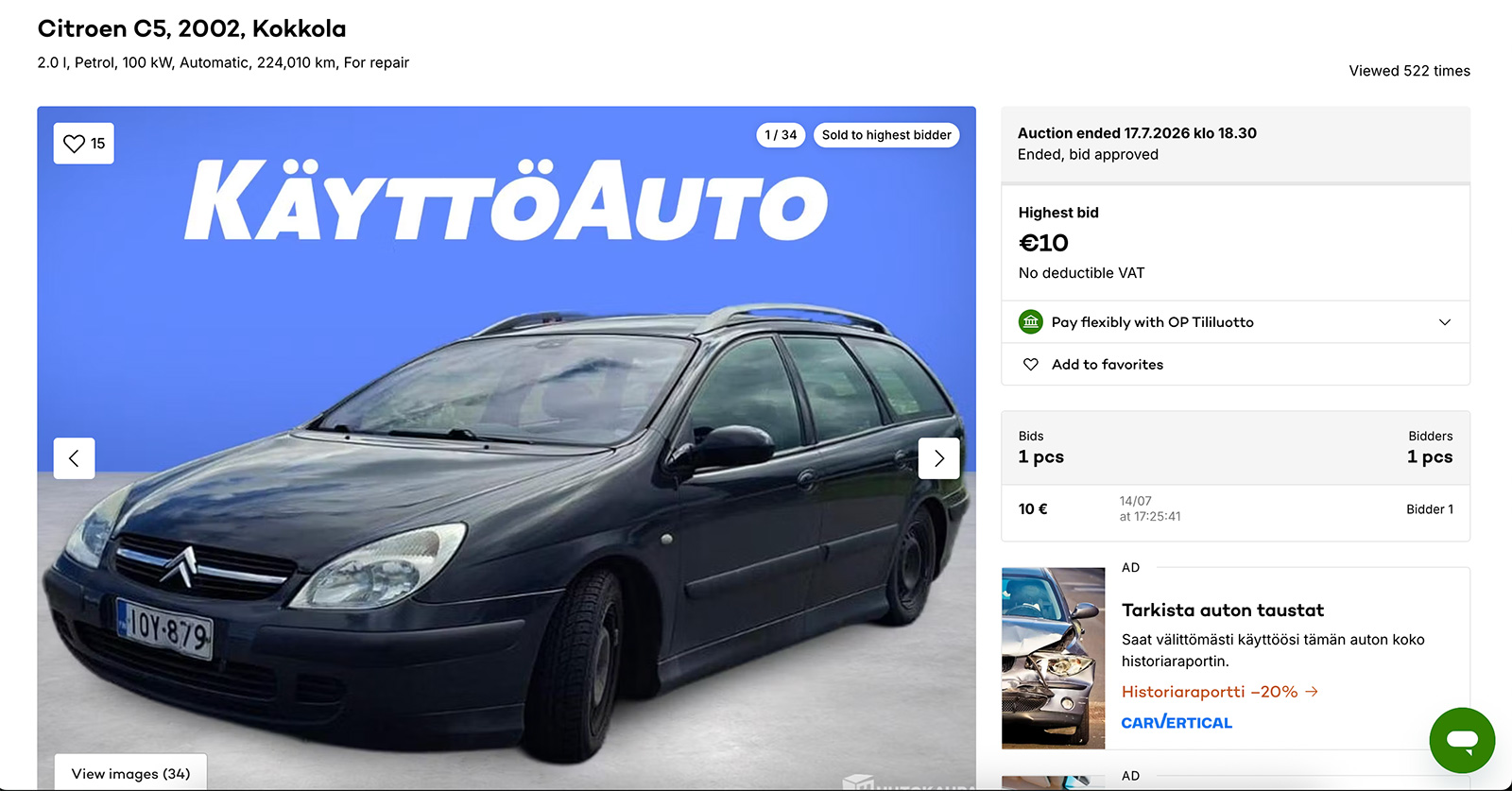
It’s also great that there weren’t any other interested parties than the eventual winner, who bid the smallest possible increment. Had anyone else tried to get the car, there would probably have been competitive bidding up until a few hundred, but for some reason only a single bid was enough to seal the deal.
Naturally, the winner pays more than ten euros even if that’s what the car cost. On top of that were fees, for the dealership and the auction platform to make any money, meaning even a free car would cost a couple hundred to get in the first place. What would this car really cost?
Breaking Down (The Costs)
Let’s count: the handling fee is 46 Euros, and despite the dealership not washing or cleaning up the Citroën, it still costs 199 Euros to go there and pick it up. That’s 245 Euros, so 255 Euros if you include * the price of the actual car * on top of that. It’s nearing 300 bucks just to get it from 20 miles away.
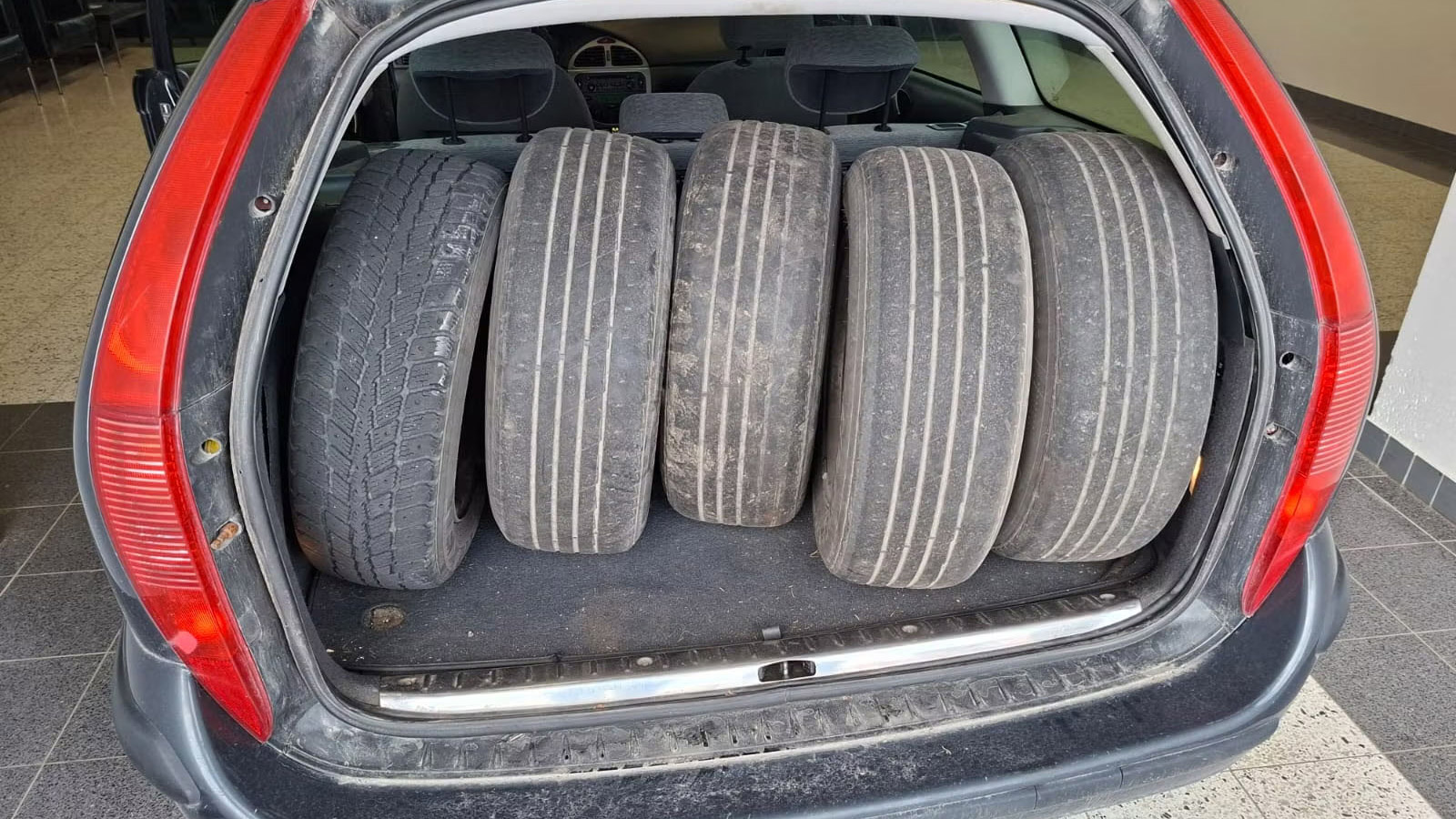
The summer tires are completely bald, nearly showing cords, so if the car makes it home from the dealer, it would need a separate set to be safe on the road. Let’s say you get a used set on correct 4×10⁸ bolt-pattern wheels for 100 bucks and mount them yourself, and since it rides on de-studded studded tires that cannot be used in the winter, add 200 euros for a used set of winters. I’d say you get three months before you actually really need winter tires, but nothing included with the car is any good for winter months. The Citroën uses the very common 195/65R15 tire size, which is quite cheap and commonly available both new and used.
We’re at 555 Euros for anyone keeping score. But you cannot register it under your own name without insuring it, and the cheapest insurance I could see for myself was 140 Euros per year. I have breakdown cover from the car club, so I only need the most basic insurance.
Finnish road tax for this specific car is (throws dice) 352 euros ($400) per year, which you can pay in four increments depending on how long the car lasts; should we be generous and only account for half of that? Of course, you have to insure and tax every car, so you could leave those out of the calculation, but those have to be paid if you want to drive whatever you buy. Tax also depends on the car and its weight or emissions.
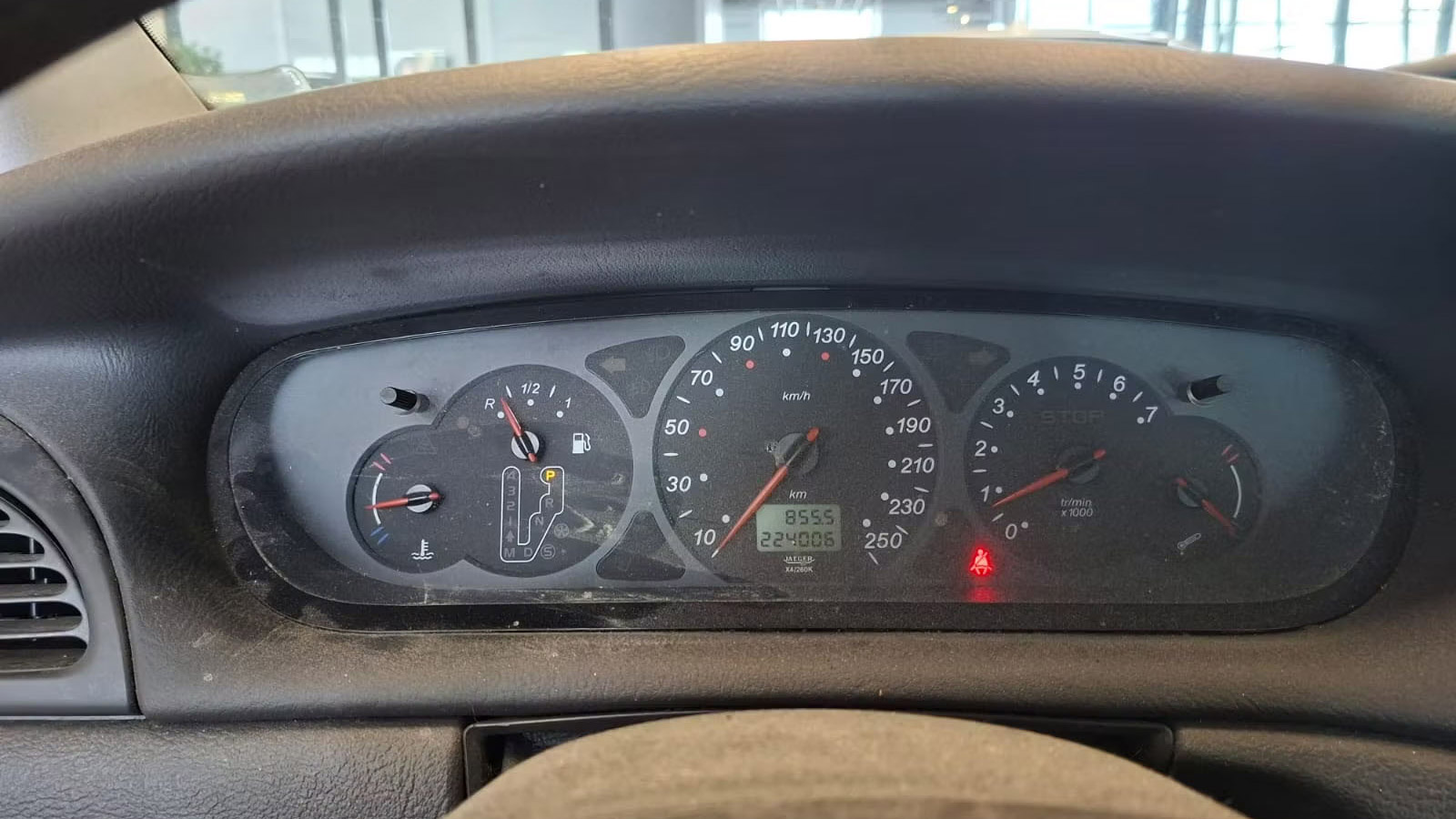
With the car drivable, legal, and under your name, you’re not quite at a grand yet. Nobody in their right mind includes a tank of fuel in the price of a used car, but since this is Europe, expensive fuel should at least be mentioned.
A full tank of fuel costs 130 Euros with current prices (two euros per litre, with a 66-liter / 17.5-gallon tank), but let’s be generous and assume you can only put in a hundred’s worth as the low fuel light isn’t on in the dashboard. Despite using up the tires and skipping maintenance, whoever traded the car in didn’t leave it at the dealer running on fumes. What is this, amateur hour?
What If You Wanted To Make It Last?

With no proof of recent maintenance and the belts overdue, it’s anyone’s guess how far the Citroën will make it. Don’t get me wrong, it’s a stout car for what is essentially a worthless automobile, and even at this state, it’s sure to be comfy, but naturally it’s an interference engine which will bend the valves if the cambelt snaps.
The two-liter, 136-horsepower engine is the same as in the Peugeot 206 GTI, and it’s more of a family car engine than a hot Peugeot hatch engine. The automatic gearbox here is the ZF 4HP20.

But here’s the kicker: a ten-dollar car can immediately be driven into the ground, no questions asked, no love lost. You don’t need to do anything to it, just use up whatever it’s got. Don’t fix anything. Don’t even hoover the mats. Maybe check the seat backs for coins (at your peril).
But a thousand-euro ten-euro car? You have to get your money’s worth. What if it lunches the belt tomorrow? You’re out a grand with nothing to show for it. This is where it becomes obvious that anyone going for a car this cheap needs to be able to do their own wrenching, because if you start throwing real money on what is essentially a 100% depreciated crapcan, you might as well throw it out of the window.
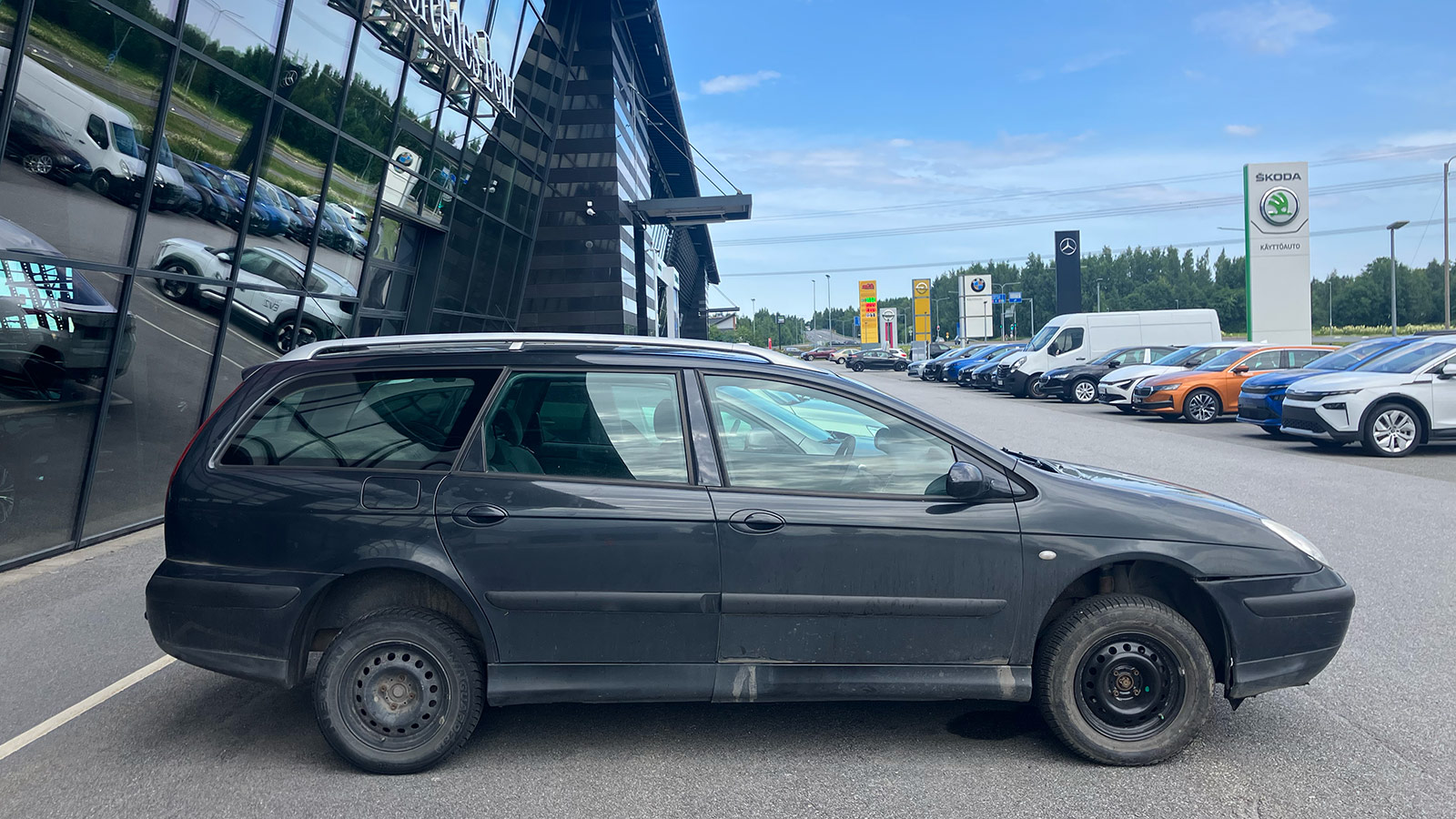
Of course, if it dies tomorrow you can cancel the insurance and will only have to pay road tax for the shortest period, so there’s some cashback to be expected. Heck, maybe someone will pay a few bucks for the catalytic converter even if the values of those have gone down the drain. And it’s sitting on superlight Citroën “steelies,” which are actually in demand among Peugeot-Citroën enthusiasts. They look like steel wheels but are made out of aluminum, and they are a great fit for the 205, for example. I have a couple sets myself. Also, if it dies before winter, it doesn’t need a set of winter tires.
To prevent the car from prematurely dying before you get some use out of it, you’ll likely need to account for servicing the belts. That costs around 500 unless you do them yourself (budget $150 on a belt kit), and it’s probably one of the reasons why the car has been offloaded despite having nearly a year’s worth of perfectly fine roadworthiness left in it. Taking care of that doesn’t yet make the car bomb proof, but it’s one less ticking time bomb. If the mentioned vibration is the driveshaft, a new axle is another hundred. That also brings the car’s price in line with the rest of the similar Citroëns for sale online, which shows how difficult it is to make a buck with a cheap French wagon, especially if you have a few fees to pay before you can even play.
None of the issues listed here are in any way out of the ordinary for any car, let alone the wagon shown here, but if you have to budget for every maintenance item at the same time, they make for a long list. That ten-dollar car shown in the auction ad is suddenly a lot more expensive, but then again: it costs more to drive through the car wash at the dealership forecourt.
Now, I’m mainly interested in seeing if the car pops up anywhere near, cleaned up, with decent tires and the timing belt taken care of – and what kind of asking price it will get. Without any of those fixes, it’ll be a tough sell no matter how cheap it was to get.
Photos by author and Huutokaupat.com


“What’s the least you’ve paid for a running car?”
It’s also my funniest car story: when I had a 70’s dark green Audi Fox wagon I got for $100…total!
The accelerator cable broke so I hooked some small rope up to the throttle from the engine, out the hood, through the driver’s window and pulled it to accelerate. I drove it home on back roads the whole way and the brakes weren’t very good either…6 months later I sold it to the junkyard for $25 so it was a $75 car!
My first car was £100 for a VW Polo, however, insurance for a newly qualified driver was £500 per year.
(I think tax was about £60-70 per year for it back then).
My cheapest ever car was a Peugeot 306 that my brother tried to palm off on me for free (way more than it was worth), after our younger brother had palmed it off on him. I did take it for a week, but hated it so much I just left it back at our family home, until our mum got fed up and sold it herself.
The 2nd car I ever bought with my own money was a 1984 VW Rabbit/Golf GTi for $500 in 1995. It did run and drive however to be safe I took it to my VW/Audi specific indy mechanic (Chuck). It had easily 220k miles on it, body was straight, ‘red’ paint (very faded) and a blur interior with bbs wheels and the blur/red stripped recardo seats. Chuck replaced the shocks/springs in the back and struts/springs in the front, new brakes and several other mechanical bits, like the shift linkage bushings, engine mounts, I think new belts. $800 lighter, I had a very fun to drive $1300 all in car that I drove for 4 years in college, including at least a couple trips from IA to CO and 1 trip from IA to boarder between Texas & Mexico. Ended up letting my parents sell it to a neighbor who drove it as a local run about for some time after that.
Oh and in case you are curious as this was my 2nd car… 1st car I think I paid $1500 was a BRG (british racing green), 78′ Triumph TR7 bought with my own money when I was 13 saved from paper route and lawn care jobs. That car had charging system issues and sadly I didn’t get to drive it much due to said issues bc although I tried to get it fixed by a British car specialist mechanic, no dice… my father ended up donating it to a local community College that had an automotive program and I heard they Did get it fixed properly.
In a particularly cold winter in ’93 I weathered an entire day of -30F at a farm auction to bid on a 1980 Ford LTD that was actually in pretty okay shape. The auctioneer talked about how it had just been to the mechanic for a tune-up to prep it for sale. Should’ve picked up a new battery because it wouldn’t start. Got it for $70 out of just a handful of people left at the auction. Thankfully it started up just fine a few days later after it warmed up. Drove it for about a year and sold it for $550.
What was likely an even better deal was $75 for a 1974 LTD in 1992. It had some rusty quarters and smelled like smoke inside, but otherwise ran and drove incredibly well. It had belonged to well-known sketchy town bum who I was warned by multiple people not to buy anything from. He wanted $100 and was desperate for whatever reason, so I offered $50 thinking the car wouldn’t even make it home. At $75, not only did i get over a year of driving (and hooning – this was teenage me) out that old cruiser, it was also hiding several hundred dollars worth of tools in the trunk. And, I still got $300 when I sold it.
I bought a ’67 Bug for $366 from the chairman of the Harvard physics department. This was around 1978-1979. It was heavily rusted but drove well enough. I did have to get the clutch replaced. After I finished my thesis and graduated, I got a job in California with Xerox. They would not give me $300 to give up the car, but paid $1200 to ship it to California. A few years later, I sold it for $300.
An interesting, informative, and well-written story. Hope we see more from this author.
352 euros sounds very high for an older car, do they not discount it for age?
After 10 years the annual tax is ~85 euros here for passenger vehicles.
Only when it makes historic plates at 30 years old, but it also needs to be in good enough condition to pass the historic inspection.
Thank you for the insight, sadly the way it’s set up works against the cheap common vehicle. By year 25+ the value of these vehicles will be similar to the annual tax. Really creates a disincentive to keeping them working.
I suspect the Finnish system is similar to the one in Austria, where tax for ICE cars is calculated solely based on hp, regardless of age (unless, as pointed out by Antti below, it can be registered as a historic vehicle). Maybe they want to add a bit of deterrent against youngsters driving low-tax, high-hp beaters into the next wall.
Couple cars for Free.
1982 RX-7 that my Dad bought in 1984 in Fairbanks, Ak, and was never driven in the winter. Unless you count being moved from the garage to the driveway when I needed to work on my car, and almost every time needing to be jumped when I would try to move it back into the garage. What could possibly go wrong with a manual choke at minus 20? The car was given to me about 17 years ago. You can see pictures of it in Jason’s Taxi stop in Denver. Slowly replacing various wear parts on it. Overall very cheap to restore.
2005 Audi Allroad that was my late FiL’s. When I got it, the air suspension did not work, the air compressor worked like it was French, the transmission pan was dented. The 2.7 leaked oil worse than any radial engine I have ever seen, the intercooler pipes would not stay connected, and other than the engine nothing was seen on the canbus. Mileage was such that the timing belt was past due.Replaced the front air bags, and after 2 weeks they just decided to inflate. Replaced the air compresser when it finally died. Paid to have the transmission pan replaced as the filling procedure was not something I wanted to do on jacks. Tried to get the front end off one day to do the timing belt only to run into issues finding head lamp bolts and put it back together for another day. Before another day arrived the transmission grenaded on me. Sold that damn thing for scrap.
That car made me miss working on the Saabaru.
I recently bought an auctioned car for $5750. Plus $500 buyers fee from the auction house. Plus $1200 to transport it across the country. Plus $500 for tax, title, license fees. Then I find the steering is “approximate”, so I spent $900 on parts to replace the suspension and steering component. While I was there, I found that the brake lines were… scary. $500 later, I have the brake lines, caliper, rotors, etc. Today I was going to bleed the system and found that the bleed screw on one caliper was round. $60 later, I’m waiting on speed bleeders. Hmm, how much has that car cost me? Around $9,500. (Actually more – add $400 for a replacement seat, $150 for a dash cover, and probably $100 for miscellaneous stuff.) Let’s not talk about the tools I’ve bought – haven’t told my wife yet.
Anyway, there are reasons to buy a car at auction, but profitability generally isn’t one of them.
I think my wife may of finally figured out that I work on cars and bicycles to actually buy tools. But I do have 40 year tools from my late teens.
$12.00 American for a 1970 Pinto in 1980.
Said car had been flooded to the roof at least 3 times. I had kept it running for a friend who was not the least mechanically inclined.
Then he bought a new Toyota Tercel.
So he offered me the Pinto for free. In order to show my gratefulness I offered him 4 quaaludes I had discovered in an old empty pack of smokes in my bedroom.
I drove that piece of shit for a year or more without issue till the clutch and trans blew up on the Interstate.
Never put a dime into it except for gas.
Then based on my excellent prior experience I bought another 1970 Pinto 2 years later for 100 bucks. That piece of shit blew up after about 2,000 miles.
I got screwed…
Turned 17 in 1992, so my parents decided to get a 2nd car that I could share with my mom. Lo and behold, a co-worker of my brother-in-law had a 1980 5-door Chevy Citation with the V6 way out in the suburbs…..for $200. I don’t remember the mileage, but it did have an aftermarket Panasonic tape deck, vertically oriented, of course.
It was a rusty P.O.S. that needed the driver-side floorboards to be patched to prevent me from falling through the car (seriously). It lasted about 16 months before it caught fire while driving….fun times!