


“Everybody wants to drive a compact crossover” sounds like a terrible Tears For Fears parody, but it seems to be the state of the new car market right now. From hybrid models to electric ones to swoopy-roofed ones to plastic-clad ones, shoppers appear to be spoiled for choice so long as they want a two-box thing with reasonable ground clearance. The trouble is, there aren’t many options for people wanting more power and features without some of the running costs that come with a luxury badge. The Volkswagen Tiguan Turbo is one of the few.
It’s a bit like a meat lovers’ pizza, in the sense that it truly has everything on it. More power than a Golf GTI, an enormous touchscreen, and some luxuries you normally wouldn’t expect to see in this class of car. That’s all well and good on paper, but how does it fare on the road? I spent a week in one to find out.


[Full disclosure: Volkswagen Canada let me borrow this Tiguan Turbo for a week so long as I kept the shiny side up, returned it clean with a full tank of fuel, and reviewed it.]
The Basics
Engine: 2.0-liter twin-cam 16-valve turbocharged and intercooled inline-four.
Transmission: Eight-speed conventional torque converter automatic.
Drive: Full-time all-wheel-drive.
Output: 268 horsepower from 5,500 to 6,500 RPM, 258 lb.-ft. of torque from 1,900 to 5,400 RPM.
Fuel Economy: 22 MPG city, 29 MPG highway, 25 MPG combined (10.7 L/100km city, 8.0 L/100km highway, 9.5 L/100km combined).
Base Price: $44,560 including freight ($52,295 in Canada).
Price As-Tested: $44,560 including freight ($52,295 in Canada).
Why Does It Exist?
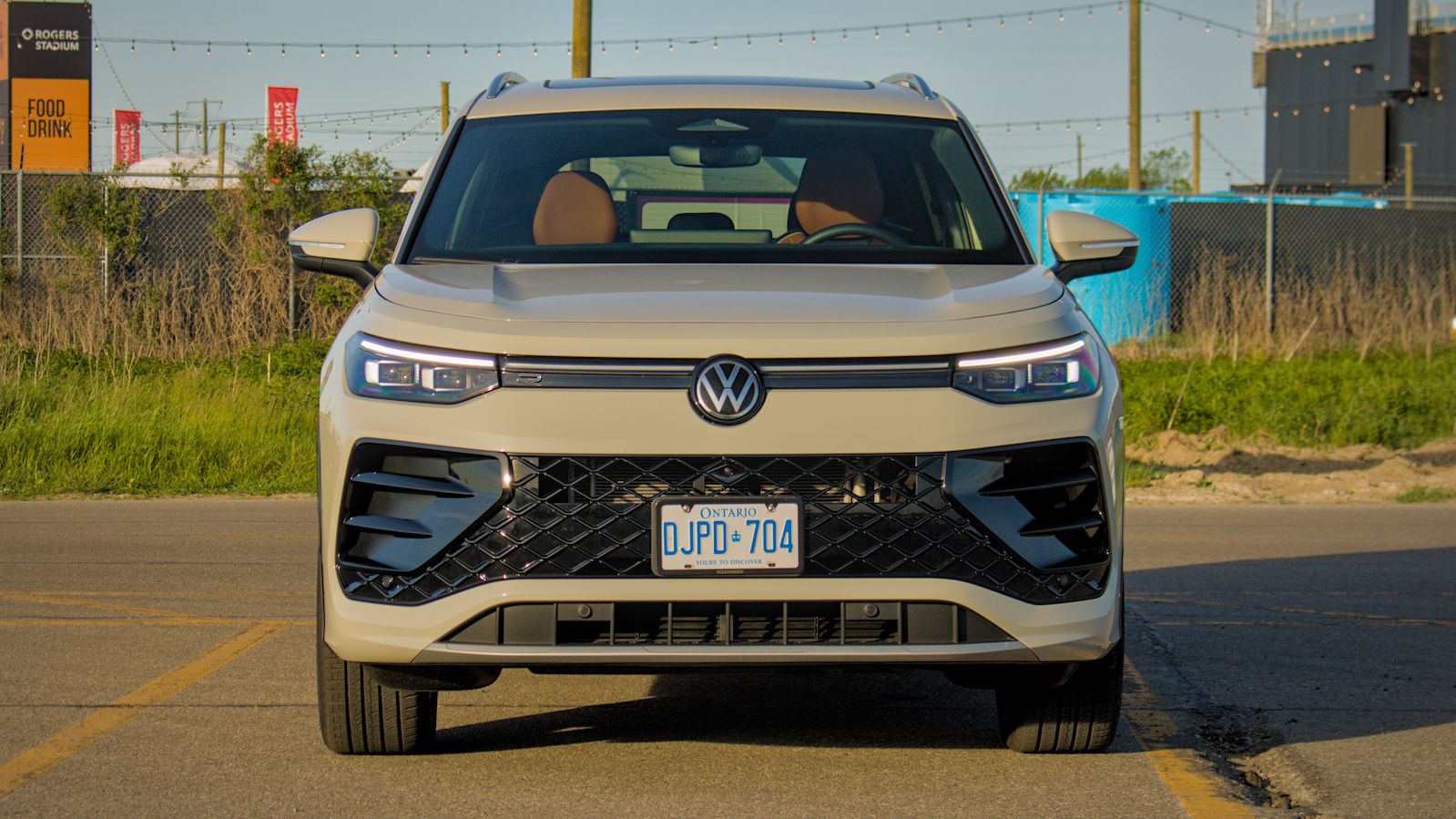
By now, it should be crystal clear that the compact crossover is simply the new default genre of car. They’re generally well-sized, practical and comfortable, so it shouldn’t be a surprise that just about every automaker under the sun builds at least one. For the past 17 years, Volkswagen’s fighter in this arena has been the Tiguan. It’s now in its third generation, growing up whilst waging battle against models like the Toyota RAV4, Honda CR-V, Hyundai Tucson, Ford Escape, and Chevrolet Equinox.
How Does It Look?
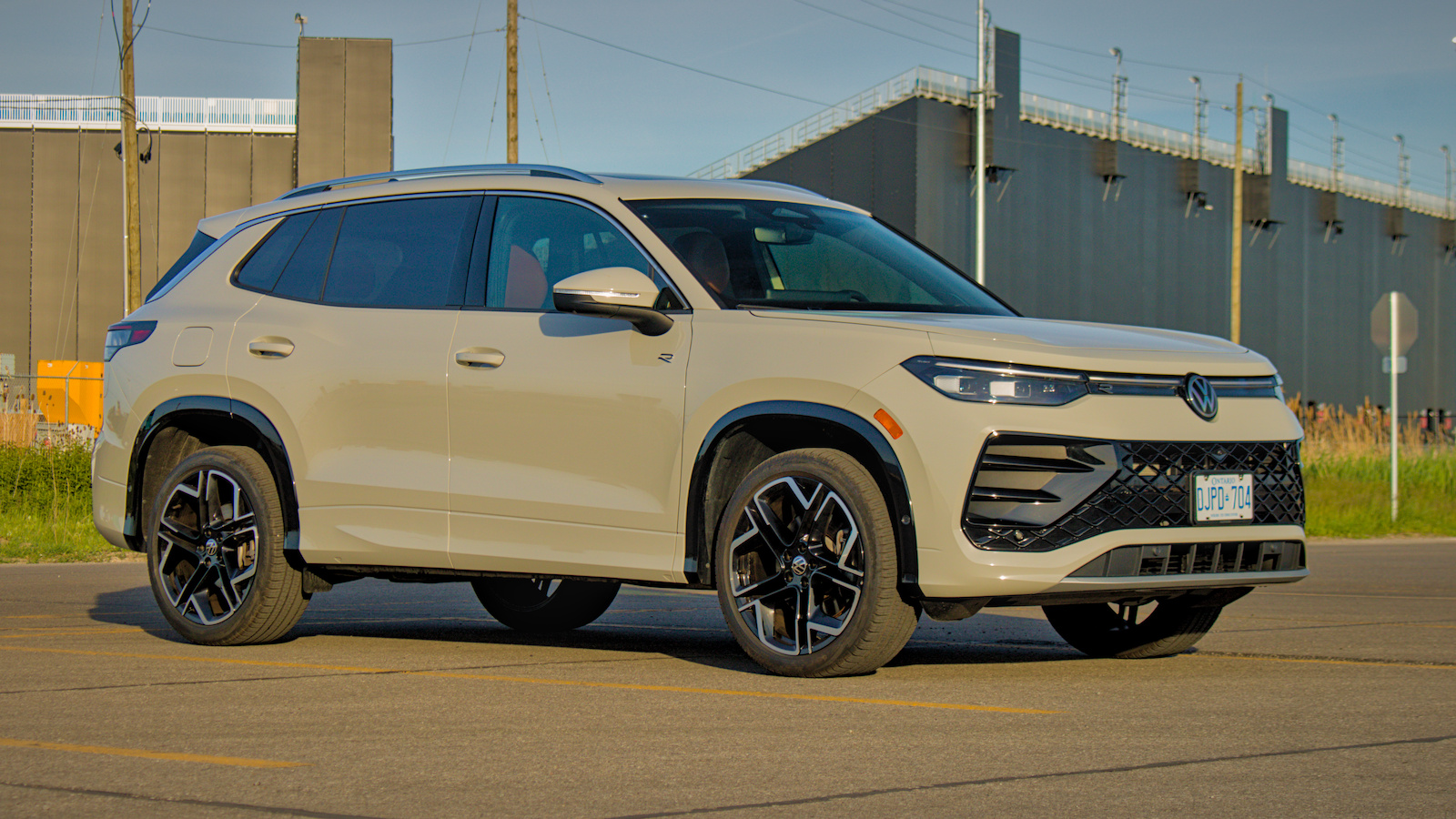
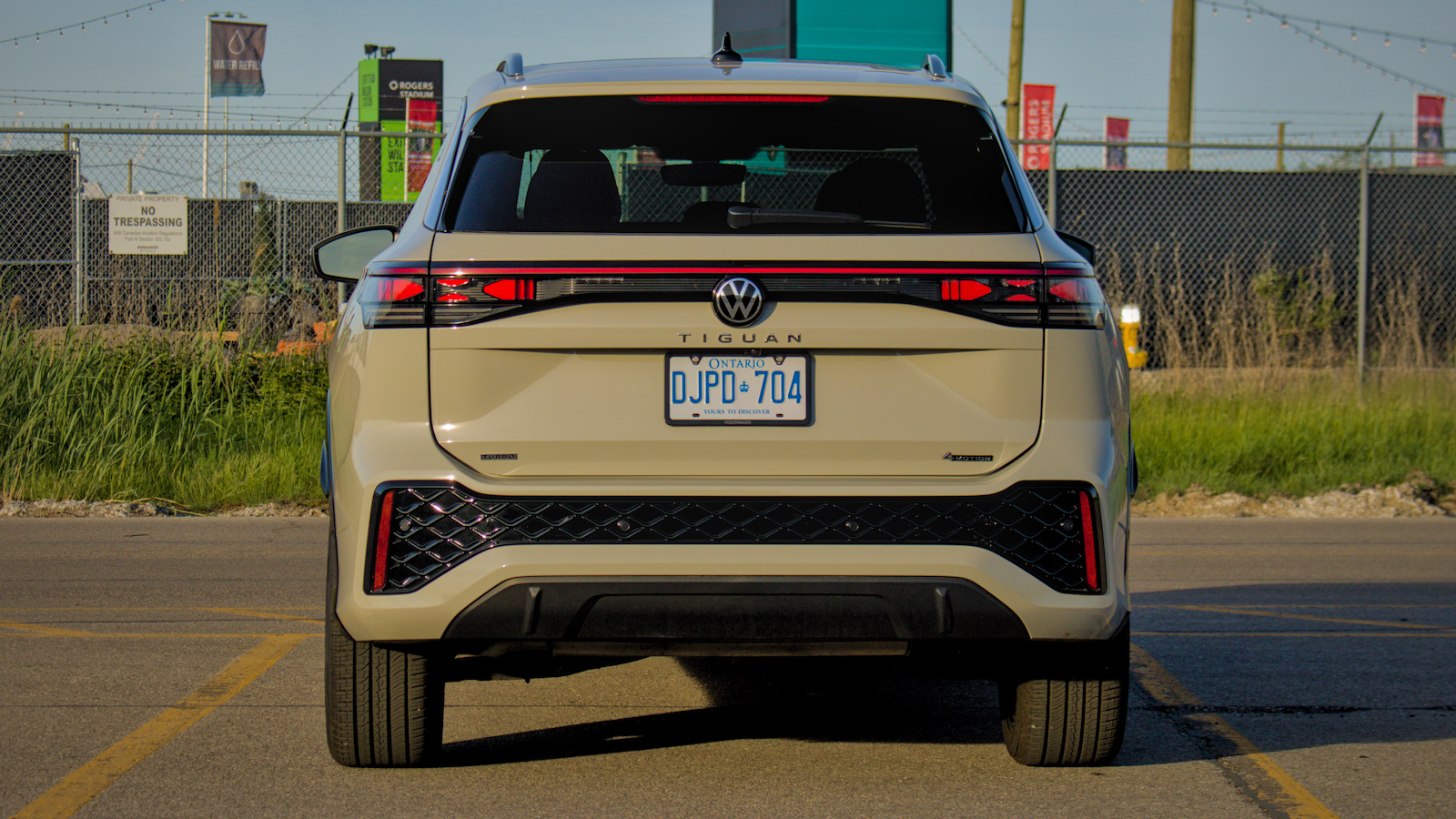
Machismo is so hot right now in the compact crossover universe. Chiseled character lines, squared-off silhouettes, a slice of faux-SUV posturing. Not so much with the Tiguan. While the previous generation of this compact crossover featured an almost impossibly starched pinch down the flank, the new one’s gone all rounded. Sure, the aggressive latticework of a grille does look a bit jowled, but the overall look of the new Tiguan works surprisingly well with the minimal black cladding. There’s an honesty to it, an admission that this is a family car, not something trying to be a five-o’clock shadowed off-roader.
What About The Interior?
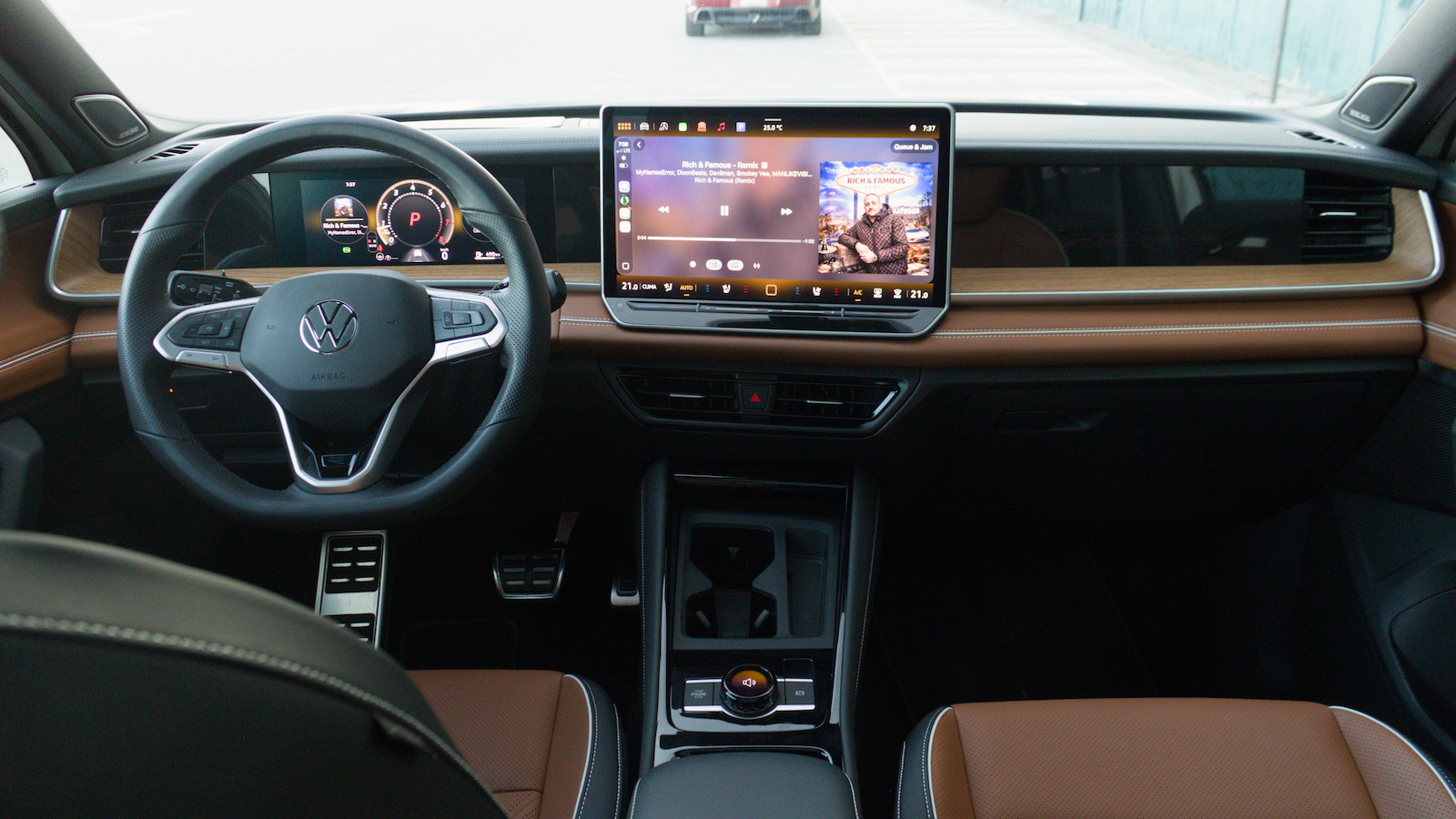
Slide behind the wheel of the top-shelf Tiguan, and you’re immediately greeted by a sense of richness. Sure, there’s some shiny black plastic, but that’s more than balanced out by a litany of lovely materials. Leatherette with contrast stitching and piping adorns the dashboard and door cards, soft padding on the center console cushions your right knee, and guess what? That wood trim has a lovely, deep open-pore grain. You also get delightfully smooth leather wrapped around the steering wheel, cold alloy pedals, and plenty of soft-touch plastics in the first row. Sure, things feel a bit cheaper in back, but hardwearing plastics where you kids sit doesn’t necessarily seem like a bad thing.
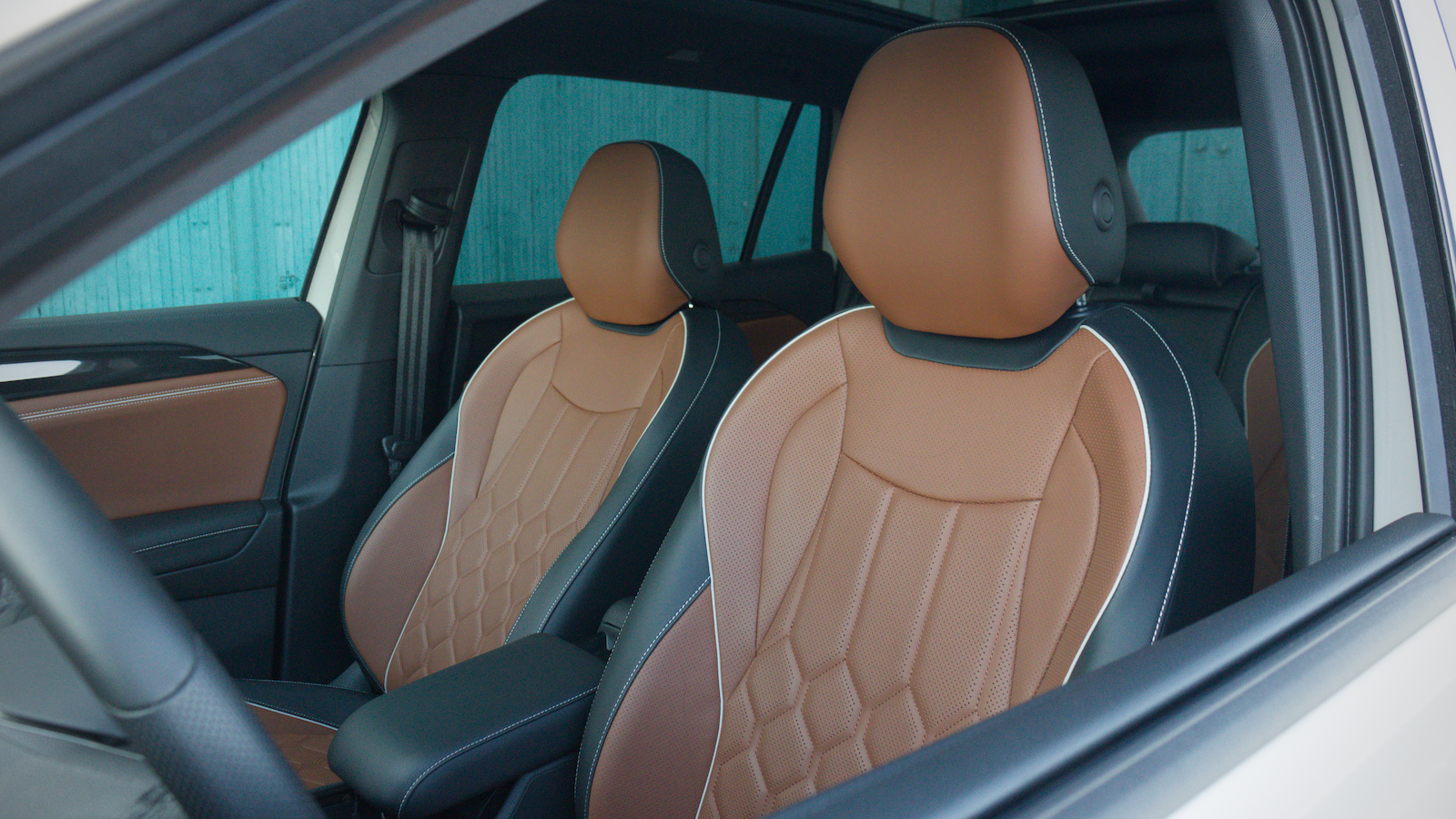
As for comfort, the big surprise comes in the front seats. These heated and ventilated thrones could use a smidge more thigh support, but they are equipped with a massage function. Normally, at this price level, you’d just expect that to consist of the lumbar support gently poking you in the back, but no. Volkswagen’s specified a litany of air bladders that are far more adept than you’d expect. They’re only on the seat backrest and don’t cover plumb-center of your back, but they put in work. Speaking of functionality, interior space is good, and the adjustable center armrest is a much appreciated touch. Mind you, 33.8 cu.-ft. (957 L) of cargo space with the rear seat up falls behind the RAV4’s 37.8 cu.-ft. (1,070 L) and the CR-V’s 36.3 cu.-ft. (1,028 L) so keep that in mind if you, say, haul hockey bags on a regular basis.
How Does It Drive?
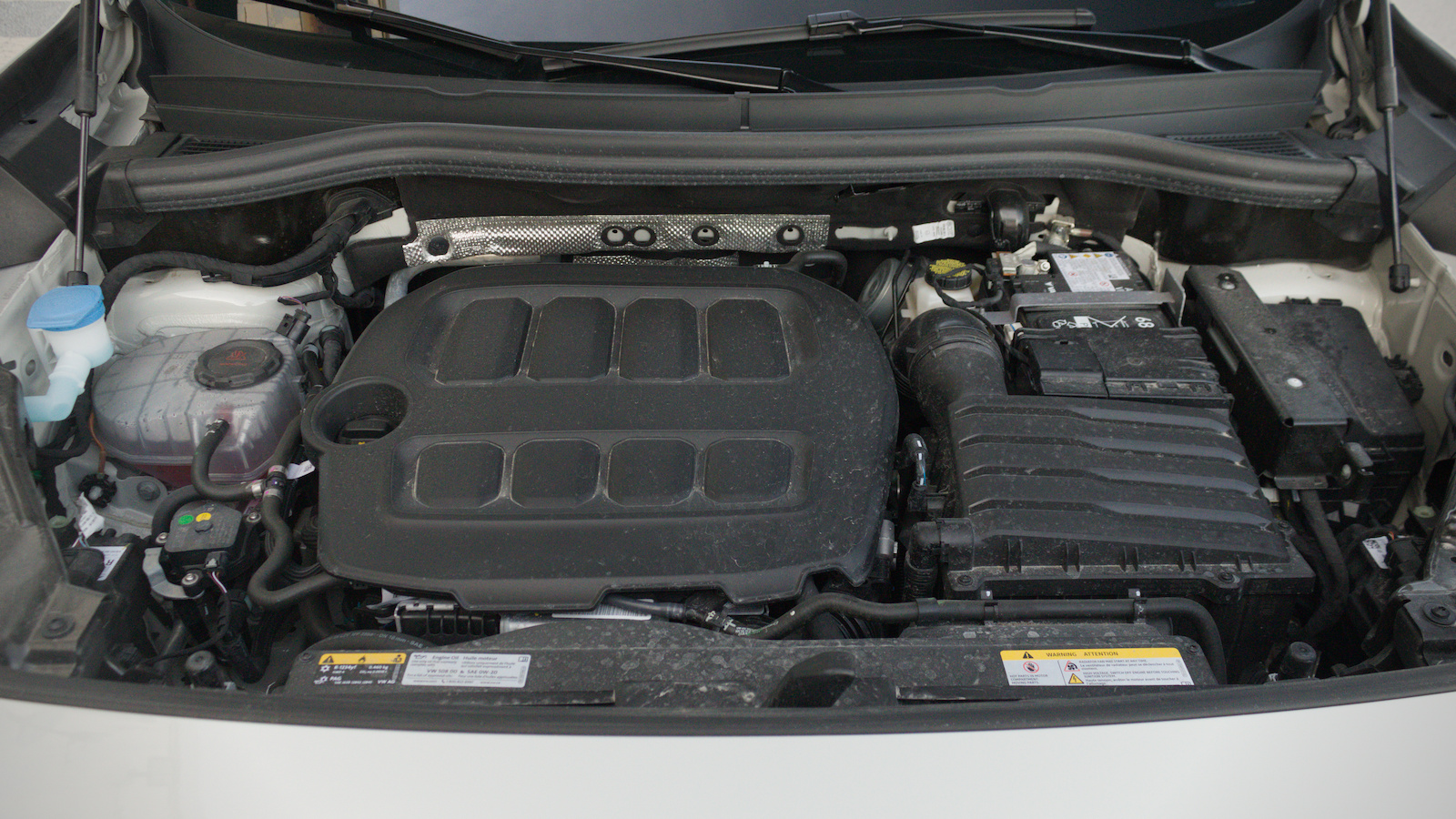
While all Tiguans come with forced induction, Volkswagen seems to have borrowed a page from the Porsche playbook by adding “Turbo” to the official name of its quickest compact crossover. Compared to the standard model, the two-liter turbocharged inline-four here pumps out an additional 67 horsepower and 37 lb.-ft. of torque, totalling 268 and 258 respectively — big-dog stuff by the standards of the market, but don’t confuse this thing for a Golf GTI with a backpack.
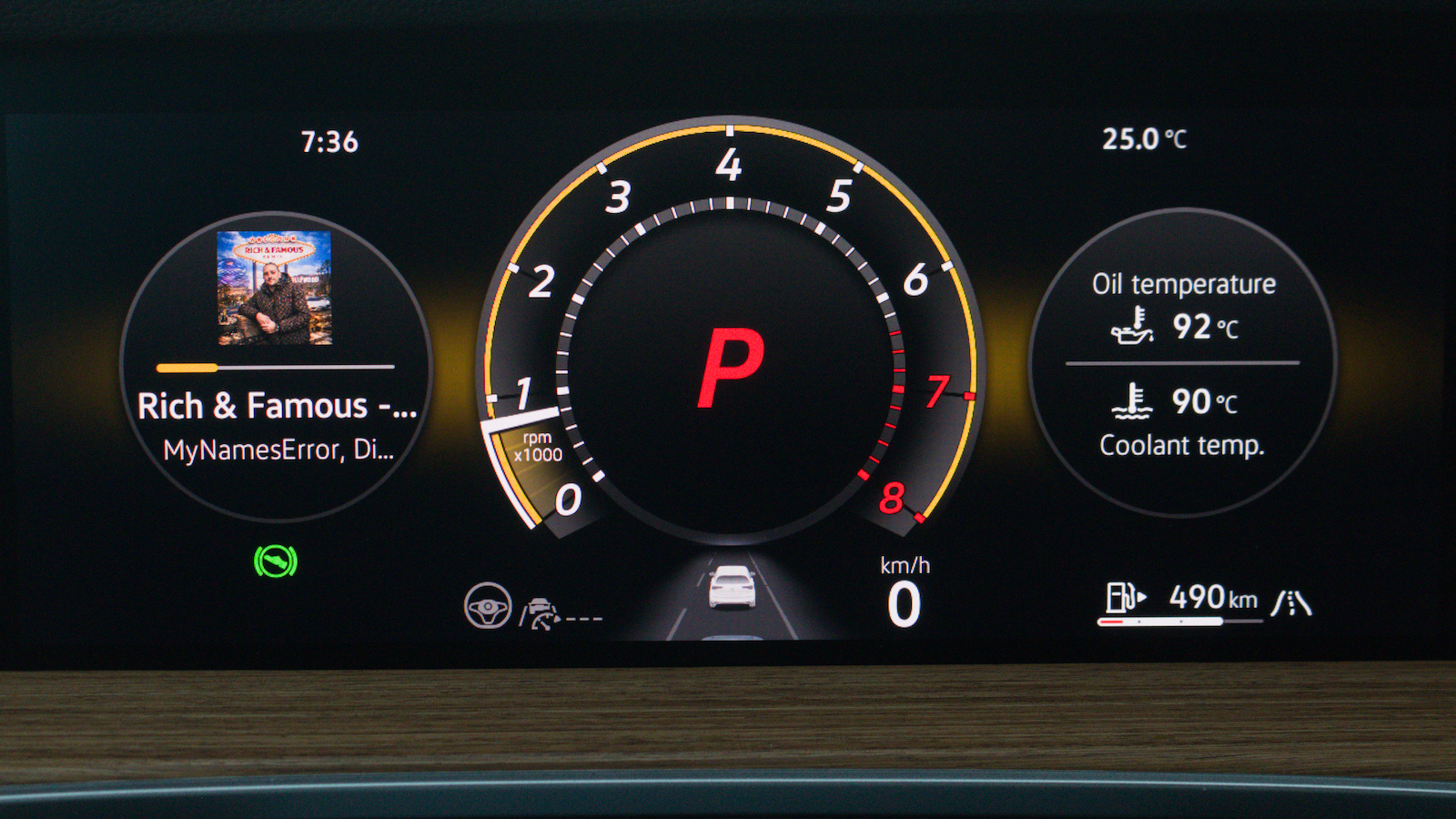
Actually, this is probably a good time for a history lesson. Jump back just over a quarter of a century, and the first turbocharged GTI landed on American shores. It was reasonably punchy for a sport compact, but that turbocharged engine was also used in the midsize Passat. That generation of Passat made its mark with huge refinement, and that’s exactly what we’re seeing with this Tiguan. The eight-speed automatic transmission isn’t always quick but it’s remarkably smooth, and that tidal wave of torque from the robust engine means the top-spec Tiguan merges in a manner that punches above its price bracket.
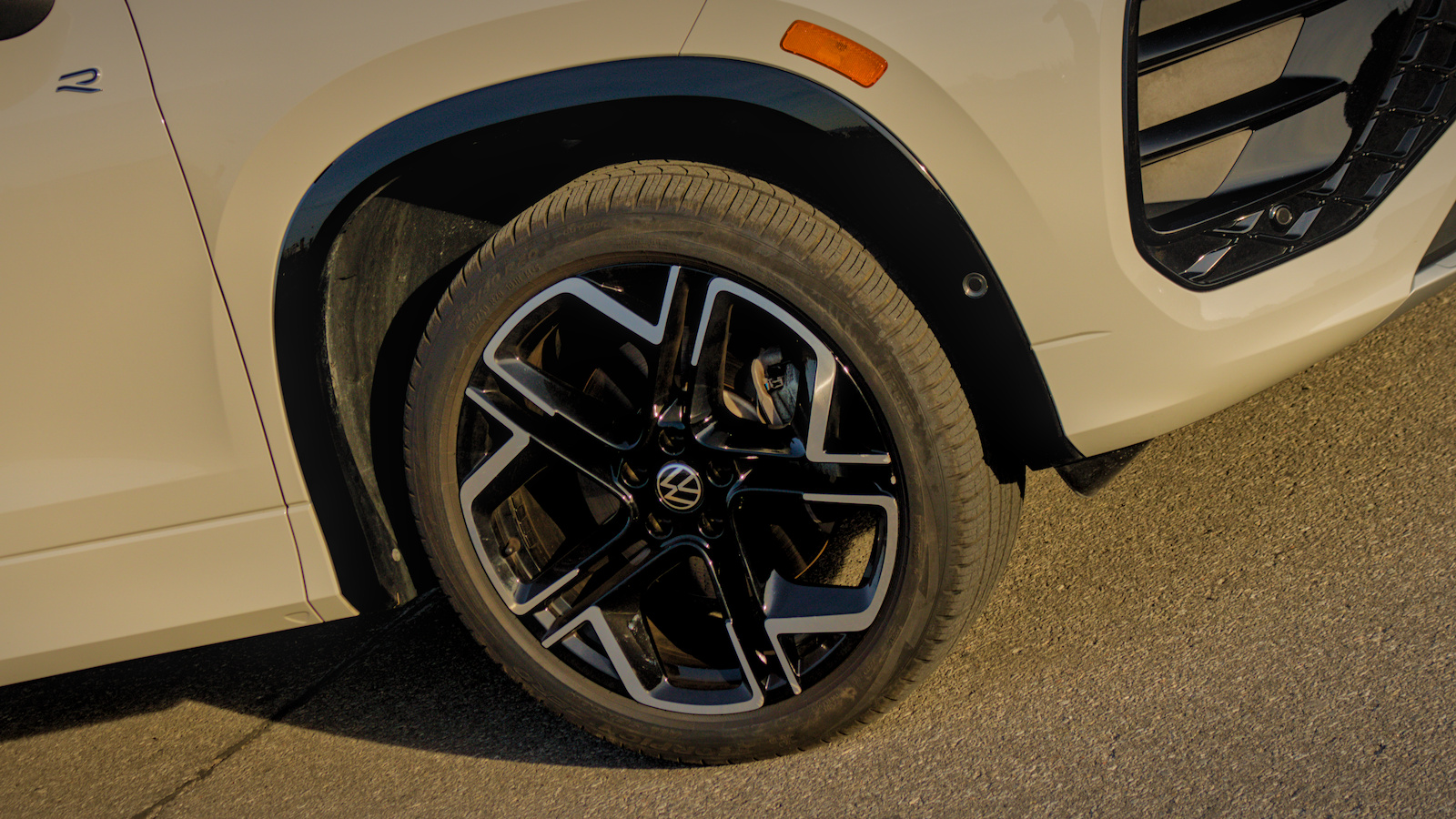
It’s a similar deal with the ride and handling balance of the Tiguan Turbo. Light, accurate steering makes placement on the road easy without encumbering parking maneuvers, wind noise is pleasantly hushed, and the suspension tuning is certainly more taut than on most Japanese and American rivals. While this does have the effect of transmitting some moderate bumps into the cabin, high-speed stability is excellent for this sort of vehicle, and there’s an assured confidence and reasonably good level of roll resistance in the corners that you simply won’t find in many competitors. The Tiguan Turbo has a certain level of transparency, disappearing beneath you as it performs its duties as highly competent transportation. Mind you, the tradeoff does come at the pumps. With great power comes 25 MPG combined. An available hybrid powertrain would go a long way toward reducing running costs.
Does It Have The Electronic Crap I Want?
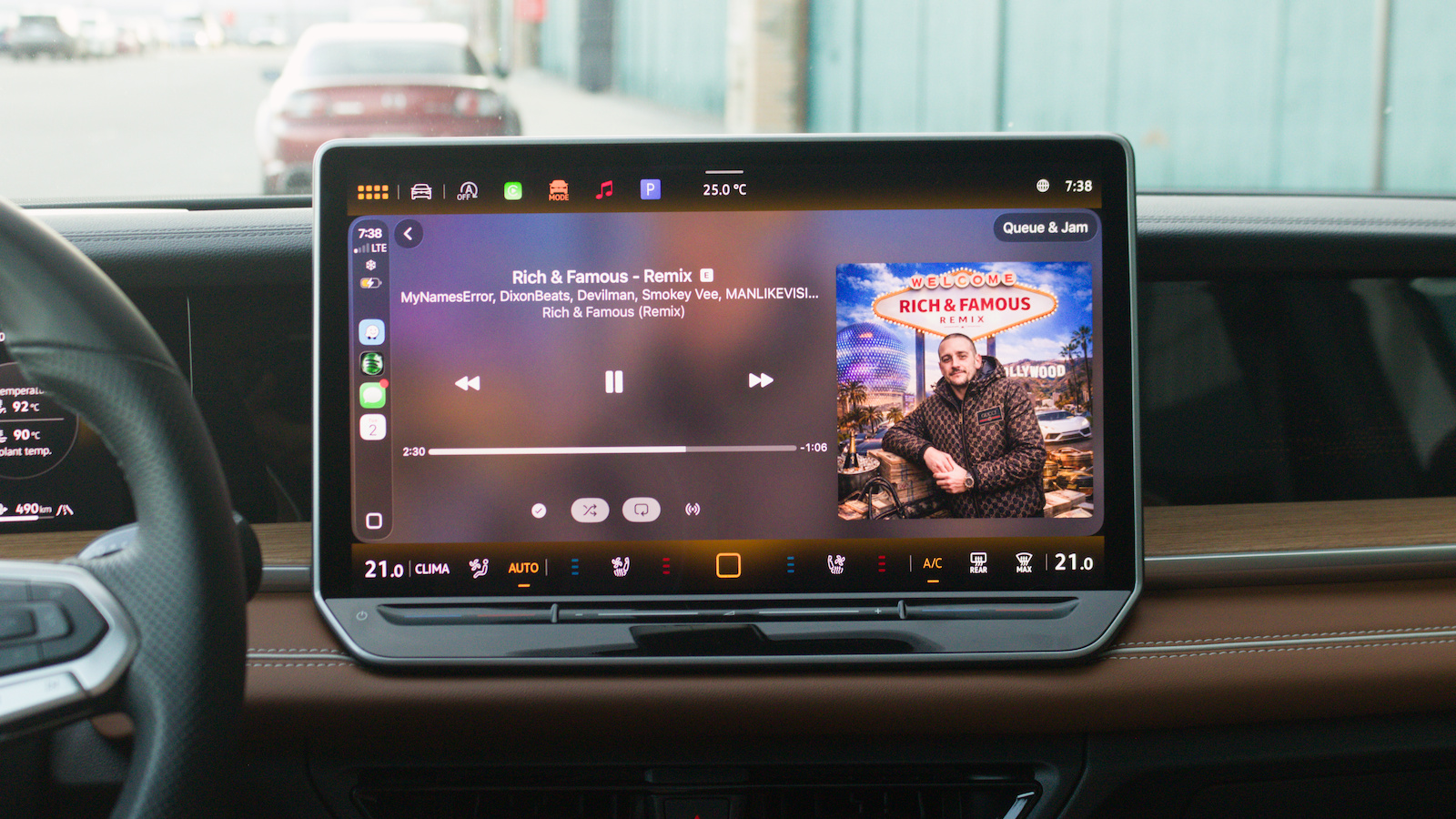
If the aforementioned massaging front seats weren’t enough of an indication, the Tiguan Turbo comes loaded to the gills. We’re talking about an enormous 15-inch touchscreen infotainment system, a properly configurable digital cluster, a HUD, push-to-start, LED lighting, a panoramic moonroof, wireless phone charging, a 360-degree camera system with front and rear parking sensors, power-folding mirrors, three-zone climate control, a power liftgate, a heated steering wheel, a full suite of driver assistance systems, the works. A stellar list of equipment, but the spec sheet alone doesn’t convey its usability.
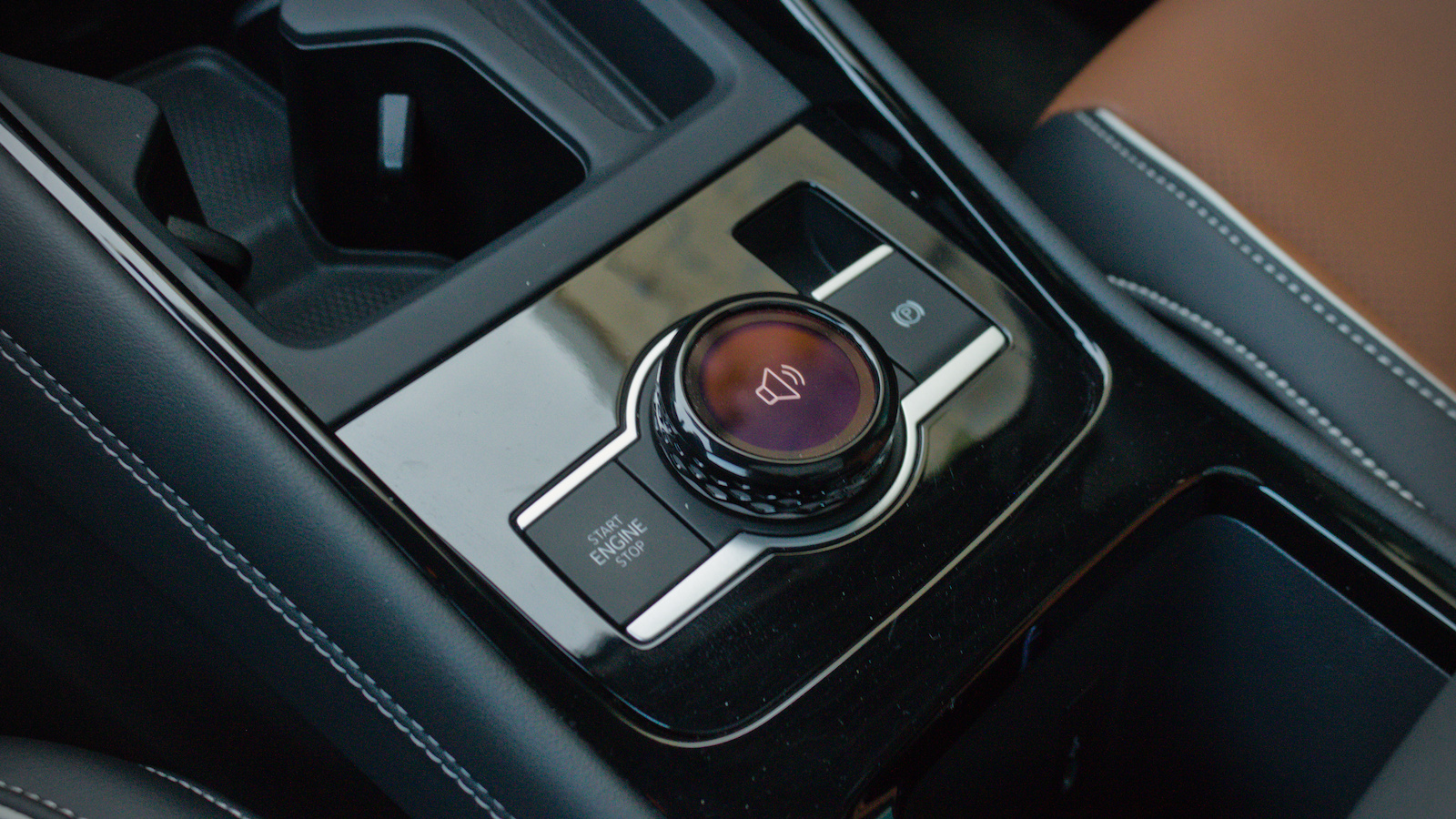
Several years ago, Volkswagen went all-in on touch-sensitive controls with disastrous results. Non-illuminated capacitive-touch sliders for volume and temperature control proved irksome, capacitive-touch steering wheel controls occasionally resulted in a heated steering wheel activation you didn’t want, and the infotainment systems themselves were slow and cumbersome. Since then, Volkswagen’s reversed course, and the new Tiguan features some interesting Band-Aids. The sliders for volume and temperature are now illuminated and still a bit fiddly to use, but do you see what’s in the photo above? That’s a proper volume knob in the console, and you can press the middle of it to turn it into a drive mode selector. It’s a big step up in usability, as is the all-buttons steering wheel controls and the substantially revised infotainment system. While certainly not perfect, it’s all movement in the right direction.
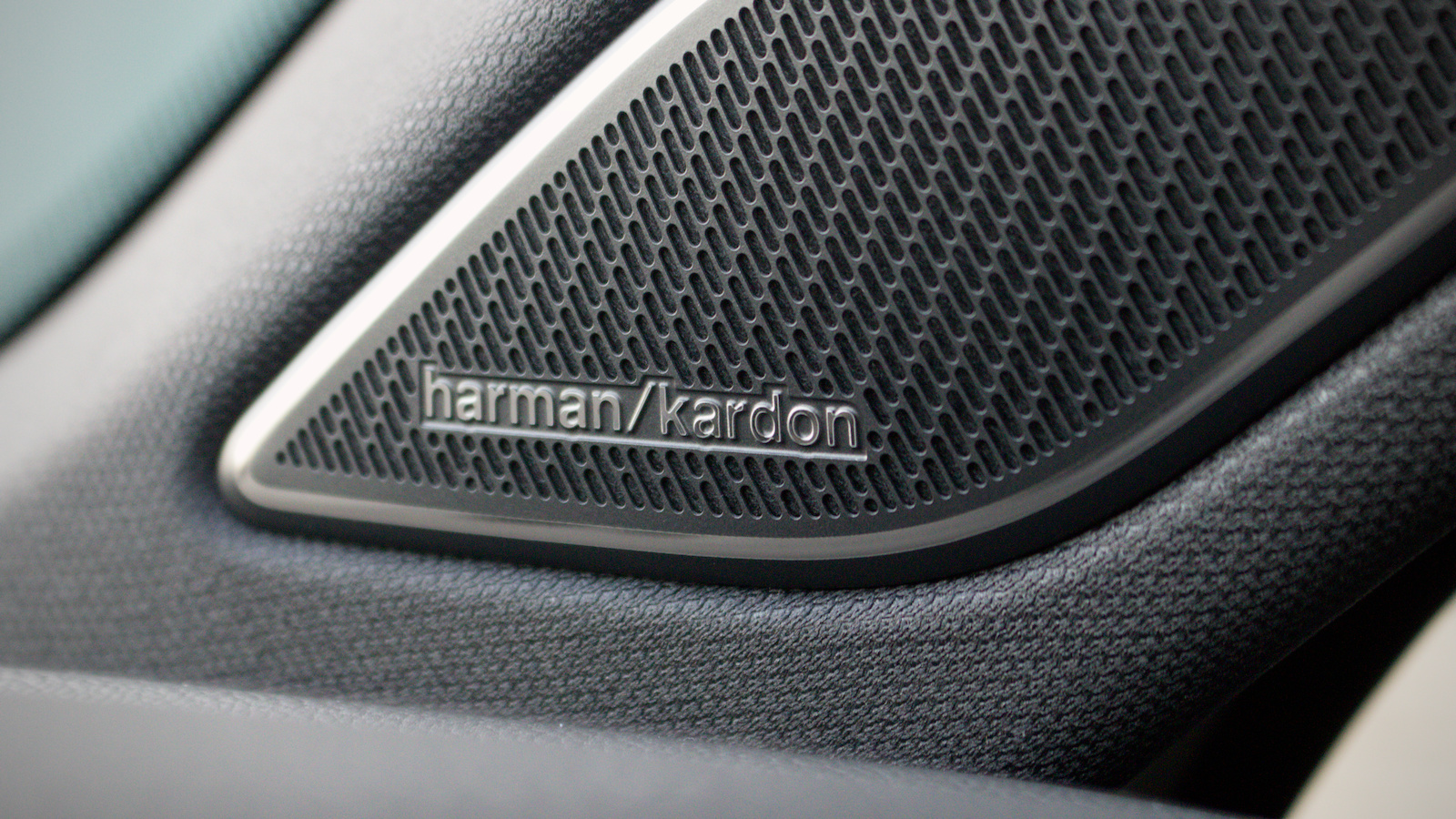
The top-spec Tiguan Turbo also gives you a Harman/Kardon sound system that’s quite good by the standards of the segment, provided you take the time to tweak the equalizer. Clean low-end, crisp but not overwhelming highs, fairly level mid-range, and low overall distortion for the class. Plus, it’s a lot more fun to listen to than the RAV4’s JBL system or the Tucson’s Bose stereo. Job well done, I reckon.
Three Things To Know About The 2026 Volkswagen Tiguan Turbo
- The massaging seats are surprisingly good.
- That smooth, torquey engine only needs regular gasoline.
- It’s a well-appointed cruiser, not a hot hatch in disguise.
Does The Volkswagen Tiguan Turbo Fulfill Its Purpose?
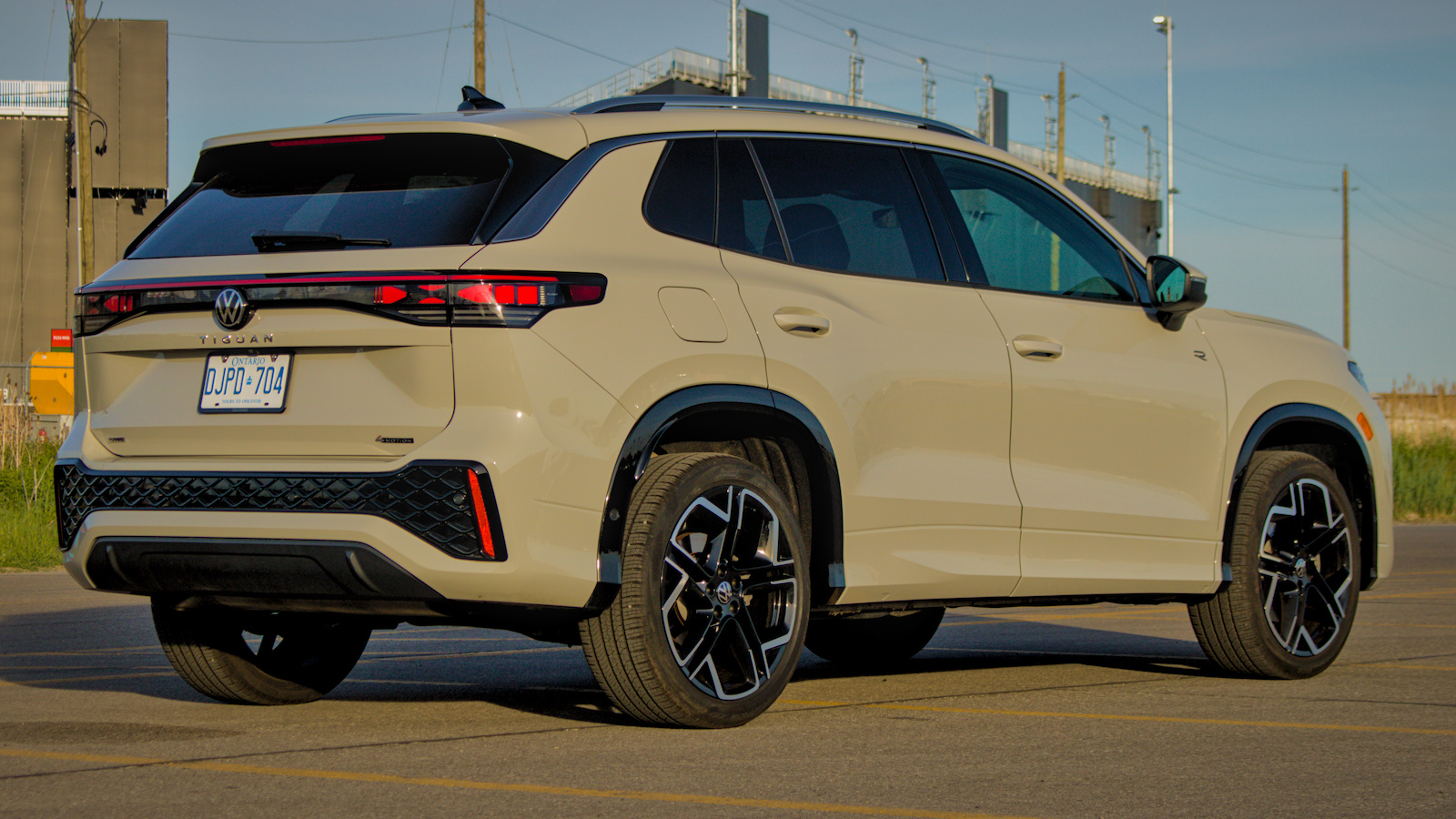
The Volkswagen Tiguan Turbo isn’t really a performance model, but instead something more important: proof that the Volkswagen many North Americans fell in love with—a maker of refined, well-appointed cars—is still alive somewhere in Wolfsburg. This loaded model’s $44,560 ($52,295 in Canada) price tag may be near the tippy-top of the mainstream compact crossover market, but you’re getting something genuinely luxurious for that sort of money.
When it comes to this sort of well-appointed, smooth, powerful compact crossover, there aren’t many real rivals to the Tiguan Turbo. The Toyota RAV4 Plug-In Hybrid is potent and vastly more efficient, but the interior materials are a noticeable step down and the overall calibration isn’t on the Volkswagen’s level. The Mazda CX-50 Turbo is the closest thing on the market, and while its six-speed automatic doesn’t quite match the sophistication of the Tiguan’s eight-speed and overall equipment levels aren’t as high, it’s a lovely choice for someone seeking gobs of torque and more driving engagement. Still, if you want massaging seats or that lovely wood trim, it’s Tiguan or bust.
What’s The Punctum Of The Volkswagen Tiguan Turbo?
Just like Volkswagen used to make.
Top graphic image: Thomas Hundal


Massager??? Jayzus.
$44,500 for a VW ? That’s a deal killer. There is so much else in the space that have a better consumer track record. The Acura RDX is priced almost identically. The Genesis GV70 and BMW X3 w XDrive is not much more. The Mazda CX-30 is actually lower.
“Tiguan for the team” is an excellent pun.
That color is certainly interesting.
Those fuel economy numbers are sad.
Criminal we can’t get the hybrid and plug in hybrid version. My wife loves it, but after owning an ID4, is only really interested in something she can drive on electric.
I just picked up the fleet-spec version of this car for work, and even the fleet spec is a very comfortable place to spend 800 miles per week. Heated seats, adaptive cruise, and lane-keep assist just melt those miles away. It’s smaller than my previous car (GMC Terrain) but it uses the space better, so I can actually fit my tool box in the back without folding the seats down.
But Thomas is spot-on about the jowls on this thing. Mine is dark gray and it looks exactly like a Dark Trooper from Star Wars Battlefront 2, the original version, not the remake.
I thought we agreed we weren’t going to do ‘hearing-aid beige’ anymore.
I think it may look decent in a better color, but 45k is a big ask for a Tiguan (and I’ve paid over 40k for a VW).
$45 large is Passat Estate territory.
Damn, I hate this timeline.
Everyone does not want a compact crossover, but it’s as close to a hatch or a wagon as anyone sells, so that’s what you are stuck with.
The beatings will continue until morale improves.
Shh, we don’t talk about that demographic.
I believe you can get this engine in Europe in the Q3, but with a 7-speed dual clutch. Why the different gearbox in America?
Also, VW is introducing a conventional hybrid in the Golf and T-Roc. I am sure it will end up in the Tiguan too.
Wild ass guess, the average american probably found the DCT’s slight roll back at stops slightly disconcerting/weird, I imagine it seemed even more inappropriate in a crossover when afaik at this point none of the competitors use one here.
Also while a real edge case for something like the Tiguan, dual clutches aren’t very good for low speed rough roading, slogging through deep snow or mud. This is based on watching some reviews of the Kia Seltos that used to be offered here with a DCT. Could just be Kia but I think at slow speeds the DCT is not great at creeping, you’d also in this case be putting a lot of extra wear and tear on the clutches. Again this may be overstated as my availability bias and nothing VW considered, but I actually have done some off roading and soft roading in the past and still part of my requirements for a CUV would be that it actually would be somewhat better than a car on crappy forest service roads we have to drive on for hiking and camping.
Interesting. It is not the first time this has happened (different automatic gearboxes for the same car depending on which side of the Atlantic it is sold) and your explanation makes a lot of sense.
Due to Europeans lack of experience with automatics this details may not be noticed or as important for us.
What’s weird about a slight tool back at stops?
It’s the creep I find weird.
If you’ve only ever driven an automatic (which is a considerable majority of Americans) then you are used to the creep and come to expect it. So a slight roll back would definitely confuse people here.
Yeh exactly. And imo it feels more noticeable in the couple of VWs I’ve driven with DCT, there’s situations where the it would roll back that in a torque converter auto the little bit of forward push would basically hold you in place. I quickly adjusted to it and even kind of enjoyed that it reminded me slightly of driving stick but to your point to the average american I imagine it just feels weird until they’re used to it.
I gather that DCT boxes have no provision for slipping and popping the clutch for torque control?
I never got the hang of regular torque converter automatic transmissions in challenging situations, the closest I could get to actually controlling anything was enough gas to start slipping and tapping the brakes. I can imagine DCTs would be a lot worse., plus fragile.
I have never off roaded a DCT so this is purely based on watching some youtube videos, but I think that slight bit of slip before it engages combined with iirc overheating problems once they started going through some mild mud with it were the issues.
Generally when I’ve off roaded an auto in tricky situations you two pedal it, left foot on the brake and right foot on the gas, as much as I like driving stick even off road an auto is much easier to control creeping off the line in slippery stuff or on hill climbs.
We had a last gen Tiguan and I really liked it. Traded it in last year for a Q5. The whole time we owned the Tiguan I thought “this would be perfect with the GTI’s engine/tune” However, we bought that Tiguan new for about $29k. I’m not sure the extra HP is worth $15k.
We split the difference and just got a CPO Q5. Under 50k miles and under $30k out the door, and all is right with the world.
I’d be perfectly happy to rent one of these, but I’d not own it (or any other contemporary VW product) without first doing a whole lot of deep dive research about how recent VWs are put together for the long run. I’ve owned a handful of VWs over the years, and kept one for 23 years, but if they’re still using plastic for the power window regulators, etc… there’s no way I’d willingly buy one. Same goes for all the other cost-cutting measures that long-time VW owners have the eventual misfortune to discover.
So: rent or maybe lease (if I were interested in this kind of car, which I’m not) sure. Buy? Probably not unless VW has made some changes.
look up water pump problems on the mk 7 gti lol not sure if this has been addressed or not.
We need you to drive it up to Sudbury to see what Miigwan and Ziigwan think about the Tiguan.
Love me some First Nation Hotties
They’d probably give an ‘Eh Plus’
Plus, you can fit some hockey bags back there…
but how many sushis and sashimis can you pack in it?
Being able to see the exact oil and coolant temp is a good argument for digital gages.
I keep the configurable screen on my GTI with tach in center, left side is oil temp/gearbox temp/coolant temp, right side boost gauge. Perfect
As someone that refrains from dipping into boost until the engine is at temp that would be heaven for me.
I’ll take the RAV4 PHEV for the same price with 50 more HP and less than 1/2 the fuel bill.
VW really isn’t trying anymore. They haven’t had a competitive product in the USA since the TDI’s died a decade ago. VW would have to make something exceptional for me to take a chance on them again after my lemon of a 2014 Sportwagon TDI.
The difference in power between the turbo tiggy and that RAV4 plug-in is fairly astounding:
https://youtu.be/Idfk7xl1_uk?t=95
If I had to guess, though, I’d say you’ll be able to wheel and deal on VWs sitting on the lot while it will remain order-and-wait for the Toyota.
yeah but you had a TDI. Big fat check buy back?
We bought one for my wife after the fix because she wanted another wagon and we had really good luck with our 2003 Jetta Wagon TDI. A coworker bought an identical car at the same time. Both were lemons with failure after failure.
At the time the local VW dealer had more than 100 fixed TDI cars on their lot.
I’ve always wondered what the reliability on those was like after they sat for like two years before getting the emissions fixed. I guess not good. Sorry for your experience
I had a 2013 tdi sportwagen that I had pre-buyback, and it was a great car with zero issues for 75,000 miles. Sad about the emissions crap though.
Sitting in the desert is not kind on rubber. Both of our cars needed to have the panoramic sunroof seals replaced. Mine under a CPO warranty and his under an extended warranty. The dealer had my car for 4 days and his was more than a week.
Mine also never got better than 40 mpg and that that was running a steady 65 mph on a flat interstate.
Emissions “crap” is the reality to meet modern emission standards – which are needed as many US cities still routinely fail air quality standards. The reality is that a hybrid simply is a better technological solution in light duty vehicles today – for power, emissions, and fuel economy.
Had a 2011 and a 2014 Sportwagen, so we got two big fat TDI checks. Which we spent in 2017 on two identical 2015’s with $5K off sticker and 0% financing. Last ones on the lot. All four had/have been perfectly reliable (with one small VW-like defect to keep us honest: a keyfob that eats batteries every few days). And all four routinely got/get 50mpg.
As long as the CX-50 Turbo is still in the market, the Tiguan is irrelevant to me. When VW was doing well here, it was known for above-class refinement, material quality, driving experience, and torquey powertrains. Every bit of that is covered by the Mazda without the other thing VW tended to be known for–reliability problems.
I don’t know about the 50 but Mazda is killing the turbo engine in the CX-5, I wonder if they’ll keep offering it in other models or if they’ll slowly pull it.
It certainly doesn’t deliver very good fuel economy, and it’s really not much quicker than a standard hybrid RAV4, so yeah I do wonder how long it will be offered.
100% Agree on this. I have a 2025 CX-50 turbo (which replaced my 2021 CX-5 turbo). Both have been fantastic cars with zero problems from either one. I get the oil changed on schedule and feed it 92 octane and it performs flawlessly without complaint. I hit 28-30 MPG on road trips.
Some friends recently bought the exact Tiguan reviewed here. They enjoyed it for the first week then it stopped working and sat at their VW dealer for two months awaiting some elusive repair job. Local lemon laws kicked in at that point and they got a full refund.
My old roommate here in Denver bought a ’14 3 Touring hatch brand new in late ’13 and drove it to 261k miles (he worked as a regional courier driver, which I also do) and got in no less than FIVE accidents (none of which were his fault, btw) and he got the car paid off by other people’s insurance companies almost two years early. (I bought the car off him for $400 and it’s still trucking along at 287k miles).
He upgraded to a ’23 CX-5 Turbo AWD. It’s extremely punchy and has stellar fit and finish, and looks quite fetching in the Eternal Blue Mica color. But it requires premium, and he said his best tank was just under 31 mpg highway, but more typically in the 27-29 range, and about 22-24 around town. He loves the power, but paying the extra for premium with these fuel prices and getting about 2/3 as good of mileage as with his 3 has induced a few complaints. But he generally feels it’s an acceptable trade-off. He’s not happy that the turbo is going away, but the forthcoming PHEV is intriguing to him.
But yeah, a Tiguan at 45k? If I’m spending 45k, I’m getting a CPO Genesis GV80 that is a size class larger, gets similar fuel economy and will have better resale value down the line with a better warranty.
VW needs to do a lot of things in the US Market (which I, as the owner of an ’11 Sportwagen 2.5S with a wiggle stick, feel is their ‘Red Headed Bastard Stepchild’ that they only stay invested and selling cars in out of fiduciary duty rather than actually wanting to be here and compete) but one of the biggest things is that they need to trim about 5% off their prices to be more competitive. Not happening given the somewhat dire straits VAG is in, of course…
“as the owner of an ’11 Sportwagen 2.5S with a wiggle stick”
Whoa, I had a 2010 in that exact format. Loved it. Everything they made after that felt decontented.
CX-5 is indeed a lovely vehicle. If I didn’t need the space, I’d personally opt for a new high-trim stickshift 3 hatch and enjoy a last-of-its-kind experience into high mileage.
Those fuel economy numbers are dreadful. Get your shit together.
Make an electric version and call it the ID.Tiguan. I bet it would come in at about this price point for the US market. Don’t bother with Canada since BYD is about to short circuit the EV market up there and VW can’t compete. For the isolationist US where 150 kW fast charging is considered acceptable and where VW’s tech is at, it’ll be a fine choice.
I’d call the EV version the ID.10T
Ask your IT friends what that means if you don’t recognize it.
I had a mid-trim Jetta for a rental last year. While it was a perfectly adequate car, I spent most of my time wondering why someone would choose it over a Corolla Hybrid for about the same dough.
Volkswagen doesn’t need to build vehicles that are as good as their Japanese counterparts. They need to build cars that are better, but also different. Maybe gobs of power is enough, but I wouldn’t bet the farm on it.
To be fair, the Corolla Hybrid is an absolute dog. Though yes, there’s other options for similar outlay.
I still have PTSD from my 2011 Tiguan
The first gen Tiguan is responsible for a whole lotta people swearing off VW (fair). So much so I’m shocked that VW hasn’t opted for a different model name.
It’s such a clumsy, goofball name, and awkward to pronounce.
VW sees your Tiguan and raises with Taos.
And then raises again with Touareg. No wonder they can’t sell anything here.
At least Taos is the name of a real place. But if you wanted mountain-town cachet with a “T”, Kia nailed it by scooping up “Telluride”
Should’ve acted quicker, VW. Actually, that could be applied to their entire North American strategy since about 2006.
VW has struggled to pick a lane these past 10+ years for sure. In eras past VWs might have been the cheapest, and then became known for their “Euro” traits, then their premium traits, etc. But then they abandoned all of that to seemingly compete with… Toyota? Jettas and Golfs were easy enough to recommend to people who wanted something a little extra for their commuters. But how do I recommend a Tiguan or an Atlas to someone. It’s like a Toyota but more likely to piss you off?
I have a friend who bought a 2024 Atlas and I did a mental head-smack when he told me but didn’t say anything because I wasn’t asked. So far, so good, I guess. He hasn’t griped about it.
I just hope whoever these people are buying Atlas’ that they’re getting them for far less than what they’re being listed for.
I rented a 2018 in Utah and it was decent. I don’t recall the spec, but in mostly freeway/highway driving it got about 33 mpg.I drove it to Moab, but the closest it got to going offroad was the parking lot at Arches.
If VW had their head out of their ass and had offered the K07 2.5 I5 AND the TDI on the first gen Tiggy instead of that awful fuel swilling, timing chain grenading 2.0 Turbo… they would have been Rav4/CRV levels of legendary reliability.
They offered them in the Euro and South American models in the base and mid trim models, but for some asinine reason they thought they should only offer the 2.0 here in the NA market. As such, the Tiggy has a better reputation in every market but this one because they were sold with EFFICIENT AND RELIABLE POWERTRAINS.
I swear that every manufacturer offloads their most dogshit engines and powertrains on the US market because they know Americans are mostly stupid and will buy whatever they offer instead of demanding better. Which… is on brand for the country, as a whole, since the 1980’s, really.
Piano black plastic wheel arch trim, why?
I’m not 100% sure, but this might be one of the first products which uses the Hyundai/Kia 8 speed auto since VW no longer sources the 8 speed aisin/toyota unit?
I’ve heard later model Atlas’ use the Hyundai trans as well.
Given that VW upped its game to be like the Piech era VWs, as this article claims by referencing the Mk4 GTI and B5 Passat, I can’t see why anyone would bother buying an Audi Q5 over this turbo model. The specs on the Tiguan match the prior gen Q5’s 2.0t, the interior is vastly better in the VW now, and Audi really whiffed on the interiors of their current crop of cars. Plus, the virtual cockpit is a terrible downgrade compared to their old models.
Normally I roll my eyes at the “Audi is just a fancy VW” type of comments, but lately I’ve been feeling the same. I even commented the same on a Golf R article, because price, performance, and usability wise there’s no reason to buy an S5 over a Golf R. The only reason the RS3 gets a pass is because of the funky 5 cyl.
But yeah, unless you want to make your friends watch you show off your fancy OLED taillights or Matrix headlights there’s no reason to get a Q5 over this.
Yep, and I am not anti-audi, as I’ve owned three, but I’m anti-current-audi design and quality because it is awful. Audi was always much better than VW with interior materials and powertrains, but they’ve really lost it recently.
The V6 maybe?
The V6 is potent and tunable but it’s not exemplary in any way. It’s a good engine that sounds and drives good, but it’s not special. I have a B9 S5 and tuned R’s go just as fast as my tuned S5 even with 2 less cylinders and the “inferior” Haldex AWD instead of Torsen. I’m not convinced a V6 and Torsen are worth an extra $25k, especially when the R is probably more tossable and fun than the S5 as well.
I really hate the transmission on the Tiguan.
And it’s very noticeable when you drive a new one back-to-back with one that’s ~2 years old. It’s shift points and behaviour isn’t consistent nor smooth between the two.
It’s also pretty glaring that there’s not a hybrid in here, too.
Golf and T-Roc are getting a hybrid. Will probably end up in the Tiguan too.
Absolutely no way David got the Tears for Fears reference.
Such a shame we don’t get this in Mexico…. where it’s produced.