

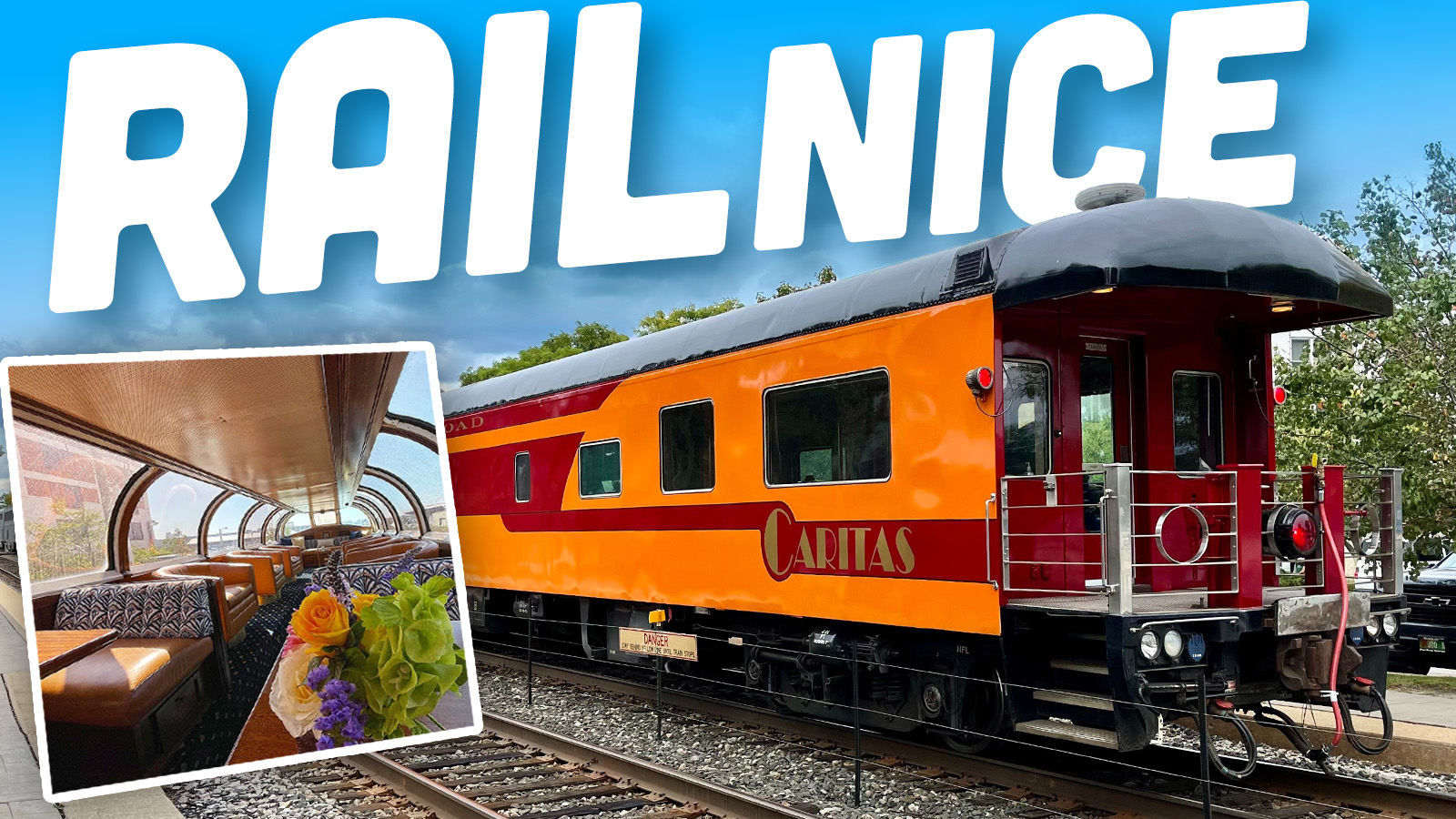
The private jet is often seen as the pinnacle of luxury transportation in America. If you have a private jet, you made it. But there is a wilder way to travel that’s perhaps even more of a flex. Look closely at the next Amtrak train that you see, and you might find a vintage car riding on its back that looks entirely out of place. That’s a private railcar, and for those lucky enough to own one or book a trip on one, it’s the wildest way to travel across America. It’s travel from the Gilded Age, but in the 21st century, there’s a ridiculous catch.
Long-distance train travel is often seen more as a novelty than something practical in the United States. A flight from Chicago to Los Angeles takes a touch over four hours and will likely cost you $300 or so on a decent airline. A trip between the same two destinations on Amtrak can run you about $100 cheaper, but takes about two days. Sure, you don’t have to deal with a tiny airline seat or go through airport security, but most people would rather deal with the downsides of flying for much faster travel.


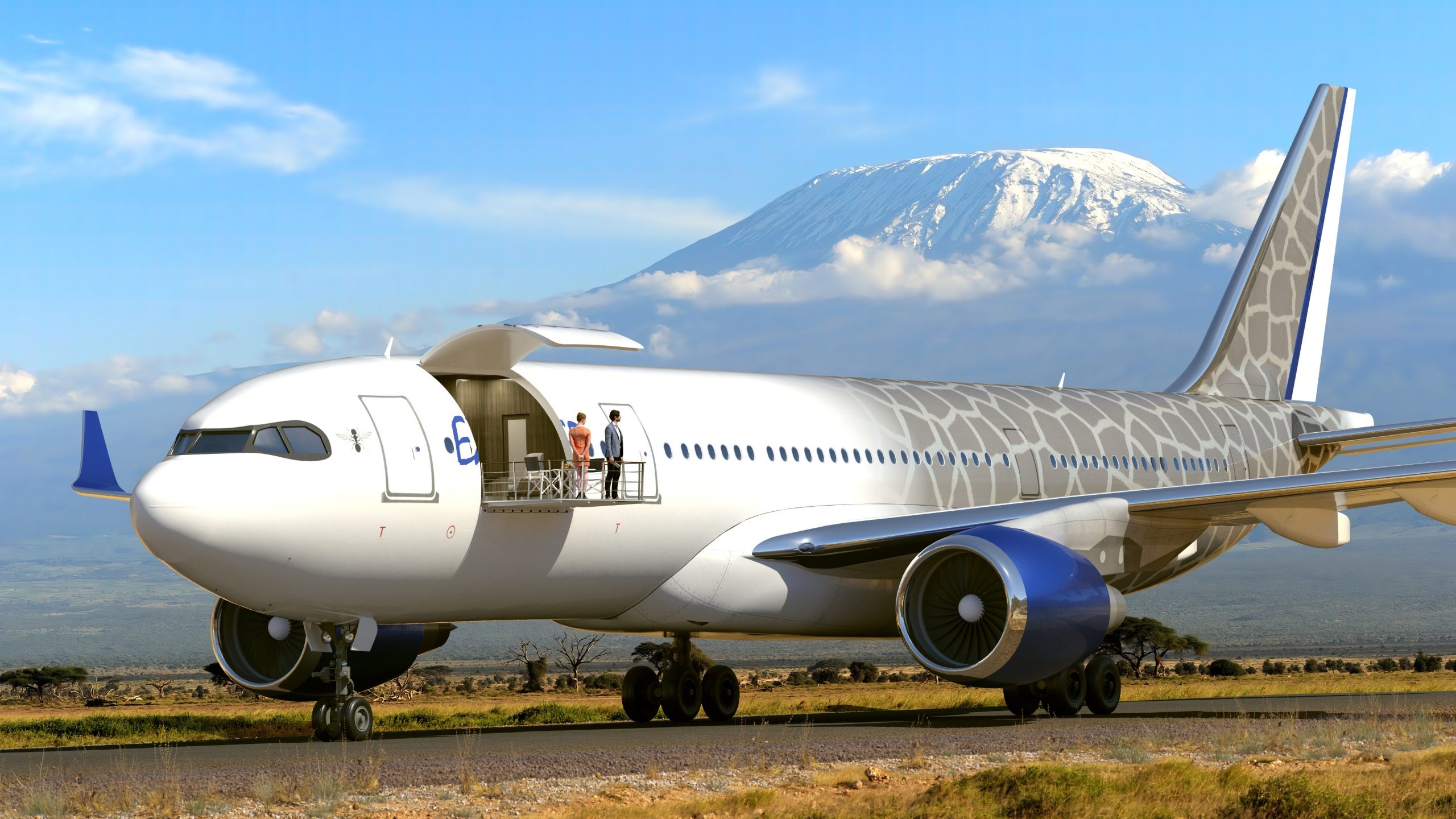
Upon first inspection, flying even overshadows trains when it comes to luxury, too. Countless people have flying in a private jet as a bucket list item, and innumerable headlines have been written about astoundingly expensive jets for the rich and famous. I’ve even written about these planes, including the fastest civil jet in the sky, the $78 million Bombardier Global 8000, and the $350 million Airbus A330 that has a garage, a disco, and a balcony.
Yet, there’s something out there that’s far more romantic than any Bombardier. Forget flying across America like you’re a millionaire pop star; you can ride in a restored vintage train car like you’re a 19th-century or 20th century business tycoon. Riding in a private railcar is less about getting to the destination than it is about the experience of the journey.
The great thing is, it is technically possible for you to take a ride in one of these railcars. That private car will likely even be hooked onto the back of an Amtrak train, which means you can even use a private railcar for real cross-country travel. Traveling slowly has never been so awesome, but there is a very expensive catch.
A Primer On Private Railcars
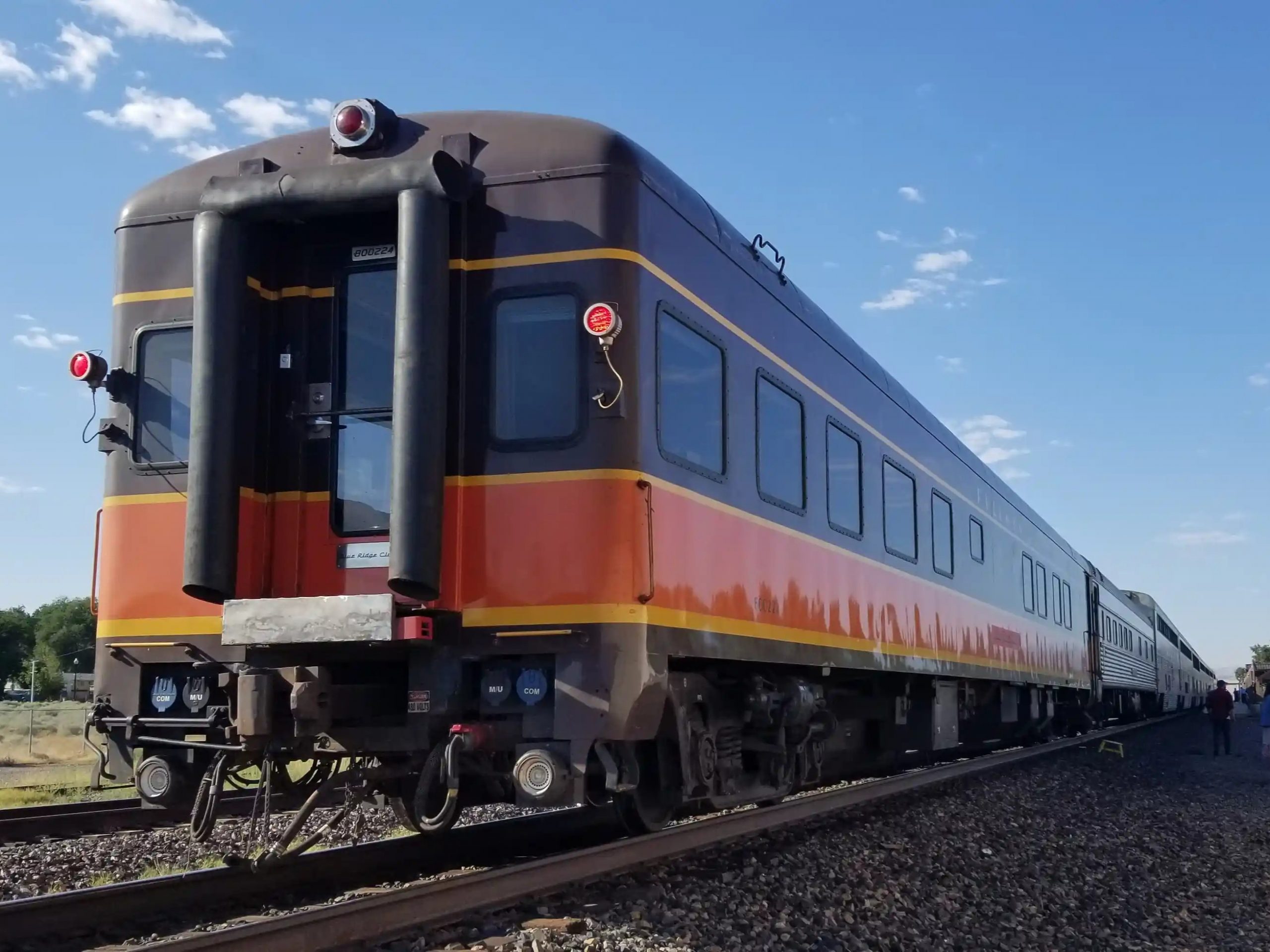
The private railcar, also known as private varnish, is not well-known in modern America. Instead, it’s sort of a secret hiding in plain sight. You’ve almost certainly seen a passenger train blow by a grade crossing and wondered why, sometimes, there’s a really old car at the back of the train. That car is a nod back to a different time, a time when planes either didn’t even exist or were in their infancy, and when the closest thing to today’s private jet actually rode on rails. The private cars of the 19th century and 20th century were like yachts with steel wheels and miles of wood.
As American Heritage magazine wrote in 1956, some of the first private cars existed for a practical reason, transporting heads of state and then railroad tycoons. From the magazine:
Like most of the other characteristic properties of the golden age of American railroading, the private car came into being early and nourished during the years of steam. In 1841 when President-elect William Henry Harrison went to Washington for his inaugural, the superintendent of the Baltimore & Ohio inquired of his superiors if he should be conveyed aboard “a distinct car.” The first private car ever built for an American head of state was outshopped by the Army for President Lincoln. He never rode it while living but after his assassination it was included in his funeral train and made a great hit with Mrs. Lincoln.

By the Seventies the advantages of private railroad conveyances were becoming widely apparent, for both their social and economic implications, and cars in an enchanting variety of styles, decors, and internal economies were rolling grandly over the rights of way that by now extended from farthest Down East all the way to the Golden Gate.
Mostly the architectural pattern of private cars and railroad business cars has conformed to the clearances and other requirements of railroad car building according to a fairly conventional pattern, varying in detail but filling the over-all concept of a self-contained hotel suite mounted on railroad trucks. One and all, until the present degenerate age of streamlining when a few enclosed solariums have appeared, they possessed an open rear observation platform, enclosed by inviolable tradition in a brass-bound rail and giving access immediately into an observation drawing salon of varying depths but necessarily straitened to the approximately eight-foot width of standard car design. Next there were a number of sleeping compartments, again varying in number according to the requirements of the owner, usually with their own showers, and invariably their own toilet facilities. A dining apartment seating from four to eight separated the last sleeping room from galley and crew’s quarters, again almost invariably built to accommodate a staff of two: a chef and steward.
In short, if you were somebody, you had a railcar. A private railcar was a rolling monument to your wealth and success, much like how jets and yachts fill the same role today.

That said, those who owned private cars weren’t just the rich and famous. As railroad lines crisscrossed America in the 19th century, the tycoons who ran the railroads hit the rails. Private railcars were often inhabited by railroad executives as their rolling offices. This also meant that there were two distinct kinds of private railcars. There were the ones that railroad executives rode in, but, importantly, the cars were still owned by the railroad’s stakeholders. Then there were the truly private railcars that we just talked about.
Both were ridiculously ornate and often filled from end to end with polished wood, hence the nickname “private varnish.” These railcars would commonly have a few bedrooms, a few bathrooms, a dining room, perhaps a ballroom, and kitchen facilities. Of course, there would be staff on board, including a chef, butler, and more. Basically, imagine a high-end yacht, but on rails. The private railcar wasn’t just a symbol of wealth, either. Older cars were overbuilt using heavy steel, and it was expected that you would pass your private railcar down through generations.
American Heritage tells more:
It was in appointments and décor that the whims of owners found fullest gratification. There are legends of sunken marble tubs, none of them available to verification by the author of this brief monograph. The car of Fritzi Scheff did carry a bathtub of less regal design, and the well remembered and much loved library cars of the Santa Fe in years gone by had tubs equipped wilh baffles against sloshing, so there is no reason to suppose that sunken marble plunges did not in fact exist. Private car owners not only kept up with the Joneses on the next track but strove wildly to outdo them in elegance, ostentation, and even comfort. J. P. Morgan, when he rented a private car, carried with him as his personal chef a fellow named Louis Sherry and had racks built in to accommodate his favorite wine, which turned out to be a Rhine wine which his agent had picked up at auction in Berlin for $35 a bottle. The San Francisco Examiner was happy to inform its readers that every glass of this vintage consumed en route set the financier back just over four dollars.
Dinner on George Gould’s private train, in the Boni de Castellane era, was prepared by a French chef ravished by the railroad magnate from Delmonico’s and served by flunkies in royal liveries, with knee breeches and frogged coats. His father, Jay Gould, enjoyed no such good appetite and was a fairly dainty eater. Aboard his car, “Atalanta,” was an equally French chef who specialized in the making of water-cress sandwiches and ladyfingers, a confection permitted by the elder Gould’s dietary regimen. Senator William Andrew Clark’s tastes were appropriate to the toga, and when he visited his daughter’s estate at Butternut over the rails of the Unadilla Valley Railroad in upper York State his powerful bourbon whiskey became legendary in the surrounding countryside. In the mid-Twentieth Century the culinary resources of the Milwaukee Railroad’s car No. 100, occupied by its president, John Kiley, include a deep-freeze, and the narrow gauge private cars of such carbonate kings in the golden noontide of Colorado’s bonanzas at Leadville, Central City, and Silverton as Haw Tabor and John Morrisey were celebrated for devoting almost as much space to the storage of champagne as to passengers.
[…]
There was almost no limit to the ingenuity of owners and decorators of private cars during their flowering. Rare inlaid woods were frequently imported for bulkheads, and solid mahogany trim and panels were commonplace. For her “Japauldin,” Mrs. J. P. Donahue, perhaps the richest woman in the world, commanded quartered oak beams running the length of the drawing room ceiling, brocaded draperies at better than $100 a yard, solid gold lighting fixtures and plumbing appliances, and a wood-burning fireplace activated by an electric blower.
Private Railcars Were The Flashy Way To Get Around
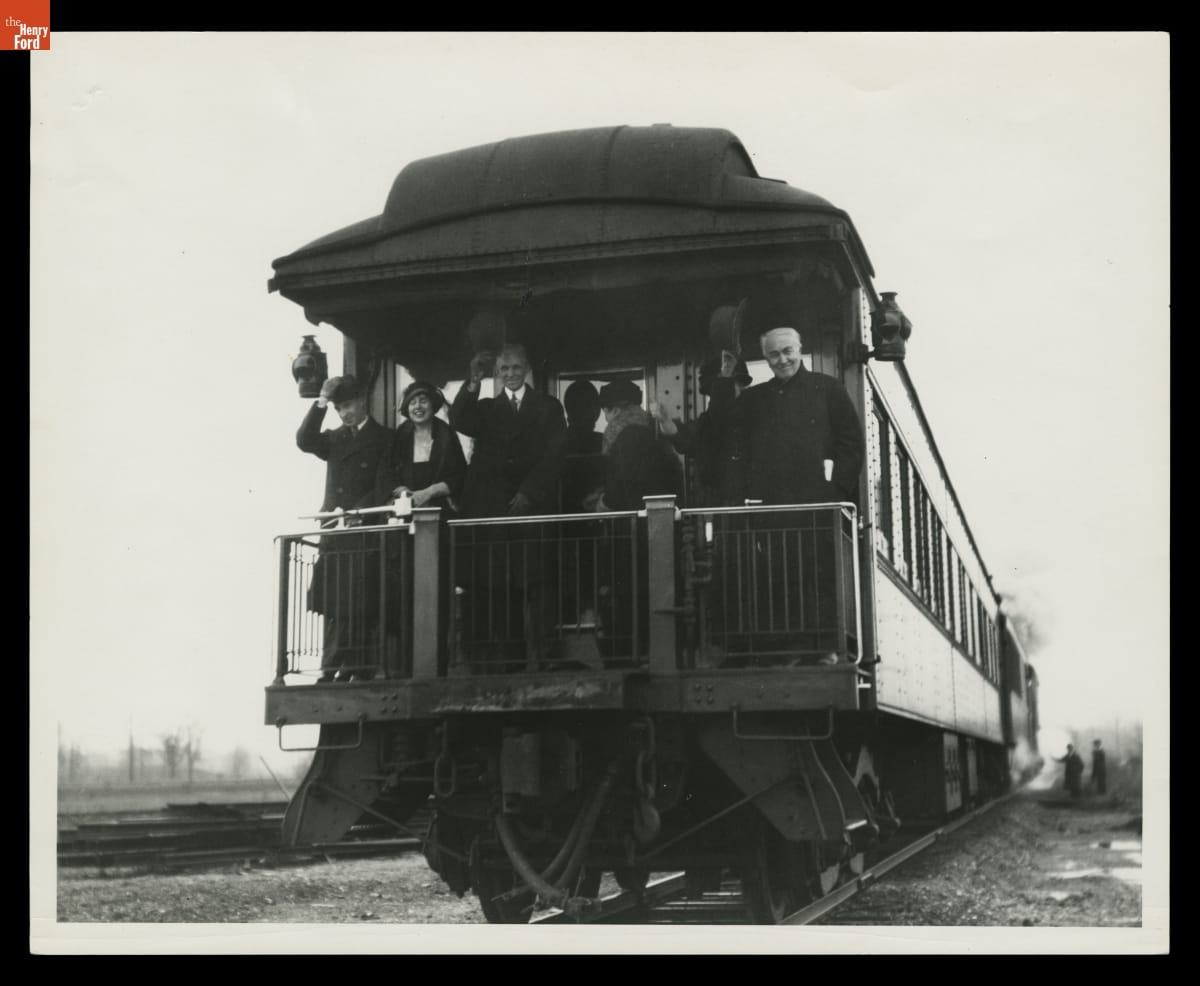
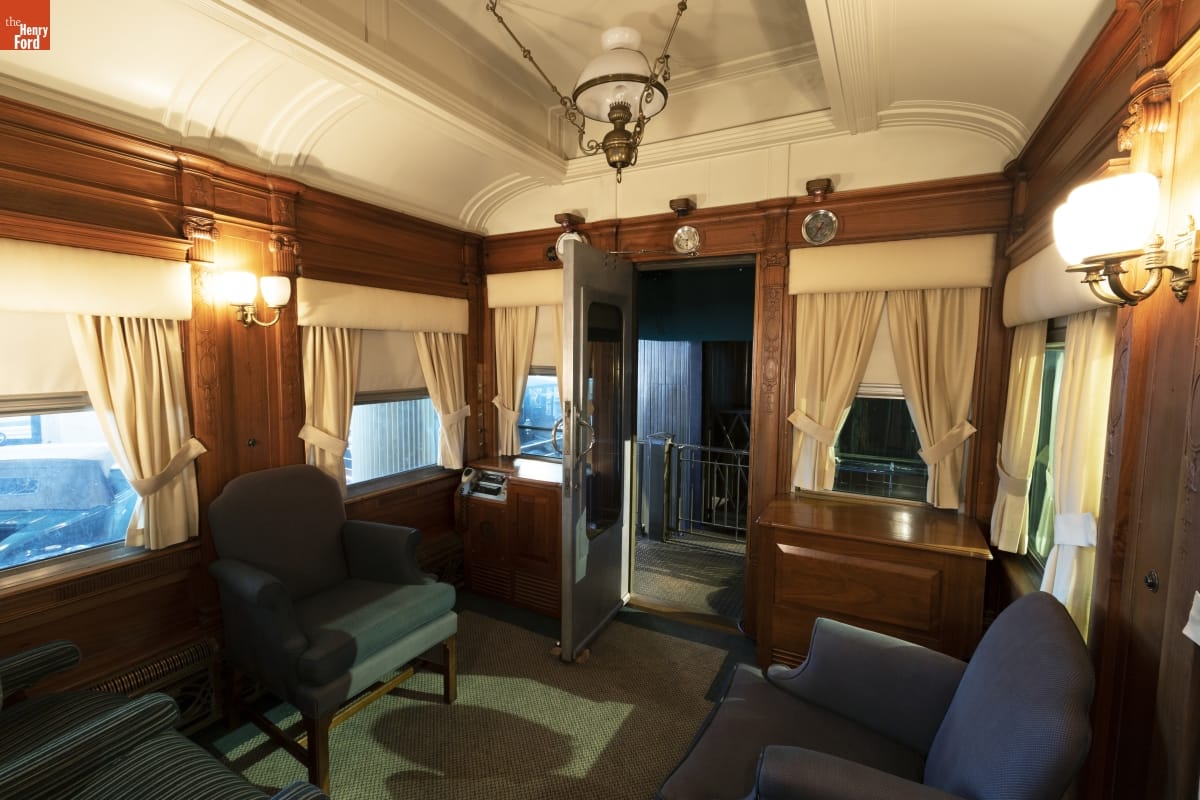
Pick a family name from the late 19th century to the 20th century, and there’s a good chance they owned private railcars. The Vanderbilts and the Fricks had railcars, as did the Goulds and Harrimans. Henry Ford also had a railcar. In 1920, Mr. Ford didn’t want to travel with the public anymore and bought a private railcar (above), naming it the Fair Lane. Ford traveled in the coach with his wife, Clara, on more than 400 trips, where they enjoyed a dining room, four bedrooms, an observation lounge, and chef-prepared meals. The large 88-foot car had accommodations for only eight people.
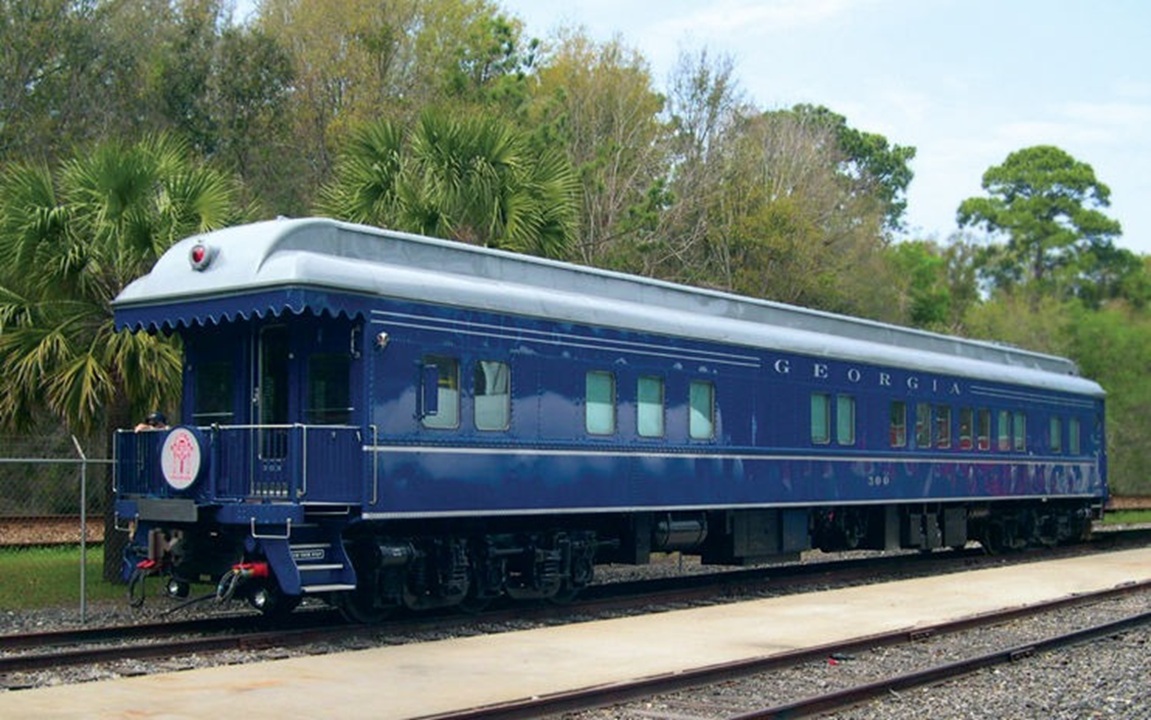
Private railcars have been a large part of American history. In the past, when Presidents and candidates rode trains across America, they rode in private cars. A famous modern example is when President Barack Obama rode aboard the Georgia 300 private car for campaign trip stops in 2008. That car, which Peoria Magazine reports was constructed in 1930 by Pullman-Standard as the General Polk, had also served as the rolling platform for Presidents George H.W. Bush and Bill Clinton as well as the campaign tour coach for candidate John Kerry.

But the private railcar phenomenon faded long before the 2000s. In the 1930s and 1940s, American railroading entered a streamliner era, a time when train design evolved to a point where locomotives and their coaches looked like they were going 100 mph when they were sitting still. Perhaps the most iconic surviving streamliner today is the Chicago, Burlington and Quincy Railroad Nebraska Zephyr, which you can ride at the Illinois Railway Museum when it opens for the season this spring.
Private railcar ownership remained high into the 1950s, but change was on the horizon. More people started leaving the rails to drive their own cars. The passenger jet struck another blow to rail ridership. Suddenly, traveling slowly on a train was so old-school. The rich and famous now had access to a plethora of high-flying, speedy aircraft from both military surplus and from aircraft manufacturers. Soon enough, the new vehicle for the wealthy was the private plane, and eventually, the private jet.
The private railcar was a thing of wonder back then. As American Heritage writes, the upper crust of private cars was built by Pullman-Standard and cost a fortune. In the 1870s, an industrial titan would pay around $50,000 (about $1,237,106 today) for a private railcar. By the 1920s, this price rose to around $250,000 ($4,197,590). By 1950, if you were still invested in private cars, it might have cost you $500,000 ($6,894,765 today) to have one built.
Private Railcars Are Still A Thing
Remember when I said that private railcars were built to be passed down from generation to generation? The good thing about this is that plenty of vintage private cars have survived to the present day. Many have been refurbished and restored, but still rock their vintage bones and style. They are still sort of vehicles for the rich, but on a much smaller, almost more “secret” scale than before. After all, to commit to a private railcar means you’ll be intentionally taking longer to get anywhere.

There are still a lot of these railcars in private ownership, and as you can probably guess, they tend to be owned by railfans. According to the American Association of Private Railroad Car Owners (AAPRCO), there were fewer than a dozen private railcars still in operation in the mid-1960s, mostly in the hands of railroads as mobile offices. By the late 1960s, the railroads began getting rid of these cars. Private individuals picked these cars up, reigniting a passion.
AAPRCO exists as an organization to help promote the ownership and safe use of private railcars. The organization works sort of like a car club, where owners of private railcars can meet and show off their rides. Only, instead of driving a car to a parking lot or on a rally, private railcar owners have their railcars hauled to a location and hooked up to a locomotive, where they take an excursion together.
You Can Rent A Private Railcar
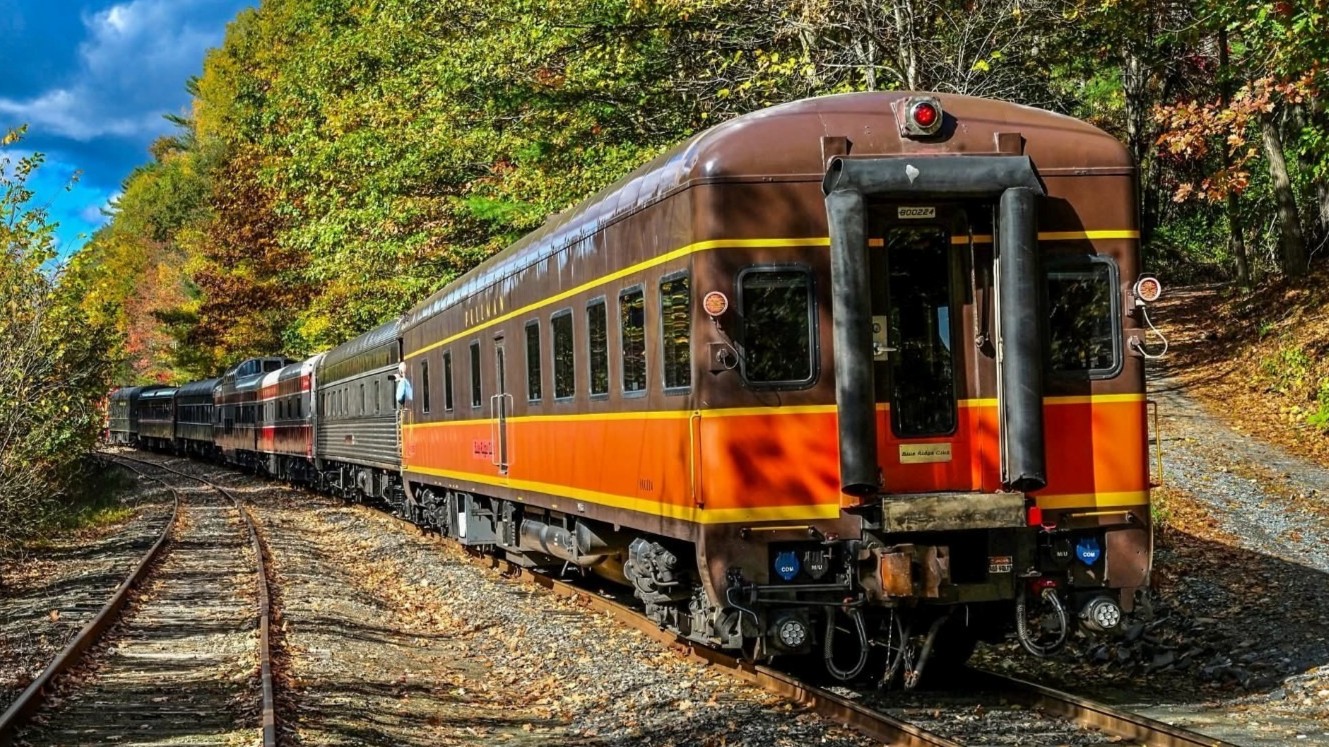
What’s also interesting is that AAPRCO offers 30 of its members’ private railcars for charter use. How it works is pretty neat. You arrange a deal with the railcar’s owner, and then the railcar is hooked up to the back of an Amtrak train. Then, the railcar just goes wherever the Amtrak train does, only you get to experience it from your own rented private car.
Being able to rent a private railcar isn’t anything new. AAPRCO has been around for decades, but it remains one of those organizations where “if you know, you know” applies. As Forbes writes, the late novelist Tom Clancy hated flying, so he took long-distance trips by renting private railcars.
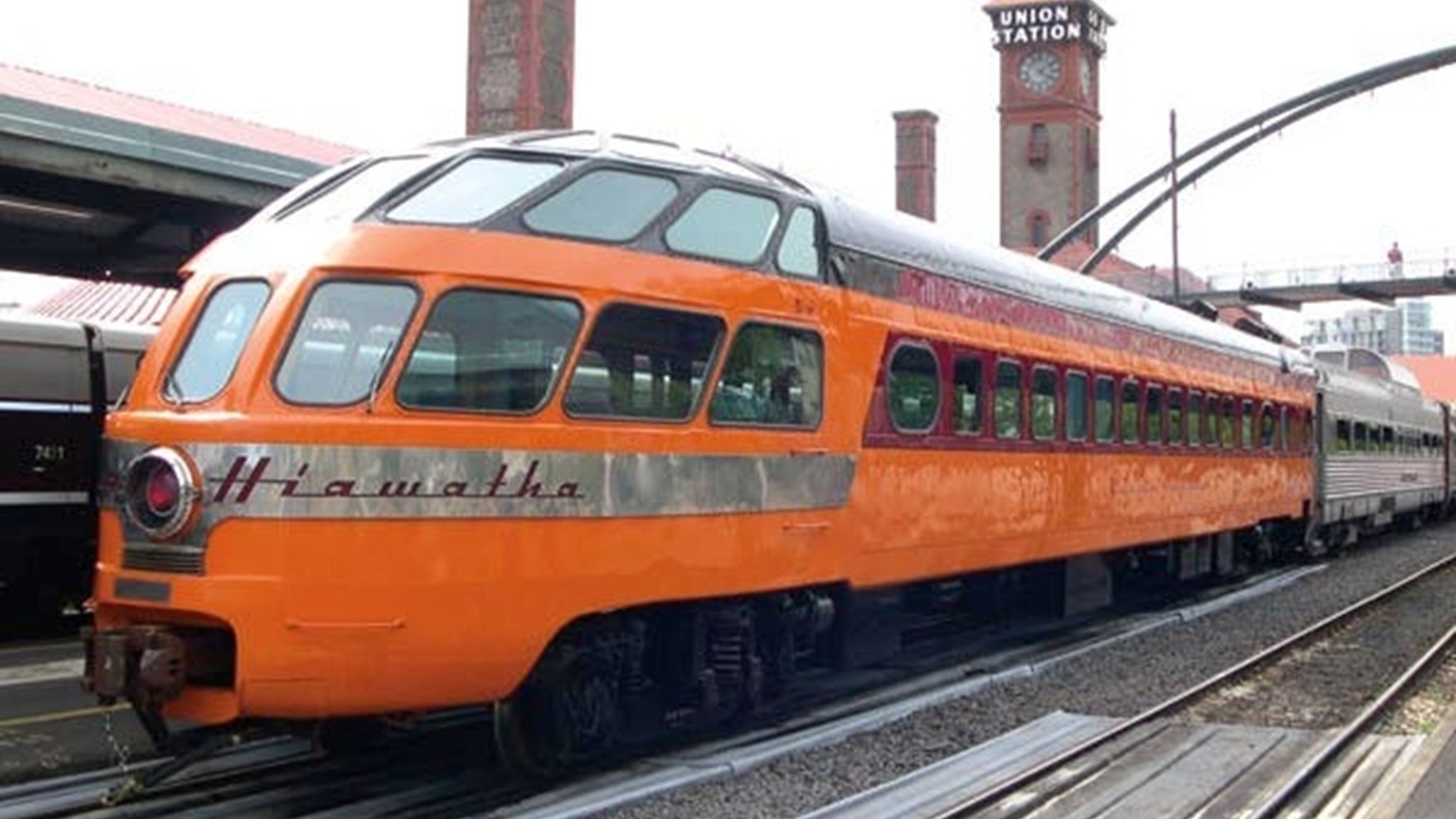
Weirdly, a lot of people learned about the existence of the private railcar only this month because startup Halloway launched a marketing blitz. Halloway is a brand of Lunatrain, Inc., a Pennsylvania company founded in 2024 to make overnight rail travel popular in America. Halloway’s mission is, per Lunatrain, “making private railcars easily accessible to all travelers.”
Halloway is a booking platform that offers a seamless way to buy a trip aboard one of the firm’s four private railcars. This platform does not appear to be geared toward the rail enthusiast.
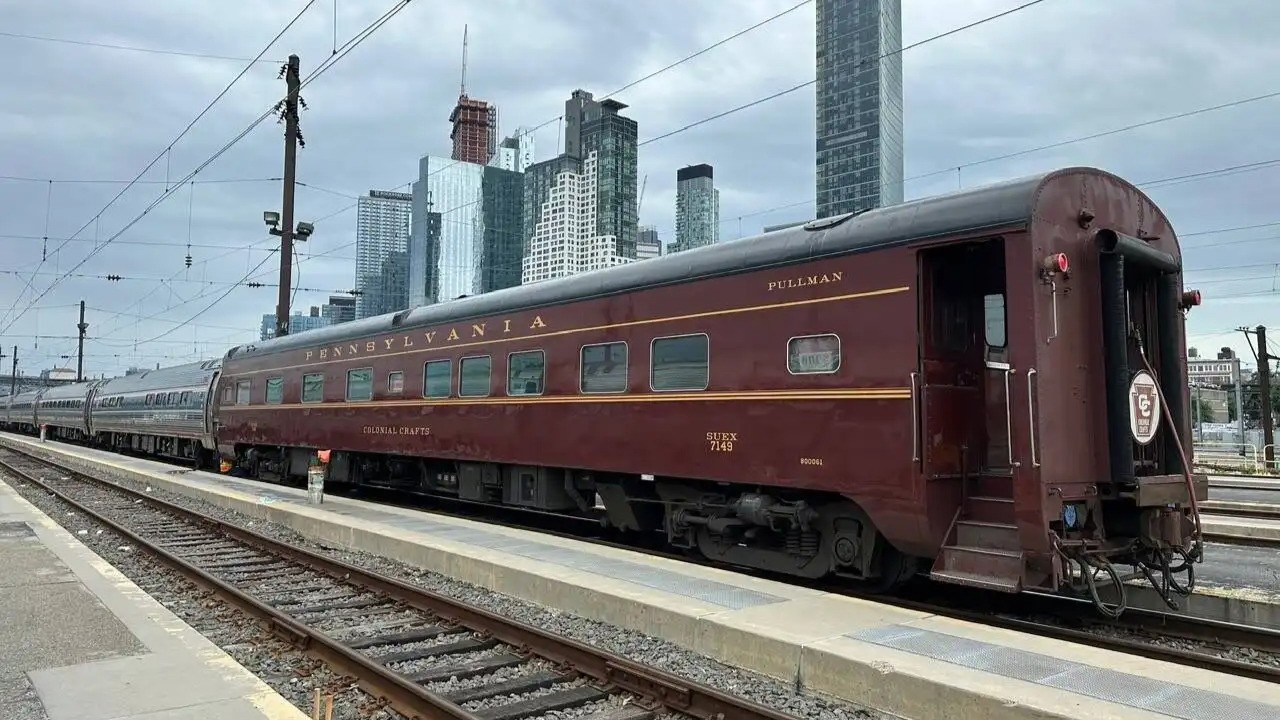
For example, one of Halloway’s cars is the Colonial Crafts, above, and the history section just says this:
Step back in time on the same railcar Elvis Presley and his entourage rode from New Jersey to Memphis when ‘The King’ returned home to Graceland in 1960. This lovingly-restored, period-correct gem retains almost all its original Pullman features, from the spacious buffet lounge area decorated in modernist aesthetic to bedrooms that represented peak luxury of the day. A trip on Colonial Crafts is sure to be one to remember.
That’s lame. I love trains. Tell me who built it, when it was built, how much it weighs, and what it did before it got into Halloway’s hands.
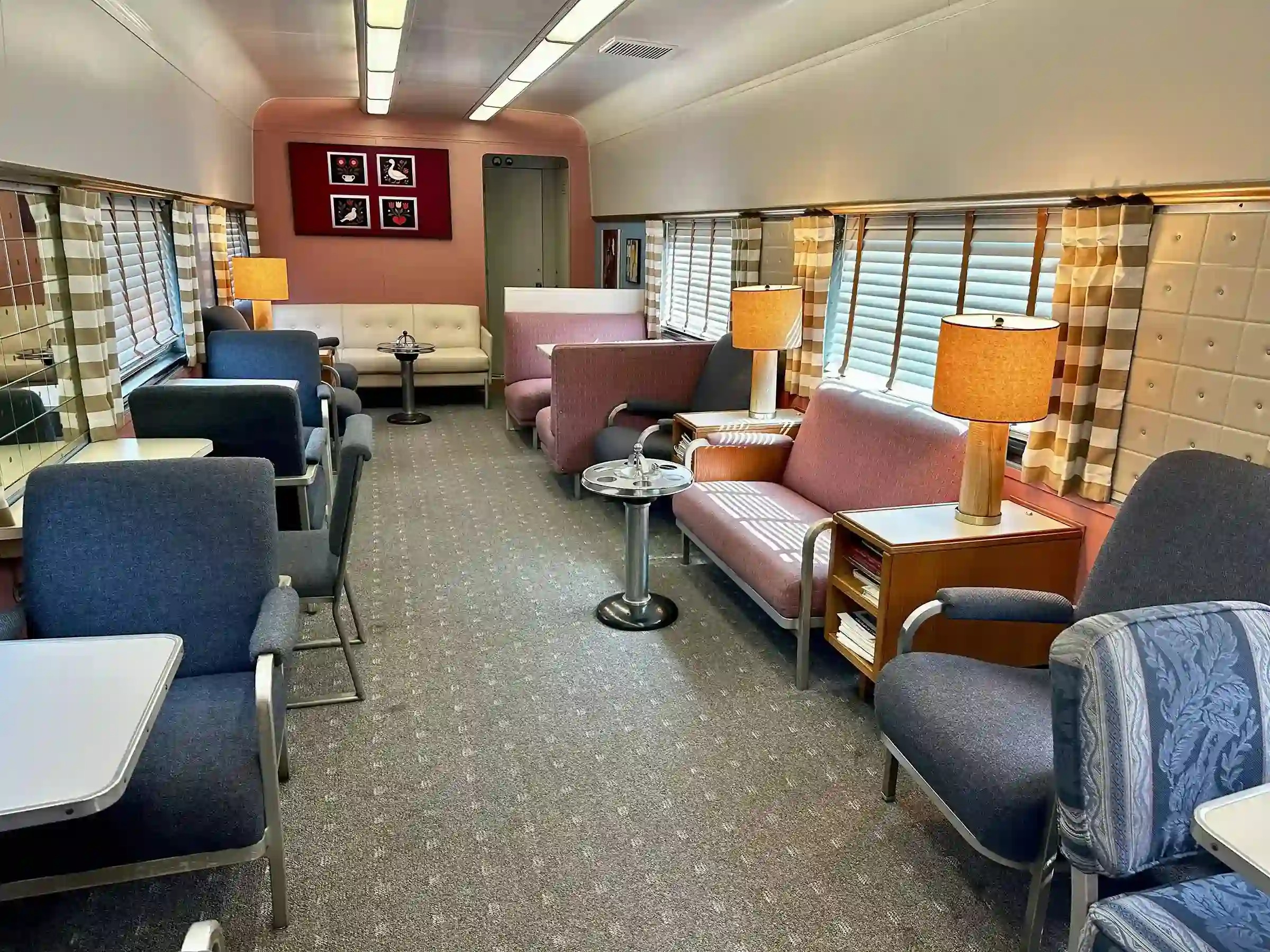
Well, I can tell you that the car was built by Pullman-Standard in 1949, and it was one unit in an order of 95 cars for the Pennsylvania Railroad. According to the Strasburg Rail Road historic rail organization, the Pennsy put this car into its “Colonial” series, which included, per Strasburg, the Colonial Cabins, Colonial Flags, Colonial Arms, Colonial Houses, Colonial Lanterns, Colonial Scouts, and Colonial Doorways.
Colonial Crafts is the only surviving member of the series that remains in operation, and it has some neat history. Sure, it did host Elvis, but it also hosted Richard Nixon in 1960. The car found itself attached to high-end Pennsylvania Railroad trains, including the Spirit of St. Louis, Manhattan Limited, and the Northern Arrow, until it was sold to a private owner in 1969. Colonial Crafts can also be rented from AAPRCO.
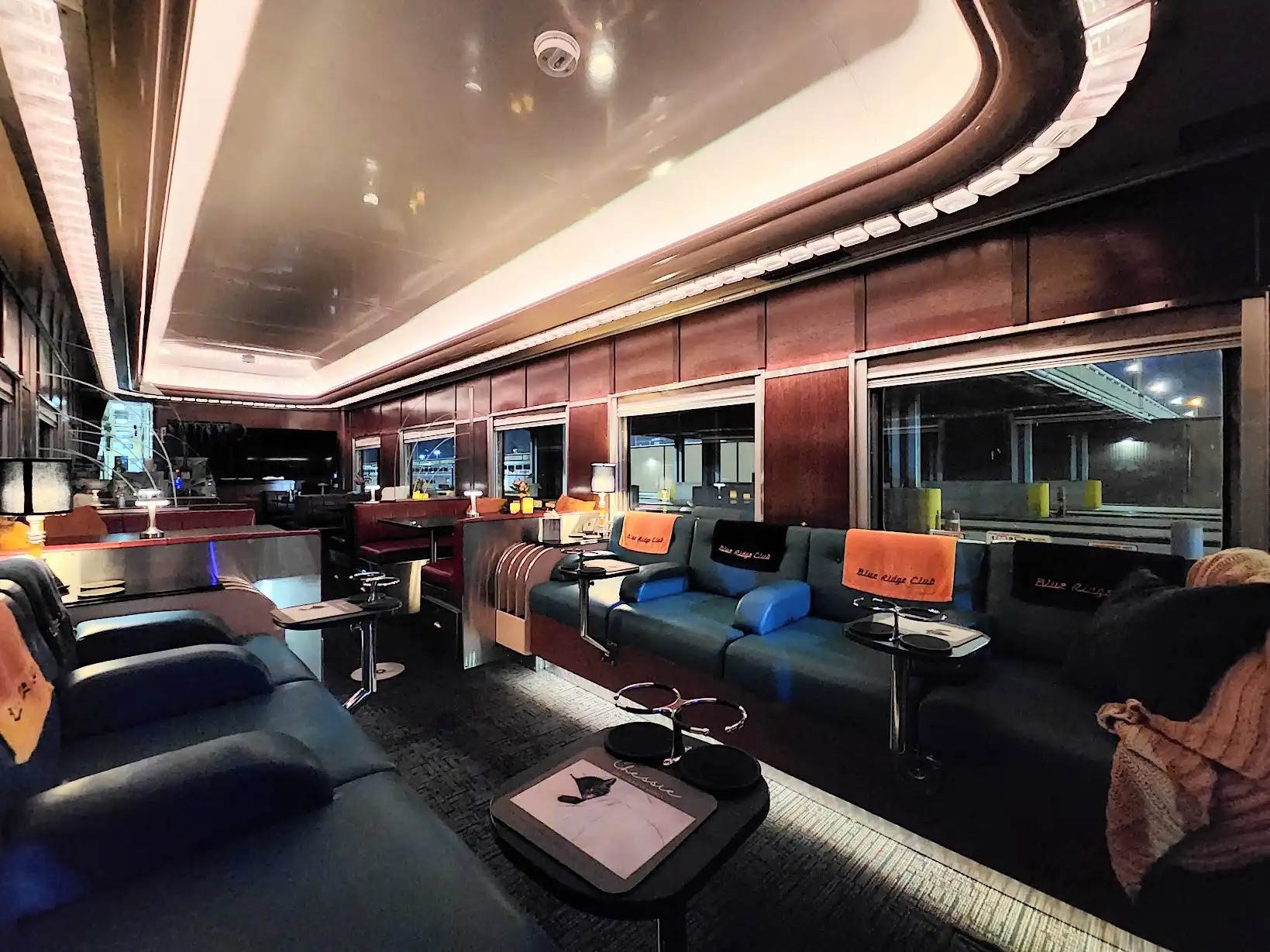
Alright, so you know that private railcars used to be a symbol of success back in the day. Now, there’s a new company that wants to make trains the next big thing in luxury travel. The big question is, what does all of this cost? Buckle up.
The cheapest trip currently advertised on Halloway is a 12-hour journey from Los Angeles to San Francisco. The cost? $10,000 to start. Ouch. Okay, what about another company? There’s Patrick Henry Creative Promotions, which will allow you to rent two cars for $15,500 a day. There’s another company called Pullmans Inc., which has a fleet of Pullman railcars available for rent. The daily rate is $3,500 plus all of Amtrak’s charges, and we’ll get to that in a moment. Basically, you’re not really going to rent one of these for cheap, and the rental rates will make a ride in even Amtrak’s fanciest suites seem like a deal.
Everything’s Expensive With Private Rail
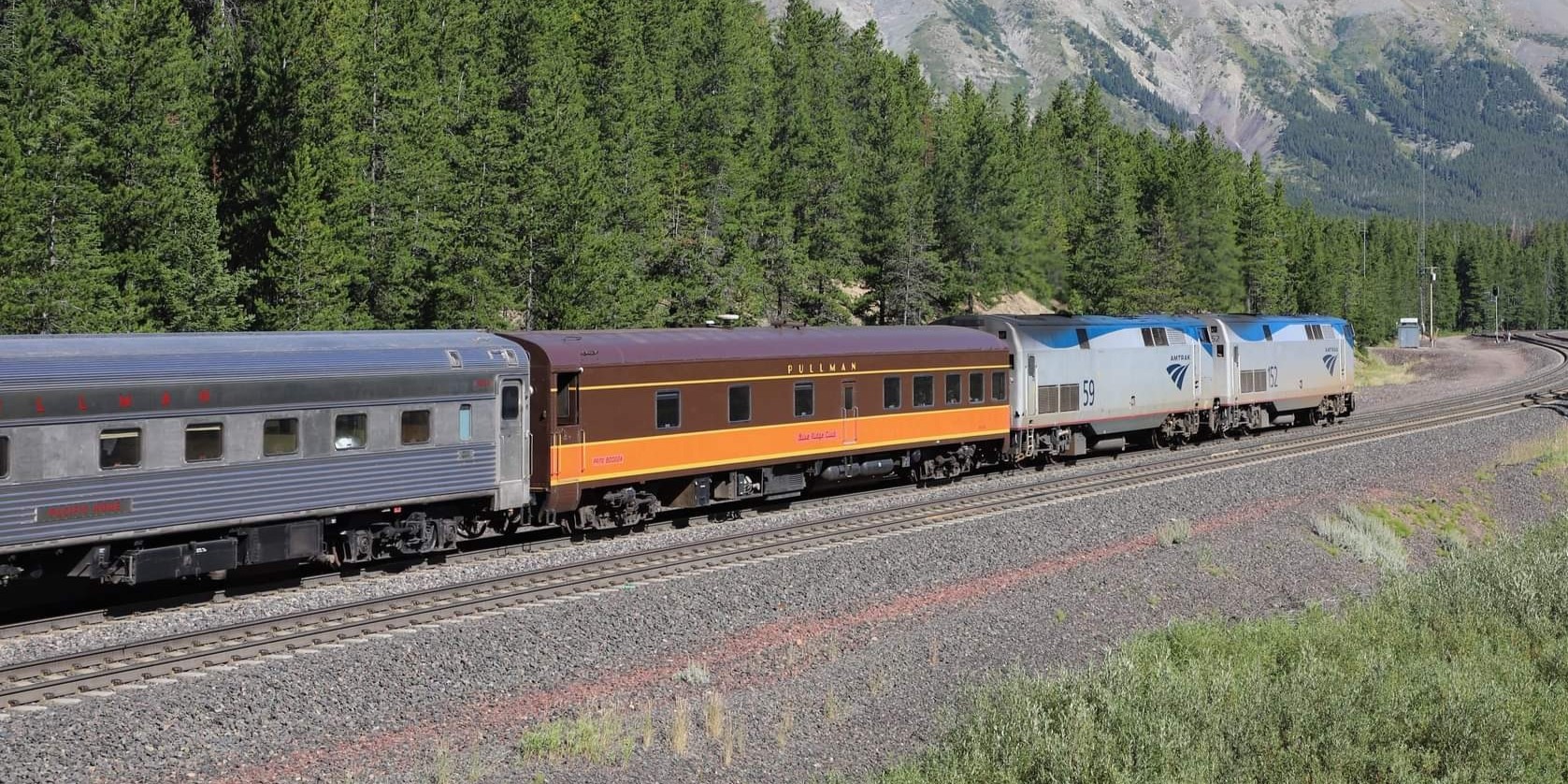
Buying is even worse. AAPRCO says that a decent vintage railcar will run you about $200,000. Then you’ll probably spend close to a million dollars restoring it and bringing it up to Amtrak standards. So, you’ll be in over a million dollars before you even hitch the car up to a train. You can buy a car that’s already restored, but don’t be surprised if the price is a million or two. The spending doesn’t stop there.
Amtrak is happy to haul some private cars at the end of its trains. This is great because you don’t need to buy your own locomotive, hire engineers, get track use, or anything like that. It also means that you can run your private railcar on Amtrak’s timetable and travel to Amtrak’s destinations. The catch is that Amtrak makes you pay for everything. Here’s a video of an Amtrak train hauling 11 private railcars:
You will pay Amtrak $4.54 per railcar mile, at least $214 for overnight parking, $4,310 for monthly parking, $7.25 per locomotive mile, $2,416 daily for the locomotive, $3,300 daily for electricity from the locomotive, switching fees, and even a 10 percent administrative fee.
In other words, you have to have pretty heavy pockets just to rent one of these railcars, and be well-loaded to own and operate one. Though it’s still cheaper than private jet ownership. Also, the rentals are cheaper on a per-person basis if you bring enough people with you. That’s pretty sad, but seeing that a lot of the cost alone would be going to Amtrak, I understand.
Still Unforgettable
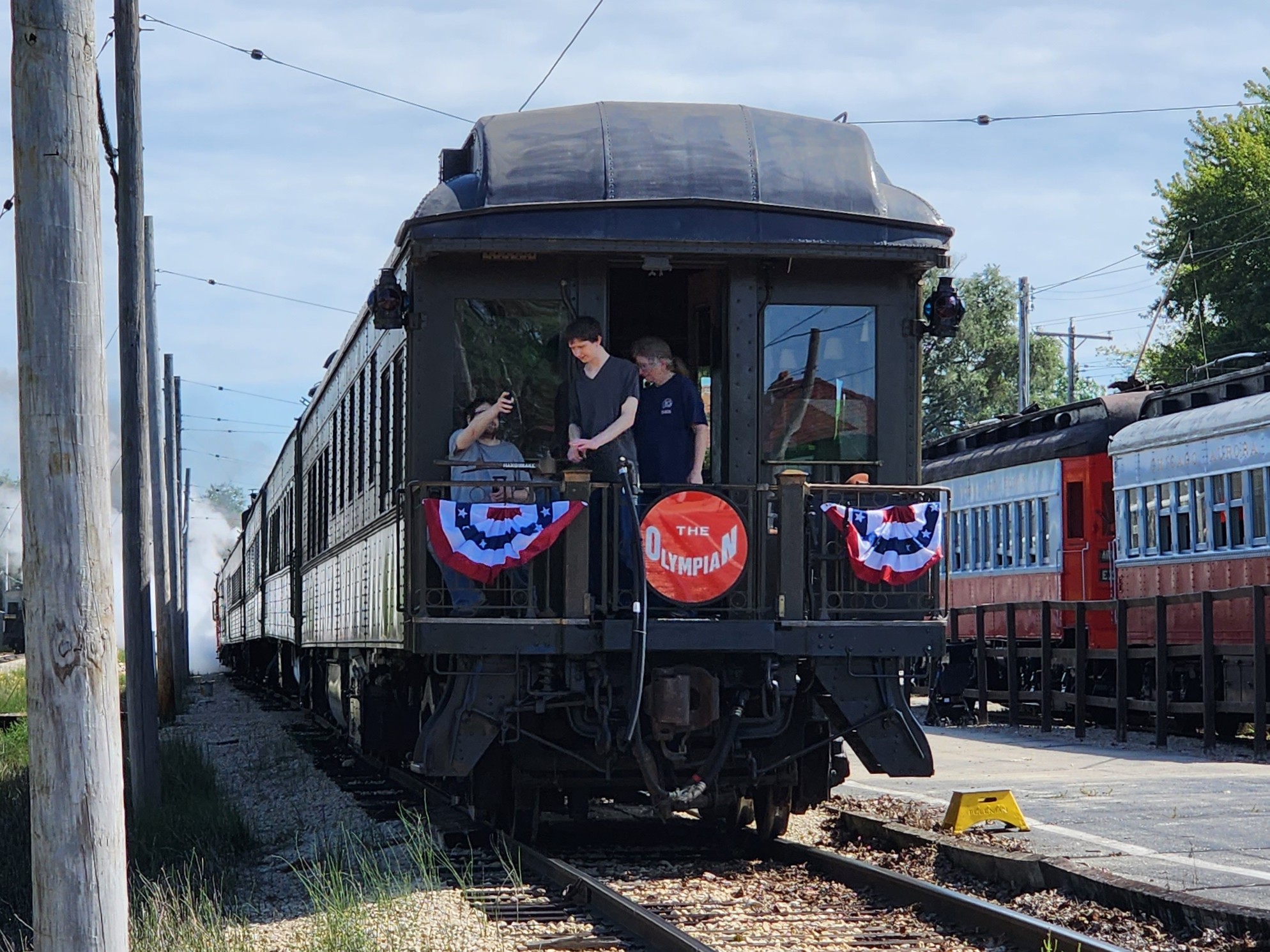
Costs aside, private railcars are quite a fascinating part of railroading. These cars used to be the business jets of their day; now they’re curious oddities tacked onto the backs of Amtrak trains. They’ve always been around and basically hiding in plain sight, yet lots of people don’t know about them. Now you do!
The good news is that if you suddenly have the desire to ride in a private railcar, all is not lost. Every year, the Illinois Railway Museum, America’s largest train museum, puts some of its preserved private railcars on its five miles of demonstration track. You can get in the gate for only $20 and ride all sorts of trains all day. I highly recommend a visit to IRM even if you’re only slightly interested in trains. But if you cannot get to Illinois, definitely check out your closest train museum, because history awaits.
If you have the kind of money to pay for one of these train trips, I think you’ll experience something unforgettable. I’ve taken shorter excursion trains, and they remain some of the best experiences I’ve ever had on rails. There’s something wonderful about vintage train travel. Somehow, a nice old train is so romantic that you won’t care that it’ll take you forever to get somewhere.
Top graphic images: APPRCO


hmm, a Private TGV… (because we don’t really do railcars anymore in Europe…the unit is a full train.)
So a Private TGV… 8 double decker cars between 2 locomotives. (unless you go for the TGV-M [Avelia Liberty/new Acela for the US] where you can have between 7 and 9 railcars between the two locomotives )
I wonder if it would cost more than an A380 Private jet.
Are they expecting you to mine bitcoin from your private car or something? How does the electricity cost more than the locomotive itself?
I suppose this one isn’t likely to hit the rails anytime soon, but it’s about the only way I’d ever be able to own a private car:
https://maps.app.goo.gl/cvnFuZS3qPEKyawA7
When I was in college I was on the speech and debate team. Consumnes River College is in Sacramento CA and the national tournament was in Chicago. Our instructor arranged for a two-week Amtrak pass for each of us, while the tournament only lasted a week. We had a great time travelling to Chicago, playing Bridge and other card games, and watching the scenery go by. After the tournament, we all had a week on Amtrak to go anywhere. Some went to New Orleans, some to Florida, and some to Canada. I went to Wisconsin to visit cousins. I then took the northern route across the states to Tacoma, then south back to Sacramento. A great trip overall and I would do it again. At the time (1977ish), I think it cost about $250 per ticket.
Family member did that LA to Chicago trip last August. Absolutely loved having his own room. Engaged in relaxed sightseeing or catching up in his reading mostly. You can socialize in the ‘bar’ room if desired. Best of all, you’re not driving. You can take a nap anytime. Food was pretty good too.
Rail tycoons wouldn’t just tack a car on the back of a regular train unless they had to. They would have a “special”; where the entire train and locomotive just pulled their multiple private cars.
Fun fact: Johns Hopkins (the person behind the research hospital and the university of the same name) was a major share holder of the B&O (the first railroad). He had a private train station on his property. I don’t know if he had a private rail car.
The railroad right of way still runs through what was his estate, Lake Clifton
I have this absurd dream of taking a train from Detroit to New Orleans, but it’s like 3-4 days or just travel one way, because first you have to go east or west to get to a north/south line. It’s also significantly more than airfare, so the goal of spending a week in New Orleans also requires an extra week of just travel time and significant costs for that travel. Not a big deal on the time, if I can get that much away from work, but the travel costs significantly eat into my meager vacation funds.
A friend took the Amtrak from LA to New Orleans for his honeymoon because his wife had survived a plane crash and didn’t want to fly. They did not have a good time taking the train and she got over her fear of flying after that!
Yeah I’ve done Amtrak from Detroit to Chicago and back a bunch, so I’ve at least got some experience with it. One of the reasons my tickets keep getting so expensive is I want private sleeper space, just priced it out again and while the duration of the trips is shorter than I remember, the cost hasn’t gone down. Over 4K for two people there and back again.
It’s a moving hotel room with food service. The cost is proportionally correct.
Unfortunately it’s not proportionally aligned with my budget.
Well, shoot. Now I have a new dream. I want to take the Zephyr anyway…
Cool stuff, but wow, those costs are shockingly expensive.
I took Amtrak for the first time a couple years ago from the Chicago area out to the KC area, thinking that I could work from the train so I wouldn’t have to take the day off to get there and to get back. The cell and wifi coverage was very spotty along the way, and it wasn’t smooth enough of a ride to really get things done without feeling carsick. I didn’t really feel safe leaving my stuff at my seat to go to places like the dining car, and the food was absolutely horrible (it was all frozen/microwaved items). I can’t say I would do it again.
Mercedes gets all the cool vehicles!
I learned about private cars from an owner I met on an Amtrak between DC and Chicago. The owner had come forward and we chatted in the dome car. He said the car, in bad shape, had been included with an old factory he bought to turn into a nightclub. The car sat on rails out back that were no longer connected to the main line.
He first fixed it up above the running gear and used it for a detached office. The club must have done well, because he looked into making it roll and decided to do it. It seemed like he was having a blast, and there is no better reason to spend money you can spare than that.
I got to see the Ringling cars once.
Gorgeous ultra long stainless elegance!
No, sorry. Thousands of miles in sleeper cars here. Until the rails improve his will not be restful. Romantic? Yes. Once,
What I love about this website is I can see the title of an article and know exactly who wrote it.
“Planes, Trains and Murano CrossCabriolets – the Mercedes Streeter Biopic”
What’s the annual mileage where it makes more sense to run your own locomotive vs paying Amtrak to shlep you around?
If you really want to impress, get your own right of way and lay your own private track.
No major railroad’s going to let you operate on their track. The only reason they let Amtrak on their railroad is because they have to.
They are in business to make money and if you sweetened the pot enough they would probably do it. Might be cheaper long term to go the Warren Buffett route and buy the railroad.
There are closed lines sold off.
Often used by steam enthusiasts.
The number of tracks torn up that should be light rail is a disgrace.
A local feed line here in the suburbs of LA, that fed some of the post WW2 heavy industries (mostly aerospace and defense) was repurposed as a busway, operating those long articulated double buses. It cuts about 15 miles across an area populated by 1.5 million people. That was a good repurposing.
God I can smell the ancient cigar smoke and spilled whiskey in those rolling good ‘ol boys club cars from here!
I really would love to take a cross country trip by train some day, but it’s just so bloody expensive. Amtrak charges both arms, a leg, and 1.5 kidneys for a modicum of privacy.
San Francisco to NYC for ~$1500 for a private room doesn’t seem too bad to me. It’s an 80hr trip though so food will add up.
The only comparison that seems fair to me to make is air travel. It’s faster, cheaper, and takes hours instead of days. Ignoring meals, it just makes sense to fly if the goal is point A to point B.
That said, scenic tours like Grand Canyon Railway seem totally worth the expense.
The big rooms have kitchens and private restrooms (with shower). Pack your own food. Cook as you go.
Not kitchens.
Context to my comment: I rode in a large Amtrack room nearly two decades ago. It had a kitchen, bathroom with a tiny shower, and couches that folded into one double bed and two twins. I’m sure these rooms can vary.
Food is included in a private room
If you get a private car they throw the food in, you can even BYOB, as of 2010. I know because Amtrak is the only public transportation where I am, and when I was offered a some quick work in Boston they threw in an Amtrak ticket and a nice hotel. I didn’t want to go to Boston, so I demanded a compartment and to my shock they agreed.
I learned how the other half lives. My porter on the way back asked who was paying my ticket, so I asked him how he knew it wasn’t me. He said most of the actually rich people don’t tip well.
I can see the other side of that, though. At the prices they charge, you should get sterling service. I did – both ways.
I mean how can you stay rich unless you deny service workers that 20%?
I rode the Strasburg historic railway, outside of Lancaster PA. It was a one-hour sightseeing ride through Amish farm country. A half hour out, then they park you on a siding while the locomotive turns around and brings you back the way you came.
They had a couple of different classes to choose from, from a standard passenger coach with rows of wooden benches, all the way up to the railroad president’s car like the ones in this article. We chose the middle option, kind of like the business class of back in the day. Upholstered swiveling chairs and end tables.
The depot was fun for the kids too, they had a playground, a museum, and some gift shops.
My son took a trip from LA to Chicago and back on Amrak. He had his own room, and got fed quite decently. A perfect relaxation if you have work to do or just want to spend many hours staring out the window and not worrying about driving.
Modern ones are still used in Europa, fex
https://www.kongehuset.dk/kongelige-samlinger/koeretoejer/den-kongelige-salonvogn/
(Firefox local translate does OK work.)
And no goldplating in sight.
I’m only interested if I can rent a private rail car for my pet ocelot.
10 points for the Archer reference.
“At any time in the next twelve hours this train could be attacked by radical Nova Scotian separatists.”
“Armed with what? Pamphlets about Canada’s responsible gun control laws?”
Found the Tunt!
You’re not my supervisor!
How much more would it cost to have a fight on top of the moving train? Lana? Lana? LANA!
Once you introduce a big cat, any space can become private.
It’s been about 6-7 years, I should get down to IRM again. Also, saw Big Boy 4014 might make a tour this year?
Low-speed rail fun is available at much lower cost on the Cumbres & Toltec Scenic Railroad. You won’t have a private car but you can have very nice seating in a car with some other railfans. The scenery is everything you could ask for, particularly in fall when the aspens change.
https://cumbrestoltec.com
I always wanted to be James West or Artemis Gordon…
I was going to mention that I watched all The Wild, Wild West shows growing up and loved the train travel part of it, as well as the show in general!
Right? I mean, their car interior looked like the pic above of J.P. Morgan’s car.
Its neat. I know of a Caboose Motel in Catawissa, PA. You can stay in a real caboose. No where near as nice as these rentals
There’s one in East Lampeter Township, too, has a couple of cabooses, a baggage car, and a mail car converted to motel rooms
There used to be a caboose converted to a cabin and used for short term rentals in southwestern Wisconsin.
Don’t ask anyone in Spain about what happens when the back end of an oncoming train swings into the path of an oncoming train….very sad.
Where I live (along the New Orleans-DC route), even seeing ANY Amtrak is about like seeing a 747 or an Envoy EXT — your first reaction is surprise that there are any still around! Obviously that’s different in the NEC, Chicago area, and Coastal CA where Amtrak is still a regular thing.
All that said, I never pass up a chance to ride on any kind of vintage/historic railway. Those things are expensive to keep running and represent one of the most transformative technologies in our country’s history, more so than almost any other nation.
Considering the amount of passenger rail traffic Europe, accidents are exceedingly rare.