


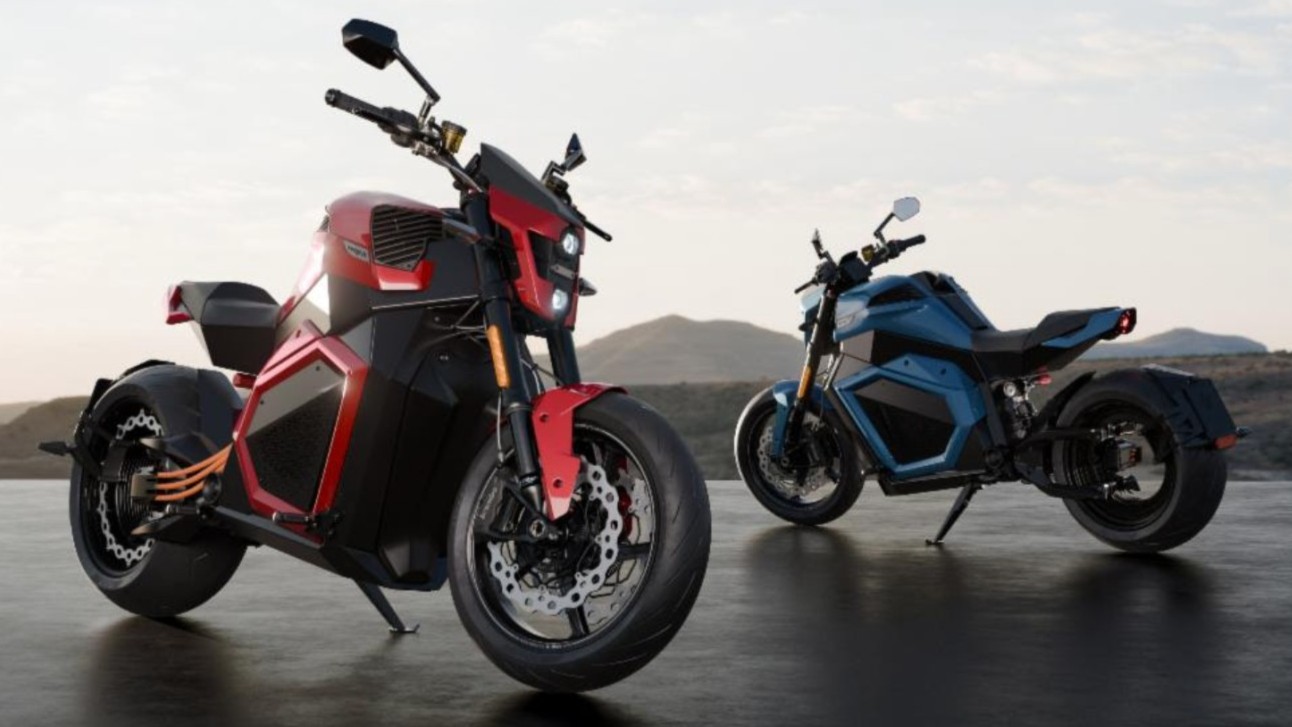
Roughly three months ago, electric motorcycle startup Verge Motorcycles announced something huge, claiming its updated Verge TS motorcycle will ship as the “world’s first production vehicle with an all-solid-state battery.” This announcement shook the world of EVs because seemingly overnight, this little company that few have heard about achieved the holy grail that others have been working on for decades. The battery, which comes from Donut Lab, claims to give the motorcycle 370 miles of range, can be charged in only five minutes, delivers 400 Wh/kg of energy density, is cheaper to manufacture than lithium-ion batteries, and is made out of 100 percent green materials. All of these claims were made without any proof. Now, Donut Lab is providing that proof through independent tests. The third test was just published, and somehow, three weeks in, the biggest questions of this battery still aren’t answered.
I can’t believe I’m at the edge of my seat about battery news, and yet here we are. I first wrote about the new Verge TS Pro and its solid-state battery back in January. I, like so much of the media and even the executives of major battery manufacturers, was skeptical. The chairman of China’s Svolt Energy straight up said that the battery doesn’t exist and that any person with a basic grasp of technology would call it a scam. Certainly, countless Internet commenters pulled no punches in calling the Donut Lab battery a scam.


Why? Solid-state battery technology is not some new science fiction thing that was just invented. Some of the largest automotive and tech companies in the world and research institutions have been working on solid-state batteries for decades. These companies have produced working solid-state batteries and even made working prototype vehicles with the batteries. LG Chem, BASF, MIT, Oxford, Toyota, QuantumScape, Solid Power, ProLogium, Factorial Energy, CATL, BYD, Nissan, Blue Solutions, Honda, and so many others have been trying to crack the holy grail for so long. Their solid-state batteries are still a long way from production.
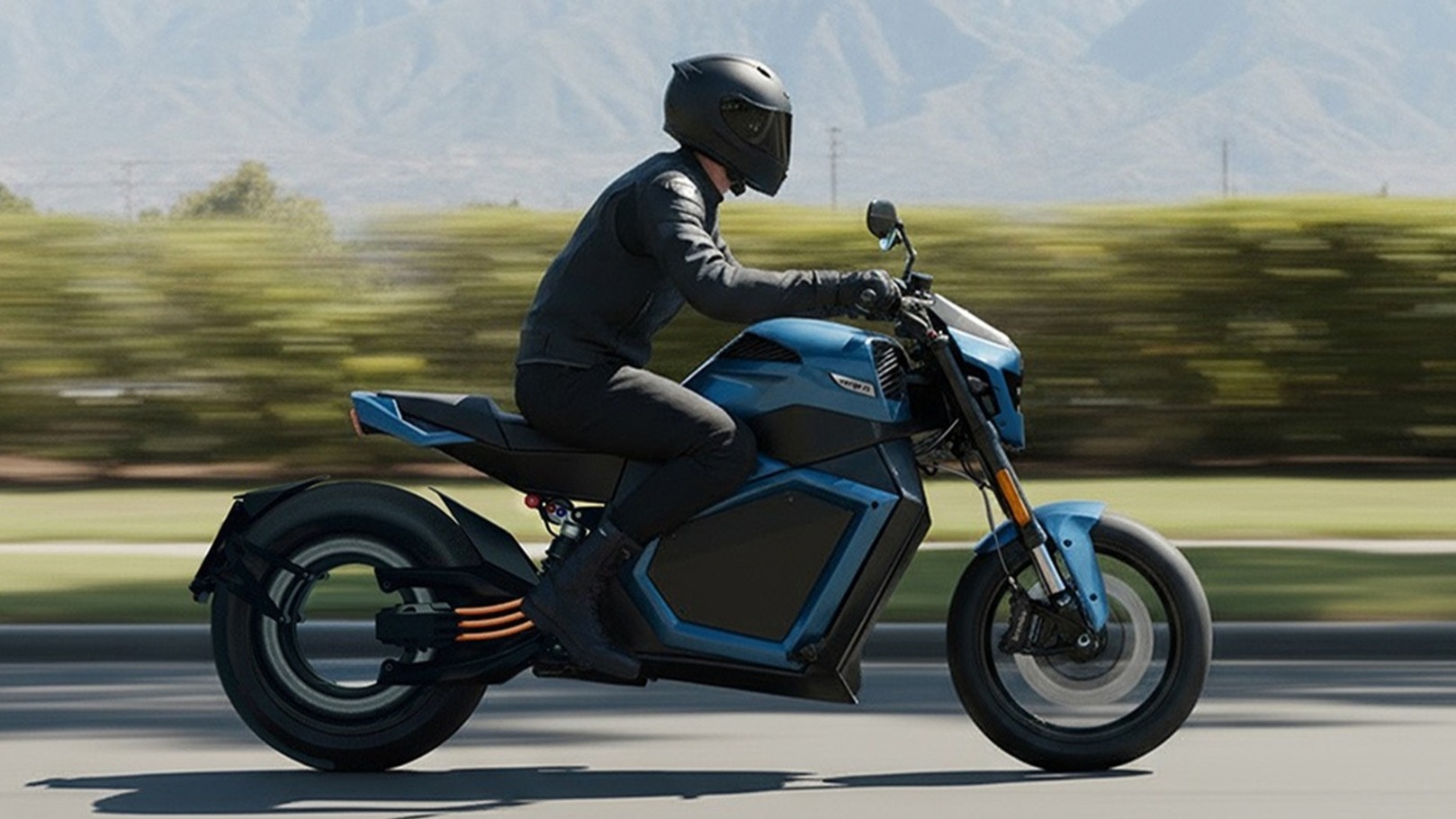
All of the aforementioned entities were apparently leapfrogged by Donut Lab, a laboratory in Finland that was founded only two years ago by the same guys who made the Verge hubless wheel motor electric motorcycle. Understandably, there’s no shortage of skeptics. Solid-state batteries have the potential to change the world. These batteries could enable the existence of longer-range electric aircraft, solve the largest complaints with electric cars, and be the ultimate form of electrical energy storage. Imagine owning an electric vehicle that charges as fast as a gasoline car fills its tank. It could put gasoline on notice.
So, it’s a huge deal when anyone says they’re going to make the world’s first solid-state battery vehicle. Donut Lab says everything it’s saying is true, and to prove it, Donut Lab’s battery has been subjected to tests by the VTT Technical Research Centre of Finland for third-party verification. Donut Lab has made the frustrating decision to drip-feed these tests out one at a time, once a week, in a series called “I Donut Believe,” like this is a season of Star Trek. I get that this is a great way to get media attention and clicks to Donut Lab’s social media, but people want proof, not to be a part of a social media experiment.
The Claims
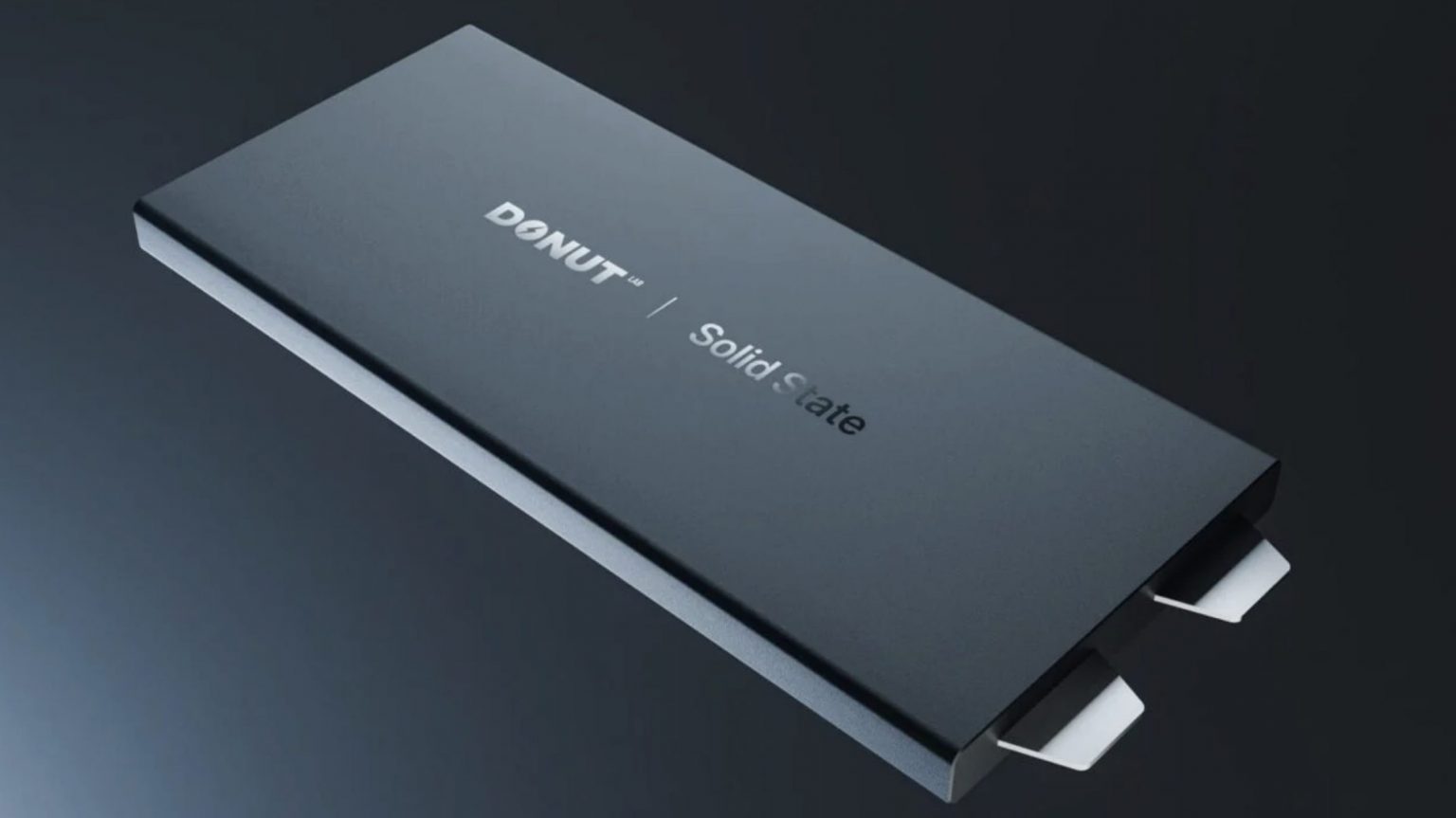
I will bring you up to speed on what has happened already. Here’s what I wrote when the battery was announced in January:
Lehtimäki claims his team has made a battery that can charge in only five minutes, will last more than 100,000 cycles with almost no degradation, is cheaper to make than lithium-ion batteries, delivers 400 Wh/kg, and is made out of 100 percent green materials. Simply put, Verge and Donut Lab claimed to have built the holy grail of batteries.
[…]
Donut Lab claims that this battery is better than any other in that it retains 99 percent capacity in minus 30 Celsius and also when it’s above 100 Celsius, unlike lithium chemistry. Donut Lab also says you can run the battery to zero or charge it to 100 percent as many times as you want without hurting it. As for lifespan, Donut Lab says it’ll last the entire life of the vehicle, making the threat of having to replace a worn battery a thing of the past. The company then talks about these cells not having thermal runaway problems, weighing less than lithium batteries, and, somehow, even costing less to make than lithium batteries.
As if all that wasn’t unbelievable enough, Donut Lab then claims, “In fact, we found ourselves designing a slower charging speed so riders can plug in and actually have time to drink a latte and enjoy it instead of downing an espresso and rushing back to their bike.” Weirdly, Verge also says that its version of the Donut Battery will last for 10,000 cycles rather than 100,000.
The Tests

The first test performed by VTT proved that Donut’s battery can charge seriously fast. That test involved the battery getting charged seven times, of which five of those cycles were fast charges, and three of the fast-charge cycles were at 11C current. One of the 11C tests had to be canceled as a safety measure because the battery reached 90 degrees Celsius when it was attached to a single heat sink.
These tests proved none of Donut Lab’s claims aside from the idea that the battery can charge quickly. Thus, the test left us with more questions than answers. Click here to read my story about the test.
I decided to skip reporting on the second test, the temperature test, because it had the same problem as the first test of proving only a single data point while offering no valuable information about the rest of the claims. Now, we have the third test, the one that Donut Lab says disproves the claim that Donut Lab is playing loose with its terminology and is actually just rebranding a supercapacitor. Let’s look into what’s happened since we last looked at the Donut Lab battery.
The Second Test

Let’s start with the test I skipped, the temperature test. Here’s the summary from VTT (report VTT-CR-00124-26):
The aim of the project was to conduct independent high-temperature discharge performance tests on the energy storage device supplied by the customer, which the customer identified as a solid-state battery cell. Based on the results of the initial capacity test within the recommended voltage range, the capacity of the tested cell was determined to be 24.9 Ah. Following the capacity measurement, the cell’s discharge performance under high temperature conditions was evaluated. The first discharge test was performed at +80 °C using a discharge current of 24 A. The second discharge test was conducted at +100 °C using a discharge current of 12 A. Charging was consistently performed at +20 °C.
This test involved three scenarios: a capacity test at +20 °C (68 °F), a discharge test at +80 °C (176 °F), and a discharge test at +100 °C (212 °F). The cell, called “Donut Solid State Battery V1” was tested to have a nominal capacity of 26 Ah and 94 Wh of energy at 3.6 V.

At room temperature, the cell delivered 24.9 Ah of capacity at a 1C (24 A) discharge rate. At 176 degrees and the same 24 A discharge, the battery delivered 27.5 Ah of juice. At 212 degrees and at a 12 A, the battery returned 27.6 Ah capacity. In each case, the battery charged normally at room temperature after the high heat test. VTT’s conclusions made for a dry read, but note what happened to the pouch’s seal, from VTT:
This project included an independent high-temperature discharge performance test on an energy storage device supplied by the customer, which the customer identified as a solid-state battery cell. Based on the initial capacity test, the capacity of the cell was determined to be 24.9 Ah. The cell was discharged at +80 °C and +100 °C in accordance with the customer’s test plan, and capacity, energy and cell temperature were recorded.
Under the specified conditions, the cell was successfully discharged at +80 °C using a current of 24 A, achieving a discharge capacity corresponding to 110.5 % of the initial discharge capacity at +20 °C with the same current. After the discharge, the cell was able to be charged normally, and no observable changes were detected.
The cell was also discharged at +100 °C using a current of 12 A, achieving 107.1 % of the reference discharge capacity measured at +20 °C using the same current. After the discharge, the cell was able to be charged normally; however, the cell pouch was observed to have lost its vacuum.
The temperature tests were great in showing that the Donut Lab battery does appear to keep its composure when it’s really hot. It also didn’t experience a thermal runaway. It is unclear how serious the issue with the cell breaking its seal is. The fast-charging test and the temperature test both also have the limitation that they’re tests of a single cell rather than a completed pack. How will an entire pack of cells charge and deal with heat? We don’t know. Even Donut Lab admits that the two VTT tests don’t simulate the cell balancing or the thermal management of a whole battery pack.
The Third Test

The third test is where things get interesting. Ever since January, there has been a persistent rumor that Donut Lab didn’t make a solid-state battery, but a supercapacitor, and is simply rebranding a supercapacitor from Nordic Nano with the nanoprinting technology and nanomass from Germany’s Holyvolt. I can see why this rumor continues to float around, as supercapacitors can charge really fast, are cheap enough to be mass-produced, and can last tens of thousands of cycles.
To disprove the rumor, Donut Lab had VTT perform a self-discharge test. From VTT report VTT-CR-00125-26:
The aim of the project was to conduct an independent self-discharge performance test on the energy storage device supplied by the customer, which the customer identified as a solid-state battery cell. Based on the results of the initial capacity test conducted within the recommended voltage range, the capacity of the tested cell was determined to be 26.5 Ah.
The cell was first fully charged, and its capacity was measured using a charging current of 24 A with a 0.48 A constant-voltage cut-off current. After charging, the cell was discharged at a constant current of 24 A until the lower voltage limit of 2.7 V was reached.
Following the capacity measurement, the self-discharge behaviour of the cell was evaluated at ambient temperature (22–28 °C). The cell was charged in two stages to approximately 50 % state of charge and then left to idle for 240 hours, during which the cell voltage was recorded at 10-second intervals. After the idle period, the cell was discharged at a 24 A current to measure the remaining discharge capacity. A total of 97.7 % of the charged capacity was able to be discharged from the cell.

The test starts out simply enough, with VTT running an initial capacity test, revealing a 26.5 Ah capacity at 1C current. For the self-discharge test, the battery was charged back up to 50 percent and then left to sit for 10 days at ambient temperature. The lab measured capacity every 10 seconds during the 10 days. At the end, the battery measured at 13.029 Ah, or 97.7 percent of the capacity when the test started.
As for voltage, the cell dropped by 60 mV in the first 10 seconds and then 103 mV in the first hour. From 10 hours to the end of the test, 10 days later, the voltage dropped only 12 mV further. This shows that the cell stabilized.
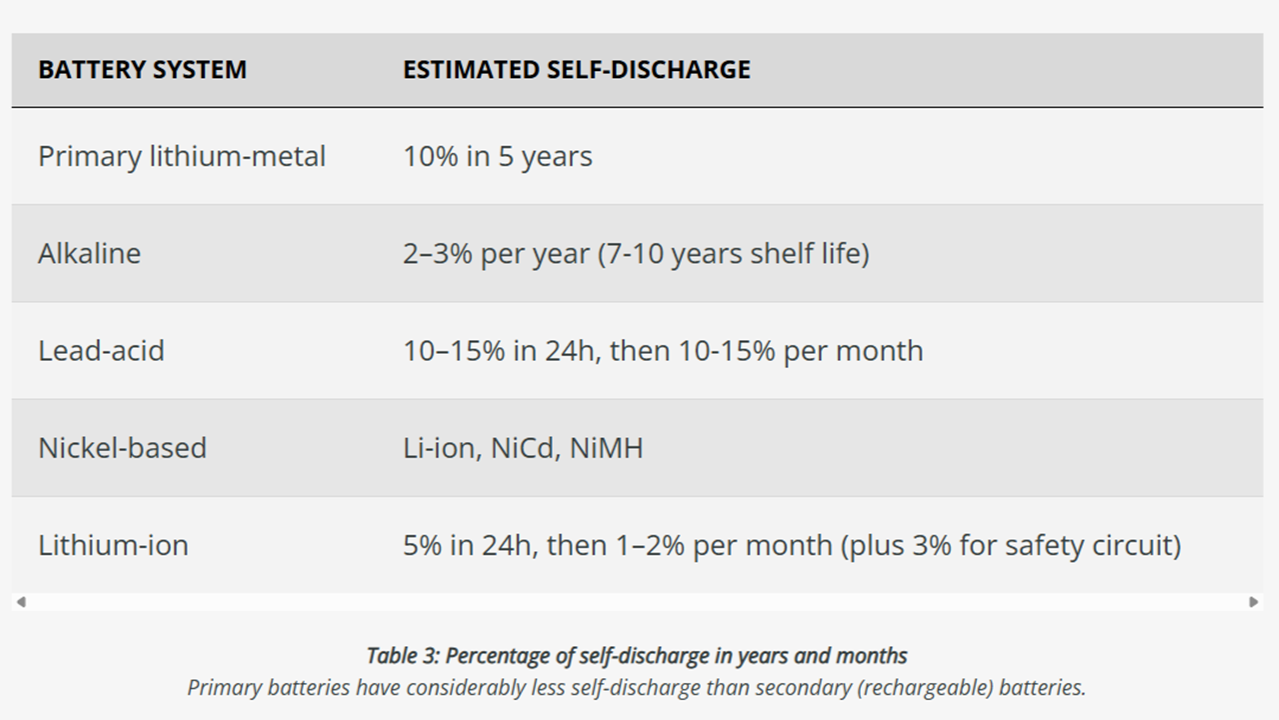
How does this test compare to lithium batteries? According to the book “Batteries in a Portable World – A Handbook on Rechargeable Batteries for Non-Engineers”, a lithium battery can lose as much as five percent in the first hour after charging, then one percent to three percent per month after. That assumes the battery is at room temperature and isn’t being subjected to a parasitic drain.
The Donut Lab battery lost 2.3 percent over 10 days. Unfortunately, since the test was only 10 days long and not a month or longer, it’s not known how much of that 2.3 percent can be attributed to the relaxing that happens after charging. The 12 mV loss over 230 hours is a good sign that the battery can sit for a long time at a low self-discharge rate. Either way, the test isn’t exactly breaking any new ground.
Donut Insists The Battery Is Not A Supercapacitor

What’s interesting about that last test is how Donut Lab is interpreting it. The company seems to care less about the self-discharge rate than about busting the rumor of the company using a supercapacitor. The image above shows Nordic Nano’s advertising for its supercapacitor. Here’s the summary from Donut Lab:
The 3rd independent test of the Donut Battery, conducted by VTT, evaluates its charge retention over an extended idle period. The cell was connected to a battery tester for ten days, with voltage measured every 10 seconds. Cell voltage stabilised within the first 10 hours and remained level for the remaining nine and a half days, confirming normal battery-type charge retention – not the rapid linear discharge characteristic of supercapacitors. The results demonstrate stable, predictable energy storage suitable for real-world vehicle applications.
The company also sent me an email with the headline, in all caps: “DONUT BATTERY’S THIRD TEST RESULTS PUBLISHED – SUPERCAPACITOR THEORIES DISPELLED.”
So Many Questions
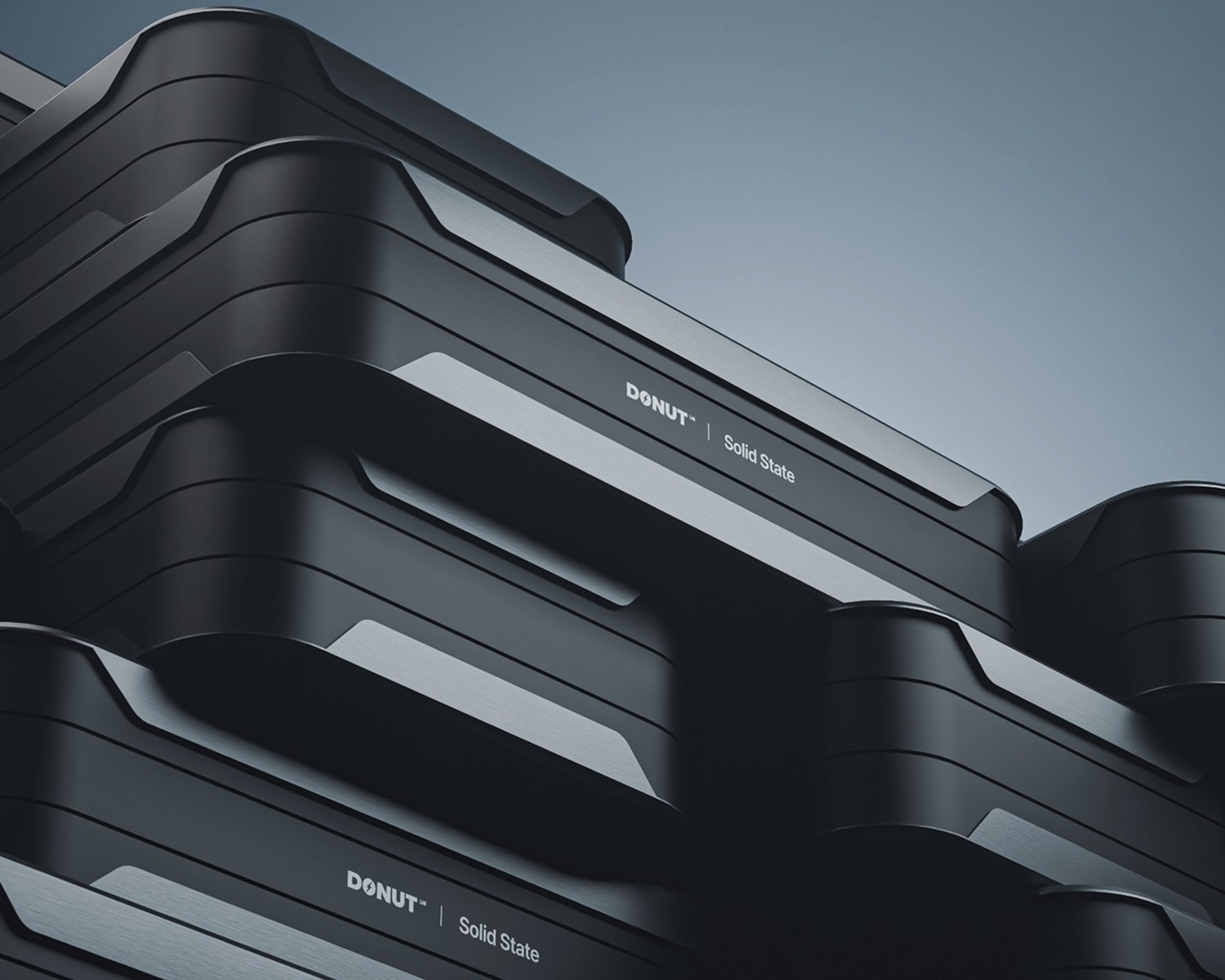
After three tests, we now know that Donut Lab has made a battery that charges fast, can survive two discharge cycles under high heat, and has the self-discharge rate expected from a battery. Somehow, none of the most significant questions have been answered. Donut Lab says its battery has the energy density of 400 Wh/kg, is cheaper to make than a lithium battery, will last more than 100,000 cycles with almost no degradation, and is made with 100 percent green materials.
None of these tests has brought us any closer to those big questions. Donut Lab knows what its battery is made of, yet it won’t tell anyone what the battery is aside from the fact that it’s not a supercapacitor. As time goes on, there are more questions. Where are the companies falling over themselves to get this battery? I mean, the governments of the world are going to want to put these things in drones, forget a $30,000 motorcycle that few can afford.
This is why this strategy of drip-feeding the tests once a week is so disappointing. If these tests have been performed, Donut Lab should just release the data. Also, Verge Motorcycles says it will ship the first customer motorcycles with these batteries in the first quarter. Well, that deadline is the end of this month.
Donut Lab CEO Marko Lehtimäki is betting the farm on this battery. The reputations of himself, Donut Lab, and Verge Motorcycles are on the line here. So I don’t think it’s a scam. It wouldn’t make sense to do all of this for a scam.
That’s what makes this battery so fascinating. Either the Donut Lab battery will be proven to be the miracle it’s claimed to be, or we’ll find out that this whole thing will go down in flames like the Fyre Festival of batteries. I’m inclined to believe that Donut Lab really does think it invented the holy grail of batteries; otherwise, we probably wouldn’t be being fed this weekly series.
I really want this battery to be the game-changer it’s being advertised to be. I love the thought of hopping into a small plane and not burning leaded fuel, but taking off into the sky on batteries. Imagine a world where most of today’s complaints about electric cars are a thing of the past. If Donut Lab invented that, I desperately want to see it. But I guess we’ll have to check back in for next week’s episode.
Top graphic images: Donut Lab; Verge Motorcycles


So, let me get this straight: They’ve now released three test results, none of which prove their claims? I remain extremely dubious.
Theory #1: Pretty long-game April Fool’s joke.
Theory #2: Aliens
My issue with this is the application and business model. If you have really developed a solid state battery, why dick around developing and building a motorcycle? The battery invention is worth billions, so just sell the technology. There is no advantage in demonstrating it in a motorcycle.
To counter… As soon as the chemistry is disclosed, the clock starts counting down until the technology is copied. It costs a lot of money to get something spun up, and the motorcycle manufacturer might have been the only company willing to bet on the tech.
If they tried to go after a larger company, one with the means to manufacturer, they run the risk of the tech meeting stolen before they can market it. The bigger companies would demand to see how the sausage is made.
If the hype turns out to be true, Donut will be able to cash out by selling or licensing the tech to a huge company before the process is duplicated, that has the ability to protect patents, etc.
It’s a safer course of action for Donut, assuming the tech is legit.
FWIW, there’s another company in the UK that is building a sports car with these.
To be clear, the motorcycle company was launched by the same guys behind Donut Lab. So, putting the battery in their own bikes makes sense.
Someone speculated on a previous article that they haven’t actually cracked “commercial” solid state batteries and can only handle bespoke builds, hence the niche application and why the bike is also available (IIRC) with a traditional lithium battery.
Of course it makes sense to demonstrate it in motorcycle. Even if we ignore the fact that they are closely tied with the Verde in the first place.
It’s very very very limited production modelk, that will not se much miles. If it kinda works for 100 cycles, it will suffice. Even if it discharges in week, it’s still fine.
Packaging. The batteries seem to run very hot. They need to package less of them in motorcycle and they are also more exposed and thermal management should be easier in smaller quantity than in full sized car.
And none of this is acceptable in toyota, but it’s good enough for bike that kinda needs to work.
Scam. This slow drip approach has been carried out over and over again since the dawn of the industrial revolution, and this grift is perfectly honed for the influencer era.
If I’m wrong? Well… I’m going to install these batteries in my Elio, and drive across the country without recharging, ala Cannonball Run. See you at the finish line!
Elio? Pfft, they’ll never release those. I’m putting one in an electric Moller Skycar.
Why would a supercapacitor be a bad thing? If it meets all the specs, then who cares if it’s a battery or a capacitor?
If it’s stupid but works, then it isn’t stupid.
It wouldn’t, but to Donut, it’s a disaster, because it torpedoes the lie they’re building up to attract mark- er, investors. If they had what they claim they do, the sky is the limit. This is the cold fusion of battery tech. Instant trillionaires.
They choose to “prove” they have a trillion dollar tech with the kind of lab tests you can have an intern perform while brewing the morning’s coffee. They probably paid less than $10k for the whole package.
After watching several video analyses by Zeroth (PhD in battery engineering), I am with him on the “99.7% a scam” part. Simply does not add up on so many fronts.
Also donut hub motors are really dumb from an engineering perspective, so many negatives, complexity, centrifugal forces, etc, no way they made an actual solid state. At best semi solid, at worst a slightly improved lithium battery.
I’d focus on JASA motors and let this run its own course.
My goodness people are impatient! Yes, big claims require big evidence. And it’s good to be skeptical after so many let-downs. However, it seems this dude has staked his entire reputation on this. Of COURSE they’re going to save the best for last because site like this eat it up and give them practically free publicity.
Just ask yourself: WHY would they reveal the big results first? Would anybody pay attention to things like fast charging if the big reveal already happened? It’s the same reason TV shows and movies don’t start out with the big finale. That’s… just now how any of this works.
Also ask… would they have even set this up as a big one-per-week reveal if they didn’t already have and know the results of all the tests? Why would they spend all this time and money just to get to the end and be all “Oh, whoops, I guess we DIDN’T know what we were talking about!”?
Yes, pinch of salt and all… but this seems much closer to reality than any of the claims we’ve heard before. Just have some patience.
JG Wentworth telling us to be patient? I must still be delusional from the time change and lack of sleep.
Touché!
Calling it now: None of the tests performed will address their controversial claims, but they will be designed to fool those who didn’t know better into thinking they do.
Why would anybody stake their reputation, financial future, and businesses on such an elaborate setup to a lie? It’s like how a prosecutor in a trial doesn’t ask a question they don’t already know the answer to. You KNOW he already has all the test results back. Otherwise, he wouldn’t have even started this ruse.
Well, the obvious reason could be that it’s a scam and they’re hoping to get as much money as they can, and then run. It’s not even a particularly elaborate or expensive setup so far. Just a company, some PR, and some pictures of what’s supposed to be a battery.
FWIW, I don’t think it was intended as a scam. More likely someone had some grand ideas for an electric motorbike, which ran up against the limits of battery technology, and they’re still promoting it because they hope that the breakthrough they need is just around the corner, and all they need is the money from the first batch sold to enable them to build a second version that actually does what’s promised. They would be far from the fist company to promise a revolutionary machine/vehicle/device that ultimately falls short.
He’s specifically said he’s not fund raising anymore/currently. Any funds they raised were well before any of his claims were made public. It’d be a horrible scam to spend all this money that you already raised just to NOT raise more money and bury your own reputation and companies, no?
Also not sure how they’d expect to sell that first batch of motorcycles if they don’t deliver what they said they were. That would just open them up to expensive lawsuits, which, again, spending money fighting pricey lawsuits would be a strange way to try to scam money from folks.
There was an interview with the founder on a competing ev based “electric tech” site. He’s quoted as saying, “There are a million investors chasing us right now, but we are literally not talking to anybody. We tell investors that we can discuss terms after we have done all our disclosures.”
You don’t have to be in it as deep as Theranos or Enron to decide that you’re best off keeping up the charade a little longer while you wait for an escape opportunity.
Somebody miscalculated. They didn’t understand what improbably large claims they were making and that by making them all on one product they were promising the holy grail. They don’t know that if a supplier brought tests like these in to a pitch for an OEM to back up the claims they’re making, they wouldn’t be allowed back and the person who scheduled them would be scolded for wasting everyone’s time.
He’s already created and invented a number of legit products and has founded legit and successful companies. He’s not like a Musk, buying up other companies with daddy’s money and claiming he invented all the things the company did. They stopped fundraising before publicly making these claims, and are refusing investors until their claims are substantiated.
There’s no “escape opportunity” at this point. He’s either correct and is confident that he’s correct, or he’ll be ruined.
Why would that guy on the corner risk his reputation that the end of the world is nigh? Thus, it MUST be true!
As someone already said, he could far more easily sell the tech to a corporation for billions and not make a marketing scheme.
Dude is probably already residing in a non-extradition country.
Guy on the corner? He’s already invented more products than (I’m guessing) either of us, and started more successful businesses than (again, I’m guessing), either of us. He’s not just some rando spouting madness on some random street corner.
Cool. So this is like a fictional TV show or movie. Most of which are fictional.