

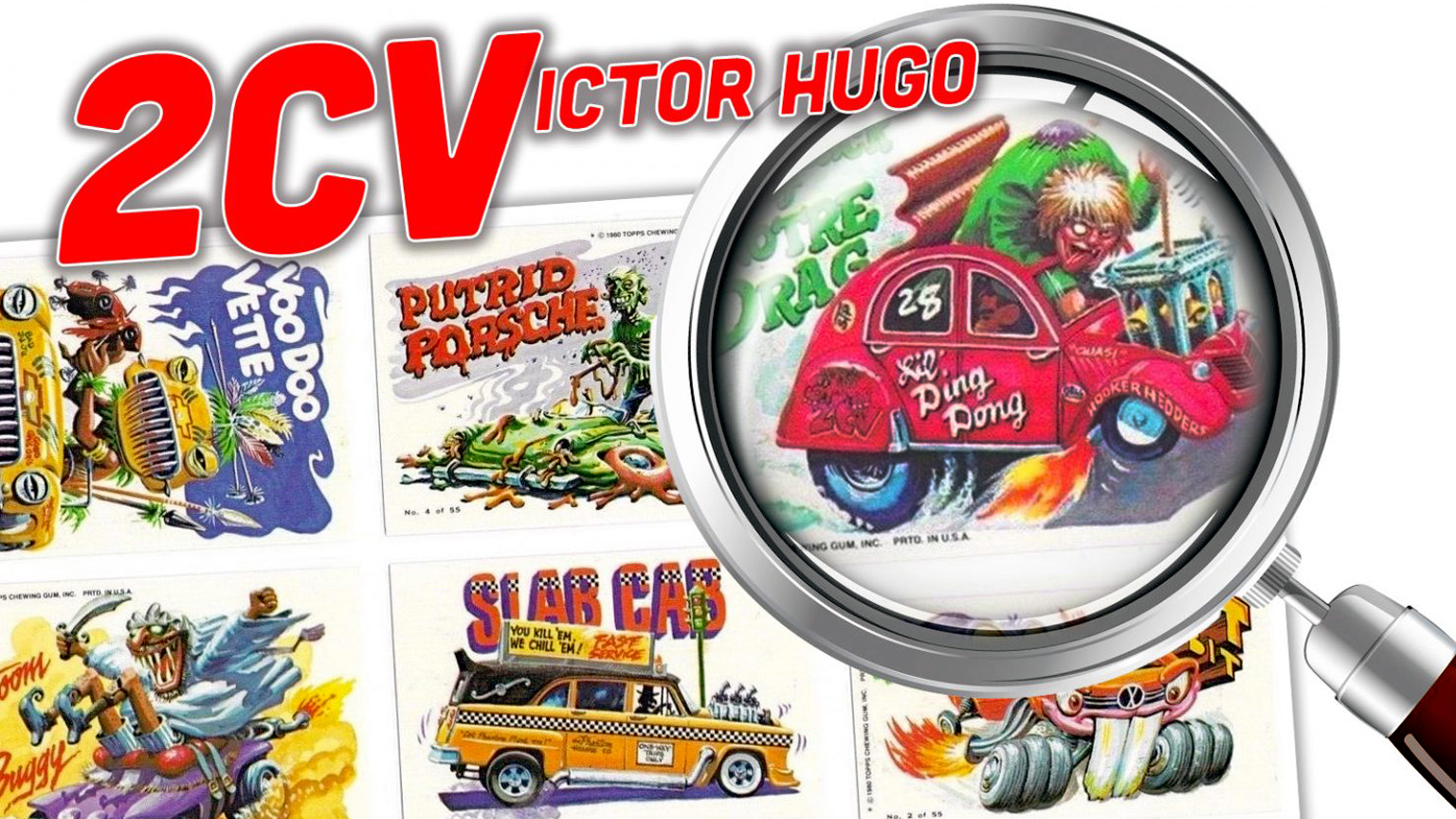
The other day I asked if I was producing too much Citroën 2CV content for your tastes, and the consensus was, I’m happy to say, no, there seems to be a hunger for 2CV content, and I’m happy to provide that. While most of that content will revolve around my own humble and rattly 2CV, I figured I can get away with sharing some other 2CV content, like this bit, which I’m pretty sure is the only Citroën 2CV/trading card company/Victor Hugo mashup known in human artistic endeavors.
I’m talking about the 1980 Topps Chewing Gum trading card series known as Weird Wheels, which you can read more about in this excellent write-up here. Topps made all sorts of trading cards, including the expected baseball and other sporting cards, but also ventured into more lurid and artistic realms, making satirical cards with a nice, preteen goofball-friendly level of grossness like the famous Garbage Pail Kids cards, a parody of the Cabbage Patch Kids of the 1980s.


The Weird Wheels line of cards from 1980 played on the artistic styles of 1960s and 1970s hot rod art, like the sort of thing Big Daddy Roth pioneered. This was a movement that was active, grotesque, vibrant, strange, exciting, unsettling, adolescent – and I mean all of these in the best way possible.

The Weird Wheels line was a 55-card series, many painted by Norm Saunders, best known for his 1962 Mars Attacks cards that became something of a pop-cultural cult icon and, later, a bonkers 1996 Tim Burton movie. Saunders painted the Weird Wheels cards when he was well into his 70s and suffering from emphysema; his son once asked him why he continued to work, which prompted Norm to reply
“It’s fun! I gotta keep working. What the hell else am I gonna do?”
I get it, Norm.
I’ll likely revisit cards from this series again; for now, we’re going to look closer at the first in the series, known as the Hunchback of Notre Drag.
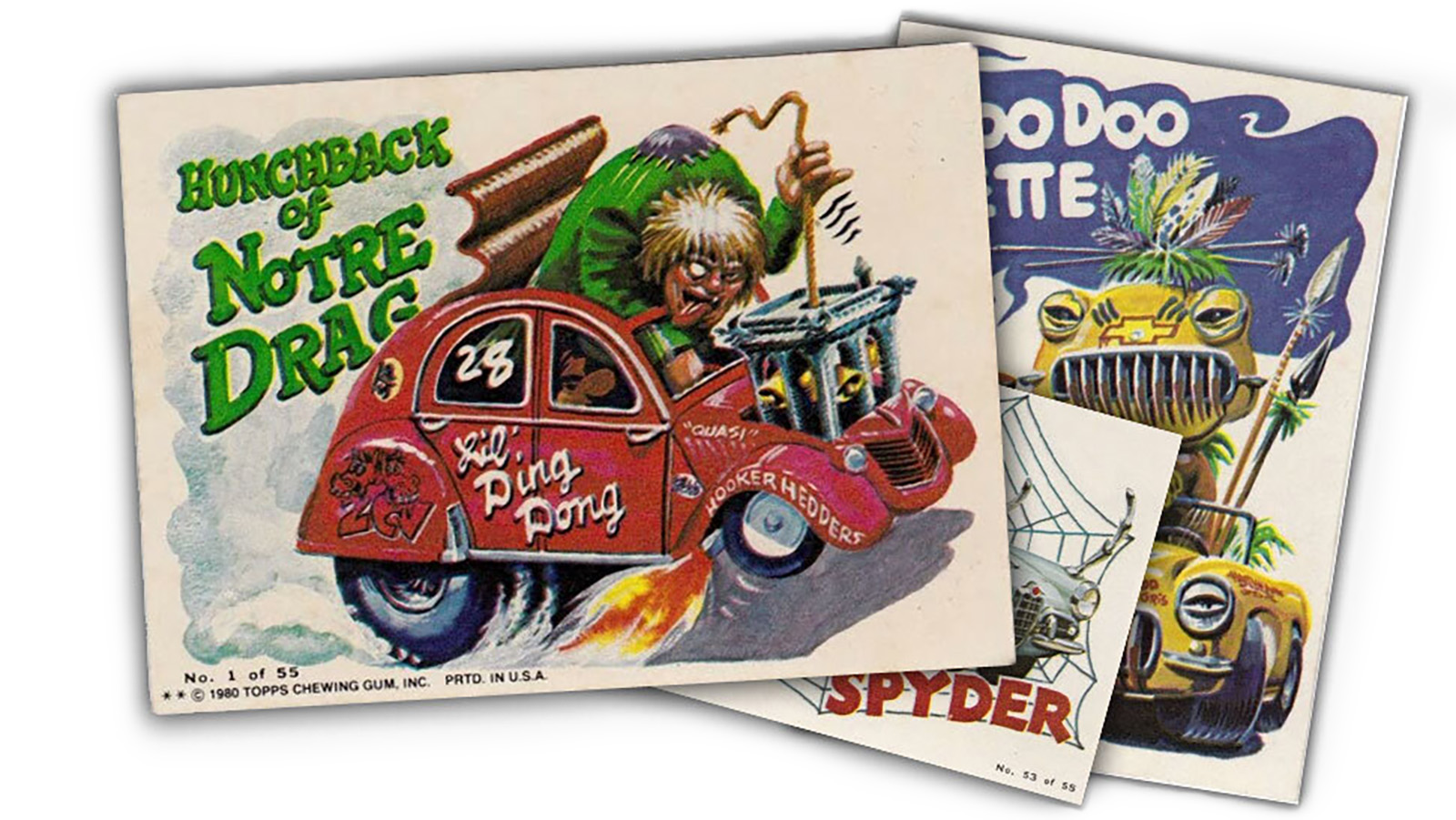
First, it’s very unusual for a Citroën 2CV to be featured in content like this; it just wasn’t one of the cars that usually got this sort of hot rod treatment. If there was going to be something small, foreign, and strange used in this context, that role was generally filled by a Volkswagen Beetle. So this is already something special.
Then there’s the literary tie-in, another unexpected element in this medium. To theme a French hot rod with a Hunchback of Notre Dame concept is pretty novel, but you can see how it fits. The hunchback, Quasimodo, is sort of an ideal stand-in for a Ratfink-type of character, being a sort of unsettling-looking antihero, and all of the surrounding aesthetics of Gothic architecture are a pretty rich vein to mine for hot rod details.
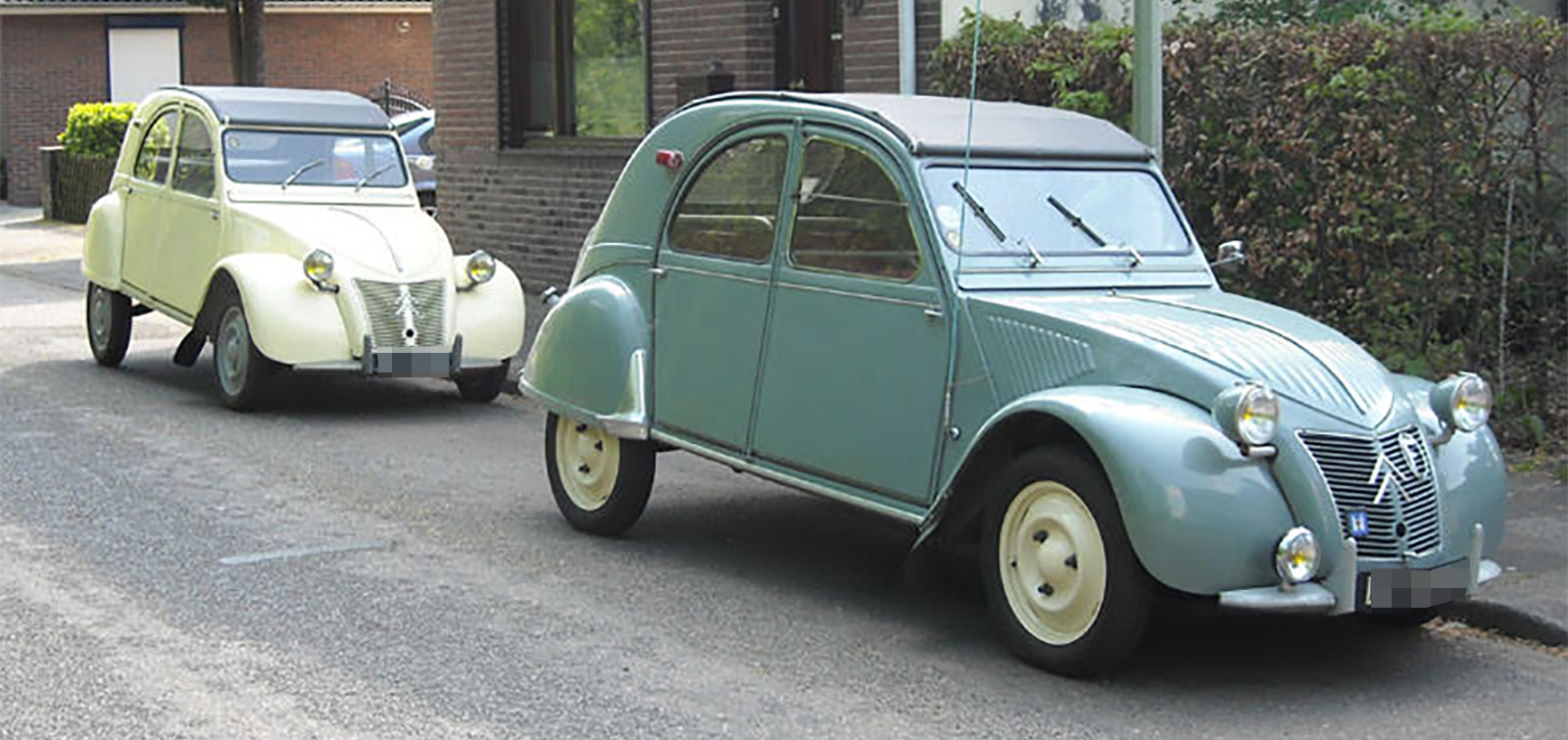
The 2CV on the card, named Li’l Ding Dong, referencing Quasimodo’s day job as bellringer, looks to be a pre-1961 car, as it has the rear-hinged front door and the older style grille. I’d guess the artist was using a late ’50s or 1960 2CV as a model, much like these:
The distinctive “ripple bonnet” has been cut open at the top to reveal, in place of an engine or blower or big intake, the bell tower of Notre-Dame cathedral, which is both clever and witty and, if you actually look at the cathedral’s towers, shows that the artist took the time to actually try and make something that resembled the real thing:
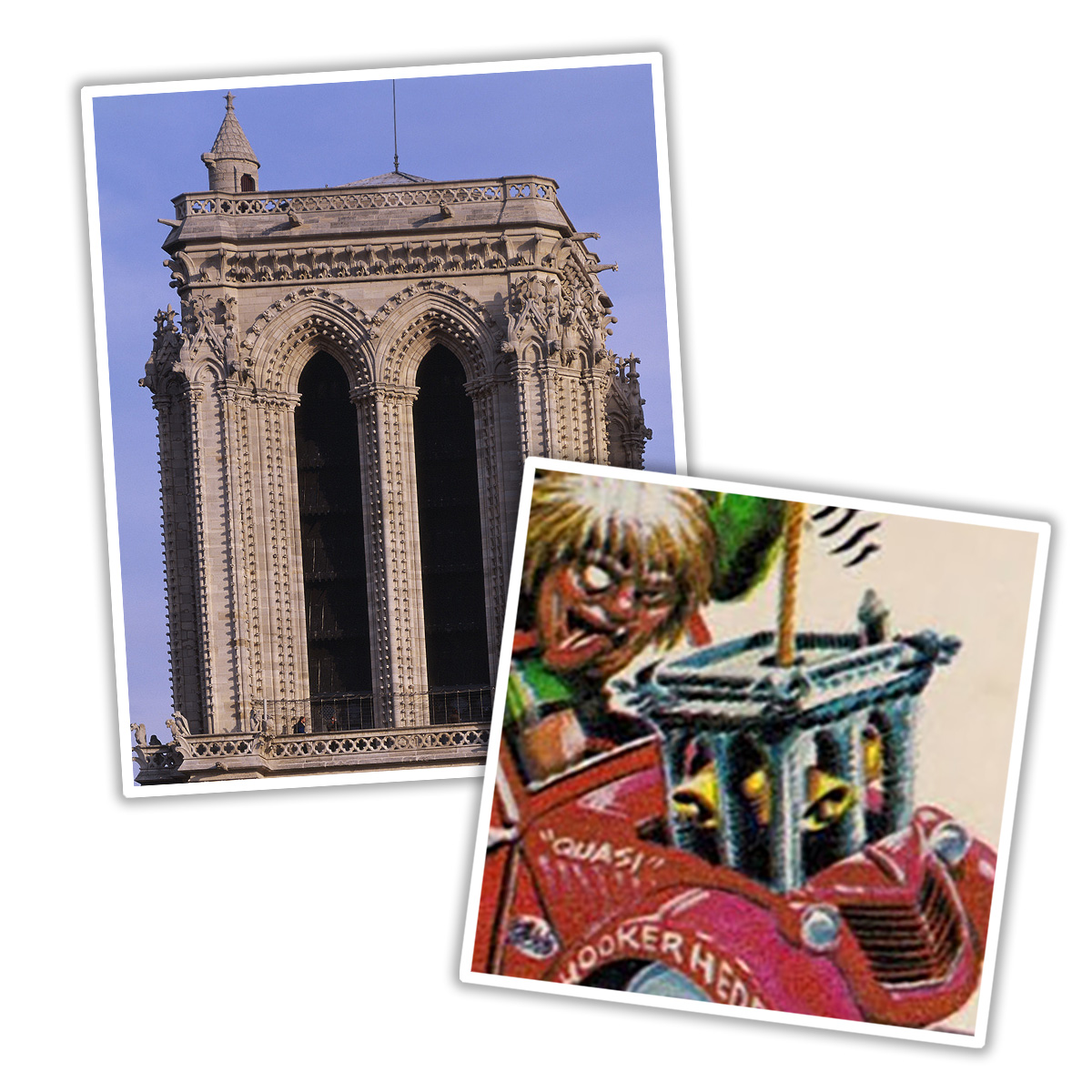
So, it looks like the diminutive flat-twin engine has been replaced with those bells in the tower, and, if I had to guess, I’d say the engine has been relocated to the rear, driving the rear wheels instead of the expected front wheels, because in classic hot rod style, there are some massive dragster wheels at the back and little pizza cutter wheels up front.
There’s also some great flame-belching exhausts, which, according to my interpretation of how I imagine this thing could be laid out mechanically, would be a pretty weird exhaust setup, extending forward from the engine, then turning to face backwards.
While looking into this and trying to remember just what the hell the plot of the book was (oh man is it complicated, and it’s also one of those plots that relies heavily on people just never asking each other what the hell they were doing) I learned that Victor Hugo would force himself to write and make deadlines by locking himself in his room without any actual, formal clothing, so he would be stuck in there until he finished.
I wanted to try a similar method, but the coffee shop I tried to write at is almost as bad as Trader Joe’s when it comes to how much they freak out about just trying to go about your business while naked. Prudes.
Top graphic images: Topps; DepositPhotos.com





Side-note, it was only very recently that I found out that the Hugo Award is not named for Victor Hugo. My whole life I’d always just assumed. I’m not saying it makes sense.
Imagine a time when the expected audience of these cards were well versed enough in 150 year old books to know the reference.
Also similar to the Weird Ohs models.