

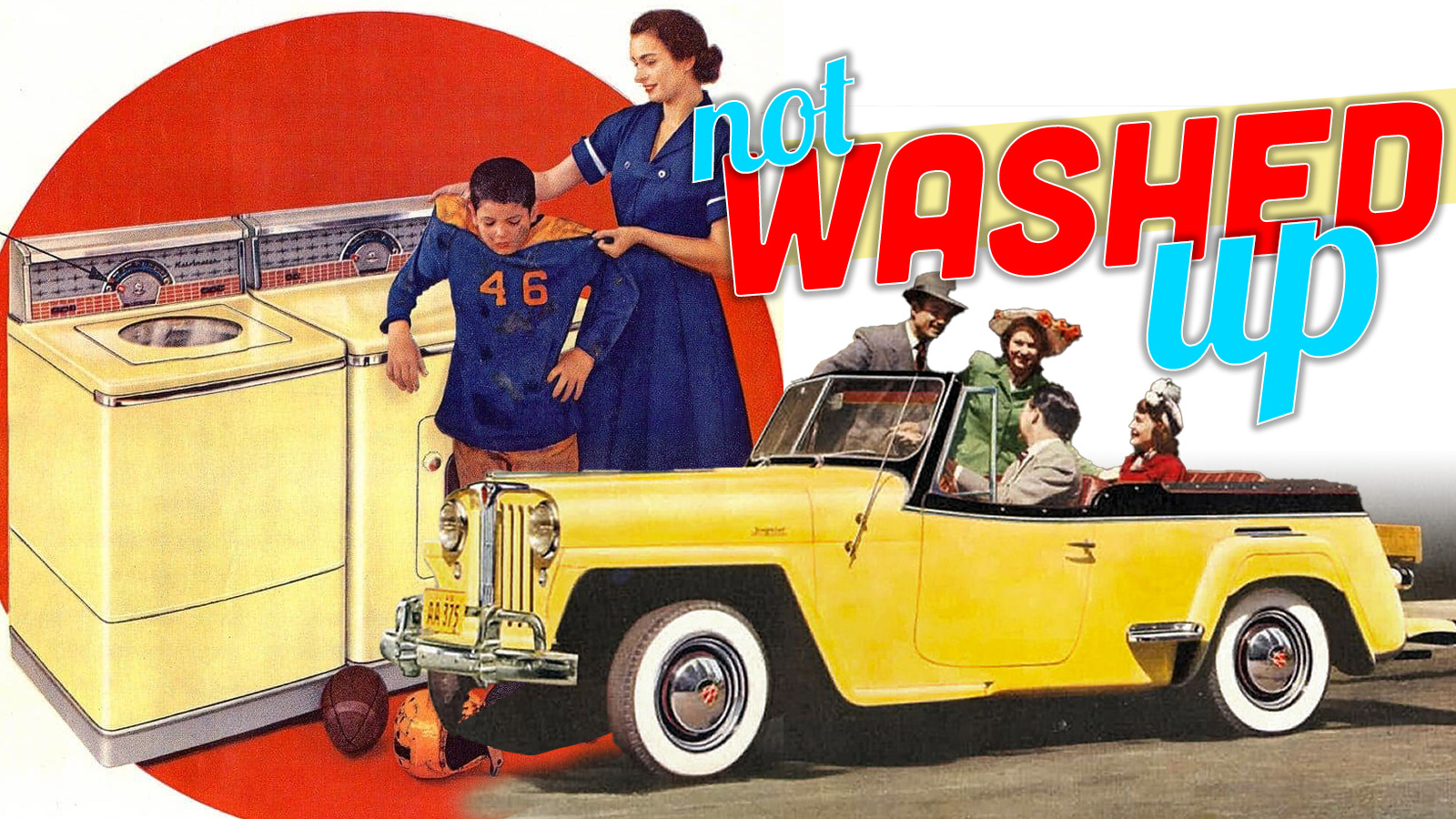
When you think “sports car,” do you then think “Jeep?” Unless you’ve recently been struck with a 2×4, chances are probably not. But maybe that’s not quite fair, because one of the first cars Jeep built after WWII was pretty clearly what would be considered a sports car. A roadster, even, like a larger, more Jeep-looking MG or Triumph of the era. That’s a pretty incredible thing to think about, but I think the incredulity of that pales next to the other notable fact about this car: it was designed so that the body could be made using sheet metal stamping equipment originally designed to make washing machines.
It sounds bonkers, right? Why the hell would a carmaker have to use re-purposed washing machine stamping tools? It may sound bonkers, but this was the position that Willys-Overland, makers of the world-famous US Army Jeep, found itself in after the war. And this was the case for all of Willys’ new, postwar non-military, non-off-road mainstream passenger cars (I.e. not CJs). Though I’ll admit the word “all” is a bit grand, considering there were just two models of new civilian postwar cars, the sporty Jeepster and the Willys Station Sedan. That’s the minimum number of things you need even to be able to use the word “all,” and even then I think people might prefer “both.”


The story behind why these first postwar Jeeps were the way they were is pretty fascinating, and to start it off, we need to go back a bit to before WWII was actually over, maybe before it even started.
Willys Before And During The War
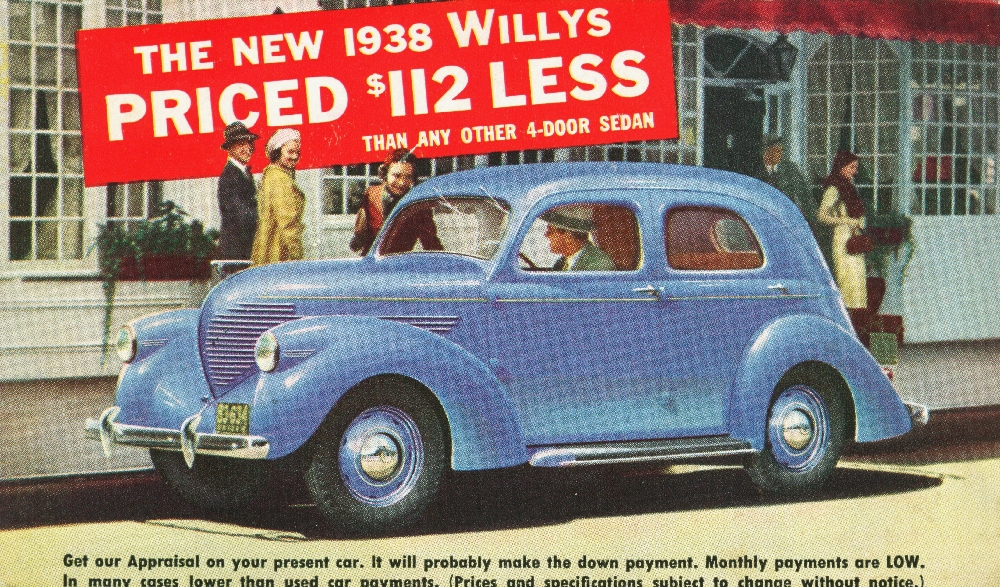
We all know that the car that really put Willys on the map, the car that still has descendants in production today, was the Willys MB, which was the adaptation of a vehicle developed by American Bantam, with a Willys Go-Devil engine, and known as a Jeep. But before the Jeep, Willys made plenty of passenger cars designed just for regular, on-road driving, with a special focus on affordable family cars.
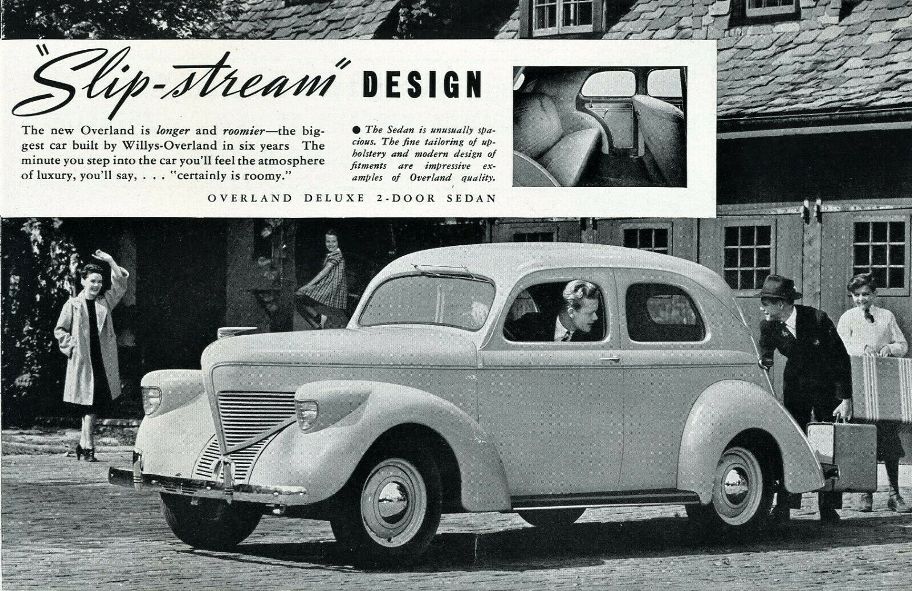
Some, like this 1939 Willys Overland, even have some novel, heavy-lidded-looking headlamps, as these predate standardized round sealed beam headlamps that arrived the next year.
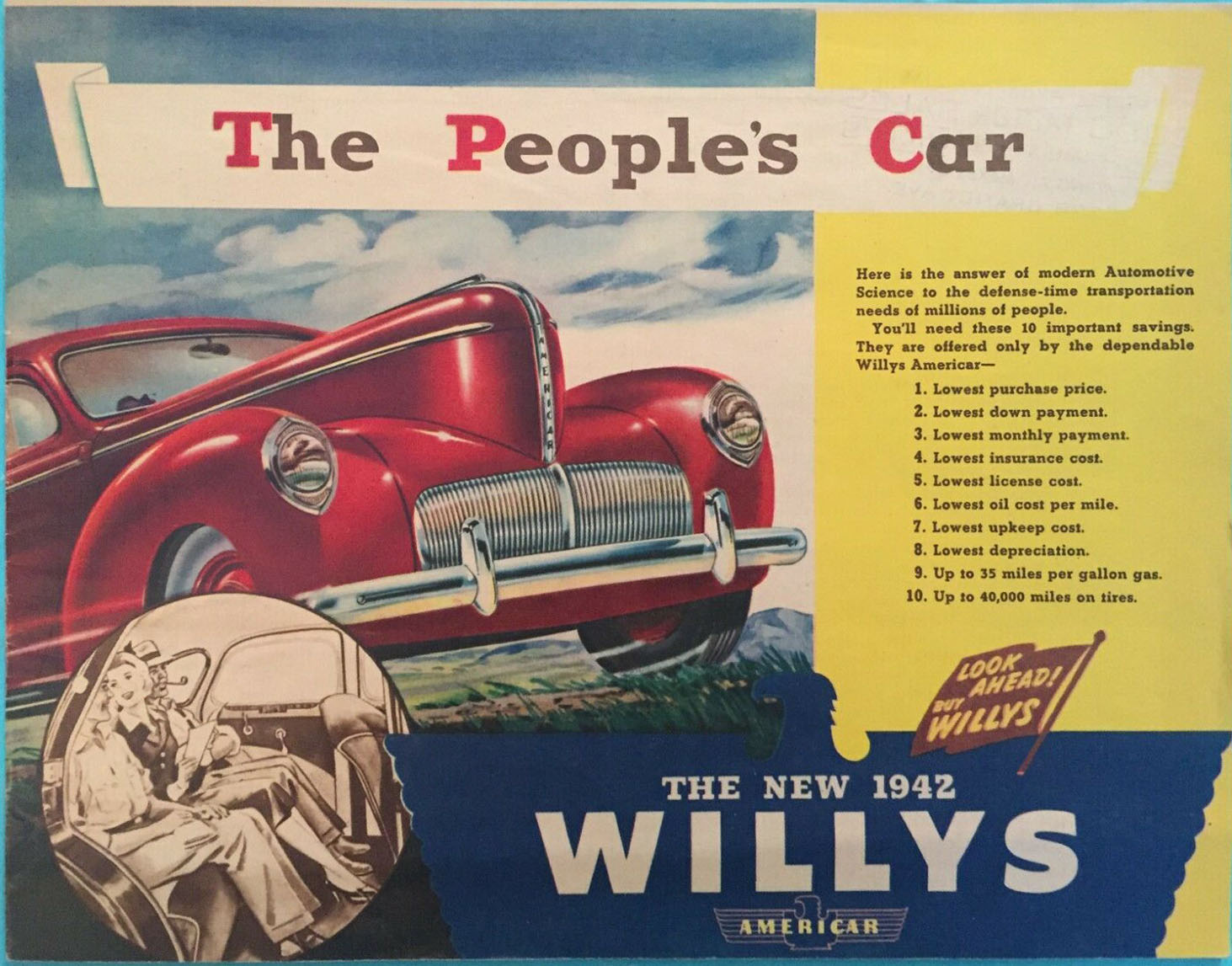
It’s also interesting to note that Willys was using the “people’s car” description for their cars during the early stages of America’s involvement in WWII, which is an novel parallel to that other people’s car being developed on the other side of the world and the war, the Volkswagen.
Of course, once America became involved in WWII in 1941, it was later in that same year that Willys began to produce the Willys MB Jeep for the military. It didn’t take long before production really ramped up and took over all of Willys’ production, with the company eventually building around 363,000 Jeeps.
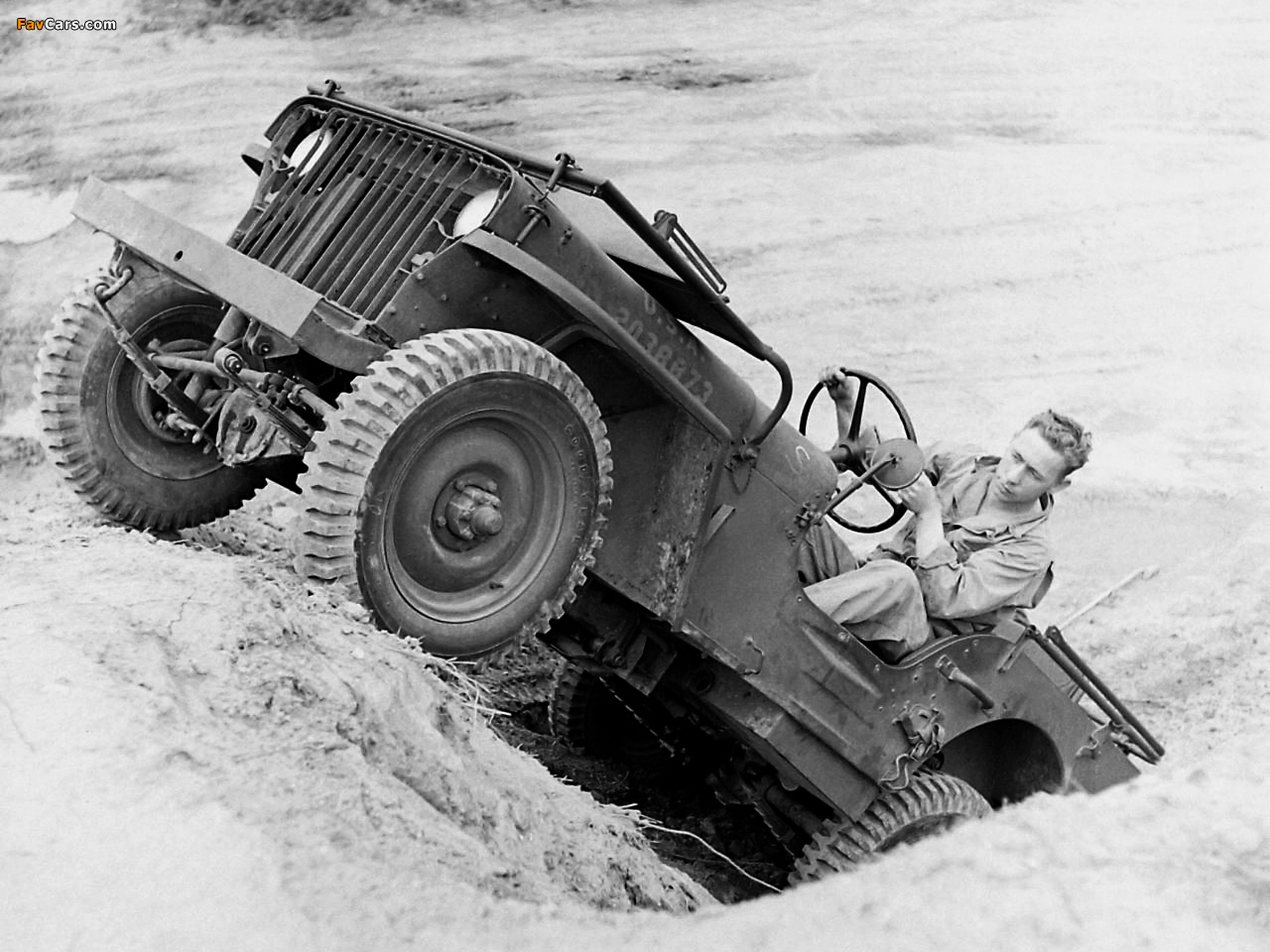
In a very real way, the war saved Willys, which had been in decline for years before the conflict, finding itself increasingly unable to compete with America’s bigger mainstream automakers. By the end of the war, Willys was in a much better position financially, they had much more robust and proven manufacturing capabilities, and they had a well-known product they could, hopefully, leverage.
They just didn’t really have anything to sell to people who weren’t in the process of fighting the Axis.
The Rare Downside Of A War Ending
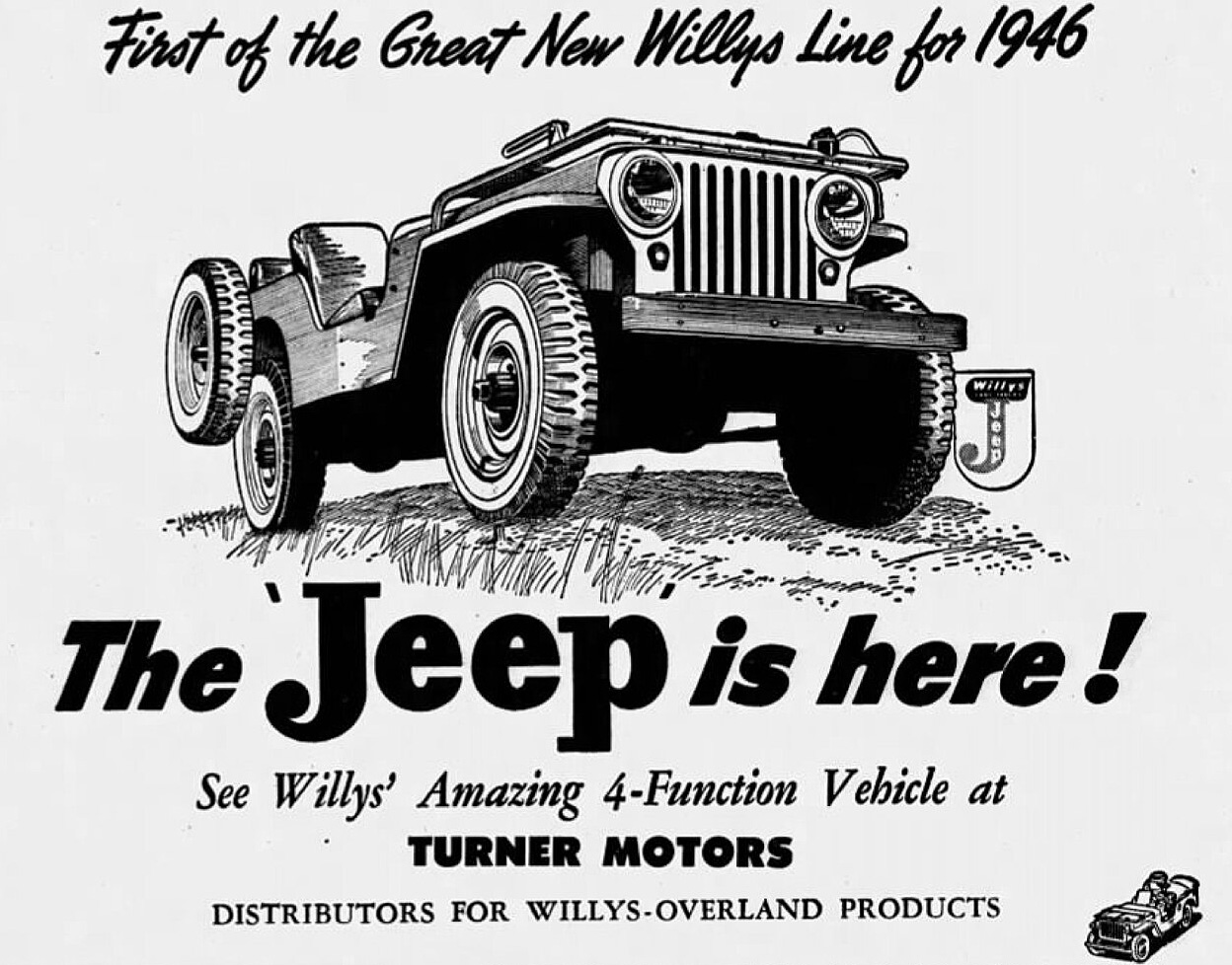
Willys did have some plans for what to sell to people once the government stopped buying Jeeps by the boatload to ship over to Europe and Asia; the most straightforward of which was the Civilian Jeep, the CJ-2A, which was just a slightly modified army Jeep, really. Willys tried to market this to farmers and outdoorspeople and that sort of thing, because the mass market wasn’t really clamoring for a spartan, rugged, off-road vehicle. People wanted cars, normal cars, so they could get back to their normal lives, which involved driving primarily on-road.
Willys figured this would be the case, and even before the war was over had been working with the amazing industrial designer Brooks Stevens, who got the gig working with Willys when he published a magazine article proposing a way to re-body the existing wartime Jeep to make a four-wheel drive civilian car. He called it the Victory Car:
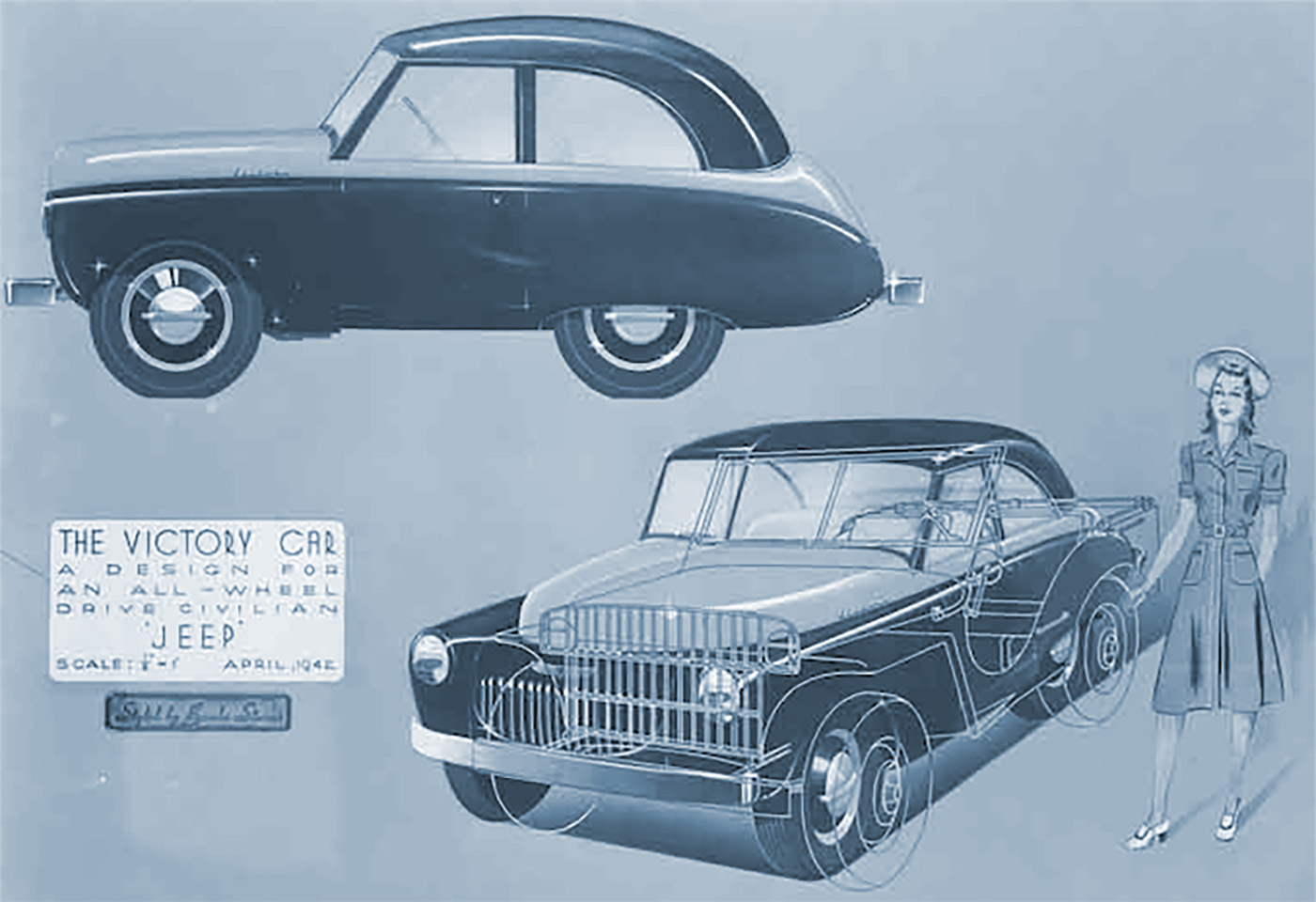
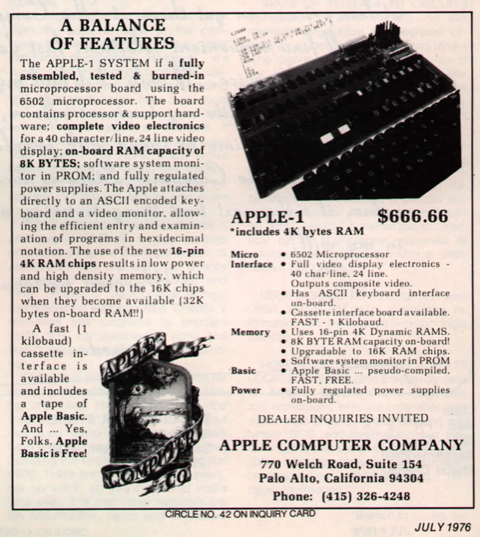
This proposal got Willys attention, and Stevens was taken onboard to explore this idea further, leading to a car called the 6/66 – for the proposed $666 price (a very reasonable around $13,000 today). Interestingly, the very first Apple computer was also sold for about that same price in 1976.
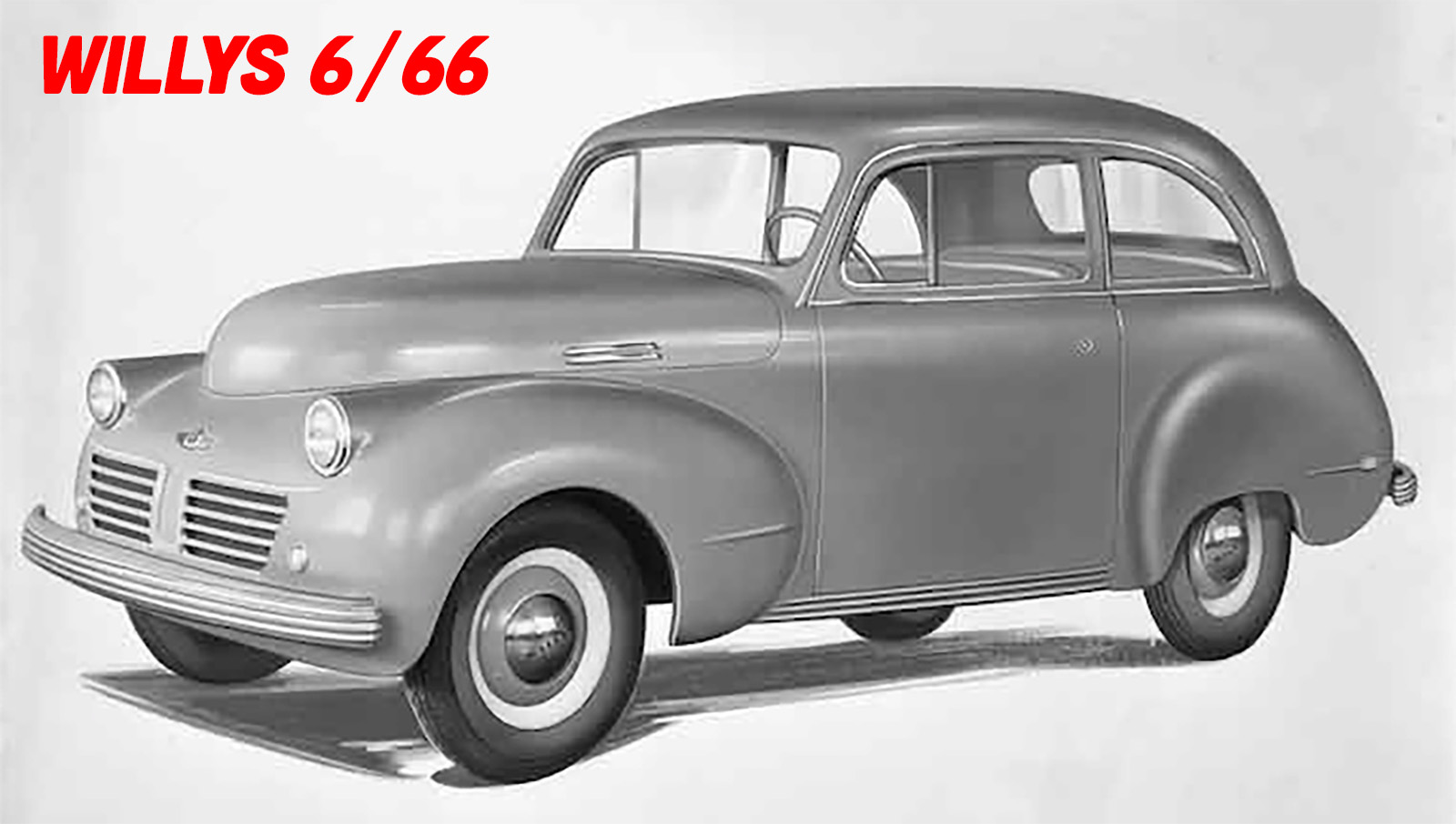
The 6/66 would never actually make it to production, though, for several reasons, but, really, one reason that stood above the rest. As you can see, Stevens’ design was very much in keeping with the style of the era–lots of big, bulbous compound curves. These require some large and complex sheet metal stamping machines that large body-producing factories had. Willys didn’t have these machines themselves, and what’s worse, they weren’t in a position to contract any of the major auto body manufacturers to make these panels for them.
Brooks Stevens, in an interview from the December 1974 issue of Car Classics, recalls a conversation he had with Willys president and man with a fantastic nickname, Charles “Cast-Iron Charlie” Sorensen, formerly Ford’s production manager:
“Sit down,” Sorensen tells me, “let’s talk a little. You know I’ve been over this thing quite thoroughly, I haven’t accepted this position on the spur of the moment. I am quite intrigued with the passenger car program but there are some real problems of which I’ll explain to you. First of all, Willys has no acceptance with any body builder anywhere anymore. Murray, Briggs, Budd, they won’t even talk to us. It is ridiculous for me to even go there because they have no interest in our program whatever. They are too busy working on cars for the big automobile builders. So we have to think of something else.”
So there’s the problem. None of the major auto body manufacturers – Budd, Briggs, Murray, or Fisher – would even give them the time of day because they were all so busy already with the boom in postwar car production from the big dogs like Ford, GM, and Chrysler. They wouldn’t even take Willys calls because they just didn’t need to. As far as they were concerned, Willys’ problems were just that: Willys’ problems.
But Sorensen was no dummy. He didn’t have a specific design idea in mind – that’s why he was talking to Stevens, after all – but he had a plan: he would stamp body panels with machines from a different industry. The appliance industry.
Washing Machines To The Rescue
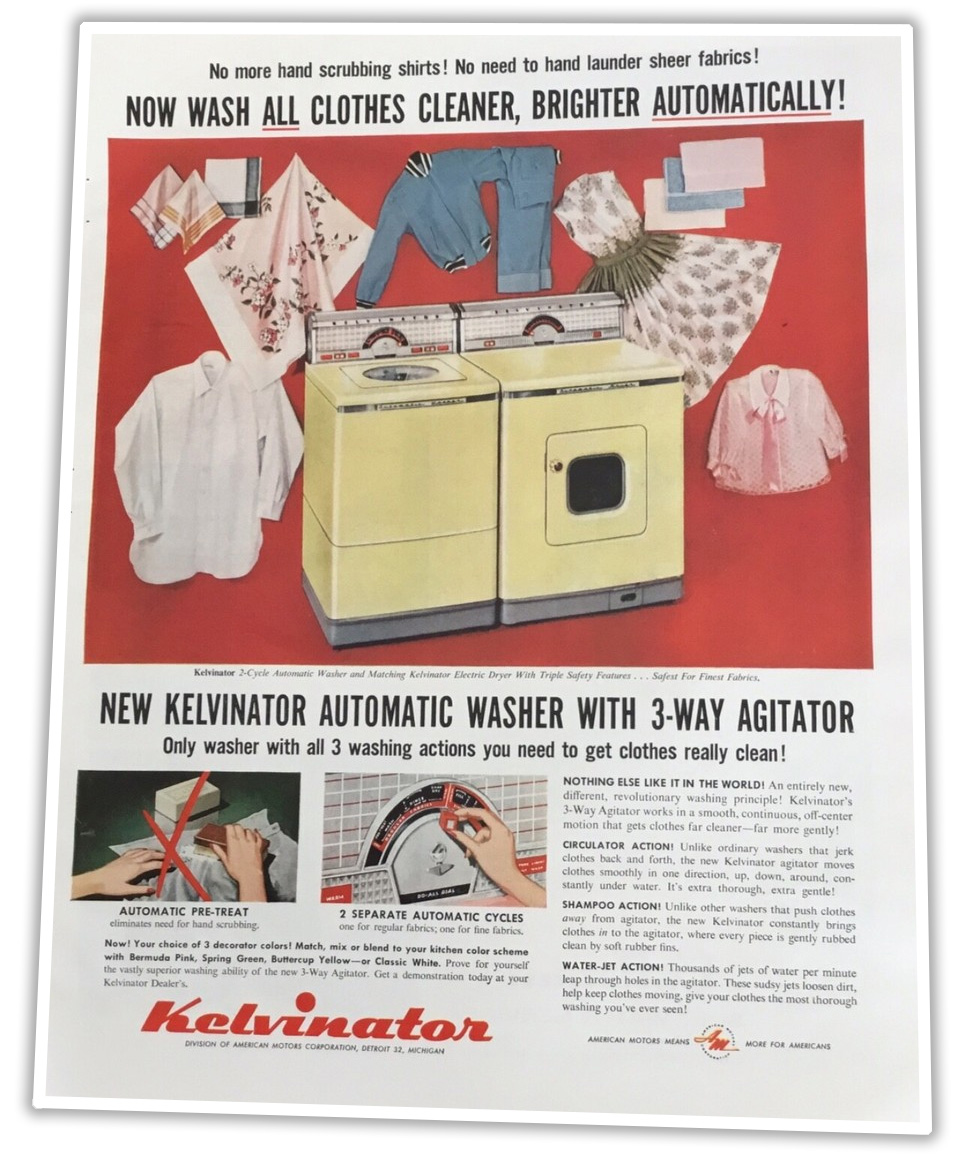
There’s more to Steven’s recollections of that pivotal conversation with Cast-Iron Charlie:
“I like what you have created,” he [Sorensen] told me, “but I have to develop some vehicles that we can build in a washing machine plant. I’ll give you a depth draw of six inches. That’s it. There is no further press capacity. We can’t go to deep drawing shapes and fenders and doors and that sort of thing. What can you develop in this vein? We need something that will rub off on our prowess as the builder of Jeeps…”
Okay, now things are getting fun. At this time, Willys-Overland was not yet merged with Nash-Kelvinator, who made lots of appliances, so I don’t know that’s where they got the equipment. It’s possible the equipment came from Bendix, who made washing machines and was owned by a company called Avco, who had been making bodies for military Jeeps. Avco sold their tooling to Willys-Overland, who moved it from Connersville, Indiana to Toledo, Ohio to set up Jeep’s first body stamping facility. It would have been very possible for Avco to have also sent some stamping tools from their Bendix appliances division around the same time.
[Ed Note: Fun fact: WWII Jeeps built by Willys-Overland (and some by Ford) had their bodies not built in house but by a company called American Central division (of Avco Manufacturing Corporation, which Jason mentioned above); this company was known for making, among other things, kitchen cabinets. It’s likely that, in 1945 when Brooks Stephens said what Jason quoted above, Willys-Overland was having a hard time getting any body company to build new Willys bodies, so the company may have thought it would be limited to the equipment that had been used by American Central Division/AVCO equipment — a company that, again, had been known for making kitchen equipment prior to the war.
Here’s a whole article on “Post-War Willys-Overland Body Manufacturing,” but basically, it looks like the company did get a few bodymakers to build the Willys Wagon, though it later brought operations in-house. From the aforementioned article:
At about the same time construction was started on the stamping shop Willys-Overland began to produce the first all-steel station wagon. On July 20, 1946 it was reported that “Hayes Manufacturing Corporation has begun shipments of station wagon bodies for Willys-Overland of Toledo…”. (5) This places the station wagon introduction at mid-year 1946.
[…]
Early in June, 1948 Willys-Overland Motors contracted with Briggs Manufacturing Co. for the manufacture of bodies for its station wagons and station sedans formerly made by Hayes Manufacturing. “Delivery of bodies from Briggs is scheduled to begin August 1 and Willys production of the two vehicles will be suspended in the latter part of June and the month of July.” (2) This change of supplier gives us an idea how much time was required to pack up the dies and tooling, move it, and then set it up in a different location – about 5-6 weeks.
[…]
Then on November 7, 1948 it was announced by William E. Paris that “Tools, dies, jigs, and fixtures for the Jeep body-building operation have been transferred to Toledo from the American Central Division, Avco Manufacturing Corp., where the (Universal) Jeep bodies were previously built…” (8) So now the Universal Jeep dies were in Toledo and there was more than enough time to finish the last CJ-2A
[…]
Wagon bodies come in-house
At the end of November, 1949 the “Tools, dies, jigs and other equipment for the station wagon body building operation are now being transferred from the Briggs manufacturing Co. Detroit to Toledo…”. (2) Finally Willys was to build the bodies of it’s entire product line in-house. On January 4, 1950 normal operations resumed after installing tools and dies for station wagon body building. (3)
So basically, AVCO equipment for the CJ-2A and upcoming CJ-3A come to Toledo, and so did Wagon equipment from Briggs (equipment that I assume had originated at Hayes). So was that Willys Wagon stamping equipment really from a washing machine company? Maybe not; maybe it was from Hayes Manufacturing Corporation. But the WWII Jeep’s body was built by a household appliance company, and it makes sense that Willys might have been planning to continue using AVCO equipment.
As for the Jeepster? That was built in-house at Willys, which had brought in tooling from other companies, including ones making washing machines. The big thing is that the directive to Brooks Stevens to design something to handle those stamping depth-draw limitations was real, and absolutely informed the design of the vehicles. -DT]
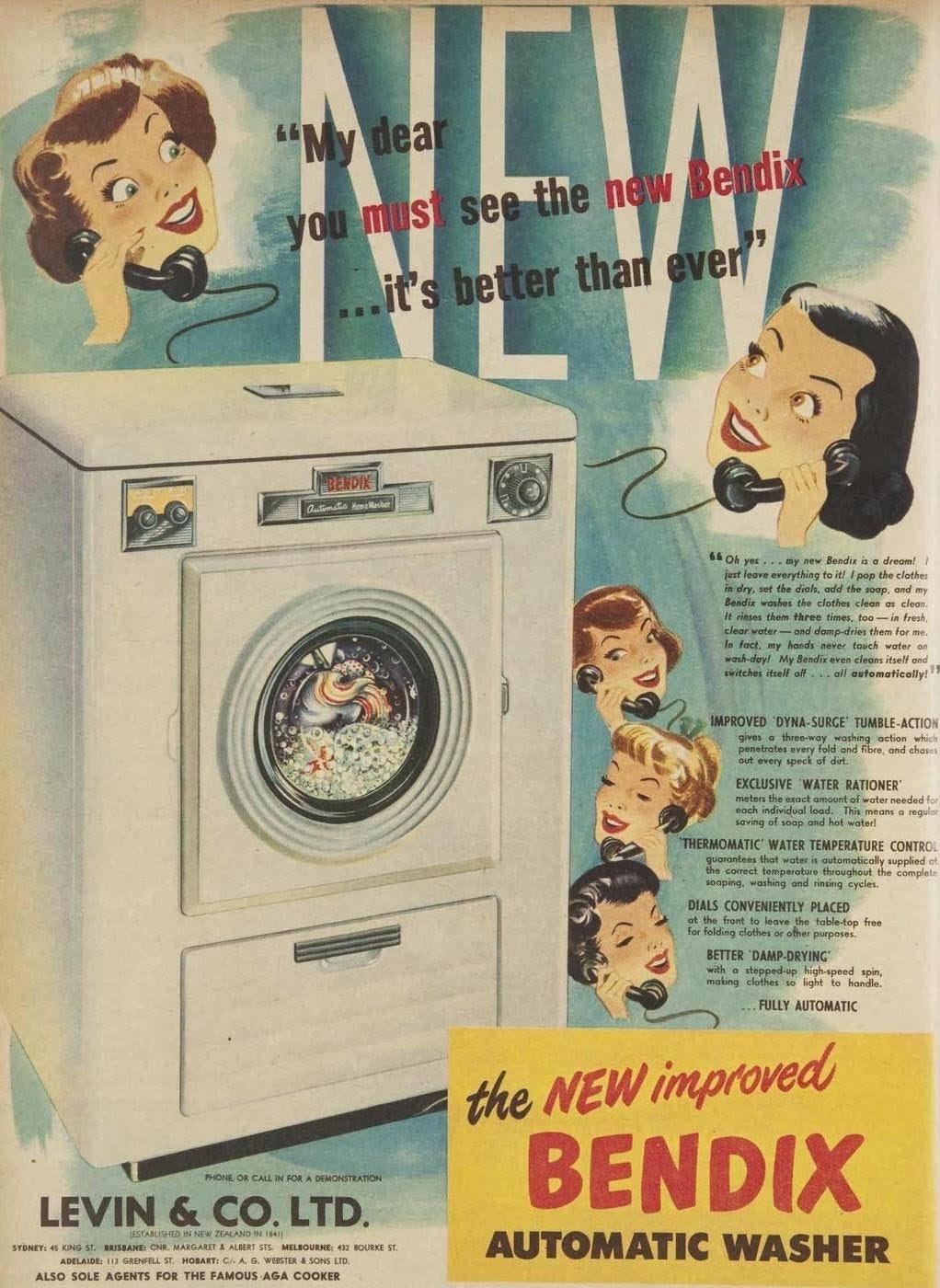
The stamping machines had been used to make washing machine outer housings, which is why they were unable to stamp anything with deep, complex curves, as the machines could only make depth of six-inches. So that means, realistically, mostly flat panels with some mild curves. It’s a genuine design challenge, one of those sorts of restrictions that makes things interesting.
Then there’s the requirement to have something that associates these new cars with the legendary and famous Jeeps, because Jeep has many positive associations for the car-buying public.
So let’s look at what challenges Stevens was facing with these new civilian cars: they have to feel Jeep-like without being too rugged or militaristic or off-road-ish, they had to be appealing to a mass-market audience for comfortable, mainstream cars, and they had to have body panels capable of being stamped by machines designed to make washers and dryers. That’s a hell of a set of restrictions. But Brooks was up to the challenge.
What He Came Up With
Here’s the two cars Stevens came up with: a station wagon and a sports car. Let’s look at the station wagon first:
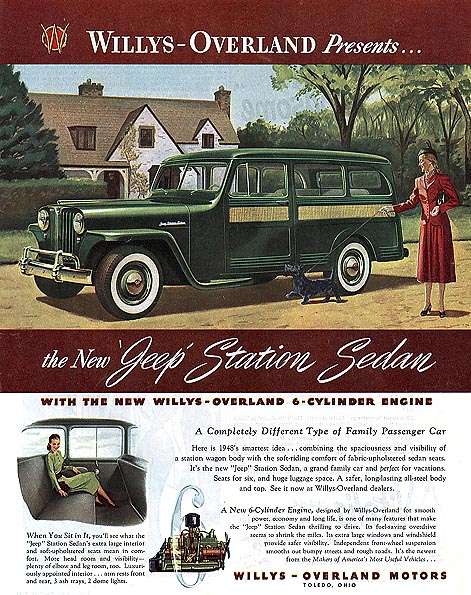
The Willys Station Sedan – also called the Jeep Station Wagon:
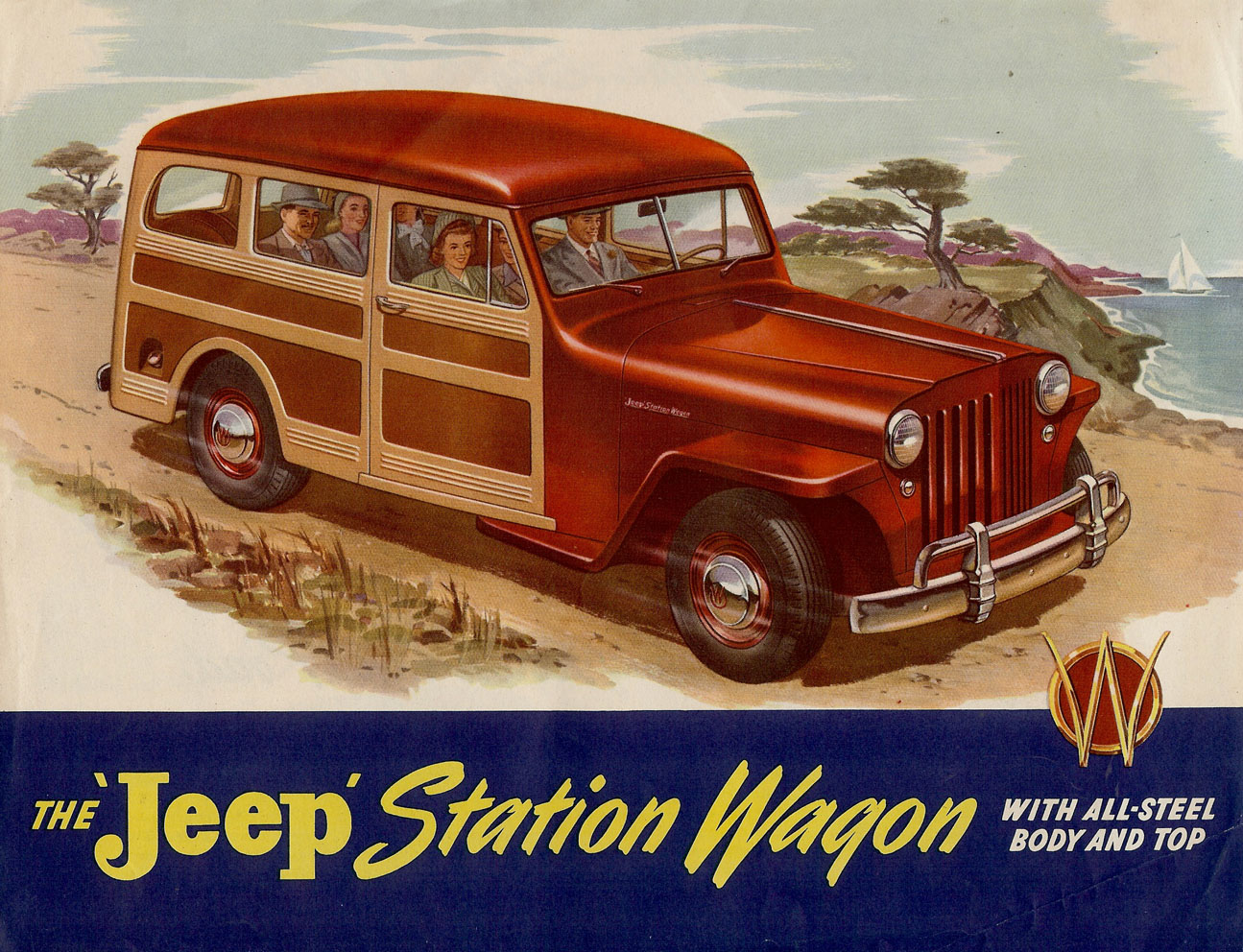
…was a very clever approach to a civilian car. Stevens reasoned that a station wagon would need to have some ties to traditional wagon designs of the past, so he designed inset panels into the mostly flat sides that, especially when painted in contrasting colors, evoked the old wood-paneled station wagons people were used to. This is sort of an ironic bit of skeuomorphism when you consider that the Jeep Station Wagon was the first all-metal-bodied station wagon built in America.
The front end design definitely evoked the now iconic Jeep face, but with some modifications to make it less utilitarian and militaristic. Earlier versions had a large piece of chrome brightwork down the middle of the grille (as in the top ad) and later ones added a V-shaped bend to the grille to give it some more depth.
The headlight arrangement and slatted grille were retained (though with 10 slots here) and the fenders were still flat-topped, even if they did have some mild curves. A big chrome bumper with guards and an overrider bar added more brightwork to the car, along with chrome hubcaps, light bezels, and other details.
The Willys wagon looked purposeful, but not overly spartan or utilitarian; Stevens had managed to pull it off. But he wasn’t done yet! Stevens also sketched out a design for an open-topped roadster, one that used essentially the same front end design as the Station wagon, but from the windshield back was a radically different sort of car. Here’s an early sketch:
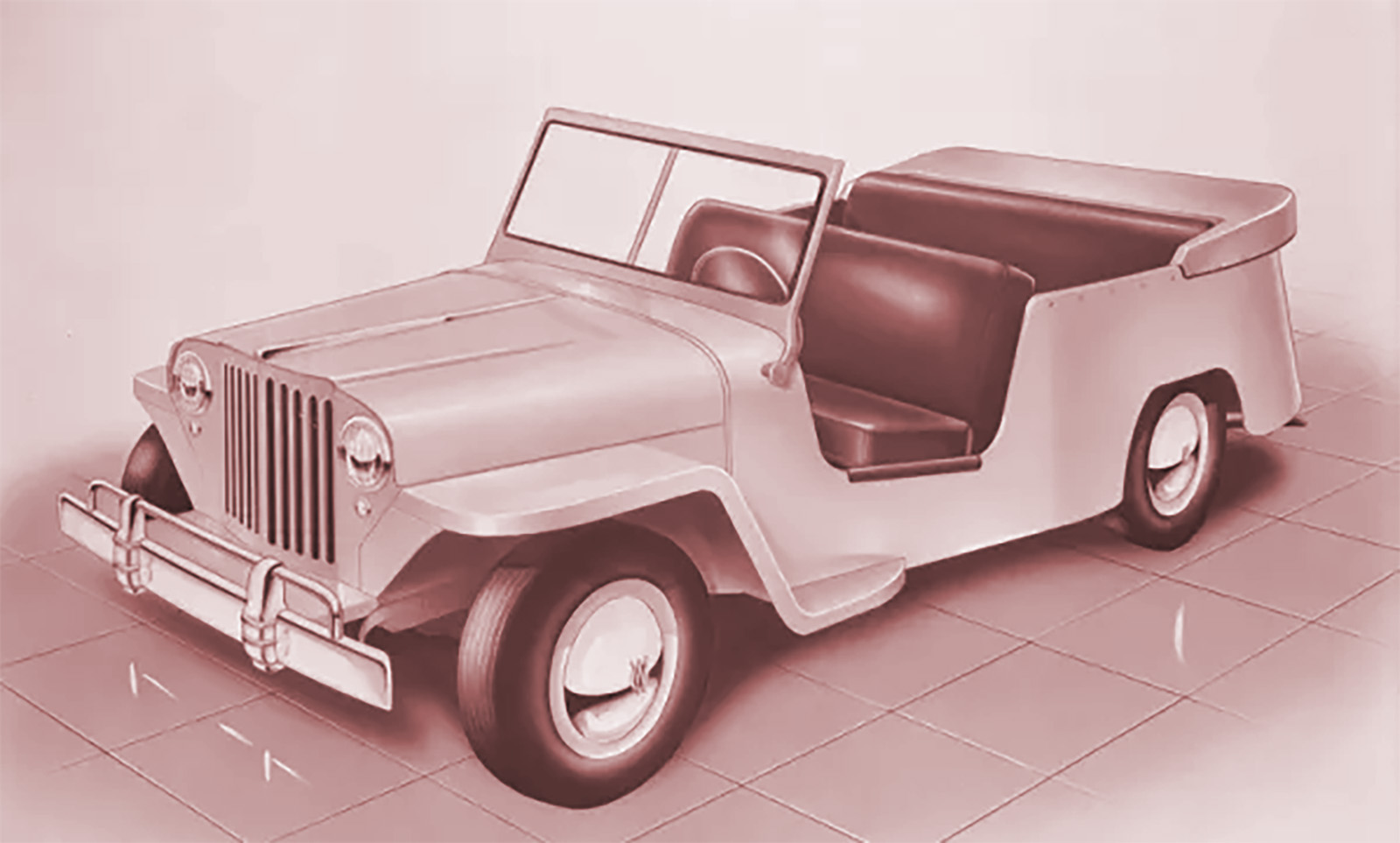
This concept feels a little more Jeep like in scale, but very different conceptually, especially when you look at its final production form:

There’s lots of brightwork, there’s the fun, vivid colors and the contrasting two-tone paint, there’s fun details like a rear wheel skirt and those chrome steps so the back seat passengers can just climb up and hop in – this is a car made for fun. That’s why I believe this qualifies as a sports car, a roadster, and, sure, it’s a four-seat roadster, but I think that’s fine. The car – called the Jeepster – didn’t even have glass side windows, relying on clip-in side curtains like an old Triumph or MG.
Willys referred to the car as a “sports phaeton” for all the evocative drama:
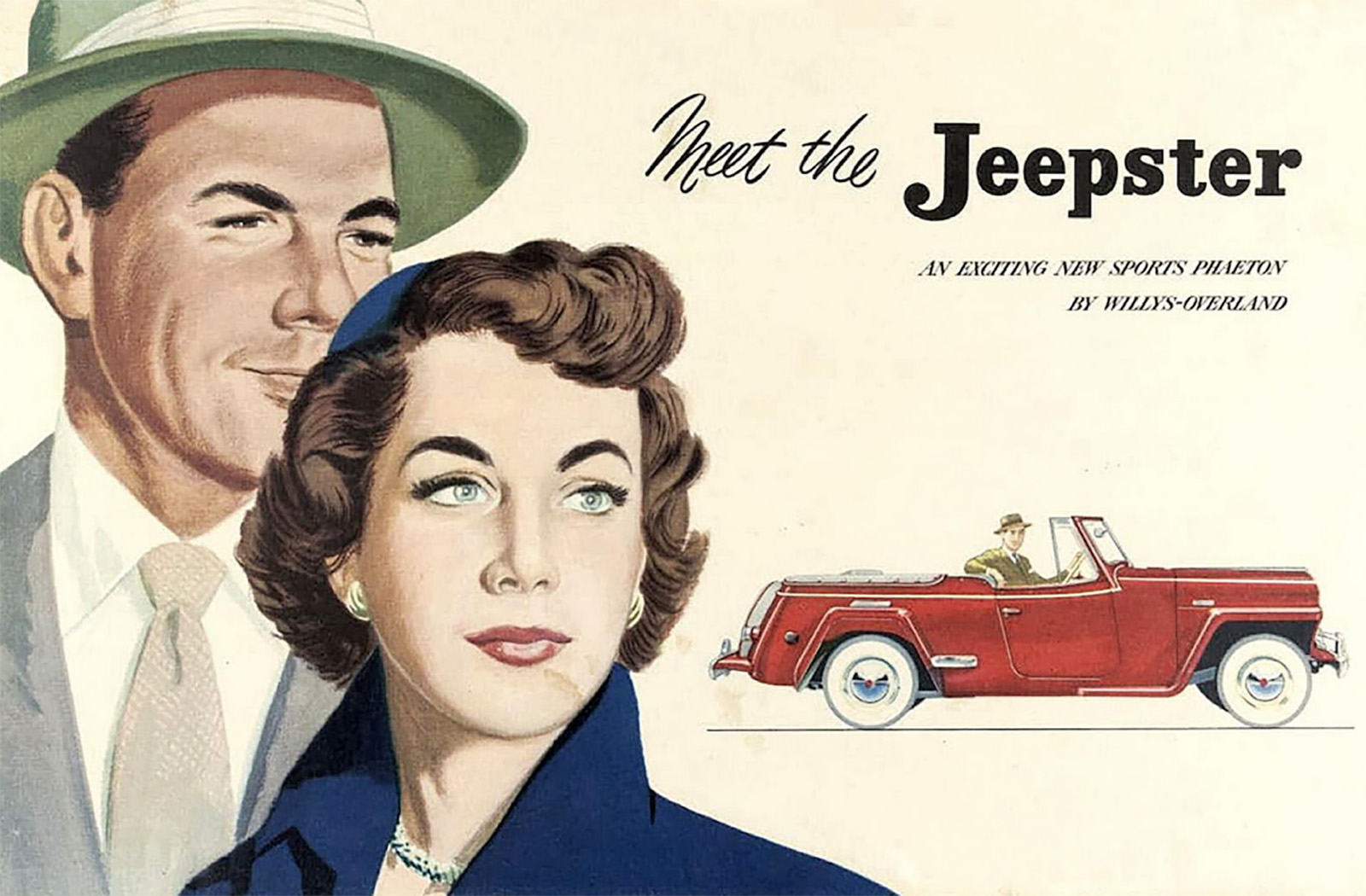
If you look at the Jeepster, you can actually see all of the restrictions forced on Brooks Stevens in action, and the clever way he adapted to them and made something remarkable. He didn’t fight with hand he was dealt, he used the limitations to inform what the car’s character would be. The face was a softened and refined version of the iconic Jeep, the low-draft washing machine stampings meant it would have clean, simple lines, and chrome jewelry would add the necessary adornment.
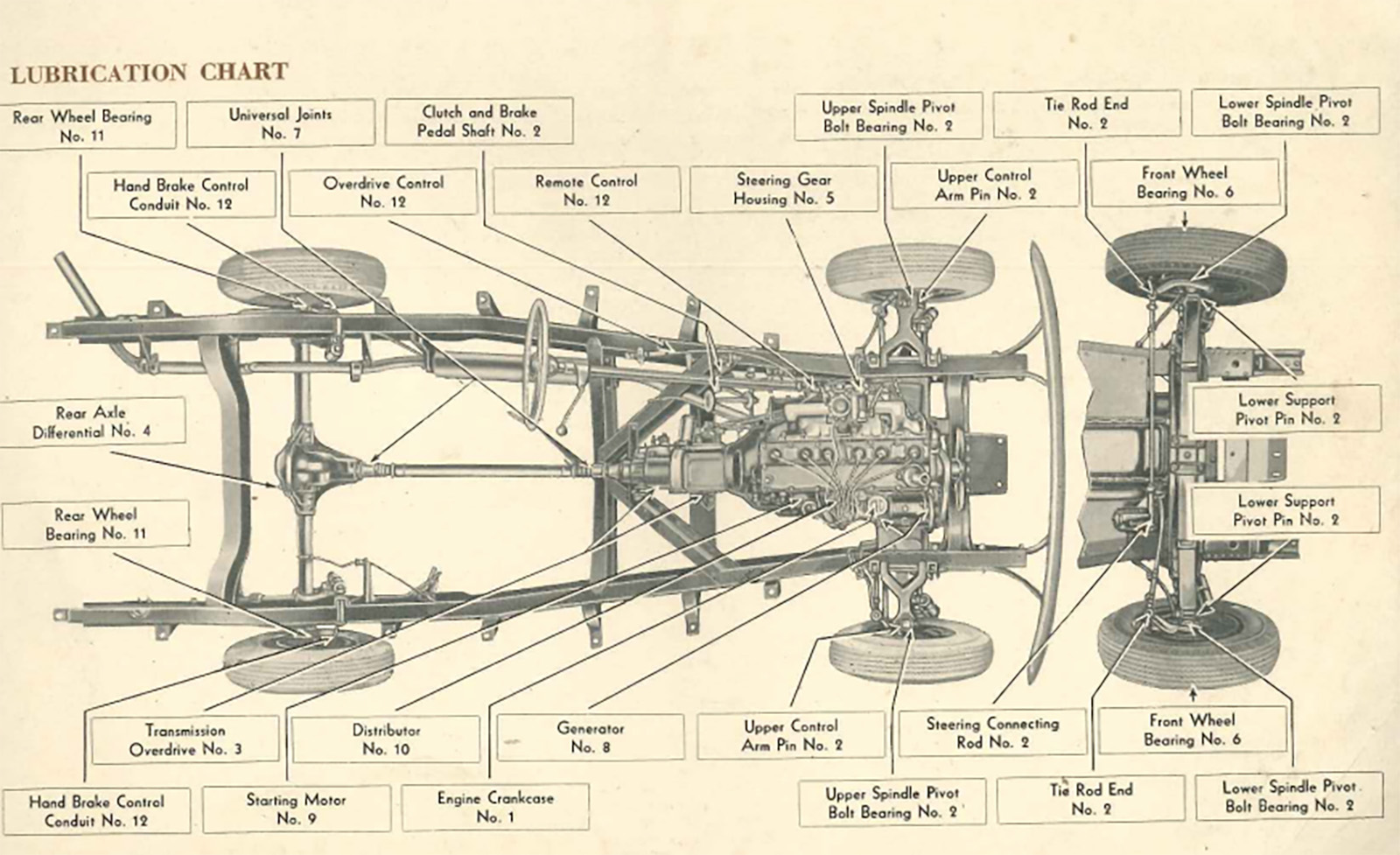
The Jeepster’s chassis was the same as the military Jeep’s just reinforced with a beefy X-shaped stamping to give some rigidity to the bathtub-like open body, and the drivetrain lost the transfer case and front differential, because no one was asking for the Jeepster to have four-wheel drive – rear wheel drive was just fine. An overdrive was also fitted for more comfortable high-speed cruising.
You can see the chassis here – this is the Station Wagon, which just had the <-shaped reinforcement seen here, but also note the six-cylinder engine; early Jeepsters just had a 63 horsepower version of the Jeep’s famous Go-Devil engine, but got an option for the Willys inline-six later:
Not A Huge Success, But Not A Bad Start
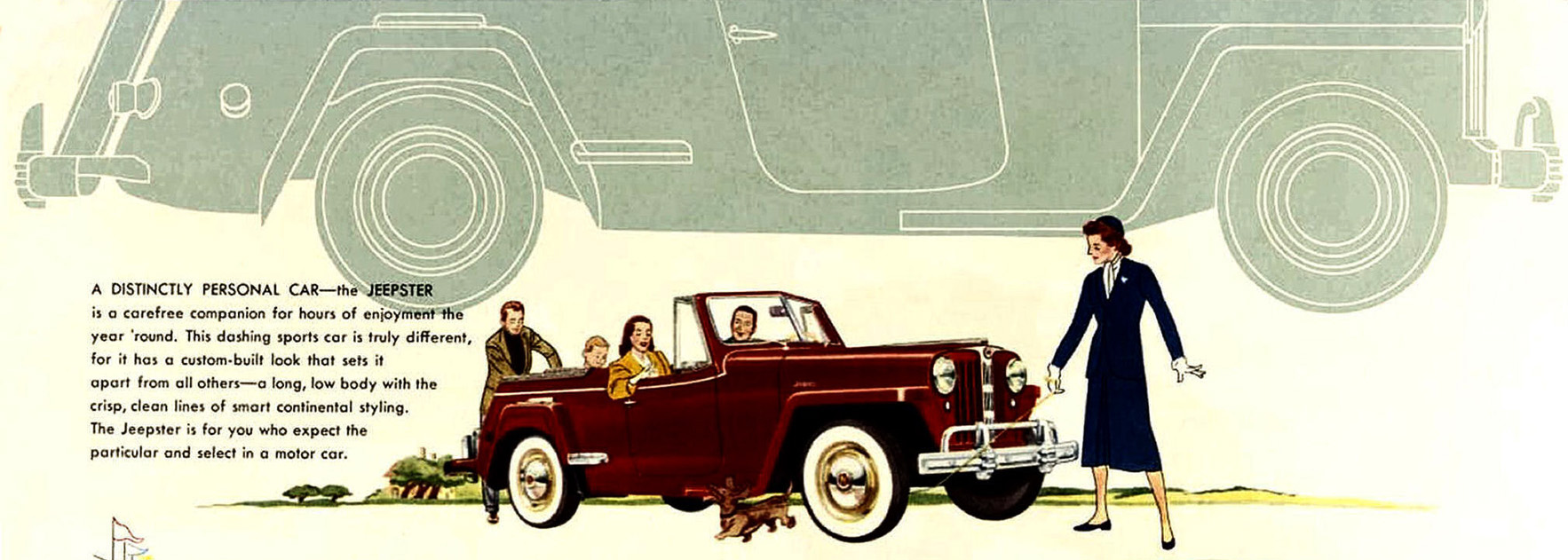
The Jeepster sold pretty well at first, since Americans had lots of built-up demand for new cars, edging, as they were, during the entire war. The first year Jeepsters were available, 1948, a healthy 10,000 were sold. That dropped to 2,300 the next year, and kept dropping, even with a facelift in 1950. 1951 was the last year they were sold, and that was it for the Jeepster, which remains the only traditional-style sports car Jeep, I think.
But both the Jeepster and the Station Wagon had a much bigger impact than their sales would suggest: they were Jeep’s first real foray into adapting their formula to a larger mainstream market, something we see today in Jeeps like the Liberty or Compass or Renegade or any number of Jeep-badged crossovers and SUVs. Brooks Stevens would also go on to design the Jeep Wagoneer and Cherokee, which truly defined Jeep’s formula for mass-market cars, only this time they could be off-road capable, too.

And to think all of this happened because of a desperate re-purposing of washing machine making equipment, and a designer who thrived under limitations and pressure. Anyone can make something when the sky is the limit; but to work within wild constraints and still make something remarkable, that’s where design becomes sublime.




technically, the Jeepster was probably America’s only postwar production phaeton