

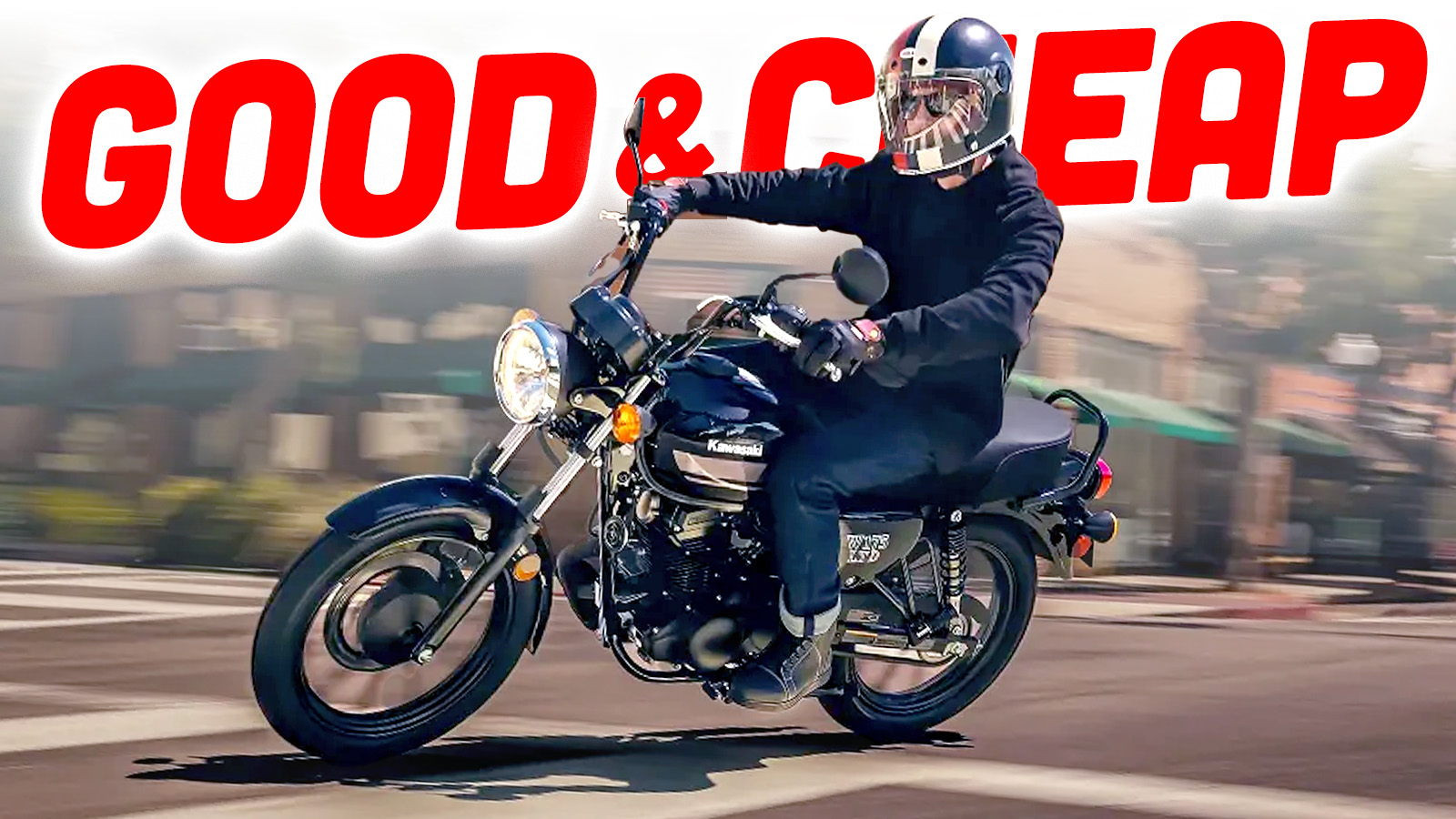
Small motorcycles have enjoyed surprising success in America and much of the world. These motorcycles offer all of the fun of motorcycling, but at a price that almost everyone can afford. American motorcyclists already have many awesome choices for small motorcycles, and reportedly, we’re going to get one more. Kawasaki might bring its W175 LTD to America, and if it comes here, it’ll likely be one of the cheapest retro bikes you can swing a leg over.
Kawasaki has not officially announced the W175 LTD for America just yet, and thus far has not confirmed nor denied its impending release. However, as Dennis Chung of Motorcycle.com has discovered, Kawasaki did just get the motorcycle certified by the California Air Resources Board and the U.S. Environmental Protection Agency. So, at the very least, Kawasaki is considering it enough to clear it through American authorities.


The Kawasaki W175 has proven itself in Asia for nearly a decade, and our friends south of the border in Mexico have been enjoying them, too. Given the rise and popularity of affordable small bikes from the likes of Honda, Triumph, CFMoto, and Royal Enfield, it makes sense for Kawasaki to dip further into this pool. My favorite part, aside from the looks, is the simplicity. Forget about AI or any real techno-wizardry. The most advanced thing about this bike is its fuel injection.
Steeped In History

The W175 comes from Kawasaki’s famous line of W Series motorcycles, and the company provides some background. The W story started in the 1960s, from Kawasaki:
It was an era when all but a few Japanese motorcycles were small-displacement machines. Kawasaki was one of the first to introduce a big bike, powered by a 496 cm3 OHV Parallel Twin, the world standard of the time. The engine’s roots could be found in the Twin engine of the same displacement produced by Meguro Manufacturing Co. Motorcycle Works, a well-known bike manufacturer established in 1927. Kawasaki absorbed Meguro in the 1960s, inheriting the motorcycle technology they had been developing since before World War II. The 1965 K2 was based on the Meguro’s K Series models and redesigned by Kawasaki Aircraft Co. Ltd. to increase its durability and top-speed performance. A prototype model based on the K2 evolved into the W1 released the following year.

Of all the export markets, America was of particular importance. Kawasaki had already broken into the US market with its 125B8, but to tackle America’s big-bike market they began to prepare a larger-displacement version of the K2. The 496 cm3 engine’s bore was increased by 8 mm, bringing displacement to 624 cm3. A prototype model with the larger displacement was displayed at the 12th Tokyo Motor Show in 1965. Meanwhile in Kawasaki’s Akashi Factory, mass production of the new W1 was already underway, with new units rolled off the line and arranged neatly, ready for sale. Compared to the K2’s 165 km/h top speed, the W1 could exceed 180 km/h, and in the 0-400m, it recorded a time of 13.8s. Selected with the American market in mind, the fuel tank – often considered the centrepiece of a motorcycle – was coloured a brilliant candy red and complemented by high-quality chrome pieces. The novel design was a bold statement, in stark contrast to the subdued tones of other Japanese motorcycles. It was unveiled to great acclaim at events all across America in February 1966, with orders pouring in before sales even began. With the W1, Kawasaki gained worldwide recognition as a big-bike manufacturer.
Kawasaki would continue to evolve the W Series over the decades. The most famous W Series bike in the modern day is the W800, which paired classic looks with modern technology and amenities.
Big On Looks, Small On Size

The W175 is an interesting twist on the W Series. Kawasaki realized that there is demand for bikes like the W800 in developing markets, but buyers in those markets could not afford a W800. The solution was to build a small and affordable motorcycle that resembles the W800. The W175 made its global launch in 2017.
The W175 starts as a delightfully retro platform. The machine rides on a tubular steel double cradle frame, has a simple swingarm, and even uses dual rear shocks like a ride from the 1980s. The engine is a 177cc air-cooled single, which drinks from a Mikuni VM24 carburetor. Even the brakes are simple, as a small 220mm dinner plate handles stopping up front and a 110mm drum takes up the rear. You don’t even get a tachometer or fuel gauge, but you do get 17-inch cast wheels.
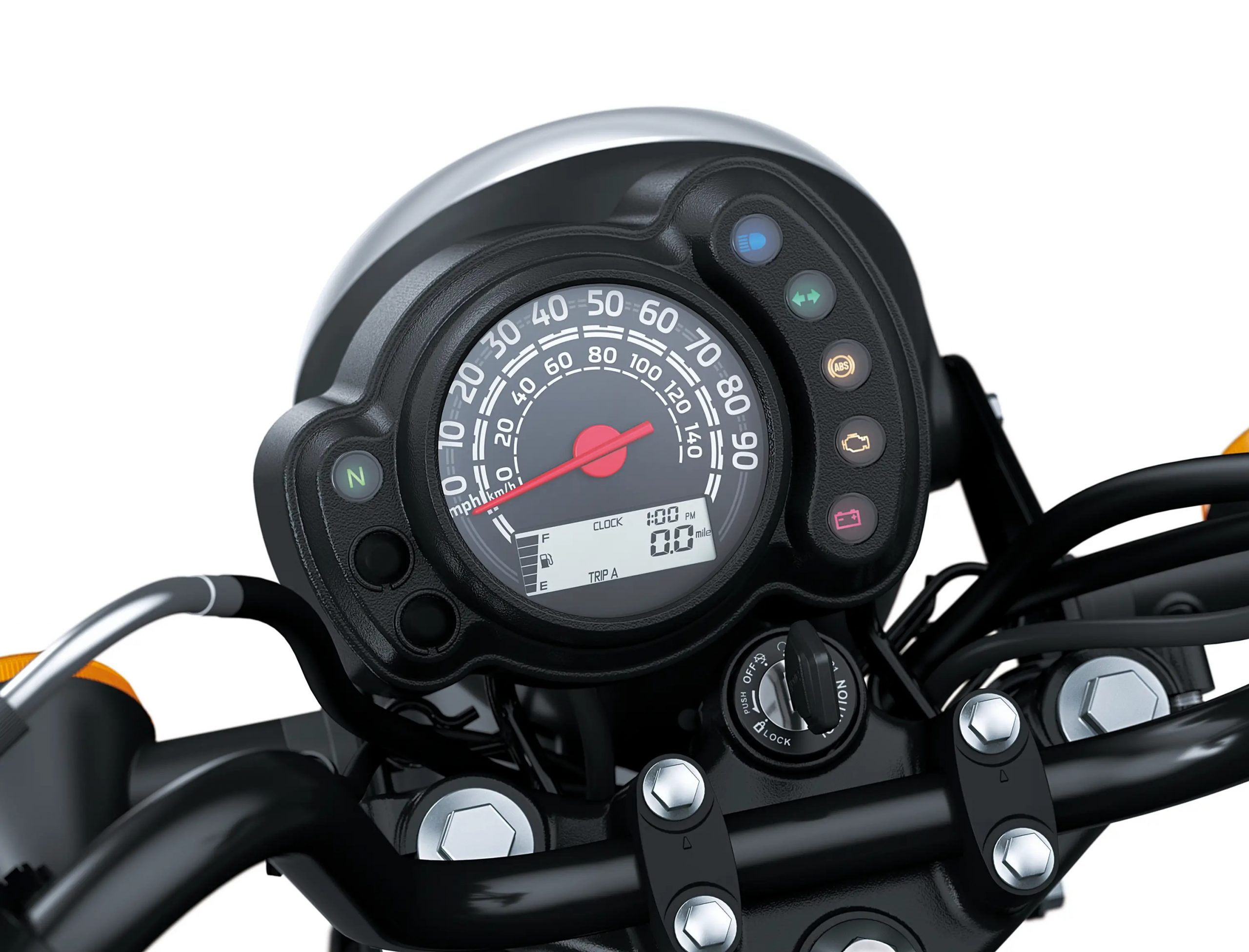
The W175 series, which includes a cafe version, a dual-purpose model, a standard variant, and a sport tourer-like flavor, is built by Kawasaki’s subsidiary in India and is sold in its domestic market, plus Thailand, the Philippines, Uruguay, Bolivia, Mexico, and more. If you take a look at the version that was recently announced for Mexico, you’ll see that Kawasaki has updated the W175 with such luxuries as fuel injection, a fuel gauge, and front-wheel ABS with a 245mm brake rotor. So, this motorcycle straddles the line between old-school simplicity and modern technology.
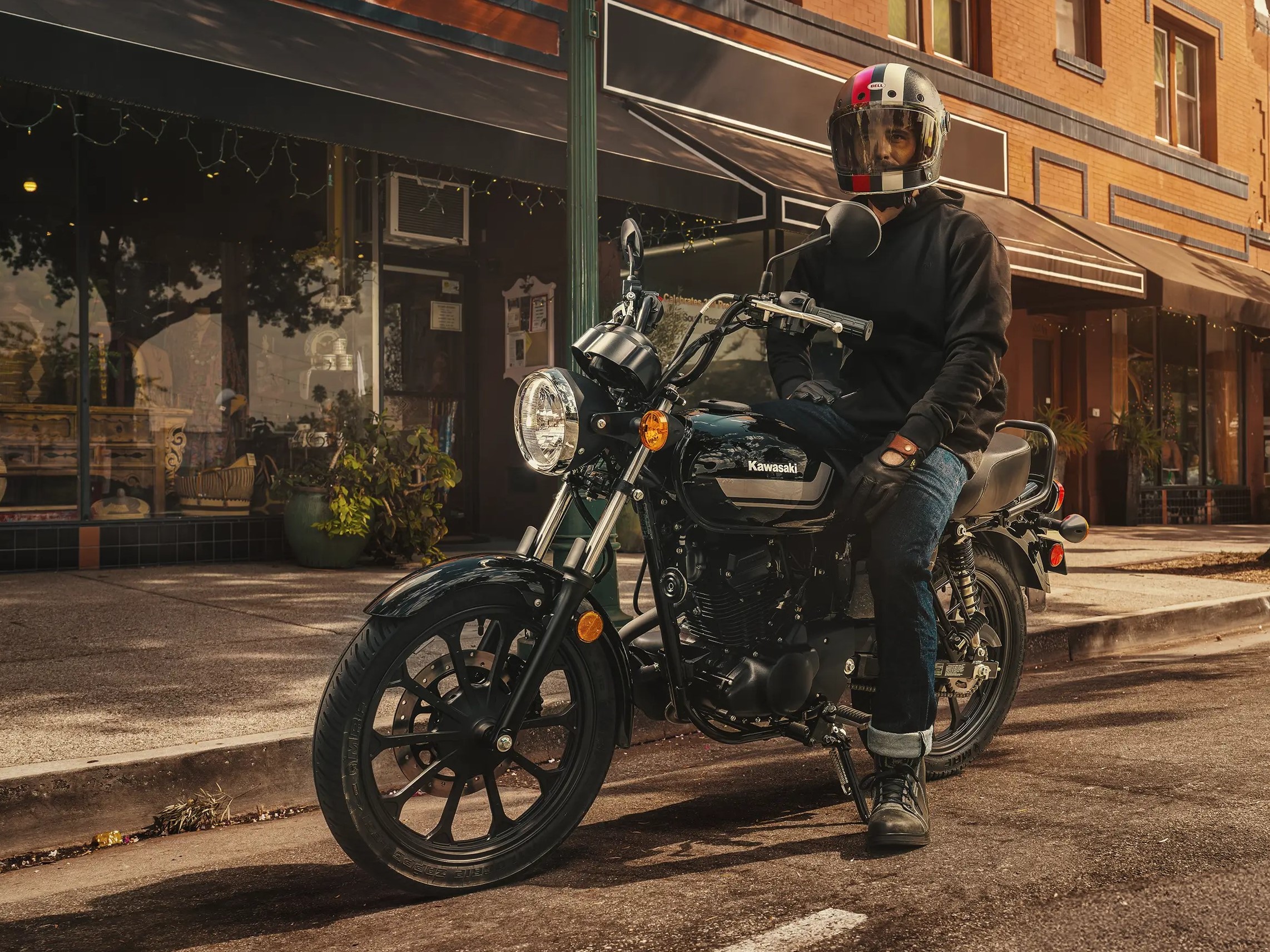
My favorite part, however, is the design. The W175 appears to be based on the W175 Street, but with minor changes like inverted forks instead of conventional forks with rubber gaiters. The LTD model also has a single-piece seat rather than the Street’s saddle. The bike is ripped right out of the past with its teardrop tank, round headlight, peashooter exhaust, and sculpted seat. If you didn’t know any better, you might think you were looking at something decades old.

All of this adds up to a machine that weighs 297.7 pounds, has a reasonable 30.9-inch seat height, and motivates itself with 13 horsepower and 9.7 lb-ft of torque reaching the rear wheel through a five-speed transmission. That’s not a lot of power, but it’s good for 0-60 mph in about 16 seconds, on the way to a top speed of about 68mph. For those of you counting, that’s a tick faster than something like a Honda Grom, and only a tad behind some larger displacement bikes such as the Royal Enfield 350 motorcycles.
As I said earlier, Kawasaki has not confirmed nor denied plans to launch the W175 LTD in the United States though the fuel-injected model is certified for 2026. The press imagery for the Mexico model is especially interesting, as it shows a unit with a speedometer in MPH, and the images were taken in California. That is a clear sign that Kawasaki wants to sell it here, but who knows what that might look like. Remember, Harley-Davidson certified its adorable and ridiculously cheap X350 in America, and then Harley proceeded to keep the new bikes locked in the confines of its rider training courses.

It does make sense that Kawasaki would want to sell a small bike in America. The small-bore segment has seen healthy sales all over the world. Here in America, there are people who do want to buy new motorcycles, but they don’t have Harley-Davidson or Indian money. Instead, they darken the entrances of their local Royal Enfield dealers or buy small Hondas. Royal Enfield has seen record sales from selling motorcycles that make barely over 20 horsepower. Honda caused a big splash by selling a $1,800 motorcycle with the bones of a tiny scooter and a top speed so slow it can’t go anywhere near a highway.
Great Thing In A Small Package?
Obviously, the buyers of the Kawasaki W175 LTD aren’t going to be touring or racing. The ideal buyer would be a beginner or an urban rider who wants to enjoy the occasional country road. Riders in international markets also seem to enjoy tuning and wrenching on these things, so it could be interesting to see what Americans will do to them.
The big question will be pricing. Since no official announcement has been made yet, it’s anyone’s guess how much the W175 LTD would cost. The current smallest W Series for sale in America is the Kawasaki W230, which comes in at $5,699. Kawasaki’s minibike, the Z125 Pro, is $3,799 in America. It would only be logical to conclude that, if the W175 were to sell here, it would be cheaper than the W230. I think the baby W175 will have to land at well below $5,000 before fees to even have a chance against the might of the $4,299 Royal Enfield Hunter 350 or other beginner bikes like the Yamaha V Star 250.
If Kawasaki can land the price, I think it has something interesting here. The Kawasaki W175 LTD has the looks that so many riders crave today, but in an affordable form factor. It’s faster than a Honda Grom and shouldn’t be intimidating for inexperienced riders. However, the W175 LTD is also slower than the Royal Enfields it would compete with. I think the price might be the determining factor of success. So long as Kawasaki doesn’t screw this up, it could have one of the cheapest retro motorcycles in America, and I think that’s worth getting excited for. I always champion more choices, especially if they’re affordable. We’ll have to keep watching this one to see what happens.
Top graphic image: Kawasaki


my first ‘new’ motorcycle was a ’71 yamaha DS-7, a 250cc two stroke. it dominated ‘D’ bike class at ESTA dragstrip for two years. it beat a sportster thru 13 curves in central ny. it cost $795. new! 13 Curves on Onondaga Hill | Haunted History Trail of New York State
Nice. 🙂
I’ve got the Suzuki equivalent of the W175: the Vanvan 200. It’s basically the same idea, though it’s got a whopping three more horsepower, is a bit lighter, and actually Made in Japan. Foolishly, I waited until too late in life to start riding… though I got my M1 license in my 40s when I still had a semblance of youthful energy and ambition, I didn’t buy my first bike, the Vanvan, until recently when I was almost 60. By now, my back hurts constantly and I’m hyper-aware of my own mortality, so I don’t ride it much. Here’s a photo of it, parked next to my NA Miata: https://imgur.com/a/pYEf2wu
Despite this, the UJM (Universal Japanese Motorcycle) remains my absolute favorite genre of bike. Not simply because they’re generally affordable, easy to ride, and durable (though I appreciate those qualities in any vehicle) but because they’re so well-suited for their intended purpose. Local commuting, running errands, or pleasant rides around the lake are all perfect for a small-displacement UJM. Not everyone is riding up to the arctic circle or across Mongolia, or racing at the Isle of Man… a $5K UJM satisfies 95% of real-world bike needs, provided you don’t plan a lot of interstate/freeway travel.
I hope Kawasaki does bring lovely W175 to America. 🙂
I love small bikes but I can’t see the benefit over a W230 which would be great for a beginner as well.
I love these small motorcycles! I had a Suzuki GS-150R (the “R” is clearly for “racing”) in Colombia for three months. I rode it 8,000km around the country on pavement, dirt, up and down steep dirt hills, through mud, with passengers, with luggage, and at elevations of 17,000 feet with both a passenger and luggage! It performed flawlessly and returned 85-95MPG most of the time. First gear is lower than expected, which was good for taking that bike off-road. It also had more factory skid protection than you’d expect. Small bikes like these are fantastic and I’d happily buy one for city driving if I still lived in San Francisco.
I am all for small and affordable bikes in the States! But I do think unless it’s priced waay lower than the W230 I can’t really see why anyone would buy it.
But also if it is waay lower priced than people may start thinking the 230 is too expensive..
The RE 350’s are attractive bikes and a grand less than the (mostly smaller displacement) competitors. For me I’d go RE over the Kawi.
I can’t see why they would add this with the 230 already being here. I feel like this is the equivalent of adding a rebel 250 into the lineup and keeping 300. They’re both thumpers, and $5600 start price is already extremely achievable if you need to have something new
My early 80s Suzuki GS250T, while admittedly a porker compared to this bike, did well with about 25 or so hp on the highways around DC, although there were 100million fewer people in the country then, and NO SUVs to speak of (sister had a 1984 Bronco, which was very odd for the time.) The Suzuki had a top speed of about 85 mph (speedos were limited then) and you had to wind it out to its 10K+ redline (with tach) to get it there.
The bike that currently interests me most for mainly town use and for riding the highway to the next towns nearby is the Honda XR150L dual sport for $3299+$300 destination. I doubt I’ll ever actually be buying another motorcycle for myself at this point in life but while the Kawi seems decent it would have to be a LOT cheaper than $5000 to be considered in my opinion. What with the plethora of used minimal mileage bikes out there and stuff like the Honda there isn’t really any reason to pay very much for something that is realistically limited to non-freeway use.
I like it, like small bikes, but this one might be a little small even for my stunted tastes. But in general I am all for any new bike that doesn’t look like a bug arching it’s back.
It looks nice enough. It’s interesting that Honda gets three more HP and within 0.1 ft-lb of torque out of its 157 cc engine on my ADV 160. In theory, the ADV tops out 1 mph faster. I have gotten it up to an indicated 65 (and it still had more, but I don’t make a habit of that and I certainly don’t take it on I-5 up here in Tacoma). They also weigh within a couple of pounds of each other. If it makes it stateside, someone will almost certainly do a comparison test which would be an interesting read.
I’m sure with the larger wheels the Kawi probably rides better and it does have a manual transmission. But it also has a chain and sprockets that I don’t like dealing with anymore. OTOH, the ADV has a lot of storage space under the seat. Running errands around town or taking a fun ferry ride over to the islands and putting around here is what I primarily use it for. And I can park it out of the way on a sidewalk for a quick snack at lunch or dinner in the summer. It also has a surprisingly effective windshield, even for 6’2″ me.
Different strokes for different folks. I’ve only owned Suzukis and Hondas. I have a buddy who had a KZ 1000, but that seemed a little out of my league performance-wise. But his CBR 600 was a blast! I have never even thrown a leg over a Yamaha. A little over five years ago, I got to ride a borrowed Moto Guzzi Stelvio dual sport that felt almost identical to my VStrom 1000. We rode around N Massachusetts and even climbed Mount Washington in NH.
I had a used Ninja 250 for a spell. Im not a bike guy and its the only one I’ve ever owned. But it was plenty quick, way quicker than this i would assume. It also got ridiculous 80 ish mpg. And it was cheap to buy. What is the draw with this thing and its 13hp? Is it just the retro looks? Is it the more casual seating vs a “street bike”?
Your Ninja was probably a hell of a lot faster than this. That little parallel-twin 250 revs high and makes great power for its size. Interestingly enough I found the Ninja 250 felt less like a “crotch rocket” and more like a standard bike in cosplay (which was a good thing, to me).
I’m kind of the target audience for this bike. My 16hp/12.5lbft Suzuki TU250X, at 325lb, isn’t hugely far off from this, and gets a similarly ridiculous 70-80ish mpg. Personally I’ve never felt wildly starved for power, although as a new rider that could just be perception. She’ll do 75+ but is not comfortable at all at that speed because the wind wants to kill you.
Similarly, this looks like a great little bike for around-town riding and it has very nice looking ergonomics. I’m glad to see the small upright standard bike making a return, from Enfields to Kawasakis to my little Suzuki.
I don’t think this is happening.
Kawasaki USA could already sell the Thai-made W230 for a lot cheaper if they wanted to.
However this could be a tariffs-related contingency plan. The W175 is made in Indonesia, just like the KLX230 and its related bikes.
Maybe they’re banking on one country getting hit with less tariffs than the other.
Quite astute
I have a short commute on surface streets and live in a fair-weather area, so these articles about inexpensive bikes always lead to me daydreaming of getting another one.
Unfortunately, the increasing frequency I have to use my horn just to get people to notice my Mazda3 leaves me feeling less enthusiastic about the idea.
That would be fun in a city, but that’s not enough bike for highway use. I’m not saying everybody needs a liter bike, but 13 hp?
Yeah. This is a bike for a niche market IMO. My motorcycle days are well behind me but a top speed of 68 when most highways are 55 is a tough sell.
They have a W230 if you need more power.
A lot of people live in cities.
I would suggest that scooters, with their under-seat storage are a more practical solution for urban errands. And with its light weight has been more fun to run around the islands around here, and much easier to back out of a dead-end dirt road and not worry about crap in the chain of my old VStrom 1000.
My ADV 160 feels perfectly happy up to about 55-60 mph. I know people who have gotten them up to 72. But you kind of know when you’ve taken something up to a velocity they really aren’t happy with. For me, it’s never been aerodynamic. It’s just that you are wringing everything they are capable of providing propulsion-wise. And at that point, they’ve gone from pleasant and fun, to angry and unhappy.
A 1988 diesel Fiat Ducato 5M van at 130 kph in Italy comes to mind. Yes. It could do it, but wasn’t happy doing so.
“The LTD model also has a single-piece seat rather than the Street’s saddle. The bike is ripped right out of the past…”
That’s a rather kind way of saying ripped right from the $500 listings on Craigslist. I’m into the idea of a cheaper retro bike, but I’m not sure who’s longing for something inspired by the cheapest metric cruisers of 1983 (I say this as someone with an ancient Rebel 250). Granted, it’s mostly the high bars and the awful seat, but it’s an aesthetic I just don’t get, especially when the Street is right there.
https://www.kawasaki-india.com/content/dam/products/pim/studio/Resource_313722_24BJ175G_395GN1DRS00D_A.jpg/_jcr_content/renditions/cq5dam.thumbnail.600.600.png
Yeah. I’m not a fan of the quasi-gorilla bars. Without a windshield/fairing, that’s a lot of wind blast as you near top speed.
I put a plexi-fairing on my first bike, a 1980 Suzuki 550. One day, I was riding home from Sacramento and on the freeway (I-80 towards Davis) a car kicked up a “road gator,” a peeled recap from an 18-wheeler, and it hit the shield, shattered it, but at least it didn’t hit me directly in the chest, knock me off the bike or do bad things to my rib cage.
I kind of want a little bike as it just make so much sense in the city. That might be a nice ride.
Dual sport is the answer you want. They don’t get angry if you accidentally drop them.
I am in fact looking at TW200. They look like a lot of fun.
Cool looking starter bike! My only beef is with the lack of tach.
How can it be EFI if it has a carb on it? Confused as always.
If you read the next paragraph, I note that the updated version has EFI. So luxurious! lol
I wish motorcycles (from proper manufacturers) were available for direct purchase. When I was shopping for my TW200, I was very tempted to just buy new, as even used they still command close to the $5,000 MSRP. However, with dealer markups, it would have cost closer to ~7500 at my local Yamaha dealer.
Same. I was tempted to buy a brand new scooter a couple years ago, but the 50% markup onto the sticker for all the dealer fees put me right back into the used market.
Couple years ago was when everyone was adding markups to cars and bikes and everything. Now you can find discounts even on 2026 models.
Well, I’ve got about tree-fiddy right now, so it doesn’t matter.
Am I missing something in the photos?
They all appear to be conventional forks – just sans-gaiters.
had a 1996 KE100 as a teenager and it was a blast. i miss that old 2 stroke and would love to have it back. a dual sport version of this would be a perfect replacement for it. that KE was light and nimble but you had to wring each and every one of those 11 horses out for highway speeds.
I am currently without a bike. I am getting old, like more than the old speed limit old. and think impatient, distracted idiots in cars are a danger. I do miss a motorcycle and really want a Honda trail125 (i use to own a trail 90 with the high/low transmission) I do like the look of this bike. Maybe in a few years I will consider a non-highway bike as a retirement present.
Looks like a great UJM. I don’t follow motorcycles much any more, and I find myself surprised that anything with a carb could be, well… CARB compliant.
I’ll show myself out now.
See the paragraph below the carb reference, it was updated with FI. So the carb probably wasn’t going to be CARB compliant.
If only they had some kind of CARB raters.
There’s fewer and fewer bikes out there without FI. I used to hang out with a motorcycle guy that could spot the difference easily; at lunch, one day, at a sidewalk table, we were watching bikes pass by and talking about them. I noticed he hadn’t ordered anything and asked if he was going to get a sandwich or something; “Nah,” he told me, “I’m counting carbs.”
The USA has not changed road motorcycle emission standards since 2010. There are still several new motorcycles for sale in 2025 with a carb. The Yamaha TW200 is one of them.
Here is the certification for the TW. It puts of 4x more CO and 7X more HC+NOx per mile than a 7.3L F-250.
M-003-0808
Astounding and ridiculous.
It is. A lot of bikes are cleaner than that but only because we get Euro V versions because the US market is to small to make us a unique dirty version. It is mostly the old bikes that have been around for ages a no longer legal in the EU or Japan that still use Carbs.