

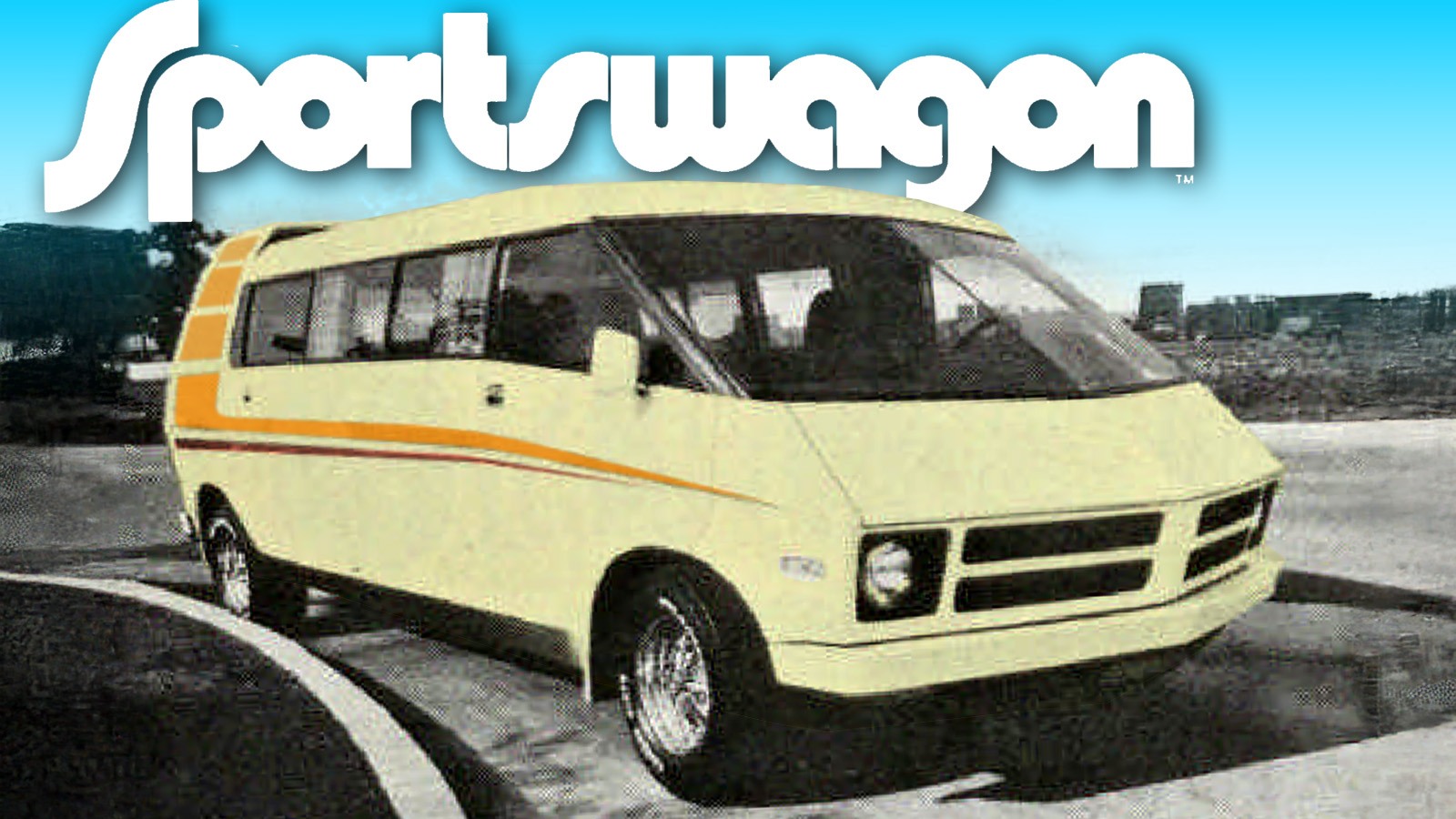
The conversion van was one of the greatest automotive trends of the 1970s. So many people kitted out their vans with groovy interiors, murals, chrome, and snazzy bolt-on parts. The van was sizzling hot, and all sorts of companies and builders made some of the coolest vans in America. One of them was the Sportswagon and the Majestic SL-18. This van was supposed to be everything. It was supposed to carry motorcycles, handle like a sports car, drop its roof like a convertible, and camp like a motorhome. This crazy idea actually made it into production, and then just disappeared.
Information about these vans is hard to come by. I feel like I ran the poor Internet Archive ragged, sifting through hundreds of pages of stories, several entire issues of car magazines, and mystery car forums. However, I believe I have pieced together most of the story. Somehow, there’s more drama surrounding this van than you’d ever expect. Then you look at the names involved and realize that this van was the work of some guys who had a real impact on the car industry.


What do I mean by this? Among the creators of this van is a man who designed a monorail, a space station mockup, and the 1989 Cadillac Eldorado, plus the man behind the design of the iconic Tucker 48. The van they created would be wild, even by today’s standards. The Sportswagon, later renamed to the Majestic SL-18, was 18 feet long, 7.5 feet wide, and low-slung. By day, it was a rockin’ custom van that was supposed to drive like a sports car. By night, its roof popped up, and its huge body allowed its occupants to sleep transversely in its back. This van sounded like the future, but then it seemingly disappeared.
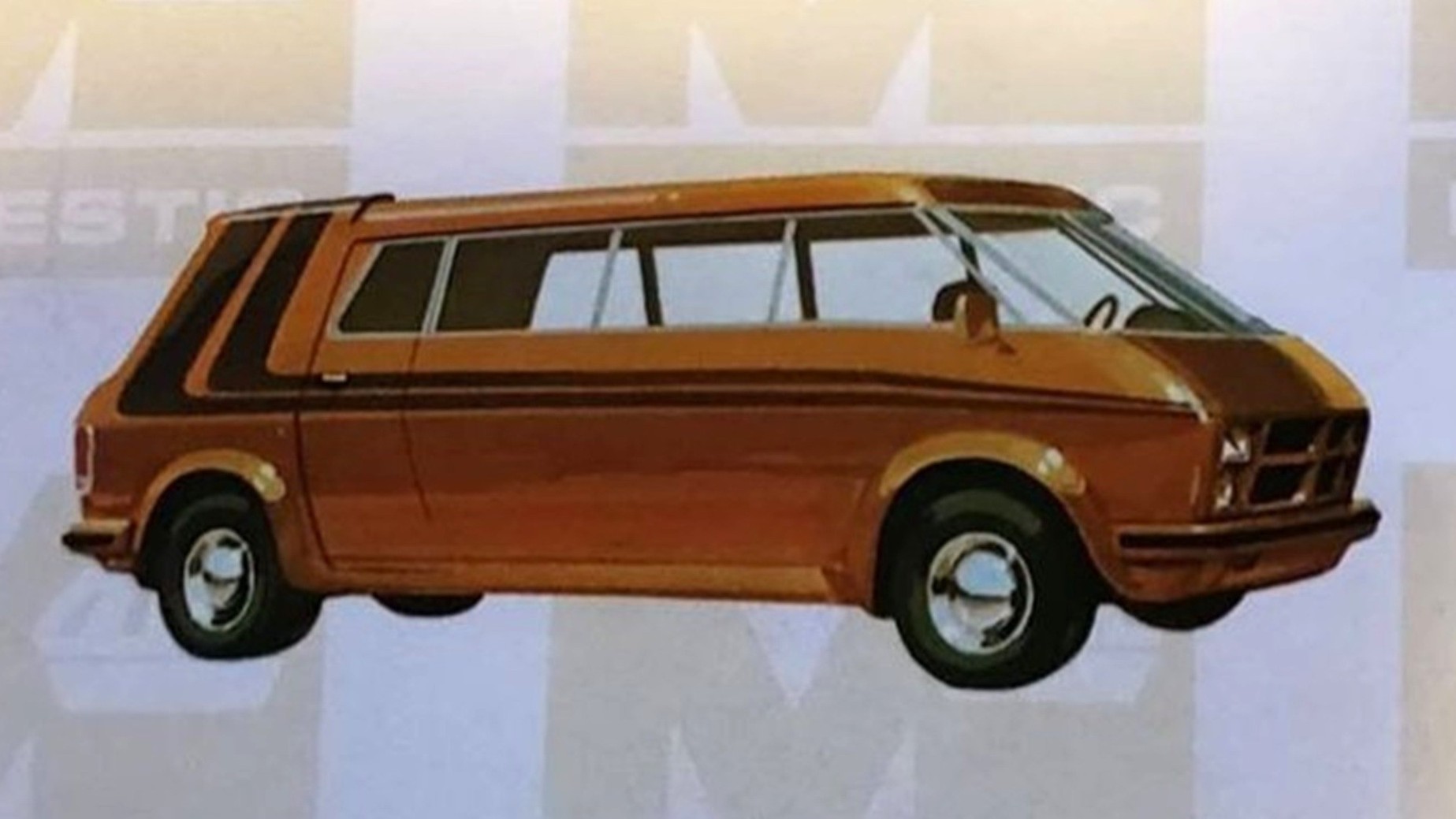
A Man Who Designed Everything
According to the records that I have been able to find, the van first appeared in the media in 1973. It was called the Sportswagon (with an ‘o’, not an ‘e’) and was being marketed by Sportswagon, Inc. of Irvine, California.
Sportswagon, Inc. was co-founded by engineer Ronald “Ron” H. Powers, the CEO of Powers Design International. According to Ron’s resume, he attended the Art Center College of Design in Pasadena, California, in 1970. He also had a background in Architecture and Mechanical Engineering from the University of Texas.
According to the Los Angeles Times, Ron’s work caught the attention of the mass transportation industry before he even graduated from Art Center. While at the institution, Ron designed a complete mass-transit system for Los Angeles that involved a mix of high-speed trains, buses, and passenger vans. Los Angeles passed on Ron’s idea, but that didn’t stop him from dreaming.

Ron’s work after school was simply mind-boggling. He joined Kawasaki Motors Corporation of America after graduating, and he served as a Chief Designer. In that role, Ron says, he was largely responsible for taking Clayton Jacobson’s personal watercraft invention and turning it into the Jet Ski. His resume claims he was also responsible for the creation of the Yamaha WaveRunner and the Wavejammer.
This resume looks like it was published in the 2000s. His company’s website has since gone offline. This wasn’t all that Ron did. According to his website, his company built tools that GM Truck & Bus used to create a raised-roof GMC Brigadier truck. His company also worked on the Space Shuttle upper forward fuselage mockup for Rockwell International, a U.S. Space Station Freedom prototype for McDonnell Douglas (illustration for the planned station below), a convertible K-car for Chrysler, a redesign of the Datsun 510, an instrumentation van for Boeing, and more. If I attempted to list all of Ron’s projects, I would be here all day.

Ron even created the Powers Motor Corporation, which served as the brand for his crazy car projects, like the PMC AEV (Alternative Energy Vehicle). Like seemingly all serial vehicle inventors of the 1980s, Ron made at least one three-wheel car. Ron also says he was involved in rail projects that included Maglev and linear induction trains. Two more notes in his history include motorhome design work for the FMC Corporation and design work on the 1989 Cadillac Eldorado.
Ron had a real knack for motorhomes, boats, and buses. His company’s portfolio mentions design work for Apollo Motorhomes, Chinook RV, Xplorer Motorhomes, Revcon, Tiffin Motorhomes, and Vogue Coach Corporation.
The Sportswagon
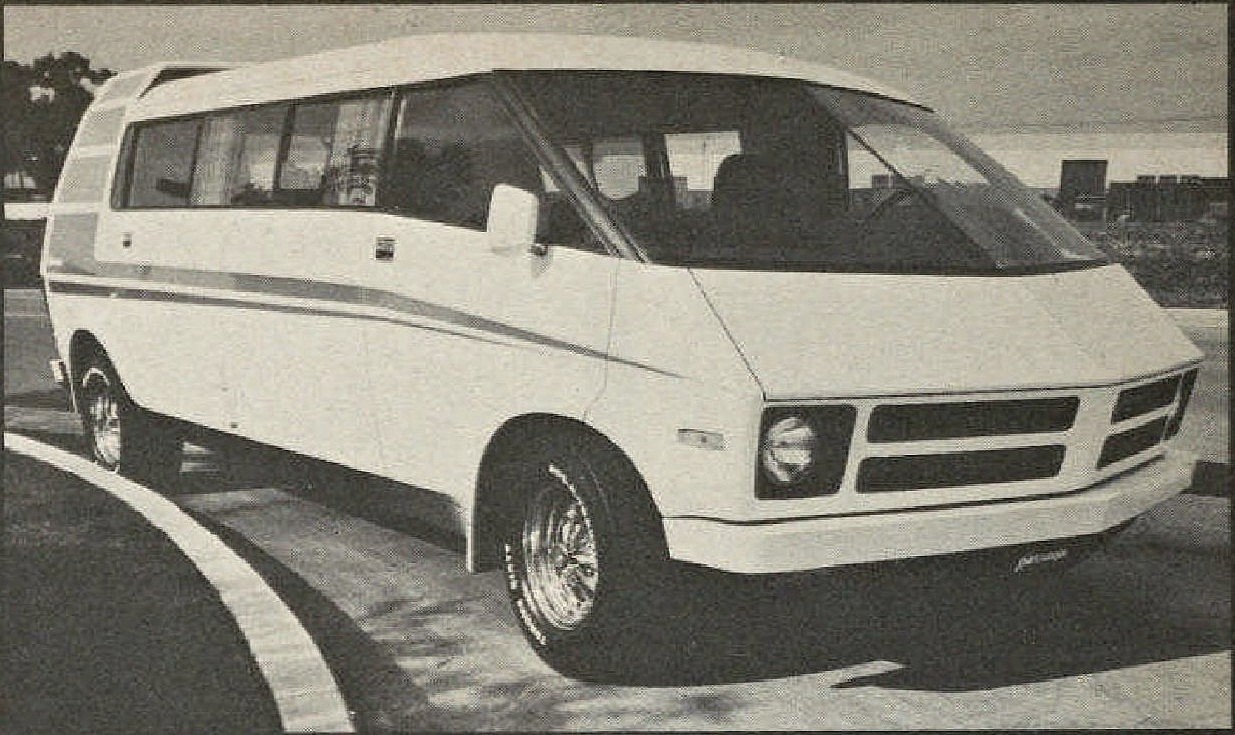
This love of motorhomes didn’t come from just anywhere. One of his earliest ventures happened a year before he even opened his own design house. That was Sportswagon, Inc., and the grand idea was to create an aerodynamic van that did everything. This van hit the auto show circuit sometime around 1973 and caught the attention of the automotive press.
In March 1973, Motor Trend wrote an article detailing how the Sportswagon came to be. In it, the publication does not mention Sportswagon, Inc., but O’Brien Enterprises. It’s unclear where O’Brien Enterprises came into this or the full extent to which Ron was involved in the design of the van. What I can say is that O’Brien Enterprises was located in Irvine, California, the same city that Sportswagon, Inc. was in.

Motor Trend says that O’Brien Enterprises started with a concept Sportswagon and then conducted market research by sending a 54-question survey out to more than 6,000 motorhome owners. These questions asked them about their ideal motorhome. The design of the Sportswagon would change based on trends detected from evaluating the questionnaires. O’Brien Enterprises found out that motorhome owners wished they could buy a vehicle that had more power, better handling, better safety, and a footprint small enough to fit into a garage. Really, survey participants more or less said they want a van that they could sleep in and park anywhere.
O’Brien took these answers and changed the Sportswagon prototype. What was shown by the automotive press was an impressive beast. It was 18 feet long, 7.5 feet wide, and had an interior big enough that a tall person could get comfortable sleep in a transverse position. The van was also filled with two queen beds.
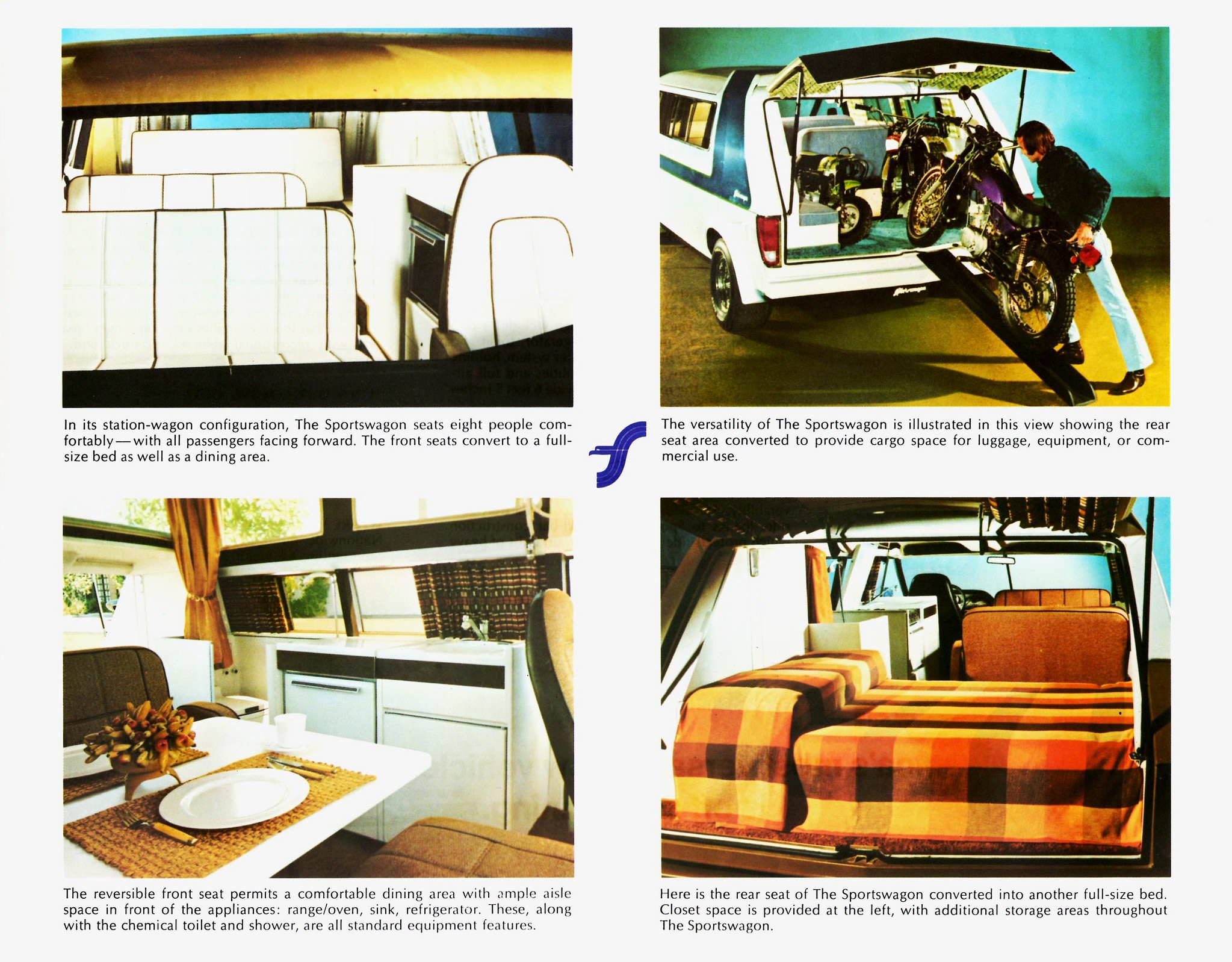
The van was marketed as having four main configurations. Its simplest form was a station wagon, and it had seating for up to eight people. You could then take the seats out and use the van as a cargo van. Imagery shows a man loading a Sportswagon up with two enduro motorcycles and a minibike. Then there’s the camper setup, where you can either have a dining area with a table, benches, stove, sink, and refrigerator, or the same setup with two beds rather than a table. There was also a chemical toilet and a shower. The roof of the Sportswagon popped and raised by 22 inches, giving occupants six feet and three inches of standing height.
All of that was pretty cool, but the Sportswagon was meant to be more than just another conversion van. The van sported a meaty 400 cubic inch Chrysler V8. This was backed by a TorqueFlite automatic. The chassis was not an existing van platform, but a bespoke creation by Sportswagon Inc. for use in the van. The chassis is a low-riding ladder frame with square tubing. As for the suspension, the O’Brien team designed a suspension that was inspired by the suspension from an Imperial, which gave the van a torsion bar setup up front and leaf springs in the rear.
The structure of the van was steel and was coated in an ABS plastic called Royalite from U.S. Rubber.
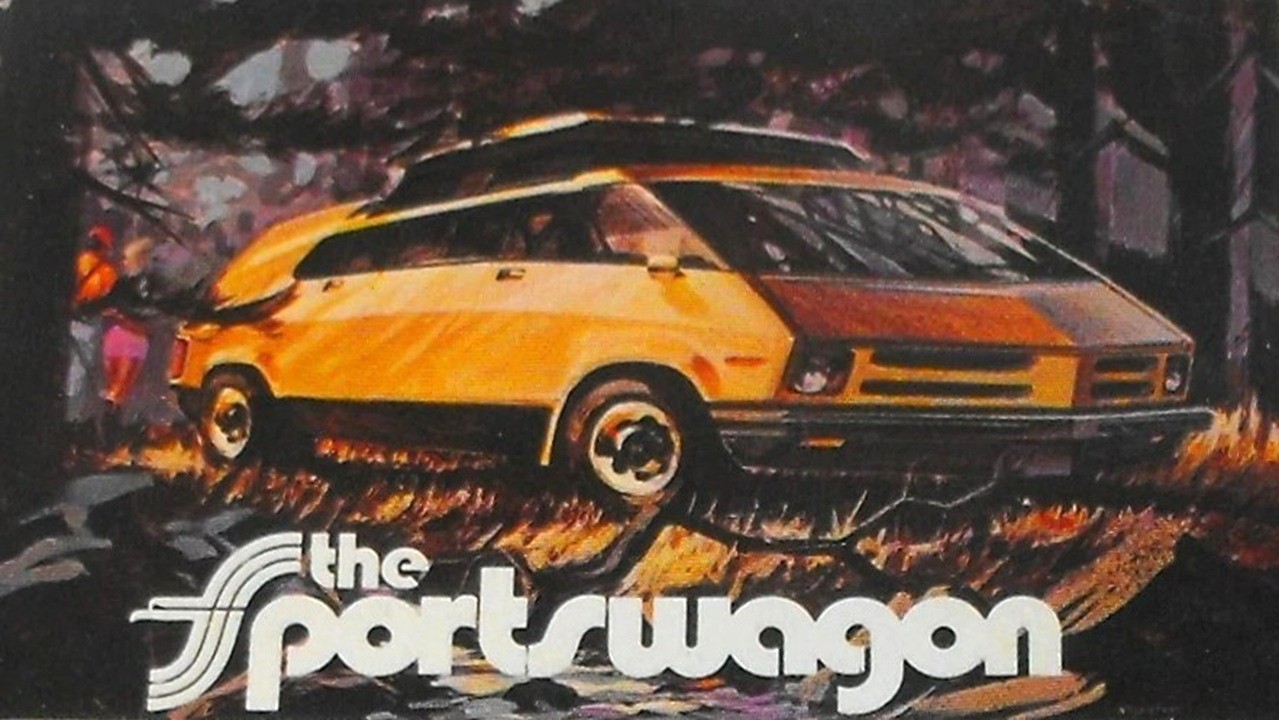
The headlining feature for Royalite, at least as applied to the van, was that it was nearly as strong as steel while being 20 percent lighter. Yet, unlike steel, when it got dented, all it took was a heat gun and a little finesse to erase the oopsie.
O’Brien Enterprises said the van would be sold at regular car dealerships, and by early 1973, dealers spread across more than 10 different vehicle brands were signed on to carry the RVs. So, the Sportswagon wasn’t married to Chrysler. The company was willing to let just about any dealer sling them.

O’Brien said that you’d get all of this for the princely sum of $7,600. For comparison’s sake, that was roughly double the price of a Chevrolet G-series van of the era.
Amusingly, O’Brien Enterprises wrote a strongly worded letter to Motor Trend in June 1973. That letter called out seven major inaccuracies with the Motor Trend article:

Among the complaints was the fact that Motor Trend called O’Brien Enterprises “O’Brien Industries,” repeatedly called the van the “Sportwagon” and not the Sportswagon, failed to mention that the van did have a steel structure, and claimed that the Sportswagon would be sold specifically through Chrysler. Weirdly, Motor Trend also claimed that the Sportswagon was shorter than every other van on the market, which wasn’t true, and then still spelled it wrong even though the publication published the van’s logo in the piece.
I included this part because it’s a fascinating look into how car journalism used to be. Typos and small errors are not a new thing! Here was Motor Trend getting the name of the van wrong despite publishing the van’s logo in the story.
Aside from the media and auto show push, Sportswagon/O’Brien Enterprises also published a three-page brochure. It’s unclear how many, if any, Sportswagons were sold. At least two were built with the Sportswagon name. But now, this story takes an interesting twist.
The Sportswagon Evolves
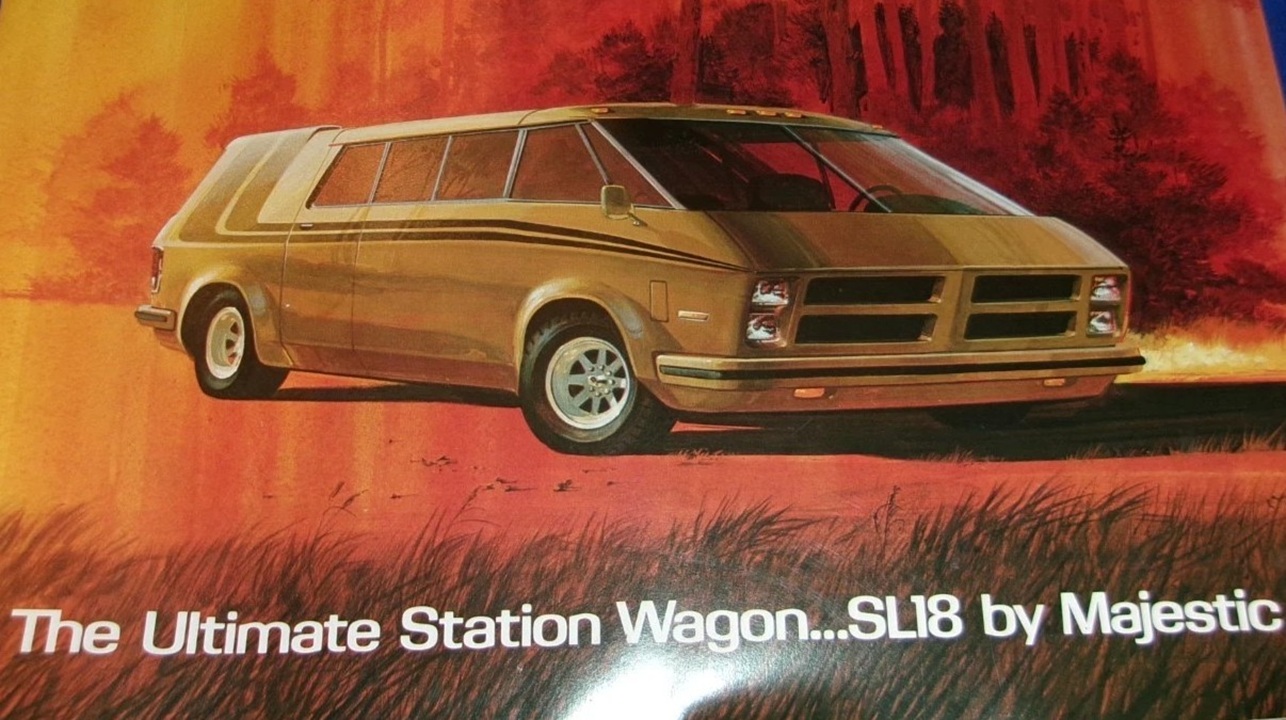
I spent a lot of time wondering why the trail for the Sportswagon went cold after 1973. Through some digging, I connected the dots. The project fell into the hands of Majestic Motorhomes, Inc. of Irvine, California. It’s unclear when Majestic got involved, and it’s possible that Majestic was formed by Sportswagon/O’Brien Enterprises employees. Trademark filings suggest that Majestic had been around since at least the early 1970s.
What I can tell you is that, at first, the van that Majestic Motorhomes had was just the Sportswagon, but with the Sportswagon badge ripped off and a Majestic badge in its place. A user of AutoPuzzles.com uploaded some alleged letters from 1975 between James D. Bond and George Bennett, executives of Majestic, and designer Alex Tremulis. Alex was perhaps most famous for his work on the iconic Tucker 48. He also worked on the Sportswagon, but it was unclear when he got involved and what, exactly, he did.
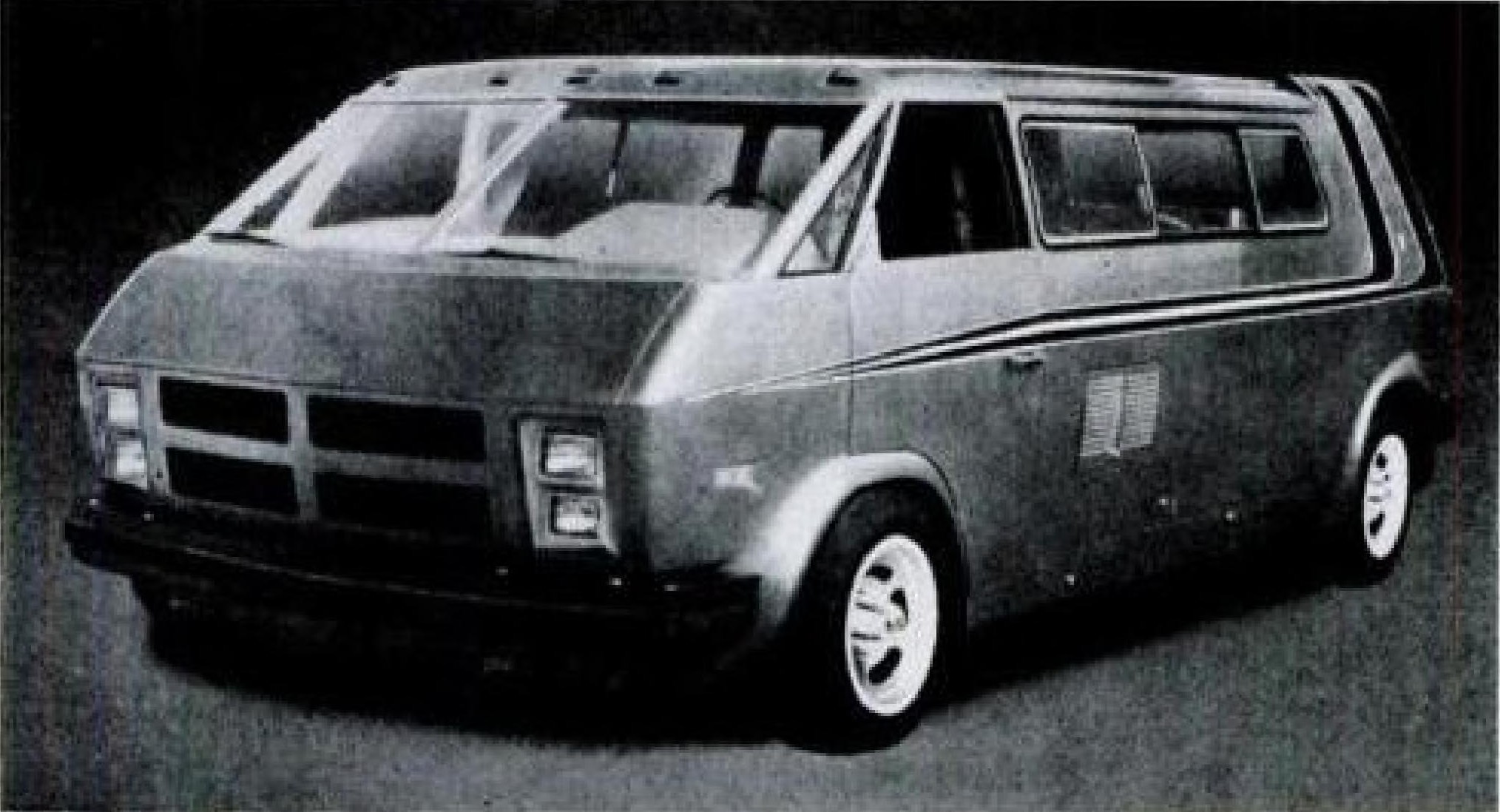
However, the letters between Tremulis and Majestic’s executives suggest that Majestic didn’t actually own the rights to the Sportswagon, and so Tremulis was tasked with changing the design enough so that Majestic didn’t have any legal trouble. Tremulis apparently achieved this by giving his version of the Sportswagon design a higher beltline, a squarer profile, and different windows. The roof design and the graphics package remained largely similar, but the name was now changed to the Majestic SL-18.
Many of the details of the SL-18 were unchanged from the Sportswagon. The van rocked a custom frame, an 18-foot length, and a 7.5-foot width. Majestic had the frame built in Taiwan. The rest of the platform was a mash-up of parts from different brands. The powertrain came from Dodge, the brakes and suspension came from Ford, the steering came from General Motors Saginaw, and the rear axle was of Dana-Spicer variety.
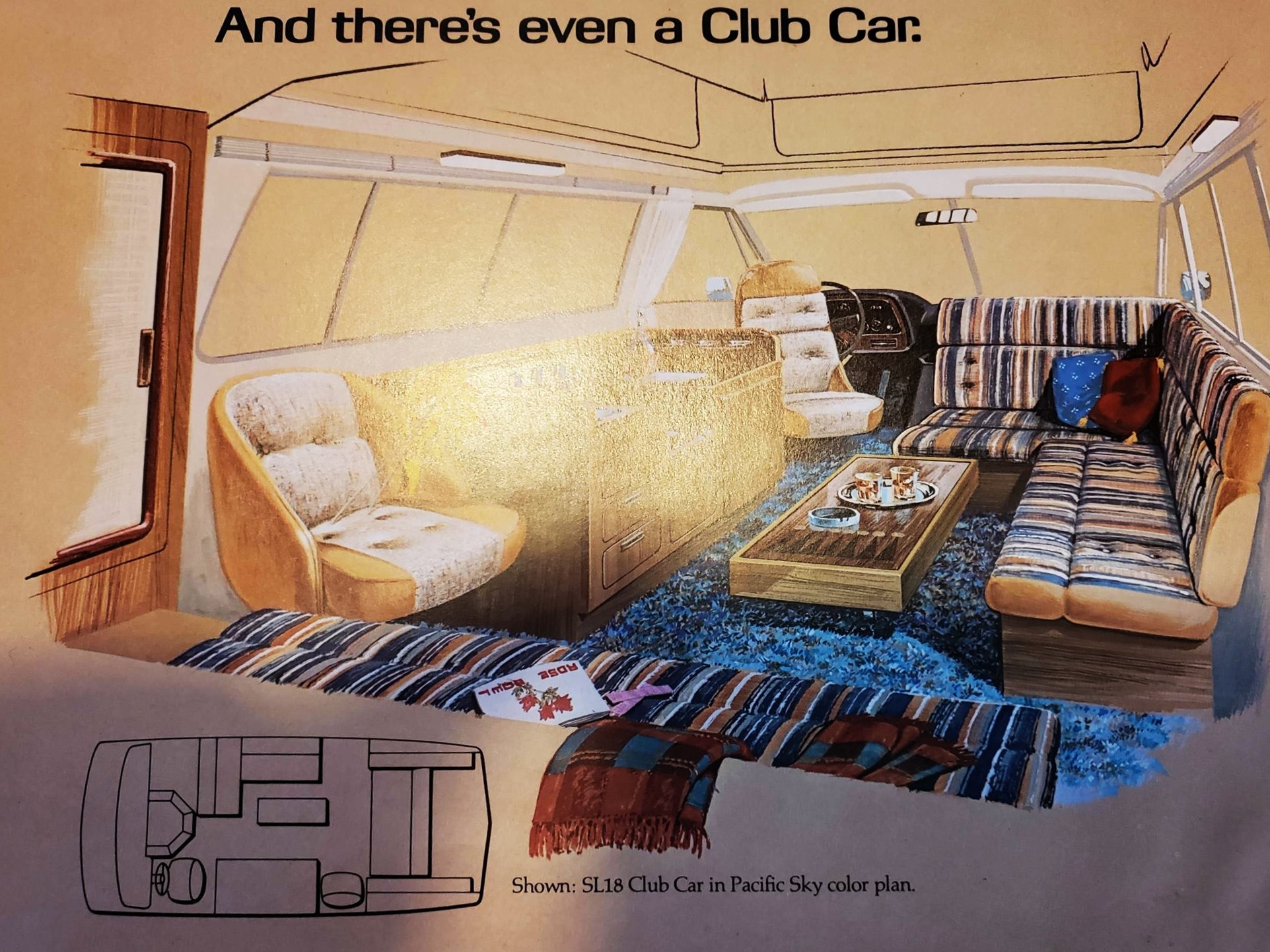
Majestic said that building the van in America from parts imported from Taiwan meant that the price of the van would be lower. Yet, the price was $13,850, or a significant hike from the Sportswagon. At least you got more for the price. A Majestic SL-18 was more like a real motorhome and had all of the features noted earlier, plus a space heater and water heater. If you paid $4,000 more, you could get your SL-18 with a bar, plush seats, and a color TV.
Majestic apparently thought that its buyers would be women who are intimidated by large RVs and car enthusiasts who want a van with the look and handling of a sports car.
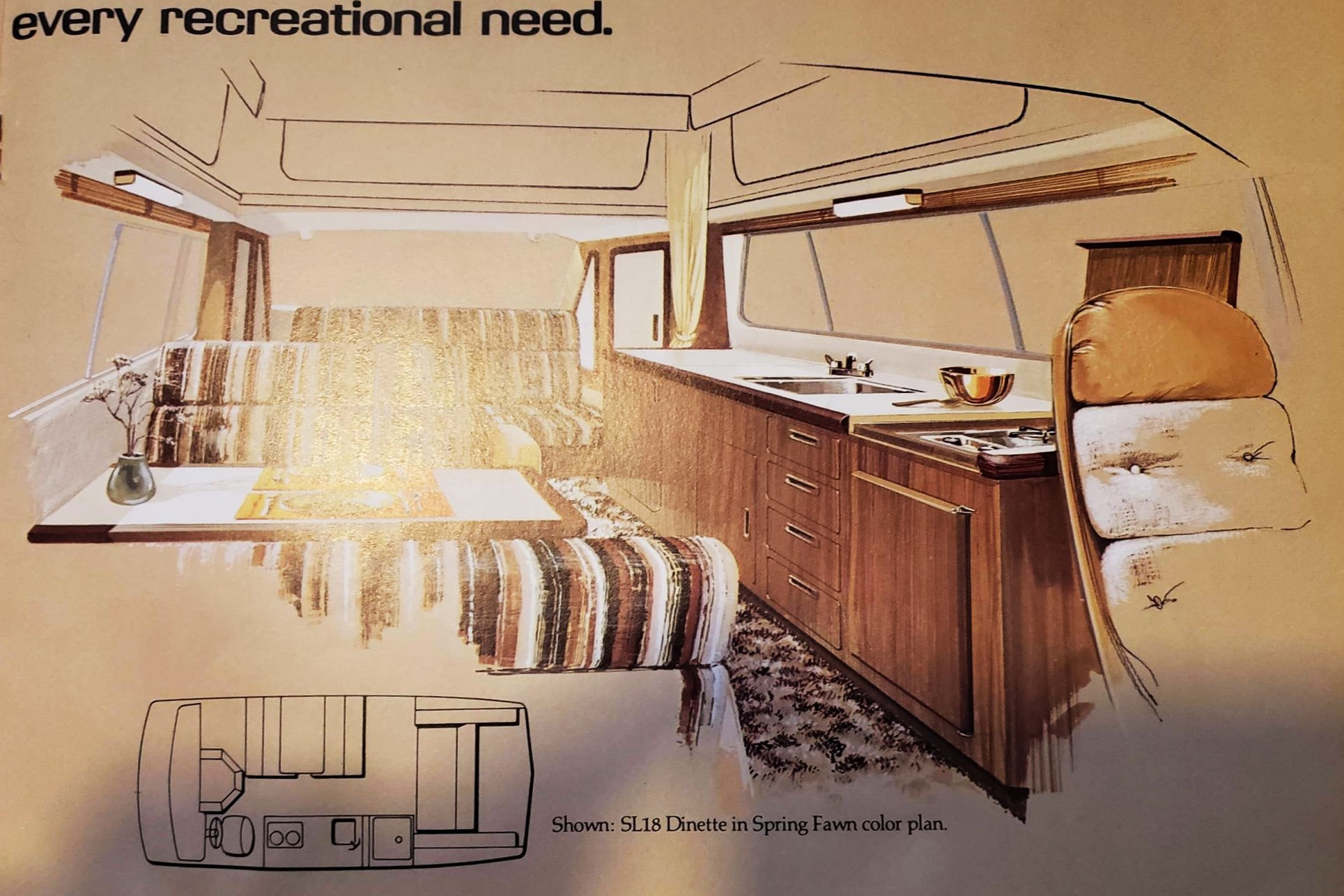
Amazingly, Majestic did sell some examples in the latter half of the 1970s. I could not begin to figure out how many were built, but there is a Facebook group with people posting pictures of what their Majestic SL-18s looked like back in the day. Sadly, the trail goes cold from here. Despite all of my digging, I could not figure out when this van left production or why.
The Internet is also littered with vans that look similar, but were built by different companies. One was the Laser Club Car, which had completely different windows, was said to be completely hand-built, and was marketed to people who like sports. I found no further information about this van.

I Need To Know More
Sadly, I could not find any drive reviews of the van. But I hope this is where you can help me. If you know anything about this venture, please comment down below or drop me a line at mercedes@theautopian.com. I would love to know more about the minds behind the project. I’m also curious about how many were sold, what they looked like inside, and if they really did handle. Of course, I also wonder what happened to them.
Despite not finding any more information or any examples that were ever listed for sale, I’m still blown away. I love this idea of a van that does everything. It’s a truck, it’s a sports car, it’s a people carrier, and it’s a motorhome! I adore how they made the van low and wide, made it look like a spaceship, and actually sold at least a few. It’s amazing who was involved in this thing, and that they were so dedicated to the concept that they made their own frame. It’s a multi-purpose vehicle in every sense of the word, and I think it’s a great embodiment of the 1970s.
Top graphic image: Sportswagon, Inc.


The employee movement, possible new company, and even IP drama sound like what happens further up the coast in the other “valley” these days, except they would be getting millions just to move companies.
Mercedes, superb and well researched article. Your relentless drive, research, and prolific writing are one of the best things about this site. You have opened our eyes to so many forms and makes of transportation that I’m confident that you have inspired many people to buy an RV, fly, or do something else they wouldn’t have considered before.
I have always been curious if you have always been an automotive journo or what you did before, if you weren’t but didn’t want to tread into deadnaming territory by asking for specifics. Thank you for another great article and please keep doing what you’re doing.
Ron Powers, superhero!
Besides the fact that this is such a well-written piece (and was allowed to be more than 300 words), it was a real treat to learn of someone I had never heard of, a person who had been involved in such an amazing array of groundbreaking ideas in so many different categories. Autopian gold.
And love Bob Conroy’s letter to MT. “Comment #7” is genius in its snarky subtly (at least subtle for MT editors): “Finally, it’s “Sportswagon”, as in the the logo, and not the Sportwagon.” “As in the logo” !!!! (…we’re all professionals here, right?) Priceless.
There’s so much to like and admire here, and while the designs are no doubt the stars, the human side does not disappoint: a great example is that Ron himself seemed to have given Clayton Jacobson full credit for creating the personal watercraft idea that Ron then evolved into an icon.
Well done!
“It’s a truck, it’s a sports car, it’s a people carrier, and it’s a motorhome!” Why don’t you see this anymore? Well, that’s by design – among practical hobbyists.
Except for the sports car bit (which is an injury-inducing stretch) our current buildout of a 144″wb Mercedes Sprinter Crew Cab qualifies on all counts (with the addition of rolling workshop.)
Seats five, easily converts to materials hauling and makes a nice hotel room (with toilet, fridge, light cooking) for trips like our upcoming trek to New Orleans for Mardi Gras. The most important, and almost overlooked by RV manufacturers, aspect is that it has no outwardly visible signs of being a camper. That’s how you sleep in Key West or the French Quarter for nuthin’ without attracting the attention of the local Gendarmes.
Tired on a diagonal transcontinental migration? No schleping gear into a hotel or checking into a campground, just grab a standard parking spot, turn off the key and snuggle into your cozy cocoon.
4 cylinder diesel paired with a 7 speed transmission will climb anything and keep you moving at 80 mph on the flats all day long at relatively low cost. Easy to work on, and built to last. This is our third Sprinter buildout, a 2014, and just might outlive me.
Bought for $32K with 18 months and 25K miles on the clock from an enthusiast who had to have the latest model, maybe $5K in mods to hit the road as a rolling Swiss Army Knife.
I would like to subscribe to your newsletter.
Ha! Thank you, far too lazy to document anything, and our builds are not exactly in line with the aesthetics-first current trends. Function without Form is more our speed. Having fun recently diving into LiFePo4 battery banks, buying 600 Amp Hours for $500 during last Black Friday sales. My mantra is “never build anything that isn’t removable in less than 1/2 hour” See you on the road!
Look at Will Prowse‘s tear-down videos of LiFePo batteries before pulling the trigger on a battery purchase. He’s the Project Farm of solar, batteries, inverters and the like.
Especially plumbing.
That sounds grand! Nice touch with the apropos French Quarter-inspired name for the local Constabulary!
Have fun at Mardi Gras and should go back for Jazz Fest. For those that don’t know, there is a whole lot of of non-jazz being played there and great food. It’s a shame Mac aka Dr. John isn’t around to play it anymore.
Thank you, my wife and I just show up for Lundi Gras and Mardi Gras (Missing the weekend Frat Boy insanity) mostly for the marching parades in the Marigny. Our 5th Element costumes last year were a hit! Former BrassPass holder, but gave up on JazzFest ten years ago due to expense. French Quarter Fest has a lot of the same without the access and $, and Festival Internationale in Lafayette (same time as JazzFest) will feature a lot of the same artists, but for free. Hit the road and enjoy!
Thanks for all the info. Please post a link of you and your wife in your Fifth Element costumes. Y’all sound like fun people!
The legendary sportruconvertihome? My stars!
So this is what you get when a Brubaker Box takes its Flintstone Vitamins and grows up big and strong.
To paraphrase from an old Reese’s Peanut Butter Cup ad:
You got Brubaker Box on my GMC Motor Home!
The Mitsu Delica feels like a practical version of this.
The Delica would be too small. This is like a somewhat overfed long wheelbase, high roof last-generation Toyota Hiace.
I think you both would’ve appreciated the overland-kitted JDM van I saw the other day with big tires, a sunshaded camping platform/roofrack, and two nice mountain bikes on the rear rack. I’m pretty sure it was a Delica but couldn’t confirm or get a pic in time. It was both sick and rad!
I like the part in the letter to MT: “Hey were just as long as any other van, but we’re not ridiculously long like a station wagon!” (Which around that time, the Buick Estate was about 229.5 – 231.8 inches long!)
Soooo… anyone got one in their yard they want to get rid of?
OOooooohhhh – I’m ready for my SL-18 Club Car in Pacific Sky.
Pass me another Blue Hawaii and a Marathon Bar.
But did it appear in some 70s low budget scifi television show at any point? That’s one of my metrics for this sort of thing.
Great comment! I was just thinking that it would’ve been perfect for Deathrace 2000, especially with a little flair. It could’ve even been high-performance the TV van to keep up with racers.
It’s funny you mention Death Race 2000, as I just noticed that Tubi added it. Haven’t seen it in ages, and now thanks your cite, I feel I need to. It’s the answer to the trivia question “name a Sylvester Stallone movie that nobody remembers?”
The claim that Mr. Powers worked on the design of the 1989 Cadillac Eldorado is a weird one, since the ’89 Eldo was pretty much entirely carried over from the ’88, which was itself a light refresh of the 1986 design. Maybe he did design work on an Eldorado in 1989? That would maybe track with the timeline for work on the next major revision, which came out in 1992.
I also wondered if Powers may have embellished his resume a bit. Or perhaps Powers was a mad genius who designed everything from a space station to jet skis.
The name is a misprint; it’s Herb Powell …
You just missed him:
Ronald Huston Powers Obituary – Visitation & Funeral Information https://share.google/8q5wuF7AVRE942LpW
Inline Skates? The man was Ron Popeil for things you actually want!
That thing looks so era-awesome — should be called the sportSWAGon, baby!
<pulls out lollipop>
“handle like a sports car”
I’m guessing like a 1973 sports car?
“She’s built like a steakhouse, but she handles like a bistro.”
True the sports car of the day should have advertised drives like an RV
“It was 18 feet long, 7.5 feet wide, and had an interior big enough that a tall person could get shut eye”
“Canyonero…..”
Perhaps because I just rewatched it for the first time in a number of years, but seeing that top photo made LITTLE MISS SUNSHINE pop immediately into my head. I think they should’ve had one of these!
Excellent journalism, as always, Mercedes. I’d be curious to know more, too. It’s also interesting that there aren’t modern vans like this.
It reminds me of the Enterprise shuttle craft.
that’s what it is! I couldn’t put my finger on it.
Or the shuttles in Space1999
Oh man, now THIS is the ultimate road trip machine!
Reminds me of the GMC 6 wheel motorhome. Wonder why they never made a shorter 4 wheel version of that actually. I have never seen either lengths of those with the rear cap missing, but the modularity of it, means a toy hauler version would be sort of simple to make out of one of those.
https://www.drivingline.com/s3/drivingline.prd/media/2335029/gmc-motorhome-rear-deck-gm.jpg?quality=70&mode=pad©metadata=true&w=1322
People have made toy hauler versions. I have seen at least one listed for sale.
Here’s one, but it’s meant to haul a car and has lost all of its rv-ness in making that space.
https://bringatrailer.com/listing/1975-gmc-motorhome-car-hauler/
Reminds me of the Hot Wheels Dream Van but expanded.