


Campers built for off-road adventures are often burly beasts with a lot of metal, few windows, and more gimmicks than the average running of the Consumer Electronics Show. But one new startup wants to change that. The Motsmann Engineering Outranger wants to be a kinder face in the off-road camper space by building campers that fully embrace the use of fiberglass, equipping them with more windows, and finishing them in glossy colors. The best part? It weighs little enough that anything with a tow rating better than 1,500 pounds can haul it.
I’m generally a fan of the “squaredrop” – a teardrop-style camper that’s squared off – off-road camper. They’re smaller, more maneuverable, and weigh less than larger rigs, and I find them better to sleep in than any tent. Many of them weigh under 2,000 pounds, too, which means that you can even haul them with some lighter crossovers and compact trucks. But as time has gone on, it seems too many companies are just building the same thing.


So many of these campers have so few windows that sleeping in them feels like going to bed in a bunker, which is weird because these campers are supposed to get you closer to the wilderness, not take you out of it. Then there’s the whole “tactical” vibe with many of these trailers. So many of them are slathered in camo, matte black, or truck bedliner and look like some piece of military hardware that missed its turn in a convoy. If you want color, you’d have to go to your local wrap shop. Then there’s the pricing, with many of these campers costing absurd amounts of money for what you get.
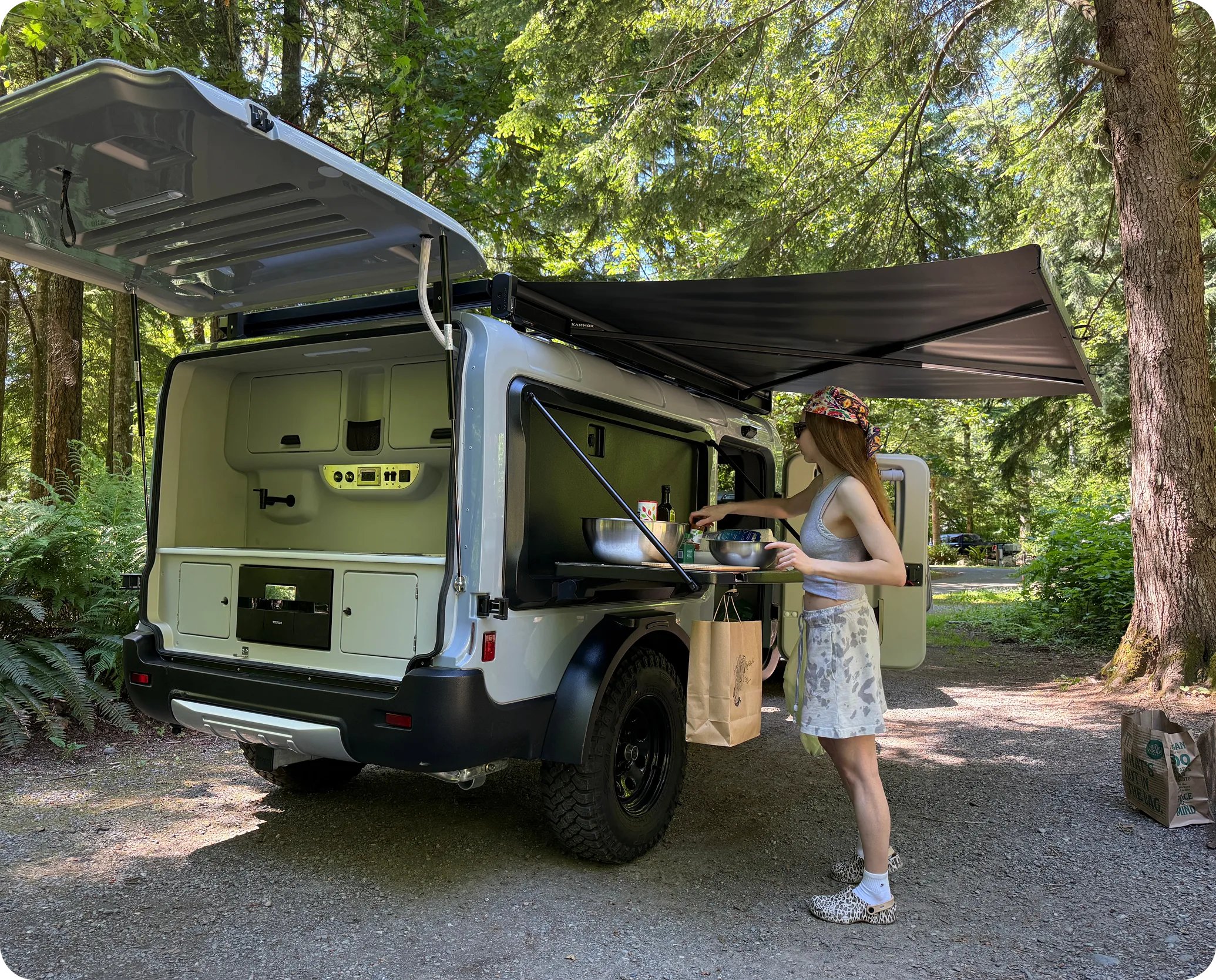
Once I slept in an off-road camper with more than just two tiny windows, I began to greatly appreciate what natural light can do for a small space. So now I like to highlight campers that do things a little differently than the trend. The Motsmann Engineering Outranger definitely fits the bill. It doesn’t just let in some light, but it’s a sort of fresh-ish take on the off-road camper genre.
Inspired By European Cars
Tigard, Oregon-based Motsmann Engineering doesn’t say a whole lot about itself. I could not find who founded it or when the business launched. Instead, the company has this story to tell:
We are a team of engineers and manufacturing specialists with extensive experience in the development, production launch, and quality control of fiberglass vehicles and components for both road and rail applications. For many years, we have worked closely with trusted manufacturing partners that produce fiberglass and metal components for RVs, trams, trains, buses, ambulances, and other specialty vehicles.
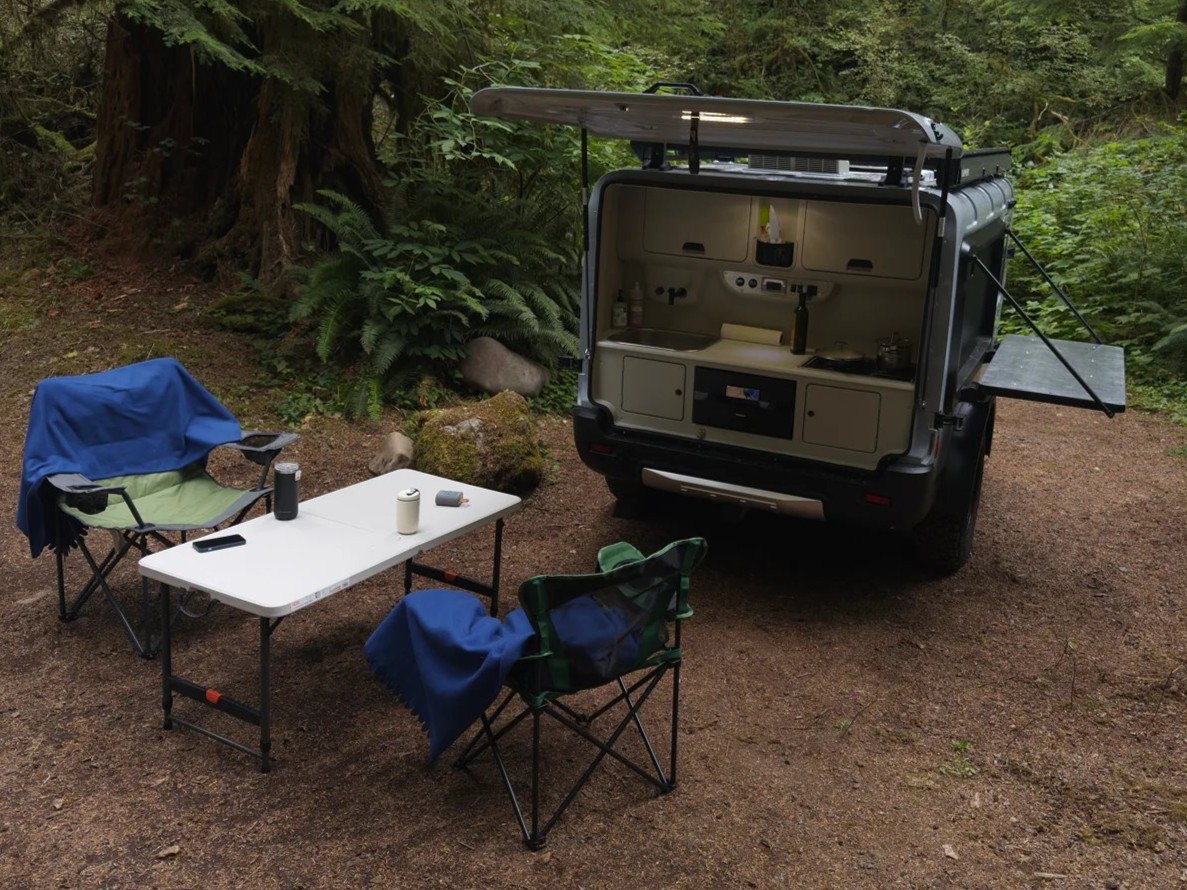
Outranger began with a simple idea: to create a camper trailer for both paved roads and more demanding terrain—and engineer it with the same level of care expected from a modern vehicle.
That approach shaped every part of the design. Materials, components, and construction methods were selected to withstand vibration, moisture, temperature changes, and years of outdoor exposure. The result is a camper designed to maintain its structure, appearance, and functionality long after the first trip. Durability was only part of the goal. Every detail was also developed around practical use, thoughtful functionality, and a clean, distinctive design.
Motsmann Engineering further says that the Outranger was designed like European cars and campers. It takes inspiration from the more colorful and lighter designs from across the Atlantic, and the Euro influence shows in the engineering as well.
Built To Be Fixed By You
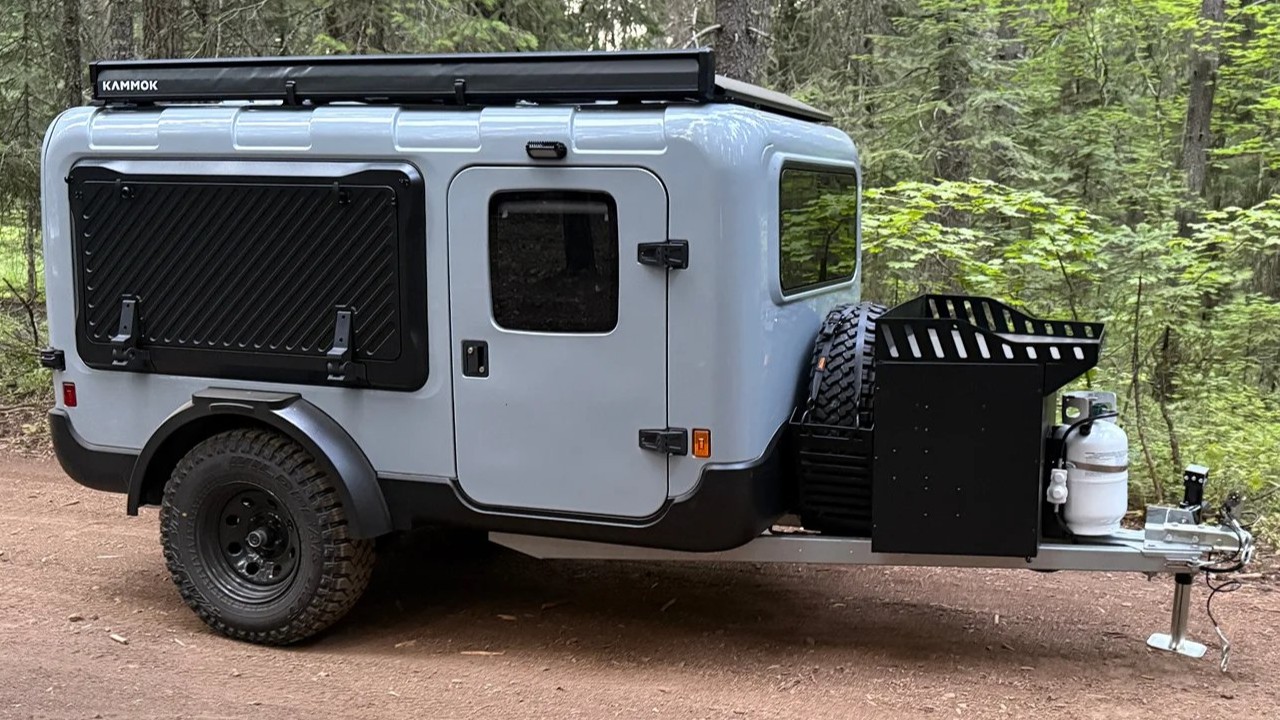
The Outranger is different right from the start.
Here in America, a lot of camper frames are welded structures. Motsmann is one of a growing number of brands assembling frames with bolts instead. The Outranger features a 3 mm galvanized steel modular frame that’s bolted together. This design was inspired by how European campers are often built, and as Motsmann sees it, a bolted design is great for the end-user. If you damage the frame, you can unbolt the section and bolt the new part in rather than having to deal with welding.
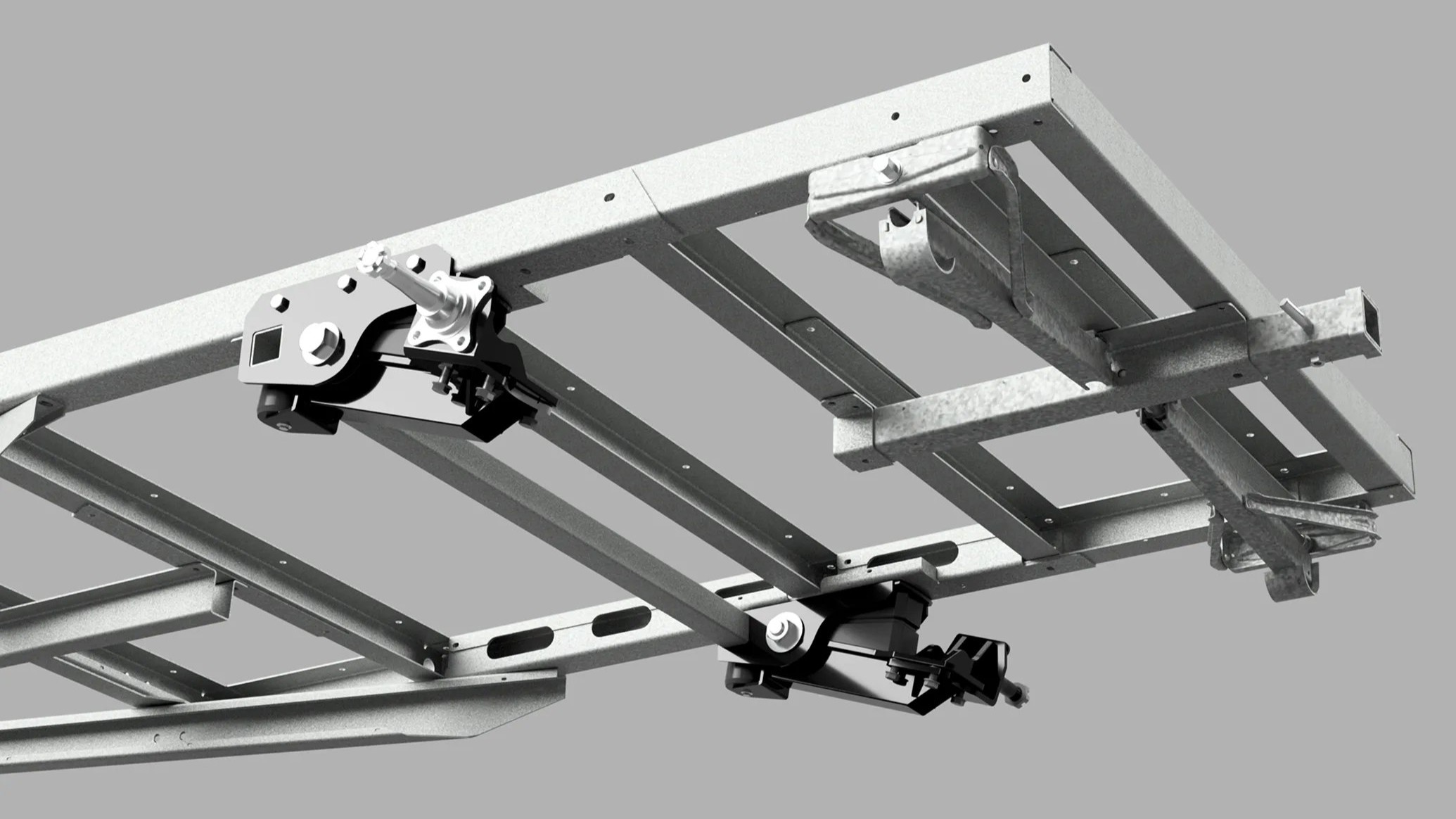
Further bolted to the chassis through reinforced subframes is a Timbren 2000 HD “axle-less” independent suspension. Rounding out the platform is a set of 15-inch wheels wrapped in 30-inch Falken Wildpeak all-terrain tires.
The next big change is what’s on top of the frame: a whole lot of plastic and fiberglass. The whole body of the Outranger is a single piece of fiberglass. But it’s not made the way you might think. Typically, an American molded fiberglass camper is built by joining either an upper and lower tub together, or by doing the same to a left and right tub. This is how it’s been done for decades.
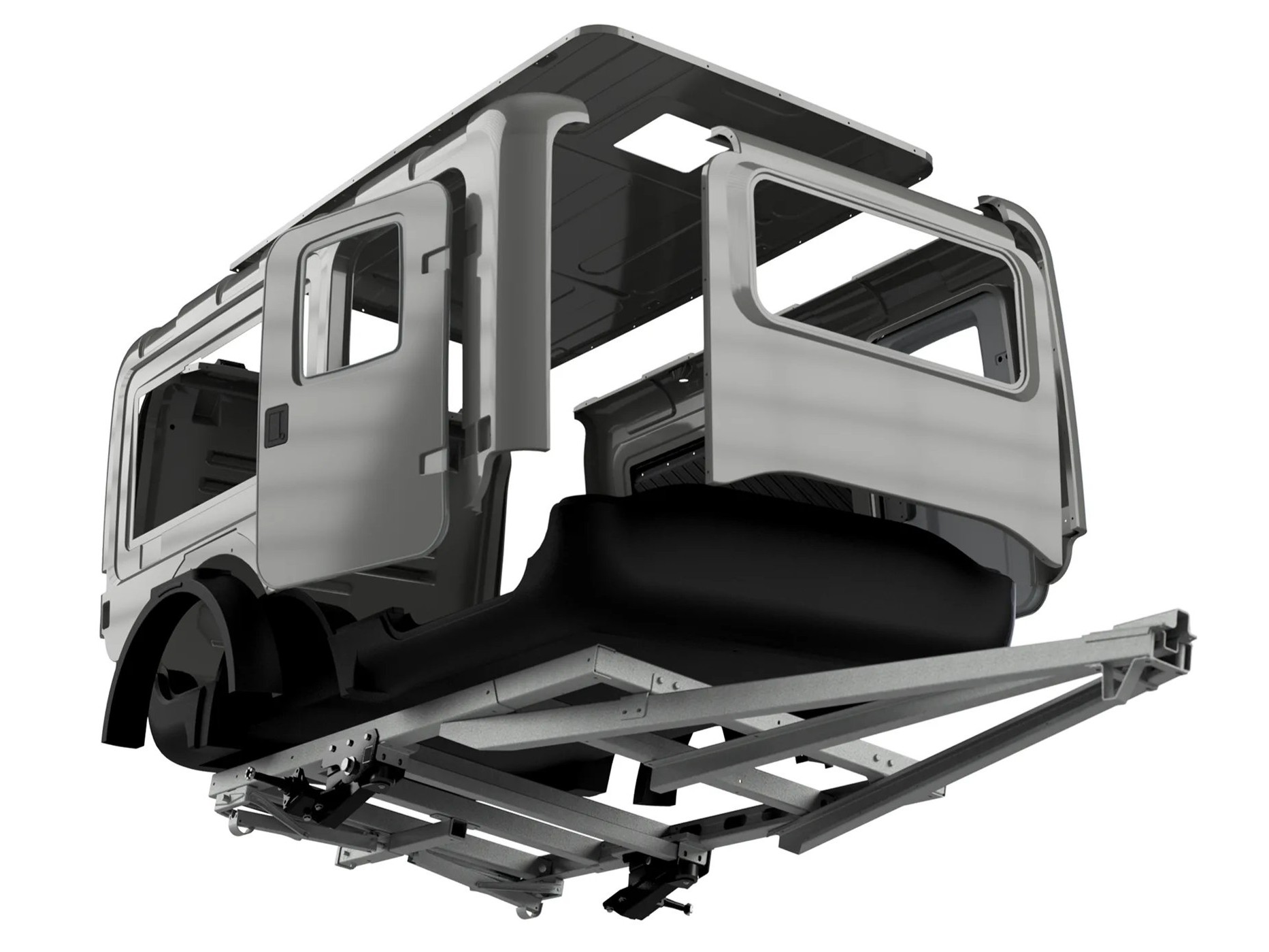
The Outranger is one of the designs that takes a different path. Instead of molding tubs and then joining them together, the Outranger is made out of fiberglass panels slapped together. From Motsmann:
The Outranger body is assembled from six composite panels. Concealed interior partitions and structural surfaces are made from durable polymer materials. The rear galley is constructed entirely from fiberglass and finished with a protective polyurethane coating, while the countertop is made from HDPE. Inside the cabin, molded panels with a polyurethane finish are combined with soft upholstered panels made from polymer substrates wrapped in automotive-grade fabric.
All materials were selected to minimize wear, simplify cleaning, and maintain their appearance and functionality through long-term use. The cabin features entry doors on both sides of the trailer. A large front window can be opened for additional ventilation, while a roof-mounted ventilation fan provides continuous cabin airflow.
So Many Colors!
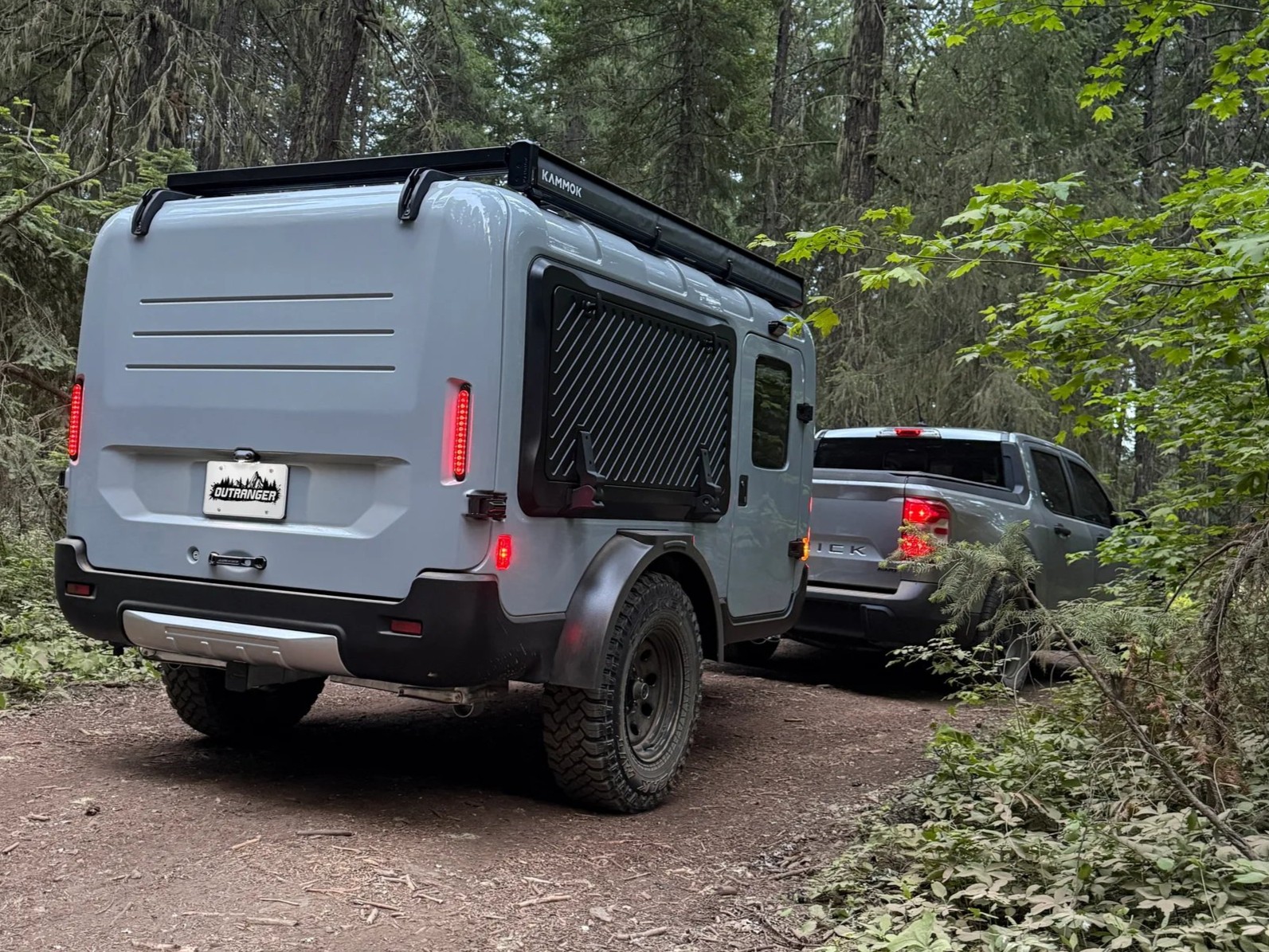
Something I really like about this body is that it’s covered in a glossy gelcoat. That alone makes it stand out in the crowd. Then there are the colors.
The standard colors aren’t that amazing. There’s a White, Gray, Military Green, and Sandstone (tan). However, if you want a bit more spice, you can order your Outranger with your choice of color, so long as it’s one of the 216 hues on the RAL Classic color wheel. Motsmann does warn that it cannot replicate all of the RAL colors into gelcoat, but it should be able to match the camper to your car or your personality. I simply adore that! Forget swoops, decals, wraps, and pictures of mountains; let me paint my trailer in hot pink!

The fiberglass body with a glossy finish is said to be inspired by how European cars are designed. The way Motsmann sees it, if you damage the fiberglass, you don’t have to worry about any structural wood or metal repairs. Instead, the company says, it can be repaired using standard composite and gelcoat repair methods. Further, since whatever color you choose will be codified into your trailer’s serial number, whoever is doing the repairs can just pull the paint code off the trailer to get matching gelcoat.
Motsmann also notes that, like other fiberglass trailers, gelcoat wear from long-term outdoor exposure, like scratches, scuffs, or oxidation, can be rectified with gelcoat polish.
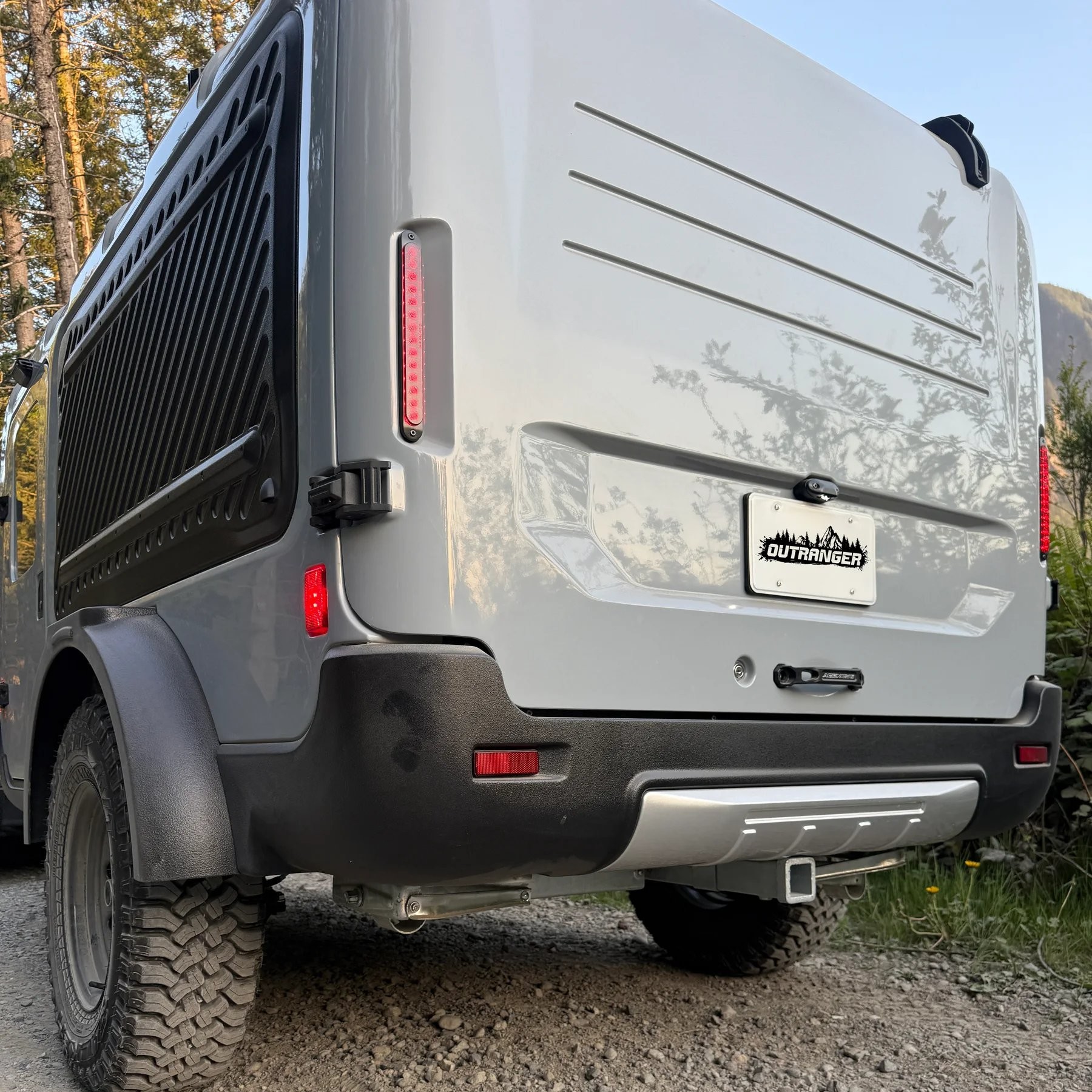
The lower black portion of the body is Raptor polyurethane coating. This coating serves the same purpose that diamond plate often does on other trailers, and it’s supposed to shrug off road debris, rocks, and whatever else the road and trail throw at trailers. Like the fiberglass body, the folks of Motsmann see the trailer’s owner using Raptor repair kits to fix any damage to the material.
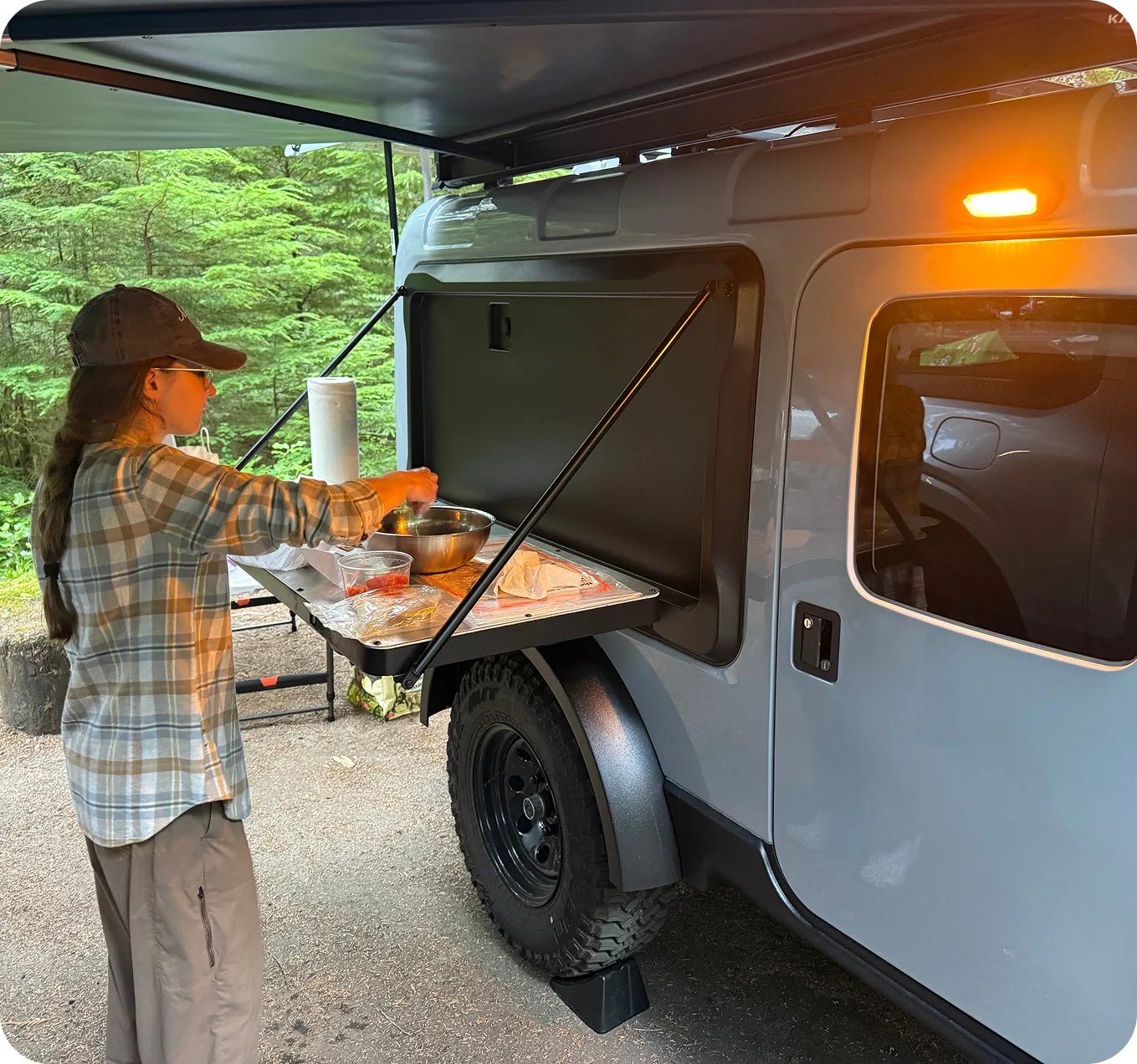
There’s more going on with the exterior, too. The camper’s main storage compartment is a nine-cubic-foot (calculated before the addition of any batteries) aluminum cargo box mounted on the camper’s tongue. The giant black expanse of plastic on the right side of the trailer is not storage. Instead, it’s a 48-by-21-inch counter that comes down and serves as a table or prep surface.
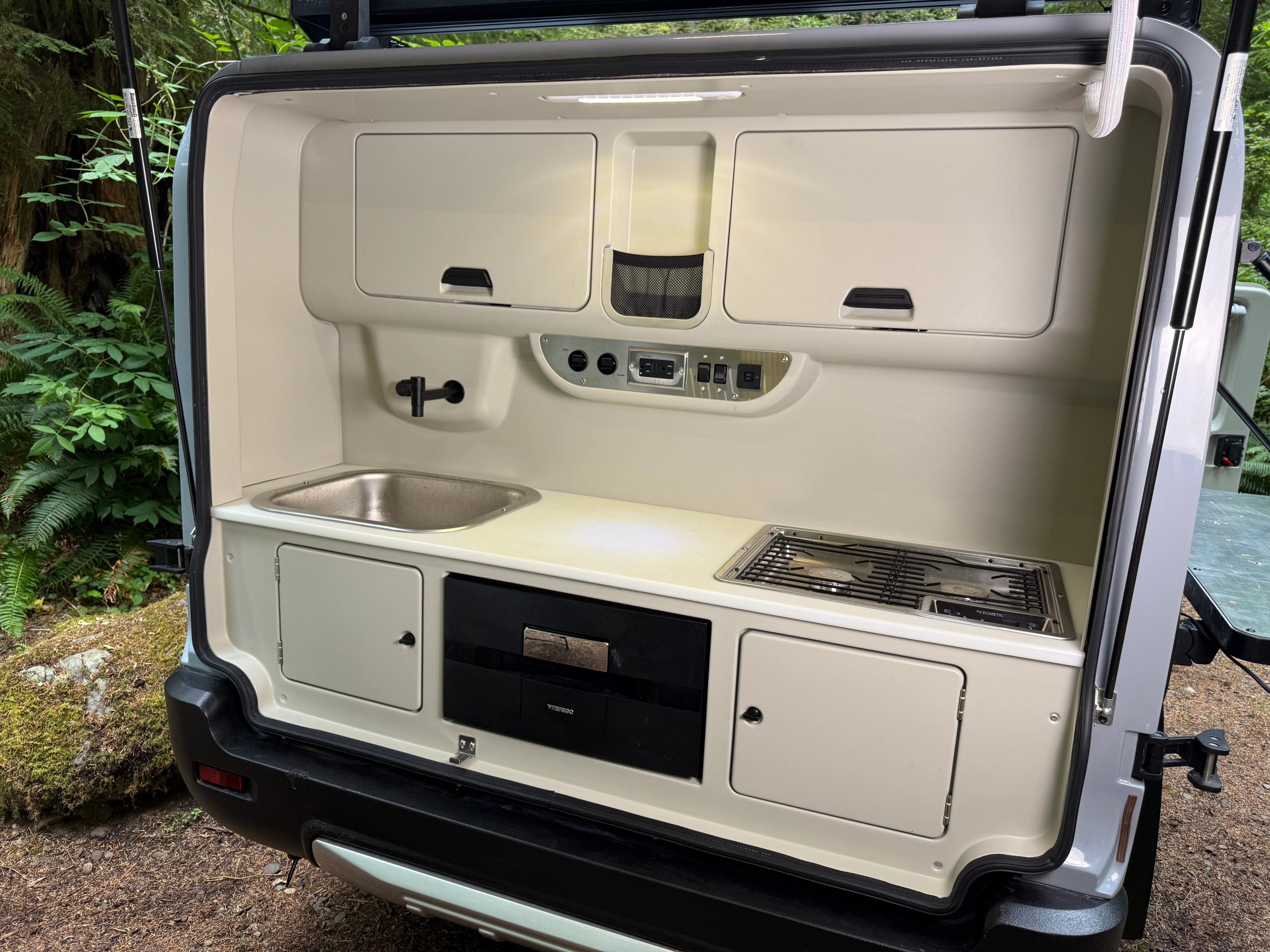
The only other potential covered storage spaces are the rear kitchen or inside of the trailer itself. You can order the Outranger with an optional roof rack that will support 550 pounds of static weight, but only 150 pounds of dynamic weight. There’s also an optional two-inch receiver for another storage box or perhaps bicycles. In other words, if you want to use this camper for longer than a weekend, you’ll probably have to get creative for storage. However, this is somewhat common to see on small squaredrop trailers.
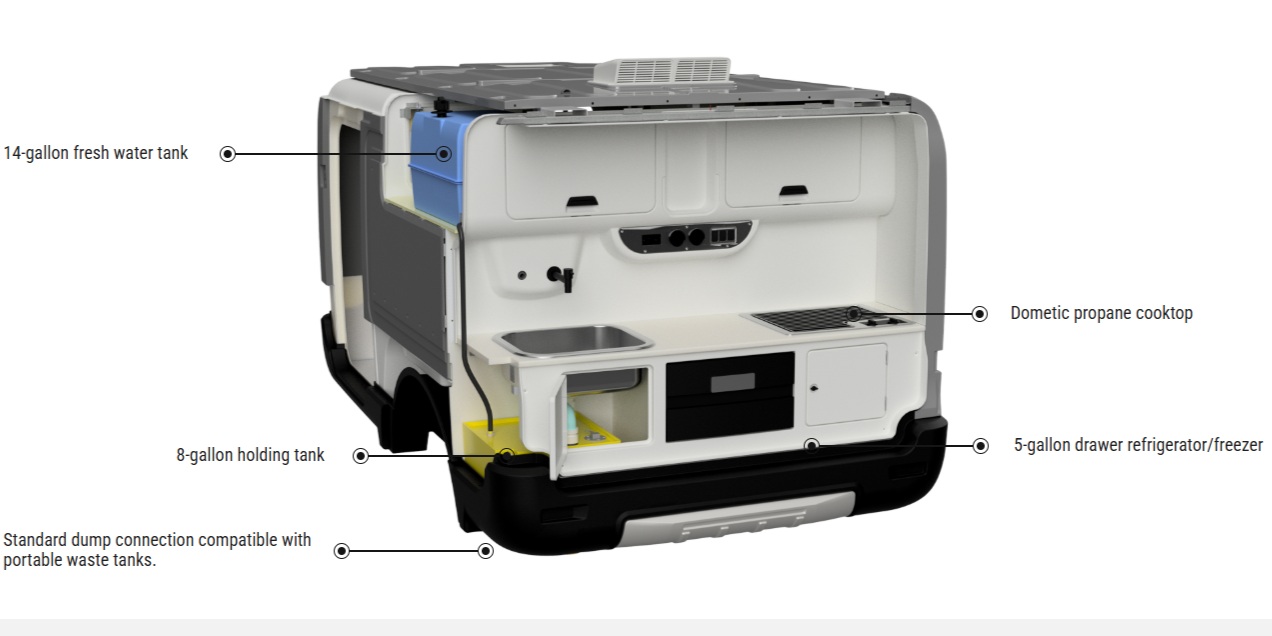
As for that kitchen, the standard configuration is just the countertop and storage, nothing else. Should you want built-in water, optional is a 13-gallon roof-mounted tank that gravity feeds water to the sink. That sink then drains into a 7-gallon gray tank that uses a standard RV dump pipe. Also optional is a Dometic D20 cooktop that feeds from a 10-pound propane tank and a 20-liter Vitrifrigo drawer refrigerator.
It Has A Pretty Light Spec Sheet
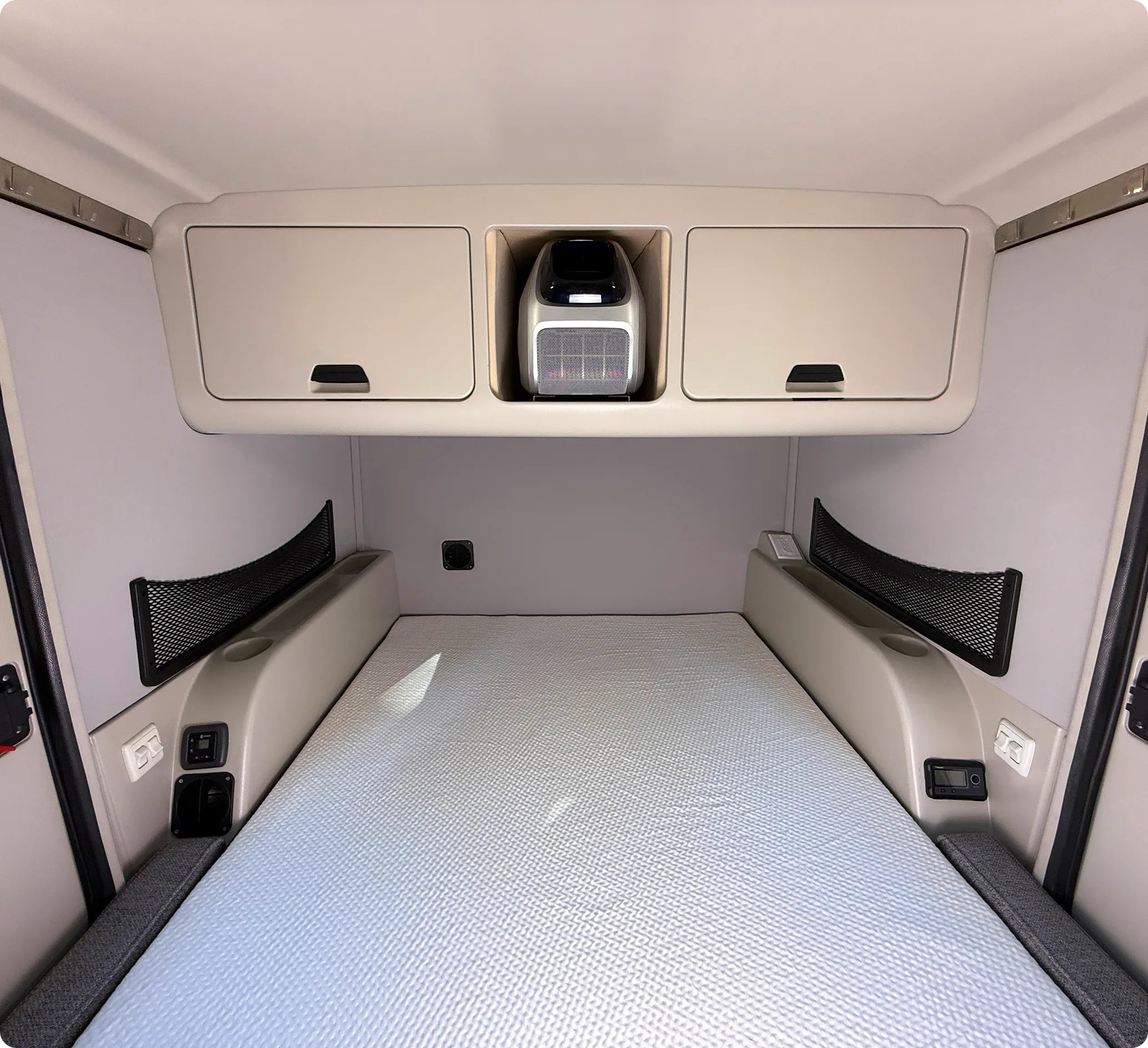
Inside, the standard equipment is about as barren as the standard kitchen. Standard is a memory foam bed that measures 82 inches long, with patches as wide as 57 inches by the doors and as narrow as 50 inches by the wheel wells. A 50-inch headroom permits sitting.
Standard power comes from a 200-Ah Renogy 12-volt LFP battery, which juices up the lights and USB ports. Standard is a shore power connection. Optional parts include an upgrade to a 600-Ah system, 200 watts of solar, a 2,000-watt inverter with two 120-volt panels, and a Victron DC-DC charger to recharge the battery from the tow vehicle. Yes, you read that correctly.
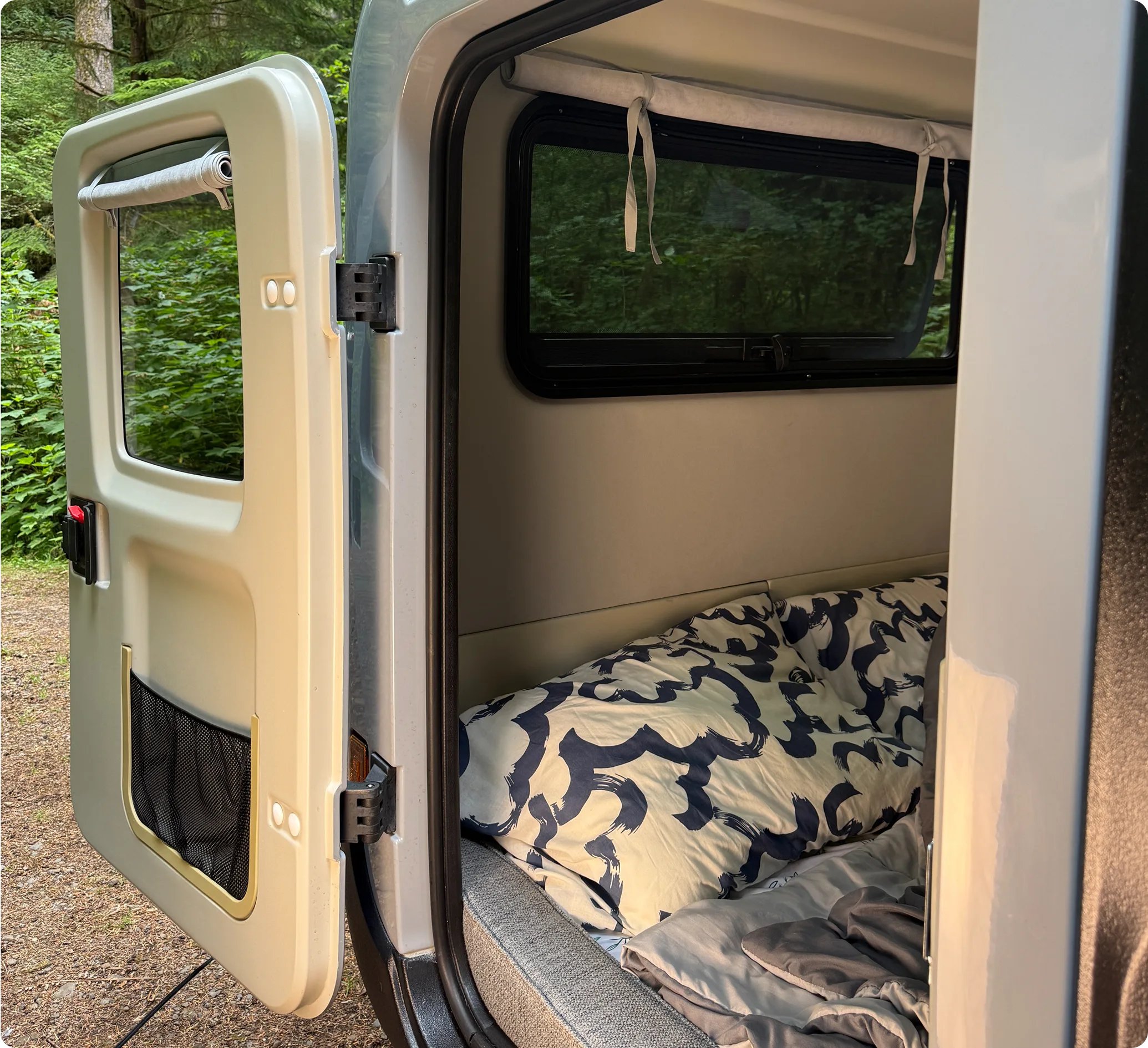
No HVAC system is provided, either. For ventilation, the standard Outranger features a front window that opens and a roof fan. If you want cooling, an option is a Zero Breeze Mark 3 portable air conditioner. Heating can be achieved through an optional Propex HS2000 propane heater. Other options include a spare tire, a seven-foot awning, mounting brackets for a shower tent, stabilizer jacks, an articulating hitch, electric brakes, and other odds and ends.
Basically, the Outranger, like some other new squaredrop campers, is designed to ship totally empty with the expectation that you’re going to bring over your own gear from another trailer. This is great if you already have a portable air conditioner, water tanks, kitchen equipment, solar, heater, and so on from an existing trailer build.
By leaving the camper completely barren, Motsmann can advertise the low dry weight of only 1,450 pounds. That’s so light that even a crossover with a tow rating below 2,000 pounds could technically haul this thing. It also measures only 13.5 feet long, 6.48 feet tall (including roof rack and optional roof equipment), and 6.0 feet wide. That means it can fit into a standard garage or, if it needs to be stored outside, well within a standard parking space. All of this is fantastic. If you own one of the handful of sedans and wagons out there that have tow ratings, there’s a chance you could tow this, too!
It Isn’t Really Cheap
The catch, and you know there has to be a catch, is the price. When Outranger pre-orders launch on September 1, the base price will be $25,950. Remember, that gets you the trailer, the 200-Ah battery, the bed, and that’s pretty much it.
Adding the water tank, sink, stove, and one refrigerator would cost $2,446. The 200-watt solar is $498, while the air conditioner is $1,490 and the propane heater is $1,390. The 600 Ah batteries are another $2,385 charge. Add $938 for 120-volt power and another $474 to charge from your tow vehicle. In other words, you could get this trailer to be $33,000 before you even touch the batteries, add a shower, add a spare tire, or strap on the roof rack.
That price puts the Outranger in a weird place. If you just want a blank slate of a fiberglass teardrop, a Bean Trailer Bean Stock 2.0 looks nicer inside, weighs only 1,175 pounds, has more windows, and costs $19,999. If you don’t really care about the cute fiberglass, a 5-foot by 10-foot Hiker Trailer Extreme Off-Road can be had fully built out for around $25,245. If you really want to save dough and build out your own camper, a Runaway Adventurist starts at $13,480. A Scamp 13 is also roughly the same price and weight as an Outranger, but with more features and room you can actually stand in.
So, that makes the Motsmann Engineering Outranger a mid-priced bare-bones camper. Basically, you’ll have to pay more to get the custom colors, shiny gelcoat, and the cute looks. But even then, the design has some quirks. Motsmann went with a gravity water system, so you’ll never have to worry about a 12-volt pump burning out or ever having to winterize the tank. But to get rid of the pump, now you have to deal with 13 gallons of water sloshing around high above and behind the axle.
Then there’s the interior. Motsmann went through so much work giving this camper a friendly exterior, just to give it the same depressing all-white interior as pretty much every other camper in this genre. A splash of wood (even fake wood), a decal, or something could really help make it pop. Also, this is being marketed as an off-road trailer, but there’s no protection for the front window. Likewise, as I said earlier, the batteries live in the one compartment meant for storage. If you buy the optional battery bank, you lose even more storage.
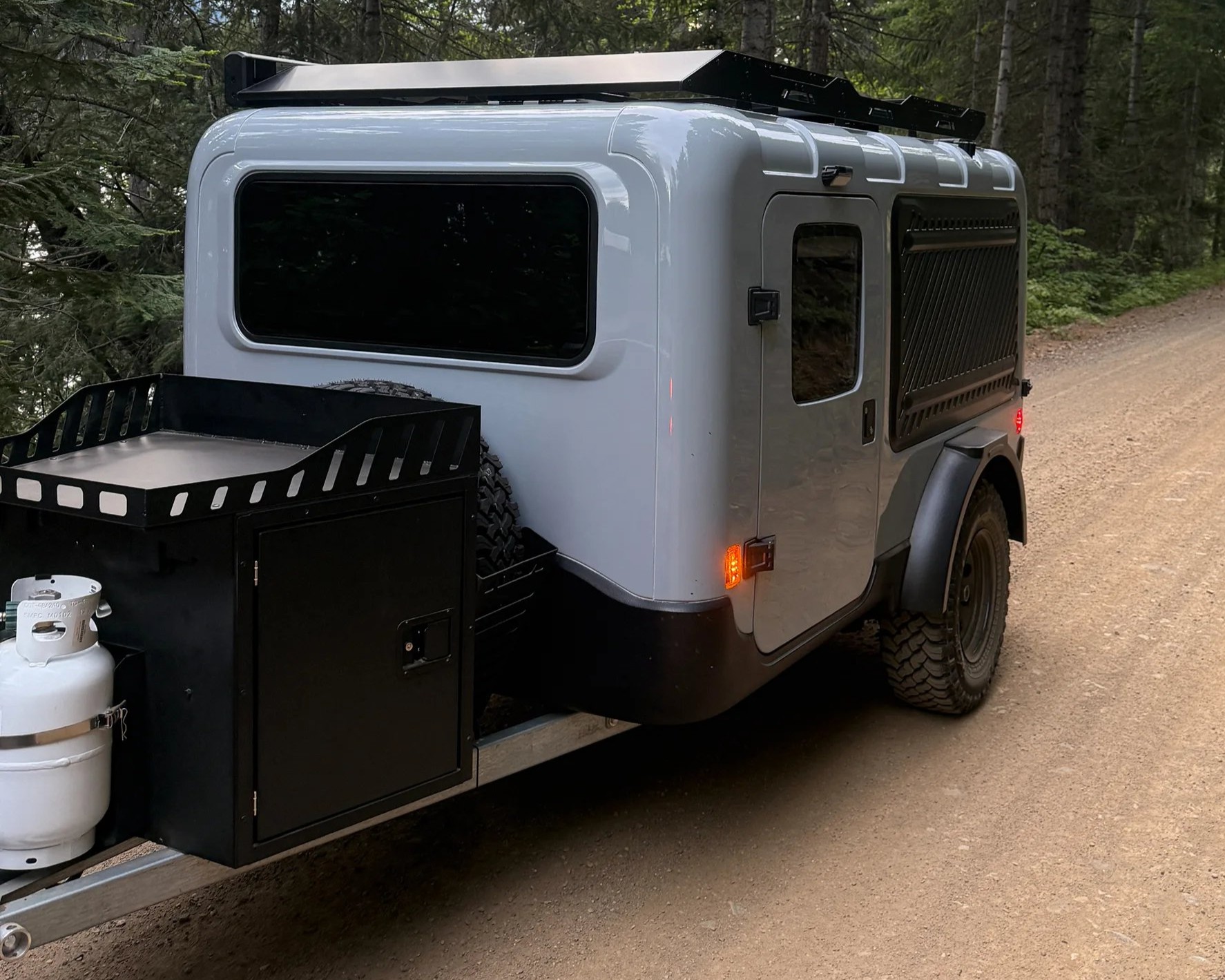
So, I absolutely love this concept. I adore that you can get this camper in basically any color you want. I am practically cheering from the rooftops that this thing isn’t trying to be some mil-spec toy. It’s cute, it’s a little round, and it’s friendly. The trailer also seems to be great for repairability.
But this is also quite a bit of change to pay to get a box with nothing in it. I’ve written about campers that give you more for much less. The design seems like it could also use a few improvements here and there. That’s a shame, because this camper has great potential. A lightweight, durable, colorful, and end-user-repairable camper is something that could get more people into RVing. Either way, I hope to see more ideas like this in the future.
Top graphic image: Motsmann Engineering





Do people camping with rigs like this enjoy bug bites? Or just have a years supply of deet? Asking for a friend.
Seems cool, but the price of it and the accessories are wild.
I’m sure it’s a nice product. But 25k (+- a few grand for AC or a heater) would buy me a decade or so of tenet camping and cabin rentals.
I’ve done a lot of camping in the Arizona desert on BLM land and I’ve found Rattlesnake and Scorpions under my tend more than once. It’s a really unpleasant experience that this could mitigate.
I could see this begin to make sense if one planned to use it for 20+ nights a year.
That’s why I put the tent on the roof of my explorer. And as a former Arizona resident the scorpions will get inside the trailer when it’s parked in your yard. Ask me how I know?
Roof top tents definitly work for some people but they’re a total PITA if you don’t want it on your rig full-time and as you know, mildly incovenient for that 2am leak.
I spray my tent with Onslaught FastCap when I think I’ll be in scorpion territory and it works well enough. I’d imagine that it works on trailers too.
I keep forgetting there is a modern vehicle using the name Maverick.
Every time I see one of these square drop trailers I end up having to remind myself of all the practical reasons that my current tent-camping setup with a lightweight trailer for gear instead of sleeping in is a better fit for way less money, but I’ll be damned if I’m not always drawn to them for whatever reason. And this one is the most appealing I’ve seen yet.
At the end of the day, though, I don’t have $25k to burn on something like this, and if I did I bet the novelty would wear off pretty quickly.
We have a Baroud expedition tent that used to be on top of the Lexus. With the advent of dog,(60 lbs.) we bought a sylvan sport trailer with the good suspension and an achievable floor height for her majesty to climb up. Waiting on the weather we have right now to do a test run and fall in Wisconsin is usually quite beautiful. FYI, the tent was 3 grand and shipped from Europe. The trailer was 5 grand and has a ‘basement’ to schlep all the camping stuff. On top of all that I think I now own everything that Joolca makes except the hot tub. All of that stuff could translate into the above trailer but 20K just doesn’t make any sense unless ypu are going to travel light and be gone for a few months at a time.
Is it the go-easy? I like the Sylvan Sport stuff and they’re somewhat close by over in Brevard, NC. I have a Space trailer that I absolutely love. It’s the same overall concept, but the storage box is larger and enclosed and the top/roof rails tilt up for access.
https://spacetrailers.com/
Prices have gone up a ton since I got mine. I paid $2700 for a lightly used version in my area with roof rails and side grab bars. I’ve thought about adding a roof top tent at some point, but I usually have bikes/kayaks/canoe on there and like the bigger space of our normal tent for the whole family plus dog.
I looked at the Space Trailer and opted for the Sylvan Sport because it was lower – ground to rails, than the others and they gave me the HD suspension for free. I have been watching the company for years and the sales associate was great and helpful and weirdly from France. Also I’m a fan of the green colored tubing. We love our tent as it is waterproof and when the windows are all open there is 360 degrees of vision. As birders it is/was great to be up there.
Looks well built, lots of smart things from marine industry. Scamp seems like a better deal but these off road trailers always seem to go for insane money. I think gander mountain used sell some small “off road” tear drop thing that was not as nearly well built or nice as this for $13k to start and that was over a decade ago. I just remember being disgusted. This doesn’t disgust me. All those molds aren’t cheap neither are the materials or the labor.
I couldn’t see buying one but if you consider what’s going in to make it. It’s really not a terrible price. It’s just between used and semi diy to close to full diy there are better values for most people elsewhere. But if you just want something done and already spent a ton on some kind of bronco or jeep this seems like it could be about right. For most people I could see them going cargo trailer conversion for the price. Or for similar form factor plywood and maybe fiberglass or poor man’s fiberglass with foam.
That’s a lot of cash when I could get an all-aluminum enclosed cargo trailer, admittedly needing a lot of work to get even halfway to this level of readiness, but still have a lot of money budget and weight budget left before I got close to either of these as-built totals.
A 5×10 Stealth enclosed cargo trailer is 172 inches long overall – shorter than a MINI Clubman – and admittedly considerably wider and taller at 80″ and 84″. But bare, it weighs under 800 pounds, is nearly 60″ wide throughout and 64″ high inside – my wife could stand up straight.
And at $6500 for it, I could stand up straight while admitting what I paid. Lots of money left over to add all the camping features and still stay well clear of twenty-five grand. And when we’re not camping in it, we can use it for other stuff too. The Motsmann rig, while handsome and not trying to be an RV for people who never quit playing soldiers when they were children, is geared to being just a rigid tent on wheels that might kinda-sorta be pressed into other duties once in a while. I think I’d get more use from a converted cargo while spending far less for the compromise.
It feels too much.
There was a house near me as a kid that had a trailer car parked outside. I don’t mean a car trailer, but a car that had everything forward of the firewall hacked off and a trailer tongue welded on. It had a very DIY look to it, and there was probably some beer involved with the build.
This reminds me of it.
After I had kids, I had the urge to build my own, cram the kids in the trailer car, and enjoy driving in peace and quiet.
http://www.evconvert.com/article/ev-pusher
That reminds me of the time I saw my preacher drive by. His wife had gone by a few seconds earlier with all their kids – about seven still living at home if I recall – in the van with her, and he was following along in an empty hatchback.
He was smiling.
$25K for a glorified U-haul box trailer? Nah… I don’t think so. I’ll stick with my big assed tent.
Hold on, I admittedly skimmed through this, but…
It can be towed by a truck like the Maverick, under 2K lbs…
Costs a bit over $25K…
Replaceable composite panels that are meant to maintain an acceptable appearance after wear and abrasion…
Available with a really wide range of colors with an unconventional external coating…
Bare-bones, with extra appliances and accessories added by the owner…
Holy crap, it’s the Slate Camper.
Idk between the price and off-road ness. Seems like the true slate camper needs to be plastic like the Chinese and now liv are doing. It might have to be made in Indiana to really be the true slate camper too. Sunray 109 might fit the bill for a launch slate camper . Until something better /.more appropriate comes comes along. They are about $10k and have a dry weight of about 1300 lbs. Plus come in some ok color schemes. There was suppose to be a Chinese plastic RV manufacture setting up in the US. But they were looking at a nonsensical place like California to build them.
Oh, I doubt it matches the context of campers (which I don’t know much about) in the same way the Slate matches the context of EVs, but the similarities (and tow rating match) were fun to observe.
I think the best camper for (or, in the spirit of) a Slate is probably something like a tent attached to the bed. Something sturdy, but frugal. Though, I guess it would be harder to get appliances for something like that? The forums have a number of threads on the subject which I haven’t followed closely.
On being “made of plastic”, fiberglass is technically “glass fiber reinforced polymer”. The Slate’s polypropylene is also a composite, though that’s a thermoplastic rather than a thermoset resin. The construction also wouldn’t be “Slate-like” unless those panels are replaceable/repairable and on a repairable metal frame.
There are a few simple bed campers that have been designed for it. I don’t think anyone has moved to producer them. There is a tent going to production I believe.
In the marine industry people refer to fiber glass as glass. Carbon fiber as carbon. Fiber reinforced plastic is going to just plastic for construction. FRP for smaller parts. You drop the fiber because it’s a given. Sometimes you still hear sandwich or composite. But thats normally because they have new core or new type of resin that they want to differentiate.
Sometimes.it gets pretty amusing especially with some older commercial boats. They call them glass boats they are really plywood with a single layer of biaxial fiber glass cloth and either acrylic or polyester resin depending on when it was done.
It does look really nice, and well built. I imagine since it is local to me here in Portland, that I will start seeing more of these around. Which means that later I can buy one for cheaper. I would prefer this over the pop up style I had previously settled on.
I love the concept, but miss the day when almost every car came with a tow rating, and we’re now reverting to saying that we’re just downsizing the pickup truck to tow.
I, do, however think that a pop-up trailer would be more useful and provide more usable space. But the setup time is slightly higher for a basic A-liner.
A very brief search on my local CL tells me that $30K would buy me one hell of a much, much nicer used trailer.
Interesting. I wonder, though, how far you can drag one of these over rough terrain before you have to get out and tighten or replace nuts and bolts.
I was going to comment the same. I sure hope they used castle nuts and pins or safety wire, or you’re gonna have to be retorquing them every 3000 miles.
So you can throw rocks at this glass house? What a time to be alive!