


If you’ve ever been to New York City, you’ve definitely seen a New York City taxi cab. The bright yellow paint is synonymous with Times Square and the Empire State Building, but there’s a surprising amount of variety when it comes to the cars themselves.
These days, you can see cabs on the streets of New York ranging from boring Camrys to Tesla Model 3s to Nissan’s NV200, a van once dubbed the “taxi of tomorrow,” introduced in 2012 to take over the NYC taxi scene (which didn’t exactly work out). That didn’t stop The Autopian from buying one with 375,000 miles on the clock and driving it across the country.


With the city’s mandate to have all taxis either wheelchair-accessible or all-electric by 2030, Kia and BraunAbility, an Indiana-based business that converts vans to be wheelchair-accessible, have come up with something that meets both requirements: an electric minivan with space for a wheelchair-bound passenger in the back.
A Match Perfect For NYC
If you keep a close eye on New York City traffic for long enough, you’ll inevitably start seeing yellow-painted Toyota Siennas with curiously high ride heights and awkward-looking tailgates out back. That’s because BraunAbility has modified the rear to become a deployable ramp so that people in wheelchairs can get into the car without having to get out of their seats.
Here’s a video of how it works in the Sienna, which is BraunAbility’s most popular model right now:
While the Sienna works just fine for this type of work, there’s certainly room for improvement. Enter the PV5, a five-door electric minivan introduced by Kia in 2024 and put on sale overseas last year. As it turns out, the PV5’s upright, square shape is excellent for transporting wheelchair-bound passengers, according to Jake Craig, senior national account manager for BraunAbility.
“The PV5 is an amazing platform to begin with,” Craig told me at the New York Auto Show. “It’s got vertical walls. For the driver, you’ll have a cab-over type of vision. The turning radius is very quick, [and] your breakover, departure, and approach angles are amazing.

“In New York City, sometimes you have steep driveways, so for wheelchair accessible vehicles, especially with the ramp in the rear, sometimes that can become an area that may drag. [The PV5] is actually seven inches shorter than the Sienna, which is a very popular option for New York City Taxi today. But there’s a lot of space inside, vertical walls and cab forward [design] have created more interior space.”
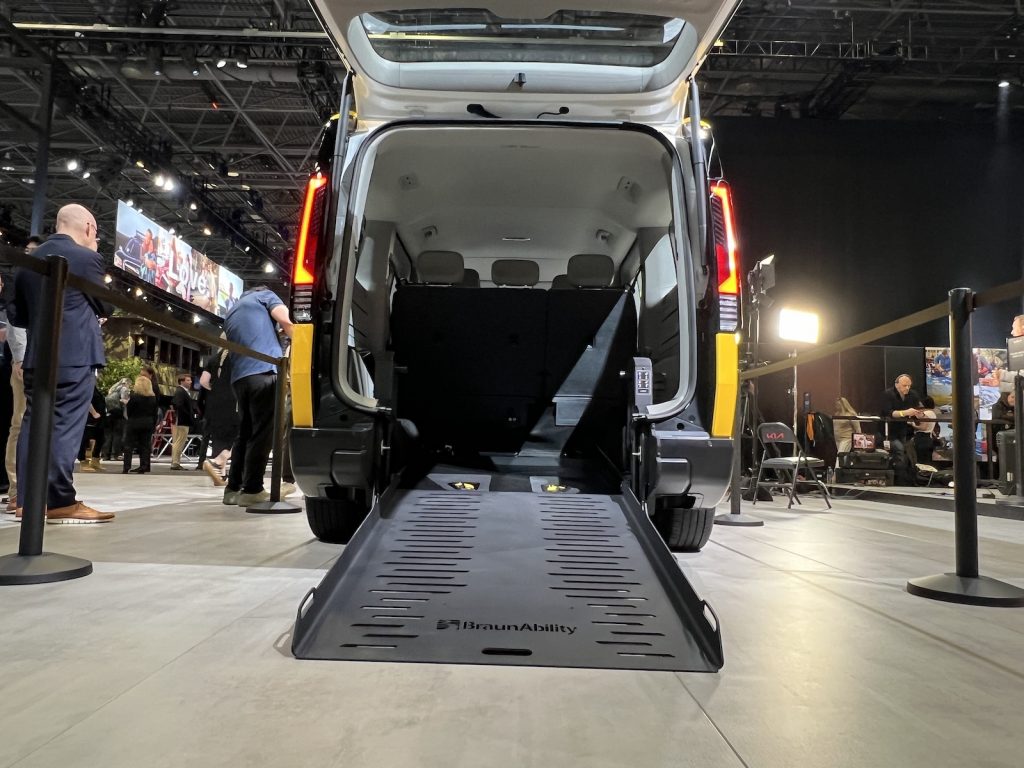
Craig went on to tell me how the converted cargo space is wider and longer than the Sienna, allowing them to install a wider ramp that can be installed flat on the floor when not in use (versus the Sienna, where the ramp stays vertical with the hatch, restricting storage space). The straps that hold the wheelchair to the car are also integrated into the floor, streamlining the process for getting wheelchaired passengers belted.
Will It Become A Reality?
Being fully electric and a Wheelchair Accessible Vehicle (WAV), this PV5 taxi concept feels like an ideal solution for New York’s taxi fleet going forward. Whether it’ll actually happen is another story.
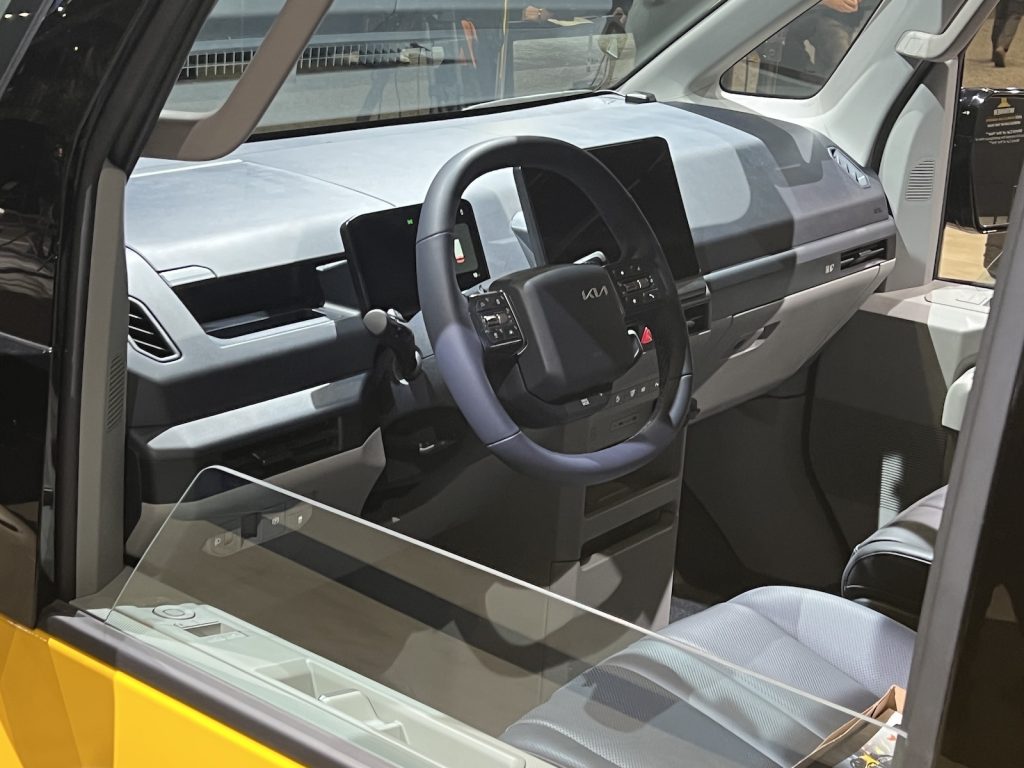
Craig told me that this concept PV5 taxi, which is fully functional as a WAV-compliant cab, was developed to gauge interest from government officials, fleets, and riders.
“We had private reviews of the vehicle, and that was to get the feedback from direct stakeholders. The disability community, the environmental advocate groups, the city, and the stakeholders who could potentially operate this vehicle,” says Craig. “So some large fleets came and looked at it.”
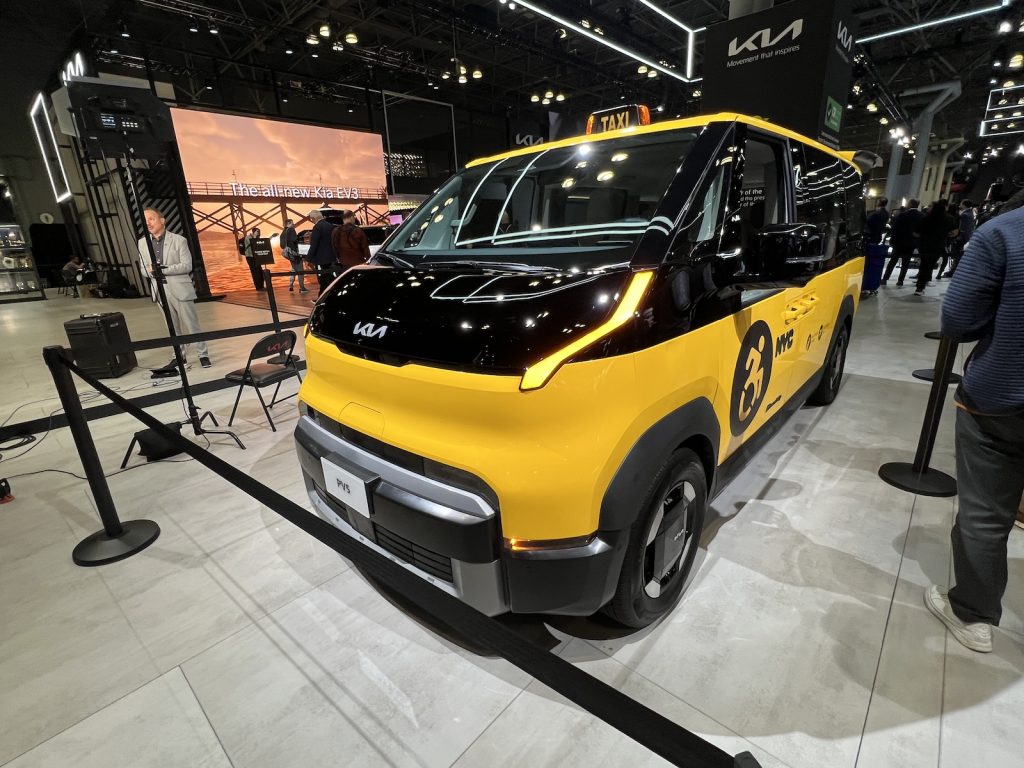
Craig told me that feedback so far has been “very, very strong,” with some fleet operators already asking if they could place orders. Not only would the PV5 taxi be compliant with NYC’s upcoming EV mandate for cabs, but the less stringent maintenance schedules afforded by EVs also appealed to buyers.
Other operators, though, still had some concerns, due mostly to charging infrastructure, not the vehicle itself. “Charging infrastructure is one that comes up,” Craig says.

Whether the PV5 taxi isn’t up to BraunAbility, of course, it’s up to Kia. It can only be made possible if the company decides to develop a version that’s compliant with U.S. roadways, which hasn’t happened yet. But there is some hope.
The concept itself showing up in New York during the Auto Show at Kia’s booth is a strong indicator that the company is at least considering importing the PV5 for American roadways. Moreover, Car and Driver spotted a PV5 test mule equipped with U.S.-spec side marker lights and reflectors driving around on Michigan roadways last month.
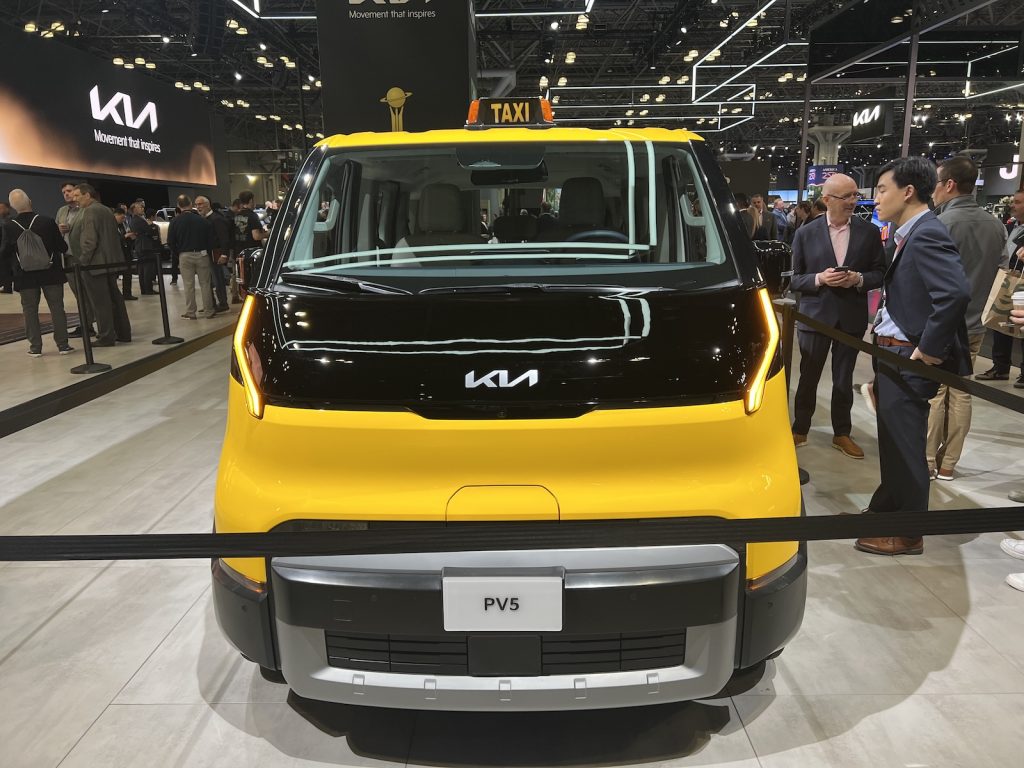
Non-U.S.-market cars are tested Stateside all the time, of course, so this isn’t conclusive evidence. It’s very likely the company is gauging interest from BraunAbility’s customers and its own buyer base to see if there’s a viable market, using the Auto Show as a stage.
As a NYC resident, I’d be very happy to see our taxis become tall, alien-looking electric Kia vans – if not only because I could buy one wholesale with 400,000 miles on the clock one day.
Top graphic images: Brian Silvestro


I was so accustomed to that giant biohazard sticker on the Autopian NYC taxi that I don’t know how to react to a pristine version! 😀
Seriously though, this is a neat design! And I’m also pleased to see they’re using the dynamic version of the accessibility symbol.
Between this and the K4 Hatchback, Kia is kicking butt.
I just want one so I can have the futuristic electric camper of my dreams. A/C all night!
The main Idea of the PV5 was, to have a Van that offers a lot of variety.
Anyways, one of its main problems can also be seen in these pictures:
The rear wheel arches are limiting the space in the cargo area a lot.
It might work as a taxi, as the distance seems wide enough to put a wheelchair in there. But considering the cargo version, this can lead to quite a problem. The strap down points for securing load are partially in stupid places and due to the limited width it can be quite challenging to load stuff. In Europe we have defined sizes of pallets (Europallet which is 120 * 80 cm). It fits between the wheel arches, but that’s about it. And as said: It can be a challenge to properly secure it.
As much I am not a fan of VAG: In the ID Buzz Cargo, this is better executed – even though the floor of the cargo area is on a higher level.
Forgot to mention:
For the driver, the seat position is not very ergonomical in case you are tall.
I drove so many kilometers in the PV5 and did not enjoy it.
The Floor is rather high and the distance between lower seat cushion and the floor is to small. Therefor your legs always have a rather uncomfortable angle. Additionally due to the very low window line in the front, nearly your complete upper leg is visible from the outside – which feels kind of strange.
Seeing as how the PV5 is coming to Canada, it shouldn’t be too hard to adapt to US norms.