

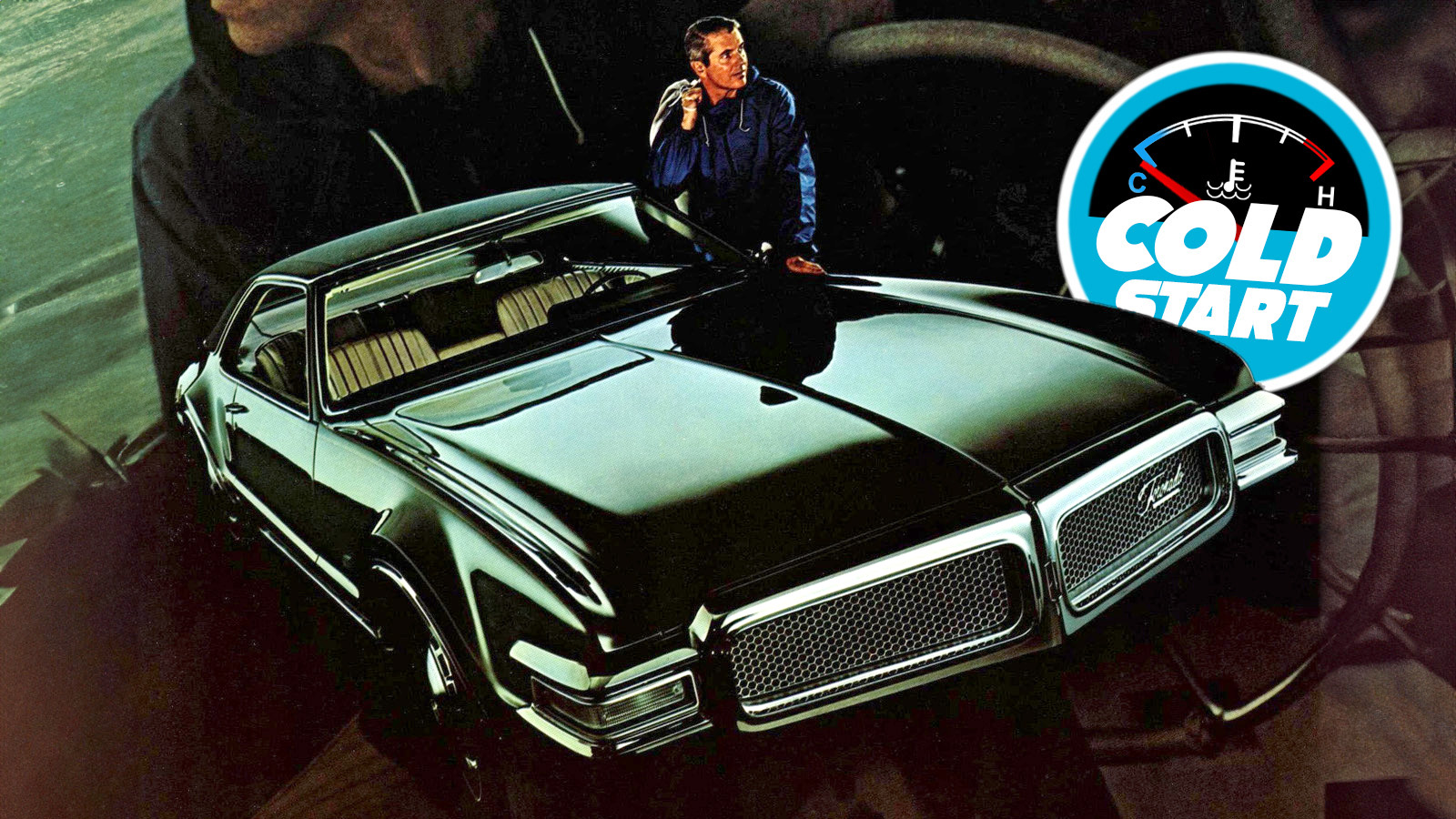
There’s a joint report out now from the American Dental Association, the American Council of Churches, and the American Ornithological Society that is significant for a number of reasons. First, this marks the first time in 75 years that these three organizations have interacted without inciting a brutal riot, and secondly, the report is a welcome reminder that the Oldsmobile Toronado is a car worth taking time to reflect upon for, as the report states, “a general increase in overall wellbeing and spirituo-dental-avian health.” I couldn’t agree more, so with that in mind, we’re going to consider the 1968 Toronado for a bit.
GM was pretty committed to annual and fairly significant facelifts for their cars, so the ’68 Toronado has a bit of a different look than the original ’66 one, even though it’s still essentially the same car, which is a good thing. The ’68 and ’69 were the last years the Toronado had hidden headlights (well, until the downsized 1986 ones), and the front end was interesting, featuring a pair of wide grilles separated by a chrome divider that was part of an overall chrome bezel.


The proportions and profile of the Toronado were still as good as the OG one, as you can see here:
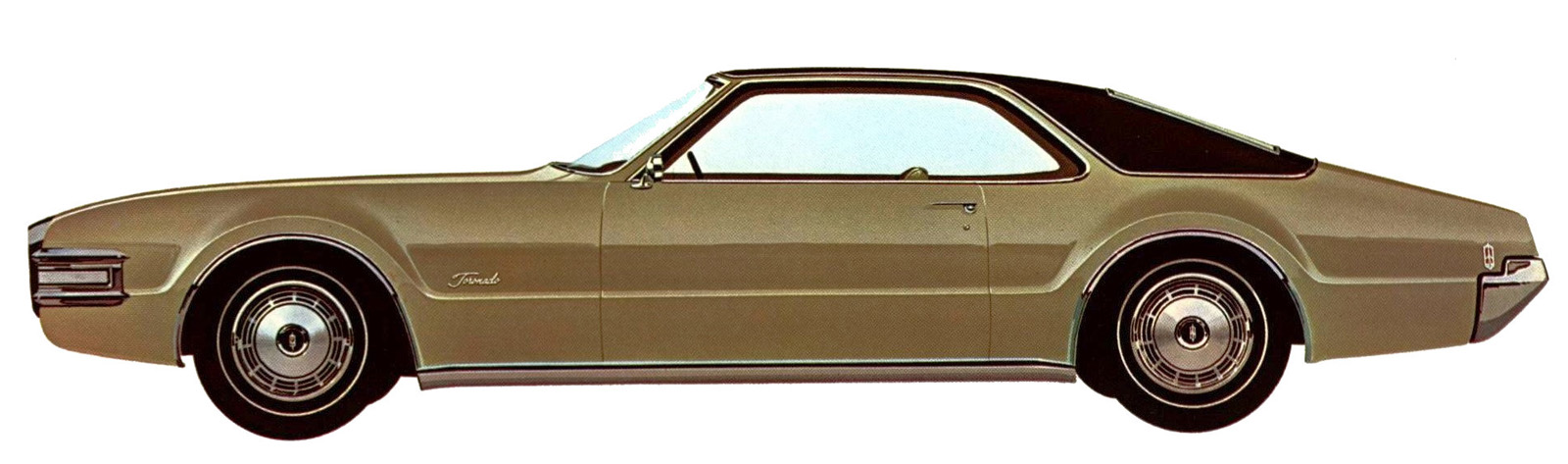
I’ll admit, big American land-barge-type cars aren’t really what I’m normally drawn to, but I have a special place in my heart and other organs for the Toronado, especially these early ones. I mean, look at it! The heavily emphasized wheels with their strong, prominent flared arches, that long hood containing the then-revolutionary FWD drivetrain, featuring a longitudinal V8 – let’s not forget how bonkers this layout was for an American car, after all:

This ’68 brochure has this nice color-coded overhead engine/front suspension shot, too:
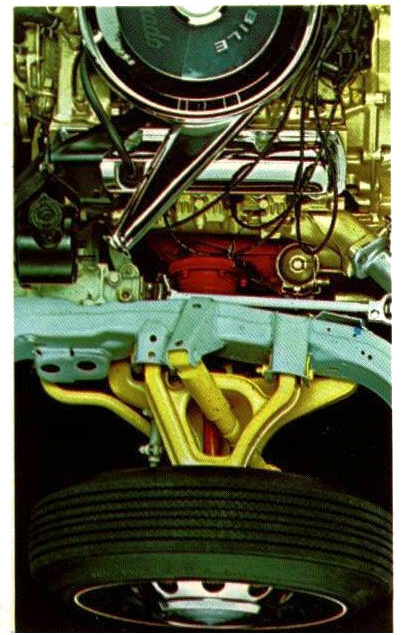
The front suspension A-arm and shock and anti-roll bar all combine to make a striking-looking tentacle-like mass there.
Back to the exterior: there’s the lack of a B-pillar, for that hardtop-convertible look, that dramatically-sloping rear – these things are so striking and handsome I just want to spit.
Let’s look at the revised front end and lighting design for these ’68s. The whole front end look changed pretty dramatically from the first two years of the car, being less of a wedge-type design and more blunt. I think it’s less appreciated among purists, but I think it looks kind of great:
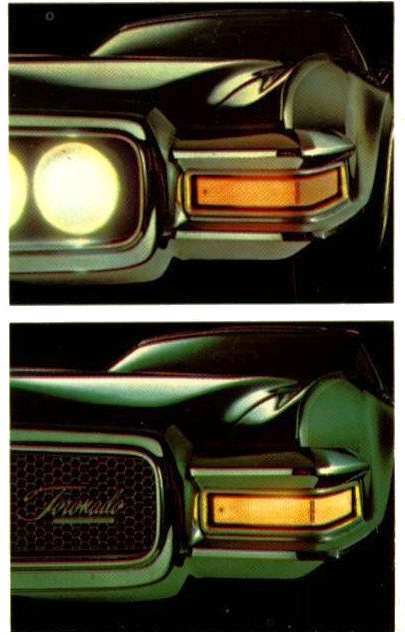
The brochure notes the large, wraparound indicator lamps, which I’m a big fan of, too, and those could be what inspired the front-end change, since ’68 was the first year that illuminated or reflector-based side marker lamps were required. The dual headlamps are hidden behind a grille panel that lifts out of the way, and I think it may be one of the only cars that featured a secondary grille design under the outer grille! You can see the interior grille here in this video showing the grille opening to reveal the lights:
In case you can’t see the video for some miserable reason, here’s what I mean:
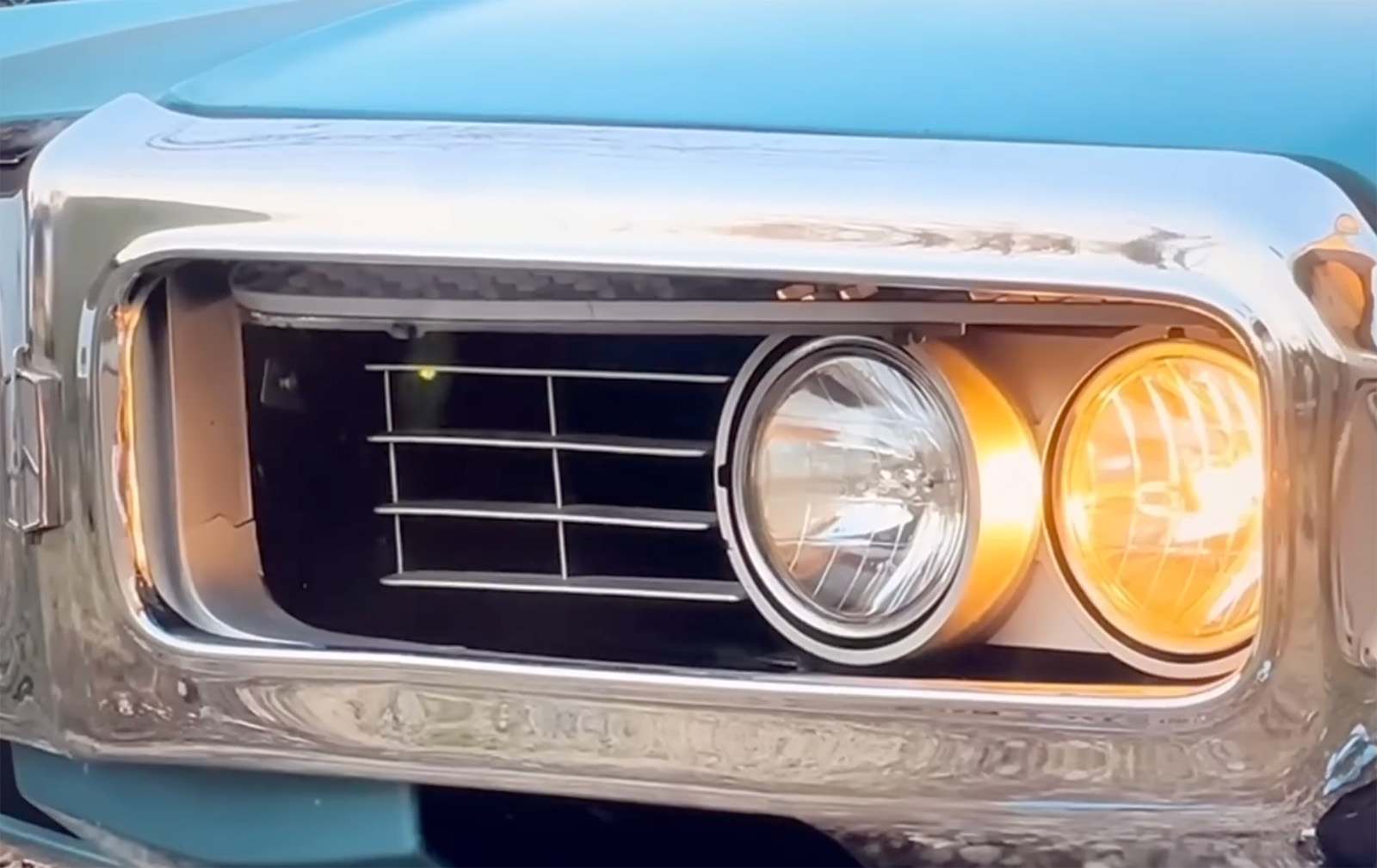
See that? Under the honeycomb outer grille is this internal grid-like grille! These cars were so refined and classy, no detail was left undone. I love it. Especially when you compare this approach to what the headlight situation was like under the covers of, say, a 1970s Lincoln Continental:
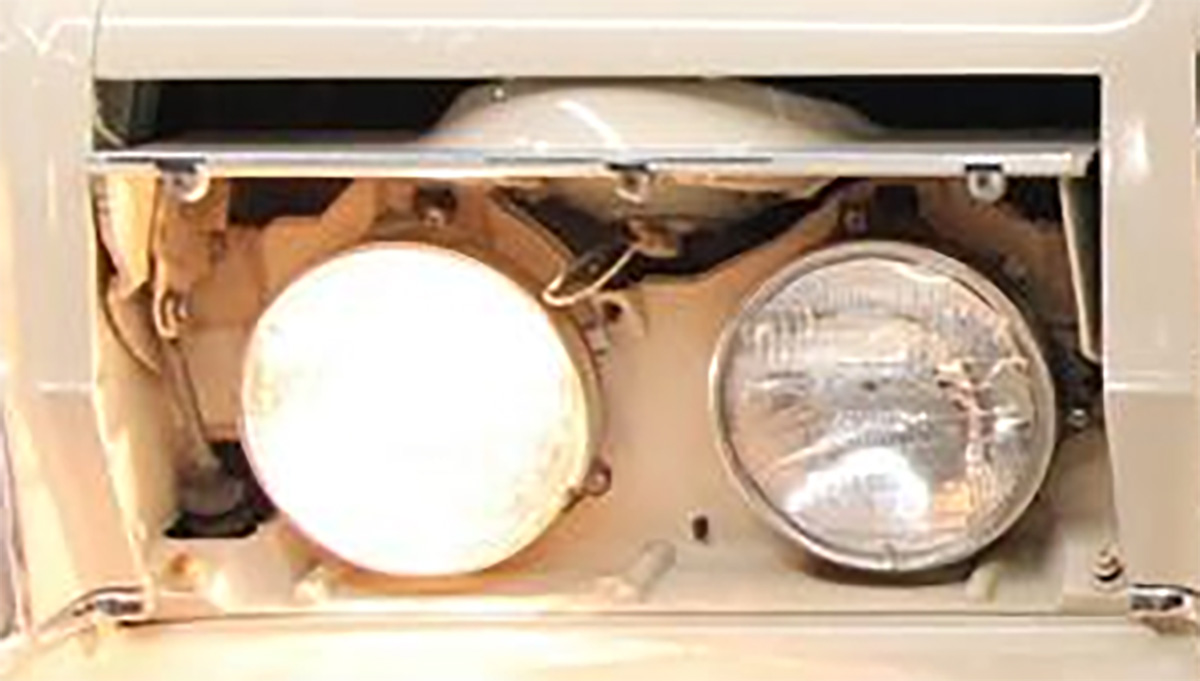
That’s just embarrassing.
But let’s get back to these Toronados. Have you seen what first-gen Toronado dashboards were like?
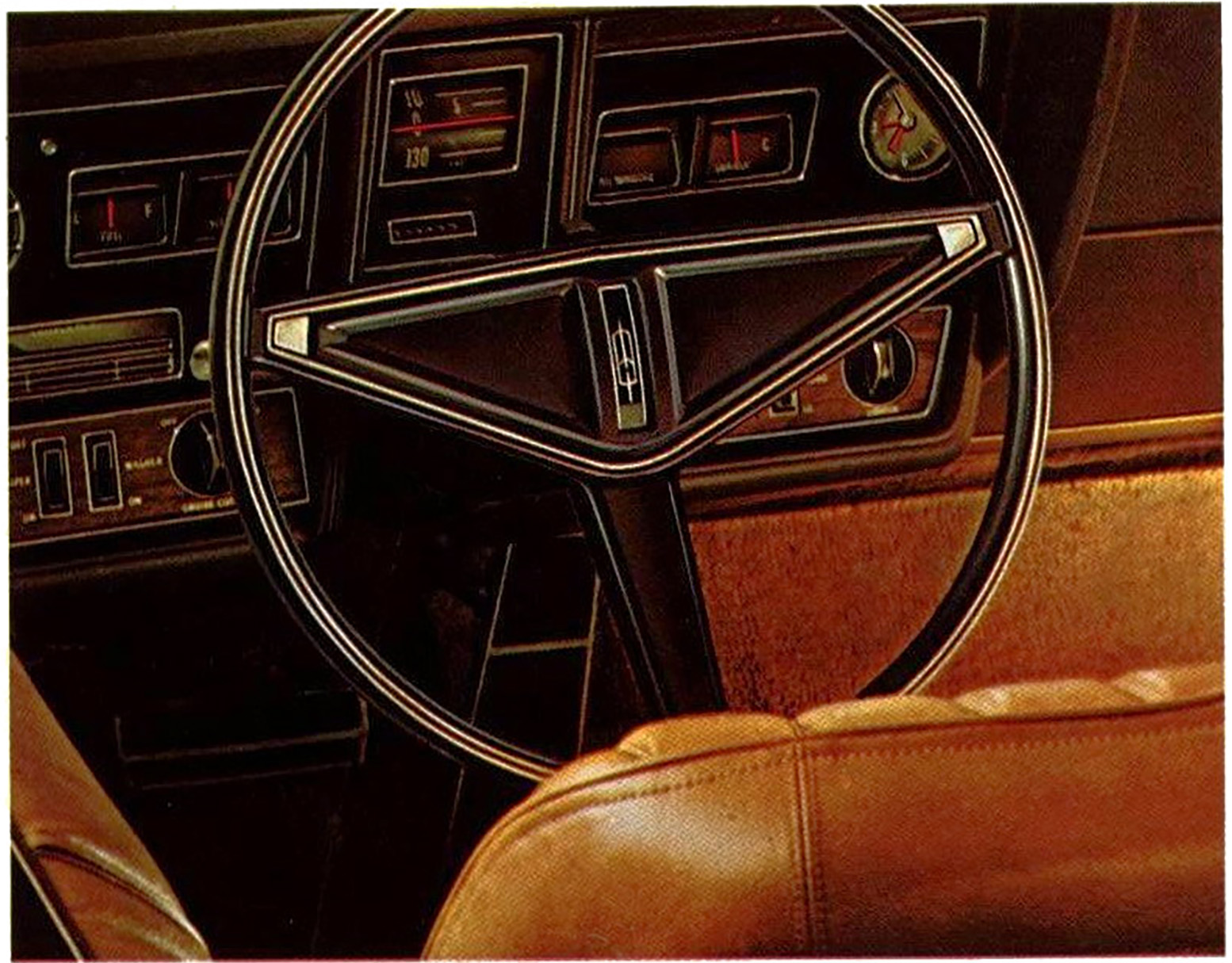
That steering wheel always looks upside-down to me, and it did feature, optionally, the comically misguided “Rim Blow” type of steering wheel, where you could activate the horn just by squeezing the rim of the wheel, which usually meant a lot of unwanted horn honkings.
But look at the speedometer! It’s a drum-type, set horizontally, rolling around so your speed appears in the window, bisected by that orange line. Drum-style speedometers are just cool, probably in large part because of how uncommon they were.
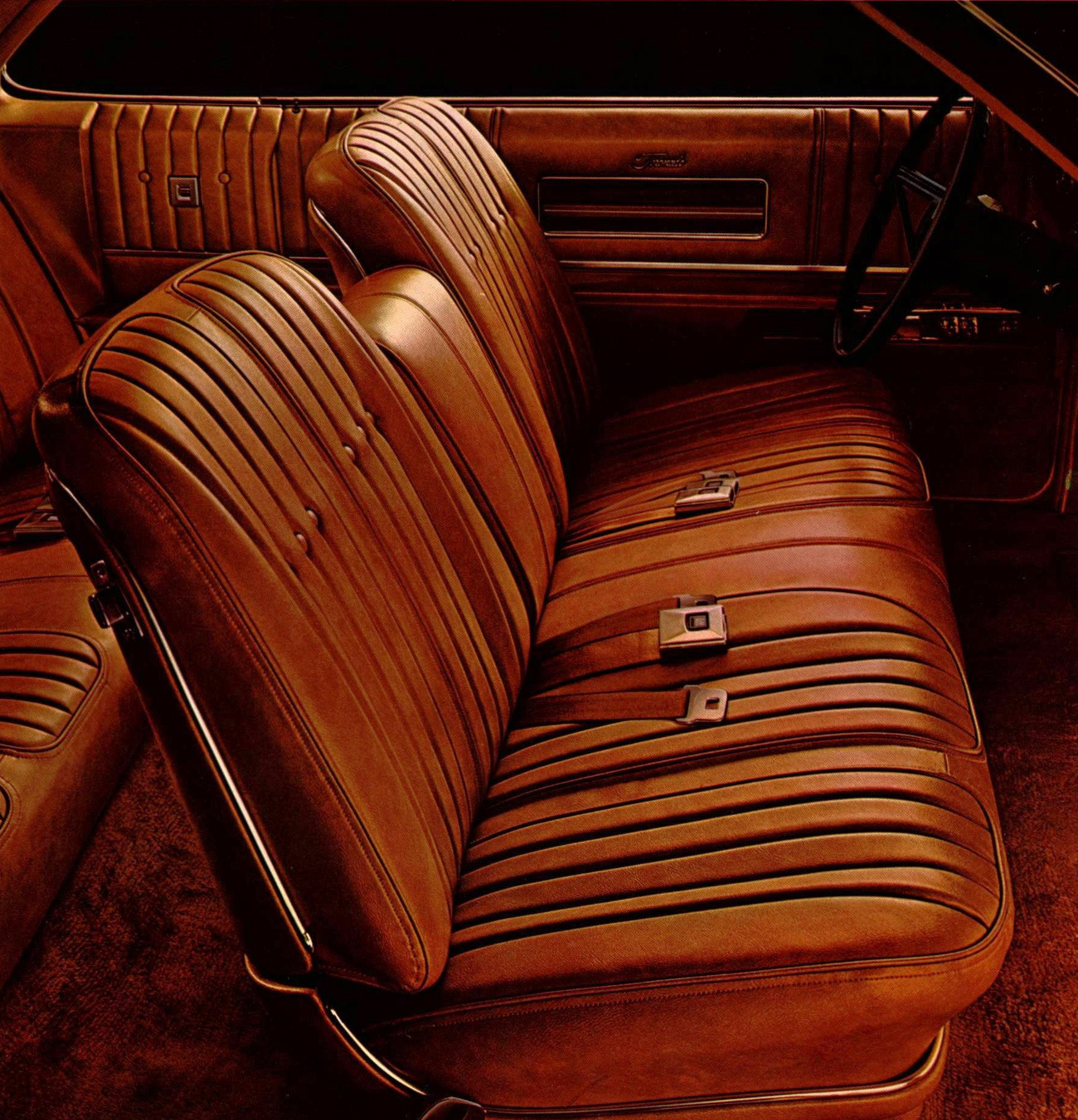
The Toronados of this era also managed to have these decadently-upholstered and padded seats in the Traditional American Car style, but without sliding into the rolling bordello look of the 1970s. They’re handsome and a bit restrained, and I like how the vertical padding pattern continues onto the door cards and interior side trim panels. Also, everything is the color of delicious meats!
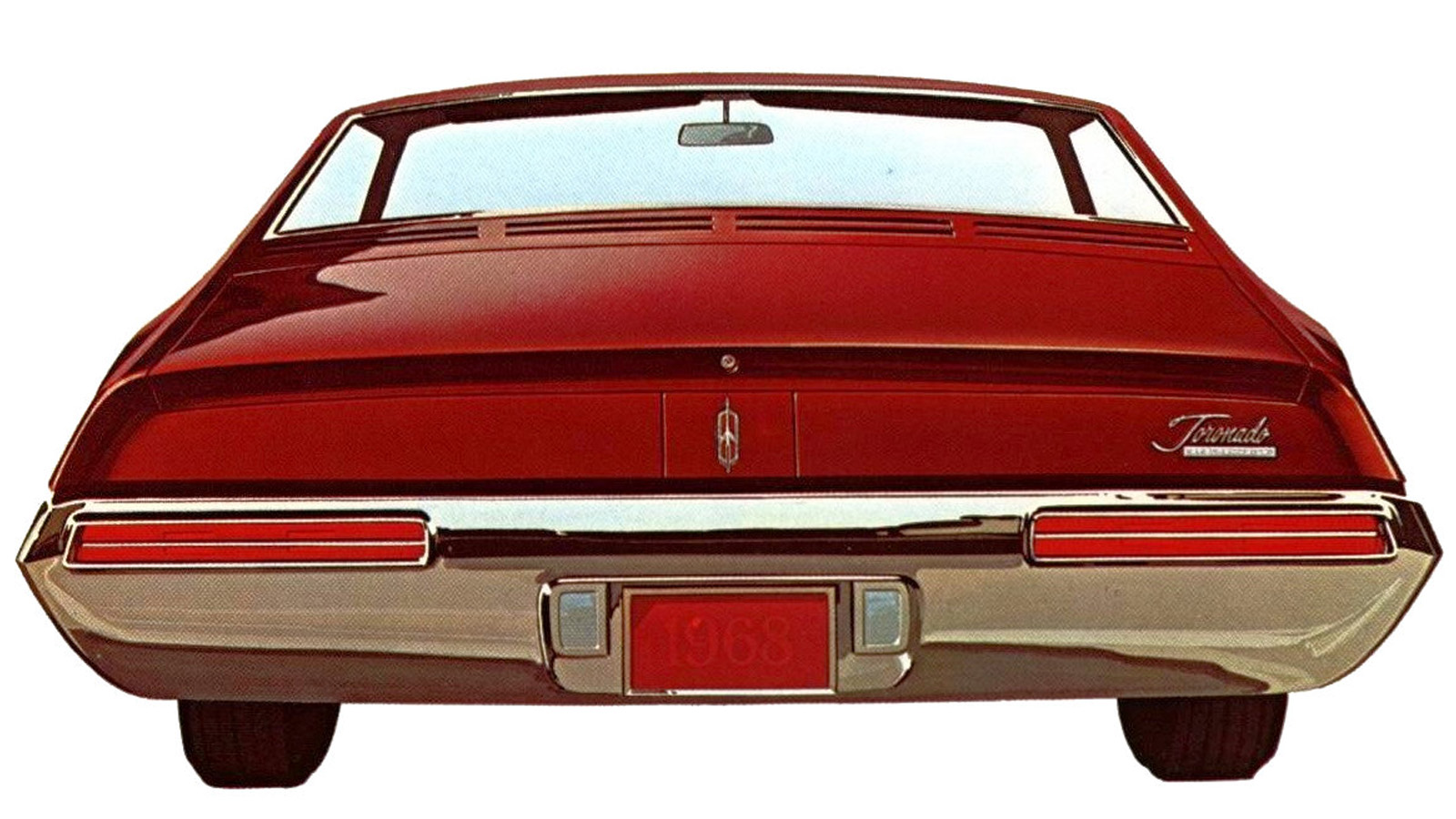
Even the rear of these Toronados were unusual and striking; the overall sort of widened-hexagonal silhouette, that intaglio rear fascia that forms a bit of a little spoiler back there, the wide, simple, elegant taillights inset into the bumper, the script badging – it’s just concentrated class, sprayed right into your face.
I hope this bit of Toronadoism helped!
Top graphic image: GM


These were cool, design-wise, but famously under-braked from factory and conceptually flawed. A massive 7.0-plus-liter engine sitting longitudinally on top of the front wheels offset by and yoked to a U-shaped transmission with a beefy multi-chain in it to route power back to the front and unequal-length halfshafts…does not a good-handling car make.
Buick was smart to keep the related Riviera longitude-RWD for as long as was practical.
I posted my preference for the 1966 Riviera elsewhere here.
I’m not generally into cars that are older than me, but the Toronado has always been an exception. It’s on my lottery win list of cars to buy.
I’m not generally into cars that are older than me either, but that would be 1954!
Hard to forgive a vinyl roof on any car, but the Toronado can wear it well.
Still better without, though.
You failed to mention the most important thing about the Toronado, which is that it inspired many glorious twin-engine monstrosities.
I remember seeing one as a young kid in the ’80s and telling my dad about the cool new car I just saw on our dead end street. When he told me it was an old car, I was amazed. Still remember that as one of my earlier car memories.
Also, they suffer from a severe lack of headrests… because we all love getting whiplash in a collision.
Hey, this is a ‘68! Headrests weren’t common, or mandatory, until <??>
At least it has decent height seatbacks. I looked at a first gen mustang as my first car, and the setback was so low it was barely above the bottom of my shoulder blades. Forget whiplash, you’d get fractured thoracic vertebrae if you were rear-ended.
Head restraints were mandatory starting January 1968
OK, I’ll guess that that applied to models designed from then on, hence ‘69 models maybe?
Any idea when they were required for rear seats?
Was off a year, they were mandated January 1, 1969 for mid year 1969 models, but automakers had pretty much already made them standard from the fall of 1968 and had already started phasing them in on a lot of 1968 models, but, yeah, there was still a smattering of 1968 cars that didn’t have them and maybe a few early 1969 models that didn’t.
I don’t think rear head restraints were actually required, legally, until pretty recently, like 2009 or 2010. But that might have been a light truck loophole or something
My parents’ ‘68 Ambassador had them on the front seats, possibly as an option, but not the rear. I believe the seatbelts it had were an extra-cost option.
Seat belts did become mandatory for all designated passenger seats in 1968, 3 point for front seat outboard positions, 2 point for all others
Ok, then it was that they had bought the optional seat belts on their previous car, an earlier 60s Rambler I think.
Mandatory for rim blow as well.
Never mind
Ford left out the firewall in the trunk for the fuel tank to save $10 a car.
Worry about that one!
There was a Stephen King story about a man whose dark alter-ego became real. He drove a black ‘60s Toronado. I thought it was fitting.
George Stark in “The Dark Half”. I read that as a kid and cannot see one of these cars without thinking of it.
I agree, it’s a great bit of car casting.
63 Sting Ray, 65 Riviera, Sixties auto design had Style!
61 Lincoln enters the chat.
It’s been way more than 75 years since the American Ornithological Society and the American Melittology Society have gotten together without scandal.
I remember my uncle bringing home a brand new 66 Toronado, child me fell in love with it, teenage me found out (in an Eldo convertible) that heavy front drive cars can be challenging to stop on snow due to their love of going sideways with any engine braking – and you are dealing with some weight.
My dad owned a 1969 Toronado. I was fortunate that he still owned it when I got my license in 1975. Even better, I had a job that gave me an excuse to stay home when the family took their frequent trips to our summer place. I loved driving that car. Personally, I think the ’69 was the best version with a slight change to the tail end treatment.
The UPP is highly underrated. It was tough enough to move GMC motorhomes.
GM should have kept the UPP, maybe changed the bellhousing for the 454 and the 350, and put them in way more things.
A cab over pickup with the UPP would have been sick.
I’ve heard of rear drive pickups using this drivetrain or a version of chain drive.
Someone came up with an ingenious approach using a rear drive automatic on a big block, sitting low in the chassis, differential mounted to the output past the axles, driving spools on both sides, forward of the differential.
These drove the same on independent axles using big toothed belts.
For those wanting crazy power and an automatic in a mid-engine.
I’m not big on American land barges either, but I’m still a human being and can’t ever turn down a good Rim Blow.
Yeah – We shouldn’t be shaming here.
What’s someone’s “comically misguided” is someone else’s “yum”
The whole history of GM is staid, conservative, lowest-common-denominator transportation with the occasional crazy-pants outburst. Corvair, Toronado, even the Dustbuster vans and the Aztek. This may be peak bonkers GM, though, for the combination of engineering and style. I’ve always said it feels like a concept car that slipped nearly unmolested into production. I adore it.
Corvettes have a place on your excellent list too, methinks.
I got to drive a 60s Corvette roadster once.
They said “here’s the keys”.
Absolutely gorgeous interior in that sunlight.
Light, very quick. Original steering and suspension, terrifying to drive at speed.
Count Olaf approved.
The ‘68s lost the thin horizontal ribbon grille bars but kept the other styling shout-outs to the 1936 Cord 810, the last big front-wheel-drive V8 American car:
Chrome wheels with circular vent holes at the perimeter.
Pop-up headlights.
Hint of pontoon fenders stamped into the sheet metal around the wheel arches.
Long low proportions with the cabin set well back and fading into the trunk.
Look at photos of the ‘36 Cord and the ‘66 Toronado and it’s clear that nostalgic retro-modern styling didn’t magically happen with the PT Cruiser, Dodge Charger, or New Beetle.
Designer David North didn’t try to hide it, and did a fantastic job paying homage without getting clunky.
Yeah, that’s why I always preferred the first year, its the purest expression of the design, more and more of the Cord-inspired details were lost with each subsequent year from ’67 on
Gordon Buehrig was a frickin’ genius.
The guys at Hupp/Graham who bought the tooling and remade them into RWD cars were either brilliant or fools.
Take a pilgrimage to the Auburn Cord Duesenberg (ACD) Museum in Auburn, Indiana if you haven’t already. The original showroom downstairs and his offices upstairs, all with the restored exterior to the showroom.
One of my favorite museums. Nice twofer with the Nat’l Auto & Truck Museum of the US out back.
Yes! And down the road from the Studebaker Packard Museum in South Bend.
It’s fitting a Toronado is Clive Owen’s car of choice in the lesser-known Andrew Niccol (Gattaca) movie Anon. Exactly the right car for a retro futuristic detective in a world of constant enhanced reality – it’s even positively identified as such when he looks at it.
I watched that movie because of the Toronado police cars. I’m glad I did, it is a great movie.
I always thought they were a nicer looking car than the Eldorado.
Our family bought a one year old 68. Red with white vinyl top. White interior of course. My mother was 5’0” and must have looked absurd driving it. Definitely a 2 zip code kinda car. As a 12 year old, I couldn’t lift the hood! Wonder what kinda fuel mileage it got? Definitely required premium. Guessing combined of about 12 mpg… Wish I had a photo of it. This would be back in 69-70.
My mom was the same height. When she got her license – at like 50 years old – dad bought a used 1958 Oldsmobile for her to drive. Think about that for a moment.
I also have a strange out of character appreciation for these monsters. The one thing that boggles my mind if that they still had a solid rear axle and leaf springs. Even the regular full size Chevys had coil springs by this point, and with no power to the rear this would have been a perfect opportunity to go IRS. But I’m sure the GM bean counters of the time disagreed given how new and expensive all the front end hardware probably was. Just how even at its height GM tended to leave things half way done…
They are a really great looking car. And not to forget that generation Eldorado, which was also an absolutely great looking vehicle, before dropping off in the 70s.
The B-/E-body redesigns in ’71 (which begat, among other things, the boat-tail Riviera), were downgrades in almost every instance.
“Rim blow” sounds like something you’d do (or get) in the back seat of one of these
Sounds like you’d need to be a contortionist.
Before she owned the Camaro she took me to 110+ mph in when I was a kid and she was in her 60s screaming “We’re going to the moon!”, some decades prior my grandmother owned a Toronado. My dad told me that she liked to drive it really, really fast.
She was a hoon. This car was a good match for her.
I think I prefer the bucket seats with the console that is shown in the video. I’m also impressed with the ability to open the grill under hotter than normal conditions for extra cooling ability, possibly due to the availability of the larger engine, also mentioned in the video.
Active grill shutters in the 1960s. Take that, 21’st century.
Everyone knows they work.
No one is willing to let the public have them.
I have multiple covers for the massive cooling system on my diesel pickup.
Most flexible is one copied from big rigs.
Full cover with a 6 inch opening centered on the fan.
Total success. I feel the benefits in my soul, teeth, and inner bird.
Oldsmobile gives you wings!
With the right tires they were remarkable in the snow. There was a LOT of weight above the driven wheels.
It’s a lot of weight for bias ply tires to hold back, with 1960’s era brakes..