

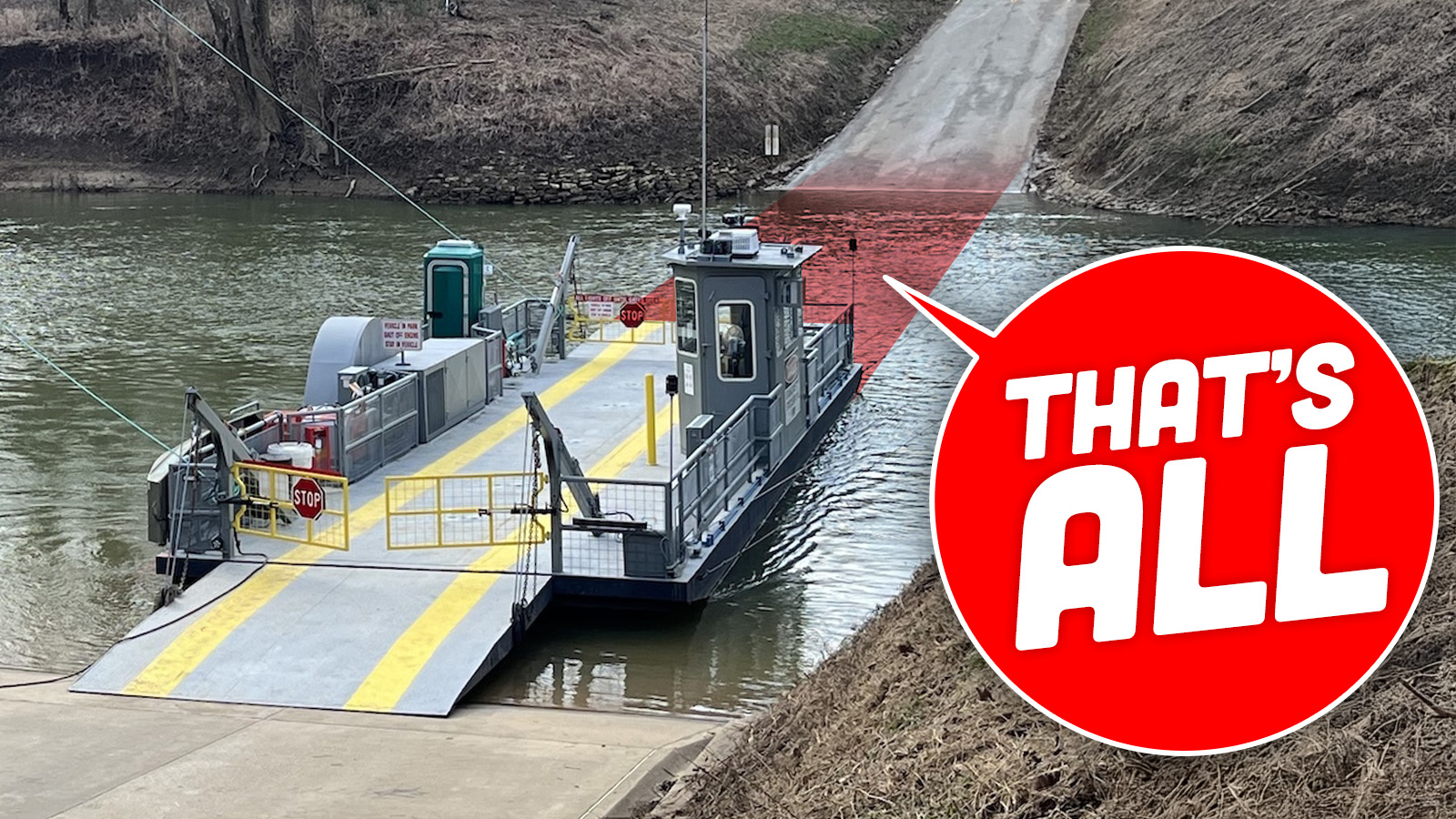
For decades, drivers across America have used car ferries to traverse water crossings big and small. But as infrastructure needs have grown over time, many of those ferries have been partially or fully replaced by permanent bridges, which offer swifter, simpler, and more streamlined over-water transport.
There is one ferry, though, that has stood the test of time. For the past 90-plus years, the Green River Ferry has shuttled cars, as well as bikes, hikers, and other travelers, across the Green River in Mammoth Cave National Park in Kentucky. This is despite the crossing itself being around just 200 feet, and the ferry ride itself taking as little as 30 seconds.


From what I can tell, this is the shortest car ferry crossing in all of America. The boat, a single-engine barge, transports about 135,000 vehicles and 270,000 passengers a year. Drivers have to come up to the crossing, drive onto the boat, and take a 30-second ride across the water. Even with the sheer volume of riders, Mammoth Cave National Park has no plans to replace the Green River Ferry with a bridge, and that probably won’t change for a long time.
Shuttling For Nearly 100 Years
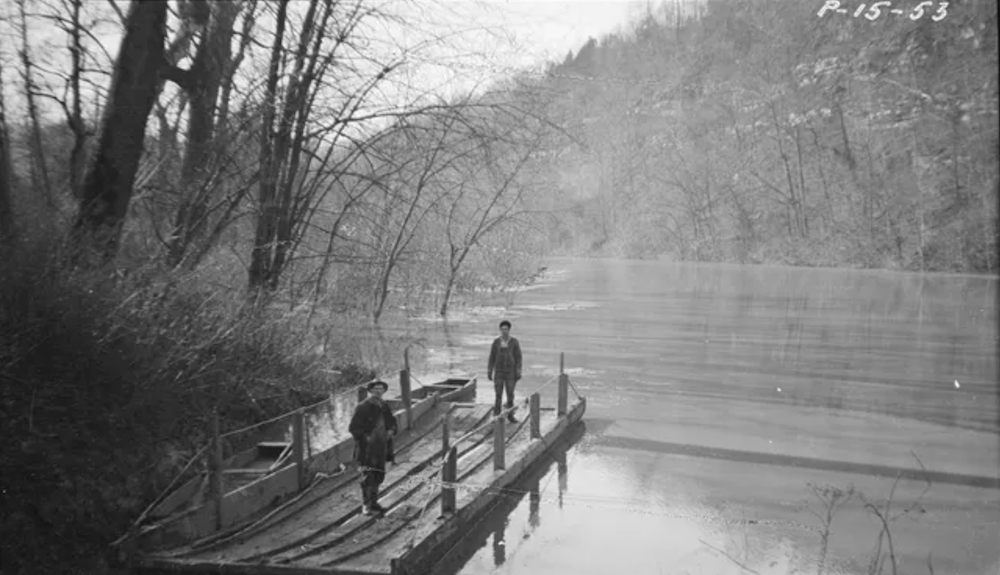
The Green River Ferry was first established in 1934, at a time when car ferries were far more common in the rural United States. It operated for years before the National Park in which it resides was actually established in 1941. Since its inception, it’s been moving travelers, locals, hikers, cyclists, motorcyclists, and park-goers between the banks of the Green River.
The ferry operates continuously, serving travelers 364 days a year (every day except Christmas), from 6 a.m. to 10 p.m. It costs the park about $2 to ferry a car across the river, but the ferry itself is totally free for all who ride it.
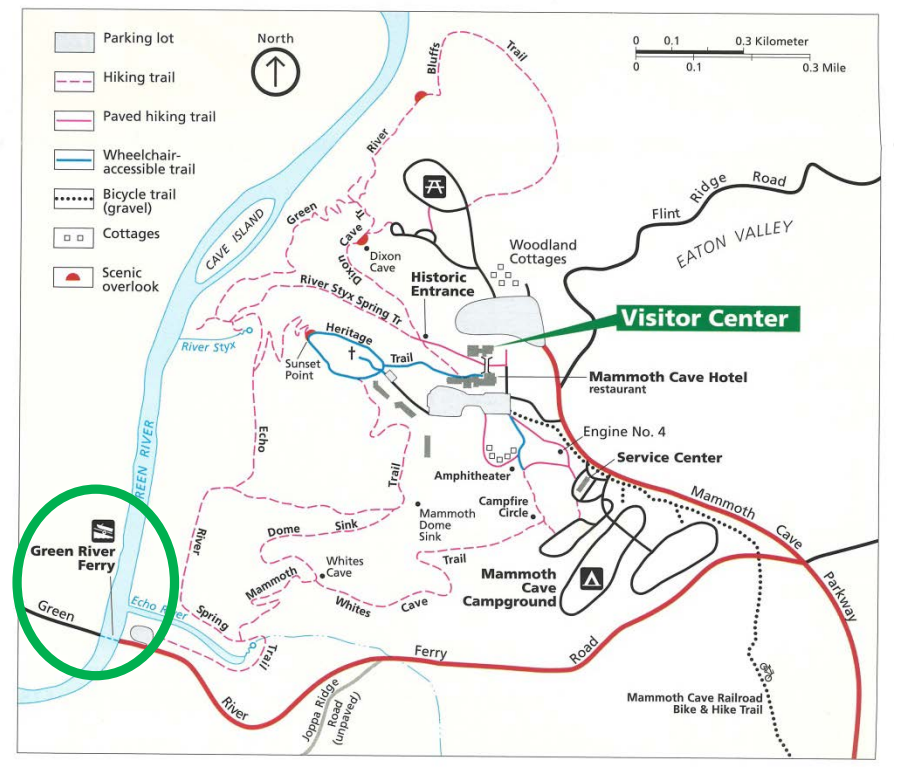
The ride itself is a novel experience. All you do is drive down the ramp on Maple Springs Ranger Station Road and wait for the ferry to open its boarding gate. From there, you drive on, put your car in park (or in gear and with the handbrake engaged), turn it off, and enjoy the ride. Once it reaches the other side, the gates open, and you drive off. Simple as that.
The ferry can accommodate up to two vehicles at a time, and can take between 30 seconds and a few minutes to get you across. This video from a recent crossing is a great depiction of how it all works:
Everything about this ferry just seems like it’d be a fun time (to me, at least). You don’t have to get out of your car, and you can hear the 60-horsepower diesel engine spinning the centrally located paddlewheel. The video also briefly shows what looks to be a normal grate-style park bench mounted on the deck, parallel to the cars, so passengers without cars have a place to sit during the extremely short ride.

I wasn’t able to find any photos of the inside of the pilothouse, located opposite the engine and paddlewheel, though it looks incredibly small, like it could only fit just one person. The ferry requires just one individual to operate; the park says it works on 14 shifts per week (two a day).
Here’s another video showing just how briskly the ferry moves, just to give you an idea of how quickly the ride ends:
If you look closely, you can see that two cables are running from one side of the river to the other, on either side of the ferry, suspended by support towers further up the bank. Those cables each hold additional cables, which are attached to the ferry itself. According to the park, these navigational cables act as guides for the ferry, so it doesn’t get pushed down the river by the current or wind forces. They’re replaced every three to five years.
Here’s a photo from the National Park Service, which gives a better look at where the cables are attached:
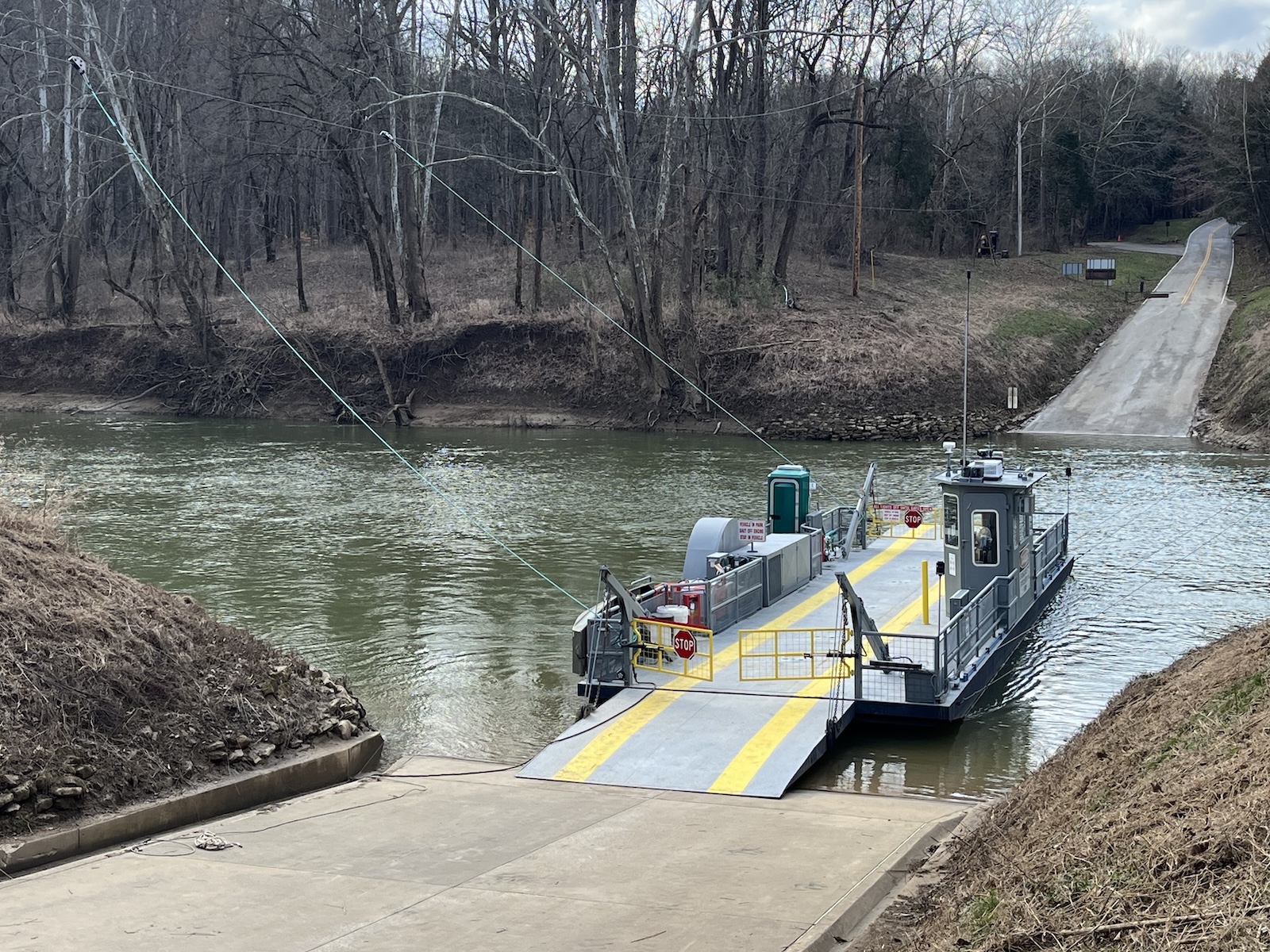
The ferry can accommodate more than just normal passenger cars and trucks. As long as your commercial truck or RV is shorter than 16 feet and under 12 tons, it can ride the ferry, too. Vehicles with trailers are another story; the ferry has its own hotline, which you can call to see if your trailer is allowed to ride.
It Might Not Be Fast, But It Is Cheap
In 2015, the National Park Service published a study on the Green River Ferry to assess its service life and propose upgrades to keep it running for the foreseeable future. Back then, the ferry could only accommodate eight tons and suffered from rusting on the hull and the internal stiffeners. Thanks to rule changes by the Coast Guard in 2010, the ferry was now also subject to inspection every two years and a dry docking for comprehensive inspection by the Coast Guard every five years.
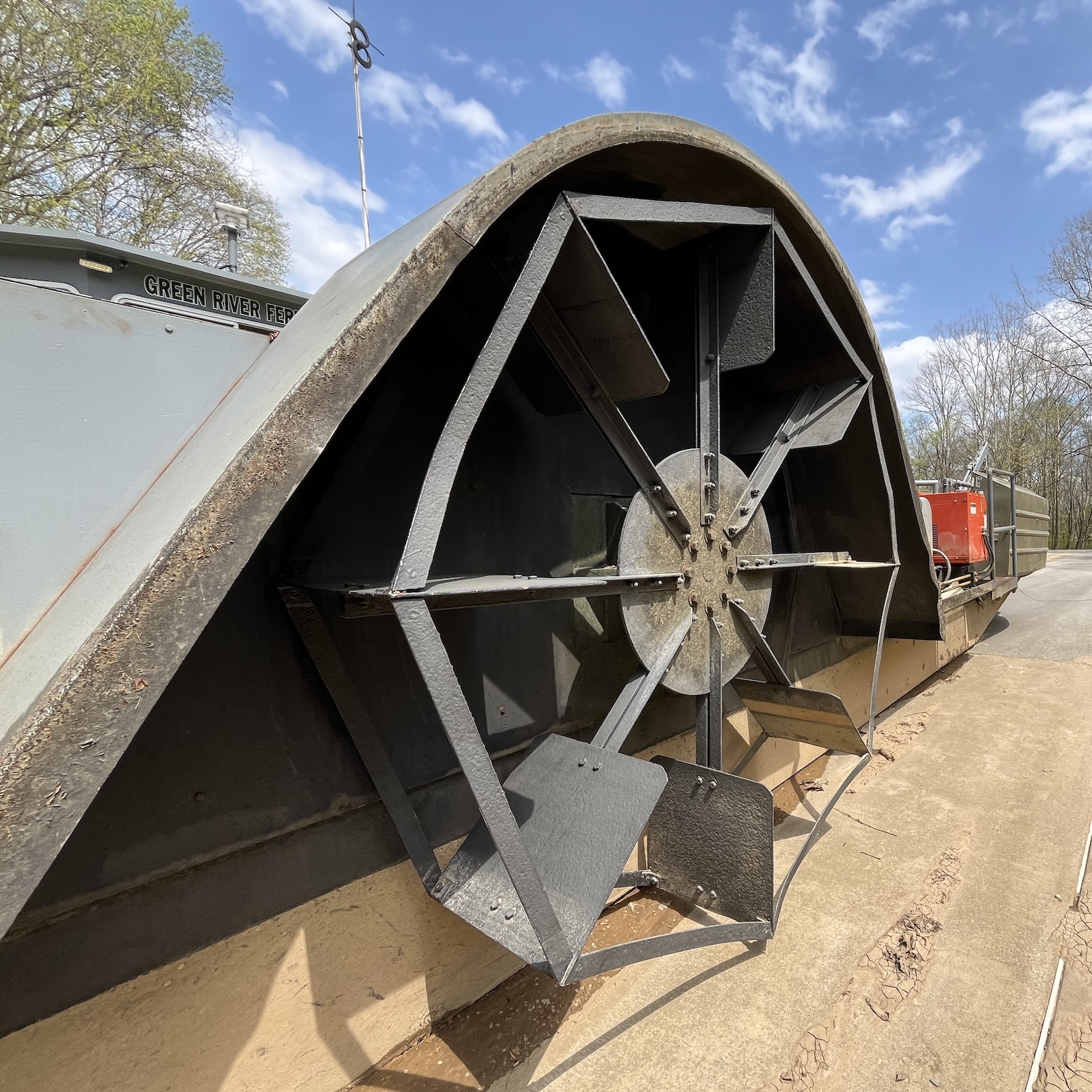
The NPS presented several different proposals for the future of the ferry, including performing basic repairs necessary to keep it running, repairing it and upgrading it to carry heavier loads, or replacing it altogether, with a newer, more capable boat. The NPS also briefly considered a bridge, but that idea was quickly dismissed over cost—not just to build the bridge, but also to keep it operational. From the study:
Low and high level bridges were among the alternatives considered but dismissed. A low level bridge would not meet Federal Highway Administration (FHWA) standards related to high water events. While a high level bridge would meet such standards, it would have extensive environmental impacts. The bridge and connected roads would have a large footprint (both length and height of bridge out of context with the surrounding area), require excavation that could impact the cave and karst systems, have a major visual impact, and require removal of vegetation that could impact the habitat of federally threatened or endangered species. The bridge would also cost approximately $50 million to build with additional annual maintenance costs potentially exceeding those to operate the ferry. The study concluded that a bridge would be “inconsistent with the purpose of the project.”
Obviously, the NPS decided to keep the ferry around. The project cost for fixing up the boat would have cost around $3.7 million, according to the study, while building a new boat would’ve cost $4.6 million. Instead, they went for the middle option—restoring and upgrading the boat to handle more capacity—for $3.9 million. Not cheap, but a far cry from that $50 million needed to build a bridge.
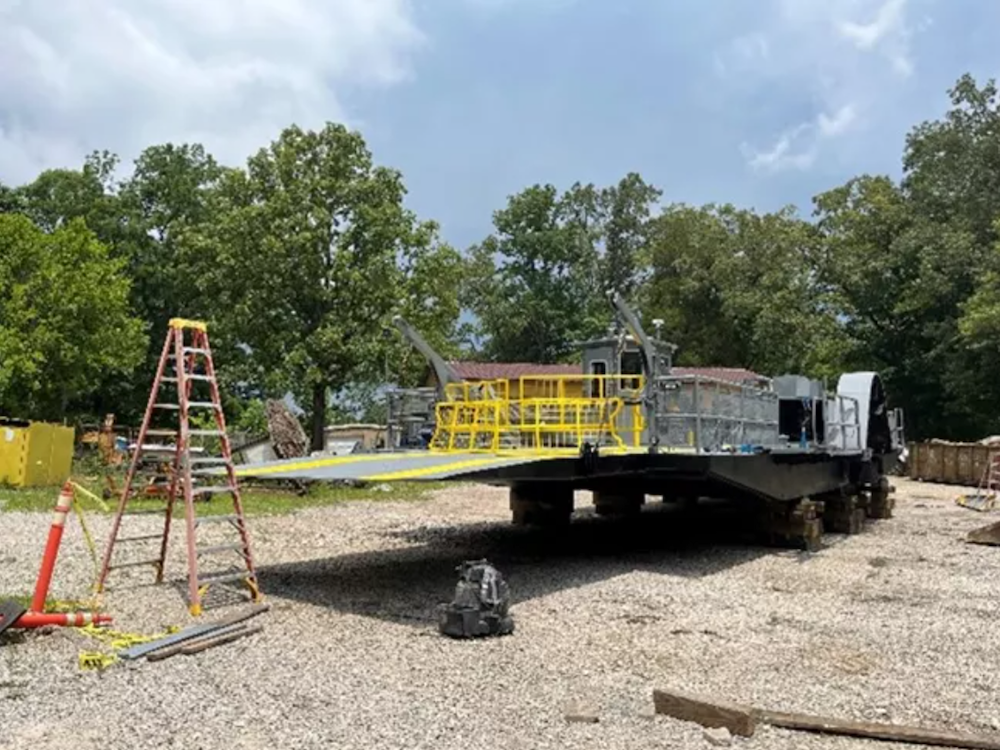
In addition to all the necessary repairs needed to keep the boat floating, the NPS also replaced outdated equipment with new stuff, both to reduce costs and to ensure the boat would pass Coast Guard inspections. As for the upgrades, pontoons were added to the hull to increase capacity from 8 tons to 12 tons.
Not Without Its Faults
I’m glad this ferry exists; it’s cool to know that there’s a river crossing out there that’s broken away from the norm and embraced a fascinating, bygone way of transportation that people can still experience. But it’s not perfect. You probably already know this if you’ve paid a visit to Mammoth Cave National Park in the summer.
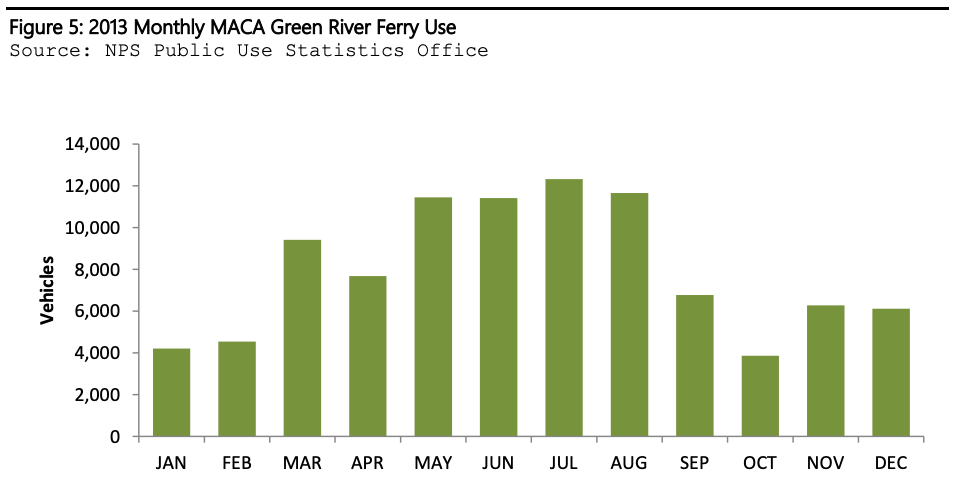
That same study highlights observations on traffic made by park staff, suggesting the ferry’s slow transit times may “degrade the visitor experience.” From the study:
Ferry operators and park staff have stated congestion along Green River Ferry Road can be problematic during peak season (May-August). According to their observations, as many as 30 vehicles may line up along the road waiting to cross the Green River. At low river depths which occur during the peak season, the round trip may take seven minutes or a maximum of seven trips per hour The trip takes longer at higher river depths because the distance between where the water reaches the ramps is longer. With three vehicles per trip, the thirtieth vehicle in line would have to wait more than an hour to cross the river.

There’s also the issue of flooding. Back in April, the Mammoth Cave National Park suffered a historic flooding event that ripped out one of the navigational cable’s support towers and damaged another. The flooding was so bad that it actually moved the 15-ton concrete anchor down the riverbed. From the NPS’s news release:
Traditionally during the month of April, the water level at the Green River Ferry crossing averages between 15 feet to 22 feet with a water flow just under 5,000 cubic feet per second. During the recent flood, the river reached a crest of 59.54 feet with a waterflow of just over 55,000 cubic feet per second. This high volume of water caused a portion of one of the concrete anchors to be physically pulled from the riverbank and moved 20 feet downhill. It also caused extreme stress on the four support towers which are now leaning slightly. Until the cable system and towers are repaired, the ferry cannot operate.
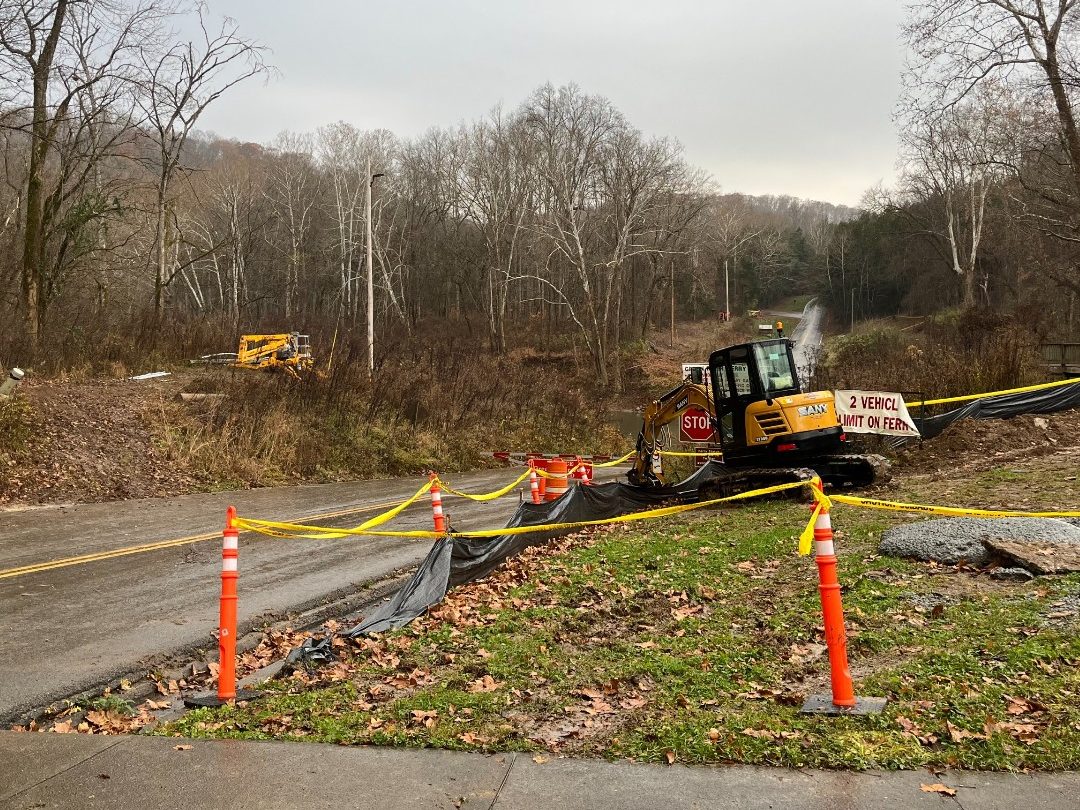
This damage knocked the ferry out of operation for nearly a year, with the service coming back online on March 5. In addition to fixing the cable system, the NPS also replaced the engine and added some flashy new paint. At least now, locals won’t have to do a full 40-mile loop to get to where they need to go. Until another flood comes around and disrupts service again, anyway.
While a properly built bridge would immediately solve these issues, I wouldn’t count on it, seeing as how the NPS just recently spent nearly $4 million upgrading the existing ferry. Maybe in a few decades, when the ferry needs another rejuvenation, the concept of a bridge will be back on the table. But for now, a tiny ferry that travels 200 feet, back and forth for 16 hours a day, is what makes the most sense for Green River.
Top graphic image: National Park Service


I love posts like this bc it highlights a unique transportation experience.
Smack in between Dubuque IA and LaCross WI there is thr Cassville Ferry which crosses the mighty Mississippi between Cassville WI and Millville IA and runs from Memorial day till early October. It is an on demand ferry. You press a button on the ferry landing to let the ferry know you want to cross. While it certainly is practical if you live in the area, I think it exists just as much for the experience.
Both sides of the Mississippi have their own ‘great river road’ which atnleast through the west side in Minnesota and Iowa, as well as the other side in Wisconson are very beautiful bluff country.
At one point north of Fountain, WI the river gets wide enough that it is at least called a lake that is 20 some miles long (‘Lake Pepin’) and shockingly to me it is still rather rual given the beauty of the area it is surprising there aren’t multimillion dollar homes all up amd down
https://www.explorecassville.com/ferry-daily-operations
Add the Fort Ticonderoga cable ferry crossing the short, swampy southern end of Lake Champlain in NYS to your list. The crossing is from Vermont to New York.
There were two or three ferries that crossed the Sacramento River or parts of its delta when I was very young. One of the ones I rode on, the cable ferry J-Mack, still crosses Steamboat Slough in the delta. I don’t know if it’s the same vessel, but it looks familiar/similar. IIRC, the Elkhorn Ferry, north of downtown Sacramento was replaced by a bridge when that section of I-5 was built back in the 60s. Both covered less than 400 feet.
Shout-out to the Wheatland ferry on the Willamette River just north of Salem, Oregon. It is similarly short.
We have 3 similar ferries in Eastern NC, just a little longer than this one. All are cable ferries and can hold 2 cars.
One of you needs to do a road trip to ride the drive-on, drive-off auto train through a tunnel near Zermatt. The Swiss remind you to put the car in park, don’t straddle two train cars, and don’t let the car update its software on the train
“The bridge would also cost approximately $50 million to build with additional annual maintenance costs potentially exceeding those to operate the ferry.” What moron would suggest the maintenance cost of a bridge would exceed the cost of operating a ferry?!?!
Our scout troop took a trip to MCNP back in 2021 to do some backpacking. Used the ferry to get back to the parking lot and trailhead. Was a fun little experience.
Since everyone is posting about their favorite local ferry service, I figured I’d post about one that’s fairly local to me. The Millersburgh Ferry in PA crosses the Susquehanna river. It’s not as short as what’s being described here – maybe 15-20 minutes, but it may be the most unique. The ferry itself is the only wooden sternwheel ferry left in the U.S. You can take your car across, but it doesn’t go on the ferry itself – there’s a barge strapped to the vessel that holds about 4 cars. The landing area is pretty much a dirt lot off the main road, and there is no set schedule for runs. This is the fun part. If you get to the ferry landing, and the boat isn’t there, you have to signal the ferry pilot. There’s a free standing white door in a frame next to the ferry landing…you signal by opening the door – if the boat is on the other side, it will return for you when they see the open door. I’ve lived in this state all my life, and I can honestly say this is the most PA way you could possibly run a ferry service.
LOL, you’ve GOT to be right!
I can’t stop laughing as I try to type this.
Great article !
You should have a look at Bilbao flying ferry (Puente colgante) an almost unique feature. You can still cross the river with your car even if Google Maps isn’t aware of it and refuses to guide you there 🙂
Traveled by moped from California to Virginia back in 2011. Other than some flat tires, my only breakdown occurred while coasting downhill towards this ferry. A bushing on the pedal freewheel assembly seized. I ended up having to pedal the Tomos on and off the ferry. I can confirm that It’ll fit two cars and a touring moped. Split the engine case in the campground that evening and freed the galled bushing. Learned a lesson about keeping some throttle open while coasting so that the metering pump would lube the bottom end. Ended up staying for the weekend. Cool ferry. Great park. Great article.
What bothers me most about the upgrade is that they didn’t change the propulsion system from paddle wheel to cable driven.
A cable driven system would be far more efficient than paddle wheels.
Operating efficiency is the sort of thing that should have priority in a national park. It could also eventually transition the ferry from local diesel power to grid power, solar, or even hydroelectric.
Yes,
But also, reaction ferry.
If the current is dependable, just pull one of the two cables to angle the boat and it sails in the current to the other side. No engine required.
I like the option, but for most of the midsummer, that river looks a lot more like a pond.
I would rather wait an hour to ride this than wait over an hour for a three minute ride at a theme park attraction.