

With enough miles under our respective belts, at this point everybody’s got their own idea of which cars are the likeliest to accumulate a huge reading on their odometers. Even if your mileage might literally vary depending on where in the world you’re located, there are going to be a few of the same brands in the ballpark. A diesel Mercedes is going to shoot for a million, at least the ones made in the Golden Era of Daimler-Benz. A big-mile Toyota’s practically a given, as long as rust doesn’t get there first.
A Volvo 1800S is the highest-mile car in the world, and you probably won’t have a problem finding a diesel Volvo wagon with over 300,000 miles – at least in Northern Europe. One of the biggest-mile Volvos in the world is a 1979 Volvo 245 GL with the Volkswagen van-derived D6 six-cylinder diesel, originally sent to deliver mail and magazines in Northern Finland and retired at 1,630,000 miles, or 2,650,000 km.


Now, these are the likeliest big-mile cars, the ones that are the easiest to come up with. What car would really surprise you as a big-mile overachiever?

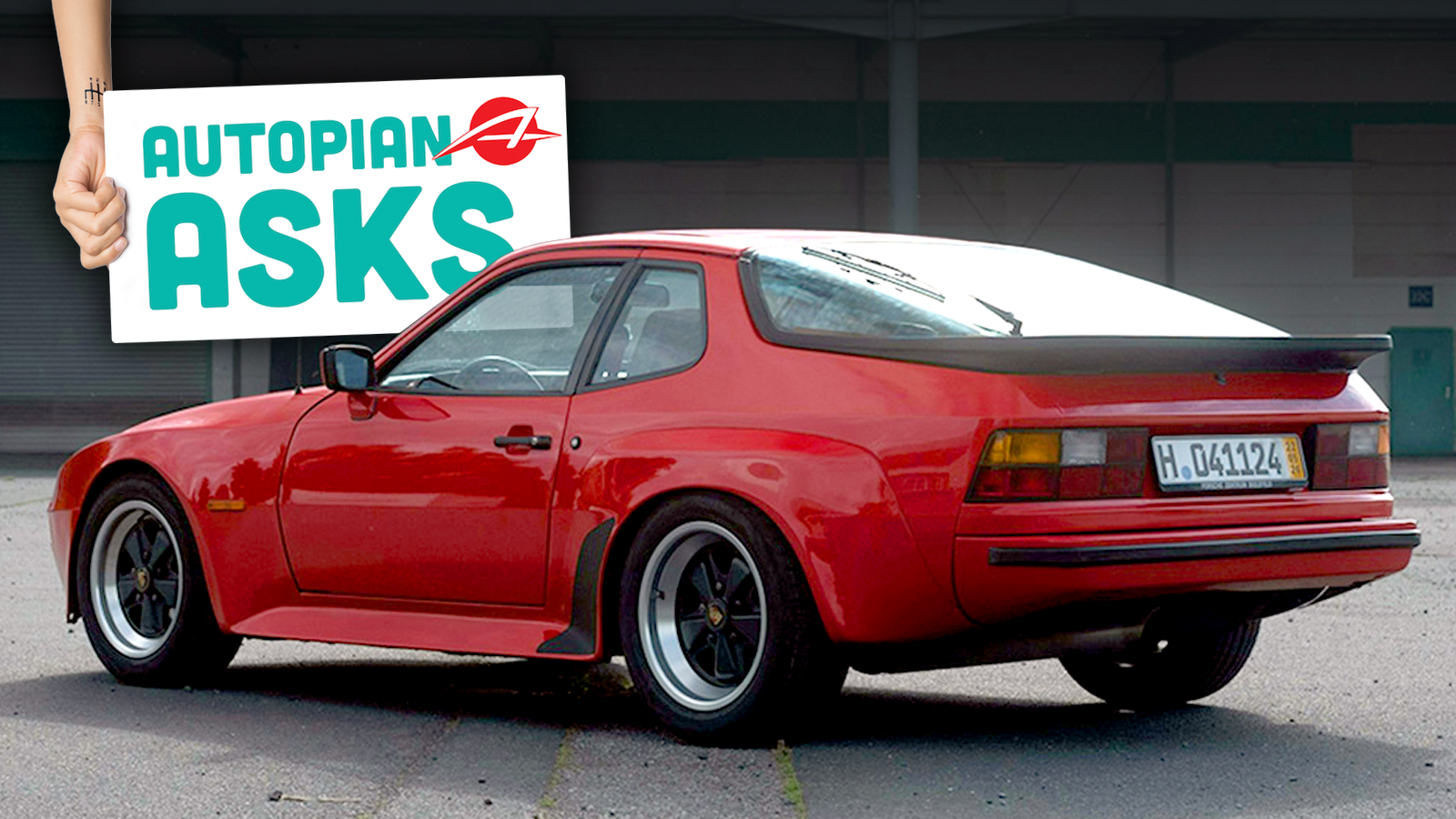
Collecting Cars is auctioning a Porsche 924 Carrera GT that has been in the same family since new, and it’s estimated to have done 530,000 km, or 330,000 miles. Estimated, because the speedometer (along with the odometer) was changed at one point, and it’s a five-digit odo anyway. The original gauge cluster follows with the car.
The full mileage has been calculated according to service records, which have been retained: they run from December 1980 to October 2025, and by October 2015 the car had done half a million kilometers or 310,000 miles.
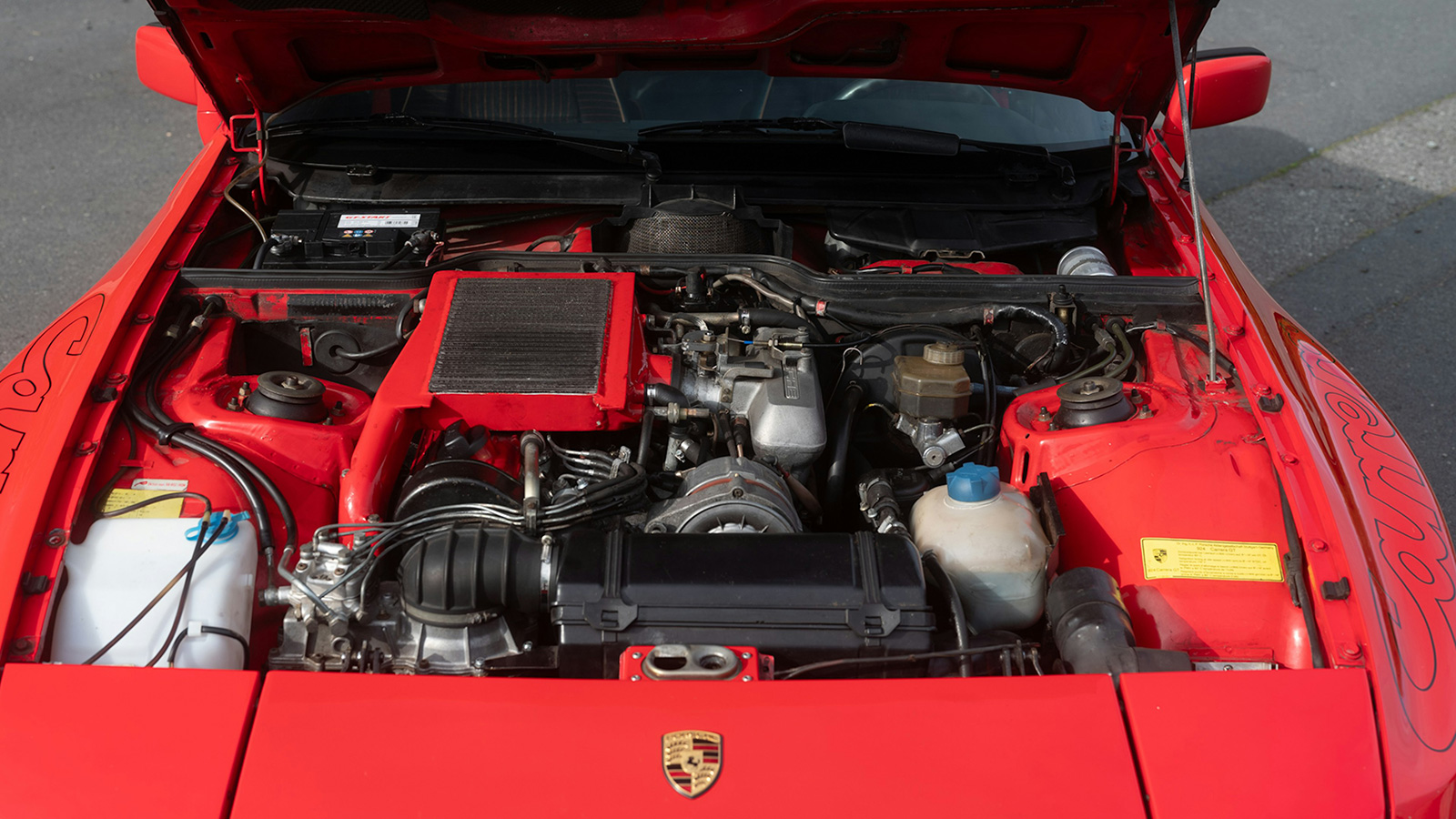
The turbocharged, 210-horsepower 924 Carrera GT is a rare homologation special, one of 406 cars built, and while it’s not matching numbers – the engine was replaced after the timing belt let go – it takes huge dedication to keep a rare sports car in the same family for over 45 years and keep it accumulating miles like a family wagon would.
The Guards Red Porsche hasn’t been a trailer queen, which also shows, as some crash damage was repaired in 1999, at which point it had already been repainted once due to a carwash mishap. It also benefits from an older Strosek bodykit install and an earlier interior retrim. Currently, the auction is at 25,000 Euros, or $28,5k, with a day to go.

Another example is nearing the half a million kilometer mark: it’s a grey 1991 Lotus Elan currently for sale on the British AutoTrader.
The Lotus has some clearcoat damage, the Renault taillights look like they could use refurbishing, the left rear corner has been badly repainted, but that’s all fair – one look at the odometer reveals the car has 302,000 miles on it.

I’m sure there are plenty of Isuzu engines in the world with 300,000 miles or more on them, but there can’t be that many of those in Lotuses/Loti. And it’s even the turbocharged version! It’s being advertised at £4,995, or $6,600.
If you buy a car with big miles, there’s some sort of implied idea that you’re gonna be fine driving the hell out of it, as it’s likely to have seen worse, and the miles on it mean it will have been cheap. But with this sort of Kilometerkönig miles, the prospect changes. You have to keep it up! With, say, half a million miles just out of reach, you can’t just let it die for any reason. It has to pass the milestone, even if you haven’t been the one accumulating most of the miles. Push it to the limit, if you have to.
Images: Collecting Cars; AutoTrader


Maserati BiTurbo
A car where 30,000 miles is considered impressively high mileage.
I remember the turbos blowing at exactly 30,000 miles like clockwork on those things.
Some good answers about collector cars, but I’m thinking about cars that are daily driven. Just because a Corvette (or whatever) isn’t driven enough to hit 300K miles doesn’t mean it’s not capable of it. I’d argue a Vette could easily hit 300K.
At this point my vote goes to any recent vehicle equipped with the Toyota 3.4TT V6 or the GM 6.2L V8.
Any limited-edition Ferrari. They only ever get bought as “investments”. Most don’t even see 300 miles, let along 300,000.
Any P2 Volvo will either go one of two ways. If it’s properly babied like it should be, it’ll last forever. But if it’s owned by someone who just expects a car to work, it’ll be dead by 100k miles.
Source: My 200k mile, fifth-owner XC70 which is actively trying to crawl into its own grave.
I drove an XC70 D5 for two years and 50,000 km without major problems, except that the AWD left the chat even before I got the car. I just ignored it and FWD’d everywhere.
Yeah, that happens. Mine is still AWD, but I had to rebuild basically the entire front suspension… and I’m glad neither of us had the dreaded water pump failure. Knocking wood.
Jeep Wranglers for sure.
Kent McCord was just on Jay Leno’s Garage with his 924 and while it has reached 124,000 miles due to his diligence in servicing it when Leno asked the right question, “How many turbo’s have you been through?” Kent responds with “Around 10.” Which I think is about one every 16,000 miles or so.
Thanks for the recommendation, it’s a great clip! https://www.youtube.com/watch?v=ALxuJ1nOya8
A 2000 Rolls Royce Corniche V or Bentley Azure
There’s no world where you convince me one of those could last to 300k without effectively becoming a cabrio of Theseus
Please explain the reference?
Ship of Theseus is an ancient ship that was rebuilt so many times that effectively none of the original ship remained. So it’s a metaphor to at some point the car is basically a different car underneath.
Thanks
I’ve seen many cars like that.
Theseus from Shakespeare or elsewhere?
I’m on my second frame here!
Any Alfa Romeo
I have some news for you,
Corvettes and any other supercars.
A Corvette wouldn’t have any problem making it well past 300k miles. It’s basically a Chevy truck engine wrapped in a chassis that Autozone sells parts for. I’ve had a C4 with 250k miles and a C5 that went from 60k to 150k miles with zero problems.
I agree with you. Corvettes with real miles on them are the perfect 2nd car-you can drive them every day if you want and other than tires, are pretty cheap to run. Funny enough, I am looking at a C5 convertible with over 105k miles this weekend.
Yeah, there are so many low mileage Corvettes for sale that were owned by old guys and rarely driven that the high mileage ones are super cheap. Other than ~200k life span of a 4L60E, there are no components that won’t last forever if it was taken care of. And by take care of, basically change the oil and don’t crash it.
Was thinking the same thing. I would think a Corvette is extremely likely to be able to hit 300K with just general maintenance.
I have no doubt Vettes can reach 300k, but none do because they are mostly shrink-wrapped in a garage by their New Balance jorts wearing older owners who try to sell a mundane spec as a 1:1 because it has a luggage rack paired rubber floor mats
The new Ferrari Luce. Not necessarily because it will be unreliable or anything (even though it probably will), but because of the target buyer. Ferrari owners in general are known for just hoarding cars in collections and never getting out to drive. Also, electric vehicle technology is moving so rapidly, this car will be obsolete within a year, and will end up at the back of the garage and forgotten about before any of them hit 3,000 miles.
Exactly. And also every other Ferrari. No ones going to want to deal with the maintenance costs. I remember reading a story years ago about a guy that bought a new Lamborghini after going through a divorce and selling everything, and drove it on a road trip until the motor blew at 70K miles. Now it’s on display. Not worth fixing it.
At what point does a major repairs disqualify a vehicle’s mileage longevity? Replacement of engine or transmission / trans-axle ? Do we still use the term trans-axle? Does it now mean transitioning from front drive to rear drive? All wheel drive?
A ship of Theseus situation. When is it no longer the original car?
Never. Cars die because of crashes, rust, or the owner is no longer willing to spend the money to fix it. If the owner is willing to put the money into the car, then it’s still the same car.
Is it still registered as the original car? If so, then yes, it’s the same car.
Not the most emotionally satisfying answer, but probably the one that will have the most practical impact.
I think my first Scion xB (2006) might be there, if it’s still on the road. It was at 147k when I sold it in 2014 to move to something sportier. Kinda wish I could have kept it for utility purposes, but at the time I couldn’t afford not to have that down payment cash.
That thing never needed any repairs, fluids and brake pads only. I did replace the alternator at the very end and even then it warned me for multiple days like “hey you should do this before I completely let go”.
Least likely? I see a lot of RX-8s rolling coal.
I had a second gen xB (manual) for a little while and my parents got one they kept for a while, maybe 4-5 years. Every once in a while one pops up on Marketplace for cheap – 120k miles? Barely broken in!
But alas, here in NY rust has taken over many of the cheaper examples. Which is a shame, because they are otherwise bulletproof little Corolla toasters/cubes.
I did buy a second one, a 2004, mostly because it was $2k at a fly-by-night dealer, manual, and I needed that utility now. Too bad it was in much worse shape than my first, I had to go with something better with a looming 5hr trip to Chicago.
My first thought was the Toyota Mirai because it’s so inconvenient to fuel, but I actually think that of all the people who might keep a car for 300k miles and tough it out, the inspired eccentrics that live near hydrogen sources and chose the Mirai are the ones to bet on.
I don’t think an NSU Ro80 will ever make it to that mileage, if Mazda housings are already getting hard to come by with their far superior coating, I can’t imagine how hard it would be to source the parts to rebuild an NSU Wankel.
Very few hypercars will ever reach that mileage. Not because they would completely break, but because they seldom will be driven.
That was my first thought too! Any car in the 7 figure range is now too valuable and will never be driven that much
{ side-eyes the lead image in “it’s the maintenance, dummies” }
My 944’s been pretty reliable as long as I’ve had it, all things considered. One running on the same belts from 1989 and the hopes, dreams, and methamphetamines of a sketchy fifth owner clearly won’t be.
To me, reliable isn’t having to take it in for maintenance every 5000 miles (except for oil changes).
I will add my own car: The 2021-24 Mini Cooper SE.
Or any other EV with a small battery capacity. Not on the original battery.
They claim the battery is good for about 2000 charges. I have doubts it will reach that, since this would also take me about 20 years. And batteries degrade with age aswell.
But 2000 charges for about 100 miles range. Well, I am not calculating that today…
Now an EV with a realistic 300 miles range, that’s a different story…
I DD a 2016 Fiat 500e with 56,000 miles on it. At this rate it will take about 44 years to get to 300k. And about 3,500 more charging cycles.
If it does make it, it will probably still be on its first set of brake pads and rotors though.
The first gen 500e is rated for 4000 full charging cycles before it (is estimated) to drop below 70% in capacity. That’s a long frakken time and distance it will cover. My first one, prior to the accident was already almost half way to 300k. Only showing a few percent of battery degradation.
My mother in law just sold her Landrover Freelander II at just under 500.000 km.
At the end, the thing looked and smelled horrible. Landrovers are never the most comfy or dynamic vehicles, but this thing drove BAD.
In the, almost 15 years of knowing her, and her car, it never went more than 6 (six!) months between major breakdown and expensive repairs.
You would have to have an exceptionally creative mind to come up with all the failure modes this thing went through. Most would be impossible on any normal car.
But for some reason or another, she loved it and kept shoveling money to the specialist repair shop.
I would imagine it would have been cheaper to have a personal driver in a Lexus for the same distance covered.
A non exhaustive list of things that bricked the car, needing an expensive tow and repair:
You have brought up a very good point, For my family fleet it is almost never the engine that kills our cars it is something else or many smaller somethings that are no longer worth it.
Ah yes, Land Rover ownership.
It’s not easy, or for the weak of cheque-book, but there’s plenty of 500k+ mile Land Rovers out there.
Hmm, maybe it was the angle gear that went?
Mazda5. It was an excellent car while it lasted, outstanding value for money, hardly any defects. But at about 170k miles it offered full surround sound, with different worrying noises from every corner, and it felt ready to fall apart. Sold it for 800 to be shipped off to North Africa.
Jason’s Changli
nonsense. As long as they still make chainsaws, that thing could last forever
They probably make chainsaws more powerful than the Changli so if there’s a will there’s a way I guess.
There is a German Dude, who just finished 1000000km on his 2015 (?) Mini. He has a statistic on costs and repairs. The car did it quite well.
Next goal for him is the 1 million miles.
Check it out, it’s quite impressive.
Every rental car I have ever driven.
Whatever it is it’s Italian.
I have a countering data point for you,
M’kay…..
Tesla Roadster. All of them put together. Didn’t do the math.
There’s a statistical chance that all Tesla Roadsters ever built will surpass 300,000 miles, as a fleet, because one Tesla Roadster has reached 1.66 Astronomical Units from Fremont, California.
But then you’d have to say that statistically the Million Mile Volvo never went 1,000,000 miles.
No Tesla Roadster will ever go over 300,000 miles, and excluding the Martian I’d be surprised if the entire fleet went over 100,000 miles average.
1st gen Nissan Leaf
Any Ferrari or Lamborghini. Any Harley-Davidson.