

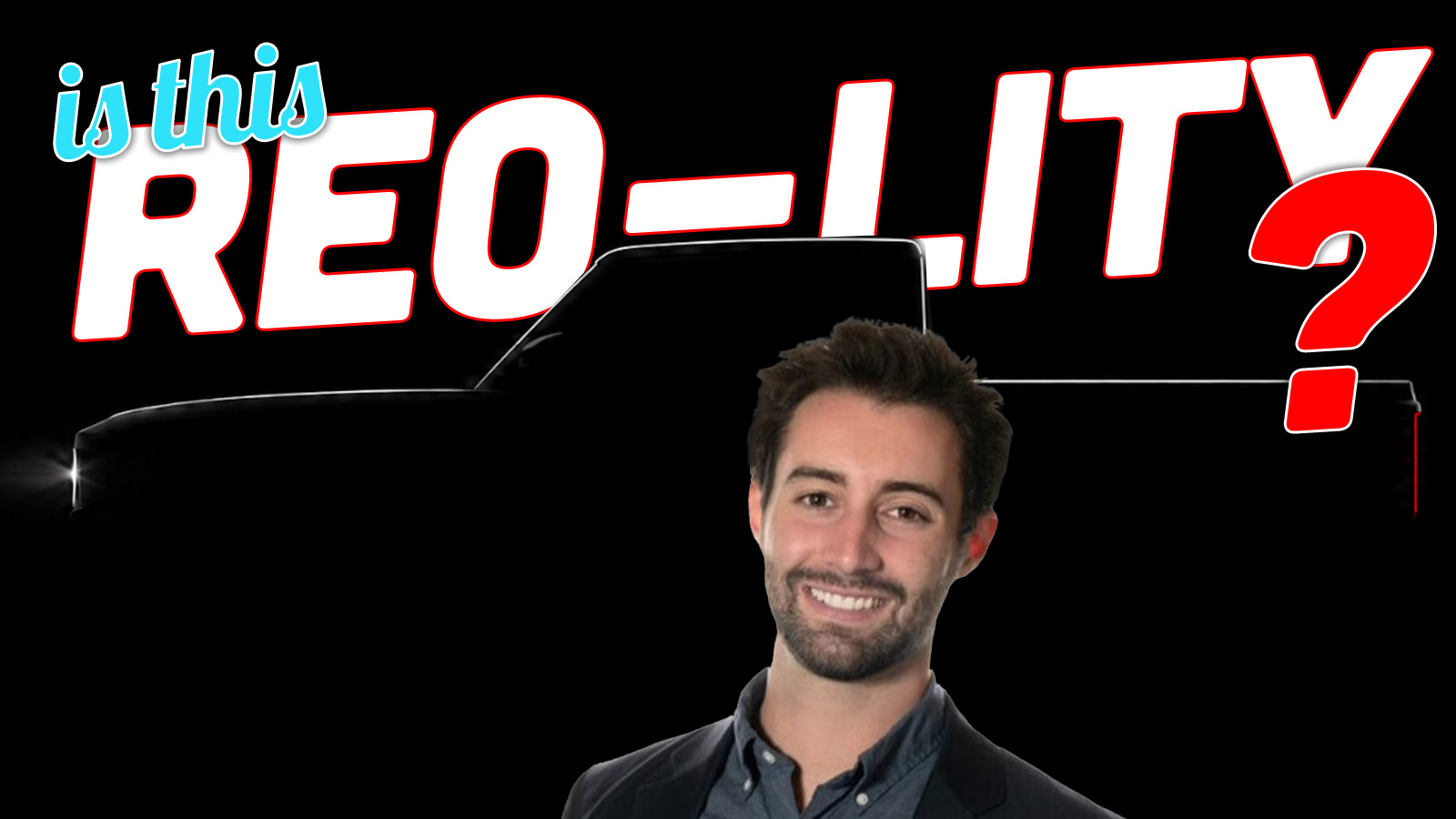
There’s been a lot of talk lately about upcoming new cheap pickup trucks, and if that’s somehow a bad thing, that’s news to me. The recent craze likely started with Ford’s Maverick, which, as you may recall, hit the market a few years back with a starting price – for the base hybrid model – of under $20,000. It now starts at over $26,000, but realistically is likely about $30,000. That’s also the target price of Ford’s upcoming new small electric truck, and we now believe that the Slate electric single-cab pickup is going to start at just under $25,000. There’s clearly a movement of sorts happening at the bottom end of the market, and a recent addition to this movement has been a mysterious new player, REO.
REO popped onto the scene out of seemingly nowhere, and has been the subject of all sorts of speculation. The fundamental concept of REO seems to be much the same thought process that many of us had when learning about the Slate EV truck for the first time; specifically, the thought that this would be fantastic if there was a cheap gasoline version as well. That seems to be what REO is offering: a simple and straightforward single-cab four-cylinder pickup truck with a manual transmission that they believe will sell for a very appealing $21,500.


The name of this still-hypothetical truck, the REO Runabout, may sound familiar to all of you automotive history geeks, because it’s a name with some real history. REO stands for Ransom Eli Olds, the man who earlier gave his name to Oldsmobile, founded in 1897 and famous for their Curved Dash Olds, what was really the first mass-produced car, even before the legendary Model T.
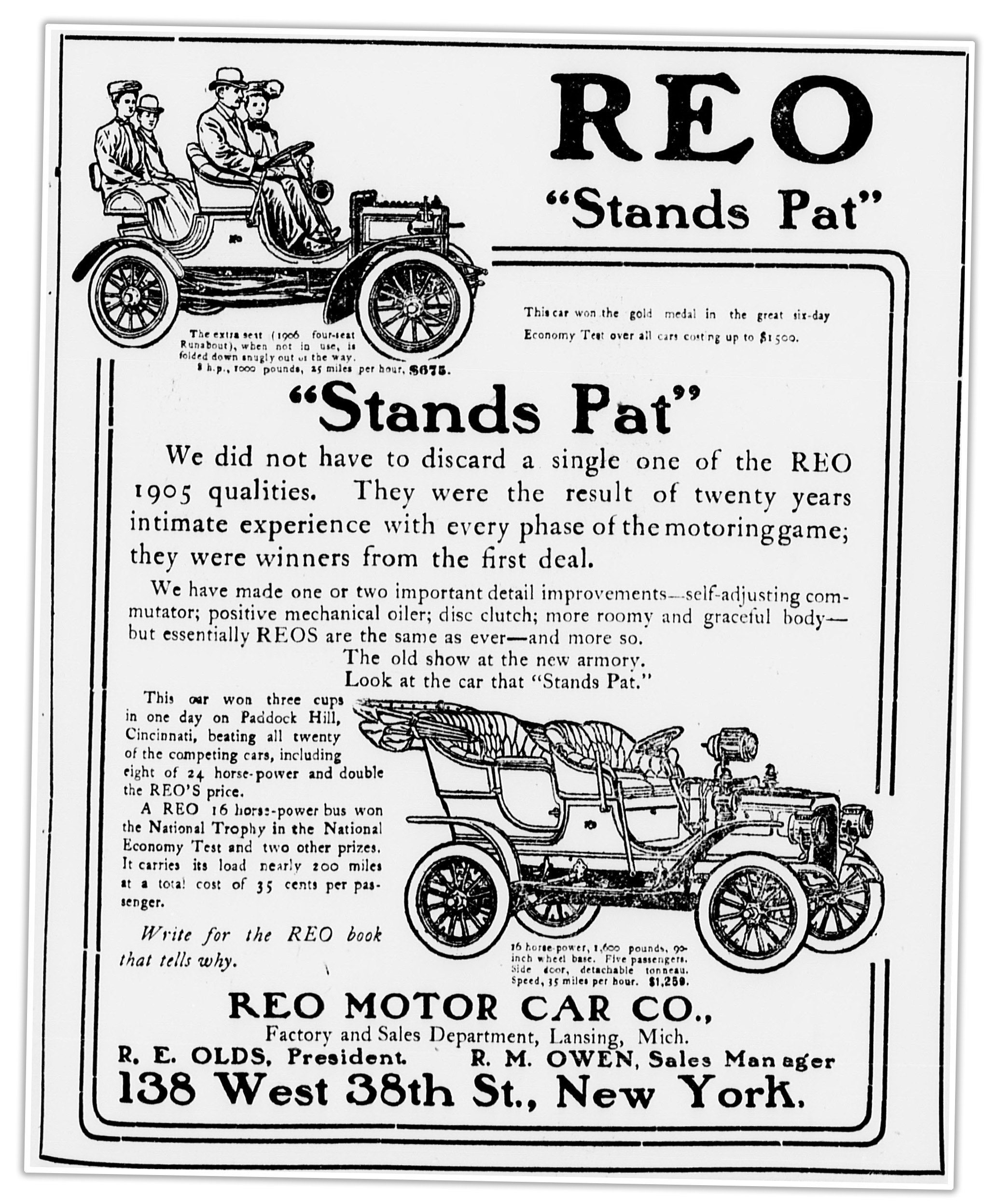
Olds left Oldsmobile in 1905 to found REO, which is where the Runabout was born. The name of this new company is indeed taken from this long-defunct marque. How, though? And why? And who?
Understandably, there’s been a lot of questions and skepticism around this upstart hopeful carmaker, and many people, having been burned many times before by attempted startup car companies that promised cheap cars like Elio that came to nothing (or lost people money), or companies with daring goals like Local Motors, which also ended poorly. So why should anyone get their hopes up? And who is behind all this, anyway?
As you’d expect, people did some digging online and found who was behind REO: a real estate broker named Zach De Bernardi. For many, this was not encouraging news:
This looks very suspicious though. From what I can research, the REO brand name is owned by @VolvoTrucks of Sweden. The website (https://t.co/8UzxAtSAeT) cites Zach De Bernardi as founder & CEO. LinkedIn says he is founder/CEO/broker of Standard Real Estate in Dallas, TX.
— Dave (@DE_Gifford) June 19, 2026
Now, it’s one thing to just say something “looks suspicious” and a very different thing to, you know, actually try to find out. So that’s what I did. I reached out to Zach De Bernardi by phone, and was happy to find that not only did he take my call, he spoke quite enthusiastically to me for about 45 minutes.
I’m going to give you the most interesting parts of our discussion here, and I just flat-out asked him how real all of this actually is. I’d encourage you to read the whole interview, but if you want a bit of a synopsis, I found De Bernardi to be a genuine gearhead who seems to be doing this not as some sort of scam, but because I get the sense he really wants to start a new company to make cheap, internal combustion pickup trucks.
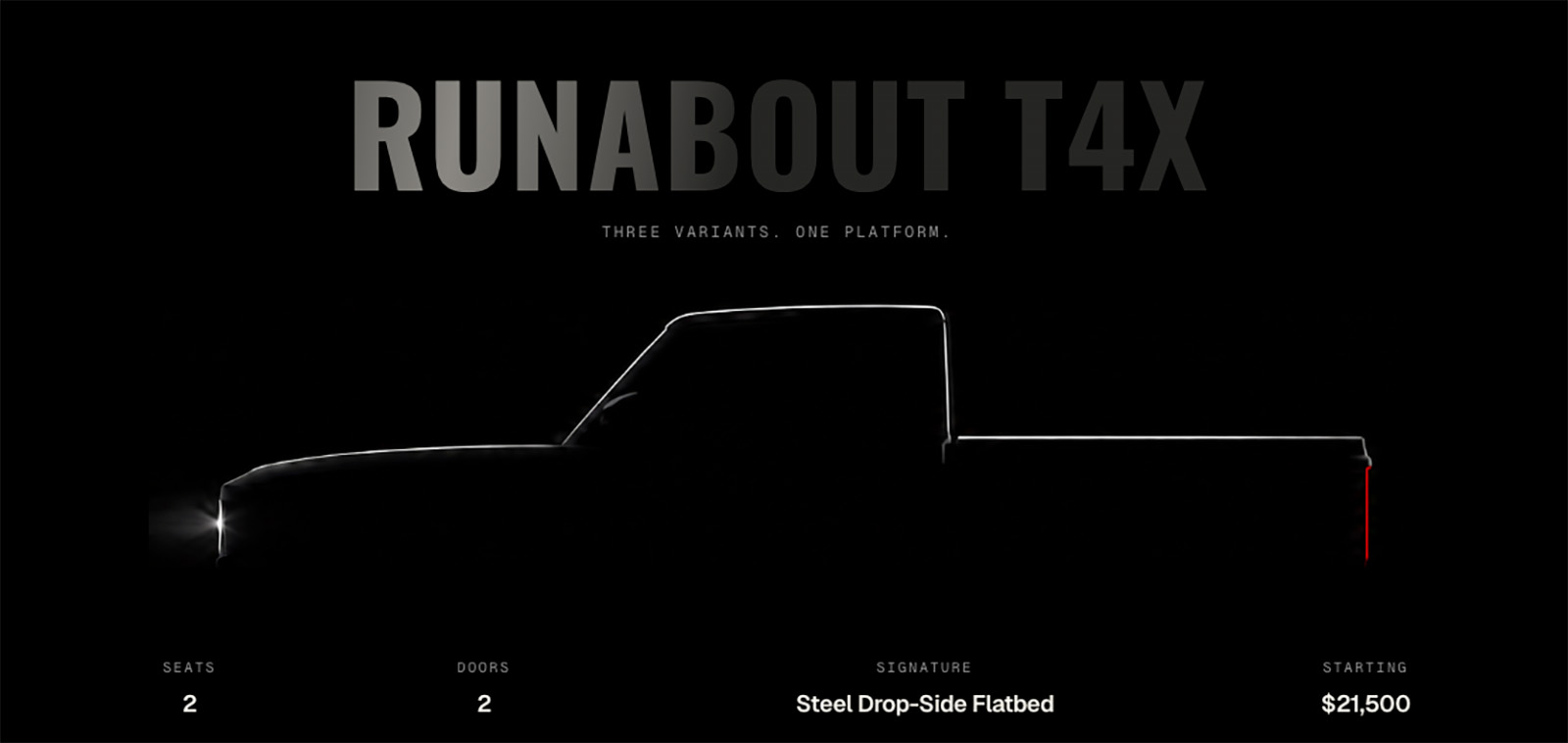
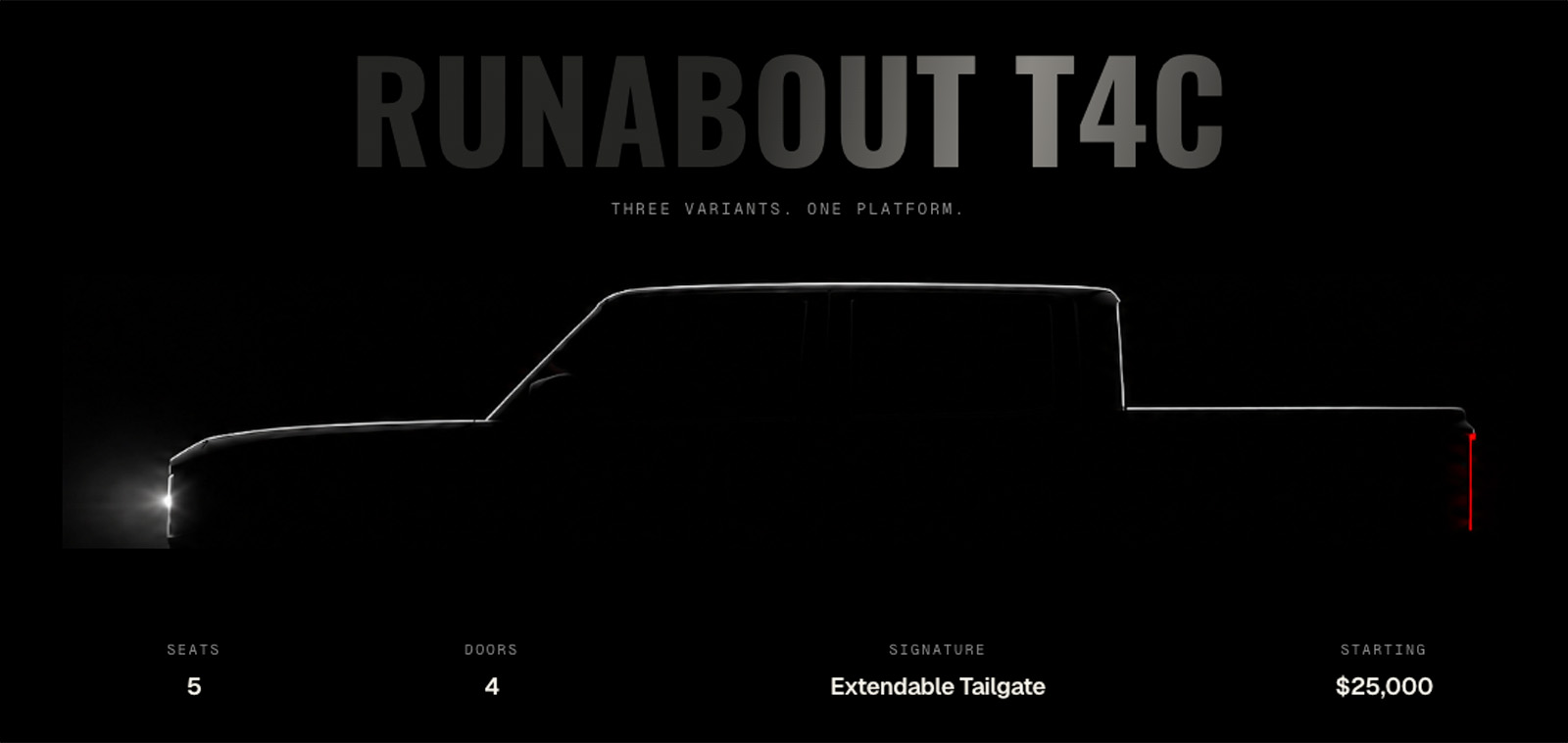
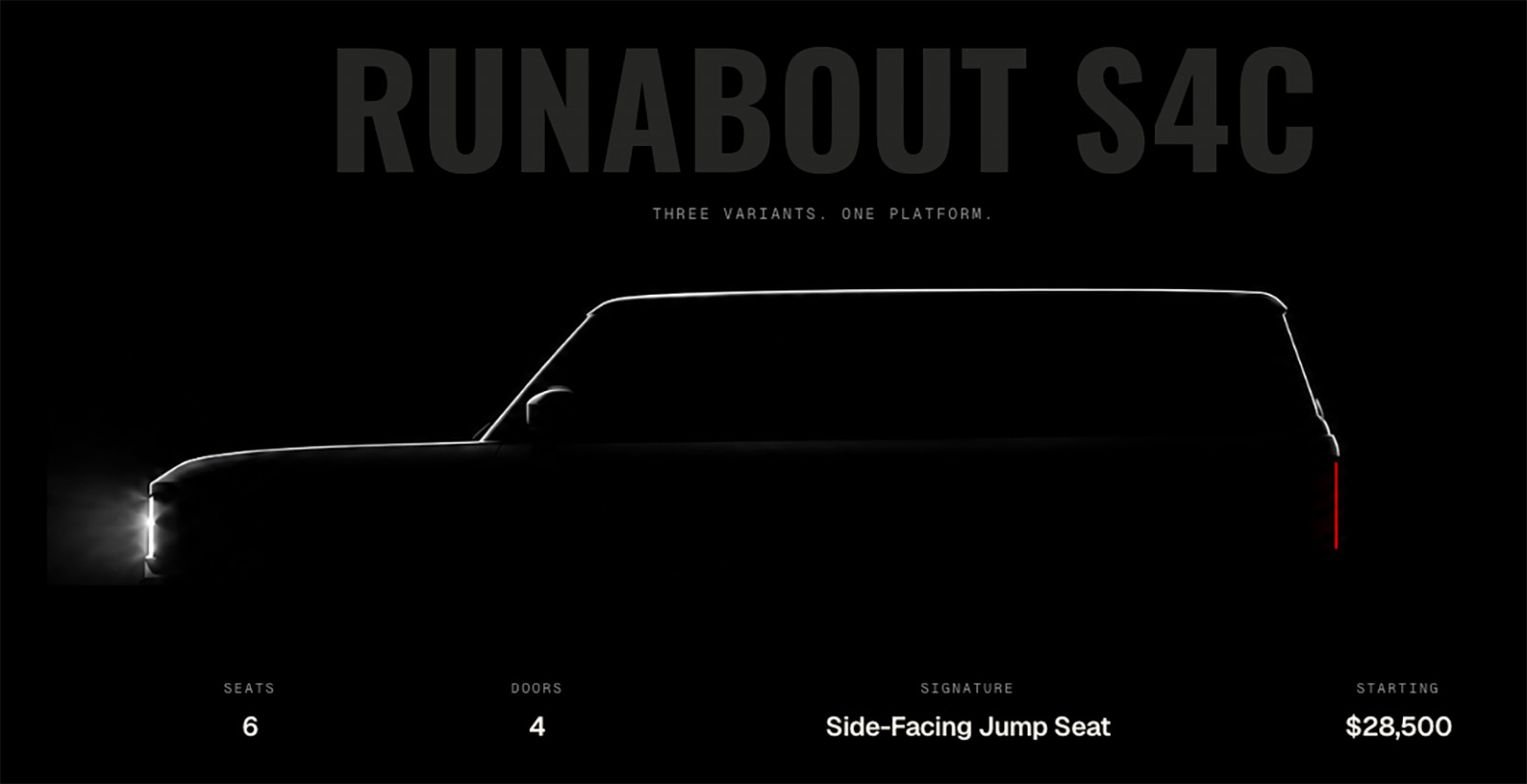
Well, not just pickup trucks; the basic platform they’re developing will become a single-cab pickup (the T4X/Runabout), a double-cab pickup, and an SUV. And since I know you’re all wondering, yes, they say they do have rights to the Speedwagon name, though it’s not yet decided what that will be used for. Perhaps an F-150-scale truck, I was told?
Anyway, I think this guy is for real. That doesn’t mean this will all work, of course. Starting a carmaker is incredibly difficult, and nothing is certain. But I got the feeling the intent is genuine here, and I liked a lot of what I was told. So let’s let De Bernardi tell you about REO himself.
This Is Happening Because The Removal Of Corporate Average Fuel Economy ‘Makes It Possible’
JASON TORCHINSKY: I’m just going to get right into it, Zach. How did all this start?
ZACH De BERNARDI: So, I got to thinking that [the elimination of penalties for violating CAFE standards for cars and trucks] opens up the ability for a Slate analog truck, right? And I say analog means like a comparative, but it also happens to be analog.
JT: Yeah, that makes sense. Both kinds of “analog.”
ZdB: You know, because when you look at that community response to Slate, which is the most direct comparative, the answer is this would be awesome if it just had a four-cylinder engine, right?
JT: Yeah, I had multiple discussions with my co-founder David about just that.
ZdB: So that was really the origin for it, and the CAFE [change] makes it possible, so like that’s why we’re here. And back to the Tesla comparative, you know, I’m not doing this to fail, right? I’m doing this to be profitable, and I’m doing it for Americans, like I truly believe that they need this option.
JT: What about the REO name? Ransom Eli Olds. How did you manage to get the rights to that old marque?
ZdB: So, as far as brand was concerned, when I, when I was doing, and now we’re doing small team right now, our branding exercise is what does that look like in English? What could we name this thing? And, like, you go, like, we looked at the name Bison, right? Well, that’s taken, you know. American Expeditionary Vehicles uses that. I think GM uses that. So every word in the English language is trademarked, because that was our first lever. Like, this has to pass the trademark, right? So we, you know, we looked at acronyms, etc., and we really didn’t look at heritage because our assumption was there’s no way that heritage is even going to be on the table because it’s going to be used, but as we got deeper into the process, you know, that’s just not legally how trademarks work. You have to use them in commerce, right? Otherwise, you abandon your claim.
Okay, so Tesla had heritage when they built their brand, and they’re profitable, and so that’s what we were pursuing. How can we tell a story and bring something back, because it’s going to resonate way more than a car company with a made-up word, you know.
JT: Yeah, I see what you mean.
ZdB: And so we just started becoming students of car history more, and REO just jumped out immediately. Like the intangibles are, you know, Ransom Eli Olds invented the automotive assembly line.
JT: Of course, with the Curved Dash Olds around 1901.
ZdB: And he, you know, Ford perfected it, but Olds did it first. And the Runabout was 650 bucks. They sold it at the Waldorf Astoria, and in today’s dollars, $23-25,000 right? So that fits the narrative, and the runabout is a cool name for a tiny little car, tiny little truck. Because that’s historically what they were, something that you could run about in, and that was a common name.
So we looked, and it was, it was available. Every other company that had used it had abandoned their claims, and we snapped it up. We snapped up REO in class 12 for vehicles, and every other applicable class that’s required in order to run a direct-to-consumer automotive business. That’s why we chose that. And then I will say we have the endorsement of the R E Olds Transportation Museum. We’ve been in close contact with them, and it’s a goal of mine to continue to maintain Ransom’s heritage. I’m not interested in doing something that spurns his name. I think everything that we’re trying to do right now represents what he was trying to do.
JT: Are you going to include any little deep cuts, like actually have a curved dashboard inside the car, or anything like that?
ZdB: We want to play into heritage as much as possible, so everything like that is currently on the table that gets into the design. Do you want me to go into that, or would you rather just ask questions first?
JT: No, if you want to talk to me about design, I’d love to hear it. Please tell me.
‘It’s Not Just Joe Schmo Working On It, It’s Not AI Doing It’
ZdB: So it also is in tandem with the decision of what we did to soft launch with teasers with silhouettes. Because that’s not normal. Everything that we do is going to probably be not normal, because the car industry has just been incumbent Like an entrenched for so long, and we have the opportunity to do things differently, namely like we’re bringing a gas truck back as a startup. Yeah, like, who? Why?
JT: Yeah, startup gas company is not the thing right now. So, yeah, absolutely.
ZdB: But everyone else is wrong, and here’s why: Simple fact is 90% of new car buyers are on gas, so from a business decision, why not? It is literally the largest buyer pool. When you’re talking about the design, so we made the decision to release it like that, because no car company has ever actively designed their car at the same time that they were getting customer feedback, so that’s why our inbox is open, and X has been a great community for it so far, but you know, we’ve got hundreds of emails flooding in about the features that people want, and we actively welcome that conversation, because we’re actively designing the car right now.
And the design is being done by some fantastic pedigree. I can’t tell you who or where, but I’m on a plane to Europe tomorrow. If that gives you any idea, it’s not just Joe Schmo working on it, it’s not AI doing it, it’s not just some graphic designer that we hired. If you saw any marketplace post for that on like Behance or Art Station, that was kind of early stuff, just to kind of help us get some ideation going. But the real designers of these vehicles are household names.
JT: Interesting, that’s very interesting. Now, I noticed on the single-cab truck, it looked like you said you’re gonna have all three sides of the bed fold down, like an old Type 2 VW pickup or something.
ZdB: Steel drop side, and there’s a reason for that, because the T4x is designed such – T for truck, 4 for four wheel drive, and X for bare bones. It’s designed to be bare bones on purpose, because the primary use case for the truck is as a fleet vehicle, and I can get into other reasons why it makes sense for individuals. But when you have, so it’s a flatbed, it doesn’t have any real arch intrusions in the bed. So, what does that allow you to do? It allows you to be modular. So an enterprise company, but let’s.. I don’t know, let’s say –
JT: U-Haul?
ZdB: Let me avoid the direct comparisons, but anyone can buy it, and they can put whatever they want on it, I guess. So, yeah, you can build a food truck on it, you know? You can put a gas tank on it, you can put a water tank on it. It’s that’s why we did that. And it’s also a really common architecture internationally.
JT: Oh, absolutely. Most of the world loves flatbed dropside trucks.
ZdB: If you look at that, and the steel, the steel dropsides are just great. So, you know, we anticipate individuals to be able to build overland rigs on it, and there will be entire companies, hopefully, that start up. It’s like, just build the overland camper shell, you know, like we saw that Tacoma had that, like, four years ago, people like this is so sick. Anybody that’s handy can just do it, you know. So that’s why that one is positioned that way. And we’re looking at the pricing of that. Our decision is, like, is this necessary for the truck? If not, we’re gonna scrap it until we get to our delivered price, and then we’ll start adding features back in.
JT: Because that price will not change? That’s your goal to hit?
$21,500 For The Manual, $23,000 For The Automatic
ZdB: I can’t lock into that. My job is to do the best that we can. To hold true to that, and the $21,500, that’s for the manual. Okay, the automatic is going to be $23,000.
JT: Have you picked suppliers already for your engine and transmissions and all that stuff? Like, do you know whose engine is going in there?
ZdB: Not yet, and the reason is it’s very complicated to work around because it depends on the architecture of the engine and if it’s going to accept a transfer case, because we’re going to have a manual transfer case. And we want to prioritize port injection over direct injection due to the longevity. I’m not necessarily too concerned with gas mileage. It’s going to be pretty good. It’s a four-cylinder.
And look at what’s happening with GM with their direct injection, right? You know, you buy a mid 2000s Volkswagen product or a BMW, and you gotta replace the injectors or redo the seals, right? That’s not happening with us if we can avoid it. So we don’t have anything right now.
JT: Yeah.
ZdB: But those conversations are being worked on, it is very early. I want to be very transparent with you and with everybody. It’s early. This takes time, but we’re doing it because we believe that Americans want it.
JT: Gotcha. But it’s most likely somewhere around two liters, I would imagine? A two-liter inline four, and you want it naturally aspirated too, right?
ZdB: 2.0 to 2.7 naturally aspirated is definitely an option, because it’s going to lead to reliability, but we’re not ruling out turbos, okay? Because another thing that we are really passionate about is this is a car company for car people. So we’re looking to have unlocked ECUs.
JT: That’s great.
ZdB: And if we ship an engine with a turbo, it’s already known about the manifold locations, and everything like that, and even the simplicity of bolting a bigger one on there, for a guy who wants to do that and potentially void their warranty, they can go do it.
You know, and it really helps market the truck if we can get it into the hands of drifters or drag guys or whatever, Baja. If we can have it fit the classic Japanese gentlemen’s agreement style. Hey, everyone knows that you can put some power into this thing. We’re going to try and do that.
JT: That’s great.
ZdB: No promises, but we’re going to try.
Could You Trust ‘A Legacy Automotive Executive To Ship Something Like This To Market?’
JT: Yeah, that’s exciting. Okay, so I know the biggest question is – I think our readership certainly is down with the concept–everybody wants this kind of thing, you know, analog controls, like that’s not the problem. The problem is they’ve been stung before. Why should they get their hopes up? I think that’s what they want to know. You’re a real estate developer; you don’t exactly have a background in this, like, why? Why can I tell my readers, in good faith, “everybody get excited?” Why should they believe this is something that will actually happen in a few years?
ZdB: I would ask your readers if they could trust a legacy automotive executive to ship something like this to market.
JT: Yeah, I don’t think they think that’ll necessarily happen, either.
ZdB: That’s why they can get excited, because I’m just like them. I’ve had over 30 cars in my life, and I’m 35 years old. I’ve done well in real estate. The company is funded to where it needs to be right now, so like none of those things are a concern, but I am just like your readers, and I want to build the car that they want, so that’s what we’re asking, and America needs it, that’s what we’re asking for, for them to trust us as we go, and support and support us, right? So, and what I’ve done, you know, in real estate is I’m proud of it, you know. I sold my company, which allowed me to do what I’m doing now, you know. I’ve been working on this for almost a year, you know, and ideation, so this is like my next big project, because I got burned out on real estate. I had 50 people working for me, and we sold almost $2 billion in volume, and it just wasn’t for me anymore, you know? So, why can they trust me? Is because I’m, I’m a car guy, just like them.
That’s my simple answer.
JT: Okay, I mean, there are far worse answers than that. That’s not bad at all. If I may, and like, I’m not gonna sugarcoat anything, you know what I mean? That’s just the way that it is. I mean, this is a hard business you’re getting into. It’s, you know, all of this is non-trivial, so I think everybody’s just wary.
ZdB: Oh, look, of course, like being realistic, like I want to acknowledge, like, and I had this conversation with the REO Transportation Museum Director Chris, like this is Everest, right? Like, starting a car company is like climbing Everest, and it’s not easy. I’m not doing this to fail, right.
We’re doing this to try and ship this truck, but somebody has to do it, because the American automotive marketplace needs something like this. Everybody’s just been begging for this for decades, and somebody has to do it.
JT: Gotcha. Okay. And if I may ask, a little bit about funding. Is this self-funded by you? Do you have investors? Are there any notable investors that you would want to disclose, anything like that?
ZdB: The SEC 506 B is very defensive, and I don’t want to make any statements about money right now, because I don’t want to look like I’m soliciting money, because we’re not. If that makes sense, but in terms of funding, we are funded for the stage that we’re in currently.
I have my own money in this as well. I can say that.
JT: Okay, and right now you’re just taking it’s just $25 for a reservation, is all that you’re doing for revenue right at the moment from the public?
ZdB: That’s right. Yes.
And all of that sits in its own singular deposit account that’s never touched, and if anyone wants to get a refund, they can just click on an account, they get a magic link, and subject to Stripe processing times, they get that back.
JT: Okay, got it. And this is, this is one platform, right? You’re building one basic chassis. They’re all body-on-frame, is that correct?
ZdB: Yes, sir. And the reason for that is because that’s what a truck is. A truck to me is not unibody, and it’s not a skateboard chassis, so a truck is a body-on-frame vehicle. Okay, so components, drivetrain, suspension, all those components are likely to be shared across the line from the single cab, to the double cab, and SUV. All of it will be shared. We’re targeting a solid rear axle, right now.
JT: Oh, interesting.
ZdB: And an independent front suspension.
JT: Sure, for the majority of people, independent front suspension makes sense.
ZdB: So the IFS independent front suspension will give us the best on-road characteristics, while still preserving the off-road. And especially at high speeds, if people want to juice these things up and jump them off something.
JT: Yeah, I would feel better with an independent front suspension, especially for something that you might use, someone might use as their commuter car every day.
ZdB: I mean, that’s the same architecture, like that the 4runner has, right? Huge Toyota guy, so you’re gonna see a lot of Toyota truck DNA all over this thing.
JT: I don’t think anybody would complain about that, and also, I mean, you know, the independent front/live axle rear is the basis of every muscle car, too. So, if someone wanted to make a custom smaller body, they could probably do that.
ZdB: We have had people email and ask us on social to build it in a way that accepts an LS, and you know what, I’m very, very open to that. So, if someone wants to do that, I think we’re going to look at a way to help them do that.
JT: Right, right. Just personally… Just for fun, what was your first car?
ZdB: My first car was a 1995 Champagne Gold Volvo 960 with a straight five-cylinder.
JT: Oh, the five! Yeah, that’s a good one.
ZdB: I’m pretty sure that was the engine. I was, my head was in the clouds when I was 16, but I beat the heck out of that thing, and I would drift in parking lots or find old abandoned places and drift it with my friend who had a 190e when we just used to have so much fun, but that was my first car.
But so I’ve sold like most of the fun stuff that I have, and I have a 2016 F-150 in white, Lariat long bed with a 5.0, a spacer lift and Raptor wheels and tires that I powder coated chrome … so that’s my daily right now. I also have a 2015 Q7 TDI because I like diesel stuff, and I was going to make that an overlander, but clearly I’m not going to have the time to do any passion projects or anything like that, and my passion project is now this company.
Like, I love talking about it, obviously, but like LC500, RCF, those are some of my favorite engines. I’ve had multiple new Toyota trucks, whether it’s the SUVs or the trucks. I rebuilt an RX-7 13B from the ground up, and only made 1000 bucks on that flip, but had fun while doing it, so I’ve had all sorts of things.
I’m really into every automaker except for Dodge. So, sorry, Stellantis, but you know. I’m a car guy, like this is like my life, you know, and this is my full-time job, right? This is what I’m doing.
It’s The Kei Truck ‘But For The American Market

JT: So, you’re 100% this is, this is all you’re doing. You’re not doing real estate anymore, you’re 100% running REO, and that’s, that’s that.
ZdB: Yeah, I sold my company to my business partner over a year ago.
JT: What about diesel engines?
ZdB: I mean, you know, I love diesel. I can’t make any promises. If we could, if it could make sense, sure. You know, like just being different, perhaps we could, in the future, like once we ship this thing, we could open up some sort of program to garner the interest, and if the interest is there and it supersedes the cost of, you know, the regulations of going through the EPA testing with the engine, so on and so forth. Then perhaps, you know, just the diesel emission stuff is such a pain in the butt with the EGR and the DEF, and just so much. But if we can, I would like to.
You know, and speaking on powertrains, like this is yes, we’re doing gas, and I’m going to try and do gas for as long as possible, but that doesn’t mean we’re not going to do anything else, right?
This could also bring back some American manufacturing, so, but if the administration changes, I would probably bet that more green initiatives would be reinstated, and things like the cafe laws could come, the fees could come back, and that could see us ship a hybrid, you know, so we have to be very flexible on how we do it, you know, but like, if I can meet with them, can we make exemptions for cars that are under a certain size, because if you look at just the amount of fuel that’s spent on the ratio of CAFE and the you like the square footage of the wheelbase and having to ship bigger engines, like doing that actually cost more fuel, even though you’re having like, so like when you have an F-150 like mine, it’s just massive, right, especially with the long bed, you’re getting worse mpg and. You’re actually spending more fuel than if you were to, if CAFE were to allow a small four-cylinder that happened to get 25 to 28 mpg, so you know, if we could push Washington to change the exemption on that, I think that would be good for us, and it would be good for all automakers.
And that’s what I call this truck – we’re calling it like the America segment, the Kei truck but for the American market. We eat more cheeseburgers, so we’re bigger. It’ll be bigger. That’s kind of our thinking on that.
JT: That’s an interesting way to consider this, so like an American Kei kind of concept here, like you want to have a new low end segment that people can buy and use on the roads anywhere and all that?
ZdB: Exactly. And that’s what the T4X is really designed to fill. You know, if we’re able to do this and we get her out and everything goes according to plan, I think it actually would be great to do some kei truck sizing to 130 to 140 inches and double down on the price, because when you’re looking, when you’re looking at inner city trucks, which is where most of these Kei trucks are in Japan.
JT: Interesting. I do love small truck options.
ZdB: So, just like you know, forward thinking – is that possible? Sure. Also, forward thinking is that the Speedwagon is possible.
JT: That’s the REO name everyone is thinking of, of course.
ZdB: Yeah, the Speedwagon, if we’re able to get to, if we’re able to get the Runabout to market the way that we want – or I’ll say when, yeah, absolutely. Speedwagon is what we already have trademarked.
JT: You do? I was going to ask if you had the Speedwagon trademark, and would that be like a, like a faster fun version of the of the Runabout, or a whole other whole other body design?
ZdB: Not certain right now. Okay, we have where I’m thinking personally is used to bring it back as the truck that it was, because it’s really the ancestor to the Ford F-150. You can say that we would love it to be, you know, an F-150 style size truck, because that’s what it was. It was a half-ton.
JT: I’m definitely excited by what you guys are talking about. For servicing and things like that, I have questions. So, I think you’re not going to develop your own engine, I wouldn’t imagine, because I think that would be crazy, and I imagine things like axles, brakes, things like that, these are all coming from suppliers. So, how will things get serviced? I know you wanted to make it as DIY serviceable as possible, which is wonderful, but like for people who maybe don’t have those skills, what would they do? Are there going to be.. you know, I know you don’t.. you’re not gonna have dealerships, are you gonna have arrangements with, you know, like auto parts stores, service chains, what are you thinking?
ZdB: Yeah, auto parts stores are going to be the biggest thing that we’re going to be looking to do there, for sure. Yeah, and you know, like Firestone would be a fantastic option, because, like, they’re everywhere, right?
So that’s what we’re going to look at trying to do, and we might have some mobile service vehicle that we can build on top of the T4Xs. But no promises right now.
JT: Regarding the factory, you’re gonna be building here in America. Where are you thinking about factories, you know, being built? Do you have ideas?
ZdB: Oh, let me answer that in tandem with another question that you asked. You were talking about parts, and like supply. So like, how are we going to ship this car as fast as possible? Sorry, I’ve said ship a lot, but yeah, are we going to deliver this car as fast as possible? Because everything that we were putting on this truck, either has to be from an existing supplier, or we have to make our own tooling, and we have to make it, and tooling investment costs a lot of money and a lot of time, so we’re looking to have it’s going to be majority assemblage in the beginning, and then we’re going to, we’re going to tool the things that we have to tool that we can’t get off the shelf, but in order to make it to market as fast as possible and as reliable as possible, well, we can put it together with existing suppliers that have great reputations, and so assemblage is going to be really important, and with that in mind, that’s going to determine the footprint of the size of the facility that we select, because it tells us how many lanes we need and what tooling that we need within that facility.
JT: Yeah, that makes sense.
ZdB: And we’re looking to do this in [Dallas-Fort Worth] to answer your other question. And it needs to be very close to rail, because we’ve got to get steel.
JT: Honestly, assembling supplier parts seems to make the most sense. I know you remember Elio, remember that company that wanted to make like a little small three wheeler, and then they, they, for some reason, decided to make their own three cylinder engine, even though there were plenty of good ones on the market they could have just bought, and I think that killed them, so I feel like not making that mistake is smart.
ZdB: We’re crazy. We’re starting a car company, but we also do things that make common business sense. That’s why we chose gas. Yeah, that’s why we want to do assemblage. And I know engines, I’m not building one.
JT: Right. How much better a four-cylinder engine are you gonna make?
ZdB: Yes, right? Like, what are we going to do too? If I were to tell you that, like, if I were to tell you that ‘we’re going to make our own engine’ I would make the lede of the article say: this guy has no clue what he’s talking about.
JT: 100%. My bullshit alarm would be going off immediately.
I think conceptually almost any of our readers like what you’re talking about. I think all of these things are hitting a lot of things they want, they just really want it to be real, so is there some final statement you give, something that just helps these people feel like this is something they can willingly put some hope into, because everybody’s been burned a lot with a lot of promises and things that just don’t happen, and this feels like the kind of thing they want to see happen. So, what can you say to them that’s going to give some sort of confidence?
ZdB: I’m not going to have any zingers or fantastic quotes that come to mind right now, but everything that I’ve said thus far is really kind of just proof in the pudding of how we want to make it real, right? Like I’m not setting out to fail, we’re not making decisions in La La Land. We’re not building our own engines, like we talked about. I’m a car guy. We’re doing this because we think America needs it. We’re making rational decisions, even though, again, we’re crazy, and we’re starting a car company. So, in tandem with that, you know, the more support that your leaders and the rest of the American citizens give us, the more, you know, real it becomes, and we can kind of share in that together.
Because that’s really, that’s really the only way that something like this will ever happen.
And that’s like as real as that answer can be, because the Big Three are never going to do this unless they have to do it, because they’re not going to cannibalize their existing sales.

That was a long interview, I know, but I appreciate it if you managed to stick it out. I think getting the full story, right from the source behind REO, is really the only way to evaluate what thoughts you may have about this very new company. I’ll admit, I liked a lot of what I heard, and I do think their motives and goals are great. Does that mean this will actually happen? Historically speaking: Hell no.
Still, I feel like I can say I do not think this is some scam or fraud; I think they have good plans and goals and a good, cheap, flexible and useful truck/SUV on the market is only a good thing. So I’m going to wish REO luck, and will be keeping tabs on their progress from here.
Oh, and if there’s one thing I’ve seen from REO worth getting excited about, it’s this:
It’s back, America.
Real ones know. #reotrucks #reo pic.twitter.com/YVu8bc5j9t
— REO Industries (@reoindustries) June 21, 2026
That sure looks like a crotch-cooler vent to me.
Top photo: REO





I know this is vaporware, but I don’t see why anyone would want to spend money on a cheap truck with higher TCO and reliability downsides that come from ICE. Neither of these seem to be targeting that primary vehicle market either. At least Slate is trying to be fun/customizable on top of cheap.
Who has the funds for a secondary new vehicle in this economy is beyond me as well though.
Come to think of it, REO merged with Diamond T to form Diamond REO, which was subsequently bought by White Trucks, which was bought by Volvo trucks.
So has Volvo licensed the REO brand to this guy ?
Diamond Rio?
Yea right
How does Cafe open the door for this?
They’re planning on building a small truck powered by a 4 cylinder engine. That would have always been fine under cafe.
This guy seems full of shit. I won’t bother following REO’s story. I know it will end shortly after some area pays to build him a factory.
If not full of it, I suspect:
1. He saw only the headlines of CAFE being dropped and ran with it, not knowing that only enforcement is on ice and the rules are still in place.
2. He’s banking on getting units out before Trump leaves office and that such an event is many, many years away if ever.
Not really a great foundation for a company but hey
As for the first point, a small footprint pickup would need to have small compact car economy and that’s a tougher target especially when aerodynamics and whatever truck-specific engineering comes into play.
This sounds great, and would be better than the slate to me, but something about the way this guy talks… I don’t think it’s going to happen. It would be awesome, but this is one of those “too good to be true” things.
He’s a monorail salesman.
This fella actually had a similar idea to me (should i have won the powerball, lol): use the lapse in cafe fines as a doorstop to try to fix the rules. make a simple, no frills vehicle a la 90s/00s plus modern engineering, generate interest through reservations/social media, and when the govt inevitably wags their finger, make a case to change the rules. ask forgiveness not permission. maybe it sounds hopelessly hopeful, but we all need a little hope. say “here is an american designed, american built machine that is affordable and requires a lot less natural resources to manufacture and run than current offerings. why should this be illegal, but a 9000lb hummer ev or a ram trx be legal?”. it also raises the question of some silly ev advantages (i am not an ev hater, they have their use cases and if solid state takes off and nuclear and renewables are used, preference/hobby/commercial will be the “only” reason to use combustible fuel), why should ev’s be gifted the small car market by cafe regulations?why should ev’s be gifted the direct sale model (its to shut out competition i know)?
realistically, this will probably end up vaporware, the cafe fines will probably be back in 1-3 years, but i hope it gets to the point of a working vehicle and bringing this issue to head. we need sensible and stable, not ever increasing and backfiring regulations on emissions for the auto industry.
I’m happy to have him try and I sincerely wish him all the luck in the world. IMO, just almost all damn cars are way too expensive these days, and too complex to economically own and maintain over the long run. So, if he wants to offer something basic at a bearable price ($21,500., a hundred bucks less than Ford’s theoretical base price for the Maverick XL hybrid on intro) that’s FINE WITH ME.
Heck, I’d even consider putting another small deposit down on the off-chance it eventually makes it to market at the advertised capabilities/price, just as I have them down on the Slate and Telo.
Of course, I feel the need to point out that Toyota already makes a truck pretty much like what ZdB describes, and sells it (for a modest profit one assumes) for about $5,000. LESS in the foreign markets where it’s made: the Hilux Champ. It’s just safety and emissions regs that make it unqualified for sale in the U.S. market, since it was never designed/engineered/made to be sold here. If Zach can bring a similar truck to the US market for only $5K more than Toyota sells the Champ for in SE Asia, I’d gladly test drive one, and bring my checkbook with me just in case.
Hey Scott, it’s Zach De Bernardi. Appreciate the kind words sir, and your support! You’re spot on with the Champ and that is a massive inspiration for this product.
Hi Zach. 🙂
Yah, I’ve read/watched a lot of details/reviews about the Champ and am a fan of it despite known shortcomings like interior noise, etc… Of course, the price and simplicity is the big appeal, but of course it’d never sell for that price in the US, even if Toyota brought it here, which they never would (plus, it’d have to be re-engineered for safety and emmissions).
Still, the idea of a simple/fixable/durable vehicle is appealing, at least to car guys if not mainstream buyers. My cars are all old (roughly 20/30/40 years) and except for the youngest (a P2 turbo Volvo) quite easy (and satisfying) to work on, even if just gentle shade-tree stuff.
Not sure about US buyers’ tastes for simple though. Heaps of needless tech and software (both of which get dated fast) and colored LED lighted interior seems to be what people want to spend money on these days.
I guess I’m just old. 😉
PS: please keep us and Autopian updated with your progress. If/when you have any events eventually (even if just showing a prototype) in Southern California, I’d definitely want to attend. Thanks! 🙂
you can’t even get a new corolla for $21.5K anymore. i’ll believe it when i see it.
Yes, skepticism is simple logic at this point. The lack of decent, cheap, new cars here irks the hell out of me daily. I think the Hyundai Venue *might* be among the cheapest now, but not everyone needs a fake mini-SUV (I drove it, it’s fine for what it is, though it’s hardly pretty).
We will be radically reviewing every component on the T4X to determine if it is truly necessary so that we can arrive at the price point.
I like the guy’s passion and drive. I tried to start a car company long ago and just getting funding especially if you don’t have much of a network is very difficult. Maybe this can be like Scout but more grassroots?
As for the 960, it would have had the I6. The I5 would have been in the FWD-based 850. Back when the second digit in Volvo models usually indicated the number of cylinders (like my 760 Turbo Wagon, which had a turbocharged 4-cylinder, though predecessors had an I6).
Thanks for the kind words! You’re so right, I misspoke on the 960. It was a fun car that’s for sure. Sold it in an Exxon parking lot in Asheville, NC for $600 when I was 19!
Cool! I almost bought a 1995 960, but it had so many leaks the shop I took it to for a prepurchase inspection talked me out of it. The seller was surprised that I brought it back with a repaired gas door and a new taillight assembly. It had good power and a lot of upgrades I’d have liked to have had on my 1990 760.
Hey boss, uh, I know I’m unpaid and all, but presumably you gave me this internship because you’re at least marginally interested in polishing some of the grammar on this site (in between my other roles of keeping the Changli’s battery chainsaw charged and changing The Marshal’s fluids). I am sorry if I’m being a nag, but really, overall, I think I’ve been pretty reasonable, and I let plenty of minor things go. What I really can’t stand, though, and what makes you look like a second-rate publication, are COMMA SPLICES IN HEADLINES. I am really losing my mind over this. Please stop doing it. Use a period or a semicolon, please, I am begging you. The Autopian is the best place on the internet and I want the industry, and readers, to take us seriously. Dropping a simple explanation in your Slack so people stop doing this would go a long way. Please edit to:
“REO Says It Will Build A $21,500 Truck For The Masses; I Spoke To The CEO To See If They’re Legit.”
Is that so hard? Please. Please, Jason. Please.
Agree on the no comma. I think the period version is better, though; the semicolon looks odd in a headline to me, while the period is self-assured and means business.
I’d take it!
It all sounds great and I’d love to believe it will happen, but the one thing going through my mind the entire time reading that interview is how he plans on dealing with the enormous task of federalizing and making this vehicle meet the vast quantity of regulations and requirements for a mass produced vehicle being sold here.
CAFE is not the only series of regulations to plan around, and unless his pockets are almost endlessly enormous, I am not sure what his plan is for meeting standards for crash, performance, noise, etc. etc. These are the same issues any (4 wheel) vehicle startup faces, but they seem exponentially harder to deal with while targeting such an aggressive price point.
I almost wonder if he’d be better off going the “Factory Five” component car route at first, as opposed to a full-on mass-produced car. Perhaps he can offload sourcing major components like the drivetrain to the end user, and avoid a good number of regulatory requirements, and if he can come in at an aggressive enough price, there just might be a business case there.
(The kit/partially completed truck would have to be priced to where people without the means to complete the truck themselves can still pay to have everything done and still come out the door at a reasonable expense, and to be honest I’m not sure what would have to be done to make that math add up).
Speaking of Factory Five, that company sell vehicle kits with steel space frames and fiberglass bodies that you still have to put together, and don’t have drivetrains or paint, and they already go for just over 20k, so to expect to sell a complete vehicle for that price as a small company, color me skeptical.
Factory Fives are tube frames with center mass inside the wheelbase.
Eminently repairable, so really not comparable to less expensive mass production anything.
Handling and weight can make some pricier cars look positively sluggish.
They solved problems mass production builders and even custom shops haven’t bothered to fix!
This is a very different business endeavor in a lot of ways.
At Standard Real Estate, realtors pay monthly dues and transaction fees in exchange for keeping the commission. Seems like that means you’re pretty much always going to cover all your overhead, regardless of sales, and any sales are going to be profitable.
To build a pickup, there’s going to have higher overhead costs, no revenue until you starts taking orders, and you’re going to be handling a lot of actual employees instead of independent agents. And it’s going to take quite some time before any revenue can become profit.
I’m not saying he can’t handle a different kind of company, but I am saying it is a very different beast. If he ever starts producing some pickups, then I’ll take a look.
Cool, more vaporware.
“Cruising downtown, in your Camaro
REO Speedwagon on the stereo
It’s kinda catchy, kind of a virus
Cutting your hair like Billy Ray Cyrus
You’re probably bummed, you probably cried
You’re probably sad that the guy from Lynrd Skynrd died
You’re probably singing ‘oh, oh oh’ All night long
Feel the power of the PHANTOM MULLET
Tremble and cower from the PHANTOM MULLET
White metal burn of the PHANTOM MULLET
Cut straight or permed it’s the PHANTOM MULLET
And you, cutting it short on top
I want that for me
You’re growing it long in the back
So savage and so free”
You can tune a piano but you can’t tuna fish.
I can see Bezos playing in this pool because he’s got uncountable wealth and it’s another way to irritate Musk. Look up this guy and you get a typical Dallas TX real estate agent. Unless he’s got a credit line from Mark Cuban or Cody Campbell, I don’t see it happening.
So Bezos is currently on this pool via Slate. Actually, I spoke with some big Detroit folks today. Word on the street is Bezos didn’t renew his Slate investment. Not confirmed though.
I appreciate the simplicity, the throw back, the side facing jumps seats, and the crotch vent. I have no idea if this guy knows what he is doing or can run an automobile company but if he wants to really speak to the simple truck market, that regular cab needs to have a bench seat at least as an option. For that matter, the SUV version could then seat 7 if need be. Who cares if the transmission hump/shifter gets in the way, 70 series land cruisers do it, so can you!
Appreciate it Rublicon! Speaking of features, wait for more details on the magnet mount. 2nd Amendment folks are gonna love it.
I’ve always wondered how side-facing seats are able to pass safety standards. Are there very low standards for middle and back row seats? It seems like a passenger in a side-facing seat would have a very bad time in either a front or a rear end collision.
I can park it between the Faraday and the Elio !
That’s where my aptera goes. This one will have to park on the street?
At least we’re not planning on making our own engine ????
I have two general technical questions, brought to mind by this interview but not about this vehicle in particular.
Port v direct injection: He says direct injection is bad, while port is good. As I remember from maybe a decade ago, direct injection was considered better because while port was being done for beetter fuel economy reasons, it fouled the valves. So, where is this issue at now?Skateboard definition: I had been thinking of a skateboard as simply a BoF with a body pan (often with batteries) included in the structural considerations and calculations. This interview seems to negate that. Is it more like skateboard is a partial structural element that still requires a body in order to then be a unibody, as a full and integral unit?
You have it a little backwards. Port fuel injection has been around for decades where fuel is injected upstream of the combustion chamber and valves. This allows fuel to flow past the valves and wash them with their fuel additives, keeping them clean.
Direct Injection is the “newcomer” in the gas world over the past 15-20 years or so. Fuel is injected directly into the combustion chamber and therefore does not touch the valves, allowing carbon to build up on the valves over time and could require a manual cleaning.
Direct Injection does offer better fuel economy and allows for higher compression ratios in the combustion chamber (ie: more power) because it has a secondary cooling effect on the air/fuel mixture due to the use of high-pressure fuel pumps and injectors.
Port Injection does a better job of keeping the intake valves clean with little-to-no additional (valve-related) maintenance required.
Some manufacturers have engines that do both Port and Direct injection as they each have a use-case.
Port Injection-only would be the low-maintenance option as it is a simpler system and does not require manual cleaning of valves, but it would also result in a less fuel-efficient and lower-power output engine which may be seen as less competitive.
Thanks. Now I wonder why it is that way — certainly gasoline is a cleaning agent, but adding a cleaning to just the backside of the intake valves doesn’t seem like a huge gain. Is it somehow because the gas has progressed further from atomized to evaporated in the short time it takes to hit the chamber?
Port Fuel Injectors are usually the older style of low-pressure injection, so some of the fuel is still in liquid form when it flows past the valves, aiding the cleaning. This is part of why Port Injection is less efficient, because the older injectors are less precise and more fuel is used than is absolutely necessary.
Direct Injection uses high-pressure injectors pushing fuel through very tiny holes and is much more precise (only the amount of fuel necessary is injected) so it evaporates almost immediately in the cylinder.
Port injection wins on reliability because:
1. Fuel sprays onto the intake valves and keeps them clean, while DI lets carbon cake on the valves and requires periodic walnut-blasting to fix.
2. It runs low fuel pressure (~50 psi) instead of DI’s 2,000+ psi high-pressure pump, injectors, and rail, which are stressed, costly failure items.
3. It avoids low-speed pre-ignition (LSPI), the destructive detonation event that DI turbo engines are prone to.
4. It doesn’t wash fuel past the rings into the oil the way short-trip DI does, so the oil degrades slower.
I’m not sure how it was talking to him, but man reading that was a slog.
This guy absolutely does not know how difficult it is to do the things he’s brushing off as like, really easy, right?
He might be losing a bunch of his own money in this, but he is also eventually going to take/lose all the money in that “singular deposit account that’s never touched”. Send him $25 at your own peril.