


Some folks buy cars, never put any real miles on them, and then store them away for decades. One day, that car is exhumed from wherever it was stored and then usually sells for a pretty penny. I like cars like this because they’re perfect examples of what used to be. But maybe they aren’t great investments.
Brian wrote about how Doug DeMuro went on The Smoking Tire to talk about how the way you ordered a 2000s Ford GT could impact its value by six figures today. But honestly, it’s almost purely academic, because buying a car as an investment usually means you lose in the end. 05LGT:


I looked this up so I wouldn’t feel bad:
An investment of $140,000 in an S&P 500 index fund at the beginning of 2005 with all dividends reinvested would be worth approximately $1,201,069.17 as of January 30, 2026.
Keep in mind that you can’t drive your car investment, but you still have to store it, maintain it, and maybe insure it. So even if you ordered your Ford GT in just the right way, you would have still made more money investing in something that wasn’t a car. Of course, not all cars are like that, and some will make money, but you have to wait a decade or longer to figure out if you were right.
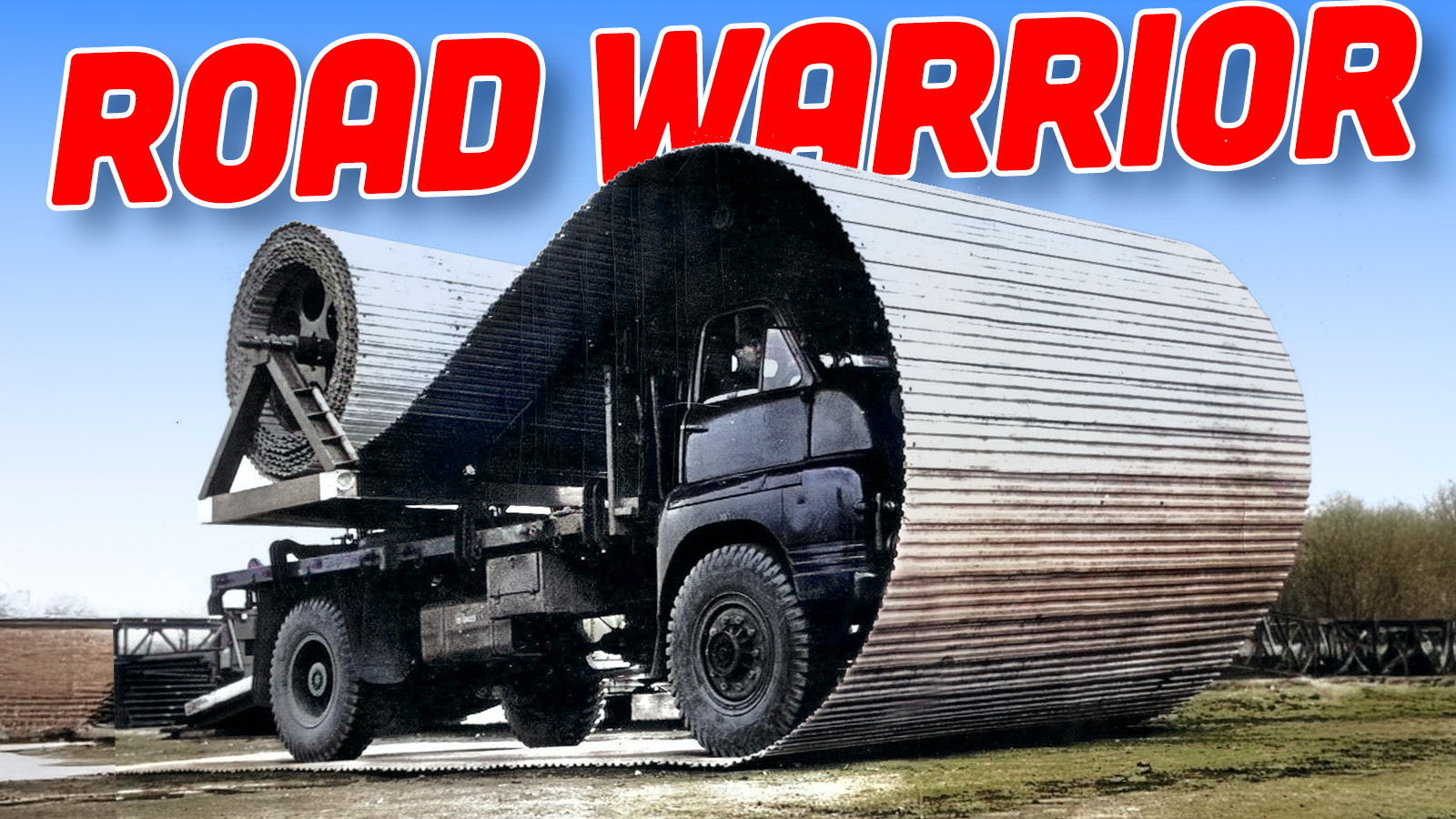
Brian also wrote about how the British made a truck that deployed roads. Username Loading….:
At first I was concerned that this setup wouldn’t allow the driver to see the road, but after further analysis it seems all the driver will see is road.
Matt wrote about how Toyota is unstoppable, and how people living longer means less money for Ford. Spikedlemon:
They’re living longer! Well, the retirees are living longer
RFK to the rescue!
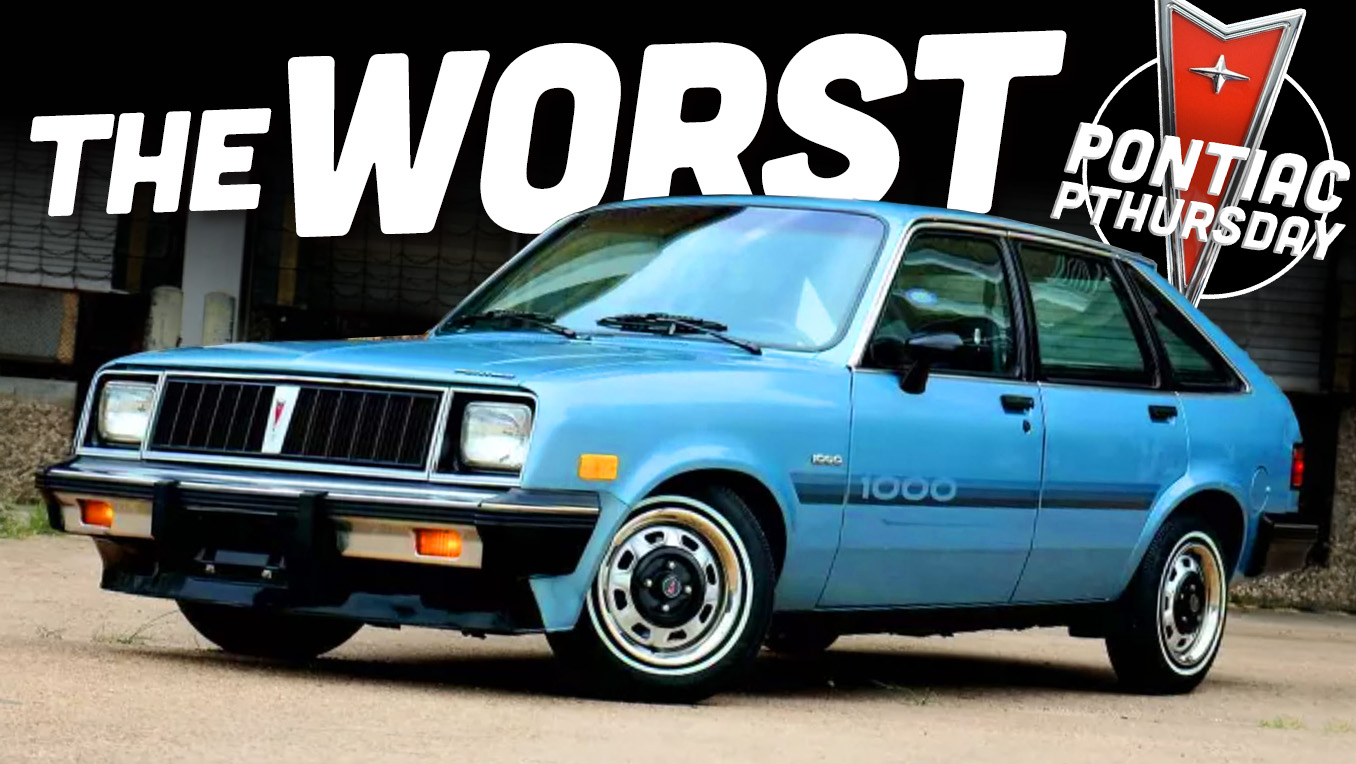
The Bishop wrote about how even MotorWeek was disappointed in the Pontiac T-1000. 4jim:
I was just a teenager in 1982 and:
100% it was only Patriotism that sold the junk cars the US car companies were making. I keep telling younger people, no matter how bad you think cars were back then they were actually vastly worse.
Have a great weekend, everyone!
Top graphic image: Ford




Aside from outliers, plan on anything with wheels to depreciate (rapidly). Vehicles, planes, trailers… if it has a VIN and it moves, it is a consumable.
Rick Hendrick doesnt buy the Newest fanciest corvettes at Barrett Jackson as an investment. He buys them because its a tax write off
I’m thinking of all the people who bought 1976 Cadillac Eldorado “Last Convertibles” for future collector value and how they only reached their original MSRP, not adjusted for inflation, during the peak post-Covid classic car boom.
You have to get stupid lucky to win the “investment car” lottery. And even then, the ones to buy are not things like a new Ford GT – it was being Nick Mason and the other folks who bought Ferrari GTOs back when they were just old race cars that weren’t THAT valuable. And most of them still got used and enjoyed even as a car that was bought in the ’70s for $20K became something worth $50M today. But even at that – $17K back then was the price of a decent house for an old race car with no practical value.
I figure my Triumph Spitfire is about breakeven-ish over the 30 years I have owned it. But the initial “investment” was only $3K, not $140K, and maintenance and insurance on a Spitfire are a tiny fraction of that on a silly supercar. The insurance only recently broke $80/yr. I have gotten a nearly priceless amount of enjoyment out of the car over the years too. Can’t get that from a stack of stock certificates.
Back around 2017 I applied to buy a new Ford GT, coulda barely swung the deal financially but I had no well placed friends at Ford so never happened. Kept the money invested and now I’m worth over twice as much…
You don’t necessarily need to mothball a vehicle to come out on top! Ask anyone who bought a used pickup in 2015-18 and just happened to be ready to trade in around 2020-2021.
In my case though; it’s really painful: I bought, traded, and swapped a lot of vehicles for Pennies that go for insane value now. I hope to make a blog about this one day, detailing the actual dollar amounts I stiffed myself out of:
But here’s just the list of vehicles in VERY NICE condition that I bought and SOLD for under $3,000 from 2005-2015:
19991 Mazda Miata
1999 mustang Gt
1996 Camaro 5 speed
1980s 300Z
Nissan 240SX
1995 Nissan Hardbody pickup
1988 Toyota pickup
1991 explorer 2 door 5 speed
1994 Ford full size Bronco 5 speed
1991 Ram 1500 5 speed 4×4
1979 Ford 150
1996 Geo Tracker
1991 K5 Blazer
1978 Jeep CJ7
Three separate rust free GMT400 trucks
There isn’t a single one on this list that I could replace with an example in the same condition for under $7500 right now, except maybe the Explorer and the Tracker.
But just to highlight my stupidity, I traded the Explorer for an AR15 and 300 rounds of ammunition (street value about 800 bucks at the time) and I traded the Tracker for a set of USED 37” tires and wheels, that I installed on a Jeep that I sold for the payoff amount.
It’s disgusting.
In the late 90s I bought a Mazda RX-3 from the original owner for $150, and it still had the delivery plastic on the sunvisors and rear door trims (I don’t think anyone had ever sat in the rear seat!) Due to a ‘friend’ ‘borrowing’ the rotary engine out of it, I ended up selling it for $600 some months after buying it, so I technically made a profit. But I had a cash offer of $3000 for it when I stopped for fuel when towing it home, and current pricing suggests that if I still had it, given how original it was (even had the original tyres!), I would have no trouble getting $60,000 for it, and possibly even reaching $100,000 if the right collector just had to have an original unmodified car for their collection.
And the number of other 70s cars I scrapped when they had outlived their usefulness is painful – I owned over a dozen Datsun 510s that mostly cost under $500 each, and a basket case rebuildable one is now going for $10,000.
Just before Covid I bought a manual Honda Fit brand new for $16k, and the dealer ate the destination charge which was as far as they had room to go down on them.
Peak Carvana offer was $22k. I didn’t take it because I’d have had to replace it with a much shittier car in that market, but if I was a multi-car owner it would’ve been tempting as hell.
I went shopping with some friends to help them look at Corollas at the very beginning of 2020. The dealer had ~30 on the lot that were waiting on the takata airbag recall work, basically one of any spec you could want. They picked one out to move to the top of the list for the recall work getting done, bought it for something like $14k. For a 1 year old Corolla with 15k miles, it was roughly 30% of sticker. By the end of the same year Carvana was offering $21k for that car.
I mean yeah, but there’s also smart ways to spend money and dumb ways to spend money. The dumbest possible way to spend money is GENERALLY a brand new car, but even that can work out.. see dieselgate with the VW buybacks. Those people made off like bandits!
But GENERALLY, if you’re starting out and don’t have a lot of cash, the smartest possible thing to do is buy a used $3-5k Honda/Yota. Hunt for a deal, pay to get an inspection if you’re not savvy, and drive it. Install a nice stereo, just maintain it. After 5-10 years with another 100k miles, it will still be worth 3-5k. You lose nothing.
For project cars, ideally you want to find something worth a fair amount when it’s ‘done’ and find it non-running. My 911 for example; I picked it up cheap because the engine, trans, interior, paint, suspension, tires, brakes, all were bad. But since the cars are worth a lot, it made sense to fix it.
Some people get cars that aren’t worth much even when done, in project form, and that is a surefire way to light your money on fire.
In the end, you need to be choosy and get something desirable. Desirable stuff is always worth more than bleh stuff.
The trick to a new car is buying it right, using it reasonably sparingly, and keeping the damned thing forever. It was a BIG stretch financially 15 years ago to buy my ’11 328! wagon even well discounted, but 15 years on it’s still rather worth more than half what I paid for it (yeah 6spd RWD wagon), has cost very little along the way, has 55K on it, and I will probably have it for another 15 years. And I have *thoroughly* enjoyed every one of those 55K miles. Especially the first 3000 or so around Europe.
But for sure unless the journey is what you truly enjoy, and I get that, project cars almost NEVER make any sense financially. You can’t make a project nice for what a nice one costs unless you are an absolute ace in the garage, especially if it needs paint and bodywork. That never, ever pays. And sooo many projects just end up as garage shelving units. BTDT, never again until I am retired with absolutely nothing better to do. Like my neighbor who builds hot rods in a shed in his back yard.
That 338i Estate is one of the best cars BMW ever made. While I prefer the earlier E46 version, it might just be nostalgia. I think the 3-series wagons drive better than the sedans – which is saying something.
I very much agree on both points. The weight distribution on the wagons is even better than that of the sedans.
I think the e9x is just a MUCH better overall car than the e46 – many fewer built-in dilemmas. If it IS a little bigger and heavier than the e46, it pays back by being stiffer, safer, quieter, and more efficient overall. Peak BMW, IMHO. But if I had been able to find the “right” used e46 or e39 estate at the time, I would have bought one happily. But I couldn’t so I took a deep breath and signed my life away for what felt like a terrifying amount to buy my e91 new.
Yeah, but check this out: in 2010 I bought a civic for $800. I drove it for 5 years, and sold it for $2500. In 2013 I bought a Honda Insight for $3000. I’ve put over 100k miles on it… it’s still worth $3k.
Not every used car is a total basketcase project car.
I am talking about collector type cars, not daily driver shitboxes. I have bought TONS of those on the cheap, driven them for a while, and made a profit too (not counting what I spent along the way, of course). Mostly Volvos and Saabs, some BMWs too. But they are just cars, not toys that are worth a restoration. Very few people are buying cars like yours to restore. But even then, if you want a perfect Civic or perfect Insight, buy a perfect one to start with.
Friend of mine is at this moment driving home from South Dakota to Massachusetts having picked up this afternoon a ZJ Jeep Grand Cherokee with 40K on it in museum condition – nice enough to give Dave Tracey wood. Paid $15K for it – there is no way you could make an “average” one as nice at that one for $15K unless as I said, you are both a mechanic and an ace paint and body guy. THAT is what I am talking about, not something to drive back and forth to work and the mall. That car has never been a daily driver nor will it be going forward. Was the car a rich dude kept as his summer lake house in SD all these years.
I’m just going to enjoy my bonfire over here wrt a VW Cabriolet and a Honda Del Sol. The Honda is just about all redone and worth a bout 1/2 of what I have in. I will not discuss the VW because I am stupid upside down on it. My smart move? Spouse and I snagged Specialized Como electric bikes in January 2020. Perfect timing and 6000 miles later very smartest thing we did
The trick is to see what the kids think is cool and buy that. If the class of 2020 is really into 944’s, buy those, and in 20-30 years, when they start to age into middle management, they’ll pay big bucks for what they couldn’t get in their 20s.
This is especially true for models currently seeing high attrition rates, manual hardtop 944’s and E30’s might be a solid investment, as they’re getting chucked into the meat-grinder of grassroots motorsports at a crazy rate right now. The Foxbody boat already sailed, as did the S-chassis. Whatever the most common Miata is at your local track is probably the one gaining value right now.
That said, I’ll never play that game. I’d rather have an IRA and drive my car.
Blue paint on a Ford: nVidia stock in the AI rise.
Hellcat Durango: BP Deepwater Horizon.