


Yesterday was both Fat Tuesday and Chinese New Year, which is to say that today’s Morning Dump is more of an Afternoon Dump. It’s morning somewhere! It’s already late afternoon in Ethiopia, though a new era of electric cars is dawning.
Ethiopia is one of the many countries that has attempted some form of fossil fuel ban, and it’ll have the distinction of being one of the few countries where it might actually work. I don’t think that Ethiopians will be importing Polestars, but the brand has a plan for the future that’s probably less reliant on sales in the United States.


For all the talk of the Canadian market, GM has decided to cool things off a bit by committing to building more gasoline trucks in the country. And back here in the land of the free, it’ll probably be a strong quarter for used cars.
The Logic Behind Ethiopia’s Fossil Fuel Car Import Ban Is Extremely Logical

One of the critiques about electric cars has been that a whole chunk of the globe is likely to be cut out of enjoying them for reasons of cost and infrastructure. Ironically, many of the people who held this view probably pictured places like rural Asia or eastern Africa.
The reality is that the United States might be the one that doesn’t have the infrastructure to keep up with electric cars, whereas EVs are beginning to flourish in places like Nepal and, more recently, Ethiopia.
What’s happening here? First, Ethiopia produces few gas-powered cars domestically, which means its ban on the import of fossil fuel-powered cars is essentially a ban on all new fossil fuel car sales.
While there are good, solid environmental reasons for this, the most obvious benefit to Ethiopia has little to do with the environment, as Bloomberg explains in this great feature on the country’s electric car market:
For years, subsidizing gasoline for consumers has been a major drag on Ethiopia’s budget, costing the state billions of dollars over the past decade. The country defaulted on its sovereign bonds in 2023 after rising interest rates drove up the costs of servicing its debts, and it received a $3.4 billion bailout from the International Monetary Fund the following year.
In the two years since the ban on internal combustion engine vehicles, EV adoption has grown from less than 1% to nearly 6% of all of the vehicles on the road in the country — according to the government’s own figures — some way above the global average of 4%.
“The Ethiopia story is fascinating,” said Colin McKerracher, head of clean transport at BloombergNEF. “What you’re seeing in places that don’t make a lot of vehicles of any type, they’re saying: ‘Well, look, if I’m going to import the cars anyway, then I’d rather import less oil. We may as well import the one that cleans up local air quality and is cheaper to buy.’”
Ethiopia, like Nepal, has invested in a giant dam and has so much energy production that it’s selling it to other countries. According to this article, the average Ethiopian probably pays half of what an average American pays for electricity.
Why pay to import gas and cars, right? It’s a move that makes a lot of sense when you actually think about it for a minute.
There’s also a financing story here, as banks are somewhat understandably hesitant to give loans to consumers buying a used car that may or may not survive the term of the loan. It’s much easier to give a loan on a new, modern electric car.
Unsurprisingly, Chinese automakers are key here, with brands like BYD and Chang’an finding success in the market, although Vinfast is also present. In order to speed up adoption, the government has lowered tariffs on imported EVs, and eliminated tariffs for those that can be produced locally. Currently, there’s a company building EV-powered minibuses designed by Nanjing Golden Dragon Bus.
Is it a perfect EV utopia in Ethiopia? No. Outside of the major cities, power access is a lot poorer, so it’s not a solution for everyone. Still, it just goes to show that our notions of how things work don’t always line up with reality.
Polestar Has A Plan!
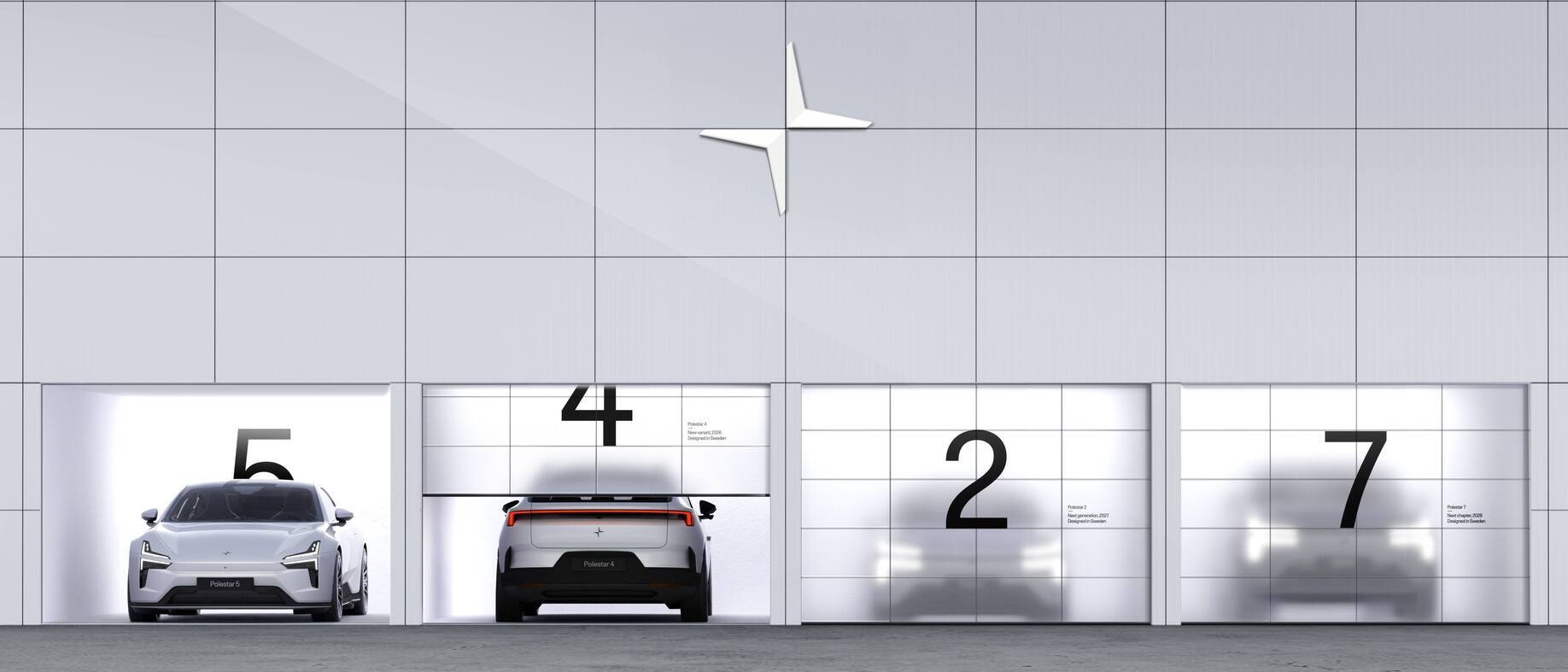
I think David, Jason, and I will collectively review the Polestar 4 because all of us drove it and we have thoughts! It actually drives well and has mostly competitive stats, so a lot of our feelings will be us kvetching about all the annoying features.
It’s a car I want to like because it’s weird and fairly attractive, albeit in a way that feels tired already. The company did have record sales last year, but those sales are nowhere near where Polestar needs to be in order to be a success, and it has been hit by a bunch of unfortunate changes. Specifically, it has had to contend with a slowing market in Europe, tariffs in the United States, and a rollback of EV requirements everywhere.
That’s tough. The plan going forward? Four “new” cars:
“Following our best sales year ever, we are now launching the largest model offensive in our history, with four premium EVs coming to market within three years. We are targeting the heart of the EV market, where customer demand and profit pools are high. Combined with our continued retail sales network expansion and a growing customer base, we are setting the foundations for profitable growth and operational improvement.
Here are the vehicles:
-
Polestar 5 – the four-door Grand Tourer (GT) presented in 2025, with deliveries expected from summer 2026.
-
Polestar 4 – a new variant of Polestar’s current best-seller based on same great technology, targeting a wider customer base by offering more versatility. To be launched later this year, with deliveries expected to start in the fourth quarter of 2026.
-
Polestar 2 – the next generation of the sedan that built Polestar’s brand, a completely new successor with a planned launch early in 2027.
-
Polestar 7 – the compact, premium SUV, planned to be launched in 2028.
The Polestar 2 isn’t a thing here anymore because of tariffs, so that’s going to be for everyone else. The Polestar 7 will be built in Slovakia, so that’s a possibility.
What am I most excited about? The Polestar 4 wagon. A fast wagon! I love fast wagons. Also, this one will apparently have a rear window! That’ll be nice.
GM Will Keep Building Trucks In Canada

In response to a White House that’s pretty dead set on getting as many car plants in the United States as possible, carmakers have had to announce plans here at a quick pace. This means they’ve also demurred a bit on what they’re going to do above the border in Canada.
This has righteously pissed off the Canadian government, to say nothing of Canadians (see the comments from Canadians on these posts). GM, at least, is committing to continue truck production in the country.
General Motors will invest $63 million Canadian dollars in an Ontario plant to support production of its next-generation gas trucks, the automaker said Wednesday.
The investment comes despite tariffs on Canadian products shipping to the United States, and what changes will come this year to the United States-Mexico-Canada Agreement.
GM ended a third shift of truck production at the Oshawa plant in January. The automaker hasn’t said if it will bring back a third shift with the next-generation trucks.
It’s not great news, but it’s not terrible news, either.
Used Car Prices Aren’t Coming Down Anytime Soon
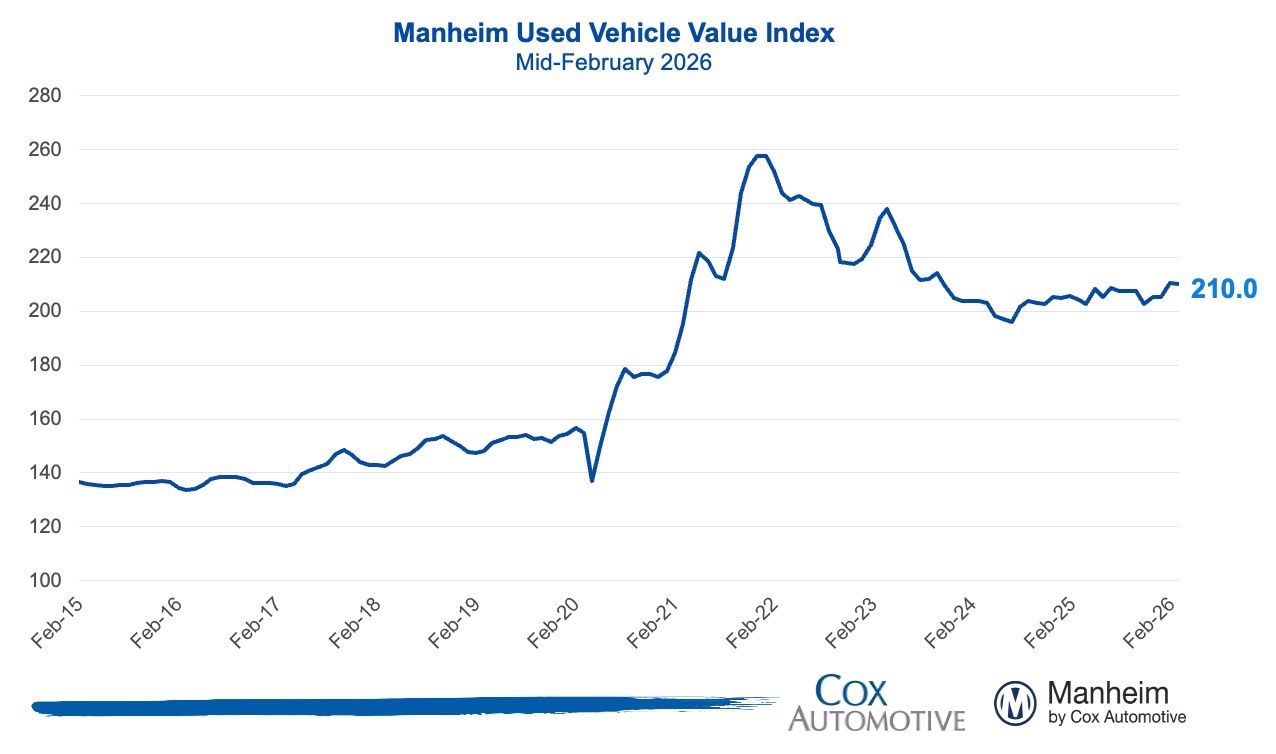
I expect a rush of cheap used EVs to hit the market soon, which may bring down used car values on average. Until then, we’re still in a period where there aren’t enough good quality used cars, and a bunch of people are going to have tax refund dollars in their pockets to spend.
According to Cox Automotive, demand is also likely to remain strong:
Dealers came into the month stocking up ahead of what many expect to be a strong spring, and the luxury segment continues to lead. We’re also seeing EV values firm up after some post-incentive softness earlier in the year. Wholesale supply has ticked up slightly to 28 days, but with conversion rates running this strong, that inventory is being absorbed. With lower auto loan rates giving more consumers the confidence to act and a potentially prolonged tax refund tailwind, wholesale values should find sustained support through the spring season.”
Again, I think this summer this will shift back towards consumers.
What I’m Listening To While Writing TMD
There’s a channel on Sirius XM that plays alternative music from the 2000s, and it feels like every time I turn it on, it’s playing “Take Me Out” by Franz Ferdinand.
The Big Question
I have a seven-passenger vehicle and Australian friends who want to go grab dinner this weekend. We’ve already done Outback Steakhouse. What’s the most American drive-up chain restaurant to take them to?
Top Photo: BYD





Dumb question: If Ethiopia’s problem is the cost of subsidizing oil, why not just stop subsidizing oil?
Honestly not a bad question and it should have been covered in the article
Most likely their economy would take a major blow if fuel/transportation became unaffordable.
Have your friends visited a Waffle House yet? 🙂
Adopting EVs reminds me of how much of the world just skipped building landline phone systems. Why invest in soon to be obsolite infrastructure?
It’s not exactly the answer you are looking for, but Nathan’s at Coney Island in the snow is kind of wonderful.
In ‘n Out is my fave but its a 2000-mile drive to the closest. High life on First Ave is kind of a copy, but at those prices, go to a Shake Shack.
What is Polestar’s plan for their naming scheme? Just count up sequentially forever, regardless of the kind of vehicle they’re naming?
I mean, it works. You’ll never have to explain which generation of Polestar 3 you have, because there’s only one. It’ll never go out of style, and it’ll never lose its meaning with changing technology and product portfolios (looking at you, BMW, Mercedes, and Porsche).