

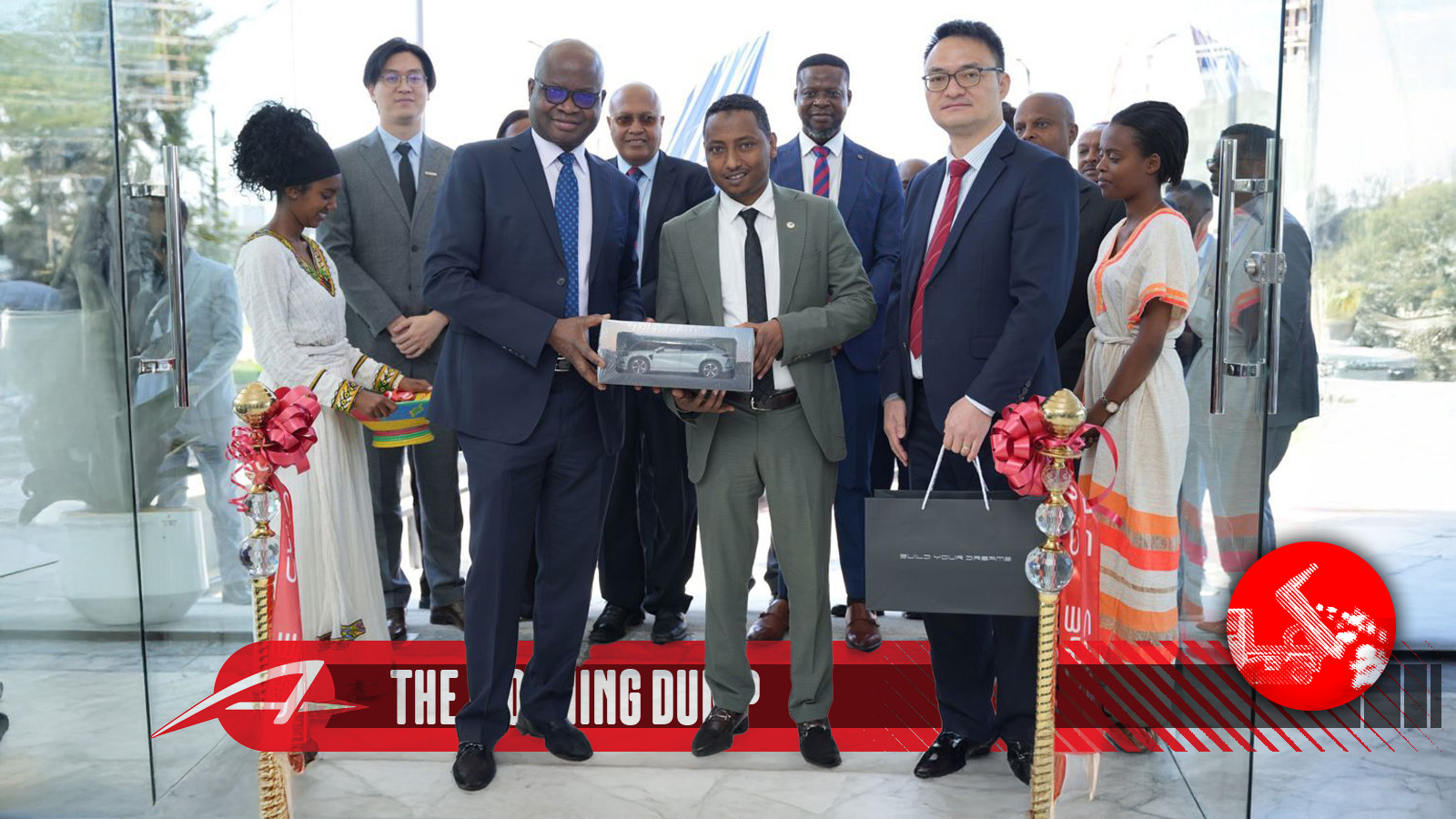
Yesterday was both Fat Tuesday and Chinese New Year, which is to say that today’s Morning Dump is more of an Afternoon Dump. It’s morning somewhere! It’s already late afternoon in Ethiopia, though a new era of electric cars is dawning.
Ethiopia is one of the many countries that has attempted some form of fossil fuel ban, and it’ll have the distinction of being one of the few countries where it might actually work. I don’t think that Ethiopians will be importing Polestars, but the brand has a plan for the future that’s probably less reliant on sales in the United States.


For all the talk of the Canadian market, GM has decided to cool things off a bit by committing to building more gasoline trucks in the country. And back here in the land of the free, it’ll probably be a strong quarter for used cars.
The Logic Behind Ethiopia’s Fossil Fuel Car Import Ban Is Extremely Logical
One of the critiques about electric cars has been that a whole chunk of the globe is likely to be cut out of enjoying them for reasons of cost and infrastructure. Ironically, many of the people who held this view probably pictured places like rural Asia or eastern Africa.
The reality is that the United States might be the one that doesn’t have the infrastructure to keep up with electric cars, whereas EVs are beginning to flourish in places like Nepal and, more recently, Ethiopia.
What’s happening here? First, Ethiopia produces few gas-powered cars domestically, which means its ban on the import of fossil fuel-powered cars is essentially a ban on all new fossil fuel car sales.
While there are good, solid environmental reasons for this, the most obvious benefit to Ethiopia has little to do with the environment, as Bloomberg explains in this great feature on the country’s electric car market:
For years, subsidizing gasoline for consumers has been a major drag on Ethiopia’s budget, costing the state billions of dollars over the past decade. The country defaulted on its sovereign bonds in 2023 after rising interest rates drove up the costs of servicing its debts, and it received a $3.4 billion bailout from the International Monetary Fund the following year.
In the two years since the ban on internal combustion engine vehicles, EV adoption has grown from less than 1% to nearly 6% of all of the vehicles on the road in the country — according to the government’s own figures — some way above the global average of 4%.
“The Ethiopia story is fascinating,” said Colin McKerracher, head of clean transport at BloombergNEF. “What you’re seeing in places that don’t make a lot of vehicles of any type, they’re saying: ‘Well, look, if I’m going to import the cars anyway, then I’d rather import less oil. We may as well import the one that cleans up local air quality and is cheaper to buy.’”
Ethiopia, like Nepal, has invested in a giant dam and has so much energy production that it’s selling it to other countries. According to this article, the average Ethiopian probably pays half of what an average American pays for electricity.
Why pay to import gas and cars, right? It’s a move that makes a lot of sense when you actually think about it for a minute.
There’s also a financing story here, as banks are somewhat understandably hesitant to give loans to consumers buying a used car that may or may not survive the term of the loan. It’s much easier to give a loan on a new, modern electric car.
Unsurprisingly, Chinese automakers are key here, with brands like BYD and Chang’an finding success in the market, although Vinfast is also present. In order to speed up adoption, the government has lowered tariffs on imported EVs, and eliminated tariffs for those that can be produced locally. Currently, there’s a company building EV-powered minibuses designed by Nanjing Golden Dragon Bus.
Is it a perfect EV utopia in Ethiopia? No. Outside of the major cities, power access is a lot poorer, so it’s not a solution for everyone. Still, it just goes to show that our notions of how things work don’t always line up with reality.
Polestar Has A Plan!
I think David, Jason, and I will collectively review the Polestar 4 because all of us drove it and we have thoughts! It actually drives well and has mostly competitive stats, so a lot of our feelings will be us kvetching about all the annoying features.
It’s a car I want to like because it’s weird and fairly attractive, albeit in a way that feels tired already. The company did have record sales last year, but those sales are nowhere near where Polestar needs to be in order to be a success, and it has been hit by a bunch of unfortunate changes. Specifically, it has had to contend with a slowing market in Europe, tariffs in the United States, and a rollback of EV requirements everywhere.
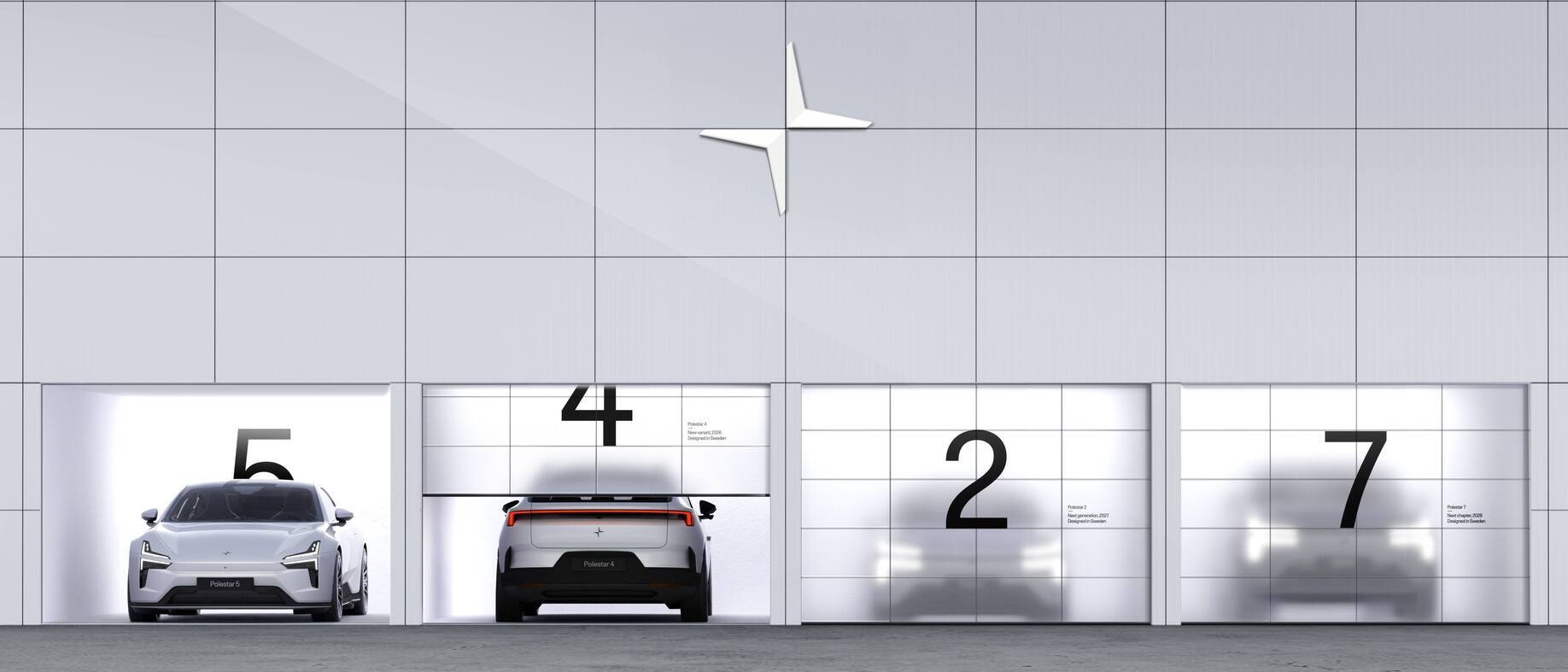
That’s tough. The plan going forward? Four “new” cars:
“Following our best sales year ever, we are now launching the largest model offensive in our history, with four premium EVs coming to market within three years. We are targeting the heart of the EV market, where customer demand and profit pools are high. Combined with our continued retail sales network expansion and a growing customer base, we are setting the foundations for profitable growth and operational improvement.
Here are the vehicles:
-
Polestar 5 – the four-door Grand Tourer (GT) presented in 2025, with deliveries expected from summer 2026.
-
Polestar 4 – a new variant of Polestar’s current best-seller based on same great technology, targeting a wider customer base by offering more versatility. To be launched later this year, with deliveries expected to start in the fourth quarter of 2026.
-
Polestar 2 – the next generation of the sedan that built Polestar’s brand, a completely new successor with a planned launch early in 2027.
-
Polestar 7 – the compact, premium SUV, planned to be launched in 2028.
The Polestar 2 isn’t a thing here anymore because of tariffs, so that’s going to be for everyone else. The Polestar 7 will be built in Slovakia, so that’s a possibility.
What am I most excited about? The Polestar 4 wagon. A fast wagon! I love fast wagons. Also, this one will apparently have a rear window! That’ll be nice.
GM Will Keep Building Trucks In Canada

In response to a White House that’s pretty dead set on getting as many car plants in the United States as possible, carmakers have had to announce plans here at a quick pace. This means they’ve also demurred a bit on what they’re going to do above the border in Canada.
This has righteously pissed off the Canadian government, to say nothing of Canadians (see the comments from Canadians on these posts). GM, at least, is committing to continue truck production in the country.
General Motors will invest $63 million Canadian dollars in an Ontario plant to support production of its next-generation gas trucks, the automaker said Wednesday.
The investment comes despite tariffs on Canadian products shipping to the United States, and what changes will come this year to the United States-Mexico-Canada Agreement.
GM ended a third shift of truck production at the Oshawa plant in January. The automaker hasn’t said if it will bring back a third shift with the next-generation trucks.
It’s not great news, but it’s not terrible news, either.
Used Car Prices Aren’t Coming Down Anytime Soon
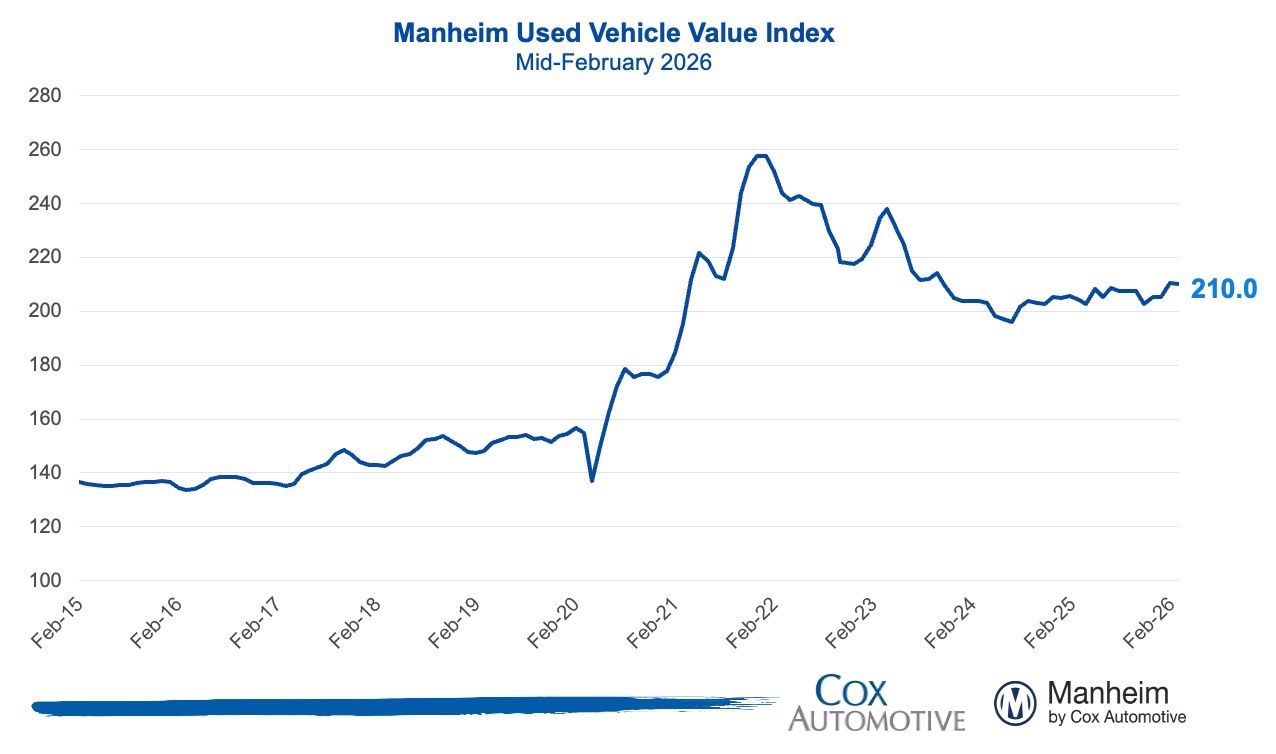
I expect a rush of cheap used EVs to hit the market soon, which may bring down used car values on average. Until then, we’re still in a period where there aren’t enough good quality used cars, and a bunch of people are going to have tax refund dollars in their pockets to spend.
According to Cox Automotive, demand is also likely to remain strong:
Dealers came into the month stocking up ahead of what many expect to be a strong spring, and the luxury segment continues to lead. We’re also seeing EV values firm up after some post-incentive softness earlier in the year. Wholesale supply has ticked up slightly to 28 days, but with conversion rates running this strong, that inventory is being absorbed. With lower auto loan rates giving more consumers the confidence to act and a potentially prolonged tax refund tailwind, wholesale values should find sustained support through the spring season.”
Again, I think this summer this will shift back towards consumers.
What I’m Listening To While Writing TMD
There’s a channel on Sirius XM that plays alternative music from the 2000s, and it feels like every time I turn it on, it’s playing “Take Me Out” by Franz Ferdinand.
The Big Question
I have a seven-passenger vehicle and Australian friends who want to go grab dinner this weekend. We’ve already done Outback Steakhouse. What’s the most American drive-up chain restaurant to take them to?
Top Photo: BYD


Cracker Barrel
Olive Garden
Red Lobster
If you want “best” then you should ask. No need to turn off Aussies from #Murican food for good after taking them to Outback.
Polestar’s naming convention really bothers me. I guess bigger number = bigger car, but otherwise it doesn’t feel like it makes sense. Also simple numbers are blasé, and the coward’s way out.
In Polestar’s case, I don’t think a bigger number = bigger car. I think it’s just order the cars were released.
Oh man you’re right, I wasn’t paying attention to what the 5 actually was. So the 2 is a sedan, the 3 is a crossover, the 4 is a fastback crossover, the 5 is a bigger sedan, and the 7 is compact SUV that supposedly slots between the 3 and 4. Yeah that makes lots of sense.
For those that don’t speak Canadian, when one writes a polite comment implying that they are unhappy about something, it should be interpreted as screaming profanities accompanied by a visible throbbing blood vessel on their forehead.
But that Canadian Curler let it rip.
Normal rules don’t apply in curling, but that was a good display of what the secret inner voice is actually saying.
Fear the fury of a patient man.
Piss us off and we tend to make the UN rewrite the Geneva Convention.
What’s the most American drive-up chain restaurant to take them to?
Idk how you define “most American”, but my recommendation would be Shake Shack, and if there are no Shake Shacks nearby then I’d get some Five Guys instead.
Five Guys is actually a pretty great response. It’s a chain, but it’s actually good, and what they’re providing is exactly what you’d probably want and expect from an American restaurant. Provided you don’t need to be active for the rest of the day.
The Question was “the most American drive-up chain restaurant”, which would likely be McDonalds, though it is also worldwide and not that great.
Worldwide McDonalds, a chance to potentially find a free bathroom wile traveling.
This is all part of China’s plan.
A lifetime ago, America rebuilt Europe and Japan after WW2, and American companies benefited greatly from having a favored status in contracts.
China is now doing something similar in Africa. They are out there paying for the building of dams and bridges and lots of other infrastructure, all so in the future China can get first dibs on minerals rights. A few million spent now, will probably pay off in billions in 10 or 20 years.
While America and most other Western countries can’t plan more than a few months into the future because some new made-up crisis will come up, China is thinking decades and decades into the future to lock down much of Africa (and elsewhere) with China tech and close ties with the people there.
I mean, at least one Ethiopian Damn project started with US surveys and funding back in the 70’s. but I am hearing grumbling about chinese money backing big public works projects like this in africa and it is causing the countries to go broke, while also not being built very well and the projects are also breaking.
Not being built very well is a function of the domestic incompetence, domestic corruption, as well as the incompetence and corruption China adds to it, along with a dose of arrogance.
HIGHLY recommend the documentary Empire of Dust.
It will make you want to yell at your screen in frustration if you’ve ever worked in any kind of manufacturing or construction in a Western country. You might think your company is slow and your coworkers clueless, but you ain’t seen nothing.
Never thought of it that way, but very accurate. We gave the post WW2 world the Marshall Plan, China has their own version.
And their plan is for the next 100 years.
I appreciate that their government takes time to think out 100 years, in what’s best for the people. They don’t take the US business–centered approach of just thinking what’s good for the next quarter.
TBQ: It really depends on what part of the country you’re in. Are you in Texas still/again? BBQ for sure. Maybe Ruby’s? I think that’s where I went the last time I was there.
Sticking to BBQ wherever you are seems like a decent, American-themed way to go and there are so many types wherever you might be.
*Rudy’s is awful.
-resident bbq and tequila snob.
Forget Outback… it’s all about Texas Roadhouse. They might actually cry tears of joy when trying that bread and cinnamon butter.
The Big Question – When we get visitors from outside the US, they always seem to want to go to Cheesecake Factory.
Quantity over quality for the true American experience!
Exactly. It truly is a factory over there.
Brazilian Steakhouse where they come to your table with the meat on spits. Great for groups, and you can watch people slip into food “coma” status.
i have a fun drinking game to play if you ever find yourself in Ethiopia! take a shot every time you see a Volkswagen ID6 on the road, it will be fun 🙂
No ICE cars, How will the Ethiopian men prove their masculinity without oil wars and burning stuff they extract from the ground?
By invading Eritrea again?
Oh yea, that….
Best analogy for that border war I’ve ever heard was “Two bald guys fighting over a comb.”
I’ve been to that area, on both sides of the border, there is nothing there. no water, no arable land, just high plateau mountains and volcanic rock.
In the words of the great philosopher Eugene Krabs: “Oh, it’s a dump alright, but it’s my dump!”
I would suggest Culver’s but that would be too far of a drive.
As a kid who grew up in Australia and then moved to the US when I was 8, I was always intrigued by Outback Steakhouse but my parents never took me there. So when I was an adult with my own money I was excited to finally try one and was immediately… whelmed.
Cracker Barrel is a good choice for your friends if there’s one near you. The name also usually describes its patrons.
crackm bargle
This is like when I found out they don’t all drink Fosters down there!
My childhood image of an Australian was basically Crocodile Dundee driving a Subaru to an Outback for some shrimp and a Fosters
My modern image is all of those things, but substitute Crocodile Dundee with the dad from Bluey.
Not really American themed per se, but The Melting Pot fondue restaurant is a good place for a group, because fondue lends itself to a slower style meal.
Re: Canada and trucks – this will likely be the future of GM and Ford in Canada. Why?
Fondue was my go-to dinner locale for first dates. Not rushed, very casual but a little intimate, and I got a really good opportunity to really get to know her, and decide if a second date was in the cards.
Sonic. Food, cars, Americana. I remember when all the servers wore roller skates.
this is probably the right answer as it is not worldwide and has the iconic fifties americana vibe.
I’m not at all surprised that developing countries like Ethiopia are moving quickly towards EVs. I see articles now that any oil dependence is seen as a liability in the future, many of the countries have a lot of potential for wind/water/solar local electricity production, and I would guess that the locals would be far more open and less likely to complain about the limitations.
My guess would be someone in Africa would have zero issues sharing a public L2 charger with the rest of their village, much like they might share anything else like bikes and such, where in the US there would be nothing but whining about the inconvenience.
I’d more likely say that the North American conception of an EV and much of the rest of the world is quite different.
Mostly, I would think places like India, Africa, SE Asia are closer to ‘electric rickshaw’ or ‘electric scooter’ in terms of use case than F-150 Lightning or Tesla Model 3.
Need a heck of a lot less infrastructure for that kind of charging, with the bonuses that it cuts down on oil imports and air pollution of small gasoline engines.
Gemini tells me that roughly half the population of Ethiopia “lacks any access to electricity” and there are frequent outages for those with access. Plus the country is bigger than Texas and 75% of the population is rural. This seems like a huge imposition on rural Ethiopians.
The typical income in rural areas is like $50/month, those folks arent buying cars any time soon anyway, whether electric or ICE
The car ownership rates are very low. Reducing available options by excluding ICE vehicles does not seem to be a good way to get that rate up.
The goal isn’t to get the rural poor to buy private cars. Most rural families are riding a 50cc to 150cc motorcycle if they have a powered vehicle at all. The rest are riding buses or community van shuttles village to village and walking locally.
By banning gas CARS Ethiopia is simply no longer subsidized gas for their rich urban elite that own cars.
It seems like the unintended consequence is going to be to make life harder for the 75% of the population who do not live in the urban areas. Again, I do not claim any insight beyond what I read since this article came out, but communities tend to share vehicles because ownership rates are so low. What happens to those communities if they cannot get gas and the few vehicles they have become unusable? Unless Ethiopia is going to be providing replacement EVs along with the promised (but far from realized) infrastructure this seems like a policy that has the potential to do more harm than good.
Nobody said anything about no longer selling gasoline or diesel.
The stated reason for the ICE car ban was to be able to stop importing so much oil. It has almost no domestic production.
Correct. The government is spending too much of their limited budget importing oil. It makes zero sense to keep importing gas cars when they can’t afford to supply the fuel for the ones they already have.
It is a real life example of the old joke that if you are stuck in a hole the first thing to do is stop digging it deeper.
So back to my original concern about the 75% of the citizens who live in rural areas and rely on that imported oil…
Less competition from rich urban guys driving personal gas cars should be a positive for the rural poor that need gas to power their 50cc motorcycles.
Its not just motorcycles, its trucks that are shared to haul around goods, vehicles to transport people from one town to another, etc. My understanding is that the point of the ban is to get that import number close to zero, not just reduce the “rich person quotient.” Since Ethiopia lacks domestic production that leaves those communities (again we are talking about 75% of the population) in a far worse place because of this ban.
A quick search finds that the ban does not include trucks or buses – and even bigger detail – doesn’t include hybrid passenger cars.
Source? Because this article indicates that while the initial ban excepted buses and trucks, the ban has now been expanded to include them. They make promises about converting vehicles to LNG, but that is another future promise (like the TBD EV charging infrastructure) that does not help populations that rely on gas powered vehicles today. https://www.ecofinagency.com/news-industry/0810-49366-ethiopia-expands-vehicle-import-ban-to-trucks-pushing-electric-transport
Import of vehicles: … duty-free imports for electric and hybrid vehicles.
https://climatepolicydatabase.org/policies/electric-vehicle-import-mandate-and-ice-vehicle-ban
Import of knock down kits:
https://cleantechnica.com/2025/06/21/ethiopia-updates-ice-vehicle-import-ban-to-include-imports-of-skd-ckd-kits/
As to trucks they are still allowing LNG / CNG trucks and buses to be imported duty free in addition to converting existing vehicles to CNG.
https://jnhtctruck.com/news/natural-gas%EF%BC%88lng%EF%BC%89-trucks-supply-ethiopia/
So the ban does apply to trucks and buses as I said. The ban should at best have been implemented AFTER the infrastructure was in place. Future promises that there will be electricity for more than 1/2 the population or that there will be LNG conversions of heavy vehicles does not help anyone maintain their quality of life today. There is a “let them eat cake” vibe to the responses of “well just go buy an EV or a hybrid.”
No, it the ban does not apply to all ICE trucks and buses. It only applies to gasoline and diesel buses. You can import a new CNG or LNG truck or bus into Ethiopia today duty free – and those are powered by an ICE.
CNG is not new in Ethiopia and they have significant domestic NG production.
There is no need to convert existing gas or diesel vehicles to NG. Nobody is taking away anyone’s gas or diesel vehicle or telling them to park them until they are converted to CNG. Current owners can continue to drive them.
Ethiopia has electricity and natural gas. They do not have gasoline or diesel. They are very wisely transitioning their transportation fleet to fuels that they control domestically instead of a fuel that they have to pay to import.
Gas and diesel cars make up over 90% of the existing vehicles in the country. So they are banning direct replacements for virtually the entire fleet. And they are cutting off the foreign oil needed to power that fleet. You also assume that the ban will not affect service center and parts availability as the pool of vehicles ages and dwindles. And even then there is a point where repairs fail and replacement is needed, which leaves the owner limited to more expensive or niche products which they may not have the infrastructure to operate (e.g. electricity, availability of EV parts as discussed in this AP article). I am not sure why you are so committed to acting like these are not serious concerns. https://apnews.com/article/ethiopia-electric-vehicles-transport-b9478a11aa57050e3ecb6908333f0fa2
Gas and diesel vehicles may be 90% of vehicles in the country but per your link there are only 1.2 million vehicles in Ethiopia. That is less than 1 per 100 people. They are also talking about buying cars that are more than 15X more than the GDP per capita of Ethiopia ($1250 per person). Again, I can’t get too broken up about the hardships of those rich enough to buy a private car.
It also simply makes sense for a country like Ethiopia that has cheap electricity and natural gas to switch to those. Continuing to subsidize gasoline and diesel is simply foolish and again, why should government money be used to subsidize the lifestyles of the rich.
To be clear – Ethiopia is not talking about cutting off the supply of gas and diesel. Your link clearly says they are only eliminating the subsidies. Why do you keep misrepresenting this basic fact?
No doubt there will be growing pains during this transition but if not now when? Why should Ethiopia continue to add to their problem?
You keep moving the goalposts and accuse me of misrepresenting is rich. The whole point is to cut imports they have to buy with limited foreign currency reserves. They are going to radically cut oil imports. You acknowledged that just a few posts ago for goodness sakes. I’m done dealing with your dishonesty. Enjoy your fantasy that this will only hurt the rich.
Have a good one.
Likely a discussion better had over a beer face to face than over days a few bits at a time.
Yep, these are probably areas where the village shares a bicycle or two, that were donated by charities.
First, AI is probably wrong. Second, if electricity is scarce in rural areas, petrol will also be scarce. The difference is that it’s much easier to build out electric infrastructure than it is to import, refine, and transport oil.
Well, one of the cited problems that prompted this was government fossil fuel subsidies costing the government a fortune. I do not claim any detailed knowledge of Ethiopia, but that is probably how those in rural areas are affording their gas.
Here you go. Half the country lack reliable access to electricity and demand grows by a third every year. https://www.thereporterethiopia.com/46657/
Research micro grids. They’re going up everywhere in rural Africa. Either paid for by the locals or through international grants.
Going up everywhere yet half the country lacks access to electricity and demand goes up by a third every year. It would seem better to build out the infrastructure before making such a drastic top down policy change.
Yes. India has a ton of electric cars with around 100 miles of range, which is wayyy overkill for most people in cities like Bengaluru. Also, India and most other countries are 240 volt, so installing EVSEs is easier (most of the time, “installing” just means “plugging into an outlet that is already there.”)
Weirdly, there are very few electric autos in India! I’ve seen a few, but have never ridden in one. Every state has their own colors for autos, but the electric ones are always bright blue!
Absolutely, the vast majority of “vehicles” in these countries are 2 and 3 wheelers. And those sound like they are quickly going electric, especially in places with battery swap stations.
I saw something a year or two back on the amount of batteries needed for the electric scooters and tuk tuks in India vs. the amount of fuel saved, and the fuel savings per battery amount was way higher than for EV cars in developed countries.
I think the biggest EV revolution currently going on right now isn’t full sized cars, but these small vehicles like you say.
Being addicted to a volatile substance sold on a global market, completely free from any nationalistic or patriotic allegiances, and only caring about $$$, does create a plethora of future liabilities.
This kind of reminds me of the “telephonification” of rural Africa. They skipped copper landlines and went straight to cellular. Saved a lot of time and money in the process.
Same in Peru, on a trip there almost 20 years ago my buddy and I realized we were the only people without cell phones in a packed taxi van, and we didn’t even have them at home. Might as well skip right to the easy solution.
Cracker Barrel
Wow, a 4 wagon! Did not see that coming. Consider me excited to see it.
Waffle House is the obvious answer. Bonus points if you take them late at night.
Make sure somebody gets something that’s scattered, smothered, and covered.
I love a waffle house.
Especially a rural south waffle house.
Came looking for this answer.
Extra bonus points for thrown chairs.
I, for one, am not impressed with that decision from Ethiopia. You mention “Outside of the major cities, power access is a lot poorer, so it’s not a solution for everyone,” but I don’t think you give that enough emphasis. I’ve never been there, so I can’t speak for certain, but I would expect that this is the reality: Major cities have decently reliable electricity, while the countryside has far, far spottier power, to the point where it would be near-impossible to run an EV. If that assumption is correct, it seems that they’re essentially limiting (new) car ownership to urban dwellers, which I’d consider honestly oppressive! They mention the inconvenience of importing gas instead of using locally produced electricity, but the thing is that it’s relatively easy to import gas to anywhere in the country, while getting reliable electricity to every part of the country is going to be a lot harder.
Hopefully it’ll work out decently, at least if reliable electricity can be rolled out everywhere before the time used ICE vehicles disappear, or if there are exemptions or loopholes (or smuggling), but that seems like bad policy for a lot of their citizens.
“I’ve never been there, but I’m confident to speak on their behalf.”
Spoken like a true “Murican” !!!
Canadian actually, but yeah, this is all hypothetical–I’m not qualified to make their policy! Just my thoughts based on experiences in other third-world countries
“that it’s relatively easy to import gas to anywhere in the country, while getting reliable electricity to every part of the country is going to be a lot harder.” Citation needed. Solar and wind infrastructure in the long run would be cheaper and more reliable and not make the rural poor dependent on rich oil and gas producers. Also I have traveled in plenty of places where getting reliable gasoline is not easy.
Oh, I’m not saying it won’t work in theory, and probably eventually in practice, but I do worry about the short-term. I’m not confident about the government’s ability to provide that electricity in the short term, and to ask people who are just barely getting by to invest in their own solar system “because you’ll save money later” just doesn’t seem realistic
Unfortunately Ethiopia sea access is controlled by Eritrea, who fought a 30 year civil war. Djibouti, who they have also had a conflict with. And Somalia, which is Somalia. And if your oil is coming by land, you have Suden and South Suden which are both currently in civil wars. And Kenya, which while stable has a numerous geographical challenges.
Those are some valid geopolitical points for why it could be hard to get oil into the country, but if it was truly prohibitively difficult to get fuel there, people wouldn’t need regulations to get them to buy EVs
Not to worry.
Orange Guy will end these wars in time for our July 4th celebrations…
I think you are underestimating the penetration of solar panels into the Third World. Also, Ethiopia is tropical and high-elevation. Sun intensity there is REALLY intense.
Microgrids to the rescue. Toss up some solar and always be charging. Ethiopia is a very sunny country on average so relying on solar plus storage seems doable for much of the year. Add some wind turbines into the mix and maybe small-scale hydro for the rainy season.
Even with tariffs, a 5 kW solar system is $3400ish for a DIY installation in the US. Some even include a 10 kWh battery for evening use. It’s probably even cheaper over there with shorter shipping distances.
It’s definitely possible in theory, but Wikipedia tells me their GDP per capita is $1,120 ($4,740 with purchasing power parity, but I think the lower number will be more accurate for an imported solar system). Then we have to assume that these are lower-income rural areas, so it seems like it would likely end up being over an entire year’s income for a household (maybe much more), which is probably not something very many people in that situation can realistically afford, or have the savings to invest in that.
No reason why a village can’t pool their resources to buy a system for ebikes and the like. Probably those are more likely in rural areas. Or electric lights to replace kerosene lamps or burning dung.
“Used Car Prices Aren’t Coming Down Anytime Soon”
Great news for my used car heavy portfolio. I’m long on Miatas and Squarebody Chevys.
Texas Roadhouse
Texas Roadhouse, specially if its someone birthday, they will throw a small show for the person. Unlimited refills of water and whatever fountain machine flavor lol
Applebee’s. Always disappointing. Even when it’s the only place open after 10pm and the alternative is starving or gas station food.
This. It’s Eating “something” in the neighborhood.
$1 vodka lemonades tho
Yea the only people I know that go are other peeps in the industry after they get off work to drink.
Also, sometimes its fun to go there ironically and laugh about how bad it is
The TVs in my gym are always on ESPN, and they play Applebees commercials constantly. Their latest abomination is a cheeseburger cut in half and then slopped into a bowl of melted cheese. It seems designed for social media engagement, not for human consumption.
Now, I love cheese. It’s my favorite food. But that thing looks disgusting and I’m almost annoyed that the chain still exists.
You mean the Bukkake Burger? I’ve seen that ad. Horrific.
And it’s sadly the only Applebees commerical they seem to play. I’ve lost count of how many times I randomly glance at the TV and get assaulted by it.
It assaults you from all angles! 🙂
Applebees’ entire business model seems to be being so close to Motel Row that you can walk to it and not have to get back in the car and navigate an unfamiliar city again.
I really appreciate this about Applebee’s and their proximity to interstate on/off ramps.
Not going to lie, if it’s Wawa, Sheetz, Fastrac or Delta Sonic I’m choosing that “gas station food” over Applebee’s every day and twice on Sunday.