


I grew up in Houston, which means I’ve always got an eye on energy markets. Energy, like oxygen, is something everyone needs but rarely thinks about until the lack of it becomes an emergency. We’re in such an emergency, and for some, there’s a potential cure within easy reach. A cure that few people are taking.
If Friday’s Morning Dump was all about how the car industry doesn’t need another crisis, today’s is about the silver lining. It’s not much of a silver lining for everyone, but I think it might bode well for a few automakers. They could use a break. As could Canada, especially as we look forward to a likely contentious meeting to either reconfirm or break the USMCA.


Renault was one of the automakers that was mostly immune to the downturn in Chinese sales for European cars. Why? It was focused on Europe. Now that might not be going so well. Hell, even the Pope isn’t driving around in a European car these days.
This Could Be The First Energy Crisis Where Someone Will Have Abundant And Cheap Electric Cars
When it comes to energy, there’s one economist that I look to more than any other. Phillip Verlerger, out of Denver, had a piece out on Thursday in Energy Intelligence, called “When Energy Disruptions Strike.” There’s a nice big chart that looks at all the disruptions to the market, five of which include Iran directly.
Verleger concludes that the complexity of the market might hit LNG and Diesel extra hard:
Distillate markets today are also particularly sensitive to supply changes, with the global market for the product already tight and the Iranian attacks forcing refineries to shut down, causing further tightening.
This will prompt hoarding behavior, which, historically has been the activity that drives prices sharply higher when supplies are disrupted. Every firm that holds inventory or has supplies on the way will want to reevaluate the likelihood of easily obtaining additional supplies — or at a reasonable price. The rule in these situations is simple: buy more, sell less.
Moreover, data centers in critical US areas, especially the Mid-Atlantic, will also likely enter the market to replenish stocks used during the January cold spell. Price does not seem to be a barrier for these buyers. One should not be surprised if cash distillate prices rise by $1 per gallon relative to distillate futures in addition to any crude price increases over the next four weeks as data centers try to coax stocks away from refiners. On a cash basis in New York Harbor, distillate could jump from around $2.70 per gallon to $4 due to hoarding.
As if you needed another reason to be wary of data centers.
Looking back on the more recent market events, what’s interesting is that there weren’t necessarily a large number of longer-range, affordable EVs on the market. The Ukraine War had a small impact, initially, although the effects were more strongly felt in Europe and centered around cutting off the flow of Russian gas.
This time, it’s the war in Iran, and crude prices are already way up, as the Associated Press reports, with Brent crude getting close to $119.50 per barrel before retreating closer to $100. WTI has been around $103 after also nearly hitting $120. By comparison, WTI was at around $60 a month ago.
Estimates vary, but this could mean a national average of $4 per gallon by summer if something doesn’t change. That assumes this isn’t quickly resolved. If it isn’t, and prices go up, will this finally mean that people will want EVs? That’s my question, because so far this year EV sales are down, representing about 5-6% of the total market, compared to as much as 12% at various points last year.
Energy prices were stable last year, so it was the potential loss of the EV tax credit that drove the surge in sales. What about this year? Will gas prices actually get people into the market? So far, carmakers don’t think so, as discounting has been heavy. While it depends on the model, Automotive News has seen incentives that eclipse last year’s tax credit deals:
Mohawk Chevrolet in Ballston Spa, N.Y., has added a nearly $6,000 dealer discount on top of customer cash on a 2026 Chevy Equinox EV RS, bringing the advertised price to roughly $33,000, or about the starting price of an entry-level model.
Andy Guelcher, dealer principal, said incentives are needed both to generate demand where it is low and keep older models from sitting too long on the lot.
“Right now, it’s necessary,” Guelcher said. “How long it will be necessary, I don’t know.”
American Honda is offering a $10,000 sales credit this month — down from $11,000 in February — on the 2025 Prologue EV to spur sales of a model the automaker said “is in very limited inventory.” It also has a smaller credit on 2026 models.
While EV inventory remains high at this moment (168 days), automakers have largely cut production, so this might be a blip in time.

If you were somehow still in the market and didn’t take advantage of the tax credit, that Equinox referenced above is still for sale. It’s possible that you might live in a market where it makes sense to save on gas by spending on electrons. At the same time, as Verleger points out, natural gas might get hit hard, which could then drive up electricity prices.
It’s very hard to predict human behavior in this case because it’s hard to predict market forces. I do think that there is a period of time where there’s enough aging stock of EVs sitting around that you might make a deal.
What’s going to be interesting is if there’s a prolonged period of higher energy prices. Automakers aren’t as incentivized to make electric cars in the United States because they’re not trying to hit average fuel economy targets. All that old stock of 2025 models? It’s going to dwindle eventually. While some automakers are cancelling plans and cutting back, GM might be in a great position with the new Bolt. Maybe Nissan with the now-better Leaf?
EVs are cheap because there are still a lot of them left over from an increase in production in 2024 and 2025 combined with low gas prices. By this summer, there might be fewer affordable EVs and higher energy prices. Are dealers going to be putting $6,000 in cash on the hood of an Equinox if gas prices are $5 a gallon in New York? I doubt it.
Instead Of One Agreement, USMCA Will Probably Be Two Different Ones
As previously mentioned here, the North American automotive industry is highly interconnected. This is a feature, not a bug, and it’s a feature of both NAFTA and, later, the United States-Mexico-Canada Agreement (USMCA). The USMCA came from President Trump’s first term, and he described it as “the largest, fairest, most balanced, and modern trade agreement ever achieved” at the time. So much for that!
Canada’s government and the government of the United States are a bit at odds right now, and Canada is looking for partners who make up for geographic proximity with, say, a lack of meetings with Canadian separatists in Alberta.
A report this weekend in The Washington Post via The Detroit News shows that the USMCA might just become a deal with Canada and a deal with Mexico. Why?
Jamieson Greer, Trump’s chief trade negotiator, who will be leading the USMCA review, recently told CBC that Canada should accept “some level of high tariff” on Canadian exports to the U.S. while opening its market to U.S. dairy products.
“Reshoring didn’t happen fast enough,” he added, when asked to describe U.S. complaints about USMCA.
A reworked deal that resulted in higher tariffs on U.S.-Canada trade would upend auto industry supply chains that often send parts across North American borders up to eight times before they are installed in a vehicle.
Fun times.
Renault Is Going To Cut

Renault has had good moments lately, but being reliant on Europe doesn’t seem quite as helpful if the European market is going to get kicked in the shins again by a global energy crisis. The mood at Renault right now is cut-cut-cut.
As Renault SA’s former procurement head, Francois Provost was used to keeping a tight grip on the purse strings. Now as chief executive officer, he’s trying to convince investors that the automaker must become more like its lower-cost Chinese rivals.
A renewed focus on slashing expenses is expected to be part of a plan Provost will lay out Tuesday at a strategy day near Paris. The CEO has been looking to use more technology from Chinese partner Geely to lower development costs. But efficiency gains alone may not be enough to fix Renault’s worsening sales performance, which has contributed to a 20% slump in the share price this year.
“Provost is a cost-cutter,” and his decisions and comments on strategy so far haven’t been convincing, said Pierre-Olivier Essig, an analyst at AIR Capital. “No forward vision is what worries us the most.”
There’s no way for a French company to get its labor costs down to Chinese levels, right?
Da Pope Gets An Explorer Hybrid
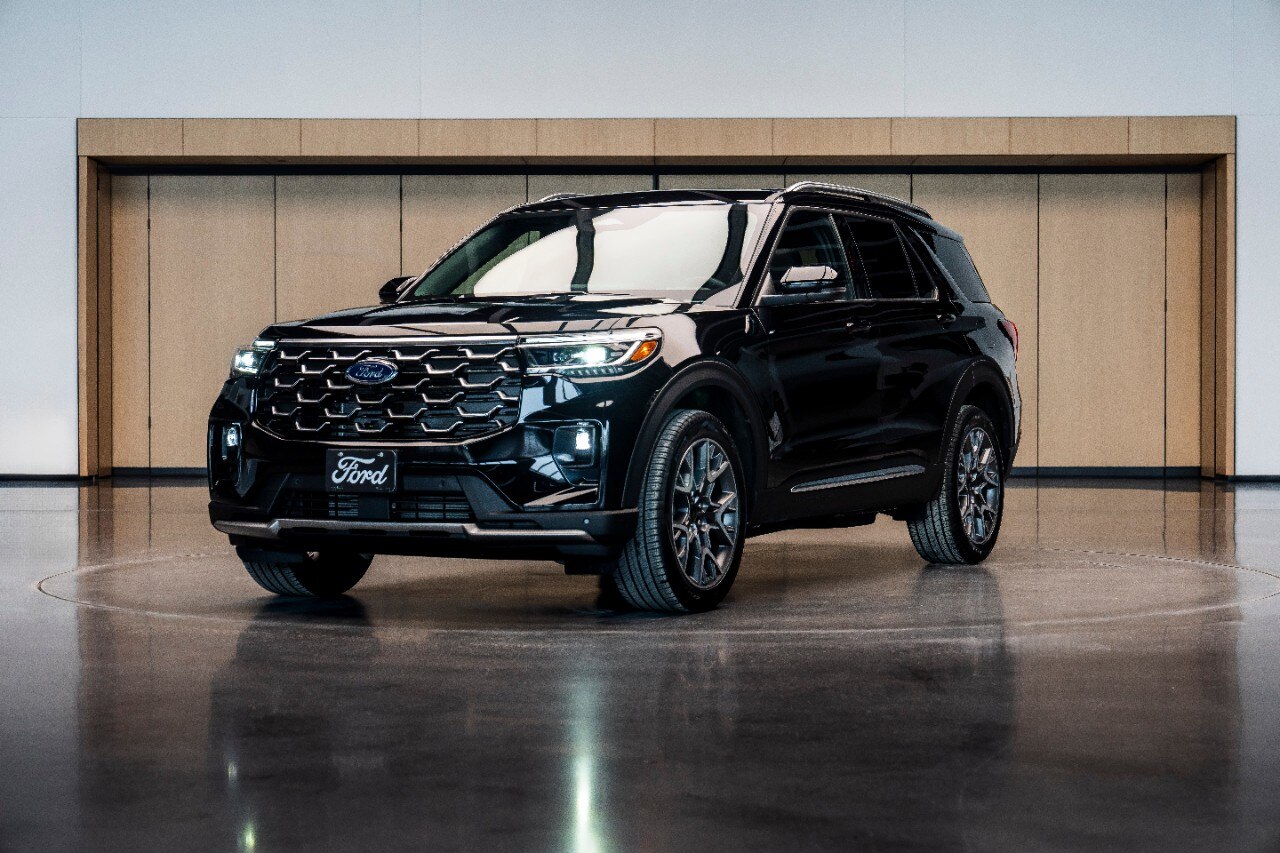
There’s an American Pontiff. Even better, Da Pope is from Chicago, which is the funniest city in America for the head of the Catholic church to be from for some reason. The head of Ford is also famously Catholic, and so the company delivered a custom Ford Explorer to Pope Leo XIV in Vatican City:
The Explorer was customized with a 3.3L V6 hybrid powertrain and 10-speed hybrid transmission, as well as an antenna that’s compatible with the European broadcast radio system. Vanity license plates read “DA POPE” and “LEO XIV.”
On the inside, design details boast Chicago-to-Vatican pride.
The Farleys personally delivered the car during a private audience at the Vatican on Feb. 28.
“He noticed and appreciated all the personal touches,” Farley said of the Pontiff’s reaction. “We even took a quick drive, and I can confirm the Holy Father enjoys driving a sporty ride.”
That’s fun!

Also, I think this is the only civilian-spec Explorer hybrid for MY 2026.
What I’m Listening To While Writing TMD
Feels like a good morning for “It’s A Hit” by Rilo Kiley.
The Big Question
How expensive do you think gas will be on July 4th, 2026?
Top photo: Chevrolet


New EV’s may be on sale but I’m in such a low tax bracket I can’t even consider off lease EV’s.
I would love a PHEV or an EV but I need it to be in 3rd owner BHPH price range. Maybe 4 years?
I have access to a vehicle pool at work. Not coincidentally, I’m driving an EV this week. I might stay in that one for a bit…
Alot of the people in a position to buy a new vehicle probably won’t because of uncertainty. There is still a lot of bev fear out there. Plus they hear electric going up from data centers, water going up and disappearing because of them. Plus the amount the grid can’t handle so they are running on diesel so probably making diesel go up. All so someone can get a wrong answer to something or generate a strange video or image. The California situation might push some in but they also have memories of long lines at public chargers and no power. The problem always is we get people yelling about one form of energy and it needs to be a blend. Electric is the universal but unless you are generating your own electrons then you are still stuck. Then you get into the whole “you don’t own anything” problem that people are realizing on multiple levels. The $3k used ev you use around town is probably the best way to get people into them. Though the under $10k you might road trip a bit might have some great influence as well.
Crazy things happen when crude is over $100 a barrel. This looks like alot of panic. Globally it’s an issue. But shoudnt really be for the Americas other then maybe exporting more and the closing of refining capacity in California. With Venezuela now exporting sour crude for the ancient refineries that produce most of our gas and oil. Plus all the sweet crude we pump. It looks like the finance bros go one over on everyone in the US. Though our prices haven’t jumped all that much compaired to global markets. California has bigger problems in that they are having to import their special gas from wherever they can find it. Alot of countries in SEA went into panic and stations ran out of gas as prices went up. Part of that is geopolitical mess that is SEA.
I would be surprised if July 4th national avg is $3.50 -$3.99. $2.50 gas in some areas of the country not impossible. California $8.50.
TBQ: where?
EV’s might earn a few conquest sales from buyers on the fence about taking the EV plunge if the so-called military action goes on for long enough, but just like during the last extended fuel price shock late in GWB’s presidency, most short-sighted consumers would sooner rush to the smallest vehicle they can tolerate in accordance with their propulsion bias.
Ok, but can we do both and import the Renault 5 now?
The Ford Explorer is also assembled in Chicago.
Years ago I built the door panels in west Michigan and then we shipped them down to good ol CAP
I don’t think it will sway a lot of people into getting EVs because it’s still too big of a change and inconvenience
I think it’ll be business as usual: People will make car purchase decisions based on the price of gas on that day
“will this finally mean that people will want EVs?”
Let me once again preach the gospel if USED MOTORCYCLES.
They are cheap to buy, get great fuel economy, are NOTHING to insure, and are a hoot to drive every day!
I suggested this to the fiance before but she was to concerned for my safety haha
Not in Ontario, Canada! Motorcycle insurance is insanely expensive for new riders. Sometimes upwards of 6k/yr. Enough to kill any fuel savings
Sweet fancy Moses!!! Granted, I’m an experienced rider, but my insurance is $240/year.
Yeah, and that’s to ride 6 months out of the year.
I have a feeling I’m gonna be commuting in my classic mini I’m picking up. Don’t tell Hagerty.
Why is it so high? Are motorcyclists mowing down multiple pedestrians every summer?
Does the insurance have to cover the rider’s medical bills in a single bike crash or something?
We’re the most populous province (16+ million) and we have the worst driving record. 98% can be blamed on the Greater Toronto Area and the 401 highway. Which is the busiest highway in North America. No, that’s not a typo. The Ontario 401 is the BUSIEST highway in ALL of North America.
So yeah, fuck Toronto and the Toronto to Montreal corridor. They’re the reason insurance is expensive
I’ve been around long enough to know that oil price fluctuations are a hyped up freak out. “Cheap gas! Go into debt and buy a guzzling behemoth! Oh, oh, gas price increase! Sell behemoth at a loss and overpay for something more efficient. Rinse, repeat, bah bah bah.” Stupid sheep. People also have proven they will change their gasoline usage behaviour during these times. More car pooling, trying transit, not taking pointless drives just because it’s July 4th etc. Life will go on.
The real economic concern is probably methane (natural gas to the green washers). A lot of the critical producer/exporters are in the Gulf and cut off. Methane is not just vital energy in many cases, it’s also feed stock for things like fertilizers. There will be many knock on effects.
I don’t drive enough for the price of fuel to throw a monkey wrench in life . . . yet. I feel for those with long commutes, ride-share drivers, etc. The world is way too unpredictable for me to chose what type of car I’m going to buy based on the news this week (hell, even today).
Diesel is over 4.30 in the midwest, Gas is 2.99 – 2.89 at the costco/sam’s stations. I kind of wonder if the US oil production will just ramp up to get in on the increased prices? It would be a short term boom to the us economy, and help reduce midterm election concerns. Though I am not sure if that can be saved by the Don at this point.
Oh, US production will ramp up and claim to be doing it to increase domestic supply, but will, once again, sell it to the highest bidder, which will be foreign.
US production will increase if the price is $60/bl or higher. That’s about the point where a profit can be made on new wells.
This will have no effect on the midterms. because it takes a few years to go from nothing to production, and not in response to short term fluctuations like this.
Premium is $5.259 at nearby Costco. Might have to fill up before it’s too late.
I bought 28 gallons of diesel yesterday at $4.80/gal. $134 to fill up my truck. Ouch. Remember the stickers people used to put on gas pumps with a picture of Biden and the text “I did that”? It would only be fair for someone to start making those with Trump’s photo.
I don’t get why the military can’t patrol the Straight of Hormuz before our economy collapses.
I for one would love to pay a billion dollars a day to reopen a strait that only closed because we decided to bomb the shit out of Iran for no reason. On top of the billions dollars a day we get to pay to continue the bombing.
I ordered some of those stickers. They’re, like, $7 for a pack of 100. Unfortunately a week to get them, though.
Because the Iranians can hit military ships, too.
And they are likely even more tempting targets than freighters.
Cause the strait is surrounded by mountains that are easy to hit boats with.
Typically, a narrowed spot like that is what you funnel prey into, whether on land or sea.
A friend of mine has exactly those stickers, and has been putting them on all sorts of things over the last year. Gas pumps are next!
In California, probably at least $6 plus a gallon. I’m worried what CNG will get up to, it’s already spiked an extra $1 plus a GGE (gallon of gas equivalent) a month or so ago at the SFO stations. Now its more expensive than gasoline at the nearest to me CNG stations.
I need to sit down and do some math for solar panels and an EV to see where I’d wind up and what the break-even point is.
I’ve always been interested, but the last time I really did any comparison solar/EV prices were high enough and gas prices low enough that the break even point was far enough out that I didn’t want to make the up-front purchase.
Now that might be shifting, but for now there’s still a pretty big gap between two fully paid for gas cars and any EV(s) which would require a car payment to meet my needs.
If I had more expensive cars or ever bought new I’m sure it would be more straightforward, but right now my two cars together are only worth about $10k, I only spend about $150 in gas a month, and my electric bill is about $100/month.
A buddy of mine outside Seattle has a solar setup which is running his house, charging his Prologue, and churning excess juice to the grid.
Sometimes peace of mind is just not dealing with fluctuating bills and being overcharged because of the outscale demand from your friendly neighborhood data center.
Totally agree, it’s just whether I want to spend the ~$10k or whatever it is on solar right now. Plus I’m fairly certain my area doesn’t do net metering, so I can’t sell back. They just take any excess.
I have also been debating going solar on my house as NIPSCO has been screwing over NWI but the upfront cost will be a ton and they also do not buy excessive back (because of course they don’t)
Getting solar in the pacific northwest is wild, because there’s less generation and the electricity is super cheap by default
I’m in Portland. Quite a few of my neighbors have solar and when I talked to a few they said the panels cover about 1/2 their electrical needs during the winter rainy season and 100% and more in the summer dry season where we can go months without seeing rain.
The math didn’t work for me but I did solar and batteries anyway. I mostly did it because I could afford it and I think generating power off my roof is cool. Charging our EVs with electrons harvested off my roof has a nice feeling.
My main motivation was the risk of electric prices increasing because of aging infrastructure, data centers and the expected increase of natural gas prices. Natural gas would have gone up even if Trump didn’t start a war because the US is increasing exports, making our markets more in line with the higher European natural gas markets. If my $3.25 prediction is wrong, I’ll be looking like a genius for electrifying my house and getting solar.
I also think it’s very cool and would like to be self-sufficient in that way, so there’s some amount I’d pay over the “break even” point, but I just don’t have a ton of extra cash at this point. Raising two kids seems to have that effect.
I’ve done the math for myself before
In my situation, electricity in my area is so expensive (41c/kwh off-peak), that the difference between fueling a toyota hybrid and charging a model 3 at home, is that a model 3 would be about $200 a year cheaper, assuming I never touch a DC fast charger
Getting solar would be largely useless without getting batteries, because PG&E’s net metering payout is so minimal
Basically, solar + batteries is a $20,000 solution to a $200/yr problem if I’m being EV focused about it. On the other hand, I’d love to screw PG&E and minimally draw from the grid while blasting the air conditioner in the summer
I do love having PG&E in California. We’re supposed to be this green state, but when it comes to offsetting the cost of solar with PG&E paying anything close to good price for extra electricity, they said go pound sand. Now I am remodeling my house and I looked into solar + battery packs and the payoff is just too far out.
They’re the best utility provider ever /sarcasm
California is supposed to be a green state that supports electrification, but PG&E’s rate plans are all incentives against that. Why would anyone bother to electrify their homes if they can kick you off the EV rate plan because you happen to have to charge an EV at home?
Gas prices will be bad for a while.
On a lark, I looked up used EVs in my oart if Canada recently, and….holy crap. Some of the Chevys are down almost 50 percent from what they cost in 2024. It’s almost becoming a compelling option.
A very compelling option right now in California are hyundai/kia EVs. They’re in the low-mid 20k range for 2-3 year old ones now and currently Hyundai is running a promotion for 2026 model year cars, offering 0% for up to 72 months and $5000 off
How expensive do you think gas will be on July 4th, 2026?
More than now, though probably not drastically. Trump voters were programmed to go ballistic over any kind of increase under an opposing administration regardless of the size or reason (remember eggs? remember the “Biden did that” stickers on gas pumps?) but they’ll find a way to justify it. We’ve always been at war with Eastasia. We’ve always been happy to pay more for gas.
Anyway, best insulation against this is to live closer to work if possible. I know it’s not for a lot of people and that’s going to create more hardship.
I think $5-$6 per gallon is well within the realm of possibility. I don’t see this war ending quickly. I’m not that old, but I’ve seen this movie once before.
I was already on the fence to get a cheap runabout EV for the last 2-3 years, but up until now, the math wasn’t really adding up with gas savings.
But now it might.
No EV yet, but to prepare, I’m getting a level 2 charger installed this month.
If nothing changes from our Chud in Chief then I would assume $150+ a barrel for oil so in the neighborhood of $5.50-$6. Or even worse than $6. I know trucks are mostly despised here but I still use mine enough to warrant keeping one. I have 4acres and haul a lot of dirty stuff to and from the homestead. Among other smallish hauls and tows throughout the year. That being said, I wanted the Lightning to stick around because it makes more sense for me than a Silverado EV. The GM twins are way too expensive still. I could go get a Lightning with low miles for 35k right now but my truck today has less than a year left on the loan and it’s 0%. I’ll probably just keep this truck. I could definitely make a Lightning work easily at this stage in my life though. Only wildcard is how much my electricity bill would increase. I doubt the charging would have a huge affect but I live on the PJM grid and all they keep doing is raising transmission rates. I actually use less power than when I moved into this house 9 years ago but I pay ~$150 more a month.
If you haven’t installed solar panels, perhaps consider it. With that much property, there are probably some primo, unshaded, south-facing areas that you could put angled panels without having to deal with a rooftop installation. Even without an EV, it should be a huge boon.
Yes, that has been a big thing I’ve wanted to do but all of the solar companies just seem very scammy. Or the economics of it just doesn’t make sense for me yet.
For what it’s worth, there are a few “solar marketplaces” (like one that I’ve used called EnergySage) where you enter some details and then all the local installers all give competing bids on doing your installation. It doesn’t guarantee that none are scammy, but you can then check reviews on the companies you’re interested in.
I checked out Energysage. The installers that gave me estimates were in California and Texas. I live in Maryland. I looked up the companies and it looks like they hire people locally to do the install and then disappear after you pay up (per the reviews). While incidence of needing warranty service might be low, when you need it, you need it locally.
I’m in SoCal, so didn’t experience the non-local company bids. Having an installer that’s nearby is definitely preferable.
Yeah, between that and the cost ($40k-$80k+) it was a no-go for me.
If Renault wants to cut costs its way to the future, then there is this guy in their neighborhood who is recently available, is a true expert on cost cutting implementation, and even has years of experience in the international auto industry. Should give him a call. Yeah, that’s the ticket.
It’s times like these I miss my 2012 Cruze. Traded at 110k miles (and 12 years old) to get my wife a new Tuscon. I love my ATS but despite being good on mileage, tit holds nothing to the average 33mpg I had on that Cruze before I got rid of it.
I predict that the oil cartels will eat as much of the extra costs as possible to prevent EVs to get a bigger foothold in the market.
They understand that a low price for gasoline helps put the kibosh on EV adoption. A few quarters of reduced profits now could head-off decades of much, much bigger pain in the future if EVs totally take over the market.
The national average is still only $3.46/gallon as of right now, which is a jump of less than 50 cents from the previous week.
We’d sometimes get a bigger jump just because of a single storm, let alone the invasion one of the largest oil producing nations, so it already seems odd as to how little the price has jumped.
That’s also a 16% jump in a week, though, when gas prices had been reasonably stable for a long time.Plus, we’re over a week in and still no one knows what the point of this war even is or when it might end. I think a week ago oil execs might have thought it could go similar to Venezuela with one big attack and then a quick return to “normalcy,” but that is becoming more and more remote of a possibility.
Oil companies are like any other company – they’ll sacrifice the future in pursuit of short term profits. I don’t think EV adoption is enough of a risk to them at this point to eat losses for even a quarter, let alone the potential of 20 years like last time.
“Oil companies are like any other company”
Hard disagree. These companies are working on a scale that far exceeds most other industries both in scope, global impact and potential profits. And most are owned by state governments, not private companies, so they don’t need to chase quarterly profits. They can easily artificially deflate the price of oil in the short term if they feel their profits would be threatened in the coming decades as the electrification of multiple industries comes on-line.
Couldn’t the Saudis /OPEC just buy a bunch of electric utility companies and find way to raise the price of electricity. Seems easier to do and they make money off it too.
Many oil companies have diversified over the last decade or two. They got their hands in anything power related, and more.
They are already doing that. Buying power companies, and AI data centers in the US
Trump is taking credit for it, so it must be a good thing, right?
https://www.whitehouse.gov/fact-sheets/2025/05/fact-sheet-president-donald-j-trump-secures-historic-600-billion-investment-commitment-in-saudi-arabia/
They pay lots of $$ for the construction jobs and when the AI bubble pops in 1 year they’ll have nothing to show for it.
I hate AI
That’s ok, they will just repurpose those data centers as concentration camps / prisons.
Have you been in one of those things, there’s no room with the severs everywhere. Even a prison for children would be too cramped, “insert joke about overcrowded classrooms”.
Best repurposed use I can think of would be haunted houses, escape rooms and paintball arenas.
Well at least they have plenty of AC.
I had to work in Lotus’s ( the software company) server room for a couple of weeks getting the bugs out of their website in a box that ran (crawled at best) on Lotus Notes. Every one looked at me funny carrying a huge down jacket in Boston in August.
God was that a dog. They had a demo of it at a trade show and it was pretty snappy. I asked them what they changed an they showed me two as400s under the table with a PS2 on top.
I’m hoping for about $15/gal. Might knock some sense into this idiotic country of ours on all sorts of levels.
The real secret is arranging your life such that you don’t need to pound 20K a year onto a vehicle. At that point the price of gas really doesn’t matter very much. Transportation costs are a relatively minor aspect of the cost of goods sold, and companies do it as efficiently as possible, unlike most personal transportation.
I’ve had the EV talk with Dear Spouse who commutes daily to a warehouse, and the response was “I’ll keep my Outback that can accept and haul a 500# pallet comfortably in bad weather thx.” At least it gets OK mileage.
On average, I tank up a car something less than once a month unless work is exceptionally busy so I am going back and forth to the airport more (in which case I don’t care because I get travel pay). I could not care less how much gas costs. I could drive a big-block 60s barge around and it wouldn’t affect my budget in the slightest.
The capital cost to buy an EV, if there even was one I could stand to drive, makes no sense at all. I have enough cars to last me the rest of my driving life already. Now if I had a regular “just right (aka too long)” daily commute, maybe.
Same here, but it’s $20+ in fuel to take the F250 into town and while I can afford it, I’d rather spend it on something else.
Got a used Zero a while back, and I gotta say it’s nice to have something that’s always in the right gear, never has to hit a gas station, and won’t cook you in traffic. Some day I hope to transplant some LEAF guts into a Datsun pickup.
You are absolutely a lucky person. I am in metrowest Boston. I have to go to Tilton NH tomorrow then Providence RI. My dime. Enjoy. Gas at all 3 stations in my town went up .30 to .50 a gallon since last Friday. I paid $2.72 last thursday and the same station is $3.49 today
You could take the train to Providence. Tilton, well, sucks to be you – friend of mine lived in that shithole of a town for some years..
Gas is up about $.50 here too. I could not possibly care less. Wish it would go up another $5, then there would be fewer idiots cluttering up the roads.
Not going to downtown in either case and i have tools, etc. so again, lucky for you. Tilton is a pretty busy place these days. You are clearly doing better than me, trying to make a living in this political climate
If diesel got to 15+ a gallon you know sure as hell prices of good will be going up. The companies will pass all the fuel cost into the customers.
It’s still a minor portion of COGS in the vast majority of cases. AND incentivizes efficiency – like not making your product on the other side of the world to save $.20ea on labor costs. And don’t forget – fuel expense is a tax deduction, which reduces the impact considerably compared to filling the tank of your personal vehicle.
Fuel is the #1 cost of transportation companies.
Source: family has owned a cross-border trucking company for over 40 years.
#1 expense that you pay out of pocket for sure. But it sure isn’t the #1 cost of a grocery retailer. Not even close.
Once again, all that cost gets passed on immediately. So it’s gonna climb that cost ladder.
Transportation companies run on razor thin margins. It’s very common to run one direction at a loss, with the return trip balancing it out.
So an increase in fuel cost, let alone tripling it or more, is gonna go directly to the customer. Shipping companies cannot eat that cost.
Some quick math. Say your shipment has to travel 1500 miles. Average semi fuel economy runs around 8mpg. At $15/gal, that’s over $2800 in fuel costs alone for your shipment. Compared to $600-700 that it costs at say, $3.50/gal.
A lot of shipping routes are further, but that’s a great example for some rural area getting a grocery shipment.
Of course it gets passed along – but you are completely missing my point that at the operational level of most retailers, transportation simply is not a large cost. I’m not saying a trucking company is going to absorb the increases, nor is Target, Walmart or the local hardware store. But the cost of getting a widget from A to B going from .3% of the cost of it to .6% of the cost of it really doesn’t matter much. Amazon may well be screwed (probably a good thing). $2800 in fuel to deliver $500K of stuff just doesn’t really matter much.
As a personal example – it cost me $2K in delivery fees to get $125K of SIPS panels to build my new house from GA to SW FL. If that went to $4K, er, so what? That means my new house ends up costing $502K instead of $500K – even though those panels were the single largest line-item in the build.
You are missing the forest for the trees here. Shipping cost is but one small input among many. And of course, as I keep saying, increasing transportation costs drives *efficiency*. Suddenly investing in those electric trucks makes sense – or at least much more efficient diesel trucks. Or shipping by rail (MASSIVELY more efficient) instead of truck… Or making things *locally*. Too cheap fuel has a LOT of ramifications.
Yes, it’ll affect high dollar items minimally. But there’s a lot of cheap stuff (sub $20k in a full 53ft dry van) where adding 10% of the cost of goods to ship it makes things a lot worse.
That’s ideal scenario as well. Once you get to bulk hauling (milk/grain/earth moving/salt/etc) the trucks are often down around 6mpg. Bulk items are also low value, because they’re bulk.
This massively increases cost on things like infrastructure repair/maintenance. Hell, just the cost to transport concrete to build sites. Sure, the runs are short. But you’re doing dozens of loads a day to a site.
As I said, it would incentivize shipping things more efficiently.
Depends on your accounting. I do mileage as i drive a shitbox. The repairs are hardly worth the deductible
Sounds like you’re supporting quite a very regressive approach to solving the problem by punishing people who don’t have the luxury of simply getting a WFH job, moving to a walkable city with extensive public transit with bikeable weather year-round and ordering delivery for everything
Hardly. Just putting some actual rational thought into life choices helps immensely. Like not buying a Canyonero just because you have A kid. Or commuting in a 15mpg pickup just in case you need to buy mulch once a year.
How is that rational though? You seem to be basing it off your life style. If gas/diesel somehow did get to $15+ a gallon for someone like me who commutes 95+ miles a day for my job, though I daily an EV right now and only take the ICE vehicles to work on occasion but if I didn’t and let’s say I drove a decently fuel effect car getting 35mpg and that would end up costing me over 10k a year just in fuel to get to and from work this also doesn’t factor in the oil change price increase due to oil costing so damn much to make fuel cost that much.
As someone else said not every one can WFM and drastically increased fuel prices affect the lower and middle class much more then it would any of the upper class for there to be any giant societal changes.
Boo fucking hoo, quite frankly. Don’t live 95 miles from work, problem solved. If gas were properly priced, we’d have a vast selection of 60+mpg or more cars. But instead we live in a time where the average family truckster is as fast as a Porsche from my youth, but with congestion so bad you are lucky to hit 50mph on the Interstate.
Cheap fuel has had absolutely horrible consequences all around for society. From sprawl to the fascination with 6000lbs trucks as daily drivers and all the safety ramifications of that nonsense. I LOVE cars and driving, but I refuse to ignore the downsides of fuel being too cheap to be a real concern, and that is the absolute reality of the situation in this country.
My 120 mile round trips to the airport for work are the equivalent of a modest daily commute, just all at once rather than daily – I still don’t care.
I wish it was easy to just up and move my entire life and live closer to work. If I could I would but with the way the housing market it that makes no financial sense for me to do that. Also no need to be a jerk about things like geez. And as you said your work covers your trips to the airport most of us don’t have the luxury of our jobs paying for those types of things. You are also hyper focused on people driving Porches to work where I live that is not the case for most people unless they are high up exces/people make +3 times my pay.
He is complaining about 6,000 lb trucks that are as fast as a Porsche that get used as a daily driver.
Which I get. The massive increase in horsepower is crazy. We learned no lessons from the oil shocks in the 70’s.
Average new vehicle:
1975: 4060 lbs and 137 hp. (29.6 lbs / hp)
2024: 4419 lbs and 267 hp. (16.5 lbs / hp)
For Pickups:
1975: 4012 lbs and 141 hp (28.5 lbs / hp)
2024: 5397 lbs and 347 HP (15.5 lbs / hp)
EPA published Automotive Trends every year:
https://www.epa.gov/system/files/documents/2026-02/420r26001.pdf
Which I understand but what is the percentage of people driving trucks like the raptor or the TRX? Probably a really small percentage. Also weight comparisons is a bit of a weird one because of all the safety standards vehicles have today. Comparing a current day F150 vs one from the 70s you will be getting much better fuel economy, be much safer and can tow much more then that said 70s trucks on top of all of that current day vehicles are burning much cleaner too especially since most vehicles have been going the hybrid route.
It isn’t just Raptors and the TRX making crazy power. The BASE 2026 Silverado makes 310 hp and 430 lb-ft of torque. Even 25 years ago the most powerful engine in a Silverado 1500 was the 6.0L V8 making 300 hp / 360 lb-ft. They still got work done with “only” 300 hp.
Modern trucks are much safer, cleaner, and more fuel efficient than trucks from the 70’s. They could be even safer and fuel efficient if automakers were not focusing the majority of their R&D on a useless spec racing. Then there is the nonsensical trend to make every generation of truck taller, with bigger wheels, and a taller hood that blocks forward view and wrecks aero. They seem focused on matching the style of square nose semies (While at the same time semis are working on becoming more aerodynamic and improving forward sight lines)
If gas was $8 to $10 a gallon like it is in Europe people would not be daily driving a Silverado to work and every truck maker would offer a hybrid engine.
I find it amusing that Europeans manage to get work down pretty universally without pickup trucks. Largely because except for a vanishingly small number of use cases, a VAN is infinitely better than a pickup truck, and they manage to do serious work with VANs with tiny engines in them.
Imagine what the fuel economy of a truck with modern tech would be if it was the size and performance of a truck from the 70s or 80s? Both of which were entirely adequate to do truck things. So much potential progress has been squandered because fuel is so cheap nobody in the US REALLY cares about efficiency. If vehicles were lighter we wouldn’t need them to be built like main battle tanks.
Exactly this. It’s completely and utterly ridiculous that MANY on here consider a car that can go 0-60 in 6 seconds “slow”. There is ZERO reason for a 6000lb truck to be that fast or faster. Or a family car for that matter.
I have terrible news about your cost of goods, being that they’re transported in vehicles that get between 7 and 10mpg.
I don’t care if you bike to work, that trip to the local grocery is going to hurt.
It’s a tiny percentage of the total cost of goods sold. Damned near rounding error, in fact. Note – diesel is more than 2X as expensive on the other side of the pond as here, and groceries there are generally *cheaper* than they are here. Ponder that for a minute. And most states don’t even have sales tax on groceries.
The groceries have to physically travel less distance across the pond.
Doubling the operating cost of shippers is a great way to make your shipping of goods a lot less than a rounding error.
Oh, are fresh strawberries grown closer to a grocery store in the UK than they are to a grocery store in Maine? Europe is actually larger than the continental United States…
The truck part of the shipping is much shorter distances, yes. Europe doesn’t have the vast expanses to cross that the US and Canada have.
Haven’t spent much time there, have you?
Sigh, in order to do just that, I’m moving a couple truckloads of stuff 2800 miles in a couple months.
Crap timing.
I sell self published books, and the cost of transportion is probably 3/4 of the cost.
The best way to transport books is electronically. I haven’t bought a physical book in a decade with very rare exceptions (basically when I can’t get it electronically). I don’t want to have to store the damned things. And I am a *voracious* reader.
$5 a gallon, national average.
As for places where electrons can run cheaper than oil, upstate NY is one of them (Ballston Spa is north of Albany but south of Adirondack Park). Lots of large scale hydro both locally and running through on long distance lines from Hydro-Quebec to NYC.
You would hope so but… sadly not.
I live on the border of the ADK Park and I’m paying $0.27/kWh, which doesn’t seem too great? I’m a half hour or so from Ballston Spa.
There’s a lot of nuance to this. The major transmission line from Quebec to NY is now complete I believe, but it appears the utility operators are trying to jam the costs of that project up our collective ass.
Edit: I’m seeing that supposedly being operational this Spring? So maybe that will change.
Edit again: Apparently this line is a direct run from Quebec to Astoria in Queens, and even though this line is buried about 7 miles from my house, I will never actually benefit from it…
I’m visiting my sister in Toronto next week. I’d make sure I load up on those sweet, sweet Canadian hydro electrons at CAD $0.08/KWH before I drive home.
Double check the time-of-use configuration… could be $0.098 per kWh, or $0.20.