

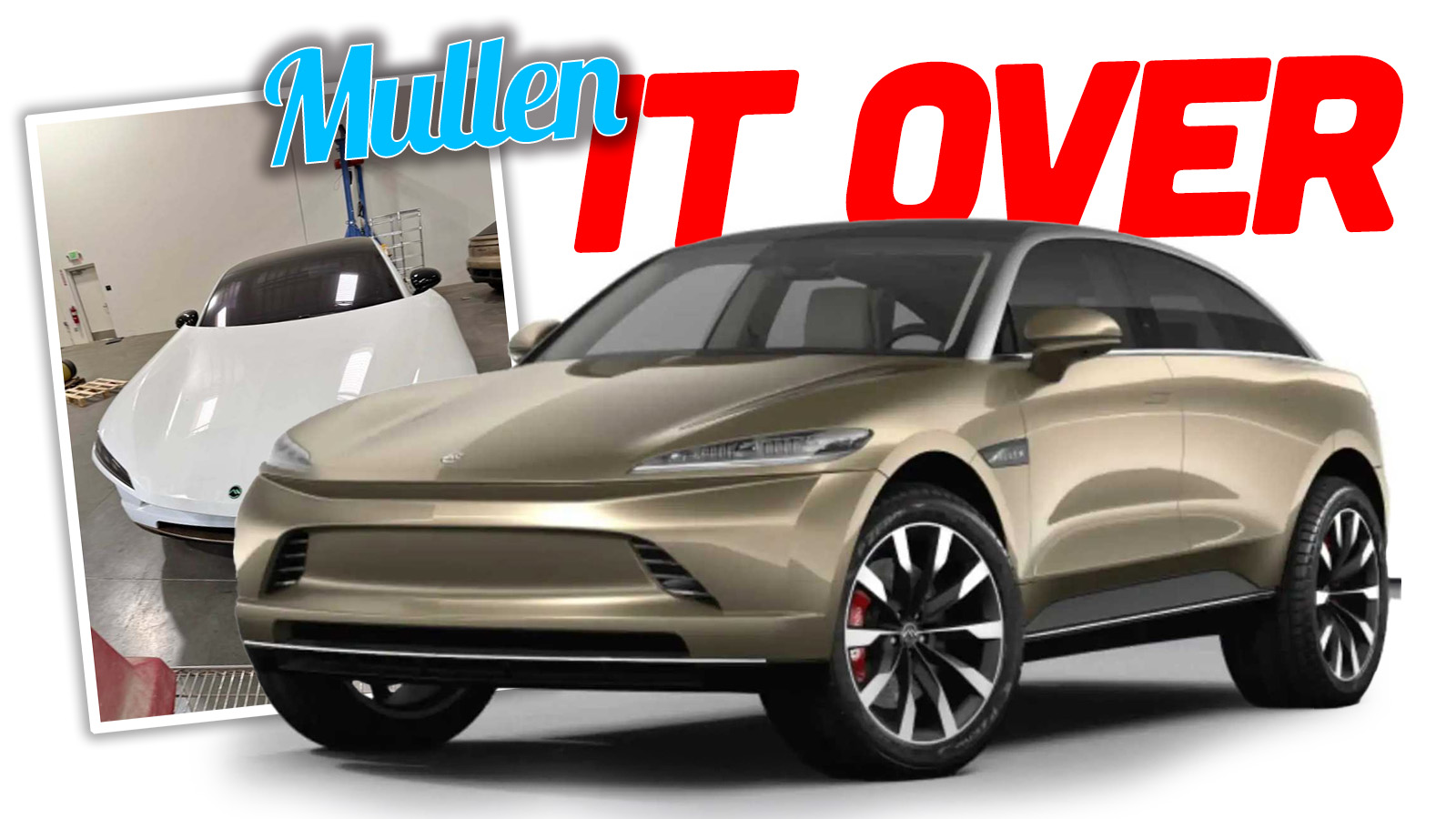
It’s only been a few years and yet the EV startup goldrush already feels silly. In the race to be the next Tesla, a few brands are still around but many more didn’t make it. It seems like that for every Rivian, there are at least two Fiskers. Perhaps unsurprisingly, all those discarded prototypes and concept cars have to go somewhere, and while some have met a date with the crusher, some have ended up on the same platform you use to lowball people for rims: Facebook Marketplace.
Okay, that venue of sale shouldn’t be particularly surprising. After all, Facebook Marketplace has everything from talking fish to energy drinks that may or may not have fallen off the back of a truck to questionable project cars. However, when it comes to unusual pieces of machinery, this Marketplace listing doesn’t give up many details.


This was a concept car form Moler. It does power on and drive. I don’t have any paperwork on it could give you a bill of self.
While the claim that this thing works sounds like a huge win, the general description leaves us with more questions than answers. However, a closer look at the pictures reveals a fender trim piece inscribed with “Mullen”, which more-or-less tells all.

Cast your mind back to 2014, when this whole bubble was starting to build. In Brea, Calif. one David Michery founded a company called Mullen Automotive. The first big move? Buy Coda. Yep, the company that sold a re-engineered, electrified Hafei Saibo to Americans. After a temporary relaunch of unsold Coda sedans as Mullen 700e sedans, it stands to reason that Mullen’s path forward would likely be more of the same rebadged Chinese cars. Well, that only sort-of ended up happening.
See, the first big halo announcement was the Mullen GT, a two-door carbon fiber sports car that would allegedly do 200 MPH. As Jason Torchinsky wrote upon seeing the prototype, “Considering that the build quality of the Mullen GT they had on the floor looked just a few notches below Etsy’s “chimp-crafted” category, I’m not sure I’d want to be anywhere near that thing even if it could hit 200 MPH.” Needless to say, it did look pretty bad, partly because it was basically just a concept car initially unveiled at the 2007 New York Auto Show.
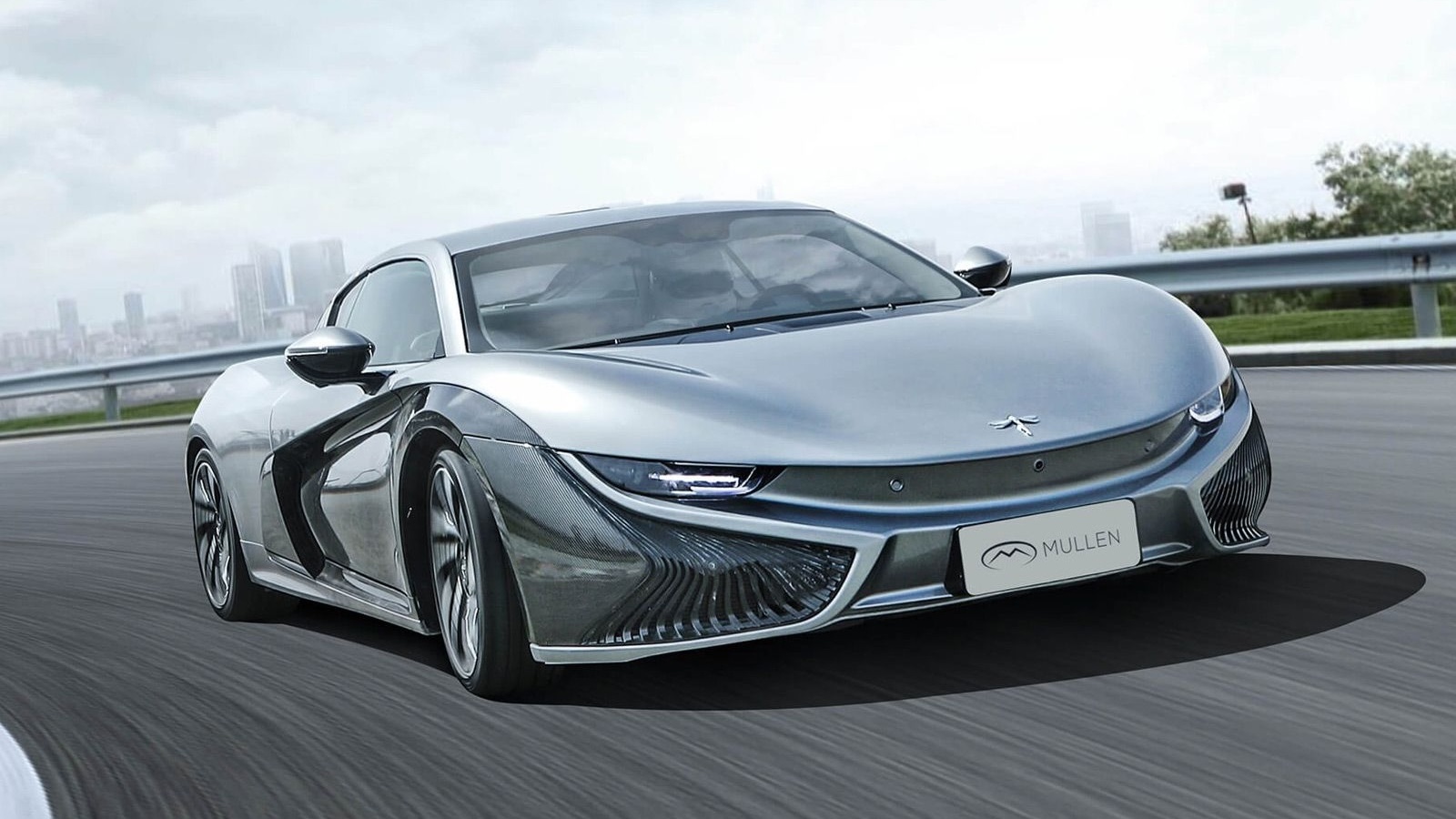
Unsurprisingly, the original Mullen GT didn’t end up materializing. Turns out it’s way easier to just disguise someone else’s cooking as your own, so a few years later, the Qiantu K50 became the new Mullen GT. Along the way, Mullen snapped up failed startup Electric Last Mile Solutions, Mullen went public via a reverse merger with payment services company Net Element, activist short-sellers Hindenburg Research called Mullen “just the latest in a long line of EV hustles,” Mullen bought a controlling stake in electric commercial vehicle company Bollinger, became Bollinger, and then the whole thing went down in flames via receivership in January. However, along the way, Mullen did managed to make a couple of actual cars. What we’re looking at here is a prototype of the Mullen Five.
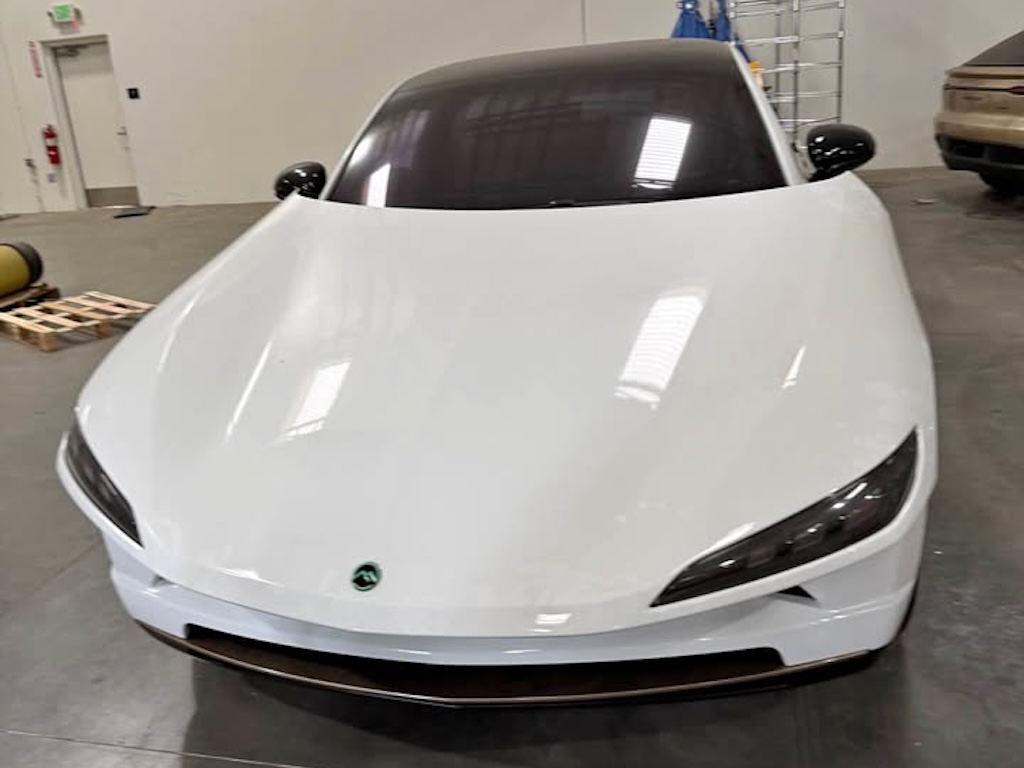
The Mullen Five was supposed to be an in-house luxury electric crossover capable of silly speed. We’re talking claims of zero-to-60 mph in as little as sub-two seconds, power options that went beyond 1,000 horsepower, and a top-spec top-speed of more than 200 mph. This doesn’t look like that fantasy-grade RS model, but instead a prototype of the more ordinary Mullen Five. It still boasts huge Brembo calipers, but genuine output is anyone’s guess, really. After all, this is just a prototype.
Such unknown status makes you wonder how well it actually runs and drives. After all, some prototypes are basically just low-speed mockups, capable of dawdling about and little more. There’s a chance this thing might not be so limited. In 2023, Mullen hosted a drive event around a cone course and Slashgear was able to briefly get behind the wheel of a prototype, writing:
Throughout the lap, the FIVE’s suspension and chassis simply worked. And we know most EVs weigh literal tons, thanks to the batteries that power relatively compact electric motors capable of ungodly instantaneous torque. But when everything’s fast, nothing is fast, so the illusory challenge that engineers face involves masking that heft to create inspired dynamics. In the case of the FIVE, the right word would probably be “flickable,” at least through an autocross course in a horse-race track’s parking lot.
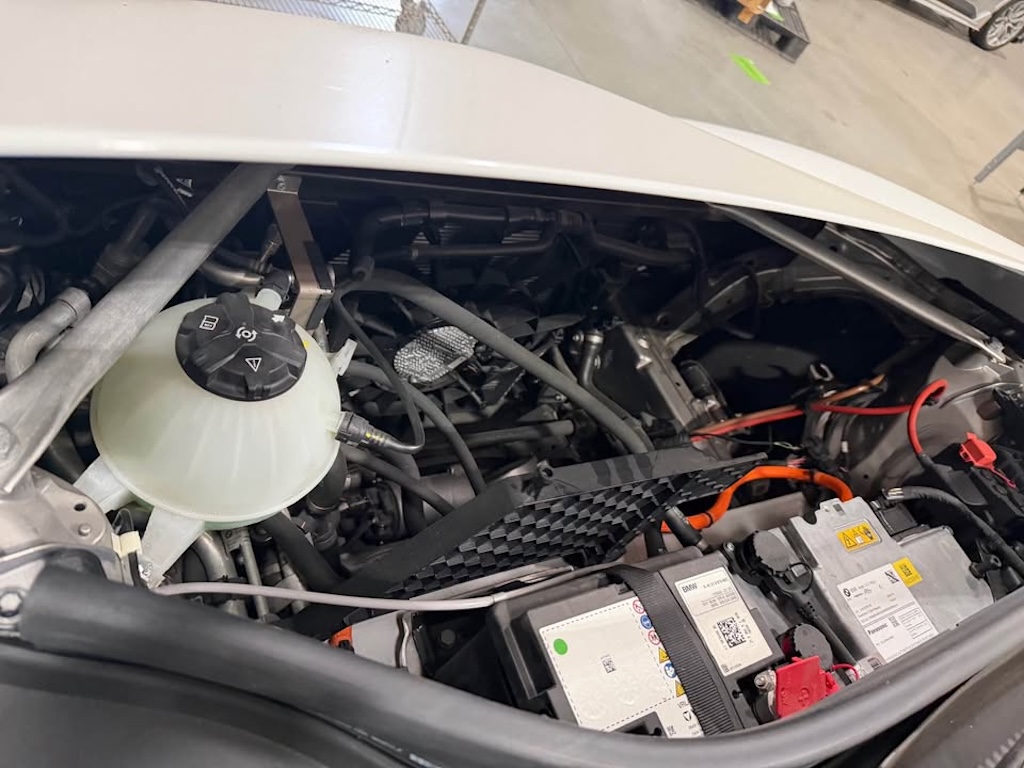
Indeed, this thing seems to have real plumbing and wiring, although it doesn’t appear to be the same unit some members of the press drove. Judging by how there appear to be several more Mullen Five prototypes laying about in the background of this photo set, there’s a good chance this isn’t the last we’ll see of this liquidation.
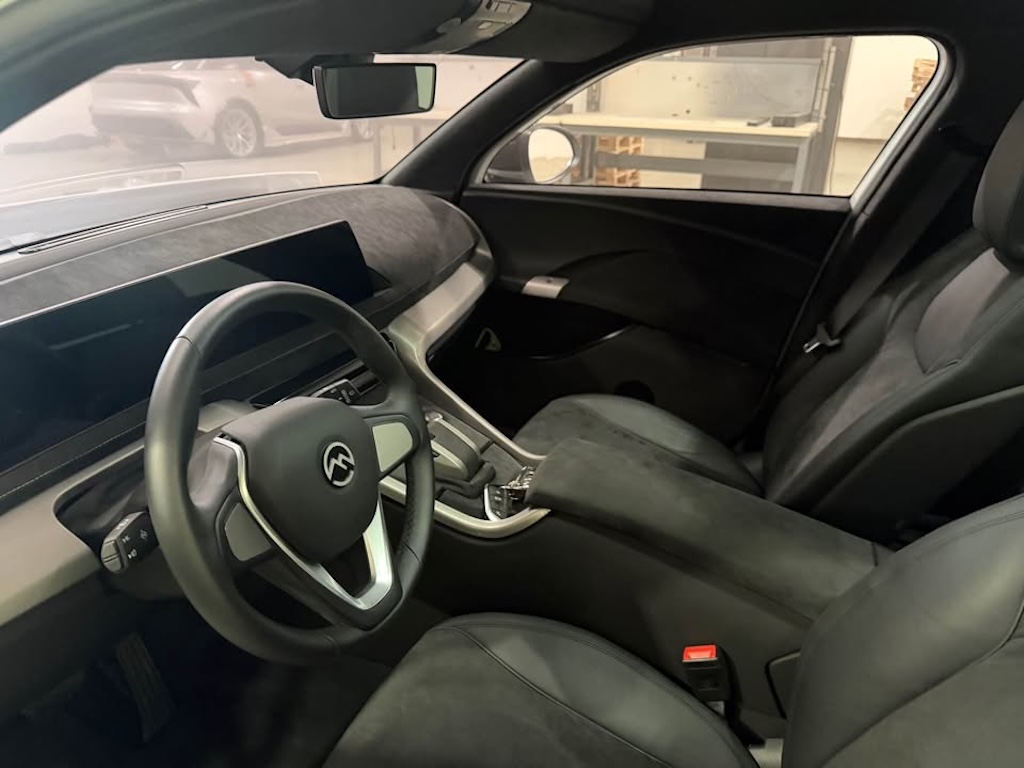
Sliding inside this unusual prototype, it’s hard not to notice a whole bunch of BMW switchgear. The indicator and wiper stalks, steering wheel, and driver’s airbag all look to be pulled out of the BMW parts bin. Oddly enough, the same Facebook Marketplace seller who posted this prototype has two BMW X3 shells for sale at the same location. Could the Mullen Five really have been based on a BMW X3 floorpan or something? At this point, the only way to know for sure is to crawl underneath one.
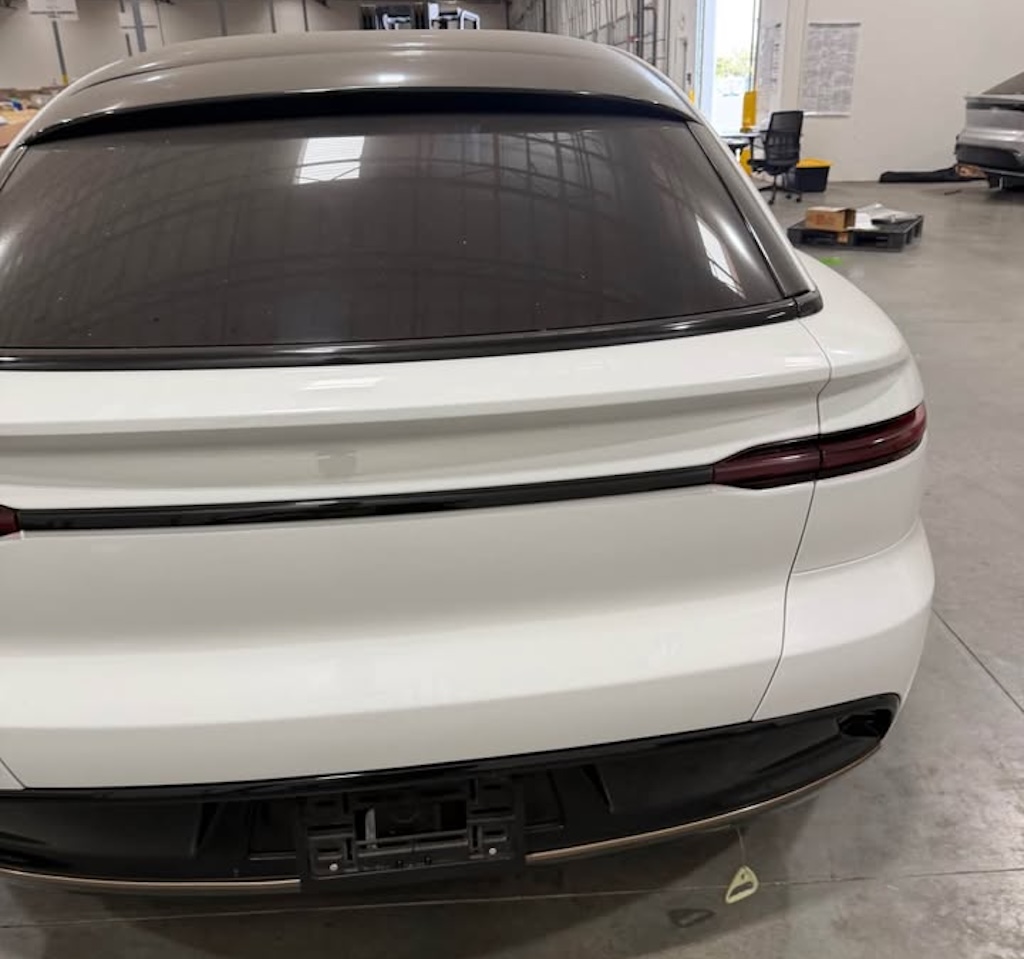
Given how this Mullen Five prototype isn’t exactly road-legal, its potential buyer pool is quite limited at an asking price of $20,000. Perhaps if someone’s putting together an EV museum, this would slot nicely between a Lordstown Endurance and a Fisker Ocean. If that describes you, then hop this link to check out the full ad. Also, can we tour it once it’s open?
Top graphic image: Facebook Marketplace seller


It’s apparently sold.
The top picture had me questioning reality. “Wait, is this an Aging Wheels update?”
Turn that Coda into a chicken coop, Robert!
Ah, obscure EVs and Facebook Marketplace. A perfect combo. I see nothing can go wrong from this pairing!
I DO need a bill of self…
He coaches basketball.
Seems like a lot of money to pay right now for something that nobody’s going to remember until DisneyAmazonNetflix+ releases a slanted and partially researched documentary about it in 2074
Excuse me for never being able to stay on topic but it just occurred to me that despite all the heralding of the Chinese EV I have yet to a reputable car site drive and evaluate it or a car site do a strip down investigation and figure out it isn’t a typical Chinese cancer inducing scam.
Have you ever opened up no-brand something mildly to moderately complex machine made in China? Like a toy or e-bike for kids. I have because a toy I got as a gift brand new was broken. Let me tell you it had the thinnest wires I had ever seen and the soldering was a sloppy mess and that was just the start of the cost cutting.
I wouldn’t trust a Chinese built car unless it had a great warranty.
How is a no-brand toy with a high priority on cost at all an example of Chinese production competency?
China has been producing most of the high-tech products we all use for the last couple decades. This kind of thinking is what will come to bite arrogant western industry in the behind (time and time again). The simple reality is that’s where most of the world’s knowledge on manufacturing and development at the cutting edge currently is, whether we like it or not.
Just because you can buy a 1 dollar toy on Temu doesn’t mean China doesn’t also produce the most advanced of Apple products no other country can dream of finding the know-how high-skilled pool for.
I think one people don’t realize is that the defining feature of Chinese manufacturing is “you get what you pay for.”
The factories don’t seem to ever say no, and will work to your price point. If your price point is cheap, you’re getting something that has the exact amount of materials and quality control that price point gets you. The cheap Temu trash is from someone saying “I’ll give you five cents per unit” and some factory owner going “I can work with that.”
From my experience buying industrial parts I absolutely agree, though I’d add the second point “so long as they know you’re watching”. If you pay $1 per unit, the first batch will be the $1 per unit quality, but the second batch may very well be the 5 cents per unit quality if you’re not watching. Not every company every time, but definitely enough that you need to keep an eye out for it.
We’ve ordered parts from Chinese companies that the first one was absolutely perfect, better than every other supplier and the second one had areas that were multiple inches out of alignment and you could see it was crooked from 20 feet away.
About as relevant an observation as pointing out the lack of quality and poor service in a McDonald’s to justify not purchasing a dinner at a Capital Grille or Mortons.
Yea, I don’t really have a horse in this race, but I do feel this mantra is repeated too much lately.
The Chinese economy’s foundation is building everything. And this includes the crap you keep buying. That is exactly the thing. As long as you big spenders keep on wanting to buy crap, they will gladly make it for you.
On the other end of the spectrum, they have rapidly become world leader in building things that require quality.
My Cooper SE was built in China. And while, at six years old, it is to soon to judge quality, it feels like good quality to me. Definitely when compared to the chevy volt I drove a few weeks.
The computer you are using was probably bult in that region of the world, with a lot of Chinese parts and it will probably live longer than its predesessor. At least if you are not running that all to popular American operating system on it. Same for the phone.
This is exactly the same koan muttered about Japan, Korea, Germany and others prior to and during their rise and ultimate dominance.
If you can’t or won’t compete, get out of the way because they are coming for your money.
I think Munro did a full tear down of a BYD. In true globalist tradition there was a lot of borg-warner stamping in there. There’s likely nothing unusual or interesting about the cars themselves from a manufacturing perspective.
No, the issue is on the economic side with subsidized overproduction. Having ridden (not driven) in a number of Chinese EVs I’m confident the hype many have is entirely around price, a price that isn’t “real” at all. Otherwise, they’re just cars. They’re fine. Software stack and integration is above average, seats and surfaces below average.
Probably this one: https://www.youtube.com/playlist?list=PLkiDlGyJnprdhDAHELriG–HTcevfj6xj