


When you’re fixing a car in your garage, you might rely on the parts stash up in the loft or tucked in the back shed. For the most part, automakers haven’t done this in ages. Instead, parts arrive with exceedingly short lead times, keeping orders and factory footprint under control, at least in theory. In practice, things have been volatile enough over the past few years that some automakers are reconsidering. General Motors is moving ahead with securing $4.5 billion in new car parts, and it speaks to a truth that might change the way cars are built for the foreseeable future.
Meanwhile, Jaguar’s unveiled the interior for its forthcoming electric four-door, we finally know how much the compact Kia EV3 will cost in America, and Porsche throws a connectivity bone to owners of 2009-to-2016-ish sports cars. All this on today’s issue of The Morning Dump.


Over The Hedge

If you’ve never toured a car assembly plant, I can’t recommend it highly enough. We all have an inkling of just how complex modern cars are, but it truly is mesmerizing to watch tens of thousands of parts, big and small, come together to create a fully-functional vehicle. Of course, take one of said parts away, and the entire process just stops. That’s why General Motors is about to use an intermediary to secure a $4.5 billion stash of car parts. As Bloomberg reports:
The automaker reached a deal with Procura Auto Parts LLC, which will buy parts inventory from key suppliers and front the cash, GM said in a securities filing on Tuesday. The automaker will pay Procura interest and fees upfront, and pay for the parts when it needs them. The suppliers will store the inventory.
While a $4.5 billion parts hoard might sound excessive, there’s a good reason for it: GM seems to reckon that supply chains just aren’t stable enough for Just-In-Time delivery anymore. In case that’s a new phrase to you, one of the big production innovations of the past half-century was continuous truckloads of just enough parts to keep the line going, resulting in lower inventory and substantially faster turn-rate of supplies. It works wonderfully when everything’s flowing smoothly, but the past five-ish years have shown that anything can happen.
Remember the chip shortage of 2020 and how that stripped a whole bunch of features out of new cars as production rebounded quicker than forecast? Well, similar shocks to that have occurred since. For instance, Volkswagen Group ran into issues four years ago when supply of wiring harnesses from Ukraine stopped being a guarantee. The Russian invasion led to assembly plants across Germany grinding to a halt, another unforeseen production stoppage. [Ed Note: Parts shortages meant very few BMW i3s were equipped with Harman Kardon audio systems after 2019. -DT]. On a very different note, the parent company behind some major automotive brands including Autolite, Fram and Trico filed for bankruptcy in 2025, leaving major automakers like Ford and GM in the lurch. The company’s since moved towards liquidation.
While GM hasn’t officially stated exactly what car parts are part of this new plan, fronting the interest and fees for guaranteed access to parts is the exact opposite of a vote of confidence for just-in-time delivery. Don’t be surprised if we see more deals like this in the future, as general volatility continues to disrupt trade.
That’s A Jaguar?
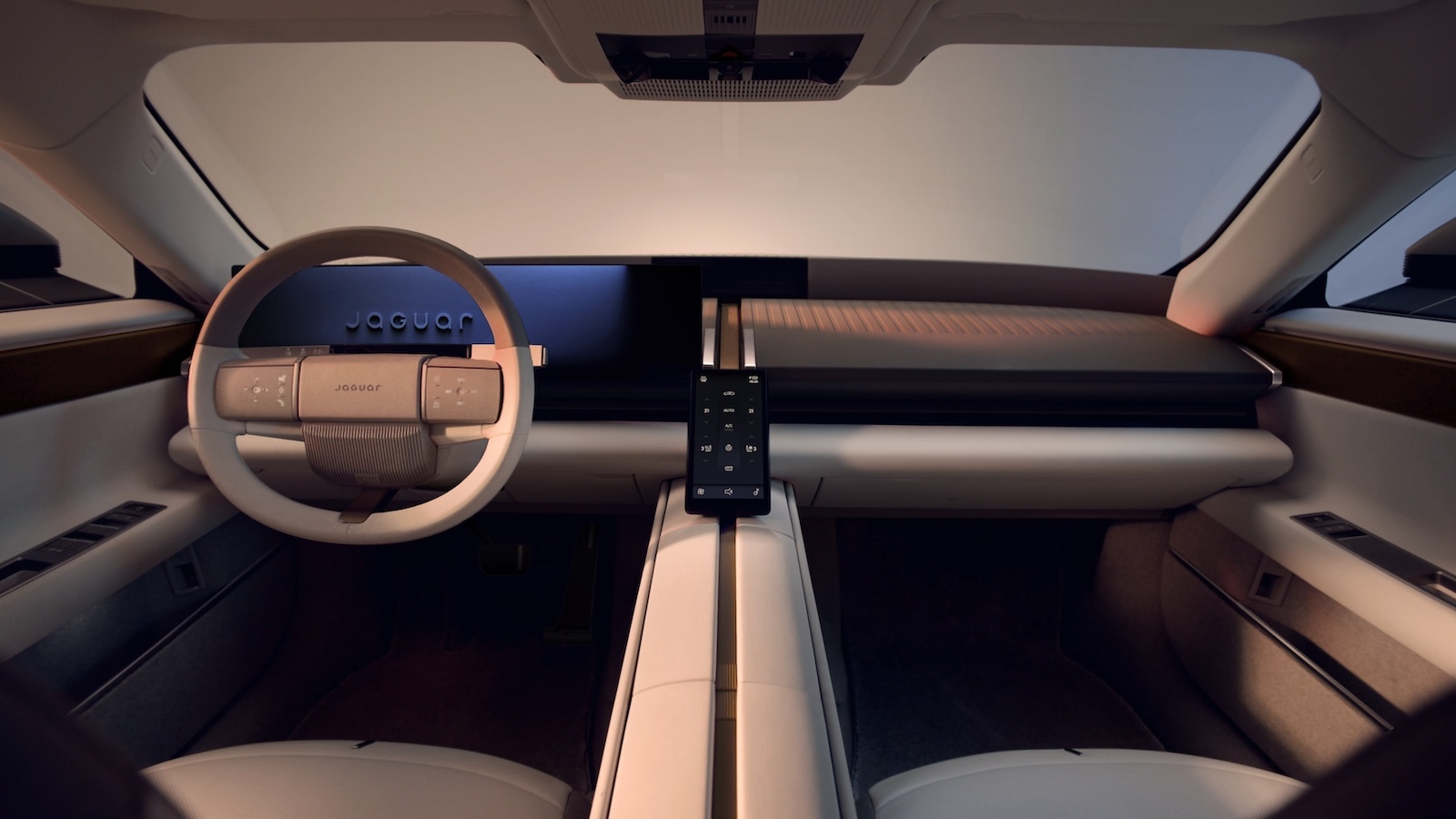
It’s been a long, slow reveal for Jaguar’s relaunch. The actual debut of the Type 01 electric sedan is still months away, but that certainly hasn’t stopped the British marque from peeling things back layer-by-later. The latest element to be shown is the interior of the new model, and it’s nothing like your granddad’s XJ6.
On first glance, the dashboard of the Type 01 features a large digital cluster, a small portrait-style infotainment screen, and that’s it. No knobs on the console, no buttons on the center stack. While the flat passenger dash top looks smart, I do have some usability concerns around that Ken Doll-smooth HMI. In the photo, it even looks like volume’s in the screen or potentially on touch-sensitive steering wheel controls. Oh dear.
Beyond that, there are a few other things to note inside the Type 01. The rear-view mirror isn’t a mirror at all, but instead a digital camera-and-monitor setup with a display at the base of the windscreen. No, Jaguar didn’t photoshop out the rearview mirror, it’s really just like that. Oh, and this new Jag really is a four-seater, with that central spine running all the way to the back of the cabin. It’s all starkly minimalist, and I’d be curious to see how the interior looks in other colorways. We’re a long way from slabs of walnut now, aren’t we?
A Cheap And Cheerful Korean EV

When Kia announced that the EV3 was coming to America, the main question around this entry-level electric crossover was how much it would cost. Now we know, and it seems rather competitive. The base EV3 Light starts at $31,385 including freight, although it’s the only U.S.-spec model to feature the small 58.3 kWh battery pack. As a result, range stands at 221 miles, not exactly giving the Nissan Leaf and Chevrolet Bolt a drubbing. However, spend $36,485 and you’ll get into the Wind FWD, the cheapest long-range model. With an 81.4 kWh battery pack under the floor, this EV3 trim is rated to go 321 miles on a charge. That’s more like it, and with pricing roughly in-line with a mid-range Nissan Leaf SV, it should prove fairly competitive.
Beyond that, there’s a Land trim for $39,985 which adds features like a sunroof, a 360-degree camera system, and ventilated front seats. One step up from there sits the sporty-looking all-wheel-drive-only $44,985 GT-Line trim, and a 288-horsepower GT model rings up at $47,385. Should you want 261-horsepower dual-motor all-wheel-drive with a more affordable price tag, add another $3,700 on top of the Wind FWD trim, $3,200 on top of the Land FWD trim.
That’s a lot of money at the top end, but if you stay reasonably cheap and cheerful, the EV3 looks promising. Each variant comes with wireless Apple CarPlay and Android Auto, all trims save for the shorter-range base model come with heated seats, but only all-wheel-drive variants come with heat pumps. I guess we’ll find out what that means for real-world winter range.
Older Models, New Tricks
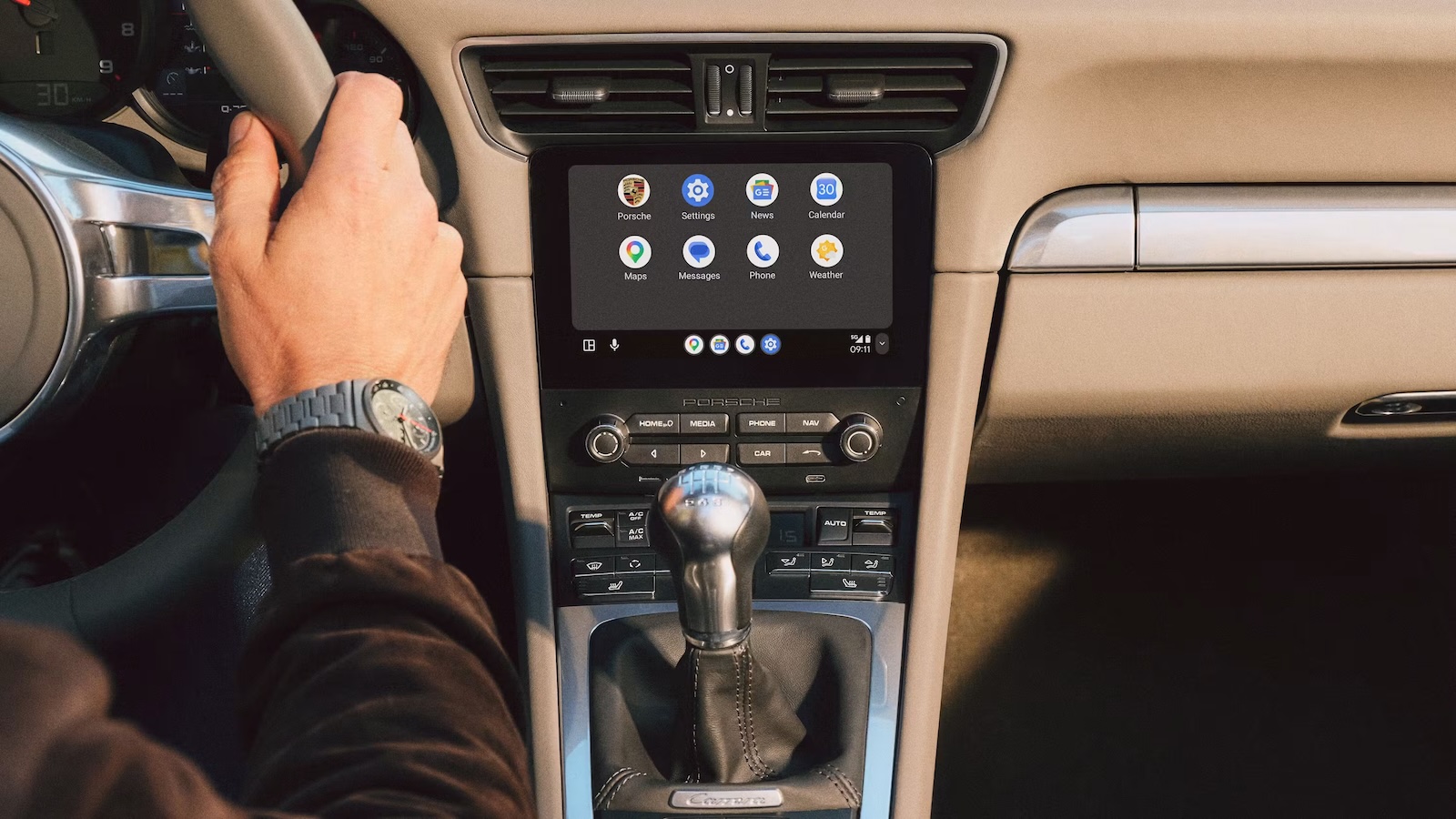
Speaking of Apple CarPlay, if you own a Porsche 911, Boxster or Cayman from the late-2000s to the mid-2010s, you might want to lean forward for this one. Porsche has officially announced versions of its PCCM Plus classic infotainment systems specifically for the 987.2 Boxster/Cayman and 997.2 911, along with the 981 Boxster/Cayman and 991.1 911. These units look the part with all the right styles of buttons and knobs, but feature wireless Apple CarPlay and Android Auto, along with the promise of more responsive, more modern hardware and full integration. Steering wheel controls, instrument cluster display, parking sensors, the works. On the unit for the 991.1 and 981 models, you can even customize the system to show your exact model and color.
The main downside here is that the units aren’t cheap. While the unit for the 987.2 and 997.2 is going on sale in the next few months, the unit for the 981 and 991.1 carries an official list price of $3,519.87. Granted, dealers are already discounting it by as much as 20 percent, so there are relative deals to be had. Still, it’s cheaper than upgrading to a newer model, and once the 987.2 and 997.2 version launches, there will be factory-authorized Apple CarPlay options for every Porsche sports car save for the 356, Carrera GT, and 918 Spyder. Neat.
What I’m Listening To While Writing TMD
It’s kinda messed up how “Hang Me Up To Dry” by the Cold War Kids is technically 20 years old, right? All that time and yet it still feels damn fresh.
The Big Question
Are you increasing personal stock of any car components or consumables in response to general volatility? Not to the scale of GM, obviously, but it’s probably not a bad idea to stock up on that GTL synthetic oil you like.
Top graphic image: Chevrolet


“non-stock production” (eliminating all inventory except for that which is actively being processed) is one of the two foundations upon which the Toyota Production System is based (the other is maximizing the value added by each operator by incremental efficiency improvements)..
Toyota evolved that philosophy to permit some inventory as mitigation for supply chain risk: e.g. integrated circuits during pandemic).
GM is a little behind here…but this is a smart play.
I don’t believe GM went all this time and didn’t have some type of inventory mitigation plan. This seems like a different way to mitigate it and since I am not an accountant, there must be some financial incentive for them to pay a separate company extra money and interest up front to buy the inventory, because the suppliers are still physically holding the inventory until GM needs it.
ya, gm is paying a (predictable) premium to new intermediary – which they figure is less costly than risking a stock-out
“GM seems to reckon that supply chains just aren’t stable enough for Just-In-Time delivery anymore. In case that’s a new phrase to you, one of the big production innovations of the past half-century was continuous truckloads of just enough parts to keep the line going, resulting in lower inventory and substantially faster turn-rate of supplies. It works wonderfully when everything’s flowing smoothly, but the past five-ish years have shown that anything can happen.”
*remembers toilet paper shortage*
Yep. Nothing throws off a big, flowing JIT production line like that. Now I keep at least two gigapacks of “the good stuff” in an undisclosed location should SHTF again.
“The main downside here is that the units aren’t cheap.”
I’m shocked! SHOCKED!
Well not THAT shocked.
Oil.
I guess Jag really wants to sell a few cars in china and none anywhere else.
Perhaps someone can explain to me why just in time delivery works when auto manufacturers are required to have parts available for cars years after a car is made? I mean a steady supply of parts for production and for repairs seems a better idea and you have what you need in reserve after production stops so you aren’t paying to keep a defunct auto parts line open
God has Jaguar lost the plot. That is an abomination.
part the gm story makes sense. Chips, harnesses. black swan stuff with long lead, or complex parts. But, i suspect a big part of the problem is how gm treats her suppliers. My experience dates back to inaki lopez and the 3-2-2. It got worse from there. in 2008 we decided to “No Quote” all new gm work and we are better off. Fewer hassles. Threats. Scrambles. Build drop ins. And our current customers pay their bills. FCA.Nissan. Ford, Caterpillar, Cummins, International, Deere are great.
First it was the motor oil shortage, which still hasn’t happen.
Now its a parts shortage?
No, I’m not stocking up on parts anymore. I still have too many parts for cars that I no longer own. You think you’ll need this part or that part later but things will change.
Not even oil, I still have 10w40 that none of my current cars will use.
But OTOH, Amazon Prime just failed me in my attempt to fix my car with JIT parts, and my car was down for 2 days longer than it should’ve been thanks to their delivery delays.
Just like my bin of PC parts and cables I’ve never touched. I might need something someday……………….
I purged a lot of that stuff a few years ago, due to again. I don’t think I need 2 dozen MicroUSB charge cables anymore.
And yet there are companies selling the parts all day long. Do you have Facebook?
No I don’t use facebook. There’s no market for old car parts in a small geographic area anyway.
Ebay doesn’t treat sellers of auto parts fairly. You’re required to rely on ebay for their guaranteed-to-fit thing and if it doesn’t work you got to take the return even if the buyer did no due diligence.
And so the parts sit …
That reminds me, I need to stock up on oil filters for the Prius. I can no longer just walk into WalMart and pick up one of the nicer Fram filters and a jug of SuperTech like I used to. I forgot about the First Brands debacle last time I did an oil change and just lucked out that they happened to have an OEM Toyota filter in stock too. The filter aisle was a ghost town.
I also have a spare inverter coolant pump in the underfloor storage because I had to install a crappy aftermarket one when it died on a road trip last winter. Despite costing more than double what an OEM one would have, I hear the aftermarket ones are prone to dying after as short as six months.
I also have a rather extensive stash of spare mountain bike parts, which came in handy recently when I dropped a brake pad in a container of oil while doing some maintenance the night before a race. Bike parts take up a lot less space than car parts though, so I don’t really have as big a car stash.
your prius deserves something better than Fram. With respect.
I don’t use the cheap Frams, I use the high end ones that filter as well as anything else on the market, but don’t cost that much more than the basic garbage.
got it. will research
I just buy the OEM Toyota/Denso filters for all my Toyotas at this point.
Same
Same. It’s annoying they don’t come with a new oil drain bolt washer though.
It’s a good thing you can’t put junk Fram filters on your car. They were junk for multiple reasons. Didn’t matter if you bought the expensive ones, they were all cheaply made and would bypass unfiltered oil. On my daily, I run OEM Toyota. Everything else gets a Wix or OEM.
The First Brands Group management mantra was to buy a company, outsource as much as possible to the cheapest Chinese supplier, fire most employees, and then take out huge loans so they could repeat the process on another company they bought. I’m glad I was let go when I was in hindsight, it was a huge benefit in the long run.
-Former FBG Employee
IIRC they were actually good filters back in the Allied Signal days.
I see a parallel between GM setting up a supplier buffer and the story a few weeks back about how the Japanese manufacturers wanting to standardize on parts. If Ford or Stellantis also join in this will likely lead to common things like O2 sensors to get standardized to a few variations and now multiple vendors compete for a share of the pie. The good that would come from this would be that it would make cars far easier to fix and maintain due to interchangeable parts, but the bad that may come with it is one person might buy a car using a Bosch MAF that lasts 200K miles, and the next guy buying the same car gets one with a Blue Spark MAF that lasts 5K miles before going bad.
Standardized OEM parts would also mean standardized required lifespans. If you can’t hit the reliability targets, you’re not allowed in the plant. The warranty repair costs would kill the automakers.
Maybe this is what you’re saying but I think if it’s like euro cars (and hopefully my understanding isn’t way off) they seem to share many secondary parts. Which has benefits for a consumer of old euro hoopties letting my buy parts made by OE suppliers like Mahle, Behr, ATE, etc while not paying OE BMW parts prices. IIRC a random example my 1983 533i shared a windshield washer pump with several other german cars of the time. I believe its bosch starter and even the windshield wiper motor were similar.
Frustratingly now with an older Subaru I’ve found it’s either go OE or roll the dice with various Rockauto brands. I can’t really go get say a Nippon Denso (or whoever since I don’t know Japanese suppliers very well) ball joint knowing that I’m likely getting OE or close to OE quality for 75% of the price like I could with the BMWs I’ve had.