

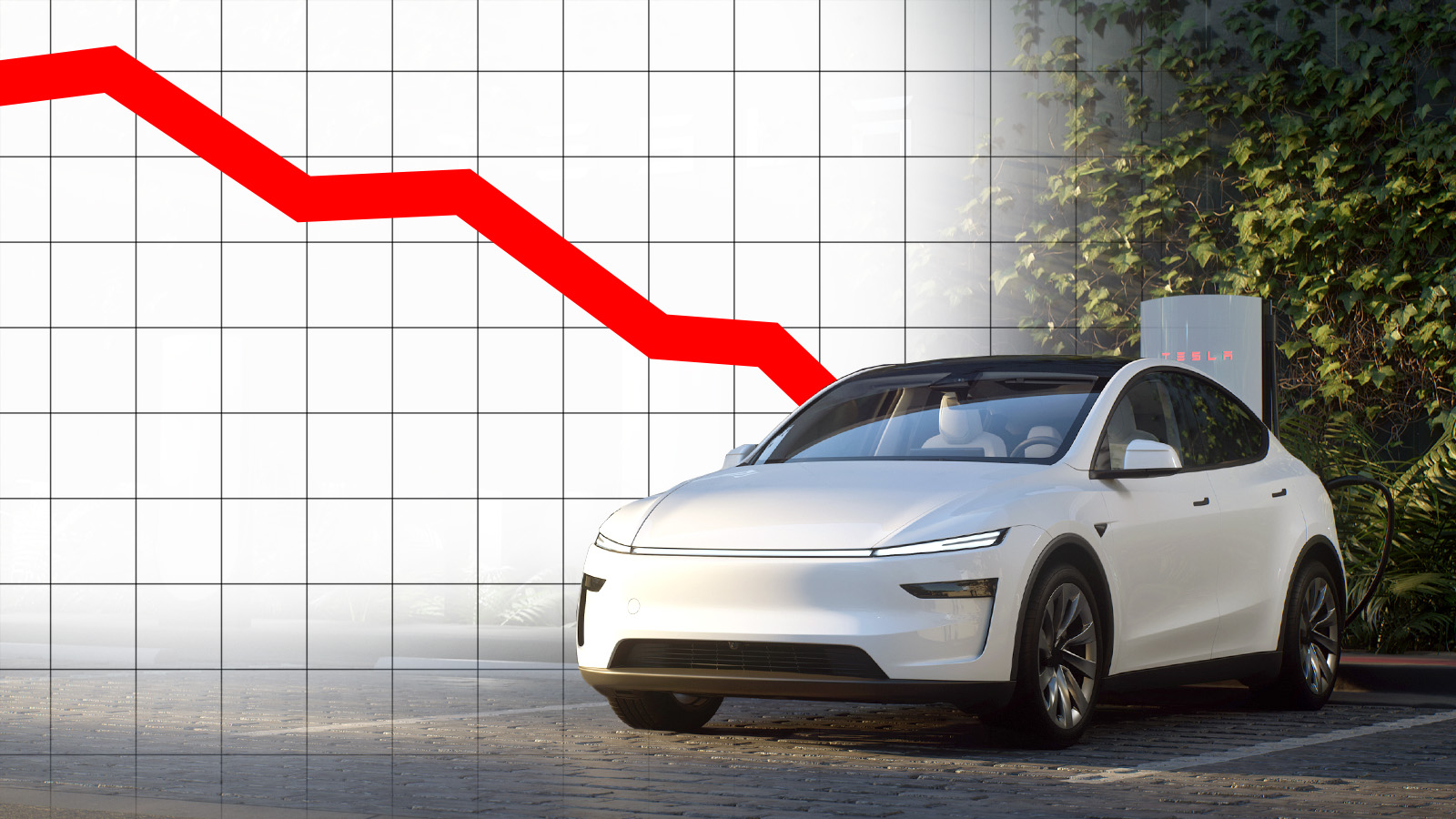
It’s no secret that the impending end of EV tax credits has resulted in a bull rush on electric cars, but not every EV-producing automaker saw the same benefit last month. Just look at Tesla. The analysts from Cox Automotive have crunched the numbers and found that in August, the American automaker’s U.S. EV market share fell below 40 percent for the first time in nearly eight years.
As Reuters reports, while the entire EV market grew by 14 percent last month, Tesla only grew sales by 3.1 percent, resulting in BEV market share of 38 percent. That’s the lowest it’s been since October of 2017, and a precipitous drop over the 46.2 percent market share Tesla commanded in Q2 of 2025.


Flash back to October 2017, and Tesla was just barely starting to ramp up production of the Model 3, and that’s probably an understatement. In a news release from Oct. 2017, the automaker announced that it had only built 260 Model 3 sedans in the third quarter of that year. Cut to the present day, and Tesla has an updated Model 3 on sale at scale, along with the facelifted version of the Model Y crossover that didn’t even exist in pre-facelift form back then.
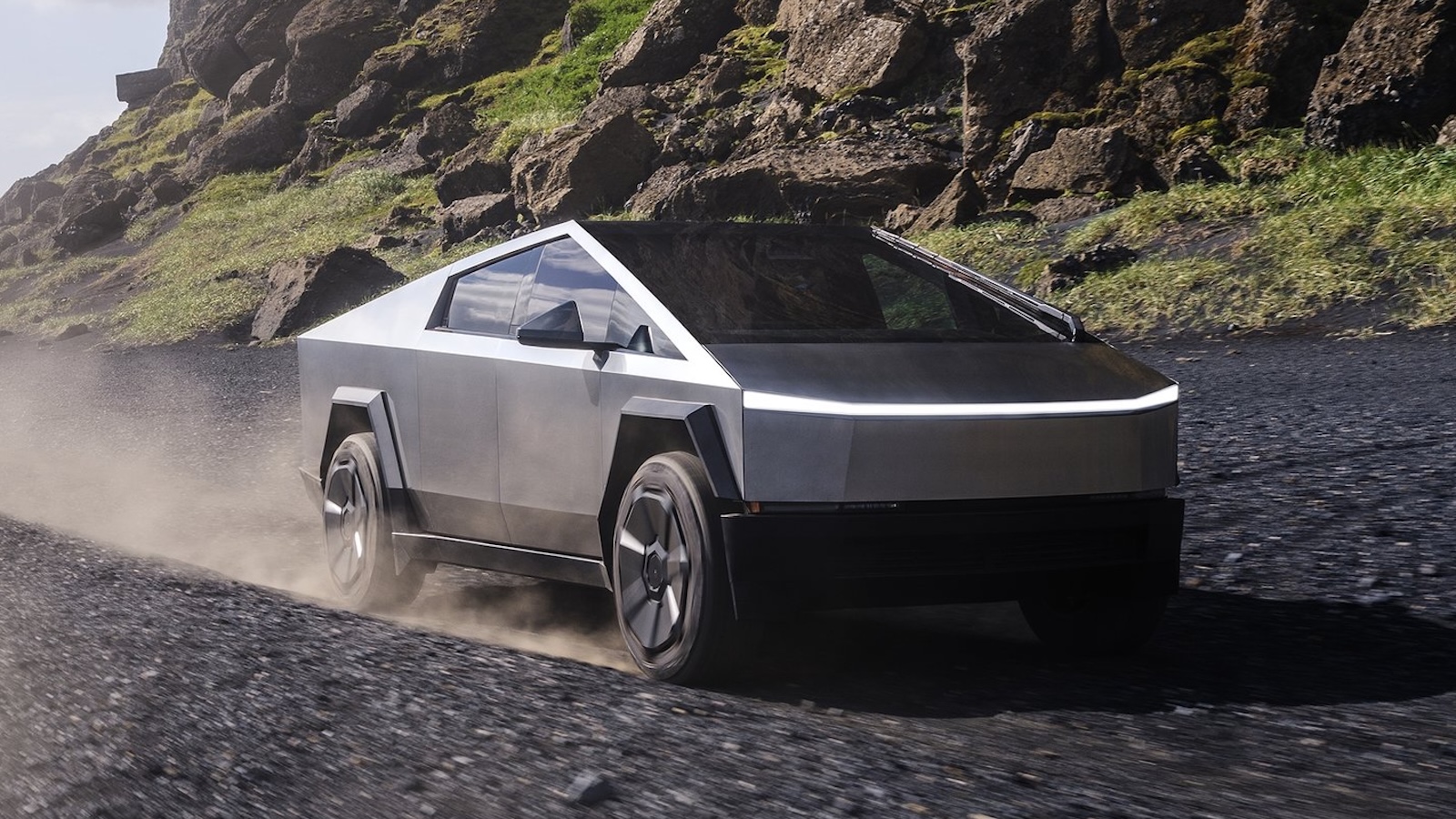
So what’s going on here? Well, let’s start with product planning. Tesla’s only all-new car since 2020 is the Cybertruck, a niche vehicle launched to rather polarized reception. Some parts of this stainless steel-clad unibody pickup like the audio system are better than you’d expect, some parts like the sharpness of the stainless steel panels and the outward visibility are worse than you’d ever imagined, so it’s not surprising that Q2 U.S. registrations of this novelty truck were down 50.8 percent year-over-year to 4,306 units, making it outsold by the Ford F-150 Lightning and the GMC Hummer EV.

Indeed, focus on projects like the Cybertruck, Robotaxi, and the Optimus humanoid robot means that the goal of affordable EVs is on the back burner, leaving white space for other automakers to swoop in and stake their claims. Affordability is a real issue in today’s car market, and with the cheapest Tesla—the Model 3 Long Range RWD—starting at $43,880 including freight, there’s definitely room for less expensive EVs to thrive.
Then there’s the shifting image of the brand’s products, which is hard to ignore given CEO Elon Musk’s recent activities, political and otherwise. It’s no secret that the music a person listens to, the films they love, the clothes they wear, and even the car they drive say something about them, so it’s understandable if some EV shoppers wouldn’t want to align themselves with Musk because that’s not part of their identities.
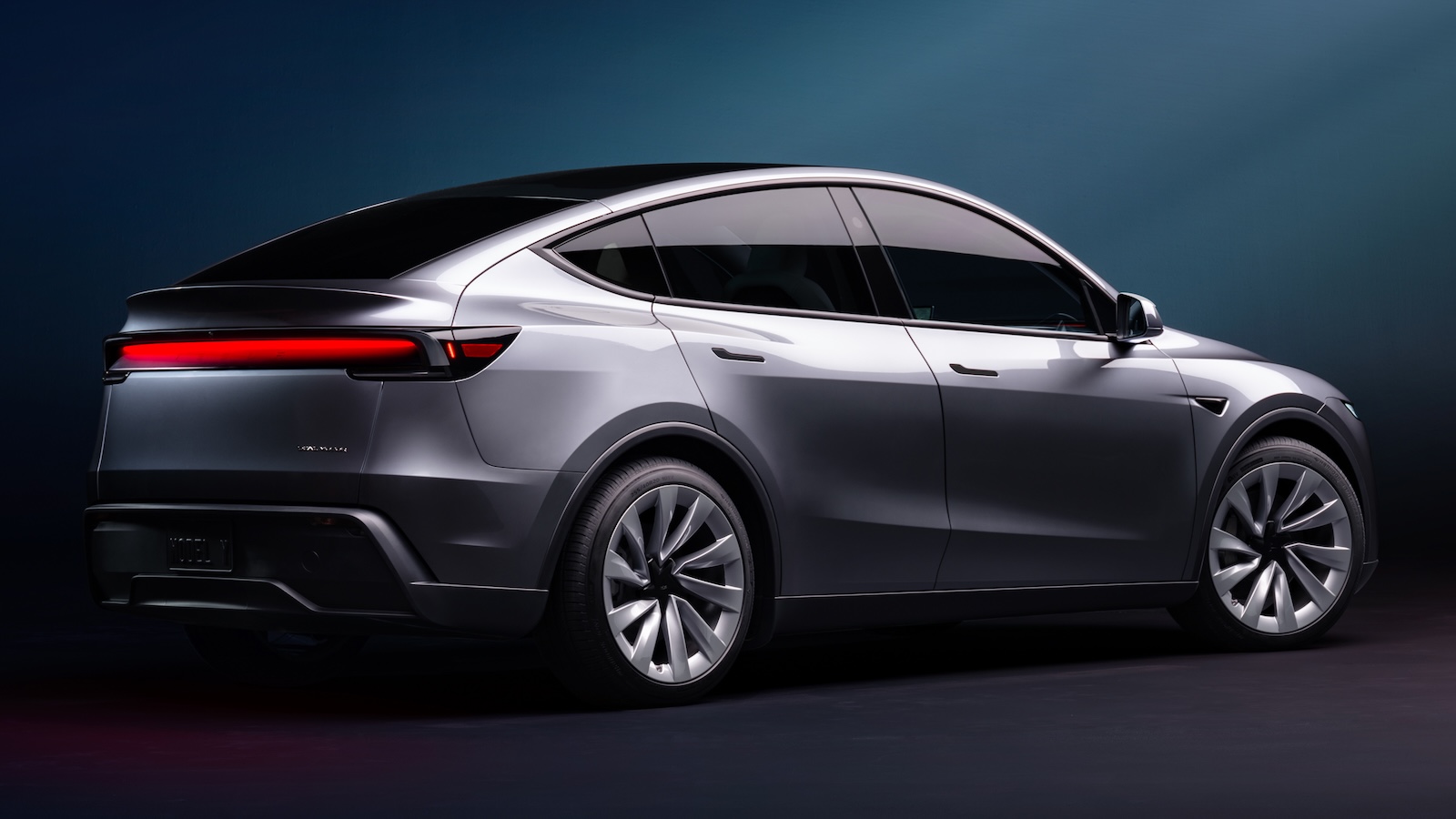
Beyond the “why,” Tesla’s market dominance shrinking is actually a good thing for consumers. In this context, the data’s really indicating that drivers who want an EV have more options than ever to choose from. The Model 3 and Model Y used to be easy buttons for people to press because it was one of the few long-range EVs with quick DC fast charging, but now loads of automakers offer modern EVs that are rated to do 300 miles or more on a single charge and cost reasonable money.
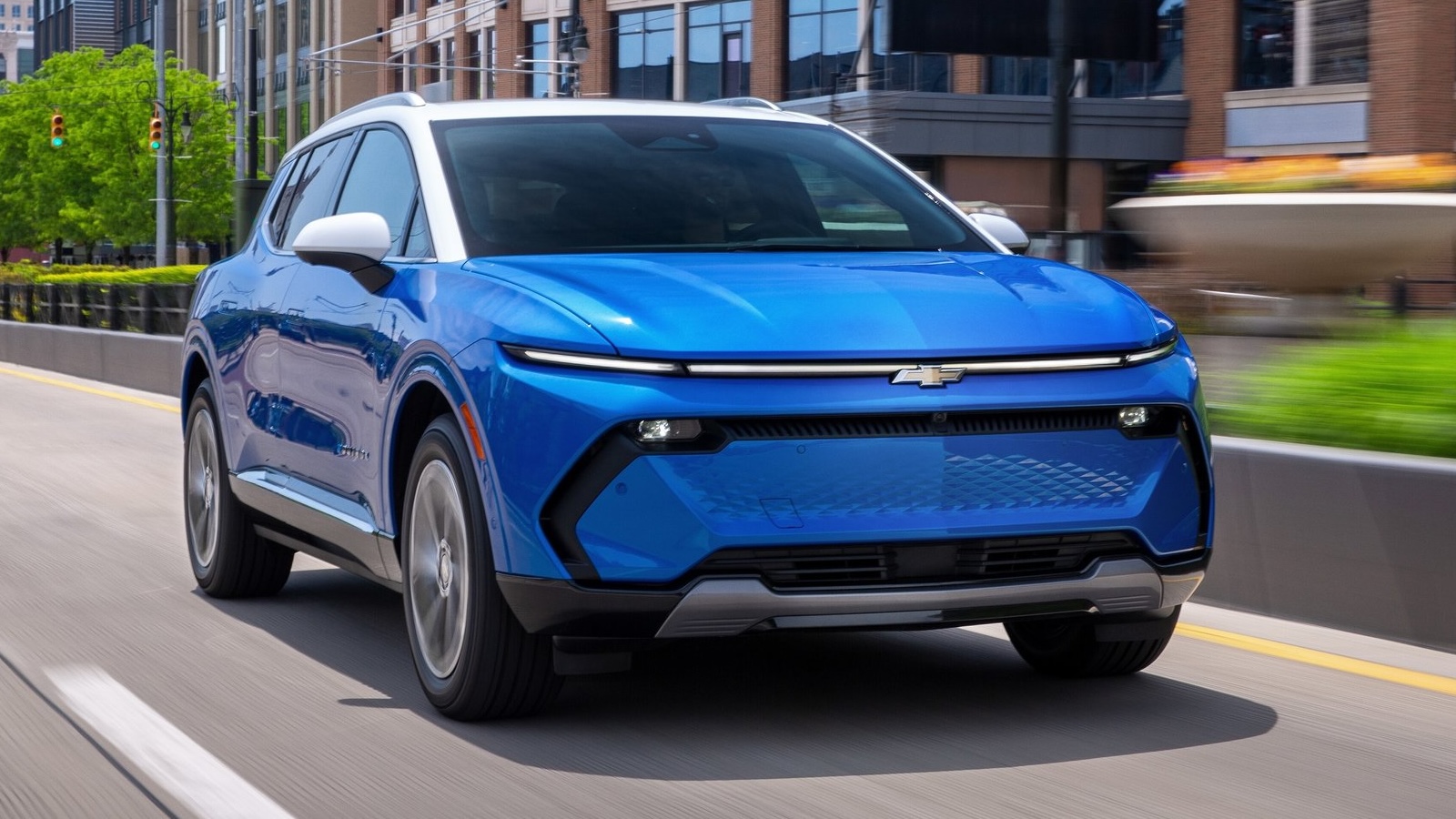
To name a few, the Chevrolet Equinox EV gives you 319 miles of EPA range for $34,995, the incoming third-generation Nissan Leaf is a tempting proposition with 303 miles of range for $31,845, the long-range Hyundai Ioniq 6 SE serves up 342 miles of EPA range and big car space for $44,045, the Kia EV6 Light Long Range RWD offers 319 miles of range for $47,695, and the Ford Mustang Mach-E Premium with the long-range battery pack boasts 320 miles of range for $48,740. Oh, and that’s assuming you pay full price. From subvented loans to cash on hoods, incentives are back, and Reuters states they’re having an effect:
The July data showed rivals outgrowing Tesla. Hyundai, Honda, Kia and Toyota rolled out higher incentives than Tesla and drove up EV sales between 60% and 120%, boosting market share.
“These legacy manufacturers are all benefiting from this sense of urgency, and they’re able to have attractive offerings for their vehicles – and it’s working,” [Cox Automotive director of industry insights Stephanie Valdez] Streaty said. “I think we’re going to continue to see this momentum through September.”
Crucially, all of the non-Tesla EVs listed above can use Tesla’s famously reliable network of DC fast charging Superchargers, meaning that the operational playing field has been essentially equalized. Dependable nationwide road trip-grade charging has always been a sore spot for non-Tesla EVs, and now that’s a solved problem. Oh, and it’s also worth noting that increased choice applies even more at the high end of the market, with the Model S sedan and Model X crossover facing competition from brands as varied as BMW, Genesis, and Lucid.
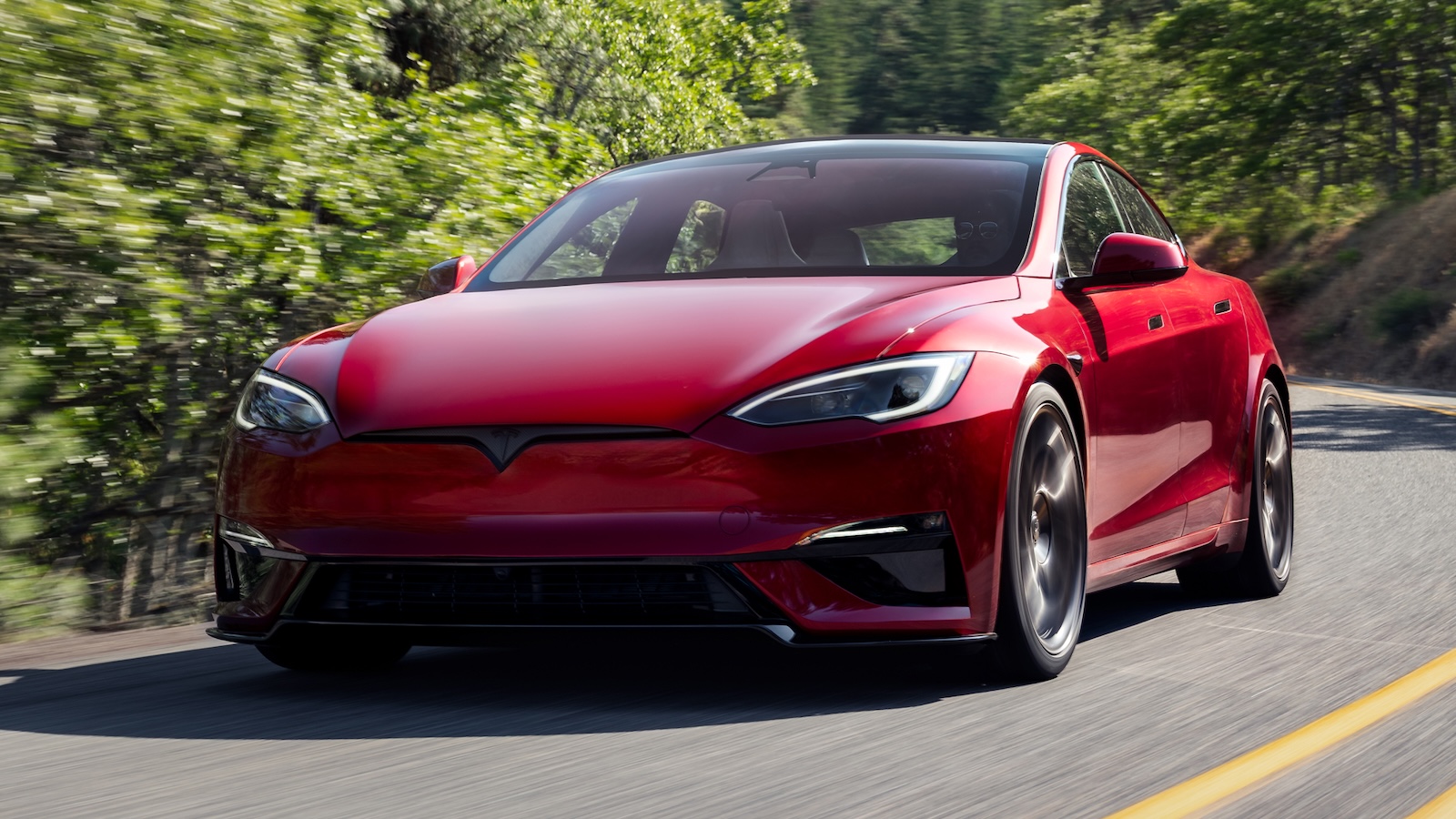
At the end of the day, while Tesla’s market share shrinking might not be good for the company, it’s the expected natural progression of the battery electric vehicle segment. Over the first half of 2021, America bought 216,917 battery electric vehicles. Over the first half of 2025, that figure stood at 607,089 EVs. First mover advantage doesn’t hold forever when everyone else is hustling too, and so long as general battery electric vehicle sales continue to trend upward, a smaller market share for Tesla just means more options for you.
Top graphic image: Tesla
Support our mission of championing car culture by becoming an Official Autopian Member.


Bought a Kia EV6 in early ’23. Cross shopped a model Y just for completeness sake. Even then, the faster and flatter charging curve, proper button based control (at least mostly, the EV6 radio/HAVC separate touchscreen is not great) and more conventional dashboard (ie no pasted on iPad) were clear winners. In addition the ride quality on the EV6 was better and the cabin was far quieter.
Lastly, the Kia ADAS system made fewer promises but kept them better. In ~10 hrs. of driving the Tesla I had ~6 phantom braking events, while I’ve _never_ had a phantom braking event in the EV6. The Kia will chirp angrily and appropriately if I’m approaching a car a bit fast (LA driving, what’re you gonna do…) I put the difference down to the kia having and using radar for TACC/ADAS, while the Tesla was trying to make due with just cameras.
I know it benefits EVs as a whole and the consumer, but Tesla should have never relinquished their charging stations. That was their edge over everyone else. As much as it sucked for the rest of the BEV drivers, the supercharger ease of use was a big draw for me… before everything happened this year.
I have to assume they’re still getting money out of everyone else using their stations, though? Can you imagine if every gas station was a Marathon (instead of it just seeming that way in some places)? Honestly I think the Supercharger network actually is the most brilliant thing that Tesla has done, and until someone ponies up the cash to build out an entire competitor infrastructure, they’ve got that part cornered.
Of course, as soon as they lose that edge, then there isn’t much left to really set them apart…
Oh they must be getting some good licensing fees. I heard Porsche might be the next ones to be able to use Tesla Chargers. Their charging network is brilliant, But like you said, if everyone can use it, the ”roadtrip an EV anywhere on the supercharger highway network” becomes another benefit Tesla loses.
The consumer is sorting it out. They like VHS instead of Beta.
“Then there’s the shifting image of the brand’s products, which is hard to ignore given CEO Elon Musk’s recent activities, political and otherwise…so it’s understandable if some EV shoppers wouldn’t want to align themselves with Musk because that’s not part of their identities.”
That’s a very polite way of saying Musk is a drug-addled narcissist technofascist who tried to dismantle the government (except for the parts that give him billions in taxpayer funded subsidies) while his pubescent minions uploaded every Social Security number to unauthorized storage so now all 340 million Americans’ personal information is at risk.
Thomas seems to spend a lot of time making the neofascists feel better about themselves.
We’re seeing the outcome of Tam Keel’s observation from 2023
“Basically, Tesla’s challenge was to learn how to make a car company faster than established car companies could learn how to make Teslas.”
Losing the USP of the charging network means Tesla’s aging product line has to compete on features and image. No wonder people are buying other brands.
I wonder where Tesla would be if they did not have to listen to Elon. Instead of the Cyber truck there may have been a more normal truck like Rivian. Instead of investing in robot taxis and robots, perhaps there would have been a new (not updated) Model S and/or Model Y. So the company is tanking and what does the board (all friends of Elon) do? They make Tesla an Elon ATM so he can continue to milk the company of much needed R&D monies.
Probably all this, but their market cap would also more realistically reflect their true value, instead of being based on Elon Musk’s grandiose and nebulous visions for the future
Musk could “retire” to the Board, keep his salary, and just name a new CEO — I bet their sales would see an instant bump, as well as the stock. This seems like a win/win/win but there’s no way his ego is going to allow that.
Stock would crash without Musk in charge. It’s a Musk meme stock at this point.
I think there are a lot of actual investors in the stock who will have to bail when it starts taking a beating.
“Stock would crash without Musk in charge. It’s a Musk meme stock at this point.”
I don’t believe that’s true. If JB Straubel took over, I think it would actually be beneficial… especially if there was a clean break between Musk and Tesla.
If Tesla’s stock price were about $26, it would be in line with its P/E. Over 90% of its value is meme-based.
In my estimation, partly influenced by their IP, I think fair value is around $50-$60 per share.
A higher valuation can be justified IF there is a high level of growth.
And when I was invested, the level of growth was high.
But that’s not reality anymore.
When Musk did the idiotic Trump/DOGE thing, I was very certain it would lead to a political backlash eventually… which is why I sold.
That backlash happened faster and harder than I expected.
But the share price has also been far more resilient than I expected
I suspect what is keeping the share price high are some large investment funds and some people in that industry (like Ark Investments/Cathie Wood) are propping up the shares.
That can only go on for so long before the bottom falls out.
I’ve seen this kind of thing before… like with internet and telecom stocks in the early 2000s.
Telecoms did great in the 1990s because a lot of systems needed updating because of Y2K.
And Internet Stocks were the new high growth thing.
And these stocks were propped up by big investment funds… until the bubble burst starting in 2000… and it wasn’t fully deflated until 2003
https://en.wikipedia.org/wiki/Dot-com_bubble
The ‘internet’ and telecom stocks of back then are the “AI/Artificial Stupidity” stocks of today.
Unless Tesla starts to grow again (and I think that will take a miracle), I predict Tesla’s bubble will burst too… but it will take a few years to fully deflate.
And Tesla and the purveyors of “AI” won’t be able to use “AI” to juice their share prices anymore.
That’s not enough distance to get his stink off the company.
Tesla was competitive when there was no competition. They carved themselves a nice Niche, but are not capable of holding it long-term with current leadership.
Once they started losing ground, Elon started talking about robots and AI. If they want to remain an automaker, they need serious people steering the ship.
I’ve said since Day 1 (well maybe not Day 1, but around the time the S got popular) that all it would take is a couple major automakers to get serious about EVs and they could crush Tesla.
That didn’t start coming true until much more recently, but I also never imagined Tesla would sit around letting their product get stale like this.
I’m a fan of conservative, clean design and iterative changes, but I never imagined I’d be sitting here looking at the same four suppositories as a decade ago. Plus the metal kidney stone, but we don’t talk about that one.
Musk is responsible for the stock price.
Unfortunately he is also responsible for their product lineup and a lot of questionable design decisions that make Teslas seem weird (in an un-cool way) when compared to some EVs from mainstream companies.
He got them more than enough money to develop their next generation of vehicles. He spent it moving the entire operation as a tax dodge / fu to workers. He spent it on the CT. He spent it on the robotaxi.
Like most tech founders, he assumes that he can just talk his way around failures and keep the train rolling with new investor money. He does not have what it takes to actually run an ongoing concern.
It is jarring that this thing is still selling at a rate of almost 20k units per year. I can’t believe they can find more than a few hundred buyers per quarter. 4,000 per quarter is ridiculous.
I can believe it, I see a ton of them here in Texas.
They better not sell any more around here or I’ll be driving one-handed because my other hand will be constantly flipping the bird.
I just point and laugh, because you never know who’s packing here.
But, considering they tooled up to build 250,000 of them a year, it is quite clearly an enormous flop that can’t be adding anything to Tesla’s bottom line. Really, I have to think they are continuing to build it mainly to save face, but the numbers would indicate they are going to have to pull the plug sooner or later
Tesla pricing has actually gone UP since the end of the tax credits was announced. Before that, the Model 3 (listed at $43,880 here) was actually available to lease for the same price (due at signing and monthly) as a base Honda Civic.
So, that was pretty affordable.
“Essentially” is doing some work here, because Hyundai/Kia charge much slower than their optimal rate on Superchargers, for now, and virtually all non-Tesla EVs have to park weirdly (often blocking two spots) to charge at the most common Superchargers (V3). Not to mention the required adapter for most (which isn’t a big deal, really) and Tesla’s far superior trip routing software (which IS a big deal for people who are new to EVs and aren’t early-adopter types that don’t mind using a few different apps to piece together a good plan.)
That being said, the opening of Superchargers for non-Teslas HAS been a big quality of life improvement for many, for sure! I just wouldn’t say it’s an equal experience with Teslas.
Not buying a Tesla is actually a good thing for democracy.