

In case you’ve been living under a rock, there’s a bit of a conflict going on between the United States and Iran in the Middle East right now. And because of that conflict’s vicinity to the Persian Gulf, where U.S. lubricant manufacturers source nearly half their oil, that supply has been largely cut off.
That is, of course, bad. Representatives for the many lubricant manufacturers in the U.S. predict supplies will be restricted until next year, and inventory won’t last until then. In the meantime, these manufacturers are planning to switch to using a different, potentially less refined base oil to ensure supplies don’t run out.


The American Petroleum Institute (API), an organization that the industry looks to for licensing oils for use in places like engines, transmissions, and differentials, has gone as far as to grant manufacturers emergency licenses to substitute high-quality oil for lesser-refined alternatives.
Meanwhile, General Motors, which has its own licensing program for approving oil for use in its vehicles, is offering far less relief for lubricant manufacturers. And it’s causing a bit of drama.
What Exactly Is Going On Here?
Before I get into the GM drama, I should probably explain how we got here in the first place. To start, there are five different “groups” of oil types that manufacturers use as a base to formulate the engine or gearbox oil you’ll encounter in your car.
Groups I through III go from least refined to most refined. Because it goes through the shortest refinement process, Group I base oil is usually the cheapest, but also not as effective as the next two groups. It’s usually used for industrial purposes or for engines that never see wild swings in temperature or high-stress scenarios, according to Driven Racing Oil.
Group II base oil is refined further to better handle volatility, oxidation stability, and wear prevention, according to Amsoil. This refinement process, known as hydrotreating, removes a bunch of stuff you don’t necessarily need or want running through your engine. From Shell:
Hydrotreating is a vital refinery process that involves the removal of impurities such as sulphur, nitrogen and other contaminants from petroleum feedstocks. It employs hydrogen under high temperature and pressure conditions, and catalysts, to convert oil fractions into clean, valuable products. Hydrotreating technology therefore enables refiners to produce cleaner fuels and plays a vital role in improving the quality and performance of gasoline, diesel and jet fuel.
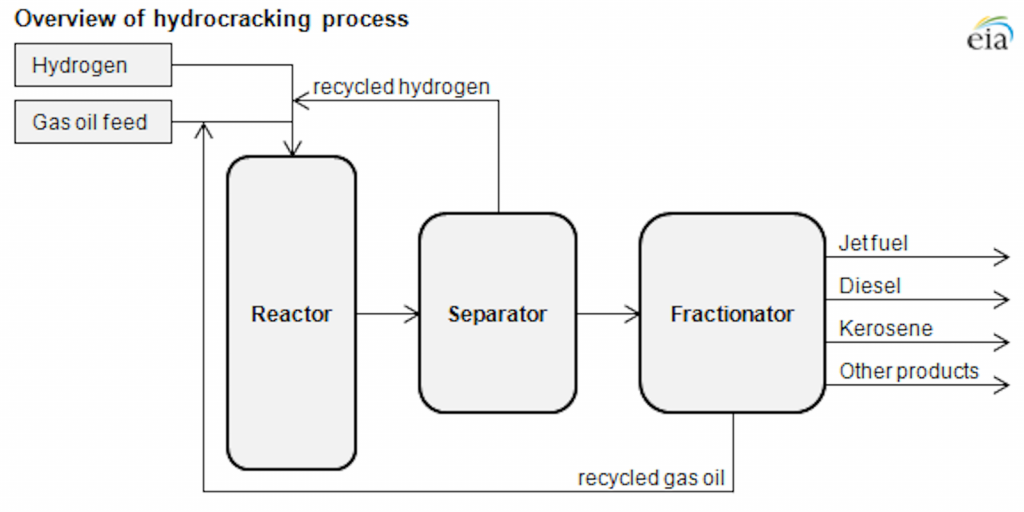
Group III base oil is refined even further through a process called hydrocracking. Similar to Hydrotreating, it uses high-pressure hydrogen and a catalyst to “crack” down hydrocarbons into lighter, unsaturated hydrocarbons, producing higher-quality oil or fuel, per the U.S. Energy Information Administration. Here’s a graphic of the process:
Group III oils are the best of the three for use in automotive applications, since they can resist breakdown under high temperatures, handle tighter tolerances, and maintain their viscosity over a wide range of external temps. For the majority of synthetic blend motor oils, Group III oil is used as a base.
Group IV oils, meanwhile, are fully synthetic and made from something called polyalphaolefins, which is a type of base oil made in a lab, rather than refined from crude oil extracted from the ground. Group V base oils are, according to Amsoil, oils that don’t fit into any of the other groups, and are usually developed for speciality applications, ranging from everything to food processing to cosmetics.
The problem, then, lies in where Group III base oils are refined. According to the Independent Lubricant Manufacturers Association (ILMA), which represents members that produce a quarter of all automotive lubricants in North America, roughly 44% of Group III oil demand in the United States comes from the Persian Gulf region, claiming that supply is “largely offline.” They cite disruptions to producers in Bahrain, the UAE, and a Shell facility in Qatar that, until Iranian rocket strikes knocked it out of commission, was producing around 30,000 barrels a day.
What about the rest of America’s Group III oil sources? Well, the conflict, which has been restricting access between the Persian Gulf and the open seas through the Strait of Hormuz, isn’t making things easy. From ILMA:
Compounding the issue, South Korea—responsible for about 30% of U.S. Group III imports—relies heavily on crude oil shipments from the Persian Gulf. While Korean refiners may pivot to alternative crude sources, lower yields are expected.
Domestic production is not positioned to fill the gap in the near term. New Group III capacity under development by Chevron and ExxonMobil will not come online until 2027, and existing North American producers lack the ability to offset the lost volumes. Re-refined base oil producers are similarly constrained by limited capacity and feedstock availability.
ILMA goes on to say that some suppliers have already declared force majeure—a safety net within contracts that allows parties to free themselves from liability when unforeseen events, like war, disrupt the ability to deliver on promised output. Others have simply begun raising prices above previously contracted amounts to match demand.
How They Plan To Fill The Gap
With Group III base oil shortages looming, lubricant manufacturers are, unsurprisingly, looking for alternatives to fulfill their obligations. To substitute a Group III base oil for something less refined, like a Group II oil, and still have their products bear an API certification, lubricant makers have to get permission from the API, or risk having their licenses revoked.
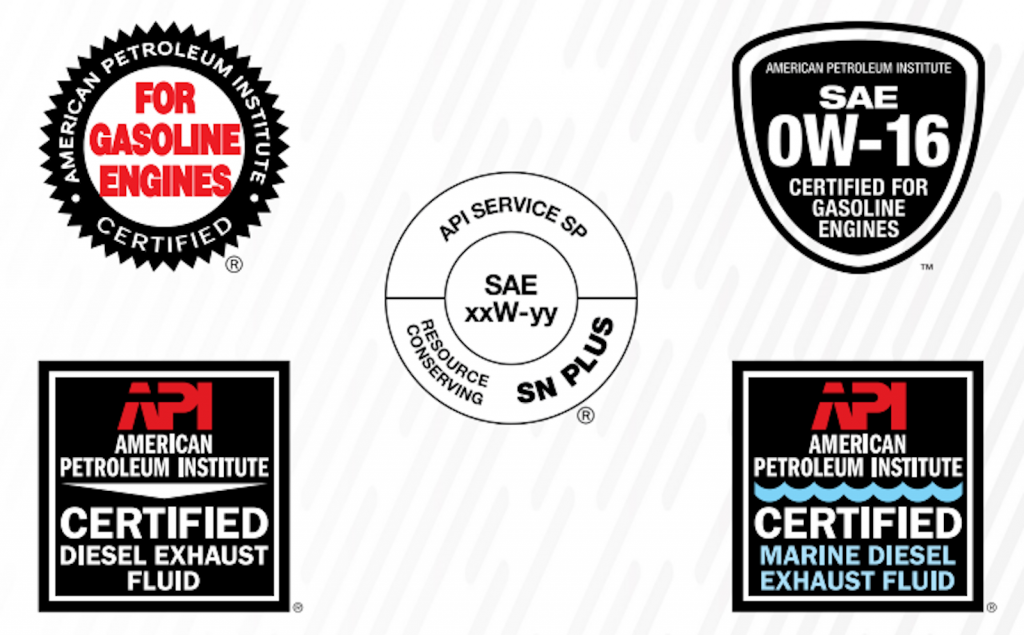
The API, seeing what’s currently going on in the Middle East, decided to activate what it calls an Emergency Provisional Licensing (EPL) program to make this possible. Basically, this program allows lubricant manufacturers to substitute Group III oils for lesser alternatives and keep the API logo on their bottles. Here’s how ILMA describes it:
An EPL permits an EOLCS licensee to substitute base oils or other components that are unavailable due to a force majeure — and to continue marketing those products bearing the API mark — for up to 90 days from an executed EPL Agreement. API may extend this period at its discretion.
And here’s what sorts of events allow manufacturers to declare a force majeure, per the API’s website:
A disruption is defined as a significant industry-wide limitation on the supply of a base oil or additive that makes it impossible for multiple licensees to market sufficient quantities of engine oil without violating the API licensing agreement. The disruption must be caused by an unforeseeable event involving, but not limited to, an explosion, fire, legal action, natural disaster, or act of terrorism that is beyond the control of individual licensees.
Before you start stressing about whether your next jug of oil might not be as effective as before, the API has some strict standards in place if manufacturers want to take advantage of the program. Per the organization’s website, lubricant producers can only substitute Group III base oil for a different product so long as the manufacturers promise that the substituted component “will not adversely affect the claimed performance standards of the licensed product,” and submit sufficient technical info supporting that claim. So in theory, any new oil that’s had its Group III base switched out for something else should work just as well as the previous blend.
This is great news for most suppliers, as they don’t have to panic about sourcing Group III base oil, which is becoming increasingly harder and more expensive to get, for their products. This emergency licensing isn’t a permanent solution—it’s only supposed to last for up to 90 days, subject to extensions by the API—but it’s certainly better than the alternative, which is running dry on product and having nothing to sell to manufacturers, businesses, or individuals.
GM Is Making It A Bit Tougher
Some lubricant manufacturers aren’t getting off as easily. Unlike the rest of the industry, which relies on performance metrics or specific brands for determining which oil to use in their cars, General Motors has its own, in-house licensing system called Dexos. This means that oils have to go through a totally separate approval process before they can be licensed and used in an official GM capacity, such as in factories or at dealerships. Oil that’s received Dexos approval has one of four logos stamped on its bottle:
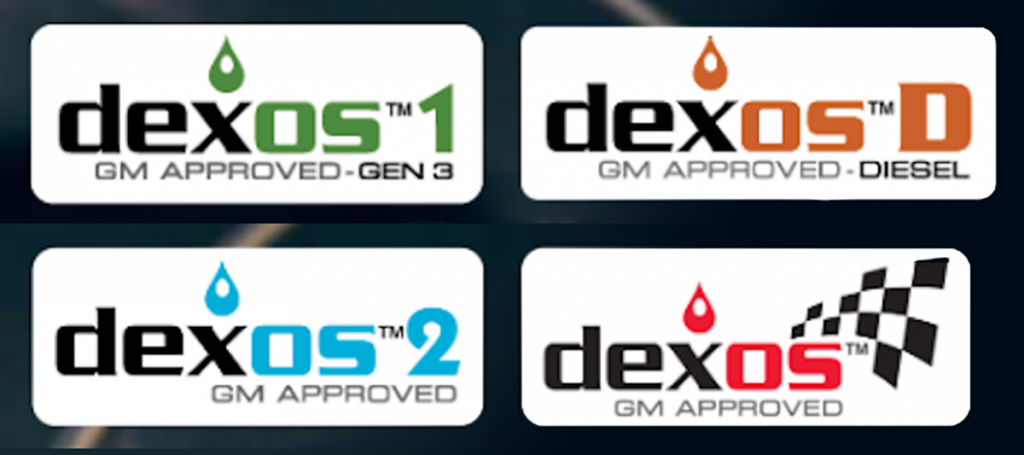
On its website, GM describes Dexos-approved lubricants as “designed specifically for GM engines that improve performance in parameters over conventional oil,” and that the logo “represents high-quality, robust oil formulated to some of the most rigorous specifications in the industry.”
While the API is allowing manufacturers to keep their licensing by providing technical information alone, General Motors is allowing no such relief. It continues to require lubricant makers to submit their new formulations for full evaluation before they can be sold as Dexos-branded, according to the brand’s response to ILMA, which asked for licensing relief last month:
While GM acknowledged the severity and likely duration of current supply constraints, it declined to provide enforcement relief for affected licensees. Here are the key takeaways from GM’s response:
-
No enforcement pause — GM explicitly stated that it “does not intend to suspend license terminations or other enforcement actions.”
-
Expedited reviews available — GM will expedite evaluations of alternative base oils and formulations submitted by blenders and additive companies.
-
Case-by-case evaluation — All submissions will be reviewed by GM on their individual technical merits.
-
Ongoing monitoring — GM will closely monitor the situation and support transitions to approved alternatives, but without relaxing compliance obligations.
Here’s the full statement GM provided me on the subject, which reflected its statements made to ILMA:
General Motors is closely watching Group III base oil supply issues in the Middle East and is reviewing dexos® core and blender applications as quickly as possible. We’re asking additive companies and oil marketers to submit technically justified alternative Group III base oils for our evaluation, and when the right data are provided and all performance requirements are met, the dexos team may consider limited provisional approvals. We’ll keep supporting blenders as they move to alternative dexos® approved core formulations.
According to ILMA, manufacturers usually have a month’s supply before running dry. Formulating a new blend of oil that can hold up to the same standards as before, without the more refined Group III base oil, is already a time and money sink. Adding an approval process on top of that could spell trouble for suppliers. The approval process itself “requires a significant investment of time and money,” according to Caitlin Jacobs, director of communications for ILMA.
This puts suppliers of Dexos-branded products in a tight spot: Formulate new blends and hope they get approved by GM before existing supplies run out, or produce the new blends without GM approval, and risk having their Dexos licensing revoked. Right now, there’s no easy solution, per ILMA’s website:
“ILMA appreciates GM’s response; however, we remain concerned by the OEM’s decision not to provide temporary enforcement flexibility under these extraordinary circumstances,” said ILMA CEO Holly Alfano. “While ILMA will continue to advocate for reasonable accommodations that reflect the realities of the global supply chain for Group III base oils, members should proceed on the assumption that GM’s current enforcement practices for its Dexos licenses will remain in place.”
Depending on how long the conflict in Iran drags on, it’s possible GM could change its position, just to ensure its factories and dealers don’t run out of oil. But for now, lubricant producers will have to make do with the guardrails they have in place.
For what it’s worth, I understand GM’s point of view here, too. If I were a car manufacturer, I’d want to ensure that only the best, highest-quality oil is going into my cars. And if you’re a company as big as GM, it’s probably worth it to have a whole division dedicated to approving lubricants. GM just wants to make sure, first-hand, that the new formulations are up to its standards before issuing an approval.
Top graphic image: GM, DepositPhotos.com


Sounds like GM is in the right here and the oil brands are trying to get away with charging the same amount for a lower quality product.
And when I read this:
“The American Petroleum Institute (API), an organization that the industry looks to for licensing oils for use in places like engines, transmissions, and differentials, has gone as far as to grant manufacturers emergency licenses to substitute high-quality oil for lesser-refined alternatives.”
It causes me to have less respect for the API and the standards they supposedly uphold.