

As a person who writes a daily industry news roundup, I’m always at risk of oversimplifying complex issues. It is a hazard of the job, and I think EV charging may be one of the most underestimated challenges, both here in The Morning Dump and in the world at large. Part of this might stem from the fact that Tesla has built a robust, successful, and smart charging network in the United States. Elsewhere, it’s less straightforward.
Given Europe’s requirement for electric vehicles and its heavy investment in chargers, you might assume that the increase in electrification has made charging networks more profitable and necessary. Nope. It’s way more complicated than that. As reported yesterday, Polestar is probably not long for the United States, though the explanation for what happened is just creating more questions. That is complicated, too. Why did the UAW’s court-appointed monitor put out a scathing report on the current UAW president right before the election? Also complicated.


How to end the week on an up note? Hmm… I don’t have an up note. Sometimes them’s the brakes. Unless you’re making an autonomous vehicle, and then you maybe don’t need brakes at all.
Germany’s Charging Network Is A Bit Of A Mess
Tesla really did it right when it comes to charging. It did it so right that, in North America, everyone switched to their standard. I’ve taken a new Kia to a Tesla Supercharger and it worked just fine. One of the benefits of Tesla’s approach was that having a standardized interface and a lot of similar cabinets, the company managed to maintain a very high up-time compared to the experience many used to have with Electrify America. Lately, I’ve had fewer issues with fast-charging, and many cars and networks are plug-and-charge now, which is to say that it doesn’t take a lot of work to make a transaction happen. (Just to make things easier, I’m going to exclude home charging from this conversation, as it is a pretty solved problem at this point).
The growing reliability of charging cabinets solves one big problem people had with chargers, while leaving a whole host of other complications. This isn’t to say it all won’t work out. I’m sort of thinking about it like the railroads: by the middle of the 19th century pretty much everyone knew that it was going to be a thing, but the actual process of it all being built-out and deployed was a huge mess and many companies and investors failed (analyst/investor Jeremy Grantham made a similar point about AI on a recent “Odd Lots” episode, which is probably why it’s in my head).
Is this a real estate problem? If you can afford to build 10 fast chargers, do you put 10 in one super popular location on a busy highway, or do you put two chargers in five locations that are slightly less popular? For profitability, the super popular location might be more important, but if you want to increase the popularity of EVs you might want to spread them out. Again, Tesla benefits directly from more EV sales, whereas it’s slightly less direct for companies that are just charging companies.
Building out charging cabinets isn’t cheap, especially when governments are starting to require more local content in the cabinets, as opposed to just buying them from China (and in Germany, bureaucracy plays a role). Charging speed expectations are also increasing. Where 150 kW used to be a big number, it’s now 400 kW at minimum. If you’ve built out a cabinet two years ago it may be obsolete before it’s become profitable. In the USA, you’re now juggling the transition from CCS to NACS.
What about electricity costs? In the US, the early lead that Tesla got with Superchargers created a slim majority, and that’s probably been helpful for the market as a stabilizing force in what pricing should look like. In Europe, there are even more charging companies and they’re locked in a pricing war that few can really win, giving an advantage to big companies like Ionity (partially owned by a bunch of automakers).
As Manager Magazin points out in this big report, being profitable is hard if you can’t spend a ton of money:
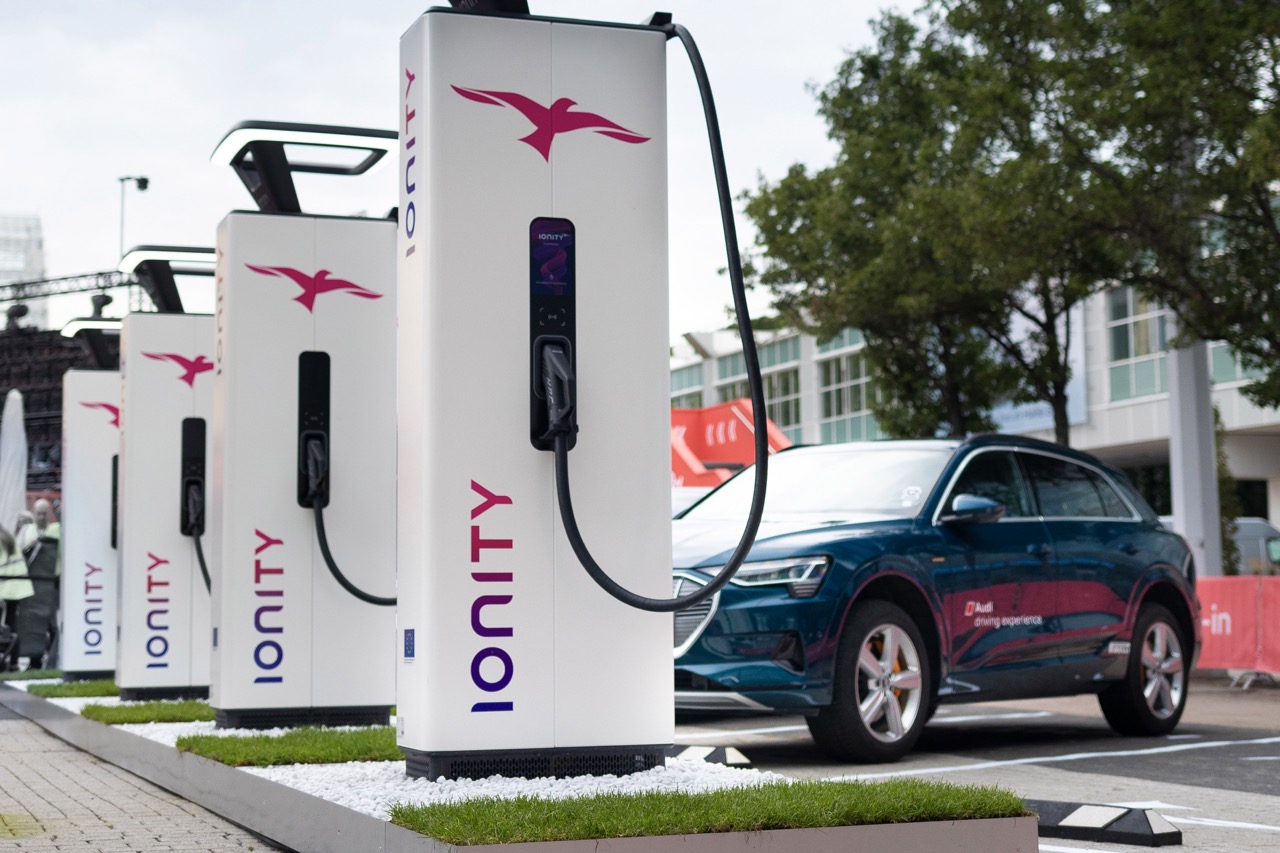
Tesla is considered the benchmark in the industry, but an internal analysis by the Tank & Rast group sees only Ionity as performing well along the highways. The report states that a “hypercharger,” meaning a charging station with at least 150 kilowatts of power, is only economically viable if at least 240 kilowatt-hours of electricity are drawn from it per day. According to the analysis, Ionity achieves an average of 300 kilowatt-hours. Providers like Fastned (200), EnBW (140), and Aral Pulse (110) fall significantly short. A report by the electric vehicle data specialist Elvah also supports this ranking: According to their findings, the five fastest-charging locations with the best utilization in Germany were all recently operated by Ionity.
While competitors often have to direct their customers off the highway, Ionity chargers are typically located at rest stops directly on the expressways. “Large locations, short detours, high speed,” is how CEO van Tilburg describes Ionity’s formula for success, pointing out, among other things, that unlike many others, they focused on fast chargers with a minimum output of 350 kilowatts from the very beginning. As a result, although they only provide 4 percent of all German fast-charging points, they sell 8 percent of the total energy.
Germany, like most markets, is seeing more and more chargers, preparing for a future with more electric cars. Unfortunately for most charging companies, there just aren’t enough electric cars yet and utilization rates remain below profitability. That means that companies are cutting charging fees to the point that they lose money while also trying to expand.
And, as the report mentions, there are other threats out there:
Lidl is currently making headlines. The discount supermarket is enticing users of its Lidl Plus app to its own DC fast-charging stations. At 27 cents per kilowatt-hour, it’s incredibly cheap – at least until the end of June.
Lidl is the main competitor for Aldi if you’re not familiar with budget European supermarkets. This is another company that’s now competing in the larger marketplace for public charging, but one that doesn’t have the same incentive structure. Lidl wants you to come in and spend money, not charge and get the hell out of there.
We’re in a slightly better situation in the United States, and right now the need for chargers is high enough that companies are seeing increased demand every time they install a new charger (on average, there are definitely underused spots). But even charging companies here are seeing competition from companies like Walmart, which is rapidly increasing the number of chargers at its stores.
My general assumption is that more chargers will be needed to combat range anxiety, even as cars get more efficient and charging gets faster, although that creates another wrinkle: If you can charge faster you need fewer chargers per vehicle, right?
Like a gentle Nancy Meyers comedy, it’s complicated.
Did Polestar Die So That Volvo Could Live?
It was reported yesterday that Polestar was not going to be permitted to sell new cars in the United States next year due to the Department of Commerce, which used the Biden era Connected Vehicle to determine that Polestar’s Chinese ownership structure meant it went afoul of this rule.
What about Volvo? As I wrote at the time, Volvo got a reprieve from the same law, although it had to agree to comply with various regulations. Volvo and Polestar have essentially the same ownership and sell similar cars. What’s going on here? That’s what dealer Matthew Haiken, of Polestar Short Hills in New Jersey is also curious about.
Haiken wants to know the implications for sister brand Volvo, which received authorization in May but still must comply across its lineup.
“If it can happen to Polestar, why can’t it happen to Volvo?” he said. “I want answers from Volvo Cars CEO Hakan Samuelsson, who started [Polestar]. It’s not fair.”
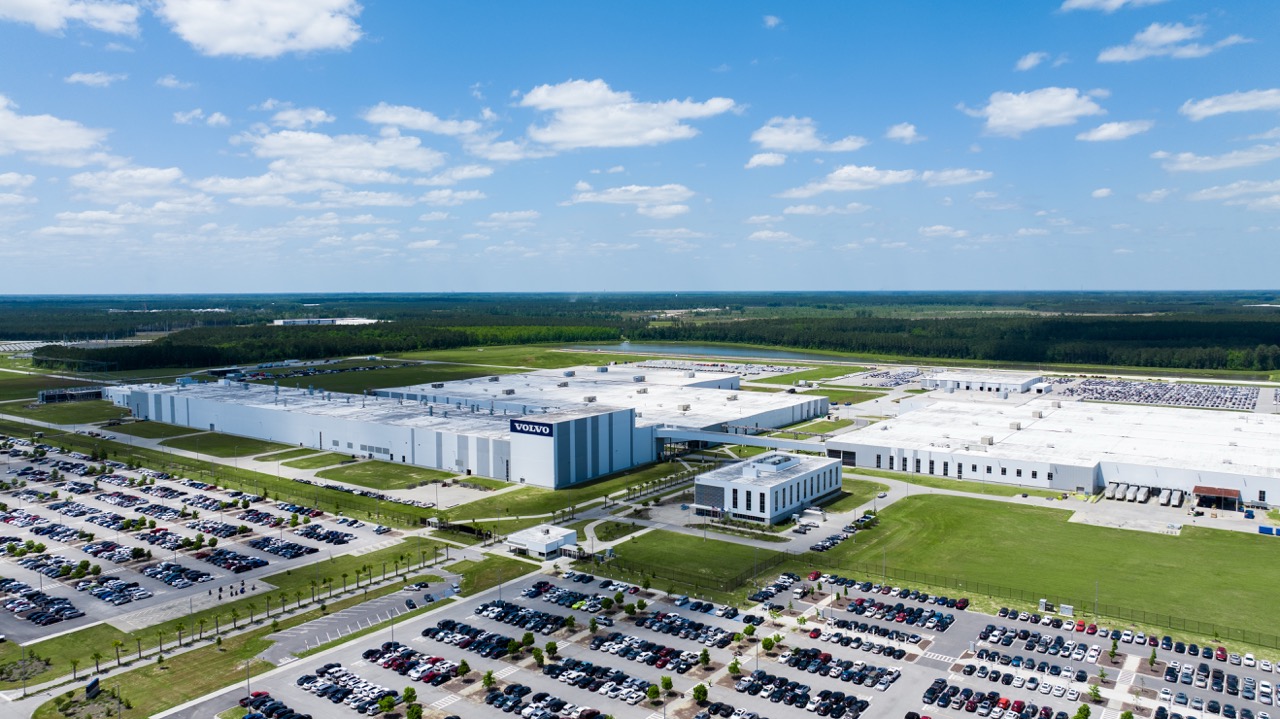
This is a reasonable question. Polestar currently makes cars in South Carolina alongside Volvo, and CEO Hakan Samuelsson made it clear to me at lunch in March that the South Carolina plant needed to be more utilized.:
“I agree with you,” Samuelsson said, adding that “You either use your factory or you don’t have a factory.”
“We need to fill the factory, that’s the first option and best option. We will bring in the XC60 at the beginning of next year.”
Polestar makes a fraction of the cars that Volvo does. Given the difficulties Polestar has had in the market and other changes, it feels entirely possible that Geely could have made a deal at the top to fully utilize the South Carolina facility (thus pleasing the President and Republican politicians), resulting in a game of musical chairs where Polestar was left without a seat.
Court-Appointed Monitor Alleges UAW President Fain Retaliated Against The VP Now Running Against Him

The saga of UAW President Shawn Fain and Vice President Rich Boyer had a big moment earlier today when the court-appointed union Monitor, Neil M. Barofsky, essentially backed up Boyer’s claims that he was the victim of retaliation from the President over his unwillingness to, among other things, help out Fain’s future sister-in-law.
You can read the whole report here if you’re interested, but the Detroit Free Press has a good summary:
In a report filed on Thursday, June 25, the monitor says Fain, based on faulty pretenses, unfairly stripped Rich Boyer of oversight of the union’s Stellantis Department. The monitor concluded that none of the stated reasons offered by Fain justified the removal of Boyer’s responsibilities and that, instead, Fain’s actions fit into a recurring pattern of retaliation against perceived union foes.
All told, the monitor said, none of Fain’s accusations are verifiable or amount to dereliction of duty by Boyer and may in fact be the result of Fain’s and his team’s shortcomings as contract negotiators.
In reading the report, the Monitor credibly alleges that many of the excuses Fain used as reasons for removing Boyer–who was in charge of the union’s relationship with Stellantis–were either bogus or caused by Fain’s own team. So why did Fain remove Boyer (who has since been reinstated)? While there’s no smoking gun in this report, the Monitor clearly intimates that it was Boyer’s reluctance to intervene in matters specifically tied to Fain that were the cause:
President Fain inappropriately used the powers of his office to pursue a personal matter on behalf of a family member, an abuse of his authority. Fain took a matter in which he had a personal interest—the treatment of his fiancée’s sister’s injury—and pursued it through the powers of the UAW presidency, pressing it on Stellantis’s senior management and on senior Union officials who ultimately reported to him. In doing so, he expended Union resources—his own time and that of a Vice President, an Assistant Director, and his Top Administrative Assistant—to seek relief from requirements that apparently applied to other Stellantis UAW members injured on the job.
Fain, for his part, put out a statement implying that the report is political (via the Freep report):
“Now, more than two years after becoming aware of Vice President Boyer’s allegations, and on the eve of our election, Mr. Barofsky has chosen to publicly release a politically charged and false report about me,” Fain wrote. “The most reasonable conclusion is that he is playing political games and abusing his power.”
This should be an exciting election.
Autonomous Vehicles Might Not Need Brake Pedals

It continues to amuse me that Zoox–the company that Jason once called Vaporware Horseshit–named their vehicles VH-XX in reference to Jason’s missive. Next time we’re in Vegas we gotta get Jason a ride.
The current administration is trying to simplify the rollout of robotaxis and, according to Reuters, may remove the requirement for a brake pedal in vehicles that don’t have other controls:
The National Highway Traffic Safety Administration proposed on Thursday to end a government requirement for manual brake pedals in self-driving vehicles, a move that would make it easier to deploy such vehicles on U.S. roads.
The proposal would not apply to vehicles with human driver controls and NHTSA said it would not drop braking performance requirements, including strict stopping distance standards for self-driving vehicles.
It is one of a number of changes proposed by the agency to facilitate the roll-out of self-driving vehicles. NHTSA is in the process of developing safety performance tests for self-driving vehicles as part of a separate standard.
So long as the cars have a giant, deployable anchor, I don’t see what the issue is.
What I’m Listening To While Writing TMD
Many of us are hitting the road so we can meetup at Watkins Glen and then Lime Rock. So, sure, Ray Charles with “Hit The Road Jack”
The Big Question
What are your weekend plans?
Top photo: Ionity


EV fast chargers need more pull through chargers. EV’s are great tow vehicles except for short range. Last time out I purposely skipped a Supercharger for an EVolveNY charger with a longer charge cable to save five minutes unhooking and rehooking the trailer. I had to block two chargers to use one. Yes, that’s a jerk move. There were still lots of open chargers and nobody else showed up so no harm done. It’s still annoying to need to be put in that position.
Weekend plans are finishing up landscaping and fixing a low voltage issue on my Seadoo. Then hopefully testing the Seadoo.
Weekend plans: Relax and get burgers
EV charging is a mess because everyone is looking at it through the lens of gasoline. The idea of stopping to top off the battery at a fast charger is just pushing fuel station mentality to the EV system. I am forced to do this because I have no charger at home/apartment, and no charger while at work.
In reality, there should be more places to charge while parked, like for work or at home where the car just sits there not doing anything for several hours. This means supplying power outlets at those places. EV can charge off simple 240v AC or even 120v AC outlets at a slow rate, but it adds up. 8 hours at work is 8 hours of trickle charge. This means infrastructure at the business level and residential setups.
Fast chargers are great for longer trips but shouldn’t be considered the best way of keeping EVs running.
Yep, even on road trips, if public L2 chargers were fairly ubiquitous, I could easily halve my use of L3 chargers, and it would be more convenient and cheaper. If L2 buildout was better, I would expect that less than 10% of charging would use L3 in general.
Not to mention there are also a number of places offering free L2 charging.
My biggest beef with owning an EV is the unfortunate eventuality of having to give an Elon company money.
TBQ: Load up the Panamera and drive to Tucson for the week. Maybe set up an appointment to get it detailed.
On the autonomous vehicles is it really that much of a trouble to put in a brake pedal? They MUST have friction braking systems, right? how much could either a ratchet-style e-brake or a hydraulic pedal really cost at this point? If I don’t have some sort of big red kill button or a stopping mechanism, I’m just not getting on board.
That was my thought as well. If not brake pedal, do they at least have an E-Stop?
As much as I can’t stand Elon, the Tesla charging network really is the best. And, because everyone who drives a non-Tesla (at least in my area) hates Elon as well, I can anticipate that every other charger is going to be in use, and the Superchargers aren’t clogged. I just did another cross-Washington road trip, and literally every EV stops and charges in Ellensburg because it’s at the base of the Snoqualmie mountain range – you’ve either just used up your battery, or are about to. Both directions, every single non-Supercharger was either in use or was out-of-order (I’d say about 15 chargers total). But there are 3 Supercharger sites in town with maybe 40 chargers, and I was easily able to find two stalls to take up (Tesla cables are too short for a Bolt EUV unless you line up perfectly in front of the cable outlet, which means you’re half-way into the neighbor stall). I would love more 150kw chargers spread out so that if you want to skip the busy ones and make it to something 20mi down the road you could.
TBQ: Road America Trans Am series this weekend 🙂
TBQ: dunno, depends. Might go to a model train show, but that particular one has been increasingly disappointing. FH6 will probably factor into it, and I did just get the new Star Fox…
Try to revive the 50-year old MGB that’s been sleeping in my garage for two years. Then I’ll see if I can figure out why the immobilizer on my 30 year old MGF doesn’t want to – uh – mobilize.
TBQ: Saturday would have been my Ohio Rt 555 road rally but the threat of rain has postponed that. So now both days are helping the GF move/unpack/assemble assorted furniture.
Home charging is only half solved. Sure we can get electricity into the car from the home, but it should be just as easy to get electricity into the home from the car and right now that process is a discombobulated mess.
I haven’t used an EV charger, but I want to ask: Is there any issue where a charger couldn’t be set up like an automated gas pump? ie use credit card, plug in, charge, unplug and return the charger cable, cost of used electrons gets posted to the credit card. Is it a credit card timeout thing or a security thing or etc? Are they concerned someone might sneak in and swap the charger to their own EV on someone else’s dime?
Maybe there’s a security aspect, but it seems like 80% just the same bullshit that we deal with across the board in 2026. “look! if you have our app it’s easy to find chargers! and we’ll send you updates! and you earn points! and blah blah blah blah blah…..”
Motherfucker I don’t want another app I just want a cheeseburger!
Wait, what were we talking about?
On the charging front, I wish charging companies would be a little more strategic with their locations. I appreciate that both EA and Tesla have DCFC stations right next to each other at the local grocery store, but it would be nice if one of them had also considered placing chargers anywhere along the 70+ miles between my town and the nearest larger city like the owners of the dozen or so gas stations on that route did. There are a few L2 public chargers from Blink and EVgo along the way, but literally 100% of them are within 10 miles of that same grocery store.
As for weekend plans, I’m hoping to be wrenching on the Jeep to hopefully figure out where a new and severe power steering fluid leak is at.
If I didn’t need to use a different app for every company (or even apps at all) I’d be more likely to use public chargers. Just let me stick a credit card in the machine and get my electrons, dammit. If my choices are A) spend 5-10 minutes installing more junk on my phone for no material benefit, or B) Spend a pointless “out of network” fee, I’ll take C), none of the above.
This is correct. And in a world of bad charging ecosystems, nothing is as bad a Shell Recharge. You have to use the app to start charging, but every charger around me has next to no cell coverage, so no charging. And, you can’t just point at a QR code to tell the app what charger you are at, you have to punch in a code. And that usually just returns a “Site not found” message. Just make it plug and play. There is a reason why Tesla sells a lot of cars.
This. So many different apps and accounts to manage, with absolutely no recourse if you have no cell coverage. At least many of the newer ones take credit cards, though then you are stuck paying elevated rates for not being a member.
TBQ: I’m headed to the climbing gym to see if I can climb steep stuff in my mountaineering boots. I tore a ligament in my foot while scrambling last weekend. My wife and I head to Greece for was was supposed to be a climbing holiday next week. It might be much more of an eat cheese and drink wine at the taverna vacation…
Honestly your consolation vacation sounds better than most of my actual vacation plans!
TBQ: Yardwork, maybe getting the shitbox Civic back on the road, the battery is toast after winter hibernation and the solar charger wasn’t able to revive it.
Also need to wash the Si, and give it an oil change.
All that requires me first clearing up some debris from the storms last week, might even borrow one of the girlfriends chainsaws.
What are your weekend plans?
What is this “weekend” thing you speak of? Are you implying that people only work certain days of the week??? If you are referring to two the days that come after Friday, I’m working both of them.
Some more details regarding the economics behind this would be interesting. To my untrained eye, a charger has very little ongoing expense besides amortizing the initial cost of the installation.
On the other hand, 240 kWh isn’t very much. Just 3-4 large EV batteries a day.
Capacity charges to be connected, I think.
Commercial electricity is billed with both capacity and commodity charges. Commodity charge is the kWh delivered so it is easy to understand. The capacity charge is per kW for all kW of maximum demand, so even at the $2.57 per kW that my local utility bills for EV chargers (regular commercial customers pay $15 per kW) a 400 kW charger is $1028 per month. This $1028 has to be spread out to multiple customers, because at only one large EV battery charged per day that is $34 per person in just capacity charges. The charging company still has to pay $0.09 per kWh at offpeak times in addition to the capacity charge.
I agree, unfortunatley the linked report is in German and I’m not tech savy enough to find a translated version.
240 kwh / day would be $24,000 a day per charge if they make a $0.10 profit per kwh. That’s 8 million a year for one charger, I find it mind boggling that’s barely profitable.
UAW corruption, Fain being a jerk, yea, all that lines up. But as you have mentioned before, two things can be true at the same time. It saddens me to have to question this, but the court appointed monitor, do they have any connection to the trump administration? I would be very unsurprised if that monitor was being told by the admin to pour gas on the UAW election fire to destabilize the UAW as republicans hate unions in general, and I know Fain has being a very aggressive thorn in their side. This admin is intent on revenge whenever possible.
But maybe this is just all coincidental and honestly, normal UAW shenanigans? (Full disclosure, I am all for unions, they need to exist, but the UAW does have a history of chaos).
TBQ: relaxing at home watching F1, MotoGP. Then packing things for a work trip to Norway on Monday.
Allegations of corruption in the UAW? I’m shocked.
*sarcasm detector explodes*
What are your weekend plans? Cone dodging in the Camaro on Sunday